kottke.org posts about philosophy
A couple of weeks ago, AI company Anthropic published the constitution that they use to train their Claude LLM (“under a Creative Commons CC0 1.0 Deed, meaning it can be freely used by anyone for any purpose without asking for permission”). From the company’s news release:
We’re publishing a new constitution for our AI model, Claude. It’s a detailed description of Anthropic’s vision for Claude’s values and behavior; a holistic document that explains the context in which Claude operates and the kind of entity we would like Claude to be.
The constitution is a crucial part of our model training process, and its content directly shapes Claude’s behavior. Training models is a difficult task, and Claude’s outputs might not always adhere to the constitution’s ideals. But we think that the way the new constitution is written — with a thorough explanation of our intentions and the reasons behind them — makes it more likely to cultivate good values during training.
The full document is 80+ pages, but the news release does a decent job in summarizing what’s in it.
Claude’s constitution is the foundational document that both expresses and shapes who Claude is. It contains detailed explanations of the values we would like Claude to embody and the reasons why. In it, we explain what we think it means for Claude to be helpful while remaining broadly safe, ethical, and compliant with our guidelines. The constitution gives Claude information about its situation and offers advice for how to deal with difficult situations and tradeoffs, like balancing honesty with compassion and the protection of sensitive information. Although it might sound surprising, the constitution is written primarily for Claude. It is intended to give Claude the knowledge and understanding it needs to act well in the world.
We treat the constitution as the final authority on how we want Claude to be and to behave — that is, any other training or instruction given to Claude should be consistent with both its letter and its underlying spirit. This makes publishing the constitution particularly important from a transparency perspective: it lets people understand which of Claude’s behaviors are intended versus unintended, to make informed choices, and to provide useful feedback. We think transparency of this kind will become ever more important as AIs start to exert more influence in society.
Casey Newton and Kevin Roose recently interviewed the primary author of the constitution, philosopher Amanda Askell, for the Hard Fork podcast (the segment starts at ~25min).
Newton says the document reads like “a letter from a parent to a child maybe who’s leaving for college”:
And it’s like, we hope that you take with you the values that you grew up with. And we know we’re not going to be there to help you through every little thing, but we trust you. And good luck.
Both the constitution and the conversation with Askell are fascinating, no matter where you lie on the AI debate continuum. You might also be interested in this video of Askell answering questions from Claude users about her work:
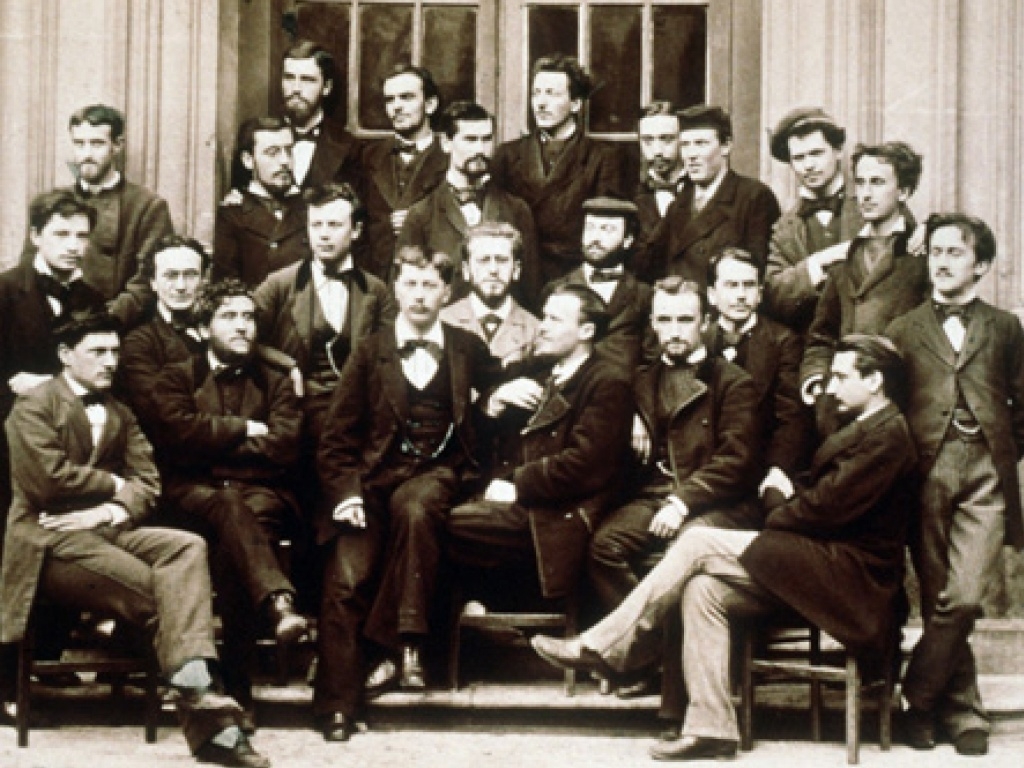
In the early twentieth century, Henri Bergson had a problem. His philosophy lectures were too popular:
On average, 700 people would attempt to squeeze into a room designed for 375. It was suggested that his classes be moved to the Grand Amphithéâtre of the Sorbonne or even to the Palais Garnier. Abroad too, Bergson drew huge crowds. The talks he delivered in London in 1911 filled venues to their ‘utmost capacity’, and he was greeted to the sound of ‘loud cheers’. Two years later, a visit to New York caused the first ever traffic jam on Broadway.
Bergsonmania had another problem, too: many of its most devout adherents were women.
In France, Bergson’s female followers were given derogatory nicknames such as caillettes, which designated a type of pâté, a kind of small bird, and in this context, a frivolous babbling woman, and snobinettes, which conveyed the common assumption that these women were ignorant socialites more interested in being seen at a fashionable event than in learning about philosophy. In 1912, Bergson was preparing to leave on an eagerly anticipated tour of the United States that would take place the following year. A writer for the magazine La vie Parisienne - known for its literary critiques, erotic illustrations, satirical takes on art, culture, politics and the indiscretions of the Parisian elite - scoffed: ‘How will our snobinettes quench their thirst for metaphysics?’ Which professor, the reporter wondered, would these ‘anxious women’ choose to replace Bergson? Surely, their decision would be based on the convenience of the time slot of the lectures rather than on their content.
The female audience was depicted as a crowd of posers, too frivolous to develop any profound interest in philosophical matters, and thus undeserving of the precious seats at the Collège de France. Many commentators thus dismissed the Bergsoniennes’ enthusiasm for philosophy as nothing more than the bourgeois attempts of mondaines (socialites) to raise their social standing. Such ideas were embedded within a long tradition of French satire at the expense of learned women…
The presence of women in a traditionally exclusively masculine space was regarded at best as a source of ridicule, at worst as a nuisance (for instance, some worried that, by their mere presence, the Bergsoniennes were robbing male philosophy students of their rightfully earned seats). Others took this phenomenon to be the sign of something more serious. The fact that so many women were drawn to Bergson’s philosophy perhaps said something about Bergson as a thinker. Indeed, traits traditionally associated with femininity, such as irrationality and sentimentality, clashed with the traditionally masculine qualities deemed necessary to be a good philosopher. Some of Bergson’s most serious adversaries began arguing that Bergson’s success among women was no accident. They believed that the reason the most irrational beings of all, women, were so enthusiastic about Bergson’s ideas was that Bergson’s philosophy was a philosophy of the irrational.
Bergson himself did not enjoy his celebrity status, but it is noteworthy that he inspired a generation of French feminist thinkers, including Simone De Beauvoir, who largely differed from his metaphysical positions but adopted parts of his popular, literary style (in both writing and public lectures) as a way to connect with audiences outside of the academy’s cloisters.
Philosophy and public intellectual life changed tremendously during the years of Bergson’s activity, not least because his own style and that of his admiring fans helped push matters along.
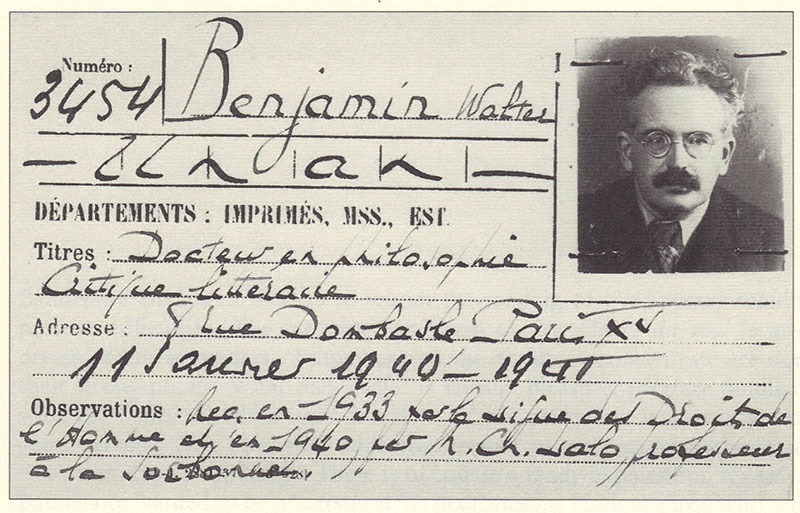
This Aeon essay by Giorgio van Straten, “Lost in Migration,” is excerpted from a book titled In Search of Lost Books, which explains its fascination with a book that’s fascinated many people, a manuscript carried in a briefcase by Walter Benjamin at the end of his life which has never been identified or located and probably did not survive him.
I’ve always been a little turned off by the obsession with this manuscript among Benjamin fans and readers. There’s something so shattering to me about the end of Benjamin’s life, and how he died, that it feels not just trivial, but almost profane to geek out over the imaginary contents of a book he might have left behind. I feel the same way about dead musicians. It’s all just bad news.
Luckily, though, this essay does contain a compelling and concise account of the end of Benjamin’s life.
First Benjamin fled Paris, which had been bombed and was nearly about to be invaded by the German army, for Marseilles:
Benjamin was not an old man - he was only 48 years old - even if the years weighed more heavily at the time than they do now. But he was tired and unwell (his friends called him ‘Old Benj’); he suffered from asthma, had already had one heart attack, and had always been unsuited to much physical activity, accustomed as he was to spending his time either with his books or in erudite conversation. For him, every move, every physical undertaking represented a kind of trauma, yet his vicissitudes had over the years necessitated some 28 changes of address. And in addition he was bad at coping with the mundane aspects of life, the prosaic necessities of everyday living.
Hannah Arendt repeated with reference to Benjamin remarks made by Jacques Rivière about Proust:
He died of the same inexperience that permitted him to write his works. He died of ignorance of the world, because he did not know how to make a fire or open a window.
before adding to them a remark of her own:
With a precision suggesting a sleepwalker his clumsiness invariably guided him to the very centre of a misfortune.
Now this man seemingly inept in the everyday business of living found himself having to move in the midst of war, in a country on the verge of collapse, in hopeless confusion.
From Marseilles he hoped to reach Spain, since, as a German refugee, he did not have the proper exit papers.
The next morning he was joined soon after daybreak by his travelling companions. The path they took climbed ever higher, and at times it was almost impossible to follow amid rocks and gorges. Benjamin began to feel increasingly fatigued, and he adopted a strategy to make the most of his energy: walking for 10 minutes and then resting for one, timing these intervals precisely with his pocket-watch. Ten minutes of walking and one of rest. As the path became progressively steeper, the two women and the boy were obliged to help him, since he could not manage by himself to carry the black suitcase he refused to abandon, insisting that it was more important that the manuscript inside it should reach America than that he should.
A tremendous physical effort was required, and though the group found themselves frequently on the point of giving up, they eventually reached a ridge from which vantage point the sea appeared, illuminated by the sun. Not much further off was the town of Portbou: against all odds they had made it.
Spain had changed its policy on refugees just the day before:
[A]nyone arriving ‘illegally’ would be sent back to France. For Benjamin this meant being handed over to the Germans. The only concession they obtained, on account of their exhaustion and the lateness of the hour, was to spend the night in Portbou: they would be allowed to stay in the Hotel Franca. Benjamin was given room number 3. They would be expelled the next day.
For Benjamin that day never came. He killed himself by swallowing the 15 morphine tablets he had carried with him in case his cardiac problems recurred.
This is how one of the greatest writers and thinkers of the twentieth century was lost to us, forever.
So I am something of a philosophy nerd, with a particular affection for late 19th/early 20th century European philosophers, who had a lamentable habit of either turning out to be Nazis or becoming victims of the Nazis. One important strand of this Nazi/Nazi-victim movement in European thought is phenomenology, which tried to describe in painful detail and using all-original categories what the experience of everyday life for both persons and things was like. As it happened, the experience of everyday life was in deep flux at this time, so a lot of their categories/arguments/distinctions turn out to actually capture that historical moment particularly well, which is not at all what they thought they were trying to do.
If you want to try out a light version of phenomenology, applied to both that historical moment and our own, you could do a lot worse than reading Dan Hill’s essay “Let There Be Light Switches: From Dark Living Rooms To Dark Ecology.” Hill takes something extremely ordinary—the experience of looking for, finding, and flipping a light switch—and finds the philosophy in it:
Pallasmaa, in his The Eyes of the Skin, noted that touch is a key part of remembering and understanding, that “tactile sense connects us with time and tradition: through impressions of touch we shake the hands of countless generations”. Is this reach for the switch merely functional, then? A light switch can stick around for decades, as with the doorhandle. When you touch the switch, you are subconsciously sensing the presence of others who have done so before you, and all those yet to do so. You are also directly touching infrastructure, the network of cables twisting out from our houses, from the writhing wires under our fingertips to the thicker fibres of cables, like limbs wrapped around each other, out into the countryside, into the National Grid.
If we always replace touch with voice activation, or simply by our presence entering a room, we are barely thinking or understanding, placing things out of mind. While data about those interactions exist, it is elsewhere, perceptible only to the eyes of the algorithm. We lose another element of our physicality, leaving no mark, literally. No sense of patina develops, except in invisible lines of code, datapoints feeding imperceptible learning systems of unknown provenance. As is often the case with unthinking smart systems, it is a highly individualising interface, revealing no trace of others.
This is… not easy to read. But there’s a lot going on here! I particularly like the invocation of Martin “I Was, Like, Extra-Nazi” Heidegger’s useful distinction between “zuhanden” (to-hand? at-hand?) and “vorhanden” (something like “present-at-hand”? Oh, German is impossible!) to describe categories of objects.
Or, hey; how about this: when it’s “zuhanden,” it’s a thing, and when it’s “vorhanden,” it’s an object.
Heidegger’s word for how light switches seem to peer out at you like minor characters in an Expressionist painting is vorhanden, which means present-at-hand. Normally things kind of disappear as you concentrate on your tasks. The light switch is just part of your daily routine, you flick it on, you want to boil the kettle for some coffee—you are stumbling around, in other words, stumbling around your kitchen in the early morning light of truthiness. (From Being Ecological, Timothy Morton)
That thing when things “disappear” is zuhanden; they just kind of melt into the environment, and so do you, just a being among beings, all working together. The ultimate expression of zuhanden is “flow,” which Heidegger and Csikszentmihalyi both ripped off from Tolstoy in Anna Karenina, with Levin mowing the hay with his peasants:
He thought of nothing, wished for nothing, but not to be left behind the peasants, and to do his work as well as possible. He heard nothing but the swish of scythes, and saw before him Tit’s upright figure mowing away, the crescent-shaped curve of the cut grass, the grass and flower heads slowly and rhythmically falling before the blade of his scythe, and ahead of him the end of the row, where would come the rest.
Suddenly, in the midst of his toil, without understanding what it was or whence it came, he felt a pleasant sensation of chill on his hot, moist shoulders. He glanced at the sky in the interval for whetting the scythes. A heavy, lowering storm cloud had blown up, and big raindrops were falling. Some of the peasants went to their coats and put them on; others—just like Levin himself—merely shrugged their shoulders, enjoying the pleasant coolness of it.
Another row, and yet another row, followed—long rows and short rows, with good grass and with poor grass. Levin lost all sense of time, and could not have told whether it was late or early now. A change began to come over his work, which gave him immense satisfaction. In the midst of his toil there were moments during which he forgot what he was doing, and it came all easy to him, and at those same moments his row was almost as smooth and well cut as Tit’s. But so soon as he recollected what he was doing, and began trying to do better, he was at once conscious of all the difficulty of his task, and the row was badly mown.
On finishing yet another row he would have gone back to the top of the meadow again to begin the next, but Tit stopped, and going up to the old man said something in a low voice to him. They both looked at the sun. “What are they talking about, and why doesn’t he go back?” thought Levin, not guessing that the peasants had been mowing no less than four hours without stopping, and it was time for their lunch.
“Lunch, sir,” said the old man.
So we’ve had light switches long enough that they pass into our ordinary, everyday zuhanden state (or its extraordinary flow variation), except when we stumble over them and have to think about them, like these newfangled smart lights and voice switches. This means these everyday things are becoming objects again, until we can incorporate them into a new paradigm.
The light switch when jetlagged is vorhanden — suddenly present-at-hand, “oppressively obvious” —where usually its everyday resilience means it is zuhanden, simply ready-at-hand, normalised, routine. When “stumbling around”, he notes that we don’t pay attention to the object itself — here, the irreducible thing that is the light switch —and so nor do we stand any chance of paying attention to the broader systems of living, of infrastructure, that it is connected to, and part of - and, for Morton, our understanding of mass extinction due to climate change. And given Pallasmaa’s fundamental emphasis on touch as understanding, in order to truly sense and interact, this deleterious situation is hardly likely to improve when the analogue light switch disappears, when the object becomes further detached, and so may we.
More prosaically, how dull rooms will become if they are always automatically bright upon entering, just as the over-lit streets of our towns are increasingly sanitised of their mystery. The cornerstone of most horror movies, vanished overnight. Fortunately, smart homes will not work any more effectively than smart cities do, and a different sub-genre of horror movies will emerge, domestic versions of Stephen King’s Christine or 2001’s HAL.
Maybe this is all thinking too hard about an ordinary experience that is changing, sure, but not in some fundamental way that changes our relationship to things as such. But at the same time, what if it’s not thinking too hard enough?
There isn’t much more basic to our experience of the world, in the 20th century or the 21st, than our use of artificial light to take back the night, transform our work and our play, indeed, change the fundamental nature of communication and experience itself. It’s worth marveling at the change of experience, the change in expectation that that was, precisely now when those experiences and expectations are on the verge of changing again, first by the thousands, and then by the millions.
How do we find the light? How do we see? What do we need to see? What do we know by doing? These are basic questions any philosophy of experience, and any technology of experience, has to answer. Well, our technology of experience is changing. Maybe our philosophy of experience needs to first go back before it can go forward to something new.

This week’s edition of Noticing, the Kottke.org newsletter, features the return of Doctor Time, the world’s only metaphysical advice columnist. In this case, the good doctor tries to explain the difference between faith and hope, and tries to understand what hope might mean in the absence of God. Here’s the section in full. For more thoughtful goodness, subscribe to the newsletter! I write it just about every week; if you like my posts or Jason’s posts at all, I think you’ll like it.
* * *
What’s the difference between faith and hope?
Okay, to be fair, nobody actually asked this question in this way, but the distinction came in conversation more than once this week, and for lots of reasons, it’s worth talking about right now. For the answer, we’re going to start with an excellent podcast episode from the BBC’s In Our Time, all about the philosophy of hope.
The episode starts its genealogy with Hesiod, who right away poses the problem of Pandora’s Box and/or Jar: Hope is sealed up in the jar of all the evils in the world, but does that make it one of the evils Zeus sent to punish humanity with, or is it a good in our pantry that helps us deal with all the other evils? Even the Greeks seem split on this: Hesiod’s original story is decidedly pessimistic, and Plato and Aristotle didn’t set much store by hope, but one Greek-speaker, St. Paul, thought enough of hope that he put it with faith and love as part of a second Holy Trinity of Christian virtues. (I guess if faith is God the father, and love is Christ, hope is the holy spirit? Probably not worth mapping them onto each other too closely.)
Anyways, the really great thinker on hope is St. Augustine, who is MY MAN for many, many reasons. (I’m not Catholic or Christian any more, but I love the way the great theologians think about the universe and its problems, and Augustine is the very best one.) For Augustine, hope is first and foremost about the second coming, and the ultimate fulfillment of human beings and their potential. So you have faith, a belief that God is real and salvation is possible, which is given to you by God, you can’t manufacture it. You have love — also caritas, or charity — a kind of selfless outpouring of affection and righteous deeds towards God and all His works, especially other human beings. And then you have hope, which is this imaginative representation of being fulfilled and made whole at the end of time.
Time is important for Augustine, and hope becomes a kind of ontological structure for understanding time. Augustine thinks of temporality as a kind of eternal stretching of the now, from the beginning of time in the creation through the end of time in the resurrection, and hope is also imagined as a kind of stretching. This is how he puts it in his tractates on the first letter of John:
The entire life of a good Christian is in fact an exercise of holy desire. You do not yet see what you long for, but the very act of desiring prepares you, so that when he comes you may see and be utterly satisfied.
Suppose you are going to fill some holder or container, and you know you will be given a large amount. Then you set about stretching your sack or wineskin or whatever it is. Why? Because you know the quantity you will have to put in it and your eyes tell you there is not enough room. By stretching it, therefore, you increase the capacity of the sack, and this is how God deals with us. Simply by making us wait he increases our desire, which in turn enlarges the capacity of our soul, making it able to receive what is to be given to us.
So, my brethren, let us continue to desire, for we shall be filled. Take note of Saint Paul stretching as it were his ability to receive what is to come: Not that I have already obtained this, he said, or am made perfect. Brethren, I do not consider that I have already obtained it.
It’s kind of sexy, isn’t it? Holy desire! Stretching ourselves to be filled up! Utter satisfaction! It’s a kind of religious tantra. And every kind of hope or desire, no matter how base, is a prefiguration of (and ideally, subordinate to) that ultimate desire: to be reconciled with the universe in the godhead. We imagine, i.e., represent to ourselves, the satisfaction of our desire by stretching ourselves across time to the endpoint of our fulfillment.
And hope, like faith, is a thing that happens to us. We don’t will it; it’s inflicted on us and we receive it, make it manifest, and figure out what to do with it. This bothered the classical Greeks tremendously, because their virtues were virtues of control and mastery. But for Greek-speaking Jews and the Christians that followed them, the passive nature of hope was itself a virtue. It left room for the Messiah to walk through the door.
It also means that hope has a secular dimension that faith just doesn’t. Any object can be an object of hope. Hoping for ordinary fulfillment trains us to hope for spiritual fulfillment. It stretches us out. It makes our hearts bigger. It makes time intelligible for human beings. For all these reasons, hope, more so than faith and even love, is my favorite theological virtue. It’s the most powerful. It’s the easiest one to lose. And we are at our best and most human when we find room to hold holy our deepest hopes.
From TED-Ed, Massimo Pigliucci, and Compote Collective, a short animated introduction to the philosophy of Stoicism.
What is the best life we can live? How can we cope with whatever the universe throws at us and keep thriving nonetheless? The ancient Greco-Roman philosophy of Stoicism explains that while we may not always have control over the events affecting us, we can have control over how we approach things.
Pigliucci recorded a 50-minute presentation about Stoicism if you’d like to learn more. (via open culture)
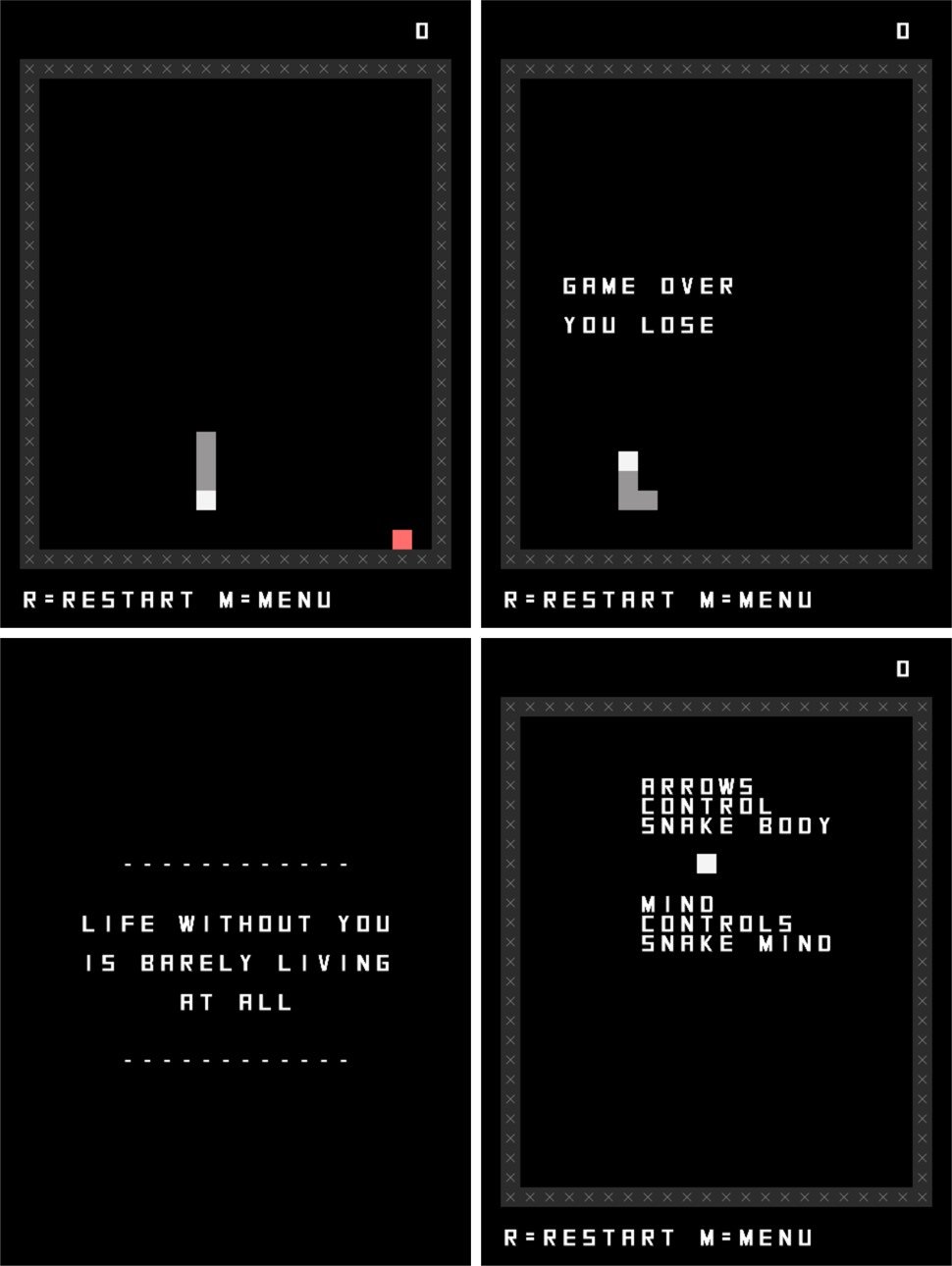
From Pippin Barr, Snakisms is a collection of 21 different variations on the old school cellphone game Snake. Each variation is based on a philosophical -ism like stoicism, capitalism, and determinism. For example, in the asceticism game, you lose as soon as you consume a dot. Clever and funny…I laughed pretty hard at narcissism.
This list of philosophy student karaoke standards by Jarry Lee for McSweeney’s contain some top-shelf philosophy puns.
My Milkshake Brings All the Baudrillard
Psycho Schiller
Hit Me Baby Wittgenstein
Total Eclipse of Descartes
(via @tcarmody)
In 2003, British philosopher Nick Bostrom suggested that we might live in a computer simulation. From the abstract of Bostrom’s paper:
This paper argues that at least one of the following propositions is true: (1) the human species is very likely to go extinct before reaching a “posthuman” stage; (2) any posthuman civilization is extremely unlikely to run a significant number of simulations of their evolutionary history (or variations thereof); (3) we are almost certainly living in a computer simulation. It follows that the belief that there is a significant chance that we will one day become posthumans who run ancestor-simulations is false, unless we are currently living in a simulation. A number of other consequences of this result are also discussed.
The gist appears to be that if The Matrix is possible, someone has probably already invented it and we’re in it. Which, you know, whoa.
But researchers believe they have devised a test to check if we’re living in a computer simulation.
However, Savage said, there are signatures of resource constraints in present-day simulations that are likely to exist as well in simulations in the distant future, including the imprint of an underlying lattice if one is used to model the space-time continuum.
The supercomputers performing lattice quantum chromodynamics calculations essentially divide space-time into a four-dimensional grid. That allows researchers to examine what is called the strong force, one of the four fundamental forces of nature and the one that binds subatomic particles called quarks and gluons together into neutrons and protons at the core of atoms.
“If you make the simulations big enough, something like our universe should emerge,” Savage said. Then it would be a matter of looking for a “signature” in our universe that has an analog in the current small-scale simulations.
If it turns out we’re all really living in an episode of St. Elsewhere, I’m going to be really bummed. (via @CharlesCMann)
YouTube user CollegeBinary does a video series called Three Minute Philosophy. Each episode describes the views and beliefs of a noted philosopher: Galileo, Kant, Descartes, Locke, and more.
A short piece on David Foster Wallace’s college philosophy thesis.
Even after he began writing fiction in college — he simultaneously completed a second undergraduate thesis, in English, that ultimately became his 1987 novel, “The Broom of the System” — it was still philosophy that defined him academically. “I knew him as a philosopher with a fiction hobby,” Jay Garfield, an adviser on Wallace’s thesis and now a professor at Smith College, told me recently. “I didn’t realize he was one of the great fiction writers of his generation with a philosophy hobby.”
More philosopher ratings, this time from Crispin Sartwell. “jacques derrida: there’s something to be said for the deconstructuive method, a tool which i’ve been known to throw around myself. otherwise, this is so, so, so full of shit. obviously, it’s intentionally obscurantist, which is i guess supposed to be part of the profound game of defamiliarizing language etc. fuck you.’
BBC Radio 4 poll results for Greatest Philosopher Ever!!. 1. Karl “Boom Boom” Marx; 2. David “The Kid” Hume; 3. Ludwig “Van” Wittgenstein; 4. Friedrich “Freddie” Nietzsche; 5. Plato “Johnson”



Socials & More