Entries for July 2012
Belgian photographer Kurt Stallaert’s “Bodybuilders’ World” is a project showing a world where children are more ripped than you. It’s creepy as hell imagining these kids lifting weights every day since they were born.


More examples here and here. (via ★scottwilliams)
For some reason, I am a huge sucker for this type of stuff…some of these are really clever! Aren’t they?
3. Expanding Frosting
When you buy a container of cake frosting from the store, whip it with your mixer for a few minutes. You can double it in size. You get to frost more cake/cupcakes with the same amount. You also eat less sugar and calories per serving.
10. Reducing Static Cling
Pin a small safety pin to the seam of your slip and you will not have a clingy skirt or dress. Same thing works with slacks that cling when wearing panty hose. Place pin in seam of slacks and - ta da! - static is gone.
Well, aren’t they? (via a cup of jo)
A team in Boston is working on a method for injecting oxygen straight into a person’s bloodstream, which is faster than the more traditional method (you know, breathing).
Researchers led by Harvard Medical School’s John N. Kheir engineered tiny, gas-filled microparticles, which were about three micrometers in size and invisible to the naked eye. They used a device called a sonicator, which uses high-intensity sound waves, to produce a foamy liquid solution with microparticles that consist of a single layer of lipids that trap a tiny pocket of oxygen gas. They then injected the resulting mixture directly into the bloodstream of rabbits that were severely oxygen-deprived.
Within seconds, infusions of the microparticles restored the blood oxygen saturation of these mammals to near-normal levels. When the rabbits’ windpipes were completely blocked, the solution kept them alive for 15 minutes without a single breath and reduced the likelihood of cardiac arrest and organ injury.
More here and here.
I laughed pretty hard at this video of Mr. Wizard being kinda jerky to the kids on his show.
(via ★interesting)
Marissa Mayer has only been CEO at Yahoo! for a day and she’s already creating viral content like a stop motion Lego version of The Wire. Imagine what we’ll get when she’s been there a week.
Audible guffaws at, “What’s up his ass?” “No one likes our season, that’s what.” (via @jonahkeri)
Jesse Owens’ favorite Olympic memory orig. from Jul 17, 2012
* Q: Wha? A: These previously published entries have been updated with new information in the last 24 hours. You can find past updates here.
From the 99% Invisible podcast, the story of how Charles Dickens’ pet bird (eventually) inspired Geico’s caveman commercials. I loved this.
If you liked it too, you might consider backing their Kickstarter campaign raising funds to produce their third season.
Jesse Owens’ medal-winning exploits against the Aryan backdrop of the 1936 Olympics are well known, but I had never heard the story of his friendship with his German rival in the long jump. Owens explained in a 1960 Reader’s Digest piece:
Walking a few yards from the pit, I kicked disgustedly at the dirt. Suddenly I felt a hand on my shoulder. I turned to look into the friendly blue eyes of the tall German broad jumper. He had easily qualified for the finals on his first attempt. He offered me a firm handshake.
“Jesse Owens, I’m Luz Long. I don’t think we’ve met.” He spoke English well, though with a German twist to it.
“Glad to meet you,” I said. Then, trying to hide my nervousness, I added, “How are you?”
“I’m fine. The question is: How are you?”
“What do you mean?” I asked.
“Something must be eating you,” he said-proud the way foreigners are when they’ve mastered a bit of American slang. “You should be able to qualify with your eyes closed.”
“Believe me, I know it,” I told him — and it felt good to say that to someone.
Here’s a video of Owens competing in Berlin:
Update: Or perhaps Owens fabricated the story? (thx, @jessakka)
For the next two weeks, Christian Marclay’s 24-hour supercut of clocks from movies will be on display at Lincoln Center. The Clock shows Tue-Thu from 8am to 10pm and continuously over the weekend.
The Clock is a spectacular and hypnotic 24-hour work of video art by renowned artist Christian Marclay. Marclay has brought together thousands of clips from the entire history of cinema, from silent films to the present, each featuring an exact time on a clock, on a watch, or in dialogue. The resulting collage tells the accurate time at any given moment, making it both a work of art and literally a working timepiece: a cinematic memento mori.
Admission is free, the space air-conditioned, and the couches only slightly uncomfortable. Seating capacity is 96, so the venue is posting updates on Twitter about how long the line is. I popped in earlier today expecting to wait 20 minutes or more and walked right in…quicker than the Shake Shack. I think the MoMA is supposed to be showing it in the next year or two and that is sure to be a complete mob scene so this is your chance to check it out with relative ease.
Earlier this year, Daniel Zalewski profiled Marclay for the New Yorker about how the artist created the film.
Marclay had a dangerous thought: “Wow, wouldn’t it be great to find clips with clocks for every minute of all twenty-four hours?” Marclay has an algorithmic mind, and, as with Sol LeWitt’s work, many of his best pieces have originated with a conceit as straightfoward as a recipe. The resulting collage, he realized, would be weirdly functional; the fragments, properly synched, would tell the time as well as a Rolex. And, because he’d be poaching from a vast number of films, the result would offer an unorthodox anthology of cinema.
There were darker resonances, too. People went to the movies to lose track of time; this video would pound viewers with an awareness of how long they’d been languishing in the dark. It would evoke the laziest of modern pleasures-channel surfing-except that the time wasted would be painfully underlined.
Andrew Stanton is working on a sequel to Finding Nemo. Holy cussing cuss!
I’ve been hearing for months that he would come aboard to direct the sequel to Disney-based Pixar’s Finding Nemo, with the idea that Disney would give him another shot behind the camera on a live-action film. I’m told he’s now officially come aboard the Finding Nemo sequel and has a concept the studio loves.
Writing for Slate, William McGowan tells the story of the Chickens and the Bulls, an extensive and brazen extortion ring that targetting prominent homosexuals (admirals, Congressmen, entertainers, etc.) and the NYPD & FBI investigators and prosecutors who put the kibosh on the whole thing with minimal exposure to the victims.
Though now almost forgotten, the case of “the Chickens and the Bulls” as the NYPD called it (or “Operation Homex,” to the FBI), still stands as the most far-flung, most organized, and most brazen example of homosexual extortion in the nation’s history. And while the Stonewall riot in June 1969 is considered by many to be the pivotal moment in gay civil rights, this case represents an important crux too, marking the first time that the law enforcement establishment actually worked on behalf of victimized gay men, instead of locking them up or shrugging.
The coda of the case is surprising…one of the members of the extortion ring became one of the gay movement’s most powerful leaders.
Mike Tetreault recently let Boston Magazine follow along while he prepared to audition for the Boston Symphony Orchestra resulting in an interesting look into the BSO and the life of an elite orchestra musician. There’s even a surprise appearance from Steve Blass Disease.
At 33, Tetreault was putting in 100-hour weeks on a patchwork of gigs he’d pieced together — simultaneously serving as the music director at the Galilee Baptist Church in Denver; teaching at the University of Colorado; and working various gigs with the Boulder Philharmonic, the Fort Collins Symphony, the Colorado Ballet, the Colorado Symphony, and Opera Colorado. Yes, he was doing what he loved for a living, but when he added it all up, it was barely a living at all. He’d made $55,000 the previous year, pretty good — until you factored in all the hours, and the fact that the salary had to support two since his wife, Rachel, had been laid off in 2010 from a communications job with the Colorado Symphony. The couple was living in a 625-square-foot one-bedroom apartment.
(via stellar)
If you can’t take the heat, stay out of the Amazon or something.
(via ★Stellar Interesting)
But can she turn the company around? This is a super interesting move.
Marissa Mayer, one of the top executives at Google, will be the next C.E.O. of Yahoo, making her one of the most prominent women in Silicon Valley and corporate America.
The appointment of Ms. Mayer, who was employee No. 20 at Google and was one of the few public faces of the company, is considered a surprising coup for Yahoo, which has struggled in recent years to attract top flight talent in its battle with competitors like Google and Facebook.
Infinite Boston is a photo tour of some of the Boston locations that inspired locations in David Foster Wallace’s Infinite Jest.
In July of what might have been Year of Glad, one year ago this week, I traveled to Boston, Massachusetts with the express purpose of visiting as many of the landmarks and lesser known precincts that appear in, or provide inspiration for, the late David Foster Wallace’s 1996 novel Infinite Jest as I could manage on a Thursday-Sunday trip. My reasons for doing so will become apparent at a later date, but for now I am pleased to present what I am calling “Infinite Boston”: a ruminative travelogue and photographic tour of some fifty or so of these locations, comprising one entry each non-holiday weekday, from now until sometime in early autumn.
The NY Times has a piece about the challenge of making new friends in your 30s and 40s.
In studies of peer groups, Laura L. Carstensen, a psychology professor who is the director of the Stanford Center on Longevity in California, observed that people tended to interact with fewer people as they moved toward midlife, but that they grew closer to the friends they already had.
Basically, she suggests, this is because people have an internal alarm clock that goes off at big life events, like turning 30. It reminds them that time horizons are shrinking, so it is a point to pull back on exploration and concentrate on the here and now. “You tend to focus on what is most emotionally important to you,” she said, “so you’re not interested in going to that cocktail party, you’re interested in spending time with your kids.”
As external conditions change, it becomes tougher to meet the three conditions that sociologists since the 1950s have considered crucial to making close friends: proximity; repeated, unplanned interactions; and a setting that encourages people to let their guard down and confide in each other, said Rebecca G. Adams, a professor of sociology and gerontology at the University of North Carolina at Greensboro. This is why so many people meet their lifelong friends in college, she added.
Allen Tucker writes about how people should pay more for the goods and services they buy. I especially liked this bit on tipping:
No one cares about $5 unless it’s a tip or part of a meal. This is so weird to me. No one haggles over $5 on the price of a car, but it seems that everyone needs a tip calculator to determine if they should pay 21.50 or $22.00 for a meal.
I usually eat at the same few restaurants all the time. They’re maybe 10% more expensive, usually locally owned, and the food doesn’t come out of a frozen pre-made bag before being tossed in the oven. I never tip less than 20%, and I’m not an asshole….at restaurants.
I always get great service. The staff who isn’t even waiting on me comes over to say hi. They know what I’m going to order, and if I forget something, they know it.
This doesn’t happen at Applebee’s or McD’s.
Overpaying in small ways is often not financially significant to you, but it seems like a lot to someone else. Over tipping makes $2 or $5 seem like a lot of money. This multiplies the value of your money.
I wrote about buying higher quality items a few years ago.
My wife and I are ardent upgraders. I rarely buy anything anymore but the things I do buy are usually better versions of things I already have. As things break or wear out, we’ve been replacing them with items that are nicer to use/wear/whatever and will last a whole lot longer than the cheaper stuff.
David House testified in front of a grand jury about his potential association with Bradley Manning. On the advice of his lawyer, he took the fifth on every question except his name and birthdate.
PM: Mr. House, are you involved with the Bradley Manning Support Network?
DH: I invoke.
PM: Did you respond in the affirmative when asked by the FBI if you had heard of known WikiLeaks associate Jacob Appelbaum?
PM: I would like to state for the record that Mr. House is not answering the question and is instead taking notes.
DH: I invoke.
PM: Do you intend to answer any of my questions, aside from your date of birth and your name?
DH: I invoke.
PM: Is that because of the phalanx of attorneys present here today?
Court Stenographer: I’m sorry, the what of attorneys?
PM: Phalanx… the phalanx of attorneys.
DH: As to the phalanx of attorneys, I invoke.
I had no idea grand jury testimony could be so amusing. I love that House offers to help with the presentation display when the DOJ attorneys are having trouble making the image bigger.
It’s been more than a year since the NY Times Magazine published Jose Antonio Vargas’ My Life as an Undocumented Immigrant to much fanfare.
But I am still an undocumented immigrant. And that means living a different kind of reality. It means going about my day in fear of being found out. It means rarely trusting people, even those closest to me, with who I really am. It means keeping my family photos in a shoebox rather than displaying them on shelves in my home, so friends don’t ask about them. It means reluctantly, even painfully, doing things I know are wrong and unlawful. And it has meant relying on a sort of 21st-century underground railroad of supporters, people who took an interest in my future and took risks for me.
Buzzfeed’s Michael Hastings just published an extensive update on Vargas about what has happened to him since the publication of that piece.
In the aftermath of the bombshell piece, Washington State revoked his driver’s license. An online petition popped up, demanding he be deported, and he received threats. He also received a torrent of scathing criticism from his peers in journalism, questioning his character and his motives. Some at the Washington Post, which had originally killed the story, began a whisper campaign against him, suggesting he couldn’t be trusted. He lost a number of friends and colleagues, including some he’d looked up to and admired.
Although Vargas has written about his experience as an undocumented worker, he’s been reluctant to publicly talk about the impact his decision had on his place in the media world, the fallout from his controversial move, and how he’d been treated by fellow members of the press. In an extensive interview with BuzzFeed, he agreed to open up about these issues for the first time-from the surprising support from high profile fans like Mark Zuckerberg, Sheryl Sandberg, and yes, Aaron Sorkin-to what his friends say he viewed as a betrayal from the Washington Post, a newspaper that he called his home for five years.
The UK’s Channel 4 is bringing back Charlie Brooker’s Black Mirror for a second season of three episodes.
He said: ‘British drama seems particularly obsessed with murder and the past, often together. Black Mirror is a rare modern look at where society and individuals could be headed, given the all-pervasive deluge of social media and technology.’
The first series prompted 322 complaints over a story in which a Prime Minister was blackmailed into having sex with a pig live on TV.
Brooker said: ‘Half of the things in the first run of Black Mirror seem to be on the verge of coming true. They’ve got prisoners in Brazilian prisons pedalling on exercise bikes to reduce their sentences (not entirely dissimilar to the episode 15 Million Merits) and Google Glass looks like copyright infringement as far as The Entire History of You is concerned.
For his final project at the Royal College of Art in London, Luc Fusaro outlined a process for building custom-fitting sprinting shoes that weigh just 96 grams.

The shoes are fabricated using a selective laser sintering process that uses precise 3-D scans of an athlete’s foot to achieve maximum fit. The really tantalizing (but unfortunately uncited) bit about Fusaro’s design is that by fitting shoes to a sprinter’s feet so precisely, significant performance improvements might result:
Scientific investigations have shown that tuning the mechanical properties of a sprint shoe to the physical abilities of an athlete can improve performance by up to 3.5%.
For 100-meter world record holder Usain Bolt, a performance improvement of 3.5% could lower his world record to 9.24…just by wearing different shoes. That seems insane but Speedo’s LZR Racer suit that was responsible for dozens of world records falling in 2008 were shown to lower racing times by 1.9 to 2.2 percent so that sort of improvement is certainly possible. (via @curiousoctopus)
Yesterday In Focus featured new work from photographer Camille Seaman: storm clouds in the skies of the Midwest.

Nice cumulonimbus mammatus in #s 4, 14, and 16. And by coincidence, the NY Times Lens blog also featured Seaman’s work yesterday, an earlier project that entailed shooting portraits of icebergs.
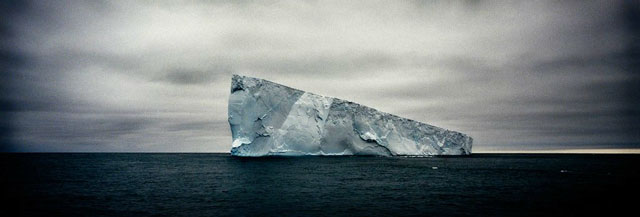
I like Seaman’s portraiture approach to things like clouds and icebergs:
“They are like humans in that each one reacts to its environment and its circumstances in its own way,” Camille Seaman, 42, said. “I’ve come across icebergs that were very stalwart and just refused to dissolve or break up. And there were others — massive, massive icebergs — that were like ‘I can’t take it anymore’ and in front of my eyes would just dissolve into the sea. There’s so many unique personalities. There’s a sadness to them.”
With the Olympics about two weeks away, consider this a final you-can’t-unsee-it reminder that the 2012 London Olympics logo looks like Lisa Simpson performing oral sex.

It’s not as bad as some of the others on this list (oh, that Mon-Sat logo), but it’s still exceptionally unforgettable. Enjoy the wall-to-wall Olympic coverage for the next two weeks!
Feel it, feel it, feel the vibration? Ever have that feeling that something is vibrating in your pocket but when you reach for your phone, nothing is there? If you have experienced such bad vibes, you’re by no means alone. From The Atlantic, here are 11 things you need to know about phantom vibrations. Even if the vibrations are imagined, your carrier will still probably figure out a way to charge you for the call.
89 percent of the undergrad participants in this current study had felt phantom vibrations. In the two other studies on this in the literature — a 2007 doctoral thesis, which surveyed the general population, and a 2010 survey of staff at a Massachusetts hospital — majorities of participants experienced phantom vibrations.
Errol Morris has a new essay on the New York Times site this week and it’s surprisingly short. And it’s actually not an essay but a two-question quiz based on this short passage by David Deutsch:
If a one kilometer asteroid had approached the Earth on a collision course at any time in human history before the early twenty-first century, it would have killed at least a substantial proportion of all humans. In that respect, as in many others, we live in an era of unprecedented safety: the twenty-first century is the first ever moment when we have known how to defend ourselves from such impacts, which occur once every 250,000 years or so.
It doesn’t seem like much and Morris is being coy about it, but I’ve been assured that something interesting will come of it if enough people take it. So take it!
God mode in-app purchase for iOS games orig. from Jul 11, 2012
Building Stories, new Chris Ware graphic novel! orig. from Jul 10, 2012
The history of Twitter’s @reply orig. from Jul 10, 2012
* Q: Wha? A: These previously published entries have been updated with new information in the last 24 hours. You can find past updates here.
Go ahead and cross off ‘fishing off the front porch’ from the list of enjoyable summertime activities. If you’re impatient, skip to about :38.
Heck, we may as well round out the shark beat with a report of a baby shark for sale on the subway today, and a crazy picture of a shark stalking a kayak off the coast of Cape Cod this past weekend.
(hat tip @anildash)
XKCD is answering “hypothetical questions with physics” once a week and the first installment is just flat-out delightful: What would happen if you tried to hit a baseball pitched at 90% the speed of light?
The ideas of aerodynamics don’t apply here. Normally, air would flow around anything moving through it. But the air molecules in front of this ball don’t have time to be jostled out of the way. The ball smacks into them hard that the atoms in the air molecules actually fuse with the atoms in the ball’s surface. Each collision releases a burst of gamma rays and scattered particles.
These gamma rays and debris expand outward in a bubble centered on the pitcher’s mound. They start to tear apart the molecules in the air, ripping the electrons from the nuclei and turning the air in the stadium into an expanding bubble of incandescent plasma. The wall of this bubble approaches the batter at about the speed of light-only slightly ahead of the ball itself.
All science writing should (and probably could!) be this entertaining. (via @delfuego)
From a collection of his papers recently acquired by The Library of Congress, a 1954 reading list from physicist Carl Sagan. Huxley, Plato, Shakespeare, and the Bible are all on there among many others. If I understand mathematics properly, and I think I do, using the associative property, if you read all these books, you will become as smart and cool as Carl Sagan was. Or is it the transitive property?
Free idea for iOS game devs: for just about any iOS game I’ve played for the more than 60 minutes, I would pay dearly (like $10-15) for a God-mode option that let you play the game infinitely long without dying. The type of God mode would depend on the game. For Tiny Wings, it would be as simple as removing the sunset. For Ski Safari, ditch the avalanche. For Kingdom Rush, God mode might be something like starting any level with unlimited gold and unlimited enemies. (For KR, I would probably pay $30 for an unlimited mode.) And perhaps God mode purchase option only unlocks after a certain amount of gameplay. It wouldn’t work for any game…e.g. I can’t think of what God mode for Angry Birds would be like. But for a certain type of game, God mode would be a great way for experts to explore more of the games they love.
Update: Several people of Twitter mentioned The Mighty Eagle as Angry Birds’ God mode, which is close. A couple of others also suggested unlimited birds of your choosing on every level…good idea!
If you put enough rubber bands around a watermelon, it will explode.
(via serious eats)
Clam stealing salt from a table orig. from Jul 09, 2012
* Q: Wha? A: These previously published entries have been updated with new information in the last 24 hours. You can find past updates here.
Two for you tonight. First up, Ken Block visits all your favorite San Francisco landmarks in his latest Gymkhana video. It’s a bit spooky how there’s hardly anyone on the streets, but don’t let that stop you from enjoying Block doing figure eights in between moving trolleys.
Then watch BMX maniac Harry Main do gorgeous and dangerous things on a bicycle.
(via Chris)
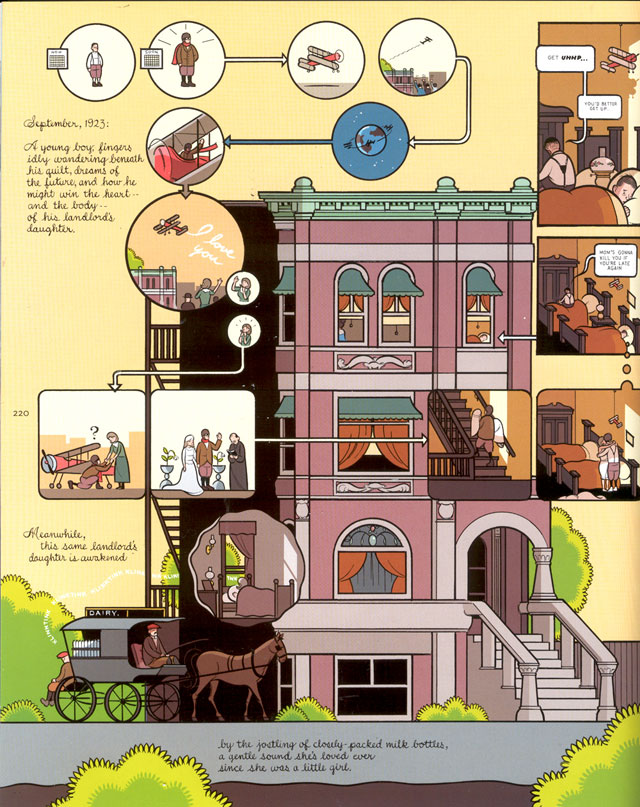
Chris Ware is coming out with a new graphic novel called Building Stories, which has appeared in bits and pieces in other places.
Building Stories imagines the inhabitants of a three-story Chicago apartment building: a 30-something woman who has yet to find someone with whom to spend the rest of her life; a couple, possibly married, who wonder if they can bear each other’s company another minute; and the building’s landlady, an elderly woman who has lived alone for decades. Taking advantage of the absolute latest advances in wood pulp technology, Building Stories is a book with no deliberate beginning nor end, the scope, ambition, artistry and emotional prevarication beyond anything yet seen from this artist or in this medium, probably for good reason.
(via @mrgan)
Update: Building Stories is actually a boxed set of small volumes. Photos and more at Comics Beat. (thx, @thebrd)
In 1880, the top attraction at a zoo in Hamburg, Germany was an Inuit family who performed seal hunts and other Eskimo-like activities for huge crowds.
At the Hagenbeck Tiergarten — a private zoo in Hamburg — the Inuit were the top attraction. The crowds likely viewed them as primitives, inferior to the cultured men and women of the Old World. “Who knows what these children of the roughest North may be thinking about their highly educated European fellow humans,” wrote one German newspaperman. He was right about one thing: The Germans had no idea. Even as they gawked at the Inuit, the Inuit were peering back at them — and taking notes.
Abraham Ulrikab was, in fact, more accomplished than most of the people paying to stare at him. Raised at a mission in Hebron, Labrador, he was 35 years old, spoke three languages, dabbled in cartography, and played a mean fiddle. He was also a church-going Christian who, in his real life, had long since abandoned the sealskin boots and parka that were his costume at the zoo. Since he could read and write, he kept a diary, documenting his experience as a human exhibit.
As with many other interactions between Europeans and native North Americans, this zoo experiment ended quickly and very badly. (thx, eva)
vintage post from Jul 2012
· gift link
This is a five-minute video of Andy Warhol eating a Burger King hamburger accompanied by Heinz ketchup.
The scene is part of a film done by Jorgen Leth called 66 Scenes from America.
Leth had his assistant buy some burgers and directly advised him to buy some in halfway neutral packaging as Leth was afraid that Warhol might reject some brands (Warhol always had an obsession with some of his favorite brands).
So Andy Warhol finally did arrive at the studio, of course along with his bodyguards, and when he saw the selection of burgers the assistant had brought he asked “Where is the McDonald’s?” and Leth — slightly in panic — was immediately like “I thought you would maybe not like to identify…” and Warhol answered “no that is the most beautiful”. Leth offered to let his assistant quickly run to McDonald’s but Warhol refused like “No, never mind, I will take the Burger King.”
(via bon appetit)
Evan Henshaw digs through some ancient tweets to find the first usage of the now-ubiquitous @reply on Twitter.
The @reply was created on Thanksgiving day, November 23rd, 2006. One wonders if this was the first case of geeks using twitter to avoid their family on thanksgiving.
See also the first use of hashtags on Twitter. It’s funny that so many of the things that make Twitter compelling weren’t actually invented by Twitter but by the users and developers.
Update: Garrett Murray finds an even earlier usage.
vintage post from Jul 2012
· gift link
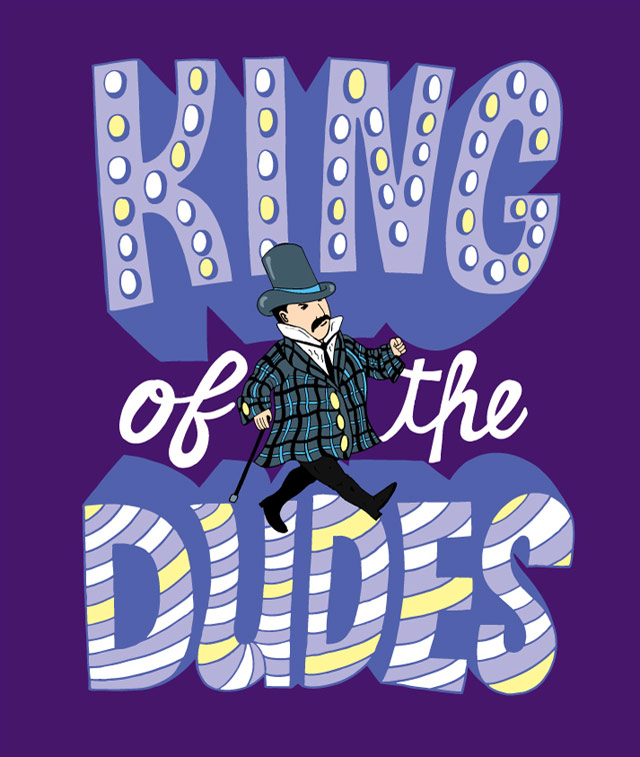
E. Berry Wall was a dude. But not just any dude. In 1888, he was declared “King of the Dudes” in a competition against another gentleman, one Robert Hilliard.
Wall became famous after meeting Blakely Hall, a reporter hungry for good copy. Thereafter, every week or so, Hall’s articles publicizing Wall’s adventures in clothing appeared in newspapers across the country. Then one of Hall’s competitors set up a rival, actor Robert “Bob” Hilliard, another flashy dresser. Thus began the Battle of the Dudes, in which each sought to eclipse the other in sartorial extremes. According to the Times, Wall finally won when, during the Great Blizzard of 1888, he strode into the Hoffman House bar clad in gleaming boots of black patent leather that went to his hips. (Nonetheless, some social historians claim Hilliard won with the high boots, supposedly part of his Western gambler’s costume from a play in which he was then appearing).
But it was Wall who won a later sartorial marathon:
Wall won another contest in Saratoga when daredevil financier John “Bet-A-Million” Gates wagered that he could not wear 40 changes of clothes between breakfast and dinner. On the appointed day, Wall repeatedly appeared at the racetrack in one flashy ensemble after another until, exhausted but victorious, he at last entered the ballroom of the United States Hotel in faultless evening attire to wild applause.
I wonder how Wall would have done against the likes of Kanye and his entourage? (via @mrgan)
Note: Illustration by Chris Piascik.
NY Magazine has recent interviews with two of the bigger American filmmakers in the last couple decades, Spike Lee and Oliver Stone.
Will Leitch talks to Spike Lee about about movies, Brooklyn, and Barack & Michelle:
When he was sizing Michelle up, this fine woman, he said, “How am I going to impress her?” I always kid him, good thing he didn’t choose motherfucking Driving Miss Daisy or she would have dumped his ass right there.
And then in an interview by Matt Zoller Seitz, Oliver Stone talks about process:
It’s very intense, and ultimately very painful. I’ve actually done some acting, but I’m not talking about that. I’m using acting as a metaphor. For me, filmmaking is like acting, in the way that it takes over you. It becomes part of you. The role, the lines, the personality of the character — it’s all in you. It’s in your dreams. You think about the character without meaning to, in your sleep. I compare the process to acting because of that quality of immersion, that attempt to internalize the material and become the story. If the attempt is successful, the result is a good or at least an interesting film. But once it’s done, it’s over, and the actor goes back to being himself.
Can’t trust a clam farther than you can throw it, especially when salt is concerned, apparently.
Actually, I’m not sure if this video proves anything (what would happen if there was sugar on the table, or brownie crumbs, or cinnamon?) but it is pretty awesome. (via ★asimone)
Update: Just in case there’s any confusion, the clam is not eating the salt as the video title claims. That’s the clam’s foot, out to survey its surroundings.
I love McLean Fahnestock’s series of modified photos of rocket launches without the rockets:

Fahnestock also did the video of all 135 Space Shuttle launches at once.
How do you improve upon Game of Thrones? Maybe by adding lightsabers to the duel of Jamie Lannister and Ned Stark?
(via nextdraft)
Artist Angelica Dass pairs photographs of people with the Pantone colors of their skin colors.

More of the project can be found on her Tumblr. (via designboom)
You may not believe me, but this postmortem by SCOTUSblog’s Tom Goldstein of how the media covered the Supreme Court’s decision regarding the Patient Protection and Affordable Care Act is super fascinating. It’s impeccably sourced, straighforward, and surprisingly compelling.
The Court’s own technical staff prepares to load the opinion on to the Court’s website. In years past, the Court would have emailed copies of the decision to the Solicitor General and the parties’ lawyers once it was announced. But now it relies only on its website, where opinions are released approximately two minutes later. The week before, the Court declined our request that it distribute this opinion to the press by email; it has complete faith in the exceptional effort it has made to ensure that the website will not fail.
But it does. At this moment, the website is the subject of perhaps greater demand than any other site on the Internet — ever. It is the one and only place where anyone in the country not at the building — including not just the public, but press editors and the White House — can get the ruling. And millions of people are now on the site anxiously looking for the decision. They multiply the burden of their individual visits many times over — hitting refresh again, and again, and again. In the face of the crushing demand, the Court cannot publish its own decision.
The opinion will not appear on the website for a half-hour. So everyone in the country not personally at 1 First St., NE in Washington, DC is completely dependent on the press to get the decision right.
Reading it, the thing that struck me most is that these huge media machines still operate mostly on an individual basis. One person read the ruling for CNN, told one person in the control room, and then millions and millions of people heard that (mis)information just a few seconds later on CNN, on Twitter, and even in the Oval Office.
This is a video showing all 135 launches of the various Space Shuttle at once.
Turn up your sound. I’ve seen this done with episodes of the Simpsons and Star Trek, but this is way better. The fade out on the tiny Challenger square is surprisingly affecting. Created by McLean Fahnestock.
Uh oh, this is bad news for my productivity after this Thursday…Andreas Illiger is set to release the sequel to the mega-fun Tiny Wings on July 12th. In the meantime, watch the adorable handmade trailer:
If I could package a cool breeze into a newsletter, I’d do it. Because a lot of you are hot. How hot? In towns across the U.S., 942 temperature records have already been broken this month. In June, 3,282 temperature records were broken. And since the beginning of the year, 23,283 daily high records have been set. These two maps tell the pretty amazing story of the 2012, the year of the heat.
Author Patrick Somerville recently received the bittersweet honor of a “soggy” review in the New York Times of his new book, The Bright River. As he read the review, however, he realized the critic, Janet Maslin, had misunderstood a critical plot point in the book’s prologue, thus coloring her understanding of the entire novel. Somerville wrote about this experience in Salon. The best part is since the character in his book has an email address, the New York Times used that address to fact-check the review (after it had been published), addressing the question to the character.
Dear Mr. Hanson,
Given the vagaries of fictional life, I understand that you might not be able to answer this question, which has come up after one of our readers read the review of “This Bright River” that we published. But - in the prologue, are you the person who is hit on the head?
-Ed Marks, Culture Desk
Somerville responds in character leading to my favorite part, a bit into the back and forth: “But that is just my opinion, and I am not real.”
*This post wouldn’t be complete without a general warning to authors to make sure your prologue does not convey important plot details in a manner potentially confusing to NYT reviewers. (via @alexanderchee)
I passed this over several times before actually watching. I’m glad I did because it’s quite charming, and if you haven’t seen it, you’ll love it. 12 year old Jeremiah McDonald from 1992 interviews 32 year old Jeremiah McDonald.
Newer posts
Older posts







Socials & More