kottke.org posts about science
Because of climate change and other activities caused by humans (invasive species, habitat loss), hybridization of species is resulting in things like super-sized coyotes, pizzly bears (grizzly/polar bear hybrids), and other animals that may not be ideally suited to survive.
Some scientists and conservationists see the coywolf as a nightmare of the Anthropocene — a poster child of mongrelization as plants and animals reshuffle in response to habitat loss, climate change and invasive species. Golden-winged warblers increasingly cross with blue-winged warblers in the U.S. Northeast and eastern Canada. Southern flying squirrels hybridize with northern flying squirrels as the southern species presses northward in Ontario. Polar bears mate with grizzlies in the Canadian Arctic along the Beaufort Sea to produce “pizzly bears.”
All of this interbreeding upsets the conventional notion of species as discrete, inviolable entities. Moreover, some scientists and conservationists warn that hybridization will degrade biodiversity as unusual species are lost to genetic homogenization.
Partly scientists fear hybrids will be less fit than organisms that have evolved in place over eons. And often that is true, but the problem solves itself over time as hybrids lose out in the competitive race for survival.
University of Minnesota student Daniel Crawford and geography professor Scott St. George have collaborated on a piece of music called Planetary Bands, Warming World. Composed for a string quartet, the piece uses climate change data to determine the musical notes — the pitch of each note is tuned to the average annual temperature, which means as the piece goes on, the musical notes get higher and higher.
(via @riondotnu)
Researchers using the Keck Observatory have discovered a new kind of galaxy that are large but filled with relatively few stars.
“If the Milky Way is a sea of stars, then these newly discovered galaxies are like wisps of clouds”, said van Dokkum. “We are beginning to form some ideas about how they were born and it’s remarkable they have survived at all. They are found in a dense, violent region of space filled with dark matter and galaxies whizzing around, so we think they must be cloaked in their own invisible dark matter ‘shields’ that are protecting them from this intergalactic assault.”
The night sky in such galaxies would look a lot like our skies do in large cities:
“If there are any aliens living on a planet in an ultra-diffuse galaxy, they would have no band of light across the sky, like our own Milky Way, to tell them they were living in a galaxy. The night sky would be much emptier of stars,” said team member Aaron Romanowsky, of San Jose State University.
(via gizmodo)
If you hold a lit match an inch or two over the smoking wick of a recently extinguished candle, the candle will light again. If you record that happening with a high speed camera and then slow it way down, it gives you some clues to how that happens:
Hint: wax is a candle’s fuel and smoke is wax vapor… (via digg)
Here’s a video of a titanium bar being anodized…it cycles through several different colors before settling on a pinkish hue.
Ok neat, but why does it do that? Anodizing is an adjustment of the oxide levels on the surface of the titanium. The colors are caused by the interference of the light traveling through the oxide and reflecting off the shiny metal surface underneath…different thicknesses produce different colors.1 As the voltage is applied to the metal, more and more oxide builds up, producing the color cycling even shown. Pretty cool!
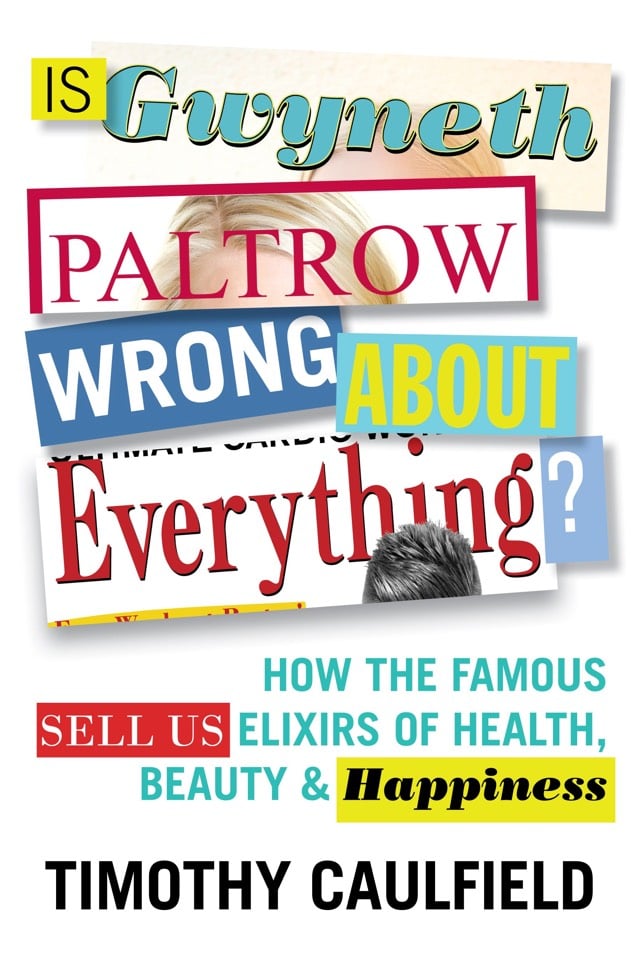
From juice cleanses to vaccines to gluten to exercise to, uh, vagina steaming, celebrities like Jenny McCarthy and Gwyneth Paltrow are often found making claims that have little or no scientific evidence behind them. Timothy Caulfield recently wrote a book exploring the world of celebrity pseudoscience called Is Gwyneth Paltrow Wrong About Everything?
But while much has been written about the cause of our obsession with the rich and famous, Caulfield argues that not enough has been done to debunk celebrity messages and promises about health, diet, beauty, or the secret to happiness. From the obvious dangers, to body image of super-thin models and actors, or Gwyneth Paltrow’s enthusiastic endorsement of a gluten free-diet for almost everyone, or Jenny McCarthy’s ill-informed claims of the risks associated with vaccines, celebrity opinions have the power to dominate our conversations and outlooks on our lives and ourselves.
Julia Belluz of Vox interviewed Caulfield about the book.
JB: So is Gwyneth actually wrong about everything?
TC: It’s incredible how much she is wrong about. Even when she is right about stuff — like telling people to eat more fruits and vegetables — there is always a bit of a tinge of wrongness. She’ll say, “It has to be organic,” for example. She is still distracting us with these untrue details, as opposed to just pushing the honest truth.
See also Your detoxing juice cleanse is bullshit.
Update: I had forgotten about this book, so I was pleased to be reminded of it by this recent interview with Caulfield about celebrity health advice.
Colon cleanse: There is no evidence we need to cleanse our colons or detoxify our bodies. Vagina steaming to detoxify and increase fertility: again, absolutely ridiculous. Getting stung by bees is her latest thing for anti-aging — because, yes, anaphylaxis is so revitalizing. Goop, her website, suggested wearing a bra can cause cancer. This is raising fears, completely science free. I could go on and on and on.
Update: From Yvette d’Entremont at The Outline, The Unbearable Wrongness of Gwyneth Paltrow.
But what’s at the heart of Paltrow’s empire? Is she just a dedicated health-seeker taking us on her path for utmost physical and spiritual well-being? No. Paltrow’s Goop is pure, unadulterated, blood-diamond free, organic-certified, biodynamic, moon-dusted bullshit. And you should avoid it at all costs. Here’s why.
Do you think you could ride a bicycle that steers backwards…aka it turns left when you turn right and vice versa? It sounds easy but years of normal bike riding experience makes it almost impossible. Destin Sandlin of Smarter Everyday taught himself how to ride the backwards-steering bike; it took months. Then he tried riding a normal bicycle again…
Loved this video…great stuff. (via ★interesting)
The Hubble Space Telescope was deployed into space on April 25, 1990 and began snapping images of the sky shortly thereafter. Phil Plait, the NY Times, NPR, and How We Get To Next have chosen some of their favorite Hubble images, and Taschen published a coffee table book of Hubble images called Expanding Universe.
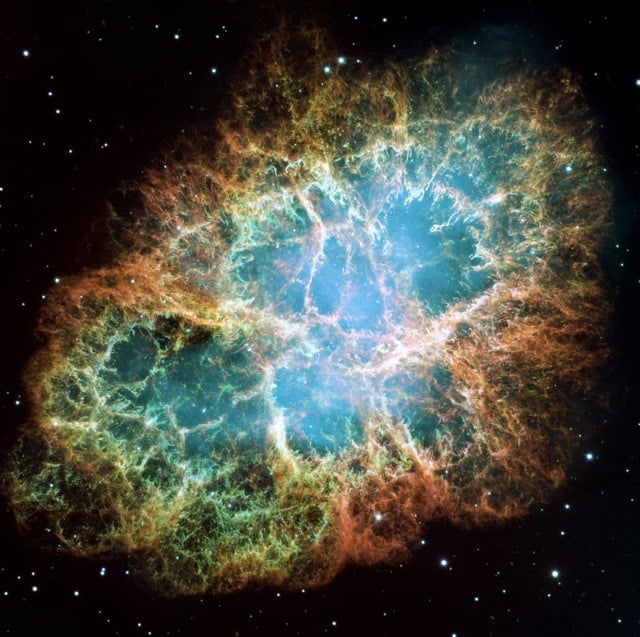
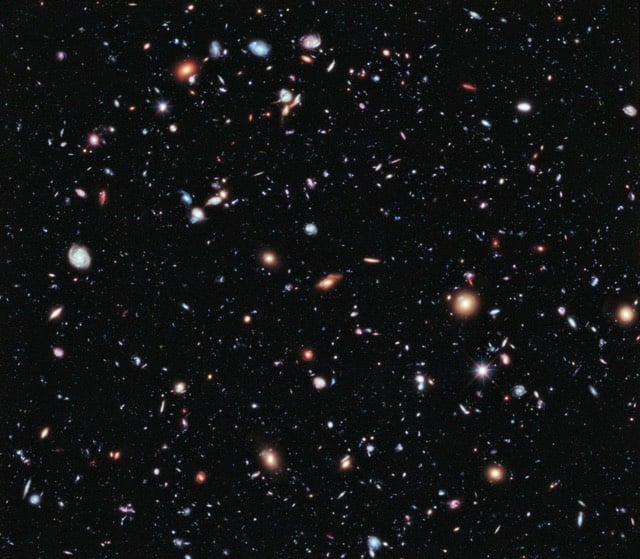
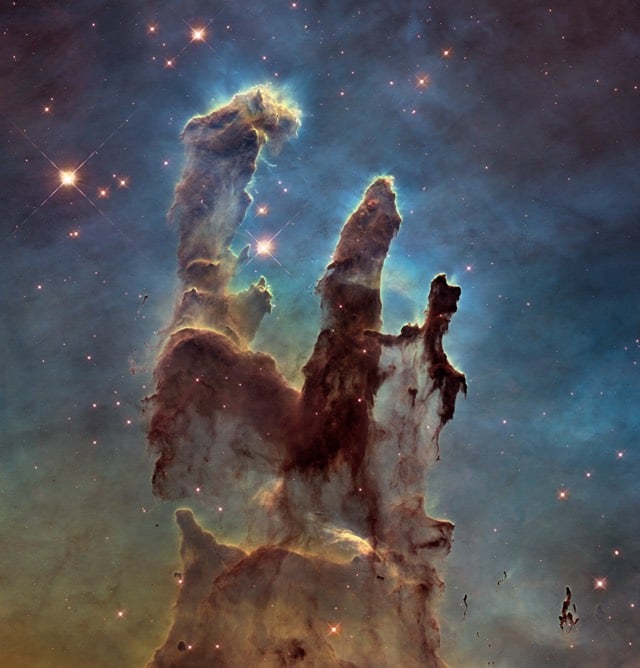
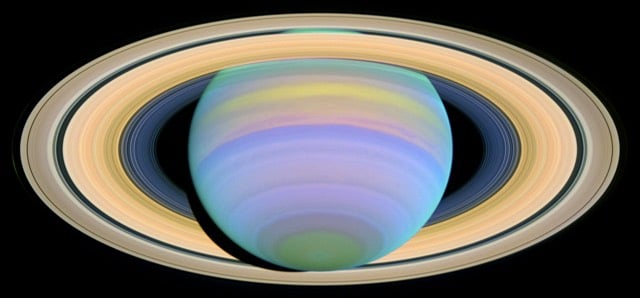
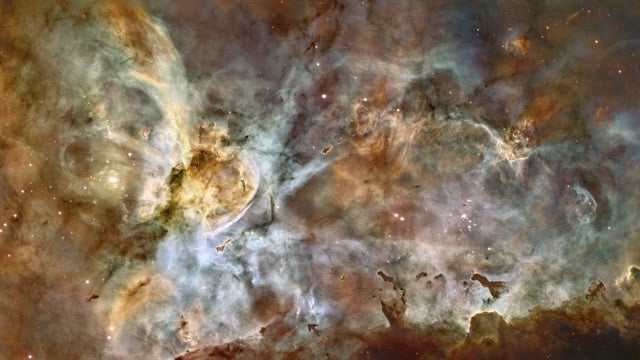
I still find it incredible that we have a telescope orbiting the Earth. Happy birthday, Hubble. Here’s to many more.
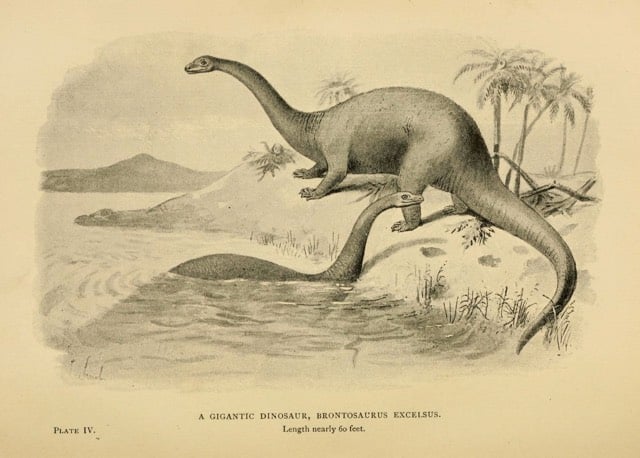
After years of the Flintstones lying to me, I’d just gotten used to the idea of the Brontosaurus not actually being a dinosaur. But a recent study of the classifications given to various species and genera within the diplodocid group of dinosaurs has determined that the Brontosaurus and the Apatosaurus are different enough to be two separate species.
Very broadly, their tree confirmed established ideas about the evolutionary relationships among diplodocids. But the scientists also concluded that Apatosaurus and Brontosaurus were different enough to belong in their own genera. Many of the anatomical differences between the two dinosaurs are obscure, Tschopp says, but Apatosaurus’s stouter neck is an obvious one. “Even though both are very robust and massive animals, Apatosaurus is even more so,” he adds.
Tschopp and his team thought very carefully about their decision to reinstate Brontosaurus, and they expect some pushback. “We knew it would be a major finding because Brontosaurus is such a popular name,” he says. “I’m pretty sure there will be a scientific discussion around this. I hope there will be. That’s how science works.”
Huzzah! Now reinstate Pluto to full planetary status and we’ll be all set. See also The Kindly Brontosaurus. (via @coudal)
In 1983, the BBC aired a six-part series called Fun to Imagine with a simple premise: put physicist Richard Feynman in front of a camera and have him explain everyday things. In this clip from one of the episodes, Feynman explains in very simple terms what fire is:
So good. Watch the whole thing…it seems like you get the gist about 2 minutes in, but that’s only half the story. See also Feynman explaining rubber bands, how trains go around curves, and how magnets work.
James Krupa teaches a mandatory biology class at the University of Kentucky and some students have a difficult time because Krupa refuses to shy away from evolution.
Rarely do I have a Kentucky student who learned about human evolution in high school biology. Those who did usually attended high schools in large urban centers like Louisville or Lexington. Given how easily it can provoke parents, the teaching of human evolution is a rarity in high school, so much so in Kentucky that it startled me when I first arrived.
The story of our evolutionary history captivates many of my students, while infuriating some. During one lecture, a student stood up in the back row and shouted the length of the auditorium that Darwin denounced evolution on his deathbed — a myth intentionally spread by creationists. The student then made it known that everything I was teaching was a lie and stomped out of the auditorium, slamming the door behind him. A few years later during the same lecture, another student also shouted out from the back row that I was lying. She said that no transitional fossil forms had ever been found — despite my having shared images of many transitional forms during the semester. Many of her fellow students were shocked by her combativeness, particularly when she stormed out, also slamming the door behind her. Most semesters, a significant number of students abruptly leave as soon as they realize the topic is human evolution.
I personally don’t understand the compatibility of evolutionary biology and Christianity Krupa emphasizes in his class, but I guess it helps to meet people halfway?
This article on the science of free diving is fascinating. Boyle’s Law predicted that the human body couldn’t survive depths past 100 feet — after which, the lungs would rupture — but millions of years of evolution has equipped the human body with all sorts of tricks to survive at depths of over 900 feet.
Lundgren, among others, demonstrated how these phenomena might counteract Boyle’s law. He recruited volunteer firemen from a fire brigade in the Swedish city of Malmo, submerged them up to the neck in water, and used a heart catheter to measure the increase in blood circulation in the chest. Lundgren discovered the body was able to counteract the increased outside water pressure by reinforcing vessels in the walls of the lungs with more blood, in much the same way we increase tire pressure by adding more volume of oxygen to the inside of a tire.
Boyle’s Law had not been overturned. Scientists simply hadn’t taken into account the effect this counterforce could exert to allow survival underwater. “A lot of blood, much more than was usually thought, can be transferred from the blood circulation out in the tissues into the blood vessels of the lung,” Lundgren said, placing that amount at about half a gallon. The extra, densely packed blood can act as a bulwark, exerting a counterforce against the increased pressure pushing inward by the water.
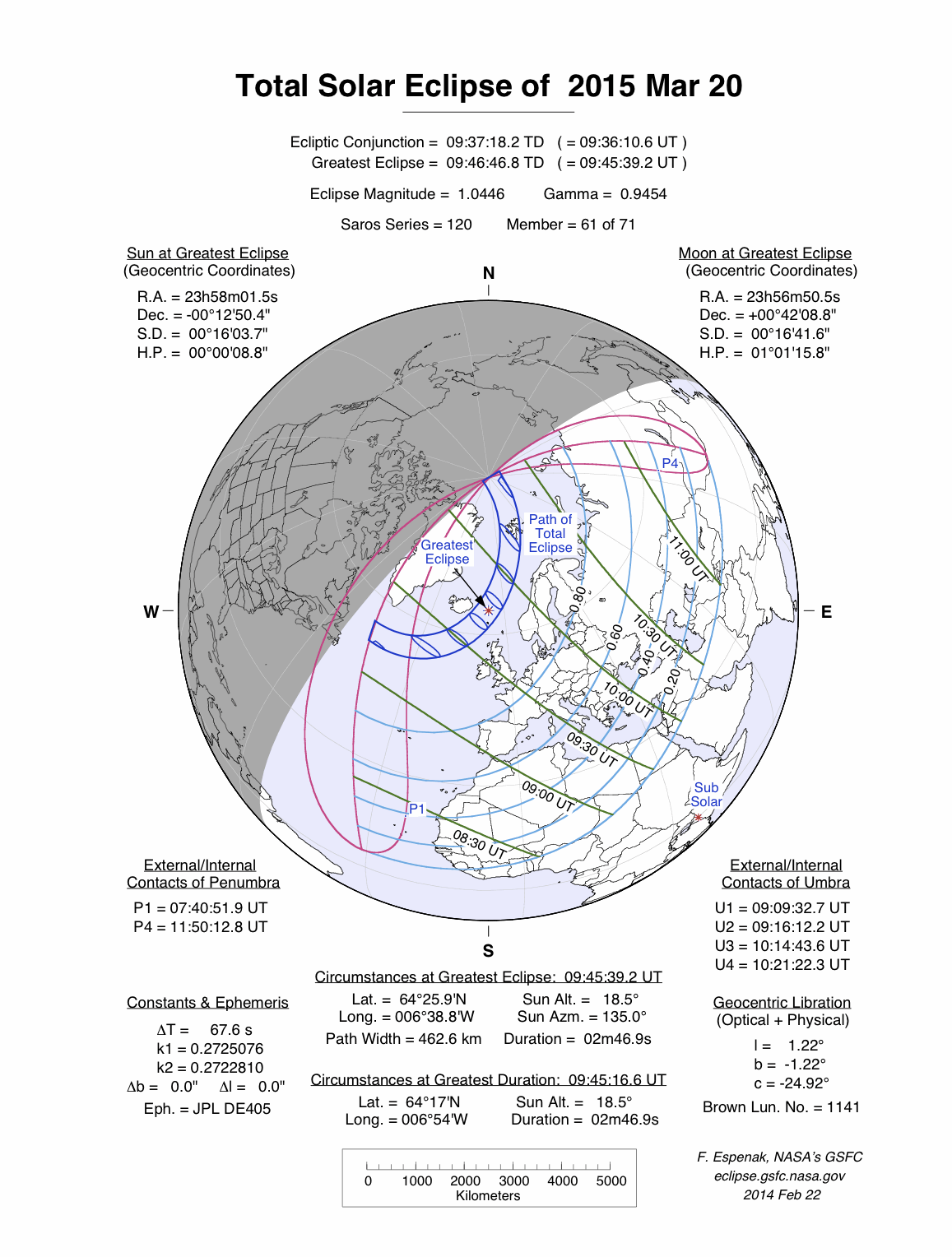
A group of astronomy enthusiasts rented a plane and flew through the shadow cast by the recent eclipse of the Sun. One passenger took the following video. Look at that shadow creeping across the cloud cover! So cool.
P.S. Still super excited for the 2017 eclipse! (via slate)
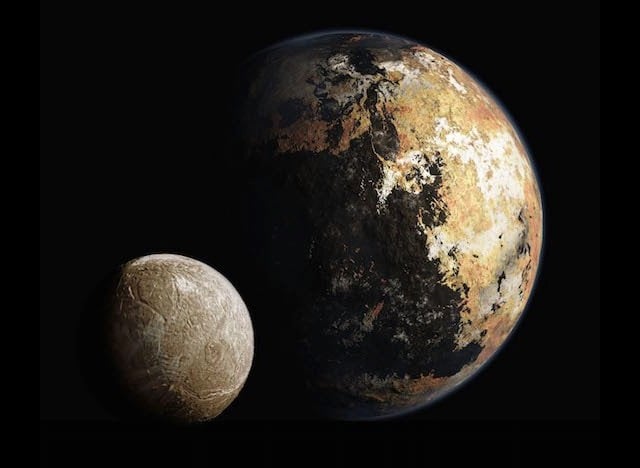
Ok, Pluto fans. They evicted Pluto from our solar system’s planetary pantheon, but a NASA mission launched in 2006 is nearing the dwarf planet with its cameras. We’ll soon have photos of Pluto that are much more high resolution than we currently have, which means scientists will need names for all the new geographic features. The Our Pluto site has been set up to help suggest and vote on names for these features. Naming themes include historic explorers, travelers to the underworld, and scientists and engineers. Go vote! (via slate)
Apparently, this is what it looks like when a lion is getting a CAT scan.
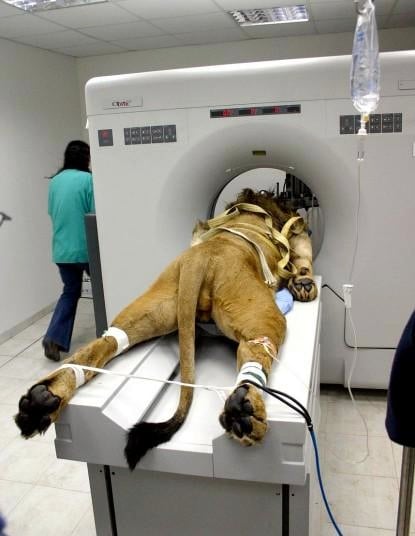
(via Amanda Macias)
This video, shot at 36,000 frames per second, shows a balloon popping underwater. I am not quite sure what I expected, but it wasn’t this.
For instance, the air bubbles do not immediately rise to the surface…it takes them about 20-25 ms to get in the mood. Compare with a slow motion video of popping a water balloon in air:
Again, watch how it takes for gravity to kick in. It’s like Wile E. Coyote after having run off a cliff, hanging in midair holding a sign that says “EEP!” (via @BadAstronomer)
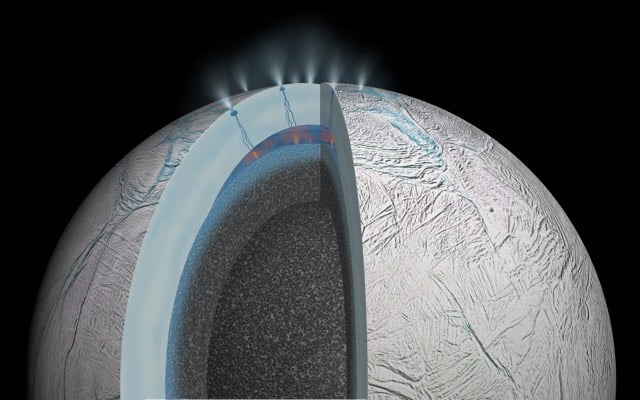
Two teams of NASA scientists have discovered evidence that hydrothermal vents on the Saturnian moon of Enceladus show signs of “active hot-water chemistry”. Why is that exciting? Because similar chemistry occurs deep in the Earth’s oceans *and* can support life. Phil Plait explains.
We see these vents in the ocean bottom on Earth, too. The water there is very hot, heated by tectonic processes inside Earth’s crust. It brings up minerals and nutrients, and life thrives there. A lot of the processes are the same as what’s imagined is happening on Enceladus; minerals are dissolved in hot water that spews up into the cold ocean, precipitating out. A lot of it is sulfur based, but amazingly life exists there anyway. The environment is highly toxic to humans-huge pressure, boiling water near the vents, freezing a bit farther away, and loaded with icky chemicals-but as a scientist once said, “Life finds a way.”
Between the evidence of past flowing water on Mars, Titan’s hydrocarbon lakes, Europa’s underground ocean, and Enceladus, it seems increasingly probable we’ll find life somewhere else in the solar system. That’s a pretty exciting prospect! (via @ericholthaus)
Update: It was also announced today that the Hubble has detected signs of a salty underground ocean on Jupiter’s moon Ganymede.
New observations of the moon using Hubble support this. Ganymede has a weak magnetic field, and, like on Earth, this generates an aurora-the glow created when high-speed subatomic particles slam into the extremely thin atmosphere. This glow is brightest in ultraviolet, and so astronomers used the Space Telescope Imaging Spectrograph (my old camera!) on Hubble to observe Ganymede. STIS is quite sensitive to UV and detected the aurora.
Now this part is a bit tricky: Jupiter has a powerful magnetic field as well, which interacts with Ganymede’s. As they do, the aurora changes position over time, moving up and down in latitude. However, the observations show that the aurorae do not change nearly as much as expected if Ganymede were solid. The best way to explain this is if the moon has a salty ocean under its surface. The ocean would have its own magnetic field and would resist the influence of Jupiter’s magnetic field, which in turn keeps the aurora steadier.
Turns out there’s water all over the place in the solar system. How about that?
Astronomers have been able to view the same supernova in a distant part of the Universe several times due to the gravitational lensing effect of a cluster of galaxies in-between here and there. From Dennis Overbye in the NY Times:
Supernovas are among the most violent and rare events in the universe, occurring perhaps once per century in a typical galaxy. They outshine entire galaxies, spewing elemental particles like oxygen and gold out into space to form the foundations of new worlds, and leaving behind crushed remnants called neutron stars or black holes.
Because of the galaxy cluster standing between this star and the Hubble, “basically, we got to see the supernova four times,” Dr. Kelly said. And the explosion is expected to appear again in another part of the sky in the next 10 years. Timing the delays between its appearances, he explained, will allow astronomers to refine measurements of how fast the universe is expanding and to map the mysterious dark matter that supplies the bulk of the mass and gravitational oomph of the universe.
Scientists expect the supernova to reappear in the next few years. Gravitational lensing was predicted by Einstein’s general theory of relativity and as Overbye writes, “the heavens continue to light candles for Albert Einstein.”
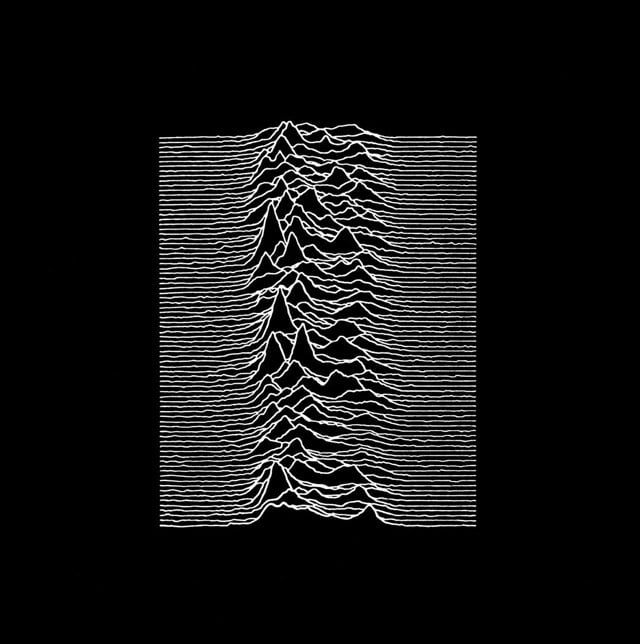
For Scientific American, Jen Christiansen tracks down where the iconic image on the cover of Joy Division’s Unknown Pleasures came from. Designer Peter Saville found the image, a stacked graph of successive radio signals from pulsar CP 1919, in a 1977 astronomy encyclopedia but it actually originated in a 1970 Ph.D. thesis.
By now I had also combed through early discovery articles in scientific journals and every book anthology on pulsars I could get my hands on to learn more about early pulsar visualizations. The more I learned, the more this descriptor in the 1971 Ostriker caption began to feel significant; “computer-generated illustration.” The charts from Bell at Mullard were output in real time, using analogue plotting tools. A transition in technology from analogue to digital seemed to have been taking place between the discovery of pulsars in 1967 to the work being conducting at Arecibo in 1968 through the early 1970’s. A cohort of doctoral students from Cornell University seemed to be embracing that shift, working on the cutting edge of digital analysis and pulsar data output. One PhD thesis title from that group in particular caught my attention, “Radio Observations of the Pulse Profiles and Dispersion Measures of Twelve Pulsars,” by Harold D. Craft, Jr. (September 1970).
When a star gets old and fat, it explodes in a supernova, leaving a neutron star in its wake. Neutron stars are heavily magnetized and incredibly dense, approximately two times the mass of the Sun packed into an area the size of the borough of Queens. That’s right around the density of an atomic nucleus, which isn’t surprising given that neutron stars are mostly composed of neutrons. A teaspoon of neutron star would weigh billions of tons.
A pulsar is a neutron star that quickly rotates. As the star spins, electromagnetic beams are shot out of the magnetic poles, which sweep around in space like a lighthouse light. Pulsars can spin anywhere from once every few seconds to 700 times/second, with the surface speed approaching 1/4 of the speed of light. These successive waves of electromagnetic pulses, arriving every 1.34 seconds, are what’s depicted in the stacked graph. Metaphorical meanings of its placement on the cover of a Joy Division record are left as an exercise to the reader.
The results of a major new trial, published in the New England Journal of Medicine, indicate that for children who are at risk of developing a peanut allergy, eating peanuts greatly reduces the chance of an allergy. This is pretty huge news.
All the babies were between 4 and 11 months old when they were enrolled, and all had either an egg allergy, severe eczema, or both-putting them at high risk of a peanut allergy down the road. Indeed, 98 of them were already heading in that direction: They tested positive for mild peanut sensitivity in a skin-prick test. This meant that these babies were already churning out antibodies to the peanut protein. Eating peanuts in the future could set off an allergic reaction.
The team divided the babies into two groups. Half were to avoid eating peanut products until they were 5 years old. The other half received at least 6 grams of peanut protein a week, spread across at least three meals, until they were 5 years old. Bamba was the preferred offering, though picky eaters who rejected it got smooth peanut butter.
Around the 5th birthdays of the trial subjects came the big test. The children consumed a larger peanut portion than they were used to in one sitting, and the results were clear-cut. Among 530 children who had had a negative skin-prick test when they were babies, 14% who avoided peanuts were allergic to them, compared with 2% of those who’d been eating them. In the even higher risk group, the children who were sensitized, 35% of the peanut-avoiders were allergic versus just over 10% of the peanut eaters.
Even if further studies confirm these results, will American parents start feeding their infants peanuts? I don’t know…there are lots of similarities to vaccines in play here.
Update: Somewhat related: children in developed countries might be growing up too clean, making them more likely to develop allergies.
The findings are the latest to support the “hygiene hypothesis,” a still-evolving proposition that’s been gaining momentum in recent years. The hypothesis basically suggests that people in developed countries are growing up way too clean because of a variety of trends, including the use of hand sanitizers and detergents, and spending too little time around animals.
As a result, children don’t tend to be exposed to as many bacteria and other microorganisms, and maybe that deprives their immune system of the chance to be trained to recognize microbial friend from foe.
That may make the immune system more likely to misfire and overreact in a way that leads to allergies, eczema and asthma, Hesselmar says.
(thx,paul)
Host Hank Green of the SciShow looks at the anti-vaccination movement from a scientific perspective: why are US parents growing less likely to vaccinate their children?
In psychology, the search for these explanations is called “Explanatory Attribution” and different people have different “explanatory styles”. Some people are more prone to blame themselves, while others search for an external event to blame. But one thing is clear: we are very bad at not blaming anything. It’s not surprising that parents of children with autism, especially parents who notice a sudden loss of previous development, will search for a possible cause. And when the most significant recent event in the health of the child was a vaccination, as can be said for many moments in the life of a young American, we might identify that as a potential cause and deem that link worthy of further examination.
Now this, is completely logical. The problem is that over a dozen peer-reviewed papers have found no correlation between autism and the MMR vaccine, or any other vaccine for that matter. And yet, when you Google vaccines and autism, a fair number of the results claim that there is a link between the two, and that that link is being covered up either by the government or by big corporations. A parent, already experiencing frustration with the medical community’s inability to tell them why this thing has happened to their child, will, on the internet, find a vibrant community of similarly frustrated people who share their values and experiences. These communities are full of anecdotes that draw connections between vaccines and autism. And so, unsurprisingly, some people become convinced that they have found the reason for their child’s disability.
Once their mind has been made up, confirmation bias sets in. Confirmation bias is simply our tendency to more readily, and with less scrutiny, accept information, anecdotes, and world views that confirm our existing beliefs. And, again, it is a completely normal thing that every person does. Indeed, trying to convince someone that a previously held belief is incorrect has been proven to actually increase their affinity for that idea. And so a community is born, and the safety of vaccines is called into question. And once the procedure for getting a vaccine goes from the doctor telling you that it is now time for a vaccine — and 99% of parents agreeing because that person went through medical school — to it being a question to ponder, vaccination rates will go down.

The Spaceprob.es site tracks the active probes in operation in and around our solar system, from Voyager I (19.56 billion km from Earth) to the Artemis probes (358,000 km away). (via @BadAstronomer)
Update: Spaceprob.es now has a shop with posters, pillows, t-shirts, and stickers.
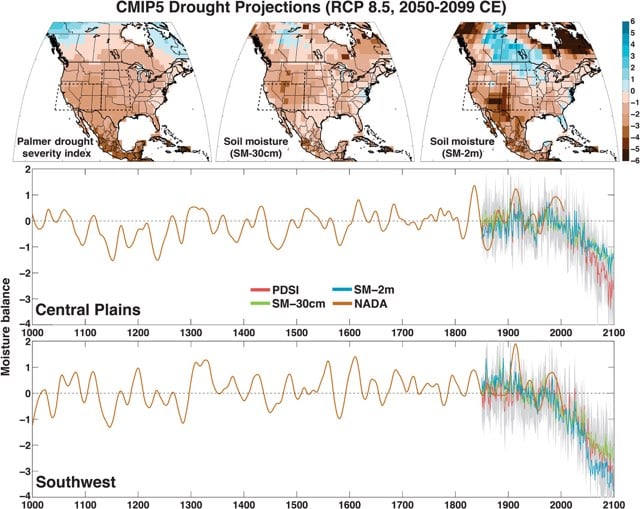
A recent paper by three climate scientists concludes there’s a high risk of an unprecedented drought in the Southwest and Midwest United States later this century, even if we manage to get our carbon emissions under control. The scientists say it’ll be drier in the Western US than at any point in the past 1000 years.
In the Southwest and Central Plains of Western North America, climate change is expected to increase drought severity in the coming decades. These regions nevertheless experienced extended Medieval-era droughts that were more persistent than any historical event, providing crucial targets in the paleoclimate record for benchmarking the severity of future drought risks. We use an empirical drought reconstruction and three soil moisture metrics from 17 state-of-the-art general circulation models to show that these models project significantly drier conditions in the later half of the 21st century compared to the 20th century and earlier paleoclimatic intervals. This desiccation is consistent across most of the models and moisture balance variables, indicating a coherent and robust drying response to warming despite the diversity of models and metrics analyzed. Notably, future drought risk will likely exceed even the driest centuries of the Medieval Climate Anomaly (1100-1300 CE) in both moderate (RCP 4.5) and high (RCP 8.5) future emissions scenarios, leading to unprecedented drought conditions during the last millennium.
Eric Holthaus has the layperson’s explanation of the study and its implications.
Smerdon’s study is the first to examine the future risk of “megadrought” in the southwest and central United States in the context of historical episodes of drought in the same regions. Smerdon’s study suggests that the coming years are likely to see droughts worse than the epic dry periods that are thought to have caused profound changes to human settlement in the region over the last millennium.
“They’re ‘mega’ because they are droughts that lasted in these regions for multiple decades,” said Smerdon in an interview with Slate. “We haven’t seen anything like this since at least the 1400s.” In comparison, the current California drought is four years old, though drought has been present in most of the last 15 years somewhere in the West.
Update: This NASA video provides a quick overview of this study and what it means for our climate.
From the Physics arXiv Blog, a list of paradoxes in modern cosmological physics, i.e. areas where theory and observation disagree, sometimes by a whopping 120 orders of magnitude.
Perhaps the most dramatic, and potentially most important, of these paradoxes comes from the idea that the universe is expanding, one of the great successes of modern cosmology. It is based on a number of different observations.
The first is that other galaxies are all moving away from us. The evidence for this is that light from these galaxies is red-shifted. And the greater the distance, the bigger this red-shift.
Astrophysicists interpret this as evidence that more distant galaxies are travelling away from us more quickly. Indeed, the most recent evidence is that the expansion is accelerating.
What’s curious about this expansion is that space, and the vacuum associated with it, must somehow be created in this process. And yet how this can occur is not at all clear. “The creation of space is a new cosmological phenomenon, which has not been tested yet in physical laboratory,” says Baryshev.
What’s more, there is an energy associated with any given volume of the universe. If that volume increases, the inescapable conclusion is that this energy must increase as well. And yet physicists generally think that energy creation is forbidden.
Baryshev quotes the British cosmologist, Ted Harrison, on this topic: “The conclusion, whether we like it or not, is obvious: energy in the universe is not conserved,” says Harrison.
This is a problem that cosmologists are well aware of. And yet ask them about it and they shuffle their feet and stare at the ground. Clearly, any theorist who can solve this paradox will have a bright future in cosmology.
Luckily, these paradoxes are an opportunity to do some great science.
Nothing is faster than the speed of light. But compared to the unimaginable size of the Universe, light is actually extremely slow. This video is 45 minutes long and during that time, a photon emitted from the Sun1 will only travel through a portion of our solar system.
In our terrestrial view of things, the speed of light seems incredibly fast. But as soon as you view it against the vast distances of the universe, it’s unfortunately very slow. This animation illustrates, in realtime, the journey of a photon of light emitted from the sun and traveling across a portion of the solar system.
It takes light more than 43 minutes to travel to Jupiter and even to travel the diameter of the Sun takes 4.6 seconds. (thx, andy)
Administrators at Palm Desert High School in California have banned 66 students who never got measles vaccinations.
“I think some parents see it as a personal choice, like homeschooling. But when you choose not to vaccinate, you’re putting other children at risk.” From WaPo: Why this baby’s mom is so angry at the anti-vaxxers.
“I respect people’s choices about what to do with their kids, but if someone’s kid gets sick and gets my kid sick, too, that’s a problem.” A Marin County father has demanded that his district keep unvaccinated kids out of school.
Vox: How an Amish missionary caused 2014’s massive measles outbreak.
Bonus tweet: “If my kid can’t bring peanut butter to school, yours shouldn’t be able to bring preventable diseases.”
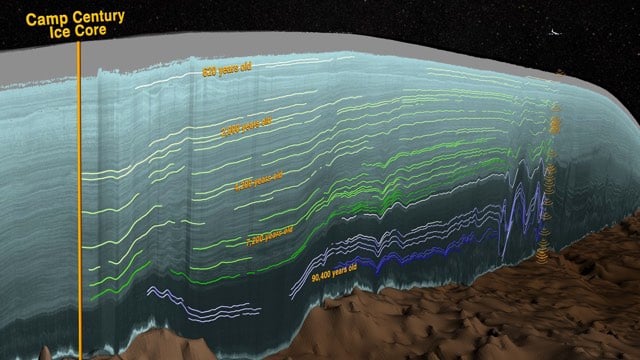
Using ice-penetrating radar and ice cores, NASA has been able to map the layers in the Greenland ice sheet.
This new map allows scientists to determine the age of large swaths of Greenland’s ice, extending ice core data for a better picture of the ice sheet’s history. “This new, huge data volume records how the ice sheet evolved and how it’s flowing today,” said Joe MacGregor, a glaciologist at The University of Texas at Austin’s Institute for Geophysics and the study’s lead author.
Greenland’s ice sheet is the second largest mass of ice on Earth, containing enough water to raise ocean levels by about 20 feet. The ice sheet has been losing mass over the past two decades and warming temperatures will mean more losses for Greenland. Scientists are studying ice from different climate periods in the past to better understand how the ice sheet might respond in the future.
One way of studying this distant past is with ice cores. These cylinders of ice drilled from the ice sheet hold evidence of past snow accumulation and temperature and contain impurities like dust and volcanic ash that were carried by snow that accumulated and compacted over hundreds of thousands of years. These layers are visible in ice cores and can be detected with ice-penetrating radar.
Ice-penetrating radar works by sending radar signals into the ice and recording the strength and return time of reflected signals. From those signals, scientists can detect the ice surface, sub-ice bedrock and layers within the ice.
New techniques used in this study allowed scientists to efficiently pick out these layers in radar data. Prior studies had mapped internal layers, but not at the scale made possible by these newer, faster methods. Another major factor in this study was the amount of Greenland IceBridge has measured.
It’s amazing that the detectors and data analysis are sensitive enough to pick out different layers in the ice just from radar. (via @ptak)
From the Russian Space Agency, a video of what the sky would look like if the Sun were replaced by some other stars. It starts off with the binary star system of Alpha Centuri, but watch until the end for Polaris, which has a radius 46 times that of the Sun.
See also the view from Earth of different planets replacing the Moon and imagining Earth with Saturn’s rings.
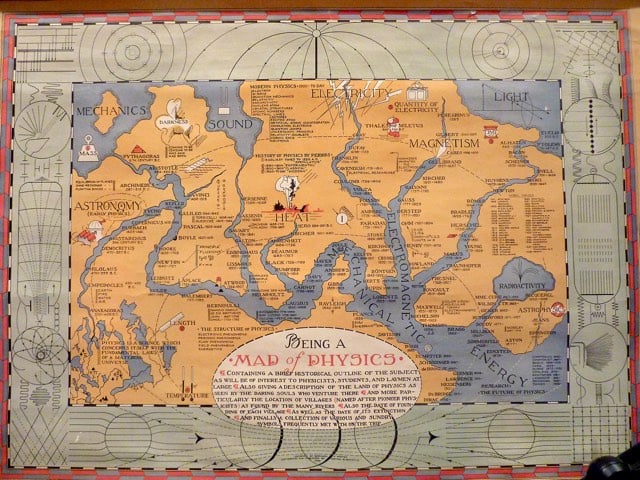
A map published by Bernard Porter in 1939 depicting physics as a landmass through which several rivers corresponding to the main branches (light, sound, heat, etc.) run and converge into one.

This simulator evolves increasingly effective walking creatures through genetic algorithms. After each round, the winners are sent through to the next round and copied by the rest of the competitors, with mutations introduced. At first, the pace of improvement is swift — two orders of magnitude within 100 generations — but slows pretty dramatically after that. (via @nickrichter)
Newer posts
Older posts



Socials & More