Advertise here with Carbon Ads

This site is made possible by member support. 💞

Big thanks to Arcustech for hosting the site and offering amazing tech support.

When you buy through links on kottke.org, I may earn an affiliate commission. Thanks for supporting the site!

kottke.org. home of fine hypertext products since 1998.

Beloved by 86.47% of the web.

🍔  💀  📸  😭  🕳️  🤠  🎬  🥔

kottke.org posts about movies

The making of The Empire Strikes Back

Vanity Fair has excerpts (photos mostly) of a new book on the making of The Empire Strikes Back.

Vader Luke Mattresses

This is right before Luke fell to his death sleep. (via df)


Powers of Ten

There’s finally a stable copy of Charles and Ray Eames’ seminal Powers of Ten video available online, courtesy of the Eames Office YouTube account.

Powers of Ten takes us on an adventure in magnitudes. Starting at a picnic by the lakeside in Chicago, this famous film transports us to the outer edges of the universe. Every ten seconds we view the starting point from ten times farther out until our own galaxy is visible only a s a speck of light among many others. Returning to Earth with breathtaking speed, we move inward — into the hand of the sleeping picnicker — with ten times more magnification every ten seconds. Our journey ends inside a proton of a carbon atom within a DNA molecule in a white blood cell.

Core77 and Eames Office are holding a competition to see who can make the best 2-minute video response to Powers of Ten.


True Grit by the Coen brothers

Coming this Christmas from the Coen brothers, a remake of the John Wayne classic, True Grit. Here’s the trailer:

(via devour)


Five best movie villains of the 2000s

Anton Chigurh from No Country for Old Men is on the list…click through for the rest. (via @tcarmody)


A movie that tells time

Christian Marclay is working on a 24-hour film called The Clock.

“The Clock” is a montage of clips from several thousand films, structured so that the resulting artwork always conveys the correct time, minute by minute, in the time zone in which is it being exhibited. The scenes in which we see clocks or hear chimes tend to be either transitional ones suggesting the passage of time or suspenseful ones building up to dramatic action. “If I asked you to watch a clock tick, you would get bored quickly,” explains the artist in remarkably neutral English. “But there is enough action in this film to keep you entertained, so you forget the time, but then you’re constantly reminded of it.”

Love that Marclay. Back when I was still doing 0sil8 — man, what a time capsule that is — one of the projects that I started working on but never got close to finishing was a clock made up of photographs…1440 photographs, one for each minute of the day.


And on the sixth day, Lucas created Chewbacca

Ok, so this is about how George Lucas came up with idea of Chewbacca (hint: he basically stole it from someone else) and yes it’s a bit inside-baseball but it’s also a great illustration of how the creative process works and the difficulty of explaining how the magic happened even after the fact.

And that’s what this post it about; the creative process. Cultural touchstones like Star Wars might seem to have sprung fully formed from the minds of their lauded creators, but as in all creative endeavours, movie making, web design or this very post, nothing could be further from the truth. Creation is a process, and strangely, by looking at how everyone’s favority plush first-mate sprang into existance, we can learn a lot about any collaborative creative endeavour.

Also, the name of Lucas’ dog was Indiana.


Roger Ebert talks with Errol Morris

Roger Ebert recently sat down with Errol Morris to talk about his new movie, Tabloid, and a bunch of other stuff. The interview is presented as a series of eight YouTube videos. In this one, he talks about how he got started writing his blog for The NY Times and how that helped him get over his 30-year struggle with writer’s block:

He’s working on a seventeen-part article about a murder case for the blog. Seventeen parts!


Morris and Herzog in conversation

Errol Morris and Werner Herzog both had films premiere at the Toronto Film Festival. To mark the occasion, they sat down and had a conversation with each other.

That’s just part one…Ebert has the rest of it on his blog.


Ebert relaunches At the Movies

The new show will appear on PBS and feature Elvis Mitchell & Christy Lemire as the main hosts.

“I believe that by returning to its public roots, our new show will win better and more consistent time slots in more markets,” added Ebert. “American television is swamped by mindless gossip about celebrities, and I’m happy this show will continue to tell viewers honestly if the critics think a new movie is worth seeing.”

Stars January 2011.


Logorama

If you’ve never seen the excellent Oscar-winning short film Logorama, it’s available in its entirety on Vimeo:

The uploading party did the music and sound design for the film, so hopefully it won’t get yanked down. (thx, @matthiasrascher)


100 great movie moments

A collection by Roger Ebert from 1995. The moments include:

Samuel L. Jackson and John Travolta discuss what they call Quarter Pounders in France, in “Pulp Fiction.”

Jack Nicholson trying to order a chicken salad sandwich in “Five Easy Pieces.”

I love the smell of napalm in the morning,” dialogue by Robert Duvall, in “Apocalypse Now.”


1980 Ebert interview with Jodie Foster

From 1980, Roger Ebert interviews Jodie Foster, who is on the cusp of entering college. Here’s an anecdote about Taxi Driver at Cannes:

The movie had been controversial. The president of the festival jury, Tennessee Williams, already had vowed that it would win a prize only over his dead body (it won the Grand Prix; Williams lived). The key people at the press conference were Martin Scorsese, the film’s director, and Paul Schrader, who wrote it. The French critics were lobbing complex philosophical questions at them in French, and then the English-language translators were wading in, and everyone was getting nicely confused.

Someone finally condescended to ask a question of the little girl down at the end of the table - the one, you might assume, who’d been brought along to France as a treat, along with all the ice cream she could eat. The translator grabbed for the microphone, but Jodie Foster waved him off and answered the question herself, in perfect French. There was an astonished round of applause: At last, an American who spoke French! And less than 5 feet tall!


Napoleon Dynamite opening title sequence

The Art of the Title Sequence interviews Napoleon Dynamite director Jared Hess about how the film’s instant-classic title sequence came about.

We actually had Jon Heder placing all the objects in and out [of frame], and then showed it to Searchlight who really liked it and thought it was great, but some lady over there was like “There are some hangnails, or something — the hands look kinda gross! It’s really bothering me, can we re-shoot some of those? We’ll send you guys a hand model.” We were like “WHAT?!” This of course was my first interaction with a studio at all, so they flew out a hand model a couple weeks later, who had great hands, but was five or six shades darker than Jon Heder. So we reshot, but they’re now intermixed, so if you look there are like three different dudes hands (our producer’s are in there too.) It all worked our great though and was a lot of fun.

The interview also addresses Pablo Ferro’s involvement and the Napoleon Dynamite animated series currently in development.


Fermat’s Last Theorem

This 45-minute documentary on Andrew Wiles’ proof of Fermat’s Last Theorem is surprisingly powerful and emotional. Give it until 1:45 or so and you’ll want to watch the whole thing. The film is not really about math; it’s about all of those movie trailer cliches — “one man!”, “finds the truth!”, “fights the odds!”, etc. — except that this is actually true and poignant.


Movies scenes + Cee-Lo’s Fuck You

The Dallas Observer has collected a few clips from movies where the music has been replaced by Cee-Lo’s Fuck You. The Dirty Dancing one is probably the best:

I wonder how the slow-dance scene at the end of Rushmore would work. Or the Enchantment Under the Sea Dance in Back to the Future. Audio NSFW. (via @erikmal)


Tron sex

Somehow it became NSFW day here at kottke.org. So we’re rolling with it, in the hay. Here’s the Tron version of the Kama Sutra. It is so very NSFW even though everyone stays fully clothed in glowing blue garments.


Francois Truffaut’s last interview

The New Yorker has published an interview with Francois Truffaut conducted before his death in 1984.

Cardullo centers the conversation around Truffaut’s first feature film, “The 400 Blows,” the overwhelming success of which, in 1959, was a key moment in the launching of the French New Wave. As such, he gets Truffaut to talk about what went into the beginning of his career and how his filmmaking process was influenced by his years of work as a film critic and his lifelong obsession with watching movies.


Freakonomics trailer

The movie comes out on iTunes first (Sept 3) and then in theaters a month later.


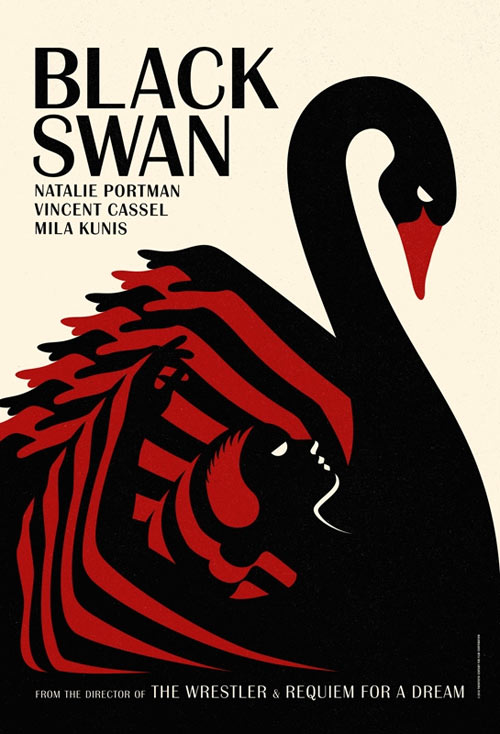
Black Swan trailer

The first trailer for Darren Aronofsky’s Black Swan is out. Natalie Portman plays an out-of-control ballerina.


Kalle Fucking Fincher

I totally didn’t know that David Fincher was directing an American version of The Girl with the Dragon Tattoo with Daniel Craig as Blomkvist. First the Facebook movie and now this. Fincher’s career continues to develop in a curious fashion.


Asexuality documentary

Over on Kickstarter, Angela Tucker is trying to raise the last $1500 she needs to edit her documentary on asexuality.

In 2000, David Jay came out to his parents. But they were surprised by what he told them. He was asexual. David knew he was not alone in his feelings. He bought the url for asexuality.org and soon, the forum he created for people to talk about their experiences as asexuals was abuzz around the globe online and on talk shows like The View. Inspired by the LGBT movement of the 1960s, Jay is growing the asexual movement. Other members of his community are skeptical that they are a part of the LGBT community. But Jay and experts, like Dan Savage, agree that asexuals are a sexual minority and therefore eligible. But are members of the sex-positive PRIDE march going to accept a group that has rejected sex?


Live from February 1996

Roger Ebert just tweeted:

Terry Gross is re-running an interview with Gene Siskel and me on NPR’s “Fresh Air” today.

The episode isn’t up on NPR’s site yet, but a search of the archives turns up only one hit for Gene Siskel on Fresh Air:

Film Critics GENE SISKEL and ROGER EBERT join Terry Gross on stage in Chicago for a “live” audience version of Fresh Air. This was recorded in February 1996. The duo began their TV collaboration in 1975 on Chicago Public Television station WTTW. After two successful season, the program became a national PBS show. In 1981 it moved to commercial television.Their show is now known as “Siskel and Ebert” and is heard in 180 markets. Gene Siskel is film colmnist for the Chicago Tribune, and Roger Ebert is critic for the Chicago Sun-Times. “Siskel and Ebert” has been nominated for five national emmy awards. Ebert has recieved a Pulitzer Prize for film criticism.

I don’t know how people in the industry feel, but for me, the internet is the best thing that ever happened to radio.


The real Charlie Chan

Early proto-film-noir-hero/Chinese-American stereotype Charlie Chan was based on a real detective in Honolulu:

Biggers read about him in the newspaper. His real name was Chang Apana. He was born, around 1871, in Waipio, a village outside Honolulu. His mother, Chun Shee, was also born in Hawaii. People from China had settled in what were then called the Sandwich Islands, beginning in the late seventeen-seventies. Sugarcane had been cultivated in China for centuries, and the first person to grow it for sugar processing in the Sandwich Islands was a man named Wong Tze-chun, who arrived from China in 1802. Chang Jong Tong, Chang Apana’s father, probably travelled from China to Hawaii in the eighteen-sixties. In the second half of the nineteenth century, some forty-six thousand Chinese laborers made that journey. In 1866, when the sugarcane trade was booming, Mark Twain went to Hawaii to report for the Sacramento Union. “The Government sends to China for coolies and farms them out at $5 a month each for five years,” Twain wrote. When Chang Jong Tong’s five years were up, he took his wife and children and headed home, to the tiny village of Oo Sack, south of Canton…In 1881, when Chang was about ten years old, his parents sent him to Oahu, with an uncle; he never returned to China…

In the nineteen-tens, he was part of a crime-busting squad. His escapades were the stuff of legend. He was said to be as agile as a cat. Thrown from a second-floor window by a gang of dope fiends, he landed on his feet. He leaped from one rooftop to the next, like a “human fly.” When he reached for his whip, thugs scattered and miscreants wept. He once arrested forty gamblers in their lair, single-handed. He was a master of disguises. Once, patrolling a pier at dawn, disguised as a poor merchant—wearing a straw hat and stained clothes and carrying baskets of coconuts, tied to a bamboo shoulder pole—he raised the alarm on a shipment of contraband even while he was being run over by a horse and buggy, and breaking his legs. He once solved a robbery by noticing a strange thread of silk on a bedroom floor. He discovered a murderer by observing that one of the suspects, a Filipino man, had changed his muddy shoes, asking him, “Why you wear new shoes this morning?”


Warner Oland
, who played Chan in most of the films, was Swedish. In yellowface, he also played Fu Manchu and other east Asian characters. In 25 years as an actor, he made 96 films, including playing lead in as many as 4 Charlie Chan films a year in the 1930s. Here, Kartina Richardson talks about his performance as the half-Chinese warlord Mr Henry Chang in Shanghai Express:

Race in Film: Shanghai Express from Mirror on Vimeo.

Awesome detail only for me (and literary nerds like me): Yunte Huang, a UC-Santa Barbara professor who wrote the new history of Charlie Chan, also wrote a terrific book about transpacific American literature (for some reason, everyone forgets that almost all of Moby Dick is set in the Pacific) and translated Ezra Pound’s Pisan Cantos into Chinese.

via Charles Bernstein and Roger Ebert


The year of Metropolis

All summer (depending on what city you live in), a restored extended edit of Fritz Lang’s 1927 science-fiction avant-spectacle Metropolis has been playing in American theaters, augmented by a nearly full-length print discovered at Buenos Aires’s Museo del Cine in 2008:

Adolfo Z. Wilson, a man from Buenos Aires and head of the Terra film distribution company, arranged for a copy of the long version of “Metropolis” to be sent to Argentina in 1928 to show it in cinemas there. Shortly afterwards a film critic called Manuel Pena Rodriguez came into possession of the reels and added them to his private collection. In the 1960s Pena Rodriguez sold the film reels to Argentina’s National Art Fund - clearly nobody had yet realised the value of the reels. A copy of these reels passed into the collection of the Museo del Cine (Cinema Museum) in Buenos Aires in 1992, the curatorship of which was taken over by Paula Felix-Didier in January this year. Her ex-husband, director of the film department of the Museum of Latin American Art, first entertained the decisive suspicion: He had heard from the manager of a cinema club, who years before had been surprised by how long a screening of this film had taken. Together, Paula Felix-Didier and her ex-husband took a look at the film in her archive - and discovered the missing scenes.

I wrote a chapter of my dissertation about Lang, so I was pretty familiar with how the film had been hacked and mangled. Early cinema was a lot like the early years of print books. No two extant copies of Shakespeare’s First Folio are exactly the same, because the printer made small changes and corrected errors before finishing each one. Likewise, filmmakers and producers made edits on the fly, and different countries, and sometimes different theater owners, would recut prints to suit their taste. Without an original master print, most early movies have been restored, screened, and transferred to disc in versions cobbled together from various sources, in most cases still quite different from what was initially shown to the public. Metropolis was really only different in that we knew most of the content of the scenes that had been cut.

If you haven’t seen Metropolis this summer, you may have seen Inception, another science-fiction movie featuring corporate intrigue, a sentimental subplot, and a setting consisting of multiple levels of a highly allegorical dreamlike city. Annalee Newitz goes deeper, finding subtle affinities with the dream-city of Inception and another Metropolis, the utopian city imagined by King Camp Gillette, who woud go on to invent the safety razor.

Gillette wanted to solve the problem of social inequality with his perfect city, which he named Metropolis. The city, which he outlines in his book The Human Drift, would be built on top of Niagara Falls. Gillette wanted to Nikola Tesla design a water-powered electrical grid, which would be amply supplied with energy from the falls.

The sidewalks of the city would be transparent so that workers laboring beneath the buildings, dealing with plumbing and other infrastructure, would have light. But Gillette also wanted the city’s residents to see the people at work below their feet. The idea was to prevent people from forgetting about all the essential work that goes into making a city run.

Freud compared the unconscious to a city:

Now let us, by a flight of imagination, suppose that Rome is not a human habitation but a psychical entity with a similarly long past—an entity, that is to say, in which nothing that has once come into existence will have passed away and all the earlier phases of development continue to exist alongside the latest one.

And in The Human Drift, King Gillette talks about a city’s economy like the unconscious, too, and panics and depressions like a neurosis:

Never in the history of the world has business been organized as a whole in any country. It has always been a tangled skein beyond the power of man to unravel. It has been impossible to regulate supply and demand within reasonable limit, simply because every man is for himself, and he never knows what the rest of the world is doing. As a result, we have a constant fluctuation in prices of articles of consumption. At one time the whole country is overstocked with certain lines of goods, and there is a depression of prices. Then the manufacturers shut down or restrict the output, and the next thing we hear is that the whole country is short of these goods. It is here that the institution of speculation, or gambling in necessities, has its birth; and this lack of knowledge and power to regulate supply and demand, is, in part, the cause of our periods of depression and failure.

The solution, in both cases, is to become aware of those subterranean, unknown forces, and bring them into consciousness.

Finally, and less depressingly, there’s Janelle Monae, whose terrific album The ArchAndroid, is part of a suite titled Metropolis, which also creates a kind of imagined not-quite-retro-future that tries to touch on the uneasiness in culture.

Also, you may think Lang’s and Gillette’s Metropolis had some funky horns, but clearly not a horn section as funky as this.


Urbanized

The next film in Gary Hustwit’s design trilogy (after Helvetica and Objectified) is Urbanized, an investigation of urban design.

Who is allowed to shape our cities, and how do they do it? Unlike many other fields of design, cities aren’t created by any one specialist or expert. There are many contributors to urban change, including ordinary citizens who can have a great impact improving the cities in which they live. By exploring a diverse range of urban design projects around the world, Urbanized will frame a global discussion on the future of cities.


Christopher Nolan’s Implementation

What if Dom Cobb and his team from Inception were management consultants instead of dream extractors? This:

DiCaprio takes a helicopter to Wharton, where he meets his father. “Who’s your best student in the visual representation of quantitative information?”

Ellen Page walks a few steps behind DiCaprio onto a roof. He turns to her. “You have three minutes to make a PowerPoint presentation that will take me three hours to click through.”


Great Bill Murray interview

This has been linked around quite a bit in the last week, but it’s worth a look if you haven’t read it and like Bill Murray at all. According to the article, this is only the fourth or fifth time that Murray has been interviewed in the past ten years. On his involvement with Garfield: The Movie:

No! I didn’t make that for the dough! Well, not completely. I thought it would be kind of fun, because doing a voice is challenging, and I’d never done that. Plus, I looked at the script, and it said, “So-and-so and Joel Coen.” And I thought: Christ, well, I love those Coens! They’re funny. So I sorta read a few pages of it and thought, Yeah, I’d like to do that.

[…] So I worked all day and kept going, “That’s the line? Well, I can’t say that.” And you sit there and go, What can I say that will make this funny? And make it make sense? And I worked. I was exhausted, soaked with sweat, and the lines got worse and worse. And I said, “Okay, you better show me the whole rest of the movie, so we can see what we’re dealing with.” So I sat down and watched the whole thing, and I kept saying, “Who the hell cut this thing? Who did this? What the fuck was Coen thinking?” And then they explained it to me: It wasn’t written by that Joel Coen.

And I love that he loved Kung Fu Hustle so much…I agree that it is underrated.


Best sites for film criticism

An annotated list of the best film criticism blogs. (via the house next door)


Moon opening title sequence

The Art of the Title Sequence blog highlights the opening titles for Moon. Love, love, love that song…the whole soundtrack (by Clint “Requiem for a Dream” Mansell) is good actually.


Ferris Club (or maybe Fight Bueller?)

Ferris Bueller. Fight Club. You see where this is headed, right?

Well done. (via matt)