Documentary filmmaker Doug Block popped up on the internet’s radar with the release of Home Page in 1998. In 2005, he released the excellent 51 Birch Street, a film about his family.
51 Birch Street is the first-person account of a family’s unpredictable journey through dramatic life-changing events. Having observed most of his parents’ 54-year marriage, Doug Block believed it to be quite a good one. A few months after his mother’s sudden death from pneumonia, Doug Block’s 83-year old father, Mike, calls him to announce that he’s moving to Florida to live with “Kitty”, his secretary from 40 years before. Always close to his mother and equally distant from his father, Doug and his two older sisters were shocked and suspicious. How long had Kitty been an intimate part of their father’s life, they wondered.
Block’s latest film also deals with his family. The Kids Grow Up is about his relationship with his only daughter Lucy as she prepares to leave for college.
‘Just think,” says Doug Block’s wife, Marjorie, while he trains his camera on her, “when she works all this through in therapy she can take the footage with her. Her therapist won’t have to imagine what you were like.” Block, a documentary-maker, filmed their daughter Lucy’s final year at high school — interspersed with footage of her over the years. His film, The Kids Grow Up, is ostensibly about how a father copes with the prospect of his cherished only child leaving home to go to college. But there is lots more here. It is about his own childhood - “I was a lousy parent in the main,” admits Block’s elderly, ailing father — and about what it means to be a modern dad (friend or father?). It is about the passage of time,and Block’s inability to let go of the past and grow up, as his wife — ever the voice of reason — puts it during one of their filmed interviews.
How does Block get out of accepting that he has become a grandfather when his stepson and his wife have a baby? By insisting on being called Uncle Doug. “Pathetic,” Marjorie says with a smile and a shake of the head.
They told me I have two minutes. I’m going to pop this Red Hot [candy, pops in mouth] so I’ll be finished in two minutes [mumbling with candy in mouth]. Why do you give this award? Why? Because you have to throw a party. Because you have to compete with the Golden Globes. [Cheers.] We all asked that question. You’re able to get out tonight, celebrate - without your relatives - you earned, you deserve it.
But why do you give it to Sofia Coppola? Why? Because you want to encourage her, I think. I think that’s the real reason. Look at her. Look at her! She comes from a family, mother and father both very successful, creating entertainments, amusements and thought-provoking work. She wrote a spec script for The Virgin Suicides. The ambition of these young people! Can you believe it? The ambition! She got the job as the director. She directed Lost in Translation in another country in another language, and got a prize for it. [Pause.] God, this is a hot, hot Red Hot. But I’m not going to quit on you people, because I’ve got another half in my pocket. [Pulls out of pocket and puts in mouth.] I got one-and-a-half in my mouth right now. [Mumbling.]
And the whole bit about life and success and freedom derailing careers and creative work is just spot on gold. (thx, david)
PBS is airing a documentary about Jeff Bridges tonight called Jeff Bridges: The Dude Abides. In a short clip from the episode, Bridges visits a The Big Lebowski memorabilia store called The Little Lebowski. Watch the cashier’s mind explode as he recognizes who just walked into his store.
And I love how he calls Joel and Ethan “The Brothers”. (via devour)
A long photo essay on the hallways and corridors of science fiction movies and television.
Alien started the kind of corridor-fetishism in screen sci-fi that Kubrick had failed to start with 2001: A Space Oddyssey, since the latter film was so visionary and expensive that practically no-one could even attempt to imitate it.
Instead Roger Christian got inventive with his lower budget and strip-mined an aircraft graveyard, strewing Alien’s Nostromo with sections and detailing from WWII bombers. This usage of full-sized ‘nurnies’ followed the long-established visual effects practice of cannibalising parts from model kits (most especially WWII tanks and destroyers) in order to provide ready-made detailing without resort to custom-crafting and vacuum-forming every last valve and pipe. By the time the 1980s set in, Alien’s strip-mined tech was practically de rigeur for screen sci-fi…
No, not Reservoir Dogs. It’s called My Best Friend’s Birthday, which he made for $5000 in 1987. Here’s the surviving 36 minutes of footage; the rest was destroyed in a fire.
Some of the ideas and material in this film would be recycled for the Tarantino-penned True Romance screenplay. (via sly oyster)
“Rosebud.” The most famous word in the history of cinema. It explains everything, and nothing. Who, for that matter, actually heard Charles Foster Kane say it before he died? The butler says, late in the film, that he did. But Kane seems to be alone when he dies, and the reflection on the shard of glass from the broken paperweight shows the nurse entering the room. Gossip has it that the screenwriter, Herman Mankiewicz, used “rosebud” as an inside joke, because as a friend of Hearst’s mistress, Marion Davies, he knew “rosebud” was the old man’s pet name for the most intimate part of her anatomy.
Vivian Maier’s photographs were seemingly destined for obscurity, lost among the clutter of the countless objects she’d collected throughout her life. Instead these images have shocked the world of street photography and irrevocably changed the life of the man who brought them to the public eye. This film brings to life the improbable saga of John Maloof’s discovery of Vivian Maier. Along with her documentary films, photographs, odd collections, and accounts from people who knew her, we take you on the journey of ‘Finding Vivian Maier’.
Well, maybe. According to the LA Times, the pair are pitching a film around that Kaufman will write and Jonze will direct.
The pair are pitching a new movie. While the plot is being kept under tight wraps — it’s a pitch, so a script has yet to be written, and Kaufman movies are famously hard to describe in a few sentences anyway — two people familiar with the project said it has been making the rounds to independent financiers in recent weeks.
If it moves forward, the film would reunite the pair in the roles that vaulted them to fame for the first time since “Adaptation” in 2002.
Some gloriously crazy person took clips from 270 films that were out in 2010 and mixed them together into a coherent narrative:
This year’s movies have legitimately transformed my idea of what is creatively possible. To commemorate, I’ve remixed 270 of them into one giant ass video.
The Inception iPhone app takes the music from the movie and remixes it with the sounds around you (office chatter, street noise, etc.).
Inception The App transports Inception The Movie straight into your life. New dreams can be unlocked in many ways, for example by walking, being in a quiet room, while traveling or when the sun shines. You will get realtime musical experiences, featuring new and exclusive music from the Inception soundtrack composed by Hans Zimmer.
Bad: I can hear the people in the office talking, which is the precise thing I’m attempting to prevent by wearing headphones.
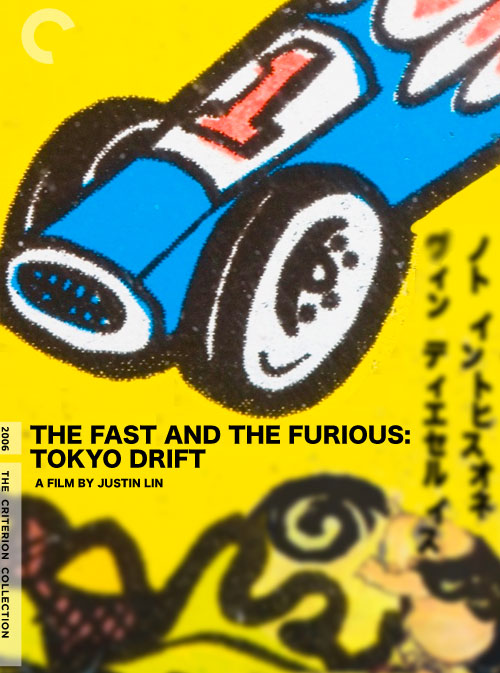
Favorite Tumblr of the week: Fake Criterions, featuring mockups of Criterion films that would never get made. For example:
Note: a surprising non-fake Criterion is Michael Bay’s Armageddon. Well, it does feature Steve Buscemi and Oscar winners Billy Bob Thornton and Ben Affleck. (thx, george)
Somehow a Norwegian television station got a bunch of 80s celebrities — people like Norm from Cheers, Tiffany, Malcolm Jamal Warner, Ricki Lake, Eddie the Eagle, Tanya Harding, Dolph Lundgren, Bananarama, Manuel from Fawlty Towers, etc. etc. — to do promotional music videos for an 80s nostalgia show and the results are nothing less than a supertrainwreck. First they did “We Are the World”:
In 2057, the Sun is dying, and the Earth is freezing. So the ship Icarus 2 goes on a mission to reignite it with a massive bomb. This is the movie Sunshine, and if you get a chance to see it, watch it on a big screen. The crew themselves watch the Sun close-up, awestruck, from a view-port the exact dimensions of a movie screen, so the Sun fills your picture too and you spend half the film bathing in powerful yellow light. Like some kind of church.
Although I didn’t, Matt, appreciate the diss of Pluto. Never forget, my friend.
Werner Herzog’s new film is in 3-D; it’s a documentary about the 30,000-year-old drawings recently discovered in the Chauvet-Pont-d’Arc cave in southern France.
Herzog gained extraordinary permission to film the caves using lights that emit no heat. But Herzog being Herzog, this is no simple act of documentation. He initially resisted shooting in 3D, then embraced the process, and now it’s hard to imagine the film any other way. Just as Lascaux left Picasso in awe, the works at Chauvet are breathtaking in their artistry. The 3D format proves essential in communicating the contoured surfaces on which the charcoal figures are drawn. Beyond the walls, Herzog uses 3D to render the cave’s stalagmites like a crystal cathedral and to capture stunning aerial shots of the nearby Pont-d’Arc natural bridge. His probing questions for the cave specialists also plunge deep; for instance: “What constitutes humanness?”
Herzog pursued the film after reading Judith Thurman’s 2008 piece about the cave drawings in the New Yorker.
Half a decade later I walked into a theater, for reasons I cannot recall, to see Princess Mononoke. It was a revelation-somehow, in my absence, animated films had gotten all grow’d up. There were no songs or dance numbers, the plot was complex and disturbing, and the running time of two hours — not to mention some shockingly violent scenes — was far from kid-friendly.
The subtext of Princess Mononoke is one of environmental protectionism-the same theme that Pocahantas wore on its sleeve. Had I had seen the former film in 1995, instead of the latter, I probably never would have left the fold.
It’s called Lincoln and will be a collection of the talents of Steven Spielberg (director), Daniel Day-Lewis (plays Lincoln), Doris Kearns Goodwin (wrote the book), and Tony Kushner (screenplay).
It is anticipated that the film will focus on the political collision of Lincoln and the powerful men of his cabinet on the road to abolition and the end of the Civil War.
You begin with an artifact left on earth four million years ago by extraterrestrial explorers who observed the behavior of the man-apes of the time and decided to influence their evolutionary progression. Then you have a second artifact buried deep on the lunar surface and programmed to signal word of man’s first baby steps into the universe — a kind of cosmic burglar alarm. And finally there’s a third artifact placed in orbit around Jupiter and waiting for the time when man has reached the outer rim of his own solar system.
When the surviving astronaut, Bowman, ultimately reaches Jupiter, this artifact sweeps him into a force field or star gate that hurls him on a journey through inner and outer space and finally transports him to another part of the galaxy, where he’s placed in a human zoo approximating a hospital terrestrial environment drawn out of his own dreams and imagination. In a timeless state, his life passes from middle age to senescence to death. He is reborn, an enhanced being, a star child, an angel, a superman, if you like, and returns to earth prepared for the next leap forward of man’s evolutionary destiny.
That is what happens on the film’s simplest level. Since an encounter with an advanced interstellar intelligence would be incomprehensible within our present earthbound frames of reference, reactions to it will have elements of philosophy and metaphysics that have nothing to do with the bare plot outline itself.
P.S. Kubrick also stated that HAL was not gay — “HAL was a ‘straight’ computer”. (via prosthetic knowledge)
Note: If you are a member and tried to log in, it didn't work, and now you're stuck in a neverending login loop of death, try disabling any ad blockers or extensions. Or try logging out and then back in. Still having trouble? Email me!





Socials & More