kottke.org posts about movies
There are a few shots in here that are generic to many movies but many others have the feel of definite homage. See also this list of similarities from a couple of years ago.
The moment when Walt spots Jesse’s escaped hostage on the road is very reminiscent of the moment when Butch sees Marcellus. The scene where Walt chooses the weapon to kill someone looks exactly like the scene where Butch wonders what to use as he comes back to rescue Marcellus. In one scene Walt is forced to visit his home and there is a great chance someone is waiting there to kill him. Sounds familiar?
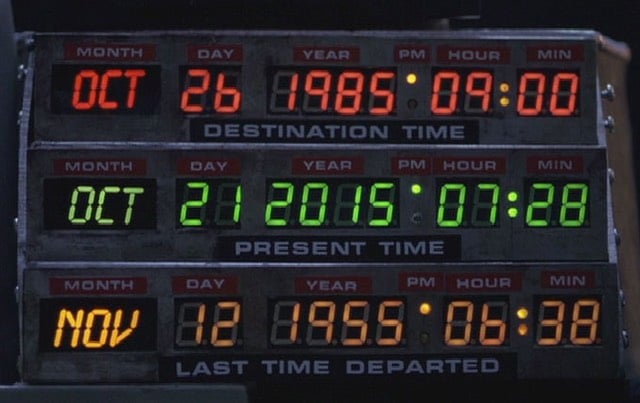
If you haven’t heard, today is the day to which Doc, Marty, and Jennifer travel forward in time in Back to the Future II.
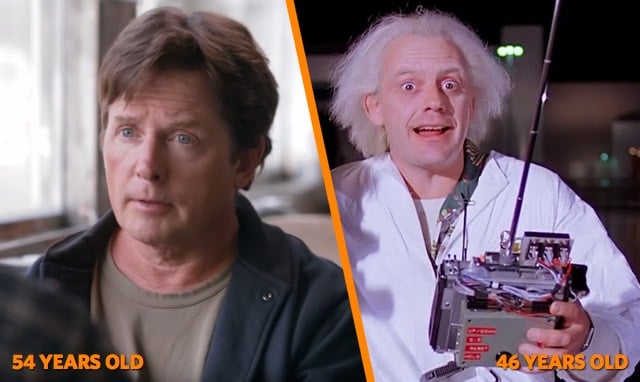
Because of this and my love of cultural time travel, I thought I’d take the opportunity to point out that Michael J. Fox (aka Marty McFly) is nearly 8 years older now than Christopher Lloyd was when he played Doc Brown when Back to the Future was released in 1985. That’s heavy.
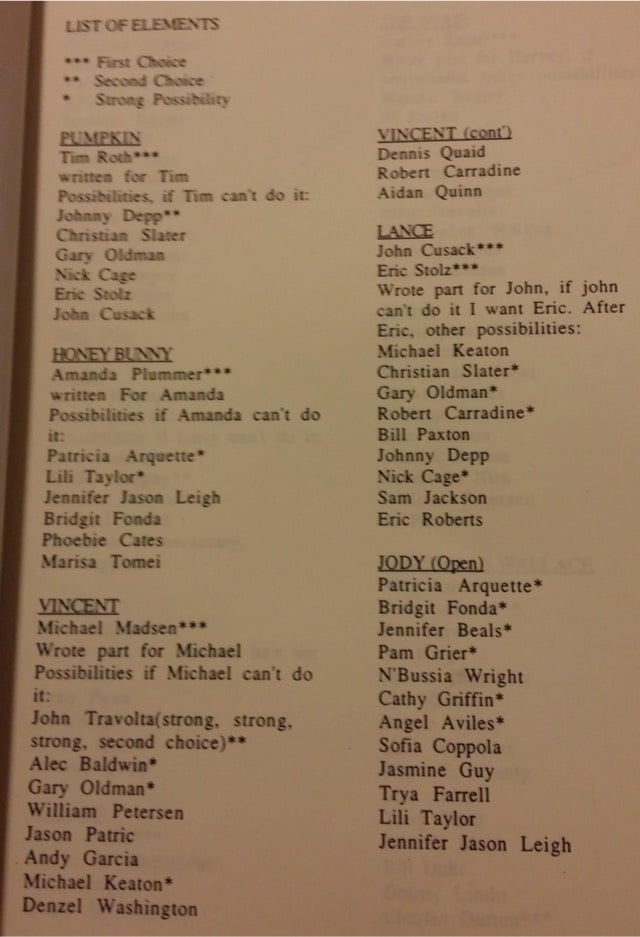
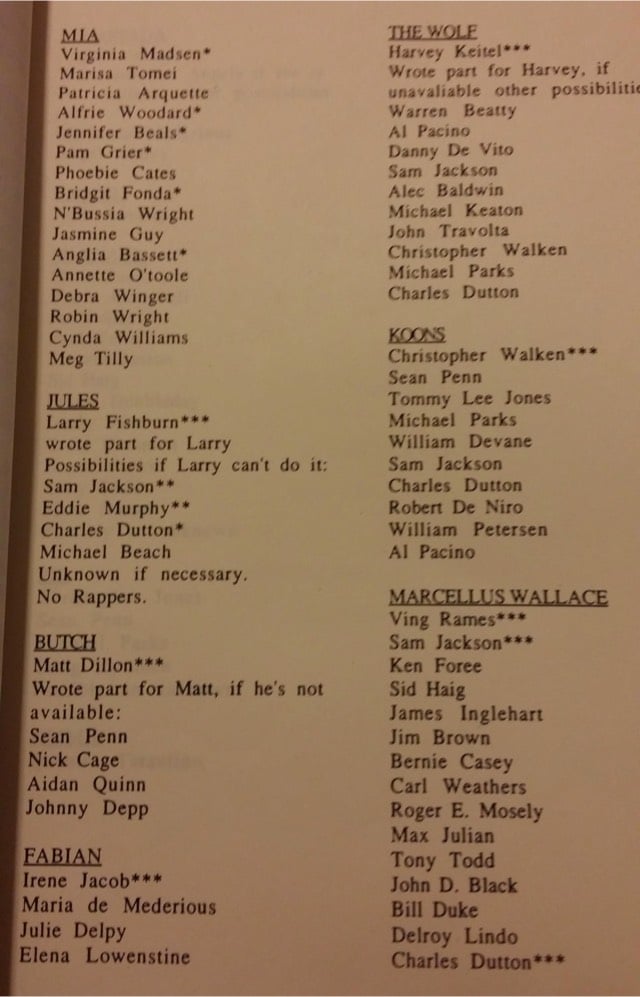
Quentin Tarantino is the type of writer/director who writes roles in movies with specific actors in mind. For Pulp Fiction, he wanted Harvey Keitel to play Winston Wolf, Tim Roth to play Pumpkin, and Ving Rhames to play Marcellus Wallace. But he also wanted Michael Madsen to play Vincent (with Travolta as a strong second choice), John Cusack to play Lance, Matt Dillon to play Butch, and Laurence Fishburne to play Jules. Another possibility for Jules was Eddie Murphy, and Tarantino also specified “No Rappers” for that role. Bruce Willis and Uma Thurman weren’t even listed for their respective roles. Gary Oldman, Nicholas Cage, Johnny Depp, and Alec Baldwin were considered for several roles but ultimately didn’t appear in the film.
Here’s the full list. (via open culture)
Trailer: watched. Tickets: bought. Luke Skywalker: still missing.
Lewis Bond takes a look at the work of master filmmaker Hayao Miyazaki and what sets him apart from other makers of animated movies, including his work’s realism and empathy.
With its straightforward plot and action sequences, Mad Max: Fury Road would make a pretty good 8-bit video game. (via devour)
50 unknown facts about Star Wars, many gleaned from How Star Wars Conquered the Universe. I’ve heard some of these before, but not many…the list doesn’t include low-hanging fruit like Harrison Ford’s carpentry.
Favorite facts: 1. Early on, Luke Skywalker’s nickname was “Wormy”. Wormy! 2. The actor who portrayed Vader, David Prowse, spoke his dialogue on set not knowing he would be dubbed over. Because of his West Country accent, the other cast members referred to Prowse as Darth Farmer.
Speaking of Harrison Ford’s carpentry, the new biography of Joan Didion has a good story about that time Didion and her husband John Dunne hired Ford to do some construction for them.
Off and on, for over six month, the Dunnes engaged a construction crew to expand the waterside deck, install waxed pine bookshelves, and lay terra-cotta floor tiles. The men tore out prefabricated plywood walls and pulled up “icky green” flooring. Harrison Ford headed the crew. “They were the most sophisticated people I knew,” Ford said. “I was the first thing they saw in the morning and the last thing they saw before cocktails.”
In Vegas, Dunne wrote, “[W]hat had started as a two-month job … [stretched] into its sixth month and the construction account was four thousand dollars overdrawn… I fired the contractor. ‘Jesus, man, I understand,’ he said. He was an out-of-work actor and his crew sniffed a lot of cocaine and when he left he unexpectedly gave me a soul-brother handshake, grabbing my thumb while I was left with an unimportant part of his little finger.” The next day, Dunne realized the only thing separating him and his family from the Pacific Ocean was a clear sheet of Pliofilm where the French doors were supposed to go. “I rehired the contractor,” he wrote. “‘Jesus, man, I understand,’ the contractor said.”
Much later, when Didion’s daughter was ill, Ford did the family a further service.
The following day, Didion flew from Teterboro to Los Angeles on Harrison Ford’s private plane, along with her friend Earl McGrath. Ford “happened to be in New York and heard about Q’s condition … and called to offer to take Joan,” said Sean Michael. “I find that to be a beautiful thing,” he said. “A man you hire to build cabinets, thirty years later is flying you in his private jet to your daughter’s hospital bedside.”
Jesus, man, I understand.
Update: Some of Ford’s comments from the book were taken from Carolyn Kellogg’s reporting on an awards festival.
As if to make up for her absence, a parade of stars was in attendance. Harrison Ford, who was prepared to present her the award, spoke somewhat extemporaneously instead. “I just want to tell you all how much her friendship has meant to me,” he said. Forty years ago, Didion and her husband, John Gregory Dunne, were “The most sophisticated people I knew.”
Then a carpenter, Ford was hired by Didion and Dunne to build their beach house in Malibu. “I was the first thing they saw in the morning and the last thing they saw” — he paused — “before cocktails.”
Charlie Jane Anders of io9 has a great preview of Pixar’s upcoming film, The Good Dinosaur, including some juicy details on how the film was made. Because the film uses many big landscape shots, which would have been impossible to render in a timely fashion using their usual processes, the filmmakers needed to come up with another solution. They ended up using real topographical data and satellite images to render the landscapes.
Enter the U.S. Geographical Survey, which posts incredible amounts of topographical data to its website-including the height above sea level of all of the land features, and lots of satellite images. So Munier and his team tried downloading a lot of the USGS data and putting it into their computer, and then using that to “render” the real-life landscape. And it worked: They were able to take a classic Ansel Adams photograph of the Grand Tetons and duplicate it pretty closely using their computer-generated landscape. And with this data, they could point a digital “camera” anywhere, in a 360-degree rotation, and get an image.
Hail, Caesar! is the name of the Coen brothers’ new movie. It stars George Clooney as a movie star (what casting!) who is kidnapped during the shooting of a epic Roman gladiator picture called Hail, Caesar! This one looks fun. And with the exception of The Big Lebowski, the Coen’s fun movies are underrated,…I quite enjoyed both Intolerable Cruelty and Burn After Reading.
How many videos can we watch about the films of Stanley Kubrick? If you’re anything like me, the answer is never enough. This montage hinting at connections between his films is particularly well done.
Mashups are so ubiquitous and overdone that the bar for actually watching one is pretty high. But this one, no joke, might be the best visual movie mashup I’ve ever seen. Hell’s Club is a tour de force of film editing, seamlessly combining scenes from dozens of different films — Austin Powers, Cocktail, Star Wars, Terminator, Staying Alive, Boogie Nights — into one cohesive scene. Give it 30 seconds and you’ll watch the whole thing.
Update: The sequel is just as tight. Amazing what a little color can do to trick the brain.
And here’s an interview with the creator.
HLN (which used to be CNN Headline News) needed someone to talk about Edward Snowden, US government whistleblower. They meant to invite a gentleman named John Hendren, a journalist for Al Jazeera, onto the show but instead invited funnyman Jon Hendren, who goes by the username of @fart on Twitter. Hendren, Jon used the opportunity to defend both Edward Snowden, briefly, and then sexy-but-misunderstood barber Edward Scissorhands.
Well, you know, to say he couldn’t harm someone, well, absolutely he could. But I think to cast him out, to make him invalid in society, simply because he has scissors for hands, I mean, that’s strange. People didn’t get scared until he started sculpting shrubs into dinosaur shapes and whatnot.
The best part is that anchor Yasmin Vossoughian just keeps on plowing right through her script like they’re not talking suddenly about a man with scissors for hands, deftly demonstrating what a farce these TV news “conversations” are. (via nymag)
Kent Jones has directed a documentary on the 1962 meeting where a young François Truffaut interviewed a seasoned Alfred Hitchcock about his films (the output of which was a beloved book). As the narration from the trailer says, “[Truffaut] wanted to free Hitchcock from his reputation as a light entertainer”, to which Peter Bogdanovich adds, “it conclusively changed people’s opinions about Hitchcock”.
In 1962 Hitchcock and Truffaut locked themselves away in Hollywood for a week to excavate the secrets behind the mise-en-scène in cinema. Based on the original recordings of this meeting — used to produce the mythical book Hitchcock/Truffaut — this film illustrates the greatest cinema lesson of all time and plummets us into the world of the creator of Psycho, The Birds, and Vertigo. Hitchcock’s incredibly modern art is elucidated and explained by today’s leading filmmakers: Martin Scorsese, David Fincher, Arnaud Desplechin, Kiyoshi Kurosawa, Wes Anderson, James Gray, Olivier Assayas, Richard Linklater, Peter Bogdanovich and Paul Schrader.
Truffaut’s recontextualization of Hitchcock and his work reminds me of the point Matt Daniels recently made about younger generations deciding how work from older artists is remembered in his post about timeless music:
Biggie has three of the Top 10 hip-hop songs between 1986 and 1999. This is a strong signal that future generations will remember Biggie as the referent artist of 80s and 90s hip-hop. And there’s No Diggity at the top — perhaps it’s that glorious Dr. Dre verse.
Hip hop heads will lament the omission of Rakim, Public Enemy, or Jay-Z’s Reasonable Doubt. It’s a depressing reality that exists for every genre and generation: not every artist will be remembered. The incoming generation will control what’s relevant from the 90s and carried into the future, independent of quality and commercial success. For rock, that might be Blink-182. For electronica, that might be Sandstorm.
Take Star Wars as another example. I’ve had conversations recently with other parents whose young kids are really into the series. The way they experience Star Wars is different than my generation. We saw Episodes IV-VI in the theater, on VHS, and on DVD and then saw Episodes I-III in the theater accompanied by various degrees of disappointment and disregard. Elementary school-aged kids today might have watched the prequels first. They read the comics, play the video games, and watch the Clone Wars animated series. To many of them, the hero of the series is Anakin, not Luke.1 And Generation X, as much as we may hate that, there’s not a damn thing we can do about it.2 Unless… there is… another… (via subtraction)
Before the Reagans cranked up the War on Drugs in the early 80s due to the massive influx of cocaine from Latin America, advertisements offering all kinds of coke paraphernalia could be found in magazines. The World’s Best Ever collected a bunch of ads offering spoons, mirrors, straws, knives, and the like for America’s coke sniffers.


I am an episode and a half into Narcos on Netflix. Pretty good (but not great) so far.1 (via adfreak)
Photographer Yann Arthus-Bertrand is known for his aerial photography of the Earth’s landscapes, but in his film Human, he blends his trademark overview style with simply shot interviews with people from all over the world.
Humans made its debut earlier this month and is available in its entirety on YouTube in three 90-minute parts; start here with part one. (via in focus, which is featuring several photos from the film)
In an interview with Slashfilm, Mad Max: Fury Road director George Miller stated that “the best version of this movie is black and white” and that the purest version of the film would also be silent (which it very nearly is anyway). Miller wanted to include the B&W version on the Blu-ray, but the studio decided to delay the release of that until a Super Special Ultra Gimme All Your Money Blu-ray Edition can be arranged at some later date. Until then (or, more probably, until Warner’s lawyers get around to taking it down), we have this fan-made edit of the film in B&W without dialogue. (via @SebastianNebel)
Update: Well, that was fun while it lasted. Good thing I totally didn’t grab a copy to watch later using a Chrome extension. (And before you ask, no I won’t.)
In the latest installment of Every Frame a Painting, Tony Zhou talks about the different techniques filmmakers use to make shoot locations like Vancouver (Zhou’s hometown) look like New York, India, Chicago, Shanghai, and San Francisco in the finished films.
With California in the midst of a particularly intense multi-year drought and 2015 looking to be the warmest year on record by a wide margin,1 Edward Burtynsky’s “Water” series of photographs is especially relevant.




Many of photos in the series are on display in Berkeley through February and are also available in book form.
Update: Burtynsky also collaborated on a documentary about water called Watermark. Here’s a trailer:
The film is available to watch on Amazon Instant and iTunes. (via @steveportigal)
Gene Kogan used some neural network software written by Justin Johnson to transfer the style of paintings by 17 artists to a scene from Disney’s 1951 animated version of Alice in Wonderland. The artists include Sol Lewitt, Picasso, Munch, Georgia O’Keeffe, and van Gogh.
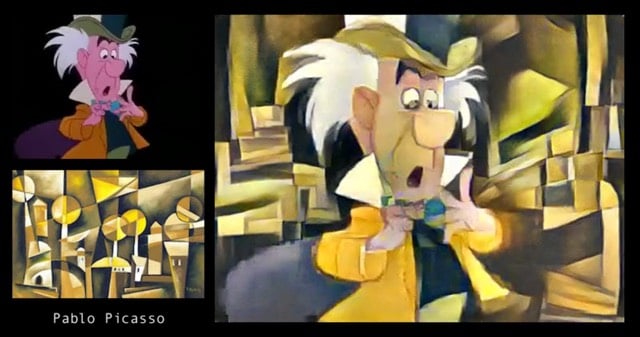
The effect works amazingly well, like if you took Alice in Wonderland and a MoMA catalog and put them in a blender. (via prosthetic knowledge)
The worlds in many of Quentin Tarantino’s movies are connected; here are ten of the biggest connections, including the Vega brothers, Red Apple cigarettes, and Big Kahuna Burger. Tarantino has even said that some of his movies are watchable within others…e.g. the characters in Pulp Fiction could have watched From Dusk Till Dawn in the theater.
Posted here purely for the sake of completeness, here is a supercut of every1 supercut, parody, analysis, and compilation of Wes Anderson and his movies, the whole twee ball of wax.
The aspect ratio of a movie can have a significant effect on how the scenes in the movie are perceived by the viewer. Changing the ratio during a movie (as in Interstellar, The Dark Knight Rises, etc.) can be an effective way to signal a thematic change.
The Nerdwriter takes on Children of Men, specifically what’s going in the background of Alfonso Cuarón’s film, both in terms of references to other works of art & culture and to things that push the plot along and contribute to the tone and message of the film.
Many years ago, Errol Morris interviewed Donald Trump about Citizen Kane as part of a project called The Movie Movie.
The table getting larger and larger and larger with he and his wife getting further and further apart as he got wealthier and wealthier, perhaps I can understand that.
Trump acquits himself pretty well on Kane and its lessons — although I would not characterize Kane’s fall as “modest” — and his commentary about the film is probably the first actually interesting thing I have ever heard him say. But I watched all the way to the end and he shoots himself in the foot in the most Trumpian & misogynistic way — it’s actually perfect.
The Movie Movie, according to Morris’ web site, was based on the idea of putting modern day figures like Trump and Mikhail Gorbachev into the movies that they most admire. So Trump would star as Kane in Citizen Kane and Gorby would be in Dr. Strangelove as who, Strangelove himself? Man, what a fantastic idea. Joshua Oppenheimer used a variant of this idea to powerful effect in The Act of Killing, a film executive produced by Morris.
Morris himself turned a bit of the original The Movie Movie idea into a 4-minute clip for the 2002 Oscars of people — some of them famous: Trump, Gorbachev, Tom Brady, Christie Turlington, Keith Richards, Philip Glass, Al Sharpton — talking about their favorite movies.
The Auralnauts provide an alternate soundtrack and dialogue for Star Wars.
(via @waxpancake)
From 2003, a 25-minute documentary (plus a few extras) on how Pixar made Finding Nemo.
How far does Pixar go to get a movie made correctly? Far. For instance, everyone on the Nemo team got certified in scuba diving. (via @drwave)
The Danish Girl is an upcoming film starring Eddie Redmayne as transgender pioneer Lili Elbe, who was one of the first people to undergo gender reassignment surgery. It’s based on a novel of the same name which presents a fictionalized account of Elbe’s life.
The film may well net Redmayne another Oscar nomination, but I don’t know how the transgender community will react. From a quick look on Twitter and the past reception of Oscar-hopeful films dealing with similar issues (see The Imitation Game’s portrayal of Alan Turing’s sexuality), I’m guessing it may not be so well-received.
The Wolfpack is a documentary that follows the six Angulo brothers, whose father kept them sequestered (along with their sister and mother) inside a four-bedroom apartment on the Lower East Side of Manhattan for fourteen years because he thought the city unsafe, allowing only annual or semi-annual trips outside. The boys’ only access to the outside world was through movies, which they recreated in their tiny apartment. The trailer:
With no friends and living on welfare, they feed their curiosity, creativity, and imagination with film, which allows them to escape from their feelings of isolation and loneliness. Everything changes when one of the brothers escapes, and the power dynamics in the house are transformed. The Wolfpack must learn how to integrate into society without disbanding the brotherhood.
They did not mess around when it came to their filmmaking…this is a surprisingly realistic Batman costume made out of cereal boxes and yoga mats:
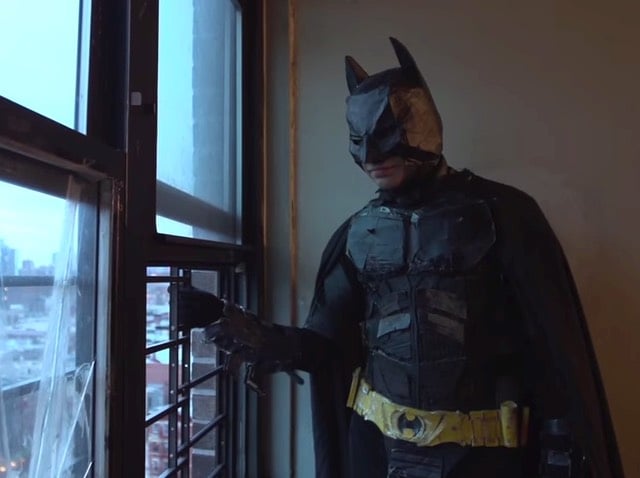
The Wolfpack won the Grand Jury Prize at Sundance this year, and the brothers made a few videos to thank the festival for their prize. Here are the Clerks and The Usual Suspects thank yous:
They also filmed a scene from one of their favorite movies of 2014, The Grand Budapest Hotel:
The Wolfpack was out in US theaters earlier this summer and is now on Amazon Instant…I think I’m going to watch this tonight. (via @quinto_quarto)
From illustrator @takumitoxin, a wonderful rendering of the events of Mad Max: Fury Road in the style of an ancient Egyptian painting.
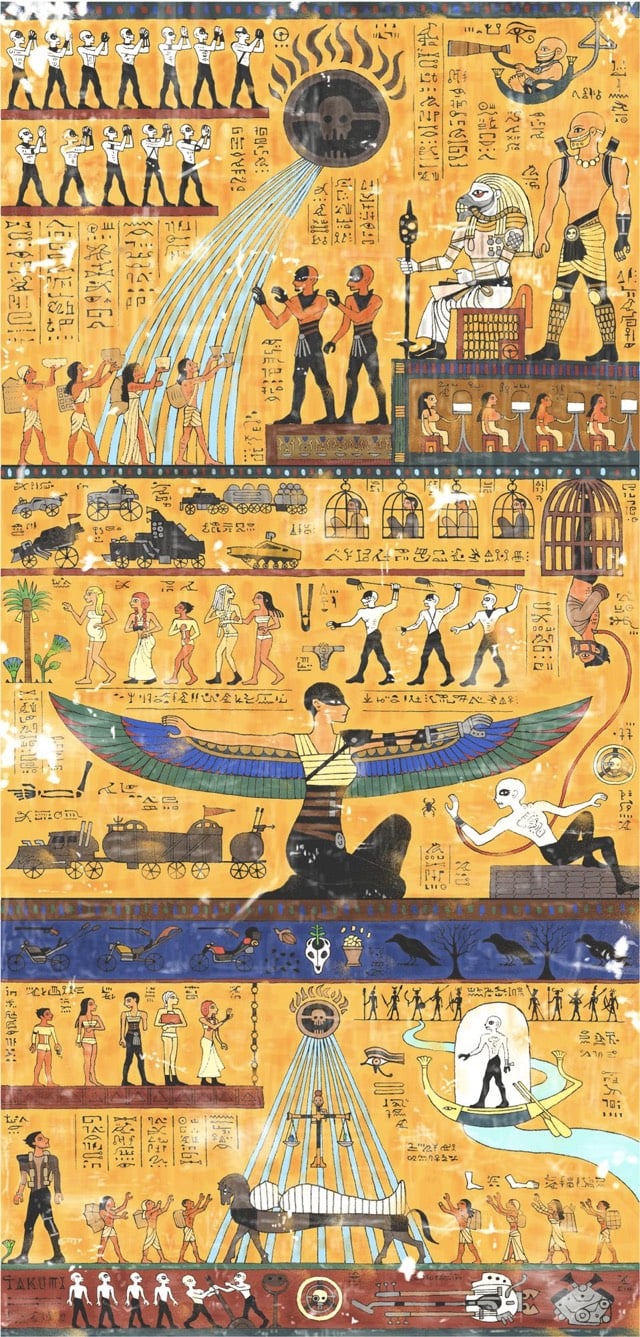
Fury Road is out on Blu-ray today (and streaming). This movie was the perfect summer entertainment.
Concussion, starring Will Smith, is about Dr. Bennet Omalu, who discovered the link between football and CTE (Chronic Traumatic Encephalopathy) and will be out in December.
The movie is based on the 2009 GQ article, Game Brain.
Let’s say you run a multibillion-dollar football league. And let’s say the scientific community — starting with one young pathologist in Pittsburgh and growing into a chorus of neuroscientists across the country — comes to you and says concussions are making your players crazy, crazy enough to kill themselves, and here, in these slices of brain tissue, is the proof. Do you join these scientists and try to solve the problem, or do you use your power to discredit them?
Saw someone on Twitter saying that maybe this will be football’s The Insider. Let’s hope it moves the needle.
Update: From the NY Times, Sony Altered ‘Concussion’ Film to Prevent N.F.L. Protests, Emails Show.
In dozens of studio emails unearthed by hackers, Sony executives; the director, Peter Landesman; and representatives of Mr. Smith discussed how to avoid antagonizing the N.F.L. by altering the script and marketing the film more as a whistle-blower story, rather than a condemnation of football or the league.
“Will is not anti football (nor is the movie) and isn’t planning to be a spokesman for what football should be or shouldn’t be but rather is an actor taking on an exciting challenge,” Dwight Caines, the president of domestic marketing at Sony Pictures, wrote in an email on Aug. 6, 2014, to three top studio executives about how to position the movie. “We’ll develop messaging with the help of N.F.L. consultant to ensure that we are telling a dramatic story and not kicking the hornet’s nest.”
(via @masterofn0ne)
Newer posts
Older posts





Socials & More