kottke.org posts about movies
Riffing off a remark made by Guillermo del Toro that a director’s output is all part of the same movie, Andrew Saladino of The Royal Ocean Film Society looks at the many airships in Hayao Miyazaki’s films. What does the director’s continued use of flying machines tell us about filmmaking, technology, and everything else he’s trying to communicate though his films?
Last week we saw two absolutely incredible product introductions, and I’m having trouble picking a favorite. First, there were Glenlivet’s cocktail capsules that immediately reminded the entire internet of Tide Pods.

And then there was Le Creuset’s Star Wars collection of cookware, including a Darth Vader dutch oven, R2-D2 cooker, a Han Solo in carbonite roasting pan, and a “hand-painted, special-edition Tatooine™ Round Dutch Oven, inspired by the desert planet with captivating binary sunsets”.


People, we are living in a true golden age.
Master cinematographer Roger Deakins has teamed up with director Sam Mendes on 1917, a WWI thriller that follows two soldiers tasked to deliver a message to the front lines to save the lives of thousands of men. To create a more immersive feeling, they decided to present the action of the movie in real-time and pieced together many long takes to make it seem as though the film is a single continuous 2-hour-long shot. In the video above, the filmmakers give us a behind-the-scenes look at how that impressive undertaking was accomplished.
With the emphasis on time as the film’s organizing principle, it’s not difficult to see the influence of Christopher Nolan’s Dunkirk here. Even the watch-ticking music in the trailer for 1917 is similar to Hans Zimmer’s score for Dunkirk. (via @jayjrendon)
Pixar is always trying to push the envelope of animation and filmmaking, going beyond what they’ve done before. For the studio’s latest release, Toy Story 4, the filmmakers worked to inject as much reality into the animation as possible and to make it feel like a live-action movie shot with real cameras using familiar lenses and standard techniques. In the latest episode of Nerdwriter, Evan Puschak shares how they did that:
As I learned when I visited Pixar this summer,1 all of the virtual cameras and lenses they use in their 3D software to “shoot” scenes are based on real cameras and lenses. As the first part of the video shows, when they want two things to be in focus at the same time, they use a lens with a split focus diopter. You can tell that’s what they’re doing because you can see the artifacts on the screen — the blurring, the line marking the diopter transition point — just as you would in a live-action film.
They’re doing a similar thing by capturing the movement of actual cameras and then importing the motion into their software:
To get the motion just right for the baby carriage scene in the antique store for TS4, they took an actual baby carriage, strapped a camera to it, plopped a Woody doll in it, and took it for a spin around campus. They took the video from that, motion-captured the bounce and sway of the carriage, and made it available as a setting in the software that they could apply to the virtual camera.
Now, this is a really interesting decision on Pixar’s part! Since their filmmaking is completely animated and digital, they can easily put any number of objects in focus in the same scene or simply erase the evidence that a diopter was used. But no, they keep it in because making something look like it was shot in the real world with real cameras helps the audience believe the action on the screen. Our brains have been conditioned by more than 100 years of cinema to understand the visual language of movies, including how cameras move and lenses capture scenes. Harnessing that visual language helps Pixar’s filmmakers make the presentation of the action on the screen seem familiar rather than unrealistic.


Ever since Starman in 1984, Jeff Bridges has taken photos on the set of every film he’s acted in using his Widelux F8 camera. Sometimes he compiles them into picture books for the cast and crew. Sometimes he posts them to his charmingly old school website. And sometimes he compiles them into coffee table books that you and I can have in our homes. Nick Chen recently interviewed Bridges about his photography.
Dazed: You did The Big Lebowski and True Grit with the Coen Brothers. What do they make of your photography?
Jeff Bridges: I think they get a kick out of it. They’re pretty cool cats. They don’t go overboard with praise or anything. They’re certainly wonderful to work with, and they’re true masters, so I was happy that they gave a stamp of approval on my book. That was nice.
Dazed: Does Roger Deakins ever want a co-credit for doing the lighting?
Jeff Bridges: (laughs) No, he did not ask me. But wow, talk about masters. Isn’t he terrific? My God, he does it just right.
Pictures by Jeff Bridges was released in 2003 and now a follow-up is coming out in mid-October 2019: Jeff Bridges: Pictures Volume 2. (thx, david)
Update: The International Center of Photography honored Bridges with an award in 2013 and produced this video about his photography.
Every month or two for the past couple of years, I’ve shared the movies, books, music, TV, and podcasts I’ve enjoyed (or not) recently. Here’s everything I’ve “consumed” since late June. I’d tell you not to pay too much attention to the letter grades but you’re going to pay too much attention to the letter grades anyway so… (p.s. This list was shared last week in Noticing, kottke.org’s weekly newsletter.)
Fiasco (season one). Slow Burn co-creator Leon Neyfakh explores the Florida recount in the 2000 Presidential election. My key takeaway is not that anyone stole the election but that any halfway close election in the US is fundamentally unfair, can easily be swayed in one direction or another, and violates our 14th Amendment rights. I didn’t enjoy this as much as either season of Slow Burn…perhaps it was too recent for me to emotionally detach. (B+)
The Impossible Whopper. All the people saying that the Impossible patty tastes just like a real burger have either never tasted meat before or don’t pay a whole lot of attention when they eat. It’s the best veggie burger patty I’ve ever had, but it sure ain’t beef. (B)
American Factory. Completely fascinating and straight-forward look at what happens when a Chinese company takes over an old GM factory in Dayton, Ohio. Give this just 5 minutes and you’ll watch the whole thing. (A)
XOXO Festival. Always a creative shot in the arm. (A)
Norman Fucking Rockwell! I tried with this, I really did. I don’t think Lana Del Rey is my cup of tea. (C)
The Handmaid’s Tale (season 3). The show’s producers noticed how much critics praised Elisabeth Moss’s emotional closeups and now season 3 is like 80% just that. Way too much of a good thing. Still, there’s still a good show in here somewhere. (B+)
Do the Right Thing. Somehow still bold and controversial after 30 years. But I confess…I am not sure exactly what the takeaway from this movie is supposed to be. (B+)
Tycho’s 2019 Burning Man Sunrise Set. Always a treat when the latest installment of this series pops online. (A-)
Spider-Man: Far From Home. It was fine but I kept waiting for an extra gear that never came. (B)
Existing Conditions. The drinks here are very precise and well-balanced. Hit ‘em up if you miss Booker & Dax. (B+)
In the Garden of Beasts by Erik Larson. Excellent and rhymes with the present in a number of ways. I previously shared a bunch of my highlights from the book. (A)
Keep Going by Austin Kleon. A timely little book. (A-)
Stranger Things (season 3). The best part of this show is the 80s nostalgia and they overdid it this season. (B)
Weather. Tycho switched it up with this album by adding vocals. I hated them at first but they’ve grown on me. (B+)
Apollo 11. The first time around I watched this in a terrible theater with bad audio and didn’t care for it. The second time, at home, was so much better. The footage is stunning. (A)
Apollo 11 soundtrack. Love the first track on this. (A-)
Ex Machina. Still gloriously weird. (A-)
Planet Money: So, Should We Recycle? I don’t 100% agree with their conclusions, but it was interesting to think that recycling might not be the most efficient use of our resources. Pair with an earlier episode on how recycling got started in the US. (B)
Chef’s Table (Virgilio Martinez). Central sounds absolutely bonkers. I hope to make it there someday. (B+)
Silicon Cowboys. Compaq took on IBM in the personal computer space and won. The first season of Halt and Catch Fire was inspired in part by their story. (A-)
Once Upon a Time in Hollywood. Needed more plot. (B)
To Kill a Mockingbird. I listened to this on audiobook and am convinced that Sissy Spacek’s narration made it like 20% more compelling. (A)
Metropolis II. I could have watched this for hours. (A)

Redwood trees. (A+++)
The Dahlia Garden in Golden Gate Park. One of my favorite places on Earth. (A+)
Mindhunter (season 2). I love this show. (A)
The Clearing. Not the strongest true crime podcast but still worth a listen. (B)
5G. On my phone (iPhone XS, AT&T), anything less than 4 bars of “5GE” basically equals no service. And there’s no way to revert to LTE. (D+)
Atlanta Monster. Started this after watching Mindhunter s02. Too much filler and poor editing in parts. When they started talking to a conspiracy theorist who has been brainwashed by the convicted killer (or something), I had to stop listening. A pity…this story could use a good podcast. (C)
Booksmart. Second viewing and this may be my favorite movie of the year. So fun. (A)
I’ve also been watching Succession and rewatching all five seasons of The Wire (to test a hypothesis that with the hindsight of the past decade, the fifth season is not as outlandish as everyone thought it was at the time). I’ve slowed way down on listening to Guns, Germs, and Steel on audiobook and reading SPQR — both are interesting but not holding my attention so I may end up abandoning them. I watched the first episode of the second season of Big Little Lies when it was first released but might not finish the rest of it; the reviews of this season have not been great.
Past installments of my media diet are available here.
For their series The Director’s Chair, Studio Binder pulls together interviews with notable filmmakers to shine some light on how they make their films. In the latest installment, Wes Anderson explains how he writes and directs his uniquely stylistic movies.
The video covers five main points about his approach:
1. Pull from your past.
2. Build a world.
3. Focus on precision & symmetry.
4. Find your spark.
5. Just go shoot.
(#5 is a bit of a head-scratcher. Anderson is pretty much the opposite of a “just go shoot” filmmaker. But I suppose he did have to start somewhere…)
When something dark and ominous happens onscreen, there’s a good chance that the action is accompanied by a four-note snippet from the dies irae, a 13th-century Gregorian chant used at funerals. It shows up in The Lion King, The Good Place, Lord of the Rings, and It’s a Wonderful Life. This Vox video explores how this “shorthand for something grim” went from chant to Hollywood.
Think back to some of the most dramatic scenes in film history — from The Lion King, The Shining, It’s a Wonderful Life. Besides being sad or scary, they have something else in common: the dies irae. “Dies irae” translates from Latin to “Day of Wrath” — it’s a 13th-century Gregorian chant describing the day Catholics believe God will judge the living and the dead and send them to heaven or hell. And it was sung during one specific mass: funerals.
Alex Ludwig from the Berklee School of Music made a supercut of over 30 films that use dies irae.
As I mentioned in a post about my west coast roadtrip, one of the things I heard about during my visit to Pixar was their AI spiders. For Toy Story 4, the production team wanted to add some dusty ambiance to the antique store in the form of cobwebs.
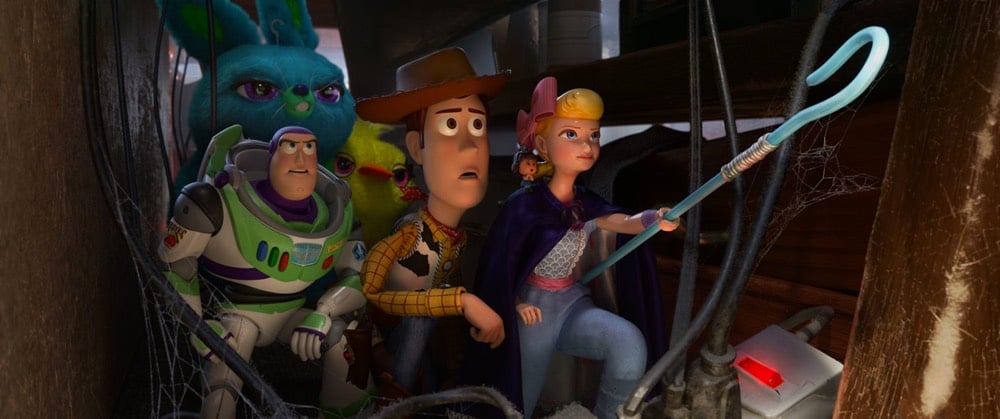
Rather than having to painstakingly create the webs by hand as they’d done in the past, technical director Hosuk Chang created a swarm of AI spiders that could weave the webs just like a real spider would.
We actually saw the AI spiders in action and it was jaw-dropping to see something so simple, yet so technically amazing to create realistic backgrounds elements like cobwebs. The spiders appeared as red dots that would weave their way between two wood elements just like a real spider would.
All the animators had to do is tell the spiders where the cobwebs needed to be.
“He guided the spiders to where he wanted them to build cobwebs, and they’d do the job for us. And when you see those cobwebs overlaid on the rest of the scene, it gives the audience the sense that this place has been here for a while.” Without that program, animators would have had to make the webs one strand at a time, which would have taken several months. “You have to tell the spider where the connection points of the cobweb should go,” Jordan says, “but then it does the rest.”
Chang and his colleague David Luoh presented a paper about the spiders (and dust) at SIGGRAPH ‘19 in late July (which is unfortunately behind a paywall).
I love cross-disciplinary lists like this: The 25 Most Important Characters of the Past 25 Years.
We polled critics and other culture obsessives from Slate and beyond to assemble an enormous master list of influential characters. They were animated and live-action, wizard and Muggle, human and avian, fictional and based on actual persons, living and dead. They came from movies, books, TV series, video games, tweets, podcasts, comics, songs, and (in a surprise to us) more than one musical. Reflecting our franchise-driven time, many of them came from many of those media at once. The only rule was that they must have originated in a work of culture sometime in the past quarter-century, which meant no Simpsons or hobbits or diner-dwelling New Yorkers who argue about nothing. Then we ruthlessly winnowed down the list to the most crucial of those characters, the ones who have left an outsize mark on our planet circa 2019, to assemble this new pantheon.

Many of my favorite characters made it on there: Thomas Cromwell from Hilary Mantel’s Wolf Hall & Bring Up the Bodies; Omar Little from The Wire; Tracy Flick from Election; and Hermione Granger from Harry Potter, a much more inspired pick than the titular hero for reasons I’ve already articulated. The full list is worth a read.
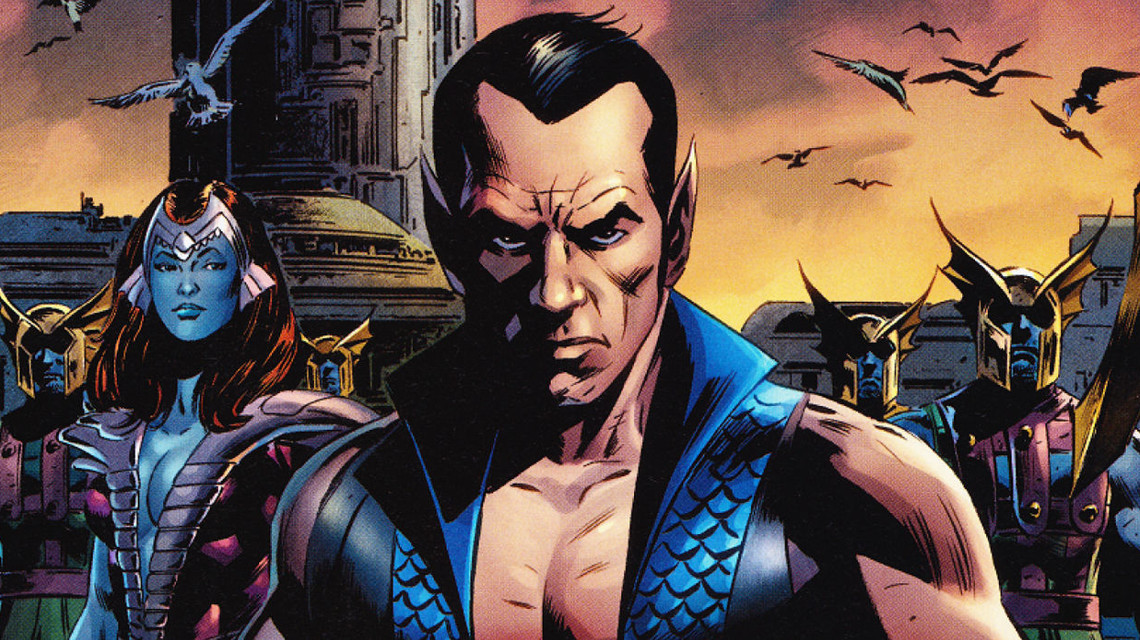
The late 1930s were a time of explosive creativity in the comics industry, with the creation of Superman, Batman, and Marvel Comics’ own unlikely fan favorite, Namor, the Sub-Mariner. I enjoyed reading this short précis on Namor in honor of his 80th anniversary.
Namor is less an early superhero than the last of the pulp icons, an antihero who threatened humanity with death and destruction. Unlike Superman, he’s not a secret alien raised by the best of humanity to save us all; he’s a hybrid mutant raised by a nonhuman race here on Earth that regards humanity as overgrown, ill-tempered children. And unlike Zack Snyder antiheroes who have to be twisted from their origin stories to bring them up to date, Watchmen-style, nothing about Namor needs to be changed to make him genuinely menacing, alien, and scary, while retaining his sexy charm. Namor’s just got it going on.
Namor’s film rights have been circuitously tied up for years, so we’ve never seen him on the silver screen. The first hit that always comes up when you search for him is Keanu Reeves, and Keanu at any age wouldn’t make a bad Namor. There’s talk of introducing him into the MCU via the Black Panther franchise, and that’s a great idea as well, since the main thing Black Panther and the Sub-Mariner share is that they’re not really super-heroes; they’re kings.
(Superman is precisely interesting to the extent that he is neither a king nor a god, but a man; these two things are not mutually exclusive. Hollywood’s inability to grasp this is part of why superhero movies have so much trouble, despite being the most dumb-simple megagenre of all time.)
Video essayist Jacob T. Swinney makes makes these great little supercuts of the stylistic habits of filmmakers. His two latest ones are of Barry Jenkins’ close-ups and Christopher Nolan’s wide shots.
Barry Jenkins may be the modern master of the close-up shot. Jenkins’s close-ups are reminiscent of those crafted by the late, great Jonathan Demme — shallow focus with the character looking directly into the camera’s lens. Take it from close-up aficionado, Paul Thomas Anderson. Anderson once told Jenkins, “I’m very jealous of your close-ups. There’s a long line of people who have really tried to do Jonathan Demme close-ups and I try all the time, but I have to say, you got it right better than anybody.” In Jenkins’s last two features, MOONLIGHT and IF BEALE STREET COULD TALK, the close-ups seem to transcend the narrative of the films. Time seems to stand still as we gaze into the eyes of the characters. They are intimate and profound, and they are simply pure cinema.
For a man whose films cover everything from masked vigilantes, to dream heists, to interdimensional travel, Christopher Nolan is a rather personal and intimate filmmaker. This is expressed in the way that he tends to position his camera. Nolan prefers to keep his camera close to his characters, often hugging their bodies in warm medium shots or close ups. So when Nolan chooses to back off and take a step back from his characters, we are going to feel it. Nolan’s wide shots are obviously beautiful, but what they convey extends far beyond a stunning visual. They convey magnitude and significance, isolation and disorientation.
Swinney has also done supercuts of David Fincher’s wide shots, the sound design of Jurassic Park, the use of shallow focus by Denis Villeneuve, P.T. Anderson’s reflective silence, and Darren Aronofsky’s extreme closeups. May I suggest some women filmmakers for the next round of videos though? Lynne Ramsay and Ava DuVernay for starters…
In 1965, long after his days making some of the most iconic and physically demanding silent films, pioneering physical comedian Buster Keaton made one last silent flick with the National Film Board of Canada.
This short film from director Gerald Potterton (Heavy Metal) stars Buster Keaton in one of the last films of his long career. As “the railrodder”, Keaton crosses Canada from east to west on a railway track speeder. True to Keaton’s genre, the film is full of sight gags as our protagonist putt-putts his way to British Columbia. Not a word is spoken throughout, and Keaton is as spry and ingenious at fetching laughs as he was in the old days of the silent slapsticks.
Buster Keaton Rides Again, a 55-minute documentary about the making of The Railrodders, might be even more interesting because you hear Keaton talking about his craft and career.
See also The Scribe, a film that was released the following year that was Keaton’s final starring role, Buster Keaton and the Art of the Gag, the small collection of posts about Keaton here at kottke.org, and this video of some of his most amazing stunts (with a voiceover of Keaton talking about his career):
(thx, marcus)
Indiewire is early out of the gate with their list of the 100 best movies of the decade, betting that anything coming out in the next 5 months will not be worthy of inclusion. There are a few eyebrow raisers on there — 75. A Star Is Born? 26. Magic Mike XXL?? 5. Inside Llewyn Davis??? 2. Under the Skin?????!!? (reader, I didn’t like it) — but mostly this list is a goldmine for good movies I haven’t seen. Here are some that I have seen and enjoyed seeing on the list:
92. Spider-Man: Into the Spider-Verse
78. Inside Out
72. The Handmaiden
63. Inception
60. Black Panther
37. Roma
32. The Grand Budapest Hotel
23. O.J.: Made in America
13. The Tree of Life
9. Mad Max: Fury Road
7. Carol
I love that Fury Road made its way into the top 10…it might be my favorite film of the past decade.
Update: Also from Indiewire, the 25 Best Movie Scenes of the Decade.
Oh, and I thought of some films that definitely should be on that list but weren’t: Arrival, Dunkirk, Selma, Upstream Color, Senna. And I will continue to stubbornly go to bat for Cloud Atlas.
Harriet is a biopic about freedom fighter Harriet Tubman coming out in November. Tubman is played by Cynthia Erivo, who looked super familiar but I couldn’t place her…turns out I’d seen her in Widows and Bad Times at the El Royale. Erivo is joined by fellow castmembers Leslie Odom Jr., Janelle Monáe, and Clarke Peters.
Newer posts
Older posts





Socials & More