kottke.org posts about movies
Oh, this interview with Errol Morris where he talks about Making a Murderer is so so spot on.
To me, it’s a very powerful story, ultimately, not about whether these guys are guilty or innocent — but it’s a very powerful story about a miscarriage of justice.
Yes! If you came out of watching all ten episodes convinced one way or the other whether Avery was innocent, I humbly suggest that you missed the point. And further that you can’t actually know…it’s a TV show! The tip of the iceberg.
Another thing that I was struck by watching Making a Murderer was the feeling of the inexorable grinding of a machine that is producing, potentially, error.
This was my favorite aspect of the show. A lot of people complained about them showing huge chunks of Avery’s and Dassey’s trials, saying that it was too boring, but that’s the whole thing! The crushing boredom of the justice system just grinds those two men and their whole families into the result that the state wanted all along. It was fascinating and horrifying to watch, like a traffic accident in super slow motion.
If you’re asking me, would I sign a petition stating that I believe that Steven Avery is innocent? Well, I don’t know. I really don’t know from watching Making a Murderer, but there’s one thing I do know from watching Making a Murderer — that neither Brendan Dassey nor Steven Avery received a fair trial, and that that trial should be overturned.
My thoughts exactly. If I had to guess, Dassey is entirely innocent and Avery is maybe guilty, but neither of them should have been convicted on the evidence presented or the procedure followed.
Anyway, read the whole thing…his stories about making The Thin Blue Line are great. And he’s making a six-episode true crime show for Netflix? YES!
Watch these inspiring film pioneers in this behind the scenes look at the first movie shot entirely with a Prius backup camera. (via @kevin2kelly)
In this video, Lewis Bond shows how the composition of movie scenes can not only result in beauty, but can reveal relationships and convey meaning.
The Chickening is a surreal visual remix of Stanley Kubrick’s The Shining done by Nick DenBoer and Davy Force. It mostly defies description, so just watch the first minute or so (after which you won’t be able to resist the rest of it). The short film is playing at this year’s Sundance Film Festival.
But seriously, WTF was that?! (via @UnlikelyWorlds)
My main thought in watching these VFX videos for The Martian, Star Wars, and Mad Max is how amazing visual effects are now. The effects folks do their jobs so well now that audiences don’t even notice the effects…it’s almost boring.
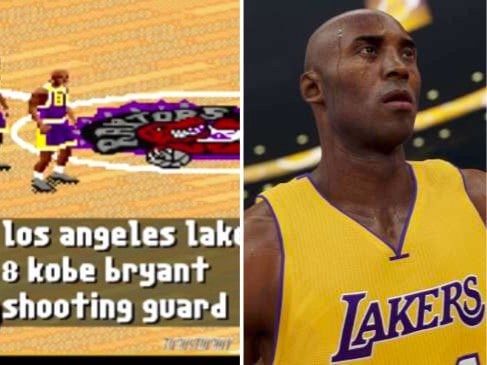
Related: see also how much video game graphics have improved from the beginning of Kobe Bryant’s NBA career to now.
Film editor Vashi Nedomansky took five movies whose ASL (average shot length) is under 2 seconds and sped them up by 12 times. You can judge for yourself, but according to Nedomansky, Mad Max: Fury Road is the only one that’s still comprehensible at that speed. Huge props to director George Miller and editor Margaret Sixel.
Fury Road was by far the prettiest movie I saw in the past year. Lots of practical effects, but every single frame of the film was also digitally altered (mostly color correction). This piece goes way more into detail.
I like how Cinefix does these videos. They pick the ten films, but they also mention other films that take similar approaches. In this case, the picks are also more populist than usual, which I appreciate.
Questlove tells some great stories — I’m partial to the one about Will Smith’s house — and this story about his attempt to DJ for Prince and how a Pixar movie intervened is top notch.
Harry Potter and the Half-Blood Prince reimagined as a wacky teen comedy. Excellent editing and music choice elevate this above similar efforts.
This is maddening if true: according to an industry insider, vendors making tie-in products for the new Star Wars movie were directed by Disney1 to exclude Rey from Star Wars related merchandise.
In January 2015, a number of toy and merchandise vendors descended on Lucasfilm’s Letterman Center in San Francisco. In a series of confidential meetings, the vendors presented their product ideas to tie in with the highly-anticipated new Star Wars film. Representatives presented, pitched, discussed, and agreed upon prototype products. The seeds of the controversies Lucasfilm is facing regarding the marketing and merchandising of The Force Awakens were sown in those meetings, according to the industry insider.
The insider, who was at those meetings, described how initial versions of many of the products presented to Lucasfilm featured Rey prominently. At first, discussions were positive, but as the meetings wore on, one or more individuals raised concerns about the presence of female characters in the Star Wars products. Eventually, the product vendors were specifically directed to exclude the Rey character from all Star Wars-related merchandise, said the insider.
“We know what sells,” the industry insider was told. “No boy wants to be given a product with a female character on it.”
What good does it do our culture if JJ Abrams and Kathleen Kennedy work to make popular movies with progressive characters if the cowards in marketing are not going to follow suit?
Update: Lots of people are sharing this story, and I wanted to highlight and explain the “if true” in the first paragraph. There are good reasons to be skeptical of the article I linked to. It relies completely on a single anonymous source. I have no idea what Sweatpants and Coffee’s fact-checking procedures are. There are also many Star Wars related products featuring Rey (like Lego), so clearly the directive to “exclude the Rey character from all Star Wars-related merchandise” was either not issued in such a restrictive manner or was disregarded in some cases.
Well, holy shit…Werner Herzog has made a film called Lo and Behold about the online world and artificial intelligence.
Lo and Behold traces what Herzog describes as “one of the biggest revolutions we as humans are experiencing,” from its most elevating accomplishments to its darkest corners. Featuring original interviews with cyberspace pioneers and prophets such as Elon Musk, Bob Kahn, and world-famous hacker Kevin Mitnick, the film travels through a series of interconnected episodes that reveal the ways in which the online world has transformed how virtually everything in the real world works, from business to education, space travel to healthcare, and the very heart of how we conduct our personal relationships.
From the trailer, it looks amazing. Gotta see this asap.
Update: Here’s the official trailer for the film:
Have the monks stopped meditating? They all seem to be tweeting.
It’s coming out in theaters and iTunes/Amazon on August 19th. Can’t wait!
Swearing in Hollywood movies was banned from the 1930s until 1968. And even then it took two more years for a movie (MASH) to use the word “fuck”. NSFW if you’ve got your fucking sound turned up.
This month, HBO is airing a special edition of The Godfather that presents scenes from the first two movies in chronological order with some deleted scenes mixed in for good measure. It’s more than 7 hours long. It’s not listed anywhere on HBO’s site, but supposedly it’ll run all month on HBO and their online and on-demand services.
I love watching Gordon Ramsay make scrambled eggs. I first saw this video years ago and, possibly because I am an idiot, have yet to attempt these eggs at home. You and me, eggs, next weekend.
P.S. Jean-Georges Vongerichten makes scrambled eggs in a very similar way. Not quite soft-scrambled…Serious Eats calls them fancy French spoonable eggs.
P.P.S. Anyone have a square Japanese omelette pan I can borrow?
P.P.P.S. In Jiro Dreams of Sushi (now on Netflix!), an apprentice talks about making tamagoyaki (Japanese omelette) over 200 times before Jiro declared it good enough to serve in his restaurant.
That apprentice, Daisuke Nakazawa, is now the head chef at Sushi Nakazawa, one of the five NYC restaurants that currently has a four-star rating from the NY Times (along with the aforementioned Jean-Georges and not along with Per Se, which recently got dunce capped down to 2 stars by populist hero Pete Wells).
Evan Puschak, aka the Nerdwriter, explains why the third movie in the Harry Potter series, The Prisoner of Azkaban, is the best film in the series — spoiler: because Alfonso Cuarón — and why that matters for the young fans of the series: for some, it’s their first exposure to good filmmaking.
A look at how some of the most arresting visual effects were done in Star Wars: The Force Awakens. The filmmakers used many real sets and models (i.e. practical effects), but there were also 2100 shots in the movie with digital effects.
Update: The original video was removed, but I replaced it with one that’s a bit better.
Update: Here’s how the visual effects on the Millennium Falcon’s escape from Jakku scene were done.
Update: ILM released their official look at the visual effects.
In this short video (oh just be patient and watch the whole damn thing), Alan Rickman demonstrates how I feel this morning that he has died of cancer at the age of 69. (Same age and affliction as Bowie, you’ll note.)
That Rickman never won an Oscar (he did receive a Golden Globe, an Emmy, a Bafta and many more) became a perennial topic in interviews but did not seem to trouble the actor himself. “Parts win prizes, not actors,” he said in 2008. It was the wider worth of his art to which Rickman remained committed, saying that he found it easier to treat the work seriously if he could look upon himself with levity.
“Actors are agents of change,” he said. “A film, a piece of theatre, a piece of music, or a book can make a difference. It can change the world.”
I loved Rickman as Hans Gruber in Die Hard and as Dr. Lazarus in Galaxy Quest, but I’ll remember his turn as Severus Snape in the Harry Potter films the most. Among several fantastic actors in that series, Rickman’s performance was arguably the best. Many characters in Potter struggled between the good and not-so-good sides of themselves (including Harry and Dumbledore) but none of them carried that battle off as well as Rickman’s Snape.
A video exploring Stanley Kubrick’s use of color in his films. See also Kubrick’s use of the color red. (via @john_overholt)
Riffing on Kathryn Schulz’s piece about the five best punctuation marks in literature, Max Tohline explores how editing in film can function as punctuation to separate or join together characters, shots, and ideas within movies.
Some people were bothered over supposed gaps in the plot in The Force Awakens. I wasn’t…save the hand-wringing for more weighty fare. But if you were, the novelization of the movie connects some of the dots left detached. Here are some of the more interesting ones (spoilers, obvs):
The Resistance had no idea Starkiller Base existed. This is extrapolated on quite a bit. Snoke’s decision to destroy the New Republic is about flushing out the Resistance. Utter annihilation of the enemy is a mere side effect. Snoke knew using the weapon would give away the base’s location. The Resistance would then send a reconnaissance team to scout the place and the First Order could follow the scouts back to the Resistance HQ and destroy them once and for all. While this is what happens in the movie, the motivations are a bit murkier.
Kylo Ren knows who Rey is. After failing to call Anakin Skywalker’s lightsaber to his hand, Ren turns to Rey — who is now holding the blue lightsaber — and he declares, “It IS you,” and then the fight begins.
Ok, whoa. What does that mean?
Han hadn’t seen Kylo Ren/Ben since he became an adult. When Ben removes the helmet of Kylo Ren, Han Solo is shocked by how grown-up his son looks as he hasn’t seen him since he became an adult. This lends credence to the theory that Snoke seduced a teenaged Ben to the Dark Side. Speaking of which, Leia knew Snoke was trying to get his claws in her son since he was a child and never told Han until right before the Starkiller mission.
[Rey] struggles with the Dark Side almost immediately. Rey might look serene as she finds the Force and battles a badly injured Kylo Ren, but she is fighting with rage. After beating down her opponent, a voice inside her encourages her to kill him. She rejects the notion, but is still struggling with herself when the rift opens up and separates the two of them.
[Ren] also cracked open something in Rey’s mind. One of the advantages of a book is internal narration. When Ren attempts to retrieve the map from Rey’s brain he senses something weird within her mind. Not resistance, but a barrier. Probing at it is what causes Rey to suddenly find herself — with no provocation — inside Ren’s mind. Now this is just speculation, but it certainly sounds like someone had walled off Rey’s Force sensitivity and Kylo Ren accidentally broke down the wall.
The script for the movie clarifies a few things as well.
Luke Skywalker Immediately Knows Who Rey Is and Why She Is Here. The script describes Luke Skywalker as being older now, with white hair and a beard. It says that he looks at Rey with a “kindness in his eyes, but there’s something tortured, too.” Most interestingly, it says that Luke “doesn’t need to ask her who she is, or what she is doing here.” Does this mean that he knows Rey is his child? Or does this mean that he knows because of the Force? The script only adds that “his look says it all.”
Kylo Ren Is Horrified By His Actions. The script gives us some internal insight into Kylo Ren after he just killed his father Han Solo. The screenplay notes that “Kylo Ren is somehow WEAKENED by this wicked act,” noting that he is “horrified” and his “SHOCK is broken only when” Chewbacca cries out in agony.
Fun fact that I just discovered: the novelizations of all three of the original Star Wars movies were released before the movies came out! Star Wars the book came out 6 months before the movie, Empire a month before, and Jedi a couple of weeks before. I’m amazed you could walk into a bookstore an entire month before The Empire Strikes Back was released and discover that Vader was Luke’s father. Truly a different approach to spoilers.
A short entertaining look at Star Wars’ secret sauce. Joseph Campbell? Kurosawa? Flash Gordon? The ancient future? The sounds? (PS: The Wilhelm Scream shows up pretty early on in The Force Awakens, as Poe and Finn exit the First Order hangar bay.)
From Tony Zhou comes another episode of Every Frame a Painting. In it, he uses Bong Joon-ho’s Memories of Murder to explore ensemble staging, how movies can direct an audience’s onscreen attention when many people are on the screen at the same time, and why a director would want to do that.
Jordan Hanzon made an edit of Inside Out showing only the “outside” parts of the film…so, none of the stuff with Joy, Sadness, Anger, etc. I bet Pixar had an internal cut like this just to make sure the outside stuff hung together independent of the inside. (via devour1)
Radiohead were commissioned to write the theme song for Spectre, the newest James Bond movie. The movie’s producers decided to go in a different musical direction, so the band recently put the rejected song up on Soundcloud. Enjoy. (via df)
Update: They took the full version down from Soundcloud but it’s up on Spotify.
Of Oz the Wizard is the entire Wizard of Oz movie presented in alphabetical order by dialogue. So it starts with all the scenes where Dorothy and the gang say “a”, “aaiee”, “along”, and proceeds through “you’re” and “zipper”. Even the words on each of the title cards are sorted alphabetically.
(I feel like I’ve posted this before — or something like it — but I can’t find it in the archives. Anyone?)
Update: Ah yes, I was thinking of this alphabetized version of Star Wars (which I’ve seen before but somehow never posted):
Another example is Thomson & Craighead’s The Time Machine. Matt Bucy, the creator of Of Oz the Wizard, seems to have pioneered this technique (the Vimeo page indicates it was completed in April 2004) but didn’t post the video online until a few days ago. (via @Mister_Milligan, @sannahahn)
How can Han Solo talk to and understand any alien he meets? Why is he such a gifted pilot? In this short piece from 2008, Tim Carmody answers those questions and more: Han Solo Has the Force.
Luke and Vader (especially young Anakin) are remarkable, inventive pilots, as is Lando, but Han blows them all away. In one scene after another in Empire, Han is able to perform feats that Artoo or Threepio say are mathematically near-impossible. He does this in a ship that has a remarkable warp-speed computer but which appears singularly unsuited for close-quarters maneuvers. Finally, he gets the drop on Vader in Episode IV, and while Vader may have been distracted by his sensations re: Luke, this is still evidence that we are dealing with a very special pilot.
And there’s further evidence from The Force Awakens (slight spoilers!): he shoots a stormtrooper with a blaster without looking. As I recall, it wasn’t a look-away, like this Cristiano pass or this Jordan assist, it was more like he could actually see the stormtrooper behind him. (Of course, Cristiano and Jordan might also be Force-sensitive, but that’s another post.)
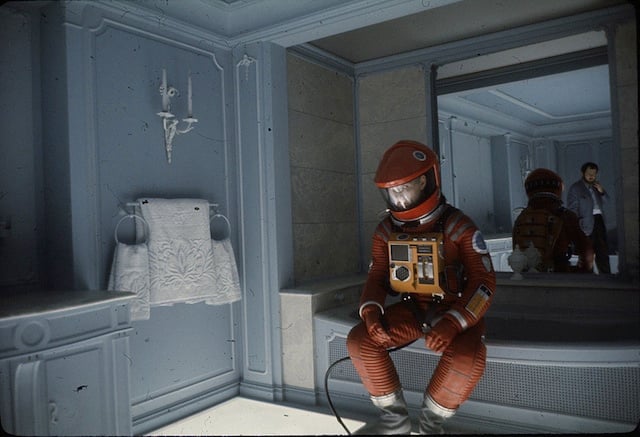
A behind-the-scenes photo from “2001: A Space Odyssey” from Coudal’s treasure trove of “Stuff About Stanley Kubrick.”
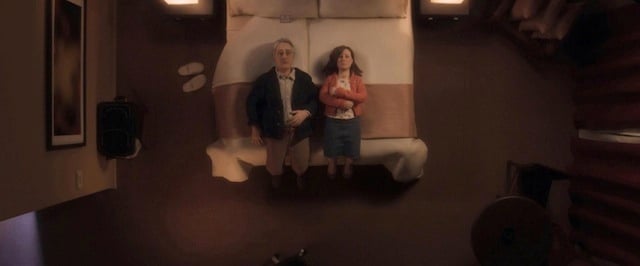
Charlie Kaufman, who wrote “Being John Malkovitch” and “Eternal Sunshine of the Spotless Mind” and wrote and directed “Synecdoche, New York,” talks about his latest writing/now co-directing project, “Anomalisa,” which is “a stop-motion animated dark comedy about a depressed customer-service expert who falls in love on a business trip”:
Is it weird for me to say that Anomalisa contains the most realistic sex scene I’ve ever seen in a movie? Given that it’s happening between puppets?
It’s not weird. Almost everybody we speak to feels that way. We worked really hard on that scene. It took six months to shoot. We were very aware of people coming into it thinking it was going to be like Team America, that it was going to be a joke, and we didn’t want it to be [like that]. We knew there would probably be some laughing at first because it’s puppet sex. We weren’t opposed to that, but what we found is that there is the occasional laugh at that point out of nervousness, but then people get really quiet.
There’s also an interview with co-director Duke Johnson that starts, “‘There were a lot of penises,’ says Duke Johnson. ‘They break very easily because they’re tiny.’”
Katherine Waterston has been cast to star in “Alien: Covenant,” the sequel to “Prometheus” to be directed by Ridley Scott. Waterston starred in Paul Thomas Anderson’s “Inherent Vice” and is the daughter of actor Sam Waterston.
So what’s the storyline?
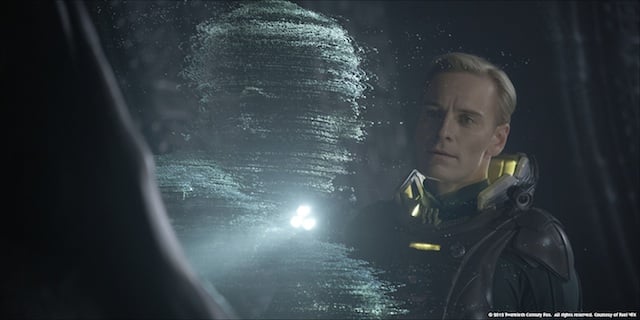
Specific plot details are being closely guarded, but it is believed to follow the crew of the colony ship Covenant, bound for a remote planet, who discover what they believe is an uncharted paradise. But in fact it’s a dark, dangerous world whose the only inhabitant is David (Michael Fassbender), the “synthetic” and survivor of the doomed Prometheus expedition.
Newer posts
Older posts





Socials & More