kottke.org posts about business
This piece on How to Compete with Patreon by Siderea is interesting throughout, but this bit on enabling “non quid pro quo patronage” caught my eye:
There is an entire little universe of people using Patreon to be funded to do good works in the world. These may be open source contributors. They may be activists. They may be journalists or bloggers. They do not make things that they exchange for money with the people who pledge them on Patreon.
Their patrons do not pay these creators to give things to them. Their patrons pay these creators to give things to the world: to release code for anyone to use, to engage in activism that changes the world for the better, or to write things that anyone can read.
I’m one of them. The number one reason I signed up for Patreon as my funding platform nine years ago, was because it was literally the only way of funding my writing that did not entail my selling it: my withholding it only for those people who paid me for it.
She continues:
What I want to do is write openly on the internet where anyone can read what I write. Where what I write can be cited by anyone who wants to refer to it in any internet discussion.
The audience of my writing is not my patrons, and it is not just the people who pay me for it. It’s the whole world.
And that, quite explicitly, is what my patrons pay me to do.
I could not have put this better myself. This sort of win-win patronage is at the heart of what I do here on kottke.org with the membership program; it’s what Tim Carmody calls Unlocking the Commons:
The most economically powerful thing you can do is to buy something for your own enjoyment that also improves the world. This has always been the value proposition of journalism and art. It’s a nonexclusive good that’s best enjoyed nonexclusively.
Anyways. This is a prediction for 2019 and beyond: The most powerful and interesting media model will remain raising money from members who don’t just permit but insist that the product be given away for free. The value comes not just what they’re buying, but who they’re buying it from and who gets to enjoy it.
I modelled my membership program, in part, after that “little universe of people using Patreon”. Watching what’s going on in the world of paid newsletters and paywalled media, the nonexclusive future of media that Tim hoped for is struggling for air, but I remain thankful to have found a group of readers who understand and support that vision in this tiny corner of the web.
Great, long piece from Ronan Farrow for the New Yorker on Elon Musk’s considerable influence over the US government. This doesn’t seem good:
There is little precedent for a civilian’s becoming the arbiter of a war between nations in such a granular way, or for the degree of dependency that the U.S. now has on Musk in a variety of fields, from the future of energy and transportation to the exploration of space. SpaceX is currently the sole means by which nasa transports crew from U.S. soil into space, a situation that will persist for at least another year. The government’s plan to move the auto industry toward electric cars requires increasing access to charging stations along America’s highways. But this rests on the actions of another Musk enterprise, Tesla. The automaker has seeded so much of the country with its proprietary charging stations that the Biden Administration relaxed an early push for a universal charging standard disliked by Musk. His stations are eligible for billions of dollars in subsidies, so long as Tesla makes them compatible with the other charging standard.
In the past twenty years, against a backdrop of crumbling infrastructure and declining trust in institutions, Musk has sought out business opportunities in crucial areas where, after decades of privatization, the state has receded. The government is now reliant on him, but struggles to respond to his risk-taking, brinkmanship, and caprice. Current and former officials from NASA, the Department of Defense, the Department of Transportation, the Federal Aviation Administration, and the Occupational Safety and Health Administration told me that Musk’s influence had become inescapable in their work, and several of them said that they now treat him like a sort of unelected official. One Pentagon spokesman said that he was keeping Musk apprised of my inquiries about his role in Ukraine and would grant an interview with an official about the matter only with Musk’s permission. “We’ll talk to you if Elon wants us to,” he told me.
In the Scope of Work newsletter, Anna and Kelly Pendergrast look at various trade secrets and secret ingredients — some that are still necessary, and others that are merely legendary.
When Chicago’s Vienna Sausage Company moved from its original premises which were “put together in a Rube Goldberg kind of arrangement” to a brand new state-of-the-art facility, the sausages didn’t taste as good. For a year and a half, the company tried to work out the problem to no avail. One day, workers were reminiscing about an ex-employee, Irving, who didn’t come to work at the new factory due to the long commute required. Irving’s job was to move the sausages from the filling room to the smokehouse, taking them on a half hour journey through a maze of rooms where other products were getting produced. After noting this absence, it clicked that Irving’s daily trip was the secret ingredient — on his journey the sausages were getting pre-cooked and infused with flavor. The company was eventually able to recreate the sausages’ original taste, building a brand new room onto the factory which emulated the properties of Irving’s trip.
(via robin sloan)
Vox talked to four television writers about how streaming and prestige TV have changed the financial picture for writers over the past 15 years, contributing to the writers strike that’s been going on since early May.
Companies like Netflix, Hulu, Apple TV+, and more have given consumers an unprecedented array of films and TV shows and opened the door to new voices that don’t have to adhere to mainstream network formats. On the other hand, streaming has also changed how television gets produced, the role writers play, and how they get paid. We interviewed four television writers and showrunners about how streaming has changed how they work, how their incomes have taken a hit, and why it has become harder than ever to build a career.
In a piece from January, Cory Doctorow outlined the enshittification lifecycle of online platforms:
Here is how platforms die: First, they are good to their users; then they abuse their users to make things better for their business customers; finally, they abuse those business customers to claw back all the value for themselves. Then, they die.
…
This is enshittification: Surpluses are first directed to users; then, once they’re locked in, surpluses go to suppliers; then once they’re locked in, the surplus is handed to shareholders and the platform becomes a useless pile of shit. From mobile app stores to Steam, from Facebook to Twitter, this is the enshittification lifecycle.
Taking note of various platforms lighting themselves on fire recently, Mike Masnick offers a list of rules for the leadership of these platforms to follow to avoid turning into dumpster fires. Here’s rule #3:
Create more value than you capture. This one is not mine, but Tim O’Reilly’s, and it’s one that constantly sticks with me. As you’re developing a business model, the best way to make sure that you’re serving your users best, and not enshittifying everything, is to constantly make sure that you’re only capturing some of the value you’re creating, and are instead putting much more out into the world, especially for your community. Your investors will push you to capture more and more of that value, but again, when you start chasing that, you’re also spiraling down the enshittification curve.
IMO, some of what is going on with Twitter & Reddit is not enshittification per se, but more of a pushback against the power of their users. (I always think of Tron in instances like these. “I fight for the users!”) I think these CEOs know on some level that they’re making their product worse, but bringing their user bases to heel is worth the short-term headaches.
On his YouTube channel this week, Phil Edwards explores the question of why all pop music radio stations in the US sound the same. The short answer is consolidation caused by deregulation but the longer answer is worth watching. And if you want more information, Edwards’ list of sources in the video description is pretty extensive.
Whenever I hear someone say “it’s just business” in order to magically justify some decision to ignore the humanity of individual people, I remember that it’s adapted from a line in The Godfather spoken by Michael Corleone at the precise moment when he decides to become a murderous sociopath. We should maybe stop running businesses like fictional mafia families.
This year, Kurzgesagt celebrates 10 years of making videos on YouTube and to mark the occasion, they’ve produced this video about their history, how their business works (their shop accounts for a large chunk of their revenue), and the values that guide their work.
Kurzgesagt’s foundation was laid when Philipp, our founder, dropped out of high school as a teenager. Learning seemed daft and useless and he was not interested in anything. Until a very special teacher at a school for dropouts grabbed him by the neck. The way she taught was different. She talked about connections and the big picture. She told a story. For the first time ever, Philipp wanted to learn more without being forced. It was a key life experience.
Kurzgesagt tries to recreate this experience for you. “Nothing is boring if you tell a good story, and we try to tell these stories to spark excitement and make you want to go on and learn more. Because of the one teacher that could do this, Philipp got a high school degree, studied history and design and eventually started Kurzgesagt as a passion project, inspired by Crash Course World history.
Some of you might not be interested in something that seems pretty inside baseball, but I post a lot of Kurzgesagt’s videos here and I’ve always admired the way they go about their business — their commitment to quality, painstaking research, an ability to admit when they got it wrong, non-extractive revenue streams with a heavy emphasis on direct reader support — and it was great to hear them talk about it.
Now showing on American Experience on PBS: Ruthless: Monopoly’s Secret History.
For generations, Monopoly has been America’s favorite board game, a love letter to unbridled capitalism and — for better or worse — the impulses that make our free-market society tick. But behind the myth of the game’s creation is an untold tale of theft, obsession and corporate double-dealing. Contrary to the folksy legend spread by Parker Brothers, Monopoly’s secret history is a surprising saga that features a radical feminist, a community of Quakers in Atlantic City, America’s greatest game company, and an unemployed Depression-era engineer. And the real story behind the creation of the game might never have come to light if it weren’t for the determination of an economics professor and impassioned anti-monopolist.
You can watch the first ten minutes of the show on YouTube or see the whole thing on the PBS website.
See also The Antimonopolist Origins of Monopoly Differ from Hasbro’s Official Story. (via @Kitbuckley)

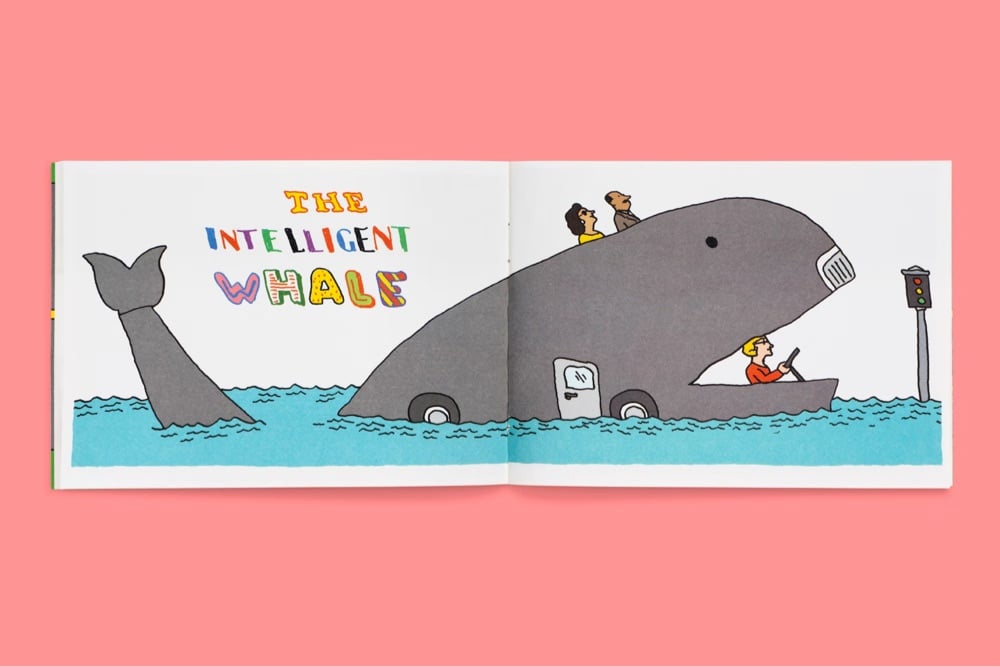
In 1955, the Ford Motor Company hired poet Marianne Moore to come up with some names for their revolutionary new car. Moore ended up submitting some amazing names, including “Silver Sword”, “Intelligent Whale”, “Angel Astro”, and “Utopian Turtletop”.
What Moore lacked in corporate nomenclature experience, she made up for in enthusiasm and imagination: she submitted over two dozen names for consideration, each one more delightful — and unlikely — than the last. In the end, the poet’s suggestions were rejected and the company’s chairman himself named the vehicle. Thus was born the notorious car known as the Edsel.
Ford realized perhaps too late that they shouldn’t have, in fact, sent a poet — but we’re sure glad they did.
Back here in the present day, Pentagram commissioned the legendary Seymour Chwast to turn Moore’s amazing collection of names into a booklet of illustrations that imagine what these cars might look like.
This piece by Cory Doctorow on TikTok’s enshittification (also available at Wired) contains some of the best and simplest descriptions of how online platforms like Amazon, Facebook, Uber, TikTok, Twitter, etc. evolve as they grow and then eventually die.
Here is how platforms die: First, they are good to their users; then they abuse their users to make things better for their business customers; finally, they abuse those business customers to claw back all the value for themselves. Then, they die.
…
This is enshittification: Surpluses are first directed to users; then, once they’re locked in, surpluses go to suppliers; then once they’re locked in, the surplus is handed to shareholders and the platform becomes a useless pile of shit. From mobile app stores to Steam, from Facebook to Twitter, this is the enshittification lifecycle.
The Amazon example he uses is really easy to follow. Early in the company’s history, the site used to be a great place to shop; their customers loved Amazon. But then Amazon’s sellers became their real customers and the user experience started to suffer. And now, much of the value generated by the users and customers goes to the shareholders (which, functionally speaking these days, means several dozen people who run hedge funds or large investment funds).
This strategy meant that it became progressively harder for shoppers to find things anywhere except Amazon, which meant that they only searched on Amazon, which meant that sellers had to sell on Amazon. That’s when Amazon started to harvest the surplus from its business customers and send it to Amazon’s shareholders. Today, Marketplace sellers are handing more than 45 percent of the sale price to Amazon in junk fees. The company’s $31 billion “advertising” program is really a payola scheme that pits sellers against each other, forcing them to bid on the chance to be at the top of your search.
Over at Techdirt, Mike Masnick riffed on Doctorow’s piece, arguing that enshittification, this playing of various parties against each other while siphoning off the value, is bad business because it focuses too much on short term gains.
Because maximizing revenue in the short term (i.e., in the 3 month window that Wall Street requires) often means sacrificing long term sustainability and long term profits. That’s because if you’re only looking at the next quarter (or, perhaps, the next two to four quarters if we’re being generous) then you’re going to be tempted to squeeze more of the value out of your customers, to “maximize revenue” or “maximize profits for shareholders.”
He uses early Amazon as an example of long-term thinking:
Once you go public, and you have that quarterly drumbeat from Wall Street where pretty much all that matters is revenue and profit growth. Indeed, it’s long forgotten now, but Jeff Bezos and Amazon actually were a rare company that kind of bucked that trend, and for a while at least, told Wall Street not to expect such things, as it was going to invest more and more deeply in serving its customers, and Wall Street punished Bezos for it. It’s long forgotten now, but Wall Street absolutely hated Amazon Prime, which locked in customer loyalty, but which they thought was a huge waste of money. The same was true of Amazon Web Services, which has become a huge revenue driver for the company.
They created a tremendous amount of value for their shareholders by playing the long game, which for whatever reason they aren’t willing to do anymore.
This is something I’ve heard over and over again, in many cities around the world: putting in bike lanes in place of car parking and/or car lanes results in an increase in humans patronizing local businesses and increased sales.
Five years ago, the city of Queens, New York, announced that it would be putting bike lanes onto a stretch of Skillman Ave-and removing 116 parking spots. Cyclists loved the plan, but local business owners went ballistic. Taking out those parking spots, as they argued at protests and in letters to the city council, would devastate stores and restaurants along Skillman. “Parking here is already a nightmare,” one fumed at a protest rally.
But the bike lanes were a done deal, and soon they were in place. Early this year, Jesse Coburn — an investigative writer with Streetsblog New York — wondered whether those predictions of economic collapse came true. So he asked the city’s Department of Finance to give him a few years’ worth of sales figures for that stretch of Skillman Ave. How had the businesses on that street fared?
Quite well, it turns out. In the year after the bike lanes arrived, businesses on Skillman saw sales rise by 12 percent, compared to 3 percent for Queens in general. What’s more, that section of road saw new businesses open, while Queens overall had a net loss.
The thing is, the actual merchants along Skillman? They didn’t believe it. When Coburn spoke to them and described what he’d found, only a few store owners admitted the lanes had helped. Many still insisted the lanes were killing their part of the city. And emotions ran hot: Someone scattered tacks on the bike lane.
Ted Gioia is one of the best music writers and critics around but has proved an astute cultural (and even business!) critic as well. In a piece for his excellent The Honest Broker newsletter, Gioia writes about the recent turnaround of Barnes & Noble, which he attributes to the company’s new CEO and his love of books. James Daunt, who took the helm of B&N in late 2019, previously saved UK bookshop chain Waterstones, in part by refusing to take promotional money from publishers:
Daunt refused to play this game. He wanted to put the best books in the window. He wanted to display the most exciting books by the front door. Even more amazing, he let the people working in the stores make these decisions.
This is James Daunt’s super power: He loves books.
“Staff are now in control of their own shops,” he explained. “Hopefully they’re enjoying their work more. They’re creating something very different in each store.”
This crazy strategy proved so successful at Waterstones, that returns fell almost to zero — 97% of the books placed on the shelves were purchased by customers. That’s an amazing figure in the book business.
On the basis of this success, Daunt was put in charge of Barnes & Noble in August 2019. But could he really bring that dinosaur, on the brink of extinction, back to life?
The boldface above is mine and it matches up with the bold text from Gioia’s conclusion:
Of course, there’s a lesson here. And it’s not just for books. You could also apply it to music, newspapers, films, and a host of other media.
But I almost hate to say it, because the lesson is so simple.
If you want to sell music, you must love those songs. If you want to succeed in journalism, you must love those newspapers. If you want to succeed in movies, you must love the cinema.
One of the reasons I decided to take a sabbatical last year is that I was not loving what I was doing here and it was starting to show. Oh, I’ve been doing this long enough that I know how to paper over the cracks. Also, I’m stubborn and will keep at something even if I’m not enjoying it, but the wheels were starting to come off of the wagon. Now that I’m back, I’m trying to figure out which bits of this weird job I’m really into and redirect my efforts there. Gioia’s piece is a good reminder to follow the love and the rest will follow.
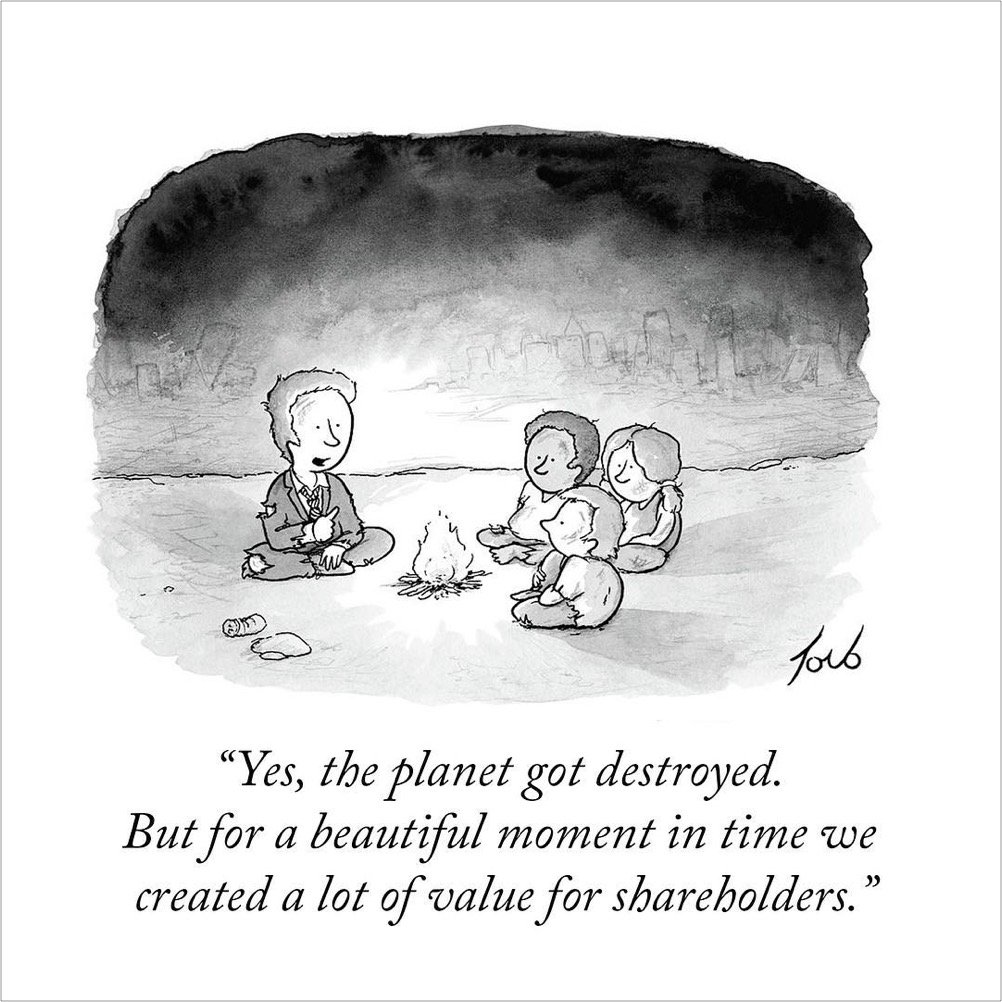
Anil Dash writes about the 24 stages of the growth-fueled “broken tech/content culture cycle” that VC-driven Silicon Valley (among other places) has pioneered over the past 15 years. Here’s how you begin:
1. Build a platform which relies on cultural creation as its core value, but which only sees itself as a technology platform. Stick to this insistence on being solely a “neutral” tech company in every aspect of decision-making, policy, hiring and operations, except for your public advertising, where the message is entirely about creativity and expression.
2. Hire a team that’s rewarded solely on growth goals and winnow out anyone who values creators or culture above expansion and user acquisition. Enforce a monoculture.
And then:
8. Build an algorithm to “surface great content” for your audience. Train it on the behaviors of your existing creators, so you create a rich-get-richer dynamic, effectively cementing the culture of your platform and making it impossible for new creators from underrepresented communities to get a foothold. Make it so the only process for revisiting your algorithm is bad-faith arguments from right-wing goons trying to game the refs because their actual content isn’t good enough to get audience on its own. After that, treat the algorithm as some magical sacrosanct god with unknowable whims that everyone is subject to, rather than as a series of intentional business decisions captured in software form.
Eventually:
18. Double down on funding the worst voices on your platform. Call it “free speech”, and make sure that nobody internally points out that truly defending free speech would have entailed protecting those early marginalized creators who made your platform credible in the first place.
19. Definitely misuse “free speech” as a rhetorical bludgeon against people who are pointing out that you are both amplifying and sponsoring content, not merely making it available. Resolutely refuse to be intellectually honest about the difference between merely providing a platform to all, vs. making editorial decisions to promote and subsidize content that you have control over.
Spotify, Substack, Google, Twitter, Amazon, Apple, Facebook, Reddit…this predictable script has played out at all of these companies in some form or another over the past decade.
This video provides a good overview of the difficulty involved in starting a business that grows, sells, or distributes cannabis products, which can include money, federal illegality, state regulations, and structural racism.
Jeannette: So you really got to get your business funded from your personal wealth or from your network wealth.
Nancy: Those situations begin to favor people who’ve traditionally had good access to capital.
Jeremy: And oftentimes that correlate with being white.
Adriana: It is very white male-dominant. And there’s no reason that that is what it should be.
Narrator: Only 2% of cannabis entrepreneurs are Black. Yet Black Americans were most affected by marijuana’s illegal status in the past.
Jeremy: There is kind of a clear throughline from the war on drugs. According to the ACLU, Black people are four times as likely than whites to get arrested for cannabis use, despite using at very similar rates across age groups, across different states.
See also A Post-Legalization Cannabis Reading List.
Newer posts
Older posts





Socials & More