kottke.org posts about books
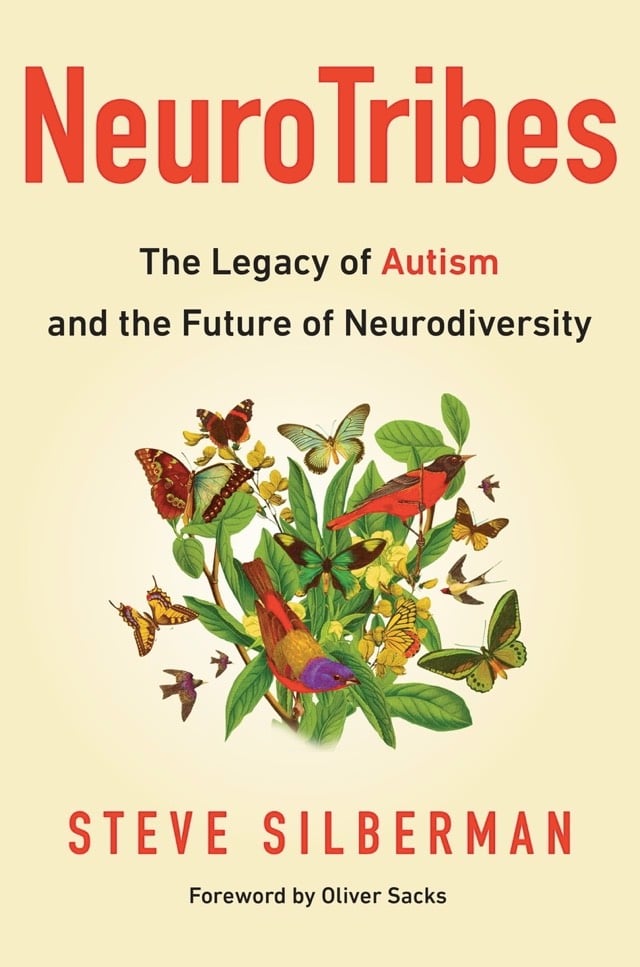
Added to the series of things I thought I posted about but never did is Steve Silberman’s new book, NeuroTribes: The Legacy of Autism and the Future of Neurodiversity, out next week.
What is autism? A lifelong disability, or a naturally occurring form of cognitive difference akin to certain forms of genius? In truth, it is all of these things and more-and the future of our society depends on our understanding it. WIRED reporter Steve Silberman unearths the secret history of autism, long suppressed by the same clinicians who became famous for discovering it, and finds surprising answers to the crucial question of why the number of diagnoses has soared in recent years.
Jennifer Senior wrote a largely positive review for the NY Times.
“NeuroTribes” is beautifully told, humanizing, important. It has earned its enthusiastic foreword from Oliver Sacks; it has found its place on the shelf next to “Far From the Tree,” Andrew Solomon’s landmark appreciation of neurological differences. At its heart is a plea for the world to make accommodations for those with autism, not the other way around, and for researchers and the public alike to focus on getting them the services they need. They are, to use Temple Grandin’s words, “different, not less.” Better yet, indispensable: inseparably tied to innovation, showing us there are other ways to think and work and live.
Update: NeuroTribes has won the prestigious 2015 Samuel Johnson prize for non-fiction. The Guardian’s Stephen Moss interviewed Silberman about the prize and book.
Silberman was born in New York, the son of two teachers who were communists and anti-war activists. “I was raised to be sensitive to the plight of the oppressed. One of the things I do is frame autism not purely in a clinical or self-help context, but in a social justice context. I came to it thinking I was going to study a disorder. But what I ended up finding was a civil-rights movement being born.”
He says the fact he is gay also conditioned his approach. “My very being was defined as a form of mental illness in the diagnostic manual of disorders until 1974. I am not equating homosexuality and autism — autism is inherently disabling in ways that homosexuality is not — but I think that’s why I was sensitive to the feelings of a group of people who were systematically bullied, tortured and thrown into asylums.”
Obama’s off for a couple of vacation weeks on Martha’s Vineyard and is taking the following books with him on vacation: All That Is by James Salter, All The Light We Cannot See by Anthony Doerr, The Sixth Extinction by Elizabeth Kolbert, The Lowland by Jhumpa Lahiri, Between The World and Me by Ta-Nehisi Coates, and Washington: A Life by Ron Chernow. Solid.
My summer reading list so far: Quiet, The Antidote, The Martian, Ready Player One, and the kids and I are slowly working our way through Harry Potter and the Order of the Phoenix.
Update: POTUS has also made a Spotify playlist of his favorite summer songs. The Temptations, Dylan, Coldplay, and Aretha. No Jay or Bey?
Update: Ah, he also made a list for a summer night and there’s some Beyonce on there. Thank you, Mr. President.
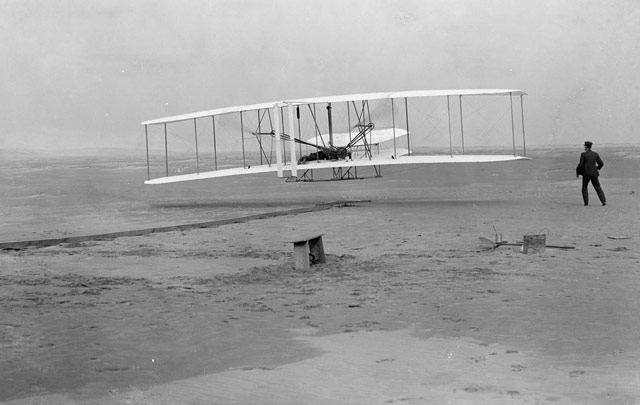
David McCullough (Truman, John Adams, Pulitzer Prize, National Book Award) recently published a new book on The Wright Brothers. James Salter has a nice review in the New York Review of Books.
They knew exactly the importance of what they had accomplished. They knew they had solved the problem of flight and more. They had acquired the knowledge and the skill to fly. They could soar, they could float, they could dive and rise, circle and glide and land, all with assurance.
Now they had only to build a motor.
Update: British Pathe has footage of a flight by the Wright Brothers:
It’s labelled “First Flight” but the footage is actually from much later…that is clearly not Kitty Hawk and the first two-person flights did not occur until 1908. It is also unclear whether Orville and Wilbur were flying together in the video. From Salter’s piece:
He and Wilbur had never flown together so that if there were ever a fatal accident it would not involve both of them, and one of them would live to continue the work. On that one occasion, they took off to fly together, with Orville at the controls, side by side.
If the footage is from the flight Salter describes, that would make it from 1910. (via @SavageReader)
From the abstract of a paper on the relationship between impatience and procrastination, this caught my eye:
We find substantial evidence of time inconsistency. Namely, more that half of the participants who receive their check straight away instead of waiting two weeks for a reasonably larger amount, subsequently take more than two weeks to cash it.
This reminded me of a passage I read recently in Oliver Burkeman’s The Antidote1 about the pitfalls of positive visualization.
Yet there are problems with this outlook, aside from just feeling disappointed when things don’t turn out well. These are particularly acute in the case of positive visualisation. Over the last few years, the German-born psychologist Gabriele Oettingen and her colleagues have constructed a series of experiments designed to unearth the truth about ‘positive fantasies about the future’. The results are striking: spending time and energy thinking about how well things could go, it has emerged, actually reduces most people’s motivation to achieve them. Experimental subjects who were encouraged to think about how they were going to have a particularly high-achieving week at work, for example, ended up achieving less than those who were invited to reflect on the coming week, but given no further guidelines on how to do so.
In one ingenious experiment, Oettingen had some of the participants rendered mildly dehydrated. They were then taken through an exercise that involved visualising drinking a refreshing, icy glass of water, while others took part in a different exercise. The dehydrated water-visualisers — contrary to the self-help doctrine of motivation through visualisation — experienced a significant reduction in their energy levels, as measured by blood pressure. Far from becoming more motivated to hydrate themselves, their bodies relaxed, as if their thirst were already quenched. In experiment after experiment, people responded to positive visualisation by relaxing. They seemed, subconsciously, to have confused visualising success with having already achieved it.
In a similar way, it may be that the people who received their checks right away but didn’t cash them “relaxed” as though they had actually spent the money, not just gotten the check. (via mr)
In August of 1946, the New Yorker dedicated an entire issue to a piece called Hiroshima by John Hersey. As an introduction, the editors wrote:
TO OUR READERS. The New Yorker this week devotes its entire editorial space to an article on the almost complete obliteration of a city by one atomic bomb, and what happened to the people of that city. It does so in the conviction that few of us have yet comprehended the all but incredible destructive power of this weapon, and that everyone might well take time to consider the terrible implications of its use. The Editors.
For the 70th anniversary of the dropping of the bomb on Hiroshima, the New Yorker has digitized Hersey’s piece. The piece is quite long (30,000 words) so it can also be found in book form if that’s easier to read. Here’s the opening paragraph to get you going:
At exactly fifteen minutes past eight in the morning, on August 6, 1945, Japanese time, at the moment when the atomic bomb flashed above Hiroshima, Miss Toshiko Sasaki, a clerk in the personnel department of the East Asia Tin Works, had just sat down at her place in the plant office and was turning her head to speak to the girl at the next desk. At that same moment, Dr. Masakazu Fujii was settling down cross-legged to read the Osaka Asahi on the porch of his private hospital, overhanging one of the seven deltaic rivers which divide Hiroshima; Mrs. Hatsuyo Nakamura, a tailor’s widow, stood by the window of her kitchen, watching a neighbor tearing down his house because it lay in the path of an air-raid-defense fire lane; Father Wilhelm Kleinsorge, a German priest of the Society of Jesus, reclined in his underwear on a cot on the top floor of his order’s three-story mission house, reading a Jesuit magazine, Stimmen der Zeit; Dr. Terufumi Sasaki, a young member of the surgical staff of the city’s large, modern Red Cross Hospital, walked along one of the hospital corridors with a blood specimen for a Wassermann test in his hand; and the Reverend Mr. Kiyoshi Tanimoto, pastor of the Hiroshima Methodist Church, paused at the door of a rich man’s house in Koi, the city’s western suburb, and prepared to unload a handcart full of things he had evacuated from town in fear of the massive B-29 raid which everyone expected Hiroshima to suffer. A hundred thousand people were killed by the atomic bomb, and these six were among the survivors. They still wonder why they lived when so many others died. Each of them counts many small items of chance or volition — a step taken in time, a decision to go indoors, catching one streetcar instead of the next — that spared him. And now each knows that in the act of survival he lived a dozen lives and saw more death than he ever thought he would see. At the time, none of them knew anything.
The piece made quite an impression upon its release, which you can read about on Wikipedia.
From The Verge, The New Devil’s Dictionary, a new economy take on Ambrose Bierce’s The Devil’s Dictionary.
lifehack (v.): To embarrass your ancestors by bragging about an “ingenious” solution to a trivial problem.
operating system (n.): A set of instructions designed to make a particular machine incompatible with other machines.
See also Greg Knauss’ The Devil’s Dictionary 2.0 from many years ago.
blogosphere, noun. An poisonous environment of methane, self-satisfaction and other hot gasses.
podcast, verb. The audible form of “blog,” in much the same way that a series of unhappy grunts and splashes is the audible form of “stomach flu.”

I thought I’d posted about Philip Glass’ new memoir, Words Without Music, when it came out back in April, but I can’t find anything in the archives, so let’s do it right now. I was reminded of it after reading this review by Dan Wang, which pushed Glass’ book to the top of my queue.
These biographical details are manifestations of a quality I admire. Glass never needed much convincing to drop everything in his life to go on a risky venture. I’m not familiar with the many plot twists in his life, and found the book engaging because I had no idea what new adventure he was going to go on next. It’s astonishing how open-minded he is. Consider: His decision to go to India was based entirely on seeing a striking illustration in a random book he grabbed off a friend’s shelf. In addition, he never hesitated to go into personal debt, at times quite steep, because his music couldn’t wait. The book is filled with instances of him saying “sure, when?” to improbable proposals without dwelling on their costs.
He seemed uninterested in stabilizing his position with more regular income. He never took up an honorary conductor position. He never ensconced himself in a plush conservatory professorship. And he didn’t even apply for grants because he didn’t like that they imposed terms.
See also the 2007 documentary Glass: A Portrait of Philip in Twelve Parts. (via mr)
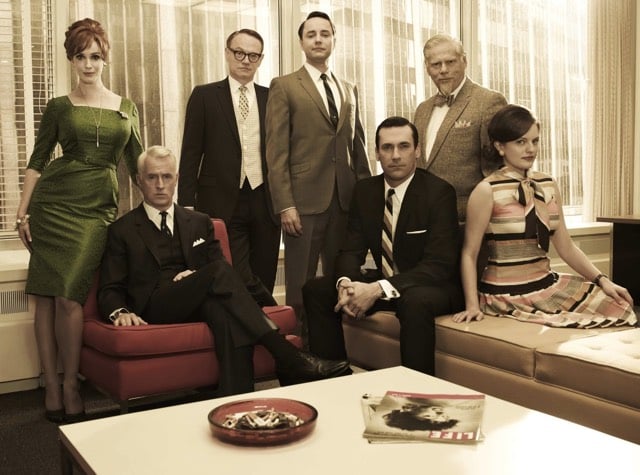
One of my favorite movie/TV critics, Matt Zoller Seitz, is coming out with a book this fall on Mad Men called Mad Men Carousel: The Complete Critical Companion.
Mad Men Carousel, authored by Abrams’ bestselling author Matt Zoller Seitz, will gather all of Seitz’s widely read (and discussed) Mad Men essays in a single volume. Rather than simply recalling the plot through lengthy summary, Seitz’s essays dig deep into the show’s themes, performances and filmmaking, with the tone and spirit of accessible, but serious, film or literary criticism. This novel-sized volume will be designed to have a 1970s feel and will be broken into seven sections, one for each season.
Seitz wrote the dreamy The Wes Anderson Collection.
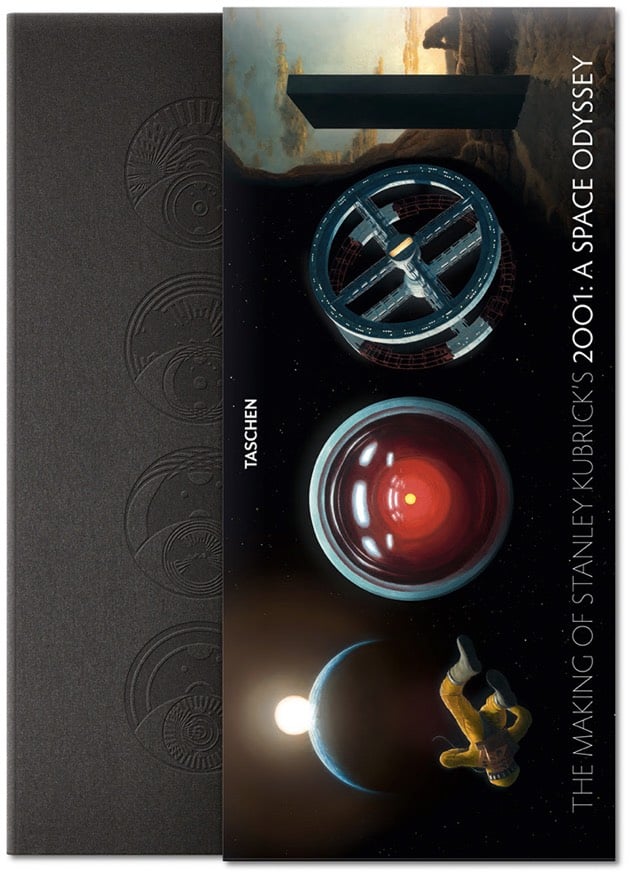
Last year, Taschen came out with a limited edition book on The Making of Stanley Kubrick’s ‘2001: A Space Odyssey’. Only a couple thousand were made and one of them is selling on Amazon for $1750. This year, they’re releasing a regular edition for a much more reasonable $47. (via @michaelbierut)
Wired asked a bunch of noted designers — Paola Antonelli, John Maeda, Jessica Walsh, Milton Glaser, etc. — for their summer reading picks. Among their selections were Flow by Mihaly Csikszentmihalyi, An Engineer Imagines by Peter Rice, The Success and Failure of Picasso by John Berger, and Just Enough Research by Erika Hall.
In the mid-90s, Stewart Brand published a fantastic book called How Buildings Learn: What Happens After They’re Built.
Buildings have often been studies whole in space, but never before have they been studied whole in time. How Buildings Learn is a masterful new synthesis that proposes that buildings adapt best when constantly refined and reshaped by their occupants, and that architects can mature from being artists of space to becoming artists of time.
From the connected farmhouses of New England to I.M. Pei’s Media Lab, from “satisficing” to “form follows funding,” from the evolution of bungalows to the invention of Santa Fe Style, from Low Road military surplus buildings to a High Road English classic like Chatsworth-this is a far-ranging survey of unexplored essential territory.
In 1997, Brand and the BBC did a six-part TV series based on the book. Brand has put the series on his YouTube channel; here’s the first part to get you going:
(via open culture)
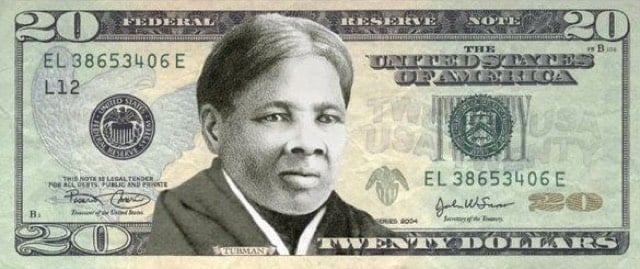
Adding her voice to a chorus of others, Amy Davidson makes a great case for putting Harriet Tubman on the US $20 bill and kicking Andrew Jackson to the curb.
On September 17, 1849, Araminta, who now called herself Harriet, ran away to freedom, along with two of her brothers. Their owner, Eliza Brodess-Pattison’s granddaughter-in-law-had been making moves to sell them, and the fear was that the family would be broken up. Brodess put an ad in the local newspaper, offering a hundred-dollar reward each for “Minty,” Harry, and Ben. (The only extant copy of the ad was found in 2003, in a dumpster.) Almost immediately, Tubman began making trips back to Maryland, organizing the escapes of relatives, friends, and scores of other slaves, often just ahead of armed men pursuing them. On one trip, she discovered that her husband, John Tubman, who was free himself, was living with another woman; he had no interest in going north. He is a man who seems not to have known Tubman’s worth.
When I was a kid, I read a lot of biographies1 on people like Ben Franklin, Thomas Edison, Abraham Lincoln, and the Wright brothers. My favorite, which I read at least three times, was Ann Petry’s Harriet Tubman: Conductor on the Underground Railroad. Tubman is one of history’s greatest badasses. Put her on the damn bill.
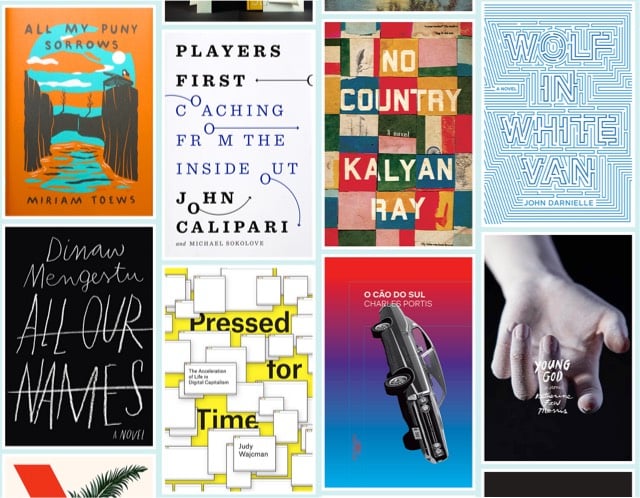
Design Observer and the AIGA have announced the winners of their 50 Books | 50 Covers competition to find the best designed books and book covers published last year. The books are here and the covers are here.
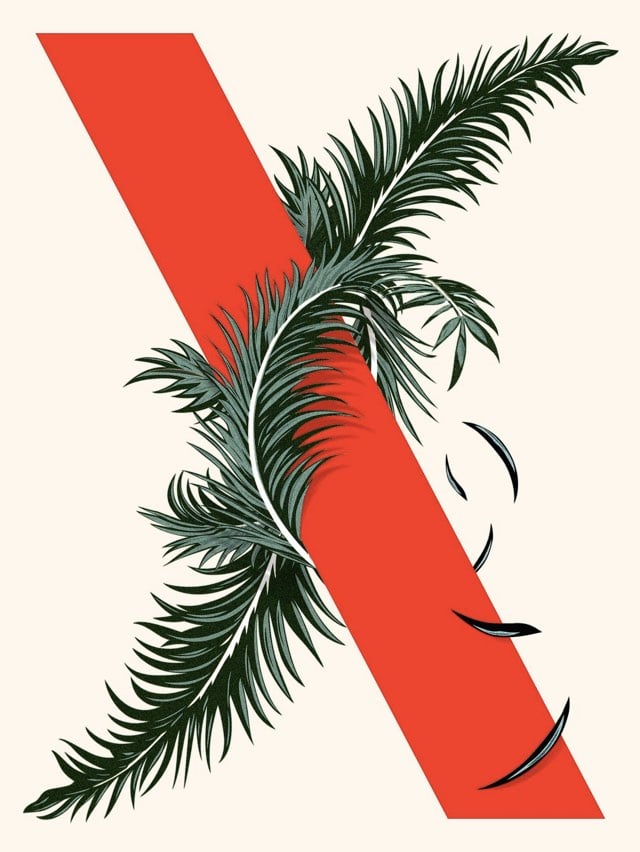
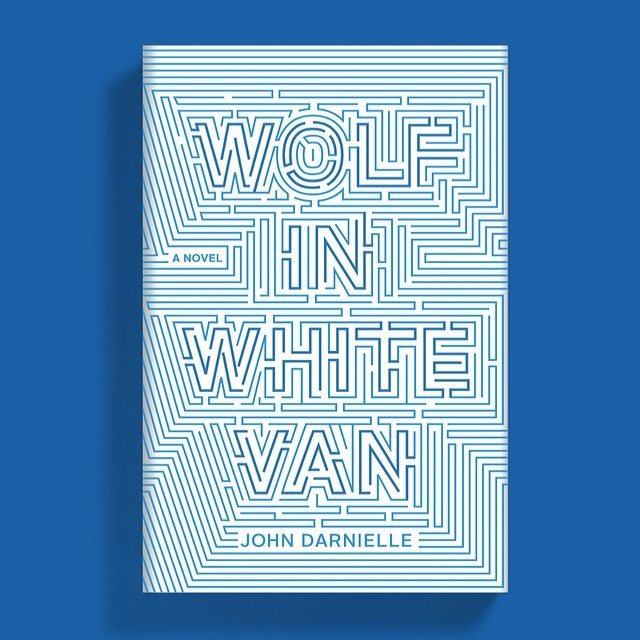
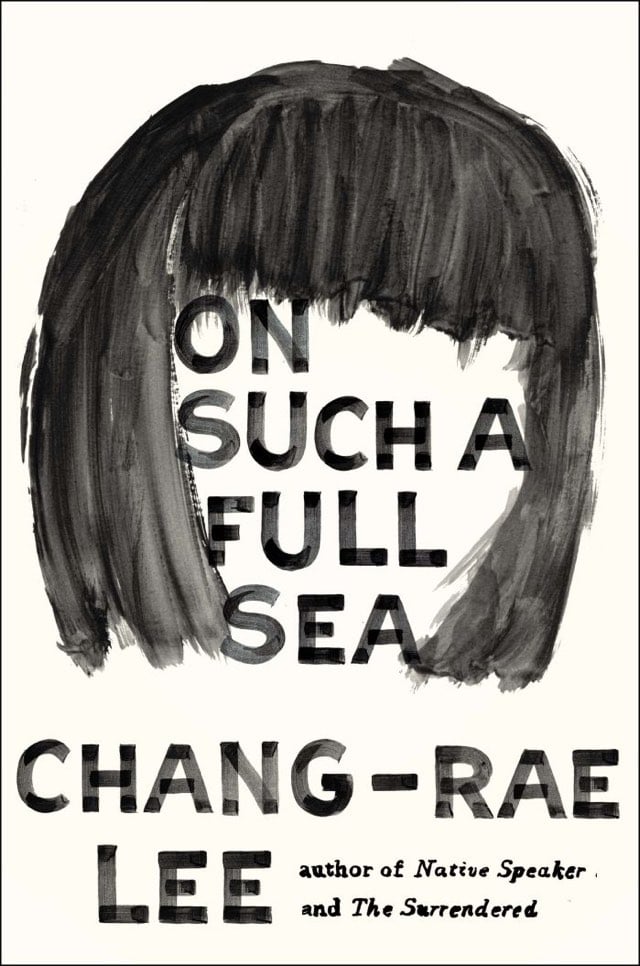
They’re publishing a book and putting on an exhibition in New Orleans of the winners and need your help on Kickstarter to make it happen.
If you divide 1 by 999,999,999,999,999,999,999,998,999,999,999,999,999,999,999,999 (that’s 999 quattuordecillion btw), the Fibonacci sequence neatly pops out. MATH FTW!

At the end of Carl Sagan’s Contact (spoilers!), the aliens give Ellie a hint about something hidden deep in the digits of π. After a long search, a circle made from a sequence of 1s and 0s is found, providing evidence that intelligence was built into the fabric of the Universe. I don’t know if this Fibonacci division thing is on quite the same level, but it might bake your noodle if you think about it too hard. (via @stevenstrogatz)
Update: From svat at Hacker News, an explanation of the magic behind the math.
It’s actually easier to understand if you work backwards and arrive at the expression yourself, by asking yourself: “If I wanted the number that starts like 0.0…000 0…001 0…001 0…002 0…003 0…005 0…008 … (with each block being 24 digits long), how would I express that number?”
(thx, taylor)
Books loom large in Wes Anderson’s movies. Several of his films open with opening books and Fantastic Mr. Fox is based on an actual book. Here’s a nicely edited selection of bookish moments from Anderson’s films.
In the work of Wes Anderson, books and art in general have a strong connection with memory. The Royal Tenenbaums (2001) begins with a homonymous book, as does Fantastic Mr. Fox (2009). The Grand Budapest Hotel (2014) begins and ends with a book. Moonrise Kingdom (2012) ends with a painting of a place which no longer exists. These movies have a clear message: books preserve stories, for they exist within them and live on through them.
This list ranking Don DeLillo’s novels into categories ranging from “Classic” to “Avoid” from 2007 excludes his two most recent novels, but if you have little exposure to the author, it’s a good place to start.
White Noise. DeLillo’s breakthrough success, arguably still his quintessential masterpiece, and the funniest and most sustained example of his talent. Jack Gladney, professor of Hitler Studies, struggles with information overload, simulated disasters, an “airborne toxic event,” the most photographed barn in America, and a drug that neutralizes the fear of death. If you’re going to like DeLillo, this is the book that will make it happen.
Confession: aside from attempting to tackle Underworld1 more than 10 years ago, I have not read any DeLillo. I should probably fix that? (via @davidgrann)
Unlike the Earth, Mars and the Moon don’t have strong directional magnetic fields, which means traditional compasses don’t work. So how did the Apollo rovers and current Mars rovers navigate their way around? By using manually set directional gyroscope and wheel odometers.
While current un-crewed rovers don’t have to return to the comfort of a lunar module, some aspects of the Apollo systems live on in their design. Four U.S. Martian rovers have used wheel odometers that account for slippage to calculate distance traveled. They’ve also employed gyroscopes (in the form of an inertial measurement units) to determine heading and pitch/roll information.
One of the fun things about reading The Martian is you get to learn a little bit about this sort of thing. Here’s a passage about navigation on Mars where astronaut Mark Watney is trying to get to a landmark several days’ drive away.
Navigation is tricky.
The Hab’s nav beacon only reaches 40 kilometers, so it’s useless to me out here. I knew that’d be an issue when I was planning this little road trip, so I came up with a brilliant plan that didn’t work.
The computer has detailed maps, so I figured I could navigate by landmarks. I was wrong. Turns out you can’t navigate by landmarks if you can’t find any god damned landmarks.
Our landing site is at the delta of a long-gone river . NASA chose it because if there are any microscopic fossils to be had, it’s a good place to look. Also, the water would have dragged rock and soil samples from thousands of kilometers away. With some digging, we could get a broad geological history.
That’s great for science, but it means the Hab’s in a featureless wasteland.
I considered making a compass. The rover has plenty of electricity, and the med kit has a needle. Only one problem: Mars doesn’t have a magnetic field.
So I navigate by Phobos. It whips around Mars so fast it actually rises and sets twice a day, running west to east. It isn’t the most accurate system, but it works.
I wonder why the rovers in the story weren’t outfitted with directional gyroscopes and wheel odometers? (See also the operations manual for the lunar rovers.) (via @JaredCrookston)
From John Horgan, a list of 25 Terrific Science(y) Books. There are some unorthodox picks here (next to some no-brainers):
Ulysses, by James Joyce, 1922. Yeah, it’s a work of fiction, but as I argued a few years ago, Joyce was a more astute observer of the mind than anyone before or since. He exemplifies Noam Chomsky’s dictum that we will always learn more about ourselves from literature than from science.
The Structure of Scientific Revolutions, Thomas Kuhn, 1962. This sneaky, subversive assault on conventional notions of scientific truth and progress triggered a revolution itself within the philosophy of science. Be sure to note where Kuhn compares scientists with drug addicts.
From Steven Weinberg, a list of the 13 best science books for the general reader. Solid list. But The Origin of Species is more than a little tough for the lay reader; I tried reading it a few years ago and it was a slog. I recommend The Elegant Universe and The Making of the Atomic Bomb w/o reservation.
From designer Karl Sluis, a list of nine great book about information visualization not written by Edward Tufte. Gonna keep my eye out for Stephen Few’s Now You See It and David McCandless’ The Visual Miscellaneum, but Herbert Bayer’s World Geographic Atlas is a little too rich for my blood.
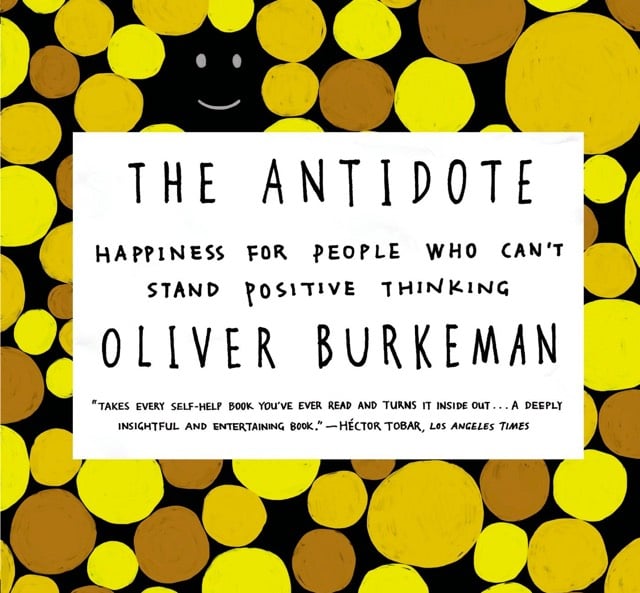
“Success through failure, calm through embracing anxiety…” This book sounds perfect for me. The Antidote: Happiness for People Who Can’t Stand Positive Thinking by Oliver Burkeman.
Self-help books don’t seem to work. Few of the many advantages of modern life seem capable of lifting our collective mood. Wealth — even if you can get it — doesn’t necessarily lead to happiness. Romance, family life, and work often bring as much stress as joy. We can’t even agree on what “happiness” means. So are we engaged in a futile pursuit? Or are we just going about it the wrong way?
Looking both east and west, in bulletins from the past and from far afield, Oliver Burkeman introduces us to an unusual group of people who share a single, surprising way of thinking about life. Whether experimental psychologists, terrorism experts, Buddhists, hardheaded business consultants, Greek philosophers, or modern-day gurus, they argue that in our personal lives, and in society at large, it’s our constant effort to be happy that is making us miserable. And that there is an alternative path to happiness and success that involves embracing failure, pessimism, insecurity, and uncertainty — the very things we spend our lives trying to avoid. Thought-provoking, counterintuitive, and ultimately uplifting, The Antidote is the intelligent person’s guide to understanding the much-misunderstood idea of happiness.
I learned about the book from Tyler Cowen, who notes:
[Burkeman] is one of the best non-fiction essay writers, and he remains oddly underrated in the United States. It is no mistake to simply buy his books sight unseen. I think of this book as “happiness for grumps.”
Given Cowen’s recent review of Inside Out, I wonder if [slight spoilers ahoy!] he noticed the similarity of Joy’s a-ha moment w/r/t to Sadness at the end of the film to the book’s “alternative path to happiness and success that involves embracing failure, pessimism, insecurity, and uncertainty”. Mmmm, zeitgeisty!
In the 1960s, the idea of an overpopulated planet took hold, sparked by the publication of The Population Bomb by Paul Ehrlich.
The battle to feed all of humanity is over. In the 1970s hundreds of millions of people will starve to death in spite of any crash programs embarked upon now. At this late date nothing can prevent a substantial increase in the world death rate.
Ehrlich advocated radical population control methods, including voluntary incentivized sterilization, a tax on things like diapers, and adding chemicals to temporarily sterilize people into the food and water supply. Retro Report has a look at how the Population Bomb was defused by a combination of different factors, including urbanization, the Green Revolution, and a decrease in poverty.
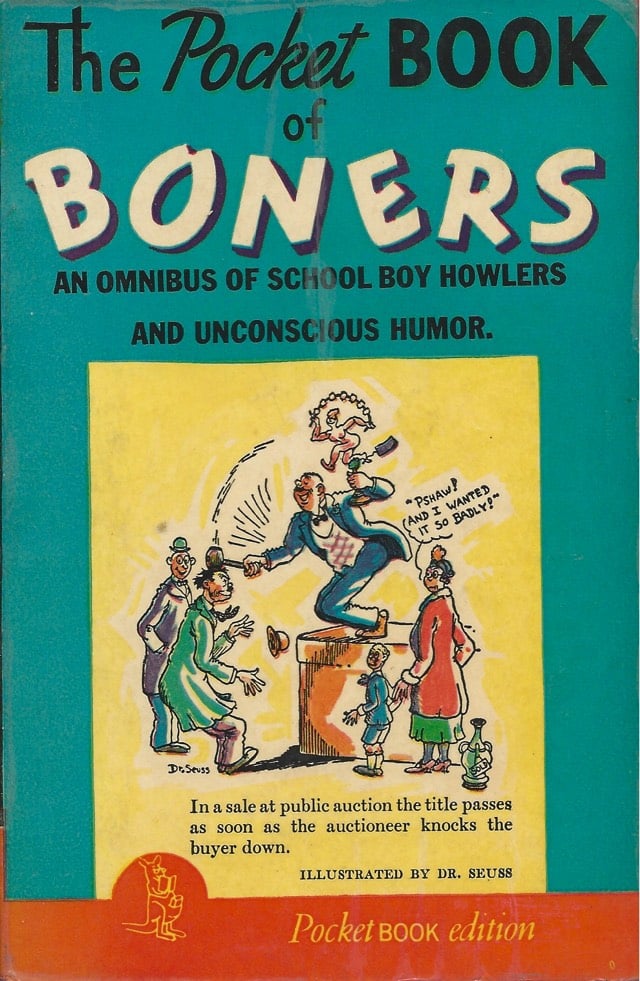
The Pocket Book of Boners, composed of four short books published in 1931, was the first published work illustrated by Dr. Seuss. Two of the four books, Boners and More Boners, were illustrated by Seuss — Still More Boners, and Prize Boners for 1932 were the other two. Other books in the series included The Omnibus Boners, The 2nd Boners Omnibus, and Bigger & Better Boners. After the publication of The Pocket Book of Boners, the Pittsburgh Press ran an article called Craze for Boners Stages Comeback in Recent Book.
The Atlantic’s Derek Thompson examines the act of giving and goes in search of the best charitable cause in the world.
Perhaps the most piercing lesson from effective altruism is that one can make an astonishing difference in the world with a pinch of logic and dash of math.
See also Doing Good Better.
The Program is an upcoming film about the rise and fall of Lance Armstrong directed by Stephen Frears (The Queen, High Fidelity). It’s based on David Walsh’s book, Seven Deadly Sins: My Pursuit of Lance Armstrong.
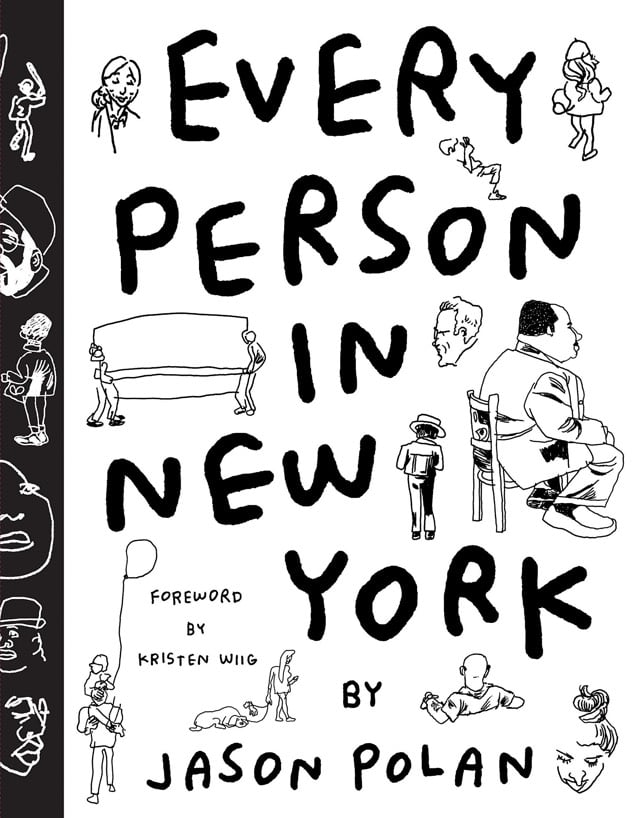
Jason Polan has turned his long-term project to draw each and every person in New York into a book coming out in August. As a long-time Polan fan, I’m looking forward to this.
I have not read the book it’s based on, but the movie version of The Martian, starring Matt Damon and directed by Ridley Scott, looks quite promising:
I am going to have to science the shit out of this.
Apollo 13 with a touch of Interstellar…I can do that.
Update: A second trailer has been released:
And I have since read the book, which was good. But it will make a better movie.
This is an interesting theory about the Harry Potter series: the whole thing is about a mentally ill young boy (Harry) who is institutionalized by his parents (the Dursleys) in a mental institution (Hogwarts) and the contents of the books are Harry’s fantasy.
In the Harry Potter series, his parents are famous wizards, who were famous in all the world for their unparalleled love for the boy Harry, which set the whole series in motion, killing them and leaving the boy a scarred orphan. (This is a fantasy, crafted as the direct opposite of the way in which children usually end up scarred — through abuse and neglect.)
If we interpret the story as Harry’s fantasy, then the Dursleys are Harry’s real parents, and the Potters are imaginary. The Durselys either can’t cope with the increasingly-delusional boy living with them, or perhaps they are merely abusive, and it’s the abuse that’s making him delusional. In any event, the parent-figures constantly mistreat him, favor the brother, and inflict endless cruelty and humiliation on him. One day, Harry snaps, and Dudley (who is really Harry’s brother) is severely injured, in a way requiring repeated hospital treatments. (In the delusion, Harry imagines that a pig’s tail is magically grown from Dudley’s buttocks.) As a result of this incident, Harry is taken away to a “special school.”
The full story is behind a paywall,1 but the WSJ’s The Inside Story of How the iPhone Crippled BlackBerry is kind of amazing. The piece is an excerpt from Losing the Signal: The Untold Story Behind the Extraordinary Rise and Spectacular Fall of BlackBerry.
The next day Mr. Lazaridis grabbed his co-CEO Jim Balsillie at the office and pulled him in front of a computer.
“Jim, I want you to watch this,” he said, pointing to a webcast of the iPhone unveiling. “They put a full Web browser on that thing. The carriers aren’t letting us put a full browser on our products.”
Mr. Balsillie’s first thought was RIM was losing AT&T as a customer. “Apple’s got a better deal,” Mr. Balsillie said. “We were never allowed that. The U.S. market is going to be tougher.”
“These guys are really, really good,” Mr. Lazaridis replied. “This is different.”
“It’s OK — we’ll be fine,” Mr. Balsillie responded.
RIM’s chiefs didn’t give much additional thought to Apple’s iPhone for months. “It wasn’t a threat to RIM’s core business,” says Mr. Lazaridis’s top lieutenant, Larry Conlee. “It wasn’t secure. It had rapid battery drain and a lousy [digital] keyboard.”
“RIM’s chiefs didn’t give much additional thought to Apple’s iPhone for months.”
“RIM’s chiefs didn’t give much additional thought to Apple’s iPhone for months.”
“RIM’s chiefs didn’t give much additional thought to Apple’s iPhone for months.”
Oof. (via @craigmod)
Susan Cain, author of the excellent Quiet: The Power of Introverts in a World That Can’t Stop Talking, has launched Quiet Revolution, a resource “to unlock the power of introverts for the benefit of us all”. There’s already quite a bit there…you can take a test to see if you’re an introvert, five ways to deal with an open office plan, learn how to connect with extroverts, and 15 ways you can be a better parent to your introverted kid.
Understand that your child’s temperament is due to biology. Think your child can just “get over” hating raucous birthday parties? Think again. Introverts’ and extroverts’ brains are “wired” differently, according to Dr. Marti Olsen Laney, author of The Hidden Gifts of the Introverted Child. She writes that children’s temperaments are innate (although parents play an important role in nurturing that temperament).
Introverts’ and extroverts’ brains use different neurotransmitter pathways, and introverts and extroverts use different “sides” of their nervous systems (introverts prefer the parasympathetic side, which is the “rest and digest” system as opposed to the sympathetic, which triggers the “fight, flight, or freeze” response). Furthermore, a study published in the Journal of Neuroscience found that introverts have larger, thicker gray matter in their prefrontal cortices, which is the area of the brain associated with abstract thought and decision-making. If your child tends to be more cautious and reserved than her extroverted peers, rest assured that there’s a biological reason for it.
Newer posts
Older posts





Socials & More