Entries for January 2024
The film industry in France works a little differently that the American film industry. In this video, Evan Puschak explains how France treats filmmaking as a public good to be invested in at all levels.
One of the most interesting things is that the government gives grants to filmmakers that are specifically untethered to box office success in order “to support an independent cinema that is bold in terms of market standards and that cannot find its financial balance without public assistance”. Filmmakers who have made their early work with this public assistance include Agnes Varda, Celine Sciamma, and Claire Denis.
Carrie Fisher and James Earl Jones never met in real life until they filmed an episode of The Big Bang Theory in 2013. “Carrie’s first words to him? ‘Dad!’”
Big mountain skier Julian Carr shares what he was thinking about before hitting a 175-foot cliff. “I am calm, I am confident. The earth & the galaxy feel in alignment with me, the zone & my skis.” The photo at the end is *bananas*.
For the Atlantic, Bianca Bosker writes about a trove of paintings supposedly by Jean-Michel Basquiat that were discovered in a storage locker, ended up in a museum, and then seized by the FBI as fakes. As the owner of a pretty-convincing-but-probably-fake Basquiat purchased at a Mexico City flea market (that is also painted on cardboard), I read this story with great interest.
Science promises to be a neutral and exacting judge, though in reality forensics aren’t always much help either. Technical analysis can rule out an artwork — pieces from the trove of purported Pollocks with which Mangan was involved were exposed as forgeries after researchers found pigments that postdated the artist’s life — but it can’t rule it in as definitively by the artist in question. Some forgers will submit their handiwork for forensic testing so they can see what flags their pieces as counterfeit, then adjust their methods accordingly. Scientific techniques are also far less useful for contemporary artists like Basquiat, who relied on materials that are still available and for which the margin of error on many tests is wide. When the collector in Norway sent a painting he’d purchased from Barzman to be carbon-dated, the test revealed that the cardboard could be from either the 1950s or the 1990s.
What does it matter if art is authentic?
Our obsession with artworks’ authenticity can in part be traced back to what’s known as the “law of contagion”: Pieces are thought to acquire a special essence when touched by the artist’s hand. Yet the intense distaste for forgeries reveals a dirty secret about our relationship with art, which is that we tend to fixate on genius and authorship more than the aesthetic qualities of the work we claim to value so highly. The writer Arthur Koestler, in an essay on snobbery, goes so far as to argue that when judging a work, who made it should be considered “entirely extraneous to the issue.” What matters more, he argues, is what meets the eye.
When I see art in person or visit historic places, I often think to myself that I am standing where the artist or famous personage once stood — and it makes me feel something. I’m not sure if it has anything to do with magic though.
A short history of the origin of Comic Sans. Interestingly, the font was designed to be used in aliased form (with jaggy edges).
The oldest I’ve ever felt is just now when I learned that the Rubik’s Cube is 50 years old. This 50th anniversary cube has “classic boxy edges, slower turning, stickers, gold side, and special anniversary logo, presented in a retro plastic display case”.
This is the trailer for Orion and the Dark, an animated kids movie written by Charlie Kaufman. Yes, the I’m Thinking of Ending Things; Synecdoche, New York; Eternal Sunshine of the Spotless Mind Charlie Kaufman. And it’s getting pretty good reviews so far. The AV Club:
Orion And The Dark may look almost nothing like any Charlie Kaufman film to date, but it bears his personality. While that might be a bit much for the youngest kids, for 11-year-olds like those depicted in this story, it may strike a chord simply by refusing to underestimate their intelligence.
The movie is based on a book of the same name by Emma Yarlett and will be out on Netflix on Feb 2.
Excited to see where Iconfactory’s Project Tapestry goes. “Weaving your favorite blogs, social media, and more into a unified and chronological timeline.”
How did you know it was time [to quit]? “The game tells you when you’re done. I love the game so much and I respect it and it told me when I was done.”
Jamelle Bouie provides some historical context re: the 14th Amendment. “Both the Constitution and the historical record are clear. Donald Trump is an insurrectionist and Donald Trump has no rightful place among the leadership of the American Republic.”
ASCII Theater: stream movies in ASCII in your terminal. Now showing: Barbie. No sound but there’s subtitles.
Kurzgesagt’s latest video on the paradox of time is a bit more of a brain-bender than their usual videos. From the accompanying sources document:
This video summarizes in a narrative format two well-known theories about time: the so-called “block universe” and the “growing block”.
The block universe is an old theory of time which appears to be an unavoidable consequence of Einstein’s theory of special relativity. In philosophical contexts, basically the same idea is known as “eternalism”. Simplified, this theory posits that, although not apparent to our human perception, both the past and the future exist in the same way as the present does, and are therefore as real as the present is: The past still exists and the future exists already. As a consequence, time doesn’t “flow” (even if it looks so to us) and things in the universe don’t “happen” - the universe just “is”, hence the name “block universe”.
But then: “Quantum stuff is ruining everything again.” And so we have the growing block theory:
The Evolving/Growing Block: A relatively new alternative to the classical block universe theory, which asserts that the past may still exist but the present doesn’t yet, and all that in a way that is still compatible with Einstein’s relativity.
And there are still other theories about how time works:
Some scientists think that the idea of “now” only makes sense near you, but not in the universe as a whole. Others think that time itself doesn’t even exist — that the whole concept is an illusion of our human mind. And others think that time does exist, but that it’s not a fundamental feature of the universe. Rather, time may be something that emerges from a deeper level of reality, just like heat emerges from the motion of individual molecules or life emerges from the interactions of lifeless proteins.
Like I said, a brain-bender.
Redesigning Cormac McCarthy’s Brutal ‘Blood Meridian’. To keep his design skills sharp, Bobby Solomon takes a crack at designing a cover for Blood Meridian. I love what he came up with.
Susannah Breslin: 19 Ways to Make Money as a Writer. “My consulting work as The Fixer is my highest-paid work. Typically my client is a CEO / founder / venture capitalist. They have a problem, and they hire me to fix it.”
Interviews with five people who have hosted their own living funerals. “I spent 45 minutes hugging people and then I needed space. I’d had the most important people in my life tell me how meaningful I was to them.”
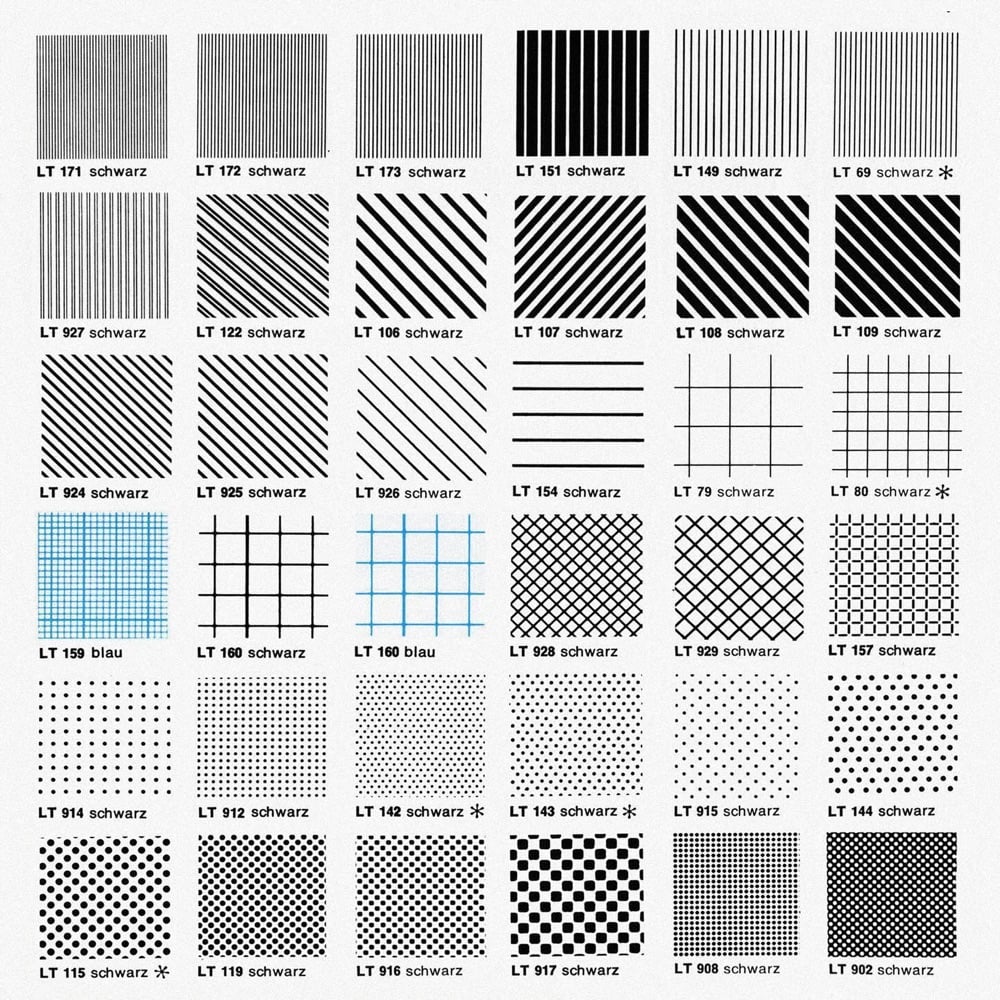
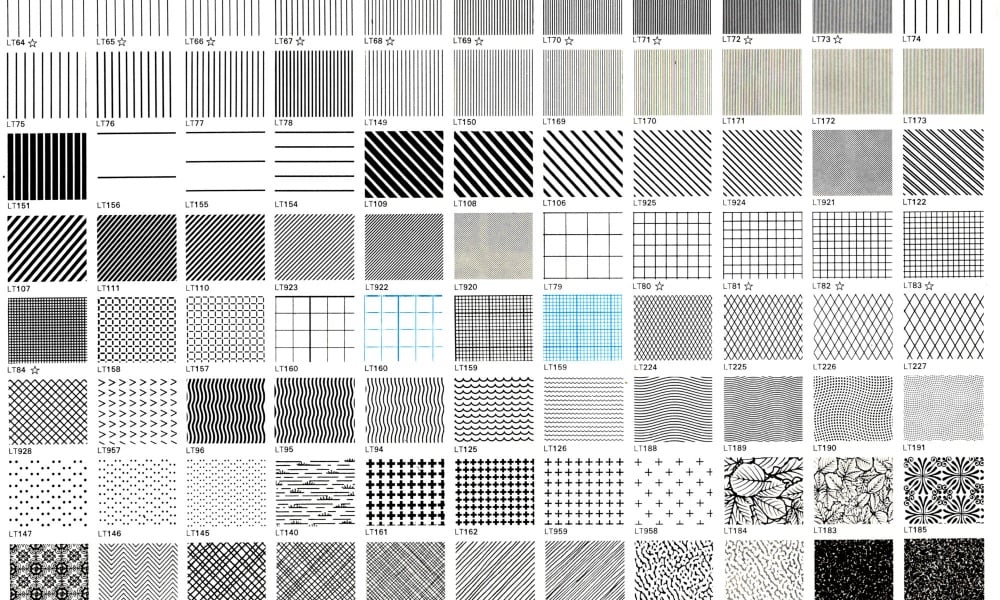
I never did any print design — I went straight to digital via a copy of Aldus PhotoStyler that I got who knows where — but these Letraset fill patterns make me feel some kinda way. Especially the dotted patterns. 😍
See also How to Apply Letraset Dry Rub-Down Transfers and Retroset. (via present & correct)
Oh dear, Japan’s Smart Lander touched down precisely where it meant to, but it’s upside-down. The photo of the flipped lander (taken by a probe released before landing) is sadly hilarious.
Matt Webb’s AI-powered clock is now on Kickstarter! “It tells the time with a brand new poem every minute, composed by ChatGPT. It’s sometimes profound, and sometimes weird, and occasionally it fibs about what the actual time is to make a rhyme work.”
Millions of years ago, the supercontinent of Pangea slowly started to break apart into the continents we all live on today. In this video from the makers of ArcGIS mapping software, you can watch as the reconfiguration of the Earth’s land happens over 200 million years.
Damn, India slammed into Asia like the Kool-aid Man — no wonder the Himalayas are so tall!
Once, the craggy limestone peaks that skim the sky of Everest were on the ocean floor. Scientists believe it all began to change about 200 million years ago — at around the time the Jurassic dinosaurs were beginning to emerge — when the supercontinent of Pangea cracked into pieces. The Indian continent eventually broke free, journeying north across the vast swathe of Tethys Ocean for 150 million years until it smacked into a fellow continent — the one we now know as Asia — around 45 million years ago.
The crushing force of one continent hitting another caused the plate beneath the Tethys Ocean, made of oceanic crust, to slide under the Eurasian plate. This created what is known as a subduction zone. Then the oceanic plate slipped deeper and deeper into the Earth’s mantle, scraping off folds limestone as it did so, until the Indian and Eurasian plates started compressing together. India began sliding under Asia, but because it’s made of tougher stuff than the oceanic plate it didn’t just descend. The surface started to buckle, pushing the crust and crumples of limestone upwards.
And so the Himalayan mountain range began to rise skyward. By around 15-17 million years ago, the summit of Everest had reached about 5,000m (16,404ft) and it continued to grow. The collision between the two continental plates is still happening today. India continues to creep north by 5cm (2in) a year, causing Everest to grow by about 4mm (0.16in) per year (although other parts of the Himalayas are rising at around 10mm per year [0.4in]).
See also Map of Pangaea with Modern-Day Borders, How the Earth’s Continents Will Look 250 Million Years From Now, and Locate Modern Addresses on Earth 240 Million Years Ago. (via open culture)
From Dorothy Parker’s 1928 review of A.A. Milne’s The House at Pooh Corner: “And it is that word ‘hummy,’ my darlings, that marks the first place in ‘The House at Pooh Corner’ at which Tonstant Weader Fwowed up.”
This is weird: if tiny Girona win La Liga and Man City doesn’t win the Premier League, Man City could get dumped from the Champions League down to the Europa League because of rules around teams w/ the same ownership playing each other.
The Vox video team spotted a small village in the middle of huge crater in Madagascar. They decided to investigate.
Right in the center of the island nation of Madagascar there’s a strange, almost perfectly circular geological structure. It covers a bigger area than the city of Paris — and at first glance, it looks completely empty. But right in the center of that structure, there’s a single, isolated village: a few dozen houses, some fields of crops, and dirt roads stretching out in every direction.
When we first saw this village on Google Earth, its extreme remoteness fascinated us. Was the village full of people? How did they wind up there?
This video is great for so many reasons. It’s a story about geology, cartography, globalization, the supply chain, infrastructure, and the surveillance state told through the framework of falling down (waaaay down) an online rabbit hole. It reinforces the value of academics and the editing is top shelf.
Though, I wonder if profiling this village on the internet is a good thing to do. This isn’t some YouTube bro helicoptering into the village unannounced — the Vox team worked with locals, received permission, etc. — but these villagers are a minority group who have chosen to live in a remote area with particularly good natural resources…and now their secret is out. And maybe their neighbors (or Mr. Beast) will choose to pay them a visit sometime soon. (via waxy)
The baseline scene (“cells interlinked”) in Blade Runner 2049 was conceived by Ryan Gosling, who convinced Denis Villeneuve to put it in the movie. The scene combines a Nabokov poem and an actor’s exercise called “dropping in”.
Keep Your Abortion Private & Secure. A guide to digital security to keep information about your abortion safe from snooping law enforcement, big tech, abusive family, and anti-abortion protestors.
Want to try a thing? I don’t know if running a job board in the comments section of a blog is a good idea, but if you are out there looking for work, post a quick summary of what you do, what you’re looking for, and a link to your resume/portfolio/LinkedIn/contact info and maybe someone here will see it and want to hire you. Likewise, if you or your company/organization has job openings, post a brief description and a link to the opening(s). Full-time, freelance, remote-only, in-person, tech, non-tech, anything goes.
Since comments can only be left by members, if you’re not a member and are looking for work, send me your comment via email and I will post it for you. (If you are on the hiring side, you can afford to expense the membership fee to post a job posting. 😉 But if you’re a non-profit, email away!) Update: This thread is winding down, so I’m closing listings via email.
I don’t know what counts as spammy when I’m literally asking for ppl to post links, etc. but if it happens, I’ll delete spam listings.
Oh, and I’m happy to accept finders fees if your company hires someone from the comments here. Ok, let’s see what you’ve got.
The recent Sunday NYT crossword puzzle featured the clue “Author who penned the line ‘Sometimes the smallest things take up the most room in your heart’”. Answer is supposed to be MILNE but 1000s of internet memes aside, he actually never wrote that.
What happens when an astronaut in orbit says he’s not coming back? “Hey, if you guys don’t give me a chance to repair my instrument, I’m not going back.”
Zoë Schlanger writing for the Atlantic: Prepare for a ‘Gray Swan’ Climate.
The way to think about climate change now is through two interlinked concepts. The first is nonlinearity, the idea that change will happen by factors of multiplication, rather than addition. The second is the idea of “gray swan” events, which are both predictable and unprecedented. Together, these two ideas explain how we will face a rush of extremes, all scientifically imaginable but utterly new to human experience.
It’s the nonlinearity that’s always worried me about the climate crisis — and is the main source of my skepticism that it’s “fixable” at this point. Think about another nonlinear grey swan event: the Covid-19 pandemic. When was it possible to stop the whole thing in its tracks? When 10 people were infected? 50? 500? With a disease that spreads linearly, let’s say that stopping the spread when 20 people are infected is twice as hard as when 10 are infected — with nonlinear spread, it’s maybe 4x or 10x or 20x harder. When you reach a number like 20,000 or 100,000 infected over a wide area, it becomes nearly impossible to stop without extraordinary effort.
In thinking about the climate crisis, whatever time, effort, and expense halting global warming (and the myriad knock-on effects) may have required in 1990, let’s say it doubled by 2000. And then it didn’t just double again in the next ten years, it tripled. And then from 2010 to 2020, it quadrupled. An intact glacier in 1990 is waaaaay easier and cheaper to save than one in 2010 that’s 30% melted into the ocean; when it’s 75% melted in 2020, there’s really no way to get that fresh water back out of the ocean and into ice form.
It’s like the compounding interest on your student loans when you’re not making the minimum payments — not only does the amount you owe increase each month, the increase increases. And at a certain point, the balance is actually impossible to pay off at your current resource level.1 It’s hard to say where we are exactly on our climate repayment curve (and what the interest rate is), but we’ve not been making the minimum payments for awhile now and the ocean’s repossessing our glaciers and ice shelves and…
This chart showing the near-impossibility of legal immigration to the US is worth a look. “Legal immigration is less like waiting in line and more like winning the lottery: it happens, but it is so rare that it is irrational to expect it in any individual case.”
“AI Spam Is Eating the Internet, Stealing Our Work, and Destroying Discoverability.” Thoughtful 404 Media piece on why they are requiring an email address to read most of their journalism.
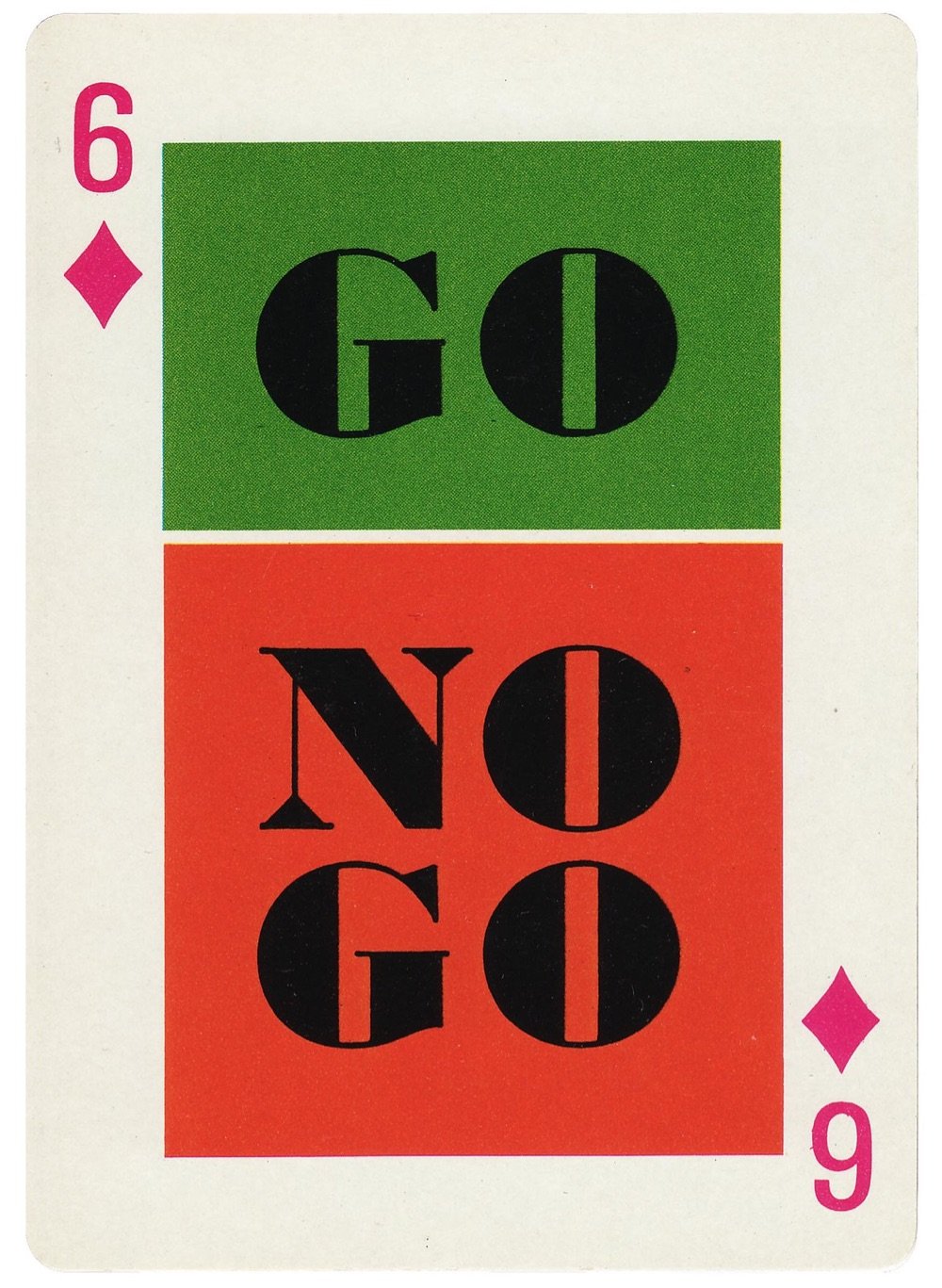

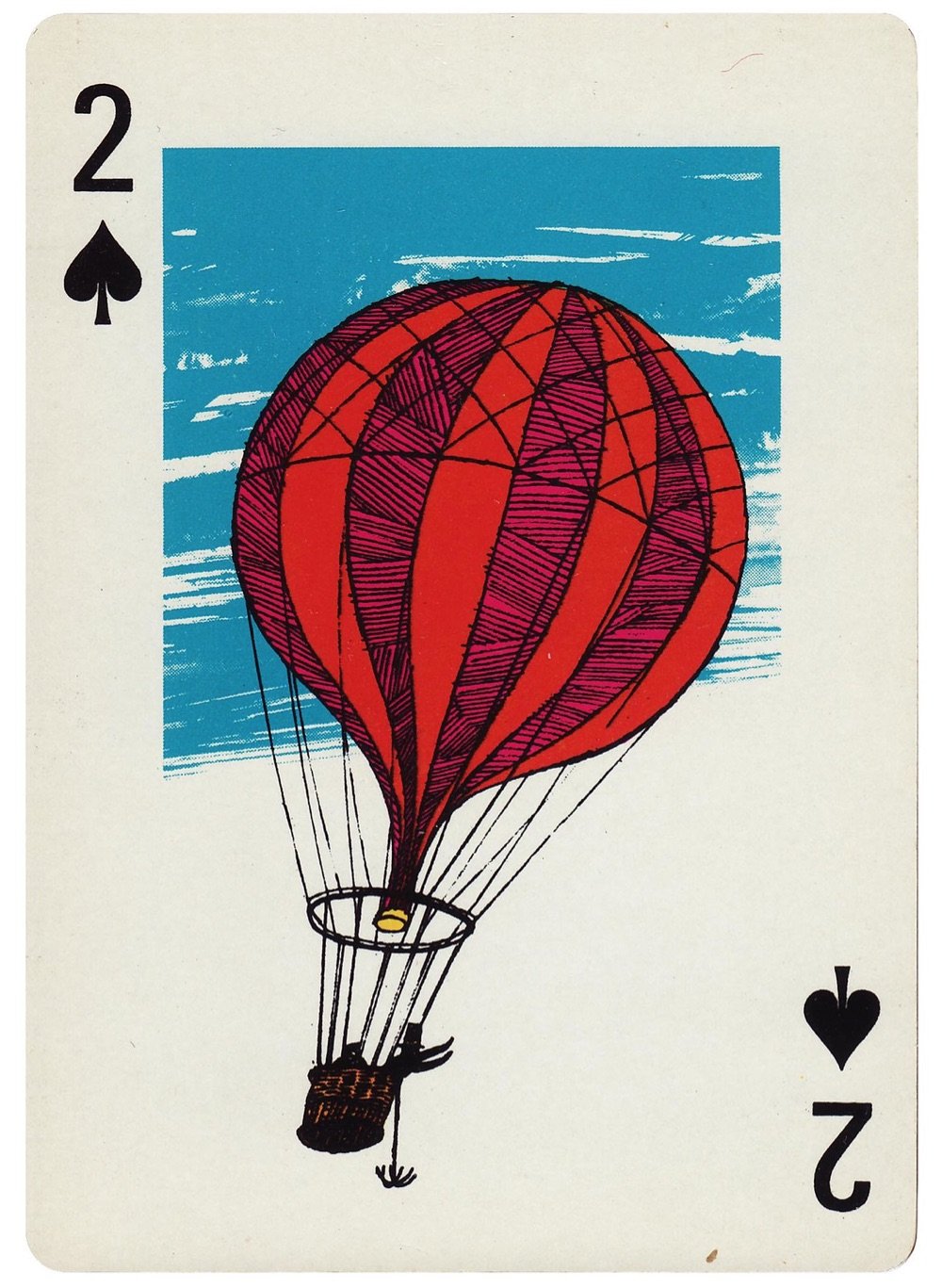
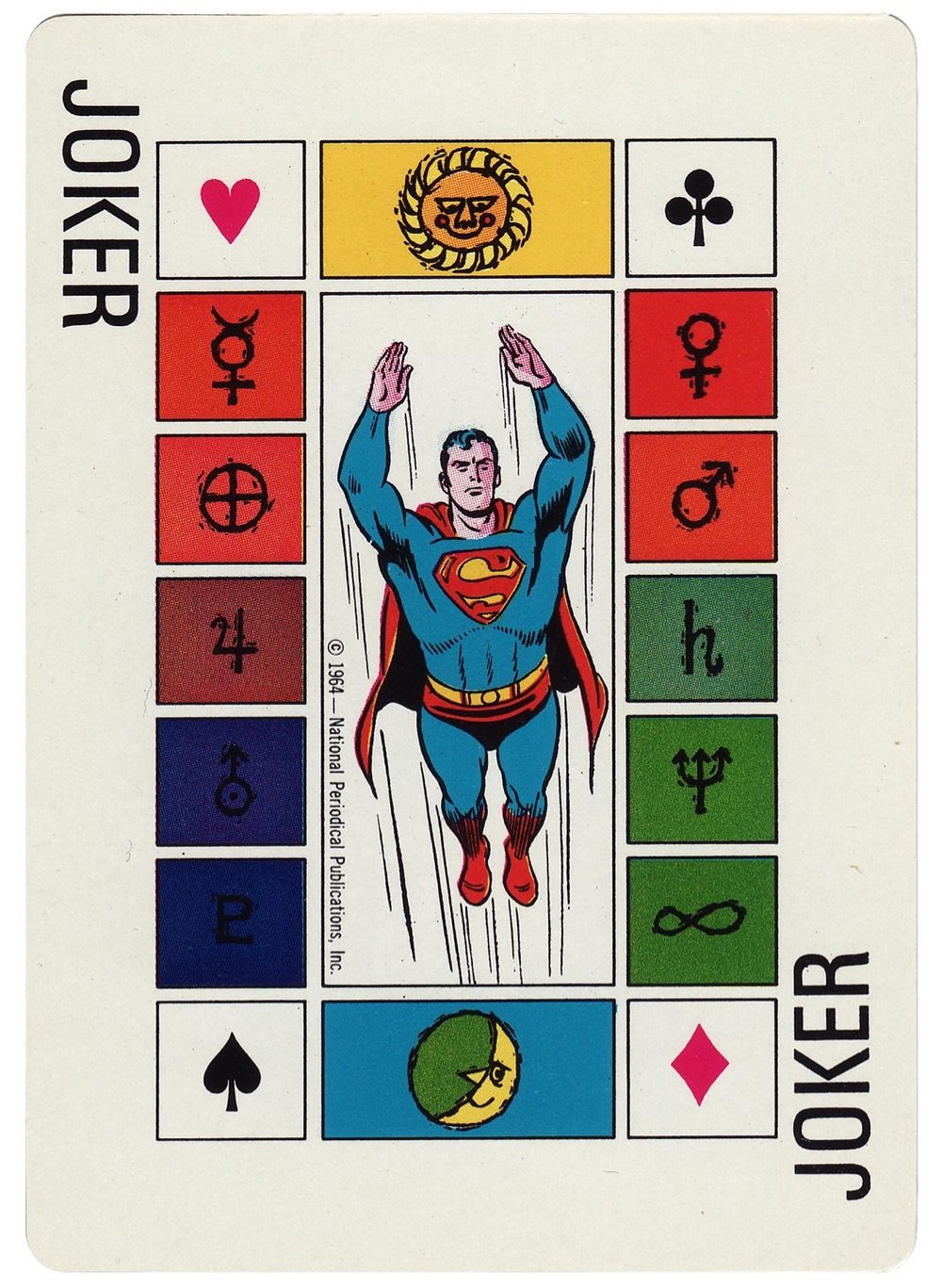
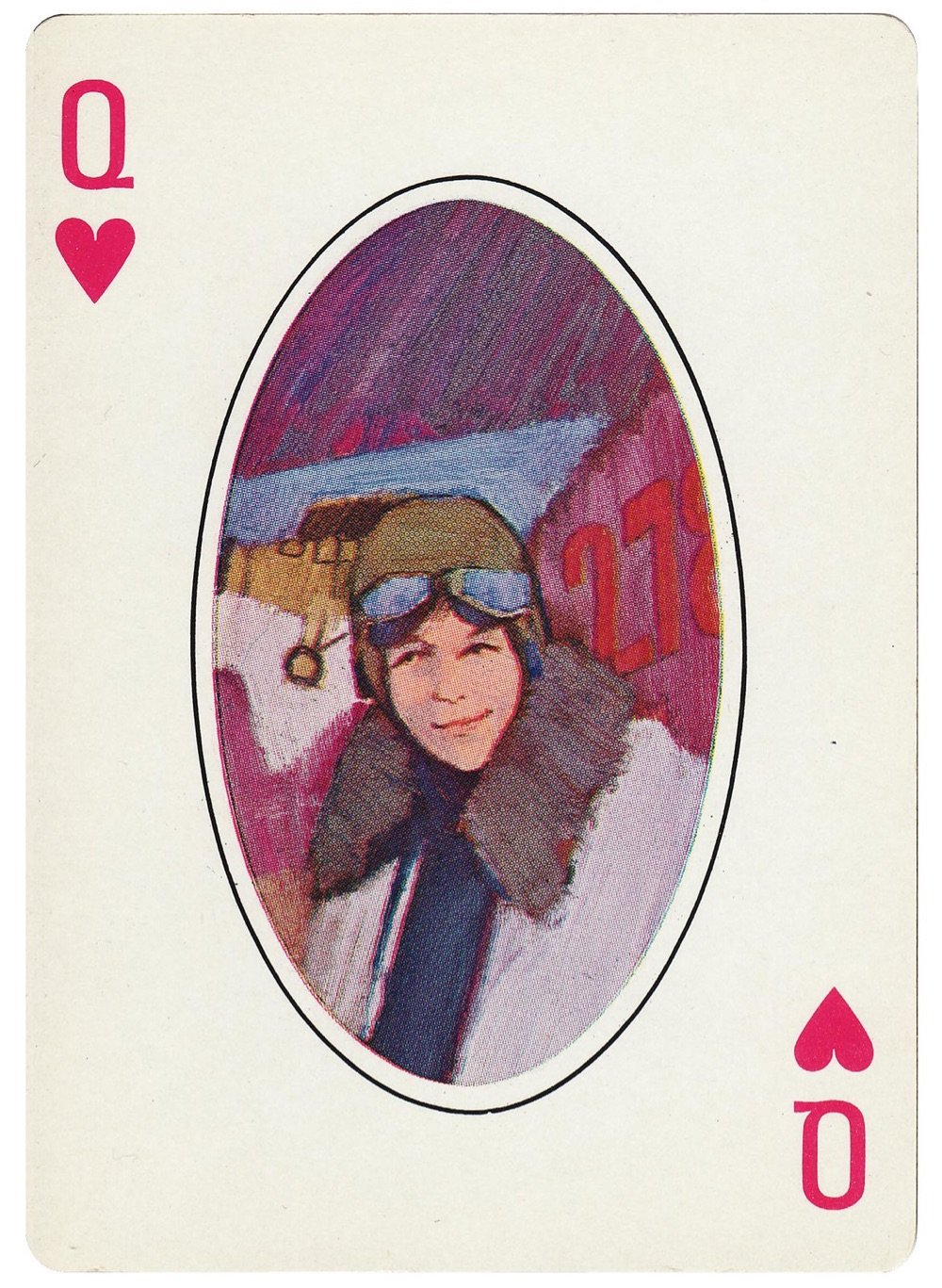
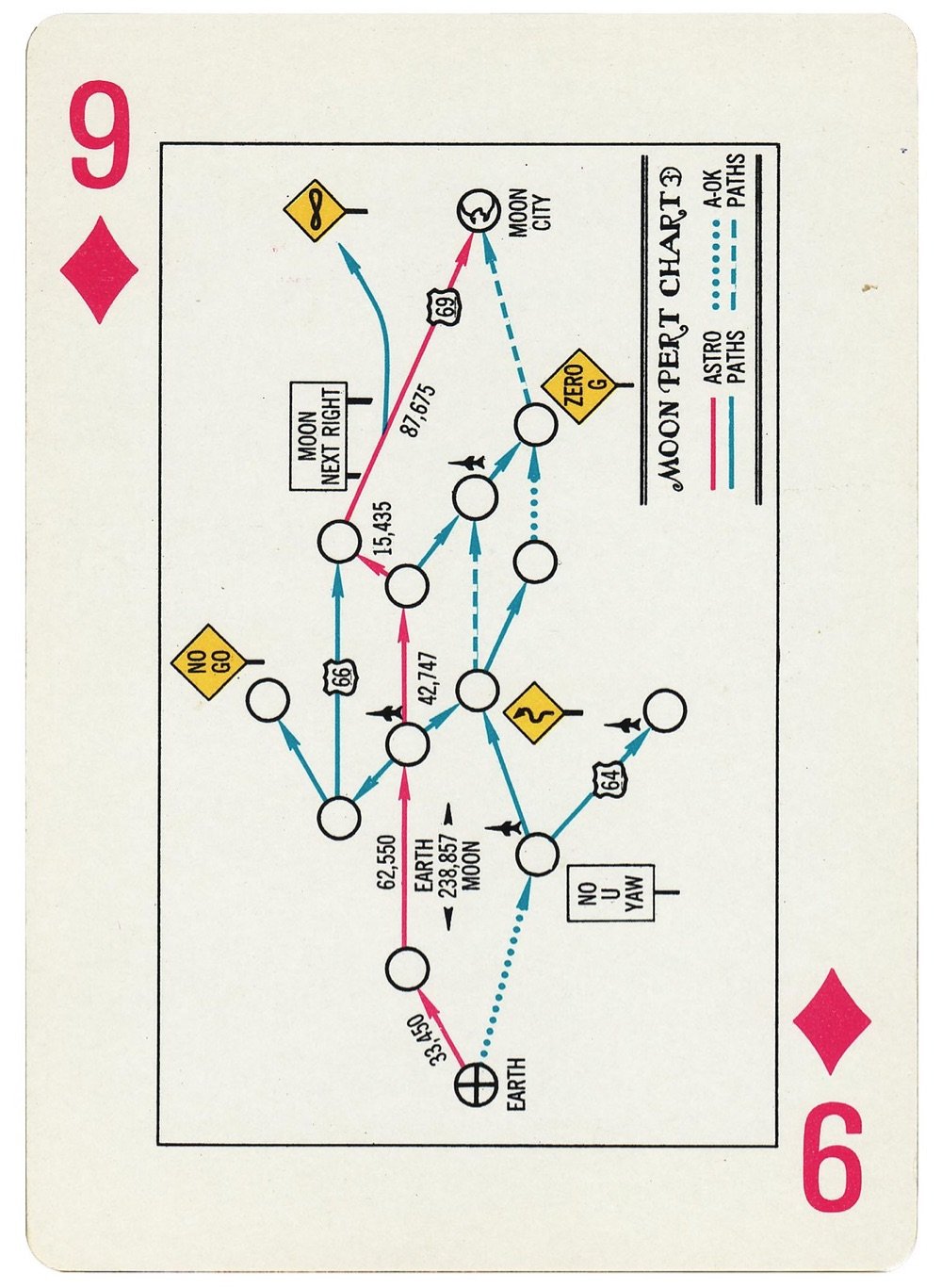
The General Dynamics Astronautics Space Cards were printed up in 1964 to celebrate the American space program. This Flickr account has scans of every card in the deck, including both jokers. Each suit corresponds to a different aspect of the program:
These space cards tell a story — the story of America’s man-in-space programs. The hearts deal with the human element, the clubs portray the sciences, the spades show products, and the diamonds depict modern aerospace management without which the other three elements could not be successful…
If you’d like your own factory-sealed deck, you can buy one on eBay for $249. (thx, mark)
The Coolest Thing in Climate Tech is a Super Hot Rock. “Electricity from renewable energy is converted into heat and then stored in thermally conductive rocks or bricks. That heat is then delivered directly as hot air or steam…”
Echo is a fascinating and poignant short film about Daniel Kish, a blind man who uses echolocation to move about in the world and teaches others how to do the same. Using clicks, he and his students can go on hikes, ride bikes, and skateboard down the sidewalk.
If I click at a surface, it answers back. It’s like asking a question: what are you and where are you? I can get through echolocation a really rich, palpable, satisfying, 3-dimensional, fuzzy geometry.
The filmmakers worked with Kish to record the sound as a person would hear it in real life and make visualizations to help us see what Kish is hearing.
During the early production stages of the filmmakers Ben Wolin and Michael Minahan’s short documentary, “Echo,” they wanted their audience to understand what this skill truly meant. They worked closely with Daniel, a self-described audiophile, to record sound for the documentary through a special microphone that works similarly to a pair of human ears — a tool that Daniel also uses for teaching. “You record the audio like you would hear it,” Minahan told me. Because of this process, the sound design and auditory experience has a vivid, spatial quality that’s rare with a film of this scale. The gears on Daniel’s bike creak and whine with a closeness that makes it feel like we’re riding right next to him, while dogs bark, wind blows, and cars pass in the background. It’s through these rich sounds that we’re immersed in and transported to Daniel’s world.
Make some time for this short film…it’s really great.
See also The Blind Skateboarder.
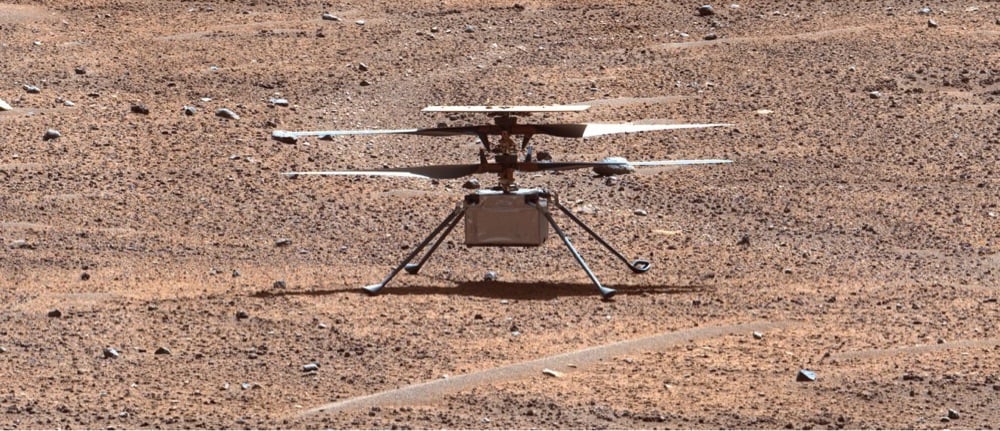
NASA has announced that the mission of the Ingenuity helicopter has come to an end on the surface of Mars.
While the helicopter remains upright and in communication with ground controllers, imagery of its Jan. 18 flight sent to Earth this week indicates one or more of its rotor blades sustained damage during landing and it is no longer capable of flight.
Originally designed as a technology demonstration to perform up to five experimental test flights over 30 days, the first aircraft on another world operated from the Martian surface for almost three years, performed 72 flights, and flew more than 14 times farther than planned while logging more than two hours of total flight time.
Nice job, little flying rover! Rest well.
Wow, Jurgen Klopp announces that he’s leaving Liverpool at the end of the season. I don’t follow a particular PL team, but I do really like watching Klopp’s side play.




The winners of the 2023 Ocean Art Underwater Photo Contest have been announced and what a reminder of how cartoonishly colorful and weird it is under the sea. The alien creatures we’ve been looking for in outer space? They’re already right here, just take a swim.
Photos above by Giancarlo Mazarese, Alessandro Raho, Steven Kovacs, and Byron Conroy. (via in focus)
Polar explorer Ben Saunders has started a new podcast called New Frontiers, featuring interviews with people who have pivoted from successful careers to help tackle the climate crisis.
From Culture magazine, the best cheeses of 2023. Lots of cheeses on here from Wisconsin and Vermont, including one from a farm literally 1/2 a mile from where I’m typing this.
Happy 40th Birthday, Macintosh. This site “showcases every Macintosh desktop and portable Apple has ever made with hundreds of the photos” and videos.
Freight train heists are on the rise in the age of Amazon. “Piracy is an age-old occupation, particularly prevalent in places and times when large gaps have separated the rich and the poor.”
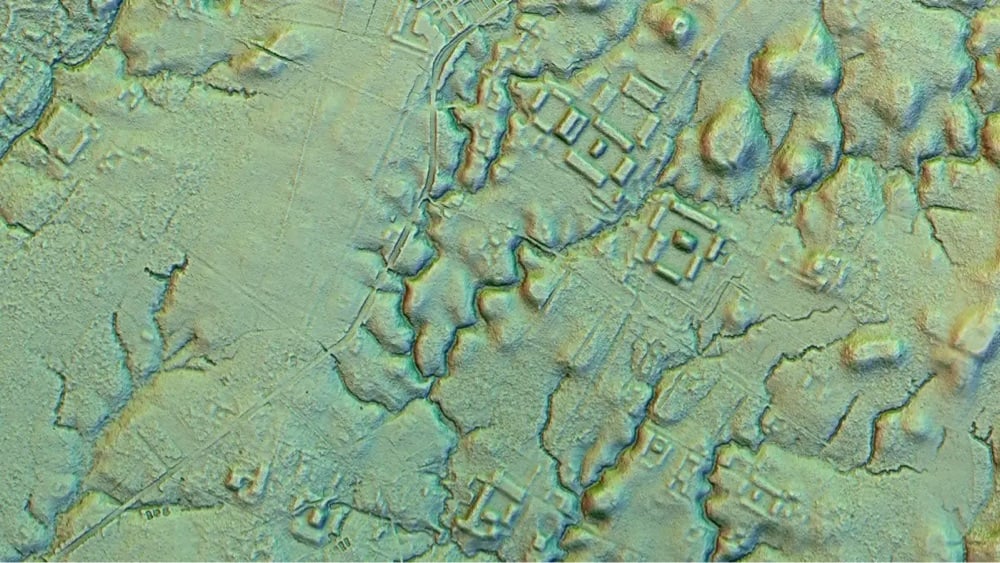
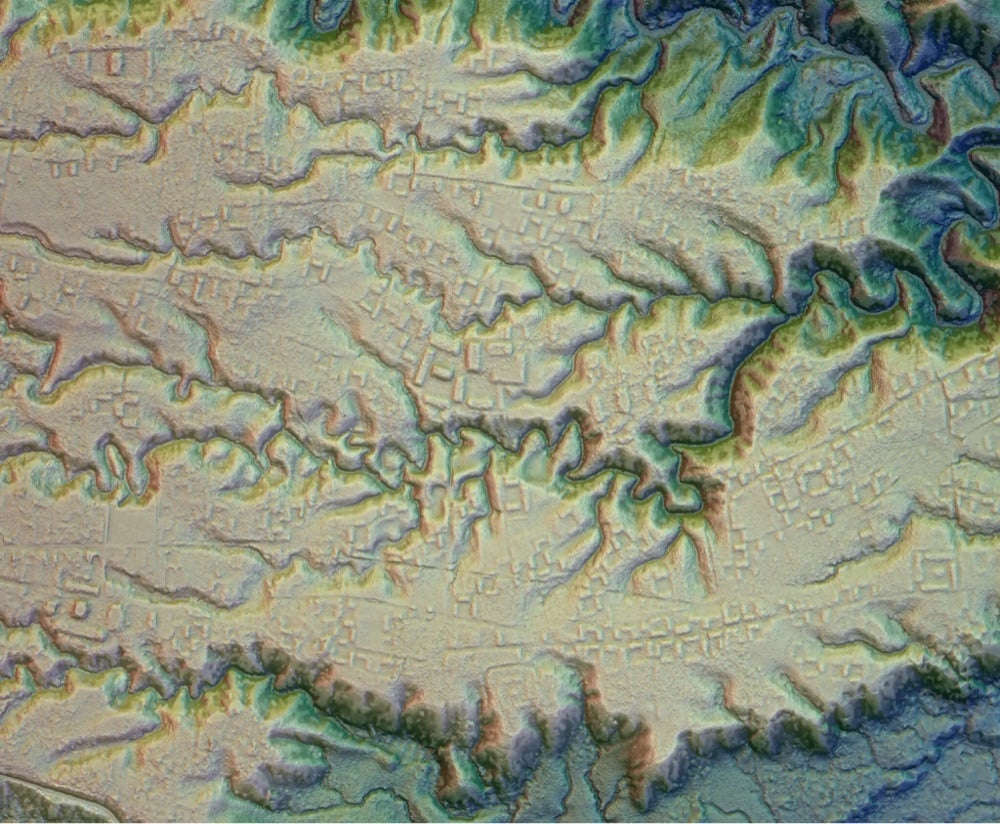
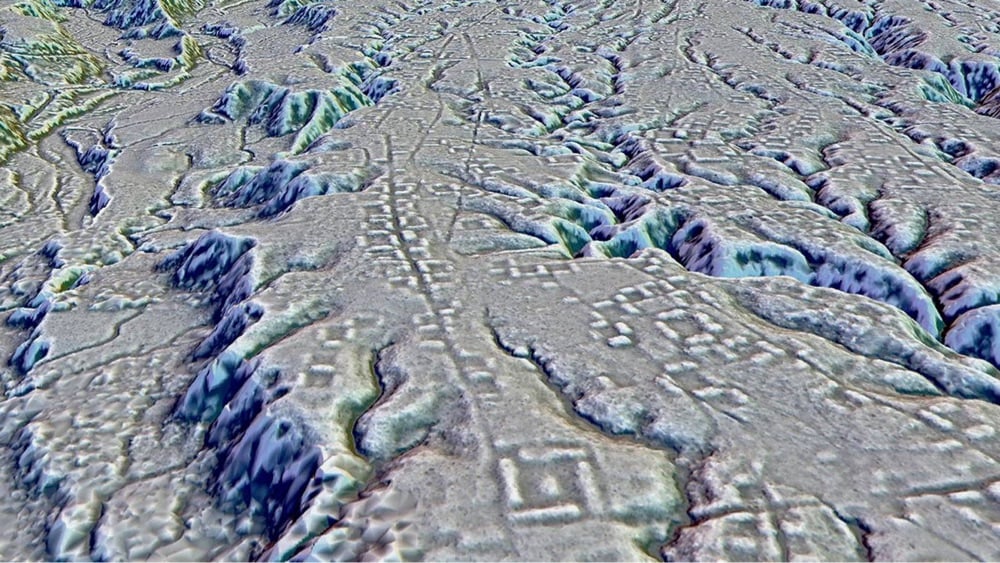
Using lidar, a team led by archaeologist Stéphen Rostain has found evidence of a network of cities in the Amazon dating back thousands of years. From the BBC:
Using airborne laser-scanning technology (Lidar), Rostain and his colleagues discovered a long-lost network of cities extending across 300sq km in the Ecuadorean Amazon, complete with plazas, ceremonial sites, drainage canals and roads that were built 2,500 years ago and had remained hidden for thousands of years. They also identified more than 6,000 rectangular earthen platforms believed to be homes and communal buildings in 15 urban centres surrounded by terraced agricultural fields.
The area may have been home to anywhere from 30,000 to hundreds of thousands of people:
“This discovery has proven there was an equivalent of Rome in Amazonia,” Rostain said. “The people living in these societies weren’t semi-nomadic people lost in the rainforest looking for food. They weren’t the small tribes of the Amazon we know today. They were highly specialised people: earthmovers, engineers, farmers, fishermen, priests, chiefs or kings. It was a stratified society, a specialised society, so there is certainly something of Rome.”
You can read more coverage of this in New Scientist, the NY Times, Science, and the Guardian.
I still remember reading Charles Mann’s Earthmovers of the Amazon (which he turned into the excellent 1491) almost 25 years ago and being astounded to learn that civilizations in the Americas were older, larger, and more widespread than I’d been taught.
A study in Scotland has found that no cases of cervical cancer have been detected in young women who have been fully vaccinated against HPV. “It is possible to make cervical cancer a rare disease.” Amazing news!
I Miscarried in Texas. My Doctors Put Abortion Law First. “No one should have to fear they may die because of a miscarriage. And yet, for women like me in the United States, in Texas, that fear is very real.” Repressive, punitive, and sickening.
During the pandemic, Lyle Drescher started dressing up as a gecko and doing a live call-in show as Lyle the Therapy Gecko. Drescher is obviously not a therapist (more like an advice columnist?) but he does seem like a generous listener, which is a bit of a rarity online. This video is also a meditation about online identity and the unusual sort of performance art that is familiar to anyone who publishes online (even those of us who work in text & links). (via waxy)
Technology analyst & scholar Dan Wang was one of the folks on the walk and talk I did in northern Thailand back in December. In his annual letter for 2023, Wang recapped the walk, using it as a jumping-off point for his wheelhouse topic: China. Most interesting to me were his observations about the trend of Chinese moving abroad, including to Thailand.
Many people still feel ambivalence about moving to Thailand. Not everyone has mustered the courage to tell their Chinese parents where they really are. Mom and dad are under the impression that they’re studying abroad in Europe or something. That sometimes leads to elaborate games to maintain the subterfuge, like drawing curtains to darken the room when they video chat with family, since they’re supposed to be in a totally different time zone; or keeping up with weather conditions in the city they’re supposed to be so that they’re not surprised when parents ask about rain or snow.
There still are some corners in China that are relatively permissive. One of these is Yunnan’s Dali, a city on the northern tip of highland Southeast Asia, where I spent much of 2022. There, one can find the remnants of a drug culture as well as a party scene for an occasional rave. But even Dali is becoming less tenable these days since the central government has cottoned on that the city is a hub for free spirits. The tightening restrictions emanating from Beijing are spreading to every corner of the country. “China feels like a space in which the ceiling keeps getting lower,” one person told me. “To stay means that we have to walk around with our heads lowered and our backs hunched.”
I also recently read this piece about The Chinese Migrants of Chiang Mai by Amy Zhang (via Jodi Ettenberg)
What strikes me is how Thailand’s porousness — the fluidity of entries and exits due to the comparatively lax visa processes compared to other countries — mean that while some can stay and enroll their kids in school here, some may go back to China after a long visit, carrying new ideas and experiences with them home. And in this case, it’s Chinese feminism being discussed in Chiang Mai, while feminist and LGBTQ+ groups are being increasingly suppressed in China itself.
The sentiment in that line quoted by Wang — “China feels like a space in which the ceiling keeps getting lower” — probably feels quite familiar to many here in the United States, particularly women, LGBTQ+ folks, and their families living in states with increasingly draconian laws around bodily autonomy.
Mom roasts daughter for what she DM’d Lil Wayne. “Come tell your father what you said to Lil Wayne! Tell him everything! Tell him everything!”
Older posts




Socials & More