Tesla introduces the Cybertruck. I cannot improve on what @mathowie said about it: “What the truck was he thinking?”

Advertise here with Carbon Ads
This site is made possible by member support. 💞
Big thanks to Arcustech for hosting the site and offering amazing tech support.
When you buy through links on kottke.org, I may earn an affiliate commission. Thanks for supporting the site!
kottke.org. home of fine hypertext products since 1998.
Beloved by 86.47% of the web.
Entries for November 2019
There’s always something interesting in Spencer Wright’s The Prepared newsletter. This week’s was particularly good.
People share answers to common questions they get related to their professions. “Literally, all I do as a volcanologist: Yellowstone is not going to erupt & kill us all any minute.”
The Art of the Travelling Salesman Problem
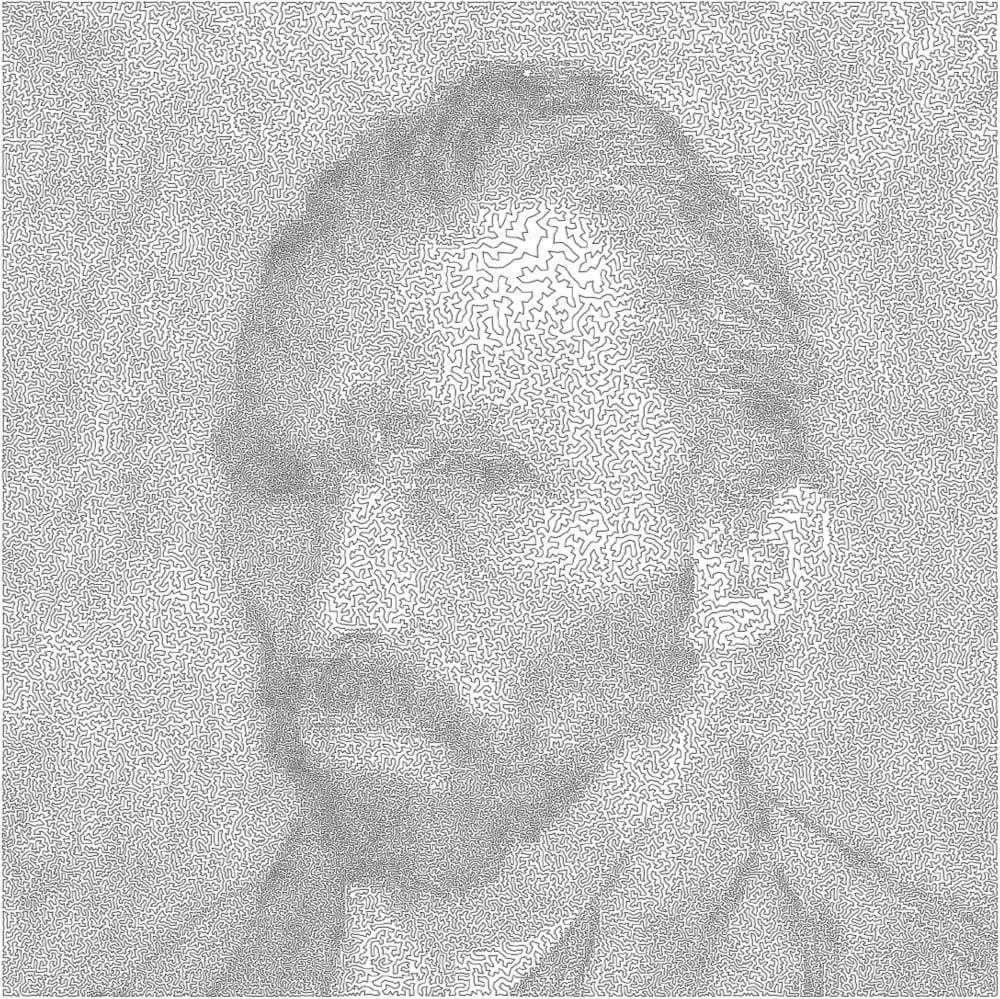
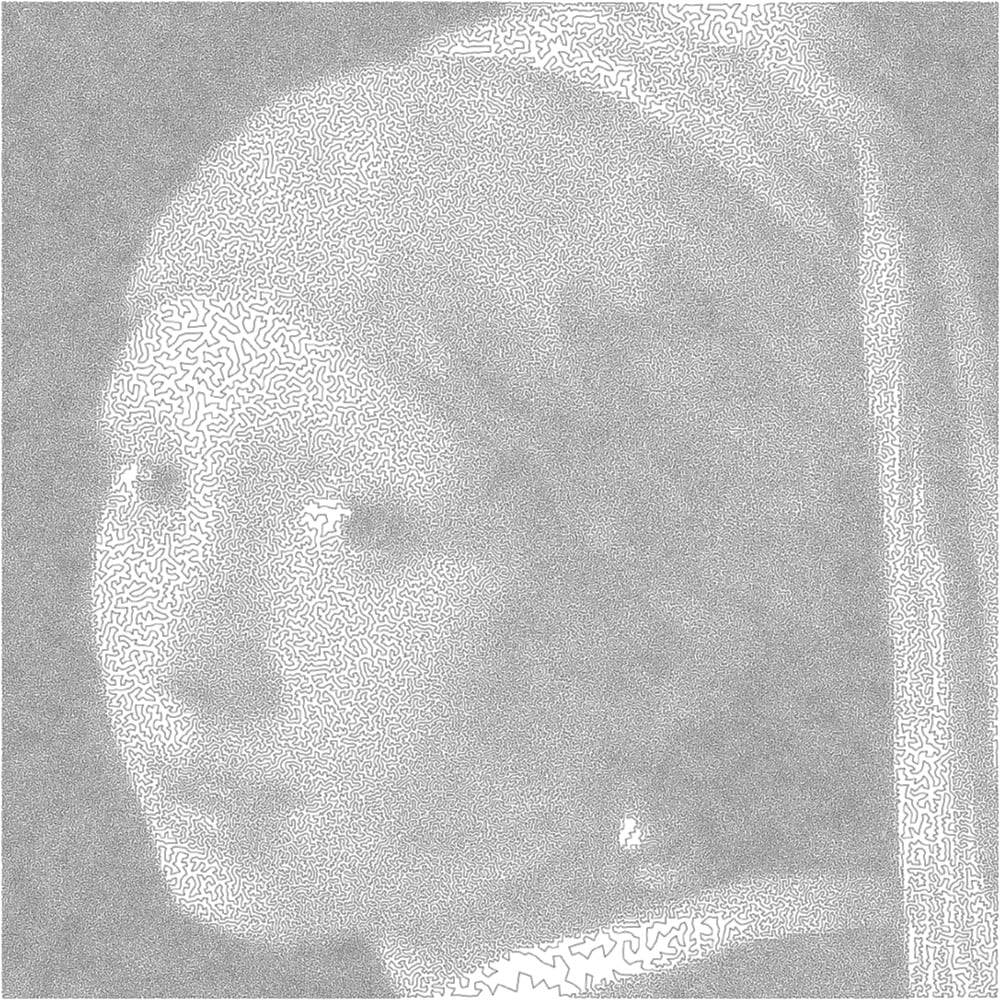
All art is bounded by one constraint or another. Mathematician Robert Bosch makes what he calls “optimization art”, which is best embodied by these images produced as solutions to the travelling salesman problem. Each image is made up of a continuous line that is the shortest possible route through a series of points without revisiting any single point, much like the optimal route of a travelling salesperson visiting cities. The rendition of a van Gogh self-portrait uses a solution for 120,000 “cities” while the single line forming the Girl with the Pearl Earring visits 200,000 cities.
I would love to see an Observable notebook where you could upload any photo to make images like these. (via @Ianmurren)
Manufacturers say you should destroy used child car seats because they could be unsafe. But there’s no data to back up the claim that car seats expire or grow less safe over time.
How to Watch Tonight’s Rare Unicorn Meteor Storm
Astronomers are expecting a particularly strong meteor storm tonight visible from parts of Europe, Africa, North America, and South America that could produce meteors at a rate of 400/hour or more. The storm’s radiant will be centered right around the constellation of Monoceros (that’s the unicorn, which makes this a very 2019 event). Just find Orion in the eastern sky and look a bit down and to the left, right where the red patch is:
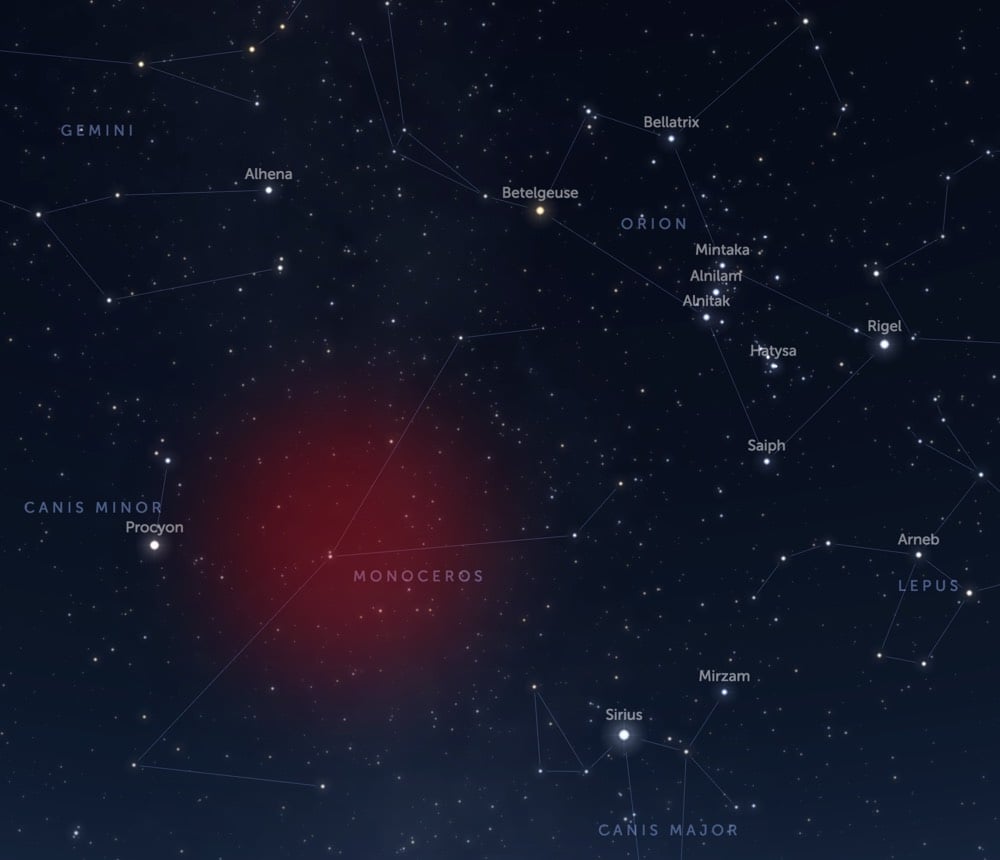
If you’re on the east coast of the US and the sky is clear tonight, you should head outside around 11:15pm EST. And be prompt…the storm’s peak activity will last 15-40 minutes. I’m going to see if Night Mode on my iPhone 11 Pro can capture any of the action…
See also the time I saw a boomerang meteor explode like a firework in the night sky. (thx, megan)
On healthy self-doubt and blowhard syndrome. “We’re great the way we are, level-headed self-assessments and all. Stop rewarding them for being jackasses.”
The Colorful Ceilings of Mumbai’s Taxis

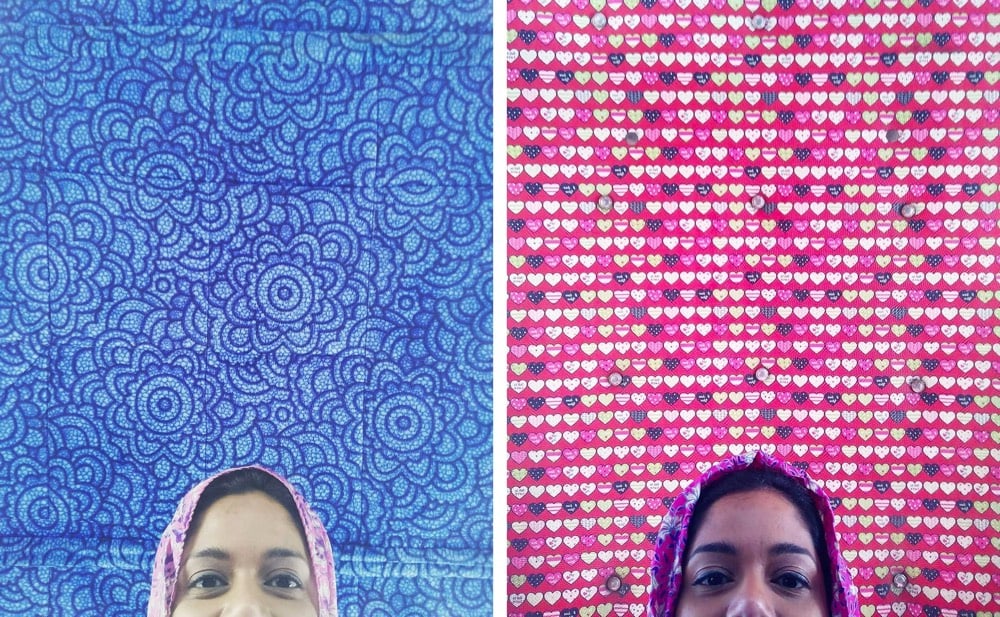
Since April 2017, Rachel Lopez has been taking photos of the ceilings of Mumbai taxis, many of which are decorated with colorful vinyl overlays. As Lopez says in a piece she wrote for PRI, “it’s more fun than the cold, gray inside of an Uber”. (via @themexican)
Border Tuner is a interactive public art installation where people shine powerful lights across the US/Mexico border. If lights are shined at each other, a communications channel opens between the two.
The 50 Best Nonfiction Books from the Past 25 Years
Slate recently compiled a list of the 50 best nonfiction books published in the past 25 years and it could not possibly be more up my alley. Let’s take a look at some of the books on the list:
Into the Wild by Jon Krakauer. “Through his reporting of McCandless’ passionate and foolhardy journey into transcendence — and writing about his own, similar youthful experiences — Krakauer explores our modern relationship to the wilderness and the deep desire many young people feel to seek out unthinkable danger.”
A Supposedly Fun Thing I’ll Never Do Again by David Foster Wallace. “His editors at Harper’s sent him to a state fair and on a holiday cruise, pastimes whose reputations for carefree, middle American fun seemed hopelessly alien to Wallace himself, a hyperactive observational machine desperate to shed his own self-consciousness but incapable of doing so.” A personal favorite of mine, my book-length introduction to Wallace.
A Heartbreaking Work of Staggering Genius by Dave Eggers. I loved this when it came out. I wonder how it holds up…
The Night of the Gun by David Carr. “In 2008, David Carr had been a respected New York Timesman for years, the paper’s media reporter and a beloved mentor of countless young journalists. But two decades before that, Carr was a junkie — a crack addict who washed out of journalism jobs, who was rung up by the Minneapolis cops nine times, and whose twin daughters were born 2 1/2 months premature to a mother who’d smoked crack the night before their delivery.”
The Warmth of Other Suns: The Epic Story of America’s Great Migration by Isabel Wilkerson. A wonderful masterful book, one of my all-time favorites.
Barbarian Days: A Surfing Life by William Finnegan. “Barbarian Days is a masterpiece of sports writing, focusing its lens on the smallest unit of both athletic and artistic achievement: the single human body, attempting to do something difficult and beautiful.”
I’ve read fewer of the listed books than I would have thought. Time to remedy that.
142 new geoglyphs have been discovered in Peru with the help of AI technology. The glyphs are ~2000 years old and some are up to 300 feet across.
Renderings of Our Dystopian Pop Culture Future
For more than 11 years for a series he calls Everydays, Mike Winkelmann (aka Beeple) has been making a daily picture. As you might expect from the breakneck pace, some of them aren’t that interesting (there’s a lot of juvenile stuff here tbh), but my favorite ones are the Black Mirror-ish with decayed or repurposed pop cultural references.
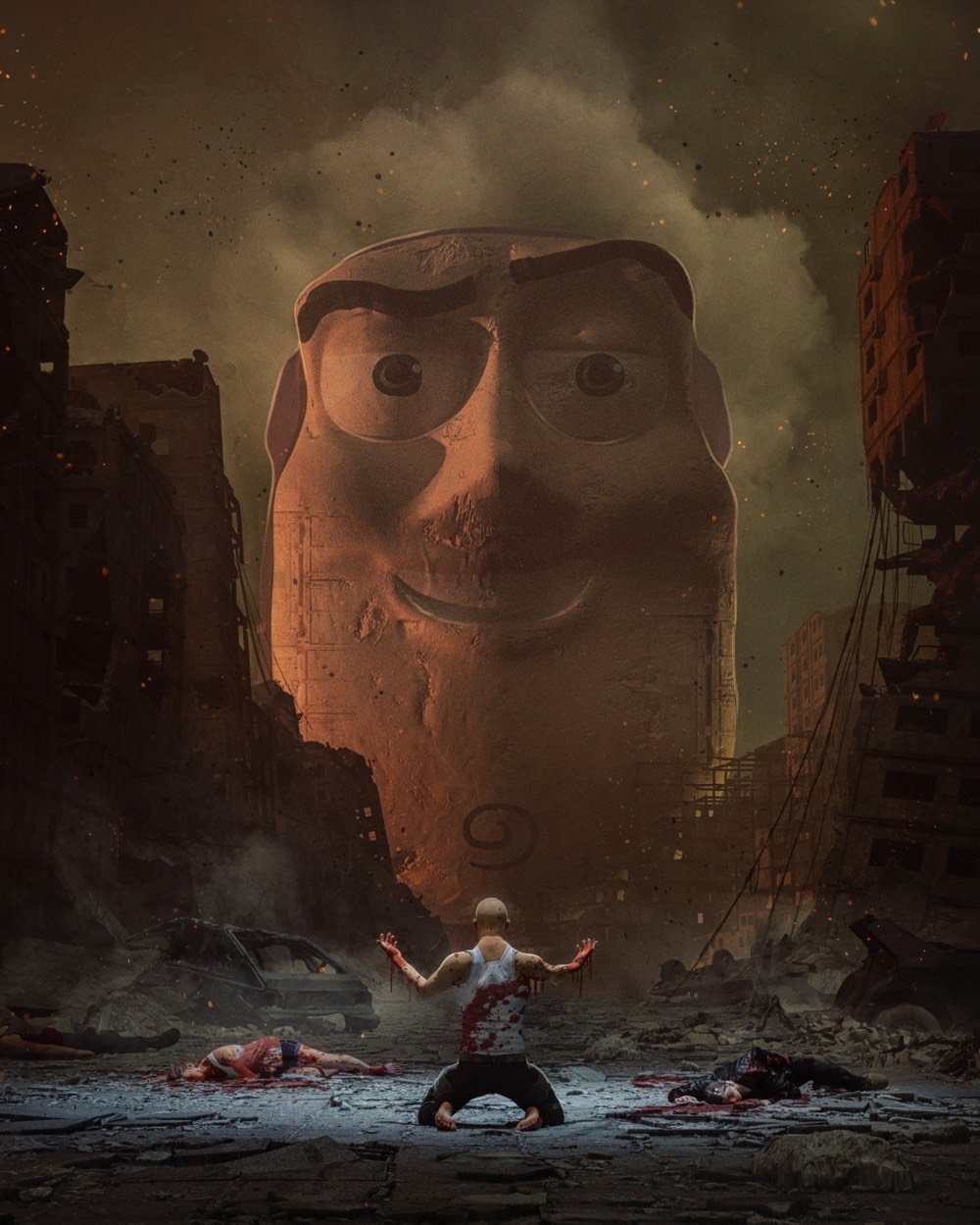
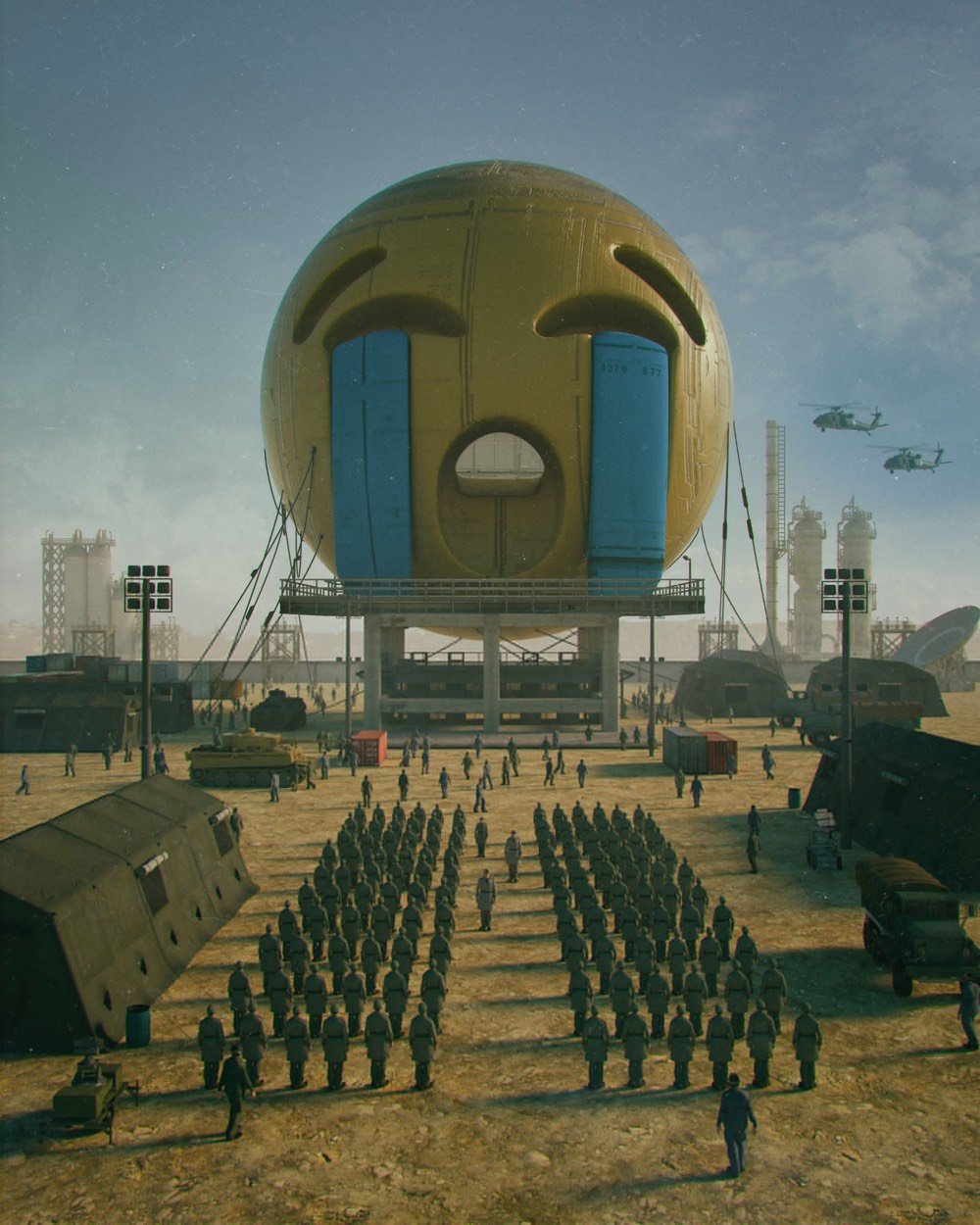
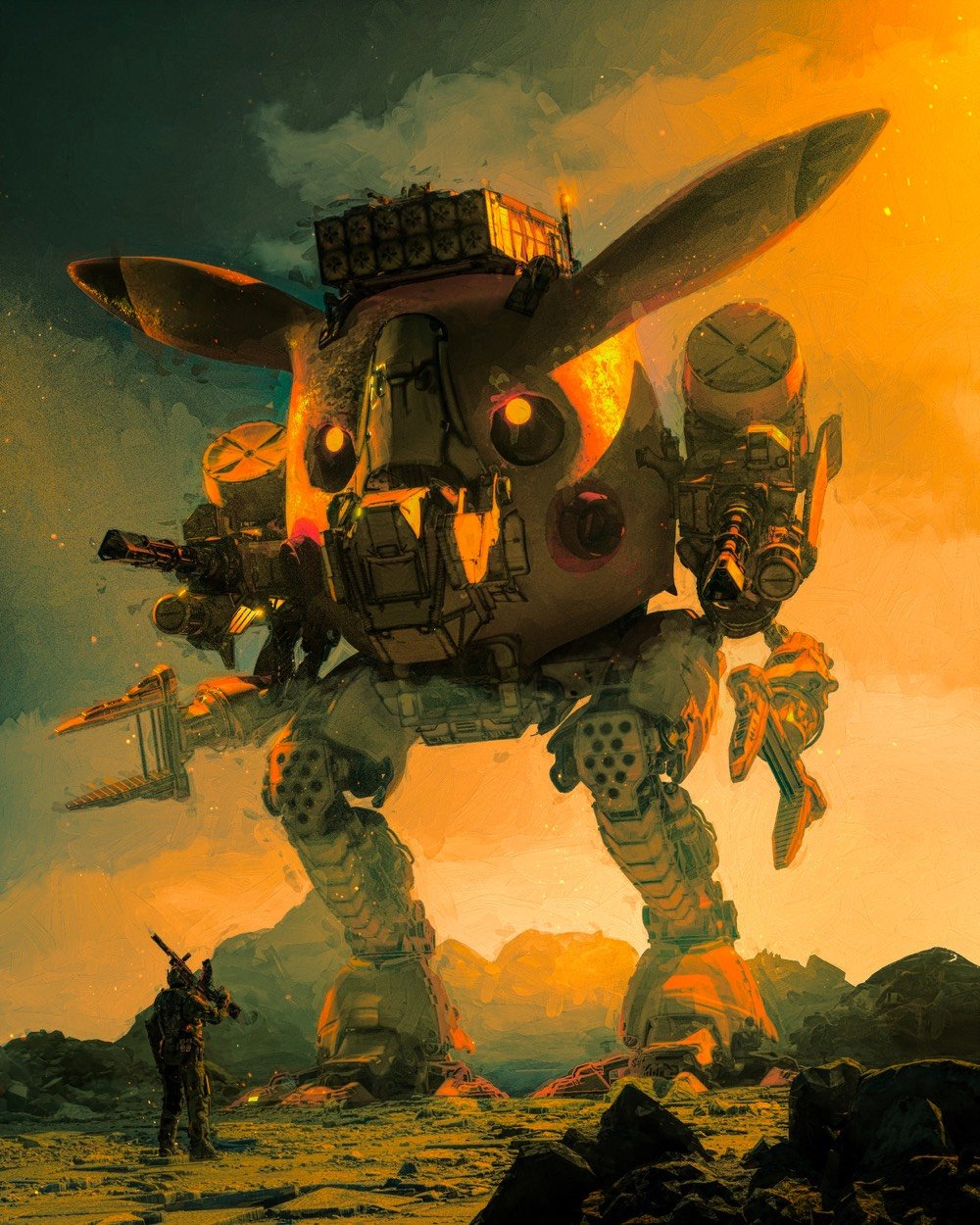

You can view more of Winkelmann’s work on Behance, Tumblr, and his website. (via dense discovery)
Oxford Dictionaries has named its word of the year for 2019: “climate emergency”. The shortlisted words all relate to climate change in some way: “flight shame”, “plant-based”, “ecocide”, etc.
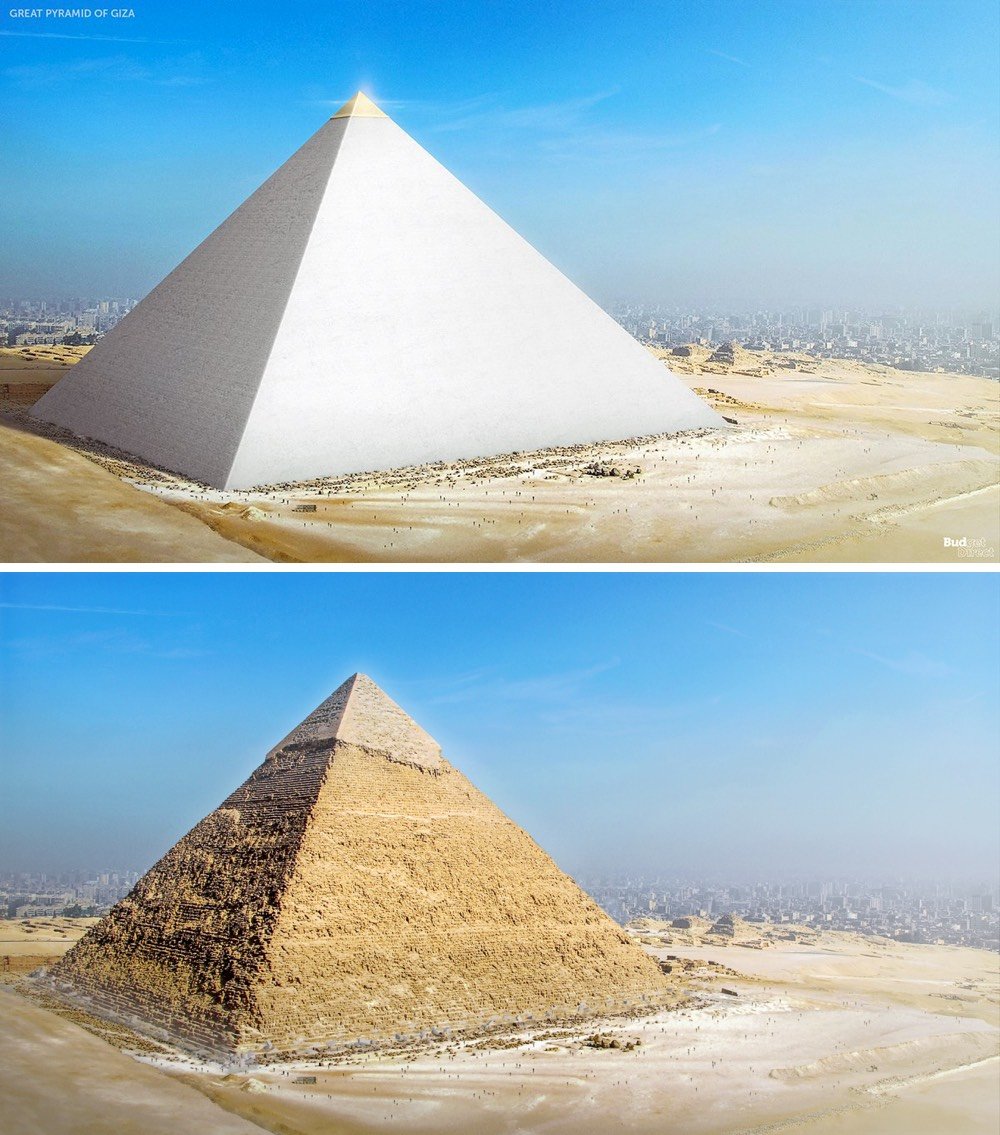
How the Great Pyramid at Giza Looked in 2560 BCE
The current outer surface of the Great Pyramid at Giza is made of rough limestone blocks, colored a dark sandy brown from hundreds of years of pollution and weathering. But when it was first built, there was a smooth layer of fine white limestone on the outside of the structure, all cut to the same angle and polished to a shine so bright it almost glowed. It might have looked something like this (current view for reference):
This video from the Smithsonian shows how the fine limestone was sanded to that white sheen:
In addition, the structure would likely have been topped with a pyramidion, a capstone made of solid granite and covered in a precious metal like gold. The sheer size of the pyramid must have been enough to blow ancient minds, but seeing it all shiny and topped in gold… well, no wonder they thought their rulers were gods.
FYI, The Irishman is opening wider this weekend. For some reason, listings aren’t available everywhere yet, so check the official site for showtimes.
Going to the Movies with Jackie Kennedy
Carly Simon’s recent piece in the New Yorker about going to the movies with Jackie Kennedy (an excerpt of her book Touched by the Sun: My Friendship with Jackie) was unexpectedly moving. And funny. And thoughtful. Trying to avoid seeing anything related to Oliver Stone’s JFK — “scarier, even, would be a two-minute trailer for ‘JFK’ inserted before the feature-length film we’d gone to see” — the two opted instead for Warren Beatty’s mobster flick, Bugsy.
Every time a shot sounded on the screen — and the film was plenty violent — she reacted physically, dramatically, her body mimicking the victim’s.
How do you deal with trauma like that when society keeps reminding you of it, not only generally (with gunshots in movies) but specifically, with blockbuster conspiracy movies that depict in detail the exact moment when your life was torn apart? And how can you be a good friend to someone who suffered from PTSD (and perhaps never recovered)? How do you assure her that you’re a safe harbor for her thoughts and feelings, that you’ll help insulate her without isolating her?
P.S. Somehow, in everything I’ve read/seen about the Kennedys over the years, I’d never heard that Jackie had given birth to a premature baby boy named Patrick in August of 1963. The baby died 39 hours after his birth. Her husband was assassinated just 105 days later. I… Jesus.
This is an interesting article about boring machines. Tunnel boring machines.
Rebel Girls Chapter Books
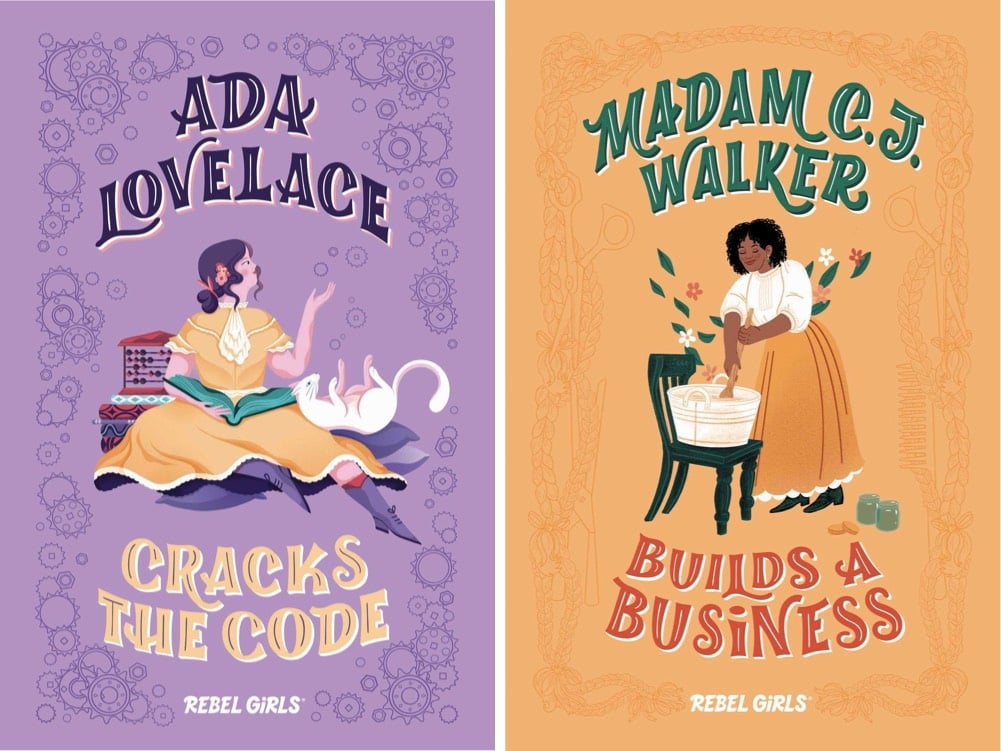
The makers of the hugely popular (at least in our household) Good Night Stories for Rebel Girls series are branching out into chapter books. Their first two are available now: Ada Lovelace Cracks the Code and Madam C.J. Walker Builds a Business. Lovelace is, of course, the pioneering computer programmer while Walker a cosmetics industry pioneer and America’s first female self-made millionaire.
You can also listen to the Rebel Girls podcast episodes featuring Lovelace and Walker.
Predictions about the year 2029 using headlines from 2019. “President Xi Will Be Our Stalin”, “Racism Will Thrive, But No One Will Say the Word”, “Child Separation Will Never Be Forgotten”.
The Hippie Aesthetic of the 60s Is “Art Nouveau on Acid”
I had somehow never registered this before, but it was (ridiculously) obvious once it was pointed out to me in this video: the psychedelic design of music posters in the 60s were inspired in part by the Art Nouveau movement of the late 1800s. For instance, here’s an absinthe advertisement from the 1890s and a 1966 Pink Floyd poster.

“You can draw a straight line between Art Nouveau and psychedelic rock posters,” Martin Hohn, president of the Rock Poster Society, says. “Mucha, Jules Chéret, Aubrey Beardsley. Borrow from everything. The world is your palette. It was all meant to be populist art. It was always meant to be disposable.” He later adds: “What the artists were saying graphically was the same thing the rock bands were saying musically.”
Well, everyone knows that Midtown Manhattan sucks. What this blog post presupposes is… maybe it doesn’t? (I have always liked Midtown for reasons that are unknown even to myself.)
Life in Miniature
Delph Miniatures is a small company that makes what they call “modern miniatures”, 1/12th scale miniatures of everyday things like washing machines, ironing boards, and mobility scooters. Ellen Evans’ short documentary about the miniatures and the mother/daughter team who make them is completely delightful; I love everything about these women and their work.
They make contemporary miniatures because they want to represent our culture as it is right now and not as it was back in Victorian or Elizabethan times.
Our inspiration is not in resource books or museums, but physically around us, all the time, in our homes, in the shops of our home city, Bradford, and in the lives of our friends and family. We love creating something different and modern that someone wants. In this way our range has expanded as people have asked for more new things. Ideas are all around us. You may be living in a Victorian house but you still have your TV, your microwave, and your computer.
Just look at this meticulous work by Kath Holden and Margaret Shaw — the attention to detail is inspiring:
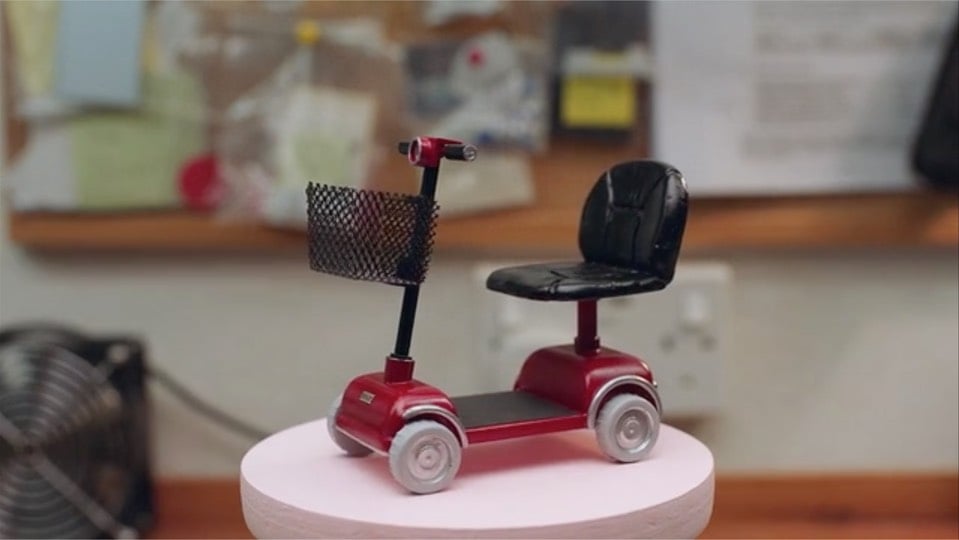
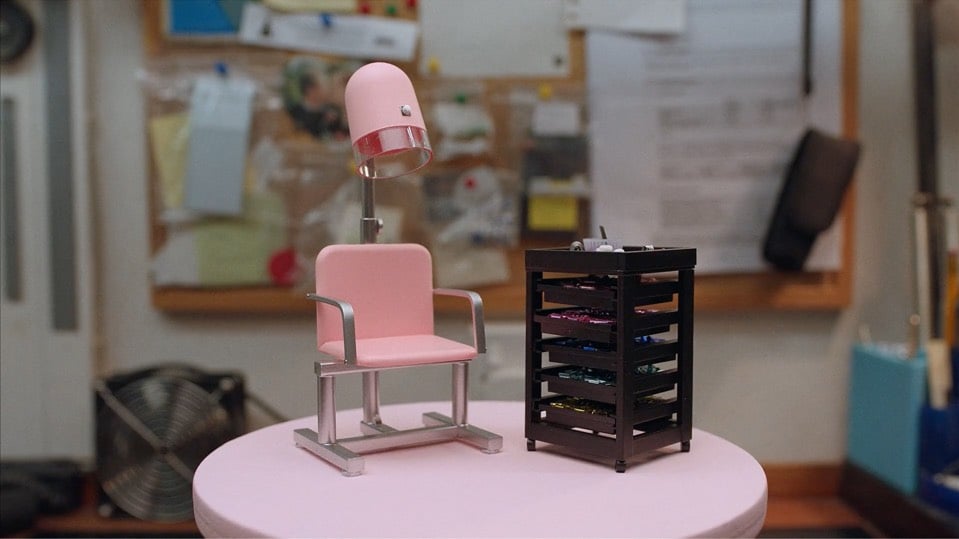
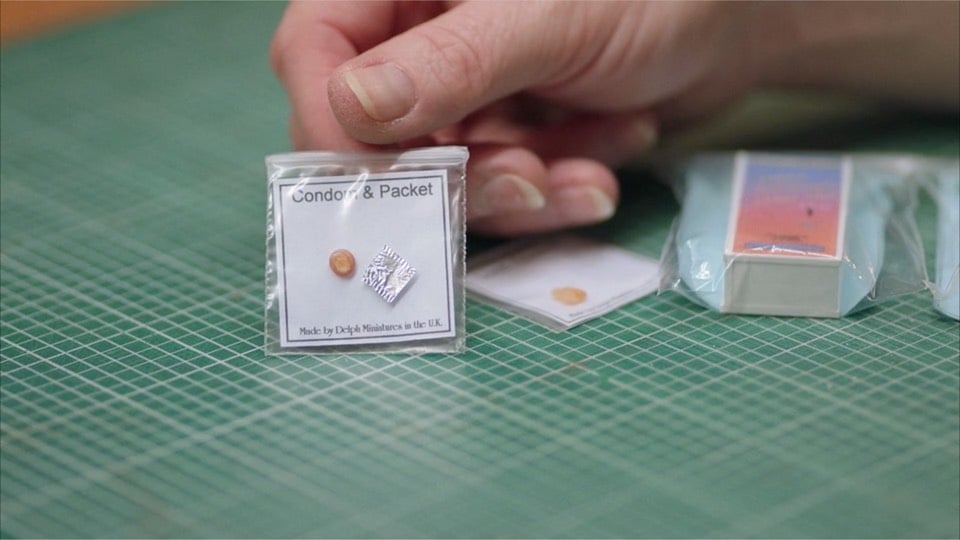
Yes, that’s a wee condom and its wrapper, which Delph assures us is made of actual latex and “the correct size diameter scaled down of a standard condom”. You can buy your own here for £8.58. The mobility scooter is £77.81 and you can buy everything you need to make a mini beauty salon right here, including a “free wifi” sign and dome-type security camera. Shop the rest of their store here..so many good things! (via the morning news)
Spinning Tethers for Space Propulsion
I love rocket launches. They are loud, carry cool things into space, and last a surprisingly long time considering how fast the rocket is already traveling when it clears the tower. But I think we’re going to look back on this era of space travel and marvel that launches & rockets were our only means of getting things into and around space (planetary gravity assists notwithstanding). We’re already moving in that direction; the initial tests of a space sail inspired by Carl Sagan have been promising. Another space propulsion idea is to use spinning space tethers to whip smaller, slower space vehicles from relatively low altitudes to higher orbits or even to the Moon, Mars, or beyond. This video from Kurzgesagt explains how these tethers work and what we could do with them.
I believe Neal Stephenson wrote about space tethers (or something very similar) in Seveneves.
Illustrated chronicle of a night spent in a NYC bodega. “1:46am: I just got off a bat mitzvah… I motivate people to dance. There’s a lot of new dance moves I learn on TikTok. I learned the Woah and the Milly Rock.”
Phoebe Waller-Bridge Answers
The Guardian got a bunch of writers and performers — folks like Olivia Colman, Roxane Gay, Nigella Lawson, and Victoria Beckham — to ask the delightful Phoebe Waller-Bridge a bunch of questions and the whole thing is delightful because she is, as I said earlier, delightful.
Lucy Prebble, playwright: How many really good works do you think a writer has in them?
PWB: I’m going to say infinite for the sake of my own professional optimism, but I don’t think there’s a rule. I do think there are only so many things you can pull out of the bones of you … and they are usually the good ones. I don’t have a number for you. Fuck it, six.
Jack Thorne, playwright: Did you ever consider an ending where the Priest — I refuse to call him Hot Priest — said yes?
PWB: May I clarify that I never scripted him as Hot Priest! That was the good work of the internet meeting Andrew Scott’s impossibly intense charisma. There was an idea for an alternative ending, but I’ll never say what it was…
Anne Enright, novelist: Is it better to be fucked up by religion than by life? And why is damage so sexy?
PWB: If I was going to choose, I’d rather be fucked up by religion. At least that is something I could feasibly escape and still be breathing.
Damage is indicative of vulnerability, which I think always feels a little dangerous. It is evidence that a person can feel deeply, that they can be open … then that delicious wall goes up and we just want to scramble over it and save (and feel) the person. It’s irresistible. I also think damage is a glimpse of something honest, and that’s always attractive.
iPhone Case Is Also a Playable Game Boy
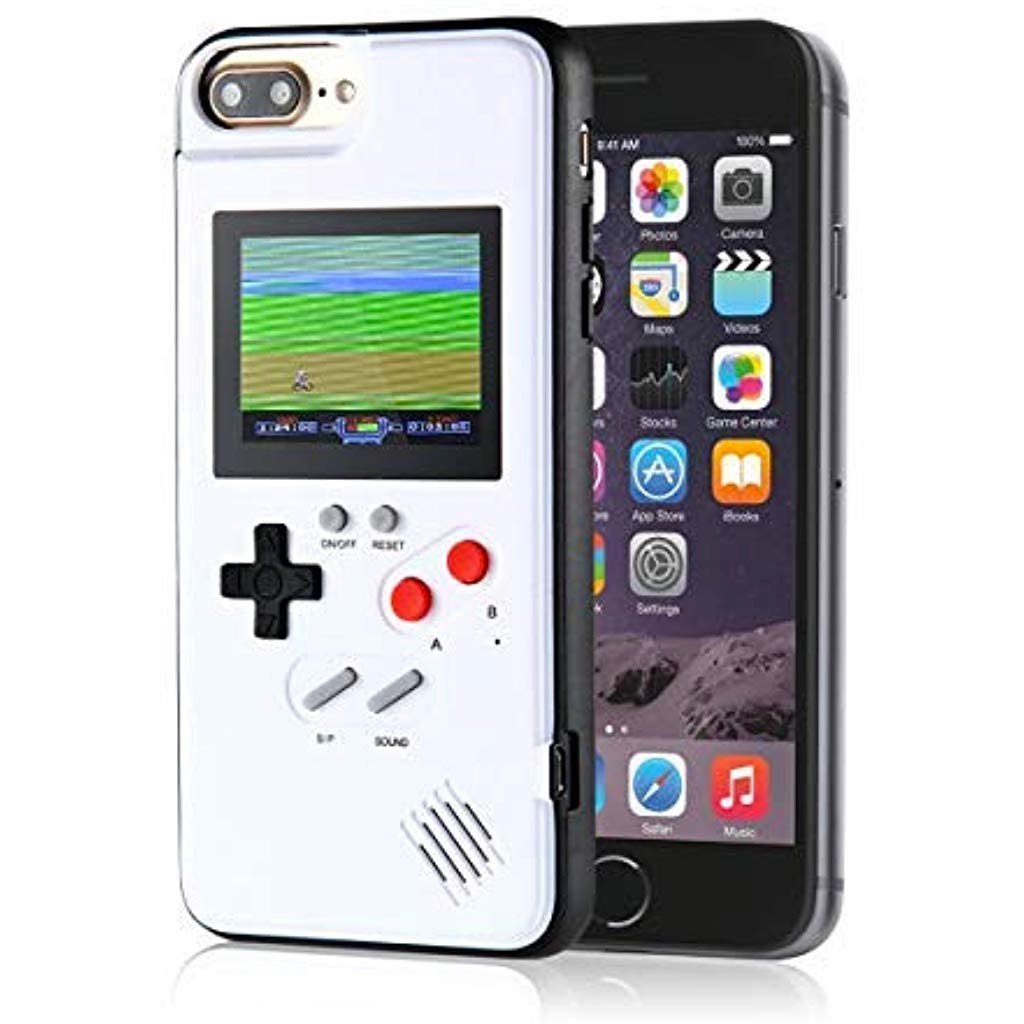
Here’s a thing I just found out about: protective iPhone cases that are also playable Game Boy-style handheld gaming console. Here are a bunch of different ones on Amazon for different phones in a variety of colors that come preloaded with games.
Buyer beware on these though — the reviews are just ok, many of them likely don’t come with actual NES or Game Boy games, and who knows if they’ll actually protect your phone? The CaseBoy claims to come preloaded with games like Super Mario Bros, Donkey Kong, Tetris, Galaga, Contra, and the like, but it seems unlikely that Nintendo (or anyone else) licensed these games to them. The Verge panned one of the cases in this review (so did MacWorld).
I scrolled to “E” to find the Frogger knock-off, in which I maneuvered a single block through rows of moving bricks. The letter “D” let me play a Galaga clone, although I had to imagine the missiles since they didn’t show up on screen. Games I-Z are all variants on Tetris, ranging from the standard tile-matching puzzler to one that made the stack of blocks move to the right every few seconds.
As for its actual effectiveness as a case? It depends.
Fun idea though! Has anyone used one of these? I’m tempted to order one just to see how bad/good it is.
The Traditional Seasons and Inventive Microseasons of the World
In this info-packed little Twitter thread, science writer Ferris Jabr reminds us that the four “traditional” seasons of summer, autumn, winter, and spring are not universal and mainly only apply to the mid-latitudes. Other places on Earth observe different patterns. For starters, the polar year is split into light and dark while the tropics typically have a wet and a dry season.
The traditional Japanese calendar, borrowed from the Chinese, splits the year into 24 seasons and 72 microseasons, each lasting about 5 days. Some of those microseasons:
February 9-13 - Bush warblers start singing in the mountains
February 24-28 - Mist starts to linger
March 26-30 - First cherry blossoms
June 11-15 - Rotten grass becomes fireflies
July 29-August 2 - Earth is damp, air is humid
October 18-22 - Crickets chirp around the door
November 22-26 - Rainbows hide
January 30-February 3 - Hens start laying eggs
Indian calendars used in India, Bangladesh, Nepal, and Sri Lanka have six seasons: summer, monsoon, early autumn, late autumn, winter, and spring.
The Cree calendar has six as well, augmenting the usual four seasons with late spring and ice freeze-up.
In some climates, there is a period in the spring called the “hungry gap” between when the winter vegetables run out and the spring veggies aren’t yet ready to harvest.
Indian summer is the term generally used for a warm microseason that sometimes occurs in the autumn after a hard frost, but I prefer the similar Gaelic season “little autumn of the geese”.
Members of the Gulumoerrgin language group in Australia observe seven seasons, including heavy dew time, big wind time, and spear grass & goose egg time.
Velvet season refers to a spring period in the Crimea that is pleasantly warm but not hot, just the right time to wear velvet (instead of fur).
I wrote recently of Kurt Vonnegut’s assertion that the northern parts of the US have not four but six seasons, which dovetails nicely with the seasons here in Vermont:1
Vermonters know these six seasons all too well, although they give the two extra seasons different names. What’s going on right now and will continue into mid-to-late December is “stick season”. All the beautiful fall foliage has fallen off of the trees and we’re left with not-so-beautiful sticks until the snow flies regularly enough to call it winter. Between winter and spring — what Vonnegut calls “Unlocking” — is called “mud season” here. That’s when the dozens of feet of snow that fell during the winter, rapidly thawing ground, and Vermont’s rainy season collude to wreak havoc on unpaved roads and driveways, turning them into mud pits, some of which are impassable for a month or more.
See also The Secret to Enjoying a Long Winter. (via @circa1977)
This year, we’ve mostly skipped stick season and gone right into winter. It snowed the first week of November and we’ve had continual snow cover and below-freezing temperatures ever since.↩
Highlights from Circe by Madeline Miller
I’ve been enjoying sharing the highlighted passages from the Kindle books I’ve read lately. Going over your notes is a good way to solidify a book’s themes, ideas, and plot threads in your mind, especially for someone like me who tends to forget a lot of the earlier bits of what I’m reading. So I thought I’d go back through some previous reads in the same fashion, sharing some of the best bits of favorite books and refreshing my memory.
First up is Madeline Miller’s Circe, which was recommended to me by my friend Alaina. In the NY Times, Alexandra Alter called Circe “a bold and subversive retelling of the goddess’s story that manages to be both epic and intimate in its scope, recasting the most infamous female figure from the Odyssey as a hero in her own right”.
I’m starting here because I recently finished her debut novel, The Song of Achilles (the highlights from which I will share soon). I loved both books — Miller’s prose is somehow both spare and chock full of lyrical analogies and clever turns of phrase. Many of passages below highlight those qualities in her writing.
Page 3:
My mother did not argue further. Like everyone, she knew the stories of Helios’ temper when he was crossed. However gold he shines, do not forget his fire.
Page 14:
You cannot know how frightened gods are of pain. There is nothing more foreign to them, and so nothing they ache more deeply to see.
Page 37 (I am already bracing myself for the “you don’t understand…” of my kids’ teen years):
That is one thing gods and mortals share. When we are young, we think ourselves the first to have each feeling in the world.
Page 48:
All I knew was that I hated her. For I was like any dull ass who has ever loved someone who loved another. I thought: if only she were gone, it would change everything.
Page 66 (on useful fictions):
“Yes,” he said. “That is how it works, Circe. I tell Father that my sorcery was an accident, he pretends to believe me, and Zeus pretends to believe him, and so the world is balanced. It is your own fault for confessing. Why you did that, I will never understand.”
Page 67:
All those years I had spent with them were like a stone tossed in a pool. Already, the ripples were gone.
Page 85:
You can teach a viper to eat from your hands, but you cannot take away how much it likes to bite.
Page 90:
He stood up — I will not say gracefully, for he was too solidly built for that — but easily, like a door swinging on a well-fitted hinge.
Page 129:
I had not thought him so bold. But of course he was. Artist, creator, inventor, the greatest the world had known. Timidity creates nothing.
Page 129 (Reminds me of the quote “From the moment we are born, we begin to die.”):
I yearned for his hands, for all of him, mortal though he was, distant and dying though he would always be.
Page 132:
In a solitary life, there are rare moments when another soul dips near yours, as stars once a year brush the earth. Such a constellation was he to me.
Page 138 (a metaphor for inequality in America):
Every moment mortals died, by shipwreck and sword, by wild beasts and wild men, by illness, neglect, and age. It was their fate, as Prometheus had told me, the story that they all shared. No matter how vivid they were in life, no matter how brilliant, no matter the wonders they made, they came to dust and smoke. Meanwhile every petty and useless god would go on sucking down the bright air until the stars went dark.
Page 186:
And Odysseus, I thought. The spiral shell. Always another curve out of sight.
Page 186:
But there is a hand that must gather all those pieces and make them whole. A mind to guide the purpose, and not flinch from war’s necessities.”
“And that is your part,” I said. “Which means you are like Daedalus after all. Only instead of wood, you work in men.”
The look he gave me. Like purest, unmixed wine. “After Achilles died, Agamemnon named me Best of the Greeks. Other men fought bravely, but they flinched from war’s true nature. Only I had the stomach to see what must be done.”
His chest was bare and hatched with scars. I tapped it lightly, as if sounding what lay within. “Such as?”
“You promise mercy to spies so they will spill their story, then you kill them after. You beat men who mutiny. You coax heroes from their sulks. You keep spirits high at any cost. When the great hero Philoctetes was crippled with a festering wound, the men lost their courage over it. So I left him behind on an island and claimed he had asked to be left. Ajax and Agamemnon would have battered at Troy’s locked gates until they died, but it was I who thought of the trick of the giant horse, and I spun the story that convinced the Trojans to pull it inside. I crouched in the wooden belly with my picked men, and if any shook with terror and strain, I put my knife to his throat. When the Trojans finally slept, we tore through them like foxes among soft-feathered chicks.”
Page 190:
It was a trick of his, to set a sentence out like a plate on a table and see what you would put on it.
Page 191:
Sometimes, I would see him watching me. An intentness would come over his face, and he would begin to ask me his casual, sideways questions. About the island, about my father, the loom, my history, witchcraft. I had come to know that look well: it was the same he wore when he spotted a crab with a triple claw, or wondered over the trick tides of Aiaia’s east bay. The world was made of mysteries, and I was only another riddle among the millions. I did not answer him, and though he pretended frustration, I began to see that it pleased him in some strange way. A door that did not open at his knock was a novelty in its own right, and a kind of relief as well. All the world confessed to him. He confessed to me.
Page 194:
I held off as long as I could, but in the end she was the scab that I must pick.
Page 208:
Odysseus, son of Laertes, the great traveler, prince of wiles and tricks and a thousand ways. He showed me his scars, and in return he let me pretend that I had none.
Page 214 (there’s a relief in knowing, no matter how dire the details):
My madness in those days rose from a new certainty: that at last, I had met the thing the gods could use against me.
Page 217:
Do not listen to your enemy, Odysseus had once told me. Look at them. It will tell you everything.
Page 220 (reason != wisdom):
I looked into that shining gray gaze, her eyes like two hanging jewels, twisting to catch the light. She was smiling, her hand open towards me, as if ready to receive mine. When she had spoken of children, she had nearly crooned, as if to lull her own babe. But Athena had no babe, and she never would. Her only love was reason. And that has never been the same as wisdom.
Page 243 (endurance is also a virtue of mine…and a detriment):
But endurance had always been my virtue and I kept on.
Page 271 (I still remember reading this passage for the first time. It devastated me and I had to put the book down for awhile. Like much else in life, parenting is a struggle with yourself.):
Two children he had had, and he had not seen either clearly. But perhaps no parent can truly see their child. When we look we see only the mirror of our own faults.
Page 274:
I looked at her, as vivid in my doorway as the moon in the autumn sky. Her eyes held mine, gray and steady. It is a common saying that women are delicate creatures, flowers, eggs, anything that may be crushed in a moment’s carelessness. If I had ever believed it, I no longer did.
Page 279:
Once we were his again, he wanted something else. What is that if not a bad life? Luring others to you, then turning from them?
Page 286 (on the responsibility of perfection):
I remembered what Odysseus had said about her once. That she never went astray, never made an error. I had been jealous then. Now I thought: what a burden. What an ugly weight upon your back.
Page 294 (Telemachus is the main speaker here):
“That is how things go. You fix them, and they go awry, and then you fix them again.”
“You have a patient temper.”
“My father called it dullness. Shearing, cleaning out the hearths, pitting olives. He wanted to know how to do such things for curiosity’s sake, but he did not want to actually have to do them.”
It was true. Odysseus’ favorite task was the sort that only had to be performed once: raiding a town, defeating a monster, finding a way inside an impenetrable city.
Page 313:
But he was a harp with only one string, and the note it played was himself.
Dreamy Cave-Like Photos Taken Inside Musical Instruments
For a 2012 print campaign for the Berlin Philharmonic Orchestra, photographers Andreas Mierswa and Markus Kluska photographed the insides of musical instruments.

The photos of the string instruments evoke intimate concert halls, with shafts of light illuminating perfect spaces in which you could imagine string quartets playing to small audiences. Inspired by their work, Romanian artist and photographer Adrian Borda has produced his own set of similar photos.
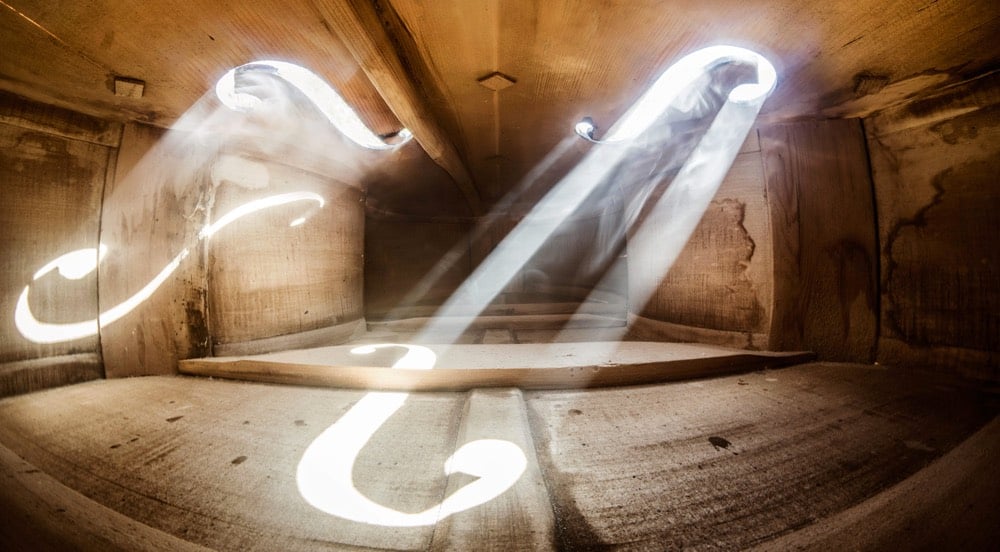
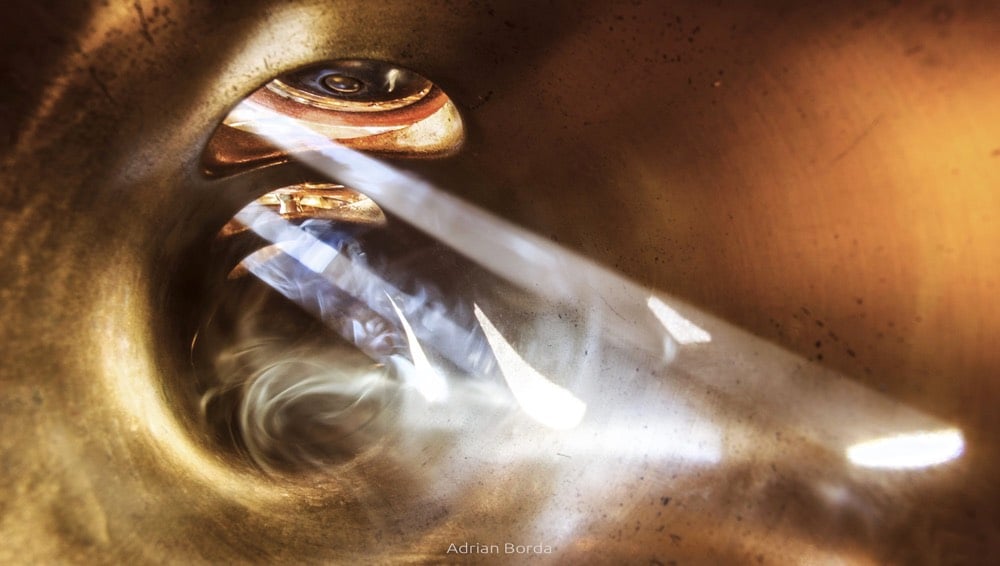
Free of the constraints of advertising, Borda’s images are a little grittier, reminding me less of tiny concert spaces than of natural rock formations like Arizona’s Antelope Canyon (and other slot canyons of the American Southwest), Petra, and the cenotes of the Yucatan in Mexico.


See also this cool inside-a-typewriter shot from Borda. (via @41Strange)
Javascript Library for Creating XKCD-Style Charts
Tim Qian has created a Javascript library called chart.xkcd for making charts that look hand-drawn in the style of XKCD.
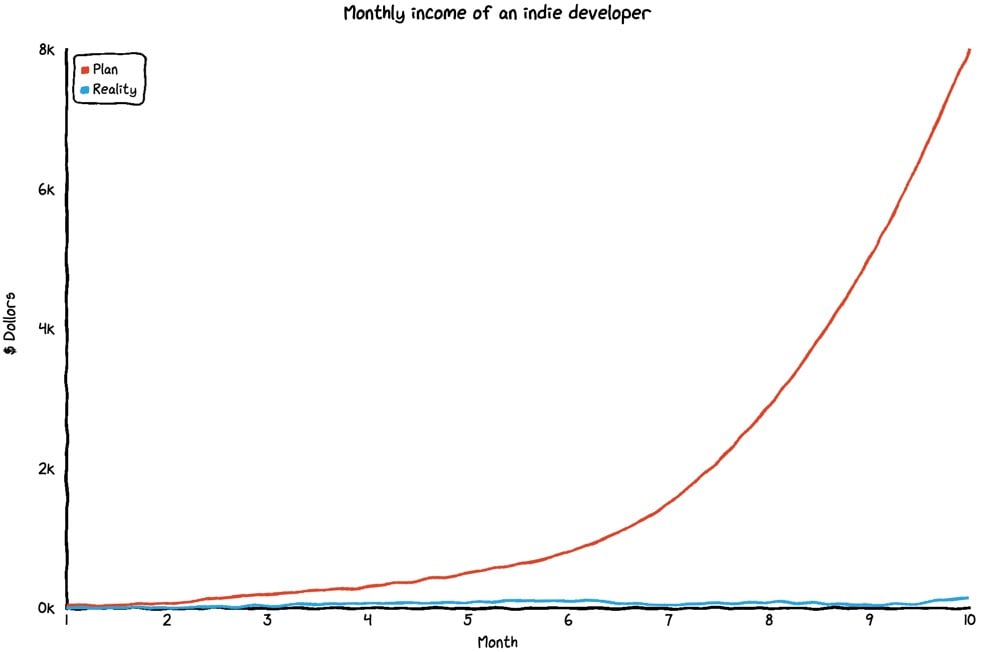
It’s easy to get started with chart.xkcd. All that’s required is the script included in your page along with a single
You can use it to make line charts, XY charts, bar charts, radar charts, and pie/doughnut charts. I am definitely going to be using this in the future.
Speaking of XKCD, Randall Munroe has a new NY Times column called Good Question where he answers odd science questions (a la What If?). The first installment: If I Touched the Moon, What Would It Feel Like?
Moon dust may not burn you, but it’s no picnic. Like Earth sand, moon dust is effectively made of tiny glass shards, but the sharp edges have not been worn down by erosion. As a result, it can be pretty unhealthy.
(via sidebar)
The Hayabusa2 spacecraft is headed back to Earth after collecting chunks of an asteroid. “The main spacecraft will sail on past us, but not before ejecting a capsule where the samples are safely stored.”
Research from the Salk Institute suggests that intermittent fasting works. “Restricting one’s calorie intake to an 8- to 10-hour window could confer a host of health benefits, including weight loss.”
The Secret to Enjoying a Long Winter
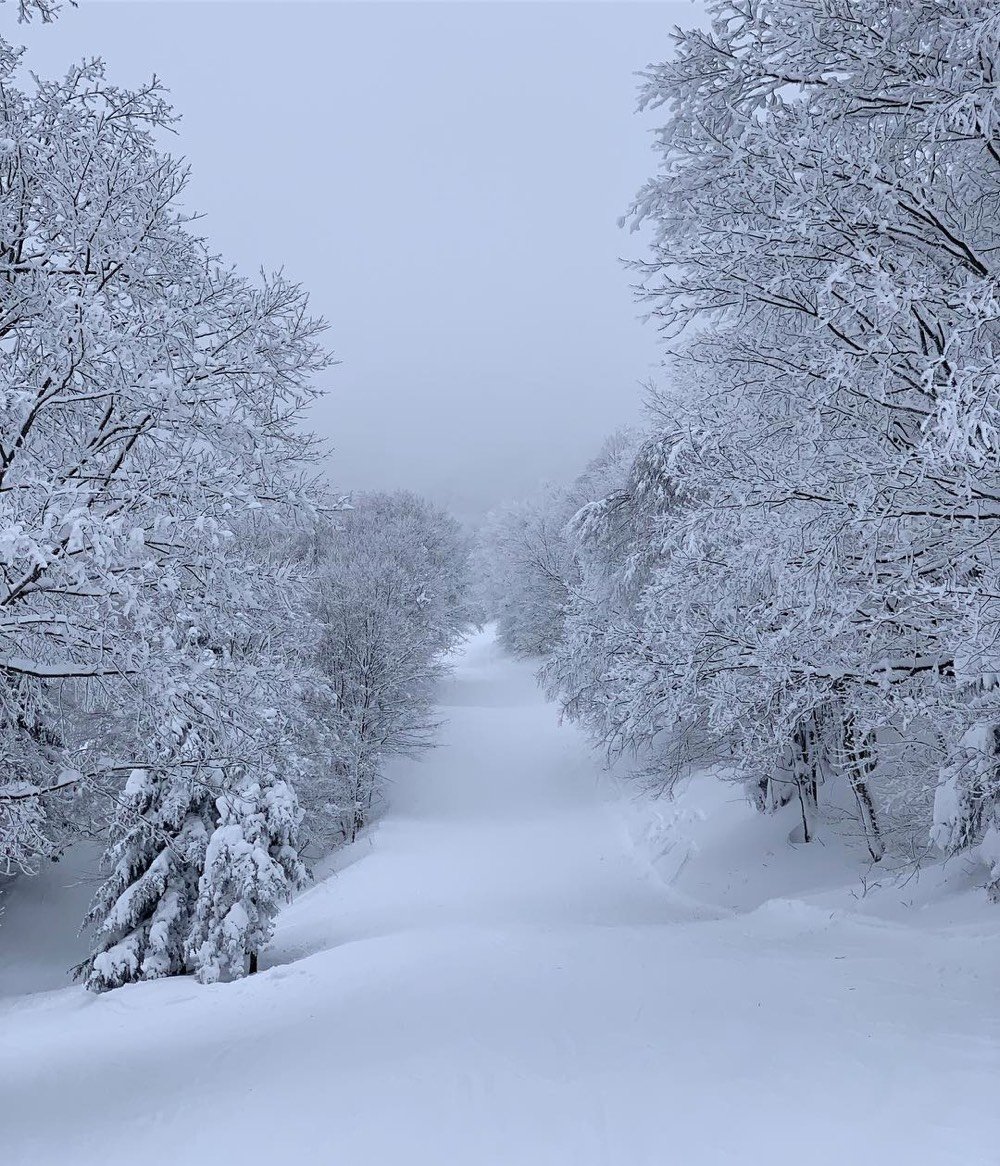
I grew up in Wisconsin, and have lived in Iowa, Minnesota, and New York. Except for a two-year stint in the Bay Area, I’ve experienced winter — real winter, with lots of snow, below-freezing temperatures, and little daylight — every year of my life and never had a problem with it. So I was surprised when my last two Vermont winters put me on my ass. In winter 2017-18, I was depressed, anxious, wasn’t getting out of bed in the morning, spent endless time on my phone doing nothing, and had trouble focusing on my work. And I didn’t realize what it was until the first nice spring day came, 70 and sunny, and it hit me: “holy shit, I’ve been depressed because of winter” and felt wonderful for the next 5 months, like a completely different person. Then last year I was so anxious that it would happen again that all that stuff was worse and started basically a week into fall.
Nothing helped: I tried getting outside more, spent more time with friends, got out to meet new people, travelled to warm places, took photos of VT’s beautiful winter landscapes, spent time in cities, cut back on alcohol, and prioritized sleep. Last year I skied more than ever before and enjoyed it more than I’d ever had. Didn’t matter. This stuff worked during the spring and summer but my winter malaise was seemingly impenetrable. The plan for this fall was to try a SAD lamp, therapy, maybe drugs, and lots more warm travel. But then something interesting happened.
Sometime this fall — using a combination of Stoicism, stubbornness, and a sort of magical thinking that Jason-in-his-30s would have dismissed as woo-woo bullshit — I decided that because I live in Vermont, there is nothing I can do about it being winter, so it was unhelpful for me to be upset about it. I stopped complaining about it getting cold and dark, I stopped dreading the arrival of snow. I told myself that I just wasn’t going to feel like I felt in the summer and that’s ok — winter is a time for different feelings. As Matt Thomas wrote, I stopped fighting the winter vibe and tried to go with it:
Fall is a time to write for me as well, but it also means welcoming — rather than fighting against — the shorter days, the football games, the decorative gourds. Productivity writer Nicholas Bate’s seven fall basics are more sleep, more reading, more hiking, more reflection, more soup, more movies, and more night sky. I like those too. The winter will bring with it new things, new adjustments. Hygge not hay rides. Ditto the spring. Come summer, I’ll feel less stress about stopping work early to go to a barbecue or movie because I know, come autumn, I’ll be hunkering down. More and more, I try to live in harmony with the seasons, not the clock.
Last night, I read this Fast Company piece on some research done by Kari Leibowitz about how people in near-polar climates avoid seasonal depression and it really resonated with this approach that I’d stumbled upon.
At first, she was asking “Why aren’t people here more depressed?” and if there were lessons that could be taken elsewhere. But once she was there, “I sort of realized that that was the wrong question to be asking,” she says. When she asked people “Why don’t you have seasonal depression?” the answer was “Why would we?”
It turns out that in northern Norway, “people view winter as something to be enjoyed, not something to be endured,” says Leibowitz, and that makes all the difference.
The people in the Norwegian communities Leibowitz studied, they got outside as much as they could — “there’s no such thing as bad weather, only bad clothing” — spent their time indoors being cozy, came together in groups, and marveled at winter’s beauty. I’d tried all that stuff my previous two winters but what seems to have moved the needle for me this year is a shift in mindset.
As I experienced firsthand Tromsø residents’ unique relationship to winter, a serendipitous conversation with Alia Crum, assistant professor of psychology at Stanford University, inspired me to consider mindset as a factor that might influence Tromsø residents’ sunny perspective of the sunless winter. Crum defines mindsets as the “lenses through which information is perceived, organized and interpreted.” Mindsets serve as an overarching framework for our everyday experiences — and they can profoundly influence how we react in a variety of situations.
Crum’s work has shown that mindsets significantly influence both our physical and mental health in areas as diverse as exercise, stress and diet. For example, according to Crum’s research, individuals can hold the mindset that stress is either debilitating (bad for your health and performance) or enhancing (motivating and performance-boosting). The truth is that stress is both; it can cause athletes to crumble under pressure and lead CEOs to have heart attacks, but it can also sharpen focus and critical thinking, giving athletes, CEOs and the rest of us the attention and adrenaline to succeed in high-pressure situations. According to Crum’s work, instead of the mere presence of stress, it is our mindset about stress — whether or not we perceive it as a help or a hindrance — that contributes most to health, performance and psychological outcomes.
This is the woo-woo bullshit I referred to earlier, the sort of thing that always brings to my mind the advice of self-help gurus embodied by The Simpsons’ Troy McClure urging his viewers to “get confident, stupid!” Is the secret to feeling happy really just to feel happy? It sounds ridiculous, right? This is the bit of the Fast Company piece that resonated with me like a massive gong:
But overall, mindset research is increasingly finding that it doesn’t take much to shift one’s thinking. “It doesn’t have to be this huge complicated thing,” says Leibowitz. “You can just consciously try to have a positive wintertime mindset and that might be enough to induce it.”
So how has this tiny shift in mindset been working for me so far? It’s only mid-November — albeit a mid-November where it’s already been 5°F, has been mostly below freezing for the past week, and with a good 6 inches of snow on the ground — but I have been feeling not only not bad, but actually good. My early fall had some seasonally-unrelated tough moments, but I’ve experienced none of last year’s pre-winter despondency. I’m looking forward to the start of skiing, especially since my kids are so jazzed up about it. I don’t currently have any trips planned (just got back from warm & sunny Mexico and am glad to be home even though the trip was great), but I’m definitely eager to start prepping for something in January. I’ve had more time for reading, watching some interesting TV, eating rich foods, making apple pie, and working. I went for a 6-mile walk in the freezing cold with a friend and it was delightful. And I’m already looking forward to spring and summer as well. It’s comforting to know that warmer weather and longer days are waiting for me in the distance, when I can do more of what I want to do and feel more like my true self. But in the meantime, pass the cocoa and I’ll see you on the slopes.
What Can Americans Learn from Germany’s Reckoning with the Holocaust?
For The New Republic, Heather Souvaine Horn reviews Susan Neiman’s book, Learning from the Germans: Race and the Memory of Evil, about the successes and failures of Germany in coming to terms with the Holocaust and what the United States can learn from them in dealing with our history of slavery and genocide.
She sees the murder of nine black Charleston churchgoers in 2015, and the events of the following years, as prime examples of conservative backlash in white communities: “The 2016 election resulted, in large part,” Neiman writes, “from America’s failure to confront its own history.” Her book, Learning From the Germans: Race and the Memory of Evil, offers a possible answer to one of the questions The New York Times’ 1619 Project, published in the same month and focusing on slavery’s centrality to the American nation, has prompted: What now? It is a book about how Americans could better confront their racist past, by looking at the way Germany has come to terms with Holocaust guilt.
After a trip to Berlin last year, I wrote about what I observed of the German remembrance of the Holocaust and its relevance to America:
With overt anti-Semitism growing in the US (as well as other things like the current administration’s policies on immigration and jailing of children in concentration camps), it’s instructive to compare the German remembrance of the Holocaust to America’s relative lack of public introspection & remembrance about its dark history.
In particular, as a nation the US has never properly come to terms with the horrors it inflicted on African Americans and Native Americans. We build monuments to Confederate soldiers but very few to the millions enslaved and murdered. Our country committed genocide against native peoples, herded them onto reservations like cattle, and we’re still denying them the right to vote.
You might think the Civil War & the oppression of African Americans is too far in the past for the US to truly reckon with it, but Neiman argues that we should be looking much closer to the present day:
But this, Neiman holds, is the wrong timeline to be looking at: Americans are only now in the early stages of their reckoning, for the simple fact that the Civil War did not really end in 1865. Due to Reconstruction, due to Jim Crow, and as evidenced by the appalling violence and state-federal standoffs of the 1960s, the appropriate point to mark the South’s “zero hour,” she believes, is not 1865 but 1964, with the passage of the Civil Rights Act. According to this timeline, Americans are a bit behind the Germans, but not by much — “about the place where Germany was when the Wehrmacht Exhibit provoked the kind of backlash that the removal of Confederate monuments provoked in New Orleans.”
Plus, systemic discrimination continues to this day, as does the US government’s poor treatment of indigenous communities. There is plenty of reckoning to go around and no time like the present to begin.
“Every shot in [Pixar’s] Piper is composed of millions of grains of sand, each one of them around 5000 polygons.” What? WHAT?!
Taffy Brodesser-Akner’s profile of Tom Hanks in the NY Times is a delight. “It doesn’t matter why you do nice things; all that matters is that you do them.”
Socials & More