




This site is made possible by member support. 💞
Big thanks to Arcustech for hosting the site and offering amazing tech support.
When you buy through links on kottke.org, I may earn an affiliate commission. Thanks for supporting the site!
kottke.org. home of fine hypertext products since 1998.
Beloved by 86.47% of the web.
Entries for February 2019
Goodbye Opportunity, the Little Mars Rover that Could
Yesterday, NASA declared the official end to the Opportunity rover mission on Mars.
One of the most successful and enduring feats of interplanetary exploration, NASA’s Opportunity rover mission is at an end after almost 15 years exploring the surface of Mars and helping lay the groundwork for NASA’s return to the Red Planet.
The Opportunity rover stopped communicating with Earth when a severe Mars-wide dust storm blanketed its location in June 2018. After more than a thousand commands to restore contact, engineers in the Space Flight Operations Facility at NASA’s Jet Propulsion Laboratory (JPL) made their last attempt to revive Opportunity Tuesday, to no avail. The solar-powered rover’s final communication was received June 10.
Opportunity was the longest-lived robot ever sent to another planet; it lasted longer than anyone could have imagined.
Designed to last just 90 Martian days and travel 1,100 yards (1,000 meters), Opportunity vastly surpassed all expectations in its endurance, scientific value and longevity. In addition to exceeding its life expectancy by 60 times, the rover traveled more than 28 miles (45 kilometers) by the time it reached its most appropriate final resting spot on Mars — Perseverance Valley.
Here’s a quick video overview of the milestones of Opportunity’s mission:
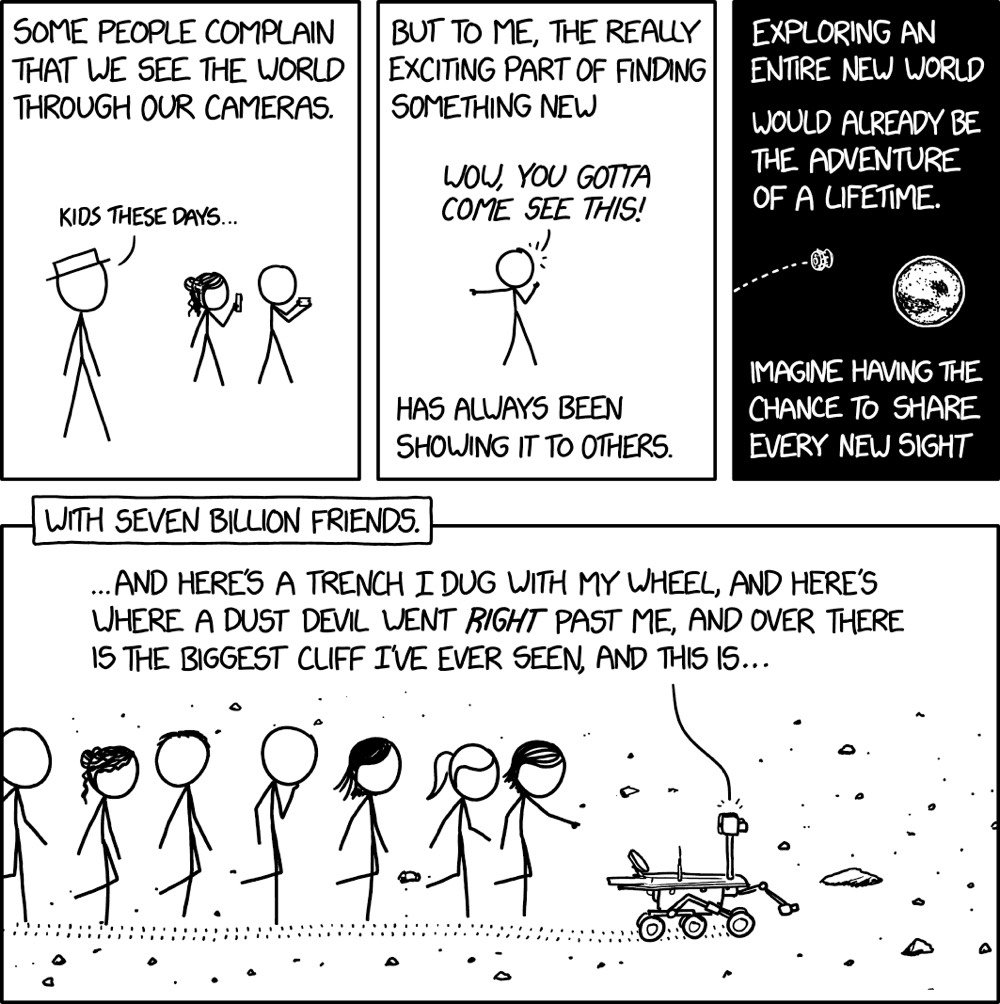
The NY Times has a great interactive feature about the rover’s activities and achievements and XKCD has a tribute.
Photos of the Indigenous Peoples of Siberia
As part of his The World in Faces project, Alexander Khimushin has been making portraits of the indigenous people of Siberia wearing native dress.



The photo at the top is of three-year-old Gulnara Kayarina wearing her everyday outfit:
She lives in a portable little 2x3 meter house on skis, wrapped in the reindeer skins, at the endless tundra, about 50 km away from the nearest settlement of Tukhard (pronounced Too-Hard) — one the the remotest and coldest places of Krasnoyarsk Krai. Located at the Taymyr Peninsula (Arctic part of Siberia and the Northernmost region of Eurasia) Tukhard is accessible by helicopter only. Gulnara is one of two daughters in the family of reindeer herders Prokopy and Maya Kayarin. Her sister Rimma is a bit older, she is 5. Both girls live nomadic life with their parents and their reindeer in the vast snowy expanse of the tundra, extended as far as the edge on the Arctic Ocean. Nenets People are one of five ethnic group on Indigenous People of Taymyr Peninsula. Most of Nenets People still live traditional lifestyle in this extremely remote and coldest region of the world. Right now the region experiencing a so-called polar night — 45 days long period of total darkness. Winter temperature regularly drops below -40C/-40F. With a combination of strong winds with a speed as high as 35 meters/sec the climate of Taymyr is certainly one of the most extreme ones of the world.
W.E.B. Du Bois’ Data Portraits of Black American Circa 1900
A couple of years ago, I wrote about the hand-drawn infographics of W.E.B. Du Bois, noting that the great African American author, sociologist, historian, and activist was also a hell of a designer. Now Whitney Battle-Baptiste and Britt Rusert have collected Du Bois’ data portraits of black America into a new book, W.E.B. Du Bois’s Data Portraits: Visualizing Black America.
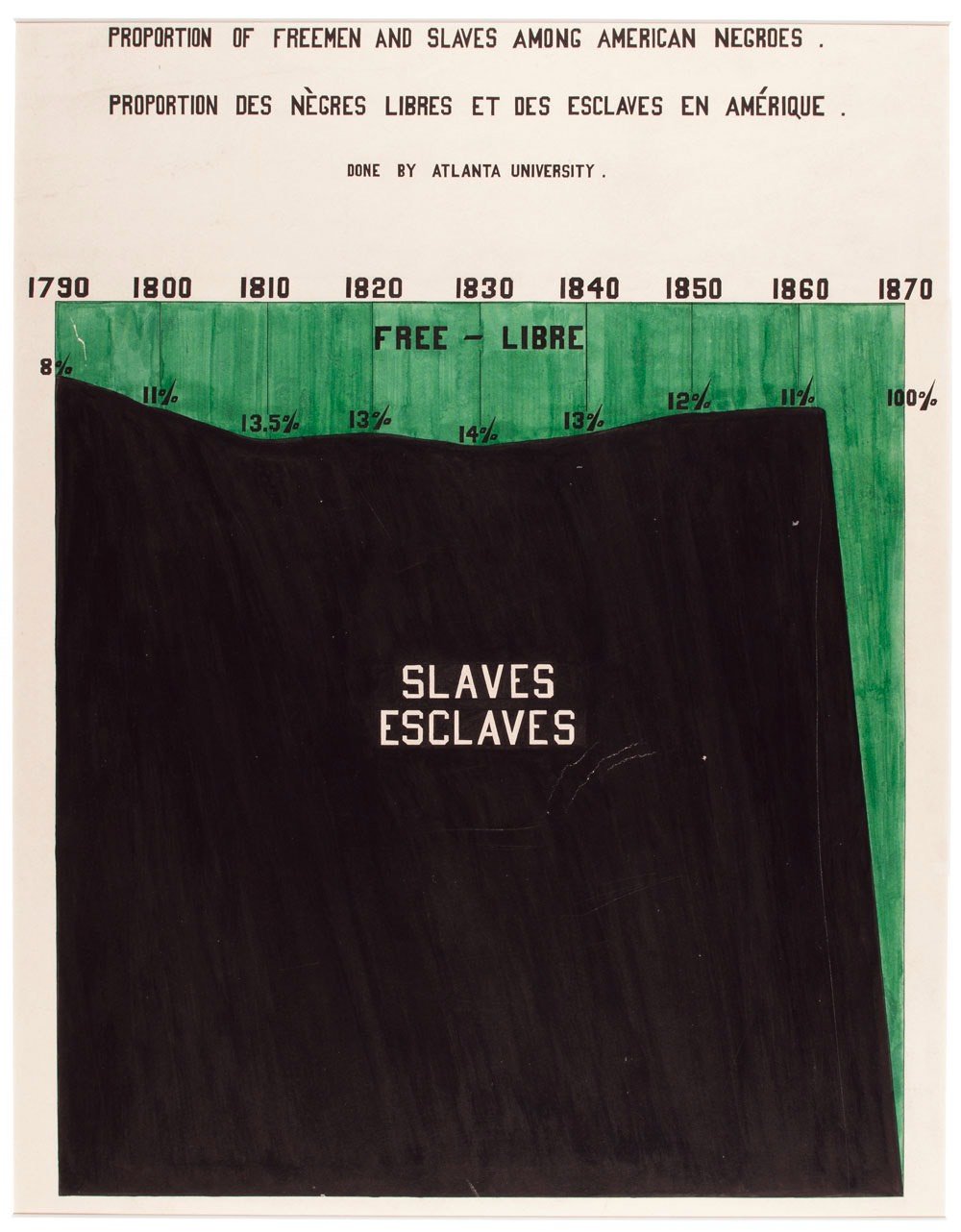

The colorful charts, graphs, and maps presented at the 1900 Paris Exposition by famed sociologist and black rights activist W. E. B. Du Bois offered a view into the lives of black Americans, conveying a literal and figurative representation of “the color line.” From advances in education to the lingering effects of slavery, these prophetic infographics — beautiful in design and powerful in content — make visible a wide spectrum of black experience.
W. E. B. Du Bois’s Data Portraits collects the complete set of graphics in full color for the first time, making their insights and innovations available to a contemporary imagination. As Maria Popova wrote, these data portraits shaped how “Du Bois himself thought about sociology, informing the ideas with which he set the world ablaze three years later in The Souls of Black Folk.”
Celebrity Then & Now
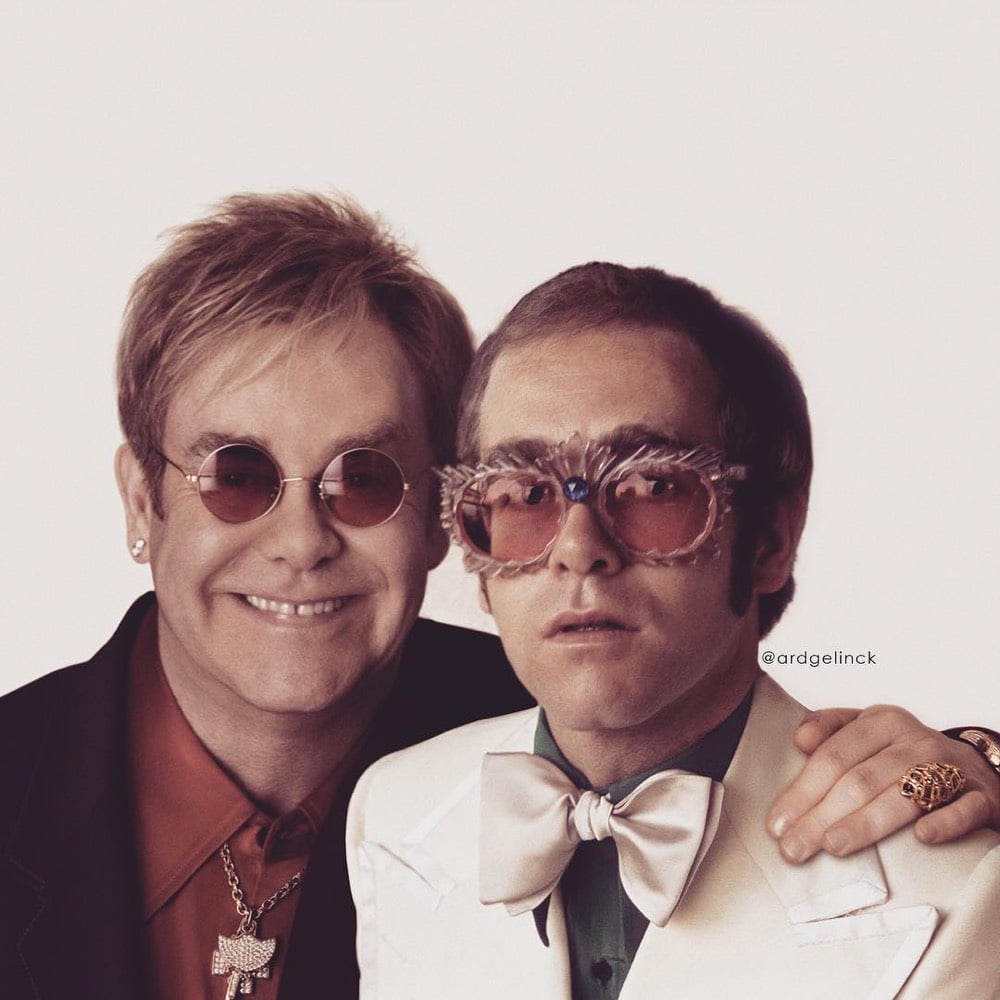
Ard Gelinck photoshops celebrities posing with their younger selves and posts the results on Instagram.



John Dingell served in Congress longer than anyone. Here’s his advice about preserving American democracy. One of his suggestions is “Abolish the Senate”.
The Hoover Dam’s “Hidden” 26,000-Year Astronomical Monument
There’s a little-known monument located at the site of the Hoover Dam that shows the progression of “North Stars” as the Earth moves through its 25,772-year change of rotational axis. Alexander Rose of the Long Now Foundation couldn’t find much public documentation related to this celestial map, so he did some research.
I now had some historical text and photos, but I was still missing a complete diagram of the plaza that would allow me to really understand it. I contacted the historian again, and she obtained permission from her superiors to release the actual building plans. I suspect that they generally don’t like to release technical plans of the dam for security reasons, but it seems they deemed my request a low security risk as the monument is not part of the structure of the dam. The historian sent me a tube full of large blueprints and a CD of the same prints already scanned. With this in hand I was finally able to re-construct the technical intent of the plaza and how it works.
In order to understand how the plaza marks the date of the dam’s construction in the nearly 26,000-year cycle of the earth’s precession, it is worth explaining what exactly axial precession is. In the simplest terms, it is the earth “wobbling” on its tilted axis like a gyroscope — but very, very slowly. This wobbling effectively moves what we see as the center point that stars appear to revolve around each evening.
Presently, this center point lies very close to the conveniently bright star Polaris. The reason we have historically paid so much attention to this celestial center, or North Star, is because it is the star that stays put all through the course of the night. Having this one fixed point in the sky is the foundation of all celestial navigation.
Here are some explanatory notes that Rose wrote over the blueprints of the monument showing how to read the map:

Update: Wally Motloch has also done some significant research on this monument.
Fast food French fries ranked. Five Guys & McDonald’s top the list. Am I the only one who really likes the Shake Shack fries?
The Water Dancer, a Forthcoming Novel by Ta-Nehisi Coates
Having thoroughly conquered the world of nonfiction, Ta-Nehisi Coates now has his sights set on fiction. His first novel, The Water Dancer, is due out in September. Here’s the cover and a synopsis:
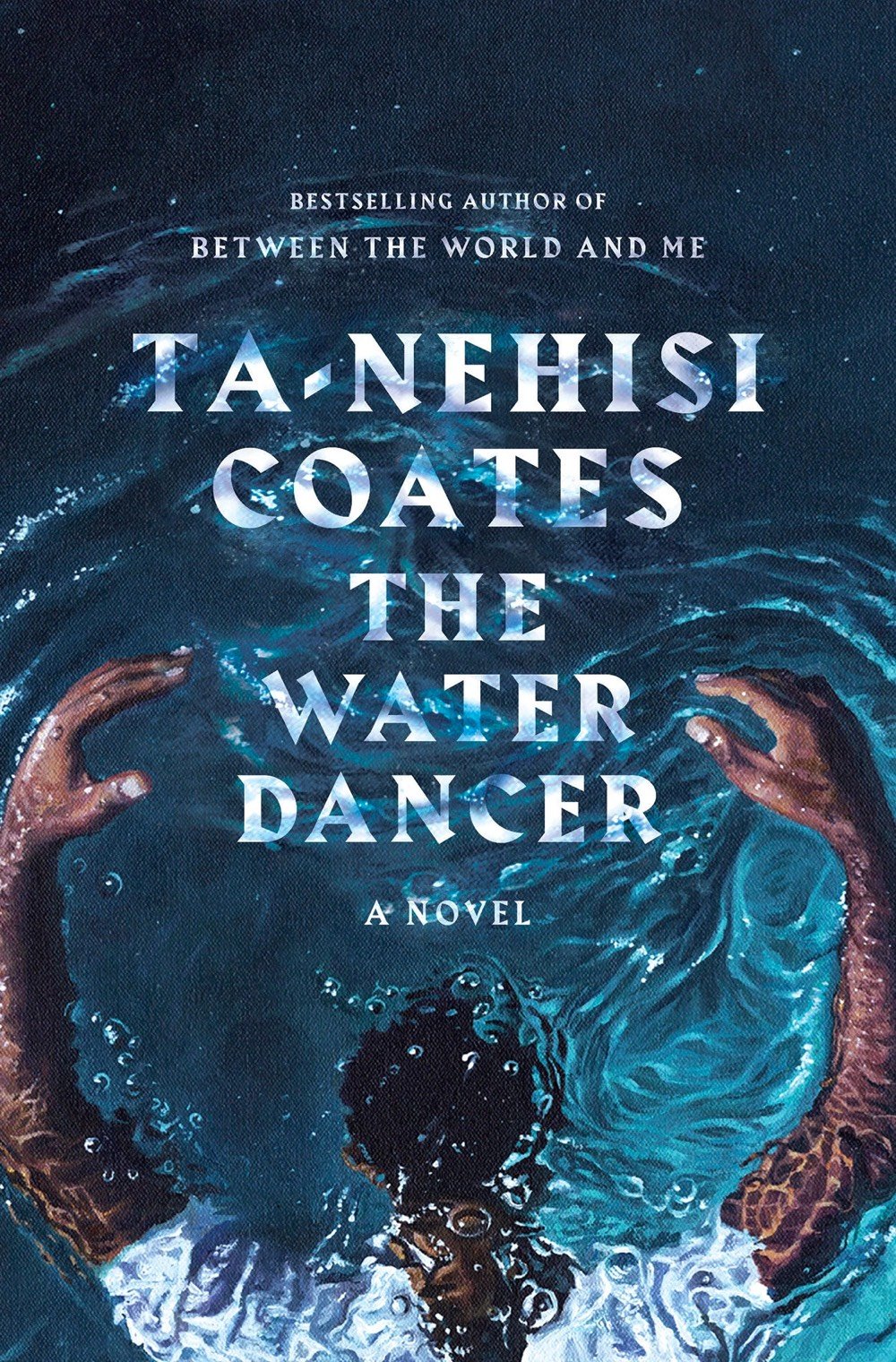
Young Hiram Walker was born into bondage — and lost his mother and all memory of her when he was a child — but he is also gifted with a mysterious power. Hiram almost drowns when he crashes a carriage into a river, but is saved from the depths by a force he doesn’t understand, a blue light that lifts him up and lands him a mile away. This strange brush with death forces a new urgency on Hiram’s private rebellion. Spurred on by his improvised plantation family, Thena, his chosen mother, a woman of few words and many secrets, and Sophia, a young woman fighting her own war even as she and Hiram fall in love, he becomes determined to escape the only home he’s ever known.
The NY Times has a bit more info here about the book.
Use of technology by different Amish affiliations. Cars & TV are always verboten, tractors are rarely used, but washing machines, lamps, and chainsaws see wide usage.
Fan Ho’s Street Photography of 50s & 60s Hong Kong
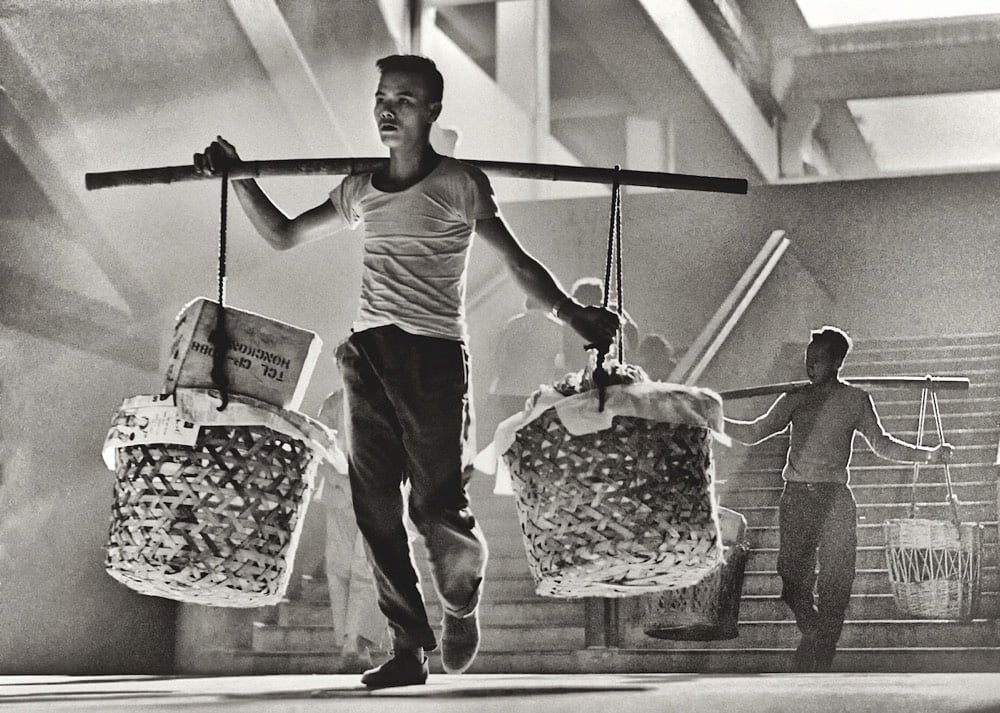

When he was a teenager, Fan Ho grabbed his father’s camera and started documenting street scenes in Hong Kong. From there, he built up a documentary body of work that puts him among the great practitioners of street photography.
Dubbed the “Cartier-Bresson of the East”, Fan Ho patiently waited for ‘the decisive moment’; very often a collision of the unexpected, framed against a very clever composed background of geometrical construction, patterns and texture. He often created drama and atmosphere with backlit effects or through the combination of smoke and light. His favorite locations were the streets, alleys and markets around dusk or life on the sea.
What made his work so intensely human is his love for the common Hong Kong people: Coolies, vendors, hawkers selling fruits and vegetables, kids playing in the street or doing their homework, people crossing the street… He never intended to create a historic record of the city’s buildings and monuments; rather he aimed to capture the soul of Hong Kong, the hardship and resilience of its citizens.
Before his death a few years ago, Ho selected some images from his archives that have become the basis of a new show at the Blue Lotus Gallery.
The photographic selection expressed in this new body of work feels more natural, indeed closer to documentary and pure street photography compared to his previously highly stylised approach. In his own manifesto ‘Thoughts on Street Photography’ which he wrote at the age of 28, and of which carefully selected quotes can be found throughout the book, he explains, “my realistic street photos are rarely selected. Pictorial aesthetics and images with a sense of humour are still the key for salon photos but I expect changes to happen soon. In the meantime, I will just keep trying.”
(via moss & fog)
Remember When Ted Danson Wore Blackface to Roast Whoopi Goldberg? Reader, I did not. Wow.
Lego Prosthetic Arms
19-year-old bioengineering major David Aguilar, aka Hand Solo, has built himself a series of prosthetic arms out of Lego. In this short video, he shows off some of the arms, including his latest 4th generation model:
He built his first Lego prosthetic limb when he was 18. According to this Reuters article, Aguilar names his arms using the same system as Iron Man uses for his armor suits (MK-1, MK-II, etc.) and wants to build low-cost prosthetics after he graduates from college.
In 1961, Fannie Lou Hamer was sterilized without her consent in a procedure dubbed a “Mississippi appendectomy”. The goal was to reduce the black population in the state.
The Evidence Mounts: Uber/Lyft Are Bad for Our Cities
At Streetsblog, Angie Schmitt has compiled a handy list of all the ways in which ride sharing services like Uber and Lyft are having significant negative effects on our cities, the environment, and our health.
Uber and Lyft are just crushing transit service in the U.S. A recent study estimated, for example, they had reduced bus ridership in San Francisco, for example, 12 percent since 2010 — or about 1.7 percent annually. And each year the services are offered, the effect grows, researcher Gregory Erhardt found.
Every person lured from a bus or a train into a Lyft or Uber adds congestion to the streets and emissions to the air. Even in cities that have made tremendous investments in transit — like Seattle which is investing another $50 billion in light rail — Uber and Lyft ridership recently surpassed light rail ridership.
Transit agencies simply cannot complete with private chauffeur service which is subsidized at below real costs by venture capitalists.
Uber and Lyft (and their investors) clearly aren’t going to stop…it’s up to cities and communities to take action. They can’t just let these companies ruin their transit until ride sharing is the only thing left.
Midi City 2000, an interactive art experiment where midi songs become cityscapes. “Each row of buildings is an instrument in the song; each building is a note: the position is the time, the height is the pitch.”
On the Health Benefits of Sleep
In this piece for The Guardian, Matthew Walker says that sleeping well is the best thing you can do for your health. Here are just a couple of examples:
Routinely sleeping less than six hours a night also compromises your immune system, significantly increasing your risk of cancer. So much so, that recently the World Health Organization classified any form of night-time shiftwork as a probable carcinogen.
Inadequate sleep — even moderate reductions of two to three hours for just one week — disrupts blood sugar levels so profoundly that you would be classified as pre-diabetic. Short sleeping increases the likelihood of your coronary arteries becoming blocked and brittle, setting you on a path towards cardiovascular disease, stroke and congestive heart failure.
A lack of sleep may also increase your chances of developing Alzheimer’s disease, decrease your athletic performance, make it more difficult to control your appetite, and have mental health consequences. Walker, who is the director of UC Berkeley’s Center for Human Sleep Science and author of Why We Sleep: Unlocking the Power of Sleep and Dreams, says we should change our cultural attitudes towards sleep.
I believe it is therefore time for us, as individuals and as nations, to reclaim our right to a full night of sleep, without embarrassment or the terrible stigma of laziness. I fully understand that this prescription of which I write requires a shift in our cultural, professional, and global appreciation of sleep.
In my media diet roundup post for 2018, I said that getting adequate sleep has “transformed my life” and that sleep is “even lower-hanging self-help fruit than yoga or meditation”. I have not been sleeping well for the past several weeks and it’s taking a toll: I’ve been sluggish, eating poorly & erratically, feeling down, and not anywhere near my peak mental performance. This morning I woke up at 4am, couldn’t really get back to sleep, and I feel like I’m running at 60% capacity, 65% tops.
Paper Mario Bros
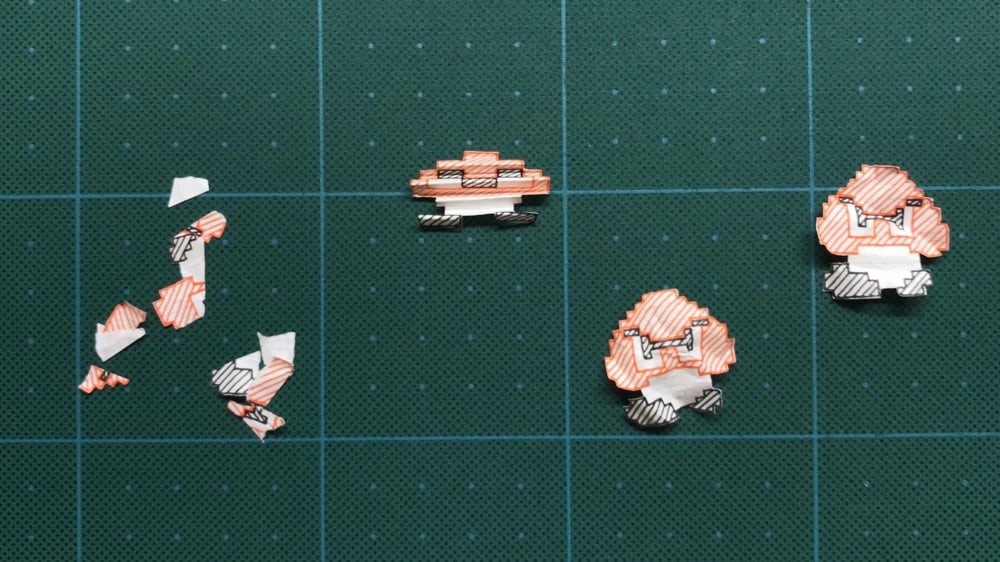
I love the aesthetic of Paper Mario Bros, a hand-drawn stop motion animation of World 1-1 of Super Mario Bros. The artist, @KisaragiHutae6, drew the world in their notebook and shared some behind-the-scenes techniques on Twitter…how they crumpled the paper for stomped-on Goombas, etc.
(via digg)
A Gesture-Controlled Touchscreen Calculator Watch from 1984
In 1984, Casio released their AT-552 Janus watch, which had a feature that seems years ahead of its time to these modern eyes: a calculator that worked by drawing numbers and arithmetic operators right on the screen. Check out this demo:
As the video notes, this touchscreen tech didn’t take off back in the 80s because it was quite unreliable.
BBC Earth Announces Five New Nature Documentaries, Including “Planet Earth III”
The team at BBC Earth have announced that they’re working on five new nature documentary series set to air in the next few years, including Planet Earth III and One Planet: Seven Worlds, narrated by David Attenborough. Here’s a teaser trailer:
Fantastic news…Planet Earth II and Blue Planet II are two of the best documentaries I’ve seen in recent years. There’s more information about the new shows in these two BBC press release.
Perfect Planet will be a unique fusion of blue chip natural history and earth sciences explaining how the living planet operates. This five part series will show how the forces of nature — weather, ocean currents, solar energy and volcanoes — drive, shape and support Earth’s great diversity of life. It will broadcast in 2020.
Frozen Planet II will take audiences back to the wildernesses of the Arctic and Antarctica. Ten years on from the original Frozen Planet, this series tells the complete story of the entire frozen quarter of our planet that’s locked in ice and blanketed in snow. It will broadcast in 2021.
Planet Earth III will be the most ambitious natural history landmark ever undertaken by the BBC. Combining the awe and wonder of the original Planet Earth, the new science and discoveries of Blue Planet II and Planet Earth II, and the immersive character-led storytelling of Dynasties, the series will take the Planet Earth experience to new heights. It will broadcast in 2022.
One Planet: Seven Worlds, airing sometime later this year, will consist of seven episodes, one for each of the world’s seven continents.
Millions of years ago incredible forces ripped apart the Earth’s crust creating seven extraordinary continents. This series will reveal how each distinct continent has shaped the unique animal life found there.
We will discover why Australasia is full of peculiar and venomous wildlife; why North America is a land of opportunity where pioneers succeed; and what the consequences are for life racing to compete on the richest of all continents, South America.
Attenborough is narrating this series but it’s not clear whether he’ll be doing the same for Frozen Planet II or Planet Earth III. For one thing, the man is 92 years old and for another, Netflix is luring the BBC’s talent with promises of bigger budgets and wider reach.
A Flyover of Europa
Using recently processed data from the Galileo probe, NASA-JPL software engineer Kevin Gill created this low-altitude flyover of Europa, one of Jupiter’s moons.
The surface was imaged between 1996 & 1998 and is made up of a water-ice crust. Despite the cracks and streaks that you can see in the video, Europa actually has the smoothest surface of any object in the solar system.
These images are not super high-res because they were taken with equipment designed and built in the 80s. But we’re going to get a better look at Europa soon…both ESA’s JUICE probe and NASA’s Europa Clipper are planning on imaging the moon in the next decade.
“Fortnite has become a daily social square – a digital mall or virtual afterschool meetup that spans neighborhoods, cities, countries and continents.” By unbundling gaming, it’s bundling everything else:
Me Cookie Monster. Ask Me Anything.
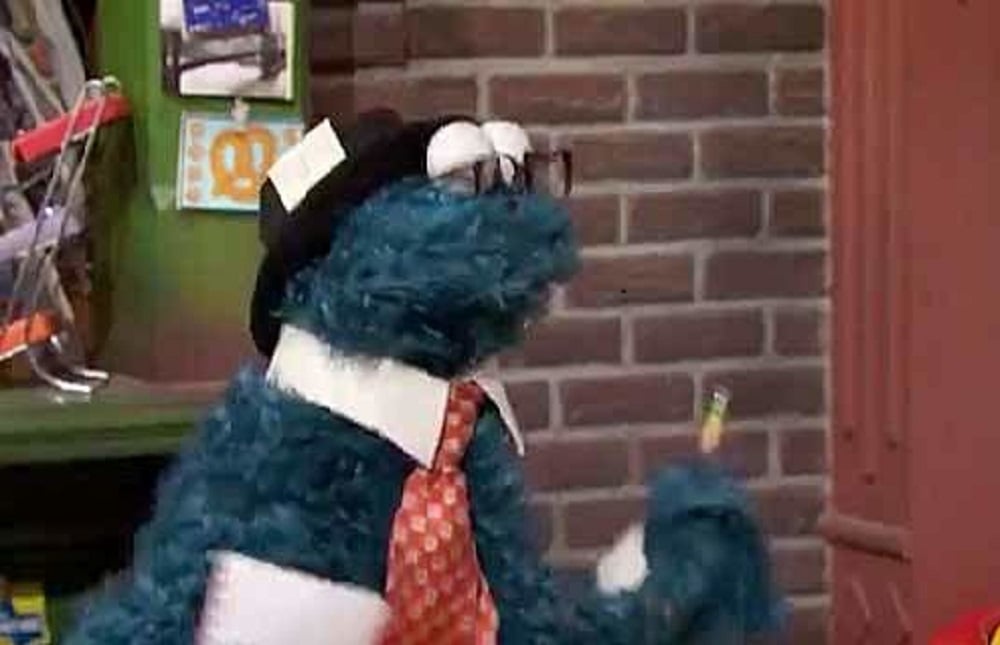
We’ve established that I’m a huge fan of Cookie Monster, the most orally challenged but also the most literarily adept muppet. But even with those cards on the table, this Reddit AMA is something special.
Q: Is there anything you won’t eat? I mean, I’ve seen you eat a typewriter before…
A: Me stay away from anything in Oscar’s trashcan. Otherwise me not picky.
Q: My 7-year-old daughter is about to start selling cookies for Girl Scouts. Do you have any advice for her?
A: Don’t eat the product!
Q: There’s been a lot of famous people who have come to visit you and your friends on Sesame Street! Did any of those guests give you a cookie?
A: Me friends have surprised me with lots of cookies! Sir Ian Mckellan even gave me two cookies!
Q: Who would you most like to sing a “C is for Cookie” duet with?
A: Me would love to sing duet with Lady Gaga. Me and me friends are monsters after all. Me hope she see dis!
Q: What is the optimum number of chocolate chips per cookie?
A: Me always say the more the merrier. Me think me need at least 3.14 chocolate chippies per nom nom. MMM pi
Q: If you could only eat one type of cookie for the rest of your life, what would it be?
A: Wow! Me didn’t realize these question be so hard. If me had to choose just one cookie, me would have to pick me Mommy’s classic chocolate chippie!
Q: We know cookies are your favourite food. What is your second favourite food?
A: Can me say more cookies…?
A2: Me thought it over. Definitely “more cookies.”
Q: My son is your biggest fan in the world. His name is Nico and he’s almost 2. Any words of advice for him???
A: Me think it important to always share your cookies. Me know it hard to do sometimes, but it da kind thing to do.
A2: Oh, and HI NICO! Me love you!
Q: What was it like working with Jim Henson?
A: Me never sure what he did, but he always around to lend a hand and give me cookie!
Q: How’s the rent on Sesame Street?
A: Me think you confused…. Rent played on different street, me think Broadway?
It goes on and on like this. Maybe I’m too much of a softie (probably underbaked… god, it’s contagious), but I love this.
Remembering J Dilla On His 45th Birthday

On his 32nd birthday, February 7, 2006, J Dilla (born James Dewitt Yancey, in Detroit, MI) released an unusual instrumental album called Donuts. Three days later, he was dead, from complications of lupus. Since then, February 7 has become an especially important day for fans of Dilla and Donuts, and this year (which would have been his 45th birthday) was no different.
His local alt-weekly, the Metro Times, gathered a collection of memories from other top producers and collaborators, including Q-Tip, DJ Jazzy Jeff, and T3 from Slum Village, the underground hip-hop group to which Dilla belonged for years.
At High Snobiety, Danny Schwartz published a lengthy tribute to and analysis of Dilla’s contributions to musical history:
J Dilla operated within the rich tradition of sampling, and like many other hip-hop producers, he used the MPC to layer jazz, soul, fusion, and other styles of music on top of breakbeats. What distinguished Dilla from everyone else was his holistic approach that imbued his massive production catalogue with a dynamic range of sounds and textures. His most important innovation was that he turned off the ‘quantize’ feature of the MPC, so that his kicks and hats might arrive significantly before or after the beat. To put it another way, he loosened his beats from their rhythmic bedrock; they were not rigid, but gambled forward with a woozy lilt. One could easily argue that Dilla and Lex Luger influenced the rhythmic sensibilities of pop music more than anyone else since funk drummers like James Brown’s Clyde Stubblefield. Dilla was a perfectionist, and his rhythmic idiosyncrasies, however off-grid, were perfectly calibrated; like Gandalf, he arrived precisely when he meant to.
An MPC is a sampling machine. A little over a year ago, Vox put together a nice little video specifically about Dilla’s idiosyncratic, influential use of his MPC3000:
A 2006 feature in The Fader has memories from everyone from Madlib to Erykah Badu, but Dilla’s mother Maureen Yancey (affectionately known as “Ma Dukes”) talks specifically about Donuts, probably Dilla’s most famous album (although you’re sure to start a fight if you call it or any other of his albums his “best”):
I knew he was working on a series of beat CDs before he came to Los Angeles. Donuts was a special project that he hadn’t named yet. This was the tail end of his “Dill Withers” phase, while he was living in Clinton Township, Michigan. You see, musically he went into different phases. He’d start on a project, go back, go buy more records and then go back to working on the project again. I saw it because I was at his house every day, all day. I would go there for breakfast, go back to Detroit to check on the daycare business I was running, and then back to his house for lunch and dinner. He was on a special diet and he was a funny eater anyway. He had to take 15 different medications, we would split them up between meals, and every other day we would binge on a brownie sundae from Big Boys. That was his treat.
I didn’t know about the actual album Donuts until I came to Los Angeles to stay indefinitely. I got a glimpse of the music during one of the hospital stays, around his 31st birthday, when [friend and producer] House Shoes came out from Detroit to visit him. I would sneak in and listen to the work in progress while he was in dialysis. He got furious when he found out I was listening to his music! He didn’t want me to listen to anything until it was a finished product. He was working in the hospital. He tried to go over each beat and make sure that it was something different and make sure that there was nothing that he wanted to change. “Lightworks,” oh yes, that was something! That’s one of the special ones. It was so different. It blended classical music (way out there classical), commercial and underground at the same time.
At okayplayer, Elijah C. Watson focused on Dilla’s influence on contemporary hip-hop artists, especially the emerging subgenre of lo-fi hip-hop:
Also called “chill-hop,” “jazzy hip-hop,” or the more specific “lo-fi hip-hop radio for studying, relaxing, and gaming,” lo-fi hip-hop has become a subgenre and subculture. It’s a subgenre featuring instrumentals rooted in the melancholy melodies of jazz and boom-bap drums of golden age hip-hop.
Playlists dedicated to lo-fi hip-hop can be found on music streaming services but YouTube serves as its primary base (with a looped image of an anime scene often being featured.) Channels like Chillhop Music, ChilledCow, and Private ChillOut offer 24/7 streams of the subgenre — the subscriber count anywhere from 102,000 to 2,500,000. Through these channels, the aesthetic of lo-fi hip-hop is best experienced. Fans from across the world listen to the tracks and engage with each other in real time, all while a looped image of an animated character writing or working on a laptop is featured.
At Ambrosia For Heads, Dan Charnas discusses his research for his forthcoming academic book, DillaTime: How a Hip-Hop Producer Reinvented Rhythm and Changed the Way Musicians Play:
[J Dilla’s] story gets complicated first as he encounters some of the pains of the business and then, later, illness. The thing he most wants to do becomes harder and harder for him to do. But that laser focus, as his friends and family have painstakingly documented, remains until his final hour. Talk about triumph and pain mixed together. One of the things I’ve grappled with since the day I walked into his basement in 1999 is why people have such an overwhelming emotional connection to this person and his work. And one of the answers I’ve come to is that, in every piece of music, we can somehow sense that overwhelming will and spirit…
My co-author, Jeff Peretz, and I took about 20 students to Detroit in 2017 as a part of my Dilla course at the Clive Davis Institute… The Detroit experience was a real eye-opener for our students. Context and environments are crucial to understanding. I’ll tell you one of the things that always strikes me about the D: everyone in Detroit always seems to be building something. Dilla’s ‘Uncle Herm’ isn’t just a chef and baker—he gutted and built the donut shop with his own two hands.
Hanif Abdurraqib contributed this unforgettable anecdote
I say it every year, but few things about Dilla stick with me more than the story of his mother massaging his swollen hands so that he could finish working on Donuts while he was approaching death. pic.twitter.com/66wRyAH9Lh
— Hanif Abdurraqib (@NifMuhammad) February 7, 2019
We miss you, Jay. You should still be here.
In the late 1920s, Mikhail Sholokhov’s novel Quiet Don became a sensation in the new Soviet Russia. Then Joseph Stalin became Sholokhov’s number one fan… and life got complicated.
Skipping Stones: “Every Throw Is a Complete New Puzzle”
In this video, Wired’s Robbie Gonzalez talks to world record stone skipper Kurt Steiner, who achieved 88 skips with a stone in 2013. Steiner shares some of his techniques with Gonzalez and quickly gets him throwing better.
This video might be totally uninteresting to everyone reading this, but I just had to post it. I love skipping rocks. Ever since I was a little kid, it’s been one of my favorite things to do whenever I’m at a lake or quiet river. I may or may not have a stack of stones appropriate for skipping on the shelf next to my spare change jar. My personal record is somewhere in the mid-to-upper 20s…this throw was in that ballpark. After watching Steiner throw, I’m excited to get out in the spring and try hitting the water a little closer (and harder) than I normally do.
Buy the Cheap Thing First

Beth Skwarecki has written the perfect Lifehacker post with the perfect headline (so perfect I had to use it for my aggregation headline too, which I try to never do):
When you’re new to a sport, you don’t yet know what specialized features you will really care about. You probably don’t know whether you’ll stick with your new endeavor long enough to make an expensive purchase worth it. And when you’re a beginner, it’s not like beginner level equipment is going to hold you back…
How cheap is too cheap?
Find out what is totally useless, and never worth your time. Garage sale ice skates with ankles that are so soft they flop over? Pass them up.
What do most people do when starting out?
If you’re getting into powerlifting and you don’t have a belt and shoes, you can still lift with no belt and no shoes, or with the old pair of Chucks that you may already have in your closet. Ask people about what they wore when they were starting out, and it’s often one of those options…
What’s your exit plan?
How will you decide when you’re done with your beginner equipment? Some things will wear out: Running shoes will feel flat and deflated. Some things may still be usable, but you’ll discover their limitations. Ask experienced people what the fancier gear can do that yours can’t, and you’ll get a sense of when to upgrade. (You may also be able to sell still-good gear to another beginner to recoup some of your costs.)
Wearing out your beginner gear is like graduating. You know that you’ve stuck with the sport long enough that you aren’t truly a beginner anymore. You may have managed to save up some cash for the next step. And you can buy the nicer gear now, knowing exactly what you want and need.
This is 100 percent the truth, and applies to way more than just sports equipment. Computers, cooking, fashion, cars, furniture, you name it. The key thing is to pick your spots, figure out where you actually know what you want and what you want to do with it, and optimize for those. Everywhere else? Don’t outwit yourself. Play it like the beginner that you are. And save some scratch in the process. Perfect, perfect advice.
Mad Men but with All the Cigarettes Replaced by Kazoos
Cignature Films is showing the first episode of Mad Men in its entirety but with all of the cigarettes replaced with kazoos. Here’s a short clip (watch the whole thing here):
Though smoking in movies was a staple element of old Hollywood, the Center for Disease Control and Prevention found that tobacco has had a resurgence in recent years on the big screen. It has been reported that 44% of adolescents who start smoking do so because of smoking images they have seen in the movies. Cignature Films wants to change this statistic for the better.
They also have plans to do the same with Fight Club, The Godfather, and Stranger Things. I’m wondering how long this is gonna stay up though…a clip or two is perhaps covered under fair use but I can’t see studios allowing entire movies and episodes to be shown without some kind of legal action. (via rob walker)
Three Chords and the Truth: Where Did Punk Music Come From?
Punk music seems like one of those things that sprang, fully-formed, out of nowhere. But in this video, Trash Theory traces the roots of punk back to the birth of rock and roll, from Link Wray and The Phantom in 1958 to Louie Louie by The Kingsmen & Surfing Bird by The Trashmen to the more familiar precursors like Velvet Underground, The Stooges, and even Led Zeppelin.
Few genres have had the lasting impact of punk. 1976 is one of those seismic dividing lines in popular music. A history destroying year zero. The point after which everything changed. It was the year that The Ramones debut was released, the year that the first singles from the UK Punk scene were set loose upon a unprepared public. And while the punks wanted to remove themselves from the past, burn all that had come before, nothing happens within a vacuum. These bands didn’t appear out of nowhere with the key principles of the genre locked in place. This innovative minimalist, three-chords and the truth, turbo-powered music had to have precedent. There were other artists that lead up to this era-defining moment in music that are either forgotten, ignored or not given credit. This is how Punk became punk.
I was particularly interested to learn about Death, a Detroit band that the NY Times called “Punk Before Punk Was Punk”:
Forgotten except by the most fervent punk rock record collectors - the band’s self-released 1976 single recently traded hands for the equivalent of $800 - Death would likely have remained lost in obscurity if not for the discovery last year of a 1974 demo tape in Bobby Sr.’s attic.
Released last month by Drag City Records as “… For the Whole World to See,” Death’s newly unearthed recordings reveal a remarkable missing link between the high-energy hard rock of Detroit bands like the Stooges and MC5 from the late 1960s and early ’70s and the high-velocity assault of punk from its breakthrough years of 1976 and ‘77. Death’s songs “Politicians in My Eyes,” “Keep On Knocking” and “Freakin Out” are scorching blasts of feral ur-punk, making the brothers unwitting artistic kin to their punk-pioneer contemporaries the Ramones, in New York; Rocket From the Tombs, in Cleveland; and the Saints, in Brisbane, Australia. They also preceded Bad Brains, the most celebrated African-American punk band, by almost five years.
Jack White of the White Stripes, who was raised in Detroit, said in an e-mail message: “The first time the stereo played ‘Politicians in My Eyes,’ I couldn’t believe what I was hearing. When I was told the history of the band and what year they recorded this music, it just didn’t make sense. Ahead of punk, and ahead of their time.”
You can hear that demo tape on Spotify and elsewhere. There isn’t a playlist to accompany this video but this proto punk Spotify playlist (Apple Music verison) contains several of the songs mentioned.
(via open culture)
One Breath Around the World
I’ve followed the work of world champion free diver Guillaume Néry for several years now and this video might be his best one yet. In it, he explores a bunch of different waterscapes, floating and diving and walking until you can’t tell which way is up and if he’s actually in water or in outer space.
Also of note is that the video was filmed by free diver Julie Gautier, who shot the entire thing while holding her breath, a more difficult task than Néry’s. I’d like to see the making-of video for that!
Pro tip: remind yourself to breathe while you’re watching this. I found myself unconsciously holding my breath, on and off, almost the entire time. (via swissmiss)
Watch a Single Cell Become a Complex Organism in Just Six Minutes
In this time lapse filmed by Jan van IJken, the embryo of a salamander is shown transforming into a hatched tadpole, from a single cell to a complex organism in a three-week process that’s condensed into just six minutes of video.
The first stages of embryonic development are roughly the same for all animals, including humans. In the film, we can observe a universal process which normally is invisible: the very beginning of an animal’s life. A single cell is transformed into a complete, complex living organism with a beating heart and running bloodstream.
Confessions of a Letterhead Collector
Design historian Steven Heller collects vintage letterheads and shares some examples at Design Observer.


The design of blogs owes much to the letterhead (and, perhaps more obviously, to the newspaper masthead). Blog posts are, after all, public letters “to whom it may concern”. The first design I did for Gawker was quite letterheady and I loved & envied my pal Dean Allen’s letterhead-inspired design for Cardigan Industries.
Update: Loooots more great letterhead examples at Letterheady. (thx, jenni)
“The Dirty Secret of El Chapo’s Downfall”. Sounds like he got to be more trouble than he was worth and his smarter & more careful partners pushed him out and into custody.
The Colonization of the Americas Cooled the Earth
A new paper from researchers at University College London argues that the genocide of indigenous peoples in the Americans after Columbus’s landing in 1492 had a significant effect on the Earth’s global climate and was a major cause of the Little Ice Age, the dip in global temperatures from the 16th to the 19th centuries. They estimate that 55 million indigenous people died during Europe’s conquest of the Americas (~90% of the population), and the 56 million hectares of land that they had cleared of vegetation (roughly the area of Kenya) was then reclaimed by forests, which then took in more carbon dioxide, reduced the greenhouse effect, and caused the Earth to cool. From the paper’s conclusion:
We calculate that this led to an additional 7.4 Pg C being removed from the atmosphere and stored on the land surface in the 1500s. This was a change from the 1400s of 9.9 Pg C (5 ppm CO2). Including feedback processes this contributed between 47% and 67% of the 15-22 Pg C (7-10 ppm CO2) decline in atmospheric CO2 between 1520 CE and 1610 CE seen in Antarctic ice core records. These changes show that the Great Dying of the Indigenous Peoples of the Americas is necessary for a parsimonious explanation of the anomalous decrease in atmospheric CO2 at that time and the resulting decline in global surface air temperatures.

The authors also assert that this effect of human action on global climate marks the beginning of the Anthropocene epoch.
I first heard about this theory from Charles Mann’s excellent 1493, which led me to William Ruddiman’s 2003 paper. I heard about this most recent study from Mann too… he called it “most careful study of the impacts of Euro conquest of Americas I’ve yet seen”.
If you’re not up for reading the paper itself, you can check out the coverage from the BBC, the Guardian, Nature, or the NY Times.
Socials & More