



This Is Every Generically Cool Restaurant’s Playlist. “If there’s a small plate on the menu, this is what’s on the speakers.”

Advertise here with Carbon Ads
This site is made possible by member support. 💞
Big thanks to Arcustech for hosting the site and offering amazing tech support.
When you buy through links on kottke.org, I may earn an affiliate commission. Thanks for supporting the site!
kottke.org. home of fine hypertext products since 1998.
Beloved by 86.47% of the web.
Entries for February 2019
“Freedom River”, an Animated Parable about the Erosion of Freedom
In 1971, director Sam Weiss released this short animated parable narrated by Orson Welles.
Concentrating on an area of growing concern in our society — the indifference that makes people blind to the injustices around them — this animated parable traces how the erosion of freedom, like the pollution of natural resources, can occur so gradually that both evade the attention of a busy and preoccupied nation.
Produced back in the era of the Vietnam War and the Nixon administration, the lessons of this film still resonate today. (via open culture)
The Forgotten Father of Pizza in the USA
A recent series of discoveries have upended the widely accepted story of the history of pizza in America and have the NYC food world in a tizzy. The typical origin story of American pizza is this:
In 1905, Gennaro Lombardi applied to the New York City government for the first license to make and sell pizza in this country, at his grocery store on Spring Street in what was then a thriving Italian-American neighborhood.
But research by Peter Regas (who looked in Italian-language newspapers from the late 19th century) has revealed a previously unknown pizza kingpin behind some of the NYC’s first pizzerias and moves the probable introduction date of the pizza back into the 1800s.
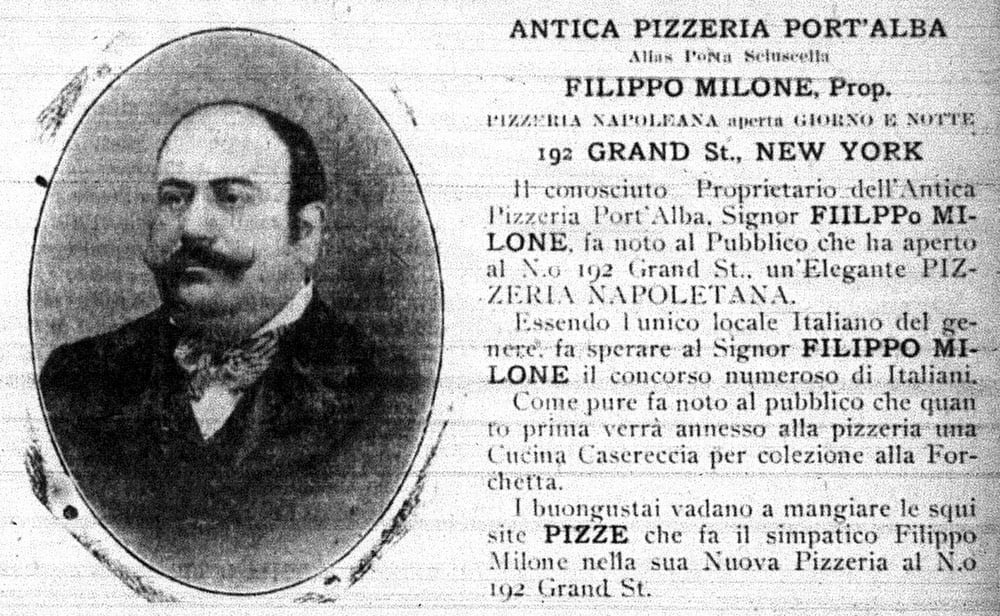
Of this forgotten older generation, one baker stands out. Filippo Milone came to New York in the late 19th century and likely established two of the most famous New York pizzerias that still exist today, Lombardi’s on Spring Street and John’s of Bleecker Street.
Regas explains, “Filippo Milone likely established pizzerias in at least six locations throughout New York City. Of these locations, three later became famous under different names: ‘Pop’s,’ ‘John’s,’ and ‘Lombardi’s.’ Pop’s in Brooklyn closed decades ago, but the other two in Manhattan still exist. Milone, a pioneer in what has become a $45 billion industry, later died in 1924, without children to preserve his story buried in an unmarked grave in Queens.”
Wow! This 1903 advertisement is for a pizzeria of Milone’s on Grand St.:
As for Lombardi’s founding in 1905, Regas has the receipts for that too:
While proof of that license has never materialized, Regas has tracked down Gennaro Lombardi’s birth record, naturalization papers, and other supporting documents that tell a different story. Gennaro Lombardi first came to America in November of 1904 at age 17, classified as a “laborer”. If he became involved with the pizzeria at 53 1/2 Spring Street in 1905, it was as an employee not as an owner. By that time, it had already been established as a pizzeria probably by Milone in 1898 but certainly by another proprietor named Giovanni Santillo who followed Milone in 1901.
This is as if some other dude we’ve never heard of wrote both the Declaration of Independence and the Federalist Papers and then handed them over to Adams Franklin Jefferson Madison Hamilton etc.
Regas is documenting his research here on an eventual book about all of this, due out sometime later this year. Boy oh boy, they’re gonna have to reprint a lot of NYC pizzeria menus with incorrect origin stories in them… (via @adamkuban)
Can’t Unsee, a quiz that shows you pairs of interface designs and asks you to pick the one that’s “most correct”. IMO, some of the “right” answers are pretty subjective.
If you have over 1000 photos and don’t subscribe to Flickr Pro, today is likely the last day to back up your Flickr photos. Here’s how to do it.
How To: Absurd Scientific Advice for Common Real-World Problems
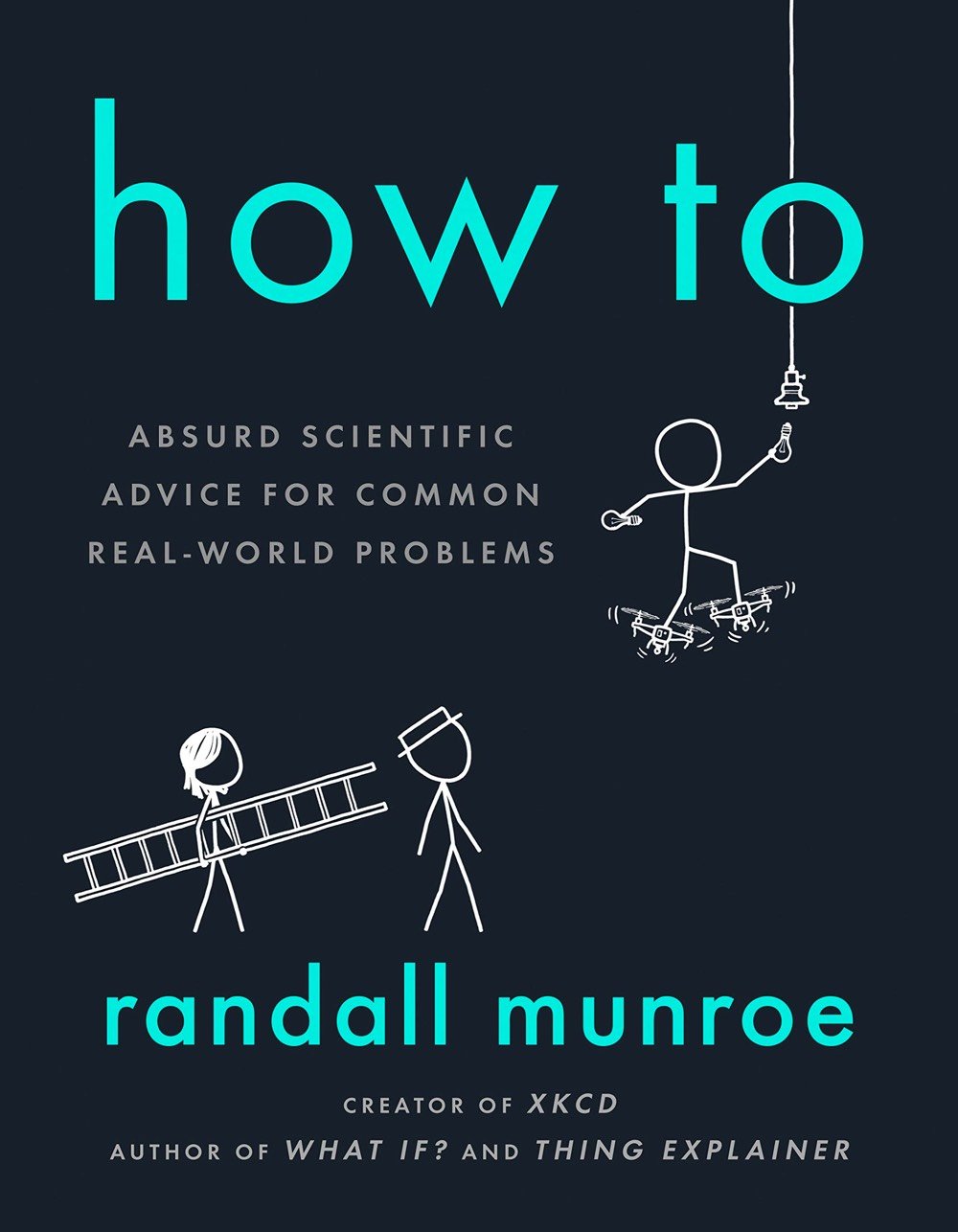
Randall Munroe, proprietor of the excellent XKCD and author of What If? and Thing Explainer, is coming out with a new book in a few months called How To: Absurd Scientific Advice for Common Real-World Problems.
Bestselling author and cartoonist Randall Munroe explains how to predict the weather by analyzing the pixels of your Facebook photos. He teaches you how to tell if you’re a baby boomer or a 90’s kid by measuring the radioactivity of your teeth. He offers tips for taking a selfie with a telescope, crossing a river by boiling it, and getting to your appointments on time by destroying the Moon. And if you want to get rid of the book once you’re done with it, he walks you through your options for proper disposal, including dissolving it in the ocean, converting it to a vapor, using tectonic plates to subduct it into the Earth’s mantle, or launching it into the Sun.
Instant pre-order.
The Atlas of Endangered Alphabets
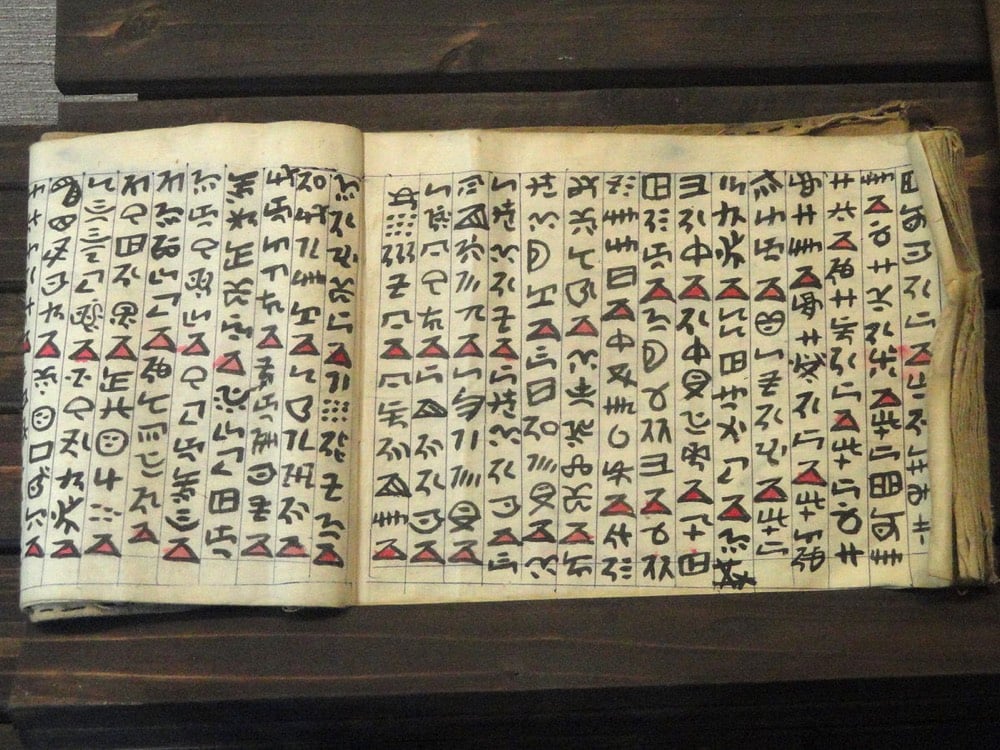
The Atlas of Endangered Alphabets is a collection of “indigenous and minority writing systems”, gathered together in the hopes of collecting information about reviving interest in these alphabets. From the about page:
In 2009, when I started work on the first series of carvings that became the Endangered Alphabets Project, times were dark for indigenous and minority cultures. The lightning spread of television and the Internet were driving a kind of cultural imperialism into every corner of the world. Everyone had a screen or wanted a screen, and the English language and the Latin alphabet (or one of the half-dozen other major writing systems) were on every screen and every keyboard. Every other culture was left with a bleak choice: learn the mainstream script or type a series of meaningless tofu squares.
Yet 2019 is a remarkable time in the history of writing systems. In spite of creeping globalization, political oppression, and economic inequalities, minority cultures are starting to revive interest in their traditional scripts. Across the world, calligraphy is turning writing into art; letters are turning up as earrings, words as pendants, proverbs as clothing designs. Individuals, groups, organizations and even governments are showing interest in preserving and protecting traditional writing systems or even creating new ones as way to take back their cultural identity.
You can access the alphabets from a map on the front page or alphabetically here. The project is also looking for information on a number of possible scripts that may or not be still in use.
The image above is an example of the Yi alphabet, a script created during the Tang dynasty in China (618-907 AD).
Lessons from the Brilliant Screenplay for Groundhog Day
Using screenwriter Danny Rubin’s book How To Write Groundhog Day as a guide, Lessons from the Screenplay examines how the protagonist in the Bill Murray comedy classic is forced by his circumstances to undergo the hero’s journey and emerging at the end having changed. This passage from Rubin’s book sets the stage:
The conversation I was having with myself about immortality was naturally rephrased in my mind as a movie idea: “Okay, there’s this guy that lives forever…” Movie stories are by nature about change, and if I were to test the change of this character against an infinity of time, I’d want him to begin as somebody who seemed unable to change.
We’ve all seen movies where the change the protagonist undergoes does not seem earned and it makes the whole movie seem phony and hollow. One of the things that makes Groundhog Day so great is that a person who starts out genuinely horrible at the beginning transforms into a really good person by the end and the audience completely buys it. At any point along the way, the story could very easily jump off the rails of credulity, but it never does. A nearly perfect little movie.
Illustrator Anthony Hare has been drawing Alfred Hitchcock for almost 20 years. Here’s a retrospective he posted to Instagram.
Cybersecurity Tips and Beauty Product Reviews, Together at Last
In her series “opsec and beauty”, artist Addie Wagenknecht efficiently combines two YouTube genres into one, giving tips on cybersecurity while reviewing beauty products. In this video, Wagenknecht recommends using pass phrases instead of passwords while reviewing a Korean facial sheet mask:
I also like this one, titled “Dry shampoo review Herbal Essence and blocking Chad from calling”:
It makes your hair smell really good. It kinda makes you look like you’ve washed it. I’m going on like day 10 right now of not washing my hair but you can tell it’s transformed. I also want to talk about having secondary phone numbers because that way you can block the guy once he realizes you actually have to do things to yourself to be perfect.
(Gimme Some of That) Ol’ Atonal Music
Merle Hazard bills himself as “America’s foremost country singer/economist”. In this delightful performance, he sings about his daddy, who was a composer of atonal music along the same lines as Arnold Schoenberg and Alban Berg.
It is a genuinely catchy tune and the part where Alison Brown comes in atonally on the banjo killed me. This might be my new favorite country song?
In the past, Hazard has done songs about the Fiscal Cliff and Inflation or Deflation. You might remember his recent country tune about self-driving trucks. (via @tedgioia)
Purl, an Animated Short from Pixar
Purl, directed by Kristen Lester, is an animated short from Pixar about a ball of yarn that starts a new job at B.R.O. Capital and quickly feels out of place among all the men in suits. The story was inspired by Lester’s experience working in animation as the only woman at her company.
In order to do the thing that I loved, I sort of became one of the guys. And then I came to Pixar and I started to work on teams with women for the first time. And that actually made me realize how much of the female aspect of myself I had buried and left behind.
(via @cabel)
A lack of natural resources, radiation, and low gravity will make it very hard to establish a human base on Mars. So why do we want to do this?
Peculiar Pyongyang, a 4K Time Lapse Video of the North Korean Capital
Time lapse video tours of big cities are a common sight on YouTube — see this Dubai hyperlapse or this Paris time lapse — and the technique has become an aesthetic of its own. But seeing the super-stylized & ultra-HD practice applied to a place like Pyongyang, North Korea broke my brain a little bit. The video was shot by Joerg Daiber, who writes of the experience:
Pyongyang is by far the weirdest and strangest place I have ever been to. At the same time it’s also one of the the most interesting and intriguing places and unlike anywere else I have ever been to. You go there with 100 questions and you return with 1000!
(via @kbandersen)
Threadstories

For the past few years, visual artist Threadstories has been making these amazing masks and posting selfies of her wearing them on Instagram. She starts each mask with a crocheted balaclava:

And ends up at many different endpoints:


You can see the masks in motion in this video and read more about the project in this RedMilk interview.
I don’t have any one line of enquiry or source of inspiration. Everything from traditional basket making to Francis Bacons portraits to the sight of someone with really crooked teeth or an episode of Blue Planet might inspire a mask. Thematically I am questioning how the erosion of personal privacy online effects how we view and portray ourselves. I am constructing facades — masks in response to these questions. We are all so over exposed and to what end? Privacy is precious.
(via swissmiss)
Pamela Paul: Let Children Get Bored Again. “It’s especially important that kids get bored — and be allowed to stay bored — when they’re young.”
On the Ethics of Refugee Camps
At the World Economic Forum held in Switzerland at the end of January, Mohammed Hassan Mohamud, a refugee in Kenya for the past 20 years, spoke about the unethical practice of keeping people in long-term refugee camps, what he calls “putting people in faraway places and pretending that they don’t exist”.
It surprises me that money and capital moves around the world in second, but it takes a refugee decades, or in the case of my mother, she never had the chance to get out, waiting for 25 years for a place to go, a place to call home.
We talk about ethical and sustainable development. We talk about how we can be ethical with robots and machines. We want to solve death. And there’s so much human suffering. We haven’t figured out life yet.
How to hang a picture using a fork. Is this the best-ever household hack?
More on Ancient Scripts and the History of Writing

One post last week that y’all loved was The Evolution of the Alphabet. I loved it too; anything breaking down the history of writing in ways that are (get it) decipherable is just
First, a riff on Jason’s post from the man himself, Talking Points Memo’s Josh Marshall. Josh, like me, is obsessed with the history of writing. He recommends two books (Empires of the Word: A Language History of the World by Nicholas Oster and The Writing Revolution: Cuneiform to the Internet by Amalia E. Gnanadesikan) and adds this reflection:
Historians of writing believe that our current alphabet originated as a sort of quick-and-dirty adaptation of Egyptian hieroglyphics into a simpler and more flexible way of writing. You take a small number of hieroglyphic characters representing specific things, decide to use them not for their meaning but for their sound and then use this as a way to encode the sound of words in almost any language. In this particular case it was to encode a Semitic language related to and ancestral to Hebrew and Phoenician. It was likely devised by soldiers of traders operating either in Egypt or between Egypt and what’s now Israel and Jordan.
This basic A B C D formulation is the foundation of the writing systems for not only all languages that use the Latin alphabet but also those which use the Greek, Cyrillic and Arabic alphabets along with numerous others. What is particularly fascinating is that most historians of writing believe that this invention - the alphabet, designed by and for sub-literate Semites living on the borderlands of Egypt about 4,000 years ago - is likely the origin point of all modern alphabets. In some cases, it’s a direct lineal descent as in Canaanite to Greek to Latin to our modern alphabet. But the creators of the alphabets that now dominate South Asia (originating 2500 to 3000 years ago) also seem to have borrowed at least the idea of the alphabet from these Semitic innovators, though others believe they are an indigenous creation.
The deep history of these letters we are now communicating through is like the DNA - or perhaps rather the record of the DNA - of human cognition and thought, processed through language and encoded into writing.
The second link comes from linguist Gretchen McCulloch. It’s The World Writing Systems, a site that doesn’t focus narrowly on our updated Latin alphabet and its antecedent forms, but on every system of writing that ever is or has been. It lets you search, browse, sort, and generally geek out to your heart’s content. It also lets you know whether the scripts are supported by Unicode (a surprising number are not), and links you to Wikipedia entries about them. So you can easily read about the Cypriot Syllabary, an Iron Age script and descendant of Linear A that was eventually replaced by the Greek alphabet.
Differences between Cypriot syllabary and Linear B
The main difference between the two lies not in the structure of the syllabary but the use of the symbols. Final consonants in the Cypriot syllabary are marked by a final, silent e. For example, final consonants, n, s and r are noted by using ne, re and se. Groups of consonants are created using extra vowels. Diphthongs such as ae, au, eu and ei are spelled out completely. In addition, nasal consonants that occur before another consonant are omitted completely.
See, you just learned something!
Now, many of the Aegean writing systems (including Linear A) are still undeciphered. For that, you want classicist Anna P. Judson’s “A very short introduction to the undeciphered Aegean writing systems” from her blog, “It’s All Greek To Me.” (Hat tip here to the polymath sportswriter Zito Madu.)
Here’s what Judson has to say about Linear A (which unlike Linear B, wasn’t used to write Greek, but a related language called Minoan):
It’s generally agreed that at least some Linear A signs, and quite plausibly the majority of them, can be ‘read’, since they are likely to have had similar sound-values to their Linear B equivalents (Linear B was adapted directly from Linear A in order to write in Greek); but it’s still not possible to identify the language involved or to understand any of its grammatical features, the meanings of most words, etc. As an example, the word AB81-02, or KU-RO if transliterated using Linear B sound-values, is one of the few words whose meaning we do know: it appears at the end of lists next to the sum of all the listed numerals, and so clearly means ‘total’. But we still don’t actually know how to pronounce this word, or what part of speech it is, and we can’t identify it with any similar words in any known languages.
The most promising set of inscriptions for analysing linguistic features is the so-called ‘libation formula’ - texts found on stone vases used in religious rituals (‘libation tables’), which are probably dedications (so probably say something like “Person X gives/dedicates/offers this object/offering to Deity Y”), and across which similar elements often recur in the same position in the text. In principle, having a ‘formula’ of this kind should let us identify grammatical elements via the slight variations between texts - e.g. if a particular variation in one word seemed to correlate with the number of dedicators listed, we might be able to infer that that was a verb with singular or plural marking. Unfortunately, there simply aren’t enough examples of these texts to establish this kind of linguistic detail - every analysis conducted so far has identified a different element as being the name of the donor, the name of the deity, the verb of offering, etc., so it’s still not possible to draw any certain conclusions from this ‘formula’.
Cretan Hieroglyphic and its variants are even less well understood than Linear A! Some of them are only attested in single inscriptions! God, writing isn’t a smooth series of adaptations leading to a clear final goal! Writing is a total mess! How did anyone ever make sense of it at all?
But they did; and that’s how and why we’re all here, communicating with each other on these alphanumeric encoding machines to this very day.
A black family business invented Nashville Hot Chicken more than 80 years ago. Now everyone else is getting rich off of it. @williams_paige tells their story:
This essay by @violetblue is great, and puts its finger on a major shift that we should probably be talking about more. “How sex censorship killed the internet we love”
Why James Baldwin Is This Century’s Essential Voice, Too
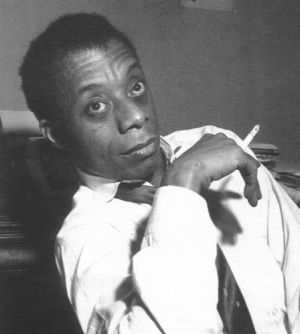
Back in 2015, I wanted to write an essay for The Message (where I was working at the time) about James Baldwin. At that time, it seemed to me, Baldwin was everywhere, but somewhat below the radar; everyone was talking about him, but nobody seemed to notice that everyone was talking about him, or about the things he talked and wrote about. But The Message turned over its writing staff and quickly shut down, and that was the end of that.
Four years later, Baldwin is not below the radar. Baldwin is everywhere, and we know he’s everywhere; we all know we’re talking about him, and if we’re not reading him and citing him, we’re apologizing about it. In short, James Baldwin is finally getting his due as the essential voice not just of the 20th century, but also of the 21st—a bridge not very many thinkers of his generation (or the one before or after) managed to cross.
If Beale Street Could Talk, snubbed at the Oscars for Best Picture (although it is up for Best Adapted Screenplay), is the best film I’ve seen since Children of Men. This magnificent essay by Kinohi Nishikawa focuses on how writer/director Barry Jenkins adapted Baldwin’s book, paying particular attention to Baldwin’s (and Jenkins’s) innovative use of time:
Nearly 45 years later, Jenkins has adapted Beale Street in the spirit of its author’s vision. Most notably, he emphasizes, rather than diminishes, Tish’s point of view. In the film, Tish (KiKi Layne) narrates her romance with Fonny (Stephan James) as if situated in a future point of time. The reflective quality in her voice points to an understanding to come, a bridge between her innocence and her experience….
Restoring Tish’s voice also shows how the novel’s social consciousness is issued from the future, not the past. Jenkins’ aestheticized style, with its dramatic shifts in tone, echoes Baldwin’s shifts in temporal register. A scene of the lovers wooing conjures the magic of rain-drenched streets in classic Hollywood cinema; a later one of Fonny’s confrontation with Officer Bell (Ed Skrein) evokes the grit of movies like Martin Scorsese’s Mean Streets. But in the film’s most powerful scene, Tish watches Fonny take out his anger at Bell by throwing a bag of tomatoes against a wall. The resulting tableau resonates so powerfully because Fonny’s justified rage, and the risk of having it turn on him, feels like it could have happened yesterday.
Baldwin is also the unifying force of a new group exhibition at David Zwirner Gallery, curated by New Yorker critic Hilton Als. Holland Cotter writes openly as “a white kid in the process of working my way through the sociopolitical dynamics of [the 1960s] through reading” Baldwin and other writers.
In 1948, Baldwin left New York for Europe, where he would stay for several years. He returned in the late 1950s to immerse himself in the American civil rights movement. During that time he became a cultural star, a political fixture (within black activism, a controversial one), and one of the grand moral prose rhetoricians.
In the process, Mr. Als suggests, he also disappeared from public view as a knowable, relatable person, someone still wrestling with conflicted ideas about race, sexuality, power, family, and his own creativity (he wanted to make films but never did); someone who could describe himself, in his late 40s, as “an ageing, lonely, sexually dubious, politically outrageous, unspeakably erratic freak.”…
He was skeptical of uplift. As a teenager he left preaching, he said, after he came to see it as just another form of theater. My guess is he sometimes felt the same about the salvational spirit of the early civil rights movement. To the very end, he was negative in his assessment of progress made. “The present social and political apparatus cannot serve the human need,” he wrote bluntly in his final book, “The Evidence of Things Not Seen” (1985). He believed in the positive potential of community, though “in the United States the idea of community scarcely means anything anymore, except among the submerged, the Native American, the Mexican, the Puerto Rican, the Black” — the one hopeful word here being “except.”
“I have had my bitter moments, certainly,” he once said, “but I do not think I can usefully be called a bitter man.” I think he can usefully be called a hero. When I was a kid I felt he was one because of what I took to be his furious moral certainty. Now I look to him for his furious uncertainty. And I still have my copy, time softened with touching, of “Notes of a Native Son,” with him on the cover, his face furrow-browed but dreamy, his gaze fixed somewhere outside camera range.
It’s also useful to explore the ways that Baldwin came up short—usually, moments where he was honest about his own limitations. There are plenty in this nearly two-hour conversation with poet and activist Nikki Giovanni, which is nevertheless worth watching in full:
I don’t know. Baldwin has been such a formative influence on me that it’s hard to remember a time when his writings haven’t been on my mind. As I get older, I become more and more aware of how acute and omnivorous of a cultural critic he was, writing not just about books, but about movies, television, theater, and more. He was clearly one of the most penetrating thinkers about race, sexuality, literature, and their entwining in American culture in our history. I sometimes say that he was maybe the greatest mind the American continent produced, and this is a part of the world that has not gone untouched by genius. He was also a phenomenal stylist; it’s impossible to read him for very long without finding his inflections and rhythms invading your own. And a great storyteller, capable of mixing styles and registers in a way that would have done Shakespeare proud.
If Beale Street Could Talk is in some ways an uneven book, but it’s also where everything that’s great about Baldwin comes together in a single place. You should see it (in the theater, while you can), and you should read it (anytime). There’s a notable set of changes at the end of the movie that make it different from the book, and I’ve been dying to talk to anyone about them for weeks.
Nishikawa also quotes a great line from the book that didn’t make it into the movie: “Whoever discovered America deserved to be dragged home, in chains, to die.” If Beale Street Could Talk was finished on Columbus Day, and Baldwin is picking a fight with Saul Bellow (who modeled his Augie March on Columbus in his own attempt to tell an all-American novel). It is a fight that badly needed to be picked then, and needs to be picked still.
Happiness Spells: A Podcast About Everyday Joys
My friend Amanda Meyncke (who’s been a guest on Kottke before, talking about musician Bill Callahan) has a new(ish) podcast, called Happiness Spells. It’s a five-minute podcast that’s delivered twice a week, and it’s just about things that make you happy. From the “About” page:
Happiness Spells is devoted to noticing and celebrating the small pleasures of life.
This life is filled with enjoyable things, and the foundation of all creativity and true joy is in noticing and appreciating all that lies around us and in us.
That’s very Kottke-like! (In fact, Amanda contacted me to note the overlap between her podcast’s raison d’etre and the themes I’ve been exploring at Noticing.)
The experience of listening to the podcast is very meditative. As the narrator (Amanda) tells you at the beginning, it works best with headphones. There’s gentle ambient music playing, and the narrator just reads a list of ordinary, everyday things that make you happy, even if (actually, often) in an oblique way. Like these from the January 31 edition:
- Listening to a little kid tell you a joke that they just learned, even if it doesn’t make much sense.
- People who understand and celebrate your introvert self when you need them to.
- When a friend texts to cancel plans just as you were debating texting them to cancel.
- Coming home to a clean house, clean kitchen, clean floors and rooms.
Amanda’s ramping up her podcast this year, working with a professional production team for the first time (it’s all been self-produced so far). She’s already getting 50,000 downloads a month, just from word of mouth, but I think we can do better. Seriously: check it out.
Ellsworth Kelly US Stamps
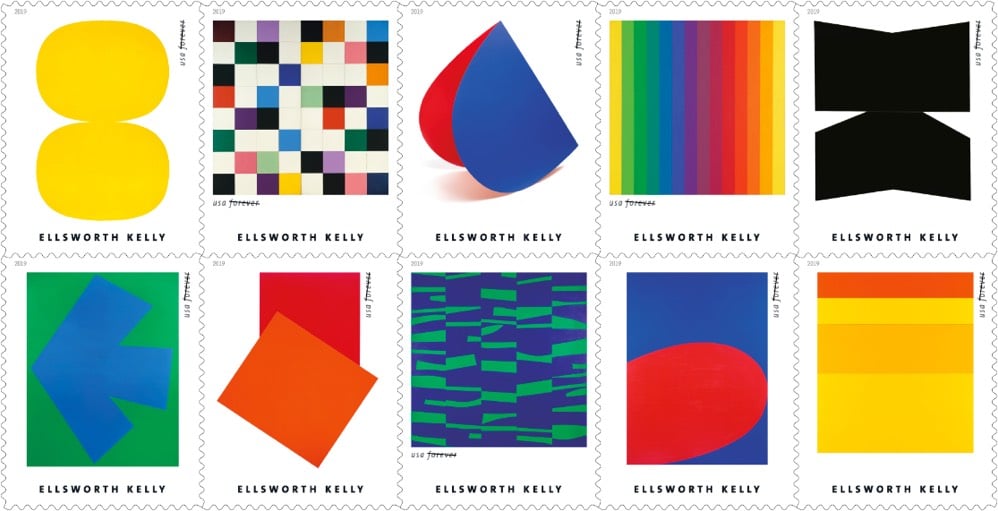
The USPS will release a set of stamps in 2019 honoring the artist Ellsworth Kelly. Some art works better on stamps than others…Kelly’s stripped down abstracts look like they were specifically designed for postage:
You can check out more of Kelly’s art at MoMA and The Whitney.
Socials & More