
When Kids Realize Their Whole Life Is Already Online. “…parents, schools, sports teams, and organizations have been curating an online presence for them since birth.”

Advertise here with Carbon Ads
This site is made possible by member support. 💞
Big thanks to Arcustech for hosting the site and offering amazing tech support.
When you buy through links on kottke.org, I may earn an affiliate commission. Thanks for supporting the site!
kottke.org. home of fine hypertext products since 1998.
Beloved by 86.47% of the web.
Entries for February 2019
Crowd Goes Nuts for Extremely Satisfying DVD Logo Bounce
Popping bubble wrap, sharpening a new pencil, catching a falling glass in the knick of time, waking up before your alarm. Some things are just really, really satisfying. If you’re of a certain age, you’ve probably spent more time than you’d care to admit staring at a TV for an extremely gratifying event to occur: when the bouncing DVD logo hits perfectly in the corner of the screen. Watch this bar crowd go absolutely bonkers celebrating this thrilling occurence:
I watched this at least 5 times and am still chuckling about it 20 minutes later. I don’t even care that it’s fake…that was beautiful. (via @StephMBuck)
Update: I love this…if you have 100 bouncing DVD logos, you can hit the corners a lot more often.
“Counting push-ups can help predict your risk of heart disease.” What does 32 push-ups get you? (Asking for a friend…)
Confessions of an Adventurous Picky Eater
Amanda Mull on How to Stop Hating Your Least Favorite Food:
I’ve never had a traumatic barf experience with cucumbers, so my aversion is probably just an innate dislike. And the culprit behind my long-term cuke hatred might be in the vegetable’s smell, more specifically than its taste. “What we call ‘taste’ is really ‘flavor,’ which is a mixture of taste, smell, and texture,” Sclafani says. People lose olfactory sensitivity as they age, which is a big reason that many people seem to outgrow childhood aversions: A food that might have been overwhelming to a kid will read as more mellow to an adult. I’m in my 30s, so there’s a decent chance that, were I to give cucumbers a fair shake, I’d hate them a lot less than my childhood memories have led me to believe.
In recent years, I’ve come to the grudging conclusion that I am somewhat of a picky eater (with a couple of caveats that I’ll get into below). I grew up in the Midwest in the 80s, which meant I mostly ate meat & potatoes, pizza, and various things on white bread when I was a kid. Campbell soups were wielded by Midwestern parents to super-charge supper casseroles like Escoffier used béchamel or hollandaise. Vegetables were shunned and feared.
In my 20s and out of the Midwest, I started eating a wider variety of foods and some of my least favorite things — broccoli, mushrooms, beets, onions — are now among my favorites. The flavors of Japanese food (sushi, ramen) took a long time to get used to, but now I love them. Other foods — mustard, raw oysters, eggplant — I have repeatedly tried and failed to appreciate as others clearly do. Part of my problem, as I found out around that time, is that I’m a supertaster. That sounds cool, like I’m Spider-Man or something, but it really means that I’m an oversensitive taster, with a proclivity for bland food and sensitivity to bitter tastes (helloooo vegetables).
I’ve also realized that a lot of the food I ate as a kid wasn’t particularly fresh or well-prepared. Tacos were hard-shelled and flavor-packet-based, fish was in stick form, and Chinese food came out of a can. Canned mushrooms aren’t that great in comparison to fresh ones, and there’s a wonderland of flavorful mushroom varieties beyond the button. In the winter in rural Wisconsin, you couldn’t even buy fresh out-of-season vegetables like tomatoes in the grocery store in the 80s.
The weird thing is that I’m actually a pretty adventurous eater. If something is well-prepared and fresh, I will eat it. I never order anything “on the side” at a restaurant or ask them to skip an ingredient I don’t care for.1 My answer to a server’s “do you have any allergies or dietary restrictions?” is always “no”. I eat a lot of things that many other people won’t: tongue, liver, brains, tripe, sweetbreads, etc. When I am drinking alcohol,1 I will consume just about any kind of bitter digestif you can throw at me. The key for me, as Mull notes in the article, is that “gentle, steady exposure” can overcome many food aversions. Eventually, the adventurousness wins out over my picky palate. Except for raw oysters…I don’t know that I’ll ever eat them and enjoy the taste of low tide in my mouth.
The only real exception to this is mustard because if there’s a smear of mustard on, for example, a Katz’s pastrami sandwich, it completely overwhelms the taste of the pastrami and rye bread for me. The “no mustard” thing has brought me a lot of ridicule over the years from hot dog and hot sandwich purists, but it can’t be helped.↩
Which I am currently not, a topic that probably deserves its own post sometime.↩
That time Jimi Hendrix came to London and blew all the other guitar players out of the water. Eric Clapton: “You never told me he was *that* fucking good.”
Leaving Neverland
Set to air on HBO starting March 3rd, Leaving Neverland is a two-part documentary film about the experiences of two men who were befriended by and allegedly sexually abused by Michael Jackson as young boys. Here’s the trailer:
Leaving Neverland is a two-part documentary exploring the separate but parallel experiences of two young boys, James Safechuck, at age ten, and Wade Robson, at age seven, both of whom were befriended by Michael Jackson. Through gut-wrenching interviews with Safechuck, now 37, and Robson, now 41, as well as their mothers, wives and siblings, the film crafts a portrait of sustained abuse, exploring the complicated feelings that led both men to confront their experiences after both had a young son of his own.
As this quick timeline of abuse allegations against Jackson notes, both Safechuck and Robson previously denied that Jackson had abused them.
Robson, by this point a choreographer for stars like Britney Spears, testified that he had spent the night at Neverland more than 20 times but that Jackson had never molested him or taken a shower with him.
James Safechuck, who had met Jackson as a young boy in the 1980s when he was cast in a Pepsi commercial, also denied publicly that he had been abused, although he was not called to testify.
David Ehrlich saw the film at Sundance and was completely convinced by the stories of the two men.
It may not be much of a secret that Michael Jackson acted inappropriately with a number of young boys, but there’s no way to prepare yourself for the sickening forensic details presented in Dan Reed’s four-hour exposé. It’s one thing to be vaguely aware of the various allegations that were made against the King of Pop; the asterisks that will always be next to the late mega-star’s name. It’s quite another to hear the horrifyingly lucid testimony that stretches across the entire duration of “Leaving Neverland,” as two of Jackson’s most repeat victims bravely lay bare how a universal icon seduced them away from their realities, splintered their families beyond all recognition, and leveraged their love for him into a disturbing litany of sexual acts.
The eloquent and straightforward “Leaving Neverland” was made for no other reason than to give shape to a nebulous cloud of rumors, many of which were floated in public before they were silenced behind settlements, and none of which a jury was able to prove beyond a reasonable doubt. In the wake of Reed’s film and the shattering interview footage that it exists to share with us, there’s no longer a reasonable doubt. There’s no longer any doubt at all. Not only do the documentary’s two main subjects perfectly corroborate their separate accounts in all of the most tragic of ways, but they do so with a degree of vulnerability that denies any room for skepticism.
Other stars who previously had private or ignored abuse allegations leveled against them — Kevin Spacey, Bill Cosby, R. Kelly, Woody Allen, Louis CK — have been judged more harshly and their accusers have taken more seriously in recent years, and it’ll be interesting to see what happens with Jackson after the documentary airs.
The Augmented Reality Sandbox
Inspired by a Czech project, a team at UC Davis is building an Augmented Reality Sandbox that lets you create & study different landscapes by moving real sand around in a real sandbox. Check this out — the topographic lines and colors change in realtime as you move the sand around:
As part of this project, we are primarily developing 3D visualization applications to teach earth science concepts, but we also built a hands-on exhibit combining a real sandbox, and virtual topography and water created using a closed loop of a Microsoft Kinect 3D camera, powerful simulation and visualization software, and a data projector. The resulting augmented reality (AR) sandbox allows users to create topography models by shaping real sand, which is then augmented in real time by an elevation color map, topographic contour lines, and simulated water. The system teaches geographic, geologic, and hydrologic concepts such as how to read a topography map, the meaning of contour lines, watersheds, catchment areas, levees, etc.
That video is from several years ago…here’s a more recent video showing a hybrid AR/VR sandbox setup:
The software is available to download so if you want to build your own, go for it. (via a map a day)
A short history of Altavista, the search engine that ruled the Web before Google. Not many remember that Altavista’s search results were better for quite awhile after Google launched.
How People Spent Sudden Financial Windfalls
Topic asked more than a dozen people how they spent sudden windfalls of money. Among those queried were two MacArthur grant winners, people who inherited money, game show winners, a professional poker player, and a woman who lost her house because of Hurricane Maria. TV writer & editor Danielle Henderson:
The only directive I’ve ever given my agent, my manager, anyone on my team, is to make sure I get paid like a white man. I do not want to get any offers that are lower than average because I’m a woman or I’m black. I’m not out here demanding a quadrillion dollars, but if I see that somebody’s sold a project for a certain amount and my project is in a similar vein, I’m not settling for less than that.
Planetary scientist Sara Seager:
When I got my MacArthur award in 2013, they asked, “What are you going to spend the money on?” I said, “I’m going to spend it all on household help so I can spend more time with my kids and more time on my job.”
If you have kids, or a person who relies solely on you, not only do you have to take care of them and want to spend time with them, but you have to make their breakfast and their lunch, if they’re really little. And then clean up after them. There’s this endless series of chores. I got tons of responses from people saying, “I can’t believe you said that,” because people won’t admit that. People don’t want to admit the price you pay for working.
Author Ijeoma Oluo wrote a separate article about spending the royalties from her bestselling book on a house for her mom.
A big check, for $70,000. No, we’re not talking a big Publishers Clearing House grand-prize check, but it was definitely the biggest check I’d ever held with my name on it.
I gazed at the statement, then closed my eyes for a moment and said to myself:
“I can build mom a home now.”
It was the first time I felt truly successful in every sense of the word.
Neighborhood Golf Association
Street photographer Patrick Barr has been out photographing NYC since the 1990s. Barr also goes by the name of Tiger Hood (or Nappy Gilmore) and when he’s out on the street selling prints of his photographs, he passes the time playing a street golf game of his own invention.
It’s a game that requires only three items: a golf club, a newspaper-stuffed milk carton, and a crate. What was initially just a way for Barr to pass time has gained traction from major news outlets and celebrities on a global scale. However, street golf seems to overshadow his true passion… photography. Barr’s archive consists of thousands of mind blowing film photographs of NYC from the 1990’s to 2000’s. His goal was to preserve a time and place that he predicted would dissolve in the coming years. With his archive as evidence, he predicted correctly.
You can find some of Barr’s photos on Flickr and Instagram but if you want to buy a print, you’ll have to catch him on the streets of lower Manhattan.
What Is Intersectionality?
Maybe you’ve heard the term “intersectionality” used on social media — in the context of feminism or racism — and you know in a hand-wavy sort of way what it means but don’t really know its exact definition or where it came from. Well, Kat Blaque has you covered. In this YouTube video and in this Twitter thread, she explains that intersectionality was first described by Kimberlé Crenshaw, now Professor of Law at UCLA and Columbia Law School, in a 1989 article called Demarginalizing the Intersection of Race and Sex: A Black Feminist Critique of Antidiscrimination Doctrine, Feminist Theory and Antiracist Politics.
Blaque’s summary of the paper on Twitter is crisp and concise:
To summarize what she meant when she defined intersectionality: It was about how black women were erased in conversations about discrimination because the feminist movement and the civil rights movement focused largely on its most privileged members.
So feminism, at the time (and arguably still) focused largely on white women’s experiences with sexism and the civil rights movement focused, at the time (and arguably still) focused on how black men experienced racism. So black women’s experiences had to be measured against that.
Meaning that in several legal cases, explained in the document and my video, if a black woman’s experiences with discrimination weren’t paralleled to how black men experience racism and white women experience sexism, their cases were dismissed or thrown out.
So you had cases where black women would sue a company for racial discrimination and then you’d have the judge say that it was impossible for that to be true, because they currently employed black people. The problem was, the black people were all men.
There’s obviously a lot more in Crenshaw’s paper, including this point near the end:
It is somewhat ironic that those concerned with alleviating the ills of racism and sexism should adopt such a top-down approach to discrimination. If their efforts instead began with addressing the needs and problems of those who are most disadvantaged and with restructuring and remaking the world where necessary, then others who are singularly disadvantaged would also benefit. In addition, it seems that placing those who currently are marginalized in the center is the most effective way to resist efforts to compartmentalize experiences and undermine potential collective action.
(via @john_overholt)
A Detailed Map of Medieval Trade Routes in Europe, Asia, and Africa
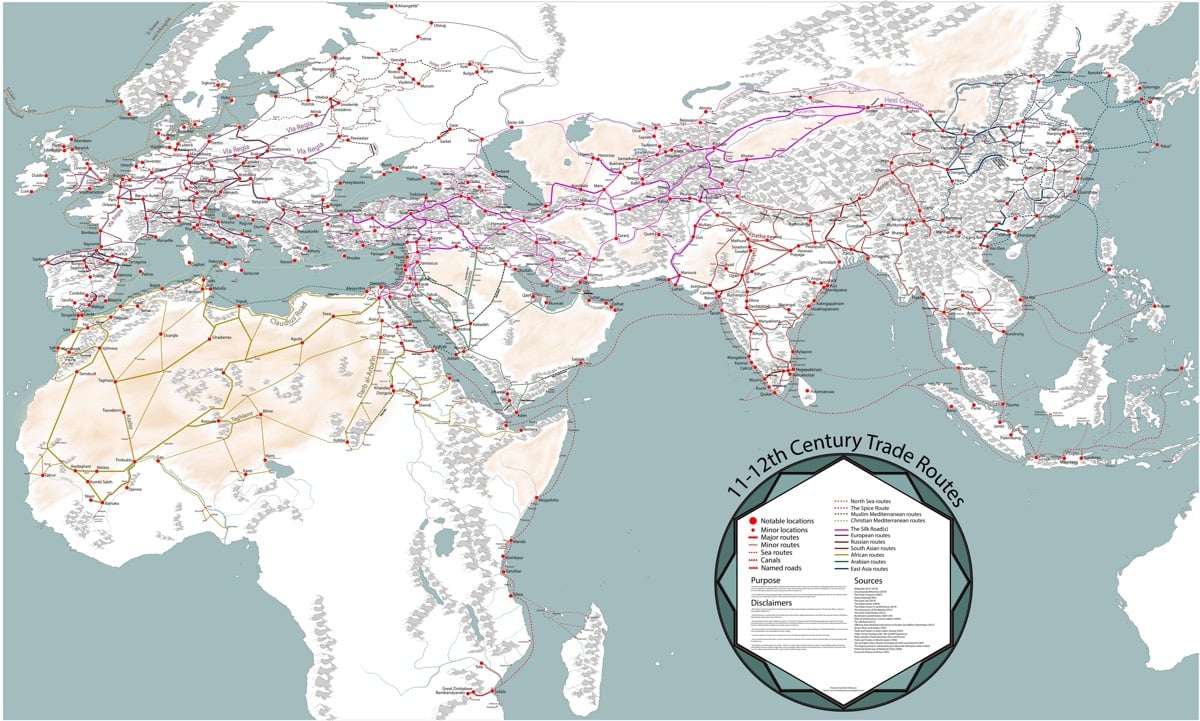
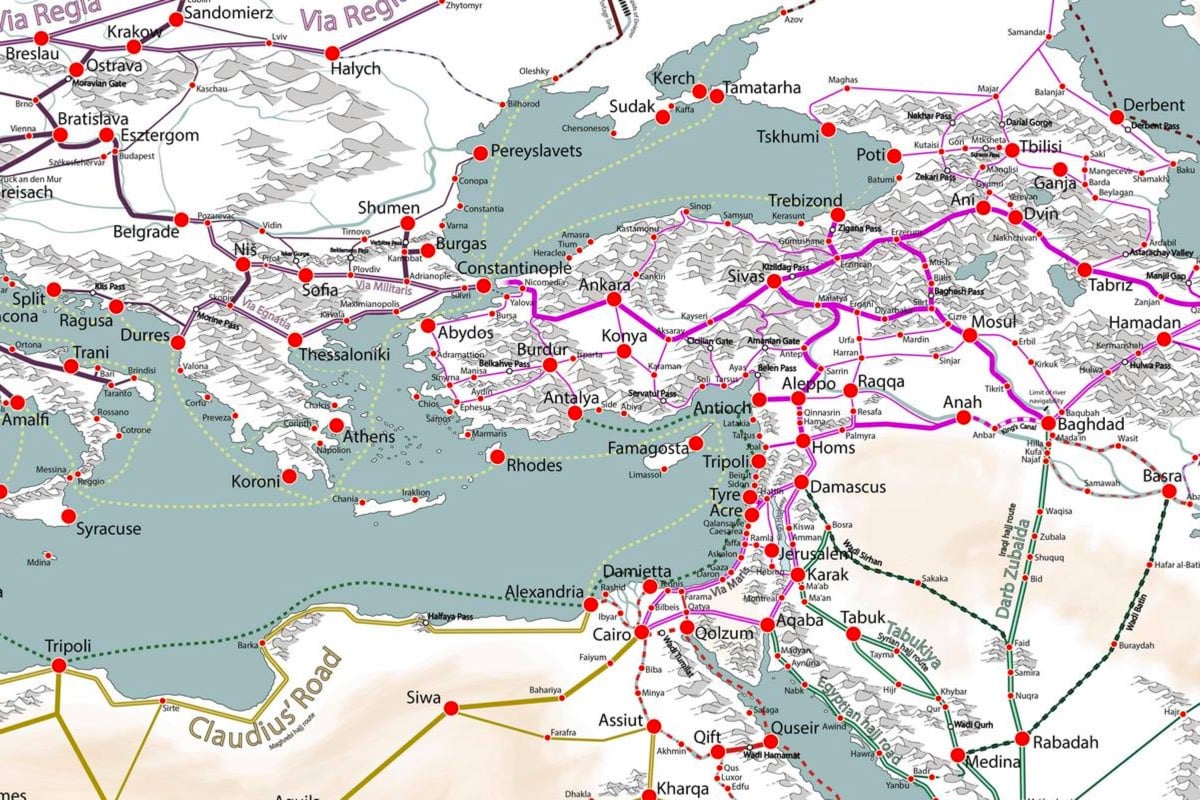
Grad student Martin Jan Månsson has created this incredibly detailed map of trade route networks in Europe, Asia, and Africa in the 11th and 12th centuries.
Even before modern times the Afro-Eurasian world was already well connected. This map depicts the main trading arteries of the high middle ages, just after the decline of the Vikings and before the rise of the Mongols, the Hansa and well before the Portuguese rounded the Cape of Good Hope.
The map also depicts the general topography, rivers, mountain passes and named routes. All of which contributed to why cities came to be, and still are, up until modern times.
The high middle ages were a time when the stars aligned in terms of commerce for many areas of the world. In central Europe many German and French cities initiated annual trade fairs, some of which are still active today — most notably in Frankfurt. The Europeans have redeveloped a demand for eastern goods as a result of the crusades in Iberia and the Levant. The Italian city states and some north eastern Iberian cities had shipped the crusaders back and forth in the Mediterranean sea, building up huge fleets and setting up networks of trade all around the Mediterranean shores. The Italians frequented ports such as Alexandria, which had separate trading ports for muslim and christian ships.
You can play with a zoomable version here.
The saying is that “all roads lead to Rome” but as this map shows, that assertion belongs to an earlier era. In the 12th century, it was more accurate to say that all roads lead to Constantinople or Cairo or Baghdad or Hanzhong…or perhaps even “all roads lead to everywhere”. It’s not quite globalization, but many of the world’s peoples were well on their way to connecting with everyone else.
P.S. I have heard many good things about Peter Frankopan’s The Silk Roads. It’s been sitting on my (virtual) bedside table for several months now…I think I might make it my next read. Has anyone read it?
WNBA player Devereaux Peters on the constant requests she receives from men to play one-on-one. “Time and time again, I have trounced men — far too many to count. Now I have nothing to prove.”
National Geographic’s Upcoming Documentary on the Apollo Missions
With the 50th anniversary of the Moon landing coming up this summer, the media is about to go into Apollo overdrive. (And I am fully here for it!) So far, there’s been First Man and this Apollo 11 documentary featuring a recently discovered trove of 65mm footage. Add to that Apollo: Missions to the Moon, a documentary series by Tom Jennings for National Geographic. Here’s the trailer:
Engadget has some info on the content of the film:
Director Tom Jennings (who previously documented the Challenger explosion and Princess Diana) is relying on a few uncommon technological tricks to enrich the experience. He’s melding NASA footage with Apollo black box recordings, for example, and is syncing 30-track audio from Mission Control. The aim is to create an “Apollo-era time machine,” Jennings said.
Add an original Hans Zimmer soundtrack into the mix and this could really be something special.
Go-karts on a frozen river. This looks fun as hell.
My Recent Media Diet, the “Please God Let Winter Be Over Soon” Edition
I’ve been keeping track of every media thing I “consume”, so here are quick reviews of some things I’ve read, seen, heard, and experienced since the beginning of the year. One of the reasons I like doing these posts is the great recommendations I get back from readers. Turns out some of you know me and my tastes pretty well by now. For instance, a reader emailed a rec for the amazing Apollo 13 podcast listed below. I never would have found that on my own…thanks, Jason (no relation).
Vice. Inventive filmmaking from McKay. Watching parts of this was difficult though…Cheney is a ghoul. (B+)
Bird Box. Mindless but fun. The aliens made no sense… (B)
Rainbrow. Faces weren’t designed to control games. I think I may have sprained my eyebrows? (C+)
Roma. A masterpiece from Cuarón. My pick for the best film of 2018. (A)
A Fish Called Wanda. What was the middle one again? (B+)
The Apollo 13 series on the Brady Heywood Podcast. Sean Brady is a forensic engineer and in this five-part series about the Apollo 13 mission, he does a play-by-play of what went wrong on the mission and how the NASA and the three astronauts worked together to solve it. This is five hours of storytelling stuffed full of technical details and I was completely riveted the entire time. A thrilling engineering tale. (A)
Uplift standing desk. Still getting used to it, but I like being able to alternate between sitting and standing. (B+)
Sir Gawain and the Green Knight. I read the Simon Armitage translation to the kids as our bedtime story over the course of a few weeks. The English epic was not the fan favorite that Harry Potter or the Odyssey were. (B)
The Departed. Probably not the best Scorsese film but perhaps my favorite? (A)
Desktop Tower Defense. I still love this game. (A-)
Coming of Age in the Milky Way by Timothy Ferris. A bracing history of how humans learned where and when we are in the universe. (B+)
They Shall Not Grow Old. The restoration & colorization brought World War I right into the present, but I found myself wondering if all the digital editing & sound effects crossed the line into fiction. (B+)
Shoplifters. What does “family” mean in the 21st century? Watching this made me think of this story about older Japanese women purposefully shoplifting in order to go to jail. (A)
The Lego Movie 2: The Second Part. I had no idea going in that this movie was exactly about my family: an older boy (who likes space battles) and younger girl (who likes Friends and parties) who struggle to play Legos together under constant threat of me chucking all of them into the trash if they don’t stop fighting. They nailed it, right down to the crack about Radiohead’s music being depressing…every time I play RH in the car, I hear a chorus of boos from the back seat. (A-)
The Mule. I don’t know who this movie is for or why I went to see it. (D+)
Minding the Gap. You might think this is about how skateboarding binds three friends together. And it is! But it’s also about the compounding debt of domestic violence, toxic masculinity, and economic depression in America. My sole complaint is that it could easily have been 30 minutes longer. (A)
Classic Doctor Who marathon on Twitch. Nothing makes me more nostalgic for my childhood than old episodes of Doctor Who. I may have over-indulged in this marathon. (B+)
You Were Never Really Here. Excellent direction, music, and sound design. (B+)
Widows. Fun ensemble thriller. (B+)
Burning. Engaging but the slow burn was a bit too slow. I also watched this in a terrible theater and my opinion might have been different if the quality were better. (B+)
If Beale Street Could Talk. Beautifully filmed romantic dread. I didn’t know whether to feel happy or sad at the end. (A-)
Russian Doll. Groundhog Day adjacent. Natasha Lyonne is mesmerizing. (B+)
Killing Eve. Was I supposed to hate both of the very annoying main characters? And why is everyone so incompetent at their jobs? Villanelle is so sloppy and arrogant she would never have gotten away with one murder, let alone a dozen. I don’t think this show is for me, but I can see why others like it. (B-)
The Three-Body Problem trilogy by Liu Cixin. A re-read…burned through all three books in a week, by far the most concentrated reading I’ve done in years. (A)
Crazy Rich Asians. A rewatch. I’m not suggesting this should be up for Best Picture at the Oscars or anything, but this movie deserves some end-of-the-year recognition as a romantic comedy that also did some heavy thematic lifting without being either frivolous or overbearing. The filmmakers hit it just right. (A-)
Heat. This is Allen Iverson’s favorite movie. No one chews scenery like Pacino in this movie. Wow. (B+)
Past installments of my media diet are available here.
We’re All Lonely Together
We’re living in an age of unprecedented connectedness, but more and more people report being lonely on a regular basis. Like our affinity for sugary foods, the feeling of loneliness turns out to be another one of those things that served humans well when we lived in small hunter-gatherer groups tens of thousands of years ago but often works against us in our individualist modern world. Kurzgesagt explains:
I identified with a lot of this video. Moving to a new place where I’m having trouble fitting in and don’t know a lot of people has been difficult, especially when I’m trying to spend time with my family and maintaining a business that takes up a lot of time. I really liked the bit at the end where they recommend reaching out to someone today. I think I’ll do just that. How about you?
How Presidents Day, a once-neglected holiday, became synonymous with shopping. It all started with bicycles…
John Pfaff discovers his old Apple IIe in his parents’ attic in perfect working order, floppy disks and all. He spends hours exploring old apps & games…
“The Age of Climate Panic Is Here”
David Wallace-Wells, who you may remember from his 2017 New York magazine piece, has written an opinion piece about climate change for the NY Times called Time to Panic. In it, he urges that it’s time for urgent human action on climate change…time to stop treating it like a problem and start treating it like the crisis it is.
The age of climate panic is here. Last summer, a heat wave baked the entire Northern Hemisphere, killing dozens from Quebec to Japan. Some of the most destructive wildfires in California history turned more than a million acres to ash, along the way melting the tires and the sneakers of those trying to escape the flames. Pacific hurricanes forced three million people in China to flee and wiped away almost all of Hawaii’s East Island.
We are living today in a world that has warmed by just one degree Celsius (1.8 degrees Fahrenheit) since the late 1800s, when records began on a global scale. We are adding planet-warming carbon dioxide to the atmosphere at a rate faster than at any point in human history since the beginning of industrialization.
In October, the United Nations Intergovernmental Panel on Climate Change released what has become known as its “Doomsday” report — “a deafening, piercing smoke alarm going off in the kitchen,” as one United Nations official described it — detailing climate effects at 1.5 and two degrees Celsius of warming (2.7 and 3.6 degrees Fahrenheit). At the opening of a major United Nations conference two months later, David Attenborough, the mellifluous voice of the BBC’s “Planet Earth” and now an environmental conscience for the English-speaking world, put it even more bleakly: “If we don’t take action,” he said, “the collapse of our civilizations and the extinction of much of the natural world is on the horizon.”
Scientists have felt this way for a while. But they have not often talked like it. For decades, there were few things with a worse reputation than “alarmism” among those studying climate change.
This is a bit strange. You don’t typically hear from public health experts about the need for circumspection in describing the risks of carcinogens, for instance. The climatologist James Hansen, who testified before Congress about global warming in 1988, has called the phenomenon “scientific reticence” and chastised his colleagues for it — for editing their own observations so conscientiously that they failed to communicate how dire the threat actually was.
This essay is adapted from Wallace-Wells’ new book The Uninhabitable Earth, which is out tomorrow:
In his travelogue of our near future, David Wallace-Wells brings into stark relief the climate troubles that await — food shortages, refugee emergencies, and other crises that will reshape the globe. But the world will be remade by warming in more profound ways as well, transforming our politics, our culture, our relationship to technology, and our sense of history. It will be all-encompassing, shaping and distorting nearly every aspect of human life as it is lived today.
Hey, you can watch the excellent Minding the Gap on PBS tonight (or on Hulu any time). It’s nominated for Best Documentary at the Oscars this year.
I don’t understand Tarot really, but as an Achewood fan, I love seeing any of these panels in any order at all. So I love this Glitch app:
Colin Kaepernick and Eric Reid have settled their collusion lawsuit against the NFL. The monetary figure is confidential, but guesses/estimates put it between $60 to $80 million.
Steven Soderbergh’s Theories on the History and Future of Movies
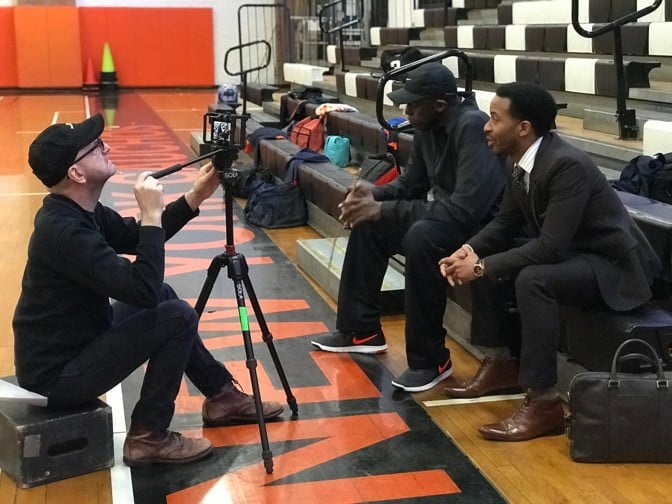
Filmmaker Steven Soderbergh had a very interesting interview with The Atlantic’s David Sims. Here are some excerpts.
The first (and maybe the juiciest) is on how September 11 changed the genre palate of the movie industry.
Sims: Most of the studio movies you made were in the the mid-budget tier that Hollywood doesn’t make anymore. What happened to it?
Soderbergh: Look, I have a lot of crackpot theories about how moviegoing has changed and why.
Sims: I would like to hear your crackpot theories.
Soderbergh: One of the most extreme is, I really feel that why people go to the movies has changed since 9/11. My feeling is that what people want when they go to a movie shifted more toward escapist fare. And as a result, most of the more “serious” adult fare, what I would pejoratively refer to as “Oscar bait,” all gets pushed into October, November, December.
Sims: And people have become conditioned, in the fall, to go and see a couple of serious movies.
Soderbergh: Put on a heavy coat and go see something serious. What that creates is what you see now, which is this weird dichotomy of fantasy spectacle; low-budget genre, whether it’s horror or comedy; and the year-end awards movies. I guess that’s a trichotomy.
Sims: From January to March, you can have some cheap fun, then in March, here we go …
Soderbergh: The big shit’s coming.
The second (and maybe the most interesting) is how partnering with distributors like Amazon and Netflix might create different markets for different kinds of movies.
Sims: You tried [a simultaneous in-theaters and home release] with Bubble in 2005, back before anyone thought that was a thing you could do. You tried it with The Girlfriend Experience in 2009. Were you just inventing the wheel before there was a car to put it on? What’s changed in the past 15 years?
Soderbergh: Well, I ran into the problem that all platforms are having, which is that the big chains don’t want to engage with this. I know [the National Association of Theatre Owners president,] John Fithian well, and have had a lot of interaction with NATO, and I am sympathetic to this issue. What I don’t understand is why everyone in this business thinks there is one template that is gonna be the unified field theory of “windowing” [or how long a movie screens in theaters]. The minute that I knew, which is usually around Friday at noon, that Logan Lucky wasn’t going to work and that Unsane was definitely not gonna work—as soon as that happens, the studio should let me drop the movie on a platform the next week. There should be a mechanism for when something dies at the box office like that.
Sims: A backup option of, You know what, if it doesn’t hit this number on opening weekend, then release it online.
Soderbergh: I think in abject failures, they should let you do whatever the hell you want. If Unsane drops and doesn’t perform, who’s harmed exactly by me 10 days later putting this thing on a platform? You can’t prove to me that that’s hurting your business.
And last, and the most concise, is on how Soderbergh would change the Oscars if he were in charge.
Sims: What do you think of the Oscars potentially excluding some categories from being televised live?
Soderbergh: There was some discussion for a minute about the Oscars doing what the Emmys do—having two ceremonies. Everybody shouted that down and said they would be creating two tiers. What I wanted to do was produce that show: We’ll go back to the Roosevelt Hotel, every nominee can bring a plus-one, and that’s it. Super intimate, food, drink, all that, you can get up there and talk all you want. It’s not televised. It’s a private event for the nominees and their significant others. Make it fun and cool. ‘Cause here’s the dirty secret: Going to the big thing is not fun. It’s more fun to watch on TV. The trick would be doing something super cool and small.
I also think it’s both interesting and cool that Soderbergh is shooting video using an iPhone now. The small size, he argues, is actually an advantage. As he tells Sims, “The more things you can eliminate that actors have to ignore, the better.”
Captain Jean-Luc Picard plays the flute (for complex reasons involving aliens and alternate lifetimes). Sir Patrick Stewart cannot play the flute. So when Picard plays the flute, a hands double plays the flute for him, and the music is dubbed in later.
Great interview with Meg Ryan by David Marchese. “Everyone is so happy on social media. It’s depressing.”
What happened with Amazon canceling its plans to build a second headquarters in New York? @tcarmody’s (that’s me) newsletter @AmazonChron has the answers (along with bonus KRS-One lyrics):
What Is It Like To Turn On A Light?
So I am something of a philosophy nerd, with a particular affection for late 19th/early 20th century European philosophers, who had a lamentable habit of either turning out to be Nazis or becoming victims of the Nazis. One important strand of this Nazi/Nazi-victim movement in European thought is phenomenology, which tried to describe in painful detail and using all-original categories what the experience of everyday life for both persons and things was like. As it happened, the experience of everyday life was in deep flux at this time, so a lot of their categories/arguments/distinctions turn out to actually capture that historical moment particularly well, which is not at all what they thought they were trying to do.
If you want to try out a light version of phenomenology, applied to both that historical moment and our own, you could do a lot worse than reading Dan Hill’s essay “Let There Be Light Switches: From Dark Living Rooms To Dark Ecology.” Hill takes something extremely ordinary—the experience of looking for, finding, and flipping a light switch—and finds the philosophy in it:
Pallasmaa, in his The Eyes of the Skin, noted that touch is a key part of remembering and understanding, that “tactile sense connects us with time and tradition: through impressions of touch we shake the hands of countless generations”. Is this reach for the switch merely functional, then? A light switch can stick around for decades, as with the doorhandle. When you touch the switch, you are subconsciously sensing the presence of others who have done so before you, and all those yet to do so. You are also directly touching infrastructure, the network of cables twisting out from our houses, from the writhing wires under our fingertips to the thicker fibres of cables, like limbs wrapped around each other, out into the countryside, into the National Grid.
If we always replace touch with voice activation, or simply by our presence entering a room, we are barely thinking or understanding, placing things out of mind. While data about those interactions exist, it is elsewhere, perceptible only to the eyes of the algorithm. We lose another element of our physicality, leaving no mark, literally. No sense of patina develops, except in invisible lines of code, datapoints feeding imperceptible learning systems of unknown provenance. As is often the case with unthinking smart systems, it is a highly individualising interface, revealing no trace of others.
This is… not easy to read. But there’s a lot going on here! I particularly like the invocation of Martin “I Was, Like, Extra-Nazi” Heidegger’s useful distinction between “zuhanden” (to-hand? at-hand?) and “vorhanden” (something like “present-at-hand”? Oh, German is impossible!) to describe categories of objects.
Or, hey; how about this: when it’s “zuhanden,” it’s a thing, and when it’s “vorhanden,” it’s an object.
Heidegger’s word for how light switches seem to peer out at you like minor characters in an Expressionist painting is vorhanden, which means present-at-hand. Normally things kind of disappear as you concentrate on your tasks. The light switch is just part of your daily routine, you flick it on, you want to boil the kettle for some coffee—you are stumbling around, in other words, stumbling around your kitchen in the early morning light of truthiness. (From Being Ecological, Timothy Morton)
That thing when things “disappear” is zuhanden; they just kind of melt into the environment, and so do you, just a being among beings, all working together. The ultimate expression of zuhanden is “flow,” which Heidegger and Csikszentmihalyi both ripped off from Tolstoy in Anna Karenina, with Levin mowing the hay with his peasants:
He thought of nothing, wished for nothing, but not to be left behind the peasants, and to do his work as well as possible. He heard nothing but the swish of scythes, and saw before him Tit’s upright figure mowing away, the crescent-shaped curve of the cut grass, the grass and flower heads slowly and rhythmically falling before the blade of his scythe, and ahead of him the end of the row, where would come the rest.
Suddenly, in the midst of his toil, without understanding what it was or whence it came, he felt a pleasant sensation of chill on his hot, moist shoulders. He glanced at the sky in the interval for whetting the scythes. A heavy, lowering storm cloud had blown up, and big raindrops were falling. Some of the peasants went to their coats and put them on; others—just like Levin himself—merely shrugged their shoulders, enjoying the pleasant coolness of it.
Another row, and yet another row, followed—long rows and short rows, with good grass and with poor grass. Levin lost all sense of time, and could not have told whether it was late or early now. A change began to come over his work, which gave him immense satisfaction. In the midst of his toil there were moments during which he forgot what he was doing, and it came all easy to him, and at those same moments his row was almost as smooth and well cut as Tit’s. But so soon as he recollected what he was doing, and began trying to do better, he was at once conscious of all the difficulty of his task, and the row was badly mown.
On finishing yet another row he would have gone back to the top of the meadow again to begin the next, but Tit stopped, and going up to the old man said something in a low voice to him. They both looked at the sun. “What are they talking about, and why doesn’t he go back?” thought Levin, not guessing that the peasants had been mowing no less than four hours without stopping, and it was time for their lunch.
“Lunch, sir,” said the old man.
So we’ve had light switches long enough that they pass into our ordinary, everyday zuhanden state (or its extraordinary flow variation), except when we stumble over them and have to think about them, like these newfangled smart lights and voice switches. This means these everyday things are becoming objects again, until we can incorporate them into a new paradigm.
The light switch when jetlagged is vorhanden — suddenly present-at-hand, “oppressively obvious” —where usually its everyday resilience means it is zuhanden, simply ready-at-hand, normalised, routine. When “stumbling around”, he notes that we don’t pay attention to the object itself — here, the irreducible thing that is the light switch —and so nor do we stand any chance of paying attention to the broader systems of living, of infrastructure, that it is connected to, and part of - and, for Morton, our understanding of mass extinction due to climate change. And given Pallasmaa’s fundamental emphasis on touch as understanding, in order to truly sense and interact, this deleterious situation is hardly likely to improve when the analogue light switch disappears, when the object becomes further detached, and so may we.
More prosaically, how dull rooms will become if they are always automatically bright upon entering, just as the over-lit streets of our towns are increasingly sanitised of their mystery. The cornerstone of most horror movies, vanished overnight. Fortunately, smart homes will not work any more effectively than smart cities do, and a different sub-genre of horror movies will emerge, domestic versions of Stephen King’s Christine or 2001’s HAL.
Maybe this is all thinking too hard about an ordinary experience that is changing, sure, but not in some fundamental way that changes our relationship to things as such. But at the same time, what if it’s not thinking too hard enough?
There isn’t much more basic to our experience of the world, in the 20th century or the 21st, than our use of artificial light to take back the night, transform our work and our play, indeed, change the fundamental nature of communication and experience itself. It’s worth marveling at the change of experience, the change in expectation that that was, precisely now when those experiences and expectations are on the verge of changing again, first by the thousands, and then by the millions.
How do we find the light? How do we see? What do we need to see? What do we know by doing? These are basic questions any philosophy of experience, and any technology of experience, has to answer. Well, our technology of experience is changing. Maybe our philosophy of experience needs to first go back before it can go forward to something new.
The Official Archive of Prince GIFs
GIPHY, in collaboration with Paisley Park and Prince’s estate, has done a truly remarkable thing. It’s created an official archive of high-quality Prince GIFs, from virtually all of his music videos. You can browse it by album and by song.
The result is a veritable gold mine for both Prince fans and meme hunters.
It’s got the early stuff:
The classic stuff:
The stuff that’s so sexy it’s a little uncomfortable:
And the self-iconographic work at (what shouldn’t have been) the end:
Please note, however, that if you want reaction GIFs from Prince interviews, live shows, and other non-music-video appearances, you still have to use the regular search function like everyone else.
Via Anil Dash (who else?)
American kids are watching so much Peppa Pig that they’re using British English. “Oh dadd-ay, may we go on holiday, please?”
“Star Ribbon”, a USPS Stamp by Aaron James Draplin
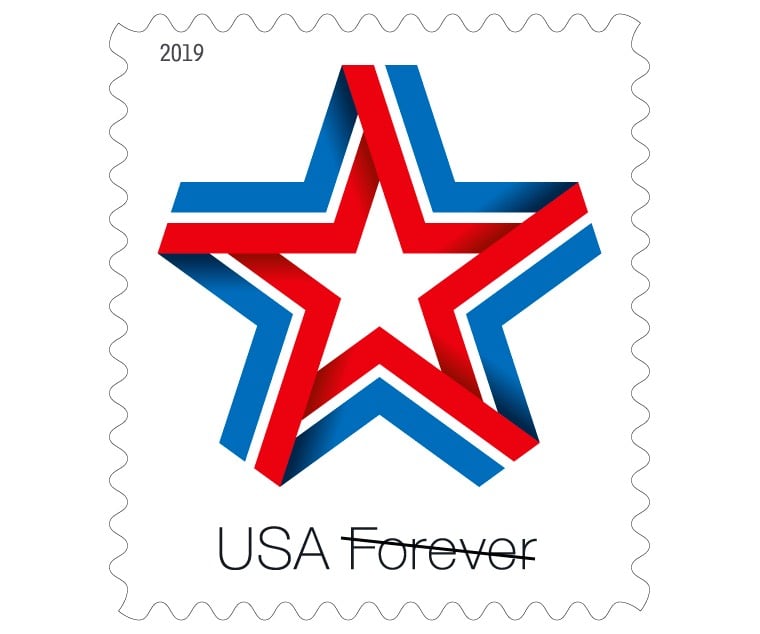
It was not my intention to turn kottke.org into a stamp blog (recently: Ellsworth Kelly, Leonardo da Vinci) but you know what they say: cool postage comes in threes. My pal Aaron James Draplin recently shared on Instagram that he was asked to submit some designs for a stamp for the USPS and then, because he’s an awesome designer, one of his designs is going to become an actual stamp.
TEARS ROLLING DOWN MY CHEEKS: Last thing I want ANY post I put up to sound like some sweaty, formal press release, so I’ll just come out and say it: I GOT TO MAKE A STAMP, YOU GUYS.
I’ve had to keep my big trap shut for over a year on this one. And I when I got the call to throw some designs into the ring, I have to tell you, even that nod was enough. It was enough just to be that close to one of my FAVORITE institutions of all time: The American postage stamp.
Here’s why he’s so fond of stamps (I totally agree):
You know why I love stamps so much? Because everyone needs a stamp. Everyone gets to enjoy the art on them. Too many times, art and design is only for those who can afford it. Stamps? They are a democratization of design. And that? That’s my favorite kind of graphic design.
The design is a perfect illustration of Draplin’s throwback design style — it’s got that Spirit of ‘76 thing going on but is also solidly contemporary, just like his work for Field Notes. (via df)
Stamps Featuring Drawings by Leonardo da Vinci

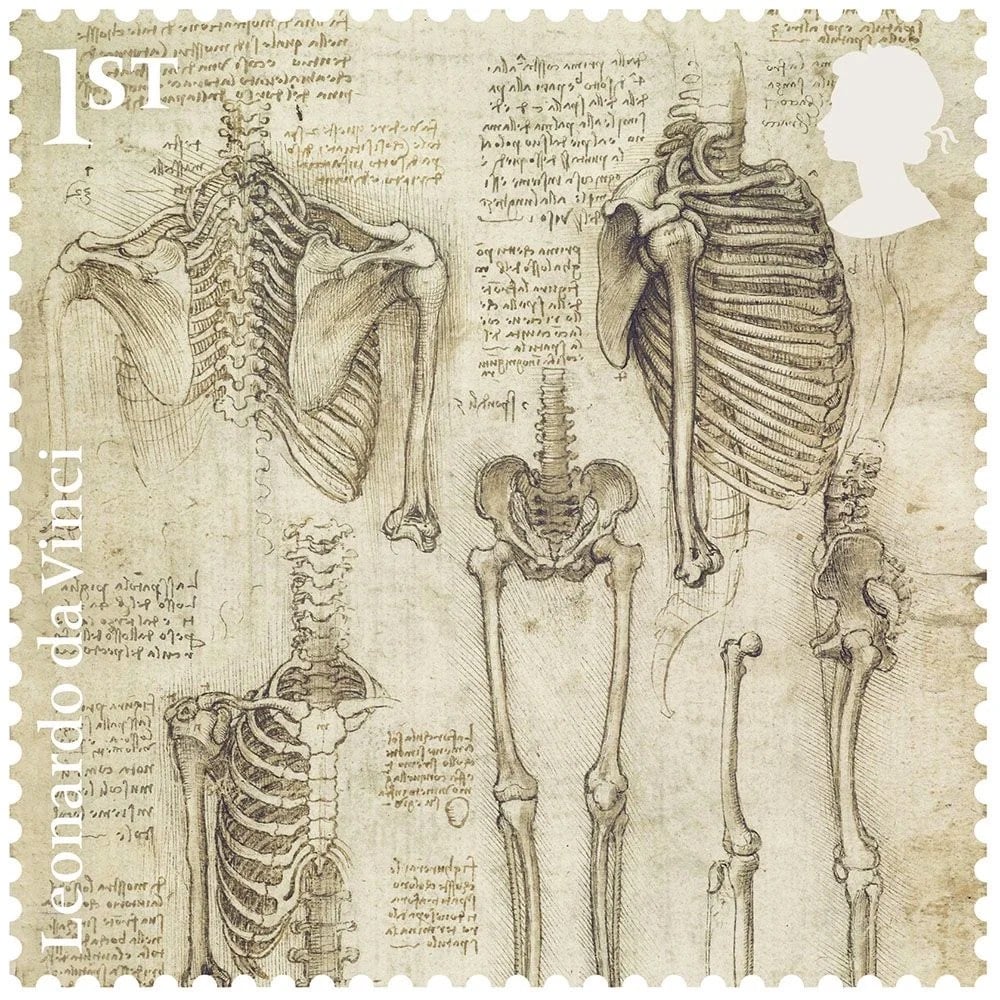
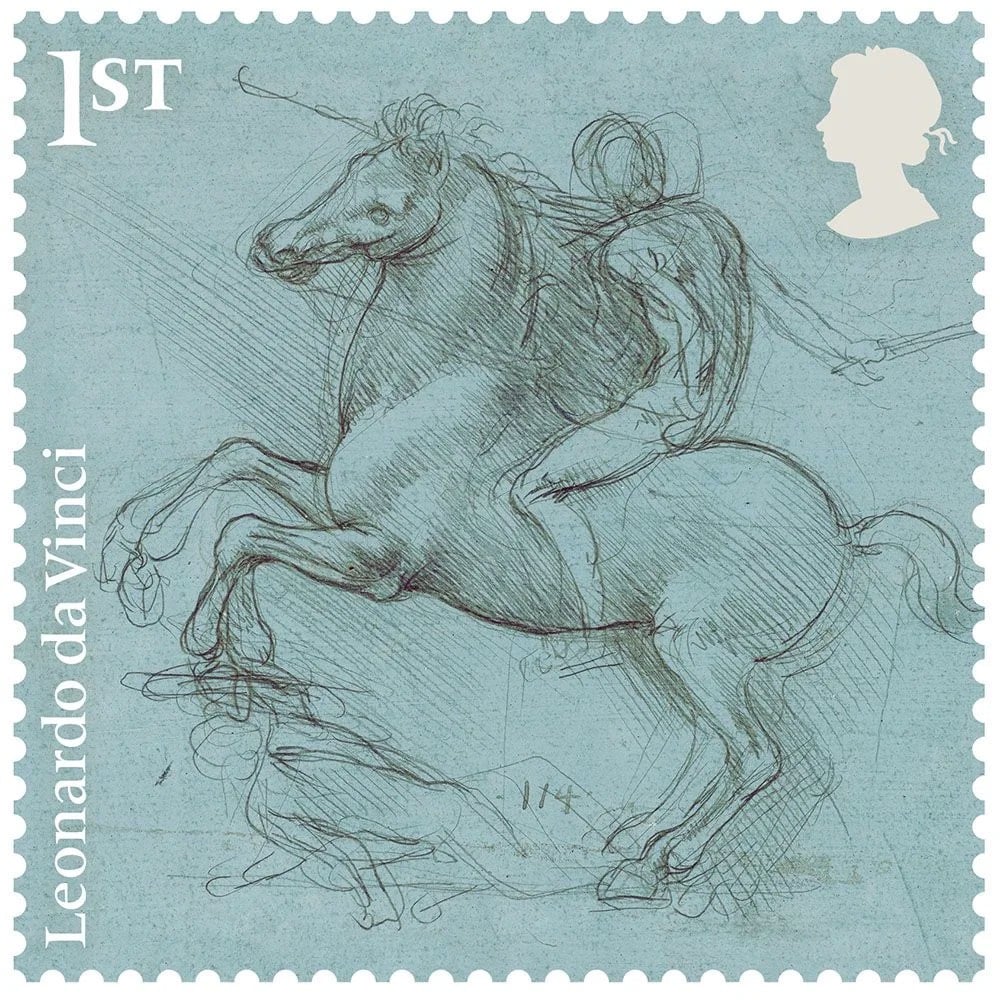
The Royal Mail in the UK have released a set of stamps that feature drawings done by Leonardo da Vinci.
The Royal Collection holds the greatest collection of Leonardo’s drawings in existence, housed in the Print Room at Windsor Castle. Because they have been protected from light, fire and flood, they are in almost pristine condition and allow us to see exactly what Leonardo intended — and to observe his hand and mind at work, after a span of five centuries. These drawings are among the greatest artistic treasures of the United Kingdom.
The drawings are all taken from a collection owned by the royal family and will be featured in a distributed exhibition of Leonardo’s drawings happening around the UK this year. (via colossal)
The Secret History of Women in Coding
In an excerpt of his forthcoming book Coders, Clive Thompson writes about The Secret History of Women in Coding for the NY Times.
A good programmer was concise and elegant and never wasted a word. They were poets of bits. “It was like working logic puzzles — big, complicated logic puzzles,” Wilkes says. “I still have a very picky, precise mind, to a fault. I notice pictures that are crooked on the wall.”
What sort of person possesses that kind of mentality? Back then, it was assumed to be women. They had already played a foundational role in the prehistory of computing: During World War II, women operated some of the first computational machines used for code-breaking at Bletchley Park in Britain. In the United States, by 1960, according to government statistics, more than one in four programmers were women. At M.I.T.’s Lincoln Labs in the 1960s, where Wilkes worked, she recalls that most of those the government categorized as “career programmers” were female. It wasn’t high-status work — yet.
This all changed in the 80s, when computers and programming became, culturally, a mostly male pursuit.
By the ’80s, the early pioneering work done by female programmers had mostly been forgotten. In contrast, Hollywood was putting out precisely the opposite image: Computers were a male domain. In hit movies like “Revenge of the Nerds,” “Weird Science,” “Tron,” “WarGames” and others, the computer nerds were nearly always young white men. Video games, a significant gateway activity that led to an interest in computers, were pitched far more often at boys, as research in 1985 by Sara Kiesler, a professor at Carnegie Mellon, found. “In the culture, it became something that guys do and are good at,” says Kiesler, who is also a program manager at the National Science Foundation. “There were all kinds of things signaling that if you don’t have the right genes, you’re not welcome.”
See also Claire Evans’ excellent Broad Band: The Untold Story of the Women Who Made the Internet.
Leaving Room for the Beautiful Flowers
In his newsletter Life Is So Beautiful, Hugh Hollowell shares a story of doomsday, neighbors, and goodwill.
I met a prepper the other day. You know — they store food in the basement in the event the revolution happens and we all turn to cannibalism. He was at my house, and was looking at the layout for my little vegetable garden I am planning. He shook his head, and said I could grow more food than that, and then I would have lots to store up for “hard times”.
Nah, I said. “This is enough. It’s enough for us to eat and to have enough to share with our neighbors. This way, it still leaves room for beautiful flowers, and the beautiful yard and the shared food are like insurance payments, in a way. When hard times happen, we will have a bank of goodwill with our neighbors we are counting on to see us through.”
He told me I was naïve, and that my neighbors wouldn’t care about me at all.
“Maybe you are right”, I said. “But if I believed that, then I am living in the hard times now, and I sort of refuse to do that.”
He left our house unconvinced, but I will share some of my tomatoes with him anyway.
I often think of myself as a pessimistic optimist (or an optimistic pessimist) but if pressed to choose, I believe that people work together and help each other far far more than they work against each other.
1969 in Pictures
1969 was quite a year that saw the founding of Sesame Street, PBS, Monty Python, and the Internet as well as Woodstock and my favorite, the crew of Apollo 11 landing on the Moon.
At In Focus, Alan Taylor has collected 50 photos from 1969, a visual record of that iconic year.
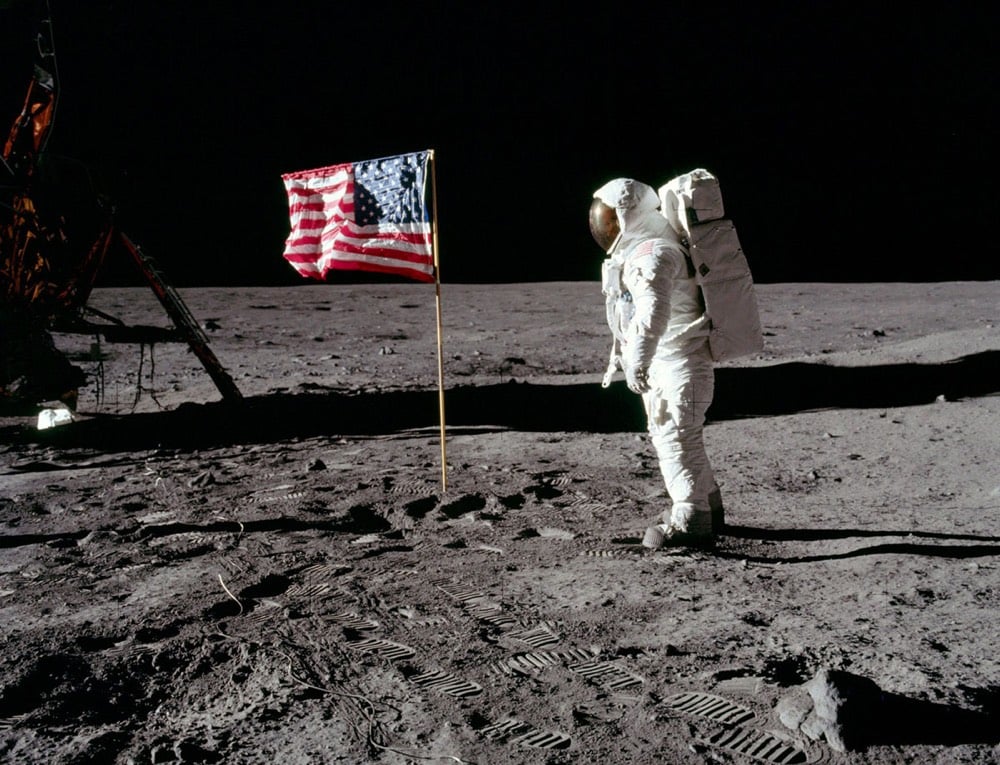
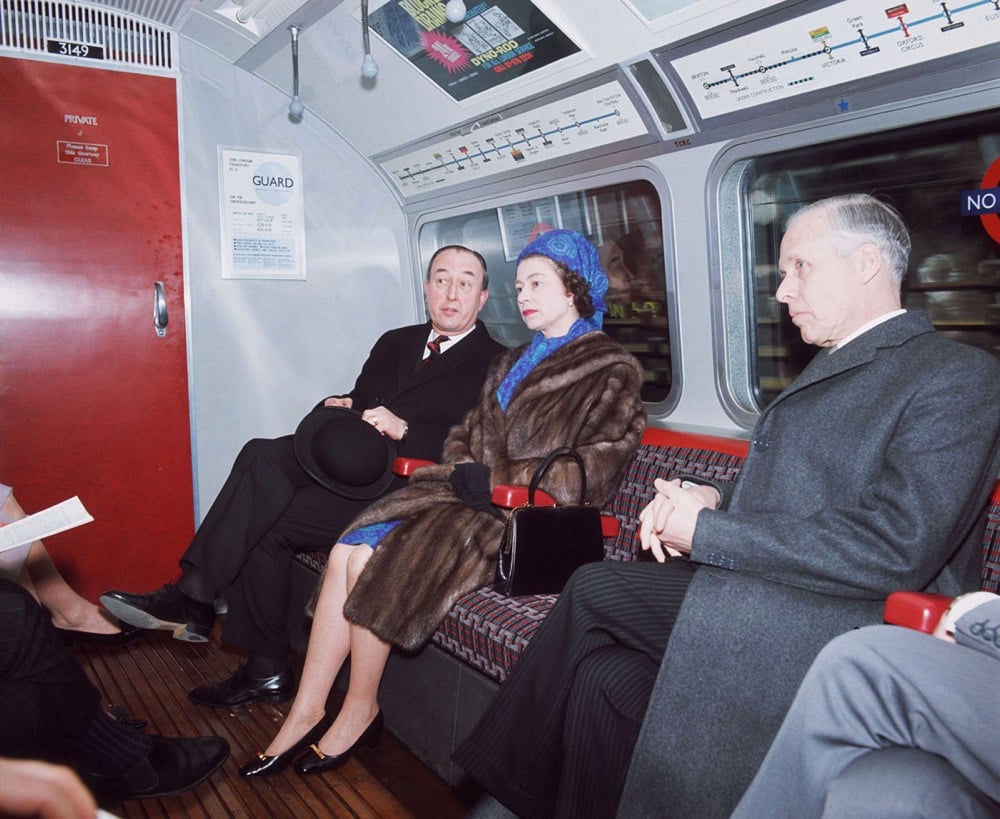
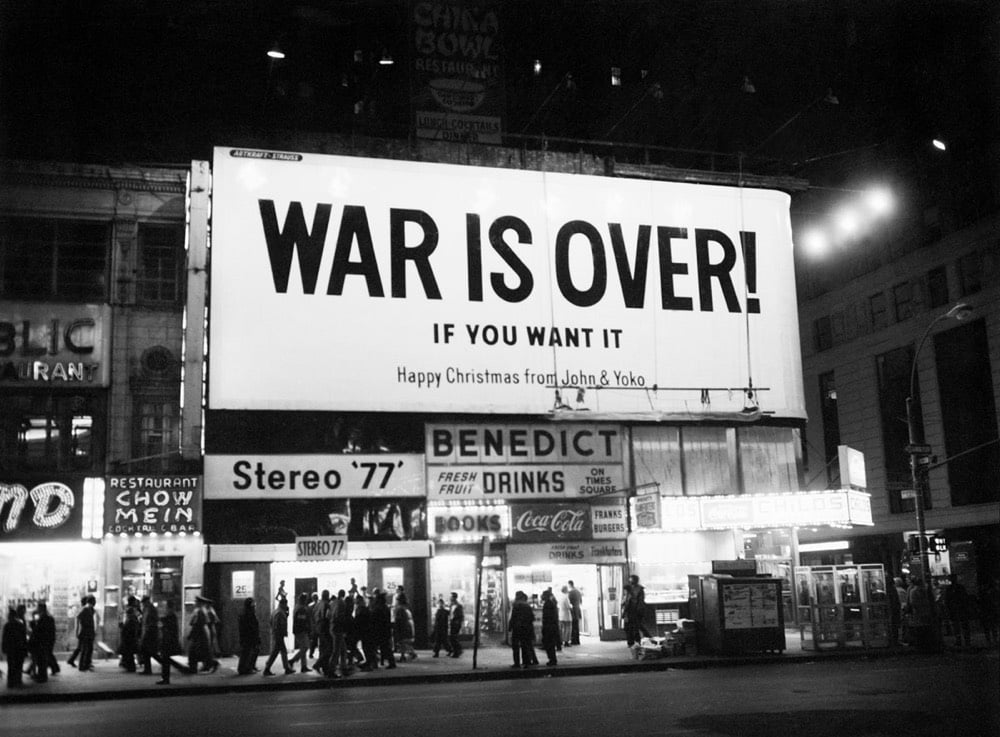
From top to bottom, Buzz Aldrin on the Moon, Queen Elizabeth riding on the Tube in London, and a billboard in Times Square featuring John Lennon & Yoko Ono’s message of peace.
Socials & More