Entries for August 2018
Irene Taylor Brodsky directed this short film in which about a dozen deaf people talk simply about their hearing loss and the technology (like cochlear implants) that is transforming how they interact with others. This was wonderful…I learned a lot from listening to these stories.
I was also struck by how difficult it actually is to lump “people who X” into a single category, despite the human desire to tidy people and things into groups. Even among the relatively few people featured in this short film, there were many different approaches and attitudes about deafness. Watching it, you think, jeez, what do all these people really have in common? Probably less than you might have assumed initially. (via @JossFong)
In this short video, Evan Puschak talks about how music is made for Super Nintendo games. That system was first released in 1990 and the audio chips could only hold 64 KB of information, only enough room for beeps, boops, and very short samples. But composers like David Wise, whose soundtrack for the Donkey Kong Country series of games is on many lists of the best video game music, were able to make the SNES sing despite its limited capabilities.
NASA recently published this visualization of sunrises and sunsets on the Moon set to the strains of Claude Debussy’s most famous work, Clair de Lune.
The visuals were composed like a nature documentary, with clean cuts and a mostly stationary virtual camera. The viewer follows the Sun throughout a lunar day, seeing sunrises and then sunsets over prominent features on the Moon. The sprawling ray system surrounding Copernicus crater, for example, is revealed beneath receding shadows at sunrise and later slips back into darkness as night encroaches.
A lovely way to spend five minutes. (thx, gina)
Madonna is 60 years old. The NY Times considers her ever-shifting cultural legacy.
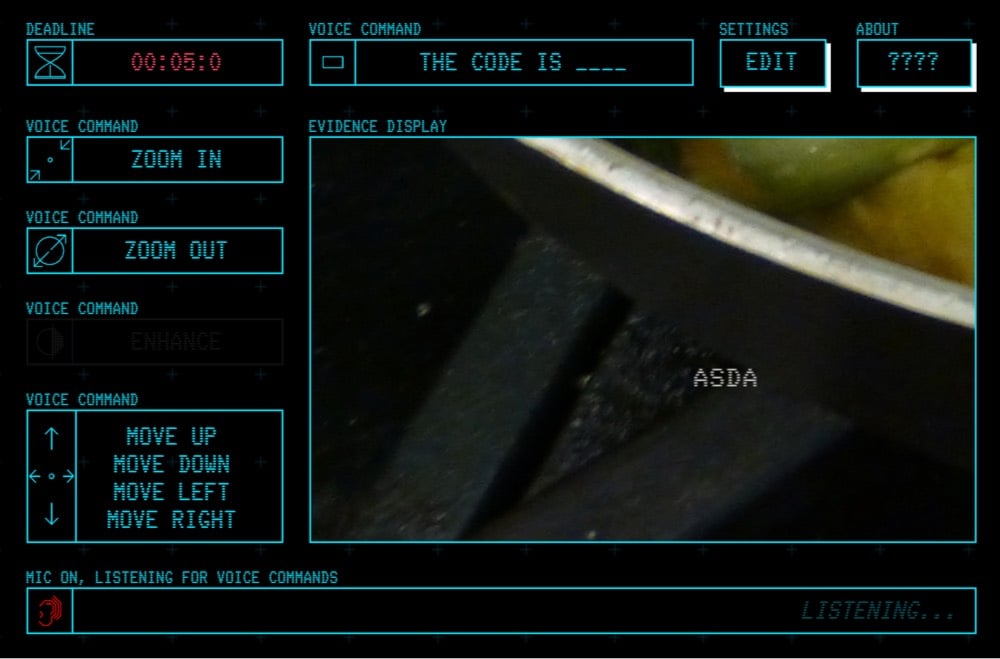
Nicole He has built a voice-controlled game called Enhance in which you speak commands to zoom & enhance images to look for secret codes, just like a detective on a CSI TV show. I bet if you try this in your open plan office, your coworkers will look at you like you’re nuts for a sec but will soon gather around, shouting their own commands at the computer. After all, everyone wants to enhance:
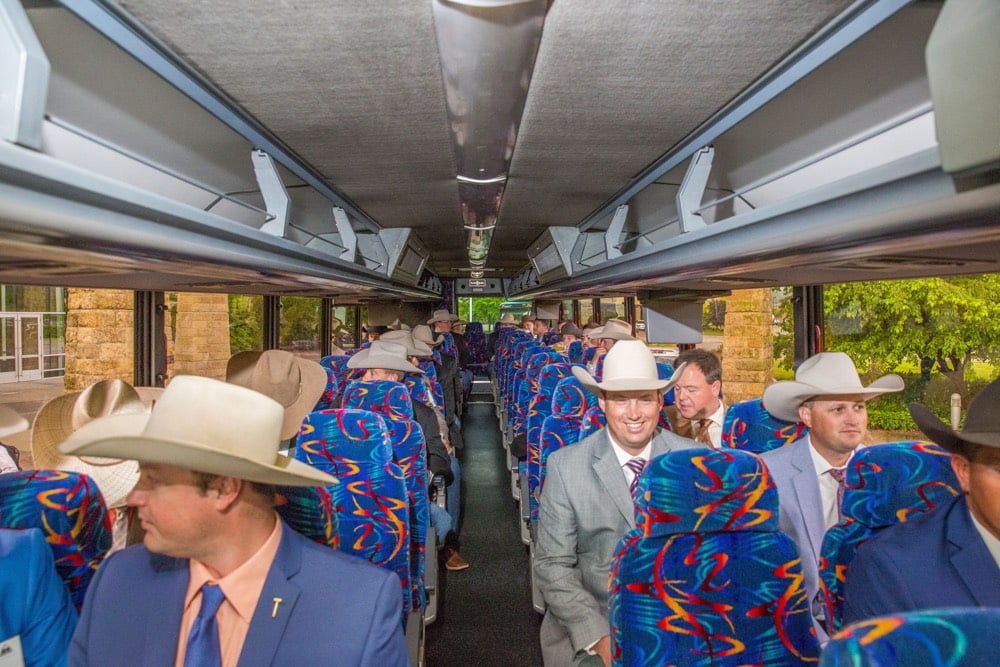
For the New Yorker, photographer David Williams visited the 2018 World Livestock Auctioneer Championship in Bloomington, Wisconsin. Amanda Petrusich wrote about the competition and his photos here.
This year’s champion, Jared Miller, of Leon, Iowa, took home a customized 2018 Chevrolet Silverado truck to drive for his yearlong reign; he also won six thousand dollars, a world-champion belt buckle, a world-champion ring, a money clip, and a bespoke leather briefcase. In interviews, Miller, like many successful auctioneers, appears personable and polite. When he begins his chant, his mouth only opens so much — when you’re talking as fast as he is, the tongue does most of the work — but what comes out sounds something like a undulating yodel, or a less guttural take on the Inuit tradition of throat singing. Once you tune in to its particular rhythms — and it can take a few minutes to acclimate to the crests and swells — the prices become discernible: “One dollar bid, now two, now two, would you give me two?”
You can listen to Miller’s winning chant on Facebook.
I hadn’t realized Werner Herzog made a 45-minute documentary about auctioneers at the same competition in 1976 called How Much Wood Would a Woodchuck Chuck. You can watch the whole thing on YouTube, although the audio isn’t synced that well:
According to the article, Herzog called auctioneering “the last poetry possible, the poetry of capitalism”. This poetry can be difficult to follow, so this auctioneer explained what he and his fellow chanters are saying up on the stand.
Rap music also has a claim on being “the poetry of capitalism” and Graham Heavenrich had the genius idea of layering auctioneer chants over beats; you can listen in on Instagram or with this compilation:
Ok and just for kicks, when I was searching for the auctioneer beats thing on YouTube, I ran across this young woman rapping the entirety of Rap God by Eminem (the part starting at 4:26 = fire). Sign her up for the 2019 World Livestock Auctioneer Championship!
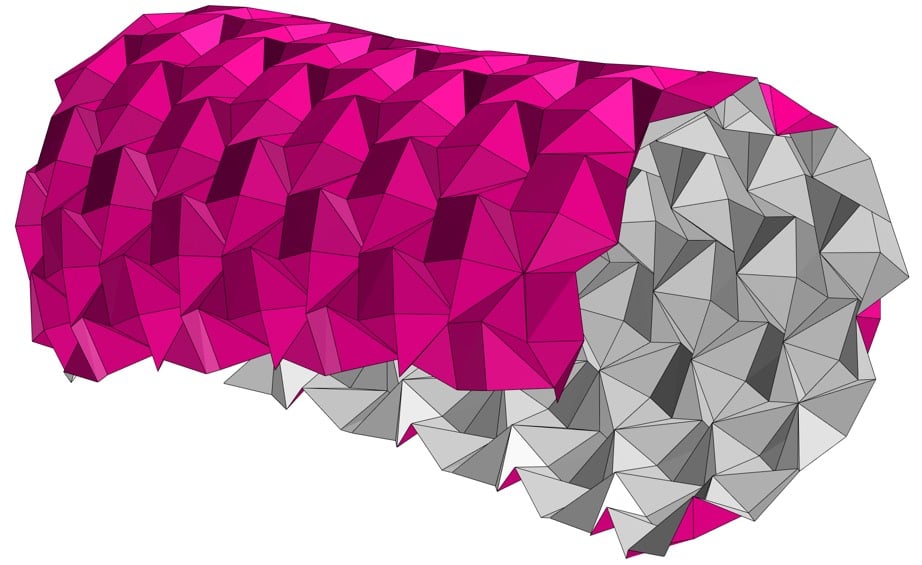
This origami simulator built by Amanda Ghassaei is really cool. The simulator lets you explore how different origami patterns are constructed by moving & rotating them around on the screen and folding & unfolding them. You can even import and export your own patterns. (via kelli anderson)
vintage post from Aug 2018
· gift link
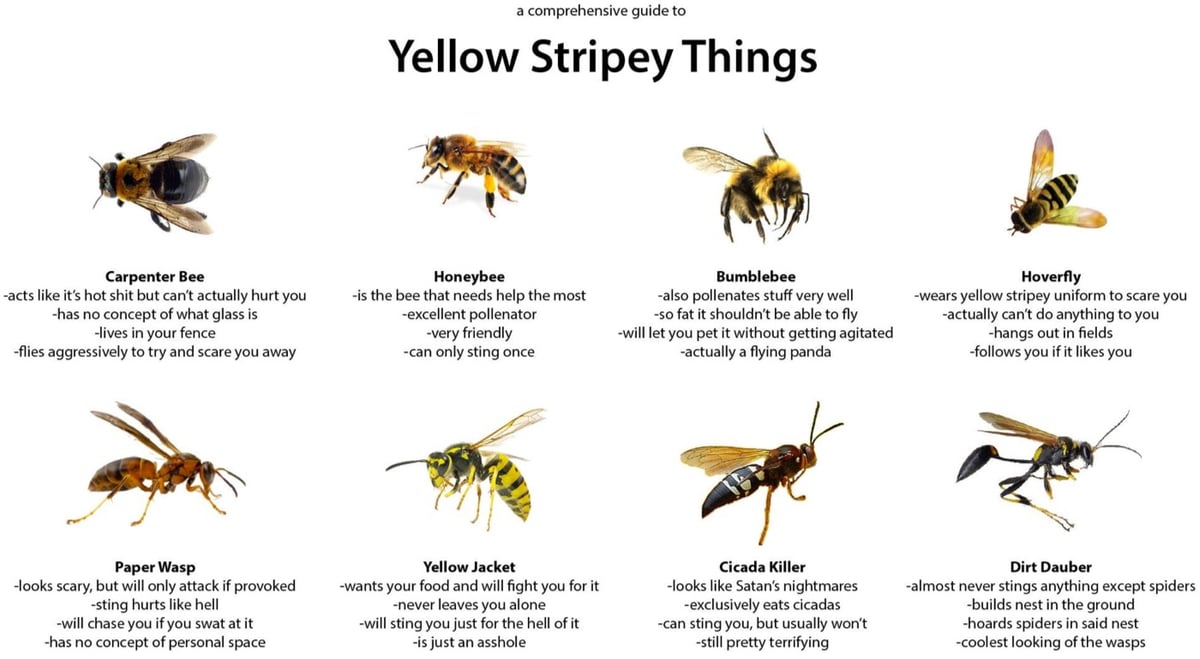
Bumblebee, honey bee, yellow jacket, paper wasp…what’s the difference? I don’t know if this comprehensive guide to Yellow Stripey Things is entirely truthful or not — a bumblebee is “actually a flying panda” and a yellow jacket “is just an asshole” — but it is pretty entertaining. Has anyone fact-checked this thing?
Ok fine, I’ll do it!1
Carpenter bees are mostly harmless:
Male carpenter bees are quite aggressive, often hovering in front of people who are around the nests. The males are quite harmless, however, since they lack stingers. Female carpenter bees can inflict a painful sting but seldom will unless they are handled or molested.
Honey bees don’t always sting just once:
A honey bee that is away from the hive foraging for nectar or pollen will rarely sting, except when stepped on or roughly handled. Honey bees will actively seek out and sting when they perceive the hive to be threatened, often being alerted to this by the release of attack pheromones (below).
Although it is widely believed that a worker honey bee can sting only once, this is a partial misconception: although the stinger is in fact barbed so that it lodges in the victim’s skin, tearing loose from the bee’s abdomen and leading to its death in minutes, this only happens if the skin of the victim is sufficiently thick, such as a mammal’s.
Bumblebees:
Queen and worker bumblebees can sting. Unlike in honeybees, a bumblebee’s sting lacks barbs, so the bee can sting repeatedly without injuring itself; by the same token, the sting is not left in the wound. Bumblebee species are not normally aggressive, but may sting in defence of their nest, or if harmed.
And yes, you can actually pet a bumblebee:
Hoverflies don’t sting. But paper wasps do and their sting can be deadly:
Unlike yellowjackets and hornets, which can be very aggressive, polistine paper wasps will generally only attack if they themselves or their nest are threatened. Since their territoriality can lead to attacks on people, and because their stings are quite painful and can produce a potentially fatal anaphylactic reaction in some individuals, nests in human-inhabited areas may present an unacceptable hazard
I couldn’t find a good all-in-one source about yellow jackets, but by all accounts, they are aggressive and easily agitated.
The cicada killer wasp look fierce but are generally only dangerous to cicadas:
Solitary wasps (such as the eastern cicada killer) are very different in their behavior from the social wasps such as hornets, yellowjackets, and paper wasps. Cicada killer females use their sting to paralyze their prey (cicadas) rather than to defend their nests; unlike most social wasps and bees, they do not attempt to sting unless handled roughly.
Mud daubers don’t sting people that often and prey on spiders:
Black and yellow mud daubers primarily prey on relatively small, colorful spiders, such as crab spiders (and related groups), orb weavers and some jumping spiders. They usually find them in and around vegetation. Blue mud daubers are the main predator of the black and brown widow spiders.
All in all, this checks out.
Bonus stinging insect fact: There’s a sting pain index that entomologist Justin Schmidt first came up with in the 80s. Schmidt has been stung by almost everything with a stinger and rated the stings on a scale of 1 to 4 (least to most painful). He has also described the stings of individual insects more colorfully:
Western honey bee (level 2) — “Burning, corrosive, but you can handle it. A flaming match head lands on your arm and is quenched first with lye then with sulfuric acid.”
Giant paper wasp (level 3) — “There are gods, and they do throw thunderbolts. Poseidon has rammed his trident into your breast.”
Insta Repeat collects photos of people (particularly so-called “influencers”) taking similar photos on Instagram — peeking out of an open tent flap, perched on top of an offroad vehicle, on the end of a dock — and displays them together.




See also this supercut of cliched Instagram travel photos.
Taking a photo of a friend holding up the Leaning Tower of Pisa or jumping in the middle of the road in Utah are really good ideas — that’s why lots of people do it — but each successive photo of the same thing doesn’t tell us anything new about those places, experiences, or people.
For influencers, a cliched photo is easy money, a tried and true way of capturing what others already know is the essence of a place or an experience. For most of the rest of us, we aren’t looking to say anything new about someone or somewhere. We just want to capture our experience to show our friends and well-wishers on Instagram. If I saw my tent flap hanging open to a beautiful mountain vista, of course I would take the hell out of that photo.
The New Yorker asked three professional poker players to give blow-by-blow accounts of their most memorable hands. Aside from the rules, I know almost nothing about poker and have played Texas Hold’em for about one total hour in my life — guess how I did! — so I actually learned a lot from this video. And the third player’s explanation of his hand and his thought process was fascinating.
See also Scrabble pros recount their best and worst plays.
English is a marvelously and maddeningly inconsistent language. The words “rough”, “though”, “thought”, and “through” all contain “ough” but pronounced in a different way.
In this video, Aaron Alon gradually normalizes the vowel sounds in his speech down to one sound per letter. The end result sounds a little like Werner Herzog doing an impression of someone from Wales doing an impression of an Italian who doesn’t speak English that well. Which makes sense because that’s pretty much how the language came together in the first place!
As a fundraiser for the Leukemia & Lymphoma Society, Micah Sherman and Mark Stetson produced a web series called The Bob Ross Challenge in which 13 comedians attempt to paint along with Bob Ross as he does his thing with the trees and little fluffy clouds. Here’s the first episode, featuring Aparna Nancherla:
I feel like she does a lot better than I would have! The episodes are each less than 2 minutes long…you can burn through the whole season in about 20 minutes. Or if you want to try the challenge yourself, you can watch every episode of The Joy of Painting on YouTube. (via open culture)

Every wanted a chunk of the Moon, a bit of the Space Shuttle that’s been in orbit, an ancient fossil, or a 14th century knight’s sword? Mini Museum sells tiny fragments of rare and interesting artifacts encased in lucite, each one a tiny journey through the history of Earth.
You’ll visit the bright highlands of the Moon, witness devastating and cataclysmic events here on Earth, and examine hundreds of millions of years of evolution. You’ll turn your attention to the march of human civilization. The collection ends by turning back toward the promise of space and marveling at the wonder of life.
Their fourth edition includes items like dinosaur food from 280 million years ago, a bit of rock from the quarry used to build Stonehenge, a piece of Muhammad Ali’s speed bag, and a tiny chunk of an actual human heart. I wonder how they got permission to sell that last one… Can anyone sell a small hunk of a human body?
littleBits has acquired DIY. These are both great products/services…I can’t wait to see what they do together!
From Jenny Yang’s Bad Appetite series, a group of Vietnamese critique questionable recipes for phở from American recipe sites that, for instance, try to substitute daikon radish for the noodles?
Politely, to not hurt your feelings, I’ll eat it.
The title is wrong. The whole thing, the recipe is fine. You want to eat, whatever, you cook it. Not with that name. Wrong name. Rename it. This one’s “Japanese soup”.
Don’t skip the last third of this. After politely dissing the recipes, Yang’s subjects talk about the importance of food in Vietnamese culture and share stories of how they came to the United States.
See also Koreans Learn to Make Kimchi from Brad at Bon Appetit.
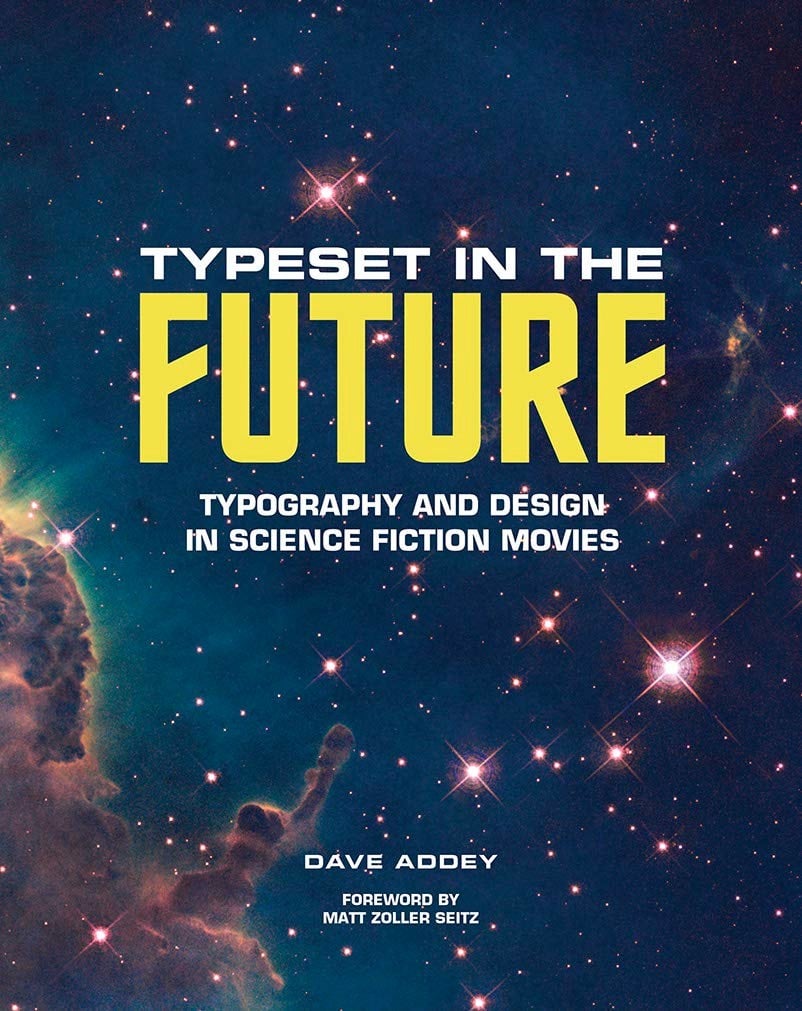
Inspired by the website of the same name, Dave Addey’s Typeset in the Future will look at how design and typography is used to build futuristic worlds in science fiction movies like 2001, Wall-E, Star Trek, and Blade Runner.
The book delves deep into 2001: A Space Odyssey, Star Trek: The Motion Picture, Alien, Blade Runner, Total Recall, WALL-E, and Moon, studying the design tricks and inspirations that make each film transcend mere celluloid and become a believable reality. These studies are illustrated by film stills, concept art, type specimens, and ephemera, plus original interviews with Mike Okuda (Star Trek), Paul Verhoeven (Total Recall), and Ralph Eggleston and Craig Foster (Pixar).
You can pre-order the book on Amazon.
Maria Konnikova is a writer for the New Yorker. Or she was until she went on sabbatical to play poker professionally. After immersing herself in the game while working on her third book, The Biggest Bluff, Konnikova discovered she was quite good at it, winning over $230,000 and a major tournament in a year.
Claudia Dreifus recently interviewed Konnikova for the New York Times and asked her about how she handles being one of the few women on the pro circuit.
When you see someone looking a certain way, you assume they play a certain way. So once I figure out how they view women, I can figure out how to play against them. They’re not seeing me as a poker player, they’re seeing me as a female poker player.
There are people who’d rather die than be bluffed by a woman. They’ll never fold to me because that’s an affront to their masculinity.
I never bluff them. I know that no matter how strong my hand, they are still going to call me because they just can’t fold to a girl.
Other people think women are incapable of bluffing. They think if I’m betting really aggressively, it means I have an incredibly strong hand. I bluff those people all the time.
There are people who think that women shouldn’t be at a poker table, and they try to bully me. So, what do I do? I let them. And I wait to be in a good position so that I can take their chips. Just like life, right?
In a 2015 NPR interview, pro player Annie Duke talked about getting her opponents to pay the stereotype tax.
VEDANTAM: She says she divided the men who had stereotypes about her into three categories.
DUKE: One was the flirting chauvinists, and that person was really viewing me in a way that was sexual.
VEDANTAM: With the guys who were like that, Annie could make nice.
DUKE: I never did go out on a date with any of them, but you know, it was kind of flirtatious at the table. And I could use that to my advantage.
VEDANTAM: And then there was the disrespecting chauvinist. Annie says these players thought women weren’t creative.
DUKE: There are strategies that you can use against them. Mainly, you can bluff those people a lot.
VEDANTAM: And then there’s a third kind of guy, perhaps the most reckless.
DUKE: The angry chauvinist.
VEDANTAM: This is a guy who would do anything to avoid being beaten by a woman. Annie says you can’t bluff an angry chauvinist. You just have to wait.
DUKE: What I say is, until they would impale themselves on your chips.
Update: In an episode of The Pay Check podcast, Duke and Konnikova “discuss power dynamics and sexism in the ultra male dominated field” of poker.
Are wormholes science or just science fiction? As this video by Kurzgesagt shows, they’re actually a little bit of both. Einstein and string theory both posit that these “short cuts” through spacetime could exist, but finding or building a stable wormhole, a la Star Trek, is another matter altogether.
In the description of the video, they link to a pair of papers published by Michael Morris and Kip Thorne in the late 80s: Wormholes, Time Machines, and the Weak Energy Condition and Wormholes in spacetime and their use for interstellar travel: A tool for teaching general relativity. For a high school physics class, I gave a presentation on wormholes & time travel and I’m pretty sure I used at least one of those papers as a reference. The presentation also included a clip of Bill & Ted’s Excellent Adventure. The teacher gave me a B+ — he felt the presentation was excellent (*guitar riff*) but that I had, in spite of the movie clip, “lost most of the other students” and should have chosen a more suitable topic.
Rebecca Mead writes in the New Yorker about leaving the US. “My son told me that he was relieved we were moving to England, because there are no school shootings there.”
Add finding Waldo to the long list of things that machines can do better than humans. Creative agency Redpepper built a program that uses Google’s drag-and-drop machine learning service to find the eponymous character in the Where’s Waldo? series of books. After the AI finds a promising Waldo candidate, a robotic arm points to it on the page.
While only a prototype, the fastest There’s Waldo has pointed out a match has been 4.45 seconds which is better than most 5 year olds.
I know Skynet references are a little passé these days, but the plot of Terminator 2 is basically an intelligent machine playing Where’s Waldo I Want to Kill Him. We’re getting there!
Update: Prior art: Hey Waldo, HereIsWally, There’s Waldo!
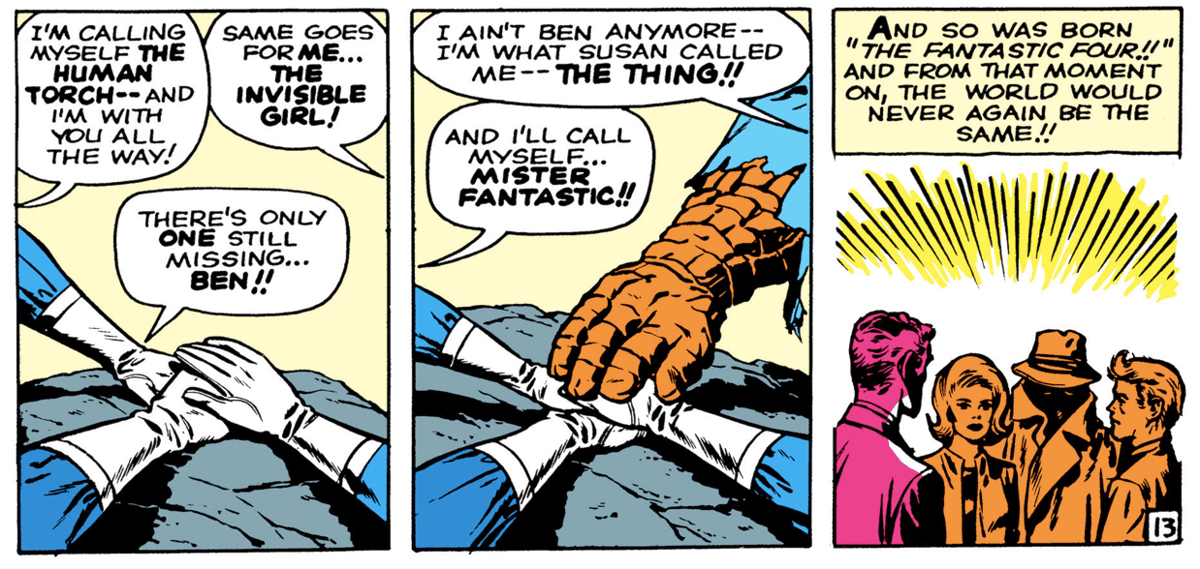
All superhero origin stories are preposterous. For that reason, as much as in spite of it, they are repeated again and again, to make them myths, something truer than mere credibility can allow.
The Fantastic Four’s origin story has been repeated more times than maybe any superhero’s but Batman’s. And it remains totally preposterous. The smartest man in the universe takes his best friend, girlfriend, and girlfriend’s teenage brother in a rocket he’s built, but forgot to shield against cosmic rays? And the rays give each of them different kinds of monster powers? It’s beautifully absurd.
But the 1961 Fantastic Four #1 remains one of the most important comics ever, primarily for injecting (get this) realism into superhero comics. Not because the characters looked like real people, but because they acted like real people transformed into monsters might act. They bickered, they got depressed, they ran into money problems; they tried to figure out their place in the world, which increasingly included things more preposterous than them. And that formula — a real family, in a real New York City, peeled open to reveal all the cosmic wonder underneath and just out of reach, changed storytelling forever.
This is all to say, there’s a brand-new Fantastic Four #1. (It’s at least the sixth “number one” issue released under that title.) The FF have been on hiatus in the comics for a few years; I wrote about why in this essay in The Verge from around that time. Now, since Disney/Marvel will soon own the Fantastic Four’s film rights again, we can probably expect yet another reboot in the movies as well. (Maybe even in the teaser after the end of the second half of Infinity War? I’m just spitballing.)
Like a lot of fans, I’m wary but excited. When the FF is really good — the 102-issue long original run by Stan Lee and Jack Kirby, the early reboot by writer/artist John Byrne, the expansionist canvas of writer Jonathan Hickman — it really is the world’s greatest comic magazine. It makes comics bigger than any movie, big in the way only a two-dimensional artform can be. When the FF is not so good, it feels like all of its nostalgic Cold War-era ideas have passed by their sell date, a shabby stew of worn-out plots and bad guys too hammy for cartoons.
In comics and the movies, it’s all execution-dependent. Still, bringing back the Fantastic Four gives both the Marvel Comics Universe (which, some exceptions aside, has not been at its best for a while) and the Marvel Cinematic Universe (which is rapidly running out of characters and stories to turn to) someplace new to go. It’s just a bit of historical irony that the future turns out to be where it all got started in the first place.
I’m a sucker for good attempts to think about the supply chain and global logistics networks — or rather, thinking through the impossibility of thinking about these networks, because of the systemic sublime. In “See No Evil,” Miriam Posner has a doozy of an essay that does just that. In particular, she picks up and runs with modularity: the feature that makes individual commodities, shipping containers, software components, and suppliers interchangeable and to no small extent invisible to each other.
How do you manage the complexity of a system that procures goods from a huge variety of locations? You make it modular: when you black-box each component, you don’t need to know anything about it except that it meets your specifications. Information about provenance, labor conditions, and environmental impact is unwieldy when the goal of your system is simply to procure and assemble goods quickly. “You could imagine a different way of doing things, so that you do know all of that,” said Russell, “so that your gaze is more immersive and continuous. But what that does is inhibit scale.” And scale, of course, is key to a globalized economy.
On the one hand, this all seems very logical and straightforward: to manage complexity, we’ve learned to break objects and processes into interchangeable parts. But the consequences of this decision are wide-ranging and profound.
It helps explain, for one thing, why it’s so hard to “see” down the branches of a supply network. It also helps explain why transnational labor organizing has been so difficult: to fit market demands, workshops have learned to make themselves interchangeable. It sometimes seems as though there’s a psychological way in which we’ve absorbed the lessons of modularity—although the world is more connected than ever, we seem to have trouble imagining and articulating how we’re linked to the other denizens of global manufacturing networks.
Modularity, one of Posner’s sources says, has become a “characteristic of modernity.” And because each box is invisible to the next, even technologies like RFID tags, blockchain ledgers, and machine learning just become new black boxes, or “one more technology to counterfeit,” as another source puts it. There’s no putting Humpty Dumpty together again.
“Loss aversion” is a key idea in behavioral economics. But it’s not clear if it actually has a big impact on us
Consuming media when you’re depressed is a delicate business. Too much emotion, too much novelty, too much engagement can be overwhelming. You want familiarity, but you don’t want to spiral into rumination on your own past. You want reassurance, you want escape, you want meaning and meaninglessness. You want something that can square the circle of proximity and distance when your own thoughts feel all too unfamiliar, yet too close.
For me, it’s doo-wop, and/or old episodes of Star Trek: The Next Generation. But writer Blair Thornburgh loves sea shanties, and she makes a compelling case for why they were so moving to her during her own depression.
In the shanties, there are gals: the gals o’ Dublin Town, the gals o’ Chile, New York gals, Spanish ladies, the girl in Portland Street, Maggie May, Lucy Long, Susiana Brown. There is food—salt beef, salt bread, oatcake, codfish—and (of course) there is drink: grog, rum, whiskey, lime juice, beer. There are ports in Quebec, Bonnie Scotland, South Australia, ‘Frisco Bay. There is longing, there is forward motion, there is purpose; a shore behind and a shore before.
But there is also endlessness, the futility of a horizon that spills wave over wave. A life adrift is the only life that can endure, one journey after another the only way to earn your keep. There is certainty without stability, there is solid ground only briefly under your feet. Then poor old Jack must understand / There’s ships in docks all wanting hands; / So he goes on board as he did before, / And bids adieu to his native shore. / For he is outward bound, hurrah, he is outward bound.…
The language of depression can be curiously maritime. It comes in waves; it drowns us; it’s the Mariner’s albatross around our necks. We long for smooth sailing, for hope on the horizon, an even keel. And the summer I stopped taking Seroquel, my depression was a riptide. I could see the shimmering okayness of everything around me, all the way to the edge: I was employed, insured, well-fed, loved. And yet it was useless to me: I was either plunged into hopelessness, or dying slowly of thirst.
Newer posts
Older posts



Socials & More