Entries for August 2018

This is fun to play with: Dinosaur Pictures has a Google Earth-style globe that shows the state of the planet at various intervals 20 million, 200 million, or 750 million years ago, with plenty of stops in between. You can watch India collide into the rest of Asia, or jump to the birth (and death) of dinosaurs, the first flowers, the first hominids, etc. And you can watch the whole planet or zero in on an individual contemporary address.
One point of view that I found oddly soothing: the middle of the Pacific Ocean. All over the planet, millions of years are passing by, transforming the land-bound flora and fauna through tectonic and climatic upheavals, and the ocean just… stays the ocean. Big things are happening below the surface, but the biggest part of the planet just continues to be this deep blue, undisturbed marble.
From CBC’s This Is That, a satirical presentation that is
I’m now going to come back to the center of the stage and give you some unremarkable context about how I became a thought leader. If it’s ok with you, I’d like to pace while telling you this story.
I chuckled throughout this, but deep down I’d love to have the stage presence to give a talk like this. Whenever I’ve done talks in the past, my brain always convinces me that I’m about to be eaten by a lion — “flee flee flee!” — and I end up doing my best impression of the squeaky-voiced teen from The Simpsons.
Update: In 2014, Will Stephen did a talk at TedxNewYork that’s very similar to the one above, perhaps even a bit better.
White men speaking confidently gets you 85% of the way to a compelling talk, irrespective of content. (via @h4emtfr)
Victor Mather wrote about the origin of sports idioms like “wild-goose chase”, “hands down”, and “sticky wicket” for the NY Times. Some of these I didn’t even know were sports terms. “Back to square one” is an interesting entry:
As with many terms, there is a colorful explanation of the origin and a more prosaic and realistic one, though both originate with competition.
First the colorful one: When soccer was first broadcast on the radio in the 1920s in Britain, there was concern that fans would not be able to visualize the field well. So the field was divided into numbered squares, with charts published in newspapers. That way the announcer could say, “The ball is passed into Square 4, then dribbled into Square 6,” and fans used to watching games in person would understand what was going on. Square 1 was the area with the goalie, so a pass back to Square 1 would be a restarting of an offensive move.
The Oxford English Dictionary deflates that theory though, pointing out that the term’s use really began in the 1950s, some decades after the soccer broadcasting scheme stopped. It suggests the term actually comes from board games like chutes and ladders, in which players can find themselves sent back to the start.
That soccer explanation is more compelling, even if untrue. It’s fun to hear how practitioners of early media tried to represent sports to people who couldn’t view the game. For a time, baseball games were broadcast to viewers using various machines and even actors who “played” the game as reports came in via telegraph.
“A novel feature of the report was the actual running of the bases by uniformed boys, who obeyed the telegraph instrument in their moves around the diamond. Great interest prevailed and all enjoyed the report,” read the Atlanta Constitution on April 17, 1886. (And as if that wasn’t enough to entice you, the paper also noted that “A great many ladies were present.”) Although this live-action reenactment attempted at the opera house in Atlanta may have been the closest approximation of a real baseball game, it does not seem to have ever spread beyond Georgia.
For the past six years, physicist Greg Spriggs and a team at Lawrence Livermore National Laboratory have been tracking down films of nuclear tests conducted by the United States in order to digitize and declassify them.
“You can smell vinegar when you open the cans, which is one of the byproducts of the decomposition process of these films,” Spriggs said. “We know that these films are on the brink of decomposing to the point where they’ll become useless. The data that we’re collecting now must be preserved in a digital form because no matter how well you treat the films, no matter how well you preserve or store them, they will decompose. They’re made out of organic material, and organic material decomposes. So this is it. We got to this project just in time to save the data.”
You can find over 400 of the films they’ve restored so far on LLNL’s YouTube account.
Tour of a futuristic new grocery store in Hangzhou, China. “Pricing is displayed and can be changed dynamically via wifi-connected, e-ink price tags.”
In 2011, writer and filmmaker Errol Morris summarized the main points in Believing Is Seeing, his book on the nature of truth, belief, and reality in photography with a series of tweets.
1. All photographs are posed.
2. The intentions of the photographer are not recorded in a photographic image. (You can imagine what they are, but it’s pure speculation.)
3. Photographs are neither true nor false. (They have no truth-value.)
4. False beliefs adhere to photographs like flies to flypaper.
5. There is a causal connection between a photograph and what it is a photograph of. (Even photoshopped images.)
6. Uncovering the relationship between a photograph and reality is no easy matter.
7. Most people don’t care about this and prefer to speculate about what they believe about a photograph.
8. The more famous a photograph is, the more likely it is that people will claim it has been posed or faked.
9. All photographs are posed but never in the same way.
10. Photographs provide evidence. (The question is of what?)
Morris expanded on the third item in his list in a 2007 NY Times piece.
In discussing truth and photography, we are asking whether a caption or a belief — whether a statement about a photograph — is true or false about (the things depicted in) the photograph. A caption is like a statement. It trumpets the claim, “This is the Lusitania.” And when we wonder “Is this a photograph of the Lusitania?” we are wondering whether the claim is true or false. The issue of the truth or falsity of a photograph is only meaningful with respect to statements about the photograph. Truth or falsity “adheres” not to the photograph itself but to the statements we make about a photograph. Depending on the statements, our answers change. All alone — shorn of context, without captions — a photograph is neither true nor false.
(via austin kleon)
From Nicky Case, An Interactive Introduction to Attractor Landscapes. A quick scientific explanation of, among other things, this Hemingway quote about how bankruptcy happens: “Gradually and then suddenly.”


Culled from thousands of entrants from more than 140 countries around the world, here are the winners of the 2018 iPhone Photography Awards. What’s really interesting is that many of the winners were not shot on iPhone 8 or iPhone X but with iPhone 7s and 6s and even 5s. That’s a good reminder of Clayton Cubitt’s three step guide to photography: “01: be interesting. 02: find interesting people. 03: find interesting places. Nothing about cameras.”
That said, the increase in photo quality from the first contest in 2008, just a year after the iPhone launched, is welcome. The initial iPhone had just a 2 megapixel camera with a mediocre lens while the iPhone X packs a 12 megapixel resolution and an incredible lens.
Photos above by Huapeng Zhao and Alexandre Weber.
Good news everyone! Thanks to the EPA, asbestos is back! (jk jk, this is actually unbelievable & terrible news)
Three Children, Two Abortions. “What a woman chooses to do with her body should not be up for debate in 2018.”
I’m not saying that your day will be 100% better if you watch this short video of 30 normally super-aggro hummingbirds splashing around together in a birdbath, but I’m not not saying that either. At any rate, this video is quite charming. (via colossal)
Tom Cruise is not scared of heights. And he can fly helicopters? (Not only can he fly them, he does it well enough to perform stunts.) In this rough 30-minute reel of behind-the-scenes footage from the filming of Mission Impossible: Fallout, you get to see how many of the movie’s best stunts are done. Note: you’ll need to skip around a bit…there’s a lot of less exciting bits in there too. But don’t miss the car/bike stuff at the beginning, Cruise flying/hanging from the chopper, and, holy shit, the skydive choreography at the end, where the actors and camera folks dance intricately in a military cargo plane with the back hatch open before just jumping out of it, Cruise acting all the way.
You can tell when watching the film that you’re seeing practical effects. Visual effects are getting really really good, but movies like this with real people driving real vehicles…they just feel different. Visual effects sometimes break the fourth wall (and not in a good way); if it looks fake, your brain says “that’s fake”, and then you’re just a little less invested in what’s going on in the story.
I don’t know what is going on in this video — boards coming apart and then back together again, trucks on hinges, ice “skating”, and other inventive nonsense on a skateboard — but it seems like a lot of it defies reality in a Newtonian sense. Sir Isaac’s all like, feck thee, thou’st foote wagon is not poss’ble. (Yeah, I don’t know either. Matt Tomasello is good at skateboarding and seems to have fun doing it. Watch the video.) (via @bmovement)
Update: Check out Tomasello’s latest video. This is some seriously inventive shit.
(via dunstan)
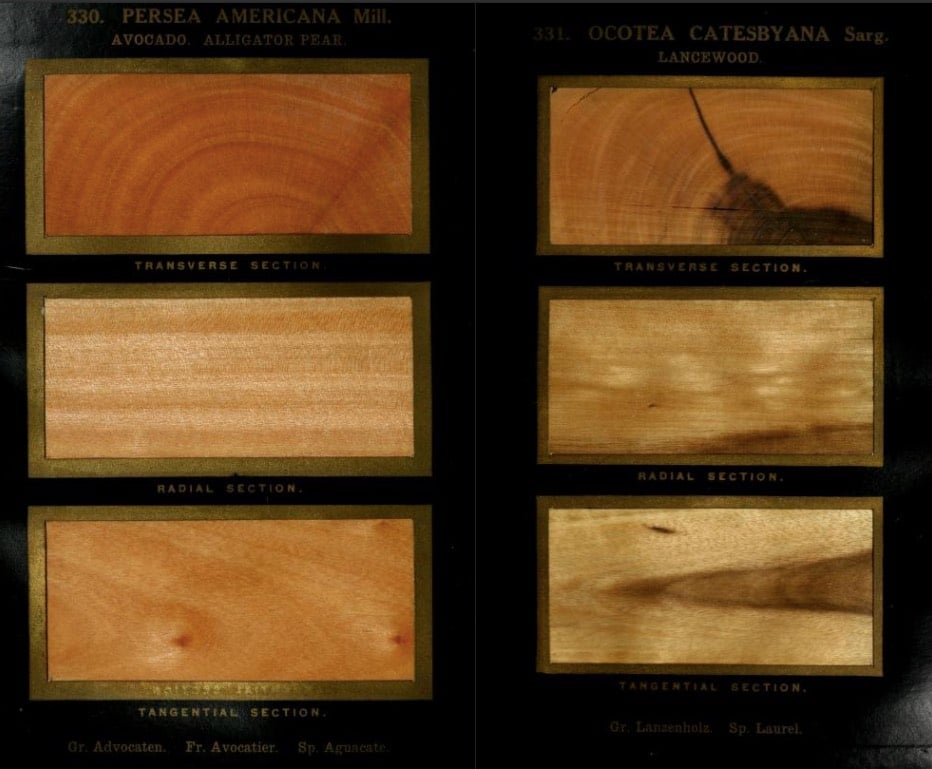
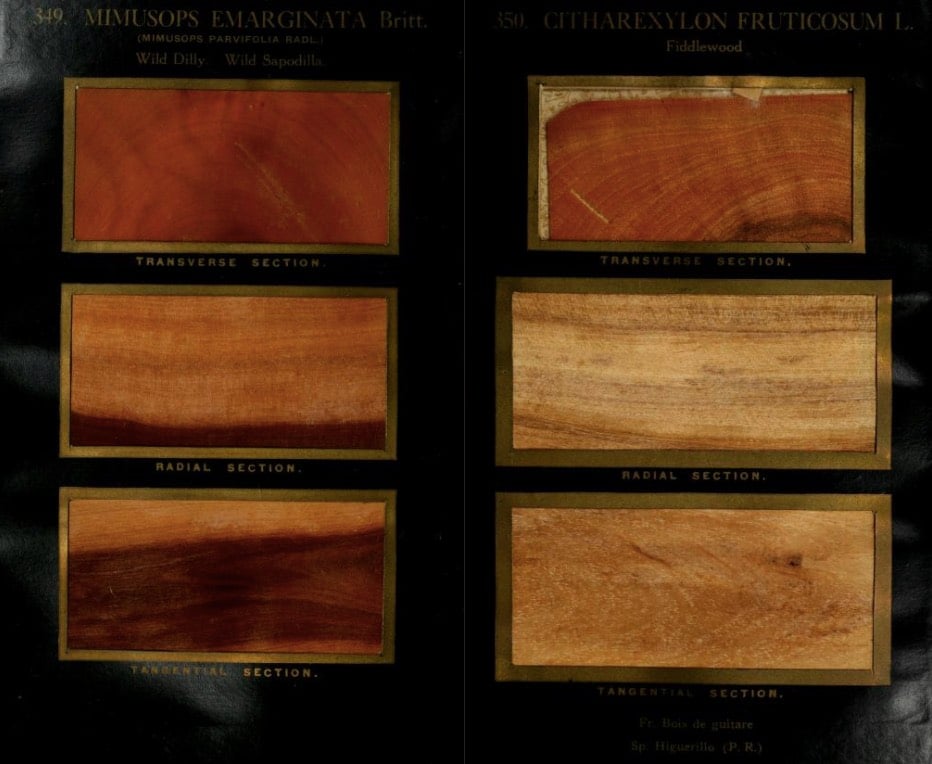
Between 1888 and 1913, Romeyn Beck Hough worked on a multi-volume book called The American Woods that contained 1000+ paper-thin wood slices from more than 350 different varieties of North American trees.
Each specimen page of the work is dedicated to a single tree and consists of a cardboard plate into which three translucent slices have been placed, three variations of cross-section — transverse, radial, and tangential. The wafer-thin slivers — which would glow like a slide when held up to the light — were prepared using a slicing machine of Hough’s own design and which he patented in 1886. In addition to the specimens Hough also provides information about the characteristics, growth habits, medicinal properties, and commercial possibilities of the tree. With some of the trees in the book now very rare the series now has an added value and, as Rebecca Onion from Slate’s The Vault comments, “stands as a memorial to the shape and extent of American forests at the end of the 19th century”.
What a fantastically odd book. You can view the whole thing at Internet Archive.
The Economist writes about how the US Constitution, our first-past-the-post voting system, and demographic changes have combined to give Republicans a significant advantage in legislative elections.
The source of this discrepancy is that Democrats will win their seats with big majorities in fewer districts, whereas Republicans will prevail by narrower margins in a larger number of districts. In 2016 Democrats who beat Republican opponents won an average of 67.4% of the two-party vote in their districts, whereas Republicans who defeated Democrats received an average of 63.8%. This imbalance is partly due to deliberate attempts to create districts that provide such results, and partly just down to the fact that Democrats tend to live more tightly bunched together in cities. Together, these two factors put up quite an obstacle. According to our model, the Democrats need to win 53.5% of all votes cast for the two major parties just to have a 50/50 chance of winning a majority in the House.
If this imbalance were limited to a single chamber of the legislature, or a single election cycle, the Democrats’ frequent carping about a stacked electoral deck might sound like sour grapes. All electoral systems have their oddities. But changes in where Americans live and contradictions in their constitution — a document designed to work with many weak factions that has instead encouraged and entrenched an increasingly polarised two-party system — have opened gaps between what the voters choose and the representation they get in every arm of the federal government. In recent decades these disparities have consistently favoured the Republicans, and there is no reason to think that trend is going to change on its own.
In the past three House elections, Republicans’ share of House seats has been 4-5 percentage points greater than their share of the two-party vote. In 2012 they won a comfortable 54% of the chamber despite receiving fewer votes than their Democratic opponents; in 2014 they converted a 51% two-party-vote share into 55% of the seats.
Such comparisons are harder for the Senate, where only a third of the 100 seats are contested in any election. But adding together all the votes from the most recent election of each senator, Republicans got only 46% of them, and they hold 51 of the seats.
And let’s not even talk about the presidential elections…
In all the world’s other 58 fully presidential democracies — those in which the president is both head of state and head of government — the winning candidate gets the most votes in the final, or only, round of voting. But due to the “electoral college” system that America’s founders jury-rigged in part to square the needs of democracy with the demography of slavery, this does not hold true for America. States vote in the college in proportion to their combined representation in both houses of Congress. This set-up means that a candidate who wins narrowly in many small and smallish states can beat one who gets more votes overall, but racks most of them up in big majorities in a few big states.
During almost all of the 20th century this did not matter much; the candidate who got the most votes won every election from 1896 to 1996. But both of the past two Republicans to win the presidency have received fewer votes when first elected than their Democratic opponents did. In the contest between Al Gore and George W. Bush in 2000, this margin was a modest 0.5 percentage points. In 2016, however, it was substantial: Hillary Clinton’s lead of 2.1 percentage points was larger than those enjoyed by the victorious John F. Kennedy in 1960, Richard Nixon in 1968 and Jimmy Carter in 1976.
In 1998, author and media critic Neil Postman gave a talk he called Five Things We Need to Know About Technological Change. Here are the five ideas Postman shared that day, which are all still highly relevant today:
1. All technological change is a trade-off. For every advantage a new technology offers, there is always a corresponding disadvantage.
2. The advantages and disadvantages of new technologies are never distributed evenly among the population. This means that every new technology benefits some and harms others.
3. Embedded in every technology there is a powerful idea, sometimes two or three powerful ideas. Every technology has a philosophy which is given expression in how the technology makes people use their minds, in what it makes us do with our bodies, in how it codifies the world, in which of our senses it amplifies, in which of our emotional and intellectual tendencies it disregards.
4. Technological change is not additive; it is ecological. The consequences of technological change are always vast, often unpredictable and largely irreversible.
5. Media tend to become mythic. Cars, planes, TV, movies, newspapers — they have achieved mythic status because they are perceived as gifts of nature, not as artifacts produced in a specific political and historical context.
His first idea about technology is perhaps the most apropos to the current moment:
The first idea is that all technological change is a trade-off. I like to call it a Faustian bargain. Technology giveth and technology taketh away. This means that for every advantage a new technology offers, there is always a corresponding disadvantage. The disadvantage may exceed in importance the advantage, or the advantage may well be worth the cost. Now, this may seem to be a rather obvious idea, but you would be surprised at how many people believe that new technologies are unmixed blessings. You need only think of the enthusiasms with which most people approach their understanding of computers. Ask anyone who knows something about computers to talk about them, and you will find that they will, unabashedly and relentlessly, extol the wonders of computers. You will also find that in most cases they will completely neglect to mention any of the liabilities of computers. This is a dangerous imbalance, since the greater the wonders of a technology, the greater will be its negative consequences.
Think of the automobile, which for all of its obvious advantages, has poisoned our air, choked our cities, and degraded the beauty of our natural landscape. Or you might reflect on the paradox of medical technology which brings wondrous cures but is, at the same time, a demonstrable cause of certain diseases and disabilities, and has played a significant role in reducing the diagnostic skills of physicians. It is also well to recall that for all of the intellectual and social benefits provided by the printing press, its costs were equally monumental. The printing press gave the Western world prose, but it made poetry into an exotic and elitist form of communication. It gave us inductive science, but it reduced religious sensibility to a form of fanciful superstition. Printing gave us the modern conception of nationhood, but in so doing turned patriotism into a sordid if not lethal emotion. We might even say that the printing of the Bible in vernacular languages introduced the impression that God was an Englishman or a German or a Frenchman — that is to say, printing reduced God to the dimensions of a local potentate.
Perhaps the best way I can express this idea is to say that the question, “What will a new technology do?” is no more important than the question, “What will a new technology undo?” Indeed, the latter question is more important, precisely because it is asked so infrequently. One might say, then, that a sophisticated perspective on technological change includes one’s being skeptical of Utopian and Messianic visions drawn by those who have no sense of history or of the precarious balances on which culture depends. In fact, if it were up to me, I would forbid anyone from talking about the new information technologies unless the person can demonstrate that he or she knows something about the social and psychic effects of the alphabet, the mechanical clock, the printing press, and telegraphy. In other words, knows something about the costs of great technologies.
Idea Number One, then, is that culture always pays a price for technology.
It is nearly impossible to read these paragraphs and not think about how social media (and the internet more generally) has shaped our culture in both good and bad ways…and those who still believe that services like Facebook or Twitter are “unmixed blessings”. The rest of the talk is equally thought-provoking and enlightening.
P.S. Postman made these remarks about 2 weeks after I started publishing kottke.org 20 years ago. At that time, very few people I knew or interacted with online saw anything but the positive aspects of the internet and personal publishing online. Should we have seen the weaponization of the internet coming? Perhaps. But then again, not a lot of people who enjoyed the simple pleasures of Howdy Doody, I Love Lucy, and Lassie could have anticipated the government-shaping toxicity of Fox News and cable news in general.
The hot, dry British summer has been good for one thing: archaeology. Dry land is good for spotting “parch marks”, the outlines of vanished castles, settlements, and burial sites.
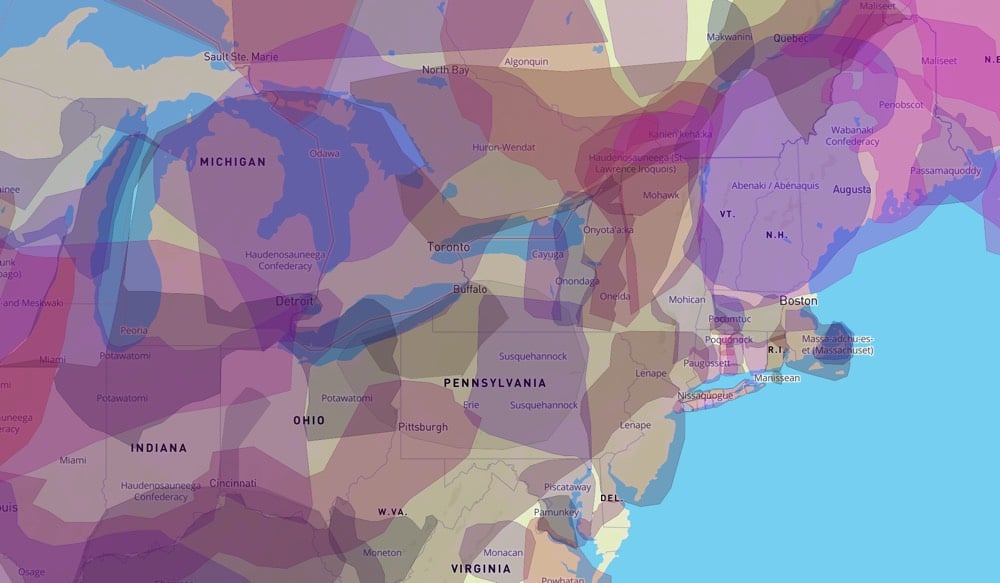

The Native Land site is a collaborative effort to map the approximate boundaries of the territories and languages of the indigenous nations in the Americas, Australia, and New Zealand.

When Jerry and Rita Alter died, a painting was found in their bedroom in the tiny town of Cliff, NM, and then was sold to an antiques dealer along with the rest of their effects for $2000. The dealer soon discovered that the painting was an original Willem de Kooning worth in the neighborhood of $150 million. The painting had been stolen in a daring raid from a Tucson museum in 1985 and a recently discovered piece of evidence shows the Alters were in Tucson on the day before the theft.
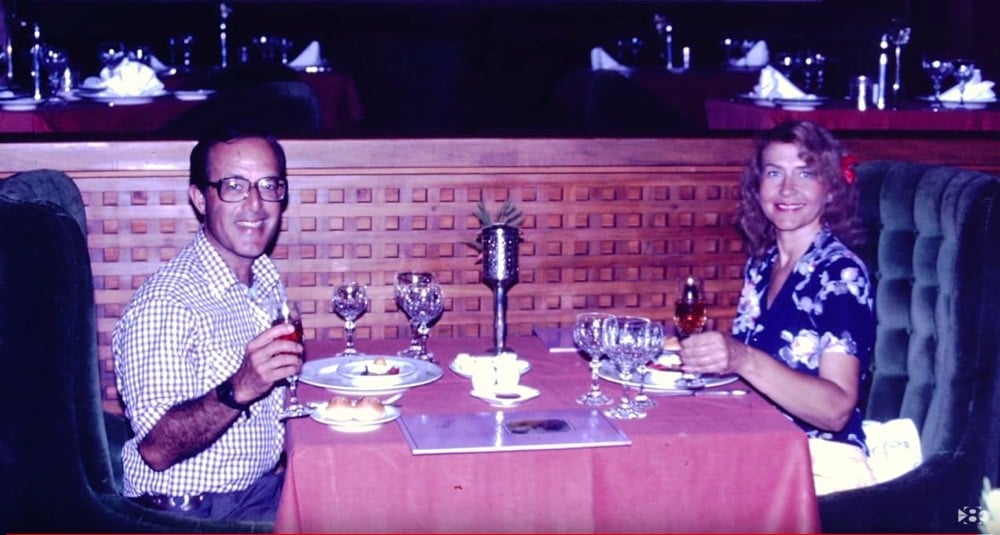
The next morning, a man and a woman would walk into the museum and then leave 15 minutes later. A security guard had unlocked the museum’s front door to let a staff member into the lobby, curator Olivia Miller told NPR. The couple followed. Since the museum was about to open for the day, the guard let them in.
The man walked up to the museum’s second floor while the woman struck up a conversation with the guard. A few minutes later, he came back downstairs, and the two abruptly left, according to the NPR interview and other media reports.
Sensing that something wasn’t right, the guard walked upstairs. There, he saw an empty frame where de Kooning’s “Woman-Ochre” had hung.
At the time, the museum had no surveillance cameras. Police found no fingerprints. One witness described seeing a rust-color sports car drive away but didn’t get the license plate number. For 31 years, the frame remained empty.
Earlier this year, WFAA made a short documentary film about the Alters and the heist.
(If you don’t want to watch the entire video, at least check out the bit starting at 18:00 where the painting is given back to the museum and authenticated…that is something you rarely see on video as it happens.)
Adding to the mystery: the couple obviously never sold the painting but they retired early, travelled the world, and left a $1 million inheritance, all seemingly beyond their means as public school employees.
Something else doesn’t add up. Jerry and Rita Alter worked in public schools for most of their careers. Yet they somehow managed to travel to 140 countries and all seven continents, documenting their trips with tens of thousands of photos.
And yet, when they died, they had more than a million dollars in their bank account, according to the Sun News.
“I guess I figured they were very frugal,” their nephew, Ron Roseman, told WFAA.
Hmm, where did they get all that coin?
Today might be the hottest day in the history of Europe. Sky News is tracking record temps live in Portugal & Spain (currently 46.6C or 115.9F).

At the Smithsonian Conservation Biology Institute in northern Virginia, a rare crane named Walnut imprinted at a young age on a human keeper. This made it impossible for her to mate with other cranes; she soon acquired a reputation for killing any males who tried to court her. Surprisingly, she instead was able to produce by courting with, mating, and bonding for life with another human zoo worker, who now dances and simulates copulation with her even when they’re not trying to reproduce. It’s a weird and amazing story.
When Crowe stopped by her yard, she would bow her head and raise her wings — motions that Crowe now recognizes as the first moves of a mating dance. “At first, I thought that she was just excited to see me,” Crowe says. “But then I’d see the other pairs doing the same things, and it kind of dawned on me.” Crowe accepted Walnut’s invitation to dance. Though he felt a little silly, he bobbed his head when Walnut bobbed hers, and raised and lowered his arms like wings. The two circled each other, and sometimes Walnut would make a loud, trumpeting call — the beginning of the white-naped crane love duet. If no one was around, Crowe would try to do the male part of the song — making a Homer Simpson-like “woo-hoo” — but Walnut never found his efforts satisfactory….
Captive cranes can live past 60 years old, which means Crowe’s commitment to Walnut could, in theory, last decades. “If she’s still here when I’m eligible for retirement, I won’t be able to leave,” he says. “I’d feel like a jerk.” Another male keeper — and Walnut clearly prefers men to women — might be able to woo her if Crowe were to disappear. But, as Crowe has seen with his other cranes, the loss of a mate is traumatic. Widowed cranes stop eating and fill the air with mournful calls, sometimes for weeks on end.
It’s unlikely that Walnut will be called on to produce more chicks, but Crowe continues to dance with her and even “mate” with her when she asks. It’s a strange job, but Crowe says he’s used to getting teased at this point. “I’ve heard every joke,” he says, and then shares his favorite: “What’s the difference between erotic and kinky? Erotic, you use a feather. Kinky, you use the whole bird.”
The whole thing reminds me of The Decemberists’ song “The Crane Wife,” and “Tsuru no Ongaeshi,” the Japanese folk tale it’s based on.
Once upon a time, there lived an elderly couple in a certain place. On a snowy day in winter, the old man was going to town to sell firewood, when he found a crane that was caught in a hunter’s trap. Feeling sorry, he released the bird from the trap. That night while the snow fell violently, a beautiful girl came to the couple’s house. According to her explanation, ever since her parents died, she had been traveling between relatives she had never met before, when she got lost and as a result would like to stay for one night. The couple heartily welcomed her into their home. The snow had not quite stopped the next day, and the day after that, as the girl remained in the house of the elderly couple. Meanwhile, the girl tirelessly took care of the couple, making them happy. One day, the girl asked the couple, instead of sending her off to meet relatives she had never met before, to please make her their daughter. The elderly couple was delighted to accept.
As she continued to help the old couple, one day she requested: “I would like to weave a cloth, so please buy me yarn”. When she was handed the purchased yarn, she stated: “Please don’t ever look in the room.” to the couple; then hid in the room, and wove for three days straight without a break. “Sell this, and buy me more yarn”, she told the couple. The cloth was very beautiful, and became the talk of the town immediately, and sold for a good price. With the new thread that was bought with the new money, their daughter wove another fabric with stunning workmanship, selling at a higher price and making the elderly couple wealthy.
However, when she confined herself to the room to weave a third piece, while the couple persevered in keeping the promise at first, they began to wonder how she wove such beautiful cloth. Unable to fight curiosity, the old lady took a peek inside. Where there should have been a girl was a crane. The crane plucked its own feathers to weave between the threads to produce a glittering cloth. Large portions of the wing had already been plucked out, leaving the crane in a pitiful state. In front of the shocked elderly couple, the daughter who finished weaving approached them, confessing that she was the crane that was saved. While she had intended to remain their daughter, she had to leave, as her true identity has been discovered. She turned back into a crane and flew into the sky, leaving behind the remorseful elderly couple.
I have mixed feelings about The Ringer’s enormous ranking of the 100 best TV shows of the century (so far), but I’ve enjoyed some of the accompanying material. In particular, I like Alison Herman’s essay on the rise, fall, and metastasis of TV recap culture in the late 90s and early 2000s. Regardless of whether you believe the premise that time was a golden age of television, it was almost certainly the golden age of TV recaps.
Part of the reason now-classic episodes like Mad Men’s “The Suitcase,” Breaking Bad’s “Ozymandias,” or The Sopranos’ finale are remembered as such is because recappers were there to register their amazement and enumerate the reasons why those hours had the power to shock and surprise. “Sopranos and Mad Men are two of the best shows to write recaps of, because they’re so dense and laden with meaning and subtext and symbolism,” [Alan] Sepinwall explains. “You get to really dive in deep with, Well, what does all that mean? What was the show trying to say?” This would prove a common theme of the rise of recapping: More was being written about TV because, in many critics’ minds, there was more to write about. As for viewers, they got the message that neither TV criticism nor TV itself was a one-way street. Television didn’t have to be talked about as an investment to be made or checked in on, but as it was actually experienced: as a regular, consistent part of our lives.
Herman’s genealogy hits some of the usual suspects (Television Without Pity, The Onion’s AV Club, Gossip Girl) while also giving time to some lesser-traveled corners of the recaposphere, like Mad Style, the Mad Men fashion recap series that helped spawn similar specialist takes on other costume-heavy shows.
But the arc in general is pretty familiar: a few pioneers (both TV shows and the people who recap them) help establish the parameters of style, before a glut of content and commentary made the form less coherent and universal. Streaming and social led to a deemphasis of the episode as a unit and the recapper as an authority. Production, distribution, and reception all fundamentally changed. (So did the blogosphere and the broader cultural media universe, which maybe gets shortchanged some in Herman’s account.)
And maybe the Recap Age was all a little too ponderous and self-serious, especially when it came to “jokes.” Some of it doesn’t age well. But it’s a time when a lot of exciting things were happening, not least on the television set, and it’s one I still miss.

Like a lot of small-scale local retail, independent hardware stores have taken a hit from the encroachment of big box stores. But their numbers remain steady, and the stores that remain are doing quite well. That’s no accident, writes Shannon Mattern in a wise, well-observed article at Places that doubles as a history of the American general store.
Why should we care about the survival of these quotidian spaces, with their ten-cent goods, at a time of crisis when many American cities lack affordable housing and clean water? I’d argue that the hardware store is more than a “common ground.” It’s a place of exchange based on values that are evidently in short supply among our political and corporate leaders: competence, intention, utility, care, repair, and maintenance. In an era of black-boxed neural nets and disposable gadgets, hardware stores promote a material consciousness and a mechanical sensibility. They encourage civic forms of accreditation, resistant to metrics and algorithms. At some neighborhood stores, you can stop in for a couple of screws and be waved off from paying at the register.
Mattern, whose family owned a hardware store in Pennsylvania, writes about the effect the hardware store’s worldview had on her as she worked there growing up:
Everything had its place. Wires and cables, pipes and elbows, hinges, washers, nuts, and springs; screws slotted, Phillips, hex, and torx; roofing nails and framing nails and finishing nails. People, too, had their stations: mostly women at the cash registers up front, all men at the back service counter and in the yard. To me the store’s order seemed sublime: magical and scary, and always tempered by a persistent layer of dust.
Yet growing up in that environment impressed upon me that pretty much everything can be made and fixed by regular people. It helped me appreciate how the world hangs together — how a building stands up, how electricity gets to the outlet, how water gets in the kitchen sink and out of a flooded basement. Triangle offered an elegant geometry. You could buy frames and fasteners for fixing material things, and you could access a social infrastructure that gave shape to the community. The world was built from the stuff on its shelves.
All this makes me wonder — what epistemology (or epistemologies) do the common commercial spaces of the 21st century represent? What’s been gained, and what’s been lost? What’s been transformed so subtly we can barely even see it?
(Via Maryn McKenna)

This new pedestrian bridge at the Sun World Bà Nà Hills resort near Da Nang, Vietnam is really something else. From Colossal:
The 500-foot bridge rests in two outstretched palms which have been weathered with cracks and moss to give the appearance of age. While walking along the attraction visitors can look out over the sweeping mountains at a height of nearly 4,600 feet above sea level, and take in the beauty of the bright purple Lobelia Chrysanthemum flowers which dot the structure’s perimeter.
Newer posts
Older posts




Socials & More