Entries for August 2018
Vanity Fair has an excerpt of Small Fry, a memoir by Lisa Brennan-Jobs, the oldest daughter of Apple co-founder Steve Jobs, who named an early computer after her. Jobs notoriously denied paternity from the moment of Brennan-Jobs’ birth.
Then, in 1980, the district attorney of San Mateo County, California, sued my father for child-support payments. My father responded by denying paternity, swearing in a deposition that he was sterile and naming another man he said was my father.
I was required to take a DNA test. The tests were new then, and when the results came back, they gave the odds that we were related as the highest the instruments could measure at the time: 94.4 percent. The court required my father to cover welfare back payments, child-support payments of $385 per month, which he increased to $500, and medical insurance until I was 18. The case was finalized on December 8, 1980, with my father’s lawyers insistent to close. Four days later Apple went public and overnight my father was worth more than $200 million.
But before that, just after the court case was finalized, my father came to visit me once at our house in Menlo Park, where we had rented a detached studio. It was the first time I’d seen him since I’d been a newborn in Oregon.
“You know who I am?” he asked. He flipped his hair out of his eyes.
I was three years old; I didn’t.
“I’m your father.” (“Like he was Darth Vader,” my mother said later, when she told me the story.)
“I’m one of the most important people you will ever know,” he said.
From The Guardian, 10 of the best words in the world that don’t have direct English translations. From Spain, “sobremesa”:
Lunch — and it is more usually lunch than dinner — will long since have yielded to the important act of the sobremesa, that languid time when food gives way to hours of talking, drinking and joking. Coffee and digestivos will have been taken, or perhaps the large gin and tonic that follows a meal rather than precedes it here.
The sobremesa is a digestive period that allows for the slow settling of food, gossip, ideas and conversations. It is also a sybaritic time; a recognition that there is more to life than working long hours and that few pleasures are greater than sharing a table and then chatting nonsense for a hefty portion of what remains of the day.
And from Iran, “Ta’arof”:
It is an etiquette that is seen almost in all aspects of Iranian life, from hosts insisting on guests taking more food from the table, to the exchanges in the bazaar. “How much is this carpet?” asks Ms A after choosing her favourite in the shop. “It’s worthless, you can just take it,” responds the seller, quite disingenuously.
Although Ms A in reality cannot take the carpet out of the shop without paying for it, the seller might insist up to three times that she should just do that, until the amount of the price is finally mentioned.
Here’s one not from the piece that I’ve seen floating around Twitter in recent days: the Japanese word “tsundoku”, which means to purchase books but never read them, letting them pile up on shelves or nightstands.
Director Barry Jenkins is back with his first feature film since Moonlight won the Best Picture Oscar in 2016. It’s called If Beale Street Could Talk, an adaptation of a 1974 novel of the same name by James Baldwin.
In this honest and stunning novel, James Baldwin has given America a moving story of love in the face of injustice. Told through the eyes of Tish, a nineteen-year-old girl, in love with Fonny, a young sculptor who is the father of her child, Baldwin’s story mixes the sweet and the sad. Tish and Fonny have pledged to get married, but Fonny is falsely accused of a terrible crime and imprisoned. Their families set out to clear his name, and as they face an uncertain future, the young lovers experience a kaleidoscope of emotions-affection, despair, and hope. In a love story that evokes the blues, where passion and sadness are inevitably intertwined, Baldwin has created two characters so alive and profoundly realized that they are unforgettably ingrained in the American psyche.
The trailer looks amazing…can’t wait to see this one.
Photographer Steve Roe brought his fractal lens to Japan & Korea and got some shots that look like they’re out of Blade Runner, Speed Racer, or anime.
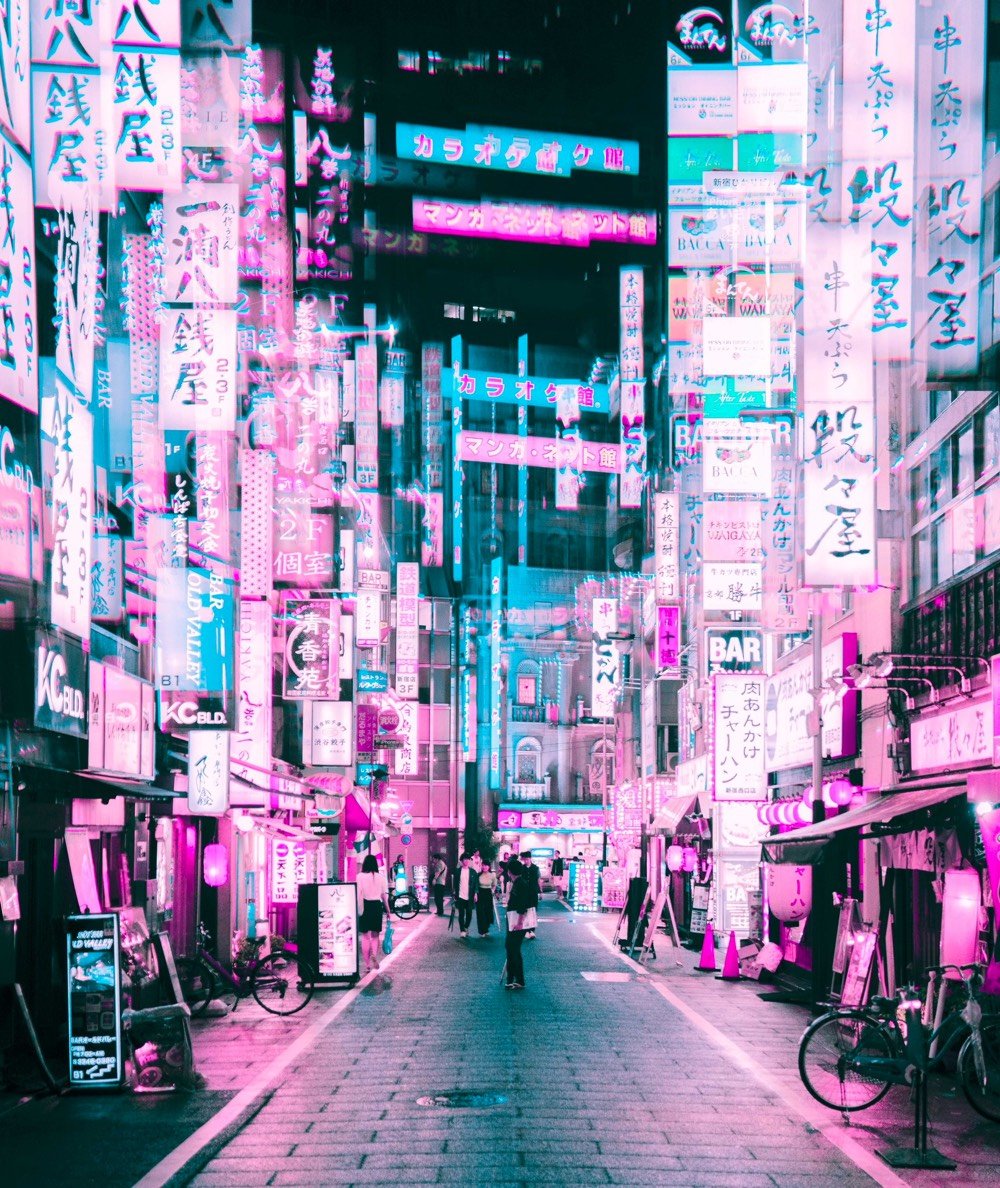

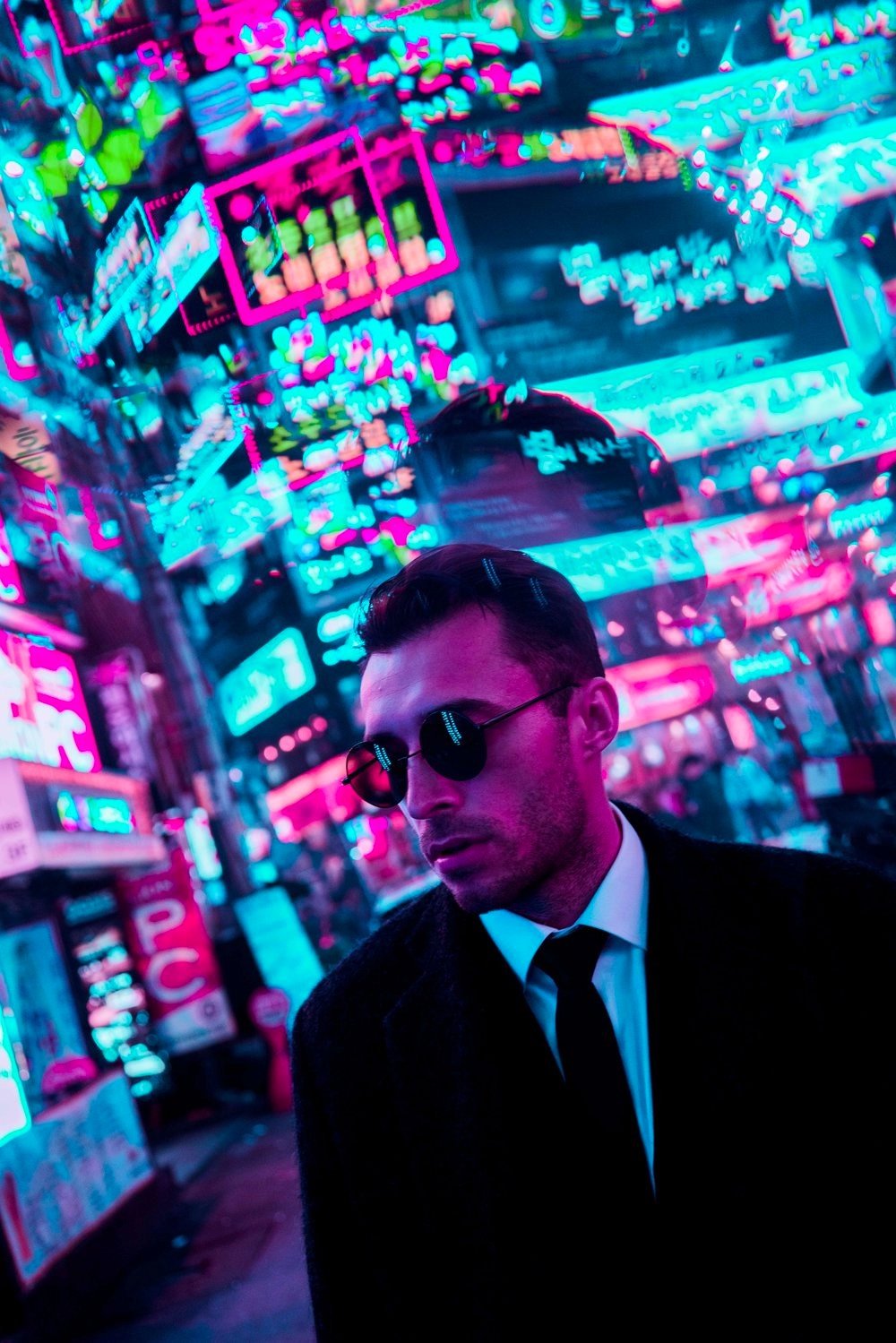
The lenses are adjustable prism filters that picks up images from outside the camera’s normal field of view, allowing for in-camera layering effects. You can check out more photos shot with these lenses on Instagram (though few quite as successful as Roe’s).
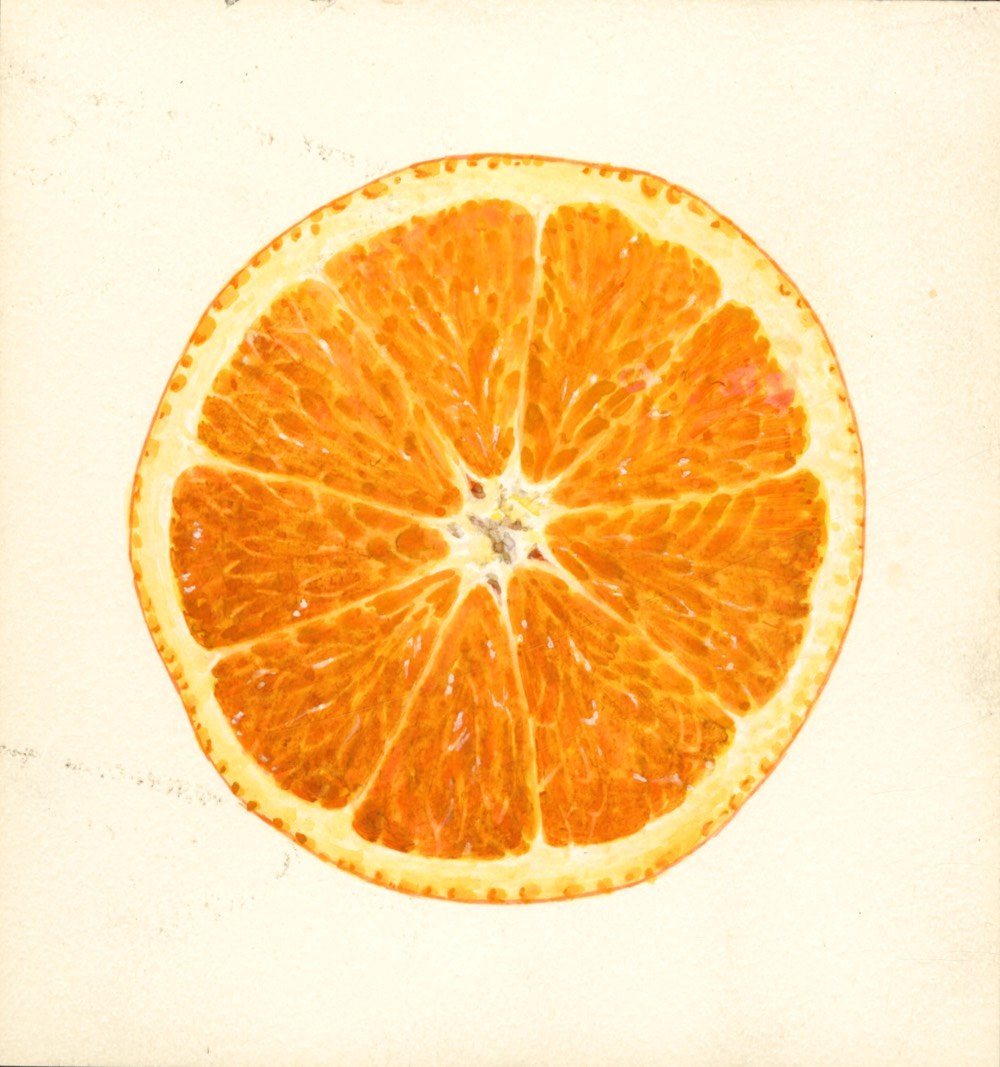
The human eye can see millions of colors but it can take awhile for language to catch up. Take the color orange. Until the 16th century, there was no word for that color in English and even then, when writers referenced it, they said something like “that thing that is the color of an orange”.
Orange, however, seems to be the only basic color word for which no other word exists in English. There is only orange, and the name comes from the fruit. Tangerine doesn’t really count. Its name also comes from a fruit, a variety of the orange, but it wasn’t until 1899 that “tangerine” appears in print as the name of a color-and it isn’t clear why we require a new word for it. This seems no less true for persimmon and for pumpkin. There is just orange. But there was no orange, at least before oranges came to Europe.
This is not to say that no one recognized the color, only that there was no specific name for it. In Geoffrey Chaucer’s “Nun’s Priest’s Tale,” the rooster Chaunticleer dreams of a threatening fox invading the barnyard, whose “color was betwixe yelow and reed.” The fox was orange, but in the 1390s Chaucer didn’t have a word for it. He had to mix it verbally. He wasn’t the first to do so. In Old English, the form of the language spoken between the 5th and 12th centuries, well before Chaucer’s Middle English, there was a word geoluhread (yellow-red). Orange could be seen, but the compound was the only word there was for it in English for almost 1,000 years.
Also, it has never occurred to me before reading this that “chromatically brown is a low-intensity orange”. !!! Anyway, this piece is an excerpt from the book On Color.
See also literature’s slow invention of the color blue. Orange painting by James Shull (via jodi)
The 100 best TV episodes of the 21st century. Way too much reality TV, Arrested Development, The Americans, and Deadwood are all listed too low, and True Detective at #4? AND FUCKING LOST?!! Jesus, come on.
Bloomberg Businessweek asked eight designers to design a logo for Trump’s proposed new branch of the military, Space Force. 89-year-old Milton Glaser, designer of the iconic I ❤ NY logo, can still bring the heat:
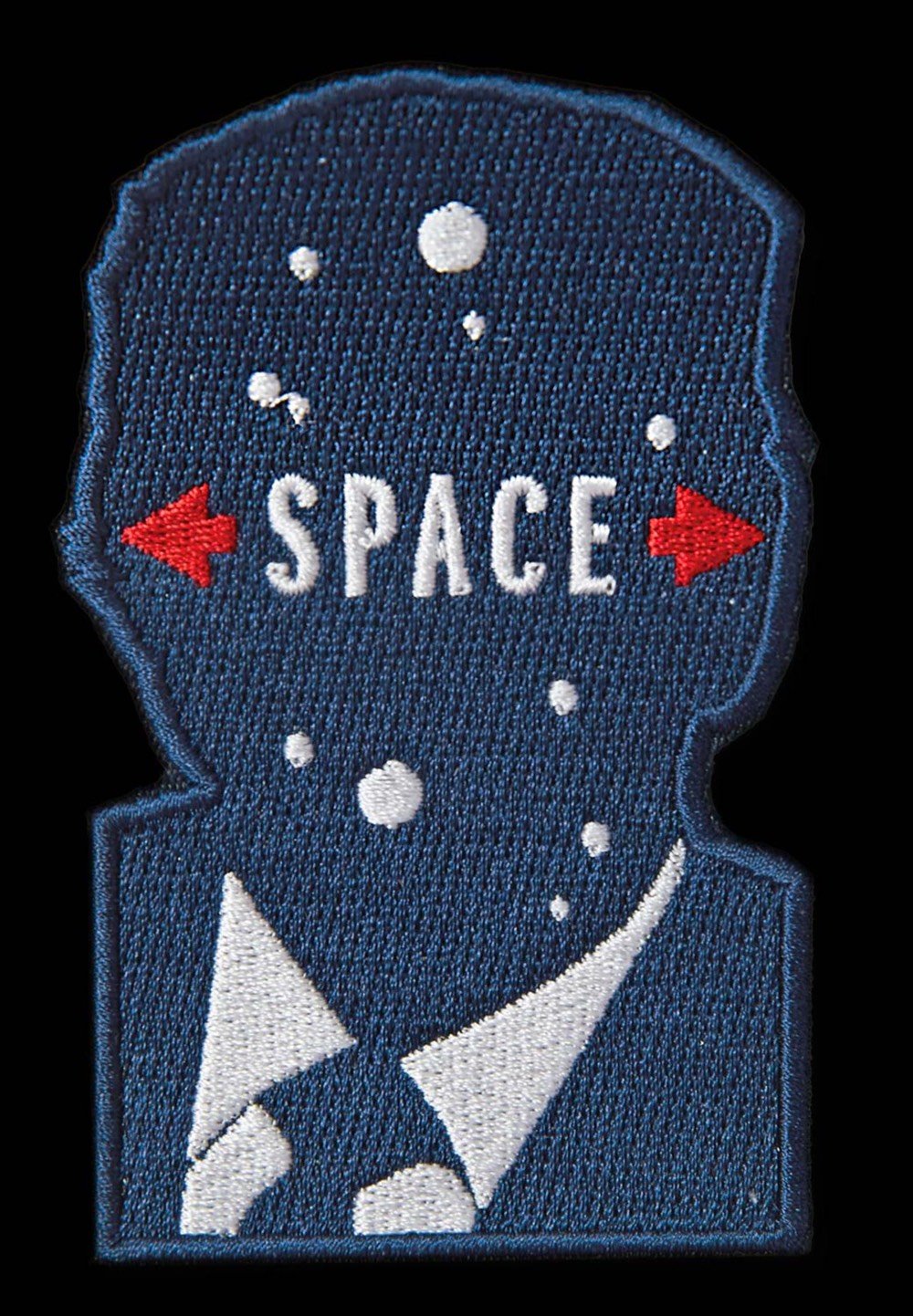
I really really *really* want this on a hat. (via df)
What is QAnon? A: “Q claims to be a government insider exposing an entrenched, international bureaucracy that is secretly plotting all sorts of nefarious schemes against the Trump administration”. WTaF?
From Edward Burtynsky (known around these parts for his aerial photographs of industrial landscapes) and filmmakers Jennifer Baichwal & Nicholas de Pencier comes a film called Anthropocene.
The Holocene epoch started 11,700 years ago as the glaciers of the last ice age receded. Geologists and other scientists from the Anthropocene Working Group believe that we have left the Holocene and entered a new epoch: the Anthropocene. Their argument is that humans have become the single most defining force on the planet and that the evidence for this is overwhelming. Terraforming of the earth through mining, urbanization, industrialization and agriculture; the proliferation of dams and diverting of waterways; CO2 and acidification of oceans due to climate change; the pervasive presence around the globe of plastics, concrete, and other technofossils; unprecedented rates of deforestation and extinction: these human incursions, they argue, are so massive in scope that they have already entered, and will endure in, geological time.
The film is one part of a larger “multimedia exploration” of the human epoch, which will include a book of new photography from Burtynsky, a traveling museum exhibition, interactive VR & AR experiences, and an educational program.
The film is premiering at the Toronto International Film Festival in September.
Update: In this video for Canadian Geographic, Catherine McKenna, Canada’s Minister of the Environment and Climate Change, talks with Burtynsky, Baichwal, and de Pencier about this project.
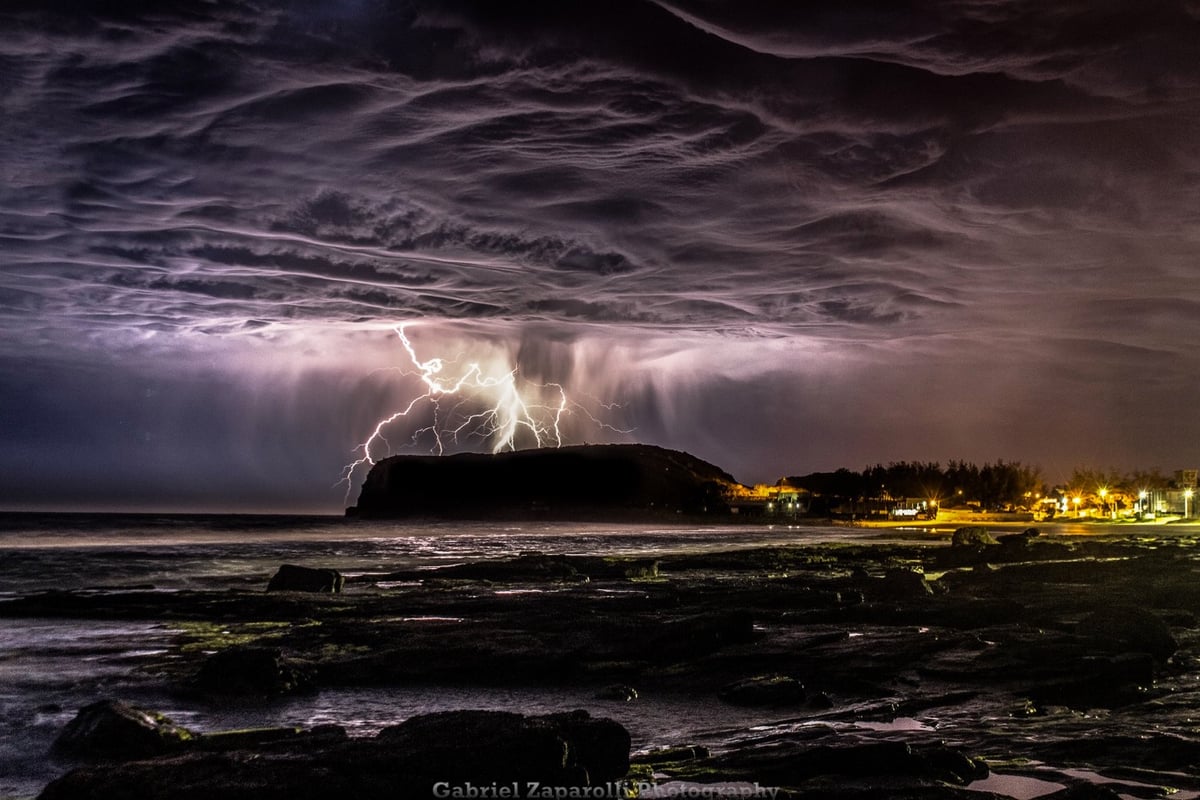
Holy moly, would you look at this photo taken by Gabriel Zaparolli!
This photo shows a distant lightning storm and asperitas clouds looming over the outskirts of Torres, Rio Grande do Sul, Brazil, as observed during the evening of June 10, 2018. On this long-exposure image it seems that most of the lightning consisted of cloud-to-ground strokes. Asperitas form in convective storms when the air in downdrafts (cooled by the sublimation of ice crystals) pushes through the cloud base.
Asperitas clouds plus lightning? What a capture.
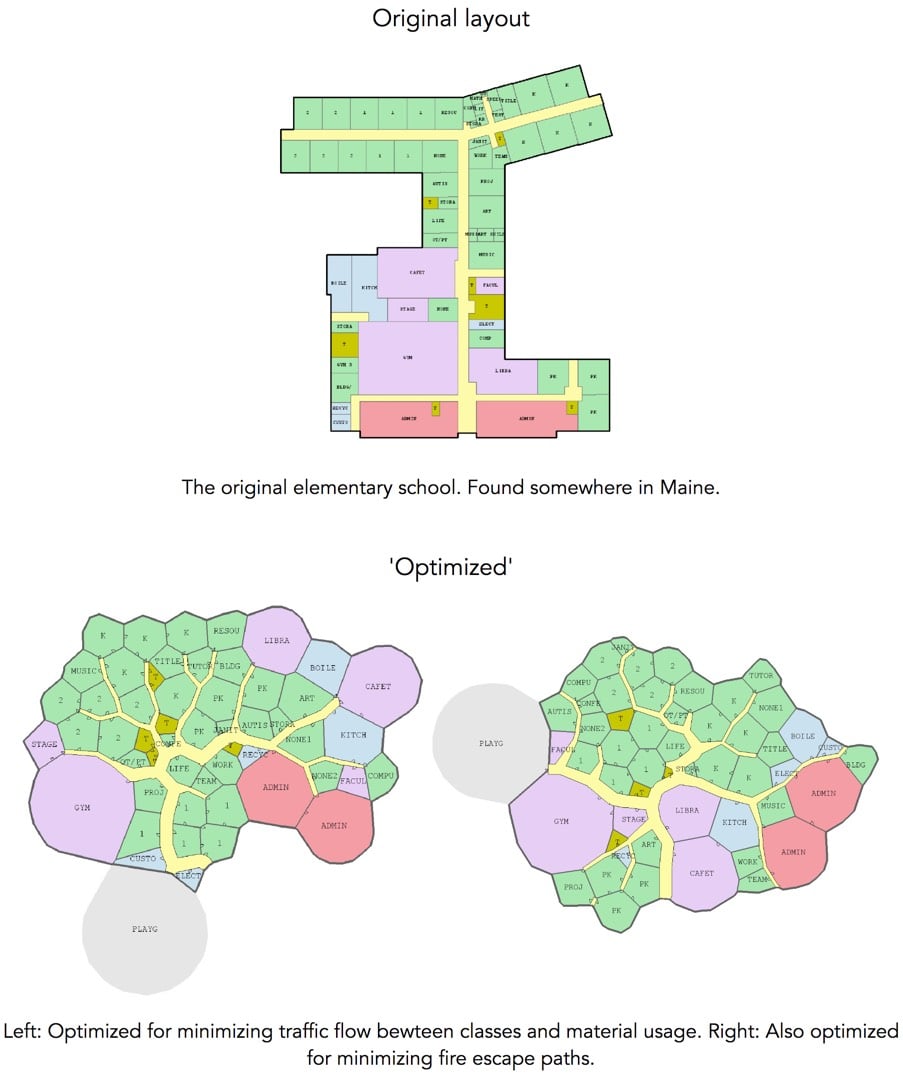
Joel Simon used a generative design process powered by a genetic algorithm to optimize the floor plans of buildings for different characteristics. That is, the algorithm “grew” buildings that had ideal floor plans for minimizing construction materials, shortest fire escape paths, and access to views — without worrying about how the buildings would actually be constructed.
The results were biological in appearance, intriguing in character and wildly irrational in practice.
As building materials and techniques continue to develop beyond the rectilinear bricks and concrete blocks, the “wildly irrational in practice” bit will become increasingly irrelevant. (via bb)
Parents are hiring Fortnite coaches for their kids. Sure, LOL, but is this any different than taking piano lessons or private soccer instruction?
The New York Times Magazine has devoted its entire issue this weekend to a single article by Nathanial Rich: Losing Earth: The Decade We Almost Stopped Climate Change.
The world has warmed more than one degree Celsius since the Industrial Revolution. The Paris climate agreement — the nonbinding, unenforceable and already unheeded treaty signed on Earth Day in 2016 — hoped to restrict warming to two degrees. The odds of succeeding, according to a recent study based on current emissions trends, are one in 20. If by miracle we are able to limit warming to two degrees, we will only have to negotiate the extinction of the world’s tropical reefs, sea-level rise of several meters and the abandonment of the Persian Gulf. The climate scientist James Hansen has called two-degree warming “a prescription for long-term disaster.” Long-term disaster is now the best-case scenario. Three-degree warming is a prescription for short-term disaster: forests in the Arctic and the loss of most coastal cities. Robert Watson, a former director of the United Nations Intergovernmental Panel on Climate Change, has argued that three-degree warming is the realistic minimum. Four degrees: Europe in permanent drought; vast areas of China, India and Bangladesh claimed by desert; Polynesia swallowed by the sea; the Colorado River thinned to a trickle; the American Southwest largely uninhabitable. The prospect of a five-degree warming has prompted some of the world’s leading climate scientists to warn of the end of human civilization.
Is it a comfort or a curse, the knowledge that we could have avoided all this?
Because in the decade that ran from 1979 to 1989, we had an excellent opportunity to solve the climate crisis. The world’s major powers came within several signatures of endorsing a binding, global framework to reduce carbon emissions — far closer than we’ve come since. During those years, the conditions for success could not have been more favorable. The obstacles we blame for our current inaction had yet to emerge. Almost nothing stood in our way — nothing except ourselves.
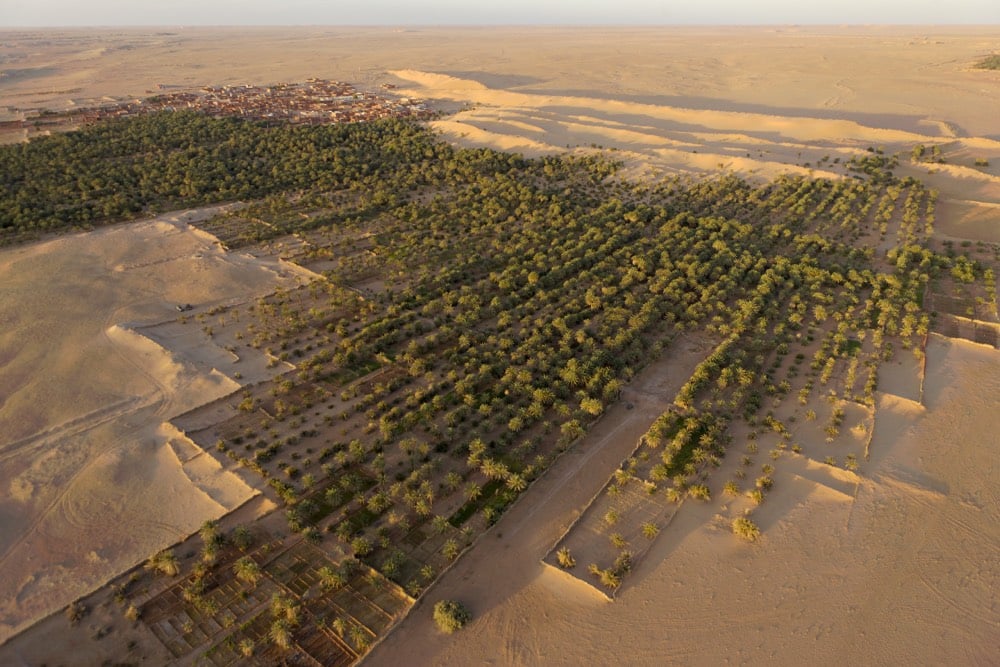
Photo by George Steinmetz, who did the photography for the Times piece.
Update: For a critical reading of Rich’s piece, check out this Twitter thread by Alex Steffen.
I notice that reactions to “Losing Earth” seem divided along a pretty straight-forward line: Those who work in climate science, journalism or advocacy-and those who don’t.
Folks who don’t work on climate for a living seem more positive about the piece than those who do.
There’s a reason for that: It’s a long essay that gets its subject wrong, and the ways it goes wrong are ways many of us who work on climate have seen again and again. It’s work that doesn’t know its history, and so makes old mistakes.
Weirdly central in Nathaniel Rich’s story is the claim that there existed a time before politics, when climate change was not hampered by opposition: “The obstacles we blame for our current inaction had yet to emerge. Almost nothing stood in our way…”
This is simply untrue.
He doubles down on the idea by explicitly exonerating high-CO2 industries + the GOP
“A common boogeyman today is the fossil-fuel industry, which in recent decades has committed to playing the role of villain with comic-book bravado. …Nor can the Republican Party be blamed.”
Robinson Meyer makes a similar point at The Atlantic.
The thrust of this history seems to suggest that powerful figures in the Republican Party were already skeptical of human-caused climate change by 1980. These leaders had not yet converted most Republican rank-and-file voters to their view, and indeed there may have been a few supporters of climate action in the party. But by and large, the most influential administration officials muddied climate science and weakened climate policy.
If Rich seems a little too charitable to the G.O.P, he lets fossil-fuel interests off the hook entirely. It’s likely that oil executives knew humans were triggering climate change before Rich’s story even picks up.
Newer posts





Socials & More