Entries for September 2017
Season four of Halt and Catch Fire finds the show in the 90s and the music has changed accordingly. Here’s the official playlist on Spotify.
See also the playlists for season 3, 1985, 1984, and many more from the show, including playlists for each main character.
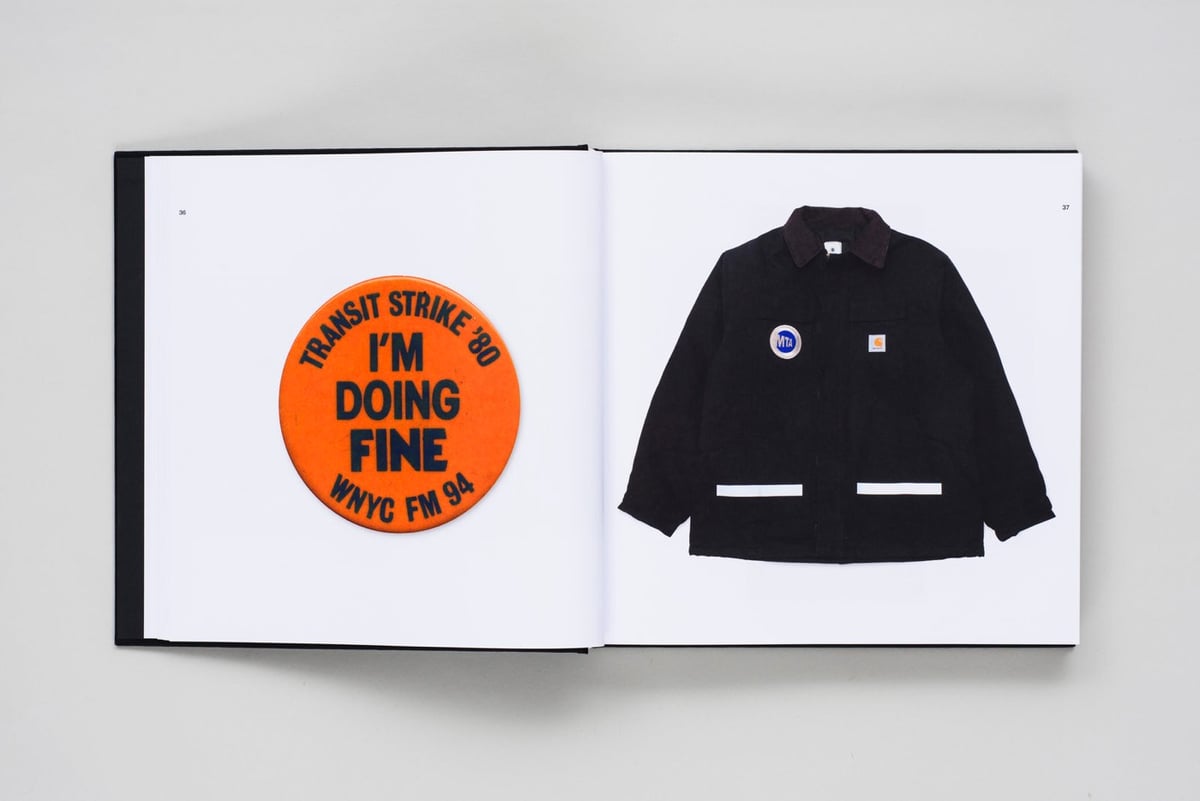
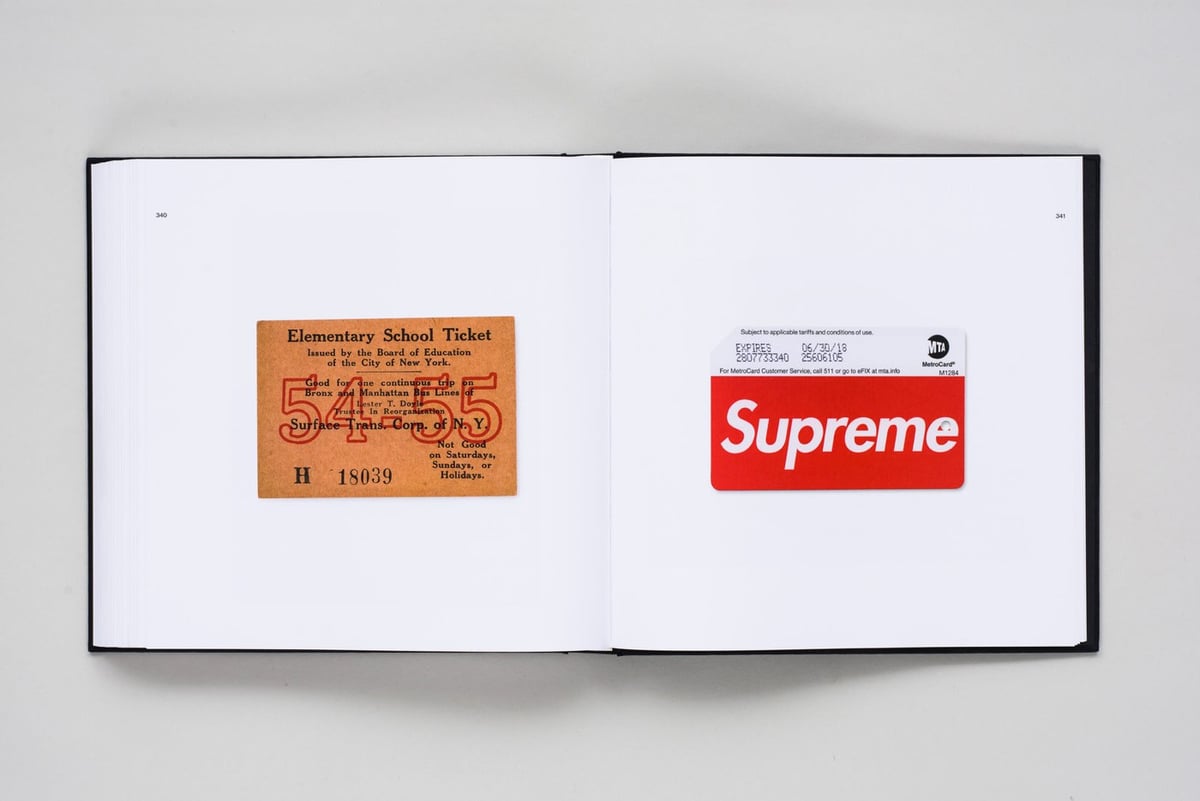
From the team that brought us the reissues of the NASA Standards Manual and the NYCTA Graphics Standards Manual comes New York City Transit Authority: Objects by Brian Kelley (@ Amazon), a book full of photographs of artifacts related to the NYC subway and other transit systems in the city.
Kelley started collecting MTA MetroCards in 2011, and he quickly became fascinated by other Subway-related objects. This catalogue is the first of its kind — presenting a previously uncollated archive of subway ephemera that spans three centuries.
Kelley posts photos of many of the artifacts he’s found on Instagram.
In a multi-part series, ScreenPrism will be looking at the codes and values of some of the main characters in The Wire. The first installment is about Jimmy McNulty, who is “good po-lice” but also doesn’t always take personal responsibility for his actions (“what the fuck did I do?”).
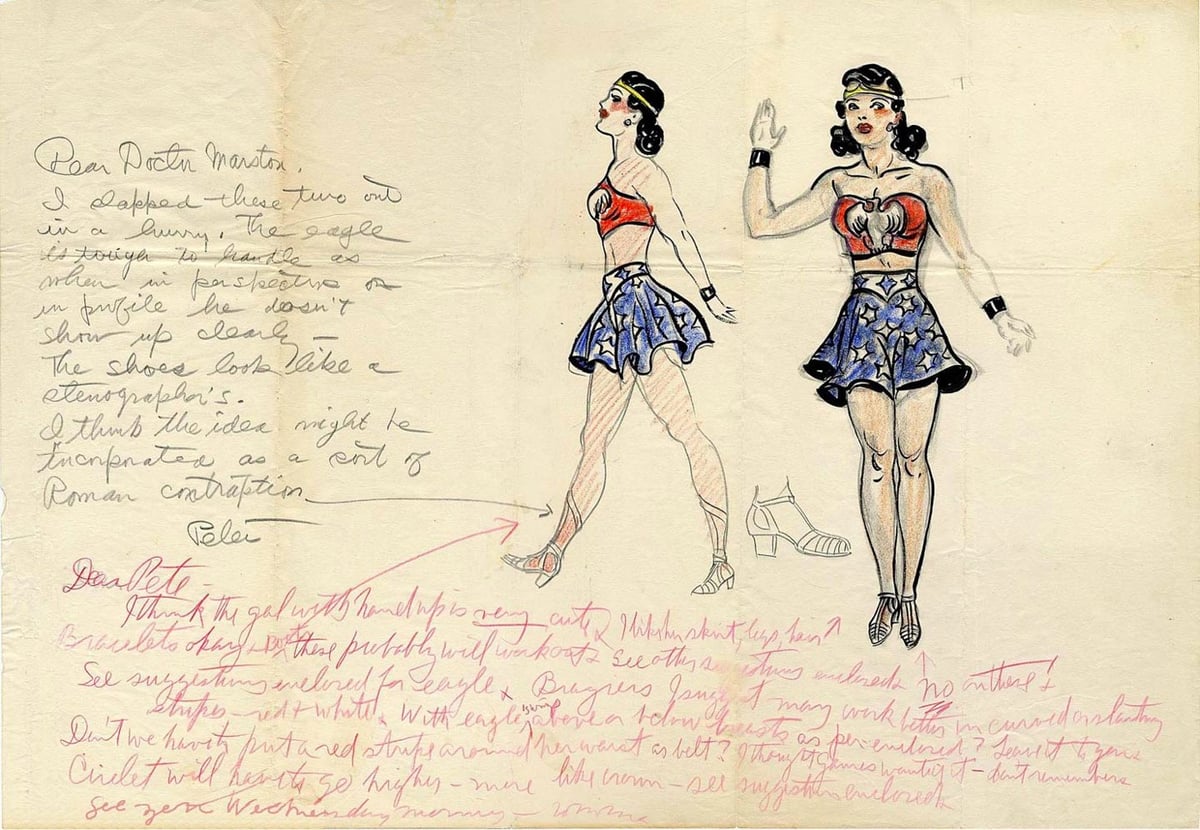
This is the first ever sketch of Wonder Woman by H.G. Peter from 1941. On the drawing, Peter wrote:
Dear Dr. Marston, I slapped these two out in a hurry. The eagle is tough to handle — when in perspective or in profile, he doesn’t show up clearly — the shoes look like a stenographer’s. I think the idea might be incorporated as a sort of Roman contraption. Peter
The Wonder Woman character was conceived by William Moulton Marston, who based her on his wife Elizabeth Marston and his partner Olive Byrne. (Reading between the lines about WW’s creation, you get the sense that Elizabeth deserves at least some credit for genesis of the character as well.) On the same drawing, Marston wrote back to Peter:
Dear Pete — I think the gal with hand up is very cute. I like her skirt, legs, hair. Bracelets okay + boots. These probably will work out. See other suggestions enclosed. No on these + stripes — red + white. With eagle’s wings above or below breasts as per enclosed? Leave it to you. Don’t we have to put a red stripe around her waist as belt? I thought Gaines wanted it — don’t remember. Circlet will have to go higher — more like crown — see suggestions enclosed. See you Wednesday morning - WMM.
From Wikipedia:
Wonder Woman was created by the American psychologist and writer William Moulton Marston (pen name: Charles Moulton), and artist Harry G. Peter. Olive Byrne, Marston’s lover, and his wife, Elizabeth, are credited as being his inspiration for the character’s appearance. Marston drew a great deal of inspiration from early feminists, and especially from birth control pioneer Margaret Sanger; in particular, her piece “Woman and the New Race”. The character first appeared in All Star Comics #8 in October 1941 and first cover-dated on Sensation Comics #1, January 1942. The Wonder Woman title has been published by DC Comics almost continuously except for a brief hiatus in 1986.
William, Elizabeth, Olive seemed like really interesting people. They lived together in a polyamorous relationship (which I imagine was fairly unusual for the 1940s) and William & Elizabeth worked together on inventing the systolic blood pressure test, which became a key component in the later invention of the polygraph test. Olive was a former student of William’s and became his research assistant, likely helping him with much of his work without credit.
Update: The upcoming film Professor Marston and the Wonder Women is a biographical drama about the lives of William, Elizabeth, and Olive. Here’s a trailer:
The Imaginary Worlds podcast also had an episode on the genesis of Wonder Woman (featuring New Yorker writer Jill Lepore, who wrote The Secret History of Wonder Woman):
(via @ironicsans & warren)
Wall Drawing 797 is a conceptual artwork by Sol LeWitt consisting of instructions that anyone can use to make a drawing. I found this at The Kid Should See This1 and I cannot improve on their description:
How does one person’s actions influence the next person’s actions in a shared space? Sol LeWitt’s wall drawings explore this intricate visual butterfly effect in the collaborative art entitled Wall Drawing 797, a conceptual piece that can be drawn by following LeWitt’s instructions. (He died in 2007.)
“Intricate visual butterfly effect” is such a good way of putting it. I have a huge wall right above my desk…I kind of want to make my own Wall Drawing 797 now.
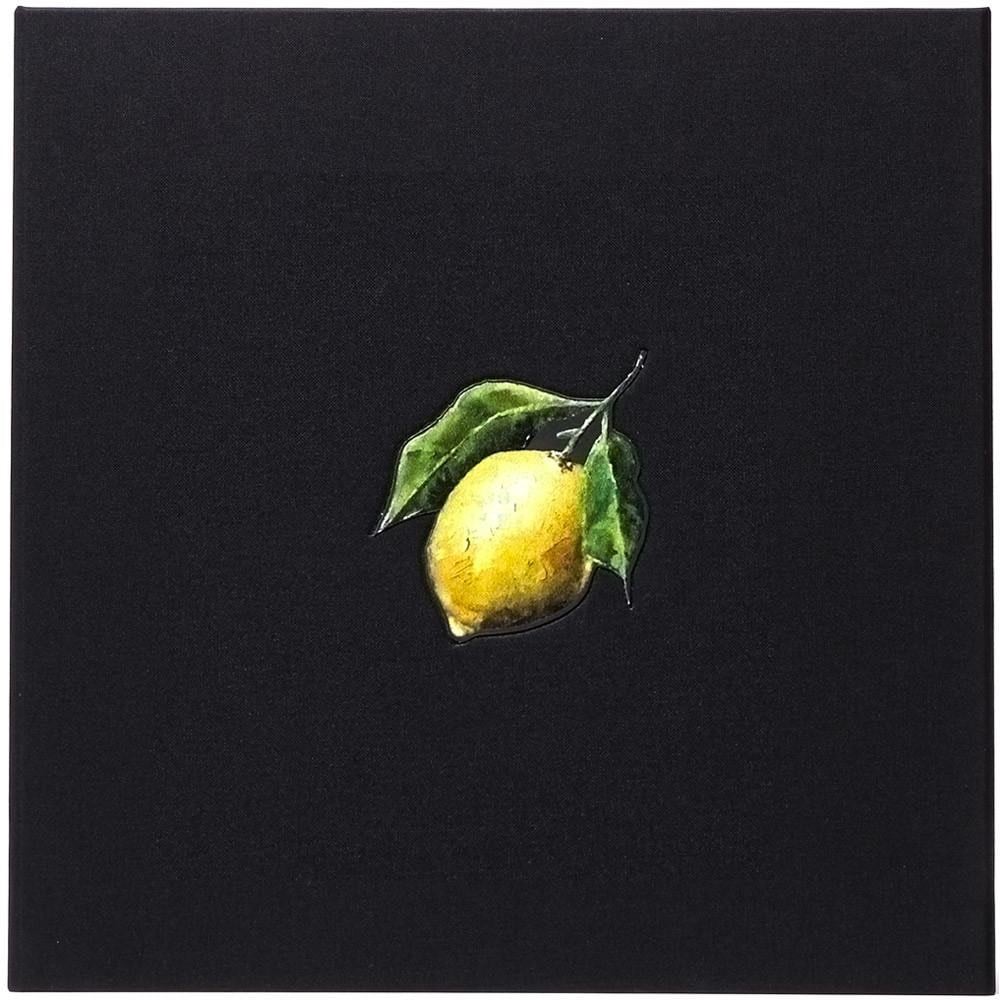
Last month, Beyonce released a collector’s edition box set of her latest album called How To Make Lemonade. The set is $300 and includes Lemonade on vinyl as well as downloadable digital versions of the audio and visual albums. But the star of the show here is the 600-page coffee table book full of photos, stories, and poetry about the making of the album.

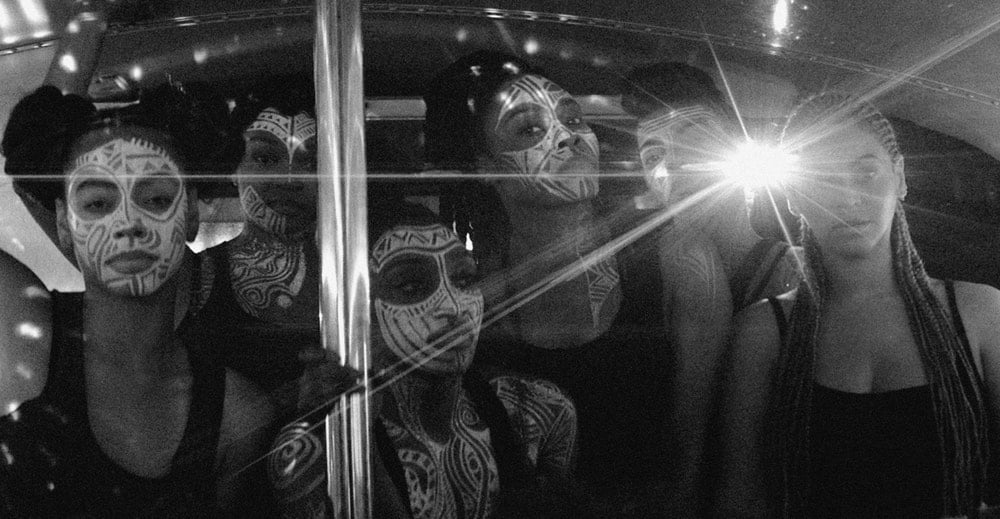
Lemonade is still my favorite album of the past few years.
The Atlantic has just put up a previously unpublished short story by Kurt Vonnegut, The Drone King. It’s about bees.
He examined the card for a long time. “Yes,” he said at last. “Mr. Quick is expecting you. You’ll find him in the small library — second door on the left, by the grandfather clock.”
“Thank you,” I said, and I started past him.
He caught my sleeve. “Sir—”
“Yes?,” I said.
“You aren’t wearing a boutonniere, are you?”
“No,” I said guiltily. “Should I be?”
“If you were,” he said, “I’d have to ask you to check it. No women or flowers allowed past the front desk.”
I paused by the door of the small library. “Say,” I said, “you know this clock has stopped?”
“Mr. Quick stopped it the night Calvin Coolidge died,” he said.
I blushed. “Sorry,” I said.
“We all are,” he said. “But what can anyone do?”
An audio version of the article is available.
The story is one of five that Vonnegut wrote in the early 1950s that were recently discovered in the author’s papers. These five, plus all of Vonnegut’s other short stories, will be out in book form later this month.
A massive genetic study led by Hakhamanesh Mostafavi, an evolutionary biologist at Columbia, suggests that evolution is weeding out certain genetic mutations in humans that shorten people’s lives.
Mostafavi and his colleagues tested more than 8 million common mutations, and found two that seemed to become less prevalent with age. A variant of the APOE gene, which is strongly linked to Alzheimer’s disease, was rarely found in women over 70. And a mutation in the CHRNA3 gene associated with heavy smoking in men petered out in the population starting in middle age. People without these mutations have a survival edge and are more likely to live longer, the researchers suggest.
This is not, by itself, evidence of evolution at work. In evolutionary terms, having a long life isn’t as important as having a reproductively fruitful one, with many children who survive into adulthood and birth their own offspring. So harmful mutations that exert their effects after reproductive age could be expected to be ‘neutral’ in the eyes of evolution, and not selected against.
But if that were the case, there would be plenty of such mutations still kicking around in the genome, the authors argue. That such a large study found only two strongly suggests that evolution is “weeding” them out, says Mostafavi, and that others have probably already been purged from the population by natural selection.
A South Korean video editor named Kojer took characters from Studio Ghibli films and digitally inserted them into real world scenes and background. So you get to see Ponyo running on a lake, Totoro waiting in the rain on an actual train platform, the Catbus running through a real meadow, and Howl’s castle moving through a city.
This is super-cool…the effect is nearly seamless. Here’s a behind-the-scenes look at how he did the rotoscoping, touch-ups, background replacement, and shadow work on the animated characters:
It’s incredible how much the tools and technology have advanced when one person using off-the-shelf software on a single computer can do what took months to accomplish using traditional cel animation on Who Framed Roger Rabbit?
Every year at Burning Man, Tycho does a 2-hour DJ set coinciding with the sunrise. Here’s 2017’s installment. You can also go back and listen to sunrise sets from 2016, 2015, and 2014. There, now your whole day is chill.
A newly released study by Gregory Martin and Ali Yurukolu published in the American Economic Review shows that watching Fox News has a significant effect on the overall Republican vote share in Presidential elections. They analyzed the channel position of the three major cable networks (Fox News, MSNBC, CNN), compared it to voting patterns, and found that “Fox News increases Republican vote shares by 0.3 points among viewers induced into watching 2.5 additional minutes per week by variation in position”. Using that result, they constructed a model to estimate the overall influence.
In other results, we estimate that removing Fox News from cable television during the 2000 election cycle would have reduced the overall Republican presidential vote share by 0.46 percentage points. The predicted effect increases in 2004 and 2008 to 3.59 and 6.34 percentage points, respectively. This increase is driven by increasing viewership on Fox News as well as an increasingly conservative slant. Finally, we find that the cable news channels’ potential for influence on election outcomes would be substantially larger were ownership to become more concentrated.
6.3% is an astounding effect. Fox News appears to be uniquely persuasive when compared to the other channels, particularly in bringing people across the aisle:
Were a viewer initially at the ideology of the median Democratic voter in 2008 to watch an additional three minutes of Fox News per week, her likelihood of voting Republican would increase by 1.03 percentage points. Another pattern that emerges from the table is that Fox is substantially better at influencing Democrats than MSNBC is at influencing Republicans.
They also estimate that cable news has contributed greatly to the rise in political polarization in the US over the period studied:
Furthermore, we estimate that cable news can increase polarization and explain about two-thirds of the increase among the public in the United States, and that this increase depends on both a persuasive effect of cable news and the existence of tastes for like-minded news.
This analysis is especially interesting/relevant when you consider other recent activist media efforts with an eye toward conservative influence: the Russian ad-buying on Facebook during the last election (and related activities), billionaire Trump-backer Sheldon Adelson’s purchase of The Las Vegas Review-Journal, and conservative-leaning Sinclair Media’s proposed acquisition of Tribune Media. (via mr)
Kurzgesagt asks and answers the question: what happens if we bring the Sun to the Earth? Since the density and makeup of the Sun varies, they go over scenarios of sampling a house-size chunk from four different spots of the Sun: the chromosphere, the photosphere, the radiative zone, and the core. The answers range from “not much” to “well, that was a terrifically bad idea”.
In a video for TED-Ed, Angel Chang takes us through the life cycle of a typical t-shirt, from cotton to rags, with a focus on the embodied energy of the manufacture and use of a shirt. For instance, because of how it’s produced and shipped around the world, clothing production accounts for 10% of global carbon emissions.
See also Planet Money’s T-shirt Project.

Amateur photographer Kristi McCluer took what will probably be one of the most iconic photos of 2017 of the wildfires in the Pacific Northwest.
“I don’t golf at all,” Kristi McCluer said over the phone on Thursday morning. Instead, she said, “I have spent a great part of my life in the Columbia River Gorge, hiking.”
So when the Eagle Creek fire began, she decided she needed to see it for herself.
“I was actually going to drive up to the Bridge of the Gods,” McCluer said. But she saw a parking lot and decided to pull in. After being told she couldn’t park there because it was actually a road, she found a real parking lot that was nearly empty.
“Around the corner was this golf course,” she said, “and you could see the fire.”
So she started snapping pictures.
I was amazed to discover that it wasn’t Photoshopped. For a similar metaphorical punch, see also Theunis Wessels mowing his lawn in Alberta, Canada while a tornado spins in the background (photo by Cecilia Wessels).
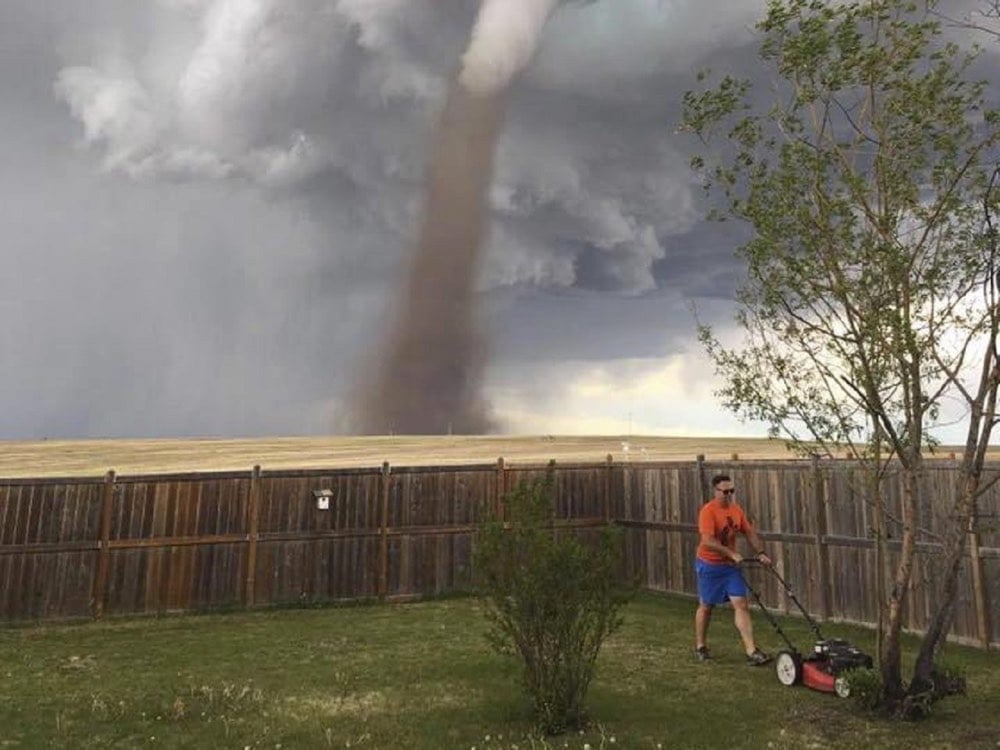
2017: this is fine. (via @mccanner)
You Were Never Really Here is a thriller directed by Lynne Ramsay and starring Joaquin Phoenix as an enforcer for hire. The film is based on a short novel by Jonathan Ames of the same name.
A former Marine and ex-FBI agent, Joe has seen one too many crime scenes and known too much trauma, and not just in his professional life. Solitary and haunted, he prefers to be invisible. He doesn’t allow himself friends or lovers and makes a living rescuing young girls from the deadly clutches of the sex trade. But when a high-ranking New York politician hires him to extricate his teenage daughter from a Manhattan brothel, Joe uncovers a web of corruption that even he may not be able to unravel.
Oh, and Jonny Greenwood did the soundtrack. Looking forward to this one. (via @craigmod)
If you look at the basic colors from a variety of cultures & languages from around the world, there are differences in the number of colors represented in each language. Some languages only have words for black, white, and red while others have words for more than 10 basic colors. Surprisingly, there’s a pattern behind the development of these color words across many of these languages: the words for colors were often invented in the same order.
See also one of my favorite segments of Radiolab on the color blue.
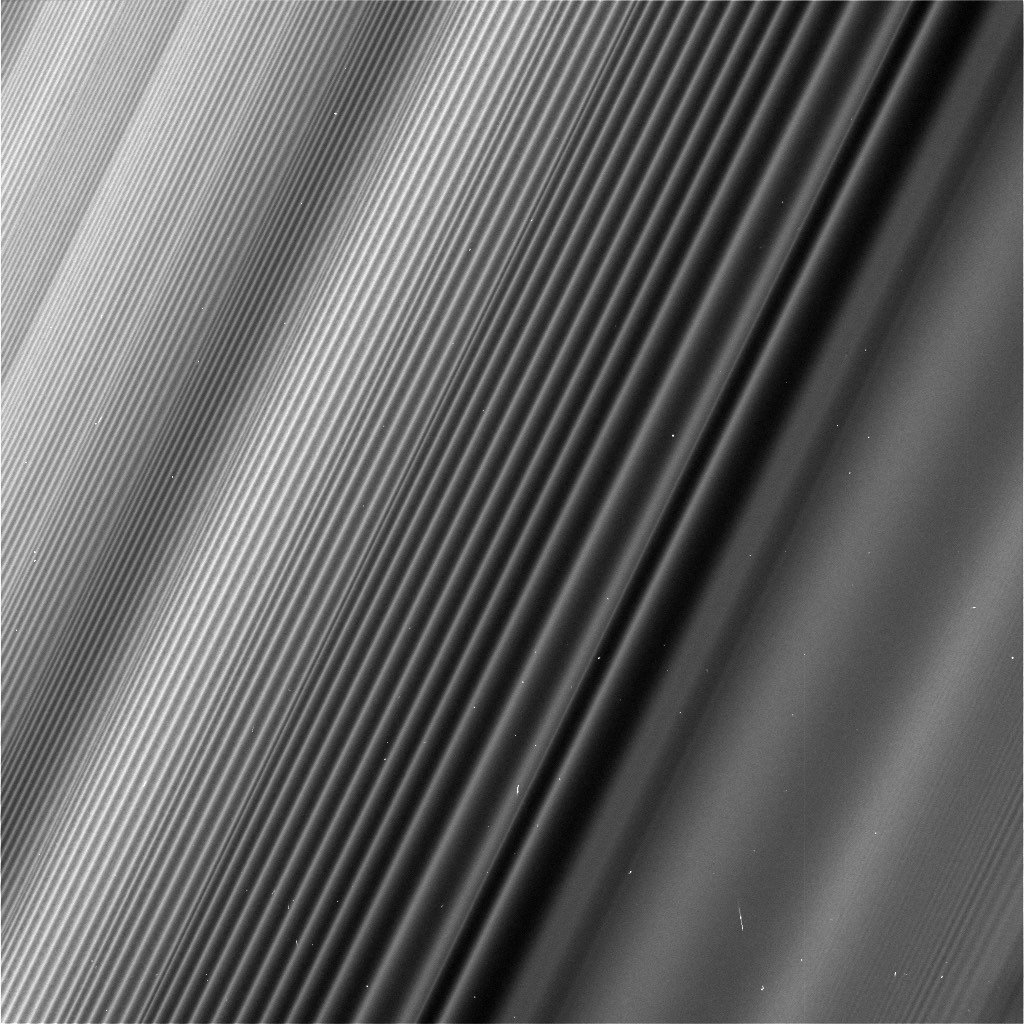
On one of its final passes of Saturn, the Cassini probe captured this image of a wave structure in Saturn’s rings known as the Janus 2:1 spiral density wave. The waves are generated by the motion of Janus, one of Saturn’s smaller moons.
This wave is remarkable because Janus, the moon that generates it, is in a strange orbital configuration. Janus and Epimetheus (see “Cruising Past Janus”) share practically the same orbit and trade places every four years. Every time one of those orbit swaps takes place, the ring at this location responds, spawning a new crest in the wave. The distance between any pair of crests corresponds to four years’ worth of the wave propagating downstream from the resonance, which means the wave seen here encodes many decades’ worth of the orbital history of Janus and Epimetheus. According to this interpretation, the part of the wave at the very upper-left of this image corresponds to the positions of Janus and Epimetheus around the time of the Voyager flybys in 1980 and 1981, which is the time at which Janus and Epimetheus were first proven to be two distinct objects (they were first observed in 1966).
The photograph is also an optical illusion of sorts. The rings appear to be getting farther away in the upper lefthand corner but the plane of the photograph is actually parallel to the plane of the rings…it’s just that the wavelength of the density wave gets shorter from right to left.
Update: Here are those density waves converted into sound waves. The first set sounds like an accelerating F1 car.

From J.R. Schmidt, a rendering of New York City in Lego. Prints are available. Be sure to check out his other work as well…cool stuff.
See also Christoph Niemann’s I Lego NY book. (thx alastair)
Unendurable line is a short film by Daihei Shibata which shows the movement of objects like springs, magnetically attracted objects, spinning tops, and stacked blocks accompanied by a real-time graph of the movement. A bit tough to explain…just watch it. Reminds me of Bret Victor’s live coding. (via colossal)
The monks of Mount Hiei in Japan perform a spiritual practice called Kaihōgyō in the form of a 1000-day pilgrimage that’s spread out over seven years. There’s secrecy around the practice so it’s difficult to know the precise details, but the gist is that each year, a monk undertaking the practice spends 100 days (or more!) walking 25 miles (or more!) in the middle of the night (because monks have their regular duties and chores to do during the day), stopping at more than 250 sites to recite prayers. That’s 25 miles each day, mind you.
And then there’s this, thrown in about 2/3rds of the way through, just for good measure:
After 700 days, the Kaihogyo practitioner faces what Mitsunaga calls an exam. He enters a hall and prays nonstop for nine days, without eating, drinking, sleeping or even lying down. It’s a near-death experience, the monk says.
“Put simply, you just have to give up everything and pray to the Immovable Wisdom King,” he says. “By doing this, he may recognize you and allow you to live for nine days.”
The practitioner interrupts his prayers every night to come to a small fountain and get an offering of water for Fudo Myo-o. Toward the end of the nine days, the practitioner is so weak, he must be supported by fellow monks.
Finally, his old self dies, at least figuratively, and he is reborn to help and lead all beings to enlightenment.
You can read more about at Wikipedia, The Guardian, and Nowness.
The fade out used to be ubiquitous in pop music and the technique has some advantages over other ending methods. In one study, participants tapped along to the beat for a couple seconds after songs with fade outs ended, as if the fade out helped the song live on after it had ended. What musician wouldn’t want that? So why has the fade out fallen out of favor in the past few years?
Also, I love the lo-tech origin story of the fade out: composer Gustav Holst had someone close a door on a choir during a performance in 1918.
Composer Gustav Holst understood the power of the fade-out and employed one of the first at a 1918 concert. For the “Neptune” section of The Planets, Holst had the women’s choir sing in a room offstage. Toward the end, he instructed, the door should be closed very slowly: “This bar is to be repeated until the sound is lost in the distance.” Given the subject matter — Neptune was thought to be the most distant planet in the solar system — Holst’s attempt to conjure the remoteness of the planet and the mysteries of the cosmos makes sense.
The technology for recorded music wasn’t any more evolved…if you wanted to fade a sound out, you had to physically carry the recording device (the phonograph or microphone) away from the audio source.
Inside Music is a Web VR tool from Google and Song Exploder that lets you explore how songs from Perfume Genius, Phoenix, Ibeyi, and others are put together. Here’s a short video explanation:
You can turn different parts of each song off and on…guitars, bass, vocals, etc.; it’s cool to isolate different parts of each song. This works pretty well in the browser but I would imagine it’s a whole different deal if you have a VR rig.
Google has put the code for Inside Music on Github so if you’re a musician, you can explore your own songs in VR or put them up on the web for others to explore.
Each year, in one of my favorite media traditions, Conor Friedersdorf picks dozens of articles, essays, podcasts, and stories from the previous year “that stood the test of time”. Here’s his just-published installment for this year.
Friedersdorf has a keen eye (and ear) for good stories. Shamefully, I’ve read maybe 10% of the articles listed here…I’ve dropped my longform reading in recent years in favor of books, TV, and being out in the real world. Maybe on my next vacation, instead of a book, I’ll tackle this list instead.
Cosmetics giant L’Oreal recently fired Munroe Bergdorf for her comments regarding the white supremacist terror acts in Charlottesville. Bergdorf, a black transgender model hired as the face of the company’s diversity campaign, wrote on Facebook:
Honestly I don’t have energy to talk about the racial violence of white people any more. Yes ALL white people.
Because most of ya’ll don’t even realise or refuse to acknowledge that your existence, privilege and success as a race is built on the backs, blood and death of people of colour. Your entire existence is drenched in racism. From micro-aggressions to terrorism, you guys built the blueprint for this s***.
In a piece for Quartz, Aamna Mohdin explains what people mean when they say all white people are racist; it involves institutional/systemic racism vs. individual racism (the media tells us much more about the latter than the former) and who holds the power in American society.
It’s complicated. In a follow-up statement, Bergdorf said she was addressing society as a whole and a system “rooted in white supremacy-designed to benefit, prioritize and protect white people before anyone of any other race.” She argues that white people are socialized to be racist, just as men are socialized to be sexist. The onus is on each person to “unlearn” that socialization, she adds.
What Bergdorf appeared to be talking about is systemic racism — the kind based in historical inequities that has ongoing wide-reaching effects, from economic marginalization to daily microaggressions to unequal treatment in the criminal justice system — as distinct from individual racism.
In 1952, a friend of J.R.R. Tolkien showed him a tape recorder, which the author had never seen before. Delighted, Tolkien sat for his friend and read from The Hobbit for 30 minutes “in this one incredible take”. The audio is split between these two videos (with visuals and music added later):
Given the circumstances, the clarity of this recording is pretty remarkable. Give it a listen for at least the first two minutes…hearing Tolkien do Smeagol/Gollum’s voice is really cool. (via open culture)
In 1928, the writer and civil rights activist W.E.B. Du Bois wrote a short piece about the legacy of Confederate general Robert E. Lee.
Each year on the 19th of January there is renewed effort to canonize Robert E. Lee, the greatest confederate general. His personal comeliness, his aristocratic birth and his military prowess all call for the verdict of greatness and genius. But one thing — one terrible fact — militates against this and that is the inescapable truth that Robert E. Lee led a bloody war to perpetuate slavery. Copperheads like the New York Times may magisterially declare: “of course, he never fought for slavery.” Well, for what did he fight? State rights? Nonsense. The South cared only for State Rights as a weapon to defend slavery. If nationalism had been a stronger defense of the slave system than particularism, the South would have been as nationalistic in 1861 as it had been in 1812.
No. People do not go to war for abstract theories of government. They fight for property and privilege and that was what Virginia fought for in the Civil War. And Lee followed Virginia. He followed Virginia not because he particularly loved slavery (although he certainly did not hate it), but because he did not have the moral courage to stand against his family and his clan. Lee hesitated and hung his head in shame because he was asked to lead armies against human progress and Christian decency and did not dare refuse. He surrendered not to Grant, but to Negro Emancipation.
See also W.E.B. Du Bois on Confederate Monuments.
I was lukewarm on season 2 of Mr. Robot but am hoping, based on this trailer, that season 3 is a return to form for the show. See also the teaser trailer.
Oh, and you can reacquaint yourself with last season in just 7 minutes. Handy!
Mark and his friend Anton recently cracked open a Coca-Cola that was bottled in 1956, back in the era of Chuck Berry, sock hops, and Marty McFly’s first time travel destination. I don’t want to totally spoil the results of their taste test, but let’s just say that Coke appears to be even more impervious to the ravages of time than a McDonald’s cheeseburger.
Cool fact: bottle caps in 1956 were lined on the inside with cork, like these caps for sale on Etsy.
Update: Mark and his friend Grace recently drank a bottle of Pepsi from 1935. I think it went ok because Mark emailed me this video.
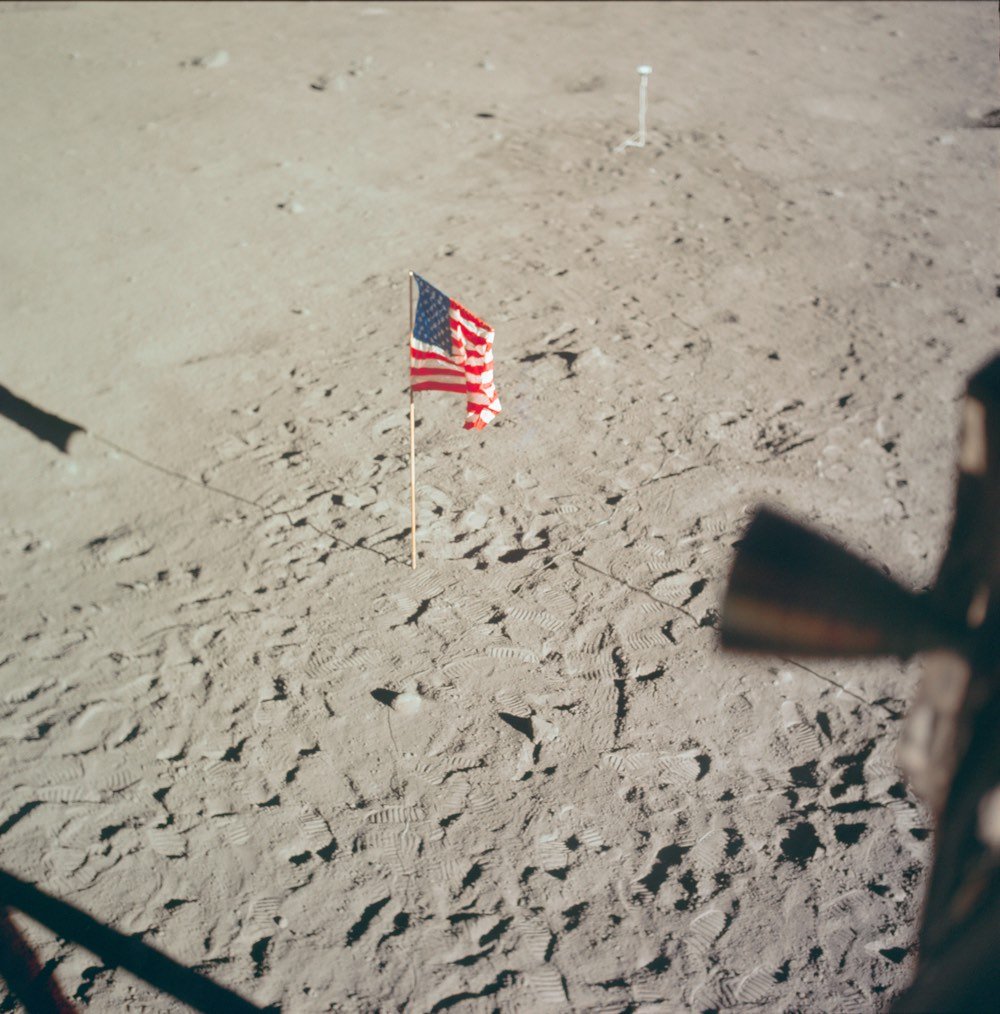
The Moon 1968-1972 is a slim volume of photographs from the Apollo missions to the Moon that took place over four short years almost 50 years ago. The book contains a passage by E.B. White taken from this New Yorker article about the Apollo 11 landing in 1969.
The moon, it turns out, is a great place for men. One-sixth gravity must be a lot of fun, and when Armstrong and Aldrin went into their bouncy little dance, like two happy children, it was a moment not only of triumph but of gaiety. The moon, on the other hand, is a poor place for flags. Ours looked stiff and awkward, trying to float on the breeze that does not blow. (There must be a lesson here somewhere.) It is traditional, of course, for explorers to plant the flag, but it struck us, as we watched with awe and admiration and pride, that our two fellows were universal men, not national men, and should have been equipped accordingly. Like every great river and every great sea, the moon belongs to none and belongs to all. It still holds the key to madness, still controls the tides that lap on shores everywhere, still guards the lovers who kiss in every land under no banner but the sky. What a pity that in our moment of triumph we did not forswear the familiar Iwo Jima scene and plant instead a device acceptable to all: a limp white handkerchief, perhaps, symbol of the common cold, which, like the moon, affects us all, unites us all.
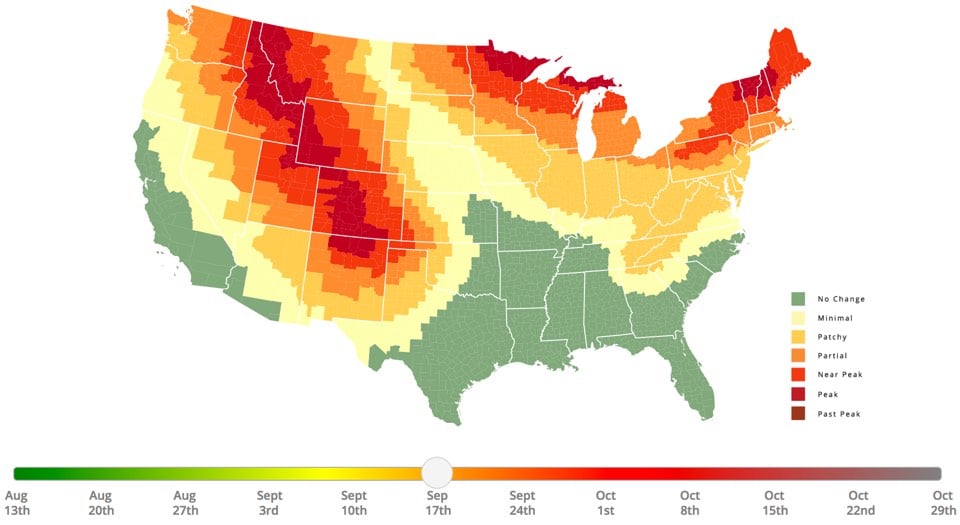
It’s September 1st and currently 52° here in VT (low tonight of 38°) which means summer is over. :| But luckily fall is pretty great here as well. Once again, SmokyMountains.com has the best fall foliage prediction map around.
The 2017 Fall Foliage Map is the ultimate visual planning guide to the annual progressive changing of the leaves. While no tool can be 100% accurate, this tool is meant to help travelers better time their trips to have the best opportunity of catching peak color each year.
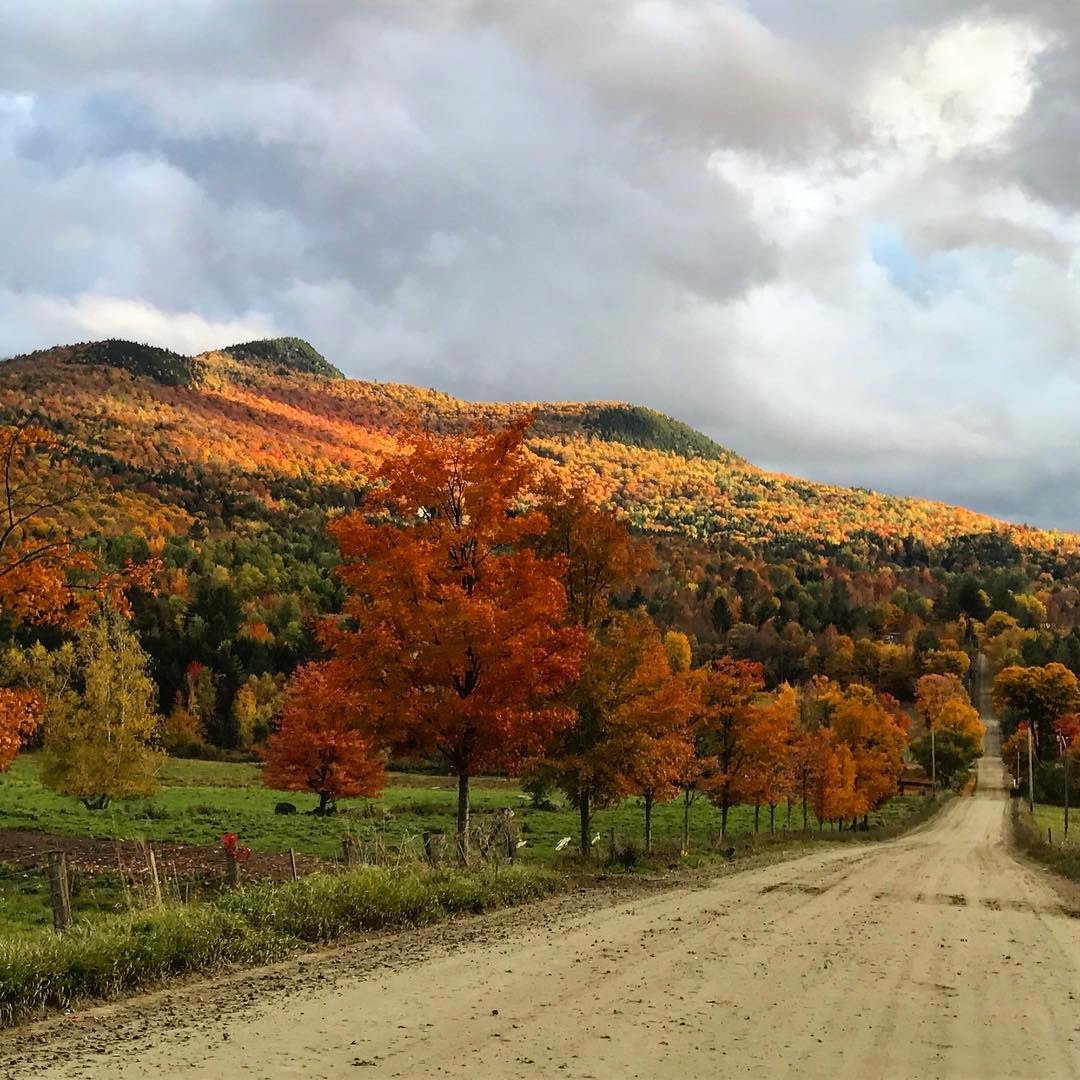
Here’s my favorite VT foliage shot from last year, taken half a mile from my house, right out of my car window on the way to pick up the kids at school:
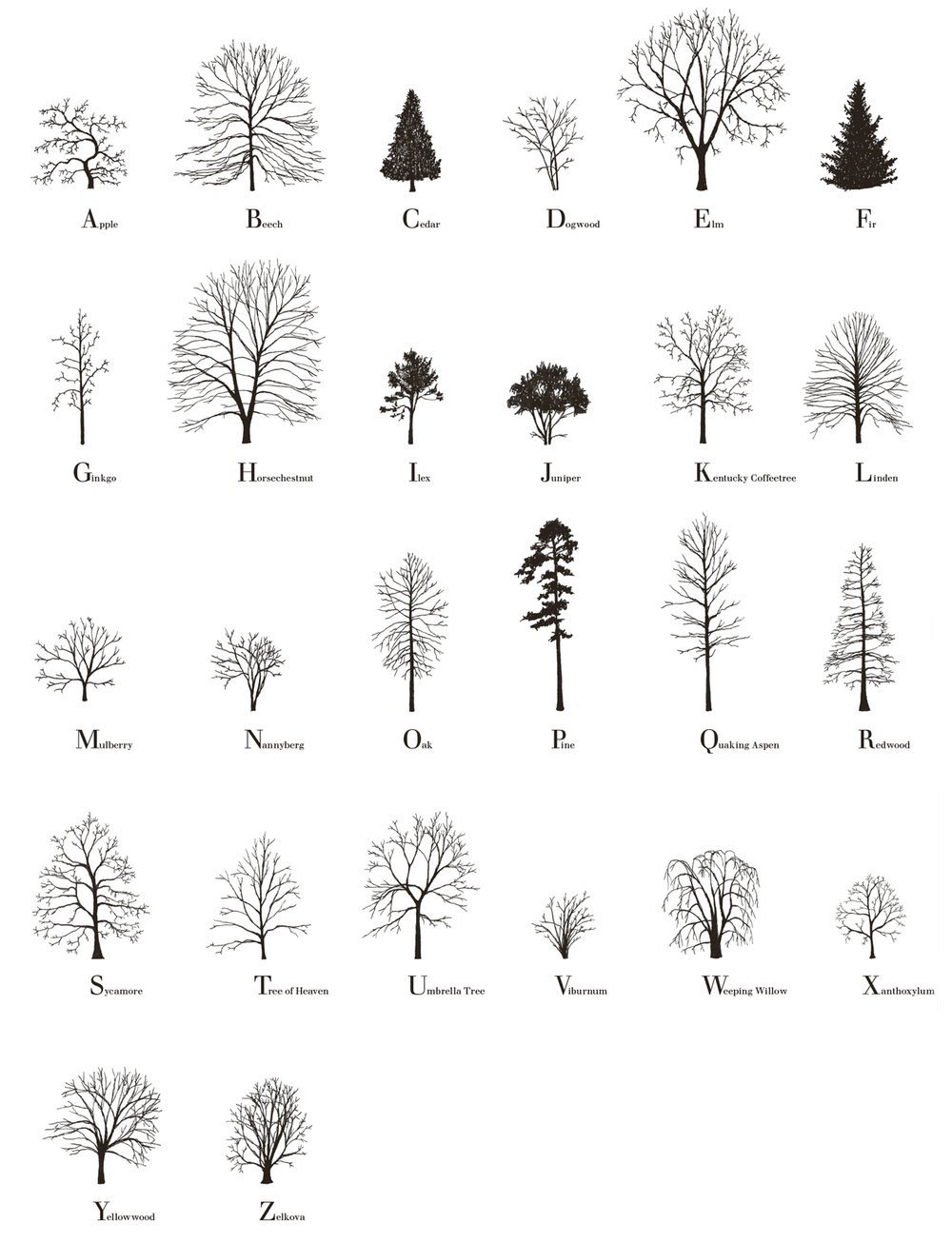
The Tree Alphabet was made by Katie Holten and was used in her book, About Trees (Amazon), which features writing from Jorge Luis Borges, Charles Darwin, Ada Lovelace, Elizabeth Kolbert, and Robert Macfarlane.
In ABOUT TREES, Katie Holten invites us to enter some of these forests. She has created a Tree Alphabet and used it to translate a compendium of well known, loved, lost and new writing. She takes readers on a journey from ‘primeval atoms’ and cave paintings to the death of a 3,500 year-old cypress tree, from Tree Clocks in Mongolia and forest fragments in the Amazon to Emerson’s language of fossil poetry, unearthing a grove of beautiful stories along the way.
The Trees font file is available for free download and prints of the Tree Alphabet are available as well.
Newer posts


Socials & More