

Steven Soderbergh has shot a feature-length movie on an iPhone; it stars Claire Foy (The Crown)

Advertise here with Carbon Ads
This site is made possible by member support. 💞
Big thanks to Arcustech for hosting the site and offering amazing tech support.
When you buy through links on kottke.org, I may earn an affiliate commission. Thanks for supporting the site!
kottke.org. home of fine hypertext products since 1998.
Beloved by 86.47% of the web.
Entries for July 2017
The 12 signature characteristics of a Christopher Nolan film
This short video from ScreenPrism details the 12 things you’ll find in a Christopher Nolan film, from non-linear storytelling to moral ambiguity to ambiguous endin…
My favorite observation in the video is that Nolan films his movies from the subjective point of view of his characters, so that the viewer often only knows as much as a characters know, which turns the audience into detectives, trying to unravel mysteries alongside the characters.
If you enjoyed that, ScreenPrism has also made a longer video that takes a more extensive look at Nolan’s career patterns and influences.
A photo appreciation of trees


I’ve been on a bit of a tree bender lately (see wolf trees and one tree, one year), so I really enjoyed Alan Taylor’s recent A Walk in the Woods: A Photo Appreciation of Trees.
The top photo was taken by Clément Bucco-Lechat in Hong Kong. And the bottom photo was taken by Khaled Abdullah Ali Al Mahdi of Reuters:
Dragon’s Blood trees, known locally as Dam al-Akhawain, or blood of the two brothers, on Socotra island on March 27, 2008. Prized for its red medicinal sap, the Dragon’s Blood is the most striking of 900 plant species on the Socotra islands in the Arabian Sea, 380 km (238 miles) south of mainland Yemen.
I love how the roots of one tree and the branches of another resemble one another.
Young Explorers
Young Explorers is a wonderful series of short films by Jacob Krupnick that follow toddlers who have recently mastered walking as they explore the wide world on their own. Fair warning: as a parent, the solo NYC street crossing scene gave me a heart attack!
Kids do not want to be contained — they are built for adventure. As a culture, we are wildly protective of our little ones, often to the point of protecting them from happy accidents and mistakes they might learn from. “Young Explorers” is a series of short films about what happens when you allow kids who are very young — who have just learned to walk by themselves — to explore the world completely on their own.
There are ten films in all so far, two of which are available on Vimeo (embedded above). They are on display outside the ICP Museum in NYC until July 23.
Update: Krupnik just added a new video to Young Explorers of his own daughter, Ada.
It must have been difficult to film her picking up random drinking straws and cups from the street without intervening.
Why is the upcoming total solar eclipse such a big deal?
Well, the short answer is that they don’t happen all that often and when they do, they’ve visible from only a small bit of Earth. Joss Fong elaborates in a video for Vox.
The next total solar eclipse to visit the US will be in 2024. If an eclipse happens to come to your town, you’re lucky. Any given location will see a total solar eclipse only once in more than 300 years, on average. The vast majority of us will have to travel to an eclipse path if we want to see a total eclipse in our lifetimes.
I’m off to Nebraska in August to meet up with some friends and see the eclipse. (And that 2024 eclipse Fong mentions? The path of totality goes right over my damn house. Woooo!) But no matter where you are in North America, you can enjoy the eclipse…just make sure you buy some safety glasses (and other supplies) if you want to look directly at the Sun. (via @veganstraightedge)
Your world just keeps expanding (if you want it to)
Today is the 48th anniversary of the Moon landing, but it’s also my pal Mike Monteiro’s birthday. He wrote a really moving essay on what turning 50 means to him, and how he’s expanded his personal definition of “us” and “we” along the way, moving from his family, to his immigrant community, to a group of punk art school outcasts, to a wider and wider world full of people who are more similar than different.
When we arrived in the United States in 1970, we settled in Philadelphia because it was the home of a lot of Portuguese immigrants from the small town my parents (and I guess me) came from. And so the we grew from a family unit to a community of immigrants who looked out for each other. We shopped at a Portuguese grocery store because they gave us credit. We rented from a Portuguese landlord because he wasn’t concerned about a rental history. And my parents worked for Portuguese businesses because we didn’t come here to steal jobs, but to create them.
This same community also looked out for each other. When there was trouble, we were there. When someone was laid off a construction job for the winter, we cooked and delivered meals. When someone’s son ended up in jail, we found bail. And when someone’s relative wanted to immigrate, we lined up jobs and moved money to the right bank accounts to prove solvency.
But as anyone who has ever grown up in an immigrant community knows, we also demands a them. They were not us. And they didn’t see us as them either. And at the risk of airing immigrant dirty laundry in public, I can attest that immigrant communities can be racist as fuck. We hated blacks. We hated Puerto Ricans. (It wasn’t too long ago I had to ask my mom to stop talking about “lazy Puerto Ricans” in front of her half-Puerto Rican grandchildren.) We hated Jews. In our eagerness to show Americans we belonged, we adopted their racism. (We also brought some of our own with us.)
I cried about three times reading this. Happy birthday, Mike.
Live TV coverage of Apollo 11 landing and moon walk
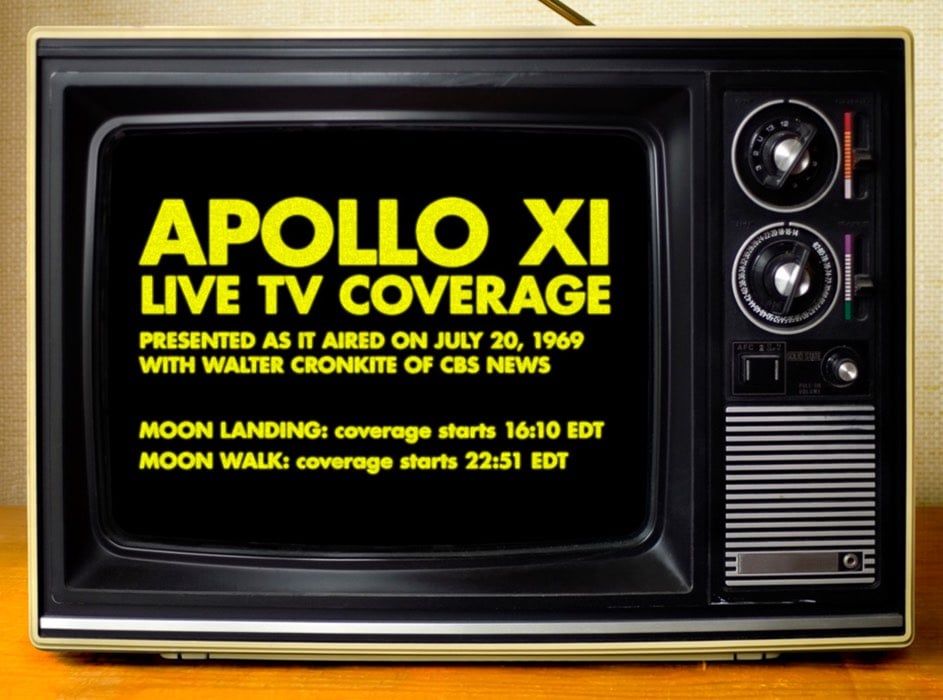
48 years ago today, the lunar module from the Apollo 11 mission landed on the Moon. Later that same day, Neil Armstrong and Buzz Aldrin stepped out of the module, set foot on the surface, and went for a walk. And the entire world watched them do it. Live.
For the 40th anniversary of the landing in 2009, I put together a page where you can watch the original CBS News coverage of Walter Cronkite reporting on the Moon landing and the first Moon walk, synced to the present-day time. Just open this page in your browser and the coverage will start playing at the proper time. Here’s the schedule (all times EDT):
4:10:30 pm: Moon landing broadcast starts
4:17:40 pm: Lunar module lands on the Moon
4:20:15 pm: Break in coverage
10:51:27 pm: Moon walk broadcast starts
10:56:15 pm: First step on Moon
11:51:30 pm: Nixon speaks to the Eagle crew
12:00:30 am: Broadcast end (on July 21)
Here’s what I wrote when I launched the project:
If you’ve never seen this coverage, I urge you to watch at least the landing segment (~10 min.) and the first 10-20 minutes of the Moon walk. I hope that with the old time TV display and poor YouTube quality, you get a small sense of how someone 40 years ago might have experienced it. I’ve watched the whole thing a couple of times while putting this together and I’m struck by two things: 1) how it’s almost more amazing that hundreds of millions of people watched the first Moon walk *live* on TV than it is that they got to the Moon in the first place, and 2) that pretty much the sole purpose of the Apollo 11 Moon walk was to photograph it and broadcast it live back to Earth.
This is one of my favorite projects I’ve ever done, and it almost didn’t happen this year. I woke up this morning assuming it was just going to work again, just like it had the previous 8 years, but a bit of testing revealed that YouTube had discontinued the API I was using to display and time the videos. I wasn’t sure I had the JavaScript chops to fix it in time for the big show this afternoon. Luckily, I was able to solicit some help on Twitter and as the internet continues to be absolutely amazing, Geoff Stearns fixed the problem. As he said in his tweet, Stearns works for Google and wrote the YouTube API that had been discontinued, which is a bit like Marshall McLuhan popping out from behind a poster in Annie Hall, but instead of saying “you know nothing of my work”, he says “I’m gonna fix this up real quick”. Reader, it took him 14 minutes from saying “I’ll help” to posting the solution, and I’d bet half of that time was spent running to the fridge for a LaCroix and selecting the proper coding playlist on Spotify. So big thanks to Geoff for making this happen today! And thanks also to Brian Seward, who landed a solution in my inbox a bit after Geoff’s.
Oh, and no more Flash! So it’ll work on any modern browser with no plugins. But I tested it on my phone and it still doesn’t seem to work properly there…the video loads but doesn’t autoplay. Something to improve for next year!
Fictional names for British towns generated by a neural net
Dan Hon recently trained a neural net to generate a list of fictional British placenames. The process is fairly simple…you train a program on a real list of placenames and it “brainstorms” new names based on patterns it found in the training list. As Hon says, “the results were predictable”…and often hilarious. Here are some of my favorites from his list:
Heaton on Westom
Brumlington
Stoke of Inch
Batchington Crunnerton
Salt, Earth
Wallow Manworth
Crisklethe’s Chorn
Ponkham Bark
Buchlingtomptop
Broad Romble
Fuckley
See also auto-generated maps of fantasy worlds.
Update: Tom Taylor did a similar thing last year using Tensorflow. Here are a few of his fictional names:
Allers Bottom
Hendrelds Hill
St Ninhope
Up Maling
Firley Dinch
There’s also an associated Twitter bot. (via @philgyford)
Also, Dan Connolly had a look at the etymology of the names on Hon’s list.
Buncestergans. At first glance this doesn’t look a lot like a place name but let’s break it down. We’ve got Bun which is definitely from Ireland (see Bunratty, Bunclody, Bundoran) meaning bottom of the river, and I believe we’re talking bottom as in the mouth rather than the riverbed (or there are whole lot of magical lady-of-the-lake towns in Ireland, I’m happy believing either). Cester is our Roman fort, then we have -gans.
I don’t think gans has any meaning in British place names. My guess is the net got this from Irish surnames like Fagans, Hagans, Duggans, that sort of thing. My Gaelic’s not so great (my mother, grandmother, and several aunts and uncles would all be better suited to this question!) but I think the -gan ending in Gaelic is a diminuitive, so Buncestergans could be the Small Fort at the Bottom of the River. I quite like that. It’s a weird Gaelic-Latin hybrid but why the hell not!
Mad Women
On the 10th anniversary of the premiere of Mad Men, Caroline Framke wrote about how the the women on the show changed a great deal (in contrast to the men).
When we first meet Peggy Olson and Joan Holloway, they’re secretaries who know they’re smart, but are also staring down an endless row of grinning frat-guy superiors and trying to be realistic about their chances of success beyond their assigned desks. Betty Draper is barely a blip on the radar, only appearing in the final minutes of the episode as the twist of Don’s suburban life. And while Peggy’s storyline in season one develops into an obvious parallel to Don’s as she reveals a knack for advertising, Joan was never supposed to become the powerhouse she became down the line. In fact, as per creator Matthew Weiner, Joan’s original purpose was just to be a “courtesan” who taught people the ways of the office. Eventually, all three women reveal rich inner lives their male counterparts never bothered to consider were there, and create the kind of lives they once assumed they never could have.
I rewatched the entire run of Mad Men a few months ago and what moves the show from “really good” territory to “all-time great” territory is the emphasis on the women. As Framke notes, Don Draper pretty much ends up where he starts off while the real hero’s journey in the show is undertaken by Betty, Joan, and especially Peggy. Had they stayed on the sidelines, the show would have been far less interesting.
Beating cancer is a team sport
Senator John McCain has been diagnosed with a particularly aggressive form of brain cancer. The tumor has been removed and McCain is recovering at home with his family. I wish Senator McCain well and hope for a speedy recovery.
In the wake of his diagnosis, many of those expressing support for McCain reference his considerable personal strength in his fight against cancer. President Obama said:
John McCain is an American hero & one of the bravest fighters I’ve ever known. Cancer doesn’t know what it’s up against. Give it hell, John.
McCain’s daughter Meghan references his toughness and fearlessness in a statement released yesterday. Vice-President Joe Biden expressed similar sentiments on Twitter:
John and I have been friends for 40 years. He’s gotten through so much difficulty with so much grace. He is strong — and he will beat this.
This is the right thing to say to those going through something like this, and hearing this encouragement and having the will & energy to meet this challenge will undoubtably increase McCain’s chances of survival. But what Biden said next is perhaps more relevant:
Incredible progress in cancer research and treatment in just the last year offers new promise and new hope. You can win this fight, John.
As with polio, smallpox, measles, and countless other diseases before it, beating cancer is not something an individual can do. Being afflicted with cancer is the individual’s burden to bear but society’s responsibility to cure. In his excellent biography of cancer from 2011, The Emperor of All Maladies, Siddhartha Mukherjee talks about the progress we’ve made on cancer:
Incremental advances can add up to transformative changes. In 2005, an avalanche of papers cascading through the scientific literature converged on a remarkably consistent message — the national physiognomy of cancer had subtly but fundamentally changed. The mortality for nearly every major form of cancer — lung, breast, colon, and prostate — had continuously dropped for fifteen straight years. There had been no single, drastic turn but rather a steady and powerful attrition: mortality had declined by about 1 percent every year. The rate might sound modest, but its cumulative effect was remarkable: between 1990 and 2005, the cancer-specific death rate had dropped nearly 15 percent, a decline unprecedented in the history of the disease. The empire of cancer was still indubitably vast — more than half a million American men and women died of cancer in 2005 — but it was losing power, fraying at its borders.
What precipitated this steady decline? There was no single answer but rather a multitude. For lung cancer, the driver of decline was primarily prevention — a slow attrition in smoking sparked off by the Doll-Hill and Wynder-Graham studies, fueled by the surgeon general’s report, and brought to its full boil by a combination of political activism (the FTC action on warning labels), inventive litigation (the Banzhaf and Cipollone cases), medical advocacy, and countermarketing (the antitobacco advertisements). For colon and cervical cancer, the declines were almost certainly due to the successes of secondary prevention — cancer screening. Colon cancers were detected at earlier and earlier stages in their evolution, often in the premalignant state, and treated with relatively minor surgeries. Cervical cancer screening using Papanicolaou’s smearing technique was being offered at primary-care centers throughout the nation, and as with colon cancer, premalignant lesions were excised using relatively minor surgeries. For leukemia, lymphoma, and testicular cancer, in contrast, the declining numbers reflected the successes of chemotherapeutic treatment. In childhood ALL, cure rates of 80 percent were routinely being achieved. Hodgkin’s disease was similarly curable, and so, too, were some large-cell aggressive lymphomas. Indeed, for Hodgkin’s disease, testicular cancer, and childhood leukemias, the burning question was not how much chemotherapy was curative, but how little: trials were addressing whether milder and less toxic doses of drugs, scaled back from the original protocols, could achieve equivalent cure rates.
Perhaps most symbolically, the decline in breast cancer mortality epitomized the cumulative and collaborative nature of these victories — and the importance of attacking cancer using multiple independent prongs. Between 1990 and 2005, breast cancer mortality had dwindled an unprecedented 24 percent. Three interventions had potentially driven down the breast cancer death rate-mammography (screening to catch early breast cancer and thereby prevent invasive breast cancer), surgery, and adjuvant chemotherapy (chemotherapy after surgery to remove remnant cancer cells).
Understanding how to defeat cancer is an instance where America’s fierce insistence on individualism does us a disservice. Individuals with freedom to pursue their own goals are capable of a great deal, but some problems require massive collective coordination and effort. Beating cancer is a team sport; it can only be defeated by a diverse collection of people and institutions working hard toward the same goal. It will take government-funded research, privately funded research, a strong educational system, philanthropy, and government agencies from around the world working together. This effort also requires a system of healthcare that’s available to everybody, not just to those who can afford it. Although cancer is not a contagious disease like measles or smallpox, the diagnosis and treatment of each and every case brings us closer to understanding how to defeat it. We make this effort together, we spend this time, energy, and money, so that 10, 20, or 30 years from now, our children and grandchildren won’t have to suffer like our friends and family do now.
Darkest Hour
Gary Oldman stars as Winston Churchill in Darkest Hour, a historical drama about the legendary Prime Minister’s efforts to lead Great Britain to victory in World War II.
A thrilling and inspiring true story begins at the precipice of World War II as, within days of becoming Prime Minister of Great Britain, Winston Churchill (Academy Award nominee Gary Oldman) must face one of his most turbulent and defining trials: exploring a negotiated peace treaty with Nazi Germany, or standing firm to fight for the ideals, liberty and freedom of a nation. As the unstoppable Nazi forces roll across Western Europe and the threat of invasion is imminent, and with an unprepared public, a skeptical King, and his own party plotting against him, Churchill must withstand his darkest hour, rally a nation, and attempt to change the course of world history.
Before watching John Lithgow playing him in The Crown, I’d thought Churchill was too much of his own character to be played by a well-known actor, but Lithgow was amazing…and it looks as though Gary Oldman, looking every bit his surname, will be similarly outstanding.
Apple’s diseconomies of scale and the next iPhone
Apple is the biggest company in the world and they sell one of history’s most successful consumer products. As the total human population of Earth becomes a limiting factor in the iPhone’s continued sales growth (see also Facebook), they are perhaps running into problems designing a desirable product that they need to produce 200 million times over the course of a year.
This is one of those areas where Apple may be the victim of its own success. The iPhone is so popular a product that Apple can’t include any technology or source any part if it can’t be made more than 200 million times a year. If the supplier of a cutting-edge part Apple wants can only provide the company with 50 million per year, it simply can’t be used in the iPhone. Apple sells too many, too fast.
A Daring Fireball reader put it this way:
People commonly think that scale is an unambiguously good thing in production, but the tremendous scale at which Apple operates shows this not to be the case. Annual iPhone production is so large that Apple is likely experiencing diseconomies of scale, a phenomenon one doesn’t often hear about. What significant, break-through technology can a company practically introduce to 300 million new devices in a year?
Diseconomies of scale is a real thing, btw. John Gruber has been arguing that Apple’s way around this is to produce a more expensive iPhone ($1000-1200) with exceptional components and features that the company simply can’t produce at a scale of 200 million/year. Rene Ritchie describes this iPhone++ strategy as “bringing tomorrow’s iPhone to market today”. Gruber compares it to the Honda Prelude, quoting from the Edmunds description of the car:
Honda established itself in America with the Civic and Accord — both good, solid but basic cars. But big profits in the automotive world don’t come from basic cars that sell for commodity prices. Those profits come from cars that get consumers so excited that they’ll pay a premium price just to have one. The Prelude was Honda’s first attempt at an exciting car.
The Prelude was Honda’s technological leading edge. Features that are now expected from Honda, like the double-wishbone suspension under the Accord, fuel injection, and VTEC electronic variable valve timing system showed up first on the Prelude before migrating across the Honda line (though VTEC first showed up on the 1990 Acura NSX).
Keen observations all around and it will be interesting to see if Apple can benefit from this strategy.
A bird magically floats because of a camera frame rate trick
You know when you’re watching a fan or a wheel or something else quickly spinning and it seems to stop spinning and even looks like it’s spinning backwards? And you blink your eyes and remind yourself you’re not on drugs and haven’t been drinking heavily but it’s still somehow simultaneously spinning and not? This optical illusion occurs most commonly with video cameras (but can also occur looking through your normal eyeballs) when the frame rate of the camera matches some multiple of the rate of the thing being filmed, as with this magically levitating helicopter.
Since each frame has to ensure the blade is in the same position as the last it therefore needs to be in sync with the rpm of the rotar blades. Shutter speed then needs to be fast enough to freeze the blade without too much motion blur within each frame.
Here the rotor has five blades, now lets say the rpm of the rotor is 300. That means, per rotation, a blade is in a specific spot on five counts. That gives us an effective rpm of 1500. 1500rpm / 60secs = 25.
Therefore shooting at 25fps will ensure the rotor blades are shot in the same position every frame. Each frame then has to be shot at a fast enough shutter speed to freeze the blade for minimal motion blur.
In the video above, a home security camera catches a bird flying with a wing speed matching the frame rate of the camera, which makes it look like the bird is just magically hanging in the air, like some sort of avian wizard.
Radiohead hid an old school computer program on their new album
As if you already didn’t know that Radiohead are a bunch of big ole nerds, there’s an easter egg on a cassette tape included in the Boxed Edition of OK Computer OKNOTOK 1997 2017. At the end of the tape recording, there are some blips and bleeps, which Maciej Korsan interpreted correctly as a program for an old computer system.
As a kid I was an owner of the Commodore 64. I remember that all my friends already were the PC users but my parents declined to buy me one for a long time. So I sticked to my old the tape-based computer listening to it’s blips and waiting for the game to load. Over 20 years later I was sitting in front of my MacBook, listening to the digitalised version of the tape my favourite band just released and then I’ve heard a familiar sound… ‘This must be an old computer program, probably C64 one’ I thought.
The program turned out to run on the ZX Spectrum, a computer the lads would likely have encountered as kids.
An alphabet made from classic rock band logos
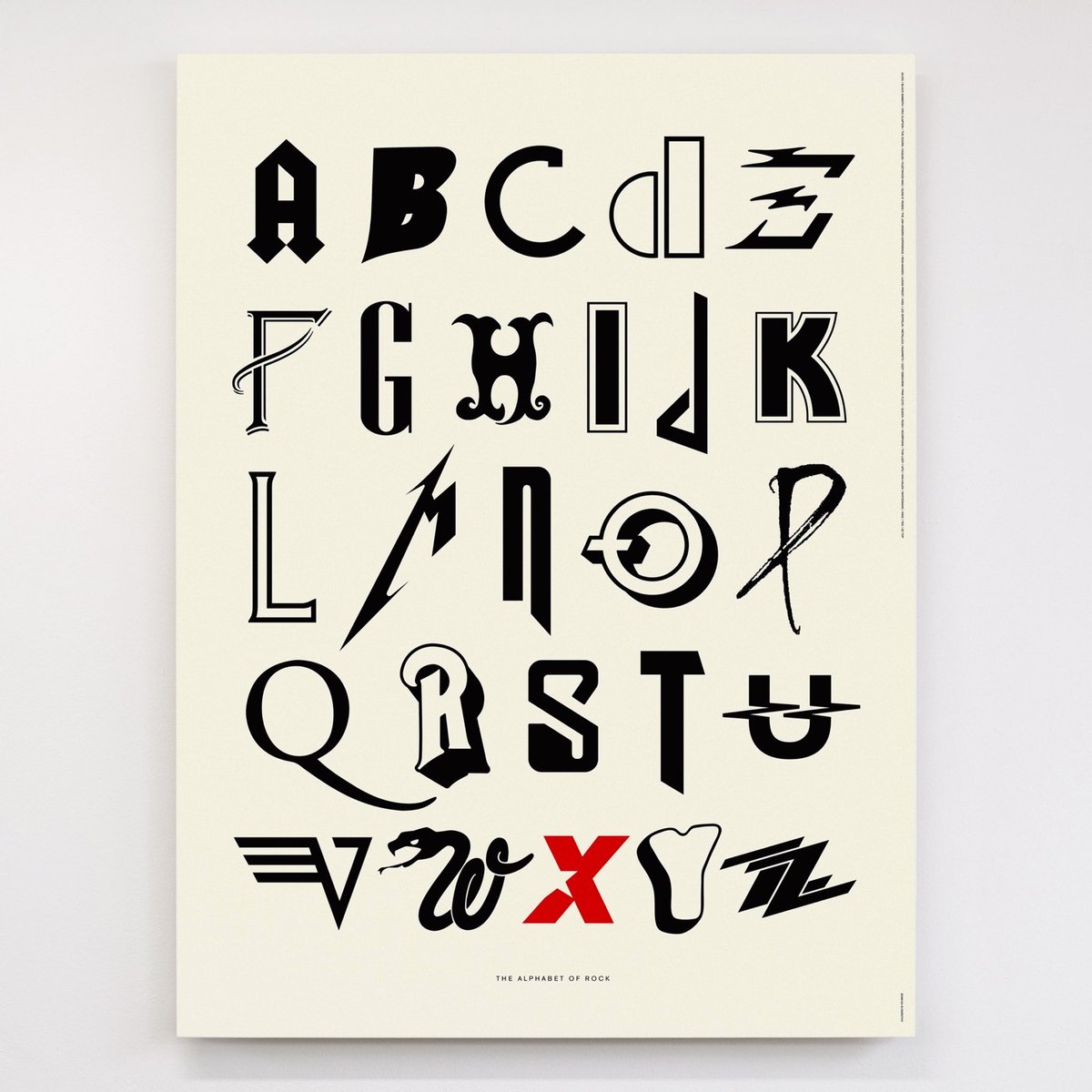
Dorothy has designed a pair of posters of alphabets fashioned from rock band logos: one for classic rock and one for alternative rock. How many of the band names do you know? Me? Fewer than I would like.
These reminded me of Evan Roth’s Graffiti Taxonomy prints.
Update: See also the ABCs of Heavy Metal poster by Aye Jay. (via @thoughtbrain)
Awaken, a documentary full of arresting imagery
This might be the most beautiful three minutes of your day. Director Tom Lowe is making a feature-length documentary “exploring humanity’s relationship with technology and the natural world” called Awaken. This trailer is stuffed with some of the most arresting imagery I’ve seen in a long time. Perhaps most striking is the moving time lapse footage, which was shot from a helicopter using equipment of Lowe’s own design…I don’t think I’ve seen anything quite like it before.
Awaken will be out next year and, unsurprisingly, is being executive produced by Terrence Malick (Voyage of Time) and Godfrey Reggio (Koyaanisqatsi, etc.).
Free diving the world’s deepest indoor swimming pool
Watch as champion free diver Guillaume Néry dives to the bottom of the world’s deepest indoor pool (131 feet deep!) while holding his breath. The dive was filmed by Julie Gautier, who was also holding her breath while working.1
And about that pool…it’s part of the Hotel Terme Millepini in Italy. From Wikipedia:
Y-40 “The Deep Joy” pool first opened on 5 June 2014 and was designed by architect Emanuele Boaretto. It is 40 metres (131 ft) deep, making it the deepest pool in the world. It contains 4,300 cubic metres (1,136,000 US gal) of thermal water kept at a temperature of 32-34 °C (90-93 °F). The pool features underwater caves and a suspended, transparent, underwater tunnel for guests to walk through. It includes platforms at various depths, ranging from 1.3 metres (4.3 ft) to 12 metres (39 ft), before the walls of the pool narrow into a well-like funnel which plunges straight down to 40 metres (131 ft). The hotel offers tickets to freedive and scuba dive.
That’s pretty cool.
What’s that phrase? Behind every successful man is a woman who is holding her breath even longer while filming a video?↩
Wolf trees

I took this photo of a wolf tree over the weekend. When thick forests were cleared for pasture and farming by settlers to colonial America, single trees were sometimes left by design or accident. In the absence of competition for light and space, these trees were free to branch out and not just up. They grew tall and thick, providing shade for people & animals and some cover for predators like wolves. Being the lone tree in an area, wolf trees were often struck by lightning or afflicted by pests that had nowhere else to go, contributing to their grizzled appearance.
In some cases, they grew alone like this for hundreds of years. Then, as farming moved to other places in the country, the pastures slowly turned back into forests, the new trees growing tall and straight with an old survivor in their midst. Wolf trees often look like they’re dead or dying, partially because of their age and all the damage they’ve taken over the years but also because the newer trees are crowding them out, restricting their sunlight and space. But they still function as a vital part of the forest, providing a central spot and ample living space for forest animals, particularly birds.
More reading on wolf trees, including the possible etymology of the phrase: Wolf Trees: Elders of the Eastern Forest, the Public Land Journal, and What’s up with the “Wolf Tree” at Red Rocks Park? (specifically about the tree in my photo, which might date from the 1700s). I’ll leave any possible metaphorical meaning of the wolf tree as an exercise to the reader.
Programming note: @kottke recently switched to a new server. You shouldn’t have noticed a thing. Thanks, Arcustech!
Hummingbirds flying in slow motion
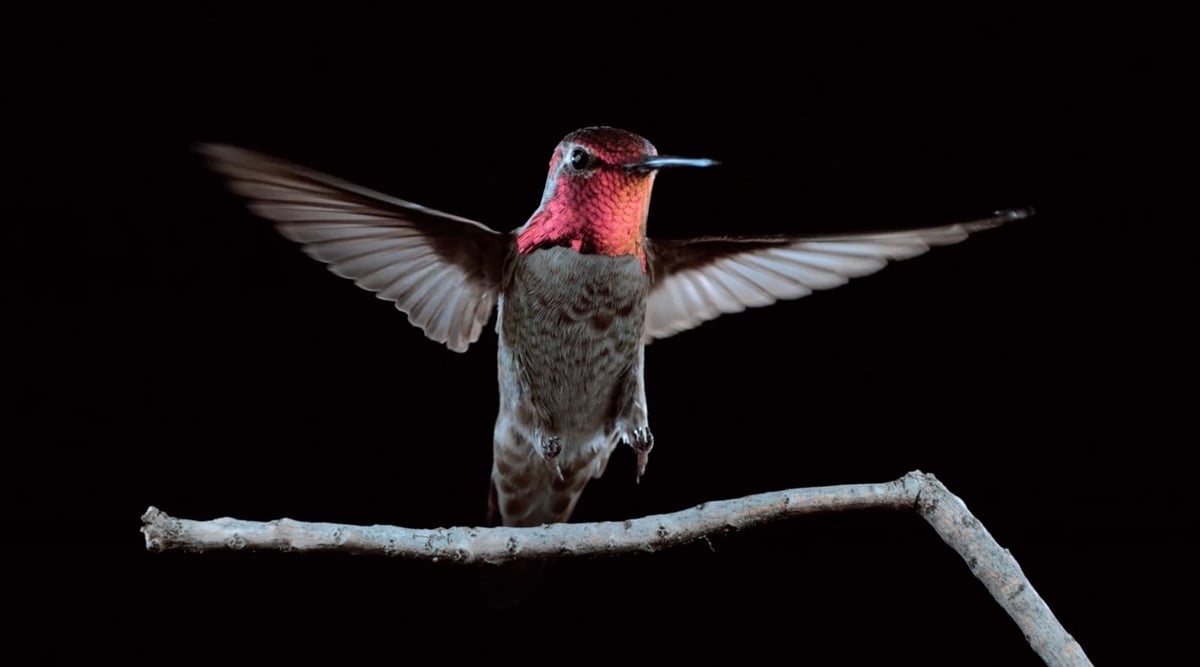
National Geographic photographer Anand Varma recently took some slow motion videos of hummingbirds in flight. Incredible footage. It always amazes me how still their heads and bodies are while their wings beat furiously. Here’s National Geographic’s feature on using high-speed cameras to uncover the secrets of hummingbird flight.
World’s smallest birds is just one of several distinctions that hummingbird species claim. They’re the only birds that can hover in still air for 30 seconds or more. They’re the only birds with a “reverse gear”-that is, they can truly fly backward. And they’re the record holders for the fastest metabolic rate of any vertebrate on the planet: A 2013 University of Toronto study concluded that if hummingbirds were the size of an average human, they’d need to drink more than one 12-ounce can of soda for every minute they’re hovering, because they burn sugar so fast. Small wonder that these birds will wage aerial dogfights to control a prime patch of nectar-laden flowers.
Fun facts: some hummingbirds can beat their wings 100 times in a second and can sip nectar 15 times per second. I also like the locals’ name for the Cuban bee hummingbird, the world’s smallest bird: zunzuncito (little buzz buzz).
The winners of the 2016 50 Books/50 Covers competition

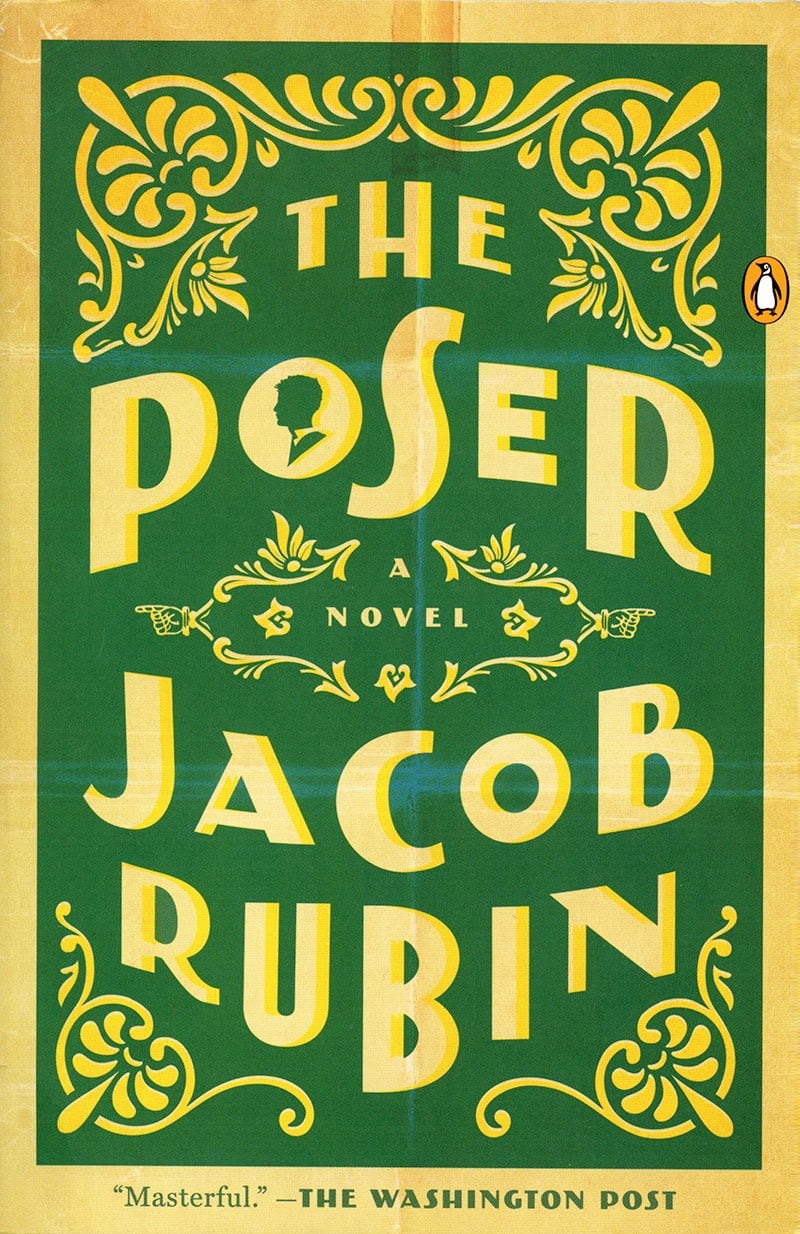
Design Observer and the AIGA have announced their selections for the 50 best designed books and 50 best designed book covers for 2016. You can browse the entire selection in the AIGA archive. Lovely to see Aaron James Draplin’s Pretty Much Everything, Koya Bound, and the Hamilton book on the list. Oh and I love this cover for The Poser.
One tree, one year
In a film shot by Bruno D’Amicis & Umberto Esposito, a normal tree in a forest is kept under observation for an entire year. A surprising number of animals were seen in that time, including boars, wolves, foxes, badgers, deer, and bears.
Four seasons unfolding around a crossroad of smells, signals and messages left behind by the extraordinary wildlife of the Apennines. What you see here is just a small part of this incredible experience.
In the past two years, we have understood that in the vastness of the forest each tree is unique. There are trees where to lay your eggs or where to find a safe cover; trees on which to look for food or, simply, to scratch your back and thus leave behind a trace of your passage. Who knows how many of such trees are around…
A quiet reminder that the world goes on without us.
A collection of free coloring books from libraries and museums



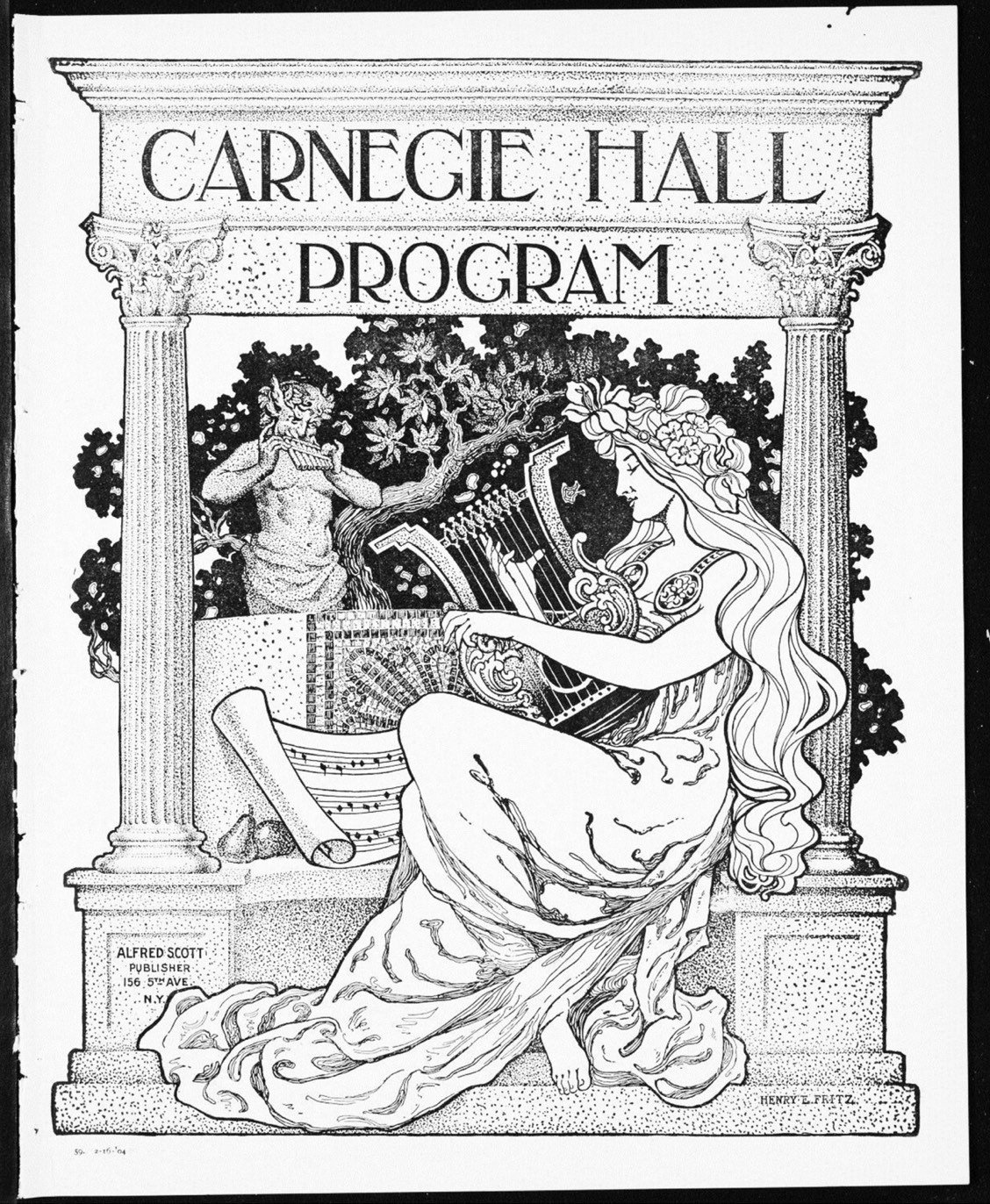
A bunch of libraries and museums have banded together for the Color Our Collections campaign, offering up free coloring books that let you color artworks from their collections. Participating institutions include the NYPL, the Biodiversity Heritage Library, the Smithsonian, the New York Botanical Garden, and the Bodleian Libraries at Oxford.
The 13th incarnation of Doctor Who will be a woman. Jodie Whittaker will star in the title role.
Throwback: LA roller rink still has a weekly organ night

Lisa Whiteman has a lovely story and photos about the Moonlight Rollerway, a roller rink near LA that still hosts a weekly night of skating with live organ accompaniment. One of the skaters, Lillian Tomasino, is 86 years old and has been coming to the Moonlight to skate since it opened in the 50s.
Lillian has now outlived two of her long-term skating partners. Frank, with whom she had skated since the ’80s, passed away in 2012, and Dave, whom she had known since they were teenagers, died in late 2016. Although these days skating can cause Lillian significant pain, she has no intention of hanging up her skates anytime soon. After her spinal surgery in October 2016, she was back on her skates within six weeks. “My friends talk about [me skating at my age], and they think it’s great. I don’t give up too easy. As long as I can do it, and I can get out in public. That’s the main thing — ‘cos I’m at home a lot. The senior centers are too tame for me.”
Marching band plays Daft Punk at Bastille Day parade
At the Bastille Day parade in Paris, with Donald Trump and French President Emmanuel Macron looking on, a marching band played a medley of hits from Daft Punk. Macron gets it pretty quickly while Trump looks confidently clueless as usual.
The United States of Food Puns


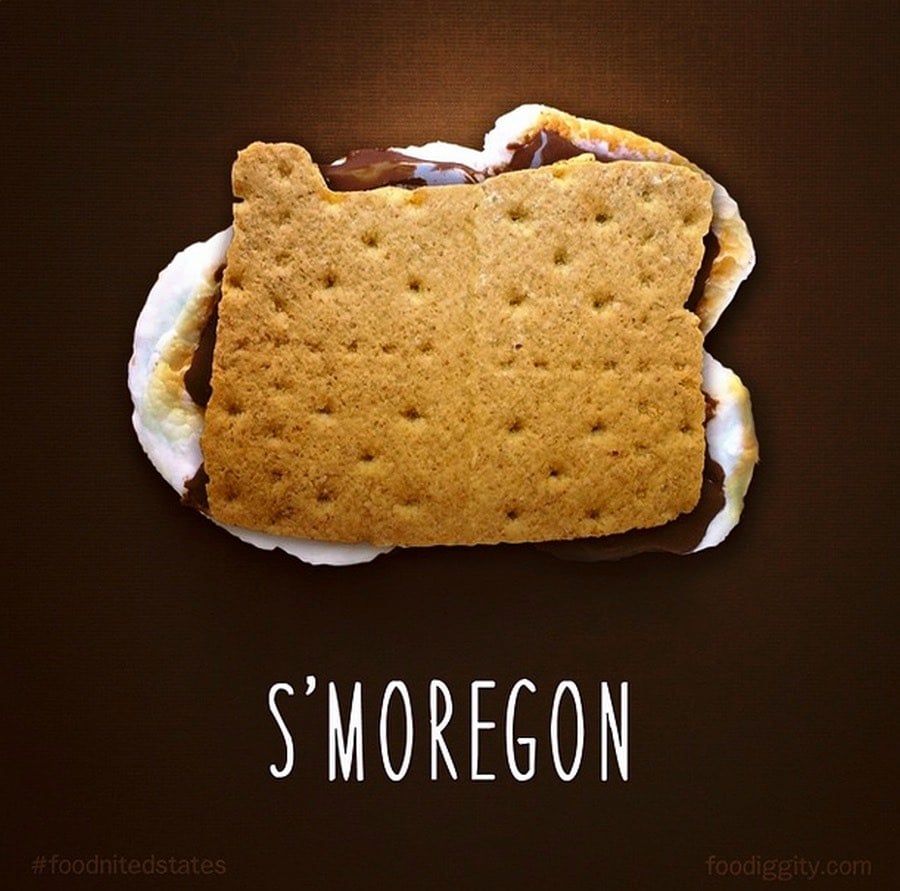
Each of the 50 US states made of food and named accordingly, e.g. Arkanslaw, Pretzelvania, Tunassee, Mississippeas. Maps? Food? Language? How many more of my boxes could this project possibly check? Oh, this was a kid’s idea and his dad went over the top in helping him achieve it? CHECK.
Oh, and to teach the kid about capitalism, of course there are t-shirts and posters available.
Where do ideas come from?
In this video, creators like David Lynch, Susan Orlean, Tracy Clayton, and Chuck Close share their thoughts on the creative process and where new ideas come from. For some, inspiration strikes. For others, new ideas come from copying someone else’s old ideas imperfectly. For artist Chuck Close, ideas are generated through the process of working:
I always said, “Inspiration is for amateurs. The rest of us just show up and get to work.” Every great idea came out of work. Everything. If you sit around and wait for a bolt of lightning to hit you in the skull, you may never get a good idea.
The top 10 movie crimes of all time
From the always entertaining and informative Cinefix, a list of the best crimes depicted in movies. The list is broken down by the typical elements of a cinematic crime: the motive, the team, the plan, the getaway, the cover-up, and so on. The video features Dog Day Afternoon, Ocean’s Eleven, Chinatown, Se7en, and Reservoir Dogs. Would loved to have seen a tiny mention of Bottle Rocket in there, but nope!
Trailer for a documentary on typewriters. Who knew Tom Hanks was such a huge typewriter nerd?
Magical realist transportation
Argentine filmmaker Fernando Livschitz recently made a short film called Perspective, featuring dream-like scenes of altered forms of transportation like shortened planes & buses and invisible bicycles. I really liked one of Livschitz’s previous films, Rush Hour. (via colossal)
Startup idea generator: find spreadsheet tasks and build something better
Need an idea for a viable startup company? Try this:
1) Pick an industry
2) Ask someone in that industry what they use spreadsheets for
3) Build something better
To which I would add:
4) Charge for it
You could even modify #2 slightly and replace “spreadsheets” with “email”…Slack did that generally and is reaping the benefits.
This reminds me of Marc Hedlund’s advice for entrepreneurs from 2007:
One of my favorite business model suggestions for entrepreneurs is, find an old UNIX command that hasn’t yet been implemented on the web, and fix that. talk and finger became ICQ, LISTSERV became Yahoo! Groups, ls became (the original) Yahoo!, find and grep became Google, rn became Bloglines, pine became Gmail, mount is becoming S3, and bash is becoming Yahoo! Pipes. I didn’t get until tonight that Twitter is wall for the web. I love that.
To which I added:
A slightly related way of thinking about how to choose web projects is to take something that everyone does with their friends and make it public and permanent. (Permanent as in permalinked.)
The distribution of letters in English words
David Taylor analyzed a corpus of English words to see where each letter of the alphabet fell and graphed the results.
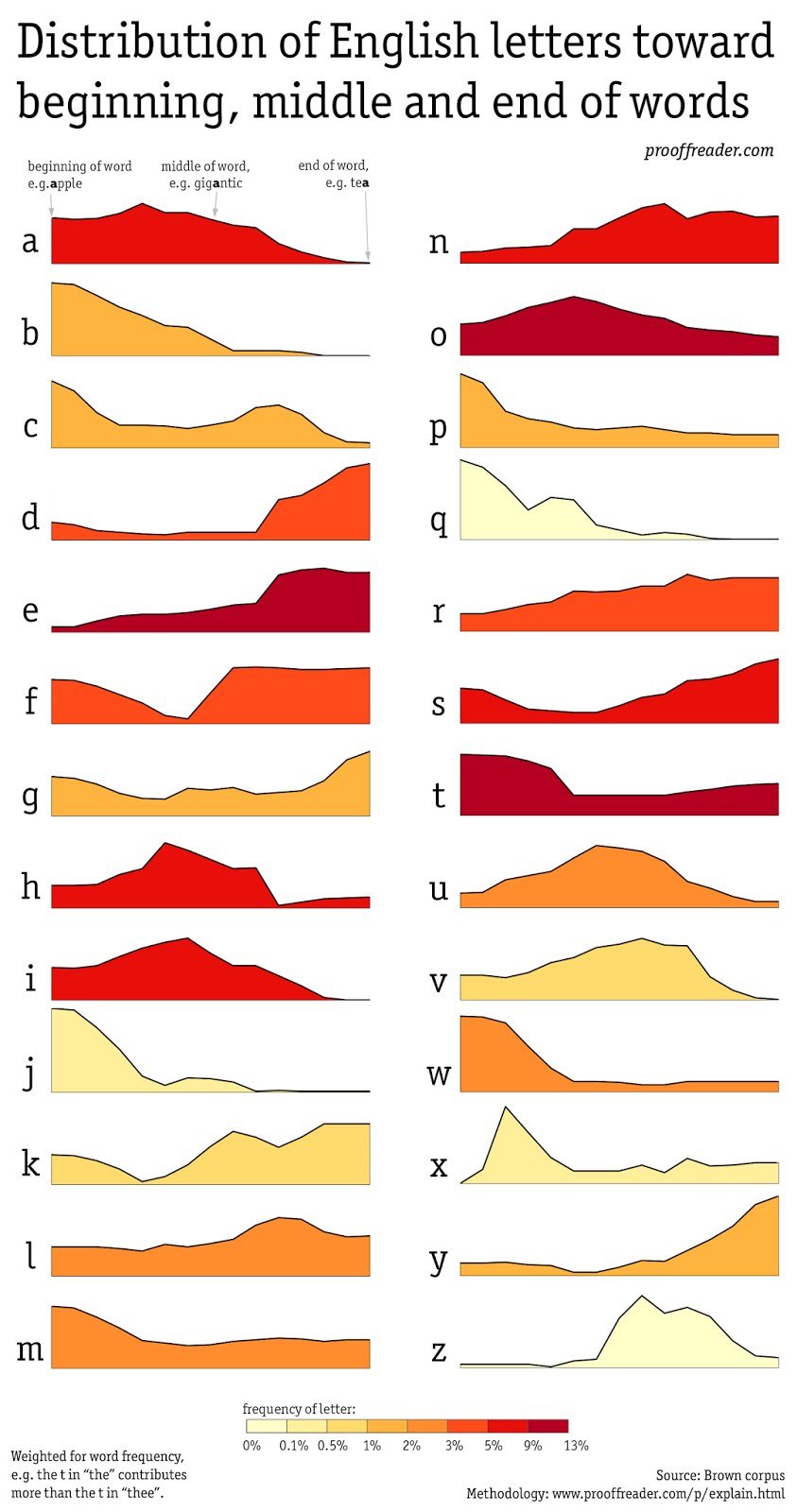
No surprise that “q” and “j” are found mostly at the beginnings of words and “y” and “d” at the ends. More interesting are the few letters with more even distribution throughout words, like “l”, “r”, and even “o”. Note that this analysis is based on a corpus of words in use, not on a dictionary:
I used a corpus rather than a dictionary so that the visualization would be weighted towards true usage. In other words, the most common word in English, “the” influences the graphs far more than, for example, “theocratic”.
Taylor explained his methodology in a second geekier post. (via @tedgioia)
Noooooooo. Cup & Saucer is closing! Noooooo.
An appreciation and reevaluation of Contact, 20 years after its theatrical release
Contact, based on Carl Sagan’s book of the same name, is on its face a movie about science vs. religion. On the 20th anniversary of its release, Germain Lussier rewatched the film and came away with a different impression: director Robert Zemeckis wanted viewers to think about our relationship to media and technology.
Once Ellie and her team discover the signal from Vega, seemingly every scene in the film features a monitor or some kind of television-related paraphernalia. Whether that’s unpacking a TV to unveil the Olympic footage, people watching news reports on CNN, a terrorist videotaping himself, or multiple scenes in the screen-filled Mission Control, Contact is filled with monitors, forcing both the characters and the audience to watch them. Full scenes of the film are made up of fuzzy TV footage. There are numerous press conferences on TV. The selection of the Machine representative unfolds via the news. Ellie’s interactions with Hadden are almost entirely done over a monitor. Even in scenes where the camera is in a room with the characters, Zemeckis often films them watching TV, or simply puts TV monitors in the frame to constantly remind us they’re there.
But that’s not it. People video chat regularly, which was not common in 1997. The terrorist attack on the Machine is first discovered on a TV monitor and subsequently played out there too. Then, finally, what’s the smoking gun of Ellie’s whole trip at the end of the movie? Eighteen hours of video footage. I could go on and on with examples where Contact uses television and monitors, but once you start seeing the film’s obsession with video, it’s almost comical how often it’s used. Which poses the obvious question, “Why?”
In this light, the organized religion & organized science depicted in the film are just other forms of mediated experience, separate from the personal experience of seeing something with your own eyes.
Contact is one of my favorite movies — I watch it every 12-18 months or so — and this makes me appreciate it all the more. And I had forgotten how good the trailer was:
It’s dead simple: that amazingly resonant Vega signal sound over a series of quickly cut scenes that tells the story in miniature. Surely this belongs on best movie trailers lists as much as any of these.
Oh, and while I’m not generally a fan of reboots, I would love to see what Denis Villeneuve could do with Sagan’s story. I’m also not crazy about Jodie Foster — I find her less and less tolerable as Arroway with each viewing — so it would be cool to see another actress in the role. Arrival’s Amy Adams is almost too on the nose…how about Lupita Nyong’o, ?Emma Watson, Janelle Monáe, Brie Larson, or Emma Stone?
How to safely enjoy the 2017 solar eclipse, a buyer’s guide for normal people
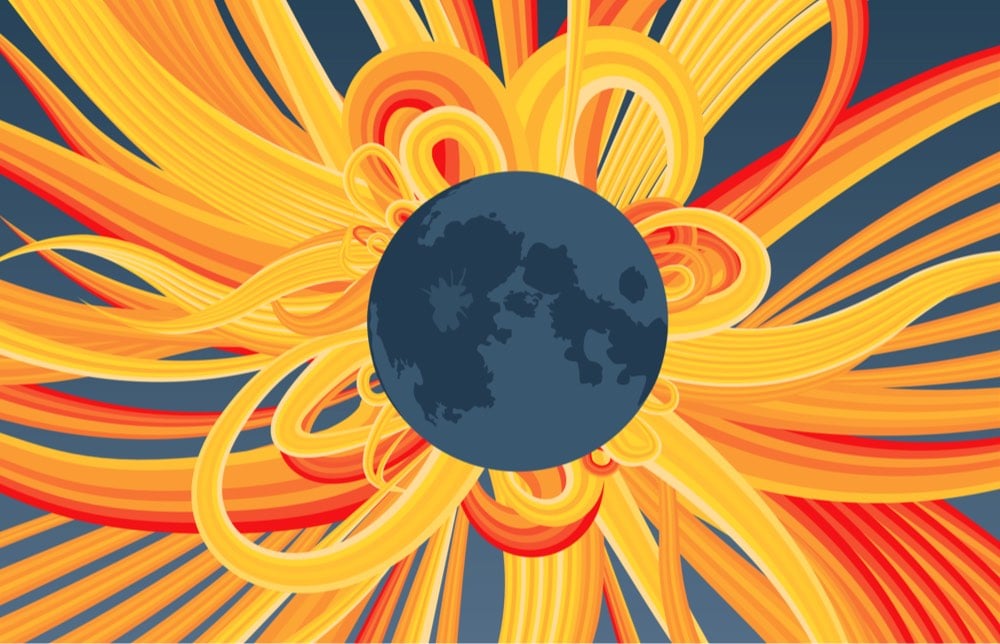
Important update: Since I published this guide a month ago, NASA and the AAS have updated their recommendation on buying solar safety glasses due to reports of counterfeit eclipse glasses. They no longer recommend looking for the ISO rating alone but only buying from a recommended manufacturer. If you have purchased glasses or are going to purchase glasses, read this page carefully before using them, paying particular attention to this bit:
Unfortunately, you can’t check whether a filter meets the ISO standard yourself — doing so requires a specialized and expensive piece of laboratory equipment called a spectrophotometer that shines intense UV, visible, and IR light through the filter and measures how much gets through at each wavelength. Solar filter manufacturers send their products to specialized labs that are accredited to perform the tests necessary to verify compliance with the ISO 12312-2 safety specifications. Once they have the paperwork that documents their products as ISO-compliant, they can legitimately use the ISO logo on their products and packaging.
Even more unfortunately, unscrupulous vendors can grab the ISO logo off the internet and put it on their products and packaging even if their eclipse glasses or viewers haven’t been properly tested. This means that just seeing the ISO logo or a label claiming ISO 12312-2 certification isn’t good enough. You need to know that the product comes from a reputable manufacturer or one of their authorized dealers.
Amazon recently sent out emails to the buyers of the plastic-framed glasses I bought and linked to here (“habibee 4-Pack Black Plastic Eclipse Glasses CE & ISO Certified 2017 Safe Solar Eclipses Viewing Shades Block Sun Ultraviolet UV Lights Goggles”), saying that they have “not received confirmation from the supplier of your order that they sourced the item from a recommended manufacturer” and, to their credit, have automatically issued refunds to those buyers. They also appear to have removed any products from their site that aren’t sourced from a recommended manufacturer. This doesn’t necessarily mean the glasses are faulty…it just means the solar filter paper used for the lenses can’t be sourced. Again, read this page carefully before deciding to use any glasses you may have purchased. I tested a pair this morning, looking at bright light bulbs and they seem appropriately dark, but as noted by the AAS, who knows about the UV and IR filtering? I’m throwing mine out.
The cardboard-framed glasses I linked to (while currently sold out) are manufactured by American Paper Optics, which is on the AAS’s list of reputable vendors. Also on the list is the manufacturer of the solar filter sheets, Thousand Oaks Optical. The two cardboard camera lens covers I linked to have been deleted from Amazon, a sign that their sourcing cannot be verified. I’ve updated the links and text below to only include links to products on the list of reputable vendors. Most are sold out at this point anyway, so…
I wish I’d had these new NASA and AAS recommendations a month ago…I obviously would have followed them closely in making buying choices & recommendations. That some unscrupulous manufacturers are using people’s enthusiasm for science and viewing the eclipse to sell potentially harmful products makes me angry and sick to my stomach. Luckily Amazon is doing the right thing here with refunds and safety notices. And thanks to NASA and the AAS for their guidance…again please read this before using your eclipse glasses, even ones you may have gotten free from your public library or through other organizations. /end update
On August 21, 2017 across the entire United States, the Moon will move in front of the Sun, partially blocking it from our view. For those on the path of totality, the Moon will entirely block out the Sun for more than 2 minutes. I’ve been looking forward to seeing a total solar eclipse since I was a little kid, so I’ve been doing a lot of research on what to buy to enjoy the eclipse safely. Here’s what I’ve come up with.
I’ve oriented this guide toward the enthusiastic beginner, someone who’s excited about experiencing the wonder of the eclipse with their friends & family but isn’t interested in expensive specialty gear or photography (like me!). And, again, since you will be able to see this eclipse from everywhere in North America to some degree, this guide applies to anyone in the US/Canada/Mexico.
In planning for eclipse viewing, please check out NASA’s safety notes for more information. Make sure that whatever you buy, it’s properly rated for naked eye solar viewing. Looking directly at the Sun without a proper filter can cause permanent damage, particularly through binoculars, a camera lens, or a telescope.
Note: If you’re going to get eclipse supplies, now is the time. Some of this stuff will probably be very difficult to find (or very expensive) as we approach August 21 — for instance, shipping estimates on Amazon for some of the glasses are mid-August already.
Solar eclipse glasses are essential. Right up until the Sun goes completely behind the Moon (if you’re on the path of totality), you will want to look at the crescent-shaped Sun and you’ll need certified safety glasses to do so. Regular sunglasses will not work! Do not even. There are several options…find some in stock that ship soon. Note: If you have young kids, splurge for the plastic framed glasses (if you can find them…most are sold out now)…my testing indicates the cardboard ones don’t stay on smaller heads as well.
Make a pinhole viewer. A pinhole viewer will let you see the shape of the eclipsed Sun without having to look directly at it. This Exploratorium guide should get you started. All you need in terms of supplies you probably have lying around at home: aluminum foil, paper, cardboard, etc. I suspect Kelli Anderson’s This Book is a Camera ($27) might also work if you play with the exposure times?
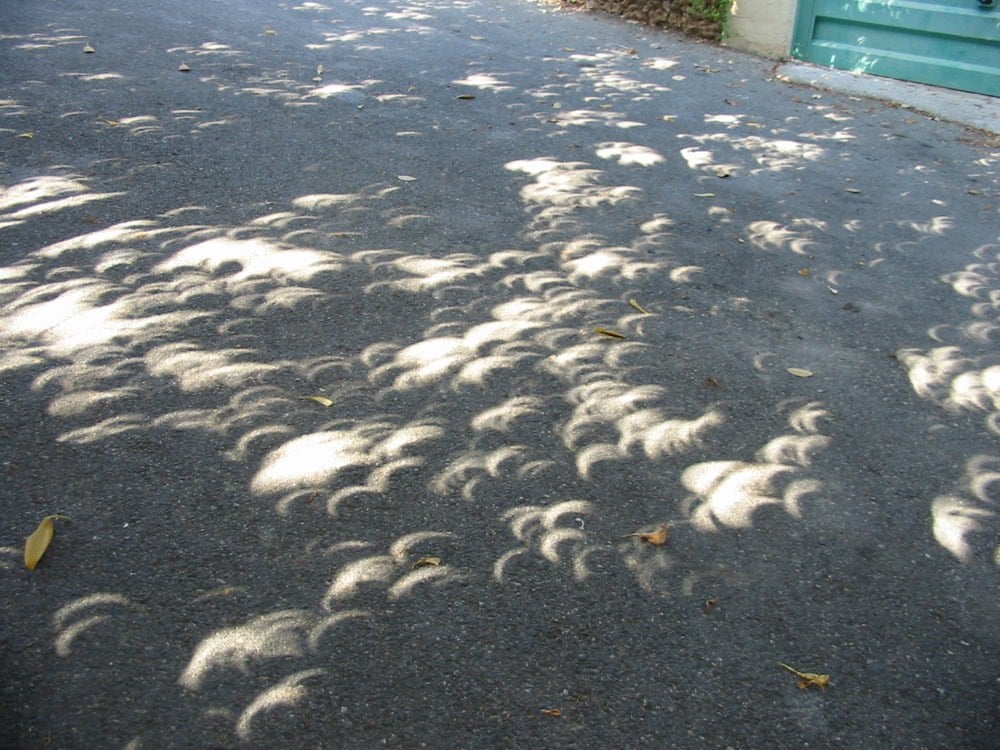
Apply good sunscreen. You’ve got your eye protection down, now for the rest of yourself. The eclipse is happening in the middle of the day in much of the country, in what you hope will be complete sunshine, so bring some sunscreen. The Sweethome recommends this SPF 70 Coppertone for $9. Wear a cap. Stay in the shade. Bonus for shading yourself under trees: the gaps between the leaves will form little pinhole lenses and you’ll see really cool patterns:
A nice pair of binoculars. If you’re in the path of totality, you might want a pair of binoculars to look more closely at the totally eclipsed Sun (after checking that it’s safe!!). I’m guessing you don’t want to buy a pair of specialty astronomy binoculars, so the best binoculars are probably ones you already own. If you don’t already have a pair, The Wirecutter recommends the Midas 8 x 42 binoculars by Athlon Optics ($290) with the Carson VP 8x42mm ($144) as a budget pick. (For solar filter options, see below.)
A solar filter for your camera. If you have a camera, they might make a solar filter for whatever lens you want to use. Hydrogen alpha filters will allow you to see the most detail — “crazy prominences and what-not” in the words of a photography pal of mine — but are also pretty expensive. You can buy solar filter sheets ($29) to make your own lens coverings for your camera, binoculars, or telescope. Quality will likely not be fantastic, but you’ll get something. Safety warning: place any filters in front of lenses or it can burn a hole in the filter (and then into your eye); i.e. don’t use binoculars in front of safety glasses!!
Note for budding solar photographers: Shooting the eclipse will be challenging. First there’s too much light and you’ll need a filter. Then when totality occurs, you’ll be in the dark needing a tripod and a fast lens. Plan accordingly…or leave it all at home and look at the thousands of photos taken by pro photographers after the fact.
Ok, that’s it. Have a good eclipse and stay safe!
Update: I removed a reference to the plastic-rimmed safety glasses I ordered because the image has changed on this item since I ordered them and published this guide…it’s now a wire-rimmed pair of glasses. I would recommend getting something else instead, just to be safe. (thx, @kahnnn)
Update: NASA has been alerted that some of the paper glasses being sold are not safe for viewing the eclipse. When buying, look for the ISO icon (referencing 12312-2) and for glasses made by these recommended manufacturers: American Paper Optics, Rainbow Symphony, Thousand Oaks Optical, or TSE 17. (via @ebellm)
Update: The Wirecutter has released their guide to The Best Solar Eclipse Glasses and Filters and they recommend the Celestron EclipSmart 2x Power Viewers (2-pack for $10), which provide not only certified eye protection but a nice 2X zoom.
Socials & More