Entries for July 2017
Bob Menery is an actor who has a perfect voice for sports announcing. Not only is his voice expressive, but he’s got the cadence and patter down as well.
This video is going a little viral right now. I couldn’t track down Menery’s original upload, but I did find a little-seen video he did four years ago, messing around with the same voice in his car:
See also the homeless man with a golden voice.
In an extended clip from the HBO series The Defiant Ones, this is the story of how a white rapper from Detroit and rap’s best producer got together to start one of the decade’s signature musical collaborations. It’s evident from how Eminem and Dre tell the story that their first session in the studio was like falling in love…you only click like that with something a few times in a lifetime and then you spend the rest of your life trying to get back to that feeling.
This isn’t an official clip from HBO (they uploaded a much shorter segment) but after seeing it, I am definitely watching the whole series.
I love that the internet still has its pockets of weirdness. You might remember this video from a few years ago of a floppy guy going to the store…it’s one of my favorite YouTube videos ever.
Well, it looks like that video’s creator, David Lewandowski, got himself a faster computer because his latest video features several hundred floppy naked dudes and gals rendered into street scenes and other places (I won’t spoil the surprise).
Note: this is vaguely NSFW but not really…it’s mannequin nudity, essentially.
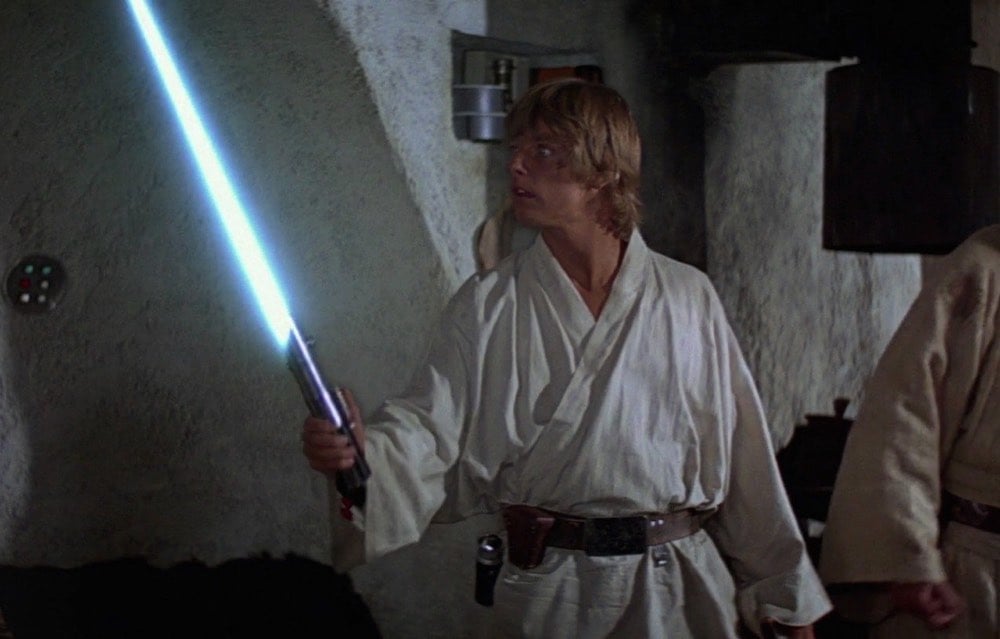
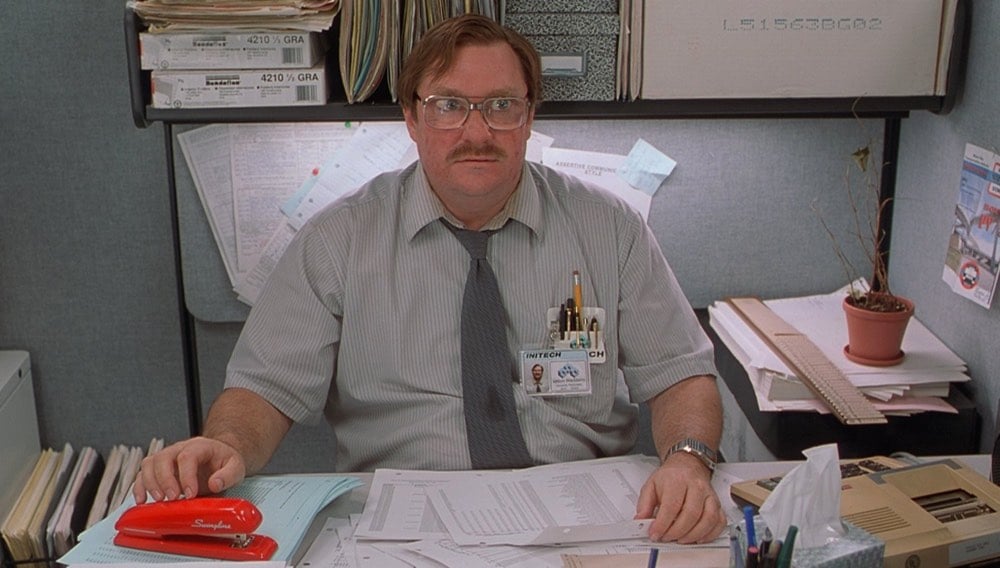
Thrillist has a great feature on 100 of the best props in movie history and how the directors, production designers, and artists found, chose, designed, bought, borrowed, or stole them to be a part of their films. About the plastic bag from American Beauty:
“It was a very low-budget movie. A tiny budget, and I had a tiny portion of the tiny budget. When I talked to Sam [Mendes, director] about the shopping bag, he was very specific about it not having markings on it. No store name, no ‘thank you, have a nice day’ — he wanted a plain, white plastic bag.
“Back in 1998, it was the early days for internet shopping. Now I do most of my prop shopping online, but back then it was yellow pages and finding things. I made calls to various manufacturers but the only way I could get one unmarked plastic bag was to buy 5,000 unmarked plastic bags. Even though it didn’t seem like a lot at the time, it was still in the range of $500. Which with my $17,000 budget or about that, I couldn’t afford it.
“The bag was always going to be filmed separately. Sam was going to take the video camera [that Wes Bentley used] and go out with the special effects guys with lawn blowers. It wasn’t slotted in the schedule. So I started my prep and I said, I’ll figure the bag out later. I’ll figure the bag out later. I’ll figure the bag out later. Towards the end of my prep, my assistant and I were in downtown LA and we’re buying all sorts of stuff from all sorts of stores for all the characters. We came back to my house, and we’re unloading my car, and we’re piling all these bags on to the table, and right in the middle of the pile, is this white plastic bag with no markings. And I’m like, THAT’S THE BAG. We didn’t know where it came from — we’d been to 55 different places. The receipts just say ‘item number whatever.’ I have no idea where that bag came from, but it came to me. It came from the prop gods who knew I’d never find one otherwise.”
The cup of water in Jurassic Park:
“I was at work and Steven [Spielberg] calls into the office. He goes, ‘I’m in the car, I’m playing Earth, Wind & Fire, and my mirror is shaking. That’s what we need to do. I want to shake the mirror and I want to do something with the water.’ The mirror shaking was really very easy — put a little vibrating motor in it that shook it. The water was a another story. It was very difficult thing to do. You couldn’t do it. I had everyone working on it. Finally, messing around with a guitar one night, I set a glass and started playing notes on a guitar and got to a right frequency, a right note, and it did exactly what I wanted it to do.”
Oh, and the red stapler from Office Space!
“I wanted the stapler to stand out in the cubicle and the color scheme in the cubicles was sort of gray and blue-green, so I had them make it red. It was just a regular off-the-shelf Swingline stapler. They didn’t make them in red back then, so I had them paint it red and then put the Swingline logo on the side.
“Since Swingline didn’t make one back then, people were calling them trying to order red staplers. Then people started making red Swinglines and selling them on Ebay and making lots of money, so Swingline finally decided to start making red staplers.
“I have the burnt one from the last scene. Stephen Root has one that was in his cubicle. There were three total that we made. I don’t know where the third one is.”
Ahhh, I could read these all day. Wait, the horse head in that scene in The Godfather was real?!
“John Marley, the guy who played the movie producer, was a pain in the ass because he was a complainer every time he was on screen. Now, we go to shoot the famous scene. We’re shooting out on Long Island on a winter day, which is cold, dark, and rainy outside. We’re down at an elegant old stone mansion, and John is wearing his silk coat and his pajamas, standing by the bed. Now, four grips walk in carrying this huge metal case. He has no idea what the hell’s inside. I’m not exaggerating — it was probably about 6 to 8-ft square with the latches on each corner. He stands by the bed, and they lower this thing on the floor. They take off the four latches, and he almost faints. He sees this fucking horse’s head with the tongue hanging out. Oh, Jesus Christ!
“The next thing we know, the head is on the bed, on the yellow sheets. So you know, the horse’s head was frozen with dry ice, so it was fucking cold. Francis figures, ‘This is my shot to get him.’ They put all the phony blood. John refuses to stretch his legs out. He’s got his legs pulled in so it doesn’t hit the horse’s head. Francis kept telling him to straighten out. His scream was blood-curdling. What you hear in the movie was not done later on. We were laughing at a certain point. We were fucking howling. He was freaking out. When that scene was over, he ran off the set, throwing the bloody shit on the floor. He was gone for the rest of the day.”
Ok, that’s enough, go read the whole thing already.
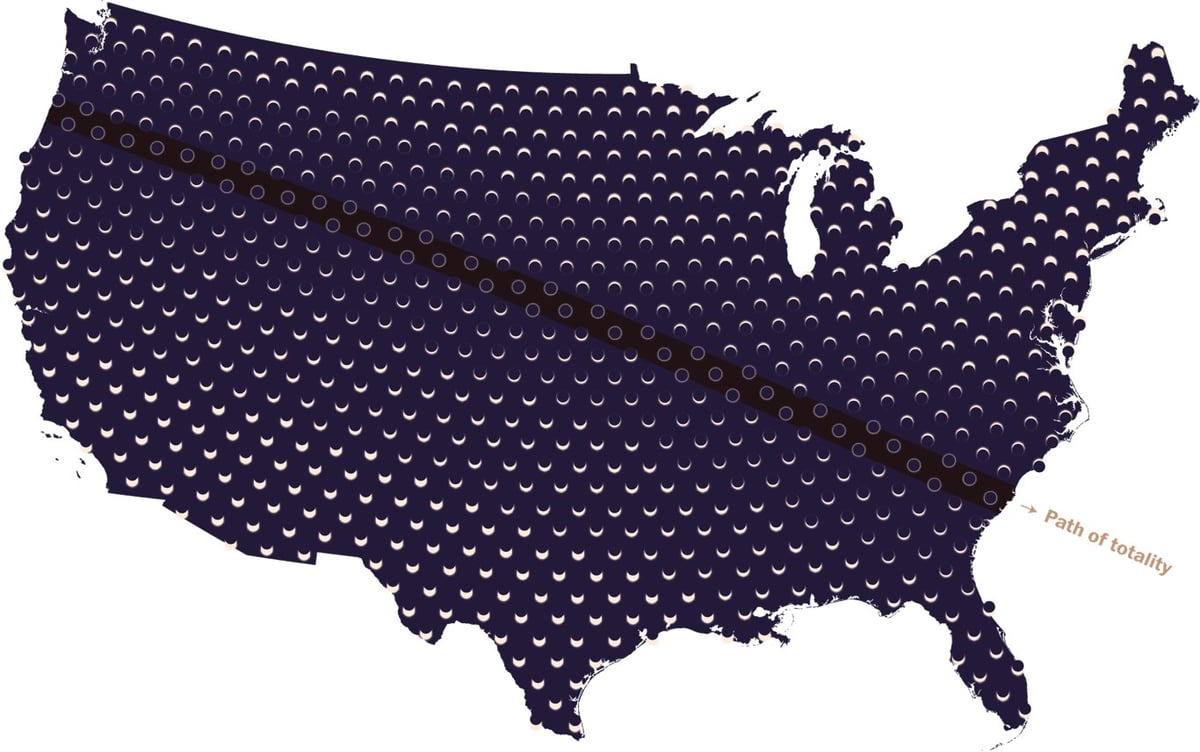
The Washington Post has a cool series of maps related to the total solar eclipse happening in August. The one above is a one-shot view of what the Sun will look like across the US on August 21 and there are other maps with captions like “The last eclipse over these areas occurred before Columbus’s arrival in 1492” and “Total solar eclipse paths over the continental U.S. since 2000 B.C.”
In the last 100 years, some areas have been in the paths of multiple eclipses: New England, for example, saw four. (During its World Series dry spell from 1918 to 2004, the greater Boston area alone saw two.)
Others weren’t so lucky. Just 200 miles away in New York, construction on the Empire State Building had not started yet the last time the city saw a total solar eclipse (1925). San Diego had a population of less than 100,000 the last time it was eclipsed (1923), and Chicago hasn’t seen a total eclipse at all in the last 100 years. An area near Tucson has the longest dry spell in the Lower 48: The last total solar eclipse it saw was in the year 797.
The U.S. mainland has averaged about seven total solar eclipses per century since 2000 B.C. Some areas have seen as many as 25 eclipses, while others, such as spots west of Minneapolis, have seen only four in the last four millennia.
Prime Day, a holiday1 invented by Amazon to sell more stuff and sign up Prime members, is upon us once more. I know you don’t need more stuff, but if you do, there are some good deals to be had.
Many of the Echo/Alexa devices are available at their lowest prices ever. The flagship Echo is $90 (50% off), the Dot is $35, and the Tap is $80. (I actually have no idea what those last two things are.) The Dash Wand (which I have and have used sparingly so far…the kids use it mainly to hear jokes) is back in stock and is still essentially free (it’s $20 with a $20 credit after activation).
Amazon is also offering special deals for items ordered with Alexa devices, I guess to get people used to ordering with their voice from their electronic butlers?
The Kindle Paperwhite, still my favorite gadget, is $30 off.
Use the code PRIMEBOOKS17 to get $5 off book purchases over $15.
Exploding Kittens is $14, the 23andMe DNA testing kit is 50% off, this 4TB external hard drive is $110, and these All-Clad cookware sets are 40% off at checkout (All-Clad is amazing).
Update: Everyone’s favorite pressure cooker is on sale: the 8-qt Instant Pot is $90 (30% off).
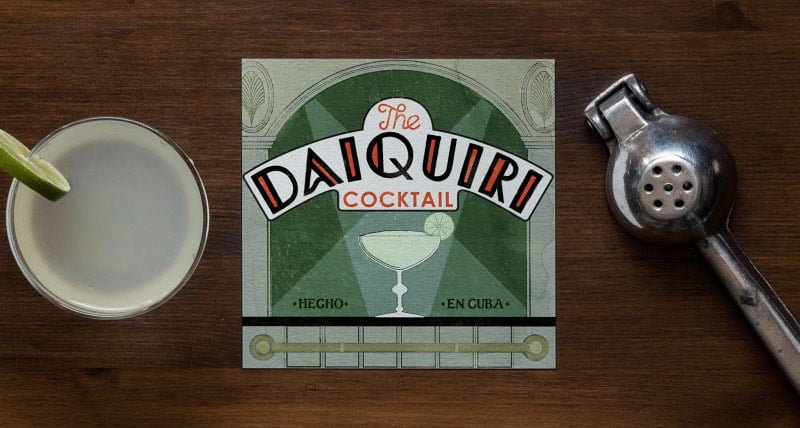

For his Letters & Liquors site, Matthew Wyne is profiling more than 50 classic cocktails accompanied by a type-driven design specific to each drink’s era.
As a graphic designer, my specialty is lettering, and the spirits world is replete with lettering styles. This blog is an attempt to merge my knowledge of cocktail history with the developments in lettering that accompanied it. There will be 52 cocktails in all, one for each week of 2017, and each one will be represented by a piece of lettering inspired by the design of that era. I have selected these drinks specifically because they tell the story of why people drank what they did when they did.
I really don’t like Wyne’s use of “she” as a cocktail’s pronoun, but everything else about this is great. (via df)
Radiohead has performed Fake Plastic Trees at the Glastonbury Festival three times: in 1997, 2003, and 2017. This video synchs all three performances into one, with the audio switching between the three. (via web curios)
From Justin Gillis at the NY Times, some succinct answers to frequently asked questions about climate change, including:
Is there anything I can do about climate change?
Will reducing meat in my diet really help the climate?
Will a technology breakthrough help us?
Why do people question the science of climate change?
Is crazy weather tied to climate change?
And “How much is the planet warming up?”:
As of early 2017, the Earth had warmed by roughly 2 degrees Fahrenheit, or more than 1 degree Celsius, since 1880, when records began at a global scale. That figure includes the surface of the ocean. The warming is greater over land, and greater still in the Arctic and parts of Antarctica.
The number may sound low. We experience much larger temperature swings in our day-to-day lives from weather systems and from the changing of seasons. But when you average across the entire planet and over months or years, the temperature differences get far smaller — the variation at the surface of the Earth from one year to the next is measured in fractions of a degree. So a rise of 2 degrees Fahrenheit since the 19th century is actually high.
I think part of the problem, at least for Americans, is that the temperature numbers typically bandied about — the magic number of two degrees above pre-industrial levels — are in Celcius, not Fahrenheit. That 2°C is 3.6°F…the entire Earth warming up by 3.6°F is a tremendous amount of heat.
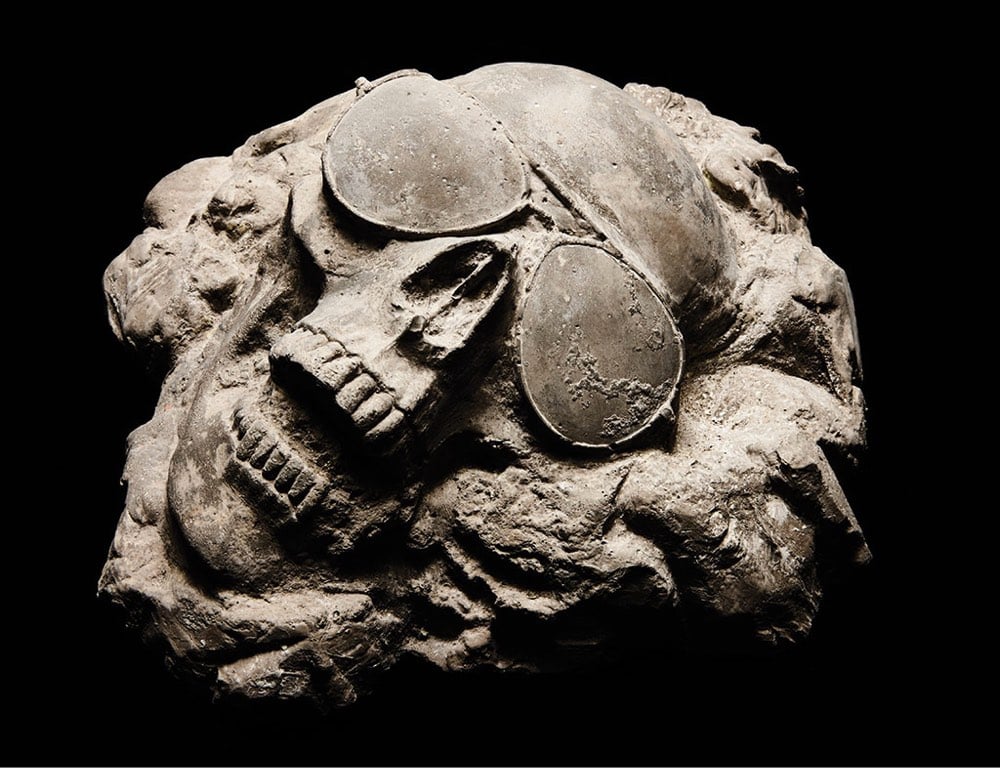
After talking with dozens of climatologists and related researchers, David Wallace-Wells writes about what will happen to the Earth and human civilization without taking “aggressive action” on slowing climate change. It is a sobering piece.
Since 1980, the planet has experienced a 50-fold increase in the number of places experiencing dangerous or extreme heat; a bigger increase is to come. The five warmest summers in Europe since 1500 have all occurred since 2002, and soon, the IPCC warns, simply being outdoors that time of year will be unhealthy for much of the globe. Even if we meet the Paris goals of two degrees warming, cities like Karachi and Kolkata will become close to uninhabitable, annually encountering deadly heat waves like those that crippled them in 2015. At four degrees, the deadly European heat wave of 2003, which killed as many as 2,000 people a day, will be a normal summer. At six, according to an assessment focused only on effects within the U.S. from the National Oceanic and Atmospheric Administration, summer labor of any kind would become impossible in the lower Mississippi Valley, and everybody in the country east of the Rockies would be under more heat stress than anyone, anywhere, in the world today. As Joseph Romm has put it in his authoritative primer Climate Change: What Everyone Needs to Know, heat stress in New York City would exceed that of present-day Bahrain, one of the planet’s hottest spots, and the temperature in Bahrain “would induce hyperthermia in even sleeping humans.” The high-end IPCC estimate, remember, is two degrees warmer still.
Carbon is not only warming the atmosphere, it’s also polluting it.
Our lungs need oxygen, but that is only a fraction of what we breathe. The fraction of carbon dioxide is growing: It just crossed 400 parts per million, and high-end estimates extrapolating from current trends suggest it will hit 1,000 ppm by 2100. At that concentration, compared to the air we breathe now, human cognitive ability declines by 21 percent.
Our climate is supposed to move slowly, in concert with many other slow moving things like ecosystems, evolution, global economies, politics, and civilizations. When the pace of climate change quickens? A lot of those slow moving things are going to break. Heat, drought, famine, coastal flooding, pollution, disease, war, forced migration, economic collapse…humanity will survive, but the worst case scenario is not pretty. And of course, the most vulnerable among us — the poor, young children, the elderly, pregnant women, the disabled, and the otherwise disadvantaged — will undergo the most suffering.
Update: And once again, addressing climate change isn’t about saving the planet, it’s about preserving humanity and preventing human suffering. As Seth Michaels tweeted: “‘the planet’ will be fine. the patterns and structures that determine where we live, what we eat, how we get along? *that’s* what’s at stake”. (via @lauraolin)
Update: A piece like this was going to be controversial and some of the responses are worth reading.
Climate scientist Michael Mann:
I have to say that I am not a fan of this sort of doomist framing. It is important to be up front about the risks of unmitigated climate change, and I frequently criticize those who understate the risks. But there is also a danger in overstating the science in a way that presents the problem as unsolvable, and feeds a sense of doom, inevitability and hopelessness.
The article argues that climate change will render the Earth uninhabitable by the end of this century. Extraordinary claims require extraordinary evidence. The article fails to produce it.
Eric Holthaus: Stop scaring people about climate change. It doesn’t work.
The real problem is that time and time and time again, psychology researchers have found that trying to scare people into action usually backfires. Presented with the idea that the planet that gives us life might be dying, parts of our brain shut down. We are unable to think logically.
Our brain’s limbic system is hard-wired to prioritize these kinds of threats, so we shift into fight-or-flight mode. And because the odds look stacked against us, most choose to flee. If anything, strategies like this make the problem worse. They take people willing to read something like “The Uninhabitable Earth” and essentially remove them from the pool of people working on real-world solutions.
Robinson Meyer: Are We as Doomed as That New York Magazine Article Says?
Many climate scientists and professional science communicators say no. Wallace-Wells’s article, they say, often flies beyond the realm of what researchers think is likely. I have to agree with them.
At key points in his piece, Wallace-Wells posits facts that mainstream climate science cannot support. In the introduction, he suggests that the world’s permafrost will belch all of its methane into the atmosphere as it melts, accelerating the planet’s warming in the decades to come. We don’t know everything about methane yet, but the picture does not seem this bleak. Melting permafrost will emit methane, and methane is an ultra-potent greenhouse gas, but scientists do not think so much it will escape in the coming century.
Andrew Freedman: Do not accept New York Mag’s climate change doomsday scenario.
In several places, the story either exaggerates the evidence or gets the science flat-out wrong. This is unfortunate, because it detracts from a well-written, attention-grabbing piece. It’s still worth reading, but with a sharp critical eye.
In recent years, scientific evidence has solidified around central findings, showing that sea level rise is likely to be far more severe during the rest of this century than initially anticipated, and that key temperature thresholds may be crossed that make life difficult for some kinds of plants and animals to survive in certain places.
Back in May I shared a list of books that TED speakers had mentioned on Twitter. That list was a little uneven because a mention isn’t necessarily a recommendation and some speakers aren’t on Twitter while others tweet books constantly. This list of 101 books to dive into this summer compiled by TED is much more cohesive and useful. Among the picks that sounded interesting:
Pocket Atlas of Remote Islands: Fifty Islands I Have Not Visited and Never Will by Judith Schalansky.
The Atlas of Remote Islands, Judith Schalansky’s beautiful and deeply personal account of the islands that have held a place in her heart throughout her lifelong love of cartography, has captured the imaginations of readers everywhere. Using historic events and scientific reports as a springboard, she creates a story around each island: fantastical, inscrutable stories, mixtures of fact and imagination that produce worlds for the reader to explore.
The More They Disappear by Jesse Donaldson.
There’s a lot of talk about the opioid crisis these days, but what’s missing from the statistics is the human story, the understanding of why people are making the choices they do. This novel, which focuses on Kentucky in the 1990s, gave me that understanding. After I finished it — which didn’t take long because I couldn’t put it down — I felt like I had physically been transported to that time and place.
Placing Outer Space: An Earthly Ethnography of Other Worlds by Lisa Messeri.
In Placing Outer Space Lisa Messeri traces how the place-making practices of planetary scientists transform the void of space into a cosmos filled with worlds that can be known and explored. Making planets into places is central to the daily practices and professional identities of the astronomers, geologists, and computer scientists Messeri studies.
Behave: The Biology of Humans at Our Best and Worst by Robert Sapolsky.
Due to my work filming with former jihadis, I’ve become very interested in understanding more about human interaction. Behave explores human nature, from the firing of a synapse all the way to the broader effects of culture. Based on a wide and multidisciplinary knowledge of science, this book provides a fascinating exploration of humanity, which might give us some important information on how we can work towards a better future for us all.
The Monster at the End of This Book by Jon Stone.
I recently reread this children’s classic. It’s surprisingly relevant now, and shows us the irrational fears we can have of various groups.
When your phone takes a photo of something, it scans the frame of view line-by-line from top to bottom quickly. But, if you’re photographing an object like a fan or plane’s propellor that’s moving very quickly, the scanning exposure can warp the final image. That’s the rolling shutter effect. Using high-speed camera footage to simulate the warping, Smarter Everyday shows us exactly how the rolling shutter effect occurs. The guitar strings are the coolest; more of that in this video:
P.S. Here’s the behind-the-scenes for Smarter Everyday’s rolling shutter video.
Rebecca Onion recently interviewed Nancy MacLean, who has written a book about economist James McGill Buchanan, whose work MacLean believes is the origin of the ideas & strategy of the far right in America (most notably represented by the Koch brothers). As told by MacLean in her book Democracy in Chains: The Deep History of the Radical Right’s Stealth Plan for America, the goal of this coalition is to switch the US to a “totally new vision of society and government, that’s different from anything that exists anywhere in the world”.
When the Supreme Court decided, in the 1954 case of Brown vs. Board of Education, that segregated public schools were unconstitutional, Tennessee-born economist James McGill Buchanan was horrified. Over the course of the next few decades, the libertarian thinker found comfortable homes at a series of research universities and spent his time articulating a new grand vision of American society, a country in which government would be close to nonexistent, and would have no obligation to provide education-or health care, or old-age support, or food, or housing-to anyone.
This radical vision has become the playbook for a network of people looking to override democracy in order to shift more money to the wealthiest few.
I suspect MacLean’s argument is much more fleshed out in her book than in the interview and criticisms are easy to find (although I don’t know how ideologically motivated they are), but what she says could explain what’s happening in our government right now. As I wrote back in December:
More than anything for me, this is the story of politics in America right now: a shrinking and increasingly extremist underdog party has punched above its weight over the past few election cycles by methodically exploiting the weaknesses in our current political system. Gerrymandering, voter suppression, the passing of voter ID laws, and spreading propaganda via conservative and social media channels has led to disproportionate Republican representation in many areas of the country which they then use to gerrymander and pass more restrictive voter ID laws.
In the interview, McLean says that Buchanan advised Chilean dictator Augusto Pinochet on the structure of his country’s constitution:
This document was later called a “constitution of locks and bolts,” [and was designed] to make it so that the majority couldn’t make its will felt in the political system, unless it was a huge supermajority.
That feels like where we’re heading in this country right now. Perhaps slowly and perhaps it won’t come to that, but it’s difficult to escape the conclusion these days that Republicans (or at least the ascendant far right arm of the party) want anything less than to rule the US no matter what the majority of its citizens might want.



Artist Visoth Kakvei makes these intricately patterned illustrations and posts them to his Instagram account. Lately, he’s been playing with faux 3D illusions and augmented reality, which pairs really well with his illustration style.
Prints of his illustrations are available, but sadly not of his newer stuff.
I mean, this is pretty good, but the original Sesame Street rap mashup is hard to top:
Respect.
Noah Kunin has been working for the US government since 2010 and right after the election, he wrote a short post as to why he was staying on even though he did not support Trump.
My oath to this country was not to a particular office, or person, and certainly not to a political party. It was to the Constitution and to the people (emphasis added).
More recently, he wrote a post on why he is now leaving government service, again citing his duty to the Constitution and the people:
The first thing that happened was the release of the written testimony of the former FBI Director, James Comey. While many focused on the potential obstruction of justice detailed within Comey’s notes, I was immediately drawn to a different issue. According to Comey, the President clearly asked, repeatedly, for his personal loyalty.
I think this is even more dangerous and shocking than the potential for obstruction of justice. Even though I intellectually knew that most of Trump’s decisions are based on personal politics, seeing it in writing, under oath, and from the FBI Director at the time no less, had an unexpectedly massive emotional impact on me.
My previous post put the oath all federal public servants take at its center. Pledging our faith, allegiance, our loyalty not to a person, but to the Constitution and to the people as a whole is absolutely fundamental to our form of government. We cannot even pretend to function as a republic without it.
For anyone in public service to ask for the personal loyalty of anyone else in government is an affront to our core values. For the President to ask it of the FBI Director is beyond “not normal.”
It is an immediate and complete revelation that the President is unfit for the office, and has been from the start.
I think Kunin’s right about Trump’s demand for personal loyalty over loyalty to duty or to county…it’s as disturbing as anything else that Trump has done.
Quick reviews of some things I’ve read, seen, and heard in the past few weeks. As always, don’t take the letter grades so seriously. Lots of music & TV and fewer movies & books this time around.
Enemy of the State. Ripe for a remake. (B-)
Cafe Society. Jesse Eisenberg is the worst version of Woody Allen yet. (C+)
Behave. I’ve barely started reading this (and then stopped because I was in the mood for fiction instead) but aspire to finish because I’ve heard really great things from a diverse array of trusted sources. (n/a)
Narcos. Season 2 is less compelling than the initial season, but Wagner Moura as Escobar is flat-out amazing. If you skipped this show, do yourself a favor and try season 1. (B+)
My Struggle: Book 2. I generally don’t find myself in characters in books, historical figures, or working artists, but the degree to which I identify with Karl Ove Knausgaard as depicted in the first two My Struggle books scares the shit out of me. On practically every page, he writes something that resonates with me and how I approach the world. I’m not sure any other book has helped me identify and understand the good and bad parts of myself as much as this one. (A+)
Zen Shorts. A recommendation by several kottke.org readers after the story of the Chinese farmer post. (A-)
This Bridge Will Not Be Gray. The only Dave Eggers book I’ve read in recent years. Sparked an interest in Art Deco in my kids a couple years ago. (A-)
Melodrama. After such a strong debut, it’s great to see Lorde come back with such a strong sophomore effort. (B+)
It Will Be Forever. Recommended by a friend who never gets it wrong. (He also put me onto this.) Tycho-esque. (B+)
Ctrl. Haven’t listened to this much but want to give it more attention. (B)
Cars 3. Way better than the deplorable Cars 2 but it felt very much like a sequel in a way that the Toy Story movies didn’t. (B)
Halt and Catch Fire. Rewatching from season one, which ppl will tell you to skip, but they’re wrong. I had forgotten how good it is, right away. Looking forward to their final season starting in August. (A-)
GLOW. Enjoyable television: really fun and just a little meaty. (B+)
OK Computer OKNOTOK 1997 2017. A reissue of one of the best albums of all time? Sure. (A+)
Star Trek: The Next Generation. I’ve seen all of these multiple times, and I just love them. Even the ones where Troi is possessed and Geordi falls in love with Holodeck characters. (A)
Iteration. If you love Com Truise, you will love this. (B+)
Big Fish Theory. The album of the summer? I haven’t been able to stop playing this in the car. (A-)
Okja. I wanted to like this way more than I did. Felt muddled. Never a good sign when you stop a movie halfway through to go to bed. (C+)
4:44. But I liked this way more than I thought I would. It’s no Lemonade (the fingerprints of which are all over 4:44), but Jay-Z has reminded everyone that he’s still a formidable artist. And the way he says “okay” after “I’m not black, I’m O.J.” is pitch perfect. Further reading: ‘4:44’ is a Shawn Carter album. Jay-Z is dead., ‘4:44’ Producer No I.D. Talks Pushing Jay-Z, Creating ‘500 Ideas’, and Jay-Z’s Pitch for Generational Wealth. (A-)
Past installments of my media diets can be found here.
As part of a longer post on the role of capitalism in bringing about gay rights in America, staunch libertarian and Cato Institute executive VP David Boaz writes:
All the advances in human rights that we’ve seen in American history — abolitionism, feminism, civil rights, gay rights — stem from our founding ideas of life, liberty, and the pursuit of happiness. The emphasis on the individual mind in the Enlightenment, the individualist nature of market capitalism, and the demand for individual rights that inspired the American Revolution naturally led people to think more carefully about the nature of the individual and gradually to recognize that the dignity of individual rights should be extended to all people.
This passage has been bugging me ever since I saw a link to it on Marginal Revolution in a post titled “Independence Day”. There’s this undercurrent in libertarian writing that suggests that if we just let capitalism rip, unfettered, unregulated, everyone will be automagically free. Independence Day, amirite?!
What’s interesting is that the way all of those freedoms Boaz talks about — abolitionism, feminism, civil rights, gay rights — were attained is through collective action that resulted in government protection. Capitalism is not Miracle Grow for individual rights. People organized and fought for their freedoms. Economic activity is taxed in order to protect our freedoms. Unchecked capitalism led to slavery, child labor, unfair labor practices, monopoly, and the ruin of the environment. Gosh, it’s almost like a system of capitalism combined with liberal democracy would be a fairly good way to both gain and protect individual freedoms. Yes, harness the incredibly useful engine of capitalism but make sure it doesn’t grind humanity up in the process.
vintage post from Jul 2017
· gift link
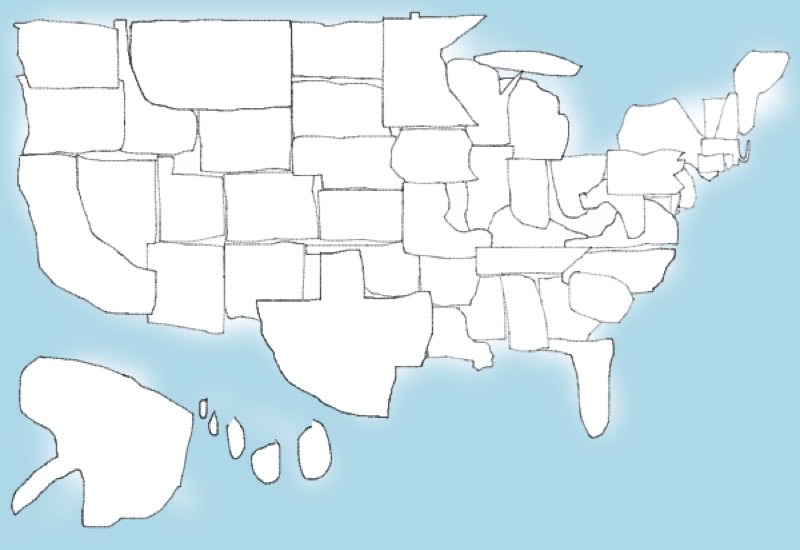
Per Betteridge’s law of headlines and also the map above, my answer is clearly no. You can try it yourself here…you draw them one at a time and it adds them to the map automagically. I’m going to blame my trackpad use a little, but I’m not sure I would have done much better had I drawn with a pencil and looked a map beforehand.
Update: Your periodic reminder that Senator Al Franken can draw all 50 US states from memory with astonishing accuracy.
(thx, eric)
Check It is a documentary film about a Washington DC gang with an all-LGBT+ membership.
At first glance, they seem unlikely gang-bangers. Some of the boys wear lipstick and mascara, some stilettos. They carry Louis Vuitton bags, but they also carry knives, brass knuckles and mace. As vulnerable gay and transgender youth, they’ve been shot, stabbed, and raped.
Once victims, they’ve now turned the tables, beating people into comas and stabbing enemies with ice picks. Started in 2009 by a group of bullied 9th graders, today these 14-22 year old gang members all have rap sheets riddled with assault, armed robbery and drug dealing charges.
Led by an ex-convict named Mo, Check It members are now creating their own clothing label, putting on fashion shows and working stints as runway models. But breaking the cycle of poverty and violence they’ve grown up in is a daunting task.
Louis CK is one of the films executive producers and he has put the film up on his site as a $5 download. In a recent newsletter, he explained why:
Look, I know this isn’t what you’re expecting from me. Nor am I the guy you’re expecting to get this film from. I guess that’s why I’m doing this. When I saw this film, I knew that no one I know will ever see it. Documentaries are MUCH harder to make than the things that I do and they are FAR more expensive to the filmmakers in terms of their time and their lives and their emotional energy. And nobody much watches them. Those who do watch documentaries are usually people who are likely to be interested in the subject they cover already. But what a great value there is in showing people films about something that just isn’t on their radar. So that’s why I asked Steve, and Wren Arthur, who produced the film, if I could host “Check It” on my site so that lots of people can see it who may not have had it put in front of them.
Neill Blomkamp has released a second short film through Oats Studios. Firebase is set in Vietnam in 1970 and follows a group of American soldiers trying to make sense of the so-called River God and the strange phenomena that arise around him. Just as with the previous film, Rakka, they are selling some of Firebase’s assets on Steam. I found this one less compelling than Rakka, by YMMV.
Note: if you are at all squeamish, heed the warning at the beginning of the film…it’s super gory at times.
I’ve automated my job. Is it ethical to not tell my employer?
At the recent Aspen Ideas Festival, legal scholar and former Obama advisor Cass Sunstein shared some views on his understanding of and some misconceptions about impeachment, namely that it doesn’t need to involve an actual crime and “is primarily about gross neglect or abuse of power”. Or as he put it more formally in a 1998 essay in the University of Pennsylvania Law Review:
The simplest is that, with respect to the President, the principal goal of the Impeachment Clause is to allow impeachment for a narrow category of egregious or large-scale abuses of authority that comes from the exercise of distinctly presidential powers. On this view, a criminal violation is neither a necessary nor a sufficient condition for impeaching the President. What is generally necessary is an egregious abuse of power that the President has by virtue of being President. Outside of this category of cases, impeachment is generally foreign to our traditions and is prohibited by the Constitution.
The “distinctly presidential powers” bit is a high bar to clear. Examining the case for Nixon on that basis, and only some of the reasons for wanting to impeach him hold up.
Richard Nixon nearly faced four counts. One failed count, for tax evasion, was completely inappropriate, Sunstein argued: Though an obvious violation of law, it had no bearing on Nixon’s conduct of the presidency. A second charge, for resisting subpoena, is possibly but not necessarily valid, since a president could have good reasons to resisting a subpoena. A third is more debatable: Nixon was charged with covering up the Watergate break-in. Nixon might have been more fairly prosecuted for overseeing the burglary, Sunstein argued, but nabbing him for trying to use the federal government to commit the cover-up was “probably good enough.” Only the fourth charge, of using the federal government’s muscle to prosecute political enemies, is a clear slam-dunk under the Founders’ principles.
Clinton’s impeachment, argued Sunstein in that same Penn Law Review essay, was less well-supported:
I suggest that the impeachment of President Clinton was unconstitutional, because the two articles of impeachment identified no legitimate ground for impeaching the President.
Sunstein explained the intent of the members of the Constitutional Convention in a Bloomberg article back in February. It’s interesting in the light of the Russian collusion investigation that the debate about impeachment at the convention centered around treason.
James Madison concurred, pointing to cases in which a president “might betray his trust to foreign powers.” Gouverneur Morris added that the president “may be bribed by a greater interest to betray his trust; and no one would say that we ought to expose ourselves to the danger of seeing the first Magistrate in foreign pay without being able to guard against it by displacing him.”
So what about Trump? Sunstein doesn’t offer much (no apparent mention of collusion with Russia):
Sunstein, having scolded legal colleagues for playing pundit, was reluctant to address the question directly. Setting aside the impossibility of impeaching Trump under the present circumstances of GOP control of Congress, Sunstein said he was wary of trying to remove the president simply for being bad at his job. Nonetheless, he said Trump’s prolific dishonesty might form a basis for trying to remove him.
“If a president lies on some occasions or is fairly accused of lying, it’s not impeachable — but if you have a systematic liar who is lying all the time, then we’re in the ballpark of misdemeanor, meaning bad action,” he said.
If I were a betting person, I would wager that Donald Trump has a better chance of getting reelected in 2020 than he does of being impeached (and a much better chance than actually being removed from office through impeachment) if the Republicans retain their majority in Congress. Although their healthcare bill has hit a hiccup due to public outcry (and it’s only a hiccup…it will almost surely pass), Congressional Republicans have shown absolutely no willingness to do anything not in the interest of their agenda…so why would they impeach a Republican President who is ticking all of the far right’s action items thus far?
A little-known Italian design & architecture group called the Memphis Group was responsible for the dominant aesthetic of the 80s.
Memphis Design movement dominated the ’80s with their crazy patterns and vibrant colors. Many designers and architects from all around the world contributed to the movement in order to escape from the strict rules of modernism. Although their designs didn’t end up in people’s homes, they inspired many designers working in different mediums. After their first show in Milan in 1981, everything from fashion to music videos became influenced by their visual vocabulary.
Or were they? What’s interesting, in terms of the timeline of influence, is that MTV debuted before that September 1981 show in Milan. Here’s the first MTV broadcast in August 1981, featuring the brightly colored logo:
Produced by Square, Made In Iowa tells the story of what happened after the Electrolux plant closed in the small town of Webster City, Iowa in 2011. The company had decided to move those jobs to Mexico and in the years after the closing, the unemployment rate in the town rose from about 3% to 10%. The video shows how the town rallied around the reopening of the movie theater and pursued an entrepreneurial strategy of revitalizing downtown through opening a number of small businesses. That approach brought the town’s unemployment rate back up to 3%.
But that’s not the entire story. The new jobs are mostly non-union and pay less than Electrolux jobs did. The town’s pivot was not entirely a bootstrap effort…the former workers had the government’s assistance and the advantage of their union’s negotiation of benefits. From a 2013 NPR story about the plant closure:
On March 31, 2011, Electrolux shut its washer-dryer plant in Webster City and sent the jobs to Juarez, Mexico. The employees were warned more than a year in advance of the closure, and many used the time to pay off debt and begin thinking about a new career.
Because their jobs had left the country, the laid-off workers qualified for federally funded retraining. A large number enrolled in two-year programs at community colleges and have been living off unemployment benefits as they learn new skills.
And those new businesses downtown are possible in part because people have access to healthcare through the ACA.
It seems relevant at this point to mention that in the 2016 election, the county in which Webster City is situated went for Trump 58.6% (to Clinton’s 35.8%). I mean, bootstrap all you want, but just don’t forget the massive governmental safety net that makes it possible for communities to recover when shit like this goes down and which party wants to dismantle it.
Radiolab recently turned 15 years old and to celebrate, they made an episode that replayed portions of the very first show (when it was called The Radio Lab) and a podcast from the first season (which was about time and featured Oliver Sacks).
15 years ago the very first episode of Radiolab, fittingly called “Firsts,” hit the airwaves. It was a 3-hour long collection of documentaries and musings produced by a solitary sleep-deprived producer named Jad Abumrad. Things have changed a bit since then.
Kudos to them for 15 years…I had no idea it had been that long.
Newer posts




Socials & More