Entries for November 2016
With The Iron Giant, Ratatouille, and The Incredibles under his belt, Brad Bird is one of the most respected and accomplished animated filmmakers out there. For this video, Kees van Dijkhuizen Jr. pieced together a number of interviews and commentary tracks of Bird talking about how he approaches animation. Among the topics he discusses are the pleasures of sneaking around, the advantages of slowing down, and an appreciation of keeping the lights low.
At one point, Bird talks about how some makers of animated movies create scenarios that are too fantastic and then are, later on in their films, unable to interject a true sense of danger into the plot.
The mistake that people often make with animated films is that they love the gravity-defying aspect of it. But, if you defy gravity and then later on need to feel danger, you have a really hard time convincing the audience.
Contemporary superhero movies, even the good ones, often have this problem, and I wonder if it’s because they are essentially made like animated films with too much of the gravity-defying aspect. With CG and flawless green screens, you can essentially make anything happen on the screen, which somewhat counterintuitively lowers the stakes of what you’re watching.
I thought Westworld was going to have the same problem. The first few episodes were boring because they were set in a world where no one could get injured or killed. Park visitors could roll up to a Western town with a few guns and kill all of the inhabitants without much effort and at no personal risk. There were no stakes and it totally broke the fourth wall. But from the way the last few episodes have gone, it’s apparent the danger will come (from elsewhere) and that having the audience (both of the HBO show and the park’s paying patrons) consider the fourth wall is part of the point.
From the American Museum of Natural History, an animated timeline map of human population growth from 100,000 BCE to the present.
It took 200,000 years for our population to reach 1 billion. And only 200 years to reach 7 billion.
Interesting to see that the only sustained decline in the world’s overall population over the past 2000 years was during the bubonic plague outbreak during the Middle Ages.
In a perfect world, if you place a cue ball at the focal point of an elliptical pool table, you can hit it in any direction you want and it will go into a pocket located at the other focal point. Geometry! Of course, in the real world, you need to worry about things like hitting it too hard, variations in the table, spin on the ball, etc., but it still works pretty well.
How would you play an actual game on an elliptical table though? Like this. (Hint: to sink the intended ball on the table, hit it as though it came from the opposite focal point.)
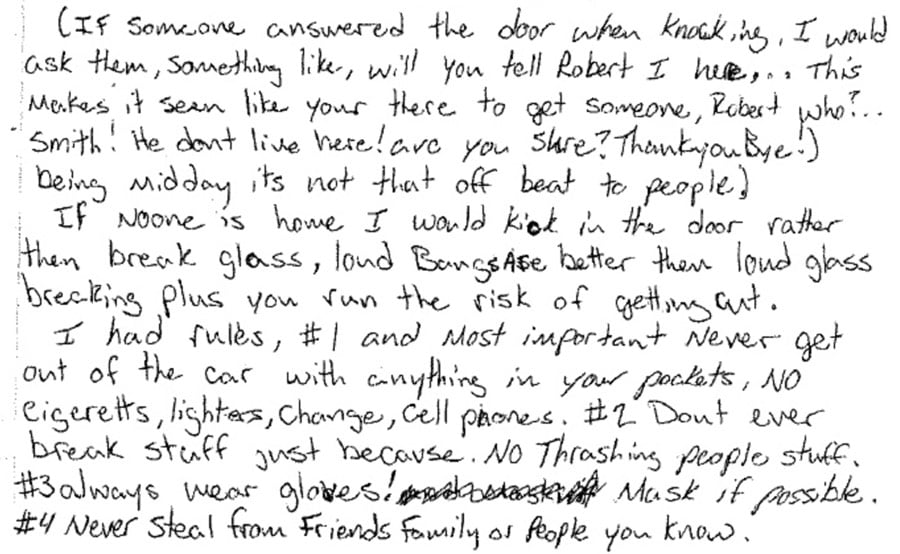
A local TV station in Portland, OR wrote letters to dozens of convicted burglars and asked them for details about how they broke in, what they were looking for, etc. in order to give homeowners some suggestions on how avoid being robbed.
7. Did you typically knock on the front door before breaking into a home?
Yes. All of the inmates who responded said they would knock on the front door before breaking in.
8. If someone answered the door, what would you do or say?
“Act like I was lost or looking for a friend.”
“I would approach the resident as though they had posted an ad on Craigslist.”
“Say wrong house, sorry and thank you.”
“Ask if they’d seen my dog and leave.”
“Sometimes I would wear nice clothing and print a questionnaire off the Internet and carry a clipboard and see if they could spare a moment for an anonymous survey.”
Possibly relevant note: all this information is from people who got caught burgling, so, you know, grain of salt.
Stanley Kubrick’s Boxes is a documentary film by Jon Ronson about Kubrick’s personal archive of more than 1000 boxes filled with material (photos, news clippings, letters, research materials, etc.) related to his films. Ronson wrote about how he got access to the archive in a 2004 Guardian piece.
The journey to the Kubrick house starts normally. You drive through rural Hertfordshire, passing ordinary-sized postwar houses and opticians and vets. Then you turn right at an electric gate with a “Do Not Trespass” sign. Drive through that, and through some woods, and past a long, white fence with the paint peeling off, and then another electric gate, and then another electric gate, and then another electric gate, and you’re in the middle of an estate full of boxes.
There are boxes everywhere — shelves of boxes in the stable block, rooms full of boxes in the main house. In the fields, where racehorses once stood and grazed, are half a dozen portable cabins, each packed with boxes. These are the boxes that contain the legendary Kubrick archive.
Was the Times right? Would the stuff inside the boxes offer an understanding of his “tangled brain”? I notice that many of the boxes are sealed. Some have, in fact, remained unopened for decades.
Ronson did not upload his film to Vimeo, but he is “delighted” that it’s available online, so hopefully it won’t disappear soon.
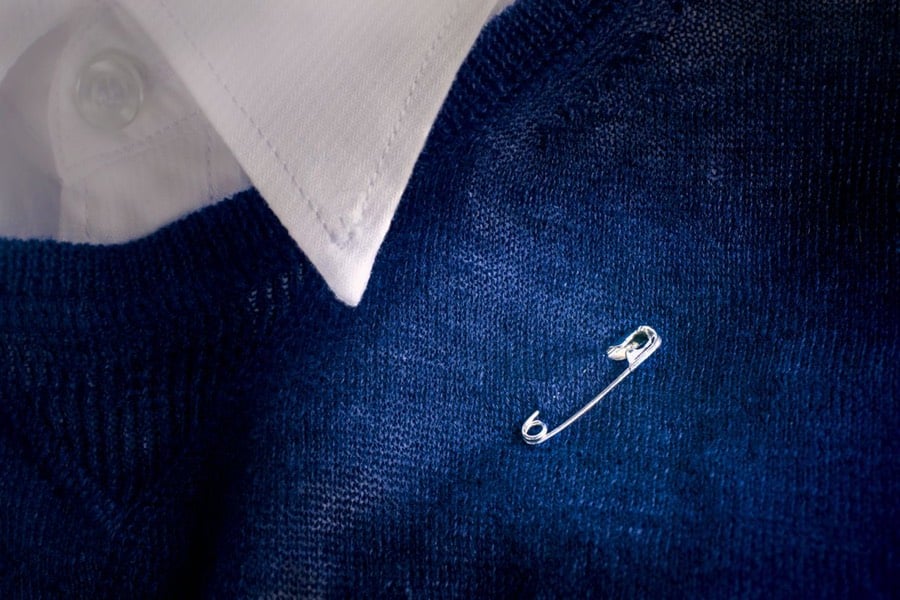
Post-Brexit, people in the UK started wearing safety pins to show their stance against racism and their solidarity with immigrants.
In response to the open environment of hatred, people across the U.K. are now wearing safety pins — and tweeting pictures of themselves wearing them — in an act of solidarity with immigrants.
In the wake of the election and reports of racism incidents across the nation, some are advocating using the safety pin strategy here too.
We need a symbol like that in the United States now. These are vicious days in America. The deplorables are emboldened. The Washington Post reports that there have already been two attacks on Muslim women on college campuses. At San Diego State University, two men ranting about Trump and Muslims robbed a student wearing hijab.
I like this idea, that a subtle marker can denote a social safe space of sorts, a signal to someone who might feel uncomfortable that an ally is nearby. That’s not to say you can put a pin on your coat and *dust off your hands, job well done* but it may help. I’m going to try it.
Update: During the Nazi occupation of Norway in World War II, Norwegians took to wearing paperclips to signal their rejection of Nazi ideology.
The people of Norway also had to deal with German soldiers day in and day out for five years. By 1945, some 400,000 German troops were operating in Norway, controlling the population of about 4 million people.
It was in the autumn of 1940 when students at Oslo University started wearing paperclips on their lapels as a non-violent symbol of resistance, unity, and national pride.
Symbols related to the royal family and state had already been banned, and they wanted a clever way of displaying their rejection of the Nazi ideology. In addition to wearing a single paperclip, paperclip bracelets and other types of jewellery were fashioned as well, symbolically binding Norwegians together in the face of such adversity.
Of course, once the Nazis got wind of this, wearing paperclips became a crime. (via @ckrub)
Update: That co-opting thing I warned against above? Seems like it’s happening.
wear safety pin to fool people into thinking you’re a safe space, trigger them
If I had to guess however, this behavior will be short lived and they’ll move on to some other genius scheme. I’m not taking my pin off. (via @_McFIy & @pattersar)
Update: There’s no safety pin emoji, but some people are adding the paperclip emoji to their Twitter usernames as a virtual world counterpart to the safety pin.
The editors of GQ have selected their picks for The 21 Documentaries from the 21st Century Everyone Should See. Ones I’ve seen and recommend: The Fog of War, No Direction Home, The Two Escobars, Grizzly Man, Going Clear, Capturing the Friedmans, The Jinx, Citizenfour, and O.J.: Made in America. I would consider adding Zero Days and Making a Murderer to the list.
When Westworld started, I thought Hopkins’ character, park founder Robert Ford, was going to be a relatively minor player, an accomplished but past-prime actor popping up occasionally to function as a one-man chorus interpreting a tragedy for us. But as Evan Puschak shows in his breakdown of the Oscar winner’s performance in a single scene from Westworld, Hopkins is still near the height of his powers and Ford is at the center of the narrative. (Shout out as well to Jeffrey Wright and especially Thandie Newton, who along with Hopkins has been the stand-out performer so far.)
In a piece excerpted from his new book, Millennium: From Religion to Revolution: How Civilization Has Changed Over a Thousand Years, Ian Mortimer argues that the introduction of glass mirrors circa 1300 in Venice spurred the shift to an individualistic society because people were able to see themselves clearly for the first time.
Polished metal and obsidian mirrors have existed from ancient times, and because of this, historians have usually passed over the introduction of the glass mirror as if it was just another variation on an old theme. But the development of glass mirrors marks a crucial shift, for they allowed people to see themselves properly for the first time, with all their unique expressions and characteristics. Polished metal mirrors of copper or bronze were very inefficient by comparison, reflecting only about 20 percent of the light; and even silver mirrors had to be exceptionally smooth to give any meaningful reflection. These were also prohibitively expensive: most medieval people would only have glimpsed their faces darkly, reflected in a pool of water.
What an odd thing, to not actually know what your face looks like, and yet for most of human history, that was the case. Also interesting that the rise of glass mirrors led to an increase of commissioned painted portraits:
People’s ability to appreciate their unique appearance led to a huge rise in the number of portraits commissioned, especially in the Low Countries and Italy. While almost all the oil paintings that survive from the fourteenth century are of a religious nature, the few exceptions are portraits. This trend toward portraiture grew in the fifteenth century, and came to dominate nonreligious art. As important men increasingly commissioned artists to create their likenesses, the more those likenesses were viewed, encouraging other people to have their portraits painted.
Steven Johnson discussed glass mirrors in the opening chapter of his book How We Got To Now.
At the exact moment that the glass lens was allowing us to extend our vision to the stars or microscopic cells, glass mirrors were allowing us to see ourselves for the first time. It set in motion a reorientation of society that was more subtle, but no less transformative, than the reorientation of our place in the universe that the telescope engendered. “The most powerful prince in the world created a vast hall of mirrors, and the mirror spread from one room to another in the bourgeois household,” Lewis Mumford writes in his Technics and Civilization. “Self-consciousness, introspection, mirror-conversation developed with the new object itself.”
Social conventions as well as property rights and other legal customs began to revolve around the individual rather than the older, more collective units: the family, the tribe, the city, the kingdom. People began writing about their interior lives with far more scrutiny. Hamlet ruminated onstage; the novel emerged as a dominant form of storytelling, probing the inner mental lives of its characters with an unrivaled depth. Entering a novel, particularly a first-person narrative, was a kind of conceptual parlor trick: it let you swim through the consciousness, the thoughts and emotions, of other people more effectively than any aesthetic form yet invented. The psychological novel, in a sense, is the kind of story you start wanting to hear once you begin spending meaningful hours of your life staring at yourself in the mirror.
If glass mirrors helped bring about such a shift in society, I wonder how society is shifting with the ability, only over the past 10-15 years or so, for people to instantly share their inner thoughts and selfies with friends, family, and even strangers many times every day? Is this more “seeing ourselves clearly” (individualism) or is the ability to allow others to see us clearly so frequently steering us back toward collectivism? Or somewhere else entirely?
All 43 US Presidents up to this point have been men, and now our next President will also be a man. Joss Fong looks at the history of women running for President and the difficulty they face in the political arena.
Women running for office faced a double bind. They had to appear tough enough to lead but if they were too tough or too confident, they violated norms about how women were supposed to behave.
Oh, and how about that Ward Cleaver clip from Leave It To Beaver at ~2:25! [appalled emoji] I watched Leave It To Beaver all the time when I was a kid and never consciously noticed the sexism. Glad it didn’t sink in too deeply.
David Remnick, writing on the occasion of Donald Trump’s election to the Presidency of the United States.
The election of Donald Trump to the Presidency is nothing less than a tragedy for the American republic, a tragedy for the Constitution, and a triumph for the forces, at home and abroad, of nativism, authoritarianism, misogyny, and racism. Trump’s shocking victory, his ascension to the Presidency, is a sickening event in the history of the United States and liberal democracy. On January 20, 2017, we will bid farewell to the first African-American President — a man of integrity, dignity, and generous spirit — and witness the inauguration of a con who did little to spurn endorsement by forces of xenophobia and white supremacy. It is impossible to react to this moment with anything less than revulsion and profound anxiety.
I’ve had the good fortune to meet David Remnick — he calls Obama “a man of integrity, dignity, and generous spirit” because it takes one to know one — and it is remarkable to hear him write like this. At times, he sounds downright unhinged. But he’s not wrong. This is our reality now and looking for upsides right now seems like grasping at straws. Donald Trump has told us, repeatedly and proudly, who he is over the past 16 months, and it seems foolish not to take him at his word.
—
On a personal note, I am so emotionally overloaded right now I feel empty. It’s difficult to see how to move on from this, where to go from here, even as it relates to my work. Right now, I can’t access the part of me that knows kottke.org, if only in a small way, is a thing that needs doing. At its best, I hope that the site is a source of thoughtful optimism and that it celebrates the best of humanity, the spirit of curiosity, and the necessity of art, writing, photography, science, music, and other pursuits that allow people tell their stories and explore what it means to be human. I hope we’ll be able to explore those things together again soon, but not today.
Today, hug your loved ones. Connect with your friends. Be there for someone else. Yes, look for the helpers, but also take a moment to help someone out. Start small. Build. We’ll get there.
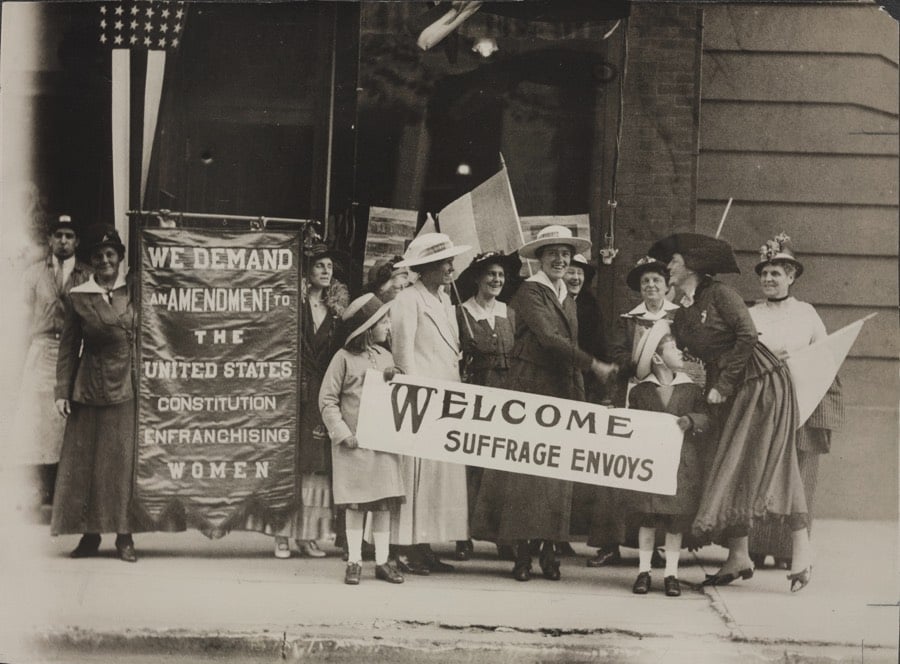
This morning, after scraping a layer of frost from the windshield, I drove to my local polling place, a small elementary school. There was no line in the school’s gymnasium and only a couple of the booths were occupied. I filled out my ballot, turned it in, got my sticker, and left. Three minutes flat. Done. Finally, after more than a year. I have done what I can.
I voted for Hillary Clinton for President, I don’t mind telling you. I’m With Her. The “Her” supposedly refers to Clinton herself, leading some critics to complain of her “all about me” campaign strategy. But I prefer to think the “Her” stands for the women of America, who gained the right to vote less than 100 years ago and have never had the opportunity to elect a woman to the highest office in the land. And not just any woman, but a woman who is among the most qualified candidates for President over the past 25 years. This is long long overdue and I’m proud to have done my tiny bit in making it happen.
The year’s best action sequence isn’t in a Marvel movie or prestige TV drama, it’s from the first episode of Planet Earth II, which aired in the UK over the weekend. In it, a group of snakes chase a small iguana, which seems at the outset to have a tiny chance of escape.
Good god, that was thrilling. We might have a new champion.
Update: I love Tony Zhou’s cut with the soundtrack from Mad Max: Fury Road (with temp music, he says). Be sure to watch to the end.
(via @philnicklin)
Update: Snoop Dogg narrates the snake/iguana chase as only he can.
With almost every election comes a push from some to change the way Americans elect their representatives in government. The problem is, there’s no perfect method of voting. The Exploratorium has produced a video that looks at how different voting methods fail in different ways, including through the spoiler effect, cyclic preferences, and the failure of monoticity. In short, every potential way of voting allows for some irrational outcome to arise out of the choices of individuals. So says Kenneth Arrow, who came up with Arrow’s impossibility theorem, explained in more layman’s terms here on Marginal Revolution.
Paradoxes such as the above have been known for centuries. What Arrow showed is that no decision mechanism can eliminate all of these types of paradoxes. (n.b. Arrow’s theorem actually applies to any mechanism for aggregating any rankings not just voting and not just preferences.) We can tamp down some paradoxes but only at the expense of creating others (or eliminating democracy altogether.)
More generally, what Arrow showed is that group choice (aggregation) is not like individual choice.
Also, think for a minute about how Arrow’s impossibility theorem might affect what Facebook, Twitter, Pinterest, Digg, and hundreds of other media companies and apps are trying to do in aggregating the world’s news and information by social media “voting”.
Leonardo DiCaprio and National Geographic teamed up to make a documentary about climate change called Before the Flood, available in its entirety on YouTube for a limited time.
Before the Flood, directed by Fisher Stevens, captures a three-year personal journey alongside Academy Award-winning actor and U.N. Messenger of Peace Leonardo DiCaprio as he interviews individuals from every facet of society in both developing and developed nations who provide unique, impassioned and pragmatic views on what must be done today and in the future to prevent catastrophic disruption of life on our planet.
Fisher Stevens, who you might remember from Short Circuit, also produced The Cove, which won an Oscar for best documentary in 2010.
Neil Halloran, creator of the excellent Fallen of World War II interactive visualization of the casualties of WWII, is working on a similar visualization about the possible effects of a global nuclear conflict. He recently uploaded an in-progress video of the project with a special 2016 election message at the end. Amazing and scary to see how much of a difference WWII made in the global death rate and how minuscule that would be in comparison to a global nuclear war.
Soli is a newish project by Google described as “a new sensing technology that uses miniature radar to detect touchless gesture interactions”. It’s pretty cool. A group at The University of St. Andrews has found another potentially more amazing use for the sensor: recognizing specific objects and materials.
RadarCat (Radar Categorization for Input & Interaction) is a small, versatile radar-based system for material and object classification which enables new forms of everyday proximate interaction with digital devices. In this work we demonstrate that we can train and classify different types of objects which we can then recognize in real time. Our studies include everyday objects and materials, transparent materials and different body parts. Our videos demonstrate four working examples including a physical object dictionary, painting and photo editing application, body shortcuts and automatic refill based on RadarCat.
More simply put, if you put an orange on the sensor, it knows it’s an orange…and the system can learn new objects as well. It’s a barcode scanner without barcodes. Watch the video…you’ll get the idea pretty quickly.
Last Tuesday, I asked the regular readers of kottke.org to support the site by purchasing an annual membership. The response, I am pleased and a little shocked to say, was overwhelming. If this were a Kickstarter campaign, it would be firmly in “stretch goals” territory. I’ve definitely found my 1000 True Fans. A big heart-felt thank you to all those who chose to support the site and for all your emails.1 The first members mailing should be going out sooooon.
If you haven’t had a chance to contribute yet, you can check out the post and the membership page to see if it’s something you’d be interested in.
[I’m not going to be releasing any stats, at least not right now, but I will give you a breakdown of the memberships by amount contributed by level:1 $30/yr: 52%, $60/yr: 42%, with the rest split between the $3/mo and $600/yr options.]
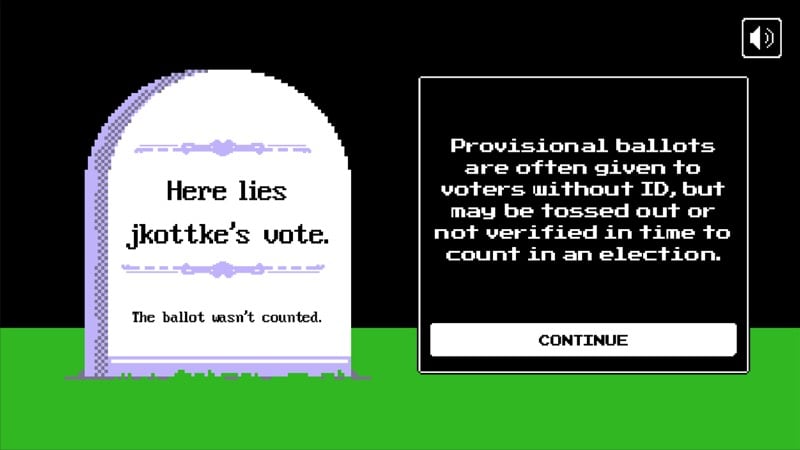
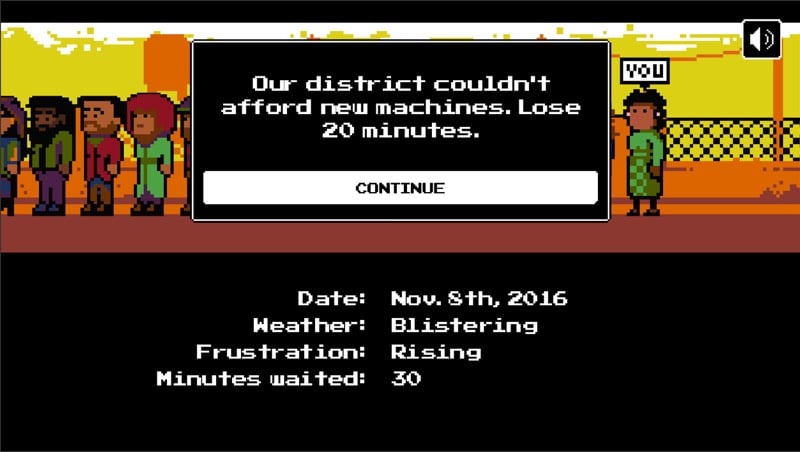
The NY Times has released their first video game editorial in the form of an Oregon Trail spin-off by GOP Arcade highlighting how the Republican Party engages in voter suppression tactics, especially in areas with many voters of color. In the game, you can play as a white programmer from California, a Latina nurse from Texas, or a black salesman from Wisconsin. As might expect, it takes somewhat longer to finish the game as some of these players versus others.
On Nov. 8, a new generation of Americans will make their own heroic journeys — to the polls. Some paths will be more intrepid than others, particularly for blacks, Latinos and pretty much anyone who brings the kind of diversity to our polling places that they have historically lacked. Thanks to laws passed by Republicans to fight the nonexistent threat of voter fraud, the perils will be great. Long lines and voter ID laws, not to mention pro-Trump election observers, will try to keep these voters from the polls.
More on voter suppression at Vox.
In a short essay from Literary Hub titled New York is a Book Conservatives Should Read, Rebecca Solnit writes an open letter to Donald Trump urging him to take some lessons from the city in which he lives. Solnit argues that Trump’s wealth has insulated him from experiencing one of the true pleasures of American cities like New York: energetic and meaningful diversity.
You treat Muslims like dangerous outsiders but you seem ignorant of the fact that the town you claim to live in has about 285 mosques, and somewhere between 400,00 and 800,000 Muslims, according to New York’s wonderful religious scholar Tony Carnes. That means one out of ten or one out of twenty New Yorkers are practitioners of the Islamic faith. A handful of Muslims, including the Orlando mass murderer, who was born in Queens, have done bad things, but when you recognize how many Muslims there are, you can stop demonizing millions for the acts of a few.
NYC is only one-third white and is home to hundreds of thousands of Muslims and Jews and millions of blacks, Latinos, and Asians.
Speaking of African-Americans: have you ever been to Harlem or the Bronx? You keep talking about black people like you’ve never met any or visited any black neighborhoods. Seriously, during that last debate you said, “Our inner cities are a disaster. You get shot walking to the store. They have no education. They have no jobs. I will do more for African-Americans and Latinos than she can ever do in ten lifetimes. All she’s done is talk to the African-Americans and to the Latinos.” Dude, seriously? Did you get this sense of things from watching TV-in 1975?
Solnit wrote the piece after compiling her most recent book, Nonstop Metropolis: A New York City Atlas.
Bringing together the insights of dozens of experts — from linguists to music historians, ethnographers, urbanists, and environmental journalists — amplified by cartographers, artists, and photographers, it explores all five boroughs of New York City and parts of nearby New Jersey. We are invited to travel through Manhattan’s playgrounds, from polyglot Queens to many-faceted Brooklyn, and from the resilient Bronx to the mystical kung fu hip-hop mecca of Staten Island.
This NY Times piece on the political inclinations of rural areas vs cities is an interesting companion to Solnit’s letter.
“There is something really kind of strange and interesting about the connection between peoples’ preferences — what they view as the good life, where they want to live — and their partisanship,” said Jonathan Rodden, a political scientist at Stanford. His precinct-level maps of presidential election results show deep blue in the densest, central parts of metropolitan areas, where you’d find the Main Streets, city halls, row homes and apartment buildings. The farther you travel from there, the redder the precincts become. And this is true whether you look around New York City or Terre Haute, Ind.
Today’s Google Doodle honors the 100th anniversary of the birth of legendary newsman Walter Cronkite.
Today would be the 100th birthday of the man known widely throughout the ’60s and ’70s as “the most trusted man in America.” Walter Cronkite, the legendary broadcast journalist reported, served, and comforted a nation during its most trying times, including World War II, Watergate, the Vietnam War, and the assassination of JFK, to name a few.
Walter perpetuated an objective reporting style rooted in justice and integrity: “Press freedom is essential to our democracy, but the press must not abuse this license. We must be careful with our power. The free press, after all, is the central nervous system of a democratic society.”
Since I missed most of Cronkite’s career as a TV news anchor (I was 7 when he retired), I mostly associate him with the coverage of the Apollo 11 Moon landing and the early web meme Walter Cronkite Spit In My Food.
It was an unbelievable account of a drunken Walter Cronkite raging at a honeymooning couple in a restaurant. It included an obviously faked video clip of Walter Cronkite spitting and a fuzzy photograph of a man who looked vaguely like Cronkite.
Google’s honor is a bit ironic given that Cronkite favored tougher libel and slander laws for “would-be writers and reporters on the Internet”:
I am dumbfounded that there hasn’t been a crackdown with the libel and slander laws on some of these would-be writers and reporters on the Internet. I expect that to develop in the fairly near future.
as well as legislation against anonymous expression online:
I favor legislation that requires people to stand by their words by identifying themselves on the Internet. They should not be permitted to operate anonymously.
He was clear that he was not after censorship:
I hope to make it clear that I did say that I am opposed to any form of censorship. This is identification… forced identification by those who use the Internet. Not censorship. It is simply requiring them to take the same responsibility that people in print and in broadcasting have to take.
Never Happened is a short sci-fi film by Mark Slutsky about a pair of colleagues who have a fling on a business trip. Worth watching…a snack-sized Black Mirror. NSFW. (via df)
The original cast recording of Hamilton has been on heavy rotation in our house since the early summer. The kids know several of the songs by heart and Minna can get through Aaron Burr, Sir in about 45 seconds, so watch out Daveed Diggs.
As an accompaniment to the main album, Lin-Manuel Miranda and his collaborators are releasing The Hamilton Mixtape. It features a couple of unused songs and the rest of the album is covers of songs from the musical by rappers, pop artists, and hip-hop stars like Kelly Clarkson, Usher, The Roots, Alicia Keys, and Chance the Rapper. I mean, check out the track listing…what an all-star cast. Available for pre-order now, it’ll be released on Dec 2.
Update: Two of the songs from the album were on Spotify but they got pulled. Except that if I go to this playlist, I can still play them. Maybe they’re cached somehow?
Update: The two songs are available on YouTube (My Shot & It’s Quiet Uptown) and Apple Music/iTunes. (via @mattgrieser & @scojjac)
Update: The entire mixtape is now out. Huzzah!
Rodney Alcala, who was convicted of killing seven women between 1971 and 1979 and possibly murdered many more, took time out during his killing spree to appear on The Dating Game. At the time, he was a convicted child molestor. The Bachelorette picked him over the other two contestants.
The Bachelorette, Cheryl, doesn’t pick up on any of this. In fact, she ends up choosing Alcala over the other two contestants despite his lackluster answers like, “Nighttime is the best time,” and “I’m a banana… peel me.” However, she cut things off immediately after their one date, claiming that she found him “creepy.”
Imagine if that happened today…the lawsuits and outcry would have shut the show down immediately.
The Movie Franchises That Died in 2016 (incl. Zoolander, Ghostbusters, Ice Age, Divergent, Jack Reacher)
I haven’t quite figured out if HBO’s new show Westworld is any good or not,1 but I’m sticking with it at least through the first season. One of the fun things about the show — ok, maybe the only fun thing, Westworld takes itself pretty seriously — is the western-style covers of rock songs by the likes of Radiohead, Soundgarden, and The Rolling Stones. There’s a mini playlist of the main theme and some of the covers — Paint It Black by the Stones and Radiohead’s No Surprises — up on Spotify.
Oh, and here’s one of the most popular fan theories out there: the multiple timeline theory.
Update: The entire “two-disk” album from season 1 is up, which includes original music as well as covers like Radiohead’s Exit Music (For a Film). LOL.
Artist Annette Labedzki has been uploading videos of paint mixing to Instagram and YouTube to great interest. The video above, in which the view is halved and then mirrored, starts off slow but is particularly mesmerizing…I think my brain is addicted to symmetry. Georgia O’Keeffe’s name popped into my brain early on while watching it. (via @colossal)
Tinybop’s new kids app, Me, looks great. “Me is all about your life, in your words, pictures, and photos.”
It was the soup that got me early on. Parallel Studio made this and they are running The Unsatisfying Challenge over the next two weeks, looking for people to submit their own animations and videos of unsatisfying situations.
This was all over Twitter this morning without any context or credit going to the original creators, a trend I find unsatisfying. Thanks to Frank Chimero for finding the original.
The competitors in standard course triathlons, which is the format used for the Olympics, have to swim nearly a mile, bike 25 miles, and run 6.2 miles. The men’s gold medalist at the 2016 Olympics finished with a time of 1 hour 45 minutes. The Ironman triathlon is much longer: a 2.4 mile swim, a 112 mile bike ride, and then you run an entire marathon (26.2 miles); the current world record for this distance is 7 hours 35 minutes.
The Quintuple Anvil Triathlon is five Ironman triathlons in five days, i.e. your basic total insanity.
Crushed by exhaustion, you may dream of a competitor’s head morphing into a Pokémon-like demon — and then open your eyes and still see it. The next day you will quit the race.
To fill your queasy stomach during your third 112-mile bike ride, you will discover the best way to eat a sausage-and-egg sandwich: shove it in your mouth and let it slowly dissolve.
After 500 miles on a bike, 10 in the water and more than 100 on foot, it will make perfect sense to grab a branch and a broomstick in a desperate bid to propel yourself — like a giant mutant insect — the last 31 miles. It will not be enough. You will collapse on the road.
Seasick, miles into the swim, you will vomit. Twice.
Neck cramps will attack so fiercely on the bike that your head will slump. You will go cross-eyed and nearly crash.
This reminds me of one of my favorite things I’ve ever posted, this story about ultra-endurance cyclist Jure Robic.
For one thing, Jure Robic sleeps 90 minutes or less a day when competing in ultracycling events lasting a week or more…and goes crazy, like actually insane, during the races because of it. Because he’s insane, his support crew makes all the decisions for him, an arrangement that allows Robic’s body to keep going even though his mind would have told him to quit long ago.
I’m also reminded of Ben Saunders and Tarka L’Herpiniere skiing/walking to the South Pole and back, covering a distance of 1795 miles in 105 days. That’s 17 miles a day for more than three straight months. And just this morning, I was thinking my chair was a little uncomfortable.
Update: So get this: the the Quintuple Anvil Triathlon is a mere trifle compared to the Triple DECA Iron in which competitors do an Ironman triathlon every day for 30 days. ASDFADASGRETHRYJH!!! I cannot even start to think about beginning to even with this. (via @ben_lings)
From Jack’s Movie Reviews, an examination of the first Back to the Future movie, its stellar screenplay, and the high level of storytelling achieved by the filmmakers. As H. Perry Horton says:
Too often the BTTF trilogy is dismissed as mere popcorn escapism, but in reality it’s one of the smartest franchises of the last half-century and deserves to be regarded with a more analytical eye.
Totally planning on watching it this weekend with the kids…I don’t think they’ve seen it yet.
Newer posts
Older posts


Socials & More