In this video, Patrick Hicks tells the story of the development of the classic educational video game The Oregon Trail and how Prince (you know, the genius musical artist) was one of the first people in the world to play the very first version of the game.
The basic story is that a college history major (Don Rawitsch) teamed up with two friends (Bill Heinemann and Paul Dillenberger), both of whom were math majors and had some programming experience, to make a computer game to liven up the history class that Rawitsch was student teaching. While developing the game, Heinemann & Dillenberger tested it out with some kids at the high school at which they were student teaching…and one of those kids was Prince Rogers Nelson.
Paul would later say that he heard about Prince before he even met him. One of the other teachers told him, “There’s this kid here who basically is running his own business. He’s this amazing musician who plays all these instruments and writes his own songs.” And then later, Paul realized that that was Prince.
But listen to Hicks tell the whole thing…it’s a good story. And if you want to hear a lot more of the story, here’s Gaming Historian’s feature-length documentary (the Prince anecdote is at ~24:00).
You can play the familar 1980s version of the The Oregon Trail online.
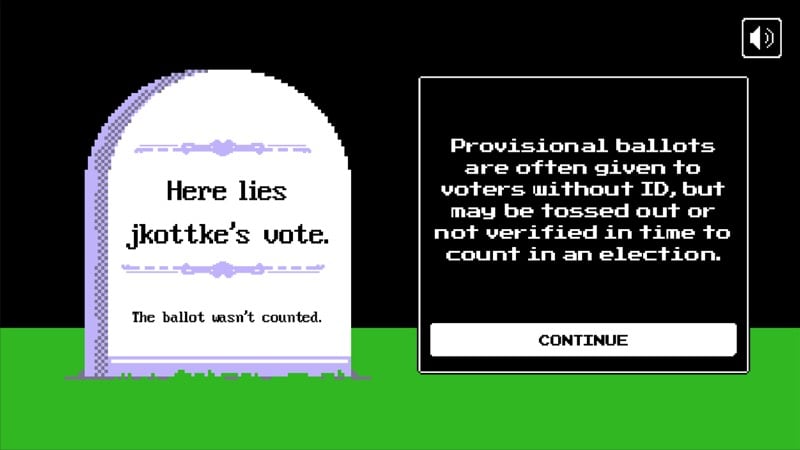
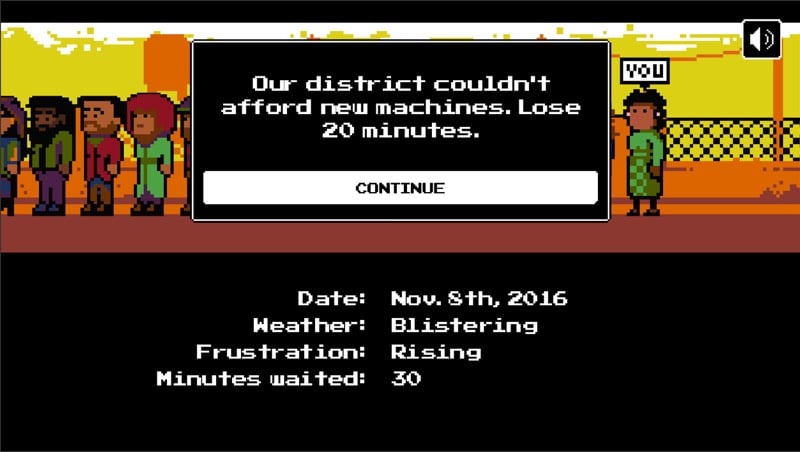
The NY Times has released their first video game editorial in the form of an Oregon Trail spin-off by GOP Arcade highlighting how the Republican Party engages in voter suppression tactics, especially in areas with many voters of color. In the game, you can play as a white programmer from California, a Latina nurse from Texas, or a black salesman from Wisconsin. As might expect, it takes somewhat longer to finish the game as some of these players versus others.
On Nov. 8, a new generation of Americans will make their own heroic journeys — to the polls. Some paths will be more intrepid than others, particularly for blacks, Latinos and pretty much anyone who brings the kind of diversity to our polling places that they have historically lacked. Thanks to laws passed by Republicans to fight the nonexistent threat of voter fraud, the perils will be great. Long lines and voter ID laws, not to mention pro-Trump election observers, will try to keep these voters from the polls.
More on voter suppression at Vox.
Oregon Trail is one of the most-played video games in history, and certainly one of the most popular educational games. Here’s the history of how the game was developed.
Forty years and ten iterations later, the Oregon Trail has sold over 65 million copies worldwide, becoming the most widely distributed educational game of all time. Market research done in 2006 found that almost 45 percent of parents with young children knew Oregon Trail, despite the fact that it largely disappeared from the market in the late ’90s.
A recent frenzy of nostalgia over the game has yielded everything from popular T-shirts (“You have died of dysentery”) to band tour promotions (“Fall Out Boy Trail”) to humorous references on popular websites (“Digg has broken an axle”).
“It’s hard to think of another game that endured for so long and yet has still been so successful,” says Jon-Paul Dyson, director of the International Center for the History of Electronic Games at the Strong. “For generations of computer users, it was their introduction to gaming, and to computer use itself.”





Socials & More