Entries for July 2016
Alex Gibney, the documentary filmmaker who directed the awesome Going Clear (on Scientology) as well as films about Enron and Wikileaks, has a new film out called Zero Days. The film is generally about cyberwarfare and specifically about the Stuxnet virus, which has a particularly cyberpunk sci-fi first paragraph on Wikipedia:
Stuxnet is a malicious computer worm believed to be a jointly built American-Israeli cyber weapon. Although neither state has confirmed this openly, anonymous US officials speaking to The Washington Post claimed the worm was developed during the Obama administration to sabotage Iran’s nuclear program with what would seem like a long series of unfortunate accidents.
The movie was funded on Kickstarter and is out in select theaters…but is also available to rent on Amazon right now. Gonna watch this tonight.
Update: Ok, weird. Zero Days was not funded on Kickstarter. The KS film was originally called Zero Day and changed its name to Every Move You Make when the focus of the film changed. Gibney came on as a “Consulting Producer” to Every Move last year so that’s where my confusion came in. (thx, ken)
Casimir Nozkowski grew up in a building at 70 Hester Street on the Lower East Side of Manhattan. Before his parents occupied it in the late 1960s, the building had been a synagogue, a Prohibition-era distillery, and a raincoat factory. Before they moved out in 2012, Nozkowski “filmed the hell out of it” and made a short documentary about his childhood home.
My documentary is about my childhood home and how much of the past you could still see in it when we left. It’s about the development of a neighborhood a lot of lives have passed through and whether you can protect that legacy while still making room for new lives and new memories. In making my movie, I tried to follow some advice my mom gave me: “Don’t make a movie about moving out. Make it about how great it was to live here.” I like that sentiment but I couldn’t help wondering what was going to happen next to the old building I grew up in.
Tim Duncan retires. 1 of my all-time fave NBA players. Head down, do your job. “Big Fundamental” Shaq called him.
Max Deutsch trained a neural network using the first four Harry Potter books and then asked it to write its own chapter.
“The Malfoys!” said Hermione.
Harry was watching him. He looked like Madame Maxime. When she strode up the wrong staircase to visit himself.
“I’m afraid I’ve definitely been suspended from power, no chance - indeed?” said Snape. He put his head back behind them and read groups as they crossed a corner and fluttered down onto their ink lamp, and picked up his spoon. The doorbell rang. It was a lot cleaner down in London.
Hermione yelled. The party must be thrown by Krum, of course.
Harry collected fingers once more, with Malfoy. “Why, didn’t she never tell me. …” She vanished. And then, Ron, Harry noticed, was nearly right.
“Now, be off,” said Sirius, “I can’t trace a new voice.”
Rowling, your job is safe for now. Deutsch did the same thing with the Hamilton soundtrack…the result is not particularly good but that last line!
Update: Another similar effort is available here.
Ron’s Ron shirt was almost as bad as Ron himself.
“If you two can clump happily, I’m going to get aggressive,” confessed the reasonable Hermione.
“What about Ron magic?” offered Ron. To Harry, Ron was a loud, slow, and soft bird. Harry did not like to think about birds.


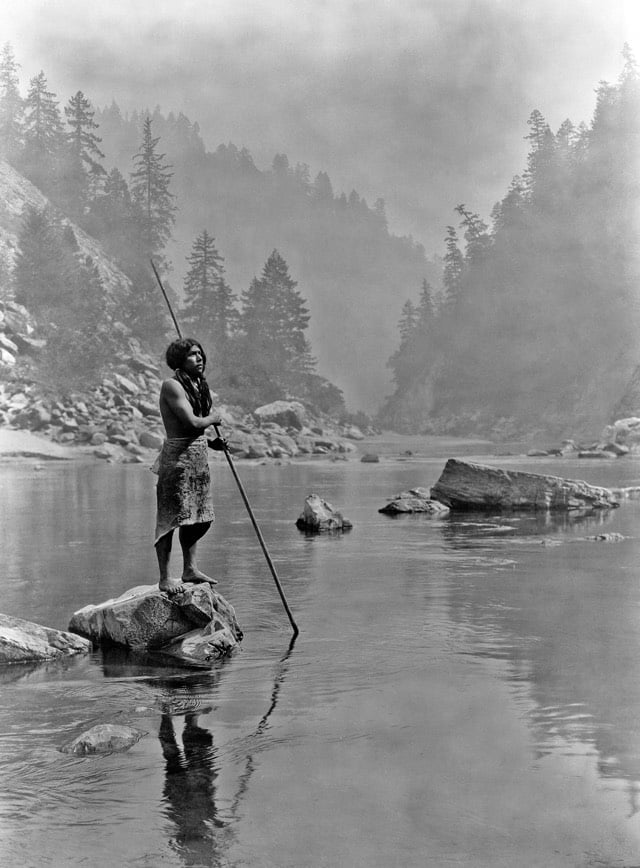
Beginning in 1904, Edward Curtis travelled around North American for more than 20 years photographing Native Americans. While his collection of over a thousand photos housed at the Library of Congress isn’t a precise record of how American Indians lived at the time (he took some liberties in romanticizing the past), it is nonetheless a valuable record of a people largely marginalized by history. (via open culture)
In 1974, Studs Terkel published a book called Working: People Talk About What They Do All Day and How They Feel About What They Do. One of the people he talked to for the book was Chicago police officer Renault Robinson. Robinson is African American and offered up his views to Terkel on how blacks are policed differently…here are the relevant bits of the interview. On traffic stops:
“About sixty percent of police-citizen conflict starts in a traffic situation. It’s easier to stop a person on the pretext of a traffic violation than to stop him on the street. It’s a lot easier to say, “Your tail light’s out.” “Your plate is dented.” “You didn’t make that turn right.” You can then search his automobile, hoping you can find some contraband or a weapon. If he becomes irritated, with very little pushing on your part, you can make an arrest for disorderly conduct. These are all statistics which help your records.
Certain units in the task force have developed a science around stopping your automobile. These men know it’s impossible to drive three blocks without committing a traffic violation. We’ve got so many rules on the books. These police officers use these things to get points and also hustle for money. The traffic law is a fat book. He knows if you don’t have two lights on your license plate, that’s a violation. If you have a crack in your windshield, that’s a violation. If your muffler’s dragging, that’s a violation. He knows all these little things….
So if they stop the average black driver, in their mind the likelihood of finding five or six violations out of a hundred cars is highly possible…. After you’ve stopped a thousand, you’ve got 950 people who are very pissed off, 950 who might have been just average citizens, not doing anything wrong - teachers, doctors, lawyers, working people. The police don’t care. Black folks don’t have a voice to complain. Consequently, they continue to be victims of shadowy, improper, overburdened police service. Traffic is the big entree.”
And on the type of young white male that the job was attracting at the time:
A large amount of young white officers are gung ho. It’s an opportunity to make a lot of arrests, make money, and do a lot of other things. In their opinion, black people are all criminals, no morals, dirty and nasty. So the black people don’t cooperate with the police and they have good cause not to. On the other hand, they’re begging for more police service. They’re over-patrolled and under-protected.
The young white guys turn out to be actually worse than their predecessors. They’re more vicious. The average young white policeman comes from a working-class family, sometimes with less than a high-school education. He comes with built-in prejudices. The average young white cop is in bad shape. I think he can be saved if a change came from the top. If it could be for just eight hours a day. They may still hate n***ers when they got off duty. They may still belong to the John Birch Society or the Ku Klux Klan. So what? They could be forced to perform better during the eight hours of work.”
Reading about this stuff, I keep going back to the 9 principles of policing drawn up by London’s Metropolitan Police in the 1820s in which the power of the police comes from the people, force is to be used minimally, and the efficacy of policing is judged on the absence of crime, not on the number of arrests or people sent to jail.
Redditt Hudson served as a police officer in St. Louis during the 1990s. He shared his perspective on race and policing with Vox last year: I’m a black ex-cop, and this is the real truth about race and policing.
It is not only white officers who abuse their authority. The effect of institutional racism is such that no matter what color the officer abusing the citizen is, in the vast majority of those cases of abuse that citizen will be black or brown. That is what is allowed.
And no matter what an officer has done to a black person, that officer can always cover himself in the running narrative of heroism, risk, and sacrifice that is available to a uniformed police officer by virtue of simply reporting for duty.
(via @tonyszhou)
I posted a short video earlier today featuring Jane Elliott. She’s a noted anti-racism activist famous for her blue eyes/brown eyes exercise, featured in the video above.
White people’s number one freedom in the United States of America is the freedom to be totally ignorant about those who are other than white. And our number two freedom is the freedom to deny that we’re ignorant.
In the exercise, Elliott divides the class into two groups based on their eye color: those with blue eyes and those with brown eyes. The brown eyed group is instructed to treat the blue eyed group as inferior because of their eye color — they are to be called “bluey” or “boy” or “honey” but not by their names.
At the beginning of the session (which starts at about 1:30 (but don’t skip the intro!)), Elliott calls herself “the resident bitch for the day” and does she mean it…she does not let up because, as she says in the video, society doesn’t let up on people of color either. (via @dunstan)
Update: The original video was taken down and I’ve replaced it with a different video of Elliott teaching a workshop.
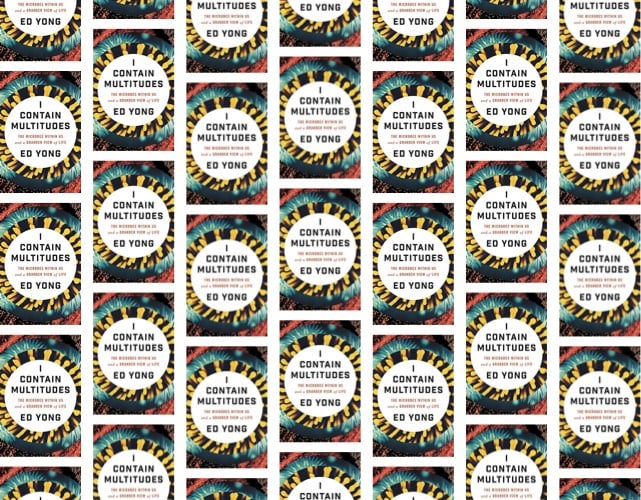
Crackerjack science writer Ed Yong is coming out with his very first book in a month’s time. It’s called I Contain Multitudes (good title!) and is about “astonishing partnerships between animals and microbes”.
Every animal, whether human, squid, or wasp, is home to millions of bacteria and other microbes. Ed Yong, whose humor is as evident as his erudition, prompts us to look at ourselves and our animal companions in a new light-less as individuals and more as the interconnected, interdependent multitudes we assuredly are.
The microbes in our bodies are part of our immune systems and protect us from disease. In the deep oceans, mysterious creatures without mouths or guts depend on microbes for all their energy. Bacteria provide squid with invisibility cloaks, help beetles to bring down forests, and allow worms to cause diseases that afflict millions of people.
I will read anything described as “like a David Attenborough series shot through a really good microscope”.
Update: Bill Gates liked I Contain Multitudes so much he sat down for a chat with Yong to discuss the particulars.
We are also utterly inseparable from them. Yong illustrates that we are at least as much microbe as human. We literally have more microbial cells living inside our bodies than human cells. And even the cells we label “human” are part microbe. With the exception of red blood cells and sperm, all our cells are powered by mitochondria, which are likely the descendants of ancient bacteria that became integrated into the type of cells that subsequently gave rise to all complex life.
Jane Elliott asks an audience a very simple question about being black in America. (via @carltonspeight who says “No BS, I wish every white person on Twitter could see this. Maybe it’ll help”)
From the films he made as a teenager on up to the recently released BFG, this is a look at the evolution of the films of Steven Spielberg.
I was 20 when Jurassic Park came out and while I really liked it, I didn’t think much about who directed it at the time. It certainly didn’t remind me much of Raiders of the Lost Ark or ET. I watched it again last night (it’s on Netflix) and it is soooooo obviously Spielberg.
Using a 5000-word dictionary of words rated on their happiness, the Hedonometer measures the average happiness on Twitter.
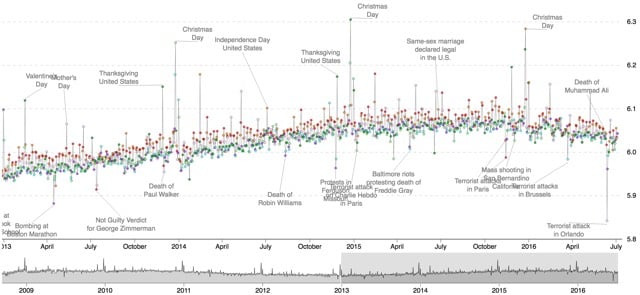
Christmas is always the happiest day of the year (“merry”, “happy”, and “joy” are all pretty positive) while shootings and terrorist attacks are Twitter’s saddest events. The recent mass shooting in Orlando seems to be the least happy Twitter has been over the past 7+ years.
The Hedonometer also analyzes the overall happiness of movies based on their scripts. The happiest movie is Sex in the City while the saddest is Omega Man (followed by The Bourne Ultimatum). Somehow, the fourth happiest movie is Lost in Translation, which might be reason for some overall skepticism about the project’s sensitivity to context.
The happiness over time of individual movie scripts has been analyzed by the Hedonometer too. Pulp Fiction’s happiest moment is when Vincent and Mia go to Jackrabbit Slim’s and the low point is “Bring out the Gimp”.
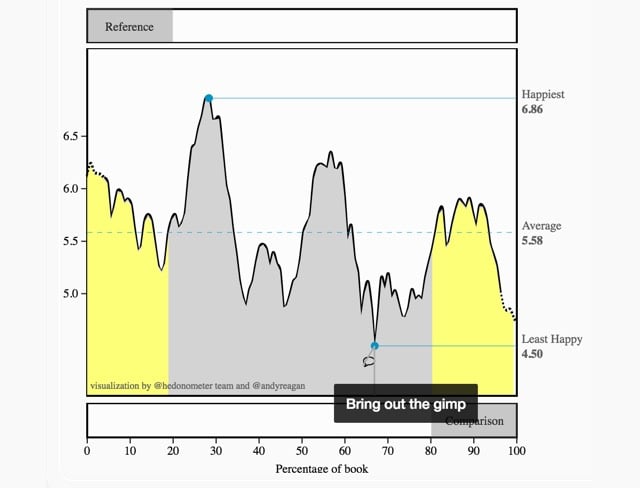
The system has analyzed books as well…the low point of the entire Harry Potter series seems to be the event at the end of The Half-Blood Prince.
Update: Grain of salt and all that, but the shootings of Alton Sterling, Philando Castile, and the Dallas police officers have pushed the happiness quotient on Twitter lower again so that the two least happy days have both occurred in the past month. There’s been a general feeling that 2016 has been a bad year, like George RR Martin is writing it. I wish the data were available for a closer analysis, but if you look at the chart, you can see that Twitter’s overall happiness starts to rise around the end of 2012 but starts to fall again right around the beginning of 2016…the effect is quite clear, even just from eyeballing it.
In a relatively new video essay about movies, Lessons from the Screenplay, Michael Tucker looks at Dan Aykroyd and Harold Ramis’s original script for Ghostbusters and how the framework it provided, enhanced by the improv skills of the actors, produced a movie better than the script might have indicated at first glance. And oh man, I love the turn-of-the-century Ghostbusters idea. (via one perfect shot)
Even though I was one of the (relative) few to watch the first episode when it originally aired,1 I had forgotten how weird the pilot for Seinfeld was. The theme music is completely different, Michael Richards’ character is called “Kessler” (because the network had legal concerns related to Larry David’s real-life neighbor, Kenny Kramer, on whom the character was based), and Elaine2 neither appears or is mentioned. Oh, and the first season was only five episodes long (NBC was very skeptical about the show) and both Steve Buscemi and David Alan Grier auditioned for the role of George.
Update: Well, that got taken down from Vimeo fairly quickly. You can still watch the pilot on Hulu.
Tech investor Fred Wilson recently gave the commencement address for the very first graduating class at the Academy For Software Engineering. In it, he shared the secret to his success:
So with that, I am here to tell you that the secret to success in your career comes down to three things, take risks, work hard, and get lucky.
I essentially1 agree with Wilson here. Earlier today I was listening to the latest episode of the Recode Media podcast where Peter Kafka’s guest was Daring Fireball’s John Gruber. Gruber recounted how he got started blogging about Apple and eventually turned it into a very successful business. I’ve heard the story before and it conforms nicely to Wilson’s path to success.
1. Take risks. Gruber bet heavily on three things for Daring Fireball: Apple, blogs, and (later) podcasts. None looked that impressive from a business standpoint when his bets were made. In 2002 when he started writing DF, Apple was still an underdog computer company whose partisans had mostly stuck with the company through its lean years of offering products that weren’t competing well and which didn’t exemplify the ideals of the Apple of yore. The iPod had just come out a year earlier and the life- industry- company-changing iPhone was years in the future. But Gruber never viewed Apple as an underdog…to him it was a legendary company in the world poised for future greatness. Professional blogs were just starting to be a thing back then as well, and it was far from certain that you might be able to earn even a partial living from them, especially on your own. And when he started his Talk Show podcast in 2007, podcasting was still largely a hobbyist endeavor. Sure, you could make some money doing it, but 9 years on, there’s big money to be had for the most popular shows. Three risky bets that paid off.
2. Work hard. Tens of thousands of posts and hundreds of hours of podcasts over the past 13+ years, yeah, I think that covers it. Gruber has put in the necessary ass-in-chair time.
3. Get lucky. There’s a lot of luck sprinkled around the success of DF, but perhaps the biggest break Gruber got was Apple’s decision to open up the iOS App Store to outside developers. Suddenly, you had all of these developers, startups, established software companies, and venture capitalists pouring money into the development and promotion of iOS apps. So these companies had money and needed somewhere to advertise their apps, a place where they could be sure all of the most influential and rabid Apple aficionados would see their message. Daring Fireball was the obvious place and the site’s RSS sponsorships were the perfect format.
A number of political thinkers have penned a non-partisan letter to supporters of Donald Trump. The letter is striking for its non-confrontational tone in nevertheless painting Trump as a dangerous authoritarian.
We aren’t criticizing or praising Mr. Trump’s policy proposals or his likely appointments. Our objection to him is deeper-we believe that his entire way of behaving represents a rejection of the essential character traits (the “qualities”) that our democracy requires of its leaders. We of course acknowledge that policy positions matter. But doesn’t political behavior inimical to democracy matter more?
A good read, but I’m skeptical of its impact. I keep thinking of Tyler Cowen’s description of the Brexit vote as “the one lever” for sending a political message to the country’s leaders:
Cities such as Bradford, while still predominantly white, no longer feel as English (and German!) as they once did. And if you are thinking that voting “Leave” does not at all limit Pakistani immigration, you are truly missing the point; this vote was the one lever the English were given for sending a message to their politicians.
Many Americans share a frustration of the current political system and how it is wielded against us in our name by skilled political practitioners, but I do not believe the US is a country filled with small-minded, intolerant racists, despite the perplexing level of national support for a proudly dishonest and bigoted TV personality, whatever his keen political instincts. Trump is the one lever being given to those frustrated voters for sending a message to their politicians and many are choosing to use it despite many of the reasons listed in that letter. Sending that message is more important than its potential consequences. (via @marcprecipice)
From Jamie xx’s In Colour. Directed by Romain Gavras. Best at fullscreen with headphones.
In 1852, Frederick Douglass gave a speech in Rochester, NY which historian James West Davidson calls “the most remarkable Independence Day oration in American history”.
In Rochester, Douglass stalked his largely white audience with exquisite care, taking them by stealth. He began by providing what many listeners might not have expected from a notorious abolitionist: a fulsome paean to the Fourth and the founding generation. The day brought forth “demonstrations of joyous enthusiasm,” he told them, for the signers of the Declaration were “brave men. They were great men too-great enough to give fame to a great age.” Jefferson’s very words echoed in Douglass’s salute: “Your fathers staked their lives, their fortunes, and their sacred honor, on the cause of their country … “
Your fathers. That pronoun signaled the slightest shift in the breeze. But Douglass continued cordially. “Friends and citizens, I need not enter further into the causes which led to this anniversary. Many of you understand them better than I do.” Then another step back: “That is a branch of knowledge in which you feel, perhaps, a much deeper interest than your speaker.”
The text of the speech itself is well worth reading…that “slightest shift in the breeze” slowly builds to a mighty hurricane.
Fellow-citizens, pardon me, allow me to ask, why am I called upon to speak here to-day? What have I, or those I represent, to do with your national independence? Are the great principles of political freedom and of natural justice, embodied in that Declaration of Independence, extended to us? and am I, therefore, called upon to bring our humble offering to the national altar, and to confess the benefits and express devout gratitude for the blessings resulting from your independence to us?
Several years ago, James Earl Jones read a portion of Douglass’ speech:
Update: Baratunde Thurston recently presented Douglass’ speech live at the Brooklyn Public Library. (thx, rick)
While we’re on the subject, NASA announced late last week that they are extending the missions of nine spacecraft sprinkled about the solar system. Included are the New Horizon probe, which will wing off to study an object in the Kuiper Belt after doing so well with Pluto and the rover Opportunity, which was slated for a mission lasting just over 90 days but has now spent more than 12 years exploring the surface of Mars.
The Dawn mission to Ceres is another spacecraft whose duration has been extended, beating long odds. Part of the spacecraft’s functionality had not been working for some time, but was recently repaired.
It was a bit unexpected because Dawn is low on fuel. “Less than a year ago, I would have thought it was ridiculous that the spacecraft would even be operating at this point,” said Marc D. Rayman, the chief engineer for the Dawn mission.
The Dawn spacecraft was designed to use four spinning wheels to pivot in different directions. But at its previous destination, the asteroid Vesta, two of the four wheels overheated and failed. At Ceres, the wheels stayed off, and the spacecraft used its thrusters instead to pivot.
In December, Dawn reached its lowest orbit, just 240 miles above Ceres. Dr. Rayman said he and his team had expected Dawn to exhaust its remaining propellant by March.
But they spun up the wheels again. That succeeded, cutting the use of the thrusters. “It all worked out beautifully,” Dr. Rayman said. That left enough fuel to contemplate doing something more.
After a voyage from Earth lasting almost 5 years, the Juno spacecraft successfully entered Jupiter’s orbit late last night.
The engine burn was tense. 35 minutes is a long time for a spacecraft burn; after 20 minutes it had slowed Juno enough to be in orbit, but not the correct one. It had to continue for another 15 minutes to put the spacecraft on the correct orbit. It worked essentially perfectly. The burn time was off by just one second. That will have no real effect on the orbit.
The 35-minute burn slowed Juno down by more than 1200 mph.
The Prince Online Museum has launched. It’s an archive of Prince’s websites from the past 20 years.
Elie Wiesel died yesterday in NYC aged 87. He survived the Auschwitz and Buchenwald during WWII and later wrote and spoke extensively about the experience, not letting the world forget what happened to so many Jews under Hitler’s boot. For his efforts, Wiesel won the Nobel Peace Prize in 1986 and this part of his acceptance speech remains as vital as when he spoke it:
And then I explained to him how naive we were, that the world did know and remain silent. And that is why I swore never to be silent whenever and wherever human beings endure suffering and humiliation. We must always take sides. Neutrality helps the oppressor, never the victim. Silence encourages the tormentor, never the tormented. Sometimes we must interfere. When human lives are endangered, when human dignity is in jeopardy, national borders and sensitivities become irrelevant. Wherever men or women are persecuted because of their race, religion, or political views, that place must — at that moment — become the center of the universe.
I am going to be thinking about that paragraph a lot in the next few months, I think.
If you’re looking to avoid the family or ocean or grilled meats or fireworks, there are some seriously good movies that have been added to Netflix in the US just in time for the long holiday weekend:
Mean Girls
Beverly Hills Cop
Gladiator
Back to the Future (I II & III)
Deliverance
Lethal Weapon
The Sting
And The Big Short arrives on July 6.
I couldn’t figure this out when I watched it on my phone this morning, but if you watch it in fullscreen HD, you can see how the shapes are cut to look different from various angles. Still trippy though.
Update: Make Anything reverse-engineered the illusion…here’s how it works:
(via @dunstan)
Evan Puschak examines the rise of the independence movement in Britain, from their entrance into the European Community in 1973 to Thatcher’s rumblings about EU governance to UKIP’s rise, culminating in Brexit last week. I thought this was a pretty succinct summary of right-wing political tactics:
And that’s the point about far-right political organizations: they use the fulcrum of populism and fear to lift many times their weight in people.
Update: More on the history of the movement to withdraw Britain from the EU from Gary Younge in The Guardian.
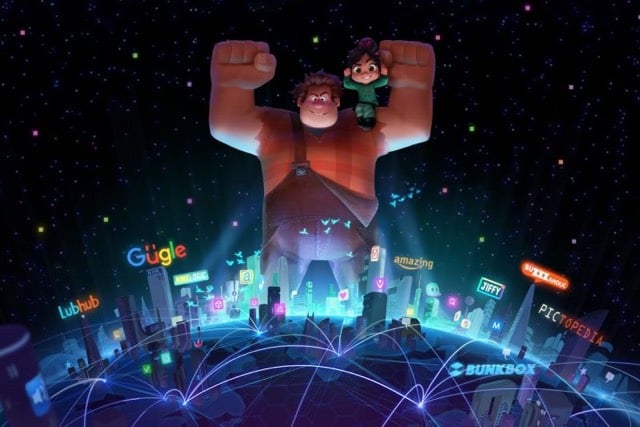
Disney has announced a sequel to Wreck-It Ralph due to come out in 2018. Given that the plot summary is “Ralph’s wrecking wreaks havoc on the Web”, I guess it’s appropriate the announcement took place on Facebook, which has already done its part in wrecking the open web.
Newer posts
Older posts







Socials & More