kottke.org posts about video
Six new episodes of Black Mirror are headed our way when the fourth season premieres later this year. There’s a short teaser trailer (above) and Netflix has also announced casts and directors for the season.
“Arkangel” stars Rosemarie Dewitt, Brenna Harding and Owen Teague. It is directed by Jodie Foster.
“Black Museum” stars Douglas Hodge, Letitia Wright and Babs Olusanmokun. It is directed by Colm McCarthy.
“Crocodile” stars Andrea Riseborough, Andrew Gower and Kiran Sonia Sawar. It is directed by John Hillcoat.
Directed by Richard Linklater, Last Flag Flying tells the story of three army buddies (played by Bryan Cranston, Steve Carell, and Laurence Fishburne) who reunite when one of their sons is killed in combat. Judging from the trailer, this looks great, but what’s interesting is that this is a sequel of sorts to a Hal Ashby movie from more than 40 years ago.
Last Flag Flying is a sequel to Hal Ashby’s The Last Detail, which arrived all the way back in 1973. Both movies are based on novels of the same name from Darryl Poniscan (he published Last Detail in 1970 and Last Flag in 2005), and both feature the same trio of characters. Last Flag Flying finds Steve Carell playing the role Randy Quaid filled in Ashby’s original, Cranston filling in for [Jack] Nicholson, and Fishburne stepping in for Otis Young.
In their latest video, Kurzgesagt takes a look at black holes, specifically how they deal with information. According to the currently accepted theories, one of the fundamental laws of the Universe is that information can never be lost, but black holes destroy information. This is the information paradox…so one or both of our theories must be wrong.
The paradox arose after Hawking showed, in 1974-1975, that black holes surrounded by quantum fields actually will radiate particles (“Hawking radiation”) and shrink in size (Figure 4), eventually evaporating completely. Compare with Figure 2, where the information about the two shells gets stuck inside the black hole. In Figure 4, the black hole is gone. Where did the information go? If it disappeared along with the black hole, that violates quantum theory.
Maybe the information came back out with the Hawking radiation? The problem is that the information in the black hole can’t get out. So the only way it can be in the Hawking radiation (naively) is if what is inside is copied. Having two copies of the information, one inside, one outside, also violates quantum theory.
So maybe black holes holographically encode their information on the surface?
Sunday at The Chicago Air and Water Show, a Blue Angels combat jet flew very low past an unsuspecting crowd and surprised the bejeezus out of some folks. It’s worth watching this video on a large screen multiple times while focusing on the reaction of a different person each time. You can see how low and fast the plane was flying from another angle. They also flew between the buildings downtown.
Business Insider went out onto the streets of NYC and tried to buy people’s just-purchased Powerball tickets ahead of the $700 million drawing. They did not get many takers, even when offering twice the price they paid (which meant they could just go and buy double the number of tickets and slash their odds of winning). The video says this is an example of regret avoidance.
A theory of investor behavior that attempts to explain why investors refuse to admit to themselves that they’ve made a poor investment decision so they don’t have to face the unpleasant feelings associated with that decision. Regret avoidance causes investors to not correct bad decisions, which can make those decisions worse. Regret avoidance is the result of cognitive dissonance.
As Alex Tabarrok notes, it’s also a demonstration of the endowment effect (Tabarrok: “these people are crazy!”).
In psychology and behavioral economics, the endowment effect…is the hypothesis that people ascribe more value to things merely because they own them. This is typically illustrated in two ways. In a valuation paradigm, people will tend to pay more to retain something they own than to obtain something they do not own — even when there is no cause for attachment, or even if the item was only obtained minutes ago. In an exchange paradigm, people given a good are reluctant to trade it for another good of similar value. For example, participants first given a Swiss chocolate bar were generally unwilling to trade it for a coffee mug, whereas participants first given the coffee mug were generally unwilling to trade it for the chocolate bar.
One way to think about it is if you buy a lottery ticket for $5 and someone offers you $10 and you don’t take it, financially it’s like you’ve paid $10 for the ticket, an easily replaceable item with an average worth of about $2.50 (and more likely worth nothing). But no one should be buying tickets anyway because the lottery sucks.
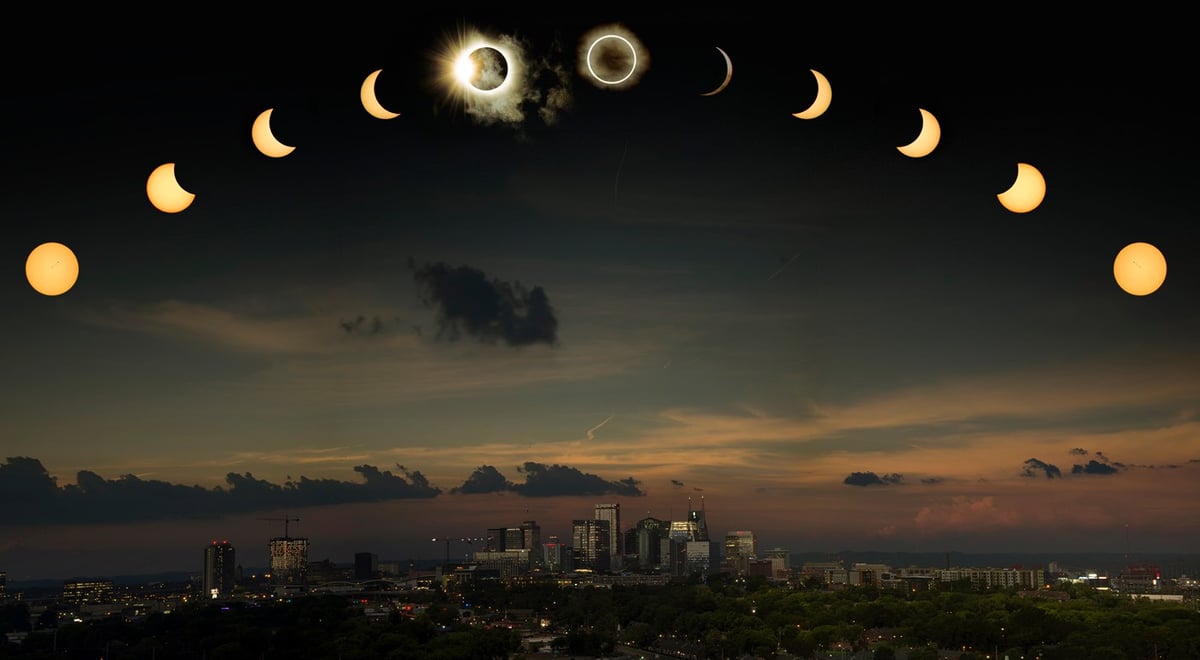
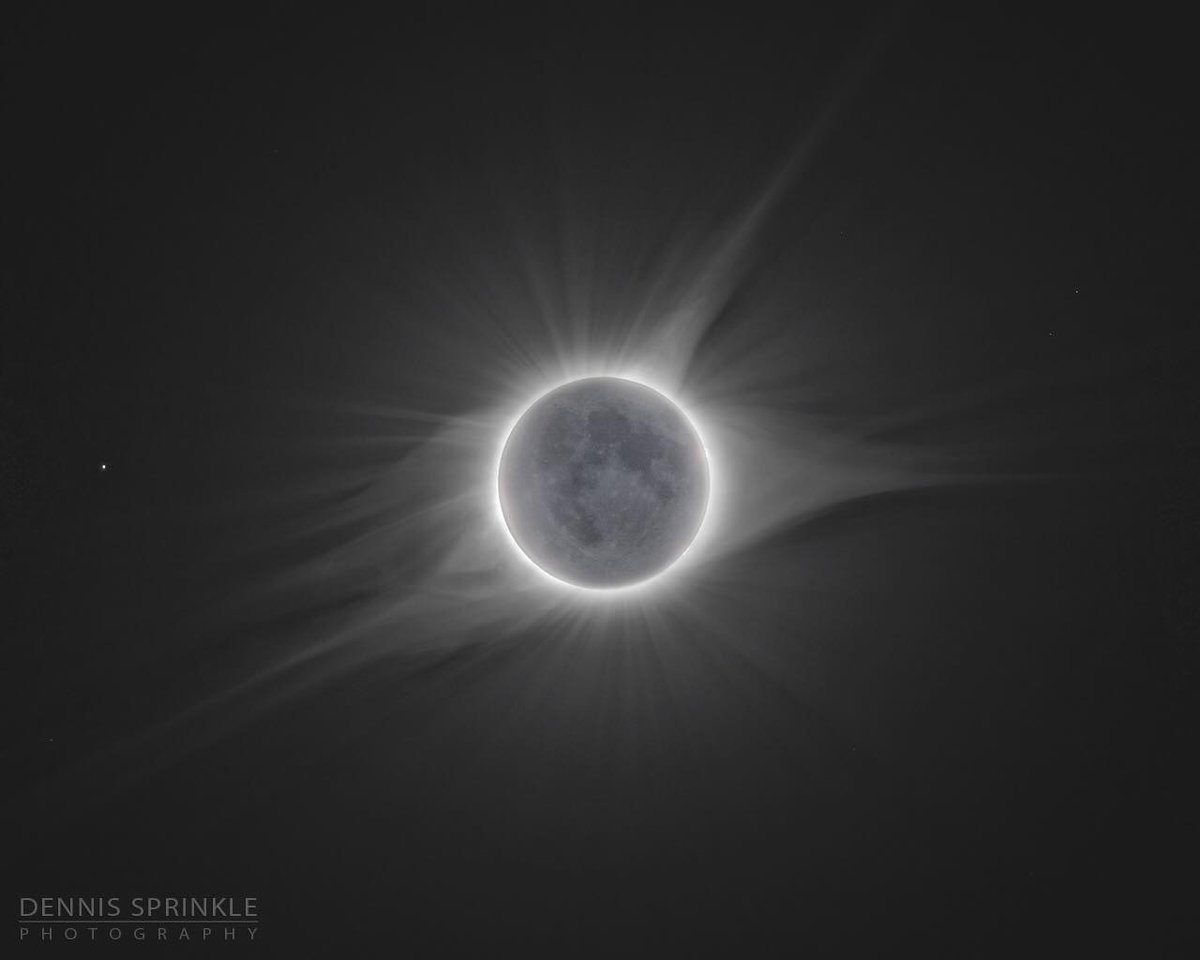
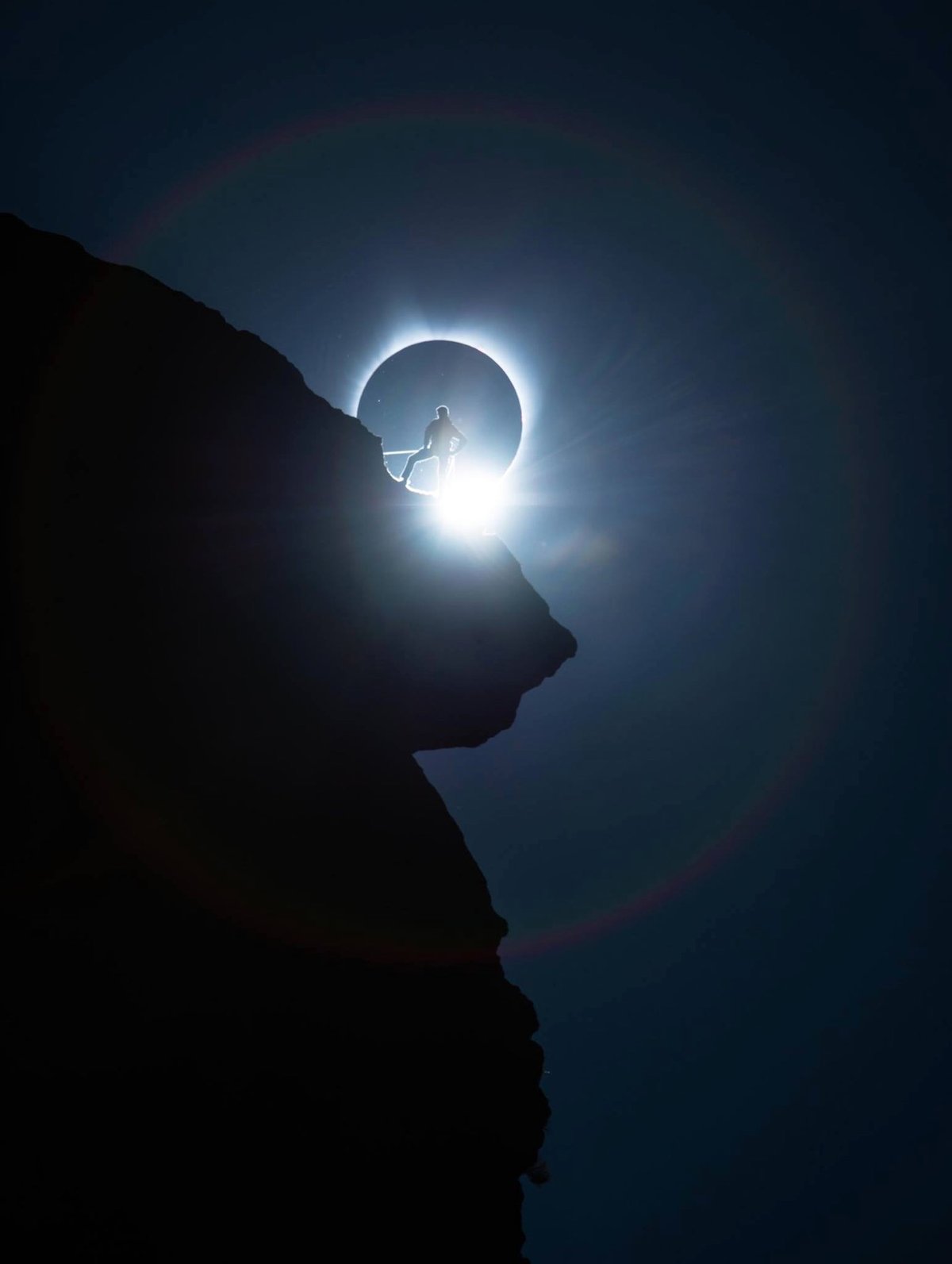
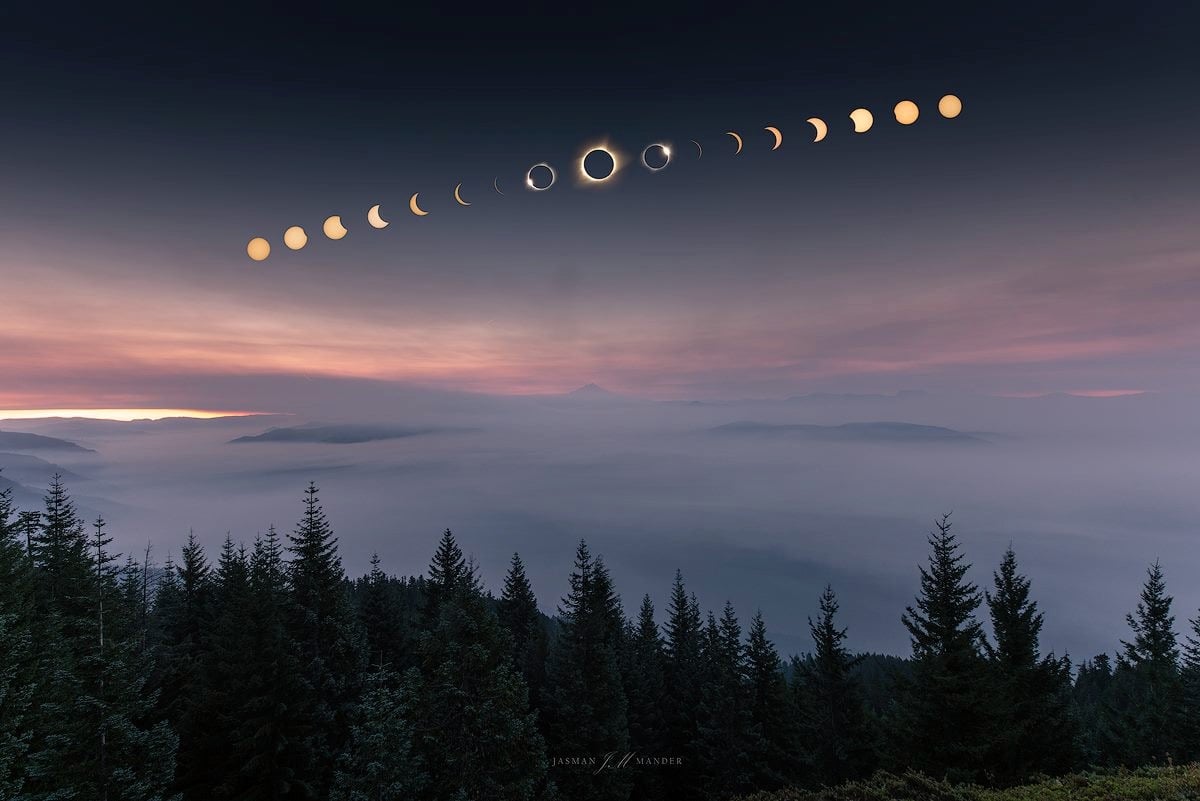
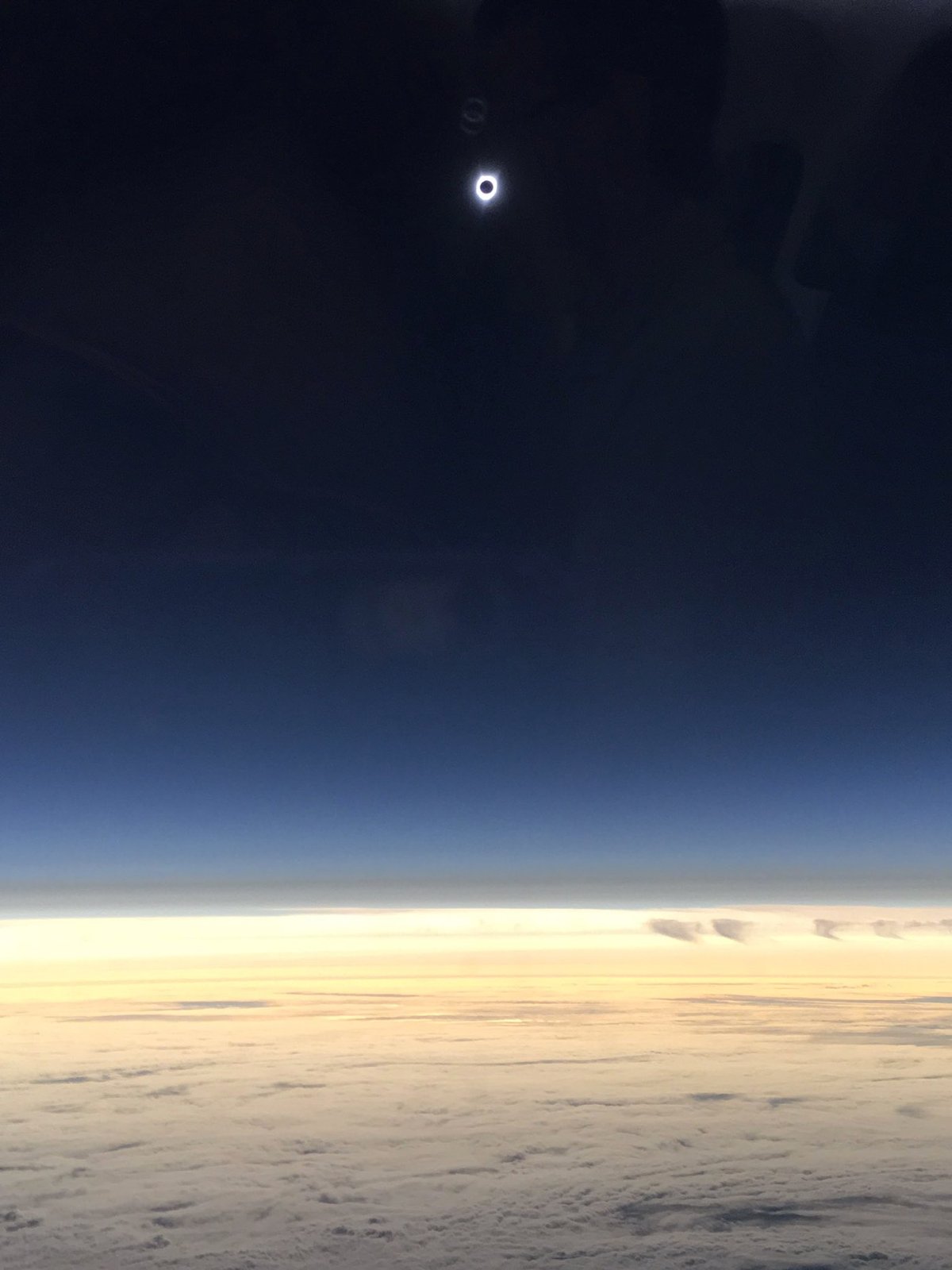
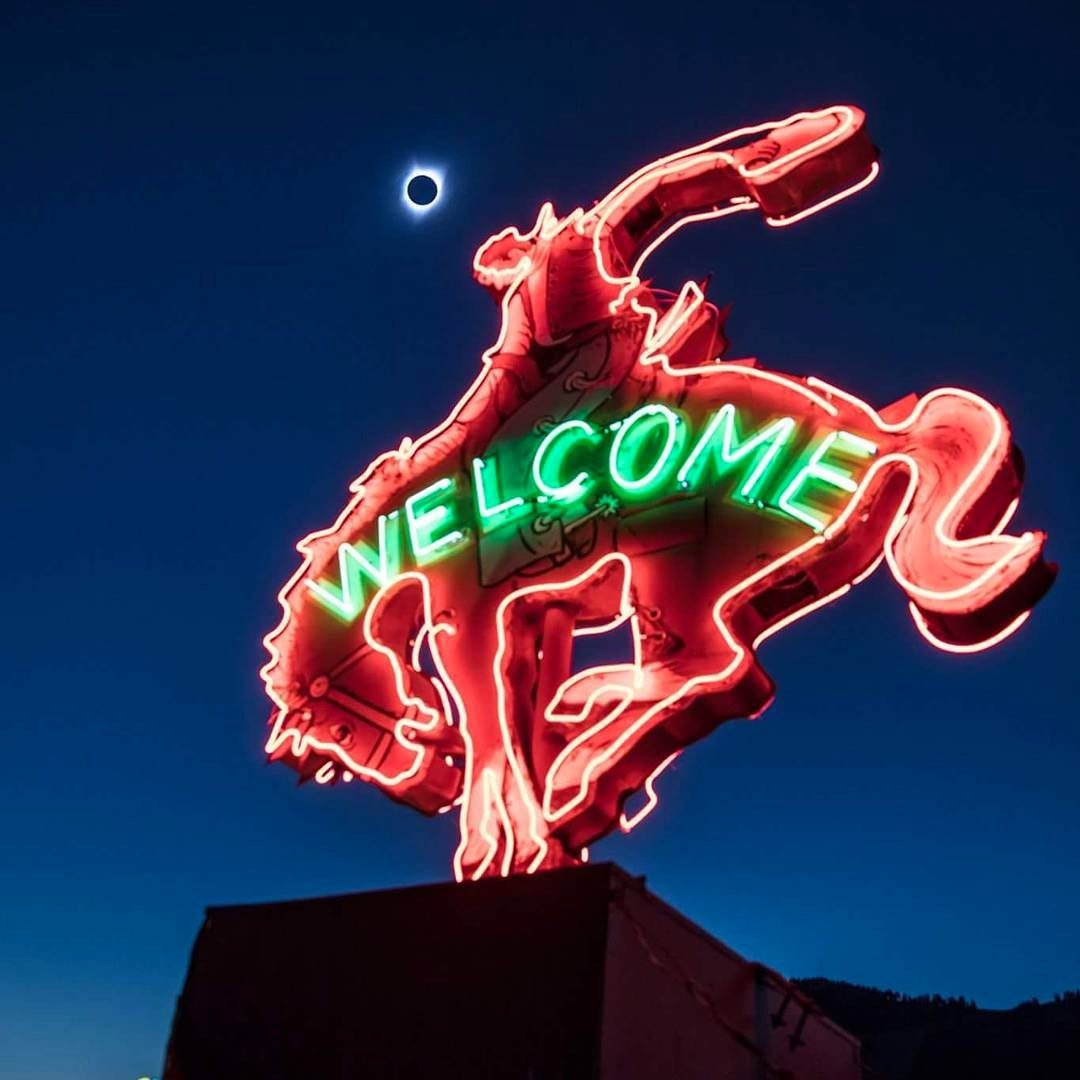
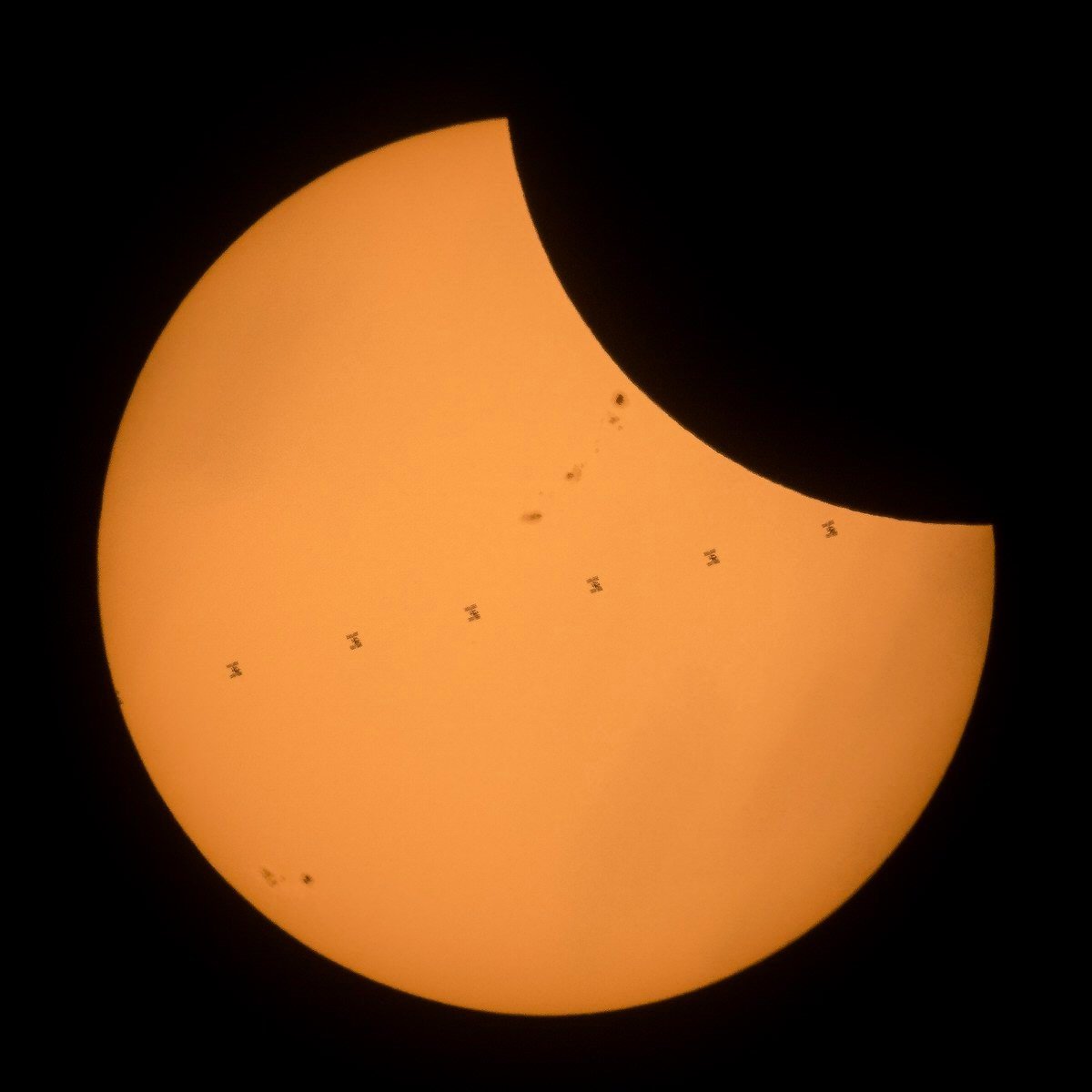
Photo and video credits from the top: Nashville progression photo by Richard Sparkman. HDR photo with Moon detail by Dennis Sprinkle (this one blew my mind a little). Rock climber by Ted Hesser (the story behind the photo). Progression photo by Jasman Lion Mander. Photo from the Alaska Airlines flight by Tanya Harrison. Video of the eclipse shadow moving across the Earth from the NOAA’s DSCOVR satellite. Neon cowboy photo by Rick Armstrong. ISS transit photo and video by Joel Kowsky. Partial eclipse video by NASA’s SDO spacecraft. Partial eclipse video by the ESA’s Proba-2 satellite. Video of the eclipse shadow moving across the US by the NOAA’s GOES-16 weather satellite. Time lapse video from The Salt Lake Tribune. Amazing 4K close-up video by JunHo Oh, ByoungJun Jeong, and YoungSam Choi…check out those prominences!
More eclipse photos on Petapixel (and here), BBC, Bored Panda, The Verge, and the NY Times.
Update: I added the time lapse video from The Salt Lake Tribune. (via the kid should see this)
Update: Added the 4K close-up video.
In an essay from 1982 about her seeing a total solar eclipse in Washington (recently republished in this collection), Pulitzer Prize winner Annie Dillard puts into words what I only attempted to express in my eclipse experience.
I had seen a partial eclipse in 1970. A partial eclipse is very interesting. It bears almost no relation to a total eclipse. Seeing a partial eclipse bears the same relation to seeing a total eclipse as kissing a man does to marrying him, or as flying in an airplane does to falling out of an airplane. Although the one experience precedes the other, it in no way prepares you for it.
I heard lots of disappointment with the eclipse among friends and on social media. It was neat — look, there’s a chunk out of the Sun — but they thought it would be darker or that the air would get colder. But none of that stuff really happens unless you’re really close to totality…and then it goes completely dark and your brain turns inside out. Twitter user @hwoodscotty said:
Probably the coolest thing I’ve ever seen. Totality is so much different than even 99%. 10/10 Would recommend.
And @omanreagan:
Standing on a mountaintop for totality was crossing into another dimension, suddenly finding ourselves on another world. Amazing. Sparkling ring, sun fire ghostly streaming, darkest circle. I understand now why people chase the eclipse. Totality is unlike anything. Entire landscape shifted, valleys, hills, mountains painted in nightcolour and cold. Sparkling planets came out in a midnight sky.
But back to Dillard’s piece…this part, about the shadow rushing towards them, sounds amazing:
I have said that I heard screams. (I have since read that screaming, with hysteria, is a common reaction even to expected total eclipses.) People on all the hillsides, including, I think, myself, screamed when the black body of the moon detached from the sky and rolled over the sun. But something else was happening at that same instant, and it was this, I believe, which made us scream.
The second before the sun went out we saw a wall of dark shadow come speeding at us. We no sooner saw it than it was upon us, like thunder. It roared up the valley. It slammed our hill and knocked us out. It was the monstrous swift shadow cone of the moon. I have since read that this wave of shadow moves 1,800 miles an hour. Language can give no sense of this sort of speed — 1,800 miles an hour. It was 195 miles wide. No end was in sight — you saw only the edge. It rolled at you across the land at 1,800 miles an hour, hauling darkness like plague behind it. Seeing it, and knowing it was coming straight for you, was like feeling a slug of anesthetic shoot up your arm. If you think very fast, you may have time to think, “Soon it will hit my brain.” You can feel the deadness race up your arm; you can feel the appalling, inhuman speed of your own blood. We saw the wall of shadow coming, and screamed before it hit.
Next time, and there will definitely be a next time, I’m hoping to get up high somewhere so I can see the shadow and more of the 360-degree sunset. BRB, pricing plane tickets to Argentina…
Update: Before the 2017 eclipse, Vox talked to some eclipse chasers about what it’s like to witness a total solar eclipse.
Joss Fong, who produced the video, shared the following on Twitter:
now that i’ve recovered from the drive, i can say that a lot of what these eclipse chasers told me makes sense now. agree completely that it’s something you have to see for yourself. what was different for me though is …. i got pretty sad. there’s a fine line between awe and grief. maybe in a different year it would have gone the other way, but tbh every exceptionally beautiful sunset makes me a tiny bit sad too. but this was sunset sadness times a thousand. absolutely punched by the impermanence. i hope i see it again and i hope you can see it too.
Update: From XKCD:
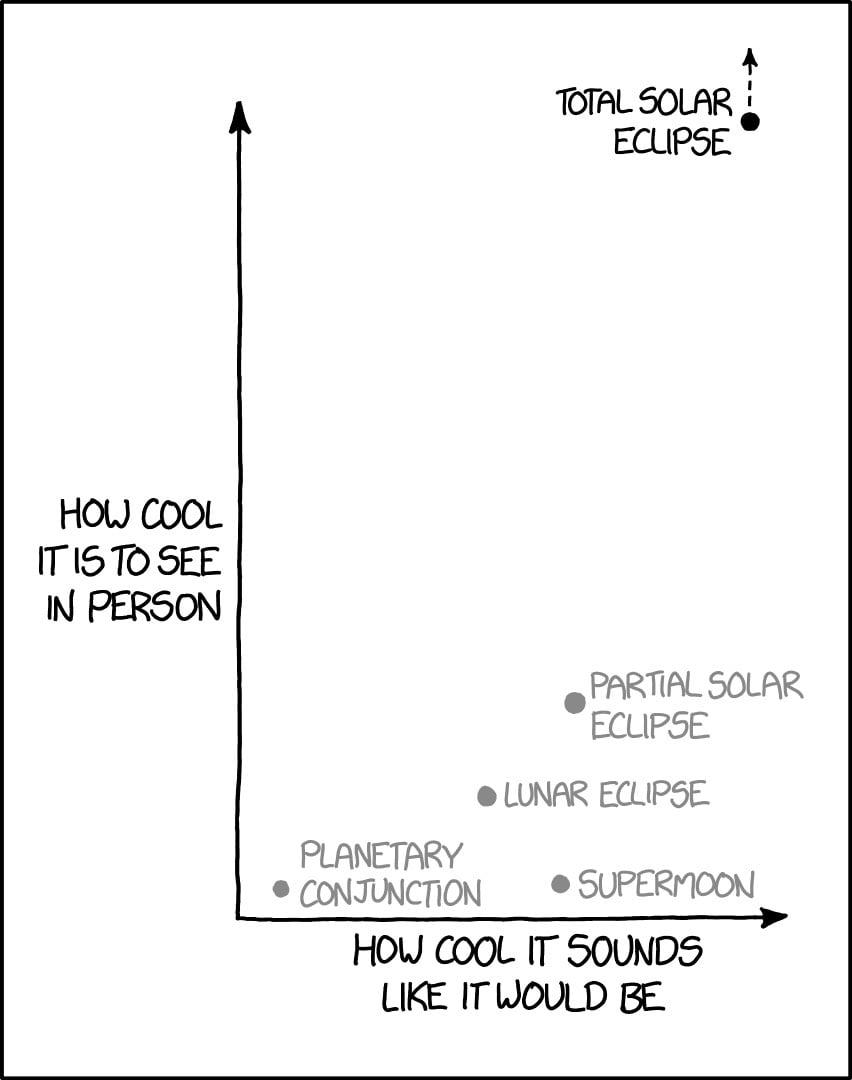
I watched from a beautiful nature reserve in central Missouri, and it was — without exaggeration — the coolest thing I’ve ever seen.
This is NSFW and pretty funny. 3-Way (Not Calling) is a short film about one couple’s attempt to spice things up in the bedroom with another person and how it goes slightly wrong and also slightly right. (via film school rejects)
As part of a video series on Chinese food in America, Al Jazeera profiles the small population of Chinese-American families that have lived in the Mississippi Delta for more than 100 years.
There’s a rather unknown community of Chinese-Americans who’ve lived in the Mississippi Delta for more than a hundred years. They played an important role in the segregated South in the middle of the 20th century. Join us as we get a taste of Southern Chinese food and learn about the unique history of the Delta Chinese.
Originally coming to the area to pick cotton, many of the Chinese immigrants opened up grocery stores, mostly in the black communities in which they lived. One family owned two stores across the street from each other in the days of segregation: one for serving white customers and the other for serving black customers.
And, oh man, that Southern Chinese food looks absolutely delicious. This NPR story, The Legacy Of The Mississippi Delta Chinese, contains a little more information on the food.
But let’s get back to dinner. As the group gets busy chopping and sauteing in the kitchen, Gilroy heads outside and starts tossing fried rice in a gigantic wok nestled into a super-hot, custom burner stand.
He tosses in some cubed ham: “This is what makes it Southern fried rice!” he says.
Before long, an impressive feast is laid out before us: beef with cauliflower. Whole fish garnished with fried ginger. Spare ribs with carrots and potatoes. Roast pork with a honey-hoisin glaze, and much more. The flavors of their youth.
The last total solar eclipse in the US and Canada took place in February 1979. Here’s Walter Cronkite’s original report on the eclipse for the CBS Evening News. It features druids, a rooster that was supposed to sleep during the eclipse, and interviews with some people who were obviously tripping balls during the celestial event.
See also this 1979 ABC News anchor saying “may the shadow of the moon fall on a world at peace” about the 2017 eclipse. (via @EricHolthaus)
This video from the Weather Channel is pretty neat and useful: a play-by-play of what to expect during the eclipse, from being able to see Venus in broad daylight to animals possibly acting weird to the 360-degree “sunset” that happens about 2 minutes before totality.
On March 8-9, 2016, a total solar eclipse swept across the Pacific Ocean for more than 5 hours. About a year before the eclipse, Hayden Planetarium astronomer Joe Rao realized Alaska Airlines flight 870 from Anchorage to Honolulu would pass right through the path of totality…but 25 minutes too early. Rao called the airline and convinced them to shift the flight time.
Alaska’s fleet director, Captain Brian Holm, reviewed the proposed flight path and possible in-route changes to optimize for the eclipse. The schedule planning team pushed back the departure time by 25 minutes, to 2 p.m.
On the day of the flight, Dispatch will develop the specific flight plan, to find the most efficient route and account for weather and wind. Maintenance and maintenance control will help make sure the plane is ready to go — they even washed all the windows on the right side of the plane.
Captain Hal Andersen also coordinated with Oceanic Air Traffic Control, to make them aware that the flight might require a few more tactical changes then normal.
“The key to success here is meeting some very tight time constraints — specific latitudes and longitudes over the ocean,” Andersen said. “With the flight management computer, it’s a pretty easy challenge, but it’s something we need to pay very close attention to. We don’t want to be too far ahead or too far behind schedule.”
The video was shot by a very excited Mike Kentrianakis of the American Astronomical Society, who has witnessed 20 solar eclipses during his lifetime.
July 11, 2010. That was the eclipse over Easter Island, the one for which hotel room rates were so high that there was no way Kentrianakis could afford it. Instead, he considered attempting a trip to Argentina, where experts predicted there was a 5 percent chance of clear skies. His wife at the time, Olga, urged him not to go — it’s not worth the expense, she insisted. Reluctantly, Kentrianakis stayed home.
“It was the beginning of the end for us,” Kentrianakis says. There were problems in the marriage before that episode, “but it affected me that I felt that she didn’t really appreciate what I loved.” They were divorced the following year.
Kentrianakis doesn’t like to dwell on this, or the other things he’s given up to chase eclipses. He knows his bosses grumbled about the missed days of work. Friends raise their eyebrows at the extremes to which he goes. He’s unwilling to admit how much he’s spent on his obsession.
“There is a trade-off for everything, for what somebody wants,” he says.
A camera on the Deep Space Climate Observatory satellite captured the eclipse’s shadow as it moved across the Earth:
For this year’s eclipse, Alaska Airlines is doing a special charter flight for astronomy nerds and eclipse chasers. Depending on how this eclipse goes, seeing an eclipse from an airplane might be on my bucket list for next time. (via @coudal)
At the beginning of each episode of The Wire, a quote from one of the show’s characters is shown on the screen, a epigraph that suggests the theme of the episode. This video shows the characters from each episode saying those opening quotes — Lester: “all the pieces matter”; Omar: “all in the game”; The Greek: “business, always business”; Poot: “world going one way, people another” — for all five seasons.
Videos designed to invoke ASMR (“autonomous sensory meridian response”) in some viewers have grown in popularity in recent years. The videos feature soothing sounds and visuals (gentle whispering, soft scratching, watching a task being diligently performed) that are meant to provoke a response of brain tingling or a state of bliss in some people. In an attempt to ride the wave, Ikea has made a 25-minute advertisement for college dorm furniture that uses common ASMR techniques. I dunno, does cerebral euphoria make people want to buy closet organizers?
James Poniewozik, chief TV critic for the NY Times, wrote about his favorite scene from Freaks and Geeks. Here’s the scene:
I loved this bit:
First, the music. “I’m One” by the Who, from the 1973 album “Quadrophenia.” It builds from mournfulness (“I’m a loser / No chance to win”) to a defiant chorus. And it’s a great example of how “Freaks and Geeks” chose its soundtracks. The episode is set in 1981, but it avoids on-the-nose ’80s-song choices. Paul Feig, the show’s creator, once told me that the thing about the early ’80s in the Midwest was that they were really still the ’70s.
I grew up in the Midwest in the early 80s and though I’ve never really thought about it before, Feig’s observation that they were still really the 70s is spot on. (via @tcarmody)
In a meditative video for the NY Times, Dennis Overbye takes us on a tour of eclipses that happen in our solar system and beyond.
On the 21st day of August, 2017, the moon will slide between the Earth and the sun, painting a swath of darkness across North America. The Great American Solar Eclipse. An exercise in cosmic geometry. A reminder that we live on one sphere among many, all moving to the laws of Kepler, Newton and Einstein.
Humans have many more vantage points from which to observe solar eclipses than when the last solar eclipse occurred in the US in 1979. I had no idea that the Mars rovers had caught partial solar eclipses on Mars…so cool. (via @jossfong)
The prevailing theory of how the Americas were settled has been than human hunters followed big game across the ice-free land bridge between North America and Asia around 13,000 years ago. These are the Clovis people you may have learned about in school. But evidence is mounting that the first humans to settle the Americas came down the Pacific Coast somewhat earlier than that.
The Cedros Island sites add to a small but growing list that supports a once-heretical view of the peopling of the Americas. Whereas archaeologists once thought that the earliest arrivals wandered into the continent through a gap in the ice age glaciers covering Canada, most researchers today think the first inhabitants came by sea. In this view, maritime explorers voyaged by boat out of Beringia — the ancient land now partially submerged under the waters of the Bering Strait — about 16,000 years ago and quickly moved down the Pacific coast, reaching Chile by at least 14,500 years ago.
Part of the problem in confirming this hypothesis is that the rise in sea level that accompanied the melting of the glaciers (a 120-meter rise globally) submerged likely settlement sites, trapping archeological evidence under hundreds of feet of ocean. (via @CharlesCMann)
Sure, blockbuster movie trailers are formulaic. But…actually, no buts, they are formulaic and this cheeky short video by the Auralnauts gives away all the secrets to making a really effective engaging exciting unique aggressively bland trailer for a Hollywood blockbuster movie.
Update: It’s a bit dated, but Cracked did a Trailer For Every Oscar-Winning Movie Ever:
(via @lanewinfield)
This is perhaps the best on-the-ground view of what went down in Charlottesville over the weekend. It’s graphic in spots. Prepare to get angry and sad and frustrated and scared.
On Saturday hundreds of white nationalists, alt-righters, and neo-Nazis traveled to Charlottesville, Virginia to participate in the “Unite the Right” rally. By Saturday evening three people were dead — one protester, and two police officers — and many more injured.
“VICE News Tonight” correspondent Elle Reeve went behind the scenes with white nationalist leaders, including Christopher Cantwell, Robert Ray, David Duke, and Matthew Heimbach — as well as counter-protesters. VICE News Tonight also spoke with residents of Charlottesville, members of the Black Lives Matter movement, and the Charlottesville Police.
From the neo-Nazi protests at Emancipation Park to Cantwell’s hideaway outside of Virginia, “VICE News Tonight” provides viewers with exclusive, up close and personal access inside the unrest.
See also Here’s What Really Happened in Charlottesville.
It’s been awhile since I’ve looked in on what the proprietor of the Primitive Technology YouTube channel is up to. Over the past two years, this Australian man has built all sorts of tools, structures, and objects using only what he can find in the forest and has racked up over 330 million views on his silent videos demonstrating how he does it all.
One of his latest projects was building a water-powered hammer (video above).
The trough was positioned under the waterspout to collect water and the tripod adjusted so that the resting point of the hammer was horizontal (so water wouldn’t prematurely spill out of the trough).
The trough filled with water, outweighed the hammer head and tilted the hammer up into the air. The water then emptied out of the trough (now slanting downwards) and the hammer then slammed down onto an anvil stone returning to its original position. The cycle then repeated at the approximate rate of one strike every 10 seconds. The hammer crushes small soft types of stone like sandstone or ochre. I carved a bowl into the anvil stone so that it would collect the powder. I then crushed old pottery (useful as grog for new pots) and charcoal. Practically speaking, this hammer worked ok as a proof of concept but I might adjust it or make a new one with a larger trough and bigger hammer for heavy duty work.
He also made a trap for catching freshwater prawns:
And a pair of sandals:
He’s built up quite a following on Patreon as well, with people contributing over $5700 per video, putting him on a path to be able to make Primitive Technology his full-time job.
The Death of Stalin is a satirical film about the political aftermath of Joseph Stalin’s death in 1953. It stars Jeffrey Tambor, Michael Palin (as Vyacheslav Molotov, for whom the Molotov cocktail was named), and Steve Buscemi as Nikita Khrushchev (who, spoiler alert, eventually wins the succession battle for leader of the Soviet Union).
David Ma is a food artist and director who recently made a series of four short recipe videos in the style of famous directors. There’s spaghetti and meatballs a la Quentin Tarantino (my favorite):
S’mores in the style of Wes Anderson:
What if Michael Bay made waffles?
And finally, here’s a pancake recipe in the style of Alfonso Cuaron’s Gravity:
Hopefully round 2 of Ma’s project will include the likes of Sofia Coppola, Ava DuVernay, Spike Lee, or Yimou Zhang.
The first season of the Netflix series The Crown was a surprise for me. I thought it was going to be pleasant-but-soapy look at the royals a la Downton Abbey (which I love, don’t get me wrong), but the acting and the substance of the script and production elevated it, putting it among the best shows to debut last year. Claire Foy as Queen Elizabeth, in particular, was a revelation; her one-on-one scenes with her sister and with Churchill were some of the best TV I watched last year. From the season 2 trailer, it appears that we’re in for more of the same come December.
Oh, this is a clever bit of TV/film analysis by Evan Puschak: he reconstructs the Loot Train Battle from the most recent episode of Game of Thrones using clips from other movies and TV shows (like 300, Lord of the Rings, Stagecoach, and Apocalypse Now). In doing so, he reveals the structure that many filmed battle scenes follow, from the surprising enemy attack presaged by the distant sound of horses (as in 300) to the quiet mid-chaos reflection by a shocked commander (as in Saving Private Ryan). Everything is a Remix, right?
This reminds me of how the Rogue One production team made a full-length reel of the film for director Gareth Edwards from scenes from other movies so that the timing and pacing could be worked out.
It’s very simple to have a line [in the script] that reads “Krennic’s shuttle descends to the planet”, now that takes maybe 2-3 seconds in other films, but if you look at any other ‘Star Wars’ film you realise that takes 45 seconds or a minute of screen time. So by making the whole film that way — I used a lot of the ‘Star Wars’ films — but also hundreds of other films too, it gave us a good idea of the timing.
For example the sequence of them breaking into the vault I was ripping the big door closing in ‘Wargames’ to work out how long does a vault door take to close.
This fascinating behind-the-scenes look at the battle doesn’t allude to any such storyboarding, but as Puschak notes, battle scenes from dozens of other movies surely weren’t far off in their minds while putting this one together.
In the first in a series of videos, Kurzgesagt tackles one of my favorite scientific subjects: how the sizes of animals governs their behaviors, appearance, and abilities. For instance, because the volume (and therefore mass) of an organism increases according to the cube of the increase in length (e.g. if you double the length/height of a dog, its mass roughly increases by 8 times), when you drop differently sized animals from high up, the outcomes are vastly different (a mouse lands safely, an elephant splatters everywhere).
The bit in the video about how insects can breathe underwater because of the interplay between the surface tension of water and their water-repellant outer layers is fascinating. The effect of scale also comes into play when considering the longevity of NBA big men, how fast animals move, how much animals’ hearts beat, the question of fighting 100 duck-sized horses or 1 horse-sized duck, and shrinking people down to conserve resources.
When humans get smaller, the world and its resources get bigger. We’d live in smaller houses, drive smaller cars that use less gas, eat less food, etc. It wouldn’t even take much to realize gains from a Honey, I Shrunk Humanity scheme: because of scaling laws, a height/weight proportional human maxing out at 3 feet tall would not use half the resources of a 6-foot human but would use somewhere between 1/4 and 1/8 of the resources, depending on whether the resource varied with volume or surface area. Six-inch-tall humans would potentially use 1728 times fewer resources.
See also The Biology of B-Movie Monsters, which is perhaps the most-linked article in the history of kottke.org.
Together with Lynn Novick, filmmaker Ken Burns, who has previously made long documentary films on The Civil War and World War II, has made a film about perhaps the most controversial and contentious event in American history, The Vietnam War. The film runs for 18 hours across 10 installments and begins on September 17 on PBS.
David Kamp interviewed Novick and Burns for Vanity Fair and proclaims the film a triumph:
I watched the whole series in a marathon viewing session a few days before meeting with the filmmakers — a knock-you-sideways experience that was as enlightening as it was emotionally taxing. For all their unguarded anxiety about doing the war justice, Burns and Novick have pulled off a monumental achievement. Audiovisually, the documentary is like no other Burns-branded undertaking. Instead of folksy sepia and black-and-white, there are vivid jade-green jungles and horrific blooms of napalm that explode into orange and then gradually turn smoky black. The Vietnam War was the first and last American conflict to be filmed by news organizations with minimal governmental interference, and the filmmakers have drawn from more than 130 sources for motion-picture footage, including the U.S. networks, private home-movie collections, and several archives administered by the Socialist Republic of Vietnam. The series’s depiction of the Tet offensive, in which the North Vietnamese launched coordinated attacks on the South’s urban centers, is particularly and brutally immersive, approaching a 360-degree experience in its deft stitching together of footage from various sources.
The sound and music promises to thrill as well. Trent Reznor and Atticus Ross (who did the scores for The Social Network, Gone Girl, and The Girl with the Dragon Tattoo) provided original music to supplement popular music contemporary to the time. They even got The Beatles.
Then there’s all that popular music from the 60s and 70s: more than 120 songs by the artists who actually soundtracked the times, such as Bob Dylan, Joan Baez, the Animals, Janis Joplin, Wilson Pickett, Buffalo Springfield, the Byrds, the Rolling Stones, and even the ordinarily permissions-averse and budget-breaking Beatles. Of the Beatles, Novick noted, “They basically said, We think this is an important part of history, we want to be part of what you’re doing, and we will take the same deal everybody else gets. That’s kind of unprecedented.”
I’m very much looking forward to this.
Big flips, fast bikes, flipping sticks, leaping gaps, elephant tricks, big airs, quick climbs, trick shots, Superman on a bike, and a guy who looks a lot like Fred Rogers waterskiing on his back. I think we all need a reminder these days of how amazing people can be when they put their minds and hearts into it. Give this video 10 seconds of your time and I guarantee you’ll end up watching the whole thing with a goofy grin on your face.
Using NASA’s GISTEMP data (a measure of the surface air temperature around the world), climate researcher Antti Lipponen put together this data visualization of global temperature anomalies from 1900-2016. Until about the mid-90s, the lines in different parts of the world pulse blue (cooler) or yellow/red (warmer) each year as regional climate varies…but it slowly turns less blue and more yellow. From 1997 on, the thing is basically an angry red porcupine.
In her first installment for a new Vox series called Earworm, Estelle Caswell takes a look at some weird musical stuff happening with Videotape, a song off of Radiohead’s In Rainbows. According to a longer video by Warren Lain referenced by Caswell, Radiohead has hidden a syncopated rhythm in the song that even the band members have trouble keeping straight when they’re trying to play it. Videotape is my favorite song on that album…maybe this is a reason why?
Also, don’t miss the short explanation of how “rhythmic sound synchronizes the brain waves of groups of people”. !!!
I’ve mentioned Steve Hackman here before; he’s a composer who arranges and conducts mashups of music from classical and contemporary musicians. He’s done performances of Beethoven vs Coldplay, Brahms vs Radiohead, and several others. I’ve been eagerly awaiting the video for the full performance of Drake vs Tchaikovsky…but no dice yet.
Hannah Yi from Quartz recently talked to Hackman about how he goes about creating these mashups by looking for similarities in meter, chords, and emotion between two pieces of music.
Newer posts
Older posts





Socials & More