kottke.org posts about video
This is mesmerizing to watch for a few minutes: a time lapse map of weather activity across the entire US in 2018. I was thinking it would be instructive to see this sped up a bit more, that perhaps different patterns might reveal themselves, and then I remembered that you can control the playback speed on YouTube videos…just click the gear icon. I think I like the 2X version better. (via @DesignObserver)
For Vox, Cleo Abram explains why game designers use triangles when designing 3D animated games (and not, say, circles or rectangles).
Triangles are a key part of how these gorgeous, detailed games appear on your screen — the hidden heroes we should all thank as we play. This simple shape helps keep the number of computations needed for each detail as low as possible, allowing the player’s computer to process these elaborate games.
I like how the arms race among game developers to create more and more realistic objects out of smaller and smaller triangles mirrors the process in differential calculus of finding the slope of a curve by — wait for it — using smaller and smaller triangles. The game designers are going to have a problem truly getting to infinitesimally small triangles though…
For years, Mongolian folk metal band The Hu have been honing their distinctive brand of heavy metal, combining the Western musical form with traditional instruments and throat singing. From an NPR piece on the band:
Mongolian rock combines traditional Mongolian instruments, like a horsehead fiddle (morin khuur), Jew’s harp (tumur khuur) and Mongolian guitar (tovshuur) with the pounding bass and drums of rock.
It also involves singing in a guttural way known as throat singing while throwing heads back and forth reminiscent of the headbanging of ’80s heavy metal bands like Metallica. Those who study Mongolian music believe one reason The Hu has proved so popular with outsiders is this combining of modern and historical and Eastern and Western elements.
The group’s music videos take a bit to get going, but once the music starts, it’s pretty cool. (via open culture)
In this video, Luke Palmer makes a surprisingly compelling case that Bong Joon-ho’s Snowpiercer is actually a sequel to the beloved 1971 film Willy Wonka & the Chocolate Factory. (Spoilers for both films to follow.) The main idea is that Charlie Bucket inherits the Wonka fortune and grows up to be Wilford, who builds the train to save humanity.
They’re both two movies about groups of people that work their way through a large fantastic structure. One-by-one, a person from the group is removed in each room until one person makes it to the very end, who then found out that the entire thing was a test because a wealthy industrialist needed to find a new successor.
I love this, but I wouldn’t go so far as saying it’s a sequel. A reboot maybe or an homage. (via @mulegirl)
At the TEDWomen 2017 conference, cognitive scientist Lera Boroditsky gave a talk on how different languages affect how their speakers think about the world. It ended up being the most viewed online TED Talk in 2018. Boroditsky’s first example of how language shapes thought is the directional thinking of the Kuuk Thaayorre people of Australia.
I’ll start with an example from an Aboriginal community in Australia that I had the chance to work with. These are the Kuuk Thaayorre people. They live in Pormpuraaw at the very west edge of Cape York. What’s cool about Kuuk Thaayorre is, in Kuuk Thaayorre, they don’t use words like “left” and “right,” and instead, everything is in cardinal directions: north, south, east and west. And when I say everything, I really mean everything. You would say something like, “Oh, there’s an ant on your southwest leg.” Or, “Move your cup to the north-northeast a little bit.” In fact, the way that you say “hello” in Kuuk Thaayorre is you say, “Which way are you going?” And the answer should be, “North-northeast in the far distance. How about you?”
So imagine as you’re walking around your day, every person you greet, you have to report your heading direction.
In this artfully made short film by Esteban Arrangoiz, we meet Julio César Cú Cámara, “a man who has found long lasting contentment in a dirty job: diving into the sewers and water treatment plants of Mexico City to clear blockages and reduce the risk of floods”.
As Arrangoiz writes, “Mexico is undergoing multiple crises: humanitarian, corruption, garbage. This film shows us how through his work, a human being is capable of finding beauty, pleasure and the essence of his humanity inside the detritus. This moves me, gives me hope and compels me to make movies. I think Mexico needs stories like these.”
As he’s diving, Cámara narrates his experience:
I imagine here feels like being in outer space. I feel alone in space, just like I’m alone at the bottom of the sump, under the sewage waters. And I feel good. I feel the pressure of the water. I feel like it’s embracing me. I feel like the water is holding me. The water is protecting me, a little. And I don’t want to stop feeling this.
The opening sequence, of Cámara in his diving suit being lowered into a sewage reservoir, is amazing, like something out of a 70s sci-fi film.
Update: From Edible Geography, a transcript of a talk by Cámara as well as some Q&A with the audience.
I’m fascinated by the job that I do. Even though not many people see it or know about it, I believe we do a very important job for all of us. Sometimes you can’t stop the pumping plant or you can’t dig up the street and get to the sewage pipes from the surface. That’s when we come in. It’s a very satisfying job. I like knowing that I am part of a system working to help keep the city safe.
Before they hit it big with Licensed to Ill in 1986, the Beastie Boys were a punk rock quartet experimenting with rap. In this footage from 1983, the band performs their very first hit song, Cooky Puss, at The Kitchen in NYC. They all look so impossibly young (Ad-Rock is only 17) and sound really uneven, like they’re performing in a high school talent show.
Here’s the full set they played that night; the band sounds a lot more confident playing their punk/rock repertoire (which included “Cum On Feel the Noize”):
It’s amazing that this footage exists. You can literally see the changeover in the group’s focus from the musical genre of their youth (which was on the wane a bit) to something newer (rap), weirder (fratty white-boy rap), and eventually unique and amazing (Paul’s Boutique).
Compare with a 17-year-old LL Cool J playing to an audience of ~120 people in a small-town Maine gymnasium and a 17-year-old Notorious BIG freestyling on a street corner in Bed-Stuy. (via open culture)
In this lovely short film by Noah Sheldon, we meet Wo Guo Jie, a migrant worker from rural China who makes a living in Shanghai collecting styrofoam boxes and reselling them at a wholesale fish market. Even though styrofoam is a relatively light material, she packs so much of it onto her bike that the front wheel bounces off the ground as she motors slowly down the street, unable to see anything but what’s right in front of her.
My hometown is all farmland, there are no factories. During the winter there is nothing to do so people work elsewhere. Now everyone has left to go find work. No one farms anymore. It’s rare for me to get a chance to go home. Sometimes I don’t even go back once a year. When my son was younger, around 7 or 8 years old, I came home and he refused to call me ‘Mom’. He didn’t recognize me because I hadn’t been home for 3 years. I take each day as it comes. I haven’t thought too much about the future.
(via @rmpenguino)
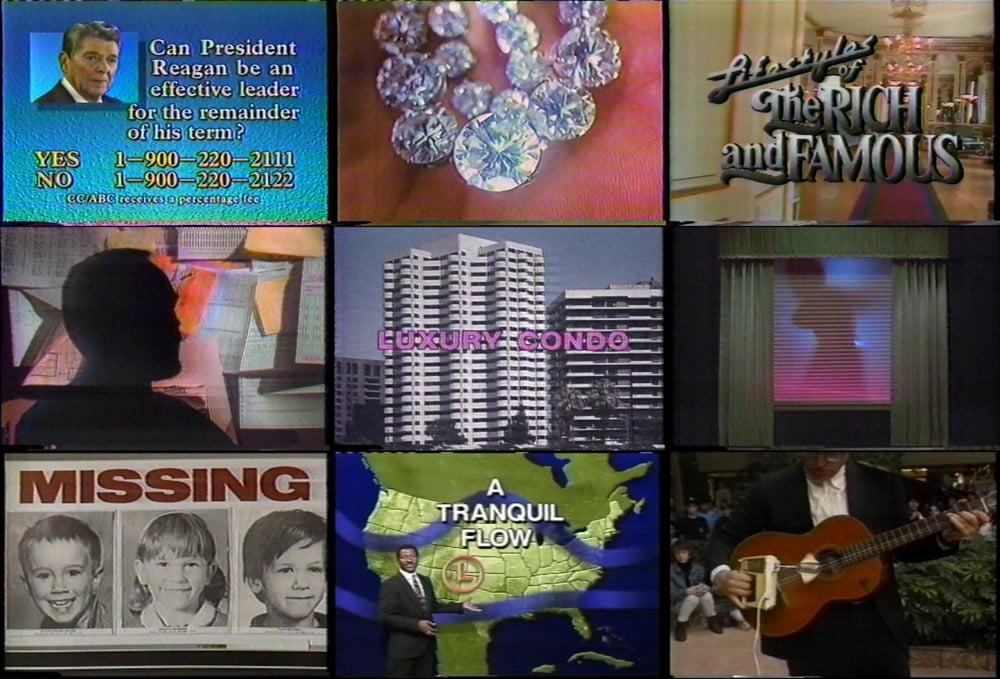
In 1979, a woman named Marion Stokes started recording live television and didn’t stop for more than 33 years. Director Matt Wolf is making a movie about Stokes and her archive.
Marion Stokes was secretly recording television twenty-four hours a day for thirty years. It started in 1979 with the Iranian Hostage Crisis at the dawn of the twenty-four hour news cycle. It ended on December 14, 2012 while the Sandy Hook massacre played on television as Marion passed away. In between, Marion recorded on 70,000 VHS tapes, capturing revolutions, lies, wars, triumphs, catastrophes, bloopers, talk shows, and commercials that tell us who we were, and show how television shaped the world of today.
The Internet Archive is supposedly archiving them and putting them online (so says this 2013 Fast Company article) but there’s no evidence that any of the videos are live on the site. (Rights issues? Budget?) In the meantime, you can check out this Tumblr has a collection of stills from the Stokes tapes.
Over the course of two years, metalsmith Seth Gould built a project he calls Coffer, a gorgeous wrought iron puzzle box. Gould made the box from scratch — he forged the metal, machined the bolts, everything!
The majority of pieces, including the bolts, levers, and staples, are made from wrought iron, a material I use primarily for its working properties (enjoyable to forge and file). Wrought iron is no longer manufactured, so each piece needed to be forged from salvaged material. The forging is done using a coal forge, hammer, anvil, and power hammer. Once the pieces are forged as close to their finished shape as possible, I move to the bench to refine the surface and shape with a file. The final touch is a bit of file embellishment.
I mean, look at this intricate deliciousness:

The video above is a short film of Gould making his box filmed by Jesse Beecher. The soundtrack cleverly incorporates the sounds of the workshop (sawing, hammering, flames) into the music, resulting in a particularly artful making-of film. (via colossal)
Update: The box made by Gould is called an armada box.
An iron-bound strongbox for storing valuables in the 16th and 17th centuries, often with a large, complicated lock on the underside of the lid. Some were for the use of officers at sea, and would have been bolted to the deck of the owner’s cabin. Usually of German make, the chests could be anything from a few inches to 6ft (1.8m) long. The name itself was a fanciful Victorian invention recalling chests imagined to be used by the Spanish Armada.
Swiss artist Zimoun makes large-scale sound sculptures out of simple materials like cardboard boxes, wires, washers, tiny motors, and sticks of wood. Here are a few of his works (sound on, obviously):
I would love to see one of these installations in person sometime.
My pal Bryan Boyer has built a device he calls a VSMP (Very Slow Movie Player). It’s an e-paper display that shows a movie not at 24 frames/sec but at 24 frames per hour.
Films are vain creatures that typically demand a dark room, full attention, and eager eyeballs ready to accept light beamed from the screen or projector to your visual cortex. VSMP inverts all of that. It is impossible to “watch” in a traditional way because it’s too slow. In a staring contest with VSMP you will always lose. It can be noticed, glanced-at, or even inspected, but not watched. That’s one of the things I like about the Bill Viola pieces. You don’t watch them because they’re not films; they’re portraits so you see them, and it just so happens that you see them in four dimensions.
Ahhh, look at this gloriously retro aesthetic:
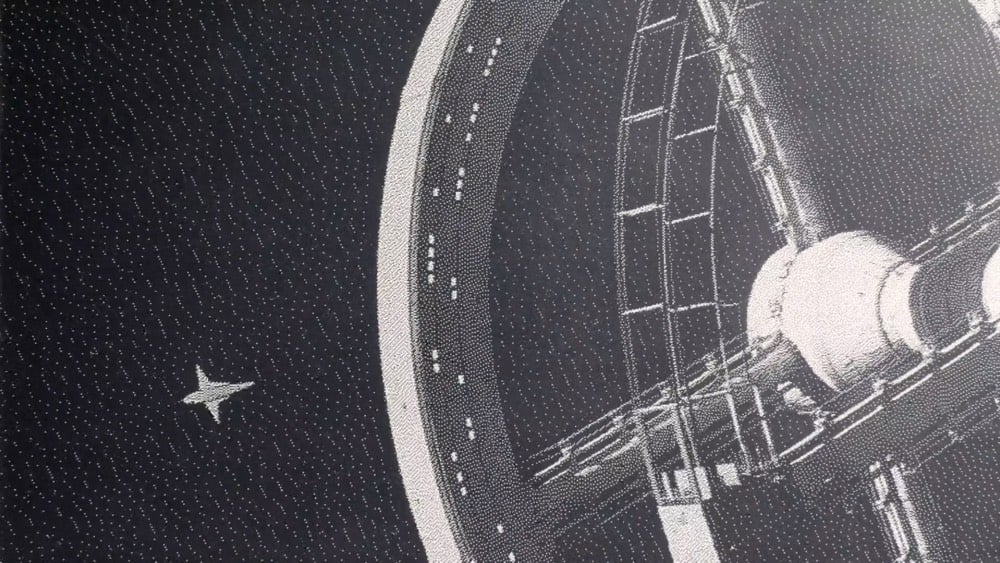
His whole essay about the project is worth reading for the thoughtful insights throughout. I totally want a wall-sized VSMP in my bedroom.
Update: Inspired by the VSMP, Jon Bell built a web page that will show Sofia Coppola’s Lost In Translation stretched out over the course of the next year. You can watch here.
Update: Inspired by the projects above, Nic Magnier made Yearlong Koyaanisqatsi, a Twitter bot that will show Godfrey Reggio’s Koyaanisqatsi very slowly over the course of the next year, one frame every 6 hours.
Update: Tom Whitwell recently built a VSMP and it’s quite a bit easier now — no soldering or anything like that.
This is a relatively straightforward project. There’s no soldering and no hardcore coding. If you’re at all comfortable using a command line, and you’ve seen Python script before then you’ll be fine. The e-paper screen, Pi, SD Card and IKEA frame cost me about £120 in total.
The opening line of Madeline Miller’s Circe is: “When I was born, the name for what I was did not exist.” In Miller’s telling of the mythological story, Circe was the daughter of a Titan and a sea nymph (a lesser deity born of two Titans). Yes, she was an immortal deity but lacked the powers and bearing of a god or a nymph, making her seem unnervingly human. Not knowing what to make of her and for their own safety, the Titans and Olympic gods agreed to banish her forever to an island.
Here’s a photograph of a woman who could also claim “when I was born, the name for what I was did not exist”:

The previous line contains two lies: this is not a photograph and that’s not a real person. It’s an image generated by an AI program developed by researchers at NVIDIA capable of borrowing styles from two actual photographs of real people to produce an infinite number of fake but human-like & photograph-like images.
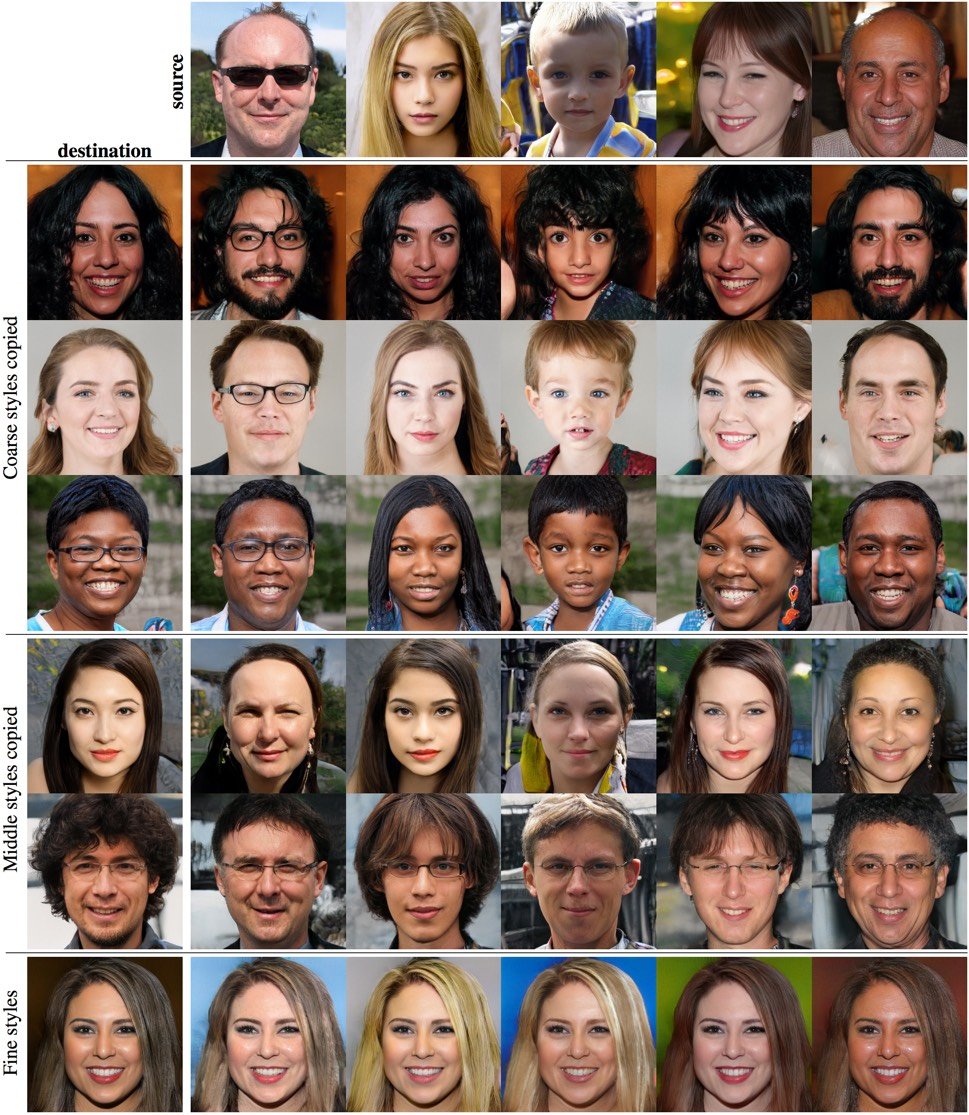
We propose an alternative generator architecture for generative adversarial networks, borrowing from style transfer literature. The new architecture leads to an automatically learned, unsupervised separation of high-level attributes (e.g., pose and identity when trained on human faces) and stochastic variation in the generated images (e.g., freckles, hair), and it enables intuitive, scale-specific control of the synthesis.
The video offers a good look at how this works, with realistic facial features that you can change with a slider, like adjusting the volume on your stereo.
Photographs that aren’t photographs and people that aren’t people, born of a self-learning machine developed by humans. We’ll want to trust these images because they look so real, especially once they start moving and talking. I wonder…will we soon seek to banish them for our own safety as the gods banished Circe?
Update: This Person Does Not Exist is a single serving site that provides a new portrait of a non-existent person with each reload.
The trailer for Black Mirror: Bandersnatch, a feature-length special premiering tomorrow (12/28) on Netflix:
In 1984, a young programmer begins to question reality as he adapts a sprawling fantasy novel into a video game and soon faces a mind-mangling challenge. Welcome back.
What if Stranger Things but Black Mirror?
Update: There were rumors that an upcoming Black Mirror episode would feature a Choose Your Own Adventure style narrative. Well, it appears that Bandersnatch is that episode. From Variety:
“Bandersnatch” comes with five possible endings. Viewers who choose the quickest path, and decide against any do-overs, can make it through the film in around 40 minutes. The average viewing time is around 90 minutes.
Altogether, there are over a trillion unique permutations of the story. However, this also includes relatively simple iterations that don’t necessarily alter the story itself. For instance, one of the first decisions is helping Stefan to choose which cereal to eat in the morning. “We want [viewers] to have a successful choice early on,” said Engelbrecht.
From the Art of the Title, the picks for the best opening credits sequences of the year. Their #1 is Babylon Berlin, which would have been my pick as well.
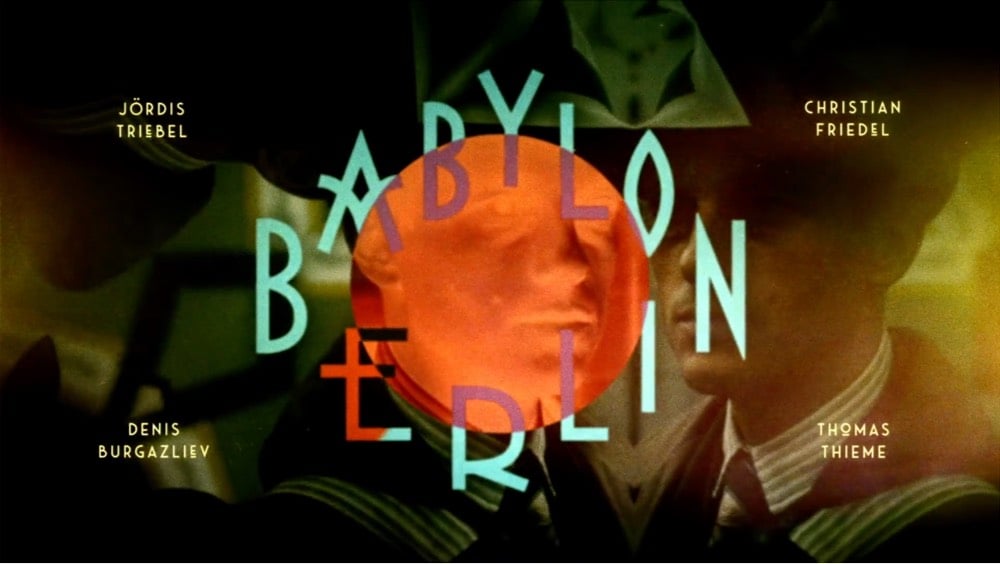
The list also includes the titles for Spider-Man: Into the Spider-Verse, which might be the most visually inventive box office #1 in recent memory.
Interestingly, two of the sequences on the list aren’t from film or TV but from conferences: Semi Permanent 2018 and Made In The Middle 2018. Only three out of the ten were from movies.
I’ve been keeping track of every media thing I “consume”, so here are quick reviews of some things I’ve read, seen, heard, and experienced in the last month or so. Look for 2018 media recap sometime later this week.
Small Fry by Lisa Brennan-Jobs. Under-read and under-remarked upon by the tech press…but if you read this just for the Steve Jobs bits, you’re really missing out. (A)
The Good Place. Not quite as charmed by this as everyone else, but I’d definitely listen to a weekly hour-long podcast that goes deeper into the philosophy featured in each episode. (B+)
Outlaw King. Not so bad if you’re in the mood for medieval battles. (B)
Fantastic Beasts: The Crimes of Grindelwald. A letdown after the first film, which has gotten better every time I’ve rewatched it. Way too much exposition and not enough fun. By the end, I was bored. My kids said they liked it but without much conviction in their voices. (C+)
Bodyguard. Some shows, even my all-time favorites, took a few episodes to get into. Bodyguard hooked me after 5 minutes. (A-)
Function. A podcast on “how technology is shaping culture and communications” hosted by my pal Anil Dash. (I listened to the Should Twitter Have an Edit Button? episode.) The podcast reproduces to a remarkable degree the experience & content of dinner conversation with Anil. (B+)
Andy Warhol - From A to B and Back Again. I was personally underwhelmed by this, possibly because I’ve seen so much Warhol and read so much about him and his work? (B)

Hilma af Klint: Paintings for the Future. Absolutely thrilling, like discovering a secret room in your house. Many thanks to Chrysanthe for the nudge. (A)
The Odyssey translated by Emily Wilson. Finally finished reading this with the kids. Everyone loved it. (A)
Yotam Ottolenghi’s green gazpacho. It was hardly the season for it, but I was jonesing for the green gazpacho dish that my favorite restaurant used to serve. I took a guess that they used Ottolenghi’s recipe…naaaaaailed it. Delicious with some shrimp and croutons. Will use less garlic next time though. (A-)
Deceptive Practice: The Mysteries and Mentors of Ricky Jay. There’s probably a better movie to be made of Jay’s life, but this was sufficient for my purposes. (B)
Fawlty Towers. Passing on the family tradition of watching old British comedies to my children. Some of the best television ever made, yessiree. (A)
Ralph Breaks the Internet. Perhaps this is small-minded, but I really wanted to see a little kottke.org shop in the background when Ralph and Vanellope are bopping around Internet City, like a tiny boutique next to BuzzzTube or something. (B+)
The Favourite. Delightful and fun. Loved it. (A-)
The Ballad of Buster Scruggs. The Coen brothers, perfectly tuned to the streaming TV format. The stories reminded me a bit of Roald Dahl’s The Tales of the Unexpected. (A-)
Can You Ever Forgive Me? Great acting, particularly from Melissa McCarthy. She reminded me of a young Kathy Bates in this. (B+)
The Day After Tomorrow. I’ve seen this movie probably 10 times and it seems more and more plausible with each viewing. (A)
Circe by Madeline Miller. I am enjoying this trend of old stories told from new vantage points. (A-)
The Marvelous Mrs. Maisel. I was charmed by the first three episodes but the rest wasn’t as entertaining. People kept changing their entire personalities from episode to episode and we’re supposed to just go along with that? I don’t agree with all of it, but I loved reading Emily Nussbaum’s pan of the show for the New Yorker. (B-)
Spider-Man: Into the Spider-Verse. Visually dazzling and by far my favorite Spider-Man movie, but I preferred Black Panther and Avengers: Infinity War. This movie is much more “comics-y” than the live-action Marvel movies and despite much effort, I am just not a comics guy. (B)

Dr. Mario. Used to play this a lot when I was a kid. Still fun. Would love a networked version to play against friends. (B+)
My Brilliant Friend. About halfway through and enjoying it, but it’s just not the book (which I loved). (B+)
My Brilliant Friend soundtrack. Max Richter, enough said. (A-)
Summer Games. This track off of Drake’s Scorpion has grabbed my attention lately. I love the Chariots of Fire + NES Track and Field vibe of the music. (B+)
On Being with Anand Giridharadas. An interview about his book, Winners Take All. (B+)
The Ezra Klein Show with Anand Giridharadas. This episode was referenced in the On Being interview above and is slightly better because Klein pushes back on Giridharadas’s argument and makes him work a little harder. (B+)
Why Is This Happening? with Ta-Nehisi Coates. They talk politics & racism but also how to focus on what’s important to you, even if it means quitting Twitter. (B+)
Past installments of my media diet are available here.
Perhaps the most fundamental way to think about the Universe is in terms of energy. Even when you get away from physics and chemistry (where energy is obviously central) and into a topic like human history or economics, following how and where energy flows can be enlightening. In 1964, Soviet astronomer Nikolai Kardashev proposed thinking about the progress of human civilization in terms of how much energy we were capable of harnessing. On the Kardashev scale, a Type I civilization would be capable of using all of the energy available on their planet, a Type II civilization could use all the energy from their local star, and a Type III civilization could harness all the energy in a galaxy.
According to an equation suggested by Carl Sagan, humans are currently sitting at ~73% of a Type I civilization. But once we reach that milestone in perhaps a few hundred years (assuming we don’t blow ourselves up in the process), the construction of a Dyson sphere or, more likely, a Dyson swarm around the Sun is probably the key to eventually hitting Type II. In the video above, Kurzgesagt explores what would go into building some type of Dyson structure capable of harvesting most of the Sun’s energy. For starters, we’d probably have to completely dismantle the planet Mercury in order to have enough raw materials to build the swarm.
While it’s billed as “How Pixar Helped Win 27 of the Last 30 Oscars for Visual Effects”, this video from Wired works pretty well as a short history of computer-generated visual effects, from the Genesis visualization in Star Trek II: The Wrath of Khan to Jurassic Park’s dinosaurs to Pixar’s own Coco.
The tradition of fans recutting trailers and clips of movies and TV shows into different genres — like Toy Story as a horror film and The Shining as a romantic comedy — has been around almost as long as YouTube itself. But I think this trailer by 20th Century Fox is the first official effort I’ve seen. Die Hard has become an unlikely holiday favorite so I guess they figured, hey, let’s put out a trailer that explicitly recasts the it as a Christmas film. Merry Christmas Hans!
This is pretty nerdy and entertaining. After someone stole a package off of his porch, Mark Rober spent months designing and building a fake package to get revenge on the next person stupid enough to try it. He outfitted the box with GPS, motion sensors, four cameras that auto-uploaded to the cloud, a glitter bomb that detonated when the package was opened, and a canister of fart spray that sprayed periodically until the thief threw the package out. Genius.
Update: At least some of the package robberies in this video were staged.
But shortly after the ode to all the packages we’ve lost before swept across the media landscape, viewers on the internet did what they do best: pick it apart.
They noticed some strange coincidences, like how one of the porch bandits seemed to live directly next door to Rober’s friend, Cici, and that the car used in one of the heists, a black Ford Focus with a rosary hanging on the mirror, was parked right in front of her house in Pittsburg, California.
Way to ruin Christmas, you jackholes.
The Lumière brothers were among the first filmmakers in history and from 1896 to 1900, they shot several scenes around Paris. Guy Jones remastered the Lumière’s Paris footage, stabilized it, slowed it down to a natural rate, and added some Foley sound effects. As Paris today looks very similar to how it did then, it’s easy to pick out many of the locations seen in this short compilation: the Tuileries, the Notre-Dame, Place de la Concorde, and of course the Eiffel Tower, which was completed only 8 years before filming. Here’s the full location listing:
0:08 - Notre-Dame Cathedral (1896)
0:58 - Alma Bridge (1900)
1:37 - Avenue des Champs-Élysées (1899)
2:33 - Place de la Concorde (1897)
3:24 - Passing of a fire brigade (1897)
3:58 - Tuileries Garden (1896)
4:48 - Moving walkway at the Paris Exposition (1900)
5:24 - The Eiffel Tower from the Rives de la Seine à Paris (1897)
See also A Bunch of Early Color Photos of Paris, Peter Jackson’s documentary film featuring remastered film footage from World War I, and lots more film that Jones has remastered and uploaded. (via open culture)
Update: Just as he did with the NYC footage from 1911, Denis Shiryaev has used machine learning algorithms to restore the Lumières film of Paris — it’s been upsampled to 4K & 60 fps, sharpened, and colorized.
Again, there are some obvious artifacts and the colorization is distracting, but the result is impressive for push-button. (via open culture)
This afternoon, my friend Casey Newton posted a thread of YouTube videos so good that I had to login on a Sunday and blog about it. There’s a simple theme connecting these videos that I’ll let Casey explain:
This might be my favorite one:
The kids are all right. Better than, in fact.
On Wednesday, 15-year-old Swedish climate activist Greta Thunberg addressed the UN plenary meeting at the COP24 climate talks in Poland. In it, she blasted world and business leaders for their political inaction on climate change, calling them immature (italics mine).
But to do that, we have to speak clearly, no matter how uncomfortable that may be. You only speak of green eternal economic growth because you are too scared of being unpopular. You only talk about moving forward with the same bad ideas that got us into this mess, even when the only sensible thing to do is pull the emergency brake. You are not mature enough to tell it like it is. Even that burden you leave to us children.
But I don’t care about being popular. I care about climate justice and the living planet. Our civilization is being sacrificed for the opportunity of a very small number of people to continue making enormous amounts of money. Our biosphere is being sacrificed so that rich people in countries like mine can live in luxury. It is the sufferings of the many which pay for the luxuries of the few.
The year 2078, I will celebrate my 75th birthday. If I have children, maybe they will spend that day with me. Maybe they will ask me about you. Maybe they will ask why you didn’t do anything while there still was time to act. You say you love your children above all else, and yet you are stealing their future in front of their very eyes.
“You are not mature enough to tell it like it is. Even that burden you leave to us children.” Damn. Thunberg has been leading school strikes for climate justice in Sweden and is calling for worldwide strikes in schools today. She recently gave a talk at TEDxStockholm about her climate activism.
In October, Masha Gessen profiled Thunberg for the New Yorker.
Thunberg developed her special interest in climate change when she was nine years old and in the third grade. “They were always talking about how we should turn off lights, save water, not throw out food,” she told me. “I asked why and they explained about climate change. And I thought this was very strange. If humans could really change the climate, everyone would be talking about it and people wouldn’t be talking about anything else. But this wasn’t happening.” Turnberg has an uncanny ability to concentrate, which she also attributes to her autism. “I can do the same thing for hours,” she said. Or, as it turns out, for years. She began researching climate change and has stayed on the topic for six years. She has stopped eating meat and buying anything that is not absolutely necessary. In 2015, she stopped flying on airplanes, and a year later, her mother followed suit, giving up an international performing career. The family has installed solar batteries and has started growing their own vegetables on an allotment outside the city. To meet me in central Stockholm, Thunberg and her father rode their bikes for about half an hour; the family has an electric car that they use only when necessary.
Update: Thunberg does not mince words. At a lunchtime panel at Davos (featuring Bono and Jane Goodall), she told the room:
Some people say that the climate crisis is something that we all have created. But that is not true, because if everyone is guilty then no one is to blame. And someone is to blame. Some people, some companies, some decision makers in particular have known exactly what priceless values they have been sacrificing to continue making unimaginable amounts of money. And I think many of you here today belong to that group of people.
Sleepy Skunk took audio and footage from dozens of trailers of movies that came out in 2018 and mashed them together into one mega movie trailer. And it’s actually coherent! Or at least as coherent as trailers for blockbuster movies typically are. I dunno, I’d watch this movie.
Before I started making my own web pages, I spent a not-insignificant amount of my time on the Internet trawling the alt.fan.tarantino newsgroup for bits of knowledge about Quentin Tarantino, Pulp Fiction, and Reservoir Dogs. A big topic of discussion back then was speculation about the contents of the briefcase that Jules and Vincent were tasked to retrieve for Marsellus Wallace. Was it gold? Diamonds? Wallace’s soul? No one knew and Tarantino wasn’t telling. It was the most compelling MacGuffin since Hitchcock himself.
Now, after nearly 25 years, we finally learn what was in the briefcase:

If you’d like to make one of your own, just follow these instructions.
If you want a Bad Motherfucker wallet just like Jules’, here you go.
In 2014, I shared a short film by Shaun Bloodworth called The Putter about Cliff Denton, a master scissors craftsman for a company called Ernest Wright & Sons.
A person who makes scissors by hand is called a putter, short for putter togetherer. The Putter is a four-minute silent film by Shaun Bloodworth that shows putter Cliff Denton making scissors.
The film went viral and the once-struggling company was inundated with orders and launched a very successful Kickstarter campaign for a special pair of kitchen scissors. But as I wrote in a sad update back in June, the company was struggling and on the verge of collapse:
Under new leadership, the company vowed to carry on and fulfill all of the Kickstarter orders, but a message to Kickstarter backers yesterday revealed the company was deep in debt and would be “going into receivership”. It also revealed that Wright had taken his own life.
In late October, a story on the company’s web site called Keeping the Heritage Alive revealed that a pair of Dutch entrepreneurs, Paul Jacobs and Jan Bart, have purchased the company with an eye towards investing in the workshop and its workers while keeping the mission the same.
When we acquired the assets of the company, there had been decades of decline and recent tragedy. The machinery was in neglect and although the workers had done all they could to keep the ship afloat, the heritage was slipping away.
To make sure that Ernest Wright continues to manufacture quality, handmade scissors, we’ve invested heavily in the workshop. By researching how to improve production, new machinery has been introduced that salutes the heritage and skill of our Putters. We’re working hard to keep the craft alive. Cliff Denton and Eric Stones, each with over 60 years worth of experience, are currently passing on their knowledge to new apprentices.
This seems like a really good outcome for the company, its employees, and the city of Sheffield. Now go buy some scissors.
Bao, a short film by Domee Shi, was shown in front of The Incredibles 2 at theaters this past summer.
In “Bao,” an aging Chinese mom suffering from empty nest syndrome gets another chance at motherhood when one of her dumplings springs to life as a lively, giggly dumpling boy. Mom excitedly welcomes this new bundle of joy into her life, but Dumpling starts growing up fast, and Mom must come to the bittersweet revelation that nothing stays cute and small forever. This short film from Pixar Animation Studios and director Domee Shi explores the ups and downs of the parent-child relationship through the colorful, rich, and tasty lens of the Chinese immigrant community in Canada.
Pixar recently posted the entire short online on Twitter so you can watch it if you missed it in theaters.
Shi, who is developing a full-length feature for Pixar, did an interview with the LA Times about her inspiration for Bao and its portrayal of the Chinese immigrant experience.
We also brought my mom in twice to do dumpling-making classes for the whole crew. That was really fun research because we actually filmed her hands kneading the dough and making the wrappers, and that was used as reference for the opening shots of the short.
Hermit crabs use the scavenged shells of other animals as their homes. As the crabs grow, they periodically need to upgrade their housing to bigger shells. When a new shell appears on the beach, the cramped crabs will form a orderly queue nearby and then change shells all at once, with each crab moving into the next biggest shell just abandoned by its former occupant. This is possibly the most British thing I’ve ever seen an animal do…and the David Attenborough narration is the icing on top.
For more than 20 years, Christian Moullec has been flying with migratory birds in his ultralight aircraft. He raises birds of vulnerable species on his farm and then when it’s time for them to migrate, he shows them how, guiding them along safe migration paths. To support his conservation efforts, Moullec takes paying passengers up with him to fly among the birds. What a magical experience!
My passengers come from all over the world and are all kinds of people, especially Europeans. The flight inspires in me a huge respect for nature and I can communicate this respect to my passengers. There are also people with disabilities and those who want to experience a great time in the sky with the birds before leaving this world. It is an overwhelming spiritual experience. The most beautiful thing is to fly in the heavens with the angels that are the birds.
When watching the video, it’s difficult to look away from the birds, moving with a powerful grace through the air, but don’t miss the absolute joy and astonishment on the faces of Moullec’s passengers. This is going right on my bucket list.
See also The Kid Should See This on Moullec’s efforts, the 2011 documentary Earthflight that features Moullec, and Winged Migration, a 2001 nature film that features lots of stunning flying-with-birds footage. (via @tcarmody)
Swiss nature photographer Stefan Forster has been visiting Greenland for eight years, documenting the ice, glaciers, icebergs, and wildlife of this “magical country”. For his latest video, Greenland - The Land of Unending Ice, he visited several parts of the country to witness a glacier calving, icebergs from above, the aurora borealis, and a changing landscape.
Today quiet and untouched places are becoming more and more rare. On my first visit to Greenland, I was fascinated by the incredible power of nature that can be felt everywhere. But during the last years things have changed. The amount of icebergs is increasing savagely. Glaciers I’m visiting every year are retreating not meters but kilometers a year and the unending amount of ice seems to be endless. There is nothing more beautiful than an iceberg — everyone is unique and the light reflecting from its surface is magical. It’s sad how close beauty and decay can be seen in an iceberg.
A new study published in Nature says that Greenland’s ice sheet is melting at its fastest rate in 350 years.
“From a historical perspective, today’s melt rates are off the charts,” Sarah Das, a glaciologist at Woods Hole Oceanographic Institution and co-author of the new study, said in a statement. “We found a 50 percent increase in total ice sheet meltwater runoff versus the start of the industrial era, and a 30 percent increase since the 20th century alone.”
Forster also ran into an interesting technical problem while using his drones to capture video:
But the hardest thing of flying in Greenland is the fact, that every 2-3 minutes the difference between the magnetic north and the geographic north (which are not the same place — especially so far north) causing a fatal p-gps flight error and the drone is flying away (also the camera’s horizon).
Newer posts
Older posts




Socials & More