In her impassioned speech on the first night of the Democratic National Convention, Michelle Obama made her case for Americans to come together and vote Donald Trump out of office. In her remarks, she zeroed in on his incompetence, his total lack of empathy for anyone but himself, and his desire for division.
So let me be as honest and clear as I possibly can. Donald Trump is the wrong president for our country. He has had more than enough time to prove that he can do the job, but he is clearly in over his head. He cannot meet this moment. He simply cannot be who we need him to be for us. It is what it is.
Now, I understand that my message won’t be heard by some people. We live in a nation that is deeply divided, and I am a black woman speaking at the Democratic convention. But enough of you know me by now. You know that I tell you exactly what I’m feeling. You know I hate politics. But you also know that I care about this nation. You know how much I care about all of our children.
So if you take one thing from my words tonight, it is this: if you think things cannot possibly get worse, trust me, they can, and they will if we don’t make a change in this election. If we have any hope of ending this chaos, we have got to vote for Joe Biden like our lives depend on it.
And voting this year means putting in some extra work so that our votes count:
But this is not the time to withhold our votes in protest or play games with candidates who have no chance of winning. We have got to vote like we did in 2008 and 2012. We’ve got to show up with the same level of passion and hope for Joe Biden. We’ve got to vote early, in person if we can. We’ve got to request our mail-in ballots right now, tonight, and send them back immediately and follow up to make sure they’re received. And then, make sure our friends and families do the same.
We have got to grab our comfortable shoes, put on our masks, pack a brown-bag dinner and maybe breakfast too, because we’ve got to be willing to stand in line all night if we have to.
MoMA has published a two-minute film from 1902 of a German suspended railway called the Wuppertal Schwebebahn. It presents an almost drone-like view of a German city at the beginning of the 20th century, in contrast to the ground-based and stationary films that were far more common in that era. The film is also extremely crisp and clear because it was shot in 68mm:
The Flying Train depicts a ride on a suspended railway. The footage is almost as impressive as the feat of engineering it captures. For many years our curators believed our Mutoscope rolls were slightly shrunken 70mm film, but they were actually shot on Biograph’s proprietary 68mm stock. Formats like Biograph’s 68mm and Fox’s 70mm Grandeur are of particular interest to researchers visiting the Film Study Center because the large image area affords stunning visual clarity and quality, especially compared to the more standard 35mm or 16mm stocks.
My favorite bit is the kid on the swing at about the 25 second mark — a casual unstaged moment that allows the viewer to imagine themselves in that place and time, almost 120 years ago.
And as the latest instance in a trend that I am increasingly irritated by, this film was immediately run through an AI program to upscale it to 4K, stabilize it, and colorize it. The result is….. I don’t know, cheesy? It just looks worse than the original, which is so vivid to begin with. And the added sound is distracting. But the worst thing is that this “restored” video has almost twice the views as the original. *shakes fist at cloud*
Ice cream maker Good Humor has teamed up with legendary rapper/musician RZA to produce a new ice cream truck jingle to replace the ubiquitous “Turkey in the Straw”, a tune that gained popularity as a minstrel song with racist lyrics.
“Turkey in the Straw” is one of the most iconic ice cream truck jingles today. However, many people don’t realize that this familiar tune has racist roots.
Turkey in the Straw’s melody originated from British and Irish folk songs, which had no racial connotations. But the song itself was first performed (and gained popularity) in American minstrel shows in the 1800s. Some songs using its same melody contained highly offensive, racist lyrics.
Throughout the 19th century, minstrel songs like Turkey in the Straw were commonly played in ice cream parlors, and later, adapted as ice cream truck jingles.
While these associations of “Turkey in the Straw” are not the only part of its legacy, it is undeniable that this melody conjures memories of its racist iterations.
To create an original jingle, The RZA drew inspiration from his own childhood memories of chasing after the ice cream truck in his neighborhood. The track borrows from traditional ice cream truck music and adds jazz and hip-hop elements. Expect trap drumbeats, some old-school bells that reference Good Humor’s original ice cream trucks, and a distinct RZA hook that you will not be able to get out of your head.
Here’s the full jingle:
Song of the Summer 2020? I could totally see Drake or whoever sampling this for an end-of-the-summer ice cream anthem.
The British Museum contains hundreds of contested items, the spoils of the British Empire’s reach (and smash n’ grab) across the globe. Some of the museum’s most popular and prized items are included: the Parthenon Marbles, the Rosetta Stone, and the Benin Bronzes. The countries from which these artifacts were taken are increasingly asking for their return.
Some of the world’s greatest cultural and historical treasures are housed in London’s British Museum, and a significant number of them were taken during Britain’s centuries-long imperial rule. In recent years, many of the countries missing their cultural heritage have been asking for some of these items back.
Benin City in Nigeria is one of those places. They’ve been calling for the return of the Benin Bronzes, hundreds of artifacts looted in 1897 when British soldiers embarked a punitive expedition to Benin. Many are now housed in the British Museum.
And it’s just the beginning. As the world reckons with the damage inflicted during Europe’s colonial global takeover, the calls for these items to be returned are getting louder and louder.
Isolation does funny things to people. Just ask designer Lydia Cambron, who recognized a certain kinship between the themes of her lockdown in Brooklyn this spring and Stanley Kubrick’s 2001: A Space Odyssey. Over the course of two months, Cambron meticulously recreated 2001’s ending scene in her apartment, not only shot-by-shot but nearly look-by-look, and produced a tiny masterpiece of her own.
The adapted version delineates the passing of time through wardrobe rather than age, identifying each phase of the character’s journey with a product of self care or PPE. Tools of private entertainment or self betterment are also used as props, questioning our confidence in products and productivity as anchors during times of uncertainty. Multitasking while #wfh, conjuring guilt or longing with unused exercise equipment, your entire being reduced to a measure of time — these scenes all illustrate the absurd comedy of trying to maintain control during this unprecedented and unpredictable time.
I love things that sound like other things and this video of a kid crashing into some trash bins on his bike sounds a lot like the drums in Phil Collins’ “In the Air Tonight”. (If I may play spoiler for just a second though, capturing the sound of those bins going over so clearly from that far away seems a little suspect. But let’s assume it’s real and have our fun.) See also This Stumbling Deer’s Hooves Sound Like Phil Collins’ Drum Fill on “In the Air Tonight”. (thx to everyone who sent this in)
Ferguson zeros in on the divide between two different ways people make sense of a complex, chaotic, and uncertain world: evidence seeking and magical thinking. All of us employ both of these techniques to help ease our anxiety about the world, but those who tend towards magical thinking arrive at explanations that are based primarily on instinct, emotion, feelings, and gut reaction while evidence seekers mostly rely on scientific and empirical reasoning.
He also identifies six main aspects of magical thinking:
1. Obsession with symbols and codes (e.g. pizza as a “deep state” code for child trafficking)
2. Dot connecting (e.g. linking 5G with Covid-19)
3. Behind every event is a plan concocted by a person (e.g. Soros and the “deep state” conspiracy)
4. Purity (e.g. the Satanic panic and heavy metal music)
5. Apocalypse is nigh (e.g. the “deep state” again)
6. Preoccupation with good and evil (e.g. liberals are not only wrong but evil)
For me, the key quote about magical thinking is this one for late in the video: “These are not systems of knowledge, and they cannot build solutions. They can only criticize and second-guess.”
With the help of Harvard historian Khalil Gibran Muhammad, this video from BuzzFeed documents investigations into police brutality and racism from the past century and how reforms based on those investigations have not brought about meaningful change. These reports — exploring the causes of unrest in Chicago in 1919, Harlem in 1935 & 1943, LA in 1965, Ferguson in 2014 — demonstrate again and again the discriminent violence committed against Black people by the police, and yet that violence and racism continues until the next investigation is conducted with the same conclusion.
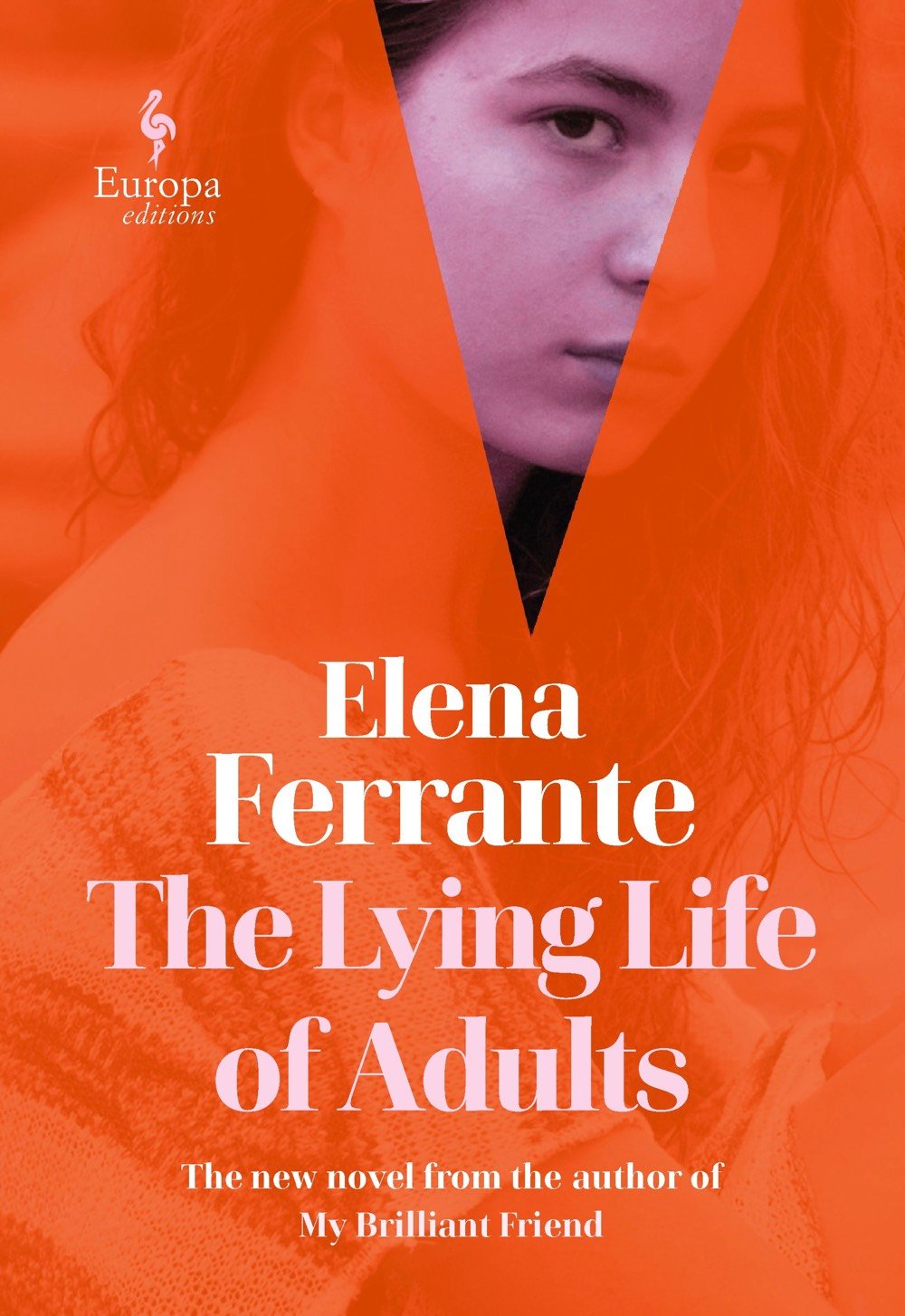
Giovanna’s pretty face is changing, turning ugly, at least so her father thinks. Giovanna, he says, looks more like her Aunt Vittoria every day. But can it be true? Is she really changing? Is she turning into her Aunt Vittoria, a woman she hardly knows but whom her mother and father clearly despise? Surely there is a mirror somewhere in which she can see herself as she truly is.
Giovanna is searching for her reflection in two kindred cities that fear and detest one another: Naples of the heights, which assumes a mask of refinement, and Naples of the depths, a place of excess and vulgarity. She moves from one to the other in search of the truth, but neither city seems to offer answers or escape.
I’m Thinking of Ending Things. Charlie Kaufman (Being John Malkovich, Eternal Sunshine of the Spotless Mind, Adaptation), director. Łukasz Żal (Ida, Cold War), cinematographer. Jesse Plemons (Friday Night Lights), Jessie Buckley (Chernobyl), Toni Collette (too many amazing things), David Thewlis (Lupin from Harry Potter). Adapted from I’m Thinking of Ending Things by Iain Reid. Netflix. September 4. Trailer above. Excited! Bye.
Popped popcorn kernels are like snowflakes: no two are alike. If you watch popcorn popping at the ludicrously slow speed of 100,000 fps, you can see these individualized forms flowering into existence. Pro tip: turn off the upbeat music on the video and supply a mellower soundtrack of your own — slow motion video requires meditative music.
First conceived and implemented in 2011, Universal Everything’s walking figure has been remastered and rebuilt from the ground up with the latest digital effects. Transfiguration (2020) treats us to the spectacle of caramel, fire, rocks, smoke, and shrubbery striding around like a person.
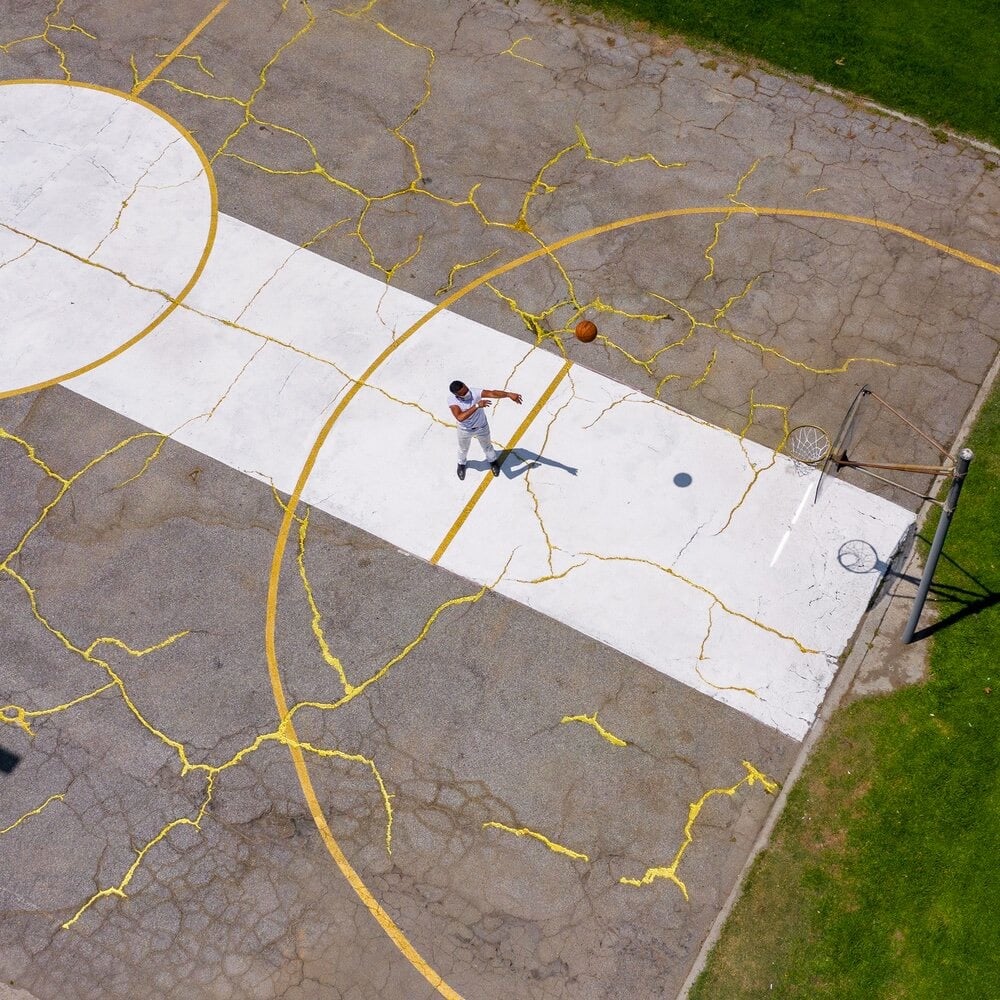
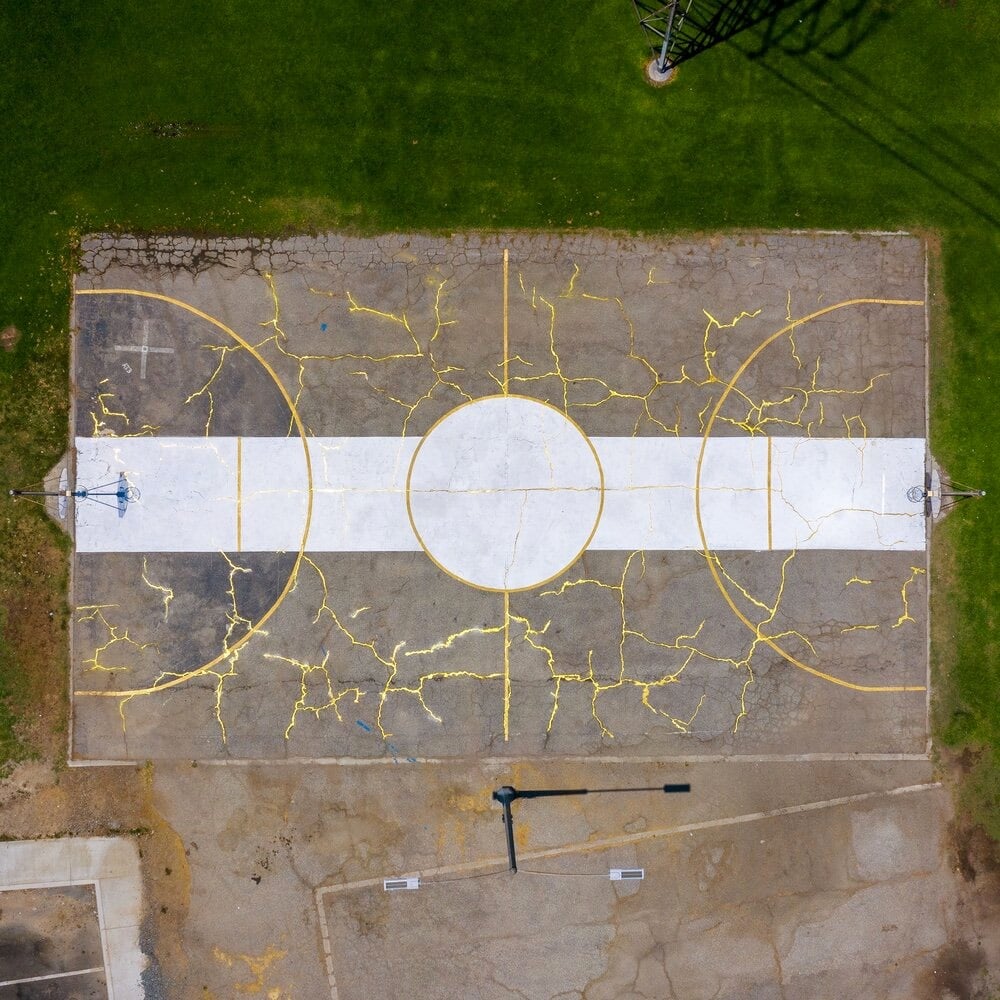
As part of his Literally Balling project, artist Victor Solomon fixed up a rundown basketball court, repairing the blacktop using the Japanese art of kintsugi. Traditionally, the kintsugi method involves repairing pottery with glue mixed with gold powder, which results in visible cracks, a reminder of the pottery’s past and what it’s been through. Says Solomon of the project:
With the heartbreaking beginning to 2020 and this weekend’s return of basketball — I’ve been thinking about the parallels between sport as a uniting platform to inspire healing and my ongoing experiments with the technique of Kintsugi that embellishes an objects repair with gold to celebrate it’s healing as formative part of the journey.
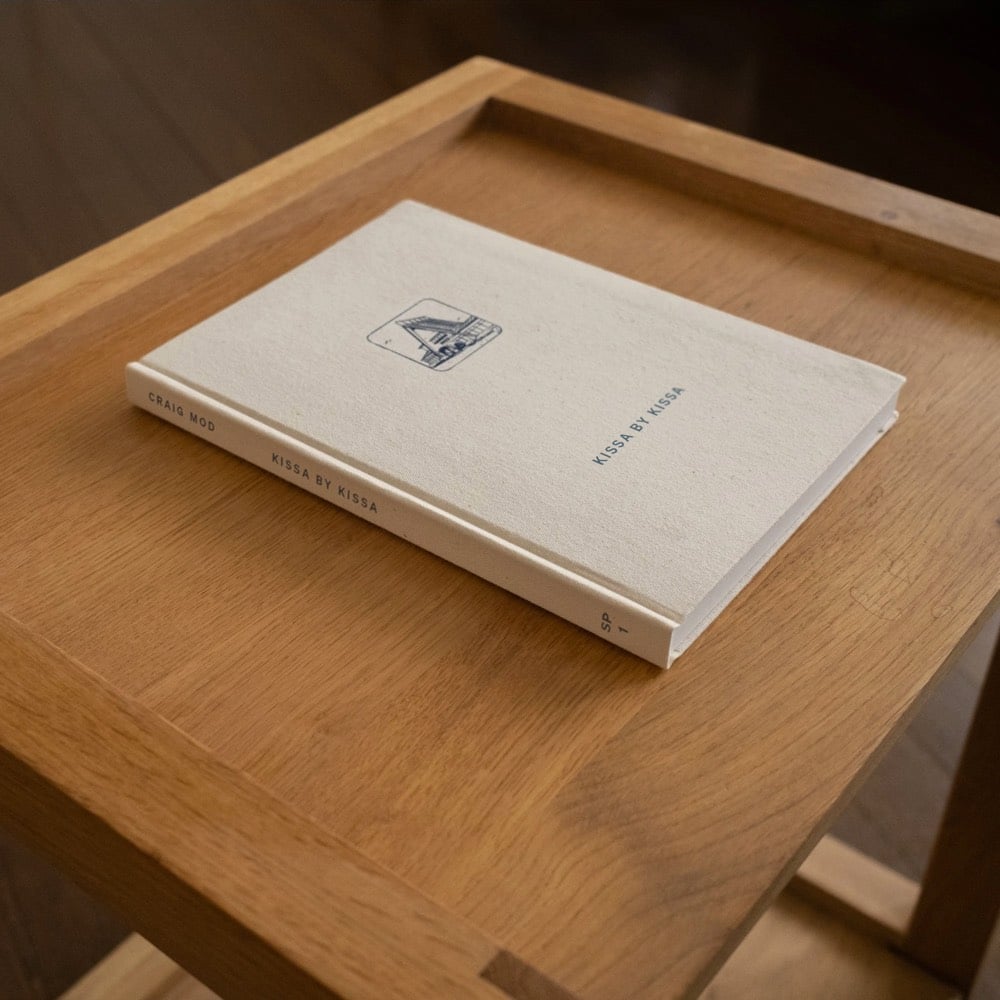
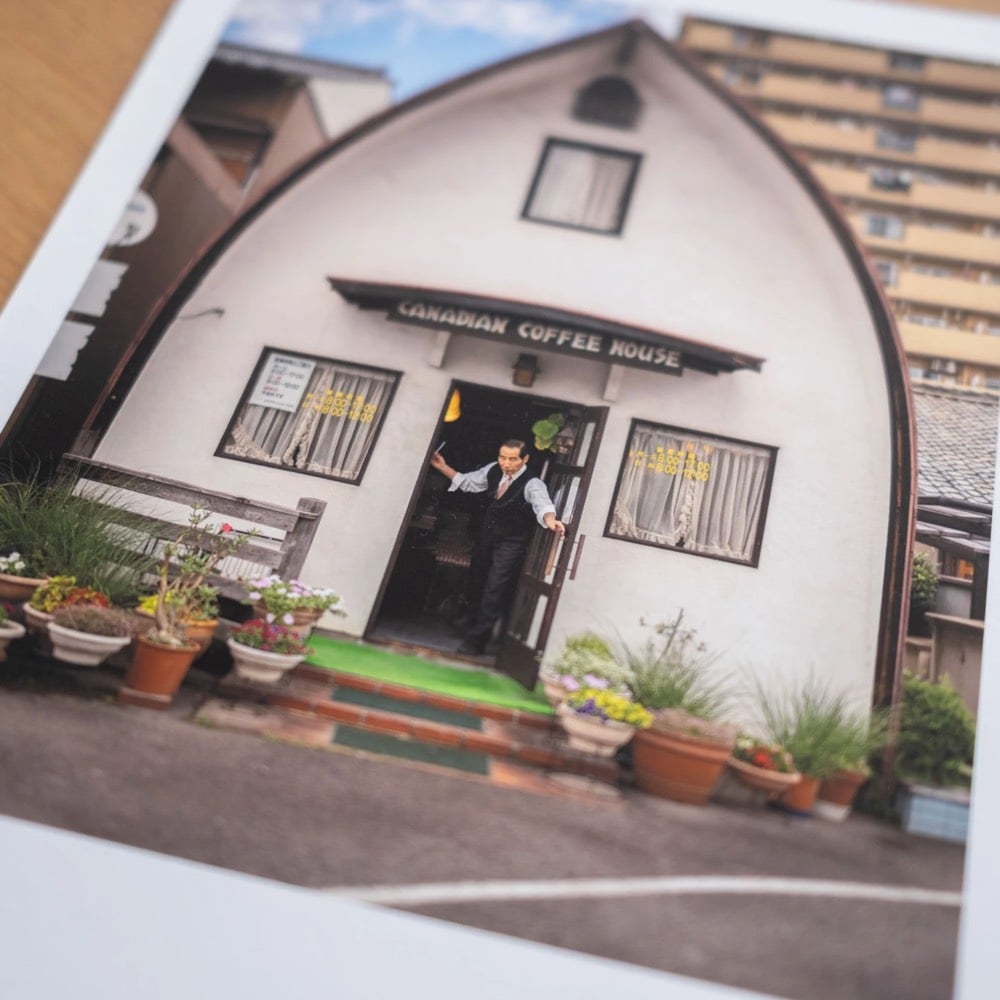
Last year, Craig Mod walked 620 miles from Tokyo to Kyoto along the Nakasendō historic highway and along the way he stopped at kissaten (or kissa), old-school Japanese cafes known for their pizza toast. Mod wrote about his quest late last year for Eater and has now turned a fuller account of the journey into a gorgeous book called Kissa By Kissa.
Those kissaten — or kissa — served up toast. I ate that toast. So. Much. Toast. Much of it pizza toast. If you buy this book, you’ll learn more than you ever dared to know about this variety of toast available all across Japan. It’s a classic post-war food staple. Kissa by kissa, and slice by thick slice of beautiful, white toast, I took a heckuva affecting and long walk. This book is my sharing with you, of that walk, the people I met along the way, and the food I ate.
Kickstarter is an excellent way to run a crowdfunding campaign. But if you already have a community built up, and have communication channels in place (via a newsletter, for example), and already run an online shop, then Kickstarter can be unnecessarily cumbersome. Kickstarter’s 10% fee is also quite hefty. By leaning on Shopify’s flexible Liquid templating system and reasonable CC processing fees, an independent publisher running a campaign can save some ~$7,000 for every $100,000 of sales by using Craigstarter instead of Kickstarter. That’s materially meaningful, especially in the world of books.
At John Lewis’s funeral yesterday, Barack Obama delivered a eulogy for his friend and mentor, praising him for his achievements in the struggle for civil rights. He also took the opportunity to suggest what politicians might do to honor Lewis and to continue his struggle, beyond just words. From the text of his speech:
If politicians want to honor John, and I’m so grateful for the legacy of work of all the Congressional leaders who are here, but there’s a better way than a statement calling him a hero. You want to honor John? Let’s honor him by revitalizing the law that he was willing to die for. And by the way, naming it the John Lewis Voting Rights Act, that is a fine tribute. But John wouldn’t want us to stop there, trying to get back to where we already were. Once we pass the John Lewis Voting Rights Act, we should keep marching to make it even better.
By making sure every American is automatically registered to vote, including former inmates who’ve earned their second chance.
By adding polling places, and expanding early voting, and making Election Day a national holiday, so if you are someone who is working in a factory, or you are a single mom who has got to go to her job and doesn’t get time off, you can still cast your ballot.
By guaranteeing that every American citizen has equal representation in our government, including the American citizens who live in Washington, D.C. and in Puerto Rico. They are Americans.
By ending some of the partisan gerrymandering — so that all voters have the power to choose their politicians, not the other way around.
And if all this takes eliminating the filibuster — another Jim Crow relic — in order to secure the God-given rights of every American, then that’s what we should do.
Note: If you are a member and tried to log in, it didn't work, and now you're stuck in a neverending login loop of death, try disabling any ad blockers or extensions. Or try logging out and then back in. Still having trouble? Email me!





Socials & More