kottke.org posts about science
From 2019 to 2021, a small Spanish football team was renamed Flat Earth FC, both as a publicity stunt and because club president Javi Poves couldn’t understand how water “curves”.
“Football is the most popular sport and has the most impact worldwide, so creating a club dedicated to the flat earth movement is the best way to have a constant presence in the media,” said Poves earlier this year. “Flat Earth FC is the first football club whose followers are united by the most important thing, which is an idea.”
The club’s crest is now a circular image of the earth, pressed flat on to all kits, and fans are encouraged to spark regular conversations in their pursuit of answers from the powers that be. The team mascot? An astronaut. It’s a radical move, but the club is bringing in supporters from afar. “It’s really amazing to be part of this amazing movement,” says Flat Earth player Mario Cardete. “I think it’s more than a club.”
During the pandemic, the club also became anti-mask and anti-vax — because conspiracy theories come in price-saving 3-packs, I guess? Poves resigned in late 2020 and the club was renamed and then purchased by a larger club to become their reserve team. The Earth remains round.
So let’s say, for the sake of argument and against all scientific evidence to the contrary, the Earth was flat instead of being an oblate spheroid. What would life on a flat Earth be like? Well for one thing, gravity would present some challenges. From a 2018 piece by Doug Main at the Columbia Climate School:
People who believe in a flat Earth assume that gravity would pull straight down, but there’s no evidence to suggest it would work that way. What we know about gravity suggests it would pull toward the center of the disk. That means it would only pull straight down at one point on the center of the disk. As you got increasingly far from the center, gravity would tug more and more horizontally. This would have some strange impacts, like sucking all the water toward the center of the world, and making trees and plants grow diagonally, since they develop in the opposite direction of gravity’s pull.
And even more than that, gravity would tend to pull a flat disc shape back into a spheroid, so absent an intense spinning force (for which there is zero evidence) or some other completely unknown effect, a flat Earth couldn’t even exist:
For Earth to take the shape of a flat disk in the first place, gravity — as we know it — must be having no effect. If it did, it would soon pull the planet back into a spheroid.
A flat Earth would also likely not have a magnetic field (or at least one that is scientifically possible), meaning no atmosphere:
Deep below ground, the solid core of the Earth generates the planet’s magnetic field. But in a flat planet, that would have to be replaced by something else. Perhaps a flat sheet of liquid metal. That, however, wouldn’t rotate in a way that creates a magnetic field. Without a magnetic field, charged particles from the sun would fry the planet. They could strip away the atmosphere, as they did after Mars lost its magnetic field, and the air and oceans would escape into space.
Oh and no tectonic plates, volcanos, mountains, etc. Or GPS. Or weather. Or satellites. Or different night skies in, say, South Africa and Denmark. Or the Sun behaving the way it does in respect to the Earth. Or air travel. Or plant and animal life as it exists presently. To suppose a flat Earth also supposes that physics doesn’t explain our observable universe the way in which it reliably and comprehensively does. The simplest, best evidence for a round Earth is that we’re here living on it in the manner in which we are living on it.
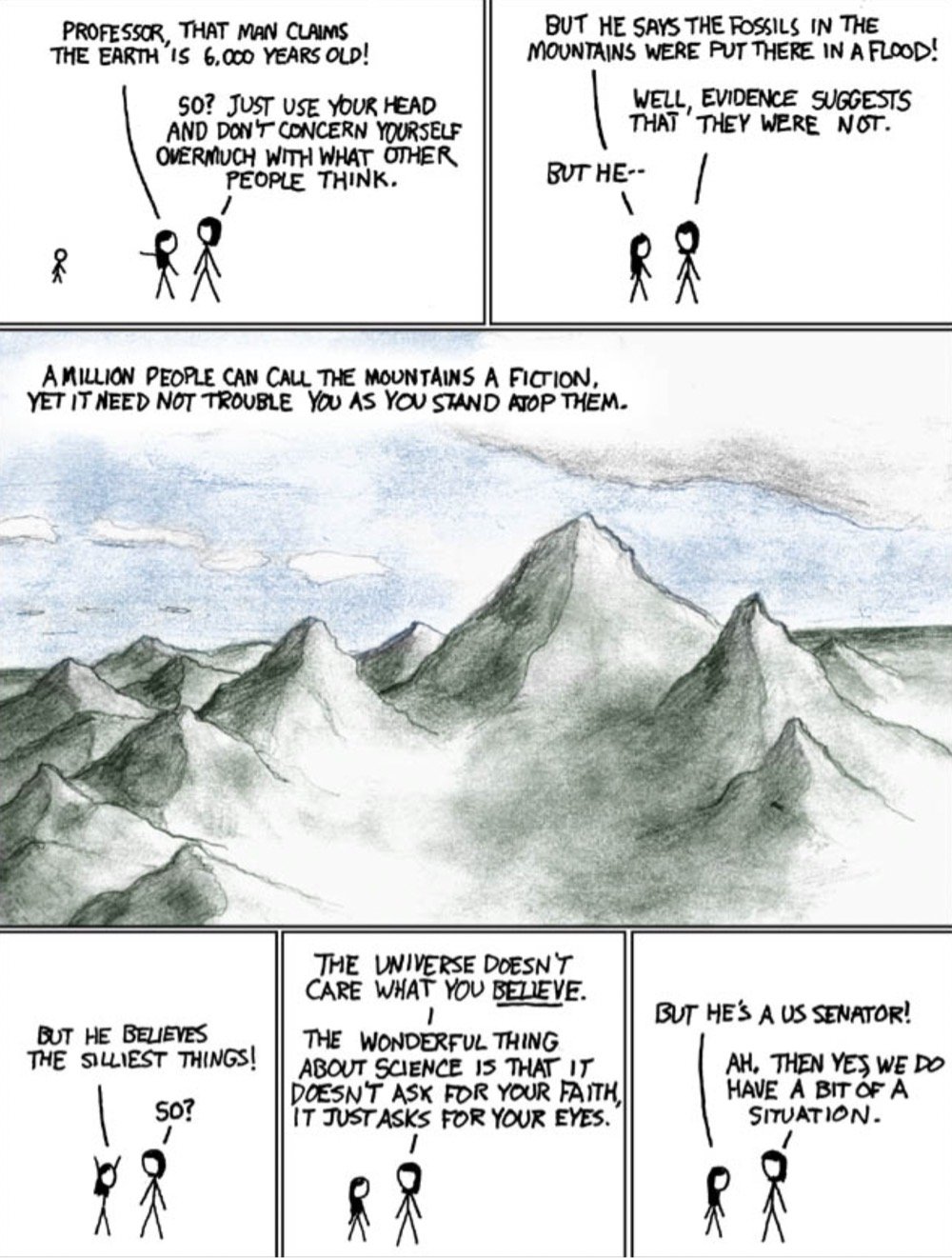
See also What If the Earth Suddenly Turned Flat?, Flat Earthers and the Double-Edged Sword of American Magical Thinking, and Flat Earthers Listening to Daft Punk.
Train wheels do not sit completely flat on the tracks — they’re designed with a slight taper that increases the stability of the train and allows the train to go around curves without any of the wheels skidding. In this short video, Tadashi Tokieda explains how those conical wheels keep trains on track.
See also Richard Feynman’s explanation of this and this science project at Scientific American. (via the prepared)
Ed Yong: We’re Already Barreling Toward the Next Pandemic. The US is throwing too little money at high-tech, ultimately private sector solutions but much of the problem comes down to our underfunded public health system and “profoundly unequal society”.
“To be ready for the next pandemic, we need to make sure that there’s an even footing in our societal structures,” Seema Mohapatra, a health-law expert at Indiana University, told me. That vision of preparedness is closer to what 19th-century thinkers lobbied for, and what the 20th century swept aside. It means shifting the spotlight away from pathogens themselves and onto the living and working conditions that allow pathogens to flourish. It means measuring preparedness not just in terms of syringes, sequencers, and supply chains but also in terms of paid sick leave, safe public housing, eviction moratoriums, decarceration, food assistance, and universal health care. It means accompanying mandates for social distancing and the like with financial assistance for those who might lose work, or free accommodation where exposed people can quarantine from their family. It means rebuilding the health policies that Reagan began shredding in the 1980s and that later administrations further frayed. It means restoring trust in government and community through public services. “It’s very hard to achieve effective containment when the people you’re working with don’t think you care about them,” Arrianna Marie Planey, a medical geographer at the University of North Carolina at Chapel Hill, told me.
Within the past 50 years, the global community has solved two huge problems that had the potential to harm every person on Earth. Smallpox once killed 30% of the people who contracted the disease but through the invention of an effective, safe vaccine and an intense effort that began in the 1960s, smallpox was completely eradicated by 1980. In the 1980s, scientists discovered a hole in the ozone layer that protects the Earth from UV radiation; further depletion would have caused major problems with the world’s food supply and an epidemic of skin cancer. Forty years later, we’ve virtually eliminated the chemicals causing the depletion and ozone losses have stabilized and have recently shown improvement.
So how did we do it? The short video above talks through each of challenges, how they were met (science + politics + a bit of luck), and how we might apply these lessons to the big problems of today (climate emergency, the pandemic).
Bored of dying from Covid-19, Americans have dreamed up a more entertaining way to mortally wound themselves: the milk crate challenge. Wired asked structural engineer Dr. Nehemiah Mabry (who explained the different types of bridges to us earlier in the year) to explain the physics behind the challenge and why you shouldn’t attempt it. (via @pomeranian99)
In one of their most popular videos in awhile, kottke.org favorite Kurzgesagt tells us about something I’d never heard of before: giruses. These giant viruses have only been discovered within the last 20 years and are so large and contain so much genetic material that maybe they are actually alive?
Hidden in the microverse all around you, there is a merciless war being fought by the true rulers of this planet, microorganisms. Amoebae, protists, bacteria, archaea and fungi compete for resources and space. And then there are the strange horrors that are viruses, hunting everyone else. Not even being alive, they are the tiniest, most abundant and deadliest beings on earth, killing trillions every day. Not interested in resources, only in living things to take over. Or so we thought.
It turns out that there are giant viruses that blur the line between life and death — and other viruses hunting them.
It may seem like sometimes that with the pandemic, we’re back to square one. With the much more contagious Delta variant in play and an increasing number of breakthrough infections, the efficacy of these vaccines that we thought were amazing maybe aren’t? (Or maybe we just need to readjust our expectations?) But in terms of what these vaccines were specifically developed for — reducing & preventing severe disease and death — they are still very much doing their job. Just take a look at this graph from a White House Covid-19 press briefing yesterday:
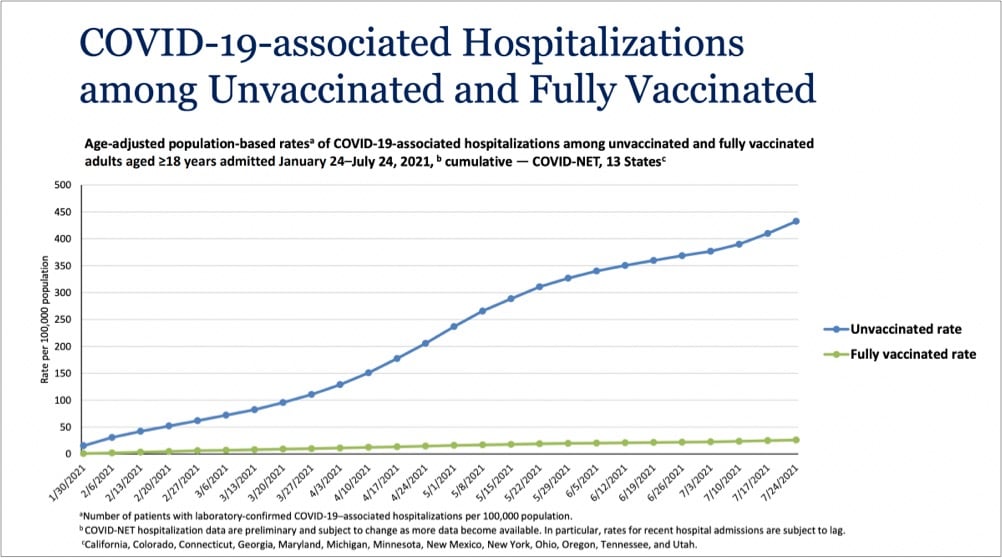
Even with Delta endemic in the country, the vaccines are providing extraordinary protection against infections severe enough to land folks in the hospital. In a recent CDC study of infections and hospitalizations in Los Angeles County, they report that on July 25, the hospitalization rate of unvaccinated people was 29.2 times that of fully vaccinated persons. 29 times the protection is astounding for a medical intervention. These vaccines work, we’re lucky to have them, and we need to get as many people worldwide as we can vaccinated as quickly as we can. Period.
I love this post from the NYPL comparing astronomical drawings by E.L. Trouvelot done in the 1870s to contemporary NASA images.
Trouvelot was a French immigrant to the US in the 1800s, and his job was to create sketches of astronomical observations at Harvard College’s observatory. Building off of this sketch work, Trouvelot decided to do large pastel drawings of “the celestial phenomena as they appear…through the great modern telescopes.”
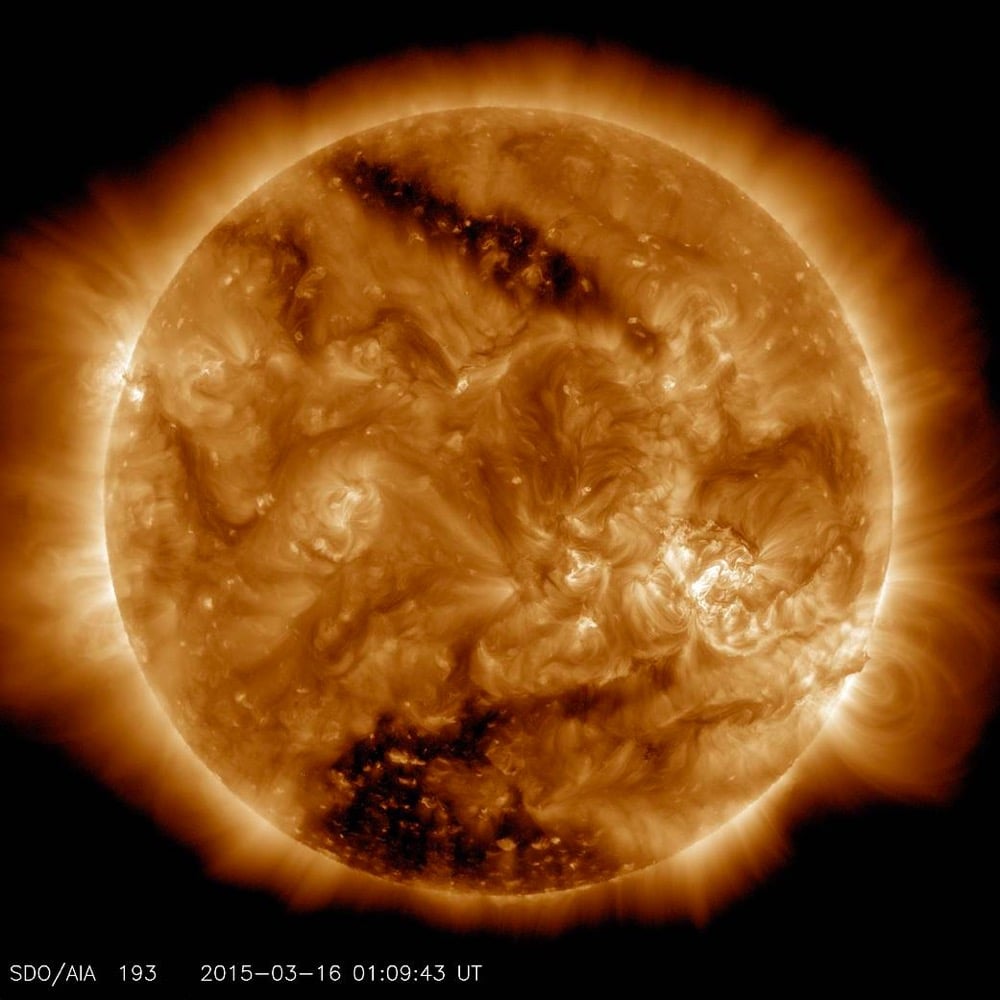
He made drawings of Saturn, Jupiter, aurora borealis, the Milky Way, and more. Here’s his incredible drawing of sun spots compared to a recent image of the Sun’s surface:

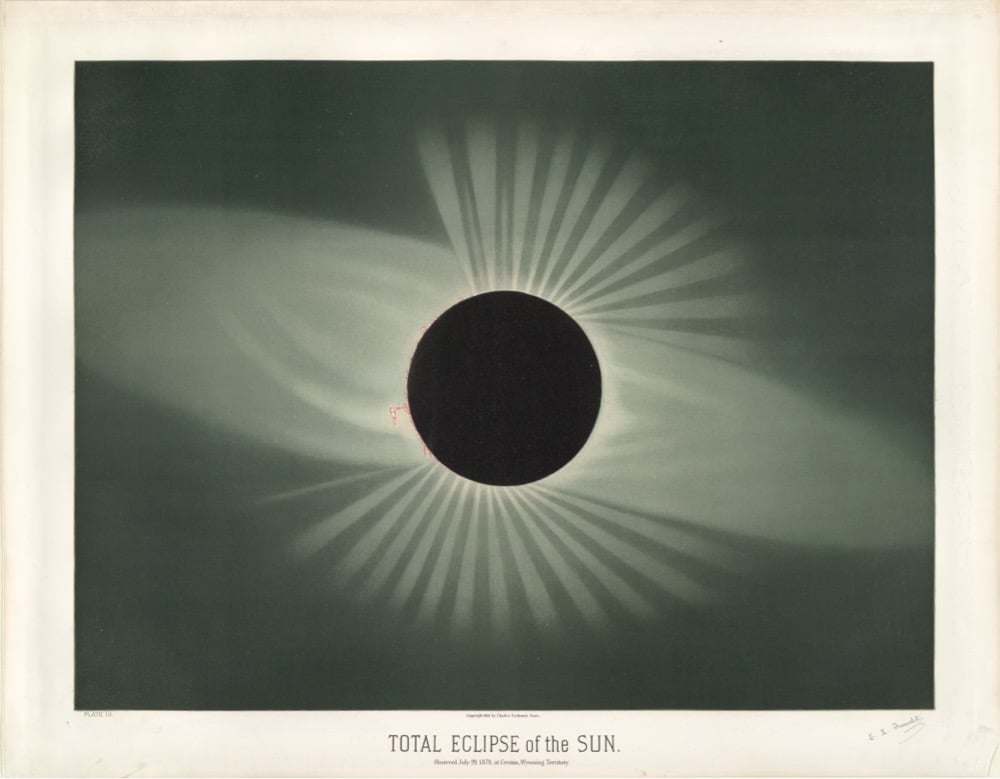
And his drawing of a solar eclipse compared to a recent image:
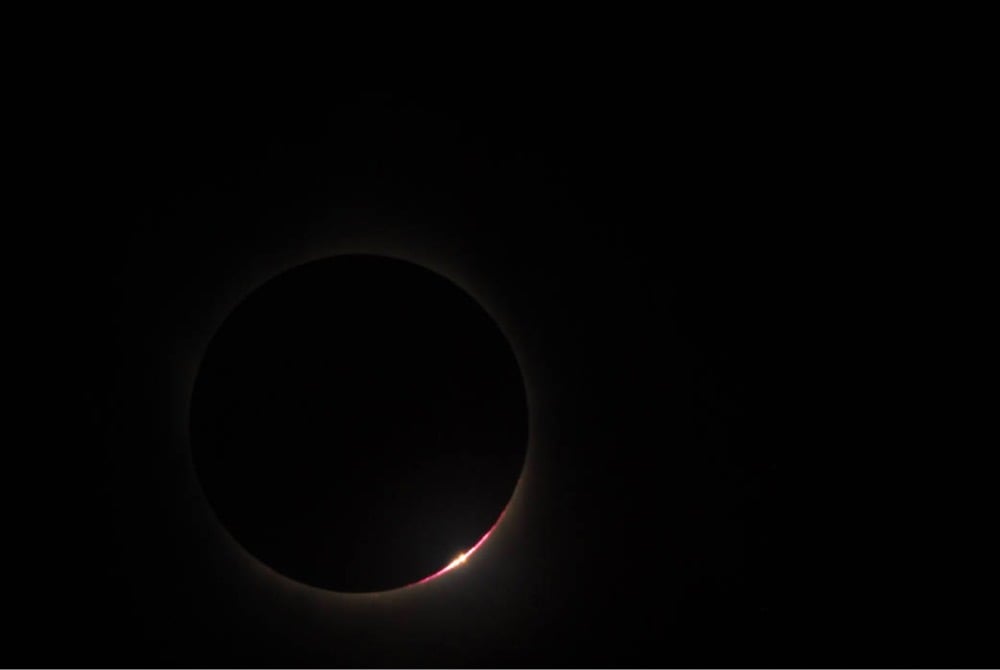
Check out the post for more examples of Trouvelot’s work.
For The Atlantic, Katherine Wu writes about the difficulty of communicating how vaccines work and how they protect individuals and communities from disease: Vaccines Are Like Sunscreen… No, Wait, Airbags… No, Wait…
Unfortunately, communal benefit is harder to define, harder to quantify, and harder to describe than individual protection, because “it’s not the way Americans are used to thinking about things,” Neil Lewis, a behavioral scientist and communications expert at Cornell, told me. That’s in part because communal risk isn’t characteristic of the health perils people in wealthy countries are accustomed to facing: heart disease, stroke, diabetes, cancer. Maybe that’s part of why we gravitate toward individual-focused comparisons. Slipping into a pandemic-compatible, population-based frame of mind is a big shift. In the age of COVID-19, “there’s been a lot of focus on the individual,” Lewis told me. That’s pretty at odds “with how infection works.”
As someone who has struggled with analogizing the virus & vaccines, I was nodding my head a lot while reading this. Something I’ve noticed in recent years that Wu didn’t get into is that readers desire precision in metaphors and analogies, even though metaphor is — by definition! — not supposed to be taken literally. People seem much more interested in taking analogies apart, identifying what doesn’t work, and discarding them rather than — more generously and constructively IMO — using them as the author intended to better understand the subject matter. The perfect metaphor doesn’t exist because then it wouldn’t be a metaphor.
One of the many effects of human-driven climate change is that, on average, the bodies of animals are getting smaller — birds, fish, deer, frogs, rodents, insects. And these changes could have large and unpredictable consequences.
“That’s the problem with human-driven climate change. It’s the rate of change that’s just orders of magnitude faster than what the natural world has had to deal with in the past. Size is really important to survival, and you can’t just change that indefinitely without consequence. For one thing, I don’t think it’s feasible that species are going to be able to continue to get smaller and maintain things like a migration from one hemisphere to another.”
And since smaller bodies can hold fewer eggs, they result in fewer offspring, and a lower population size in the long run. For amphibians who need to keep their skin wet in order to breathe, shrinking can mean higher chances of drying out in a drought because their bodies absorb and hold smaller quantities of water.
But the more concerning consequences have to do with how this could destabilize relationships between species. Because shrinking plays out at different rates for different species, predators might have to eat more and more of shrinking prey, for example, throwing a finely-tuned ecosystem off balance.
I’m just going to go ahead and say it right up front here: if you had certain expectations in May/June about how the pandemic was going to end in the US (or was even thinking it was over), you need to throw much of that mindset in the trash and start again because the Delta variant of SARS-CoV-2 has changed the game. I know this sucks to hear,1 but Delta is sufficiently different that we need to reset and stop assuming we can solely rely on the vaccines to stop Covid-19 from spreading. Ed Yong’s typically excellent piece on how delta has changed the pandemic’s endgame is helping me wrap my head around this.
But something is different now — the virus. “The models in late spring were pretty consistent that we were going to have a ‘normal’ summer,” Samuel Scarpino of the Rockefeller Foundation, who studies infectious-disease dynamics, told me. “Obviously, that’s not where we are.” In part, he says, people underestimated how transmissible Delta is, or what that would mean. The original SARS-CoV-2 virus had a basic reproduction number, or R0, of 2 to 3, meaning that each infected person spreads it to two or three people. Those are average figures: In practice, the virus spread in uneven bursts, with relatively few people infecting large clusters in super-spreading events. But the CDC estimates that Delta’s R0 lies between 5 and 9, which “is shockingly high,” Eleanor Murray, an epidemiologist at Boston University, told me. At that level, “its reliance on super-spreading events basically goes away,” Scarpino said.
In simple terms, many people who caught the original virus didn’t pass it to anyone, but most people who catch Delta create clusters of infection. That partly explains why cases have risen so explosively. It also means that the virus will almost certainly be a permanent part of our lives, even as vaccines blunt its ability to cause death and severe disease.
And a reminder, as we “argue over small measures” here in the US, that most of the world is in a much worse place:
Pandemics end. But this one is not yet over, and especially not globally. Just 16 percent of the world’s population is fully vaccinated. Many countries, where barely 1 percent of people have received a single dose, are “in for a tough year of either lockdowns or catastrophic epidemics,” Adam Kucharski, the infectious-disease modeler, told me. The U.S. and the U.K. are further along the path to endemicity, “but they’re not there yet, and that last slog is often the toughest,” he added. “I have limited sympathy for people who are arguing over small measures in rich countries when we have uncontrolled epidemics in large parts of the world.”
Where I think Yong’s piece stumbles a little is in its emphasis of the current vaccines’ protection against infection from Delta. As David Wallace-Wells explains in his piece Don’t Panic, But Breakthrough Cases May Be a Bigger Problem Than You’ve Been Told, vaccines still offer excellent protection against severe infection, hospitalization, and death, but there is evidence that breakthrough infections are more common than many public health officials are saying. The problem lies with the use of statistics from before vaccines and Delta were prevalent:
Almost all of these calculations about the share of breakthrough cases have been made using year-to-date 2021 data, which include several months before mass vaccination (when by definition vanishingly few breakthrough cases could have occurred) during which time the vast majority of the year’s total cases and deaths took place (during the winter surge). This is a corollary to the reassuring principle you might’ve heard, over the last few weeks, that as vaccination levels grow we would expect the percentage of vaccinated cases will, too — the implication being that we shouldn’t worry too much over panicked headlines about the relative share of vaccinated cases in a state or ICU but instead focus on the absolute number of those cases in making a judgment about vaccine protection across a population. This is true. But it also means that when vaccination levels were very low, there were inevitably very few breakthrough cases, too. That means that to calculate a prevalence ratio for cases or deaths using the full year’s data requires you to effectively divide a numerator of four months of data by a denominator of seven months of data. And because those first few brutal months of the year were exceptional ones that do not reflect anything like the present state of vaccination or the disease, they throw off the ratios even further. Two-thirds of 2021 cases and 80 percent of deaths came before April 1, when only 15 percent of the country was fully vaccinated, which means calculating year-to-date ratios means possibly underestimating the prevalence of breakthrough cases by a factor of three and breakthrough deaths by a factor of five. And if the ratios are calculated using data sets that end before the Delta surge, as many have been, that adds an additional distortion, since both breakthrough cases and severe illness among the vaccinated appear to be significantly more common with this variant than with previous ones.
Vaccines are still the best way to protect yourself and your community from Covid-19. The vaccines are still really good, better than we could have hoped for. But they’re not magic and with the rise of Delta (and potentially worse variants on the horizon if the virus is allowed to continue to spread unchecked and mutate), we need to keep doing the other things (masking, distancing, ventilation, etc.) in order to keep the virus in check and avoid lockdowns, school closings, outbreaks, and mass death. We’ve got the tools; we just need to summon the will and be in the right mindset.
In the first part of a multi-video series on how the human immune system works, Kurzgesagt describes how the system’s first lines of defense work when your body is invaded by microorganisms.
The human immune system is the most complex biological system we know, after the human brain, and yet, most of us never learn how it works. Or what it is. Your immune System consists of hundreds of tiny and two large organs, it has its own transport network spread throughout your body. Every day it makes hundreds of billions of fresh cells.
It is not some sort of abstract entity. Your immune system is YOU. Your biology protecting you from the billions of microorganisms that want to consume you and from your own perverted cells that turn into cancer.
Kurzgesagt founder Philipp Dettmer is publishing a companion book to the series, Immune: A Journey Into the Mysterious System That Keeps You Alive; it’s out in late September.
I have read a lot about the human immune system over the past 18 months, but this video was still helpful in understanding how it all fits together. For more information, consult their extensive list of sources or watch their earlier video on what the SARS-CoV-2 virus does to a human body.
Black holes are the largest single objects in the universe, many times larger than even the biggest stars, and have no upper limit to their size. But practically, how big is the biggest, heaviest black hole in the universe? (A: More massive than the entire Milky Way.)
The largest things in the universe are black holes. In contrast to things like planets or stars they have no physical size limit, and can literally grow endlessly. Although in reality specific things need to happen to create different kinds of black holes, from really tiny ones to the largest single things in the universe. So how do black holes grow and how large is the largest of them all?
Videos about space are where Kurzgesagt really shines. I’ve seen all their videos about black holes and related objects, and I always pick up something I never knew whenever a new one comes out. This time around, it was quasistars and the surprisingly small mass of supermassive black holes located at galactic centers compared to the galaxies themselves.

As I’ve written before, in the history of astronomy and astrophysics, women have made major discoveries and played a significant role in advancing our understanding of the universe but have often not gotten the recognition their male peers enjoy. In 1967, while she was working on her doctoral research with her advisor Antony Hewish, Jocelyn Bell Burnell (then Jocelyn Bell) discovered a new and unusual kind of object, the pulsar. In this short documentary, Bell Burnell shares her story — how she got interested in radio astronomy, the prejudice with which she was treated as the only woman in her university program, how she discovered the first pulsar and persisted (more than once) through Hewish’s assertions that the object was “interference”, and how she was passed over for the Nobel Prize for her discovery.
In 2018, Bell Burnell was awarded the Special Breakthrough Prize in Fundamental Physics “for fundamental contributions to the discovery of pulsars, and a lifetime of inspiring leadership in the scientific community”, joining past honorees like the LIGO team, Stephen Hawking, and the team that discovered the Higgs boson. She donated the entire $3 million prize to the Institute of Physics to help support “PhD physics students from under-represented groups” with their educations.
It’s not justice, but I will note that Bell Burnell’s Wikipedia page is longer and more substantial than Hewish’s, despite his Nobel.
Newer posts
Older posts



Socials & More