



This site is made possible by member support. 💞
Big thanks to Arcustech for hosting the site and offering amazing tech support.
When you buy through links on kottke.org, I may earn an affiliate commission. Thanks for supporting the site!
kottke.org. home of fine hypertext products since 1998.
Beloved by 86.47% of the web.
Entries for August 2021
The Potato Photographer of the Year 2021

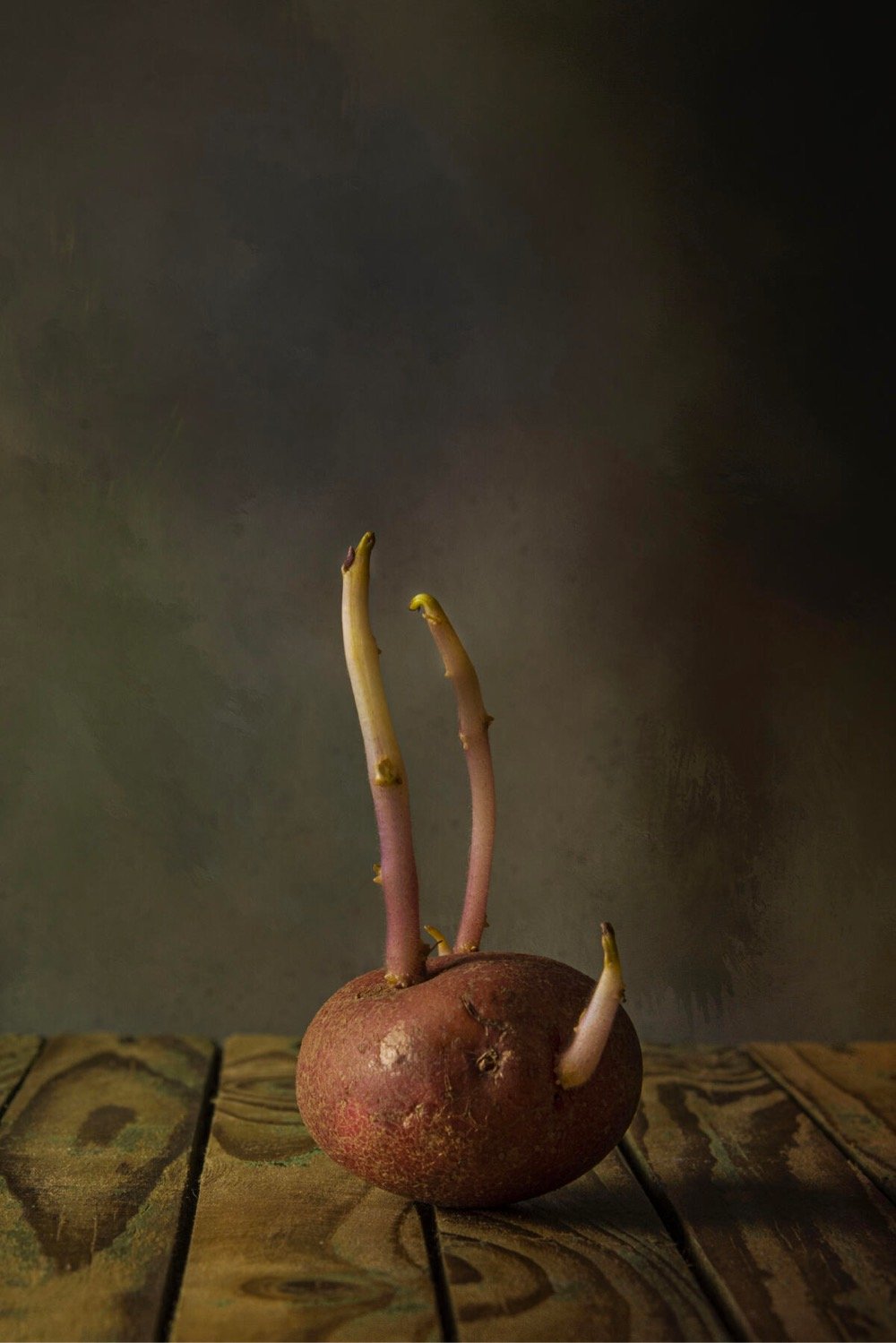
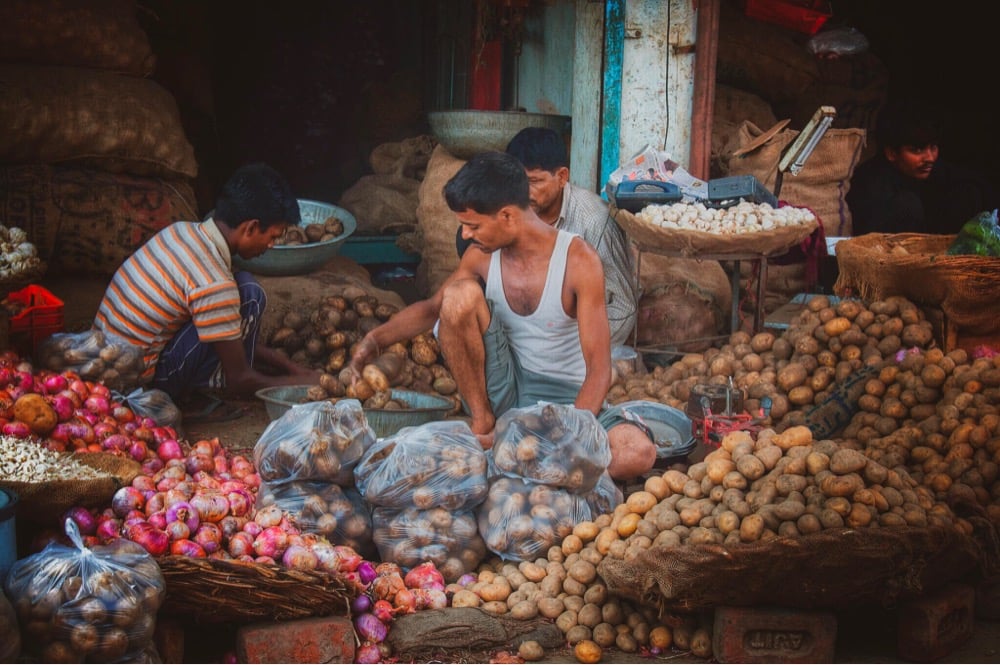
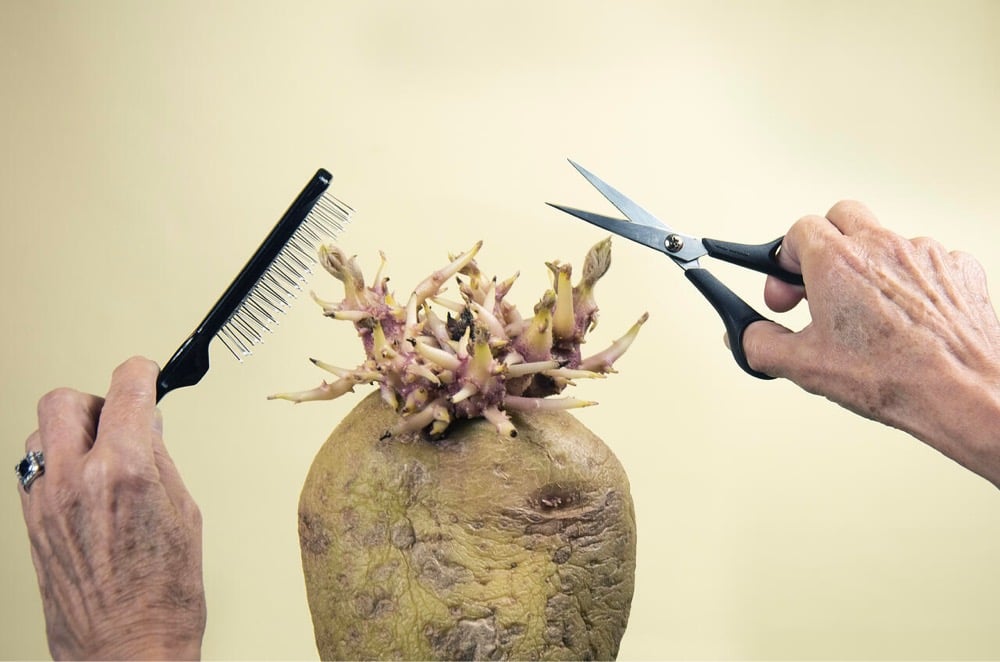
I am a little embarrassed (and surprised!) at how up my alley this is, but behold: the winners of the Potato Photographer of the Year competition for 2021. (via @jackisnotabird)
The Story of Jumbo the Elephant
Jumbo the Elephant was one of the most famous animals in the world. Bought as a calf in Sudan by a European animal dealer in 1860, Jumbo found fame first at the London Zoo and later as the centerpiece of the Barnum & Bailey Circus in the US. Jumbo was so beloved in London that news of his sale to P.T. Barnum prompted 100,000 children to write to Queen Victoria, urging her to nix the deal. In the video above, Andrew McClellan recounts Jumbo’s too-short (and probably unhappy) life and the impact he had on society.
The word “jumbo” hadn’t been known or used in the English language before he came along and has since become the byword for anything humongous or supersized. So every time we use the word “jumbo jet” or “jumbotron”, we’re actually referring back to Jumbo the elephant.
(thx, ben)
Parents in Mask-Free School Districts Are Freaking Out. A working single-parent friend is homeschooling her under-12 kid to start the year because her community is relatively low-vax and anti-mask (and school is unconcerned). Total shitshow.
This Is Not the Taliban 2.0. “Those who wish to avoid being force-fed their own testicles should probably not read too much into the kinder, gentler Taliban initiatives currently being implemented in Kabul.”
The Otherworldly Images of Mikko Lagerstedt


Finnish photographer Mikko Lagerstedt creates striking, ethereal, and atmospheric photographs — check out his work on his website and Instagram.
The Living Wage Calculator from MIT. “We developed a living wage calculator to estimate the cost of living in your community or region based on typical expenses.”
Your Holiday Gatherings Should Have Vaccine Mandates. “Your unvaccinated relatives should not be invited to Thanksgiving.”
Everyday Paparazzi
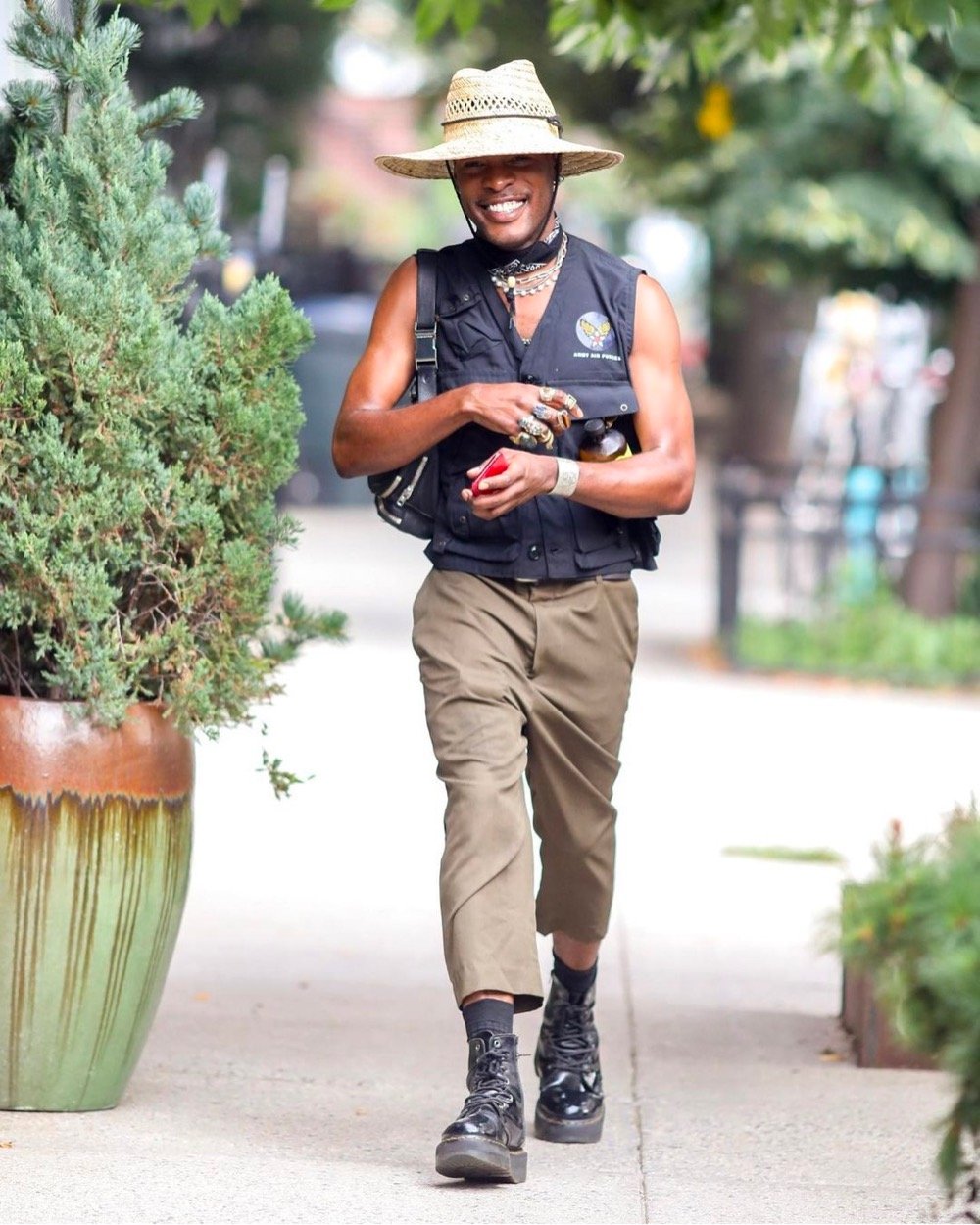


Johnny Cirillo photographs people on the streets of New York in the style of paparazzi (half a block away with a long lens) and posts them, with permission, to his Instagram account. From an interview with Cirillo in Vogue:
I decided early-on that if I was going to shoot candids of New Yorkers, I didn’t want it to be with a wide lens, up-close in their faces. I started using a 200mm lens so that I could be half a city block away from the subject. It’s similar to the way paparazzi shoot, and all my subjects are celebrities to me, so it’s fitting in that respect.
(via life is so beautiful)
How Iceland Draws Geothermal Energy from the Earth
In this short video from TED-Ed, we learn how Iceland extracts nearly emissions-free geothermal energy from the Earth (hint: volcanoes) but also how harnessing geothermal energy with heat pumps is something that can be done around the world. (via the kid should see this)
An interview with Beyoncé, on the cusp of her 40th birthday. “I’m at a point where I no longer need to compete with myself. I have no interest in searching backwards. The past is the past.”
An appreciation of the board game hit Wingspan. “The game has really tamped down my competitive drive. I’ve found that during the hour or so it takes to play, I rarely have any sense whether I’m winning or losing.”
A Tribute to American Landscape Photographer Bob Wick



Over at In Focus, Alan Taylor is highlighting the work of Bob Wick, a photographer for the U.S. Bureau of Land Management who recently retired after 33 years of service.
In a recent interview, Bob reflected on his career. “It has been extremely fulfilling to see my photos used in BLM, across the Department, and non-profits and getting to showcase the beauty of public lands and the resources we see,” he said. “When you see things on paper in words, it’s one thing, but when you see the image of the lands that you’re affecting with that resource decision, it’s a more powerful way to communicate the message.”
Bob added, “I like bringing joy to people with photos. A lot of people are armchair travelers and can’t go to remote places, but they get the satisfaction of seeing the beauty through my photos. I’m always happy to be able to share that beauty. I also think that images help build pride among employees as reminders of the vast and irreplaceable places that BLM manages.”
You can follow Wick’s continuing photo adventures on Instagram.
Benedict Cumberbatch Reads a Letter from Kurt Vonnegut with Advice for the Future
For a Volkswagen ad campaign in 1988, Kurt Vonnegut wrote a letter of advice to people living in 2088. In the video above from 2019, Benedict Cumberbatch reads Vonnegut’s prescient letter. His main message is an environmental one: that if we don’t get our shit together, Nature will have its way with us.
The sort of leaders we need now are not those who promise ultimate victory over Nature through perseverance in living as we do right now, but those with the courage and intelligence to present to the world what appears to be Nature’s stern but reasonable surrender terms:
1. Reduce and stabilize your population.
2. Stop poisoning the air, the water, and the topsoil.
3. Stop preparing for war and start dealing with your real problems.
4. Teach your kids, and yourselves, too, while you’re at it, how to inhabit a small planet without helping to kill it.
5. Stop thinking science can fix anything if you give it a trillion dollars.
6. Stop thinking your grandchildren will be OK no matter how wasteful or destructive you may be, since they can go to a nice new planet on a spaceship. That is really mean, and stupid.
7. And so on. Or else.
Vonnegut: definitely a prophet. (via open culture)
The Taliban’s Return Is Catastrophic for Women in Afghanistan

Pulitzer prize-winning photojournalist Lynsey Addario has covered Afghanistan for the past 20 years. In the Atlantic, she writes about the effect of the return to power of the oppressive Islamic-fundamentalist Taliban will have on the country’s citizens, particularly women and girls. Here she describes life under the Taliban in 2000 and 2001:
Perhaps the silence of life under the Taliban sits with me more than anything. There were very few cars, no music, no television, no telephones, and no idle conversation on the sidewalks. The dusty streets were crowded with widows who had lost their husbands in the protracted war; banned from working, their only means of survival was to beg. People were scared, indoors and out. Those who were brave enough to venture out spoke in hushed voices, for fear of provoking a Taliban beating for anything as simple as not having a long-enough beard (for a man) or a long-enough burka (for a woman), or sometimes for nothing at all. Shiny brown cassette tape fluttered from the trees and wires and signs and poles everywhere-a warning to those who dared to play music in private. Matches in Kabul’s Ghazi Stadium had been replaced with public executions on Fridays after prayer. Taliban officials used bulldozers or tanks to topple walls onto men accused of being gay. People who stole had their hand sliced off; accused adulterers were stoned to death.
After the Taliban fell in 2001, Addario observed women returning to public life:
I photographed the defeat of the Taliban in Kandahar in late 2001, and returned to the country with my camera at least a dozen times in the subsequent two decades. From Kabul to Kandahar to Herat to Badakhshan, I photographed women attending schools, graduating from universities, training as surgeons, delivering babies, working as midwives, running for Parliament and serving in government, driving, training to be police officers, acting in films, working — as journalists, translators, television presenters, for international organizations. Many of them were dealing with the impossible balancing act of working outside the home while raising children; of being a wife, a mother, a sister, or a daughter in a place where women were cracking glass ceilings daily, and often at great peril.
Now those women, especially those involved in politics or activism, are in danger now that the Taliban have seized power in Afghanistan again.
The Music of Subway Train Door Chimes
In The Hidden Melodies of Subways Around the World, the NY Times takes a look at an often overlooked aspect of transit design: the door closing sounds on the subway. My favorite door jingle is from the Paris Metro — I never knew where it came from:
In Paris, a simple “A” note plays as the doors shut. This is also a throwback, a sound that mimics the vibrations of a mechanical part that is no longer in use on any of the system’s trains. “But for a half century Parisians and visitors alike became used to that sound, so we decided to keep it, and recorded a synthesized version,” said Song Phanekham, a communications manager for the Paris transit system. “It’s a tribute to the heritage of the Paris Metro.”
In Tokyo, each station has its own custom jingle to signal departures. In Rio de Janeiro, the subway’s door chime pays homage to bossa nova. In Vancouver, the doors still close to a three-note sound that was recorded in the 1980s on a Yamaha DX7. (“The hallmark of any mid-80s pop song,” said Ian Fisher, manager of operations planning at British Columbia Rapid Transit Company.)
You can listen to more sounds of subway doors closing in these three videos recorded by Ted Green.
Update: Composer Minoru Mukaiya has made distinct door-closing jingles for each subway station in Tokyo.
(via waxy)
Arnold Schwarzenegger: Don’t Be a Schmuck. Put on a Mask. “Many people told me that the Constitution gives them rights, but not responsibilities. They feel no duty to protect their fellow citizens.”
Rio Ferdinand explains why Premier League players will be taking the knee before matches this season. “Racism never went away.”
What’s the Proper Metaphor for the Covid Vaccine?
For The Atlantic, Katherine Wu writes about the difficulty of communicating how vaccines work and how they protect individuals and communities from disease: Vaccines Are Like Sunscreen… No, Wait, Airbags… No, Wait…
Unfortunately, communal benefit is harder to define, harder to quantify, and harder to describe than individual protection, because “it’s not the way Americans are used to thinking about things,” Neil Lewis, a behavioral scientist and communications expert at Cornell, told me. That’s in part because communal risk isn’t characteristic of the health perils people in wealthy countries are accustomed to facing: heart disease, stroke, diabetes, cancer. Maybe that’s part of why we gravitate toward individual-focused comparisons. Slipping into a pandemic-compatible, population-based frame of mind is a big shift. In the age of COVID-19, “there’s been a lot of focus on the individual,” Lewis told me. That’s pretty at odds “with how infection works.”
As someone who has struggled with analogizing the virus & vaccines, I was nodding my head a lot while reading this. Something I’ve noticed in recent years that Wu didn’t get into is that readers desire precision in metaphors and analogies, even though metaphor is — by definition! — not supposed to be taken literally. People seem much more interested in taking analogies apart, identifying what doesn’t work, and discarding them rather than — more generously and constructively IMO — using them as the author intended to better understand the subject matter. The perfect metaphor doesn’t exist because then it wouldn’t be a metaphor.
41 Questions We Should Ask Ourselves About the Technology We Use
In an issue of his newsletter, The Convivial Society, L.M. Sacasas posed 41 questions that we should ask ourselves about technologies to help us “draw out the moral or ethical implications of our tools”. Here are a few of the questions:
3. How will the use of this technology affect my experience of time?
12. What was required of other creatures so that I might be able to use this technology?
16. How does this technology empower me? At whose expense?
22. What desires does the use of this technology generate?
35. Does my use of this technology encourage me to view others as a means to an end?
Sacasas recently joined Ezra Klein on his podcast to talk through some of the answers to these questions for certain technologies.
EZRA KLEIN: I’m gonna group the next set together. So what was required of other human beings, of other creatures, of the earth, so that I might be able to use this technology? When you ask that, when you think of that, what comes to mind?
MICHAEL SACASAS: So I recently wrote a piece, and its premise was that sometimes we think of the internet, of digital life, as being immaterial, existing somewhere out in the ether, in the cloud, with these metaphors that kind of suggest that it doesn’t really have a material footprint. But the reality of course — I think as most of us are becoming very aware — is that it very much has a material reality that may begin in a mine where rare earth metals are being extracted in inhumane working conditions at great cost to the local environment.
But that’s very far removed from my comfortable experience of the tablet on my couch in the living room. And so with regards to the earth, the digital realm depends upon material resources that need to be collected. It depends on the energy grid. It leaves a footprint on the environment.
And so we tend not to think about that by the time that it gets to us and looks so shiny and clean and new, and connects us to this world that isn’t physically necessarily located anywhere in our experience. And so I think it is important for us to think about the labor, the extraction cost on the environment, that go into providing us with the kind of world that we find so amusing and interesting and comfortable.
Animals Are Getting Smaller as the Planet Warms
One of the many effects of human-driven climate change is that, on average, the bodies of animals are getting smaller — birds, fish, deer, frogs, rodents, insects. And these changes could have large and unpredictable consequences.
“That’s the problem with human-driven climate change. It’s the rate of change that’s just orders of magnitude faster than what the natural world has had to deal with in the past. Size is really important to survival, and you can’t just change that indefinitely without consequence. For one thing, I don’t think it’s feasible that species are going to be able to continue to get smaller and maintain things like a migration from one hemisphere to another.”
And since smaller bodies can hold fewer eggs, they result in fewer offspring, and a lower population size in the long run. For amphibians who need to keep their skin wet in order to breathe, shrinking can mean higher chances of drying out in a drought because their bodies absorb and hold smaller quantities of water.
But the more concerning consequences have to do with how this could destabilize relationships between species. Because shrinking plays out at different rates for different species, predators might have to eat more and more of shrinking prey, for example, throwing a finely-tuned ecosystem off balance.
Floating Micro-Origami that Magically Unfolds in Water
Watch as these tiny folded structures slowly unfold while floating on the water. It’s all about surface tension and capillary action. The shadows are cool to watch as well. (via the kid should see this)
Mesmerizing Matchstick Stop Motion Video
Usually when I post these sorts of non-narrative videos — in this case, a series of creative stop motion vignettes featuring matchsticks made by Tomohiro Okazaki — I say something to the effect of “I could have watched this all day” or “I wish this video were longer” because they’re often quite short. Well, this one is seven and a half minutes long and I still wish it had gone on for longer. Ok sure, you get the point after awhile, but each successive animation is just as inventive than the last that it kept me hooked.
How One Family Grieves Their Son, 20 Years After 9/11
This is an extraordinary story by Jennifer Senior about the various ways in which members of a family grieved the death of a beloved son who died in NYC on 9/11: What Bobby McIlvaine Left Behind.
Early on, the McIlvaines spoke to a therapist who warned them that each member of their family would grieve differently. Imagine that you’re all at the top of a mountain, she told them, but you all have broken bones, so you can’t help each other. You each have to find your own way down.
It was a helpful metaphor, one that may have saved the McIlvaines’ marriage. But when I mentioned it to Roxane Cohen Silver, a psychology professor at UC Irvine who’s spent a lifetime studying the effects of sudden, traumatic loss, she immediately spotted a problem with it: “That suggests everyone will make it down,” she told me. “Some people never get down the mountain at all.”
This is one of the many things you learn about mourning when examining it at close range: It’s idiosyncratic, anarchic, polychrome. A lot of the theories you read about grief are great, beautiful even, but they have a way of erasing individual experiences. Every mourner has a very different story to tell.
That therapist was certainly right, however, in the most crucial sense: After September 11, those who had been close to Bobby all spun off in very different directions. Helen stifled her grief, avoiding the same supermarket she’d shopped in for years so that no one would ask how she was. Jeff, Bobby’s lone sibling, had to force his way through the perdition of survivor’s guilt. Bob Sr. treated his son’s death as if it were an unsolved murder, a cover-up to be exposed. Something was fishy about 9/11.
I read parts of this with tears in my eyes because I have grief in my life right now. Many of us do, I think. Because of the pandemic — a big, mixed-up ball of emotional energy that can’t dissipate until, well, I don’t know when — because of past trauma kicking up dirt, because of the way we’ve treated others and ourselves, because we want to help others, especially our children, deal with their grief and big feelings more effectively. This piece was an urgent reminder of just how long grief can last and how many ways it can manifest in different people.
Getting into the Delta Variant Mindset
I’m just going to go ahead and say it right up front here: if you had certain expectations in May/June about how the pandemic was going to end in the US (or was even thinking it was over), you need to throw much of that mindset in the trash and start again because the Delta variant of SARS-CoV-2 has changed the game. I know this sucks to hear,1 but Delta is sufficiently different that we need to reset and stop assuming we can solely rely on the vaccines to stop Covid-19 from spreading. Ed Yong’s typically excellent piece on how delta has changed the pandemic’s endgame is helping me wrap my head around this.
But something is different now — the virus. “The models in late spring were pretty consistent that we were going to have a ‘normal’ summer,” Samuel Scarpino of the Rockefeller Foundation, who studies infectious-disease dynamics, told me. “Obviously, that’s not where we are.” In part, he says, people underestimated how transmissible Delta is, or what that would mean. The original SARS-CoV-2 virus had a basic reproduction number, or R0, of 2 to 3, meaning that each infected person spreads it to two or three people. Those are average figures: In practice, the virus spread in uneven bursts, with relatively few people infecting large clusters in super-spreading events. But the CDC estimates that Delta’s R0 lies between 5 and 9, which “is shockingly high,” Eleanor Murray, an epidemiologist at Boston University, told me. At that level, “its reliance on super-spreading events basically goes away,” Scarpino said.
In simple terms, many people who caught the original virus didn’t pass it to anyone, but most people who catch Delta create clusters of infection. That partly explains why cases have risen so explosively. It also means that the virus will almost certainly be a permanent part of our lives, even as vaccines blunt its ability to cause death and severe disease.
And a reminder, as we “argue over small measures” here in the US, that most of the world is in a much worse place:
Pandemics end. But this one is not yet over, and especially not globally. Just 16 percent of the world’s population is fully vaccinated. Many countries, where barely 1 percent of people have received a single dose, are “in for a tough year of either lockdowns or catastrophic epidemics,” Adam Kucharski, the infectious-disease modeler, told me. The U.S. and the U.K. are further along the path to endemicity, “but they’re not there yet, and that last slog is often the toughest,” he added. “I have limited sympathy for people who are arguing over small measures in rich countries when we have uncontrolled epidemics in large parts of the world.”
Where I think Yong’s piece stumbles a little is in its emphasis of the current vaccines’ protection against infection from Delta. As David Wallace-Wells explains in his piece Don’t Panic, But Breakthrough Cases May Be a Bigger Problem Than You’ve Been Told, vaccines still offer excellent protection against severe infection, hospitalization, and death, but there is evidence that breakthrough infections are more common than many public health officials are saying. The problem lies with the use of statistics from before vaccines and Delta were prevalent:
Almost all of these calculations about the share of breakthrough cases have been made using year-to-date 2021 data, which include several months before mass vaccination (when by definition vanishingly few breakthrough cases could have occurred) during which time the vast majority of the year’s total cases and deaths took place (during the winter surge). This is a corollary to the reassuring principle you might’ve heard, over the last few weeks, that as vaccination levels grow we would expect the percentage of vaccinated cases will, too — the implication being that we shouldn’t worry too much over panicked headlines about the relative share of vaccinated cases in a state or ICU but instead focus on the absolute number of those cases in making a judgment about vaccine protection across a population. This is true. But it also means that when vaccination levels were very low, there were inevitably very few breakthrough cases, too. That means that to calculate a prevalence ratio for cases or deaths using the full year’s data requires you to effectively divide a numerator of four months of data by a denominator of seven months of data. And because those first few brutal months of the year were exceptional ones that do not reflect anything like the present state of vaccination or the disease, they throw off the ratios even further. Two-thirds of 2021 cases and 80 percent of deaths came before April 1, when only 15 percent of the country was fully vaccinated, which means calculating year-to-date ratios means possibly underestimating the prevalence of breakthrough cases by a factor of three and breakthrough deaths by a factor of five. And if the ratios are calculated using data sets that end before the Delta surge, as many have been, that adds an additional distortion, since both breakthrough cases and severe illness among the vaccinated appear to be significantly more common with this variant than with previous ones.
Vaccines are still the best way to protect yourself and your community from Covid-19. The vaccines are still really good, better than we could have hoped for. But they’re not magic and with the rise of Delta (and potentially worse variants on the horizon if the virus is allowed to continue to spread unchecked and mutate), we need to keep doing the other things (masking, distancing, ventilation, etc.) in order to keep the virus in check and avoid lockdowns, school closings, outbreaks, and mass death. We’ve got the tools; we just need to summon the will and be in the right mindset.
In a tweet introducing his piece, Yong says “Many folks are upset & confused by the last month” and that’s right where I am with this. Maybe you are too. I’m expecting to get angry email about this post, calling it alarmist. But Covid is different now and thinking our same March 2021 thoughts about it isn’t going to help ourselves, our families, or our communities. The sooner we can regroup, the better.↩
I’ve been watching episodes of the original Iron Chef on this Twitch channel. Allez Cuisine! (Are they available on streaming anywhere else?)
One Woman’s Mission to Get Vaccines to Her Rural Alabama Town
The Panola Project is a short film by Rachael DeCruz and Jeremy Levine that follows the efforts of local convenience store owner Dorothy Oliver to get the people in her small Alabama community vaccinated against Covid-19. A trusted member of her community, Oliver teams up with county commissioner Drucilla Russ-Jackson to call & go door-to-door, talking with people one-on-one, cajoling and telling personal stories of loss to get folks signed up for a mobile vaccination clinic.
In the film, Oliver and Russ-Jackson arrange for a hospital to set up a pop-up site in Panola, but the site will only be established if they get at least forty people to sign up to take the vaccine. We follow Oliver as she goes door to door, talking people into signing up, lightly cajoling them about their fears and concerns. When I asked her how she does it, her answer was disarmingly simple: “I just be nice to them,” she said. “I don’t go at them saying, ‘You gotta do that.’” DeCruz, too, was struck by the way Oliver and Jackson talked to people who were on the fence about the vaccine, an issue more often discussed with stridency of various types. “There’s this very warm and kind of loving and caring way that Dorothy and Ms. Jackson approached those conversations, even when people aren’t in agreement. And it wasn’t done in a way that’s, like, ‘I know better than you.’ “
Oliver’s charm with the skeptics is remarkable, but so is her determination to bring the vaccine to her underserved town. Most of the women and men Oliver talked to leaped at the opportunity to sign up for the vaccine. On vaccine day, they rolled down their car windows to thank her. “We appreciate y’all giving it to us, because a lot of people don’t really know where to go to take these vaccines,” one woman tells her. Vaccine hesitancy in Black communities has been harped on in the media, but those conversations can gloss over questions of availability. Levine told me that they were struck by how many people had put off vaccination for logistical rather than ideological reasons. In Panola, he says, they regularly heard people say, “I want the shot. How do I get this? I don’t have a car; how am I going to get forty miles to the closest hospital and back?”
The result? In a state with one of the lowest vaccination rates in the country, 94% of adults in Panola have been vaccinated, due in part to Oliver’s and Russ-Jackson’s efforts.
This is not-so-good news: the results of multiple studies indicate “waning immunity for mRNA vaccines vs Delta infections”. There are caveats; read the thread for details.
Nestflix, a faux streaming service of fake movies and TV shows that only appear within other movies and TV shows. Like Angels with Filthy Souls (Home Alone), McBain (The Simpsons), and The Dirk Diggler Story (Boogie Nights).
Magnificent Cumulonimbus Mammatus Clouds
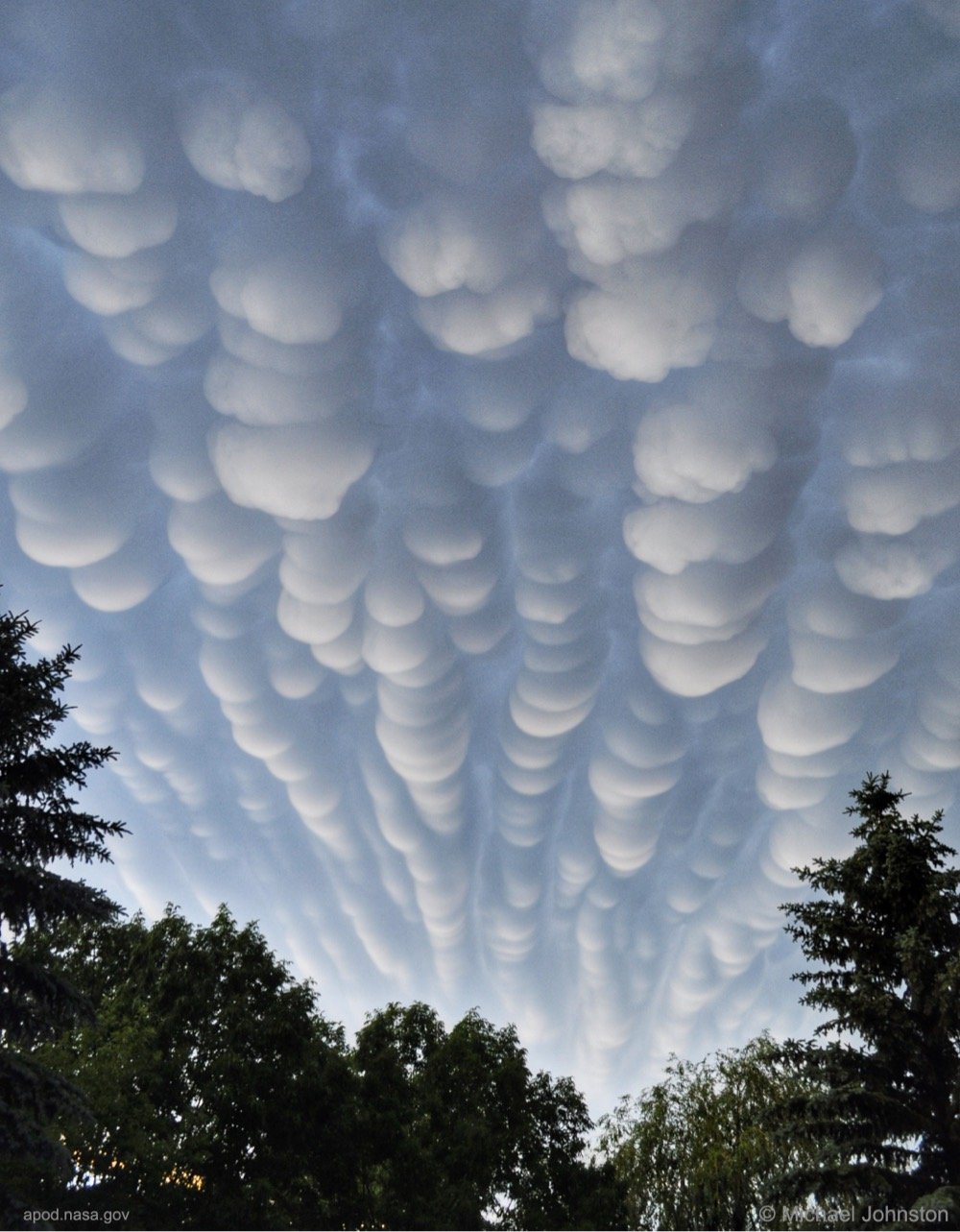
Back in 2012, Michael F. Johnston captured a particularly spectacular mammatus cloud over Regina, Saskatchewan. I don’t know how much of a cloud enthusiast Johnston is, but I got pretty excited when I captured these mammatus clouds at sunset a couple of years ago.
So You Think You Can Dance, baseball edition. This is one of the smoothest athletic moves I’ve ever seen.
The Five Dimensions of Curiosity and the Four Types of Curious People
In a paper published in 2017, Todd Kashdan and his colleagues identified five distinct dimensions of curiosity. Here are the first three:
1. Joyous Exploration. This is the prototype of curiosity — the recognition and desire to seek out new knowledge and information, and the subsequent joy of learning and growing.
2. Deprivation Sensitivity. This dimension has a distinct emotional tone, with anxiety and tension being more prominent than joy — pondering abstract or complex ideas, trying to solve problems, and seeking to reduce gaps in knowledge.
3. Stress Tolerance. This dimension is about the willingness to embrace the doubt, confusion, anxiety, and other forms of distress that arise from exploring new, unexpected, complex, mysterious, or obscure events.
They also identified four types of curious people: The Fascinated, Problem Solvers, Empathizers, and Avoiders. (via the art of noticing)
How Directors Shoot Films at Three Different Budget Levels
The YouTube channel In Depth Cine has been looking at how directors like Spike Lee, Alfonso Cuarón, Martin Scorsese, and Wes Anderson shoot films at three different budget levels, from the on-a-shoestring films early in their careers to later blockbusters, to see the similarities and differences in their approaches. For instance, Wes Anderson made Bottle Rocket for $5 million, Rushmore for $10 million, and Grand Budapest Hotel for $25 million:
Steven Spielberg shot Duel for $450,000, Raiders of the Lost Ark for $20 million, and Saving Private Ryan for $70 million:
Christopher Nolan did Following for $6,000, Memento for $9 million, and Inception for $160 million:
You can find the full playlist of 3 Budget Levels videos here. (This list really needs some female directors — Ava DuVernay, Sofia Coppola, and Kathryn Bigelow would be easy to do, for starters. And Chloé Zhao, after The Eternals gets released.)
Voice Above Water
90-year-old Wayan Nyo has been fishing in Indonesian waters for 80 years but now pulls mostly plastic and trash out of the water. This short film follows him during his daily routine as he talks about what the formerly clean & bountiful ocean has meant to him and his family. (via colossal)
Caffeine, the World’s Most Popular Psychoactive Drug
In an excerpt from his new book This Is Your Mind on Plants, Michael Pollan writes about caffeine, a performance enhancing drug that humans seemingly cannot get enough of.
Cognitive psychologists sometimes talk in terms of two distinct types of consciousness: spotlight consciousness, which illuminates a single focal point of attention, making it very good for reasoning, and lantern consciousness, in which attention is less focused yet illuminates a broader field of attention. Young children tend to exhibit lantern consciousness; so do many people on psychedelics. This more diffuse form of attention lends itself to mind wandering, free association, and the making of novel connections — all of which can nourish creativity. By comparison, caffeine’s big contribution to human progress has been to intensify spotlight consciousness — the focused, linear, abstract and efficient cognitive processing more closely associated with mental work than play. This, more than anything else, is what made caffeine the perfect drug not only for the age of reason and the Enlightenment, but for the rise of capitalism, too.
The power of caffeine to keep us awake and alert, to stem the natural tide of exhaustion, freed us from the circadian rhythms of our biology and so, along with the advent of artificial light, opened the frontier of night to the possibilities of work.
I particularly enjoyed — and by enjoyed I mean “found uncomfortably true” — this line:
Daily, caffeine proposes itself as the optimal solution to the problem caffeine creates.
For more information on how caffeine enabled the Enlightenment and Industrial Revolution, check out Tom Standage’s A History of the World in 6 Glasses.
Ideas Behind Their Time
For the FT, Tim Harford writes about things that could have been invented far sooner than they actually were.
Consider the bicycle. It was not produced in even the most primitive form until the early 1800s, and a practical version with chain drive was not widespread until the 1880s — just in time to compete with the motor car.
Anton Howes, author of Arts and Minds, points to the flying shuttle, invented in 1733. “It radically increased the productivity of weaving,” he writes. “It involved no new materials…and required no special skill or science.” The craft that it transformed has been around long enough to be mentioned in the Old Testament.
Steven Johnson, in his book Extra Life, suggests that evidence-based medicine is an idea behind its time. The idea of running experiments is centuries old, but the first properly randomised controlled trial in medicine took place in 1948. It could easily have been routine before da Vinci’s time, but instead clinical trials lagged far behind anaesthetic, antibiotics, antiseptic, pasteurisation and vaccines.
How the Human Immune System Works
In the first part of a multi-video series on how the human immune system works, Kurzgesagt describes how the system’s first lines of defense work when your body is invaded by microorganisms.
The human immune system is the most complex biological system we know, after the human brain, and yet, most of us never learn how it works. Or what it is. Your immune System consists of hundreds of tiny and two large organs, it has its own transport network spread throughout your body. Every day it makes hundreds of billions of fresh cells.
It is not some sort of abstract entity. Your immune system is YOU. Your biology protecting you from the billions of microorganisms that want to consume you and from your own perverted cells that turn into cancer.
Kurzgesagt founder Philipp Dettmer is publishing a companion book to the series, Immune: A Journey Into the Mysterious System That Keeps You Alive; it’s out in late September.
I have read a lot about the human immune system over the past 18 months, but this video was still helpful in understanding how it all fits together. For more information, consult their extensive list of sources or watch their earlier video on what the SARS-CoV-2 virus does to a human body.
Socials & More