

This site is made possible by member support. 💞
Big thanks to Arcustech for hosting the site and offering amazing tech support.
When you buy through links on kottke.org, I may earn an affiliate commission. Thanks for supporting the site!
kottke.org. home of fine hypertext products since 1998.
Beloved by 86.47% of the web.
Entries for August 2021
Global Warming Over a Lifetime
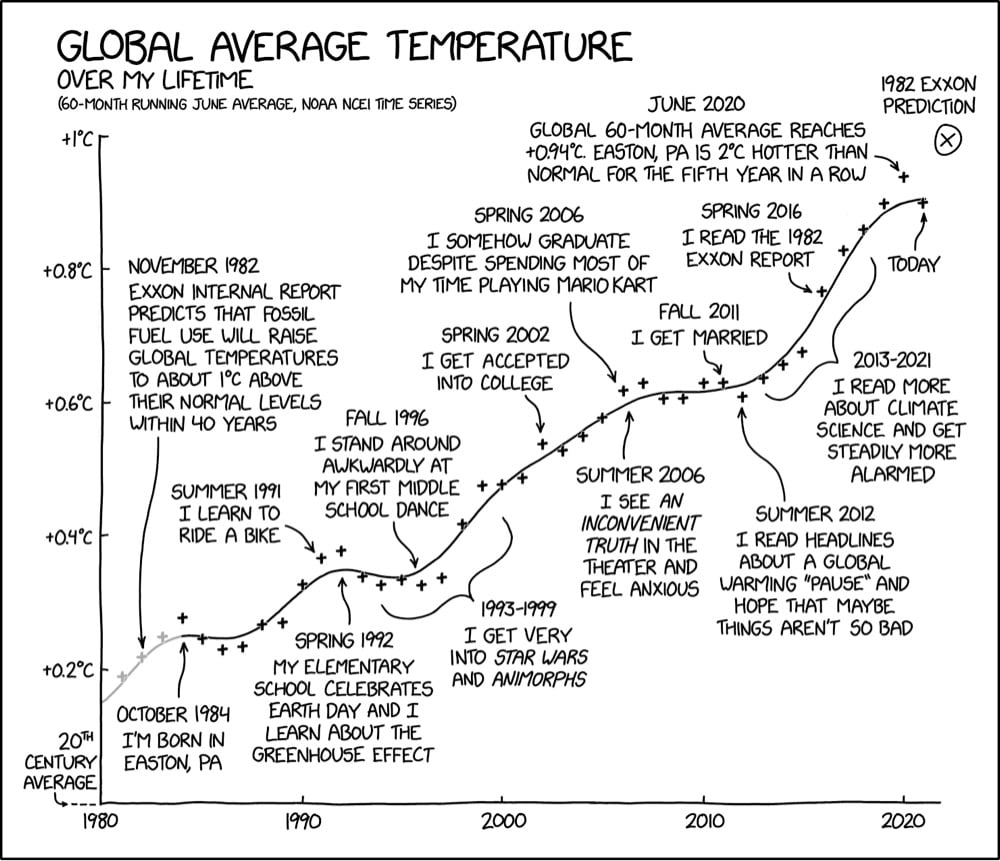
From XKCD’s Randall Munroe, a chart of the global average temperature over his lifetime. If you’re curious, you can check how much hotter your hometown is now than when you were born.
Ohio Court Sentences Black Woman to 18 Months in Prison the Day After Giving White Woman Probation for Same Crime. The white woman stole $238,000 and the Black woman $40,000.
Serious Eats’ Halal Cart-Style Chicken and Rice With White Sauce. Might try this one of these days; I miss my occasional Rafiqi’s meal.
In a recent comparison of the health care systems of 11 high-income countries, the US came in last “despite spending far more of its gross domestic product on health care”. Embarrassing and deadly.
Take this divergent association test. “Please enter 10 words that are as different from each other as possible, in all meanings and uses of the words.”
Meet Lizzie Armanto, Olympic Skateboarder
The 2020 Summer Olympics are over, but it’s never too late to find inspiration in the athletes who competed. For the New Yorker, Nathan Fitch made a short film about professional skateboarder Lizzie Armanto, who was then preparing to represent Finland in the first ever skateboarding competition at the Olympics.
“There [are] no masters,” Armanto says. “And even the people that we call masters — they haven’t done every trick. No one can do everything on a skateboard at all times without failing. Everyone falls, and everyone will have something that they can work on.”
Armanto didn’t medal at these Games — she broke several bones and underwent surgery after a skating accident in late 2020 and was perhaps still recovering from that. But she represented Finland and her sport in fine style; she helped design the uniforms she wore:
Those distinctive squiggles were actually an homage to Finland, the country Armanto was competing for. Specifically, she was inspired by architect and designer Alvar Aalto. “In 1939, he designed a kidney-shaped swimming pool which became synonymous with pool skateboarding much later in the ’70s,” Armanto says. “The various patterns on the jumpsuits are modeled after empty swimming pools around the world.”
(thx, pete)
The Pink Salt Ponds of Camargue, France
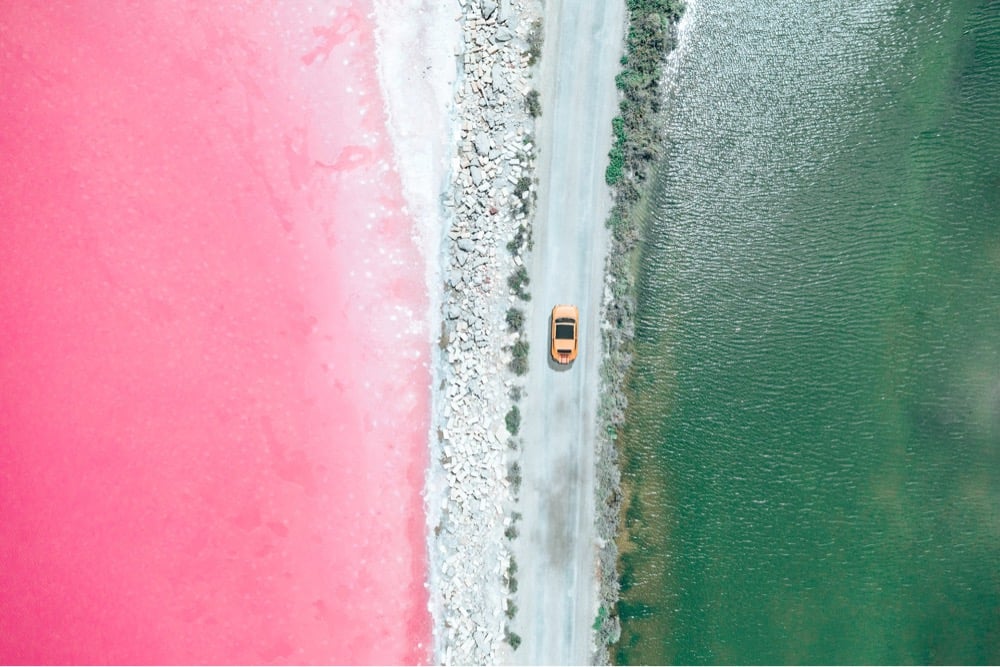
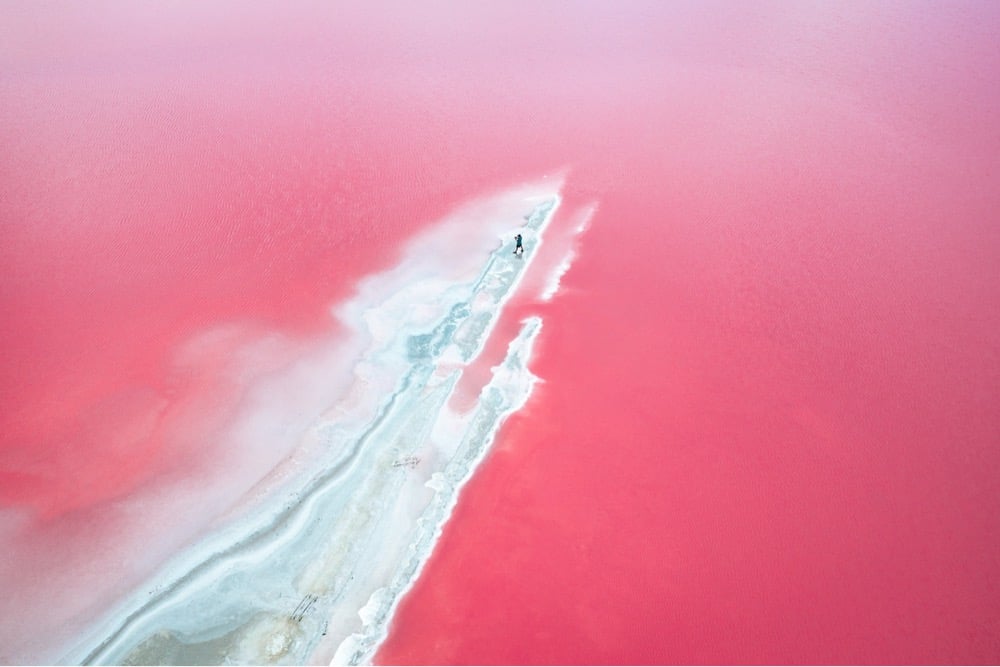

Check out Italian photographer Paolo Pettigiani’s photos of the evaporation ponds of Camargue, France. While these ponds are industrially harvested for their salt, the pink color of the water is naturally occurring in the salt marshes of the area, caused by halophile dunaliella salina algae. The area is also an important bird habitat and is one of the few places in Europe that flamingos live, which might seem like a coincidence until you learn that flamingos gain their pink color from eating the algae and shrimp that also feed on the algae. (via moss & fog)
Fingerspelling – learn the signs for the ABCs in American Sign Language with the help of machine learning (it analyzes your hand shapes via webcam). This works really well!
What should be the next amendment to the Constitution? Removing the “punishment for crime” exception of the 13th Amendment would be a good start.
The Era of Rapid Climate Change
The Intergovernmental Panel on Climate Change (IPCC) has released their summary report on the climate emergency, which warns that our climate is now changing rapidly almost everywhere and immediate & massive action is necessary. The press release starts:
Scientists are observing changes in the Earth’s climate in every region and across the whole climate system, according to the latest Intergovernmental Panel on Climate Change (IPCC) Report, released today. Many of the changes observed in the climate are unprecedented in thousands, if not hundreds of thousands of years, and some of the changes already set in motion — such as continued sea level rise — are irreversible over hundreds to thousands of years.
However, strong and sustained reductions in emissions of carbon dioxide (CO2) and other greenhouse gases would limit climate change. While benefits for air quality would come quickly, it could take 20-30 years to see global temperatures stabilize, according to the IPCC Working Group I report, Climate Change 2021: the Physical Science Basis, approved on Friday by 195 member governments of the IPCC, through a virtual approval session that was held over two weeks starting on July 26.
This is a huge deal — all 195 member governments had to approve the findings and language in this report and the report is not ambiguous. From Eric Holthaus:
The report’s main takeaway, put in a single sentence directly quoted from the report’s press release: “Unless there are immediate, rapid and large-scale reductions in greenhouse gas emissions, limiting warming to close to 1.5°C or even 2°C will be beyond reach.”
That means “immediate, rapid, large-scale” change is what we MUST demand — there’s a vastly limited future for all of us if it doesn’t happen right away.
The most striking part of the report to me is its of use the word “rapid” prominently, which to me is a major change from past reports.
The era of rapid climate change has begun. Both a rapid escalation of consequences, and a rapid escalation of solutions. Time has run out for anything but radical change.
To me, the report is equal parts depressing and galvanizing.
It will take several years, even in the best possible scenario, to see the positive effects of rapidly reductions in emissions. But that’s not so different from every other worthwhile investment we make — from going to school, to going to therapy, to building bike lanes, to forming communities of mutual aid. Every worthwhile thing takes time. And, if we believe this report, the next 20-30 years is the most important time of our whole lives.
A panel of boomers answers questions from gen Z. “Do you think young people are overly sensitive and privileged?”
Taking some Italians to an NYC Olive Garden. “There is an Italian phrase,” said Marco after we ordered our food. “‘Li ti avvelenano,’ which translates to ‘there they will poison you.’ This is my prediction for the night.”
Reconstructed Portraits
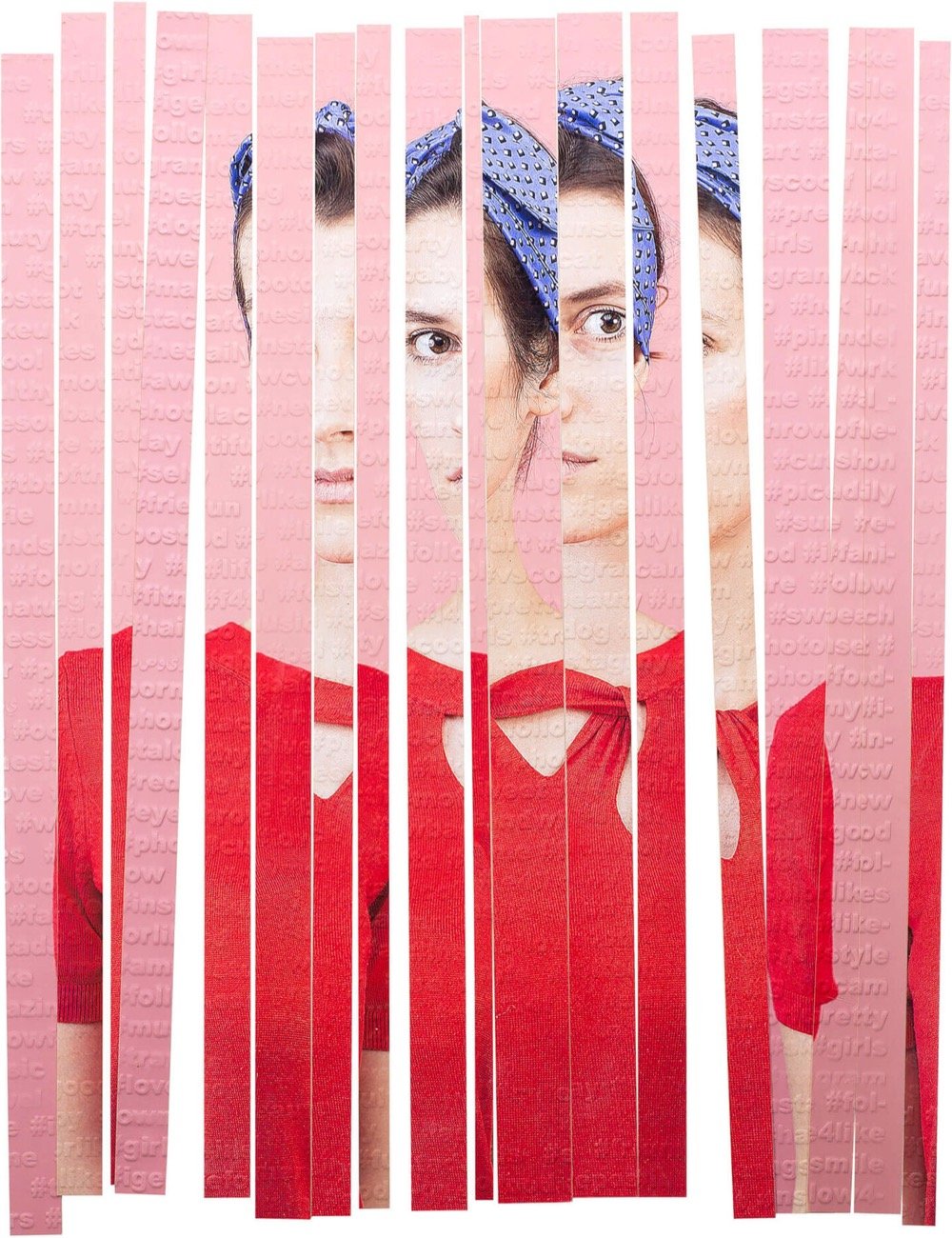



These images are drawn from Argentinian-born artist Karen Navarro’s projects El Pertenecer en Tiempos Modernos (Belonging in Modern Times) and The Constructed Self. You can also find her on Instagram.
Epidemiologist Ellie Murray runs through the math to see how various interventions will fare in the US w/r/t to the delta variant of Covid-19. The much higher R0 for delta is the driving force here.
Bike Riding the Rails
File this under Things I Definitely Want to Do Sometime: riding electric-assist railbikes through a California redwood forest. Check out how fun this looks:
From the LA Times:
To pedal the rails at Fort Bragg, you book a trip, show up at the station, settle into a vehicle, don a helmet and seat belt, pedal through four downtown intersections (train signals halt traffic) and pass a cemetery.
Then suddenly you’re in the woods, hearing only birdsong and the gentle hum of wheels on tracks. There’s no need to exert yourself pedaling: The railbikes, which weigh about 250 pounds each, are outfitted like e-bikes with quiet electric motors that can push you along at 10 mph even if you don’t pedal.
(via the morning news)
Why medieval city-builder video games are historically inaccurate. “Any gameplay loop that tells a story of linear settlement growth is incongruent with how a medieval economy worked.”
Weezer Covers Metallica’s Enter Sandman
To celebrate the 30th anniversary of their 16x platinum Black Album, Metallica is releasing an album on Sept 10th called The Metallica Blacklist, which contains Black Album covers featuring 53 different artists. One of those covers is Enter Sandman by Weezer, which you can watch above. Some of the other songs on the album include:
St. Vincent — Sad but True
The Hu — Through the Never
Phoebe Bridgers — Nothing Else Matters
Miley Cyrus Feat. Watt, Elton John, Yo-yo ma, Robert Trujillo, Chad Smith — Nothing Else Matters
Darius Rucker — Nothing Else Matters
Rodrigo y Gabriela — The Struggle Within
All profits from the album will be donated to charity. You can listen to the songs that have already been posted on Spotify, pre-save or pre-order the album, or check out this album trailer to hear what you’re getting into:
I’ve been listening to the Black Album a little bit recently (it came out my freshman year in college and so hits me right between the eyes) so I’m looking forward to checking this out.
Is the Viral “Red Dress” Music Video a Sociological Experiment? Performance Art? Or Something Else?
Track Star Races the NYC Subway
BuzzFeed enlisted NYU track athlete Jon Diaz to help answer a burning question: Can a fast runner beat an NYC subway train from one station to the next? I don’t want to spoil the answer, but they probably wouldn’t have made the video if he’d failed, right? (via clive thompson)
Update: See also subway races in other cities like London & Paris. (via @philipkennedy)
Time Lapse of the Changing Seasons of Denmark
In a series of four short time lapse films, Casper Rolsted captures the changing of the seasons in Denmark, from summer (top) all the way through to spring (bottom). I’ve gotta say, the springtime video in particular put a smile on my face — all those flowers emerging from the snowy ground, reaching out for the strengthening sunlight.
See also Four Seasons in the Life of a Finnish Island. (via colossal)
Update: See also David Hockney’s The Four Seasons, Woldgate Woods. (thx, phil)
Kate Winslet Says ‘Some Very Cool Ideas’ Now Exist for ‘Mare of Easttown’ Season 2. Quoting Han Solo: “I got a bad feeling about this.”
Size Comparison: The Largest Black Hole in the Universe
Black holes are the largest single objects in the universe, many times larger than even the biggest stars, and have no upper limit to their size. But practically, how big is the biggest, heaviest black hole in the universe? (A: More massive than the entire Milky Way.)
The largest things in the universe are black holes. In contrast to things like planets or stars they have no physical size limit, and can literally grow endlessly. Although in reality specific things need to happen to create different kinds of black holes, from really tiny ones to the largest single things in the universe. So how do black holes grow and how large is the largest of them all?
Videos about space are where Kurzgesagt really shines. I’ve seen all their videos about black holes and related objects, and I always pick up something I never knew whenever a new one comes out. This time around, it was quasistars and the surprisingly small mass of supermassive black holes located at galactic centers compared to the galaxies themselves.
Juliette Kayyem: Flying is not a right and unvaccinated people should be on the no-fly list. “While flying, vaccinated people should no longer carry the burden for unvaccinated people.”
The Walking Dead: American Pedestrian Fatalities on the Rise
In the last decade, the number of pedestrians hit by cars in the United States has increased by almost 50%, even as that rate has decreased in Europe and other wealthy nations (“thanks primarily to new street and crosswalk designs, implemented in the belief that most road deaths are avoidable”). In a review of Angie Schmitt’s 2020 book Right of Way: Race, Class, and the Silent Epidemic of Pedestrian Deaths in America for the New York Review of Books, Peter Baker explores why America is increasingly hostile to pedestrians. Part of the reason is the rise of SUVs (and one would assume, trucks) in the US:
In the 1980s SUVs were a rarity. It was only in 2015 that they started outselling sedans. In 2018 they accounted for just under half of new vehicle sales, more than any other category of car. The height of American SUVs makes it harder for drivers to see pedestrians and means the hit comes higher on the body — and backed by extra mass — which makes organ damage and death two to three times more likely for adults, and four times more likely for children. More SUVs than ever are “overpowered” — that is, equipped with a high horsepower-to-weight ratio; this makes speeding more likely, which, like increased height and weight, increases the chances of pedestrians being hit and killed. More cars on the road, taller and heavier than ever before, going faster: each factor alone presents a serious problem. Together, they are a recipe for disaster.
And pedestrian deaths are also not equally distributed across population groups, both because of who owns cars but also shifts in where people are living:
Low-income pedestrians, Black and Hispanic pedestrians, elderly pedestrians, and disabled pedestrians are all disproportionately affected. Black and Hispanic men are twice as likely as white men to die while walking, and four times more likely than the average member of the population. Native American men are almost five times more likely.
The piece is interesting throughout, as is Schmitt’s book I’m sure.
There are three different types of fun. “Type 2 fun is miserable while it’s happening, but fun in retrospect.”
This App Identifies Birds by Their Songs

The Cornell Lab of Ornithology recently added the ability to identify birds from hearing their birdsong to their Merlin Bird ID app — a “Shazam for bird songs” as Fast Company says. You just start recording with your phone and the app starts telling you the birds it’s hearing. Here’s how it works:
Automatic song ID has been a dream for decades, but analyzing sound has always been extremely difficult. The breakthrough came when researchers, including Merlin lead researcher Grant Van Horn, began treating the sounds as images and applying new and powerful image classification algorithms like the ones that power Merlin’s Photo ID feature.
“Each sound recording a user makes gets converted from a waveform to a spectrogram-a way to visualize the amplitude [volume], frequency [pitch], and duration of the sound,” Van Horn says. “So just like Merlin can identify a picture of a bird, it can now use this picture of a bird’s sound to make an ID,” Van Horn says.
This pioneering sound-identification technology is integrated into the existing Merlin Bird ID app, meaning Merlin now offers four ways to identify a bird: by a sound, by a photo, by answering five questions about a bird you saw, or by exploring a list of the birds expected where you are.
Margaret Renkl tried the app out and it seems to work pretty well:
I set my phone down on the table on my back deck, opened the Merlin app, chose “Sound ID” and hit the microphone button. Immediately a spectrogram of sound waves began to scroll across the screen. Every time a bird sings, the sound registers as a kind of picture of the song. By comparing that picture with others in its database, the app arrives at an ID.
I watched as Merlin rolled out the names of bird after bird — tufted titmouse, European starling, Carolina chickadee, northern cardinal, American crow, white-breasted nuthatch, eastern towhee, house wren, American goldfinch, blue jay, eastern bluebird, American robin, Carolina wren, house finch. It didn’t miss a single one.
What amazed me was not merely the accuracy of the ID but also the way the app untangled the layers of song, correctly identifying the birds that were singing in my yard, as well the birds that were singing next door and the birds that were singing across the street. If the same bird sang a second time, the app highlighted the name it had already listed. Watching those highlights play across the growing list of birds was almost like watching fingers fly across a piano keyboard.
See also this video review. You can download the app here. I’m going to give this a shot over my lunch hour today. I try to eat outside when the weather is nice and there are always birds out singing.
The diamond-water paradox in economics. We need water to live so it’s more valuable but diamonds are more expensive. Why is that?
Then & Now Portraits of Centenarians


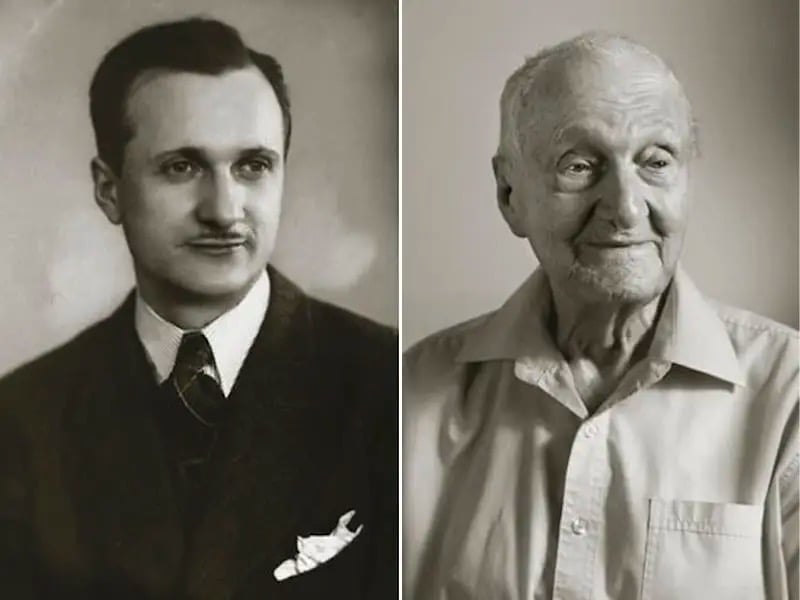
For his Faces of Century project, photographer Jan Langer made portraits of Czech people who are 100+ years old that mimic the style of photos of those same people 70 or 80 years before. If you click on the ⓘ below each pair of photographs, you can read a short biography of each person. All of these folks lived through two world wars, the Cold War, the space age, the computer age, and so much more. Incredible. (via life is so beautiful)
The Mistake that Toppled the Berlin Wall
I was 16 years old on the day the Berlin Wall fell. I remember coming home from school that day and watching the events unfold on television, completely shocked at how quickly it had all happened. Politics & protests had been pushing the Eastern Bloc countries toward more openness for years, but before watching this video, I’d never heard that the catalyst for that world-changing event was a short mistaken statement at the end of an otherwise boring press conference. From the BBC:
East German leaders had tried to calm mounting protests by loosening the borders, making travel easier for East Germans. They had not intended to open the border up completely.
The changes were meant to be fairly minor — but the way they were delivered had major consequences.
Notes about the new rules were handed to a spokesman, Günter Schabowski — who had no time to read them before his regular press conference. When he read the note aloud for the first time, reporters were stunned.
“Private travel outside the country can now be applied for without prerequisites,” he said. Surprised journalists clamoured for more details.
Shuffling through his notes, Mr Schabowski said that as far as he was aware, it was effective immediately.
In fact it had been planned to start the next day, with details on applying for a visa.
But the news was all over television — and East Germans flocked to the border in huge numbers.
How did the Berlin Wall fall? Two ways. Gradually, then suddenly.
Socials & More