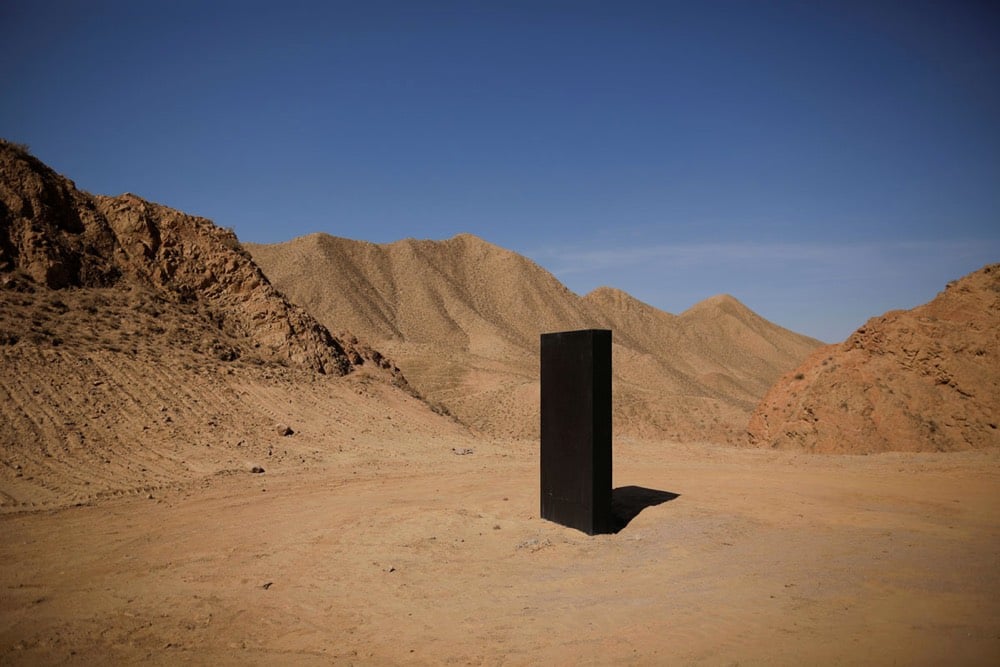
A Chinese company called C-Space has built a simulation of a Mars base in the Gobi desert. Currently used for educational purposes, the company plans to open “Mars Base 1” up for tourism to give visitors a glimpse of what living on Mars would be like.
The facility’s unveiling comes as China is making progress in its efforts to catch up to the United States and become a space power, with ambitions of sending humans to the moon someday.
The white-coloured base has a silver dome and nine modules, including living quarters, a control room, a greenhouse and an airlock.
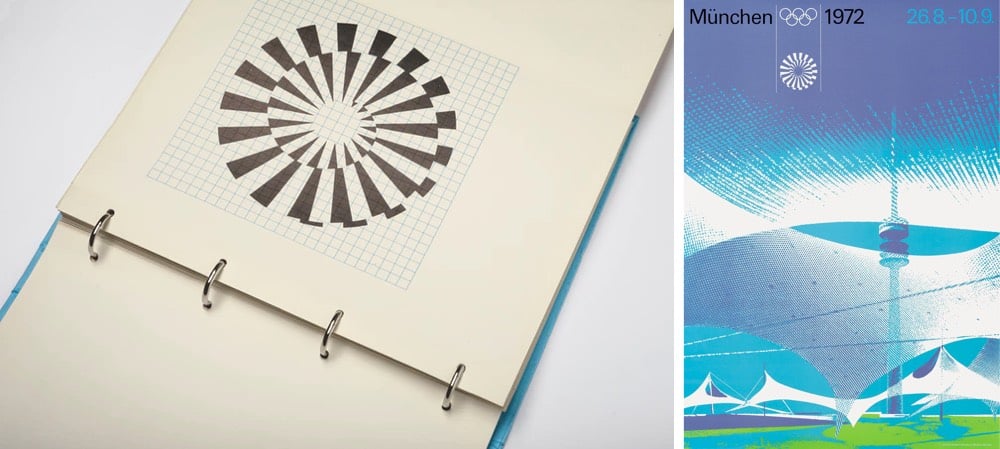
For the 1972 Summer Olympics in Munich, a team led by Otl Aicher designed the iconic identity for the event. The guidelines for the visual design were laid out in a manual produced in 1969, which contained the design systems governing how everything from signage and merchandise to tickets and even landscaping were to be produced.
The visual modules — the typeface, the colors, the grid systems and the application methods — were the basis of all printed matter, merchandising products, signage, wayfinding systems, urban planning and landscaping.
“The freedom of play” was about ensuring “maximum variation” via “strict discipline and adherence to rules”, explained Otl Aicher in 1975.
Ever since he was a kid, Cameron Smith has wanted to go into space. This desire persisted into adulthood, and the Portland State archaeology professor has spent the past several years constructing a series of homemade pressurized spacesuits to achieve that dream. In this video, Smith talks about his quest and we witness his preparations for testing a spacesuit he built for under $1000 by taking it up in a balloon to a height of 63,000 feet.
Smith’s journey to the upper atmosphere calls to mind the devil-may-care mindset typical of the early days of space exploration, when air force pilots on both sides of the Iron Curtain risked their neck to advance human spaceflight and secure military advantage in orbit. These pilots were the first humans to test experimental new pressure suits that were meant to sustain life in the upper atmosphere and beyond, and there was little assurance that they would ever return from these crucial tests alive.
And yes, you can totally buy oldRussian and Soviet spacesuits on eBay.
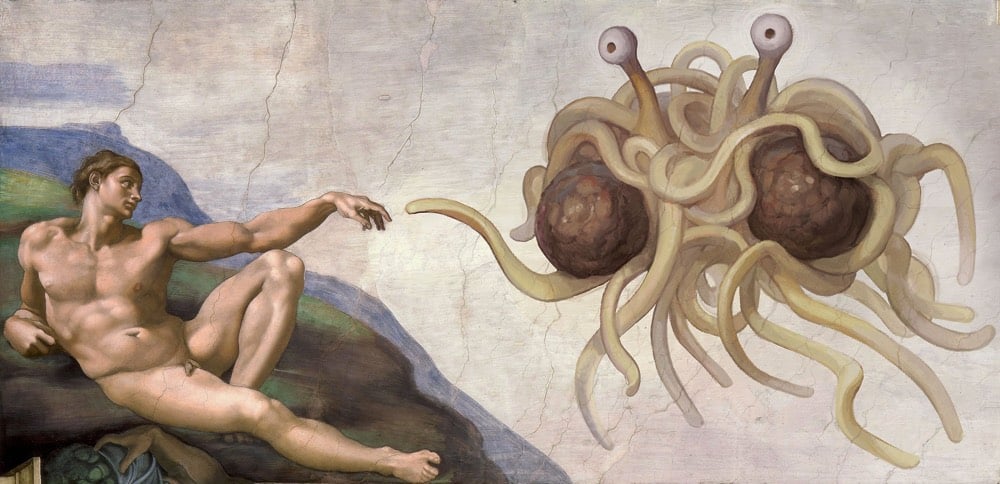
In 2005, Bobby Henderson wrote an open letter to the Kansas State Board of Education about their decision to allow teaching of intelligent design as an alternative to evolution in public school science classrooms. In it, he introduced the world to the Flying Spaghetti Monster:
I think we can all agree that it is important for students to hear multiple viewpoints so they can choose for themselves the theory that makes the most sense to them. I am concerned, however, that students will only hear one theory of Intelligent Design.
Let us remember that there are multiple theories of Intelligent Design. I and many others around the world are of the strong belief that the universe was created by a Flying Spaghetti Monster. It was He who created all that we see and all that we feel. We feel strongly that the overwhelming scientific evidence pointing towards evolutionary processes is nothing but a coincidence, put in place by Him.
It is for this reason that I’m writing you today, to formally request that this alternative theory be taught in your schools, along with the other two theories.
The Flying Spaghetti Monster quickly became an internet meme and, shortly thereafter, an actual religion. *nudge nudge wink wink*
I, Pastafari is a feature-length documentary about the Church of the Flying Spaghetti Monster and its adherents, the Pastafarians.
I, Pastafari is a story about a few brave Pastafarians, evangelizing the message of the FSM, while fighting against intolerant skeptics, for the freedom to access religious privileges in law granted to other “real” religions. In a time of flat-earthers, anti-vaxxers, fake news, and alternative facts, the Pastafarians may be the savior the world has been waiting for. R’Amen.
I have a bad feeling that what started out as a satirical criticism of religion will be an actual religion in the future whose adherents won’t see the irony in or damage done by that shift. That’ll be fun.
From 1973, this is an animated short film version of the classic children’s book The Giving Tree, narrated by author Shel Silverstein. As Wikipedia notes, there are conflicting ideas about the book’s meaning:
This book has been described as “one of the most divisive books in children’s literature”; the controversy stems from whether the relationship between the main characters (a boy and the titular tree) should be interpreted as positive (i.e., the tree gives the boy selfless love) or negative (i.e., the boy and the tree have an abusive relationship).
Silverstein’s narration does little to resolve the complexity of the story, although as someone who has never read The Giving Tree1, I was left feeling not so great about the relationship depicted in the story. (via open culture)
We don’t know what motivated Shel Silverstein to write “The Giving Tree.” In a rare interview, he said it was about “a relationship between two people; one gives and the other takes.” But we think it’s best read as a cautionary tale about love. Although the tree seems to take joy in giving to the boy, their relationship is entirely one-sided. The tree is perfectly happy to destroy herself under the guise of “love” for the boy. That’s not love; it’s abuse. Even an editor of the book, Phyllis Fogelman, felt that way. “I have had qualms about my part in the publication of ‘The Giving Tree,’ which conveys a message with which I don’t agree,” she said in an interview. “I think it is basically a book about a sadomasochistic relationship.”
I know! Silverstein was not part of my childhood — perhaps his stuff was too weird for my parents? — so I’ve only gotten to know his work through Where the Sidewalk Ends, which I’ve read to my kids.↩
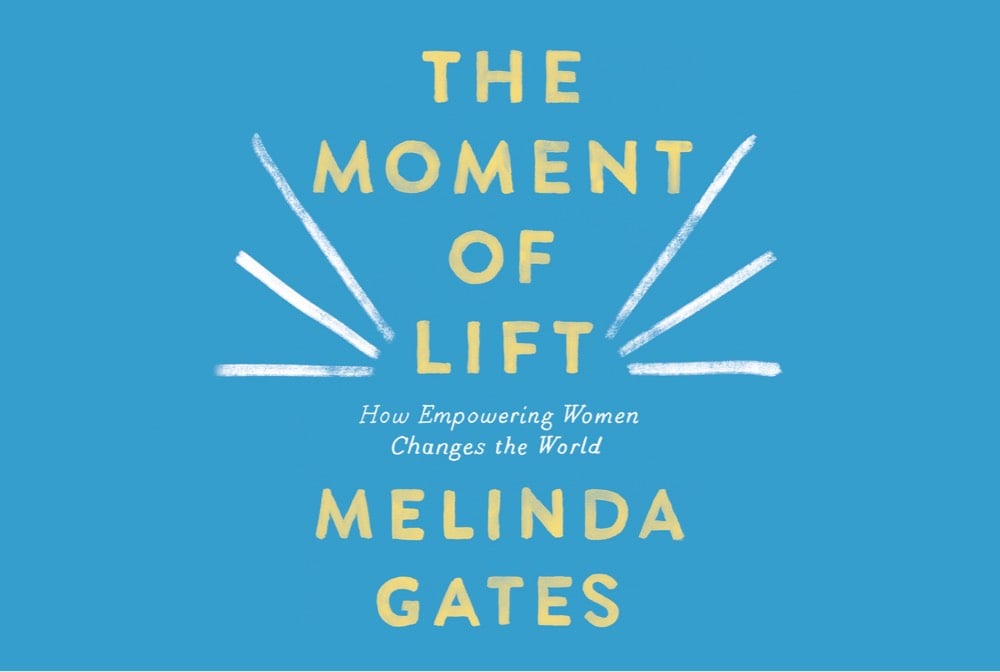
When you lift up women, you lift up everybody — families, communities, entire countries. That’s not just the right approach; it’s backed up by research and countless real-world examples. In her book, Melinda tells the stories of the inspiring people she’s met through her work all over the world, digs into the data, and powerfully illustrates issues that need our attention — from child marriage to gender inequity in the workplace. I’ve called Melinda an impatient optimist and that’s what she delivers here — the urgency to tackle these problems and the unwavering belief that solving them is indeed possible.
In my travels, I’ve learned about hundreds of millions of women who want to decide for themselves whether and when to have children, but they can’t. They have no access to contraceptives. And there are many other rights and privileges that women and girls are denied: The right to decide whether and when and whom to marry. The right to go to school. Earn an income. Work outside the home. Walk outside the home. Spend their own money. Shape their budget. Start a business. Get a loan. Own property. Divorce a husband. See a doctor. Run for office. Ride a bike. Drive a car. Go to college. Study computers. Find investors. All these rights are denied to women in some parts of the world. Sometimes these rights are denied under law, but even when they’re allowed by law, they’re still often denied by cultural bias against women.
Obama also recommends Pachinko by Min Jin Lee, a book I’ve been curious about ever since it was published. Friends have recommended it and the cover always catches my eye in the bookstore even though I’m never specifically looking for it. I don’t even know why I’ve been resisting it…just ordered it!
President Obama. That two-word phrase still fills me with so many conflicting emotions that I can’t even process it. I imagine it’s the same way for a lot of other people (on both sides of the political spectrum).↩
Micromobility, a term coined by Apple analyst and electric transportation enthusiast Horace Dediu, is in the midst of transforming cities. What started with docked bike share, has now moved to dockless electric scooters and e-bikes. And while much of the talk is about how they’re crowding sidewalks or being vandalized, the reality is that they have the ability to fundamentally reshape the geography of cities. When a 25 minute walk or a ten minute Uber ride (with waiting) turns into a 97 cent e-bike ride, the meaning of proximity starts to transform.
When you look at the average distance of trips across different modes of transport it’s clear where the gap is: trips that are long enough to be an annoying walk and short enough to feel like a waste of a car ride. That distance is doable with a regular bike, but if there’s a hill you may be huffing and sweating by the end. The e-bike takes all that away, giving you just enough power to make an otherwise intimidating climb into, at worst, a few aggressive pedals.
Having used dockless e-bikes and scooters over the past few months in various cities, I wholeheartedly agree with Brier here. (And not forgetting that regular old bicycles will also be an integral part of the future of transportation in cities.) This transformation is one that Dean Kamen trumpeted when introducing the Segway in 2001 — the Segway will “sweep over the world and change lives, cities, and ways of thinking” — but the Segway was too early & expensive and now e-scooters and e-bikes are actually set to deliver on that promise.1 The challenge is a political one: how can cities make sure their inhabitants have cheap and easy access to various modes of transportation without sacrificing public safety or having these massive companies like Lyft and Uber come in and gut existing transportation options by selling their services at a VC-funded loss for years?
The Segway was the Apple Newton to the e-scooter’s iPhone…too soon and clunky and expensive for what it did.↩
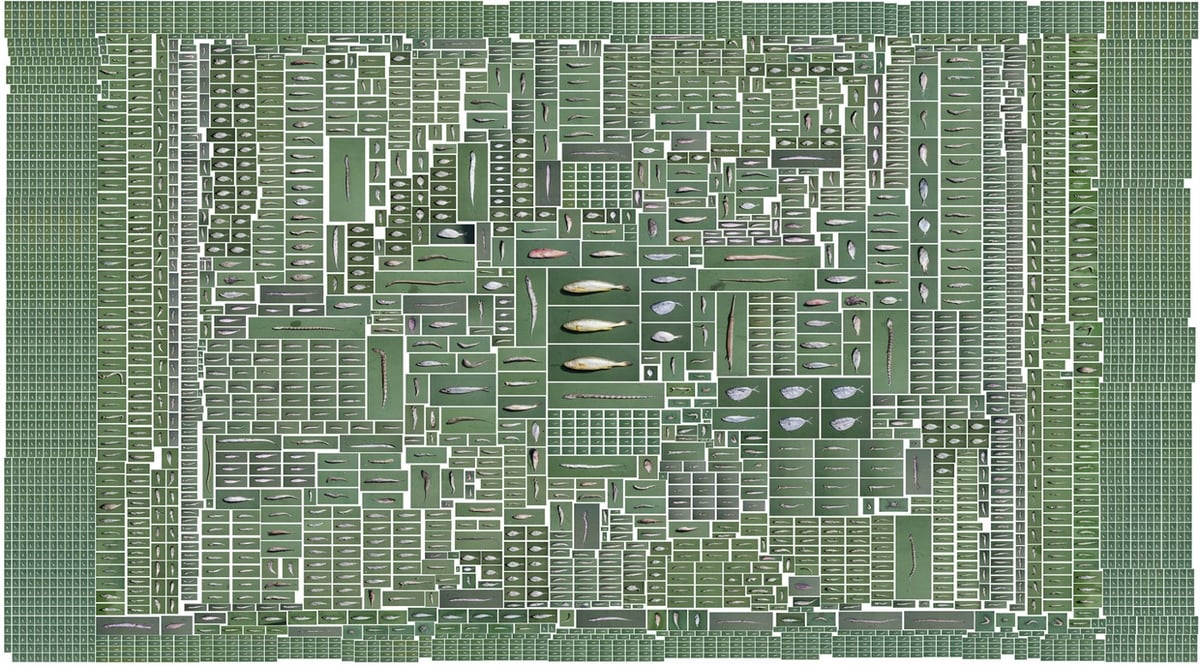
We examined the impact of farm fishing through the large yellow croaker (大黄鱼) which is China’s most popular fish.
Working with scientists, fish experts and local government officials, we traversed 4 towns in Fujian China to build a tessellated mosaic of fish portraits to see how much wild small fish is needed to sustain fish farming.
The answer is 7.15kg, 39 species, more than 4000 wild small fish to raise a single kilogram of large yellow croaker.
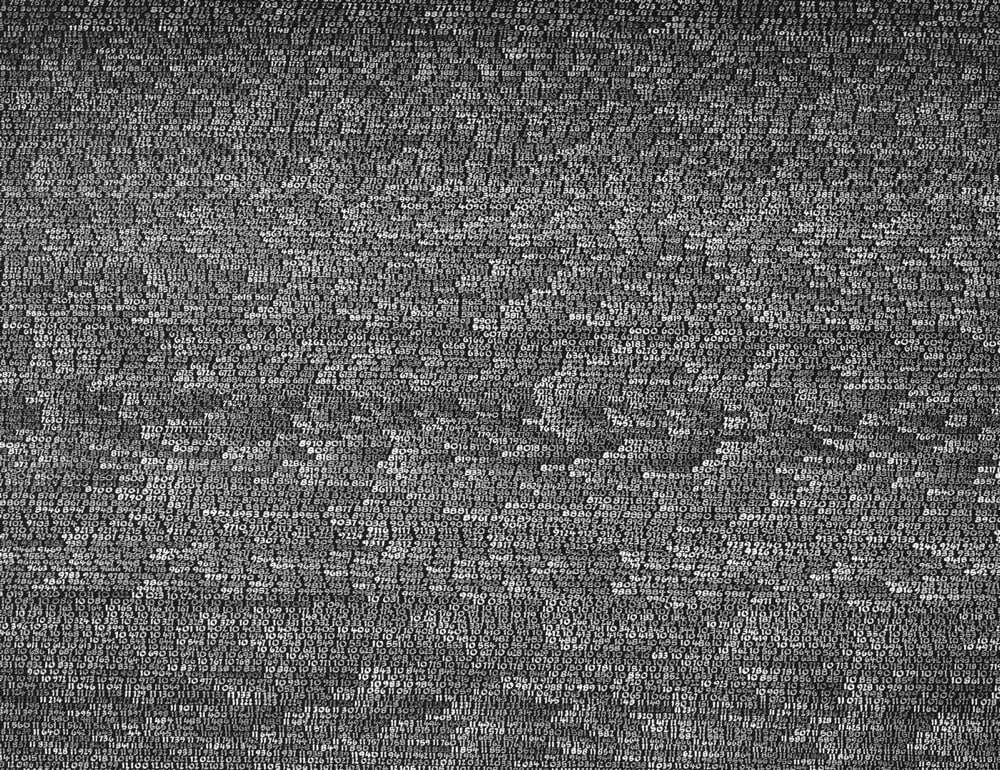
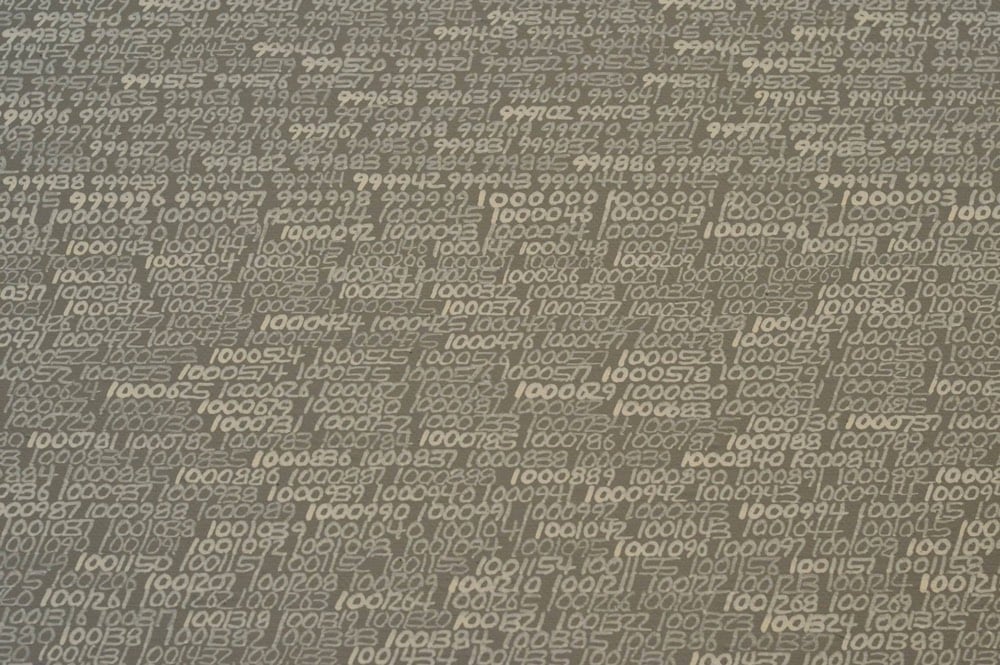
In 1965, French-born Polish painter Roman Opalka began work on his series of paintings OPALKA 1965/1 - ∞. Starting in the top-left corner of a canvas, he painted the number “1”, then “2”, then “3”, and so on, continuing until the canvas was full of consecutive whole numbers. At the top of the next canvas, he picked up where he’d left off, and then just kept going from canvas to canvas. By 1970, Opalka abandoned working on anything else and devoted himself solely to filling canvases with numbers.
He pursued this culmination on a daily basis, eight hours a day, until the process of painting led him to “white/white” — that is, white numbers on a canvas with a background painted white, the same as the numbers. After three years (1968, possibly 1969), Opalka began to add 1% white pigment to the black background. Gradually, over time, as more paintings were painted, the black surface would become gray. As he continued to count and to paint five, six, and seven digit numbers, he discreetly added 1% white to each canvas, thus making the surfaces appear increasingly lighter. In the late 1970s he declared that the background of his canvases would eventually appear white, the same white used to paint the numerals that would finally dissolve into the surface, embody the surface. Ultimately, there would be no distinction between the white numerals and the white surface; they would culminate as a form of blankness, possibly transcendent, as the numerals grew invisible within the prospect of infinity, the Samadhi or highest level of meditation.
According to Opalka’s website, the last number he painted was 5607249, in white paint, invisible on a white canvas. (via moss & fog)
Crystal, towns, and rivers all act according to similar principles governing the formation of things from points and edges. What a world. (via colossal)
After I accumulated a Duolingo streak in excess of 500 days — a feat that, thanks to the app’s notoriously insistent reminders, has now come to define my self-worth — I found myself in a better place to judge just how much an app alone can really teach you. The short answer is that you can definitely learn some things from an app, but if you want to become fluent in a language — or even conversational — they won’t be enough.
The CEFR is a standard for describing how proficient people are at language, with levels progression from Basic (A1 & A2) to Independent (B1 & B2) to Proficient (C1 & C2).
Level B1 starts to introduce more complex ideas like explaining their opinions, dreams, and ambitions, or handling complex tasks while traveling. Level B2 expects speakers to be able to speak with native speakers of a language without straining, and have complex technical discussions related to their field of expertise. These two levels make up the Independent stage.
Apps have trouble getting people past the B1 stage. Reading this I thought, aha, this is an opportunity for the internet to connect native speakers from around the world with language learners. I got all excited thinking about how to build something to facilitate this when I remembered that, duh, the internet is mature enough that someone has already built this. Tandem is one such service; they’ve got an app that allows students to video chat their way to fluency with native speaking tutors. Other sites that help connect you with native speakers are Verbling and Italki, and HelloTalk.
Has anyone tried a service like this? Is video conversation a worthy substitute for in-person conversational language learning?
This is neat: Peter Mayhew as Chewbacca speaking English to Harrison Ford’s Han Solo in a scene from Empire Strikes Back:
Mayhew’s dialogue provided context for Ford to play off of. Chewbacca’s more familiar voice was dubbed over the on-set dialogue in post production — listen to Star Wars sound designer Ben Burtt describe how he created Chewie’s voice in this video at ~26:18. Mayhew passed away last week at the age of 74.
Using geological surveys, geo-referenced road network data, and historic maps drawn the from the collections of the Library of Congress and New York Public Library, Miles Zhang made this time lapse video of the development of the street grid of NYC from 1609 (when Henry Hudson first explored the area for the Dutch) to the present day.
The resulting short film presents a series of “cartographic snapshots” of the built-up area at intervals of every 20-30 years in the city’s history. This process highlights the organic spurts of growth and movement that typify New York’s and most cities’ development through time. The result is an abstract representation of urbanism.
For almost the first half of Manhattan’s history, walking was the primary means of transport. This preference was manifested in the shorter distances between residential, industrial, shipping, and commercial areas — and more frequently their overlap. With street systems, the reliance on the foot is manifested in narrower streets widths not designed to accommodate greater width from carriages, trolleys, and later cars. In fact, the average width of secondary arterial streets increased from 30 feet for streets opened between 1624-1664, to 45 feet for streets opened 1664-1811, and then a uniform width of 60 feet for any cross street opened after 1811. Later widenings increased many of these smaller and pre-1811 streets to width between 100 and 130 feet. In other words, moving from the older networks in the south to newer networks in the north, the width of streets and size of blocks generally increases. These new widths might be influenced by growing population size from only 25,000 in the 1770s, to 64,000 by 1811, and 247,000 by 1834, thereby requiring wider streets for expanding population and higher buildings.
These gradual changes in planning reflected increasing reliance on carriages and horse-drawn trolleys instead of walking. Each mode of transport required a different minimum street width and was associated with different speeds.
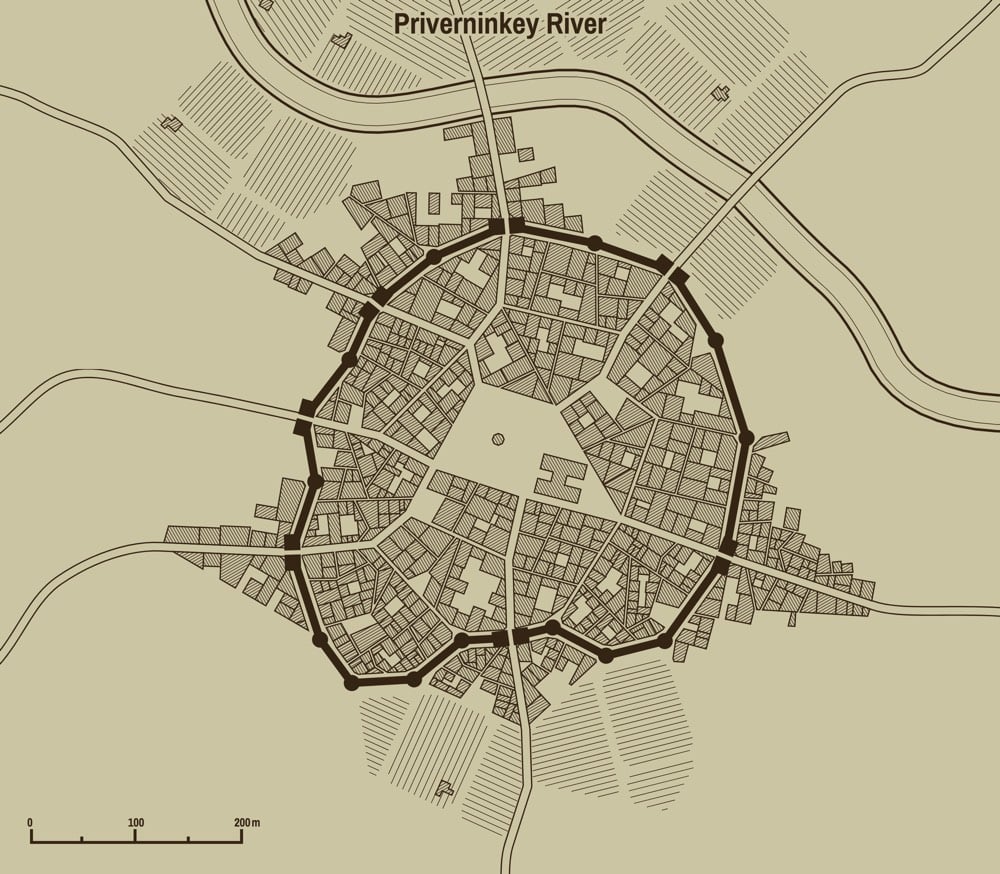
Oh my, this medieval town generator tool is super fun to play around with. By adjusting parameters like size, color palette, building styles, and which features to include (rivers, coastline, temples), you can make a random ichnographic map of a medieval town or city.
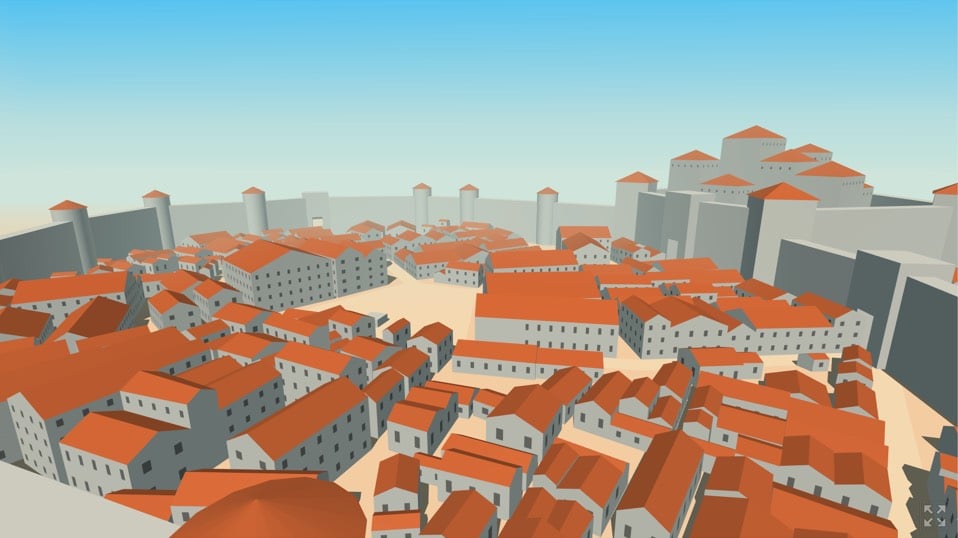
Toy Town is a related tool by the same person that allows you to move through a 3D visualization of a medieval town, a la Minecraft. (Unfortunately, you can’t generate a map in the 2D tool and then fly through it in the 3D tool.)
Werner Herzog’s latest film is called Meeting Gorbachev, in which he sits down with former Soviet leader Mikhail Gorbachev for a series of interviews about his life, political career, and his role in ending the Cold War. From a review in the NY Times:
The two men appear to like each other immensely — in narration, Herzog calls Gorbachev “one of the greatest leaders of the 20th century” — but Gorbachev can be a cool customer. He sometimes seems guarded in his assessment of what he might have done differently. He says he believes the Soviet Union should have given its republics more rights instead of dissolving entirely. As for Boris Yeltsin, who became the first president of a post-Soviet Russia, he says, “I should have sent him off somewhere.”
It’s not easy to speak of what I tried to accomplish. I think as a natural concomitant you get the feeling that there should be better times between the West and Russia. The demonization of Russia is a great mistake of the Western media and Western politics, and we should try and seek a climate that was created by Ronald Reagan and Mikhail Gorbachev, the most improbable characters you could ever put together in one room.
Meeting Gorbachev is out in US theaters now, but just barely. Probably best to catch this streaming in a month or two.
I love the in situ audio clips in this piece. I’ve only seen this technique used a few times…more sites should do this.↩
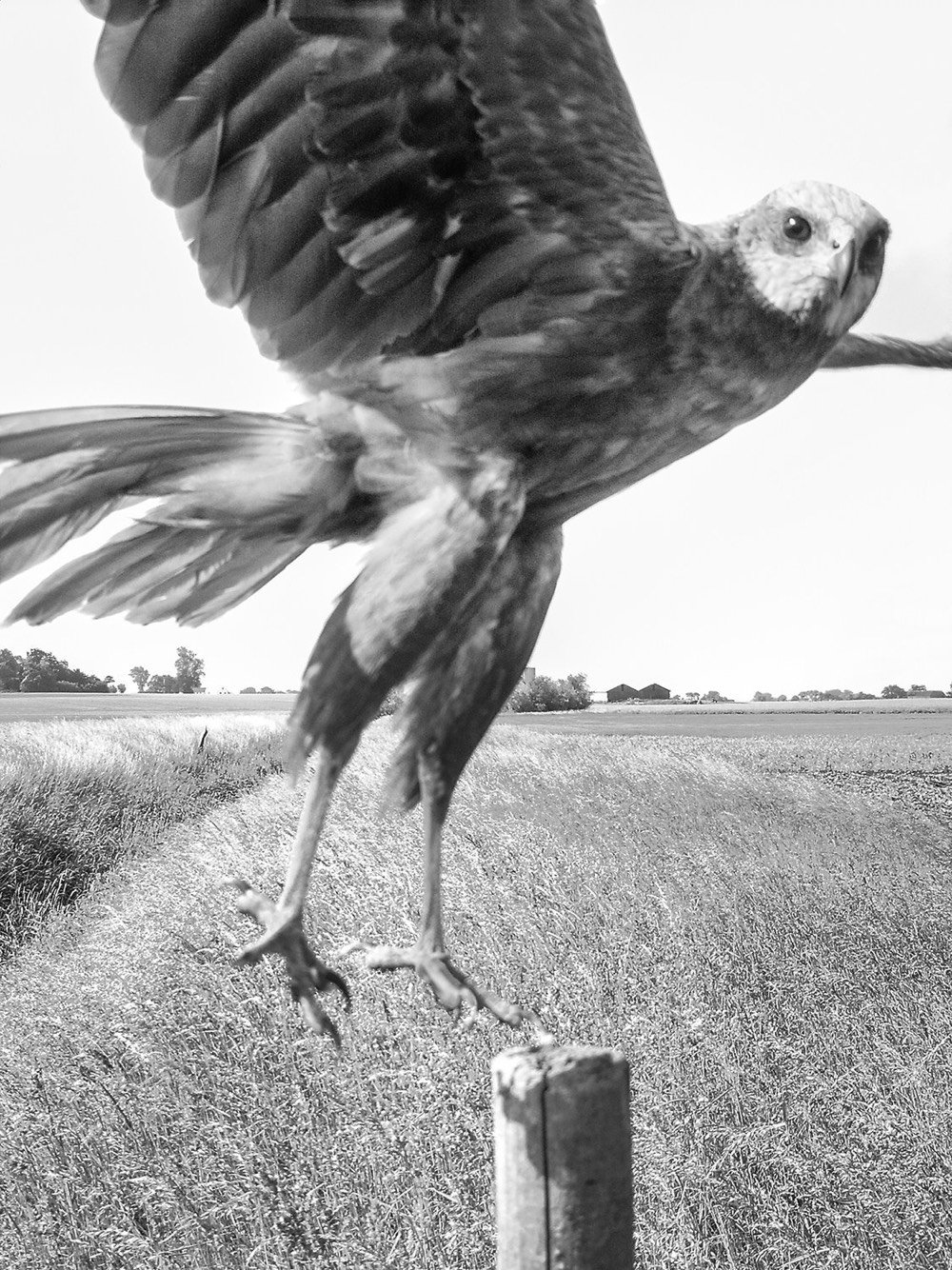
For his photo series The Pillar (which is also a book), Stephen Gill set up a camera next to a post near his home in Sweden and set the shutter to fire when a motion sensor was triggered. “I decided to try to pull the birds from the sky,” he said.
A selection of Gill’s photographs were published by the New Yorker, accompanied by a wonderful short essay by Karl Ove Knausgaard.
A pillar knocked into the ground next to a stream in a flat, open landscape, trees and houses visible in the distance, beneath a vast sky. That is the backdrop to all the photographs in Stephen Gill’s book “The Pillar.” We see the same landscape in spring and summer, in autumn and winter, we see it in sunshine and rain, in snow and wind. Yet there is not the slightest bit of monotony about these pictures, for in almost every one there is a bird, and each of these birds opens up a unique moment in time. We see something that has never happened before and will never happen again. The first time I looked at the photographs, I was shaken. I’d never seen birds in this way before, as if on their own terms, as independent creatures with independent lives.
Why are our allergies so bad? Because most of the trees in our cities are pollen-spreading males that were selected because they “shed no messy seeds, fruits or pods”.
Centuries of Sound is a podcast that creates mixtapes by year. So far, that’s pretty standard. The main difference is that CoS’s mixtapes begin in 1853.
That’s as early as we’ve been able to recover recorded audio, mostly from technology that did not work particularly well at the time. The technology of the 1850s recorded sound, but couldn’t reliably reproduce it.
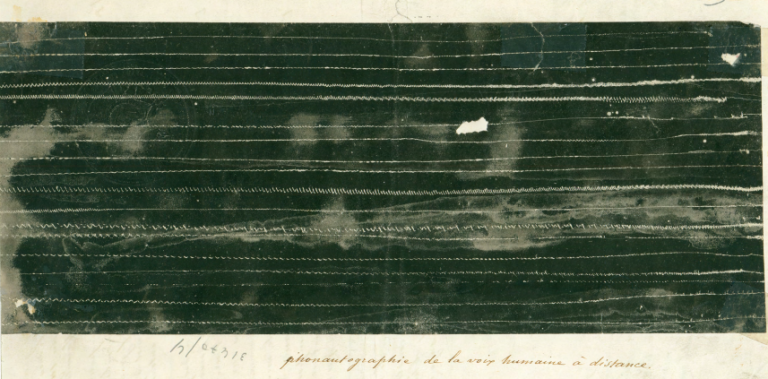
The real start date for us is nearly a quarter of a century [before Thomas Edison], in the studio of French printer and bookseller Édouard-Léon Scott de Martinville. The year was 1853 or 1854, and he was working on engravings for a physiology textbook, in particular a diagram of the internal workings of the human ear. What if, he thought, we could photograph sounds in the way we do images? (photography was a quarter-century old at this point) He began to sketch a device, a way of mimicking the inner workings of the human ear in order to make lines on a piece of paper.
I cover a plate of glass with an exceedingly thin stratum of lampblack. Above I fix an acoustic trumpet with a membrane the diameter of a five franc coin at its small end—the physiological tympanum (eardrum). At its center I affix a stylus—a boar’s bristle a centimeter or more in length, fine but suitably rigid. I carefully adjust the trumpet so the stylus barely grazes the lampblack. Then, as the glass plate slides horizontally in a well formed groove at a speed of one meter per second, one speaks in the vicinity of the trumpet’s opening, causing the membranes to vibrate and the stylus to trace figures.
Firstsounds.org did the most work in deciphering these early paper recordings, and that story is well told by the radio show Studio 360.
It even has a perfect name, what these people do: archeophony.
Here, then, is Centuries of Sound’s mix of all the recorded audio up to 1860 that they’ve been able to recreate from those early, not-at-the-time-reproducible pre-Edison audio signal recordings.
I wish I had known about this when I was still writing my dissertation (which was, in part, on paper and multimedia in the 1900s). It would have made many things much easier.
I recently had to put my Amazon newsletter, The Amazon Chronicles, on a two-month hiatus because I’m going to have surgery to replace my shoulder. So what should happen the day after I make my announcement? One of the very best Amazon reporters, Recode’s Jason Del Rey, comes out with an oral history of Amazon Prime, the membership program that covers free fast shipping, digital media, and more — and arguably, the innovation that pushed Amazon past eBay and Walmart to become the retailer of first resort.
Charlie Ward (former Amazon principal engineer; current Amazon VP, technology)
I’m a one-click addict. I hate having to go through the order pipeline and choose everything again and again and again. And … I couldn’t use one click with Super Saver Free Shipping.
I kind of have a perfectionist type of mentality. Things kind of irritate me and get more and more irritating over time and it was just really confirmed to me that I couldn’t make it better. So I threw out this problem to the group: “Wouldn’t it be great if customers just gave us a chunk of change at the beginning of the year and we calculated zero for their shipping charges the rest of that year?”
And we kind of had a small pause, a moment where we all looked at it as like, “Is Charlie crazy?”
See also this digital media pullquote which Peter Kafka pointed out on Twitter.
Bill Carr (former Amazon VP of digital music and video)
Netflix had a budget which — and you’re going to laugh when I tell you the scary number — was $35 million dollars a year on video content. These were fixed costs. This meant they’d go and buy the rights to movies and TV shows from the studios for $35 million a year and it didn’t matter whether they had one viewer or 100 million viewers, that’s what they’re going to pay. Well, that’s not the business Amazon was in.
We were giving much more than $35 million a year to the motion-picture studios at the time. But it was a daunting thing to commit to it on a fixed-fee basis with no knowledge of how we’re going to actually get any subscribers. In the 2008, ‘09, ‘10 era, that was a scary amount of money.
And I remember then Jeff finally goes, “I’ve got an idea.” And in typical Jeff fashion he picked something that was not on the list at all and he said, “Let’s make it part of Amazon Prime.” And we looked at him like there are arms and legs growing out of his head. Like, “What are you talking about? Amazon Prime? That’s the free shipping program.”
And the principle that Jeff realized was that we need to do actually exactly what Netflix did when they first launched their digital service. Everyone scoffed at that, too. Like, “you’re offering digital plus DVDs and you’re not charging more?”
Netflix was able to get away with the fact that the content was not great at the beginning because it was free. It was like, “Oh, by the way, here you go, here’s some movies along with it.” And we were going to take a page out of their book.
I remember Jeff used those exact words — It’s an, “Oh, by the way.” “Yeah, Prime is $79 a year. Oh, by the way, there’s free movies and TV shows with it.” And how much could consumers complain about the quality of movies and TV shows if it’s free?
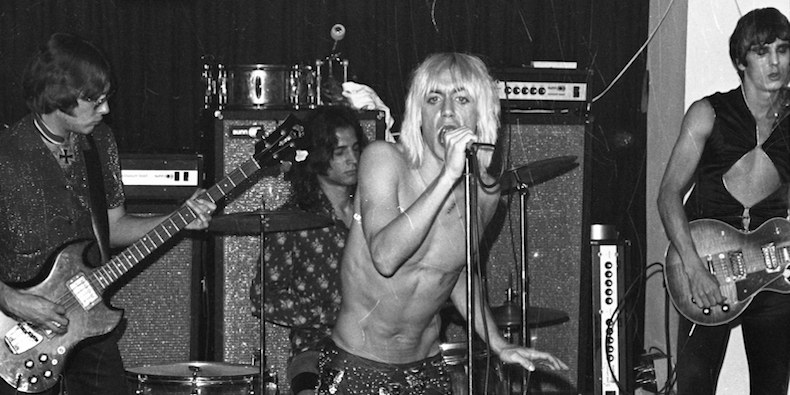
Strictly speaking, there are plenty of live recordings of Iggy Pop playing with The Stooges. They’re just all bootlegs. And mostly, not very good ones.
Most vintage Stooges concert recordings sound too awful to interest more than hardcore fans, because incredible performances are sunk in a swamp of low fidelity. Adding insult to injury, all the horrible bootleg covers with cheap fonts make the band look like camp horror rock better at chest cutting than songwriting, which undermines the band’s legacy as visionary rock ‘n’ rollers who set trends for decades. As one fan’s friend put it while listening to a bootleg: “[W]hy does everything you have by Iggy Pop sound like it was recorded up someone’s ass?”
Gilbreath’s essay turns into a kind of meditation on lost albums: recordings hidden in the archives, that sometimes are rediscovered, and sometimes are never found.
A live 1957 recording of John Coltrane and Thelonious Monk sat in the Library of Congress’s archives unnoticed for 48 years, before the library’s Magnetic Recording Laboratory supervisor Larry Appelbaum found it. For 60 years , Verve stored a live recording of Ella Fitzgerald performing at Zardi’s Jazzland in Hollywood, before releasing it in 2017 just after what would have been her 100th birthday. In 2017, a DJ and music historian named Amir Abdullah helped unearth a pristine radio broadcast of Charles Mingus playing a Detroit gallery in 1973. Reels containing previously unknown early live recordings of jazz guitar giant Wes Montgomery sat for decades in peoples’ houses, falling apart.
The demo cassettes for Jimi Hendrix’s Black Gold Suite album project, thought lost for decades, or possibly stolen, were simply sitting in drummer Mitch Mitchell’s house, sealed with Jimi’s headband.
I have less hope for this lost Stooges album, though. Too many people who were in a position to know suggest that it just never happened. Oh well. At least we’ve got bootlegs that were shoved up someone’s ass.
Asif Kapadia, the director of Senna and Amy, has directed a documentary film about footballer Diego Maradona, one of the best to ever lace up the cleats.
Having never won a major tournament, ailing football giant SSC Napoli had criminally underachieved. Their fanatical support was unequalled in both passion and size. None was more feared. But how they ached for success…
On 5th July 1984, Diego Maradona arrived in Naples for a world-record fee and for seven years all hell broke loose. The world’s most celebrated football genius and the most dysfunctional city in Europe were a perfect match for each other.
Maradona was blessed on the field but cursed off it; the charismatic Argentine, quickly led Naples to their first-ever title. It was the stuff of dreams.
But there was a price… Diego could do as he pleased whilst performing miracles on the pitch, but when the magic faded he became almost a prisoner of the city.
The film will debut at Cannes and HBO just bought the TV and streaming rights. Senna is one of my all-time favorite documentaries, so I’m excited for this one.
Update: I’ve embedded the full trailer above and moved the teaser down here:
An end to AIDS in sight? “A landmark study found men whose HIV infection was fully suppressed by antiretroviral drugs had no chance of infecting their partner.”
Note: If you are a member and tried to log in, it didn't work, and now you're stuck in a neverending login loop of death, try disabling any ad blockers or extensions. Or try logging out and then back in. Still having trouble? Email me!









Socials & More