Entries for February 2018
Artur Grabowski spent much of 2017 comparing three mapping apps (Google Maps, Apple Maps, Waze) to see which one was the most accurate and resulted in the fastest route times. After 120 trips, the data showed that Google Maps got him to his destinations most quickly, Apple Maps made the most accurate predictions, and Waze promised the fastest times but often under-delivered.
So that’s some News You Can Use™ (assuming the results are statistically significant), but then Grabowski goes on to discuss why each app might over- or under-promise on route times based on the presence of advertising:
For Apple, Maps is a basic solution for its average user who wants a maps solution out of the box. Apple Maps does not directly drive ad or subscription revenue for Apple so there is less reason for Apple to incentivize iOS users to use Apple Maps over other solutions. However, Apple does care about user experience, and sandbagging trip time estimates so that users arrive at their destination on time results in a great user experience. Hence, I believe that Apple is intentionally conservative with estimated arrival times.
At the other extreme, Waze (Alphabet) makes money through ads when you use their app. What better way to get people to use your navigation app than by over-promising short trip times when no one takes the time to record data and realize that you under-deliver? If an unsuspecting user opens Apple Maps and sees a 34-minute route and compares that to 30-minutes in Waze, the deed is done. Now Waze has a life-long customer who doesn’t realize they’ve been hoodwinked and Waze can throw at them stupidly annoying ads.
If that’s happening with your mapping app, just think of how your search results, Facebook newsfeed, and Instagram feed are manipulated to be more amenable to advertising. Oh, and don’t forget about almost everything you watch and read. Even Black Panther and Get Out had paid product placements. I wonder how many more car chases there are in action movies due to deep pockets at Acura or Mercedes or BMW. (via df)
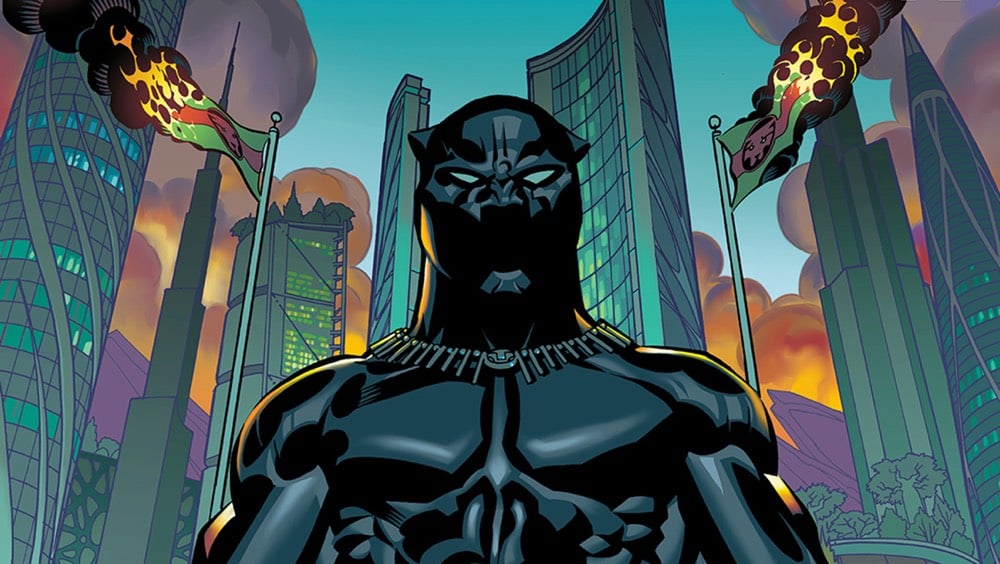
Over the weekend, I saw Black Panther. Twice. It’s such a vibrant world that I wanted to experience more of, so I asked some comics nerds on Twitter:
Black Panther is the first superhero movie I’ve seen that makes me want to read the comic book. Where should I start?
Here’s what they suggested for a beginner Black Panther reader.
Black Panther #1-49 (1998) by Christopher Priest. “Black Panther reinvented as a sharp and witty political satire? Believe it! T’Challa is the man with the plan, as Christopher Priest puts the emphasis on the Wakandan king’s reputation as the ultimate statesman, as seen through the eyes of the U.S. government’s Everett K. Ross.”
Black Panther #1-12 (2016) by Ta-Nehisi Coates. “A new era begins for the Black Panther! MacArthur Genius and National Book Award-winning writer Ta-Nehisi Coates (Between the World and Me) takes the helm, confronting T’Challa with a dramatic upheaval in Wakanda that will make leading the African nation tougher than ever before.”
Black Panther: World of Wakanda by Roxane Gay & Yona Harvey. “You know them now as the Midnight Angels, but in this story they are just Ayo and Aneka, young women recruited to become Dora Milaje, an elite task force trained to protect the crown of Wakanda at all costs. Their first assignment will be to protect Queen Shuri… but what happens when your nation needs your hearts and minds, but you already gave them to each other?”
Panther’s Rage by Don McGregor. In Comics Alliance, Tom Speelman wrote that this three-year run of Black Panther in the mid-70s “pioneered modern comics”. The story of how McGregor talked his way into this reinvention is pretty interesting. “I kept saying to them, ‘I can’t believe you guys are printing this racist material in the 1970s.’”
See also the NY Times’ list of what articles and essays to read after seeing the movie.
Dina Leygerman is a high school teacher who teaches George Orwell’s novel 1984 to her students every year. Before she does, with the assistance of other teachers and the school’s administration, she turns her classroom into a totalitarian regime to give the kids a taste of life in Oceania. Rules are strict and favor is given to students who report on rule-breaking by their classmates.
I tell my seniors that in order to battle “Senioritis,” the teachers and admin have adapted an evidence-based strategy, a strategy that has “been implemented in many schools throughout the country and has had immense success.” I hang posters with motivational quotes and falsified statistics, and provide a false narrative for the problem that is “Senioritis.” I tell the students that in order to help them succeed, I must implement strict classroom rules.
However, when Leygerman tried the experiment this year, the students weren’t having it. They rebelled. They protested. They fought harder as the rules became more onerous.
The President of the SGA, whom I don’t even teach, wrote an email demanding an end to this “program.” He wrote that this program is “simply fascism at its worst. Statements such as these are the base of a dictatorship rule, this school, as well as this country cannot and will not fall prey to these totalitarian behaviors.” I did everything in my power to fight their rebellion. I “bribed” the President of the SGA. I “forced” him to publicly “resign.” And, yet, the students did not back down. They fought even harder. They were more vigilant. They became more organized. They found a new leader. They were more than ready to fight. They knew they would win in numbers.
An upcoming book edited by Cass Sunstein asks if authoritarianism can happen in America. The experiment in Leygerman’s classroom and the inspiring movement started by the students of Marjory Stoneman Douglas High School in Parkland, FL suggest perhaps not. The nation’s youth, raised on The Hunger Games and Harry Potter, are reminding the baby boomers that considering what their own parents went through in the Great Depression and World War II, they should fucking know better than to slam the door on succeeding generations.
In this clip from an episode of Mister Rogers’ Neighborhood, breakdancer Jermaine Vaughn shows Mister Rogers and his television neighbors a few moves, including some popping and locking and the moonwalk.
That guy is game for anything, even if it makes him look dorky…probably especially if it makes him look dorky. Rogers knew the value of not letting what others might think about you get in the way of your curiosity or a new experience.
Also, DJs and producers take note: his lines “like there’s a wave going the whole way through your body” and “then make it come back, huh” are ripe for sampling.
Come March 1, it will be illegal to throw a lobster into a pot of boiling water. Chefs and home cooks alike will need to quickly kill the lobster first and then cook it.
The first such national legislation of its kind in the world calls for a more humane death for lobsters: “rendering them unconscious” before plunging them into scalding water. Two methods are recommended: electrocution or sedating the lobster by dipping it into saltwater and then thrusting a knife into its brain.
The same law also gives domestic pets further protections, such as dogs can no longer be punished for barking.
The measure is part of the broad principle of “animal dignity” enshrined in Switzerland’s Constitution, the only country with such a provision. The Constitution already protects how various species must be treated and specifies that animals need socialization.
That means cats must have a daily visual contact with other felines, and hamsters or guinea pigs must be kept in pairs. And anyone who flushes a pet goldfish down the toilet is breaking the law.
But really, this is just an excuse to revisit a sublime piece of journalism that David Foster Wallace wrote in 2004 for Gourmet magazine called Consider the Lobster (later collected in a book of the same name). In it, Wallace travels to the Maine Lobster Festival and comes away asking similar questions that the Swiss had in formulating their law.
So then here is a question that’s all but unavoidable at the World’s Largest Lobster Cooker, and may arise in kitchens across the U.S.: Is it all right to boil a sentient creature alive just for our gustatory pleasure? A related set of concerns: Is the previous question irksomely PC or sentimental? What does “all right” even mean in this context? Is it all just a matter of individual choice?
Wallace being Wallace, he then dives deep into these questions at a length of several thousand words, a bunch of which are:
Since, however, the assigned subject of this article is what it was like to attend the 2003 MLF, and thus to spend several days in the midst of a great mass of Americans all eating lobster, and thus to be more or less impelled to think hard about lobster and the experience of buying and eating lobster, it turns out that there is no honest way to avoid certain moral questions.
There are several reasons for this. For one thing, it’s not just that lobsters get boiled alive, it’s that you do it yourself — or at least it’s done specifically for you, on-site. As mentioned, the World’s Largest Lobster Cooker, which is highlighted as an attraction in the Festival’s program, is right out there on the MLF’s north grounds for everyone to see. Try to imagine a Nebraska Beef Festival at which part of the festivities is watching trucks pull up and the live cattle get driven down the ramp and slaughtered right there on the World’s Largest Killing Floor or something — there’s no way.
The intimacy of the whole thing is maximized at home, which of course is where most lobster gets prepared and eaten (although note already the semiconscious euphemism “prepared,” which in the case of lobsters really means killing them right there in our kitchens). The basic scenario is that we come in from the store and make our little preparations like getting the kettle filled and boiling, and then we lift the lobsters out of the bag or whatever retail container they came home in …whereupon some uncomfortable things start to happen. However stuporous the lobster is from the trip home, for instance, it tends to come alarmingly to life when placed in boiling water. If you’re tilting it from a container into the steaming kettle, the lobster will sometimes try to cling to the container’s sides or even to hook its claws over the kettle’s rim like a person trying to keep from going over the edge of a roof. And worse is when the lobster’s fully immersed. Even if you cover the kettle and turn away, you can usually hear the cover rattling and clanking as the lobster tries to push it off. Or the creature’s claws scraping the sides of the kettle as it thrashes around. The lobster, in other words, behaves very much as you or I would behave if we were plunged into boiling water (with the obvious exception of screaming). A blunter way to say this is that the lobster acts as if it’s in terrible pain, causing some cooks to leave the kitchen altogether and to take one of those little lightweight plastic oven timers with them into another room and wait until the whole process is over.
Do you remember the plots of books you read and movies you watch, even months later? I rarely do, so Julie Beck’s piece Why We Forget Most of the Books We Read really hit me square in the forehead this morning (even though I will likely forget having read it next week). Why do we forget all of this stuff we’re constantly consuming? Part of the reason is that we don’t need to:
In the internet age, recall memory — the ability to spontaneously call information up in your mind — has become less necessary. It’s still good for bar trivia, or remembering your to-do list, but largely, Horvath says, what’s called recognition memory is more important. “So long as you know where that information is at and how to access it, then you don’t really need to recall it,” he says.
Research has shown that the internet functions as a sort of externalized memory. “When people expect to have future access to information, they have lower rates of recall of the information itself,” as one study puts it.
One of the earliest articulations of the internet’s value in aiding memory was Cory Doctorow’s piece about how Boing Boing had become his “outboard brain”.
The upshot is that operating Boing Boing has not only given me a central repository of all of the fruits of my labors in the information fields, but it also has increased the volume and quality of the yield. I know more, find more, and understand better than I ever have, all because of Boing Boing.
The nuggets I’ve mined are at my instant disposal. I can use Blogger’s search interface to retrieve the stories I’ve posted with just a few keywords. While prepping a speech, writing a column, or working on a story, I will usually work with a browser window open to Blogger’s “Edit Your Blog” screen, cursor tabbed into the search field. I flip back and forth between my browser and my editor, entering a few keywords and instantly retrieving the details of some salient point — it’s my personal knowledge management system, annotated and augmented by my readers.
So hopefully by reading Beck’s piece critically and then writing about it here, I will be able to both remember it a little more on my own and also have placed it somewhere I can easily find again.
One of the relatively few kottke.org posts I remember without having to hunt around for it (which is ironic, considering) is this one about Dick Cavett and compartmentalized memory. Cavett had a really hard time remembering who his guests were on past shows.
A worried Johnny Carson once admitted to me that he frequently couldn’t remember what was said on a show he had just finished taping. And, sometimes, who the guests were. It’s a strange thing, and one I haven’t quite figured out.
Johnny all but wiped his brow when I told him it happened to me too, and that a few days earlier I got home and it took me a good 10 minutes to be able to report with whom I had just done 90 minutes. (It was only Lucille Ball!) It’s an oddity peculiar to the live performer’s divided brain that needs exploring. It has to do with the fact that you — and the “you” that performs — are not identical.
It’s the same with me, as I replied in that post:
If you were to ask me tonight what I’d posted to kottke.org today, I doubt I could tell you more than one or two items (out of the seven to nine items I post during a typical day). When I see friends outside of work, they sometimes remark on stuff I’ve posted recently and it usually takes me a few moments to remember what it is they’re referring to.
Rereading Cavett’s mention of “the live performer’s divided brain” got me thinking about how the way I produce kottke.org every day and lately how it feels more like a performance. I talked about this a little in that interview with NiemanLab:
The blog is half publication and half performance art, because when I wake up in the morning I usually have no idea what I’m going to write about. There’s no editorial calendar or anything. I go online and I see what’s there, I pick some stuff, and I do it, and at the end of the day, I’m done. I come up with a publication on the fly as a sort of performance.
So to sum up…The Aristocrats! (Wait, what were we talking about? I can’t remember…)
From the latest issue of Publisher’s Lunch daily newsletter comes the news that David Grann’s next book will be called The Wager, “an 18th century story of a shipwreck, a mutiny, a struggle for survival and a trial full of twists and turns”. The deal includes “two other works of narrative nonfiction” as well. Grann’s Killers of the Flower Moon was excellent…can’t wait for this one! (thx, matt)
In the latest issue of the Mindful Resistance newsletter, Robert Wright, author of the great Why Buddhism is True, explores what a mindful response to a school shooting like the one in Parkland might look like and what benefits might accrue from such a response.
How do you deal mindfully with the emotions aroused by the shooting? For example: feelings like fear and anxiety (which you may feel if you have a school-aged child); or outrage (if you think politicians should offer better policy responses than they’re offering); or despair (if you believe politicians will never change, or you just feel that things are spinning out of control).
A meditation teacher, if asked this question, might say something like: you should experience these feelings mindfully, and this may give you a kind of critical distance from them, so they don’t dominate and distort your thinking.
And a meditation teacher trained in mindfulness-based cognitive therapy (MBCT) might add some facts to facilitate this perspective.
For example: There are more than 50 million public school students in America. So, to judge by the school shooting statistics of the past two years, the chances of a child of yours dying in a school shooting this year are less than one in a million.
And when you read about the “18 school shootings” that have occurred in 2018, remember that this statistic rests on a broad definition of a school shooting: the discharging of a firearm on school grounds. In about half of these “shootings,” no one was shot. Some of the others were either suicides or led to injuries but not deaths. If you define a mass shooting as a shooting that kills at least four people-as this Washington Post tally does-there have been two mass shootings at schools over the past three years (plus one at a college).
Wright’s explanation of what he means by mindful resistance is also worth reading.
When people hear “mindful,” they may think “Buddhism” or “meditation.” Which makes sense: “mindfulness” is the standard English translation of the ancient term sati, which refers to a kind of Buddhist meditation and to the frame of mind this meditation cultivates.
Still, the British scholar who settled on that translation more than a century ago-Thomas William Rhys Davids-was drawing on the simple, non-exotic meaning that the word “mindful” already had in English. And that meaning points to a frame of mind that even non-meditators can cultivate. Namely, a clear, alert, acutely aware mind. Rhys Davids said the Buddhist ideal of “right mindfulness” refers to “an active, watchful mind.”
So what does all this have to do with Donald Trump-and with fighting the dark forces he represents? For starters, an alert, attentive, watchful mind is, obviously, a good thing to go to battle with. But there’s more to it than that. If you delve into the mechanics of mindfulness meditation, you’ll see that the kind of alertness and attention it is meant to foster is a kind that’s unclouded by the sort of feelings that can lead to tactical blunders-such feelings as rage and hatred, and also subtler feelings that can distort our perceptions and color our thoughts.
One reason I started mindfulresistance.net is that I think the resistance to Trumpism is sometimes impaired by such feelings. To take one example: I think we sometimes react to Trump’s provocations with a level of outrage that, even if justified (as it often is), is tactically unwise because it winds up helping him. I’m not saying you have to meditate to avoid these overreactions (though I think meditation helps, and I do it myself). And I’m not saying I always avoid such overreactions myself. I just think it’s good for opponents of Trumpism — meditators and non-meditators alike — to be aware of this pitfall, and aware of how their feelings can lead them into it.


You’d think it’d be simple enough: make a disposable lid for a takeout coffee cup. You should be able to drink the coffee without removing the lid and the lid should stay on if the cup tips over (most of the time). But this simple design challenge has been solved in many different ways, as evidenced in Louise Harpman’s and Scott Specht’s forthcoming book, Coffee Lids: Peel, Pinch, Pucker, Puncture.
The book is a partial catalogue of the authors’ extensive collection of coffee lids. Photos of the lids are organized into groups based on what you do with the lid to get at that sweet sweet beverage: peel, pinch, pucker, or puncture. They explained the four types of lid in an article for Cabinet magazine in 2005.
Certain lids, such as the Solo Traveler (1986) designed by Jack Clements, require the drinker only to place his or her mouth over the protruded polystyrene proboscis. The pucker-type lid requires its user to drink through the lid, not from the cup, as is the case in the peel-type lids. The Solo Traveler is the lid that Phil Patton championed in his 1996 article in I.D. magazine and also the lid that art and design curator Paola Antonelli selected for inclusion in last year’s Museum of Modern Art exhibition, “Humble Masterpieces.” This type of lid offers a certain degree of “mouth comfort” and also has added “loft” space within the structure of the lid to accommodate beverages with frothy tops.
What a phrase: “protruded polystyrene proboscis”. Harpman also gives a short tour of the collection in this video:
This is a fascinating thread by Milena Popova about the differing performances of male and female athletes at the Winter Olympics. As they point out, humans are sexually dimorphic but the story doesn’t end there. Bodies are also socially constructed.
Physiology is a thing, but physiology is shaped and mediated by our social context.
Look back at those pictures of “women”. Those petite, delicate bodies, those faces we process as “beautiful”. Those are the qualities that globally dominant Western cultures associate with “femininity”.
And sport is one of the institutions that fiercely guards and reproduces dominant ideas about gender, masculinity and femininity. This plays out differently in different sports.
Generally, men and women compete separately. And for the purposes of sport “men” and “women” are defined as people whose bodies were assigned male or female at birth and whose gender matches that assignment.
The obvious example here is South African runner Caster Semenya. But Popova continues with a more subtle (and admittedly speculative) situation:
Now, what really gets me is snowboarding. Because on the face of it that’s not a sport that’s judged on the same gendered criteria of artistry and aesthetics as figure skating or gymnastics.
You’d think under all the skiing gear, helmets, scarves and goggles, it would be quite hard to perform femininity.
And still, as my friend whom I made watch slope style and half pipe for the first time in her life last night pointed out, the body types of the men and women riders are really rather different. You can tell even under all the gear.
And that translates to performance. Women get an amplitude of about 3m above the half pipe, men about 4-5m. The best women do 1080s (three revolutions), the best men 1440s (four revolutions).
…
But much like any other subculture snowboarding reproduces hierarchical structures. Moves are named after people, some people find it easier to access than others (hint: it’s a massively expensive sport), some people set trends.
One of the structures it reproduces is a gendered hierarchy. It’s a very masculine culture. Women find it harder to access the sport, find it harder to be taken seriously as athletes in their own right rather than “just hangers-on”.
And I have the sneaky suspicion that because the people with the most subcultural capital tend to be men and they decide whom they will admit and accept to the community, there are certain looks and body types of women who find it less hard (not easy!) to gain access.
And those happen to be the body types that may find it harder to do 1440s and to get 5m amplitude above the half pipe.
Another example from figure skating is Surya Bonaly, a French figure skater who landed a backflip on one skate in a performance at the 1998 Olympics. While backflips weren’t banned because of Bonaly’s relative ease in performing them (as claimed here), her athletic style was outside the norm in women’s figure skating, in which traditional femininity is baked right into the rules & judging. This was also a factor in Tonya Harding’s career (as depicted in I, Tonya).
Anyway, super interesting to think about.
Jorge Luengo Ruiz put together a supercut of scenes from Steven Spielberg movies where the director uses lighting to create high-contrast scenes.
Typically, Spielberg uses brightly lit backgrounds with silhouetted figures in the foreground…think Elliot riding his bike in front of a full moon in ET or Indiana Jones in any number of scenes.
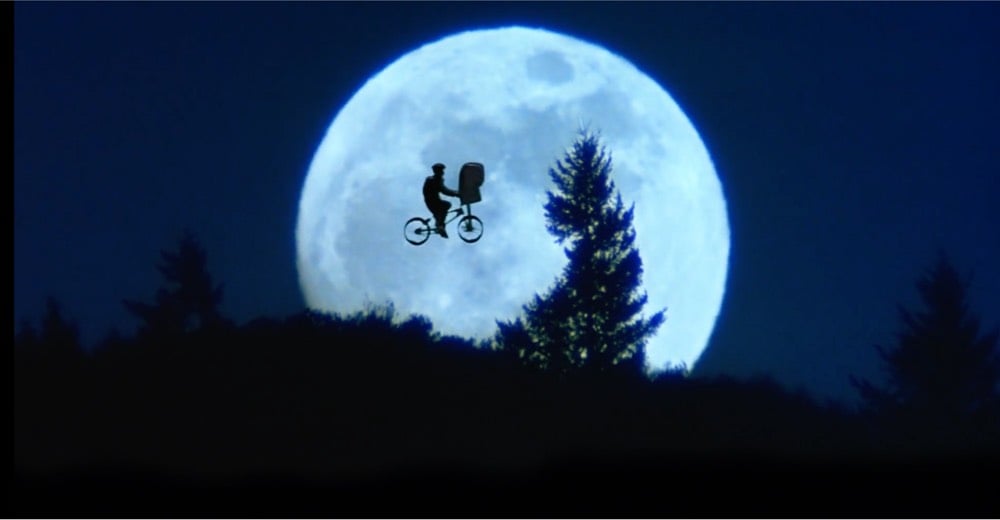
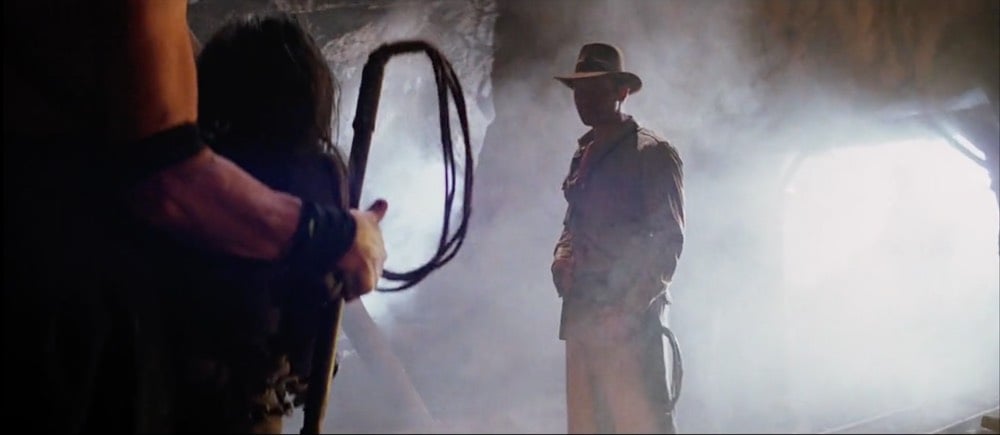
Spielberg himself called it “God Lights”.
I’ve always loved what I call “God Lights,” shafts coming out of the sky, or out of a spaceship, or coming through a doorway.
Pairs well with The Spielberg Face.
Quick reviews of some things I’ve read, seen, heard, and experienced in the past month or so. I have fallen off the book reading wagon…I really really need to find some time to start reading more. Maybe after the Olympics are done and I’ve made it through all of the levels in Alto’s Odyssey…
2018 Winter Olympic Games. Yes, the Olympics are corrupt & corporate and NBC’s coverage is often lacking, but on the other hand, all of America gets a two-week look at all of these amazing women, immigrants, children of immigrants, and openly gay athletes (some of them just children) displaying many different kinds of femininity and masculinity while performing amazing feats and suffering humbling defeats. The Olympics, as the joke goes, is the future that liberals want and America is watching and loving it. (A-)
Black Panther. Really entertaining and affecting after an expositional slow start. (B+)
Leonardo da Vinci by Walter Isaacson. Leonardo da Vinci is not overrated. (B+)
Alto’s Odyssey. A worthy successor to one of my favorite games. (A-)
Reply All: The Bitcoin Hunter. Is admitting that you bought illegal drugs on Silk Road a thing you can do without the risk of being prosecuted? (B+)
Black Panther The Album. I can’t wait to drive around playing this as loud as I can. Also, based on my experience, movies should put more effort into their soundtracks. The really good ones (like this one) inspire repeat viewings and cause me to remember the movie more fondly. (A-)
Paddington. If more people in the UK over 65 had watched Paddington, Brexit wouldn’t have happened. (A-)
Paddington 2. Seriously, these Paddington movies are better than they have any right to be. Smart and lots of heart. (B+)
See You in the Cosmos. Read this to the kids as a bedtime story over the past few months. We all loved it. Rocketry, Carl Sagan, the Voyager Golden Record…what’s not to like? (A-)
Allied. Bland and forgettable. (C-)
On Being: interview with Isabel Wilkerson. An excellent interview of the author of The Warmth of Other Suns, one of the best books I’ve read in recent years. (A-)
Phantom Thread soundtrack. More strong work by Jonny Greenwood. But don’t listen if you want something upbeat. (B+)
Song Exploder. A podcast where musicians break down their well-known songs. Always solid. I recently caught the episodes about the Stranger Things theme song and DJ Shadow. Oh, and I’m going to give the Arrival score a listen soon. (A-)
Apollo 13. One of my I’ll-watch-this-whenever-it’s-on movies. Love the scientific and engineering detective scenes. (B+)
Alias Grace. Several people asserted this was a better Margaret Atwood adaptation than The Handmaid’s Tale, but I didn’t think so. (B)
I, Tonya. I enjoyed this more than I thought I would. (A-)
Goodthreads T-shirt. Goodthreads is one of Amazon’s house brands. Ordered a couple of these after a recommendation from Clayton Cubbitt and damn if they’re not some of the most comfortable and best-fitting t-shirts I’ve ever worn. And only $12! My new go-to. (A-)
Sleep. One of the best things I’ve done for my work and my sanity is going to bed at about the same time every night and getting at least 6.5 hours (and often 7-8 hours) of sleep every night. (A+)
This American Life: Chip in My Brain. Holy parenting nightmare. (B+)
Professor Marston & The Wonder Women. The surprising role of BDSM in the development of Wonder Woman. (B+)
Atomic Blonde. John Wick-like. I wanted to like this more but the plot was a little muddled. (B)
SpaceX launch of Falcon Heavy. That choreographed double booster landing… (A)
Past installments of my media diets can be found here.
Ten years ago, investor Warren Buffett made a bet with Ted Seides of the investment firm Protégé Partners about the relative performance of index funds and hedge funds. The bet stated:
Over a ten-year period commencing on January 1, 2008, and ending on December 31, 2017, the S&P 500 will outperform a portfolio of funds of hedge funds, when performance is measured on a basis net of fees, costs and expenses.
Buffett has long been critical of money managers, recommending that most people put their money into low-fee index funds instead.
Over the years, I’ve often been asked for investment advice, and in the process of answering I’ve learned a good deal about human behavior. My regular recommendation has been a low-cost S&P 500 index fund. To their credit, my friends who possess only modest means have usually followed my suggestion.
I believe, however, that none of the mega-rich individuals, institutions or pension funds has followed that same advice when I’ve given it to them. Instead, these investors politely thank me for my thoughts and depart to listen to the siren song of a high-fee manager or, in the case of many institutions, to seek out another breed of hyper-helper called a consultant.
In defense of the bet, Seides wrote:
Having the flexibility to invest both long and short, hedge funds do not set out to beat the market. Rather, they seek to generate positive returns over time regardless of the market environment. They think very differently than do traditional “relative-return” investors, whose primary goal is to beat the market, even when that only means losing less than the market when it falls. For hedge funds, success can mean outperforming the market in lean times, while underperforming in the best of times. Through a cycle, nevertheless, top hedge fund managers have surpassed market returns net of all fees, while assuming less risk as well. We believe such results will continue.
So Buffett invested in a Vanguard index fund and Seides picked five hedge funds of funds. On December 31, 2017, the outcome was clear: the S&P 500 had trounced the hedge funds and Buffett won his bet.
At the time of her death, Michelle McNamara was in the middle of several years of research for a book on the Golden State Killer.1 After she died, her widower Patton Oswalt enlisted an investigative journalist and a researcher to comb through her notes and finish the book. The result, I’ll Be Gone in the Dark, is not only a book about the killer but about McNamara’s descent into obsession. In a blurb, Stephen King wrote:
What readers need to know — what makes this book so special — is that it deals with two obsessions, one light and one dark. The Golden State Killer is the dark half; Michelle McNamara’s is the light half. It’s a journey into two minds, one sick and disordered, the other intelligent and determined. I loved this book.
A NY Times piece about the book describes how consumed she was by the case:
The research consumed her, and began to weigh on her. She suffered from insomnia and anxiety. Once, she panicked because she woke up to a scraping sound: A neighbor was dragging his trash can to the curb in the middle of the night, Mr. Oswalt said. Another time, when Mr. Oswalt tiptoed into their bedroom, trying not to wake her, she mistook him for an intruder and jumped out of bed and swung a lamp at his head. She felt an obligation to solve the case, and was devastated each time she developed a promising theory or zeroed in on a suspect but failed to find sufficient evidence.
“She had overloaded her mind with information with very dark implications,” Mr. Oswalt said.
Update: A suspect has been arrested in the GSK case.
Joseph James DeAngelo, 72, who was taken into custody outside his home on Tuesday and charged with six counts of murder, had been living undisturbed a half-hour drive from where the 12-year rampage began. He was described as a former police officer, and his time in uniform partly overlapped with many of the crimes he is accused of committing.
The case was cracked in the past week, Sheriff Scott Jones of Sacramento County said on Wednesday, when investigators identified Mr. DeAngelo and were able to match his DNA with the murders of Lyman and Charlene Smith in Ventura County in 1980.
This is a chilling in-retrospect red flag:
[DeAngelo] was convicted in 1979 for shoplifting a can of dog repellent and a hammer from a store in Sacramento County. The incident led to his dismissal from the Auburn police force. The arrest came amid the rash of rapes in the area.
Dog repellent and hammers are useful for breaking into homes and he likely shoplifted them because he didn’t want the purchase traced to him.
Federal Judge Says Embedding a Tweet Can Be Copyright Infringement. “Even worse, the logic of the ruling applies to all in-line linking, not just embedding tweets.” WTF?
The US Postal Service is honoring Fred Rogers with a stamp to be released next month.
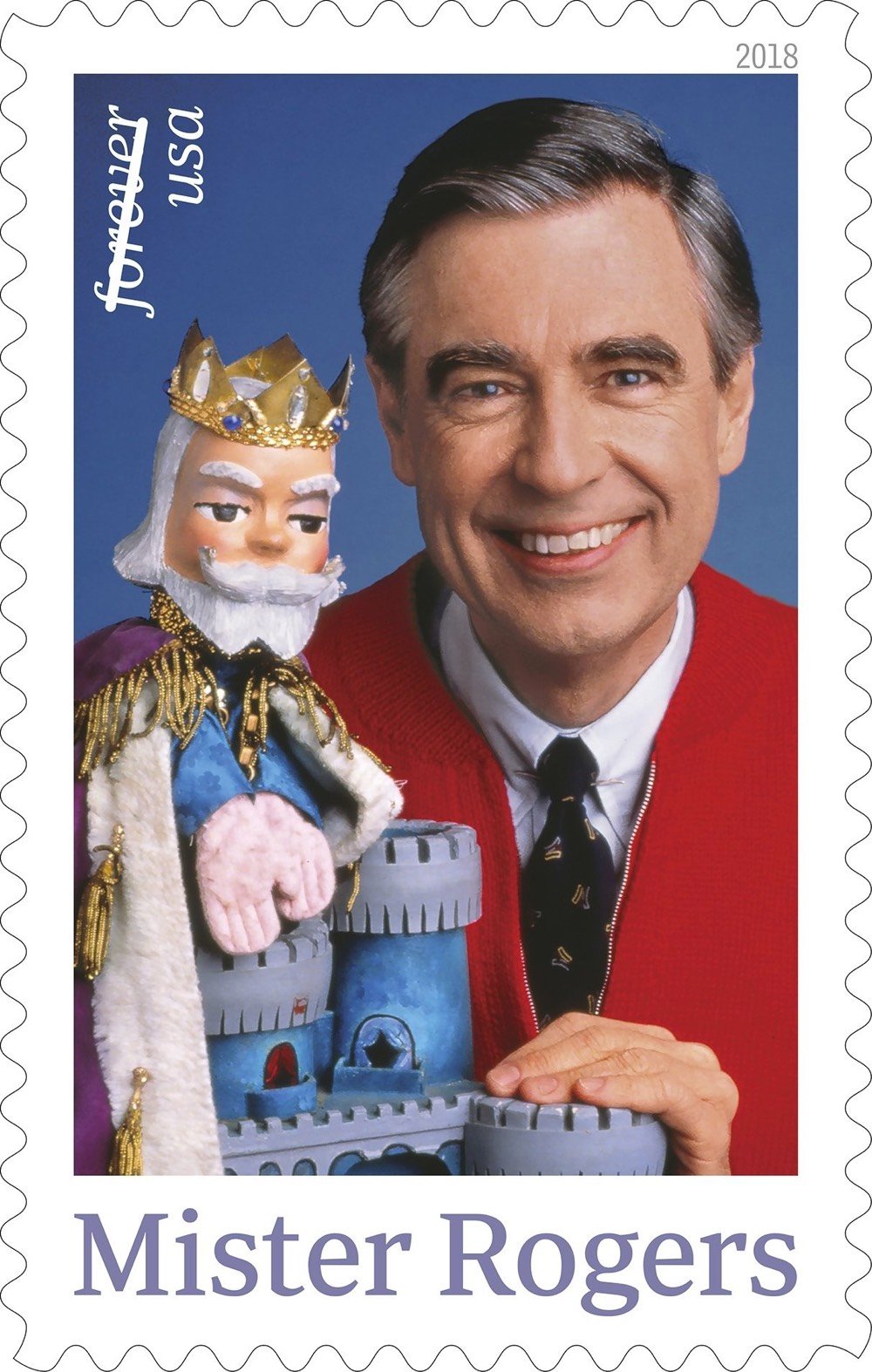
Joanne Rogers, Mr. Rogers’s wife, said in an interview that her husband would have approved of his appearance on a postage stamp because of the personal outreach that a handwritten letter involves in an increasingly virtual world.
“I think he might have agreed with me that it is amazing,” she said. “I think that people must need him. Just look at what goes on in the world. He always wanted to provide a haven and a comfortable lap for children, and I think that is what so many of us need right now.”
The USPS will dedicate the stamp on March 23 at a ceremony in Pittsburgh at the WQED studio where his show was filmed. The event is free and open to the public. (thx, brad)
Ronan Farrow on how Donald Trump managed his affairs with multiple women, including payments & secret settlements. This was published two days ago, and it’s already forgotten. Any other person and this would be front page news for MONTHS.
The latest issue of Noticing (kottke.org’s weekly newsletter) went out today. This issue includes a link to my interview with Laura Hazard Owen at NiemanLab about kottke.org turning 20 years old next month, the state of blogging, and the melancholy of the conversation around the decline of the open web.
I think that it’s been really hard, the last couple of years, to cover anything — I don’t know how to say this in a way that isn’t going to get all weirdly interpreted — it’s been hard to cover anything but things that are serious. Because, you know, a lot of people - I think very rightly - feel that if you’re someone who thinks the world is coming down around all of us, that you should be on a mission to try to fix that. And I think that there are plenty of sites and plenty of media outlets and plenty of people who are oriented in that direction and moving in that direction.
But I don’t think kottke.org is one of those things. I think that the site is much more about things that are a little bit more — I don’t want to say hopeful, but a lot of it is, like, look at this cool thing. Look at what humans can do when they have enough time and energy and whatnot to do them! When you called, I was had just been watching the SpaceX thing. Seeing those two booster rockets land at the same time blew my mind. I was just sitting here, yelling, like, oh my god!
There has to be room in our culture for that type of stuff — that stuff that is inspirational and aspirational — because it provides some sort of hope that we can actually have more of that in our lives, rather than less.
To which Tim added (italics mine):
I freely admit that this is something Jason does as a blogger way better than I do (along with writing fewer words more often). I think I look at the world and mostly think less “oh my god!” and more “how in the hell does that work?” But I think the two of them have to be complimentary. Learning begins in wonder (the Greeks would call it thauma) as much or more than in criticism (skepsis).
That last line sums up my approach here (and honestly, to life) as well as you can in one sentence. Noticing could very well have been called Wonder instead.
You can read the rest of this week’s newsletter here or subscribe here.
Black Panther is a huge success at the box office. Here’s what that might mean for the cast, crew, Hollywood, and moviegoers.
“Kafka Was A Terrible Boyfriend” is a sentence that is simultaneously unsurprising and revelatory. But it gives us a chance to dive into Kafka’s letters, which are, along with the stories, unfinished novels, and the conversation slips he passed back and forth at the end of his life when he could no longer speak, among his most treasured works.
This fact maybe illustrates why so many writers are bad boyfriends, girlfriends, husbands, and wives (but let’s face it, mostly bad boyfriends and husbands) — especially from the point of view of their writing to their significant others. Kafka in particular seemed incapable of thinking about his writing, on any topic, as anything but writing, in a literary sense. So his putative love letters are filled with sudden ironies and reversals, meditations on ambiguity, contingency, and the self. The dude couldn’t get out of his own head, or out of his own way.
Would it help if we write to each other only once a week? No, if my suffering could be cured by such means it would not be serious. And already I foresee that I shan’t be able to endure even the Sunday letters. And so, to compensate for Saturday’s lost opportunity, I ask you with what energy remains to me at the end of this letter: If we value our lives, let us abandon it all.
Did I think of signing myself Dein [Yours]? No, nothing could be more false. No, I am forever fettered to myself, that’s what I am, and that’s what I must try to live with.
Franz
Needless to say, I identify with him completely.

Frank Chimero has a long, insightful essay about how commercial imperatives have creeped in on the public commonwealth of the web, creating a bunch of pseudo-public spaces whose experience continually degrades (think a negative stereotype of NYC’s Penn Station) as opposed to free and open public spaces (think a positive stereotype of NYC’s main public library).
Remember: the web is a marketplace and a commonwealth, so we have both commerce and culture; it’s just that the non-commercial bits of the web get more difficult to see in comparison to the outsized presence of the commercial web and all that caters to it. It’s a visibility problem that’s an inadvertent consequence of values. The commercial parts become more self-contained and link inside themselves to keep you around—after a while, you’re looping around their cul-de-sac because attention is money on the web. Non-commercial sites link out and will let you go, which immediately puts them at a disadvantage for mindshare.
Facebook, Google, Apple, and Amazon aren’t going anywhere at this point—nor should we expect them to—so it’s best to recalibrate the digital experience by increasing the footprint and mindshare of the kinds of cultural and communal value they can’t provide. The web isn’t like Manhattan real estate—if we want something, we can make space for it.
“If technology is increasingly a place where we live, it needs to have space for the soul,” Frank writes. For him, that means carving off pieces of it that don’t serve that goal: foregoing television, or Facebook, or anything where the net balance falls on the soul-draining more than the soul-nourishing.
I’m less sure; partly, I’ve never been able to be quite so deliberate about my physical or my media diet. I also have fewer options to step away: my day job is writing about advertising technology, after all, which mostly means plunging into the weird. But I am 100 percent about the idea that the web is a place of infinite space, where we can create new kinds of public spaces wherever we choose. It’s not that easy, of course. Nothing great ever is. But if we’re going to dream, let’s dream about that.
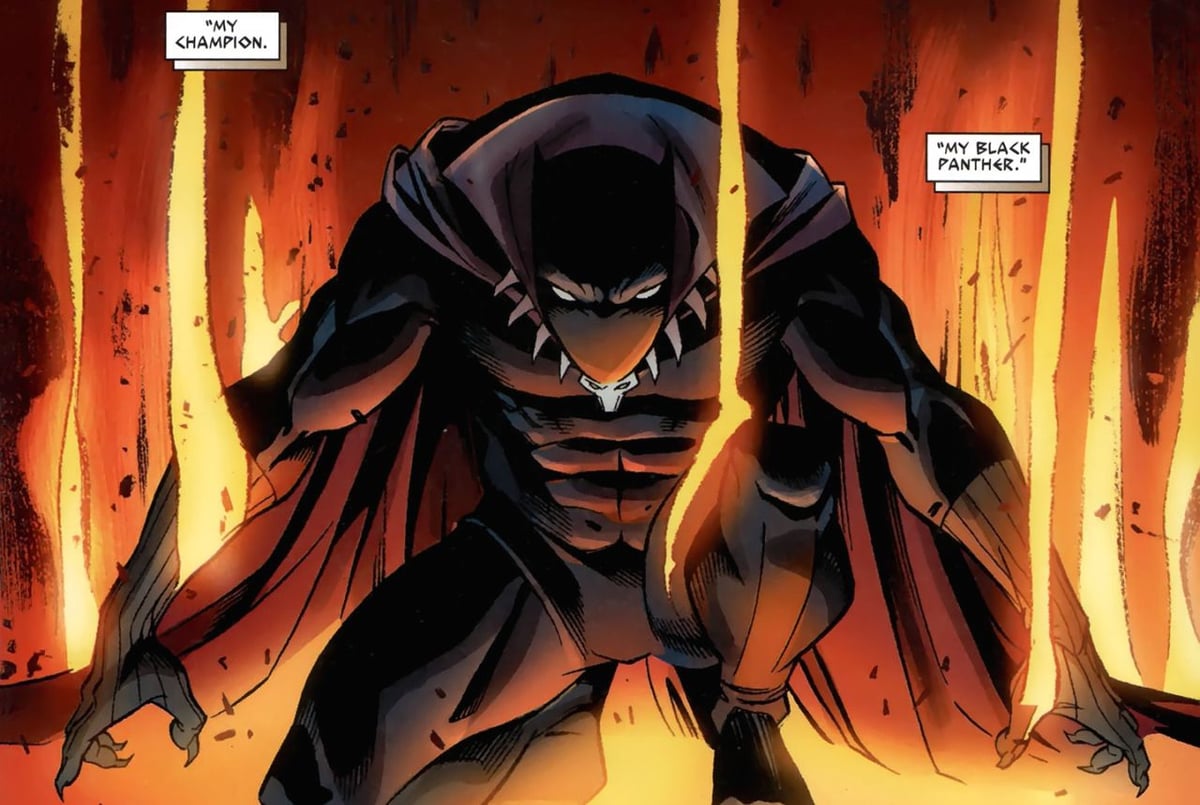
I’m certainly aware that one of the themes (perhaps the theme) of Black Panther is the gap between the world as it is and the world as it could be. I’m also aware that one of the main characters, when he finally sees the unimaginable beauty of Wakanda, finds it too bittersweet to bear. It’s a movie about hard choices and impossible expectations. Which makes it a movie about making movies, like all the other movies.
The closest analogy I can think of for Black Panther is The Lord of the Rings. (These are the two movies, in my lifetime, I have waited the longest to see, and held the highest expectations for.) Black Panther may be the closest Marvel has come, even counting the Thor movies, to merging high fantasy and superhero fiction. This pops up in deep and superficial ways: the characters fight with swords and spears more often than guns and blasters, and the plot is laden with intrigue of kings and clans, bloodlines, blood debts, and blood enemies, and magical (sometimes techno-magical) weapons that are too dangerous to be used lightly. I’ve heard other people call these parts of the movie Shakespearean, and I could see some parallels, but it feels more like fantasy.
Like the Lord of the Rings movies, Black Panther is a beautiful, improbably piece of filmmaking. Like them, the overlapping action plots sometimes get muddled, with one thread having to be sacrificed for another. And like them, when the movie has time to breathe, it is a quieter, emotional film, about characters who are able to convey or suggest deep connections with limited screen time.
It’s that movie, that other Black Panther, I want to stay in. The moments between friends, lovers, rivals, parents and their children quickly get bowled over by a very capable action fantasy superhero movie. And to make a version of Lord of the Rings that is antiracist and antiimperialist from start to finish, while preserving all the dramatic possibilities and ambiguities of what it means to be a king to a people, is no small thing.
But the genius of Creed — and as of today, after only one screening of Black Panther versus dozens of Creed, I’m going to provisionally maintain that Creed is the better Ryan Coogler film — was its ability to balance its obligations to the Rocky franchise with its subtle but penetrating portrayal of human relationships. Creed comes the closest I have seen, the closest I recognize, to what it means to love someone: a partner, a mother, a child, a father figure, a lost legacy. Black Panther only occasionally allows room for the same emotional range, and they’re the best moments of the film.
Creed’s Philadelphia shows the world as it is; Black Panther’s Wakanda staggers against the task of showing the world as it ought to be.
This brings me to the last way in which Black Panther is like The Lord of the Rings: its first cut, by several accounts was over four hours long. I am perfectly happy with the movie I saw. But I suspect that somewhere in those four hours, is the movie that I most especially wanted to see.
In 1662 when he was 19 years old, Isaac Newton sat down to a fresh notebook and wrote out a list of the sins he’d committed “before and after Whitsunday of that year”. They included:
Eating an apple at Thy house
Making a mousetrap on Thy day
Making pies on Sunday night
Threatning my father and mother Smith to burne them and the house over them
Wishing death and hoping it to some
Striking many
Having uncleane thoughts words and actions and dreamese.
Setting my heart on money learning pleasure more than Thee
Punching my sister
Robbing my mothers box of plums and sugar
Calling Dorothy Rose a jade
Striving to cheat with a brass halfe crowne.
Denying my chamberfellow of the knowledge of him that took him for a sot.


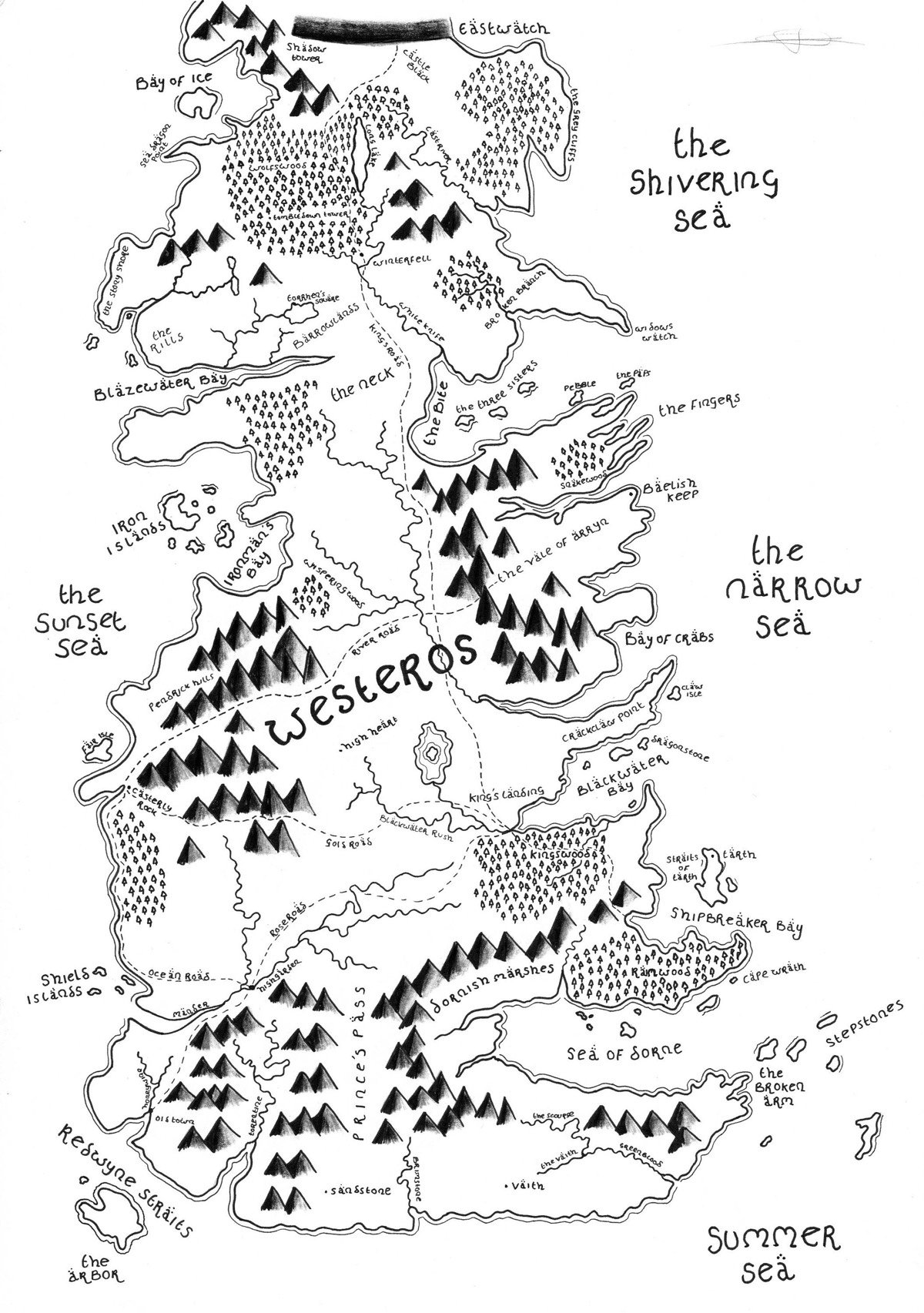
Artist Dan Bell has drawn maps of the UK’s national parks in the style of J.R.R. Tolkien’s Middle-Earth. Bell has also drawn maps of Westeros (from George R.R. Martin’s Game of Thrones series) and places like London and Oxford. Both prints and the original hand-drawn maps are available for purchase from Bell’s online shop.
Last night at like midnight during the Olympic broadcast, Pixar dropped the first trailer for The Incredibles 2. The first movie, one of Pixar’s most entertaining, centered around the illegality of superheroics and its impact on a family of superheroes in hiding, particularly the patriarch of the family, Bob Parr (aka Mr. Incredible). Takes on the philosophical and political meanings were various and hot, among them that the movie espoused Randian views of society, but in hindsight and with the context of the present, the reading that makes increasing sense to me is The Incredibles is a parable for how white middle class men have lost their way in today’s world and are struggling to get back to the good ol’ days, i.e. Make Superheros Great Again.
From the trailer, it looks like The Incredibles 2 explores the same issue from another angle. As his wife’s star rises in the workplace, Parr is trying to figure out how to find fulfillment and an identity in being his family’s primary caregiver. It’ll be interesting to see where the movie goes with this, but I suspect Mr. Incredible will eventually find his way back into the workplace, creating an imbalance in his family life, just as it did in the first movie.
*extremely Tim Robbins voice* You know, for kids!
(I watched the trailer with my kids this morning and my son, who remembers exactly where he was when he heard that there was going to be a sequel to one of his all-time favorite movies, was kinda meh about it.)
Update: A second trailer. Looks fun!
Like many of you, I read the news of a single person killing at least 17 people in Parkland, Florida today. While this is an outrageous and horrifying event, it isn’t surprising or shocking in any way in a country where more than 33,000 people die from gun violence each year and guns that can fire dozens of rounds a minute are perfectly legal.
America is a stuck in a Groundhog Day loop of gun violence. We’ll keep waking up, stuck in the same reality of oppression, carnage, and ruined lives until we can figure out how to effect meaningful change. I’ve collected some articles here about America’s dysfunctional relationship with guns, most of which I’ve shared before. Change is possible — there are good reasons to control the ownership of guns and control has a high likelihood of success — but how will our country find the political will to make it happen?
An armed society is not a free society:
Arendt offers two points that are salient to our thinking about guns: for one, they insert a hierarchy of some kind, but fundamental nonetheless, and thereby undermine equality. But furthermore, guns pose a monumental challenge to freedom, and particular, the liberty that is the hallmark of any democracy worthy of the name — that is, freedom of speech. Guns do communicate, after all, but in a way that is contrary to free speech aspirations: for, guns chasten speech.
This becomes clear if only you pry a little more deeply into the N.R.A.’s logic behind an armed society. An armed society is polite, by their thinking, precisely because guns would compel everyone to tamp down eccentric behavior, and refrain from actions that might seem threatening. The suggestion is that guns liberally interspersed throughout society would cause us all to walk gingerly — not make any sudden, unexpected moves — and watch what we say, how we act, whom we might offend.
We’re sacrificing America’s children to “our great god Gun”:
Read again those lines, with recent images seared into our brains — “besmeared with blood” and “parents’ tears.” They give the real meaning of what happened at Sandy Hook Elementary School Friday morning. That horror cannot be blamed just on one unhinged person. It was the sacrifice we as a culture made, and continually make, to our demonic god. We guarantee that crazed man after crazed man will have a flood of killing power readily supplied him. We have to make that offering, out of devotion to our Moloch, our god. The gun is our Moloch. We sacrifice children to him daily — sometimes, as at Sandy Hook, by directly throwing them into the fire-hose of bullets from our protected private killing machines, sometimes by blighting our children’s lives by the death of a parent, a schoolmate, a teacher, a protector. Sometimes this is done by mass killings (eight this year), sometimes by private offerings to the god (thousands this year).
The gun is not a mere tool, a bit of technology, a political issue, a point of debate. It is an object of reverence. Devotion to it precludes interruption with the sacrifices it entails. Like most gods, it does what it will, and cannot be questioned. Its acolytes think it is capable only of good things. It guarantees life and safety and freedom. It even guarantees law. Law grows from it. Then how can law question it?
Roger Ebert on the media’s coverage of mass shootings:
Let me tell you a story. The day after Columbine, I was interviewed for the Tom Brokaw news program. The reporter had been assigned a theory and was seeking sound bites to support it. “Wouldn’t you say,” she asked, “that killings like this are influenced by violent movies?” No, I said, I wouldn’t say that. “But what about ‘Basketball Diaries’?” she asked. “Doesn’t that have a scene of a boy walking into a school with a machine gun?” The obscure 1995 Leonardo Di Caprio movie did indeed have a brief fantasy scene of that nature, I said, but the movie failed at the box office (it grossed only $2.5 million), and it’s unlikely the Columbine killers saw it.
The reporter looked disappointed, so I offered her my theory. “Events like this,” I said, “if they are influenced by anything, are influenced by news programs like your own. When an unbalanced kid walks into a school and starts shooting, it becomes a major media event. Cable news drops ordinary programming and goes around the clock with it. The story is assigned a logo and a theme song; these two kids were packaged as the Trench Coat Mafia. The message is clear to other disturbed kids around the country: If I shoot up my school, I can be famous. The TV will talk about nothing else but me. Experts will try to figure out what I was thinking. The kids and teachers at school will see they shouldn’t have messed with me. I’ll go out in a blaze of glory.”
In short, I said, events like Columbine are influenced far less by violent movies than by CNN, the NBC Nightly News and all the other news media, who glorify the killers in the guise of “explaining” them. I commended the policy at the Sun-Times, where our editor said the paper would no longer feature school killings on Page 1. The reporter thanked me and turned off the camera. Of course the interview was never used. They found plenty of talking heads to condemn violent movies, and everybody was happy.
Jill Lepore on the United States of Guns:
There are nearly three hundred million privately owned firearms in the United States: a hundred and six million handguns, a hundred and five million rifles, and eighty-three million shotguns. That works out to about one gun for every American. The gun that T. J. Lane brought to Chardon High School belonged to his uncle, who had bought it in 2010, at a gun shop. Both of Lane’s parents had been arrested on charges of domestic violence over the years. Lane found the gun in his grandfather’s barn.
The United States is the country with the highest rate of civilian gun ownership in the world. (The second highest is Yemen, where the rate is nevertheless only half that of the U.S.) No civilian population is more powerfully armed. Most Americans do not, however, own guns, because three-quarters of people with guns own two or more. According to the General Social Survey, conducted by the National Policy Opinion Center at the University of Chicago, the prevalence of gun ownership has declined steadily in the past few decades. In 1973, there were guns in roughly one in two households in the United States; in 2010, one in three. In 1980, nearly one in three Americans owned a gun; in 2010, that figure had dropped to one in five.
A Land Without Guns: How Japan Has Virtually Eliminated Shooting Deaths:
The only guns that Japanese citizens can legally buy and use are shotguns and air rifles, and it’s not easy to do. The process is detailed in David Kopel’s landmark study on Japanese gun control, published in the 1993 Asia Pacific Law Review, still cited as current. (Kopel, no left-wing loony, is a member of the National Rifle Association and once wrote in National Review that looser gun control laws could have stopped Adolf Hitler.)
To get a gun in Japan, first, you have to attend an all-day class and pass a written test, which are held only once per month. You also must take and pass a shooting range class. Then, head over to a hospital for a mental test and drug test (Japan is unusual in that potential gun owners must affirmatively prove their mental fitness), which you’ll file with the police. Finally, pass a rigorous background check for any criminal record or association with criminal or extremist groups, and you will be the proud new owner of your shotgun or air rifle. Just don’t forget to provide police with documentation on the specific location of the gun in your home, as well as the ammo, both of which must be locked and stored separately. And remember to have the police inspect the gun once per year and to re-take the class and exam every three years.
Australia’s gun laws stopped mass shootings and reduced homicides, study finds:
From 1979 to 1996, the average annual rate of total non-firearm suicide and homicide deaths was rising at 2.1% per year. Since then, the average annual rate of total non-firearm suicide and homicide deaths has been declining by 1.4%, with the researchers concluding there was no evidence of murderers moving to other methods, and that the same was true for suicide.
The average decline in total firearm deaths accelerated significantly, from a 3% decline annually before the reforms to a 5% decline afterwards, the study found.
In the 18 years to 1996, Australia experienced 13 fatal mass shootings in which 104 victims were killed and at least another 52 were wounded. There have been no fatal mass shootings since that time, with the study defining a mass shooting as having at least five victims.
From The Onion, ‘No Way To Prevent This,’ Says Only Nation Where This Regularly Happens:
At press time, residents of the only economically advanced nation in the world where roughly two mass shootings have occurred every month for the past eight years were referring to themselves and their situation as “helpless.”
But America is not Australia or Japan. As Dan Hodges said on Twitter:
In retrospect Sandy Hook marked the end of the US gun control debate. Once America decided killing children was bearable, it was over.
I hate to leave it on that note, but Hodges’ words ring with the awful truth that all those lives and our diminished freedom & equality are somehow worth it to the United States as a society.
One of the five Oscar nominees for best short documentary this year is Edith+Eddie, the story of an interracial American couple who got married in 2014 at the ages of 96 & 95 respectively. But as you can see from the trailer, their story is not a happy one:
Edith+Eddie, directed by Laura Checkoway, follows America’s oldest interracial newlyweds at age 96 and 95. Their love story is disrupted by a family feud that threatens to tear the couple apart.
Millions of American families go through elder care disputes and guardianship cases. These cases are life altering, emotionally and financially depleting, and dealt with in isolation.
You can watch the entire film on YouTube and on Topic.
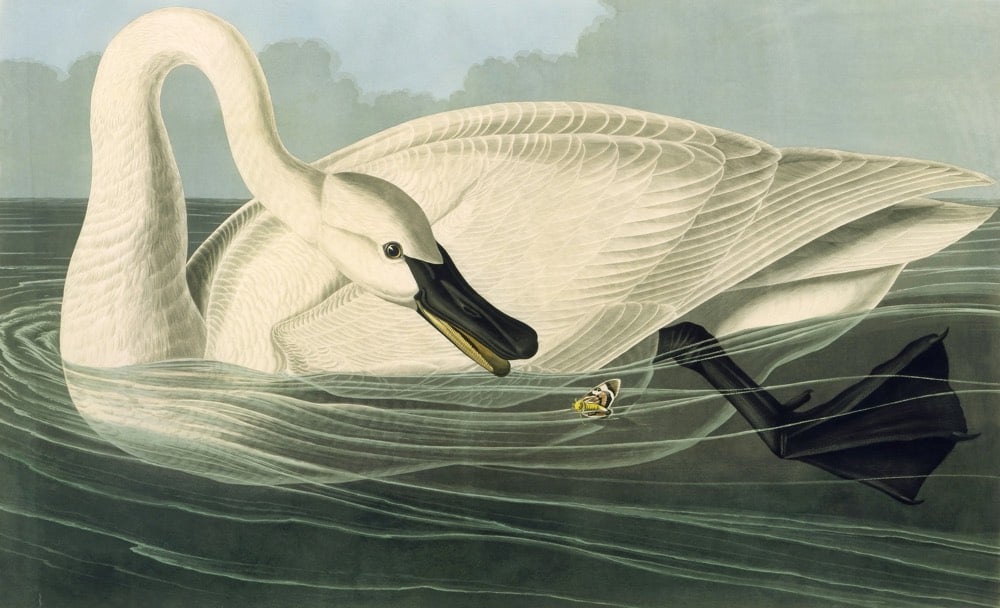
When they were younger, my kids spent a lot of time in the car on long trips. Unwilling to give them an iPad to watch a movie or play games, we would often spend a big portion of these trips listening to audiobooks. Some of our favorites were Cricket in Times Square, Matilda, Charlotte’s Web, Charlie and the Chocolate Factory, and The Wonderful Wizard of Oz.
But my personal favorite The Trumpet of the Swan, wonderfully narrated by E.B. White himself! We’ve probably listened to it four or five times at least. The other day the kids and I were discussing the system of Latin names for species and when I asked if they knew any of them besides homo sapiens, Ollie shouted “Cygnus buccinator!” (The only one I could come up with off the top of my head was Rattus rattus.)
I’ve also heard good things about Jim Dale’s narration of all seven Harry Potter books, some of the other Roald Dahl stories like Danny the Champion of the World, Hidden Figures Young Readers’ Edition, Chitty Chitty Bang Bang, and The Hobbit.
I’m also curious about See You in the Cosmos. I’m reading it aloud to my kids right now in book form but given how the story is told, the audiobook might be even better.
Thanks to Lexi Mainland at Cup of Jo for the inspiration for this post.
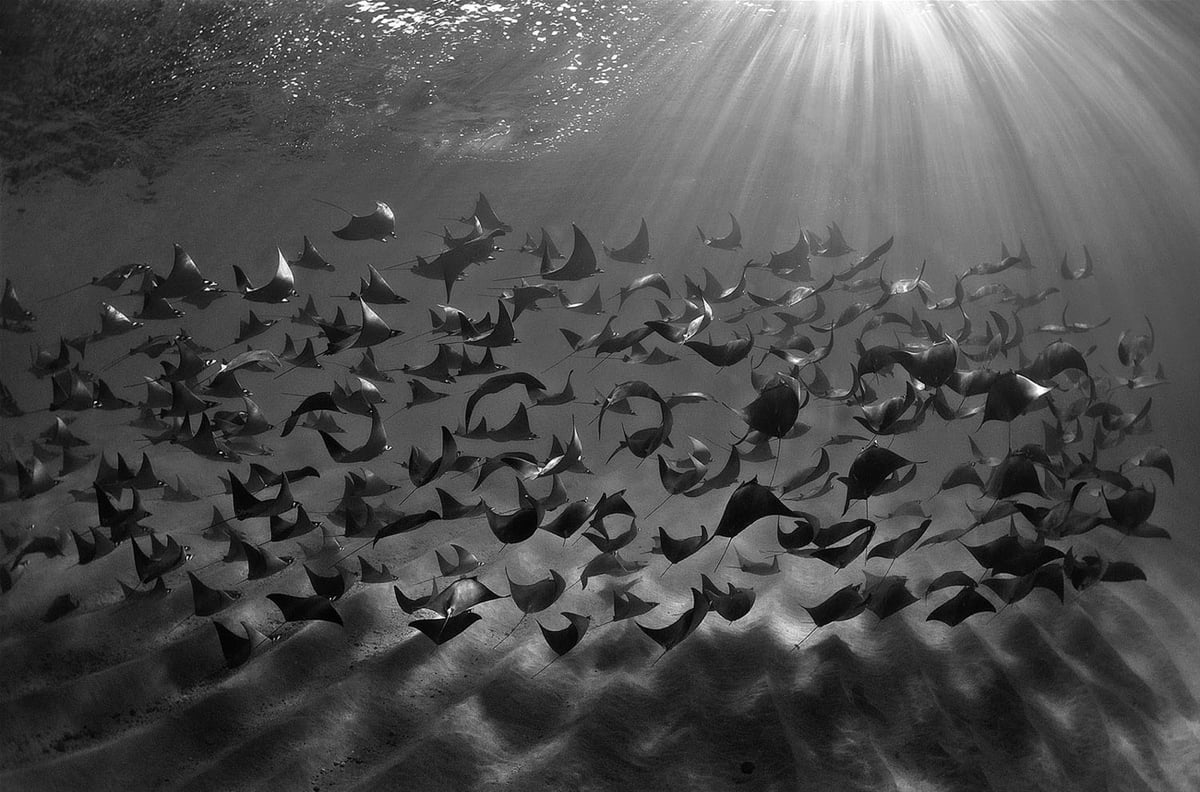

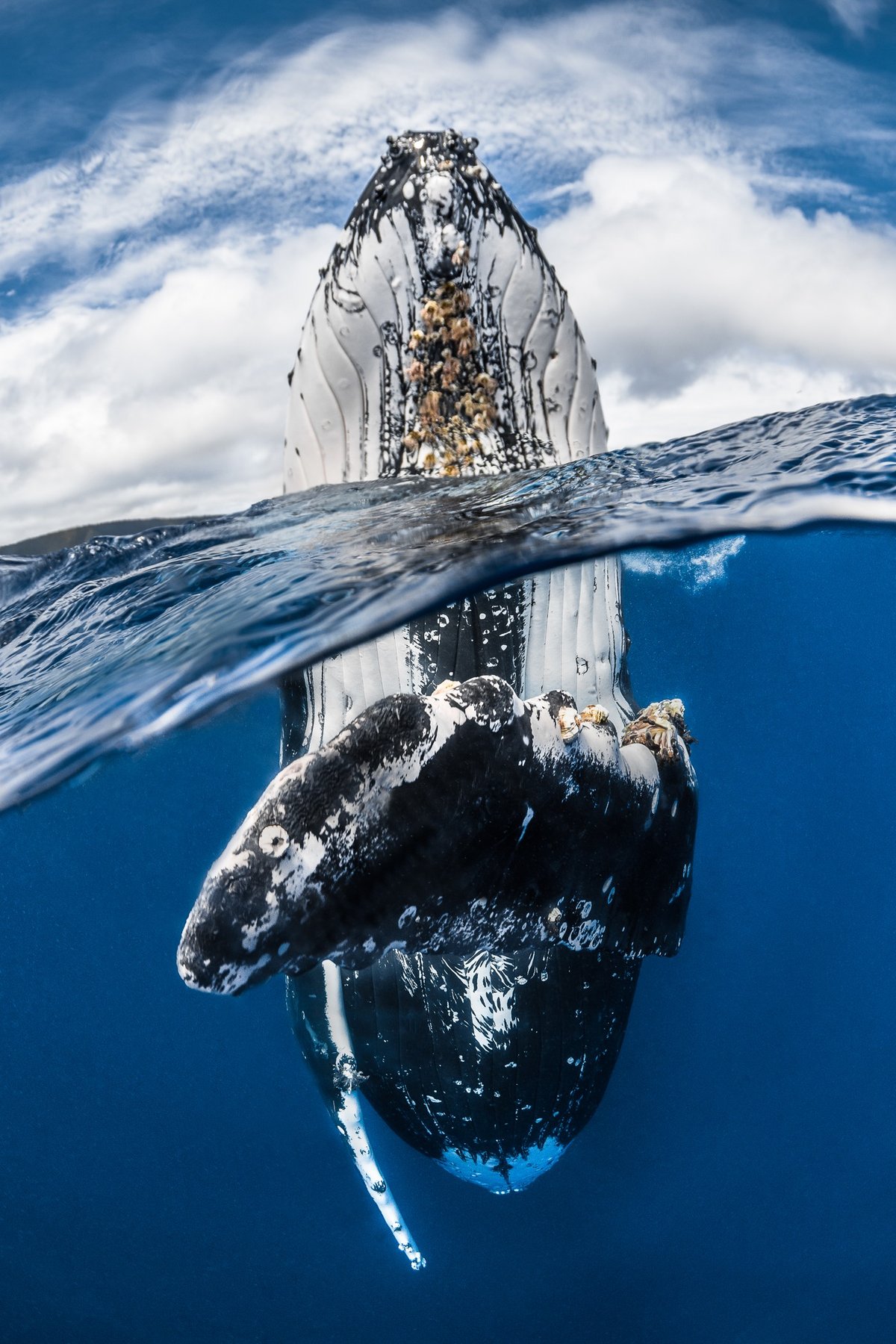
The winners of the 2018 Underwater Photographer of the Year have been announced and In Focus has a nice selection of the winners and runners-up.
Top photo by Filippo Borghi and the bottom two by Greg Lecoeur. Said Borghi about his photo:
During springtime, from April to June, on the coast of Baja, California, we can witness one of the most impressive migrations of the sea. Thousands of mobula rays migrate along this coast. I tried many times to find this incredible behavior but never was able. This year, during a morning safari on the sea, we saw a different group of beautiful mobula rays. I jumped in the water and we followed them for a couple of hours and a small group moved into a shallow area where I was able to shoot in great light.
Great stuff if you’ve been watching Blue Planet II. And if you haven’t, what’s wrong with you?!
Newer posts
Older posts






Socials & More