I didn’t know this about eels:
No one has ever seen an eel reproduce naturally. Not in the wild, not in captivity, not even once. And yet, eels are everywhere. In rivers, in lakes, in oceans, slippery, ancient, and inexplicably present.
For centuries, the world’s greatest thinkers tried to solve the mystery of the eel. Aristotle thought they emerged from mud. Others believe they simply appeared, formed by sunlight and dew. Even today, there’s only one place on Earth where we think all eels are born: somewhere deep in the Atlantic where mysteriously no adult eel has ever been found.
So why are eels like this? What evolutionary advantage lies in such an impossibly complex journey? And why does their life cycle still defy so much of what we know about biology? This isn’t just a story about a fish. It’s a story about a creature that breaks the rules of science.
I found this via Frank Chimero’s short essay on eels.
Writer & designer Frank Chimero took the summer off (“I quit my job at an opportune moment and called it a sabbatical”) and wrote a short post about the experience:
The summer is now mostly spent, and I am writing to say: not much has happened. I swept away the everyday to make space for the profound, and my days refilled with everyday things. No a-has, no takeaways, no transformation, no strong convictions about the future of technology, design, or Frank. But also: no crises, no existential dread (at least about myself), and very few reservations about quitting as the right choice. I am more spacious inside and enjoying a refreshed ability to attend to the things in front of me. Most people call this a vacation, I guess.
I never really wrote about the seven-month sabbatical I took three years ago because, as Chimero notes, not much happened. Or perhaps more accurately, the changes that took place didn’t reveal themselves or manifest for months (or even years) afterwards. As I wrote after being back to work for a year:
I still haven’t written too much about what I did and didn’t do during my time away — I thought I would but found I didn’t have a whole lot to say about it. The truth is I’m still in the process of, uh, processing it. But it’s clear to me that the extended time off was an incredible gift that has revitalized me — I’m really enjoying my work here and have great plans for the future that I can’t wait to get going on.
While I can tell you with absolute certainty that my sabbatical was transformative, pinpointing the critical things I did or didn’t do during my time off is still difficult. All I can say is: if you feel like you need one and have the opportunity, take a sabbatical. Just don’t expect your life to change that quickly because of it.
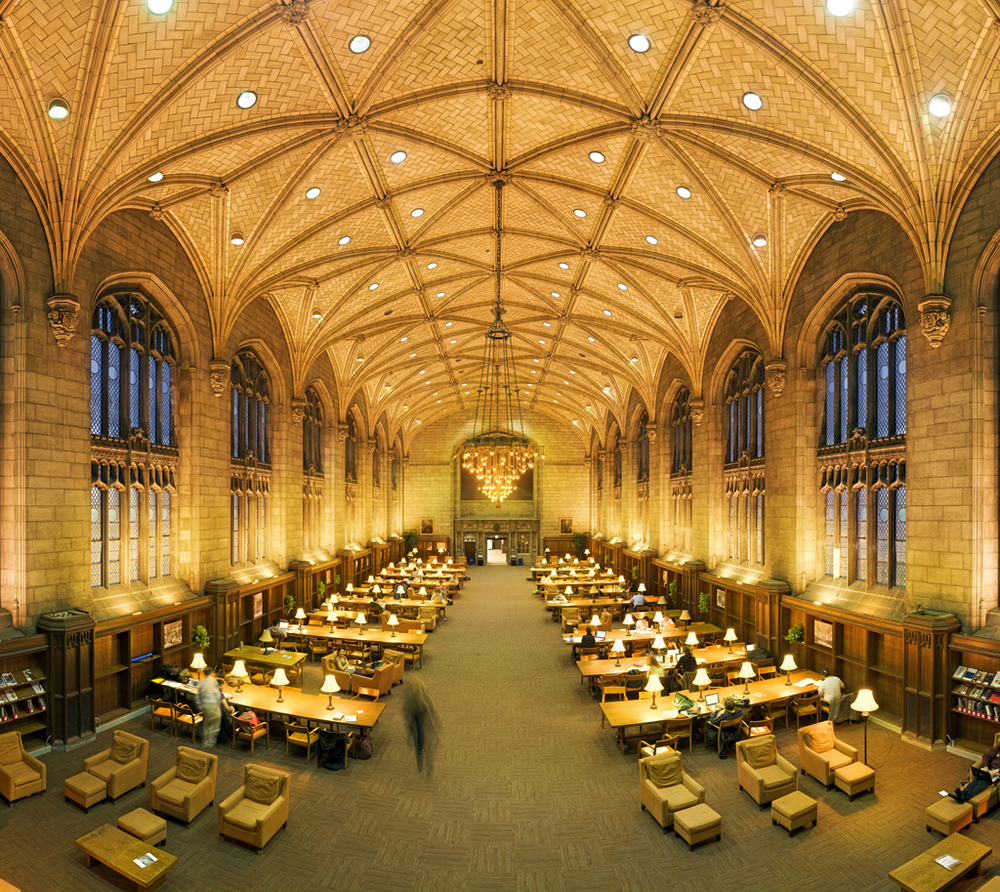
Frank Chimero has a long, insightful essay about how commercial imperatives have creeped in on the public commonwealth of the web, creating a bunch of pseudo-public spaces whose experience continually degrades (think a negative stereotype of NYC’s Penn Station) as opposed to free and open public spaces (think a positive stereotype of NYC’s main public library).
Remember: the web is a marketplace and a commonwealth, so we have both commerce and culture; it’s just that the non-commercial bits of the web get more difficult to see in comparison to the outsized presence of the commercial web and all that caters to it. It’s a visibility problem that’s an inadvertent consequence of values. The commercial parts become more self-contained and link inside themselves to keep you around—after a while, you’re looping around their cul-de-sac because attention is money on the web. Non-commercial sites link out and will let you go, which immediately puts them at a disadvantage for mindshare.
Facebook, Google, Apple, and Amazon aren’t going anywhere at this point—nor should we expect them to—so it’s best to recalibrate the digital experience by increasing the footprint and mindshare of the kinds of cultural and communal value they can’t provide. The web isn’t like Manhattan real estate—if we want something, we can make space for it.
“If technology is increasingly a place where we live, it needs to have space for the soul,” Frank writes. For him, that means carving off pieces of it that don’t serve that goal: foregoing television, or Facebook, or anything where the net balance falls on the soul-draining more than the soul-nourishing.
I’m less sure; partly, I’ve never been able to be quite so deliberate about my physical or my media diet. I also have fewer options to step away: my day job is writing about advertising technology, after all, which mostly means plunging into the weird. But I am 100 percent about the idea that the web is a place of infinite space, where we can create new kinds of public spaces wherever we choose. It’s not that easy, of course. Nothing great ever is. But if we’re going to dream, let’s dream about that.
Want to see the state of the art in web design using web fonts and Typekit? Check out Lost World’s Fairs. It’s all good, but Frank Chimero really knocked it out of the park with the 1962 Atlantis World’s Fair. With HTML5 and web fonts, experimentation with web design seems open and fun again; reminds me of the 90s a bit.


Socials & More