Entries for January 2016
Late last year, Todd Schneider did a big data analysis of taxi and Uber usage in NYC. This morning, he posted the results of a similar analysis for Citi Bike.
But unlike the taxi data, Citi Bike includes demographic information about its riders, namely gender, birth year, and subscriber status. At first glance that might not seem too revealing, but it turns out that it’s enough to uniquely identify many Citi Bike trips. If you know the following information about an individual Citi Bike trip:
1. The rider is an annual subscriber
2. Their gender
3. Their birth year
4. The station where they picked up a Citi Bike
5. The date and time they picked up the bike, rounded to the nearest hour
Then you can uniquely identify that individual trip 84% of the time! That means you can find out where and when the rider dropped off the bike, which might be sensitive information. Because men account for 77% of all subscriber trips, it’s even easier to uniquely identify rides by women: if we restrict to female riders, then 92% of trips can be uniquely identified.
The man who shot the video writes:
An inspiration for this session was a conversation with my 3year old daughter while dressing up to go out:
- Daddy, I don’t want to put this jacket on. - she moaned
- Me too, darling but it is very cold outside. - I explained
- How cold?
and I had to figure out an interesting answer which would satisfy a preschooler’s curiosity, so I told her:
- It is so cold that even soap bubbles freeze and it looks really beautiful, you know?
I saw a sparkle in her eye so I promised to make a film to show her that. She was so excited about this idea that of course she forgot that she didn’t want to put her jacket on. It wasn’t easy to capture those bubbles because only around 5-10% of them didn’t break instantly and as you can imagine it was a challenge to be patient at -15 Celsius ;) but it was worth it because now that my daughter has seen it, winter is magic for her.
(via devour)
Riffing on Kathryn Schulz’s piece about the five best punctuation marks in literature, Max Tohline explores how editing in film can function as punctuation to separate or join together characters, shots, and ideas within movies.
A company called Studio D recently published their corporate end-of-the-year report for 2015. It is unlike most other companies’ year-end reports. Studio D, which was founded by global citizen Jan Chipchase, “specialises in sensitive research topics requiring a very discreet presence; through to working in higher risk environments”.
This year the studio was joined by two four-legged team members: Ramoosh the camel purchased from the livestock market in Hargeysa; and Neyy a goat bought on the road between Harare and Bindura. As is the local norm in a country with limited electricity and even less refrigeration, Neyy was gifted to an interviewee as a small thank-you — anything larger wouldn’t be possible to eat in one sitting and would spoil after slaughter. Both were expensed.
The company also debuted the 1M Hauly Heist, which is a ultra-durable and discreet travel pack that will carry $1 million in US $100 bills and shield electronics from RF tracking. The 1M Hauly Heist made it onto my 2015 holiday gift list.
Dang! Pete Wells knocks Per Se down to two stars in the NY Times.
In the Guardian, an English woman named Helen takes in a Syrian refugee as a lodger and shares her story:
What does he make of my bourgeois life? He does not appreciate the middle-class obsession with sanded floorboards, when we could all afford wall-to-wall carpets. He cannot believe I own a cook book holder. Cook books themselves he finds hilarious; the women in Yasser’s life have always cooked for him (he is an excellent washer-upper) and his early forays into gastronomy appalled and amused me in equal measure. One morning he asked me how to turn on the oven. I showed him, asking what he wanted to warm up. “Safari eggs,” he said. No amount of miming or Google Translate could make me understand. It was something he’d bought the previous night, he said, rummaging through the bin for the packaging of what turned out to be “savoury eggs” — scotch eggs. “Two things you need to know about these eggs, Yasser,” I said. “One, we eat them cold. Two, they contain pork and you don’t eat pork.”
And her lodger, Yasser, shares his side:
Soon after I moved in, Helen threw a Halloween party — my first. She dressed up in a fake white beard, with black rings round her eyes. “I’m Jeremy Corbyn of the Labour party,” she said. “Then I should be David Cameron,” I replied. I didn’t really mean it, but Helen liked the idea. I borrowed a suit and shaved my beard. She taught me some catchphrases about hard-working families, low tax something and housing benefits. The idea of a Syrian refugee dressed up as David Cameron was very amusing for other people. People drank so much at the party. I couldn’t believe the recycling bin the next day!
I had a good time and things began to be less awkward. Every one of Helen’s friends offered to help me if need be. Some of them offered to help me with my English. You hear things about British people; that although they might smile at you, they never show their true feelings. This hasn’t been true for me. Although I come from a completely different culture, I found something very familiar. People are loving, thoughtful and compassionate, both here in Britain and back in Syria.
How low are oil prices? Buying a 55-gallon barrel to store it costs almost double the value of the oil itself.

David Bowie died Sunday from cancer. Dave Pell at Nextdraft has a nice roundup of links, writing:
In the NYT obituary, Jon Pareles writes: “Mr. Bowie wrote songs, above all, about being an outsider: an alien, a misfit, a sexual adventurer, a faraway astronaut.” Maybe that’s why there is such an outpouring of emotion at the news of David Bowie’s death at the age of 69. Everyone feels like an outsider and Bowie made being an outsider feel more like being ahead of the curve. Today, there are people who are famous for nothing. David Bowie was famous for everything.
Bowie was also quite keen on the Internet:
Quartz calls him a tech visionary, and there’s this from a 1999 Rolling Stone article: “David Bowie has pulled another cyber-coup by becoming the first major-label artist to sell a complete album online in download form.”
He didn’t get the future exactly right, but authorship and intellectual property has been “in for such a bashing” lately and music sales are down down down:
“Music itself is going to become like running water or electricity,” he added. “So it’s like, just take advantage of these last few years because none of this is ever going to happen again. You’d better be prepared for doing a lot of touring because that’s really the only unique situation that’s going to be left. It’s terribly exciting. But on the other hand it doesn’t matter if you think it’s exciting or not; it’s what’s going to happen.”
Spotify is the running water and YouTube is the electricity. (Illustration by Helen Green.)

With hindsight, it seems bloody obvious the Sun and not the Earth is the center of the solar system. Occam’s razor and all that. (via @somniumprojec)
Some people were bothered over supposed gaps in the plot in The Force Awakens. I wasn’t…save the hand-wringing for more weighty fare. But if you were, the novelization of the movie connects some of the dots left detached. Here are some of the more interesting ones (spoilers, obvs):
The Resistance had no idea Starkiller Base existed. This is extrapolated on quite a bit. Snoke’s decision to destroy the New Republic is about flushing out the Resistance. Utter annihilation of the enemy is a mere side effect. Snoke knew using the weapon would give away the base’s location. The Resistance would then send a reconnaissance team to scout the place and the First Order could follow the scouts back to the Resistance HQ and destroy them once and for all. While this is what happens in the movie, the motivations are a bit murkier.
Kylo Ren knows who Rey is. After failing to call Anakin Skywalker’s lightsaber to his hand, Ren turns to Rey — who is now holding the blue lightsaber — and he declares, “It IS you,” and then the fight begins.
Ok, whoa. What does that mean?
Han hadn’t seen Kylo Ren/Ben since he became an adult. When Ben removes the helmet of Kylo Ren, Han Solo is shocked by how grown-up his son looks as he hasn’t seen him since he became an adult. This lends credence to the theory that Snoke seduced a teenaged Ben to the Dark Side. Speaking of which, Leia knew Snoke was trying to get his claws in her son since he was a child and never told Han until right before the Starkiller mission.
[Rey] struggles with the Dark Side almost immediately. Rey might look serene as she finds the Force and battles a badly injured Kylo Ren, but she is fighting with rage. After beating down her opponent, a voice inside her encourages her to kill him. She rejects the notion, but is still struggling with herself when the rift opens up and separates the two of them.
[Ren] also cracked open something in Rey’s mind. One of the advantages of a book is internal narration. When Ren attempts to retrieve the map from Rey’s brain he senses something weird within her mind. Not resistance, but a barrier. Probing at it is what causes Rey to suddenly find herself — with no provocation — inside Ren’s mind. Now this is just speculation, but it certainly sounds like someone had walled off Rey’s Force sensitivity and Kylo Ren accidentally broke down the wall.
The script for the movie clarifies a few things as well.
Luke Skywalker Immediately Knows Who Rey Is and Why She Is Here. The script describes Luke Skywalker as being older now, with white hair and a beard. It says that he looks at Rey with a “kindness in his eyes, but there’s something tortured, too.” Most interestingly, it says that Luke “doesn’t need to ask her who she is, or what she is doing here.” Does this mean that he knows Rey is his child? Or does this mean that he knows because of the Force? The script only adds that “his look says it all.”
Kylo Ren Is Horrified By His Actions. The script gives us some internal insight into Kylo Ren after he just killed his father Han Solo. The screenplay notes that “Kylo Ren is somehow WEAKENED by this wicked act,” noting that he is “horrified” and his “SHOCK is broken only when” Chewbacca cries out in agony.
Fun fact that I just discovered: the novelizations of all three of the original Star Wars movies were released before the movies came out! Star Wars the book came out 6 months before the movie, Empire a month before, and Jedi a couple of weeks before. I’m amazed you could walk into a bookstore an entire month before The Empire Strikes Back was released and discover that Vader was Luke’s father. Truly a different approach to spoilers.
They should have roped Mothersbaugh in on the music, but this was actually really informative! And the Bobby Jindal slow-mo was [kiss-fingers emoji].
Chris Wilmore was devastated after his close friend was shot to death on Christmas Eve in 2013, in a dispute over a woman.
Mr. Wilmore, known in his Harrisonburg, Va., neighborhood as Scarface, has his own history with weapons and crime, but he began thinking of ways to squash the gun violence plaguing his community.
He started actively recruiting people with “beefs” to put on boxing gloves and take their arguments off the streets and into his backyard fight club, where he films the action and a referee calls a winner.
I did not enjoying watching the actual fighting, but the second half of the video, in which Wilmore attempts to get a pair of men into gloves to solve an argument, is A+. I read Ron Chernow’s Alexander Hamilton over the holiday break (spoiler: it was excellent); Streetbeefs is new-school dueling with gloves.
Steven Soderbergh’s list of all media consumed in 2015. He bingewatched Transparent and Making a Murderer too!

From Complex, a listing of the best rapper alive for each year since 1979, from Grandmaster Caz to Biggie to Nicki to Drake.
Christopher Wallace was only alive for 67 days in 1997, but with a talent so immense, that’s all it took for him to be the most dominant rapper of the year. In the months after Biggie’s March 9 death, it’s almost as if his stock rose. The untimely loss of someone so young, with so much heft in the language of hip-hop, was like a call to reflection. Infatuation with his wit, wordplay, and delivery soared, and 1997, in spite of tragedy, was Biggie’s biggest year.
Life After Death was released just over two weeks after Biggie passed and peaked at No. 1 on the Billboard 200. The album was an ambitious two-disc set with a tracklist comprised of every type of song imaginable. While the diverse styles and subject matter — his daughter’s college plan, kinky sex, hotel heists, a fully-sung ballad — were an organic product of Biggie’s incomparable range, the strategy of Life After Death’s sequencing has become the de facto approach for rap albums in the years since. It’s an incredibly influential project, before you even press play.
This is a photo of a scratch circle taken by David Marvin:

However, the lack of snow and ice on the beaches has allowed unique features called scratch circles, or Scharrkreise, to form on the sand. Etched by windblown, dried dune grasses, the circles take shape when the wind causes a bent stalk of grass to pivot around on its axis, scratching out an arc or full circle in the sand.
This is delightful, a perfect geometric form made by nature in a seemingly random way. (via @BadAstronomer)
A short entertaining look at Star Wars’ secret sauce. Joseph Campbell? Kurosawa? Flash Gordon? The ancient future? The sounds? (PS: The Wilhelm Scream shows up pretty early on in The Force Awakens, as Poe and Finn exit the First Order hangar bay.)
In the first few seconds of this video, Margaret Leng Tan introduces herself:
I’m the first woman to graduate with a doctorate from Juilliard and now I play the toy piano. Life works in mysterious ways.
You can hear more of Tan’s toy piano music on Spotify. (via @robinsloan)
From a current Washington DC resident and father, an opinion piece in the NY Times called Guns Are Our Shared Responsibility.
Even as I continue to take every action possible as president, I will also take every action I can as a citizen. I will not campaign for, vote for or support any candidate, even in my own party, who does not support common-sense gun reform. And if the 90 percent of Americans who do support common-sense gun reforms join me, we will elect the leadership we deserve.
All of us have a role to play - including gun owners. We need the vast majority of responsible gun owners who grieve with us after every mass shooting, who support common-sense gun safety and who feel that their views are not being properly represented, to stand with us and demand that leaders heed the voices of the people they are supposed to represent.
The gun industry also needs to do its part. And that starts with manufacturers.
As Americans, we hold consumer goods to high standards to keep our families and communities safe. Cars have to meet safety and emissions requirements. Food has to be clean and safe. We will not end the cycle of gun violence until we demand that the gun industry take simple actions to make its products safer as well. If a child can’t open a bottle of aspirin, we should also make sure she can’t pull the trigger of a gun.
I applaud the President for his actions, but I am skeptical of technological solutions to social and political problems about guns. I don’t know about you, but my son has been able to open child-proof medicine bottles since he was about 5 years old. Two-year-olds can unlock iPhones and make in-app purchases. The idea of a “safe gun” is a dangerous oxymoron — there’s always the matter of the metal designed to rip through human flesh.
In 1980, civil rights hero Rosa Parks appeared on To Tell the Truth, a long-running game show. Parks appeared alongside two other women claiming to be Parks and a celebrity panel tried to guess the identity of the true Parks. See also the appearance of a Lincoln assassination witness on a 50s game show. (via @ptak)
If you ever need a good definition for “differently abled” (as opposed to “disabled”), these two videos should suffice.
Kathryn Schulz, who wrote the now-infamous New Yorker piece about earthquake that will devastate the Pacific Northwest, shared a list of the best facts she learned fron books in 2015. Two stuck out for me. The first is from Sarah Hrdy’s Mother Nature: Maternal Instincts and How They Shape the Human Species and provides some necessary context for the debates over birth control and abortion:
In the era before women had any control over their fertility, child abandonment — a de-facto form of infanticide — “affected not tens of thousands, not even hundreds of thousands, but millions of babies,” according to the anthropologist and primatologist Sarah Hrdy. In Florence, for instance, the average annual rate of infant abandonment between 1500 and 1843 ranged from twelve per cent to forty-three per cent. In response, societies eventually began establishing foundling hospitals, but the mortality rates at these were equally high. Two-thirds of babies left at a Florence foundling home between 1755 and 1773 died before their first birthday; in 1767, mortality rates in foundling homes in St. Petersburg and Moscow reached ninety-nine per cent. While contemporary readers may find these statistics shocking, many people at the time knew exactly what was going on. In the town of Brescia, in northern Italy, residents proposed carving a motto over the entrance to the foundling home: “Here children are killed at public expense.”
And from Thunder & Lightning: Weather Past, Present, Future by Lauren Redniss comes the realization that London’s poor visibility was not limited to outdoors:
Having read my share of Victorian novels, I was familiar with the phenomenon of London fog, but I was surprised to learn, from Lauren Redniss’s “Thunder & Lightning,” that the combination of atmospheric conditions, factory emissions, and coal fires sometimes made the city’s air so impenetrable that visibility was reduced to just a few feet even indoors. That was bad news for theatregoers, who could not see the stage, but good news for thieves, who could not be seen. Worse, ambulances got lost, trucks accidentally drove into the Thames, and at least one airplane overshot its runway. Conditions began to improve only in 1956, with the passage of England’s Clean Air Act.
Thanks, Kathryn!
From Dave Pell at Nextdraft, who says that “rage is all the rage these days”, comes the results of an Esquire/NBC News poll about how angry Americans are these days. Americans are more angry, especially white Americans.
Half of all Americans are angrier today than they were a year ago. White Americans are the angriest of all. And black Americans are more optimistic about the future of the country and the existence of the American dream. There are depths and dimensions, dark corners and subtle contours to our national mood, and setting aside the issue of who actually has a right to be angry and about what — these pages are neutral territory; everyone is allowed their beef — we found three main factors shaping American rage.
I’ve been thinking about this issue a lot recently and I think part of the rage white Americans feel has to do with a perceived relative loss of power and status. I mean, look who’s in the Oval Office right now…a black Muslim man who wasn’t even born here!

The Cassini spacecraft took a photo of two moons of Saturn, Tethys and Enceladus, beautifully aligned with each other. The cosmic ballet goes on. (via slate)

You know the vodka that comes in the Crystal Skull head?1 A forensic scientist used facial reconstruction techniques to give the skull a face.


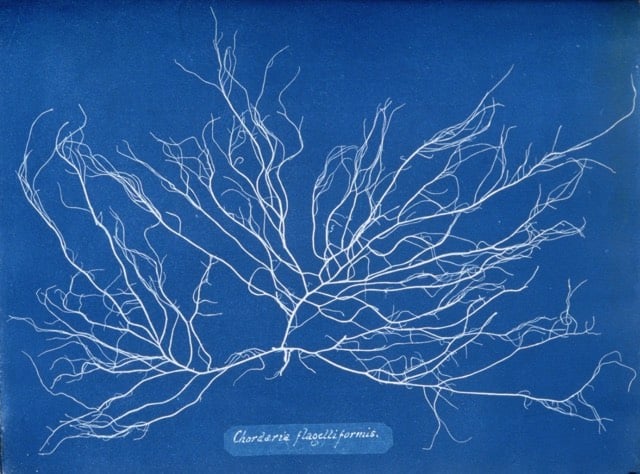
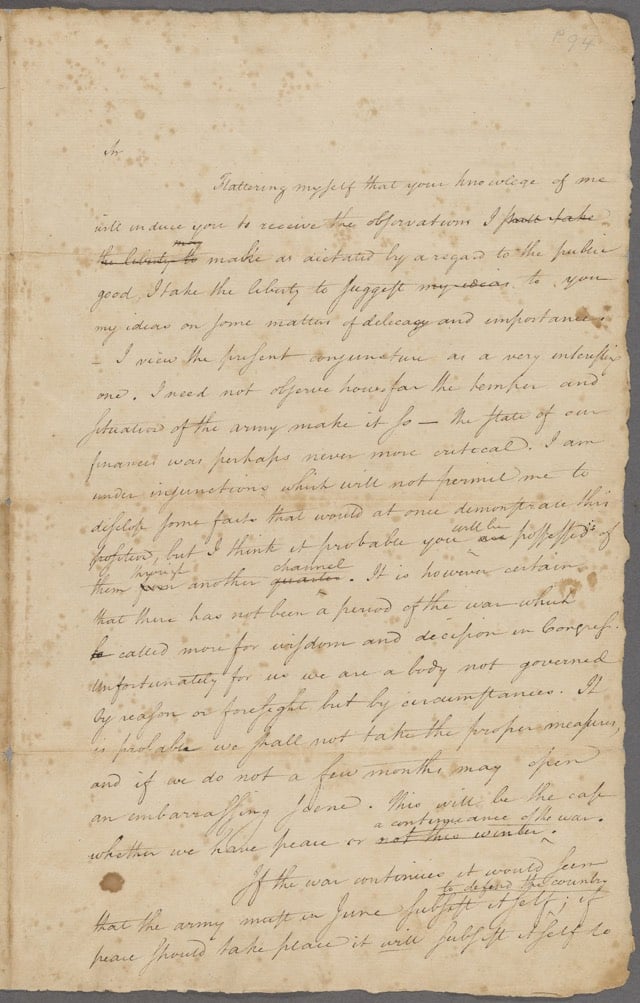
Really putting the “public” in “public library”, the New York Public Library has placed 180,000 public domain items online.
Did you know that more than 180,000 of the items in our Digital Collections are in the public domain? That means everyone has the freedom to enjoy and reuse these materials in almost limitless ways. The Library now makes it possible to download such items in the highest resolution available directly from the Digital Collections website. No permission required. No restrictions on use.
“No permission required. No restrictions on use.” And they’re doing it specifically so that people will reuse and remix the images.
“We see digitization as a starting point, not end point,” said Ben Vershbow, the director of NYPL Labs, the in-house technology division that spearheaded the effort. “We don’t just want to put stuff online and say, ‘Here it is,’ but rev the engines and encourage reuse.”
In an introductory blog post, the library shares some of what’s in the new archive:
Berenice Abbott’s iconic documentation of 1930s New York for the Federal Art Project
Farm Security Administration photographs by Walker Evans, Dorothea Lange, Gordon Parks, and others
Manuscripts of American literary masters like Walt Whitman, Henry David Thoreau, and Nathaniel Hawthorne
Papers and correspondence of founding American political figures like Alexander Hamilton, Thomas Jefferson, and James Madison
Fantastic stuff. Well done, NYPL.
Apparently they set off fireworks everywhere in Lima, Peru when the New Year hits. And Jeff Cremer was there with his drone to capture the craziness. Wow. (via colossal)
From Tony Zhou comes another episode of Every Frame a Painting. In it, he uses Bong Joon-ho’s Memories of Murder to explore ensemble staging, how movies can direct an audience’s onscreen attention when many people are on the screen at the same time, and why a director would want to do that.
Jordan Hanzon made an edit of Inside Out showing only the “outside” parts of the film…so, none of the stuff with Joy, Sadness, Anger, etc. I bet Pixar had an internal cut like this just to make sure the outside stuff hung together independent of the inside. (via devour1)

With just a few modifications, Samuel Bernier and Andreas Bhends made a working bicycle out of a pair of Ikea FROSTA stools.
(via @kellianderson)
Pete Souza’s job for the past seven years has been to take photographs of the goings-on at the White House, including its inhabitants, staff, and guests. Behind the Lens: 2015 Year in Photographs is a selection of more than 100 photographs that Souza and his staff took last year. A few favorites:

That’s the Obamas beginning a walk across the Edmund Pettus Bridge in Selma, Alabama on the 50th anniversary of the brutal police attack of peaceful march to Montgomery accompanied by some of the original marchers. I love the looks on the faces of the various marchers: the dignified determination of John Lewis, the appropriate solemnity of the President and First Lady, and the carefree expressions of Sasha and Malia.1

Obama’s like Subzero from Mortal Kombat but with rainbows.
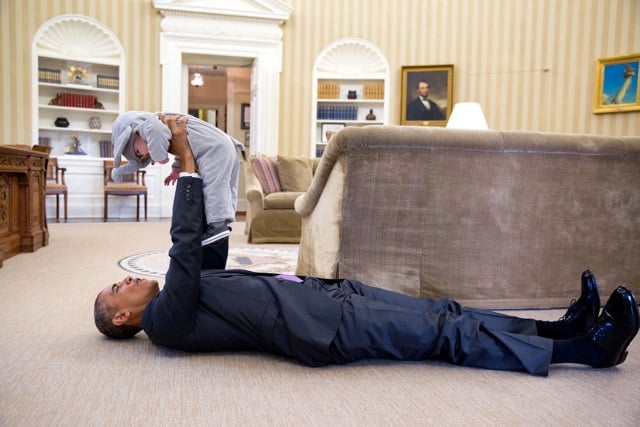
I’m not sure there will ever be another President in my lifetime I love as much as this one.
Radiohead were commissioned to write the theme song for Spectre, the newest James Bond movie. The movie’s producers decided to go in a different musical direction, so the band recently put the rejected song up on Soundcloud. Enjoy. (via df)
Update: They took the full version down from Soundcloud but it’s up on Spotify.
IUPAC, the governing body for the official periodic table of elements, has announced the addition of four new elements to the table: ununtrium, ununpentium, ununseptium, and ununoctium. Those are working names…the teams that discovered each element has been invited to name them.
The proposed names and symbols will be checked by the Inorganic Chemistry Division of IUPAC for consistency, translatability into other languages, possible prior historic use for other cases, etc. New elements can be named after a mythological concept, a mineral, a place or country, a property or a scientist.
Ununoctium is so unstable that its half-life is 0.89 milliseconds and only three or four atoms of the substance have been produced in the past 10 years.
vintage post from Jan 2016
· gift link
Of Oz the Wizard is the entire Wizard of Oz movie presented in alphabetical order by dialogue. So it starts with all the scenes where Dorothy and the gang say “a”, “aaiee”, “along”, and proceeds through “you’re” and “zipper”. Even the words on each of the title cards are sorted alphabetically.
(I feel like I’ve posted this before — or something like it — but I can’t find it in the archives. Anyone?)
Update: Ah yes, I was thinking of this alphabetized version of Star Wars (which I’ve seen before but somehow never posted):
Another example is Thomson & Craighead’s The Time Machine. Matt Bucy, the creator of Of Oz the Wizard, seems to have pioneered this technique (the Vimeo page indicates it was completed in April 2004) but didn’t post the video online until a few days ago. (via @Mister_Milligan, @sannahahn)
Newer posts
Older posts





Socials & More