kottke.org posts about basketball
Yesterday I posted an incredible fact about LeBron James: he has played against 35% of all of the players that have ever played in the NBA. Wondering about the Great Span of the NBA, I looked for the oldest player from LeBron’s rookie season, then for the oldest player in that player’s rookie season, and so on.

What I found is that just four players span almost the entire 79-year history of the league: Bob Cousy, Kareem Abdul-Jabbar, Kevin Willis and LeBron James.
- The NBA was founded in 1946
- Bob Cousy, played 1950-1970 (14 seasons)
- Kareem Abdul-Jabbar, played 1969-1989 (20 seasons)
- Kevin Willis, played 1984-2007 (21 seasons)
- LeBron James, played 2003-present (22 seasons)
What’s more, all four are still alive: James is 40 years old, Willis is 62 years old, Abdul-Jabbar is 78 years old, and Cousy is 97 years old. Collectively, the four of them have either played with or against almost all of the players that have ever played in the NBA. Incredible.
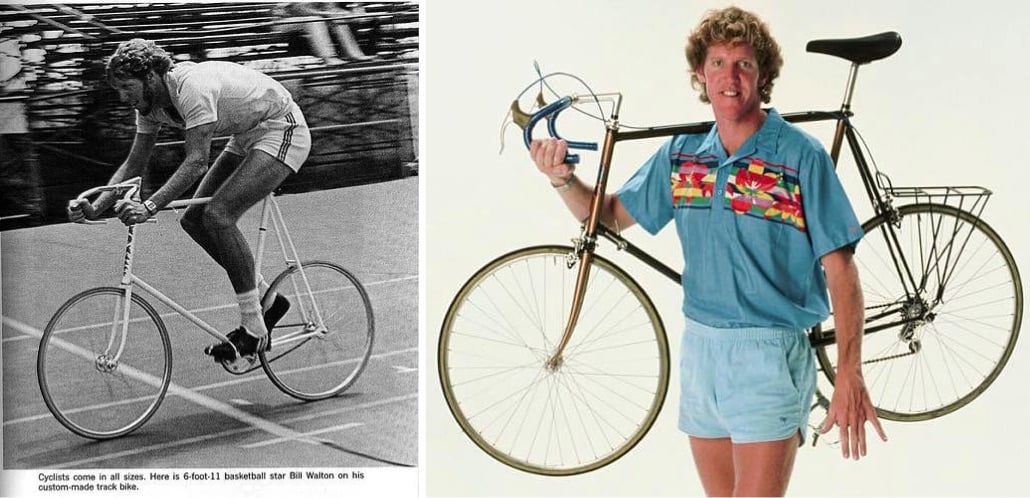
Former NBA player and TV sportscaster Bill Walton died on Monday at the age of 71. He was a quirky dude and as someone who’s been known to veer off onto seemingly unrelated tangents, I appreciated his oddball broadcasting style. Basketball was good for Walton but it also ruined his body. In response, he turned to biking to keep active and to get around.
I am the luckiest guy in the world because I am alive and I can ride my bike. It is the ultimate celebration of life when you go out there and are able to do what you can do. I have not been able to play basketball for 34 years. I have not been able to walk for enjoyment or pleasure or exercise in 41 years, but I can ride my bike.
In a brief clip of a talk Walton gave (at the University of Arizona, I believe, the custodian of Biosphere 2), he elaborated on how important his bicycle was to him:
I love my bike. My bike is everything to me. My bike is my gym, my church, and my wheelchair. My bike is everything that I believe in going on in the Biosphere. It’s science, it’s technology, it’s the future, engineering, metallurgy - you name it, it’s right there in my bike. My bike is the most important and valuable thing that I have.
Walton knew: the bicycle is low-key one of humankind’s greatest inventions:
By contrast, a person on a bicycle can go three or four times faster than a pedestrian, but uses five times less energy in the process. He carries one gram of his weight over a kilometer of flat road at an expense of only 0.15 calories. The bicycle is the perfect transducer to match man’s metabolic energy to the impedance of locomotion. Equipped with this tool, a person outstrips the efficiency of not only all machines but all other animals as well.
As one of the commenters on this post said, “Tailwinds and smooth asphalt forever, buddy.”
Yesterday on her Instagram story, cognitive scientist Lera Boroditsky posted a short clip of a lecture in which she posed an intriguing question: if she switched brains with LeBron James, which of them would win in a 1-on-1 game? Some relevant facts: LeBron is 6’8”, 250 pounds, a 4-time NBA champion, 19-time All-Star, 4-time league MVP, and is the all-time NBA points leader. He also possesses a singular basketball mind:
“I can usually remember plays in situations a couple of years back — quite a few years back sometimes,” James says. “I’m able to calibrate them throughout a game to the situation I’m in, to know who has it going on our team, what position to put him in.
“I’m lucky to have a photographic memory,” he will add, “and to have learned how to work with it.”
Boroditsky is 5’3”, 105 pounds, and by her own admission knows nothing about basketball and has “no hops”. So who would win? Boroditsky’s body with LeBron’s brain or LeBron’s body with Boroditsky’s brain? And why?
Ok this video from The Pudding is cool for two different reasons. First, you learn about which NBA player had the most unexpectedly great performance since 1985 (e.g. when a guy who is usually good for 6-8 pts inexplicably drops 50). But, you also get a fun little tutorial in how statistical analysis works and the importance of paying attention to the right data in order to get an answer that’s actually meaningful and relevant. How to interpret data in this way is an under-appreciated aspect in the bombardment of data and statistics we see in the media these days and teaching more people about it doesn’t have to be boring or stuffy.
The Pudding also sets an example here by working in the open: the data they used for their analysis is available on Github.
Last night, in the third quarter of an eventual loss to the Oklahoma City Thunder (a team name that didn’t even exist when James made his NBA debut), LA Lakers forward LeBron James broke the once-untouchable all-time NBA scoring record, formerly 38,387 points and held by the great Kareem Abdul-Jabbar. Afterward, James had this to say about the moment:
Everything just stopped. It gave me an opportunity to embrace it and look around and seeing my family, the fans, my friends. It was pretty cool. I probably can count on my hands how many times I have cried in 20 years, either in happiness or in defeat. So that moment was one of them when I kind of teared up a little bit. It was ‘I can’t believe what’s going on’ tears.
The Athletic liveblogged the occasion as it happened and detailed how James was able to break the record.
James’ path to the all-time scoring record will look much different than his predecessor, and it’s quite obvious why: 3-pointers.
The impact of long-range shooting within the NBA has grown since the league embraced 3-pointers during the 1979-80 season. How has that affected James’ path to the top of the NBA’s scoring list? During Abdul-Jabbar’s final season in 1988-89, NBA teams averaged 6.6 3-point attempts per game. This season, James is averaging 6.7 3-point attempts on his own.
But let’s pause for a tribute to man James passed for the record: Kareem Abdul-Jabbar Is Greater Than Any Basketball Record.
Guided by the footsteps of Jackie Robinson and Bill Russell, Abdul-Jabbar pushed forward, stretching the limits of Black athlete identity. He was, among other qualities, brash and bookish, confident and shy, awkward, aggressive, graceful - and sometimes an immense pain to deal with. He could come off as simultaneously square and the smoothest, coolest cat in the room.
In other words, he was a complete human being, not just the go-along-to-get-along, one-dimensional Black athlete much of America would have preferred him to be.
James has run with the branding concept that he is “More Than an Athlete.” Fifty-plus years ago, Abdul-Jabbar, basketball’s brightest young star, was already living that ideal.
From The Ringer, How LeBron James Broke the All-Time Scoring Record:
Just how long has James been playing in the NBA at a high level? Long enough to face nine father-son duos in games.
LeBron James opened his NBA career on Oct. 29, 2003, scoring 25 points in 42 minutes in a loss to the Sacramento Kings. On the Kings’ bench sat Jabari Smith, a 6-foot-11 center in his third year who wouldn’t remove his warmups that night.
Nineteen years, two months and 18 days later, James would be reminded of that matchup by another Smith, Jabari Smith Jr., a rookie with the Houston Rockets who is Jabari Smith’s son.
“Hey, you played against my dad in your first NBA game ever,” the rookie told LeBron.
“Why you do that to me,” a chuckling James said, to which Smith responded, “You feel old, don’t you?”
From The NY Times, How LeBron James Outscored Kareem Abdul-Jabbar and All the N.B.A. Greats:
James had a head start on catching Abdul-Jabbar because he was drafted out of high school, which wasn’t allowed in Abdul-Jabbar’s day. Then known as Lew Alcindor, Abdul-Jabbar first spent four years at U.C.L.A., where he was one of the most dominant college basketball players in the country.
James, at 38, is one of the oldest players in the league and in his 20th season. When Abdul-Jabbar was 38, he was in just his 17th professional season. By the time he hit his 20th year, he was no longer as dominant as he had been. James, with the good timing of being able to start this journey at 18 years old, is still proving every day just how much he has left, scoring 40 points on several nights this season and almost reaching 50 in a January game against Houston. He could be the first player to score 40,000 points.
On a personal note, I’ve never been that excited about LeBron James. I don’t hate him, but I didn’t really root for him or enjoy watching him play. Part of my aversion was no doubt due to many people trying, far too early, to place James on the GOAT throne, ahead of the player I grew up watching and rooting for, Michael Jordan. If I were in charge of drafting players for an all-time team, I’d still select Jordan first — his unique combination of drive, athleticism, and skill is still, IMO, the best in the game, ever. But with his versatility and longevity, LeBron James has more than earned the status of the NBA’s greatest player of all time.
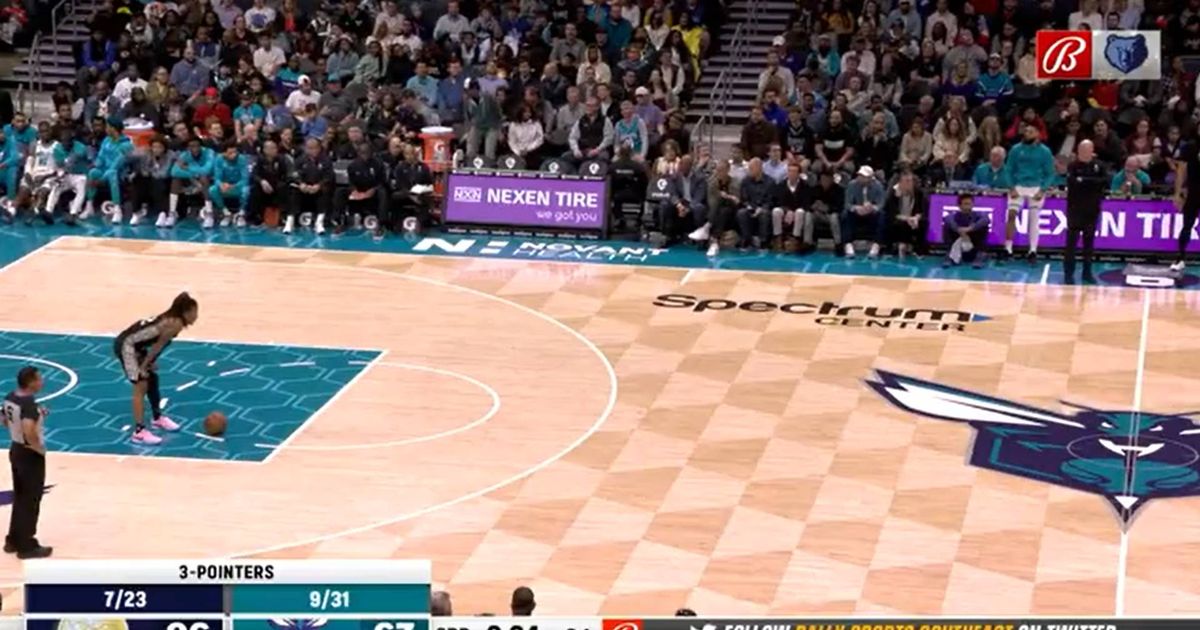
If you’ve watched a high-level basketball game in the last ten or so years (NBA, WNBA, NCAA), you’ve probably seen something a little strange. Instead of throwing the ball inbounds directly to a teammate, the inbounder will slowly roll the ball on the floor in their general direction… and then the ball handler will wait as long as possible before he picks it up and starts dribbling. Sometimes it’s just a few seconds, and sometimes it feels like an eternity. What is this, and why do they do it?
It’s called “walking the dog,” and it exploits a rule that’s as old as the shot clock itself. The shot clock (24 seconds long in the NBA) begins counting down as soon as a team takes possession of the ball after an inbounds pass. If you don’t shoot and make contact with the rim within 24 seconds, the other team takes possession of the ball.
The shot clock is designed to speed up play. Walking the dog is a loophole designed to slow it down. You use it for two reasons: to delay starting the shot clock (giving you longer to get down court and set up a play) and to run time off the game clock (giving your opponent less time to control the ball and score).
Walking the dog is very old — the 60s Celtics used to use it after the other team scored to give them more time for their legendary center Bill Russell to get down court and set up the offense. And generally, that’s been how it’s used in the modern NBA, to get more time back on the shot clock. But in recent years, more ball handlers have been walking the dog to run time — sometimes, lots of time — off the game clock. So it’s becoming more controversial.
One of the most notorious dogwalkers is Ja Morant, who usually makes highlight reels for his explosive dunks. But his slow roll strolls up the court are becoming just as much a signature move:
Two years ago, Morant became a regular dog walker in his sophomore season and quickly got his team to buy in. He’s utilized the move 41 times across all quarters and has been the ball handler on 23 of those 34 plays in crunch time, wasting over three minutes of game clock. In just over half this season, Morant has wasted more time walking the dog than any team had in an entire year and holds three of the longest dog walks recorded in the NBA this season (his teammate Desmond Bane has one of the others)…
The Grizzlies don’t discuss this in practice or plan these plays in advance. Morant often motions to his inbounder to roll the ball in slowly in these situations right as they materialize, especially when leading late in a game. The guy will do anything to shave a few seconds off. He’ll leap out of the way instead of catching the ball if the inbounder throws it too hard in his direction. If Morant finds himself inbounding, he’ll play dumb and misplace the ball as the game clock keeps running.
How has Morant become so good at walking the dog? He declined to speak with ESPN for this story, but his teammates think it boils down to his speed and athleticism. Opponents are hesitant to really press him 75-plus feet from their own hoop. If they make a mistake, he could have a huge runway with a numbers advantage. Others think it’s more a combination of fatigue and a never-ending game of chicken.
How do you stop a player from walking the dog? It’s so simple that it’s stupid: send a defender to make them pick up the ball. There’s some risk on either side here: an inattentive ball handler might allow an aggressive defender to steal a rolling ball. But an overaggressive defender might accidentally foul the ball handler in the back court while trying to steal the ball. That’s exactly what happened to Ben Simmons in a recent game against Morant:
As the Grizzlies’ star guard makes his way up the court, he lets the basketball roll alongside him, slowly, slowly, slowly, an inch at a time, untouched. Morant only needs to maintain a slow walk to keep up as he scans the court, uncontested by any Nets defender.
The ball rolls another inch, another inch, another inch. Morant is almost at half court. He keeps letting the ball roll alongside him, knowing the 24-second shot clock won’t start until he touches it — burning precious game clock at the same time, almost 21 seconds now.
As he crosses half court, Morant finally picks up the ball and glances over to his bench. His defender, Ben Simmons, suddenly closes on him and lunges at the ball, looking for a steal — but he’s too late. Morant sees it coming and protects the ball. Simmons hits him in the arm. Whistle. Foul. That’s Simmons’ sixth; he’s out of the game.
Thanks in part to that play, Memphis wins by 10. Afterward, Morant explains that he was baiting Simmons, knowing he’d bite based on past experience. Clips of the play soon go viral.
Personally, I like it when clever players find ways to play games-within-a-game in sports, especially basketball. So I have no problem with walking the dog. Other people think it’s boring, unfair, or it slows down the game too much. It definitely seems like if a lot of games come to a literal standstill, then the league office might step in and make a rules change. But until then, it’s worth enjoying the players who play this game — and all of its wrinkles — the best.
People running “unconventional miles” is a thing now (see the beer mile) and during the pandemic, when meets and other usual track activities were cancelled, running a mile while dribbling a basketball became part of the human competitive story.
What started out as a curiosity-driven gimmick on YouTube eventually transpired into a competitive record among plenty of athletes, to the point where very experienced milers are now the only candidates that can pull this off.
The record for the basketball mile is 4:28, which also happens to be the current record for the aforementioned beer mile. It’s interesting that dribbling a basketball while running is equally as time-consuming as stopping to chug four beers and then running; I would have guessed the beer mile would take longer.
At the Oscars last night, The Queen of Basketball won the award for best documentary short. The film is about Lusia Harris, the only woman to officially be drafted by an NBA team. Here’s what I wrote about Harris and the film back in August:
Before this morning, I had never heard of Lusia Harris and now she’s one of my favorite basketball players. Playing in the 1970s, before the enforcement of Title IX in athletics, the 6’3” Harris dominated in high school, led a small university to three consecutive national basketball championships in the first 5 years of the program (while averaging 25.9 points and 14.5 rebounds per game), scored the first basket in Olympics women’s basketball history, is the only woman ever officially drafted by an NBA team, and was inducted into the National Basketball Hall of Fame.
Great to see this film win, but also bittersweet because Harris died only two months ago at the age of 66. The director is Ben Proudfoot, whose stuff I have been posting about since 2011. Really fun to see him be rewarded for his talent.
The three-point shot has become the focus of the offensive strategy of every successful NBA team. But is it also making the game boring?
The math states that scoring one-third of your shots from behind the 3-point line is as good as scoring half your shots from inside the line. In other words: Shooting as many 3s as possible will likely lead to a higher score.
The league took notice, and teams and players followed suit. 3s have become so prevalent in recent years that fans are criticizing the league for being oversaturated with them. Critics worry that the game is on the verge of becoming boring because everyone is trying to do the same thing. And that’s led some to wonder if the NBA should move the 3-point line back.
Check out the “additional reading” in the YouTube description, like The NBA is at a breaking point with three-point shooting and Is It Time to Move the NBA 3-Point Line Back? (2014).
Before this morning, I had never heard of Lusia Harris and now she’s one of my favorite basketball players. Playing in the 1970s, before the enforcement of Title IX in athletics, the 6’3” Harris dominated in high school, led a small university to three consecutive national basketball championships in the first 5 years of the program (while averaging 25.9 points and 14.5 rebounds per game), scored the first basket in Olympics women’s basketball history, is the only woman ever officially drafted by an NBA team, and was inducted into the National Basketball Hall of Fame. And those aren’t even her proudest achievements — you’ll have to watch the video for that.
For an electrifying young basketball player on the national stage, success often comes with a lucrative professional contract and brand deals — but Harris’s moment came in the 1970s, decades before the W.N.B.A. was founded, when few opportunities were available to female athletes interested in pursuing a professional career. In Ben Proudfoot’s “The Queen of Basketball,” Harris tells the story of what happens when an unstoppable talent runs out of games to win.
This video is part of the NY Times’ Almost Famous series, which also includes stories about radio astronomer Jocelyn Bell Burnell and actress/singer Kim Hill.
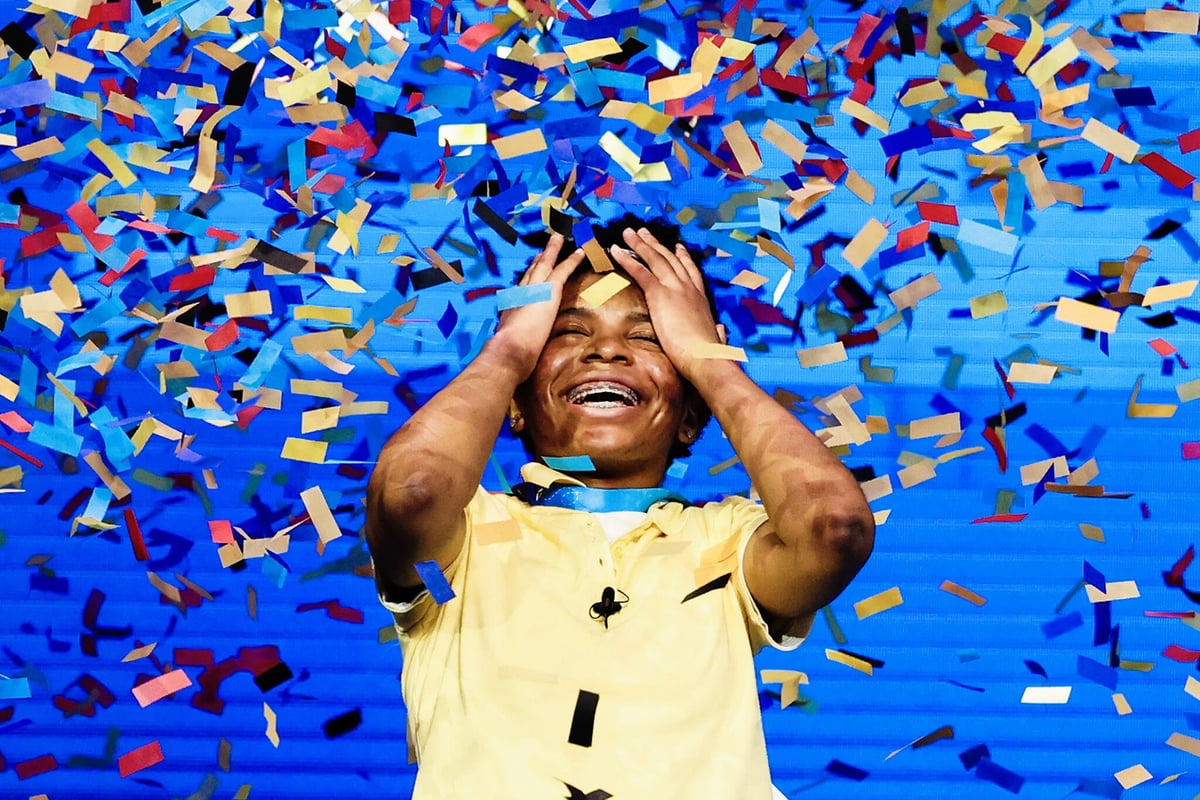
Along with a liveblog of the last few rounds of this year’s Scripps National Spelling Bee, The New York Times has an excellent profile of its champion, 14 year-old Zaila Avant-garde from New Orleans, Louisiana. (One fun fact: Zaila’s last name is an homage by her father to John Coltrane.)
Zaila, who just finished eighth grade in her hometown, Harvey, La., showed a prowess for spelling at 10, when her father, who had been watching finals of the Scripps National Spelling Bee on ESPN, asked her how to spell the winning word: marocain.
Zaila spelled it perfectly. Then he asked her to spell the winning words going back to 1999. She spelled nearly all of them correctly and was able to tell him the books where she had seen them.
“He was a bit surprised by that,” Zaila said in an interview before the finals.
This is a heck of a party trick that kids with hyperlexia can do; I can do it, and unsurprisingly, hyperlexia (and possibly a photographic memory) is an advantage for competitive spelling.
But Zaila’s talents don’t end there:
A gifted basketball player, she set three Guinness world records for the most basketballs dribbled simultaneously (six basketballs for 30 seconds); the most basketballs bounces (307 bounces in 30 seconds); and the most bounce juggles in one minute (255 using four basketballs). With her victory on Thursday, she also became the first winner from Louisiana.
In 2018, she appeared in a Steph Curry commercial that showcased her skills. She also learned how to speed read and figured out that she could divide five-digit numbers by two-digit numbers in her head, a skill she said she had a hard time explaining.
“It’s like asking a millipede how they walk with all those legs,” said Zaila, who has three younger brothers.
[I can… kinda do this? (I can’t really do this very well. The point is, all of this is very impressive!)]
Zaila just graduated eighth grade, and she’s the first African-American spelling champ in the bee’s history. She’s got skills and drive to spare.
To the casual basketball fan, Nikola Jokic seems like an unlikely pick for NBA MVP. Outwardly, his game resembles middle-aged-guy-at-the-rec-center — “god-tier old man game” is how Gene Demby put it — but this video makes a good case that Jokic is “revolutionizing the center position”, “the best offensive passing big man ever”, and possibly even “the best offensive center in NBA history”.
Last month, a video of a high school kid challenging former NBA player Brian Scalabrine to a game of 1-on-1 went viral. Scalabrine, of course, won easily: 11-0. As this Sports Illustrated article about the video put it: “Even NBA benchwarmers are ungodly basketball players.”
The video is a reminder of just how much better pro athletes are than regular Joes. Scalabrine was not a good NBA player. Considering that he played 11 years in the league, it might not be fair to call him a bad NBA player, but he was certainly one of the least productive players in the league during his career. But even almost a decade removed from his last NBA season, he’s still capable of schooling (almost) any person who hasn’t played at least college basketball. Don’t be fooled by the red hair and the fact that he tucked his hoodie into his sweatpants.
Sopan Deb interviewed Scalabrine and a couple of other NBA & WNBA players to find out if these challenges are common, why they happen, and why they almost always end the same way.
“Being a white N.B.A. player from the suburbs, I have to level up,” said Scalabrine, who is from Long Beach, Calif., and was often referred to as the White Mamba, a play on Kobe Bryant’s Black Mamba nickname.
“People don’t understand how a little bit nuts you have to be to sustain an N.B.A. career,” Scalabrine said. “Especially when you’re not that talented. You have to be ready. You have to be up for the fight. You have to be like that every day. And if you’re not, you lose your livelihood.”
Scalabrine told another challenger years ago: “I’m closer to LeBron than you are to me”.
Gene Demby’s thread about the Scalabrine video is full of stories and videos of other former elite athletes easily besting all comers. This is a favorite:
I had a friend in high school who was at a camp & David Robinson showed up. My friend was feeling cocky after dunking on the Admiral twice. The Admiral told him he’d give him $1000 if he did it again. My friend walked away with a story about how he dunked on David Robinson twice.
A few years ago, WNBA player Devereaux Peters wrote about how these types of challenges are different when you’re a woman.
I’m a tall woman at 6-foot-2, and almost everywhere I go, people notice me. The first question is: Do you play basketball? When they find out I’m a professional player, some are just impressed and want to know more about the life of a pro athlete. Most of the men I talk to, though, ask me to play one-on-one.
If you’ve ever had that impulse, let me stop you here. I’m not going to play you one-on-one. I’m never going to play you one-on-one. I have been playing basketball my entire life, and for just as long I have been challenged by men who think they are better than me. I had to prove my skill in middle school against the boys who thought girls couldn’t play basketball. I had to prove my skill in high school when the guys’ egos were hurt because the girls basketball team was more successful and more popular than theirs. I had to prove it in college when grown men started challenging me to one-on-one games because there was no way this college woman was better than they were. Time and time again, I have trounced men — far too many to count. Now I have nothing to prove.
My kids and I have been discussing a related question recently: in which sport would it be easiest for a normal person with some athletic skills to score against or produce some kind of positive result against a professional player. For example: get a hit off of a major league pitcher, beat Steph Curry 1-on-1, win a set (or even a point) against Serena, score a penalty shot in hockey, or score a rushing touchdown (or even survive the day) from the 5-yard line against an NFL team. That last one may not even be the right scenario, but you get the idea. The best answer we’ve come up with so far is scoring a penalty kick against a goalkeeper — I think if you gave a person who played soccer in high school 12-15 years ago 10 chances against a world-class keeper, I suspect they would score a few. Or perhaps that’s too easy of a challenge — after all, most penalty kicks succeed. Maybe the appropriate challenge would be to stop penalty shots from someone like Messi or Alex Morgan, surely a nearly impossible task.
Update: In 2018, BuzzFeed invited some normal folks to try scoring from the spot against MLS goalkeeper Tyler Miller. Admittedly Miller is not one of the best keepers in the world and who knows how hard he was really trying, but a few shots did get past him.
In Europe, where you’re much more likely to find folks on the street who grew up living & breathing soccer and can put the ball in the corners with some pace, I suspect the success rate would be higher, even against the likes of ter Stegen, Alisson, or Navas.
Four years to the day after Colin Kaepernick kneeled during the national anthem of an NFL preseason game to protest the oppression of Black people in the United States, the Milwaukee Bucks refused to play their NBA playoff game and set off an NBA-wide strike, as well as strikes by teams in the WNBA, MLB, and MLS. They were reacting to the attempted murder of Jacob Blake by a Kenosha police officer on Sunday and the subsequent inaction by officials to take any disiplinary action against the officer.
The shooting prompted numerous N.B.A. players and coaches to express frustration and anger that the various measures they have been taking for weeks to support the Black Lives Matter movement, such as kneeling during the national anthem and wearing jerseys bearing social justice messages, were having little impact. Some also began to question, as the Nets’ star guard Kyrie Irving did in June before the 2019-20 season resumed, whether providing entertainment through basketball was actually diverting public attention away from the broader social justice movement.
Fueled by that frustration, Milwaukee’s players stunned league officials by organizing Wednesday’s boycott, a walkout that had virtually no precedent in N.B.A. history.
Milwaukee’s George Hill gave a glimpse of the Bucks’ mind-set on Monday when he openly questioned whether the league’s return had successfully amplified the players’ messaging.
“We shouldn’t have even come to this damn place to be honest,” Hill said. “I think coming here just took all the focal points off what the issues are.”
Former NBA player Kenny Smith walked off the set of TNT’s Inside the NBA in solidarity with the players.
As a reminder, here’s what Kaepernick said after kneeling four years ago:
I am not going to stand up to show pride in a flag for a country that oppresses black people and people of color. To me, this is bigger than football and it would be selfish on my part to look the other way. There are bodies in the street and people getting paid leave and getting away with murder.
You can see why the players believe that little has been done to address this state of affairs — there’s definitely more awareness now, but substantive change is not happening.
Update: A previous version of this post referred to the players’ walkout as a boycott (following the Times’ language). While boycott is technically accurate, it is generally used to refer to consumers withholding their purchase power as a protest. Strike is a more exact word to use in a situation where workers are withholding their labor (even though the players are not demanding concessions from their employers), so I updated the post to reflect that. (thx, david)


As part of his Literally Balling project, artist Victor Solomon fixed up a rundown basketball court, repairing the blacktop using the Japanese art of kintsugi. Traditionally, the kintsugi method involves repairing pottery with glue mixed with gold powder, which results in visible cracks, a reminder of the pottery’s past and what it’s been through. Says Solomon of the project:
With the heartbreaking beginning to 2020 and this weekend’s return of basketball — I’ve been thinking about the parallels between sport as a uniting platform to inspire healing and my ongoing experiments with the technique of Kintsugi that embellishes an objects repair with gold to celebrate it’s healing as formative part of the journey.
(via the kid should see this)
24-year-old NBA superstar Giannis Antetokounmpo has led the Milwaukee Bucks to the Eastern Conference Finals this year, but as a child in Greece, he lived the life of a stateless undocumented immigrant.
Until recently, even the children of African immigrants who were born here found it difficult to secure legal residency, let alone citizenship. Their stateless status denied them national health care, Civil Service jobs and access to sports leagues. Antetokounmpo only gained Greek citizenship six years ago — just as he was about to go to New York for the N.B.A. draft.
“He was given Greek citizenship in order to prevent him from traveling to New York as a Nigerian,” said Nikos Odubitan, the founder of Generation 2.0, an advocacy group that helps second-generation immigrants gain legal status in Greece.
Danny Chau went to Milwaukee to speak with refugees from places like Syria and Myanmar about their lives, their struggles, and their awareness of Antetokounmpo’s story: Giannis Through the Eyes of Milwaukee Refugees.
Kasim serves as a medical interpreter at Aurora Health Care, Wisconsin’s largest home care organization. I walk past the Aurora pharmacy several times during my stay; above one of the entrance gates hand a vinyl FEAR THE DEER banner. I ask Kasim about the Bucks, about what he knows of the professional sports franchise that has brought new life to much of the city this season. For refugees like Kasim, they may as well be from another planet.
“I heard of this, but again, because of the situations, we are a bit away from the sports,” Kasim says. “We don’t have any chance. But now, I come here, I’m working at the community center, at the same time fulfilling other responsibilities, so time is pretty busy. So I don’t get the time to self-care.” Kasim, often solemn and deliberate in his speech, couldn’t help but let out a smile, having essentially wrapped the term “self-care” in sonic air quotes.
I tell him about Giannis.
He lives here in Milwaukee?
About how he’s one of the best basketball players in the world.
He’s from here or he came here with his parents?
About how, as a child, he, too, had no official claim to the home he had always known. About how he would peddle sunglasses, DVDs, and whatever else he could to make 200 or 300 euros a month for his family. And how his status as an undocumented person meant knowing that at any moment, police could ask his parents for their documentation, and that they could be sent back to Nigeria in an instant.
(via @sampotts)
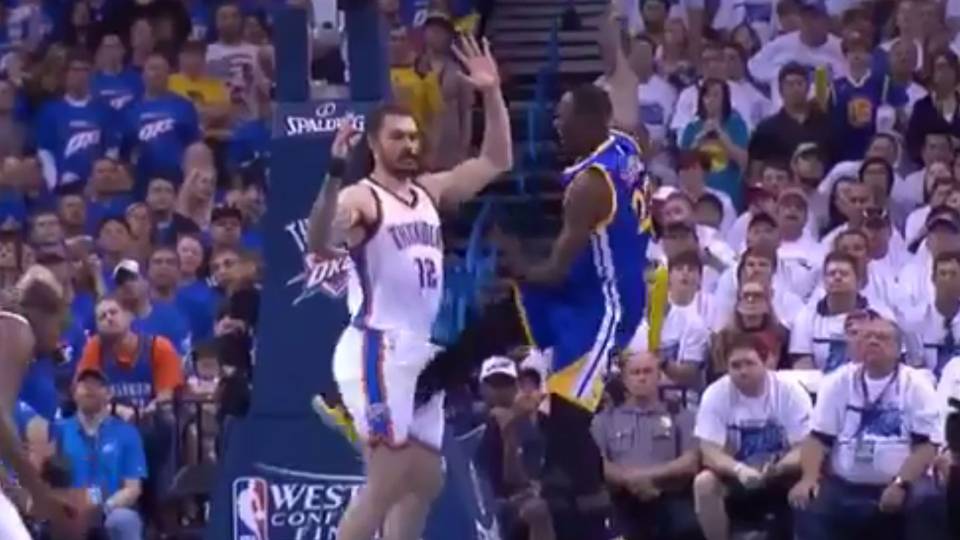
One of the best things about the contemporary NBA is that the league is overflowing with villains, great players that it’s easy to root against. It’s just as easy to love LeBron as to hate LeBron, to love or hate the Warriors, to love or hate James Harden or Kyrie Irving or John Wall. You could heat these guys’ guts, and love their entertainment value as heels at the same time.
One of the very best heels is Oklahoma City center Steven Adams, the New Zealand-born, ponytail-clad, Aquaman-resembling brute who sets screens and clears the boards for Russell Westbrook and Paul George. ESPN gave Adams a mostly sympathetic profile that at the same time made it clear why someone like Draymond Green would want to kick Adams in the nuts.
There’s no “NBA’s Strongest Man” contest where players lift Jumbotrons or heave backboards onto the upper concourse, but among peers and people around the league, Adams is widely considered the NBA’s strongman, a walking concrete wall of power and physicality.
“That guy is the strongest, most physical guy in the league,” says Wizards coach Scott Brooks, who coached Adams for two seasons in OKC.
Says teammate Jerami Grant: “He is for sure, definitely the strongest guy in the NBA.”
In a league trending toward speed, spacing, shooting and slashing, Adams is the counterpoint. Old school. A “throwback,” as San Antonio Spurs coach Gregg Popovich calls him.
Adams is a bruising, physical relic of the past, a back-to-the-basket brute who will grind possessions in the post and overpower you to get there.
“That m——-f——- is strong. Like, I’m serious,” Philadelphia 76ers star Jimmy Butler said last season. “He hit me with one screen and I thought my life was over.
“He’s from Krypton or something.”
Wait: why don’t we have strongman competitions duringthe NBA All-Star weekend or something? That would be amazing! I would rather watch that than layup drills or half of the stuff they show. I want to see Marc Gasol and Boogie Cousins throwing barrels at each other.
About 30 years ago, the Menendez brothers of Beverly Hills murdered their parents, collected a hefty life insurance policy, and then went on an 8 month spending spree. The brothers bought cars, watches, opulent vacations, restaurants (what?!), and… courtside tickets to see the Knicks play. Incidentally, a photo of Mark Jackson from that game was used as his 1990 basketball card, and you’ll never guess who was in the background…
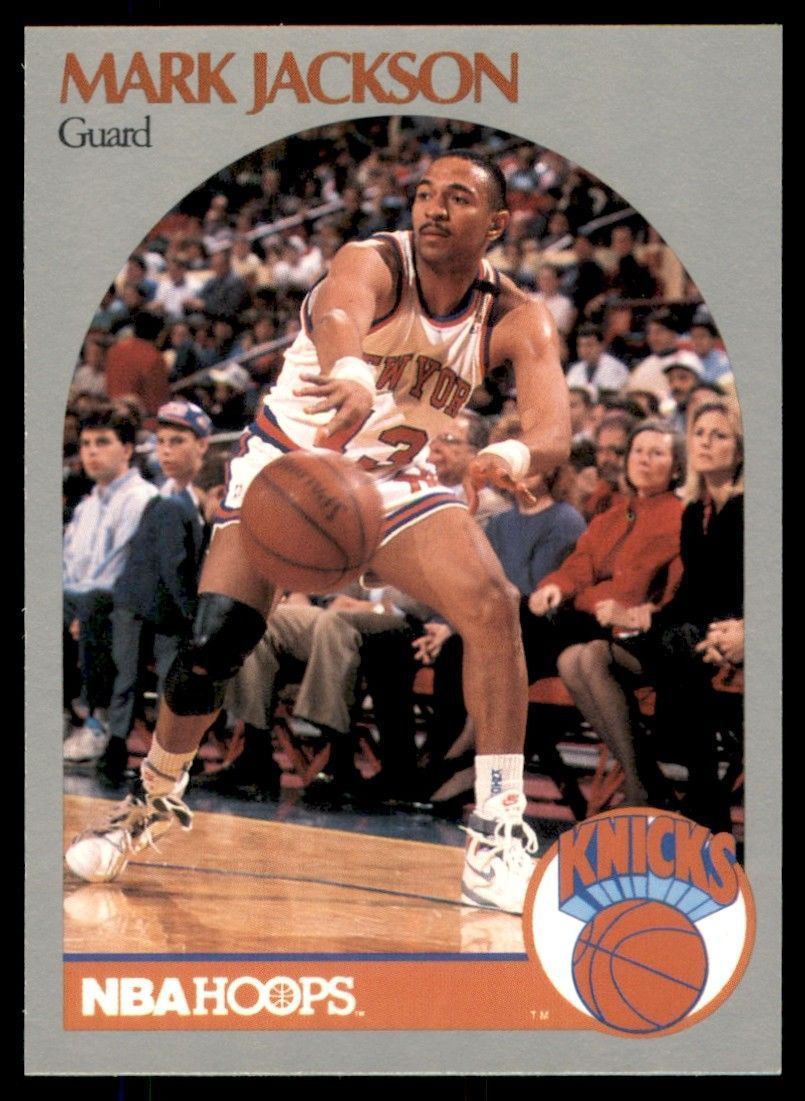
The guy who found it, Stephen Zerance, isn’t an NBA fan but a fan of true-crime. He’d read in court documents the brothers had bought the tickets and went looking for proof. When archival photo and video searches were fruitless, he thought about basketball cards. After looking on eBay, Zerance found his match and announced it this past August, 29 years after the murders. It’s some sort of real-life Time Travelers in Historic Photos bananas coincidence.
As an aside, I learned while writing this post the Menendez brothers weren’t initially considered suspects and got caught after one of the brothers admitted the murders to his psychologist, who told his mistress (the psychologist’s, not the brother’s), who told the cops. Eventually, the affair between the mistress and the psychologist ended, perhaps on account of the stress related to being an ancillary part of a high profile murder case, and likely badly as evidenced by the fact the mistress attended the Menendez trial as a witness for the defense with the intention of impugning the character of the psychologist. What a ride.
Darius Miles was drafted 3rd overall by the LA Clippers in the 2000 NBA Draft. After 8 seasons, a major injury, and $62 million, Miles was out of the league and bankrupt. In this entertaining and affecting article for The Players’ Tribune, Miles explains how he got to the NBA and what went wrong.
It’s crazy to think about, but six years after we were at the peak with the Young Clippers, I was basically out of the league. I was 27 years old, and I had doctors telling me that my knee was too messed up to play basketball ever again.
My whole life, I used basketball as an escape. When you grow up how I grew up, I think you’re probably bound to have some kind of PTSD. I ain’t a doctor, but when you grow up running from gunshots all the time, I think there’s something inside you that never leaves. I used to feel this pressure on me — I’m talking like a physical pressure, you know? But I used to be able to go out onto a basketball court and just unleash it. You could let it all out. You could dunk the shit outta that motherfucker in front of 100 people or 20,000 people and feel good for a minute.
Basketball got taken away from me at 27, and I was lost. I was just kind of going through the motions. Then a couple years later, my momma got taken away from me, and I pretty much went insane.
Miles’ friend and former teammate Quentin Richardson edited the piece and wrote one of his own for the Tribune as well.
Joel Embiid is (probably) the most talented and (easily) the most entertaining young player in the NBA today. It’s really not even close. He’s created a persona that feels like it wasn’t created at all, an unfiltered big kid on a scale we haven’t seen since young Shaquille O’Neal. He’s full of unbridled enthusiasms and trash talk, peppered with charm and feeling, and a kind of canny naïveté. He’s also 7’2,” can jump out of the gym, is already an all-defense lock as long he’s healthy, hits three-pointers, etc. So he’s fun to watch, too.
Unsurprisingly, Joel’s first-person narrative for The Players Tribune is a perfect specimen of Pure Embiid. He writes about his childhood in Cameroon, being unable to watch basketball or sports because his mother was too strict, and piecing together the game from YouTube clips, natural talent, and sheer competitiveness.
So I’m chilling one night, and I go on YouTube, and I’m thinking I’m about to figure this shooting thing out.
I go to the search box like….
HOW TO SHOOT 3 POINTERS.
Nah.
HOW TO SHOOT GOOD FORM
Nah.
Then the light bulb went off, man. I typed in the magic words.
WHITE PEOPLE SHOOTING 3 POINTERS.
Listen, I know it’s a stereotype, but have you ever seen a normal, 30-year-old white guy shoot a three-pointer? That elbow is tucked, man. The knees are bent. The follow-through is perfect. Always. You know how in America, there’s always an older guy wearing like EVERLAST sweat-shorts at the court? That guy is always a problem. His J is always wet.
Thankfully, Embiid also watched plenty of clips of legendary big men like Hakeem Olajuwon, so he doesn’t just chuck up Js like a thirtysomething Duke grad or play nonstop hero ball like his idol Kobe Bryant. That’s the thing about piecing together your game or your personality through YouTube, hip-hop, social media, etc. Ideally, you don’t just get one flavor. You get to sample a little of everything.
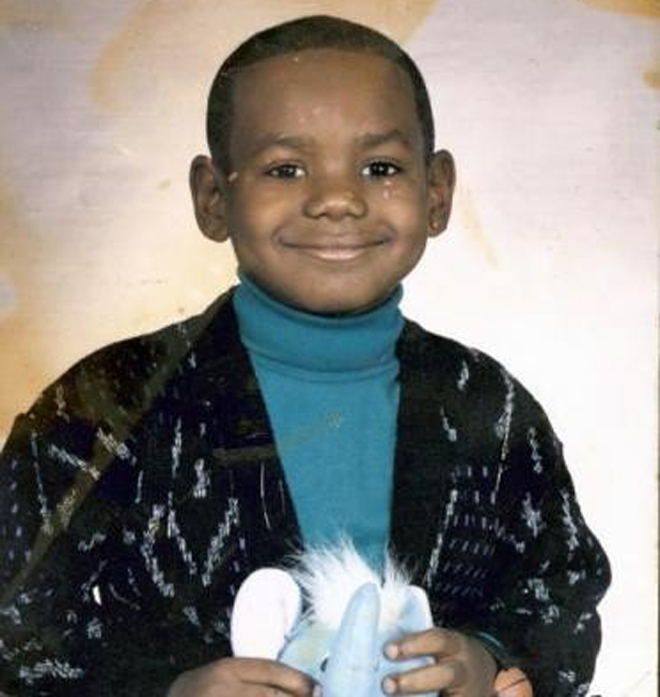
I don’t live in Cleveland or Akron. I live, and grew up, just north of Detroit, in an inner-ring suburb known for Thai and Vietnamese restaurants and multiple expressways.
I didn’t live in the midwest for LeBron’s first run with the Cavs. I lived in Philadelphia, a city that was sports-crazy in its own aggro east-coast way, but didn’t live and die with its sports teams in the same all-enveloping way. Any city with an Ivy League campus has pockets of people who don’t notice sports at all.
When LeBron moved to Miami, I moved to New York. It made sense for both of us; a better job on a bigger stage, hopefully a better life. But soon enough, we were both headed back to the Midwest; we were both headed back home.
For a hot minute, I thought we were both headed to Philadelphia again. But some dreams are too good to be true.
The Midwest is sports-crazy; the midwest is sports-starved. Free agents don’t want to play here. Owners don’t want to spend money. Championships cluster on the coasts.
When teams like the Warriors win, it’s compounded good news for a team moving to take advantage of San Francisco’s riches. When the Cubs or Packers or Cavs win, we talk about century-long curses lifted, quaint tales of tiny markets that could, and the uplift of entire regions.
Of the twenty best basketball players who ever played, nine of them have played for the Los Angeles Lakers. (Yes, I’m counting Karl Malone.) Only two ever played for Cleveland. (One of them was washed-up Shaq.)
Three of the best five — LeBron, Jordan, and Kareem — played in the Midwest. Two of them left for LA.
It was special to have LeBron James in the Midwest. In the age of player empowerment he ushered in, to play for a man he hated, at a time when blue states have flipped to red, when billionaire oligarchs are buying up whole cities, and the national discourse tries to erase everything in the region but its white reactionaries, LeBron was the best of us. He stood up, somehow taller and more regal than the sea of tall, regal men, unafraid to tell the truth. Through Ferguson, through Tamir Rice, through Trump and Trumpism, he stood up and told the truth. I won’t forget it.
He also dragged four outmatched teams to four straight Finals through sheer talent, intelligence, and force of will. I won’t forget that either.
I’m not happy he’s going to the Lakers. (As a Pistons and Sixers fan, we have history. However, I am cool with him getting out of the Eastern Conference.) But I’m happy in the hope that he will get to be happy.
Update: Strongly recommend today’s The Lowe Post podcast with Zach Lowe and Brian Windhorst, which digs into the tick-tock and the fallout of LeBron going to the Lakers, including some midwestern angst over what it means as a midwesterner to have so many of the good players bound to the coastal metropoles.
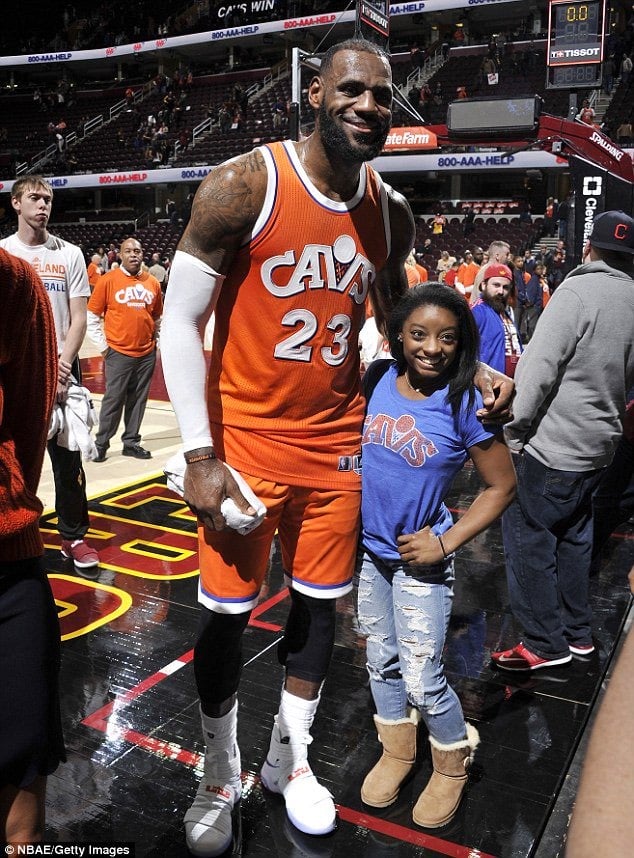
An interesting question, courtesy of Marginal Revolution:
Who could launch themselves higher on a trampoline? LeBron James or Simone Biles?
James has more mass & height and is stronger in an absolute sense but Biles is extremely strong for her size and is one of the world’s leading experts in launching herself of off trampolines (or more properly, vault springboards).
The answer would depend a great deal on what is meant by “launch themselves higher”. If the height is judged as a percentage of body weight or height, Biles wins easily. If you’re talking about absolute height (as measured from the lowest point on their body at the jump’s peak), James’ greater mass and absolute strength works for him but Biles’ ability to time her jumps to build momentum and her acrobatic skill in getting more of her body higher may put her ahead of James. If their bodies need to remain vertical at the highest point in the jump (think a basketball player’s form vs. a high jumper’s), perhaps that favors James, even though his legs are much longer than Biles’, measuring from their centers of gravity.
From a pure physics perspective, is the trampoline just a multiplier of a person’s max vertical? James’ max vertical is said to be around 40 inches. Biles’ max vertical is harder to determine because gymnasts jumps are measured differently, but she can get her body about 53 inches off the floor (according to this analysis). Can James get his entire body 53 inches off the floor? What’s his box jump height? I imagine with various slow-motion videos, you could figure out which of them can get their center of gravity furthest off the ground…but handspringing into a layout, dunking, and bouncing on a trampoline are still not equivalent activities. The only real way to settle this is clear: let’s get James and Biles together at a trampoline park and have them go at it. Netflix, YouTube, Amazon, or Twitter…make this spectacle happen!
A related question: Can Simone Biles dunk a basketball? A regulation hoop is 10 feet tall. I’m assuming she can’t palm a basketball but she might still be able to do a one-handed dunk with practice. Her height plus her floor exercise max height is 110 inches, about 9’2”. I don’t know how high her standing reach is, but assuming a similar ratio to mine (my reach is 25% of my height), that puts her theoretical maximum jumping reach, with many caveats, at about 124 inches (10’4”). A regulation WNBA ball has a diameter of about 9 inches. Soooooo….maybe but probably not? But if not, she could surely come closer than any other person in the world who is 4’9”.
A 10-part Netflix/ESPN documentary series on Michael Jordan and the 1990s Chicago Bulls? Sure, I will watch the hell out of that. The Bulls were my team1 when I was a kid and for me, Jordan is still the greatest basketball player of all time. Ok, I am admittedly biased and you could probably talk me into Bill Russell (all those championships), Kareem (stats, championships, longevity), or more recently, Tim Duncan (championships, longevity, consistency)…they were certainly all far more decent people than Jordan, an ultra-competitive dick, was.
But you can get out of here with your LeBrons and Steph Currys…until they start stringing together back-to-back-to-back championships, they are not in the conversation. Jordan had the stats and the championships; the Bulls were a proper dynasty. I’ll put it this way: for eight straight years in the NBA, the most intensely competitive sports league in the US, when Michael Jordan played a full season (in six of those years), his team won the NBA championship. They had it on lock. When he didn’t, they didn’t. Case closed.
(Also, I don’t want to tell the filmmakers their business, but if one of these episodes isn’t just 50 straight minutes of Jordan highlights, they’re cheating the American public.)

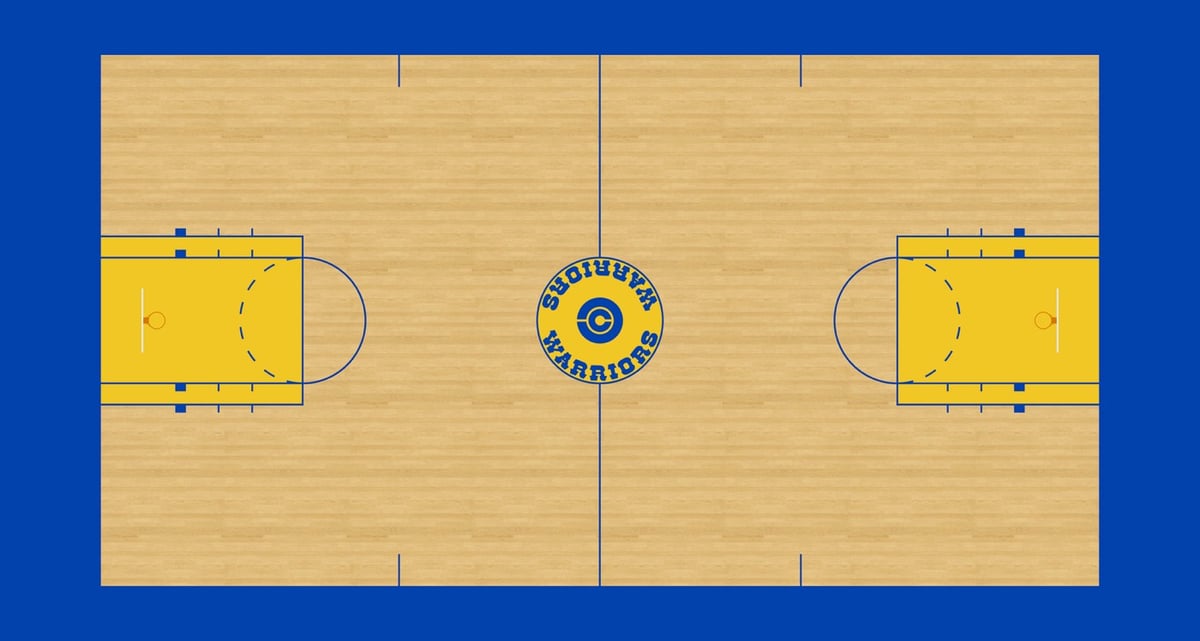

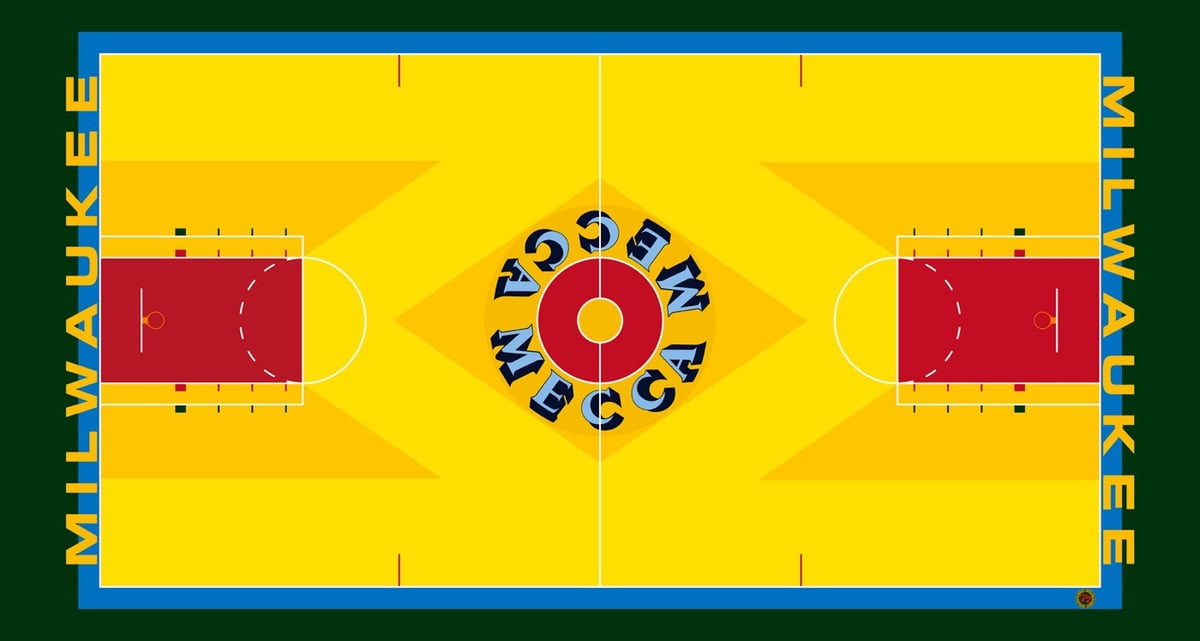
Flickr user kodrinsky has compiled a massive collection of more than 1100 illustrations of NBA courts dating back to the 50s, an online museum of basketball hardwood. The collection contains floors for every NBA team with additions documenting even small changes in arena names, team logos, free-throw lane layouts, paint schemes, sponsors, and even wood patterns.
Above are the courts for the Boston Celtics (1964-1966), the Golden State Warriors (1975-1979), the Philadelphia 76ers (1978-1979), and the Milwaukee Bucks (1977-1979).
In a recent podcast interview with David Axelrod, former NBA star Charles Barkley talks about how NBA legend Bill Russell persuaded Barkley to stop publicly complaining about how much income tax he paid (transcription by Steven Greenhouse).
Bill Russell called me one time… He says, “Charles Barkley.” I said, “Yes, sir, Mr. Russell.”
“You grew up in Alabama. Right?” I said, “Yes, sir.”
He says, “Did you go to public school?” I said, “Yes, sir.”
He says, “Did the cops ever come to your neighborhood?” I said, “Yes sir.”
He said, “Any of the houses ever on fire and the firemen come?” I said, “Yes, sir.”
He said, “I don’t want to see your black ass on TV complaining about your taxes anymore.” I says, “What do you mean?”
He says, “So now that you got money you don’t want to help other people out, but when you were poor, other people took care of you.” And I says, “You know what, Mr. Russell, you will never hear me complain about my taxes again.”
And it was a very interesting lesson for me, because I do think rich people should pay more taxes. I’m blessed to be one of them, and we should pay more in taxes. I learned my lesson. I never complain about taxes.
I think Bill Russell needs to make a few phone calls to Congress…
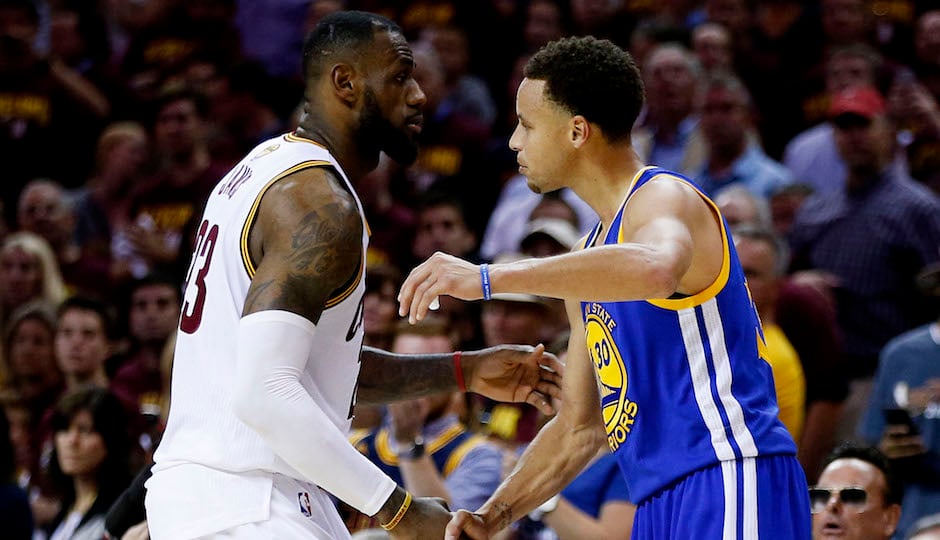
This year, the NBA All-Star Game won’t be strictly the best players in the east against the best in the west. Instead, the top vote getters in each conference get to choose their own teammates: first from the list of starters in both conference, and then from the list of reserves.
The NHL has done something similar for the past few years, broadcasting the draft, and offering a free car as a consolation prize to the player chosen last. All of this is extremely entertaining. But the NBA, whose soap opera dramatics leaves the NHL and every other sports league far, far behind, is having none of it. They’re refusing to televise the draft, or even to publicize which players will be selected in which order, to avoid hurting the players’ feelings. Come on! Hurting people’s feelings is the whole point! We want drama, we want angst, we want entertainment!
Anyways, the All-Star Reserves have not yet been chosen, but the starters and the captains have. It’s LeBron in the East, and Steph in the West, as almost everyone predicted. I thought it would be fun to imagine how the draft might go.
LeBron picks first. And remember: they have to choose all the starters before they can move on to the reserves. Those starters are: Kyrie Irving, Giannis Antetokounmpo, DeMar DeRozan and Joel Embiid from the East, and Kevin Durant, James Harden, Anthony Davis and DeMarcus Cousins from the West.
1. The LeBron Jameses select James Harden from the Houston Rockets.
LeBron needs a guard; he’s not going to take Kyrie Irving; Harden, despite injuries, is having another near-MVP season; and picking Harden rather than the best player on the board (Kevin Durant) pushes Steph into some predictable choices. I’m not letting Steph take all the guards and playing five out. I’m making him pick Durant.
2. The Steph Currys select Kevin Durant. Not only is he Steph’s teammate, he’s the best player on the board.
3. The LeBron Jameses select Anthony Davis. Versatile big who regularly guns it in the All-Star Game. You can’t tell me LeBron doesn’t want to play with this guy.
4. The Steph Currys select Giannis Antetokounmpo. Steph likes his bigs versatile. And Giannis was nearly unstoppable in last year’s All-Star Game. He plays hard.
5. Some real drama here. Kyrie is arguably the best player left on the board. Alternatively, LeBron needs to pick another big man, and either Embiid or Boogie is going to be salty if the other guy is picked first. But LeBron is a man of the people. He’s a man with a Philly beard. He’s going to take the popular choice. He’s going to have fun. He’s going to trust the process. He’s going to choose Joel Embiid.
6. Steph has some interesting choices here, all of which would be more interesting if the draft were televised. He could force LeBron to take Kyrie. Instead, he’s going to put together one of the most entertaining backcourts in All-Star Game history. He’s going to draft Kyrie Irving.
7. At this point, LeBron has too many bigs. Just for fit, he has to take DeMar DeRozan. Or have Boogie Cousins play the two and guard Kyrie. I don’t see it happening.
8. The Stephs Curry select DeMarcus Cousins. Who will be furious at being picked last (if he ever even finds out about it) and probably win All-Star MVP and/or pick a fight with LeBron, Embiid, and his own teammate AD.
Final lineups:
The LeBrons
- G: Harden
- G: DeRozan
- F: James
- F: Davis
- C: Embiid
The Stephs
- G: Curry
- G: Irving
- F: Antetokounmpo
- F: Durant
- C: Cousins
So basically, the west traded AD and Harden for Giannis and Kyrie. Probably a slight downgrade. But they do get the first pick in the second round, where they can take former MVP Russell Westbrook, any of Steph’s Warriors teammates, some young unicorns like Kristaps Porzingis and Ben Simmons, and so forth. In general, I would say these are more balanced teams, and they’re definitely more interesting teams.
Tell me again why the NBA isn’t televising this draft?
Early on in a Suns/Trail Blazers game in October, a Trail Blazers pass was stolen and, as if in a ballet performance, all five Phoenix Suns players turned at the same time and began running up the court. I dare you to watch this fewer than five times:
You couldn’t have choreographed that any better. In the New Yorker, Vinson Cunningham writes about other such moments in the NBA, like this one and these:
Bodies and minds as amazing as these are made similar by training. The smallest stimulus — an obviously fishy pass, an off-kilter jump shot, an unexpected whistle — fires thousands of responses, all honed by hours of practice and study. You get hit lots of times and you learn how to fall. Every so often, instinct kicks in and only one option seems possible: plant a foot, turn around, and run. Style is great, but sometimes it’s nice to watch it fall away.
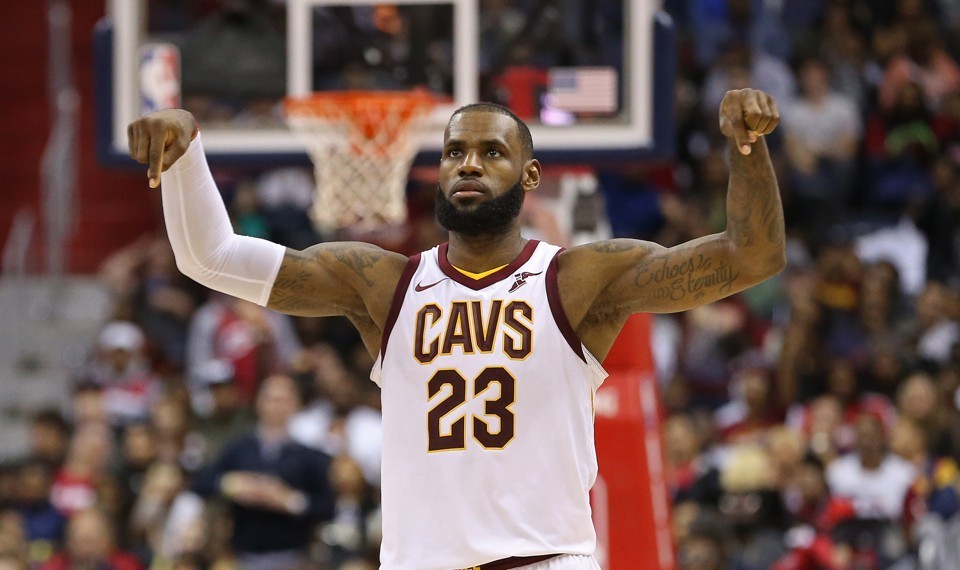
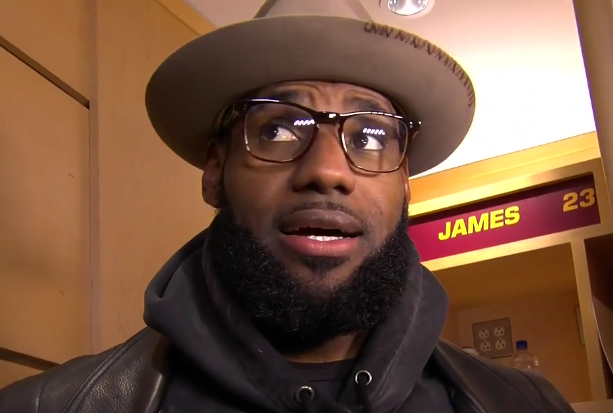
LeBron James, as a basketball player, is arguably better now than he’s ever been. More importantly, LeBron James’s beard is inarguably better now than it’s ever been.
Look at that fullness, that thickness, that beautiful roundness! That, my friend, is the beard of a man with a dietician, a dermatologist, and a barber on retainer.
It is the beard of a dad and a daddy both.
It is a beard fully realized. It is a Philly beard.
Here I need to explain. I was born in Detroit, but lived for many years in Philadelphia. The men of Philadelphia, and particularly the black men of Philadelphia, are known for their lustrous beards. Some of it is the influence of Islam; some of it may just be needing to be outdoors in cold weather. But it’s a source of civic pride and power.
This was the first video I ever saw on the Philly beard, made by the now-defunct Phillybeard.com in 2009:
The local PBS station made its own version, emphasizing some of the qualities needed for a proper Philly beard:
Even Al-Jazeera America got in on the action, with this excellent essay on the Philly beard by Hisham Aidi, tying to the city’s hip hop and jazz traditions as well as Islam:
But overseas the moustacheless, bushy beard is not so identifiably hip-hop and has caused considerable controversy, with security officials in Europe and the Middle East mistaking the Philly for a jihadi beard. In February 2014, for instance, Lebanese police arrested Hussein Sharaffedine (aka Double A the Preacherman), 32, a Shia rapper and frontman for a local funk band. Internal Security Forces mistook him for a Salafi militant and handcuffed and detained him for 24 hours. In Europe hip-hop heads such as French rapper Medine — a Black Powerite who wears a fierce beard that he calls “the Afro beneath my jaw” — complain of police harassment. French fashion magazines joke now crudely about “hipsterrorisme.” European journalists are descending on Philadelphia to trace the roots of what they call la barbe sunnah and Salafi hipsterism.
But just as not everyone who rocks a Sunnah is Sunni, it’s a mistake to conflate the moustacheless Sunnah with the Philly beard as such. For instance, check out Questlove and Black Thought, two classic examples of the Philly beard, avec une moustache:
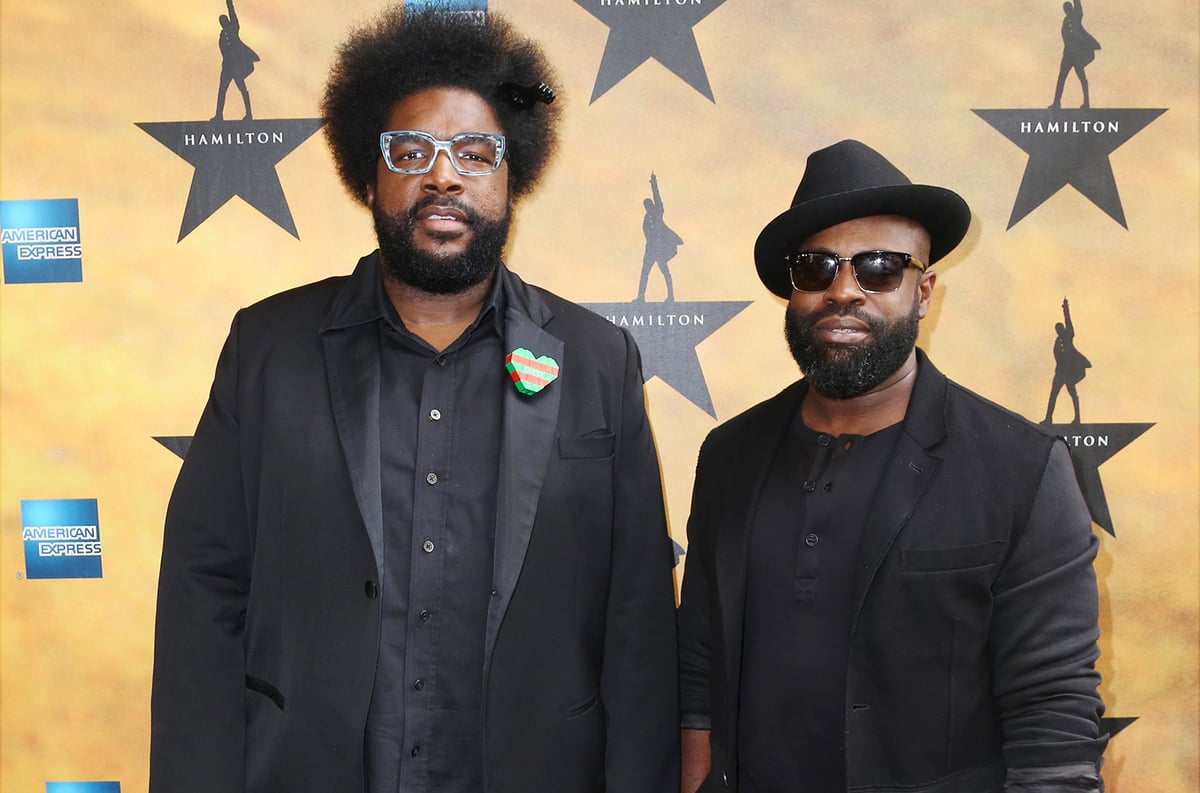
These, I think, are the key criteria for a Philly beard:
- A full beard, trimmed only at the edges of the cheek and the neck;
- A trimmed moustache. The lips should be visible;
- That roundness. A Sunni muslim might grow out their beard long, so it gets that verticality. The Philly beard is round — as Medine says, it is an “afro beneath the jaw”;
- It has to be well-cared for. A Philly beard is not unshaven; a Philly beard is deliberate.
Even though LeBron James does not live in Philadelphia, nor has ever lived in Philadelphia, nor had anything to do with Philadelphia other than beating the Sixers and occasionally saying nice things about our rookie Ben Simmons, if I had to point to an example of a Philly beard, after the guys from The Roots? I would point to LeBron James.
This of course, leads to the obvious question: is LeBron, who has never before worn a beard quite like this, announcing without announcing, hiding in plain sight, via the medium of his face, his preferred free-agency destination in 2018?
The answer, for any fan of the Philadelphia 76ers, is clearly yes.
Naysayers, like my brother, would say the beard’s meaning is ambiguous. Perhaps it signals his intention to join James Harden with the Houston Rockets. But James Harden’s beard is not a Philly beard. Harden has to wear that thick moustache on top to hide his baby face. Harden’s beard is not round, but rectangular. It’s an impressive beard. But it is not the beard LeBron James is wearing. LeBron’s is a Philly beard.
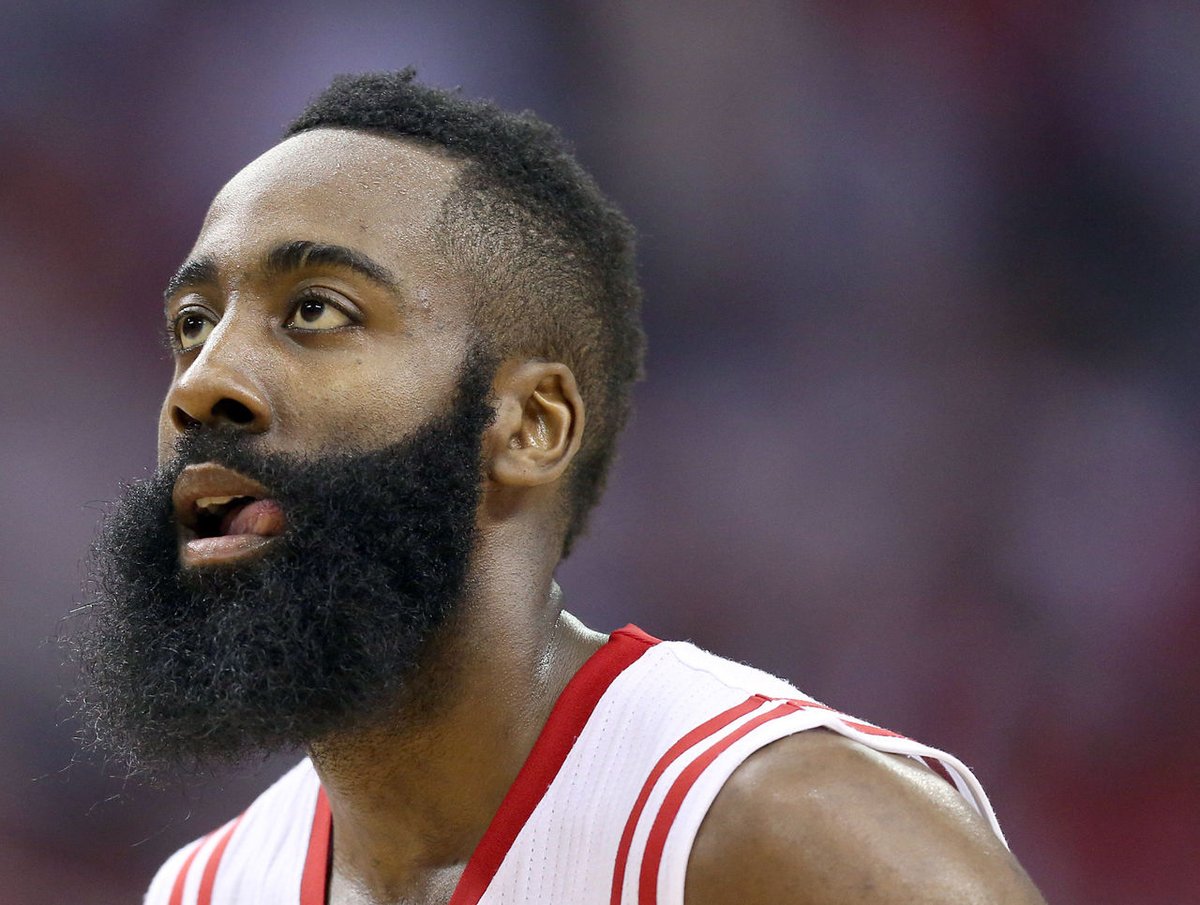
Look: suppose you had to choose between playing in Los Angeles with Lonzo Ball (no beard, no hope of one), Brandon Ingram (sick, scraggly beard), Kyle Kuzma (my guy is from Flint, represent, but still), and maybe Paul George (who plays your position already) — OR you could play with Ben Simmons, Joel Embiid, Robert Covington, Markelle Fultz, Dario Saric, and MAYBE JJ Redick, for an equally storied franchise, but one that hasn’t won a title since 1983, AND you can stay in the Eastern conference and stick it to Dan Gilbert and Kyrie Irving forever — why would you not sign with the Sixers? Play in a city that would love you, love your children, is just a few hours away from home in Akron, and would love the hell out of that beard?
I think the choice is obvious. LeBron will be a Sixer in 2018. He’ll teach Simmons how to shoot, Embiid how to become indestructible, and be Magic Johnson and Dr. J rolled into one. I’ll make this promise now, with the web as my witness: I will move back to Philadelphia if this happens. And I will love every second of these young talents filling in around LeBron’s dad-game.
Trust the process; believe the beard.
The NBA right now is surprisingly flush with “unicorns”: long, thin athletes like Kevin Durant, Giannis Antetokounmpo, Anthony Davis, and Kristaps Porzingis, seven-foot-tall guys who can handle the ball and shoot from range like the best guards from twenty years ago. The impossible build-your-own players from old video games are suddenly real and dunking on your head. Everyone is enamored of them.
I love them too. But before the unicorns, there were the mules. (Mulicorns?) Short, often chubby swiss-army-knife frontcourt/backcourt players who were nearly as versatile as the unicorns, but won through a combination of toughness, savvy, surprising athleticism, and unsurprisingly big butts. The mulicorns didn’t shoot as well from range (everyone shoots better now), they didn’t look as superhuman, but they were just as fun to watch. Okay. Almost as fun to watch. They got the job done. And as an amateur undersized, thoroughly chubby, surprisingly versatile power forward myself, they’ve always been my favorite guys to watch play.
Charles Barkley was a mulicorn. Ricky Pierce, Fat Lever, Adrian Dantley, Wes Unseld, Larry Johnson, Super John Williams. Magic Johnson was just a few inches too tall to be a mulicorn, but he’d be a mulicorn today. The best true mulicorn in the league right now is Draymond Green, whose bizarre blend of physical traits, creative skills, photographic memory, and I-will-tear-your-house-down-to-win attitude might prove as tough to clone as a hundred Giannises.
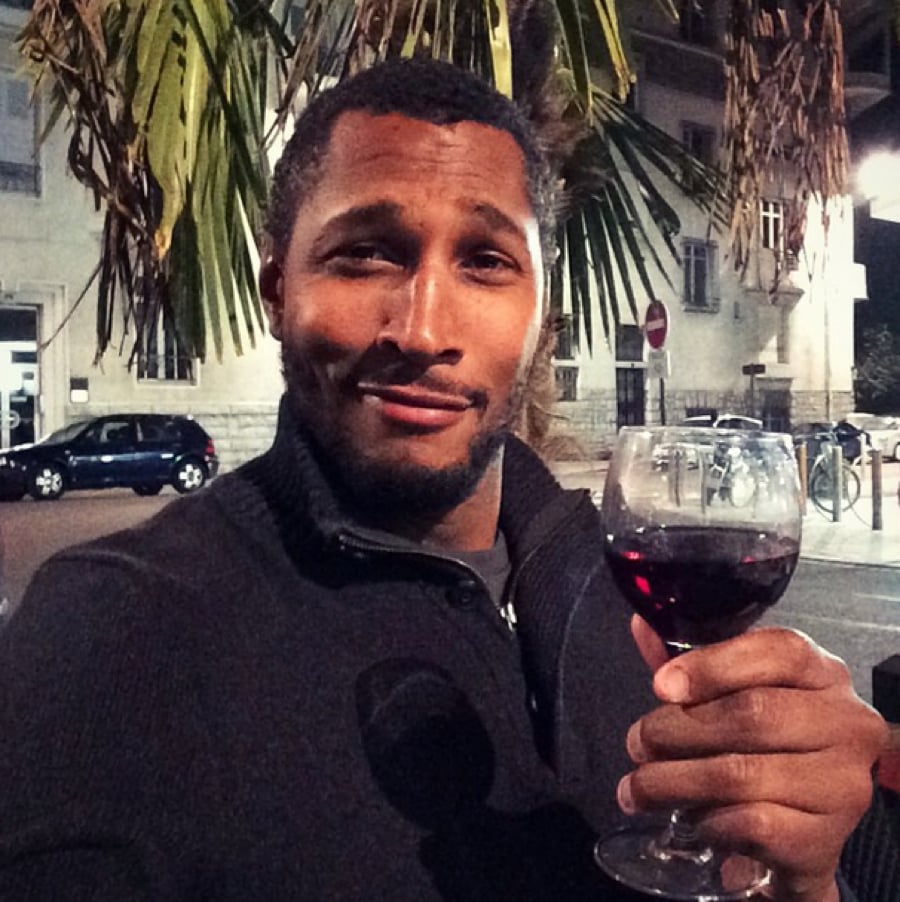
But the all-time mulicorn, and one of my favorite players ever, is the recently not-retired, just-playing-in-France, could-sign-with-a-competitive-NBA-team-at-any-time, Boris Diaw. Behold his majesty:
I asked my brother Sean, a math teacher and football and basketball coach who may be an even bigger Boris fan than I am and never, ever writes things on the internet, to tell me why he loves Boris so much.
Boris Diaw is like the bass player who always makes the song sound better. Or your buddy who the group just works better when he is there. He is the ultimate glue guy.
He also reminds me of that dude at the gym who you pick up on your team and you would win the court all day, and you couldn’t really keep track of who scored all of the points. But everyone would defend a little better, run a little harder and throw that extra pass.
He had the Sabonis thing where he passed really really well for a big guy. He also fit into my theory that every guy I liked could have played on the old Celtics team or the Bad Boys Pistons. Super smart; plays the game the “right way”; plays defense and moves the ball. A role player who understands their position on the team but can be the guy at least for moments. Tend to be really skilled and tough big guys. Guys who play the way that you hope you would play if you were 6’8”.
His teams were always better when he got there and worse when he left. He got traded for Joe Johnson, and somehow the Suns got better. That is a reoccurring story with him. His teams were always better when he got there and worse when he left. That one time he went to the Bobcats and then they were good. It was like him and Stephen Jackson and they made the playoffs.
When he went to the Spurs, it was a whole other level. Who has Tim Duncan and gets more fun to watch when they sub? He and Manu made everyone on the team play basketball. It was what people who like soccer describe, but I never really understood.
He is like the real life most interesting guy in the world.
There are amazing Boris Diaw stories. This Jonathan Abrams profile for Grantland sets a high standard. But this anecdote from David Griffin might be my favorite.
“Boris walks into the gym one day wearing flip-flops and holding his customary cappuccino, which was a staple for him every morning,” Griffin recalled. “It was during pre-draft workouts, so he sees the Vertec [machine] and asks what it is.
“We tell him it measures your vertical leap by determining how many of the bars you can touch. He asks what’s the highest anyone has ever gone, and we tell him Amare’ [Stoudemire] cleared the entire rack.
“Boris puts down the cappuccino, takes off his flip-flops and clears the entire rack on the first try. Then he calmly puts his flip-flops back on, picks up his cappuccino and walks away, saying, ‘That was not difficult.’”
I hope he comes back.
Older posts





Socials & More