Steven Soderbergh’s latest project, Mosaic, takes two forms. The first is a free iOS app that contains an interactive miniseries with over seven hours of footage that you can move through in the style of Choose Your Own Adventure, with “DVD extras” built right into the story. Mosaic will also air in a more conventional linear form on HBO in January. Both versions star Sharon Stone, Beau Bridges, and Garrett Hedlund. Wired has the story of how Mosaic came to be.
Where they ended up was a smartphone-enabled story, developed and released by Silver’s company PodOp, that lets viewers decide which way they want to be told Mosaic’s tale of a children’s book author, played by Sharon Stone, who turns up dead in the idyllic ski haven of Park City, Utah. After watching each segment — some only a few minutes, some as long as a standard television episode — viewers are given options for whose point of view they want to follow and where they want to go next. Those who want to be completest and watch both options before moving on can do so, those who want to race to find out whodunit can do that too. Because each node, filmed by Soderbergh himself, feels like a TV show, launching Mosaic can be akin to sneaking a quick show on Netflix while commuting to work or waiting on a friend; but because it’s long story that’s easily flipped through, it can also enjoyed like the pulpy crime novel on your nightstand, something you chip away at a little bit at a time before bed. It’s concept isn’t wholly original — Soderbergh himself notes that “branching narrative has been around a long time” (the most obvious analogue is a Choose Your Own Adventure book, but Soderbergh cringes at that analogy) — but that it finds a way to appeal to both fans of interactive storytelling, and people who just want to watch some decent TV.
Matt Zoller Seitz also interviewed Soderbergh about the app/show for Vulture. It’s a really good interview (not surprising with Seitz at the helm); they inevitably got into the question of Hollywood and abuse of power:
MZS: Do you believe that in order to make memorable art, you have to be disturbed in some way?
SS: Not at all.
MZS: That’s what’s often raised as a defense of Roman Polanski, Mel Gibson, and others.
SS: No, I don’t believe that at all. It takes a lot of energy to be an asshole. The people I admire most just aren’t interested in things that take away from their ability to make stuff. The people I really respect, and that I’ve met who fit this definition, have a sense of grace about them, because they know that there is no evolving and there is no wisdom without humility.
You can’t get better if you behave in a way that shuts people off. You can’t! You don’t have all the ideas necessary to solve something. You don’t! I’m sure if you spoke to Harvey in his heyday and said to him what I just said to you, he would believe that he accomplished all that he had because of the way he behaved.
MZS: Meaning, like a bully.
SS: Yes, and I would argue instead, “You’re 50 percent of what you could have been, because of the way you behave.” Ultimately, there is a large group of people who are talented, who you want to be in business with, but who won’t be in business with you. I don’t know how you view that as being your best self, or the best version of your business, but I’m really curious to see going forward what changes.
A visual comparison of Wes Anderson’s movies with some of the films that influenced him, including The 400 Blows, The Graduate, The French Connection, Star Wars, and Last of the Mohicans. (thx, luis)
Update: Here’s another short video from Candice Drouet that shows more of Anderson’s references, with almost none repeated from the video above by Luís Azevedo.
Wes Anderson saw Truffaut’s “The 400 Blows” on Beta tape at when he was 17 or 18. When discussing his love for Truffaut with Matt Zoller Seitz, Anderson said that movie “made a huge, rock band-type impression on me when I saw it. It’s one of those films where you say, ‘not only did I just enjoy this experience, now I think I would like to model my future on this somehow.’”
He also felt a unique voice from “The 400 Blows”: “There’s one name you can put to on the whole thing.”
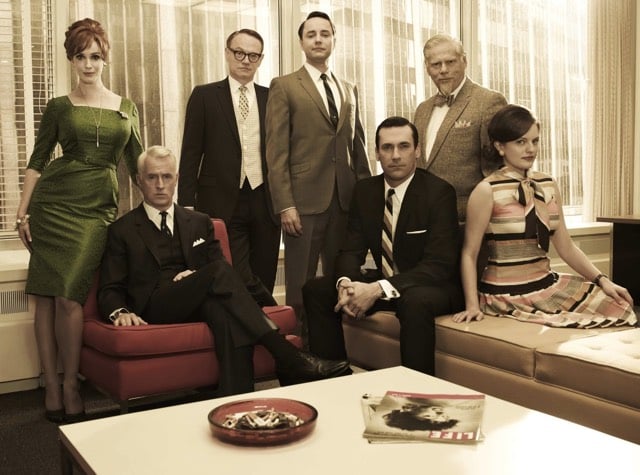
Mad Men Carousel, authored by Abrams’ bestselling author Matt Zoller Seitz, will gather all of Seitz’s widely read (and discussed) Mad Men essays in a single volume. Rather than simply recalling the plot through lengthy summary, Seitz’s essays dig deep into the show’s themes, performances and filmmaking, with the tone and spirit of accessible, but serious, film or literary criticism. This novel-sized volume will be designed to have a 1970s feel and will be broken into seven sections, one for each season.
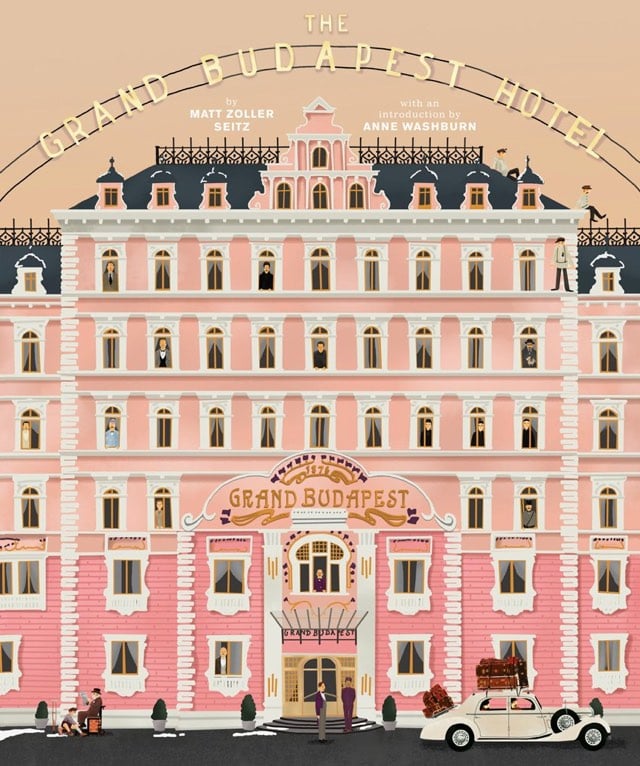
This supplementary, one-volume companion to The Wes Anderson Collection (Abrams 2013) is the only book to take readers behind the scenes of The Grand Budapest Hotel, with in-depth interviews between Anderson and cultural critic and New York Times bestselling author Matt Zoller Seitz. Anderson shares the story behind the film’s conception, the wide variety of sources that inspired it — from author Stefan Zweig to filmmaker Ernst Lubitsch to photochrom landscapes from turn-of-the-century Middle Europe — personal anecdotes about the making of the film, and other reflections on his filmmaking process.
kottke.org favorite Matt Zoller Seitz weighs in on his top 10 best TV shows for 2014. For someone who doesn’t watch a ton of TV, I have seen a surprising number of these.
My friend David has been trying to tell me about Hannibal, but I haven’t been listening. Maybe I should start? Olive Kitteridge was great; Frances McDormand was incredible. True Detective was pretty good and I was lukewarm on Cosmos (I have NDT issues). Mad Men continues to be great…I keep waiting for it to fall off in quality, but it hasn’t happened. The Roosevelts was really interesting and like Seitz, I find myself thinking about it often. I’ve seen bits and pieces of John Oliver but I get enough of the “humans are awful ha ha” news on Twitter to become a regular viewer.
Other shows I’ve watched that aren’t on the list: Downton Abbey (my favorite soap), Game of Thrones (tied w/ Mad Men for my fave current show, although MM is better), Boardwalk Empire (strong finish), Sherlock (still fun, tho got a bit too self referential there), and Girls (gave up after s03e04 when it was airing but recently powered through rest of the 3rd season and is back in my good graces).
For the show’s 10th anniversary, a video essay about Deadwood, perhaps the best three-season show that’ll ever be. Written and produced by Matt Zoller Seitz for RogerEbert.com.
Deadwood the series is a whole heck of a lot of things, in no particular order. And it’s that “in no particular order” part that makes it so rich.
Speaking of Wes Anderson, Matt Zoller Seitz has finished his video essay series on Anderson’s movies. You can find the entire collection of videos on Vimeo and transcripts and notes are on Seitz’s blog. Here are the final two to get you going:
And if that’s not enough for you, here’s the book that the videos are based on.
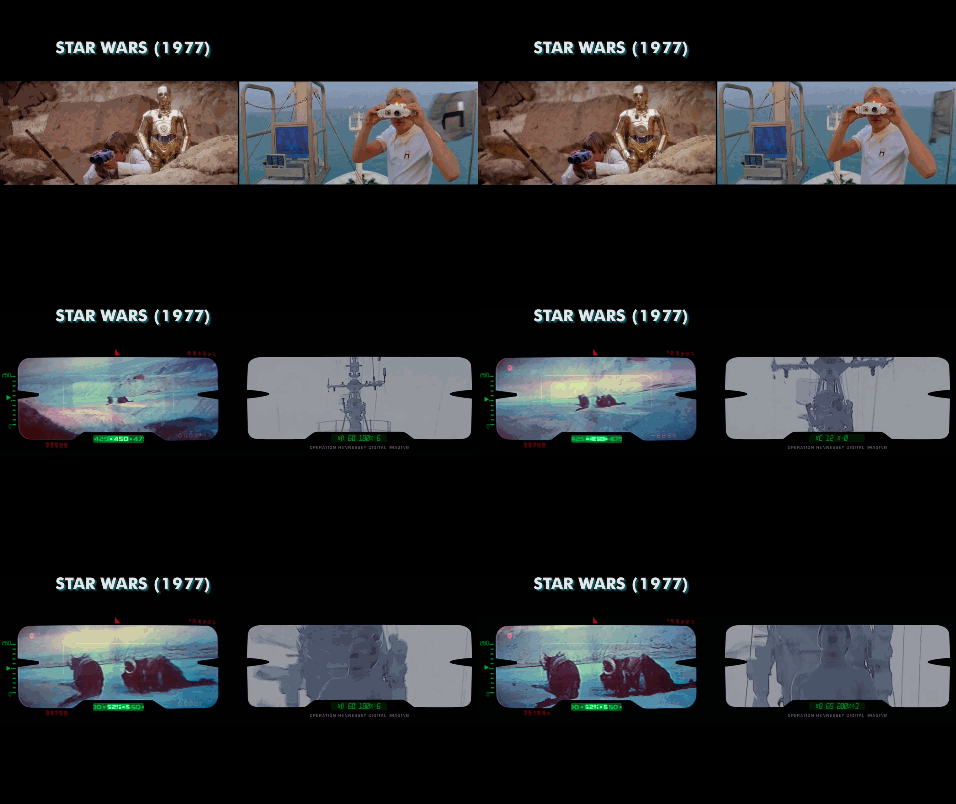
Nestled in the midst of Matt Zoller Seitz’s video essay on Wes Anderson’s The Life Aquatic with Steve Zissou is this bombshell: the movie contains a Star Wars reference no one seems to have noticed. Seitz synced the scenes for us:
There have to be others, right? Many of Anderson’s films end with all of the characters gathered together like at the medals ceremony in Episode IV…someone even synced up the end of the movie with the closing credits music from Zissou and it works really well:
There are few perfect movies. This is one of them.
The book and video essays came about because Anderson saw Seitz’s earlier video essay series, The Substance of Style, an examination of Anderson’s stylistic influences. Great resource for fans of Anderson and film.
The Wes Anderson Collection is the first in-depth overview of Anderson’s filmography, guiding readers through his life and career. Previously unpublished photos, artwork, and ephemera complement a book-length conversation between Anderson and award-winning critic Matt Zoller Seitz. The interview and images are woven together in a meticulously designed book that captures the spirit of his films: melancholy and playful, wise and childish — and thoroughly original.
Vulture has an excerpt of the chapter on The Royal Tenenbaums.
Q: Gene Hackman - it was always your dream for him to play Royal?
A: It was written for him against his wishes.
Q: I’m gathering he was not an easy person to get.
A: He was difficult to get.
Q: What were his hesitations? Did he ever tell you?
A: Yeah: no money. He’s been doing movies for a long time, and he didn’t want to work sixty days on a movie. I don’t know the last time he had done a movie where he had to be there for the whole movie and the money was not good. There was no money. There were too many movie stars, and there was no way to pay. You can’t pay a million dollars to each actor if you’ve got nine movie stars or whatever it is - that’s half the budget of the movie. I mean, nobody’s going to fund it anymore, so that means it’s scale.
That’s right, Gene Hackman (and probably the rest of them as well) worked for scale on The Royal Tenenbaums.
Anderson also talks about the scene in The Darjeeling Limited where they show everyone on the train:
Q: When you turn to reveal the tiger, what is that, the other side of the train?
A: No, it’s all one car. We gutted a car, and that is a fake forest that we built on the train, and it is a Jim Henson creature on our train car. The whole thing is one take, and I think because we did it that way, while we were doing it, we did feel this electricity, you know? There’s tension in it because it’s all real. Fake but real. I mean, that was the idea. The emotion of it, well — there’s nothing really happening in the scene, you know? They just kind of sit there, but it was a real thing that was happening. But I did at the time have this feeling like “I don’t know.”
Razzle Dazzle is a six-part video series on how fame is portrayed in Hollywood films.
Razzle Dazzle is a six-part video essay that looks at how movies have examined the many facets of fame (heroism, infamy, and everything in between) and how they have shaped the audience’s perception of what fame offers. Chapter 1, “The Pitch,” lays out how movies are just one component of an all-consuming media that is constantly shaping the modern image culture. Subsequent chapters look at certain archetypes — the Hero, the Fraud, the Parasite, the Maverick — that have become staples of the media cycle.
Cooking, perhaps more than any activity, lets an actor exude absolute physical and intellectual mastery without seeming domineering or smug. Why is that? It’s probably because, while cooking is a creative talent that has a certain egotistical component (what good cook isn’t proud of his or her skills?), there’s something inherently humbling about preparing food for other people. It doesn’t matter whether you’re a workaday gangster footsoldier giving lessons on how to cook for 20 guys, like Richard Castellano’s Clemenza in The Godfather, or a hyper-articulate, super-fussy kitchen philosopher like Tony Shalhoub in Big Night, (“To eat good food is to be close to God…”), when you’re cooking, it’s ultimately not about you; it’s about the people at the table. Their approval and pleasure is the end game.
Matt Zoller Seitz and Aaron Aradillas recently completed a five-part video series on the evolution of the summer blockbuster movie focused on the summers of 1984 and 1989.
Part 1: “The origins of MTV editing and post-Boomer cynicism. Also starring Ronald Reagan, John Hughes, semi-gratuitous T&A, synth-pop videos, The Stay Puft Marshmallow Man, and Prince.”
Part 2: “Steven Spielberg’s society of the spectacle, the rise of sadism and cynicism in the blockbuster movie, and the influence of the PG-13 rating. Also starring Indiana Jones, Red Dawn, and gremlins. Lots and lots of gremlins.”
Part 3: “A lickety-split recap of the second Reagan term, and begin the Bush years with the rise of hip-hop, Field of Dreams, Do the Right Thing, and the American indie film opting out and breaking out with sex, lies and videotape.”
Part 4: “We watch feel-good sequels ape the spirit of ‘84 while the heroes of Lethal Weapon II and The Abyss flip out, and the unprecedented Batman taps into the decayed American city.”
Part 5: “The New Sincerity, as rediscovered in the hallowed teen-movie triumvirate of Heathers, Dead Poets Society and Say Anything, released within three months of each other twenty years ago.”
Tarantino doesn’t just explore language’s capacity to reveal and conceal motives and personality, he shows how people pick words and phrases (consciously or subconsciously) in order to define themselves and others, and describe the reality they inhabit (or would like to inhabit). Even low-key and seemingly unimportant exchanges are as carefully choreographed as boxing matches. Clever flurries of interrogatory jabs are often blocked by witty responses; the course of conflict can be shifted by deft rhetorical footwork that re-frames the terms of debate.
Matt Zoller Seitz has completed his five-part look at Wes Anderson’s influences.
Part 1: Bill Melendez, Orson Welles, and Francois Truffaut Part 2: Martin Scorsese, Richard Lester, and Mike Nichols Part 3: Hal Ashby Part 4: J.D. Salinger Part 5: The Royal Tenenbaums, annotated
Seek out the video links in the right sidebar; they’re better than just reading the text. From the Salinger segment:
Detractors say Anderson’s dense production design (courtesy of regular collaborator David Wasco) overwhelms his stories and characters. This complaint presumes that in real life our grooming and style choices aren’t a kind of uniform — visual shorthand for who we are or who we want others to think we are. This is a key strength of both Anderson and Salinger’s work. Both artists have a knack for what might be called “material synecdoche” — showcasing objects, locations, or articles of clothing that define whole personalities, relationships, or conflicts.
The fifth part, where Seitz annotates the beginning segment of The Royal Tenenbaums with text, images, and video, is particularly fun to watch.
When I interviewed Anderson for a 1998 Star-Ledger article about A Charlie Brown Christmas, directed by the late animator Bill Melendez, Anderson cited Melendez as one of three major influences on his work, so we’ll start there. Anderson told me that he and his screenwriting collaborator, Owen Wilson, conceived Rushmore hero Max Fischer as Charlie Brown plus Snoopy. He said that Miss Cross, the teacher Max adores and will draw into a weirdly Freudian love triangle with the industrialist Mr. Blume, is a combination of Charlie Brown’s teacher and his unattainable love object, the little red-haired girl.
The video (located in the right sidebar) takes longer to watch than it does to read the text, but the visual comparisons are worth it. I can’t wait to read parts 2-5. (via the house next door)





Stay Connected