kottke.org posts about video
In the 1890s and 1900s, the Biograph Company sent film crews around the world to capture moving images to bring them to audiences that, up until this point, had no access to seeing what life was like outside of their own locales. This footage was acquired by MoMA in 1939 but not analyzed until recently.
This footage is astoundingly crisp and clear — one of the highlights is a short clip of Queen Victoria shot on a visit to Ireland in 1900, just a year before her death. In a shot starting at 1:45, the queen is seen sitting in a carriage, exchanging greetings with well-wishers, and wearing a pair of now-trendy tiny sunglasses.
In the moving image, you get so much more — even in something as brief as this — of the personality, the presence of this woman. This is the embodiment of the British Empire, here she is, an immediate connection with a figure that everyone would have known. She’d certainly been photographed but only when you see her like this, when she’s moving, when she’s alive, when she’s in the middle of a scene, do you get the sense of being in the same world with her and really connecting to that living being that was Queen Victoria.
The film images are so incredibly clear because Biograph shot them in 68mm at 30fps, aka “the IMAX of the 1890s”.
To avoid violating Edison’s motion picture patents, Biograph cameras from 1895-1902 used a large-format film, measuring 2-23/32 inches (68 mm) wide, with an image area of 2x2½ inches, four times that of Edison’s 35mm format. The camera used friction feed instead of Edison’s sprocket feed to guide the film to the aperture. The camera itself punched a sprocket hole on each side of the frame as the film was exposed at 30 frames per second. A patent case victory in March 1902 allowed Biograph and other producers and distributors to use the less expensive 35 mm format without an Edison license, although Biograph did not completely phase out 68 mm production until autumn of 1903.
Compare the Victoria clip above with one shot by British Pathé around the same time:
More than a century after the invention of moving images, I think we still somehow underestimate the power and impact of the connection of film & video. Even now, we thrill when we open up Instagram, TikTok, or Snapchat and “get the sense of being in the same world” (or even the same room) with people from around the world, living lives very different from our own. We may not experience the impact that early film audiences must have felt seeing their monarch in motion for the first time, but every video clip we see today is still a minor miracle, a time machine that brings far flung places, past & future, into our presence at the push of a button.


Scott Wade turns the dirty windows of cars into mobile art. Here’s a look at Wade in action:
This video is so far up my alley that I’m now charging it rent. (For parking in the alley. Yeah, I don’t know how metaphors work.) Anyway, this 20-minute film is a collection of photography of street scenes, from the very first photo ever taken of a person in 1838 (by Louis Daguerre) to a crowded market in Glasgow in 1869 to a ghostly Norwegian street scene in 1882 to NYC’s Mulberry St in 1900 to a newsie selling newspapers about the Titanic disaster in 1912 to more modern scenes, presented chronologically one photo per year. Along the way, you see the development of history, fashion, and technology — the people in the photos get crisper and clearer as shutters quicken and film improves.
My only complaint is that many of the photos after 1900 and into the 40s & 50s have been artificially colored…and distractingly so. Why not just feature the original B&W versions? Believe me, I understand the appeal & impact of seeing the past in color, but these colorized versions greatly detract from the historical value of this video. (via aeon)
I keep track of every media thing I “consume”, so here are quick reviews of some things I’ve read, seen, heard, and experienced in the past two months. I never wrote a proper report on my trip to Mexico City, so I put some of the highlights in here. I’m in the middle of several things right now. On TV, I’m watching Our Planet, In Search of Greatness, Street Food, Chernobyl, The Clinton Affair, Reconstruction: America After the Civil War, and This Giant Beast That is the Global Economy. I don’t normally watch 19 different things at one time, but life’s felt a little scattered lately. For books, I’m listening to Guns, Germs, and Steel by Jared Diamond on audiobook and I’m making good progress on Robert Caro’s Working (highly recommended).
The Silk Roads: A New History of the World by Peter Frankopan. Hard to summarize but there’s certainly something interesting on almost every page. (A-)
Fleabag. Bitingly funny and poignant, a real gem. (A+)
Skyscraper. Die Hard + the Sherlock Holmes story A Scandal in Bohemia + #sponcon for Big Duct Tape. I love a good disaster movie. (B+)
Mexico City. Great food, vegetation everywhere, beautiful architecture, culturally fascinating, super walkable/bikeable/scooterable. I am definitely visiting here again as soon as I can. (A)
Puyol Taco Omakase. Delicious & fun & a great experience, but I’m not sure the food was obviously so much better than some of the best street food I had in Mexico City. I had this same experience in Bangkok years ago…street food is tough to beat when there’s a thriving culture of markets, carts, and stalls. (B+)
The National Museum of Anthropology. One of my new favorite museums in the world. The only thing possibly more impressive than the collection is the architecture of the building. (A+)
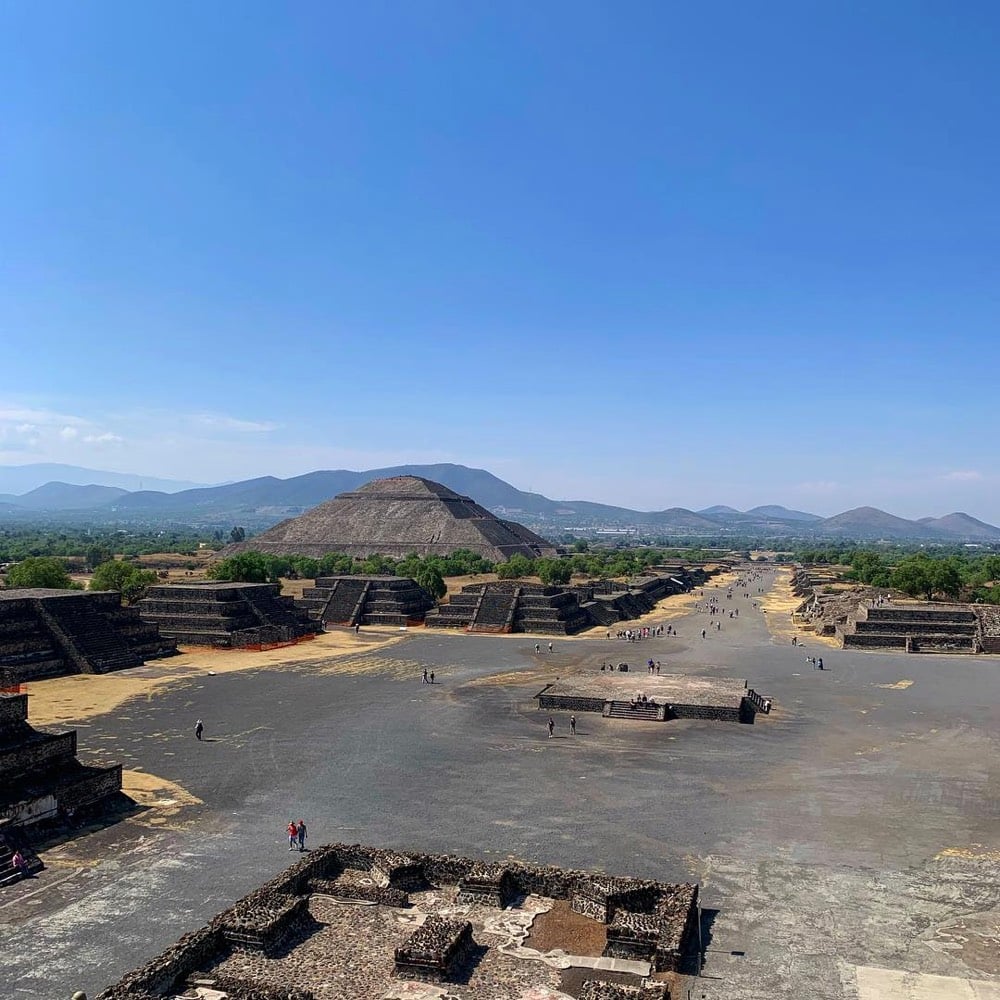
Teotihuacán. I had high hopes for this archeological site and I was still blown away by it. (A+)
AirPods. This is my favorite gadget in years, the first real VR/AR device that feels seamless (and not like a Segway for your face). The freedom of wireless headphones feels similar to when I first used a laptop, wifi, and dockless bike share. (A+)
Homecoming. So many things to love about this, but one of my favorites is the shots of the audience watching Beyoncé and the rare moments when she watches them back: “I see you.” And also the way they put a cohesive show together while showcasing individual talents and styles. (A-)
Homecoming: The Live Album. Come on, a marching band playing Beyoncé hits? That this works so well is a small miracle. (A-)
Avengers: Endgame. I liked but didn’t love it. It was like the ST:TNG finale and the Six Feet Under finale mashed together and not done as well. It also seemed too predictable. (B)
Avengers: Age of Ultron. Now that the Thanos narrative arc is complete, this is an underrated installment. (B+)
Casa Luis Barragán. This was like being in someone’s creative mind. The layering of the garden reminded me of Disney’s use of the multiplane camera in the forest scene in Bambi. (B+)
Gelatin Sincronizada Gelitin (NSFW). I was skeptical of this art performance at first — a bunch of half-naked people painting on a moving canvas using paintbrushes coming out of their butts — but it ended up being a really cool thing to experience. (B+)
Game of Thrones. I’m not quite as critical of the final season as everyone else seems to be. Still, it seems like since the show left the cozy confines of George RR Martin’s books, it has struggled at times. (B+)
Wandering Earth. Based on the short story by Liu Cixin (author of the Three Body Problem trilogy), this disaster movie is a little uneven at the start but finishes strong. (B)
Halt and Catch Fire Vol 2. The music was one of the many great things about this show. (A-)
Running from COPS. A podcast about how media and law enforcement in America intersect to great and terrible effect. (B+)
Eating bugs. I tasted crickets, grasshoppers, and grubs at the market: mostly just salty. I had beef tartare and guacamole with grasshoppers on it. They added a nice crunch to the guac. Wouldn’t exactly go out of the way for them, but they weren’t bad. (B)
Panaderia Rosetta. Did I have one of the best pain au chocolat I’ve ever had here? Yes. Yes, I did. Also extremely delicious: everything else I tried. (A-)
Against the Rules. A podcast from Michael Lewis about what’s happening to the concept of fairness in America. The episode about Salvator Mundi, the supposed Leonardo masterpiece, is particularly interesting. (A-)
Tolkien: Maker of Middle-earth. I have a new appreciation of how much Tolkien did in creating his books: writing, map making, world building, art, constructing languages. (B+)
Frida Kahlo’s Blue House. A striking house with a lush courtyard, but the highlight was seeing Kahlo’s work area much the way she left it when she died. (B+)
Street Food Essentials by Club Tengo Hambre. Mexico City is a huge place with so much to do that I wanted to hit the ground running right away, so I booked this street food tour. Definitely a good idea. We sampled so many different kinds of tacos & gorditas & quesadillas that I lost count. Highlights: huitlacoche quesadillas, al pastor tacos, fresh Oaxaca cheese at the Mercado de San Juan, and the blue corn masa used to make tlacoyos at one of our last stops — probably the best tortilla I’ve ever eaten. (A-)
The Matrix. This came out 20 years ago. I watched it with my 11-yo son the other day and he thought the special effects “held up pretty well”. (A)
Electric scooters. I used the Lime dockless electric scooters for the first time when I was in Mexico City and I loved experience. Easier than a bike and a fun & fast way to get around the city. Cons: the combo of the speed & small wheels can be dangerous and cities generally don’t have the infrastructure to accommodate them yet. (B+)
Paprika. Inventive and visually dazzling. Purportedly an influence on Christopher Nolan’s Inception. (B+)
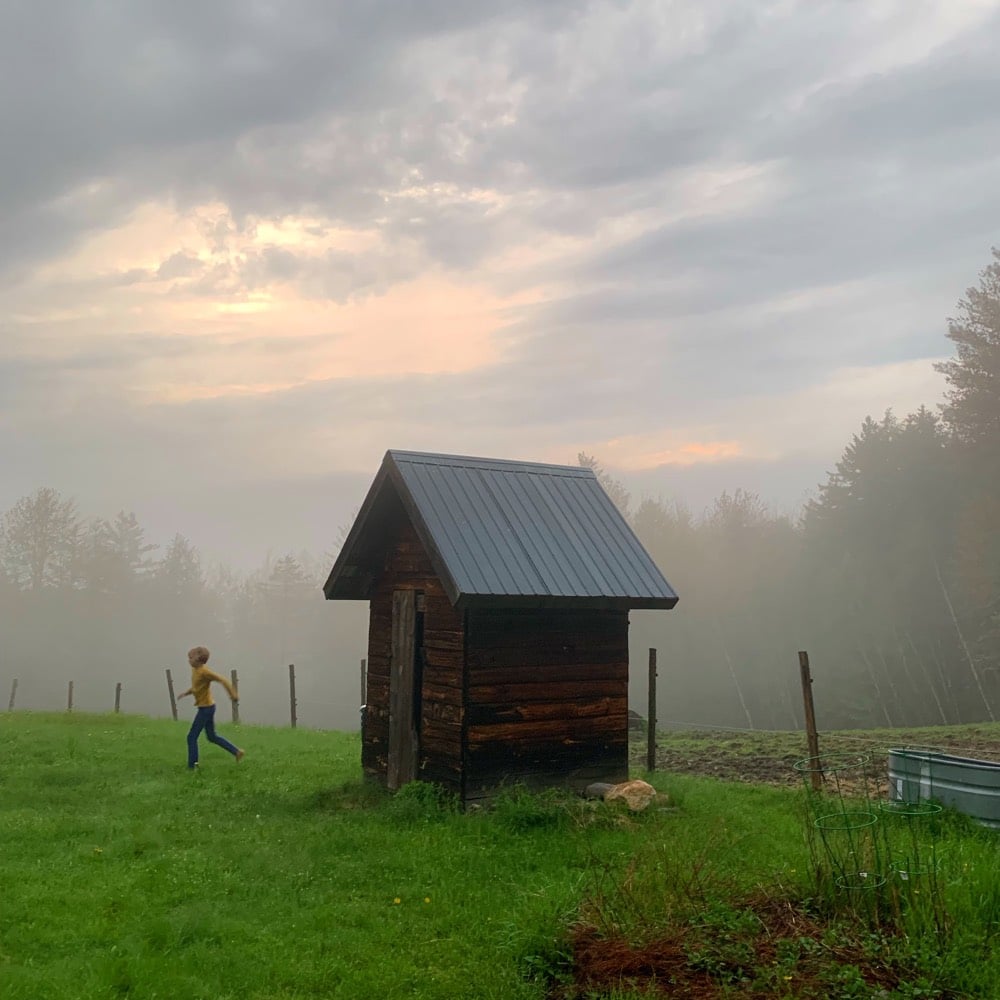
Oh and just because, here’s a photo I took recently in my backyard that makes it seem like I live in Narnia or The Shire:
Past installments of my media diet are available here.
Toni Morrison: The Pieces I Am is a documentary film on the legendary Nobel Prize-winning author of Beloved.
Navigating a white, male world wasn’t threatening. It wasn’t even interesting. I was more interesting than they were, and I wasn’t afraid to show it.
The film opens in theaters June 21.

A few McDonald’s restaurants in Sweden started putting beehives on their rooftops to help save dwindling bee populations and it turned into a national sustainability effort.
More franchisees around the country are joining the cause and have also started replacing the grass around their restaurants with flowers and plants that are important for the wellbeing of wild bees.
To promote the idea, McDonald’s constructed what might be their smallest restaurant, actually a fully functioning beehive just for the bees:
Totes adorbzzzz.
For Wired’s series Technique Critique, former CIA Chief of Disguise Jonna Mendez looks at several TV shows and movies to rate how good their spy scenes are.
Mendez gives high marks to characters from Alias and The Americans for effective use of disguises and low marks to The Bourne Identity and Homeland. In relation to Philip’s disguises on The Americans, she discusses the concept of the little gray man, the CIA’s goal for its agents to look like harmless middle-aged men, something she also mentioned in this Washington Post piece:
Rhys makes the case, however, for disappearing under nothing more than a knit cap and a pair of glasses, a scruffy mustache and a messy wig. He becomes the consummate little gray man, invisible, the one nobody can remember was even on the elevator.
Mendez also talks about the three cover identities that CIA agents were not allowed to use: clergy, media figures, and Peace Corps volunteer. She previously did this video with Wired about how the CIA used disguises.
This wonderful site presents animations of 507 mechanical movements first published in a book by Henry T. Brown in 1868, the full title of which is:
Five Hundred and Seven Mechanical Movements: Embracing All Those Which Are Most Important in Dynamics, Hydraulics, Hydrostatics, Pneumatics, Steam Engines, Mill and Other Gearing, Presses, Horology, and Miscellaneous Machinery; and Including Many Movements Never Before Published and Several of Which Have Only Recently Come Into Use
The site is a work-in-progress…not all of the movements have been animated yet. This short video shows movement #123:
You can buy a paperback version of the original book or browse/download the entire thing at the Internet Archive.
See also this great explanation of differential gears and especially Ralph Steiner’s 1930 short film Mechanical Principles, in which we see many of the mechanisms from Brown’s book actually working:
Warning: if you start Steiner’s film, you’ll probably end up watching the whole thing…it’s mesmerizing, particularly when the gears come in around ~2:30.
It turns out that the fourth track off of Philip Glass’ soundtrack for Koyaanisqatsi matches up pretty well to the dancers in this clip from Soul Train.
I don’t know whether to like this or hate it. Actually, I think I love it. See also Soul Train dancers backed by Daft Punk. (via @tedgioia)
The Downton Abbey movie is nearly upon us (it’s out in Sept) and the first full-length trailer is here. The action picks up a couple of years after the TV show ended and concerns the visit of King George V and Queen Mary to the estate. I’ve embedded the UK trailer above — it’s better than the American trailer even though it gives away a bit more of the plot. Plus, in the UK version you get to see the deployment of Carson in the Battle of the Head Butlers. Carson’s glance of disdained indifference toward the royal butler might be the most spine-tingling battle moment since Aragon uttered “for Frodo” and charged headlong into the hordes of Mordor.
Update: Some real talk from Robert Bennett about the escapist fantasy of Downton Abbey:
really the point of the entire show was to let middle american viewers dabble in the lavish lives and costumes of the edwardian .001% without feeling bad about what made that lifestyle possible
anything that threatened that “safari in the aristocracy” aspect — be it the realism of class warfare, or the actual, historical evolutions of the era that would have upended everything that happened — was quickly neutered and turned into quaint fluff.
Still excited for the movie though. Butler Battle 2019!!
Remember trials rider Danny MacAskill, who I’ve been covering on kottke.org for over ten years somehow?! In his newest video, he turns babysitting a friend’s young daughter into a death-defying cycling adventure…an oddly tender death-defying cycling adventure somehow.
Stay tuned after the main action for a short making-of feature (no children were harmed, etc. etc.) in which we see Daisy riding a bike of her own!
Meet Vincent LeVine. He’s the subject of “My Dad, the Facebook Addict”, a short documentary by his son Dylan. He started off using Facebook normally, keeping up with the news and chatting with friends, but evolved into a fierce meme warrior stocked with a “nuclear arsenal” of memes at the ready to destroy anyone who wants to come at him.
I can have a meme war with anybody and destroy them. And I’ve done it! People actually bail at the end and go, “Who is this guy? He’s got like every meme ever produced on the internet! He can knock us out with his memes!” And I do, I have tons of memes, I just keep memeing them to death until they just surrender because they just can’t do it anymore. They don’t have the memes that I have.
Vincent is very entertaining and it was difficult to not just quote all of his lines in the video. You can check out his Facebook account for yourself or watch his technique for hygienically blowing out birthday cake candles.
If you could somehow fold a piece of paper in half 103 times, the paper would be as thick as the observable universe.
Such is the power (*cough*) of exponential growth, but of course you’d never get anywhere close to that many folds. The theoretical limit for folding paper was long thought to be seven or eight folds. You can see why watching this hydraulic press attempt the 7th fold…the paper basically turns to dust.
But in 2002, high school student Britney Gallivan proved that you could fold a piece of paper 12 times. Here’s Gallivan explaining the math involved and where the limits come in when folding:
(thx, porter)
Many species of migratory birds, like the Canada goose in North America, fly in a v-formation. Scientists have long suspected that there was some energy-saving advantage to flying in formation and a 2014 study provides evidence to that effect.
By comparing the birds’ flight data to computer simulations, Portugal found that the ibises are apparently drafting — catching an uprush of air from the wingtip of the bird ahead. “Furthermore, when they’re in that position, they time wing beats perfectly,” he says. “So they don’t just sit there passively hoping to get some of the good air from the bird in front.”
They actually flap along the perfect sweet spot. Portugal thinks there’s a very good reason why the ibises do this. Previous studies have shown that flying is hard work.
“When we get exercising, our heart rate gets up to around 180 beats per minute on a good day,” Portugal says. “When birds are flying, it goes up to 400 beats per minute.”
You can read the paper published by the researchers in Nature. (via the kid should see this)
A robot built by a pair of engineering students at MIT can solve a Rubik’s Cube in 0.38 seconds (which happens to be 19 minutes and 59.22 seconds shorter than my fastest time):
0.38 seconds is over in an almost literal flash, so the video helpfully shows this feat at 0.25x speed and 0.03x speed. I bet when they were testing this, they witness some spectacular cube explosions. (via @tedgioia)
Newer posts
Older posts





Socials & More