kottke.org posts about science
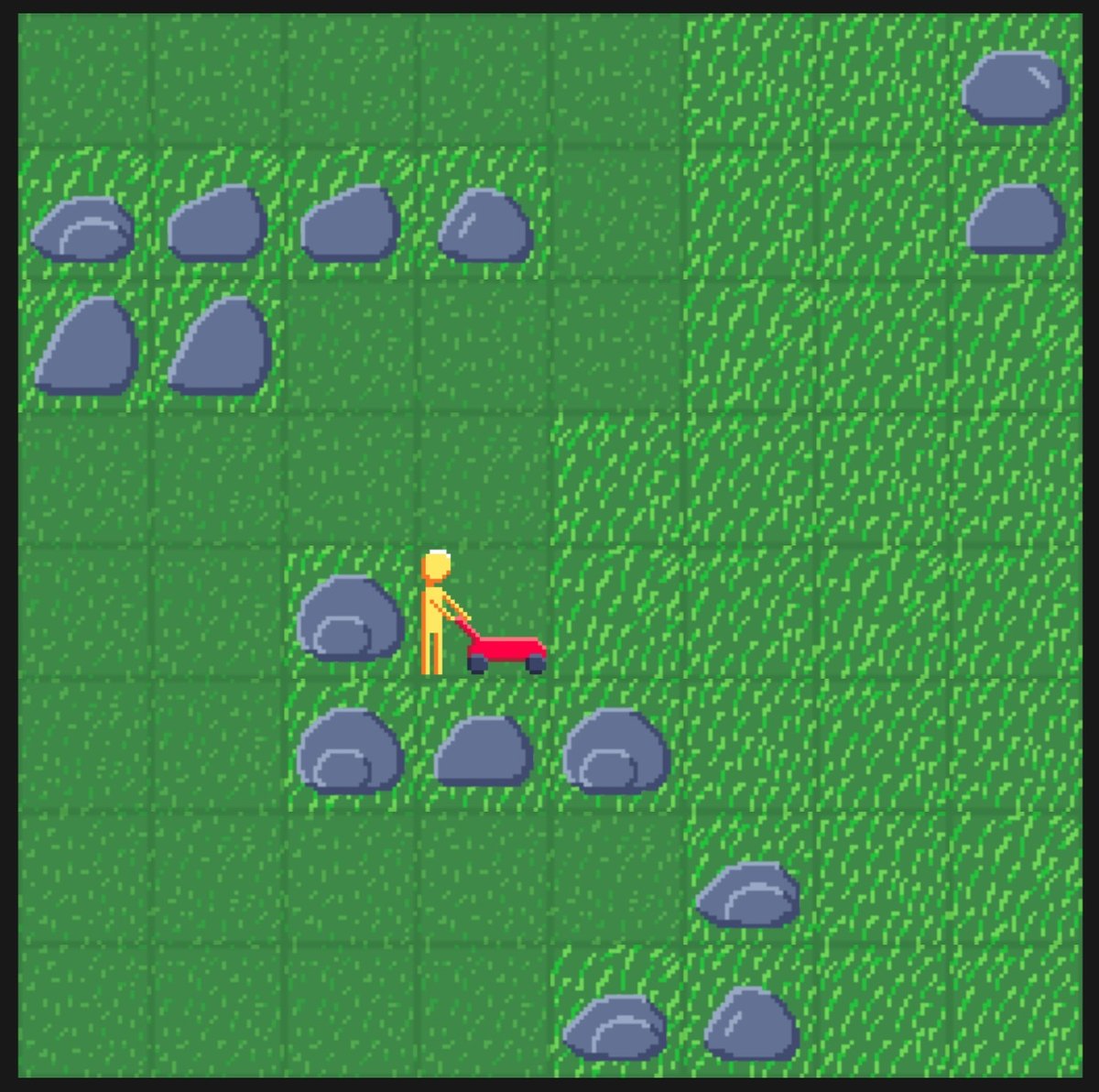
I don’t know what sort of neurodiverse bucket this puts me in, but I think a lot about mowing the lawn1 relative to how much time I actually spend mowing lawns (~6-7 hours per year). And so I was completely fascinated by The Pudding’s latest post on optimal lawn mowing paths and “why some people mow a lawn better than others”.
They built several digital lawns for people to mow and recorded all of their moves, how often they paused at certain times, and who mowed an optimal path.
Solving the lawn mowing problem is formally called Coverage Path Planning, and is related to one of the most famous path planning problems in computer science: The Traveling Salesman Problem.
Humans turn out to be pretty good mowers, especially those who take their time and have played some video games (including, one would assume, Dig Dug, Pac-Man, Mr. Do!, and any other game where you need to worry about dead-ends).
Sarah, one of the best mowers, spent her attention unevenly on purpose. She had a theory about why.
“The bigger spaces have more cognitive load for you to figure out what the best path is. Whereas the smaller spaces…there are fewer decisions to make.”
She planned the tight, trap-prone sections carefully and winged it on the open ones.
So it’s not about thinking more or faster, but when thinking happens. That’s what a good heuristic does: it spends your attention on the decisions that matter and nothing on the ones that don’t.
The piece is interactive so you get to try your hand at digital mowing as well.
My actual lawn is very irregularly shaped with a few dead-ends & choke points and an added wrinkle that I can’t blow grass clippings into the flower beds (so I can only go one-way the “wrong way” in those areas). So every time I mow, I’m trying to figure out the optimal path so I don’t end up backtracking too much. I probably end up saving about 45 seconds of actual time but boy is it fun from an intellectual standpoint.
Something that still blows my mind is that every apple seed produces a new variety. Every single one.
This is a lovely short documentary about a project called Some Interesting Apples, which aims to find apples growing in unusual places (i.e. not commercial orchards but in places where people tend to discard apple cores):
The last three years I have been involved with a project called ‘Some Interesting Apples’, the primary aim of which is to record and, where characteristics make desirable (and sometimes where they don’t), preserve wilding apples, i.e., domestic apples growing on their own roots as the result of a discarded core.
Some of the best apples are then cultivated in an orchard dedicated to wild apples:
The ‘Some Interesting Apples’ project collects apples from wild trees that have been grown using cores thrown away — many from car windows or dropped from walkers and animals.
The wild trees or ‘wildlings’ are trees that grow from those apple cores discarded in hedges and along train tracks, footpaths and roadsides.
Their fruit often goes uneaten or rots — but have now instead be used to create a unique orchard.
The orchard has been developed from dropped fruit from more than 600 apple wildings in Cornwall.
It has now created Wilding Mother Orchard - the first ever orchard in the UK solely dedicated to cultivating wild-grown, chance-seedling apples.
The discovered apple varieties are named for their what3words locations; they have names like Horse Wish Gossip, Panes House Taxi, and Autumn Mushroom Spoke.
Apples are super interesting. I read it years ago now, but I still often think of Michael Pollan’s chapter on apples in The Botany of Desire.
This is an extremely 2026 story (derogatory): because of the Trump regime’s assualt on scientific funding, a group of scientists who has been studying marmot populations in Colorado since 1962 turned to OnlyFans to fund their research this year.
From The NY Times:
In June, Daniel Blumstein, a biologist, sat in a field in Gothic, Colo., waiting to see a marmot. The rodent was elusive, leaving his thoughts to wander.
He lamented a lack of funding for his work amid federal cuts to scientific research. Then he alighted on the television show “Margo’s Got Money Troubles” and that’s when the epiphany came.
Perhaps the show’s plot, about a single mother who, unable to find conventional work, turns to the adult-content site OnlyFans to support herself, could be applied to marmots and research funding.
Back at his lab, Dr. Blumstein pitched the idea (with a wholesome spin) to his colleagues, who offered mixed feedback. But then one of his graduate students suggested naming the profile OnlyMarms.
Here’s the G-rated OnlyMarms account on OnlyFans; you can also donate to the project directly. More from Live Science:
OnlyFans is a subscription platform that allows users to pay creators to see exclusive photos and videos. The platform has become popular with adult-only content creators, but it hosts others too, including musicians, athletes and celebrities — and now marmots.
“We’re trying this out of frustration with an extremely challenging funding environment,” Blumstein said. “If we’re lucky, it can help raise money for supplies and some expenses. But unless we are very lucky, it won’t replace the federal funding that has driven discovery in the US since the 1950s.”
We’ve got GoFundMe for healthcare and now OnlyFans for science funding. The privatization of the United States is coming along nicely and the future looks bright!
I appreciate the plain speech of Science magazine’s Derek Lowe in his recent piece, The Assault On Science Funding Continues.
When I talk to people about this subject (and that includes some journalists as well) and say what I’m about to at the end of this paragaph I am sometimes met with disbelief. But I mean what I say and I am trying my best to say what I mean: The Trump administration hates academic science funding, full stop. They hate where that money goes, and they hate who it goes to. They want to keep all that money for themselves, to hand out to favored cronies who can help them get elected and to steer yet more money and more power back into their hands.
That’s it. That’s the story. They are naturally not putting it in those words, but instead talking about “gold standard science” and the “reproducibility crisis” and funding “bold inquiry” for “transformational breakthroughs”. This is all bullshit, and it’s important to realize that. Shameless hand-waving bullshit, delivered in a how-dare-you-think-otherwise manner is the defining style of the entire Trump administration. You can see it in every appointee, in every part of the executive branch, and in the pronouncements of all of Trump’s supporters. I realize that this is a simple heuristic to apply, and a very unambiguous and unflattering one, but I find it to be all too useful and all too accurate. Give it a try.
Yep. He’s the mob boss president — everything is about favors, taking his cut, deals, tough guy-ness, bending the world to his will, power, and white male supremacy.
This video from Kurzgesagt is a great little primer on how the human brain stores memories.
Memory is one of the strangest abilities you possess. Your brain uses an incredibly complex biological system to preserve moments from your past that no longer exist, allowing you to revisit experiences from years ago. But memories are not always recordings of reality. In fact, every time a memory comes under the spotlight of your attention, it can melt and change a tiny bit.
What exactly is a memory, how is a moment in time stored inside your brain, and why does remembering something slowly rewrite the story of your life?
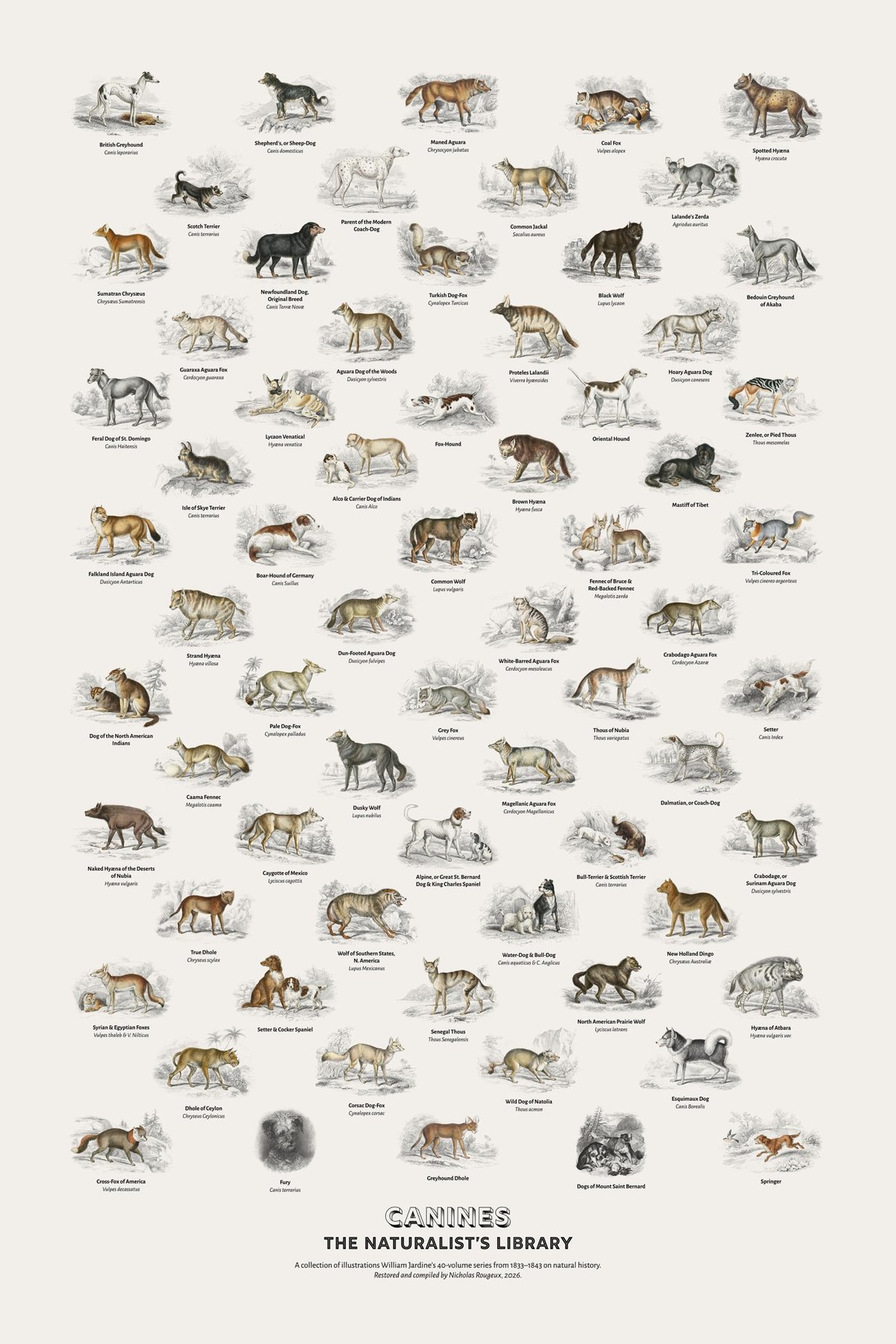
Nicholas Rougeux, whose work I have featured here before, has published a complete digital edition of William Jardine’s 40-volume book series on natural history published in the early-to-mid 19th-century. As part of the project, Rougeux restored each of the more than 1300 illustrations in the library, and the results are fantastic.
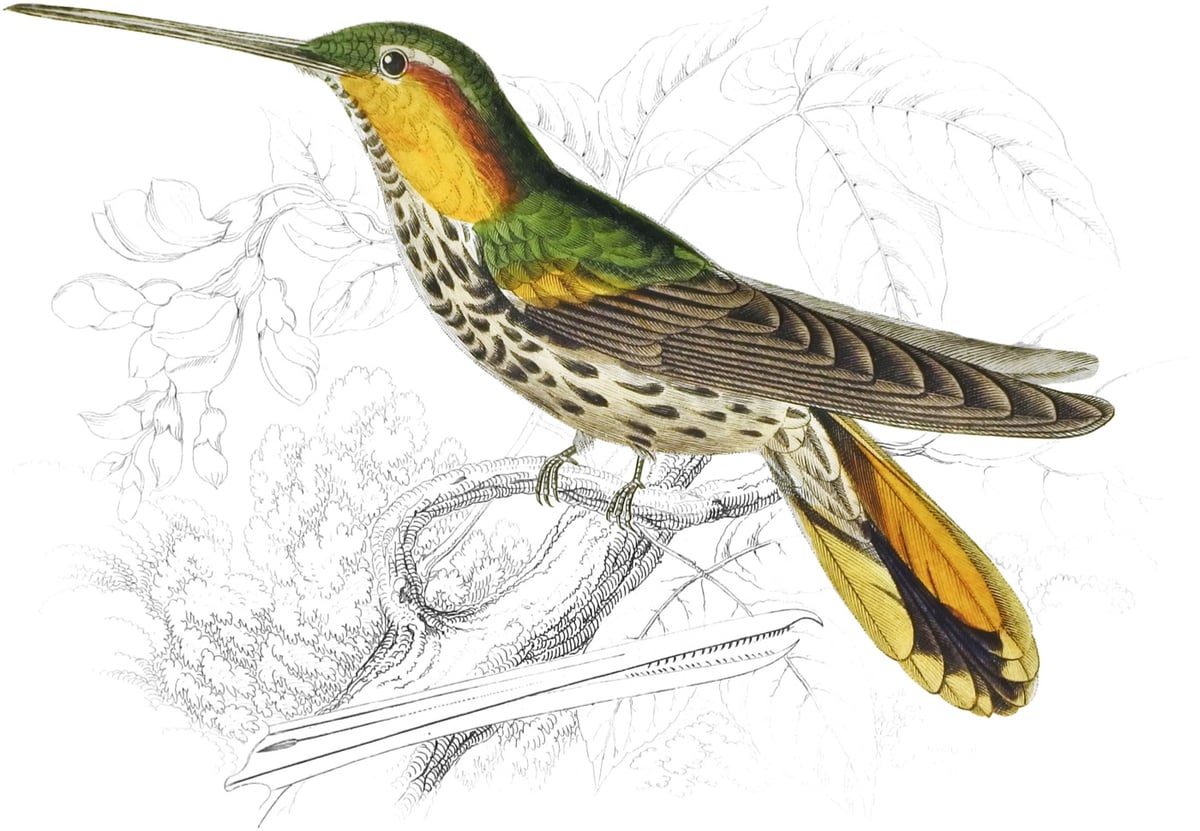

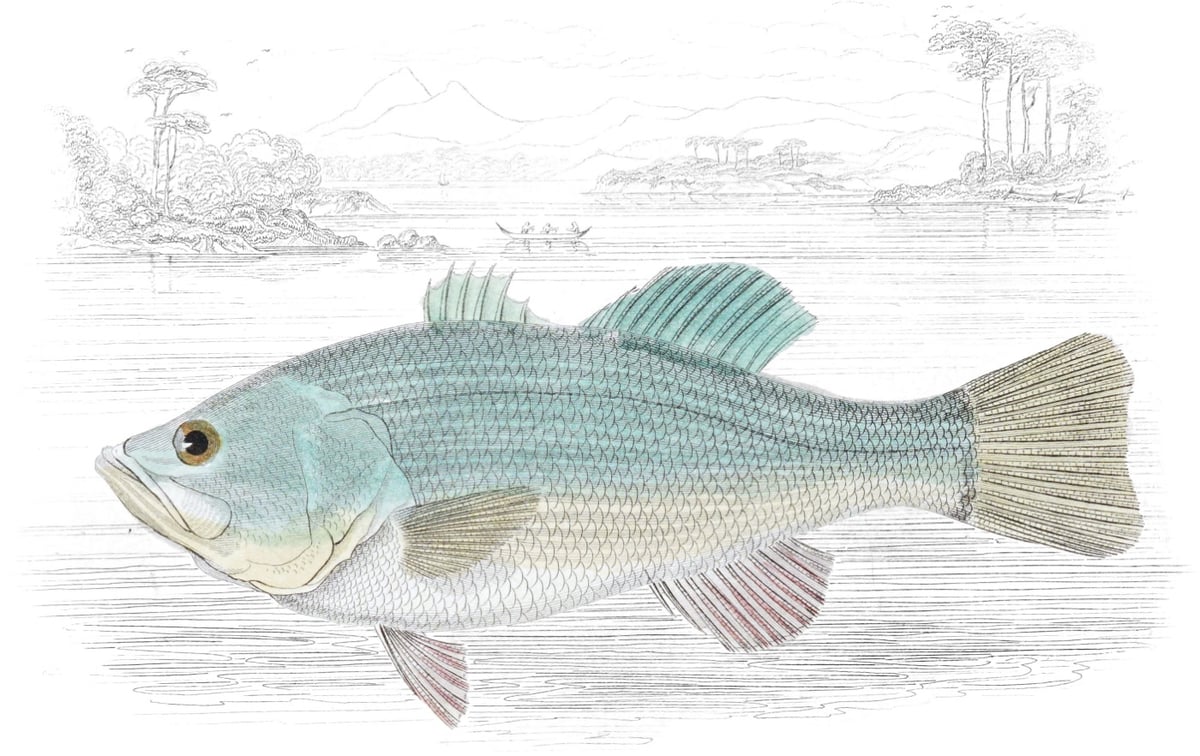
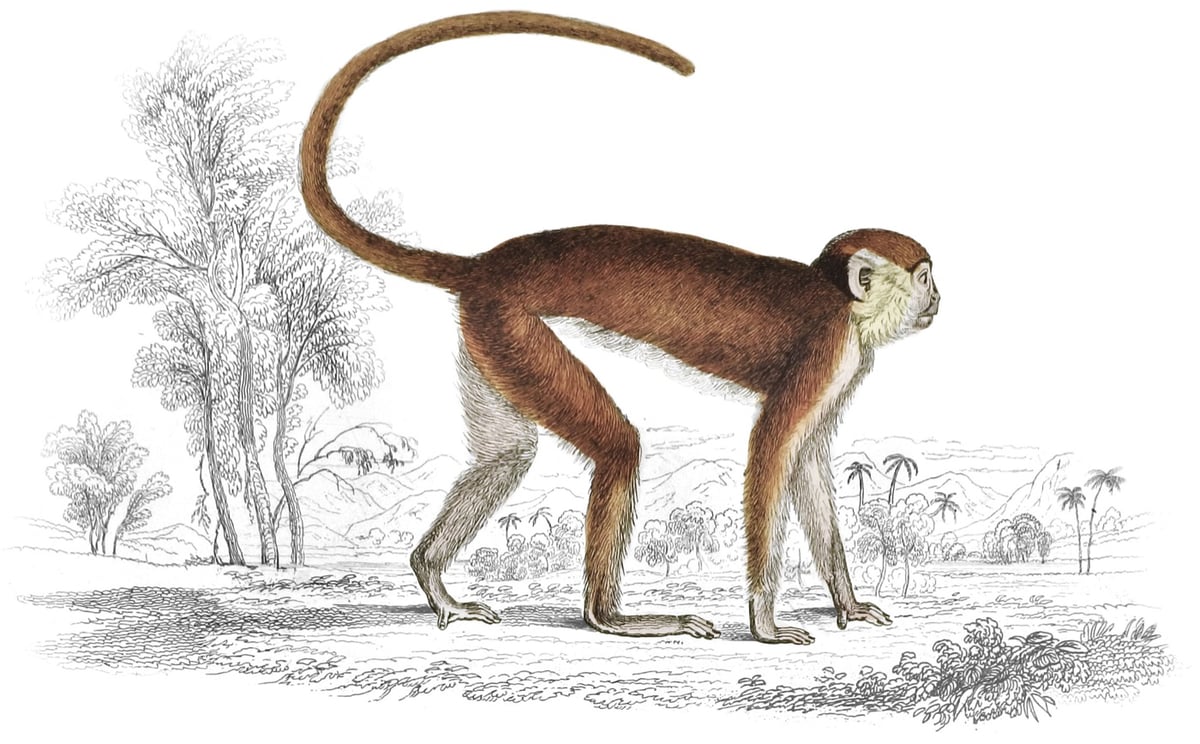
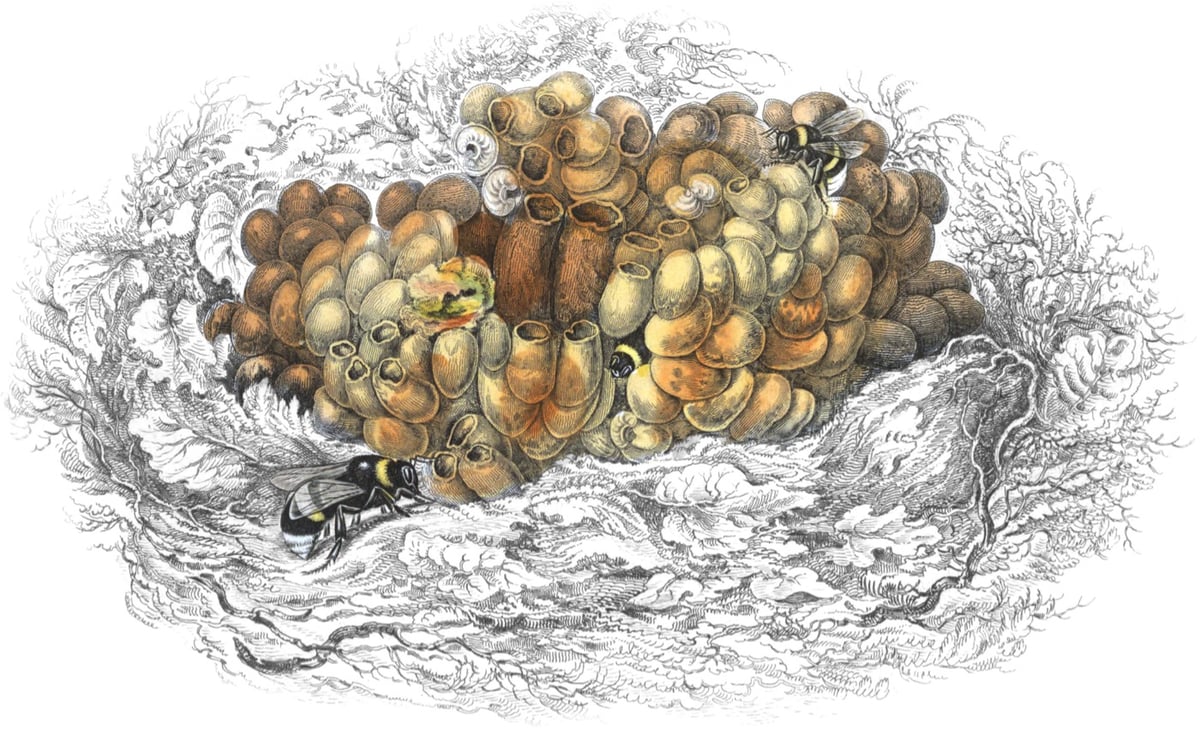
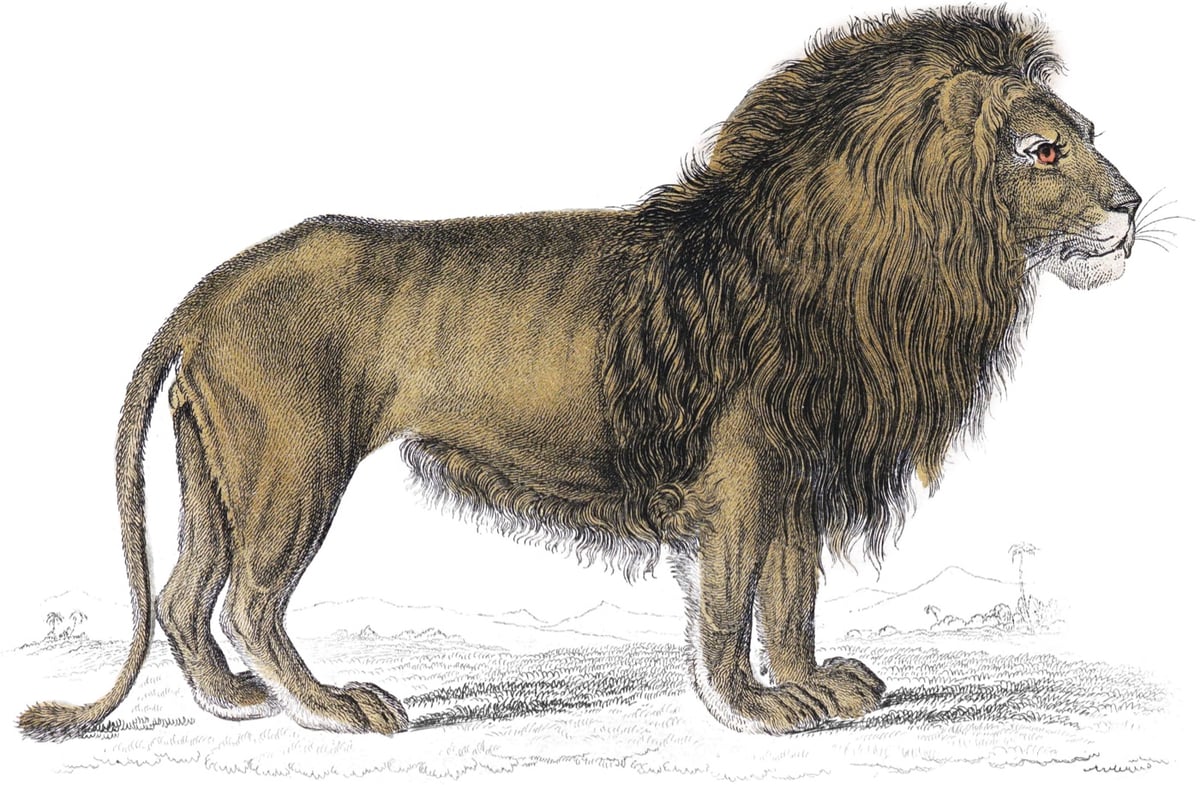
Rougeux wrote a post on the history of The Naturalist’s Library and how the project came about.
The Library is credited with having a significant democratizing effect on the study of natural history because Jardine and Lizars prioritized affordability and portability. Each book was only 4 by 6 inches and priced at six shillings, making them a much more accessible alternative to the “unwieldy folios” from other naturalists. This led to a tremendous demand for each one, resulting in tens of thousands of copies being printed overall. Just two years into publication, a notice appears at the beginning of one volume stating, “we have sold upwards of 60,000 volumes, in which there have been nearly 2,400,000 coloured plates given as Illustration.” Exact sales numbers are difficult to come by but history has shown that the series was very popular with estimates of 10,000 copies sold for each volume, totaling at least 400,000.
In order to help with his research, he borrowed a biography of Jardine from the library and built a custom rig out of K’nex construction toy pieces to scan the whole thing.

About a month later, I discovered a 2001 biography about Jardine, Sir William Jardine: A Life in Natural History, which only existed as a physical copy. I emailed the publisher to ask for a digital copy but had no luck. So I did what any self-respecting researcher would do and borrowed it on an inter-library loan and made my own digital copy by building a very janky custom rig out of old K’nex parts to take pictures of each page with my phone that I later combined into a searchable PDF. The OCR on it could be improved but having it available digitally allowed me to consult it in my research.
You can check out the shop for posters of the illustrations as well as a complete, bound, 800-page volume of all 1300+ illustrations.
Twice in the Earth’s history, massive ranges of supermountains have formed on ancient continents.
Studies like these point to something we do know for sure: from the highest peaks to the smallest cells, geology and biology are deeply intertwined. And while it’s often said that we are stardust — built from elements forged in the hearts of dying stars — in a sense, we also might be supermountain dust.
They were perhaps as tall or taller than Everest but their distinguishing feature was their massive breadth — we’re talking ranges 5000 miles long, three to four times the length of the Himalayas — just a unbelievable volume of earth. And their formation may have “fueled two of the biggest evolutionary boom times in our planet’s history”.
That’s a lot of rock to erode — and, according to the researchers, that’s why these enormous mountains are so important.
As both mountains eroded away, they would have dumped tremendous amounts of nutrients like iron and phosphorus into the sea through the water cycle, the researchers said. These nutrients could have significantly sped up biological cycles in the ocean, driving evolution to greater complexity. In addition to this nutrient spillover, the eroding mountains may have also released oxygen into the atmosphere, making Earth even more hospitable to complex life.
I also learned about the Boring Billion from this video, a billion-year period of relative “tectonic stability, climatic stasis and slow biological evolution” nestled in-between the two supermountain eras.
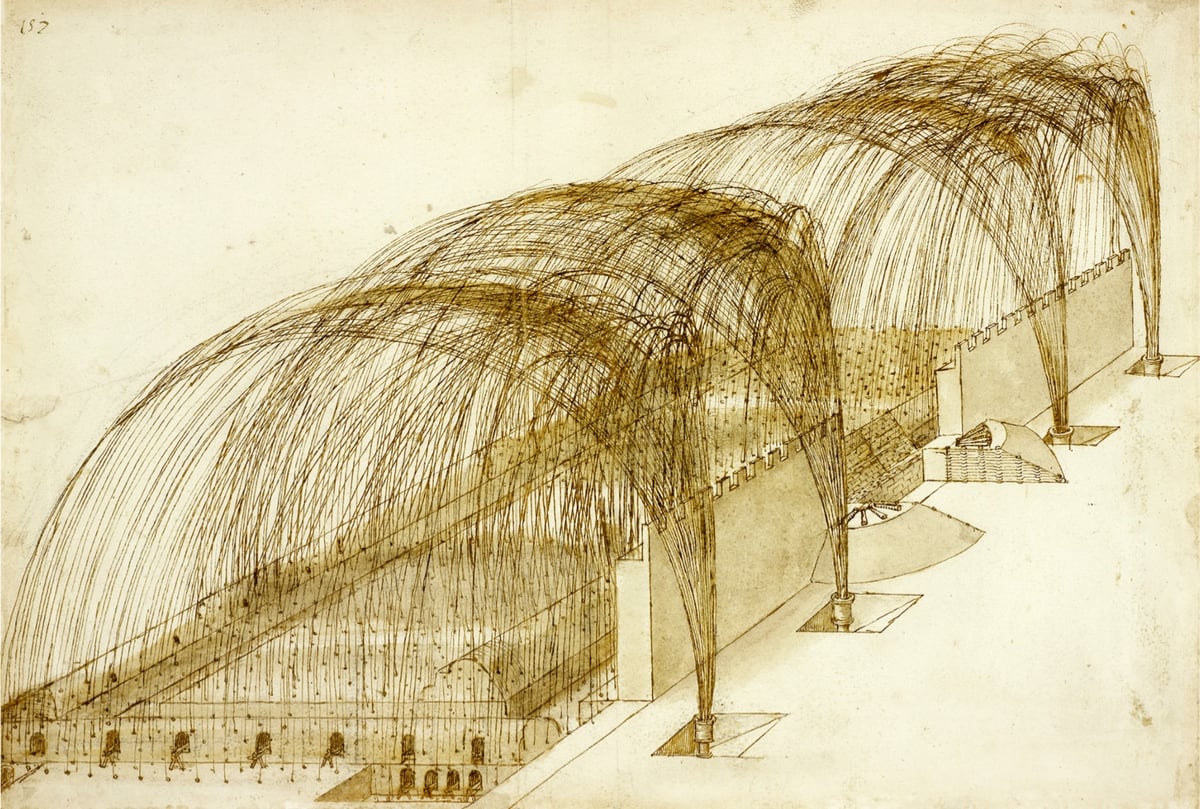
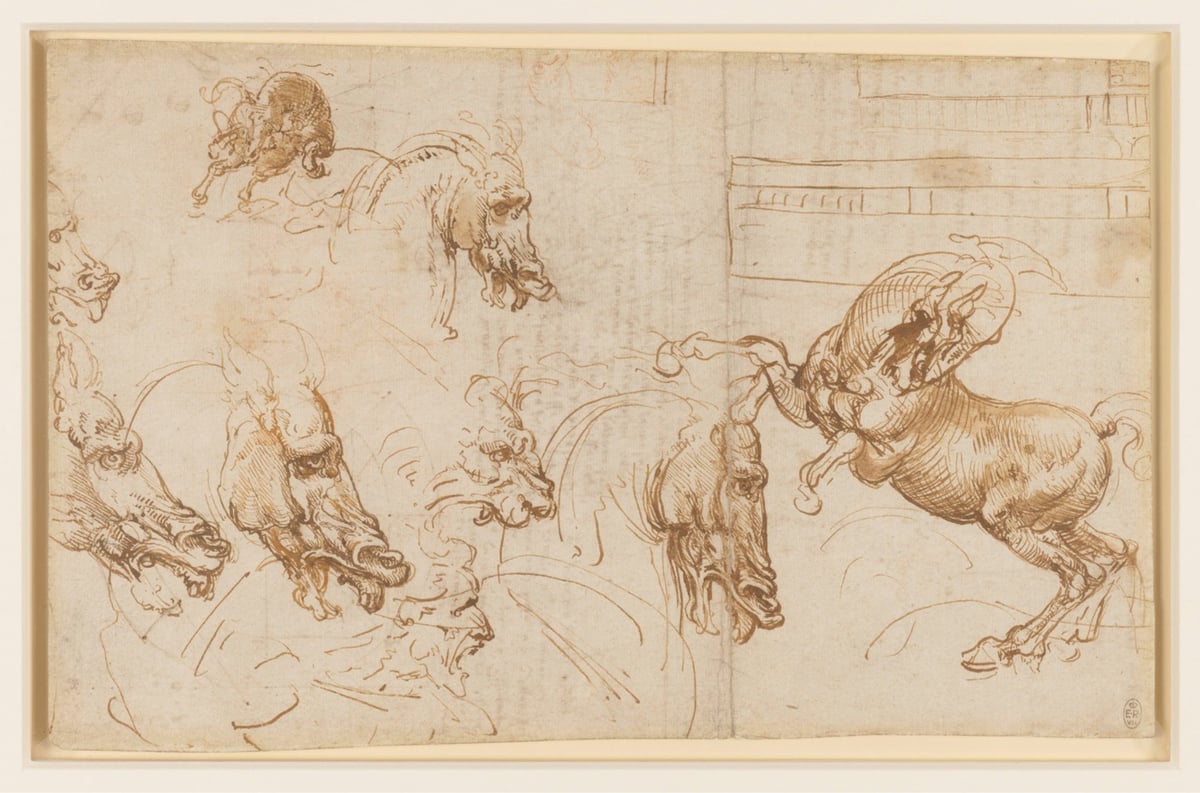
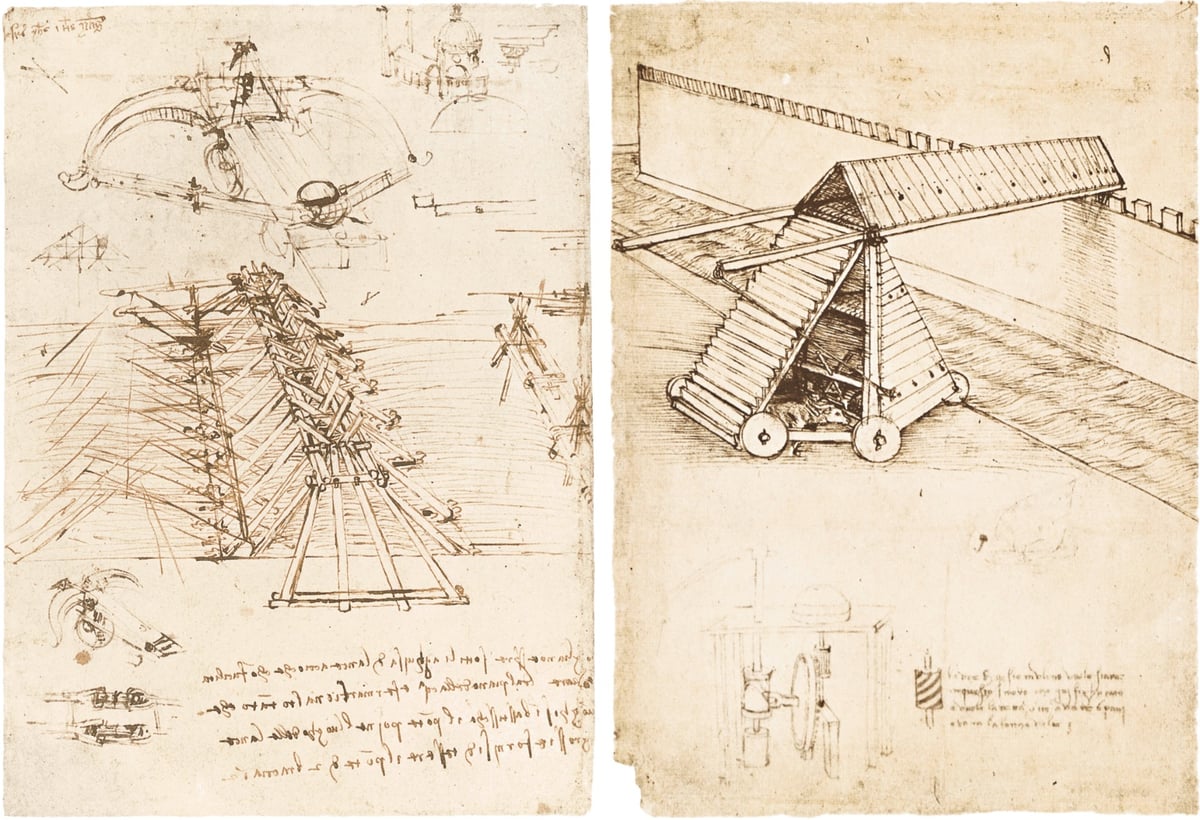
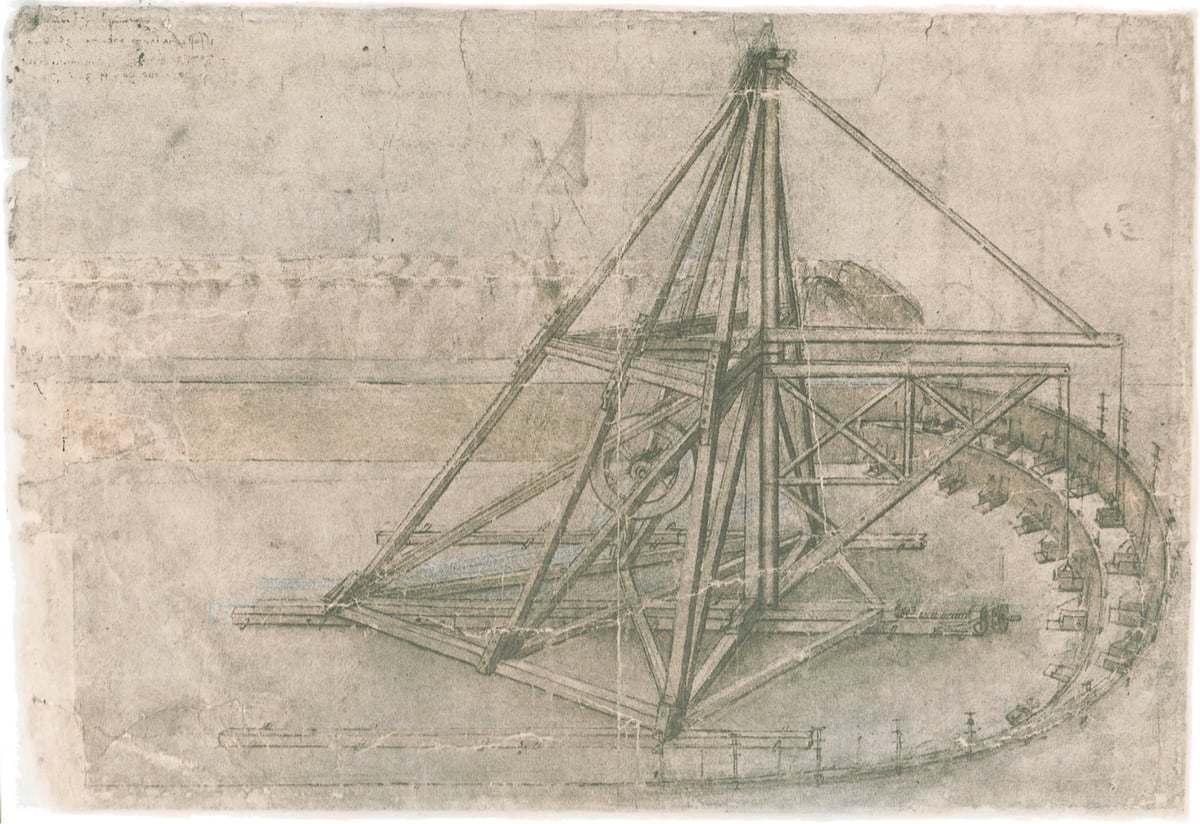
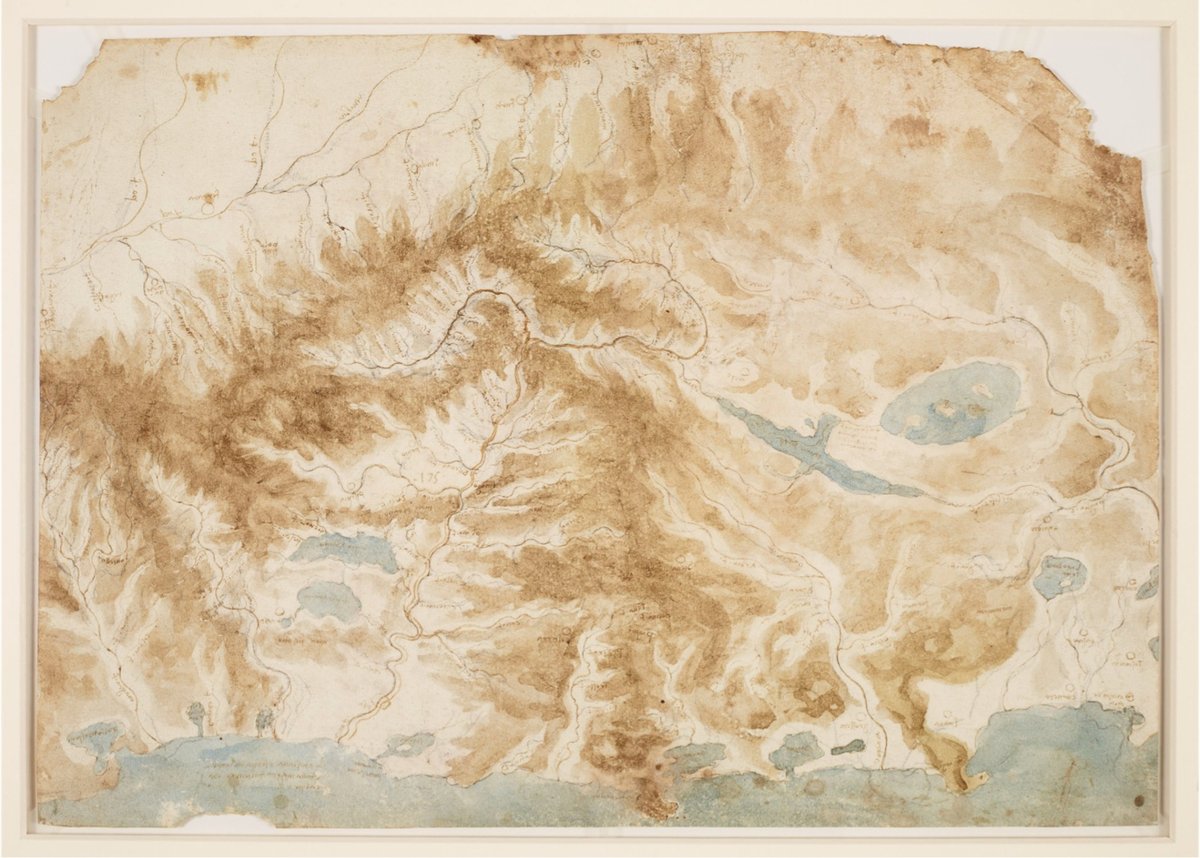
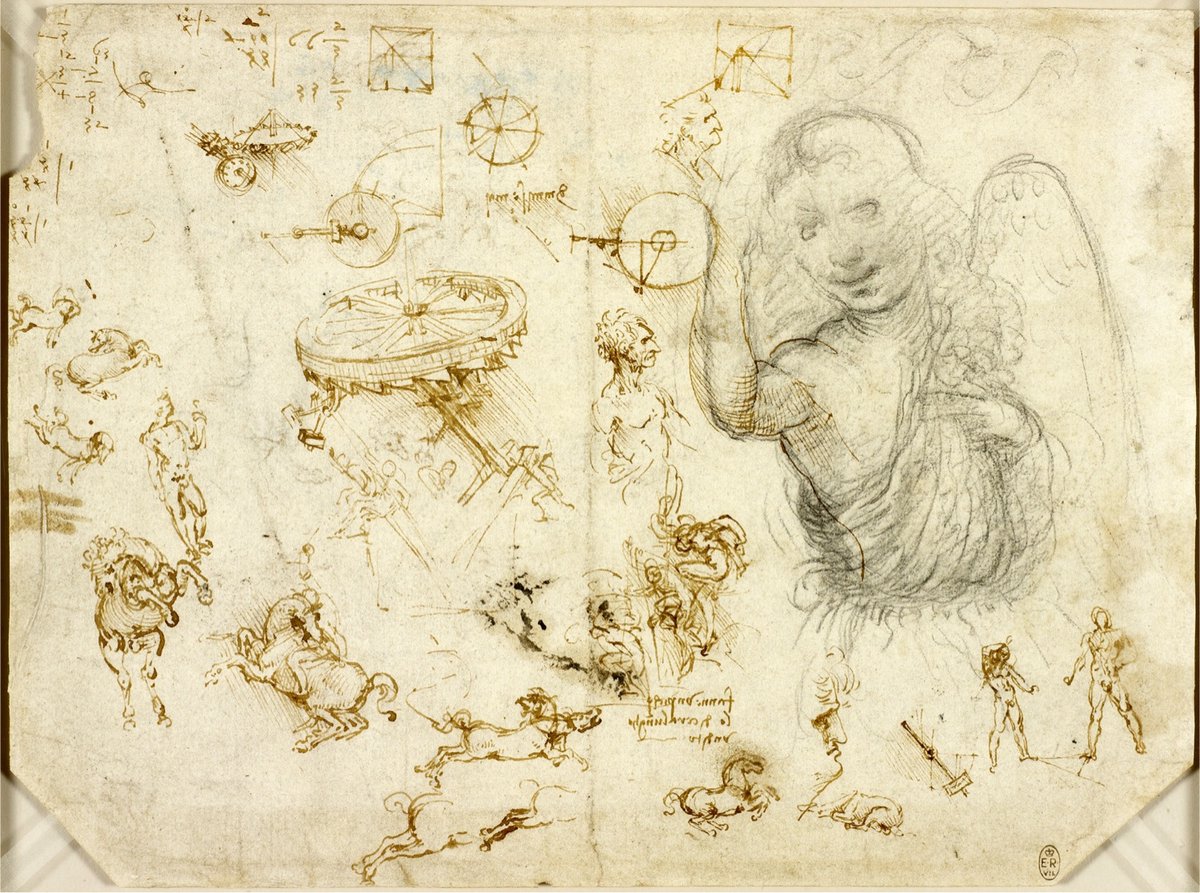
For the first time in hundreds of years, two collections of Leonardo da Vinci’s notebooks have been brought together online at the Leonardotheka. In some cases, pages that were cut apart centuries ago have been digitally joined so we can see the full pages again, as Leonardo drew and wrote them. From the press release:
Marking the culmination of a 10-year project in collaboration with Royal Collection Trust, Windsor, the Veneranda Biblioteca Ambrosiana, Milan, and the Biblioteca Leonardiana in Vinci, a dedicated group of Leonardo scholars and digital experts has worked to bring approximately 3,500 pages of manuscripts back together after they were separated and cut into pieces in the late 16th century. Leonardotheka reveals new insights into Leonardo’s thoughts, vision and working process through the ambitious reconstruction of select pages, digitally restoring their original appearance, to make clear the intended connections between scientific texts and figurative drawings, which had been arbitrarily separated by a later collector.
Museo Galileo initiated this collaboration between partner institutions — convening the world’s leading scholars and knowledge accumulated over centuries of study — with the primary goal of broadening access to Leonardo’s rich legacy via a public platform. Leonardotheka reunifies the 1,119 sheets of the Codex Atlanticus — the largest single set of Leonardo’s writings, held by the Veneranda Biblioteca Ambrosiana — with the most important group of figurative, anatomical, landscape and natural-history drawings by Leonardo in existence — around 550 sheets, part of the Royal Collection at Windsor Castle. These two collections — originally from the same set of manuscripts made by Leonardo from the mid-1470s to just before his death in 1519 — are now brought together in a cross-searchable digital resource.
Here’s a piece in Discover about the collection. Good luck spending less than 30 minutes (or several hours) poking around the archive. (via @jenlucpiquant.bsky.social)
Rockwood, Texas is home to a unique business, Starfront Observatories. Owner/operator Bray Falls hosts hundreds of other people’s telescopes in perfect conditions — ultra-dark skies (Class 1 on the Bortle scale), clear weather, and fast internet — so astrophotographers from around the world can run their scopes and make observations completely from their computers.
Out in the middle of nowhere Texas, a young astrophotographer is running one of the largest telescope ranches on Earth. Stargazers from around the world ship their gear to Bray Falls, who tends 550 telescopes (and counting) on 40 acres outside Brady, the geographic heart of Texas. Customers control the scopes from a laptop anywhere on the planet for as little as 99 dollars a month. We dropped by Starfront Observatories on a perfect dark sky night to see how the operation actually works.
I first learned about telescope ranching late last year from astrophotographer Ian Lauer; he’s got a good video about Starfront Observatories as well:
The imagery produced by the telescopes on this ranch is impressive. Here’s one of Falls’ own images, a nebula he discovered called The Crown of Thorns Nebula.
I’ll start this off by saying this nebula should not be here! Supernova remnants are the remains of stars which detonated long ago. Nearly all supernova remnants in the sky exist within 10° of the Milky Way band, where the greatest density of stars can be seen.
This remnant lives 42° off the beaten path in VIRGO! It is a remnant that stands alone surrounded by nothing. It is the only supernova remnant in the constellation Virgo.
It is so far from where it should be, that my scientist friend Dr. Robert Fesen has doubts that it could be what we think it is, and so a professional observatory has collected data on the object and is now studying it.
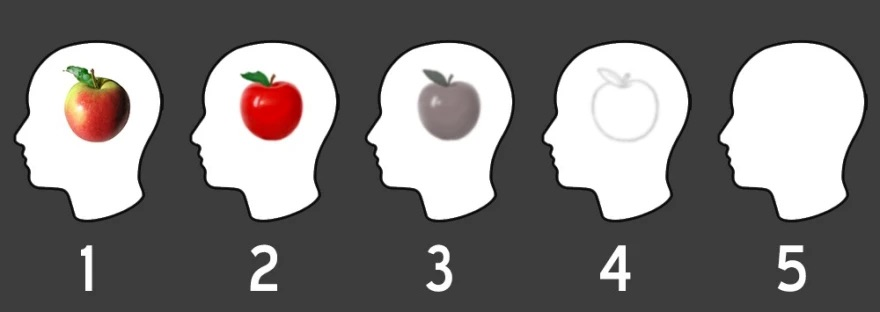
Aphantasia (the inability to visualize) is one of those things that I find endlessly fascinating; I’ve written about it a few times since 2016, most recently in response to Larissa MacFarquhar’s 2025 piece for the New Yorker: Some People Can’t See Mental Images. The Consequences Are Profound.
Many of his correspondents, he learned, had discovered their condition very recently, after reading about it or hearing it described on the radio. Their whole lives, they had heard people talk about picturing, and imagining, and counting sheep, and visualizing beaches, and seeing in the mind’s eye, and assumed that all those idioms were only metaphors or colorful hyperbole. It was amazing how profoundly people could misunderstand one another, and assume that others didn’t mean what they were saying—how minds could wrest sense out of things that made no sense.
Some said that they had a tantalizing feeling that images were somewhere in their minds, only just out of reach, like a word on the tip of their tongue. This sounded right to Zeman—the images must be stored in some way, since aphantasics were able to recognize things. In fact, it seemed that most aphantasics weren’t hampered in their everyday functioning. They had good memories for facts and tasks. But many of them said that they remembered very little about their own lives.
Psychoanalyst Jamieson Webster read the piece and realized she was aphantasic. Webster recently interviewed MacFarquhar for Cultured: What Not Having Mental Imagery Implies for Psychoanalysis, Trauma, and Our Sense of Self, which I read with a lot of head-nodding. Like:
I didn’t have a lot of memories, which I always sort of chalked up to trauma, but I got memories back over the course of analysis. I realized while reading your piece that my memories were always spatial. I would remember a space or placements of things. I was always reconstructing a landscape, but without it really being imagistic.
And this is exactly how college was for me:
When I realized I had aphantasia, I reflected on how I always thought I had a photographic memory. For example, when I took tests, I would make notes, and I could see what I wrote on the page because I knew where I had written it. But it’s not a photograph; it’s a spatial memory.
As I said last year:
The more I read about this, the more I think that for those at either end of the phantasic scale, their inability (or extreme ability) to see things in their minds is a major component of what we think of as personality. Even just thinking about myself, there are all sorts of behaviors and traits I can connect to not being able to visualize things in my head that clearly. In some ways, it might be one of the most me things about me.
(via @timoni)
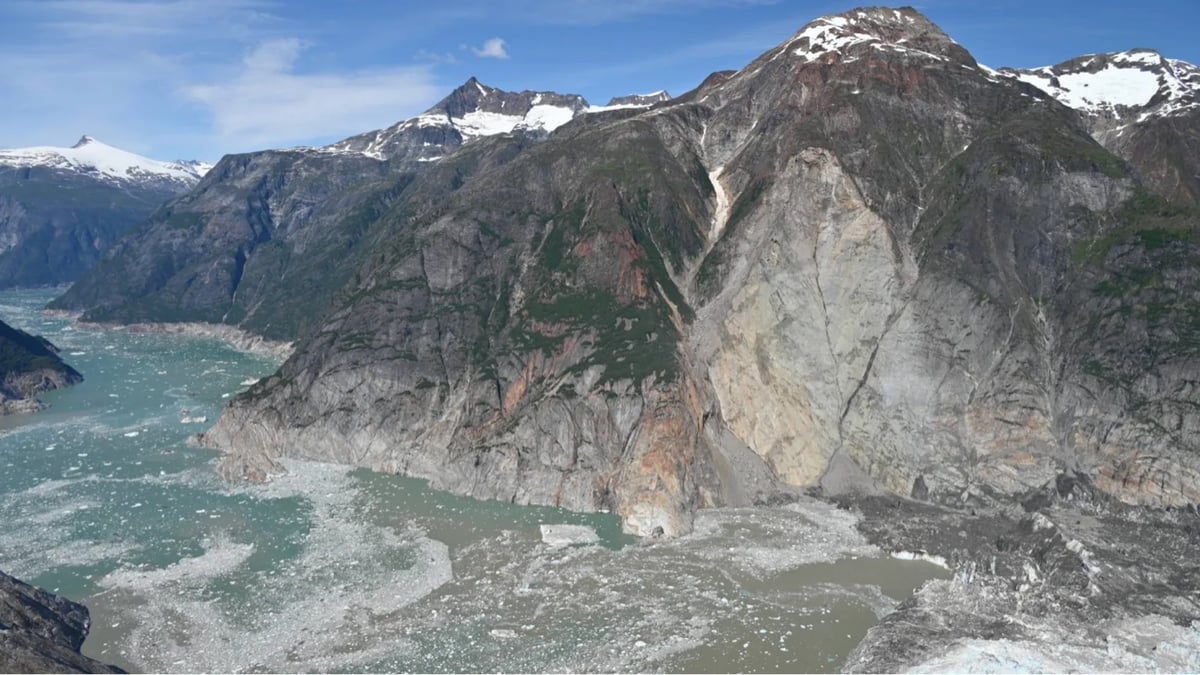
Last year in an Alaskan fjord, a surprise landslide triggered a tsunami 1578 feet tall. That’s not a typo…the wave was taller than all but 13 of the world’s tallest buildings.
In the early hours of August 10, 2025, an enormous landslide triggered a massive tsunami down the fjord. The tsunami was 1,578-feet-tall, or one-and-a-half times the height of the Eiffel Tower. Fortunately, no one was caught in the wave since it hit around 5:30 a.m. local time. If the tsunami hit later that day, about 20 cruise ships and numerous recreational boaters and kayakers could have been impacted by the giant wave.
In a study published today in the journal Science, researchers studied this “near miss” event, finding that the continued effects of climate change were likely the cause.
The mass of rock that set off the wave contained “a volume 24 times larger than that of the great pyramid of Giza”, with the initial wave moving at ~150mph. Professor Dan Shugar explains what happened on that morning and shows a simulation of what happened:
From this piece in the NY Times:
The Tracy Arm landslide was preceded by an unusually rapid retreat of the South Sawyer Glacier, leaving the rock slope that ultimately collapsed bare and unsupported. That same rearrangement of land elements is increasingly occurring throughout Alaskan fjords and around the world. As glaciers retreat and thawing permafrost lubricates slopes, these giant landslides may become more frequent.
Incredibly, this isn’t even the largest recorded tsunami; a 1958 earthquake with a magnitude of 7.8 to 8.3 triggered a rockslide that created a wave 1,719 feet tall in Lituya Bay. If you don’t want to waste a couple of hours, I’d suggest not clicking through to the megatsunami Wikipedia page.
See also When the Mediterranean Sea Dried Up.
Ok, this is incredible: this person on Reddit discovered that if you take a bunch of the sequential photos of the Earth captured by the Artemis II crew and animate them, you can see that some of what appear to be stars are actually satellites, buzzing around the Earth like flies. You can see them really clearly in Seán Doran’s remastered animation. Totally totally gobsmacking. Literally awesome.
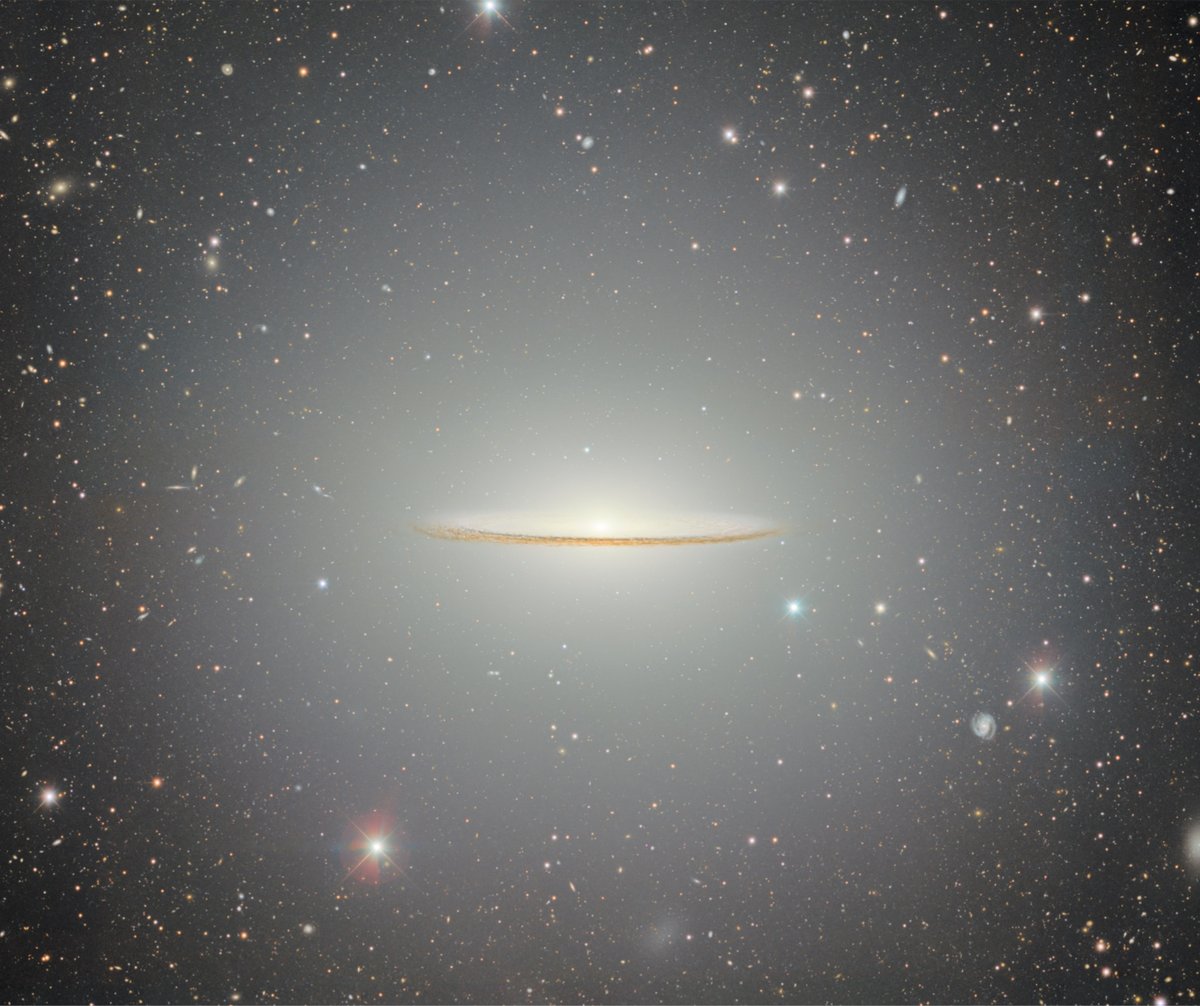
An amazing capture of galaxy Messier 104, aka the Sombrero Galaxy, by the 570-megapixel Dark Energy Camera mounted on a Chilean observatory.
The Sombrero galaxy (Messier 104) is a galactic masterpiece that captivates scientists and astronomy enthusiasts alike. Its intricate system of globular star clusters lends insight into stellar populations, and astronomers are intrigued by the supermassive black hole at its center. Its distinctive visual features and relative brightness make it a favorite among amateur astronomers. The fascinating story of its discovery, involving three esteemed astronomers, has earned it a spot on one of the most important lists of deep sky objects. Today, it stands as one of the most iconic galaxies in the night sky.
If you want the full image, you can download the 725 MB file from the project’s site. (via petapixel)
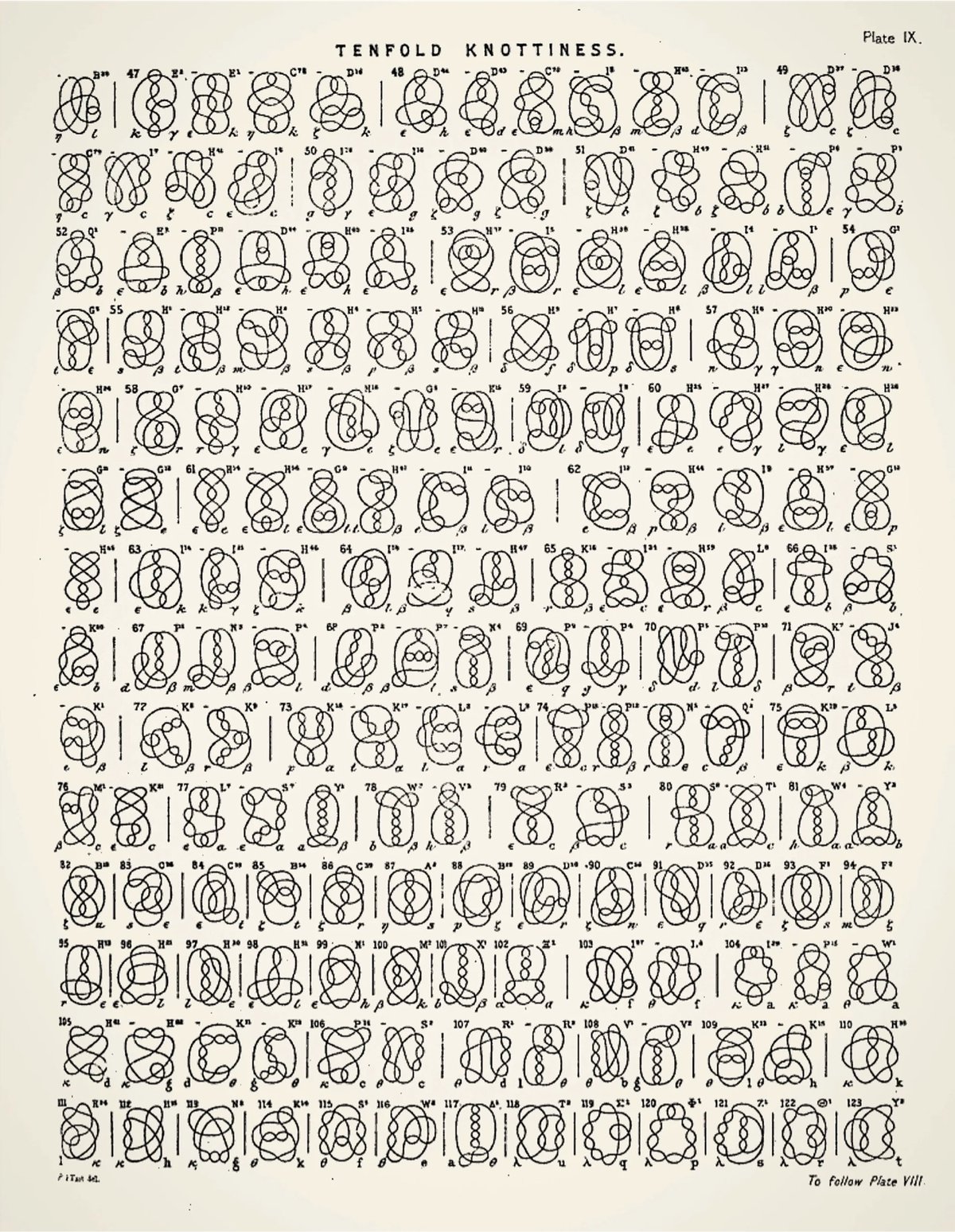
While reading this article about the structure of complex knots, I ran across this diagram drawn by scientist Peter Guthrie Tait in 1885 for a paper called On Knots Part III. It’s one of two figures that together show all of the possible variations of knots with 10 crossings. I think the color plus the small multiples activated the Tufte array in my brain; anyway, I love this diagram. (via damn interesting)
(I tried for the better part of an hour to track down a high-resolution copy of Tait’s paper to no avail. There are various contenders, but nothing that includes high-res scans of both knottiness diagrams. I’m curious about this archive of the original paper but not $41 curious. If anyone has access through their institution and wants to send me a PDF, I’d love that. Update: I have a copy of the paper and will be posting updated images soon! Thank you, Michael!)
This is an animal called the leaf sheep:
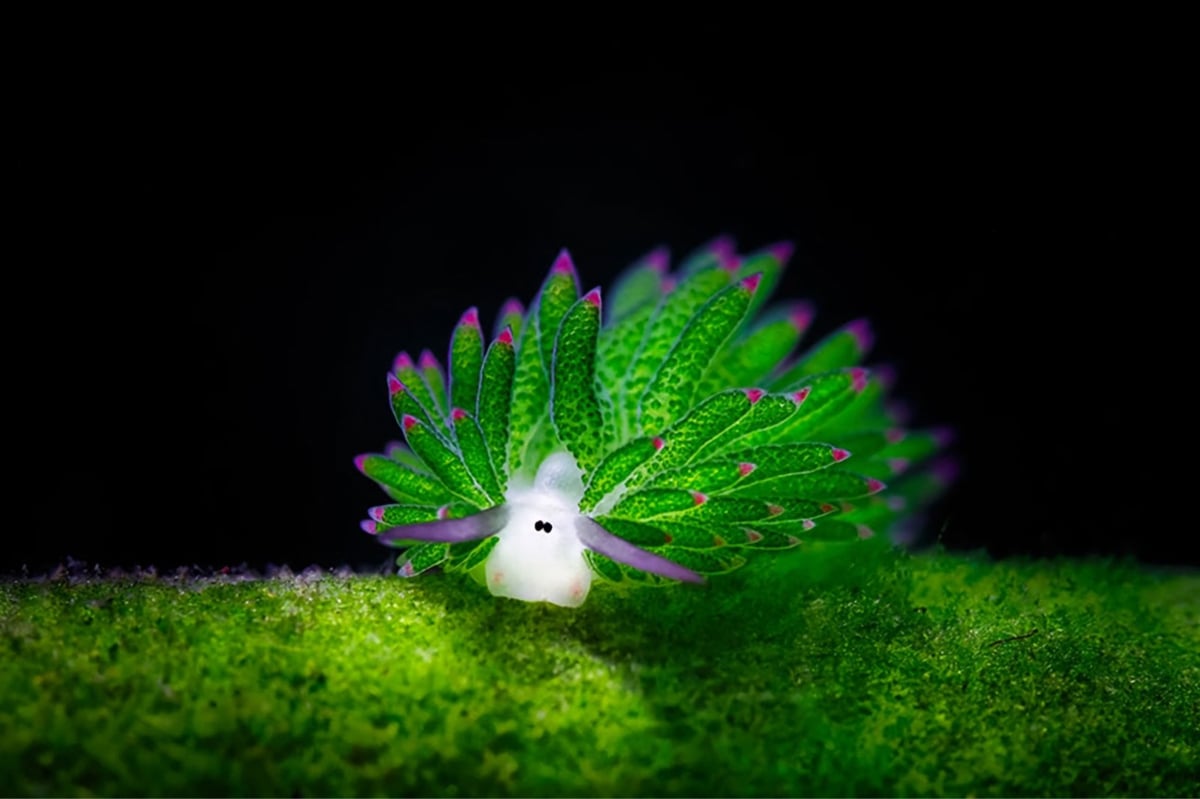
It’s a species of slug that is partially solar-powered, like a plant. Leaf sheep are kleptoplastic organisms that steal chloroplasts from algae, store them in their bodies, and then can rely on photosynthesis for their energy needs:
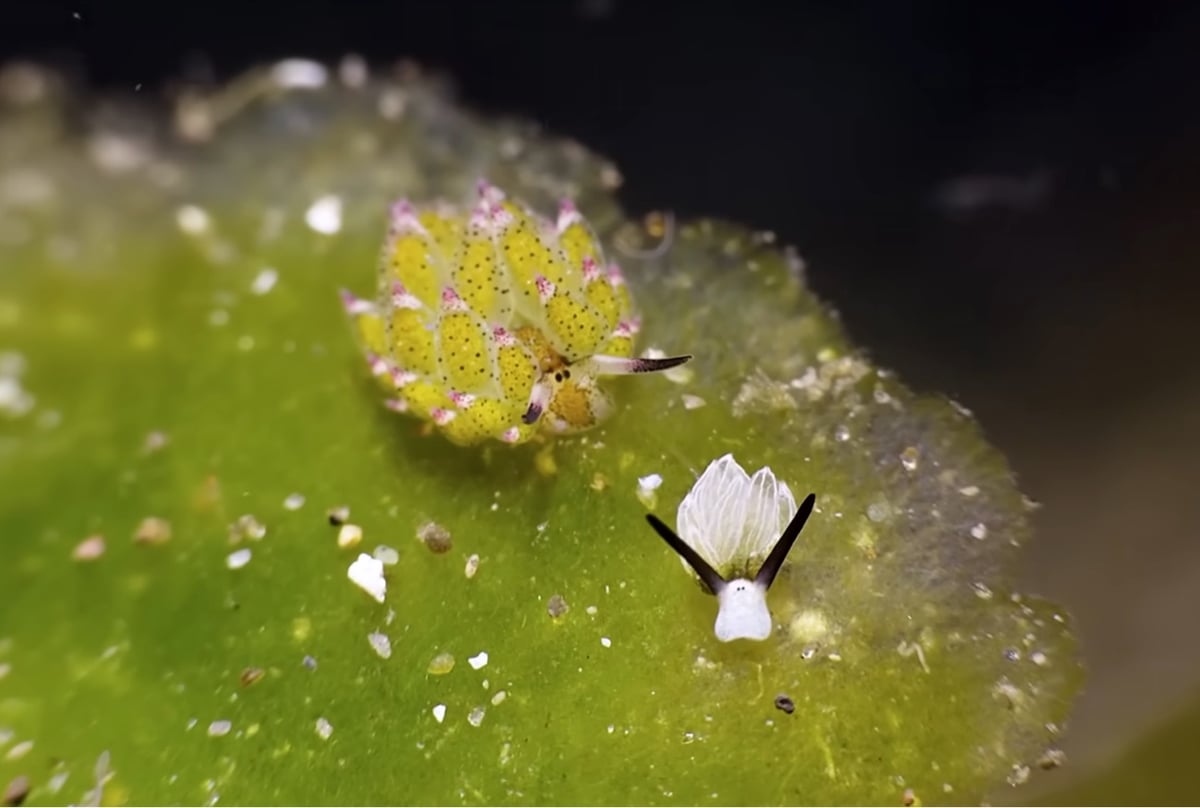
The Costasiella sea slug not only looks like a succulent—it acts like one, too. One of the few animals able to photosynthesize, this tiny invertebrate (also known as the leaf slug or leaf sheep) acquires chloroplasts by munching on Avrainvillea, a paddle-shaped seaweed with a velvety texture. It then stores those chloroplasts in its own body, which enables the slug to soak up sunlight and transform it into energy—a process that also gives the mollusk its green color.
The chloroplasts are stored in the horn-shaped structures called cerata located on the slugs’ backs. Cerata evolved to increase the surface area of these animals for use in respiration and surface area is very helpful if you run on solar panels.
And they’re also cute as a button! I mean, look at these things:
I’d vaguely heard of Project Plowshare but good god, what a ridiculous and dangerous waste of time and money.
At the height of the Cold War, nuclear weapons were seen not only as devices of destruction, but also as tools for progress. Project Plowshare was a bold attempt to use atomic explosions for more practical purposes: from digging canals and creating harbors to reshaping entire landscapes. This project was designed to push the limits of what seemed possible, but instead turned into an environmental disaster.
This reminds me of that episode of the Simpsons when Homer buys a gun and uses it around the house for everything, like changing the TV channel and opening beer cans. If the only tool you have is a hammer…
This is so cool: in the early 1900s, a mechanical engineer named Louis Brennan invented a self-balancing train that ran on a single track. This video demonstrates how the train worked using a clever system of gyroscopes.
This is the Brennan Monorail, a train from the early 1900s that seemed to defy the laws of physics. Not only did it keep itself perfectly balanced on a single rail, but it mysteriously leaned into corners without any driver input.
It’s kind of incredible how well Brennan’s system worked. It’s ingenious. (via messy nessy)
Bill Hammack, aka The Engineer Guy, is an amazing engineering educator and in this video he explains how duct tape is designed to simultaneously do three things well: “a) adhere with light pressure, b) stay in place, yet c) be removable”.
Controlling the stickiness of tape is of utmost importance. In fact, a key element of engineering tape is controlling its stickiness — and only by doing that can tape be wound into a useful roll. If the tape sticks too tightly to itself, we could not use it.
Gotta be honest: I was not expecting Silly Putty to make a relevant guest appearance during his explanation. And I love the ramp & ball test for tape stickiness near the end…a very elegant and simple bit of engineering:
Pressure sensitive tape predates much of the most elementary molecular understanding of adhesion; tape has been mass produced since the early twentieth century. That engineers developed and refined tape without this knowledge is no surprise — recall that the purpose of the engineering method is to solve problems before we have full scientific knowledge.
I went into this video not knowing anything about how a mid-19th century sunshine recorder might work and was genuinely delighted by the reveal. If you’d like to be similarly surprised, stop reading now and just watch the video.
…
…
The sunshine recorder was invented in 1853 for measuring the duration of bright sunshine over a day. The contraption consists of a solid glass ball that acts as a lens, which focuses the light of the Sun onto a paper recording card, burning marks into it. As the Sun moves across the sky, the focus point moves across the recording card, burning a line into it. If it’s super sunny out, the focused beam burns right through the card. So simple! So clever! And so straightforwardly physical — here’s what a daily sunshine record looks like:


(via robert stephens)
NASA has made available more than a dozen mobile wallpapers of photos taken during the Artemis II mission for free download. Basic Apple Guy has made some wallpapers of his own (that are slightly larger than NASA’s and better for iPhones). I have also made a few of my own: Earth Rising Over the Moon With the Orion Capsule in the Foreground, A Sliver of Earth Over the Moon, and Kubrickian Earth.
Here are a few of my favorites:


Interstitial tip: if you’re using an iPhone with iOS 26, tap the Spatial Scene button when you’re editing your wallpaper and the phone will turn any of these images into a 3D-ish scene that moves when you move your phone. Works best with images containing multiple objects (like the Earthrises). Makes you feel a little bit more like you’re there. (This is also an amazing setup.)


These are all real photos, cropped from the originals shared by NASA on Flickr and their website.
I also went back and looked at some of the images from the Artemis I mission, which sent an Orion capsule around the Moon without a human crew. Here are a few wallpapers made from photos from that mission: Earth Moon Capsule, Lens Flare Trio, and Lunar Surface.


Again, these three are from the Artemis I mission in late 2022. The first one works especially well with the Spatial Scene mode on iOS 26.
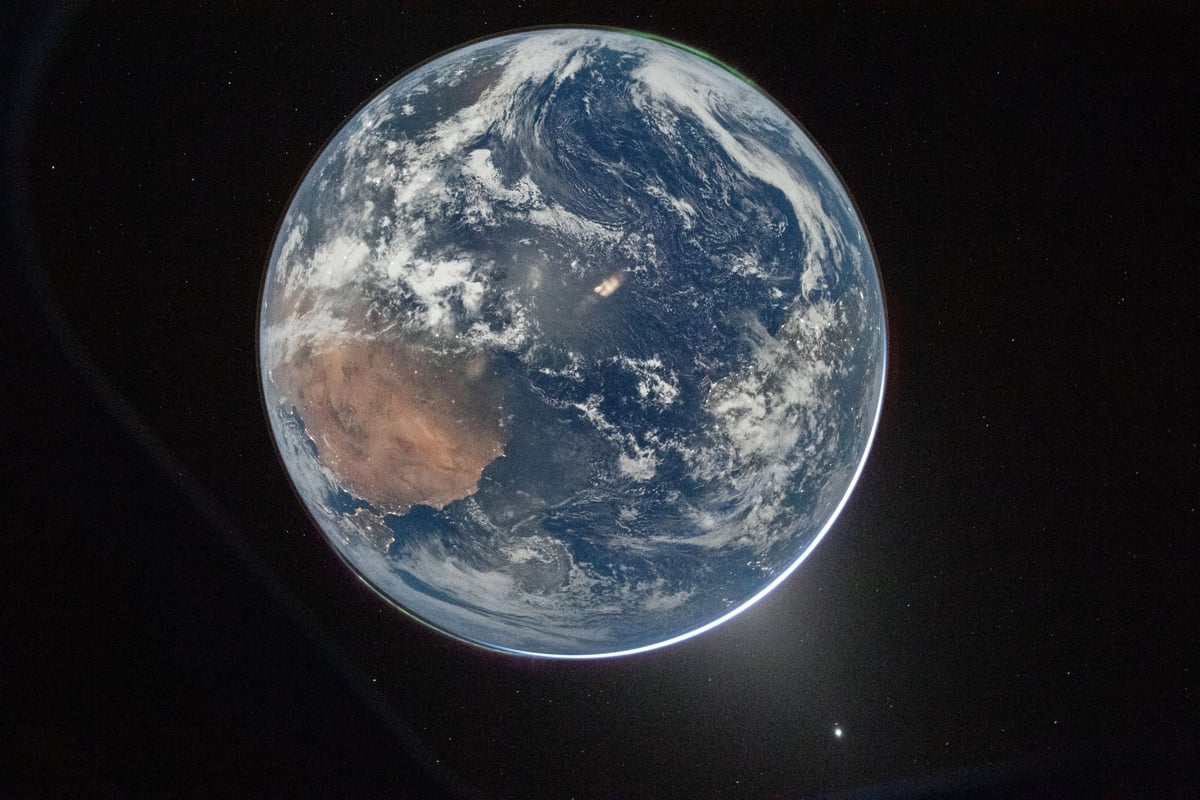
The commander of NASA’s Artemis II mission to the Moon, Reid Wiseman, took this photo of the Earth as the spacecraft speeds away our planet.
There are two auroras (top right and bottom left) and zodiacal light (bottom right) is visible as the Earth eclipses the Sun.
That is so cool. Worth clicking through to see the high-resolution image.
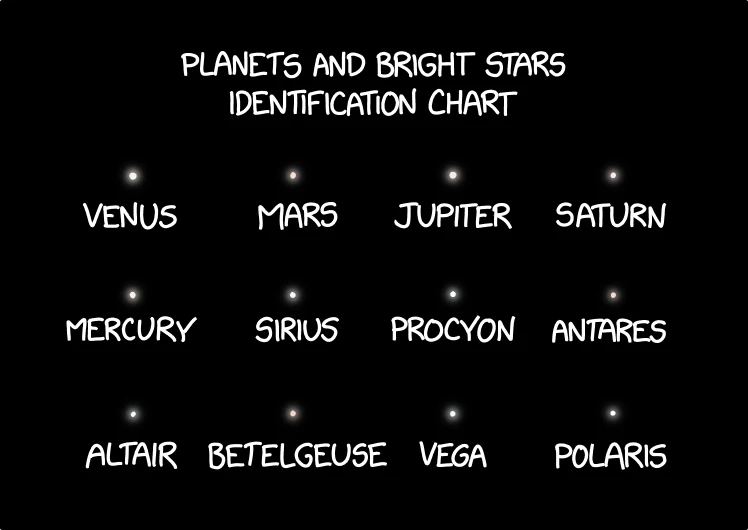
I love this planet & stars chart from XKCD because it’s technically correct but also completely useless.
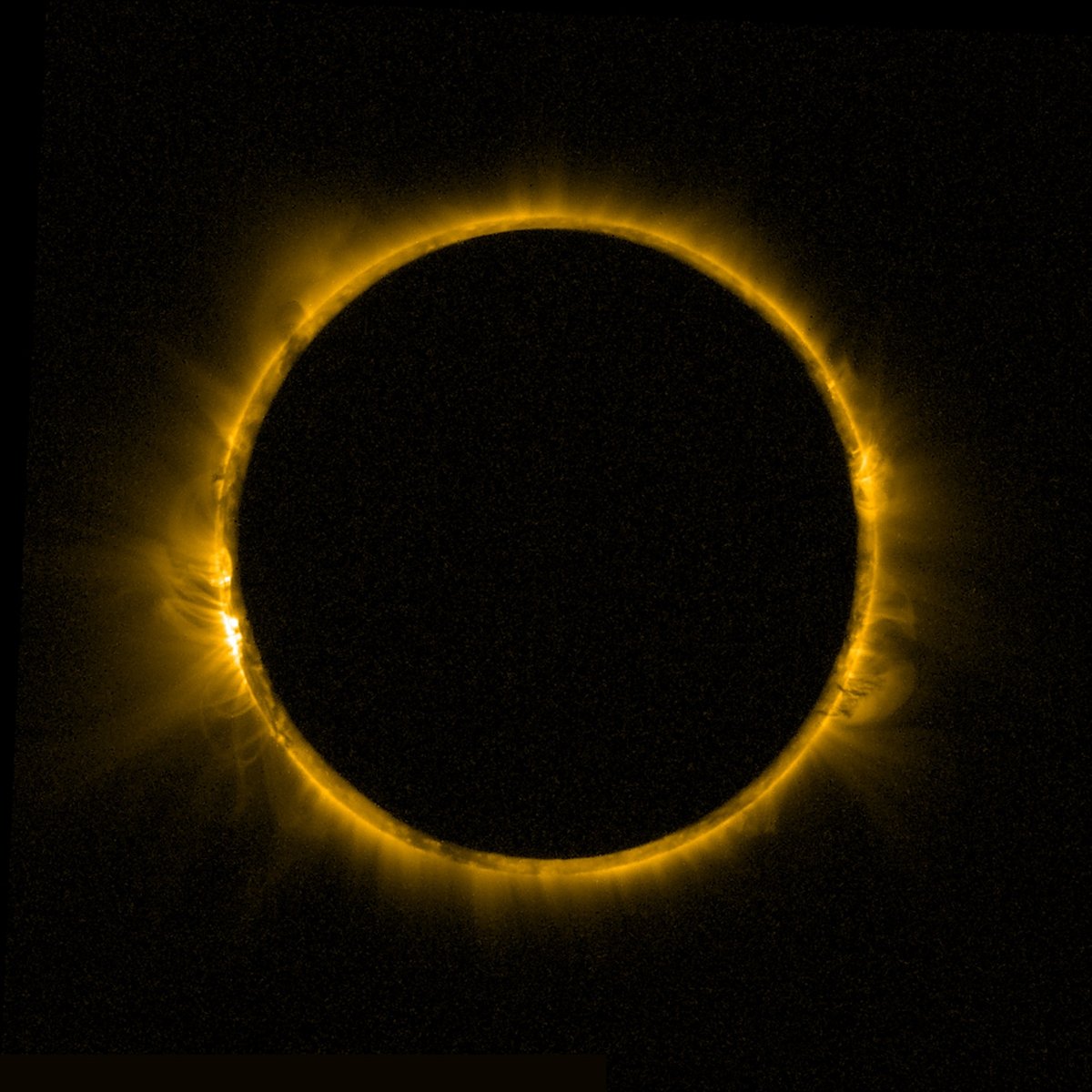
During the recent annular solar eclipse on February 17, the ESA’s PROBA-2 satellite captured this great shot of the Moon passing in front of the Sun. Cue up the Johnny Cash.
Physicist Sean Carroll leads off this video with this line:
I like to say that Einstein is, if anything, underrated as a physicist, which is hard to imagine given how highly he is rated.
And then leads us through a history of modern physics and quantum mechanics that, Einstein and Newton aside, is much more collaborative than you often hear about.
This idea that there are many people contributing and many different parts of the pieces need to put together is actually much more characteristic of how physics is usually done than the single person inventing everything all by themselves.
Sleeping cleans your brain. Research suggests that zoning out, daydreaming, and being bored can perform a similar function without the need for deep sleep. So put down that phone occasionally and let your brain chill for a bit.
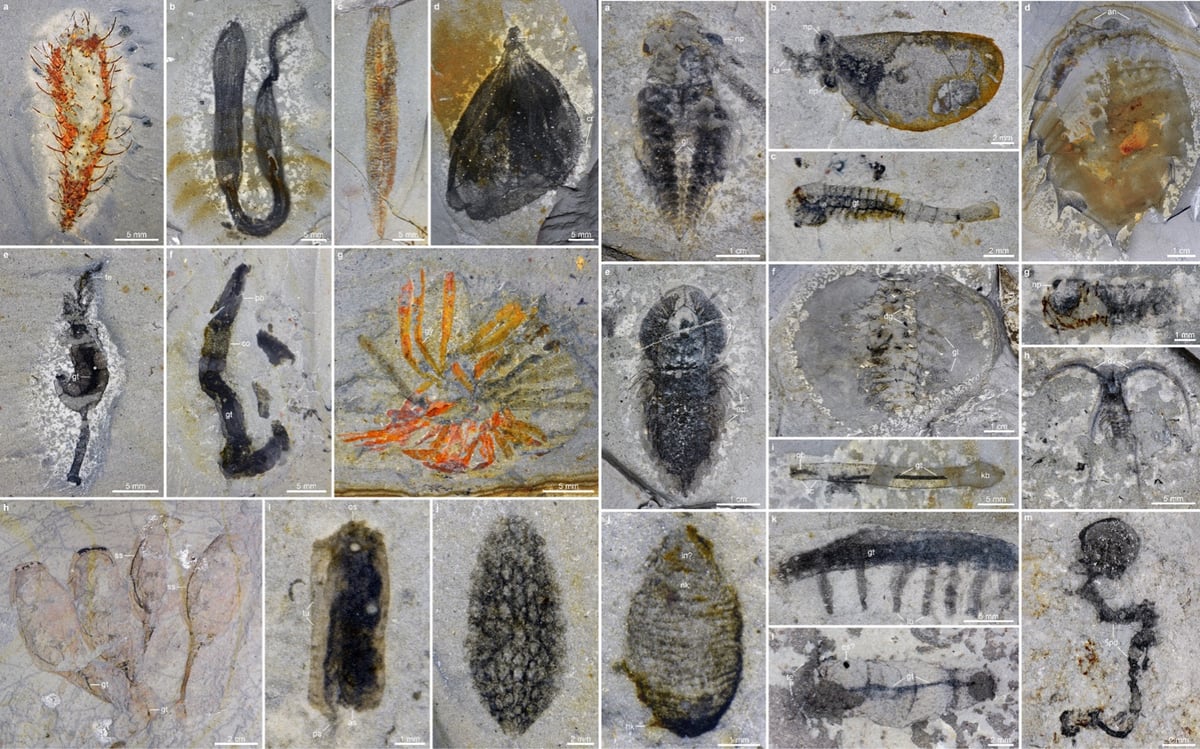
A recent paper in Nature details what scientists found at the Huayuan biota:
Here we report the Huayuan biota — a lower Cambrian (Stage 4, approximately 512 million years ago) BST Lagerstätte from an outer shelf, deep-water setting of the Yangtze Block in Hunan, South China. The Huayuan biota yields remarkable taxonomic richness, comprising 153 animal species of 16 phylum-level clades dominated by arthropods, poriferans and cnidarians, among which 59% of species are new. The biota is comprised overwhelmingly of soft-bodied forms that include preserved cellular tissues.
They have identified more than 50,000 individual fossil specimens that existed during what’s referred to as the Cambrian explosion, “when a sudden radiation of complex life occurred and practically all major animal phyla started appearing in the fossil record”. The fossils at the site are unusually intact:
Not only is this ecosystem notably diverse, but the fossils have remained unusually intact in the ancient mudstone, allowing for the preservation of soft tissues like tentacles, guts, and a nearly-complete nervous system found in one arthropod.
I’ve been interested in this period in paleontology since reading Stephen Jay Gould’s Wonderful Life: The Burgess Shale and the Nature of History in college. The Burgess Shale was a significant discovery that shed much light on the Cambrian explosion and surprisingly, paleontologists found fossils that appeared in both places.
The Burgess Shale animals date to about 508 million years ago, further removed from the Sinsk event than the Huayuan biota. Despite the vast distance separating the two sites, fossils of several of the same animals were found in the two locations.
“It surprised us when we found the Huayuan biota shared various animals with the Burgess Shale, including the arthropods Helmetia and Surusicaris that were previously only known from the Burgess Shale,” Zeng said.
“As larval stages are common in extant marine invertebrates, the best explanation of these shared taxa shall be that the larvae of early animals were capable of spreading by ocean currents since the early days of animals in the Cambrian,” Zeng said.
For those looking for more info on this discovery and its significance, paleontologist Dr. Joe Botting’s video on the Huayuan biota, which he calls “a stunning new Burgess Shale-type fauna”, might be a good place to start.
Bees use polarized sunlight scattered by the atmosphere in order to navigate; they always know where the sun is, even if it’s cloudy or behind a mountain. Then they waggle dance to inform their hive-mates about food source locations.
So if a bee wants to fly straight towards the sun, it waggles straight up the hive. If the food is 30° away from that polarization line, it waggles 30° away from vertical. If the food is directly away from the sun, it waggles downward.
And the distance they should fly is encoded on how long the waggle lasts. It depends on the species of bee, but a waggle of about 1 second means about a kilometer away. So a 45° waggle for about 0.6 seconds means fly at 45° angles from the sun polarization line for about 600 meters.
The bee repeats this waggle dance over and over. And the more excited the dance, the better the food source. And if other bees verify it and perform the same dance, the signal gets amplified until the whole hive knows where to go.
As shown in this video, it’s possible to construct an optical compass using polarized filters in order to wayfind like the bees. Pretty cool! (via damn interesting)
Nature magazine has chosen its favorite science images of the year. I’ve featured a few of these on the site already — Skydiving the Sun, red sprites in the New Zealand sky — so I picked a couple of other favorites to share:
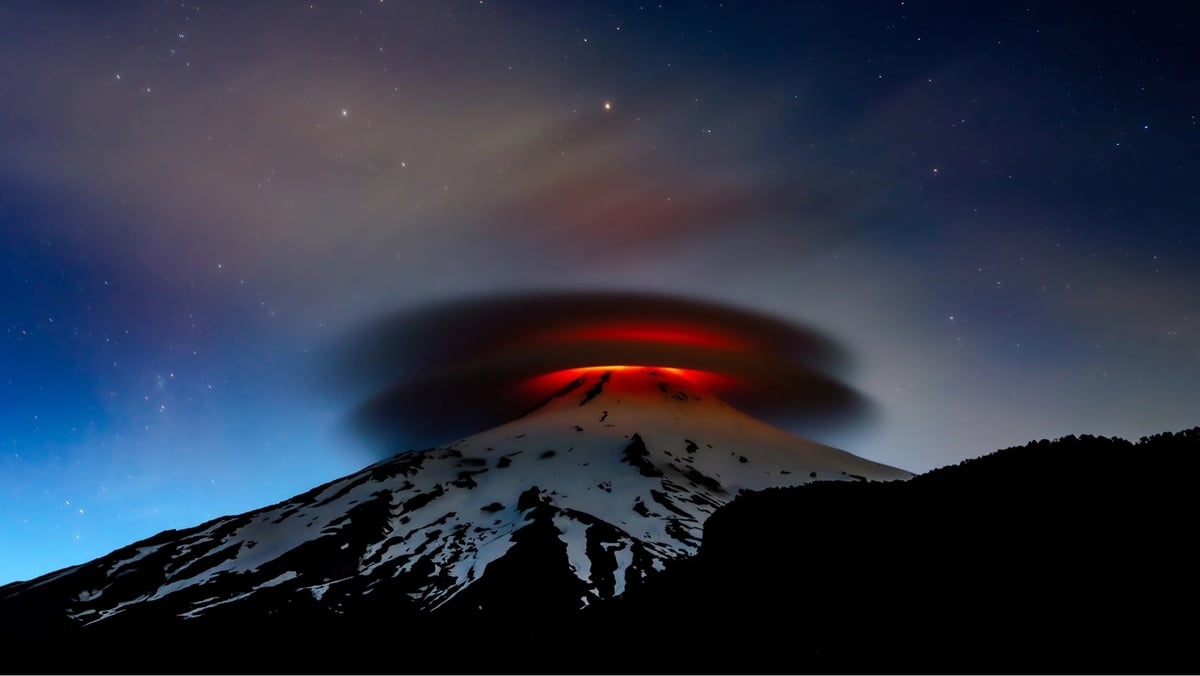
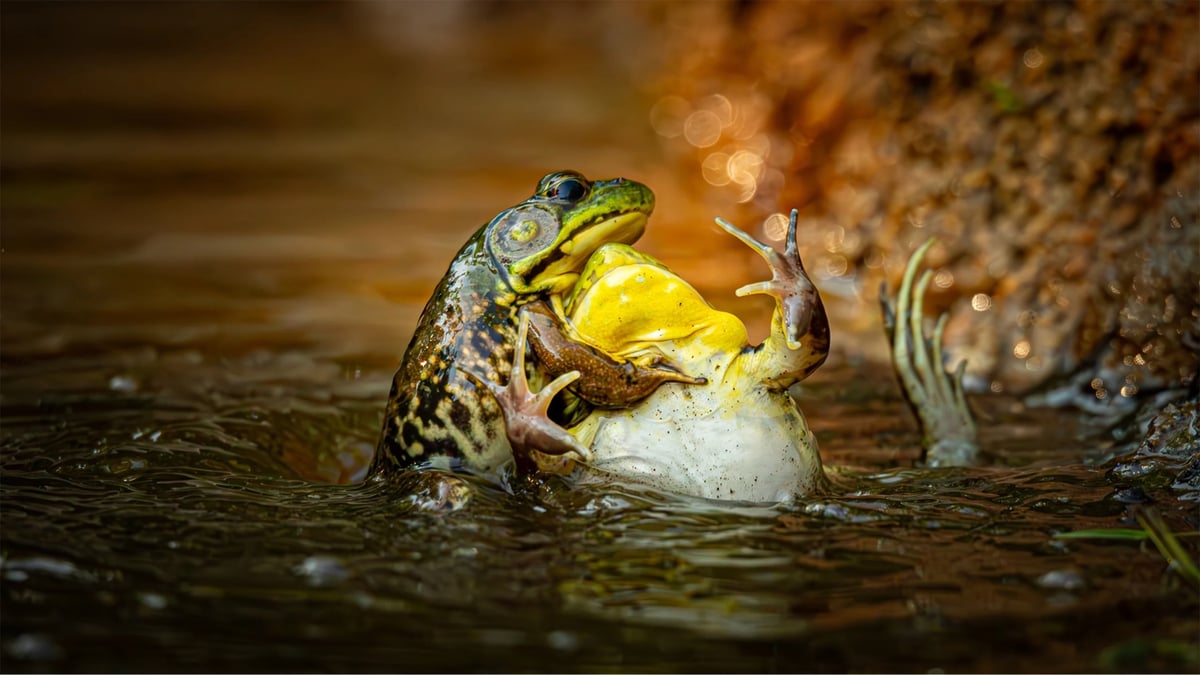
The first was taken by Francisco Negroni of the Villarrica volcano in Chile (check out his site for more amazing photos of volcanos & lightning). The second is by 13-year-old Grayson Bell of two green frogs fighting; Bell named his photo “Baptism of the Unwilling Convert”.
In a recent bombshell piece for the New Yorker (archive), Rachel Aviv explored the personal journals of the celebrated neurologist and writer Oliver Sacks. What she found was shocking: he had fabricated and embellished some of his most well-known work — like Awakenings and The Man Who Mistook His Wife for a Hat. Sacks himself referred to his “lies” and “falsification” in journal entries.
But, in his journal, Sacks wrote that “a sense of hideous criminality remains (psychologically) attached” to his work: he had given his patients “powers (starting with powers of speech) which they do not have.” Some details, he recognized, were “pure fabrications.” He tried to reassure himself that the exaggerations did not come from a shallow place, such as a desire for fame or attention. “The impulse is both ‘purer’ — and deeper,” he wrote. “It is not merely or wholly a projection — nor (as I have sometimes, ingeniously-disingenuously, maintained) a mere ‘sensitization’ of what I know so well in myself. But (if you will) a sort of autobiography.” He called it “symbolic ‘exo-graphy.’”
Sacks had “misstepped in this regard, many many times, in ‘Awakenings,’” he wrote in another journal entry, describing it as a “source of severe, long-lasting, self-recrimination.”
The author Maria Konnikova discovered Sacks’ work in high school — “it blew my mind”, she writes. After the Aviv piece was published, Konnikova wrote a post about Sacks: The man who mistook his imagination for the truth.
When Joseph Mitchell invents a fishmonger, nobody gets hurt. It’s not journalism. It’s not nonfiction. But it’s not life or death. When Jonah Lehrer invents a quote from Bob Dylan, you can call him a narcissistic idiot for thinking he can get away with fabulizing a living legend whose every word has been studied. It’s not journalism. It’s not nonfiction. But, again, it’s not the end of the world. When Oliver Sacks invents an ability that does not exist or crafts a portrait of his own creation, he is hampering medical progress and tampering with the ethics of his profession. Not all journalistic malfeasance is created equal. There are plenty of shades of grey. But making up medical details is not in the gray zone. It’s malpractice.

From Domain of Science, the Fascinating Map of Fungi.
The zombie ant fungus, Ophiocordyceps unilateralis, infects ants by piercing the exoskeleton with enzymes and spreads fungal cells throughout the body. It then secretes special neurological compounds that hijack the ant’s central nervous system, forcing it to climb high into a tree and lock its mandibles onto a leaf with a death grip. This makes a nice stable platform for the fungus to grow a fruiting body to disperse spores in a large area to infect more hosts.
And here’s a video explanation of everything on the map.
See also this Classification of Plants & Fungi poster and its corresponding video explanation.
Older posts



Socials & More