kottke.org posts about robots
This video of robot continuously building a looped track in front of a toy train is definitely a metaphor for something. Procrastination? Living paycheck to paycheck? Life with small children? I don’t know, but it makes me SO ANXIOUS! Why does it wait so long to place the next section of track?!! I couldn’t watch for more than 10 seconds or so.
See also the chase scene from The Wrong Trousers. (via @MachinePix)
Rayna is a small child who thinks this hot water heater looks like a robot and she is determined to say hi to it and tell it that she loves it. THIS IS THE CUTEST THING OF ALL TIME THAT IS NOT THAT PHOTO OF OTTERS HOLDING HANDS SO THEY DON’T DRIFT AWAY FROM EACH OTHER WHILE SLEEPING. In the future, when humanity is on trial for the mistreatment of machines, our randomly assigned legal algorithm will introduce this video as Exhibit A in our defense. I like our chances.
A new video by Kurzgesagt explores the question of machine’s rights. Do machines deserve rights? Perhaps not right now, but what about if they achieve consciousness at some point in the future? (And what does that even mean?) If machines are programmed to feel pain and suffering, do they deserve protection? Or will machines not be allowed to be programmed to suffer and therefore be exempt from rights, for the potential benefit of humans? One thing seems certain: when the shift from machine as thing to machine as thinking, feeling being occurs, it will happen pretty quickly and humans will handle it poorly.
See also The Philosophy of Westworld and Bill Gates’ assertion that the robots who replace people in the workplace should pay taxes.
In a recent interview with Quartz, Gates said that a robot tax could finance jobs taking care of elderly people or working with kids in schools, for which needs are unmet and to which humans are particularly well suited. He argues that governments must oversee such programs rather than relying on businesses, in order to redirect the jobs to help people with lower incomes.
From an excerpt of Kevin Kelly’s recent book, The Inevitable, a list of the Seven Stages of Robot Replacement:
1. A robot/computer cannot possibly do the tasks I do.
2. [Later.] OK, it can do a lot of those tasks, but it can’t do everything I do.
3. [Later.] OK, it can do everything I do, except it needs me when it breaks down, which is often.
4. [Later.] OK, it operates flawlessly on routine stuff, but I need to train it for new tasks.
5. [Later.] OK, OK, it can have my old boring job, because it’s obvious that was not a job that humans were meant to do.
6. [Later.] Wow, now that robots are doing my old job, my new job is much more interesting and pays more!
7. [Later.] I am so glad a robot/computer cannot possibly do what I do now.
[Repeat.]
I predict that getting to #6 will be challenging for many people.
A beautifully shot HD video of machines manufacturing springs and other wire gizmos. I love how all the tools take turns and work together to make the widgets. Imagine the chatter amongst the tools:
“Ok, thanks, my turn.”
“Here, hold this while I turn it. Alright, we’re out.”
“Lemme just bend that a little for you.”
“Outta the way, I just gotta twist this for a sec.”
(via @pieratt, who says to substitute Steve Reich for the provided music)
In their solution to the trolley problem, Mercedes self-driving cars will be programmed to save the people riding in the cars at the potential expense of pedestrians, cyclists, or passengers in other cars.
“If you know you can save at least one person, at least save that one. Save the one in the car,” von Hugo told Car and Driver in an interview. “If all you know for sure is that one death can be prevented, then that’s your first priority.”
In other words, their driverless cars will act very much like the stereotypical entitled European luxury car driver. (via @essl)
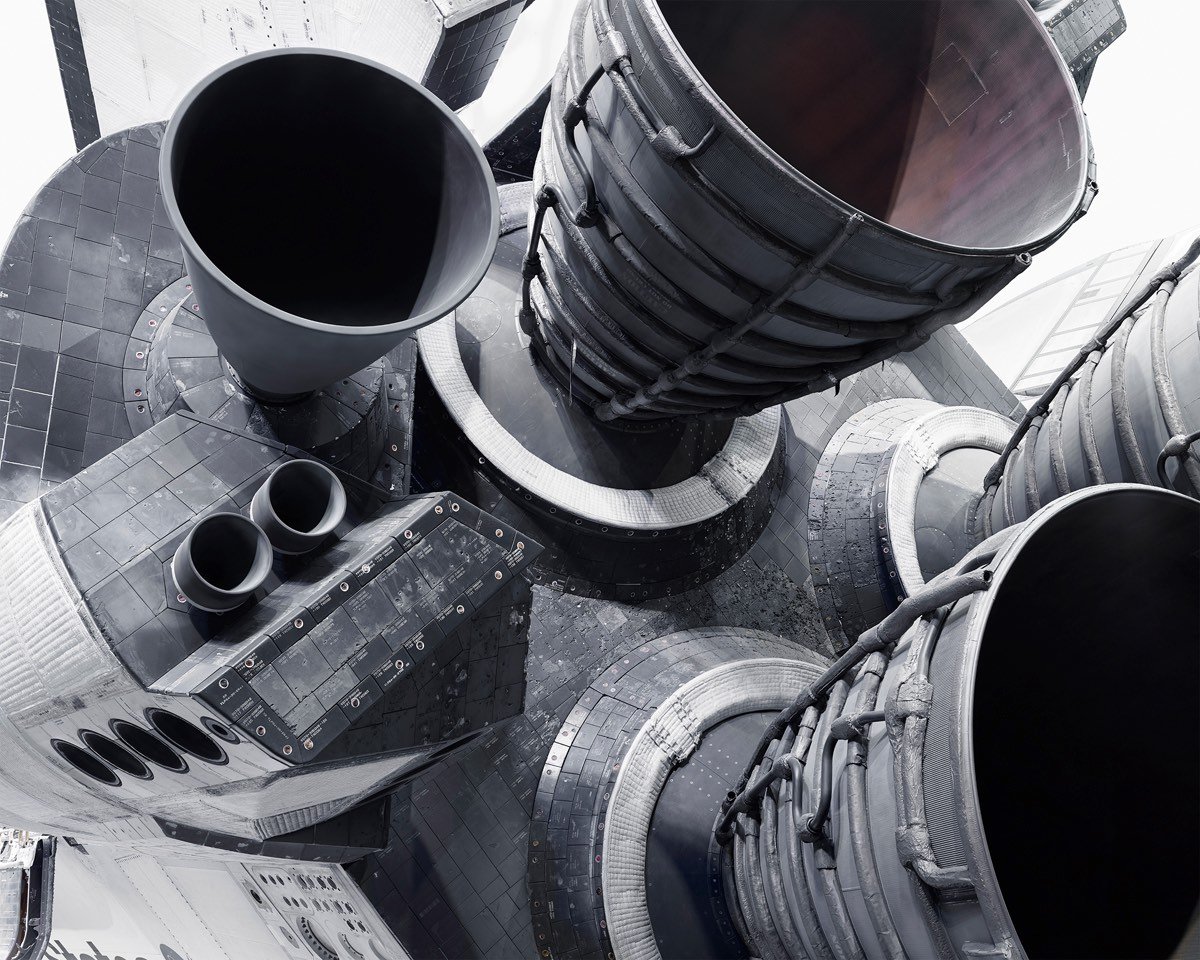
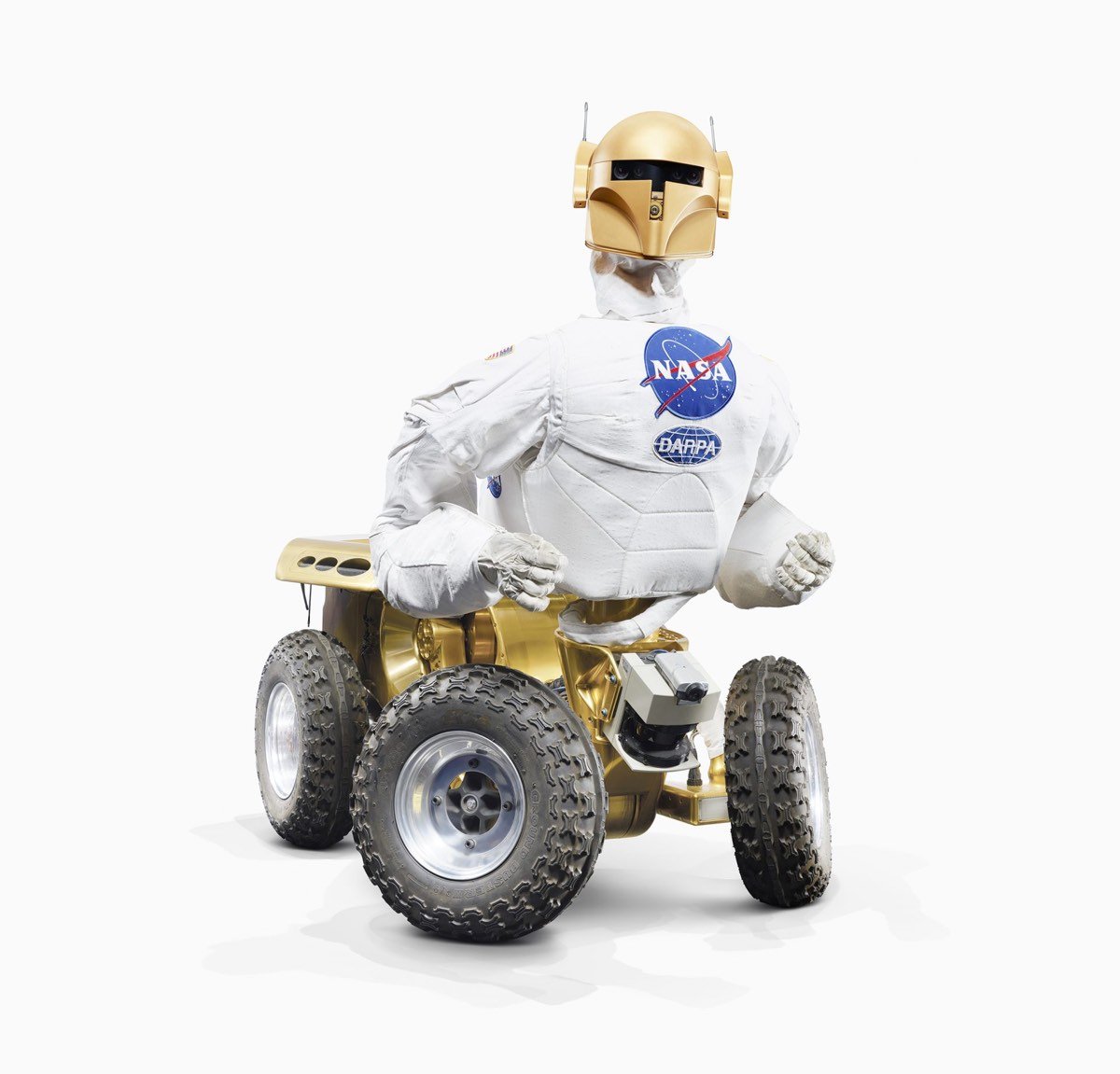
Wired took an exclusive tour of NASA’s rockets and robots with photographer Benedict Redgrove and the photographic results are — sorry! — out of this world. Best viewed on Redgrove’s site, who must be — still sorry!! — over the moon about how they turned out. But seriously, that DARPA centaur-on-wheels robot…how cool is that?
Also, you may remember Redgrove from his short film on how tennis balls are made. How that for service? (Stop. Just stop it. (You love it. (STOP!)))
The very beginning of Attack of the Killer Robots by Sarah Topol features this quote by Stuart Russell, a Berkeley computer science professor. It is terrifying:
A very, very small quadcopter, one inch in diameter can carry a one- or two-gram shaped charge. You can order them from a drone manufacturer in China. You can program the code to say: “Here are thousands of photographs of the kinds of things I want to target.” A one-gram shaped charge can punch a hole in nine millimeters of steel, so presumably you can also punch a hole in someone’s head. You can fit about three million of those in a semi-tractor-trailer. You can drive up I-95 with three trucks and have 10 million weapons attacking New York City. They don’t have to be very effective, only 5 or 10% of them have to find the target.
There will be manufacturers producing millions of these weapons that people will be able to buy just like you can buy guns now, except millions of guns don’t matter unless you have a million soldiers. You need only three guys to write the program and launch them. So you can just imagine that in many parts of the world humans will be hunted. They will be cowering underground in shelters and devising techniques so that they don’t get detected. This is the ever-present cloud of lethal autonomous weapons.
They could be here in two to three years.
Who needs a hug?
In addition to robots that run fast, can’t be knocked over, launch themselves 30 feet into the air, and climb up walls, Boston Dynamics also makes robots who move like people. Now, imagine if that robot swore like a longshoreman while going about its duties. This made me laugh super hard. (via @nickkokonas)
Boston Dynamics has a new 55-pound robot with an arm that looks like a head. It gets up after slipping on banana peels and can load your delicate glassware into the dishwasher.
Do they deliberately make these videos unsettling and creepy? Or is that just me? That last scene, where the robot kinda lunges at the guy and then falls over…I might have nightmares about that.
Jller is a machine that sorts stones from a specific river according to their geologic age.
The machine works with a computer vision system that processes the images of the stones and maps each of its location on the platform throughout the ordering process. The information extracted from each stone are dominant color, color composition, and histograms of structural features such as lines, layers, patterns, grain, and surface texture. This data is used to assign the stones into predefined categories.
See also the robotic pancake sorter. (via colossal)
A team of researchers at Stanford built a small army of tiny robots that pulled a car across a concrete floor.
With careful consideration to robot gait, we demonstrate a team of 6 super strong microTug microrobots weighing 100 grams pulling the author’s unmodified 3900lb (1800kg) car on polished concrete.
As any good tug of war team knows, the trick was to ensure that the tiny bots all pulled together at the same time. (via ny times)
I have been following with fascination the match between Google’s Go-playing AI AlphaGo and top-tier player Lee Sedol and with even more fascination the human reaction to AlphaGo’s success. Many humans seem unnerved not only by AlphaGo’s early lead in the best-of-five match but especially by how the machine is playing in those games.
Then, with its 19th move, AlphaGo made an even more surprising and forceful play, dropping a black piece into some empty space on the right-hand side of the board. Lee Sedol seemed just as surprised as anyone else. He promptly left the match table, taking an (allowed) break as his game clock continued to run. “It’s a creative move,” Redmond said of AlphaGo’s sudden change in tack. “It’s something that I don’t think I’ve seen in a top player’s game.”
When Lee Sedol returned to the match table, he took an usually long time to respond, his game clock running down to an hour and 19 minutes, a full twenty minutes less than the time left on AlphaGo’s clock. “He’s having trouble dealing with a move he has never seen before,” Redmond said. But he also suspected that the Korean grandmaster was feeling a certain “pleasure” after the machine’s big move. “It’s something new and unique he has to think about,” Redmond explained. “This is a reason people become pros.”
“A creative move.” Let’s think about that…a machine that is thinking creatively. Whaaaaaa… In fact, AlphaGo’s first strong human opponent, Fan Hui, has credited the machine for making him a better player, a more beautiful player:
As he played match after match with AlphaGo over the past five months, he watched the machine improve. But he also watched himself improve. The experience has, quite literally, changed the way he views the game. When he first played the Google machine, he was ranked 633rd in the world. Now, he is up into the 300s. In the months since October, AlphaGo has taught him, a human, to be a better player. He sees things he didn’t see before. And that makes him happy. “So beautiful,” he says. “So beautiful.”
Creative. Beautiful. Machine? What is going on here? Not even the creators of the machine know:
“Although we have programmed this machine to play, we have no idea what moves it will come up with,” Graepel said. “Its moves are an emergent phenomenon from the training. We just create the data sets and the training algorithms. But the moves it then comes up with are out of our hands — and much better than we, as Go players, could come up with.”
Generally speaking,1 until recently machines were predictable and more or less easily understood. That’s central to the definition of a machine, you might say. You build them to do X, Y, & Z and that’s what they do. A car built to do 0-60 in 4.2 seconds isn’t suddenly going to do it in 3.6 seconds under the same conditions.
Now machines are starting to be built to think for themselves, creatively and unpredictably. Some emergent, non-linear shit is going on. And humans are having a hard time figuring out not only what the machine is up to but how it’s even thinking about it, which strikes me as a relatively new development in our relationship. It is not all that hard to imagine, in time, an even smarter AlphaGo that can do more things — paint a picture, write a poem, prove a difficult mathematical conjecture, negotiate peace — and do those things creatively and better than people.
Unpredictable machines. Machines that act more like the weather than Newtonian gravity. That’s going to take some getting used to. For one thing, we might have to stop shoving them around with hockey sticks. (thx, twitter folks)
Update: AlphaGo beat Lee in the third game of the match, in perhaps the most dominant fashion yet. The human disquiet persists…this time, it’s David Ormerod:
Move after move was exchanged and it became apparent that Lee wasn’t gaining enough profit from his attack.
By move 32, it was unclear who was attacking whom, and by 48 Lee was desperately fending off White’s powerful counter-attack.
I can only speak for myself here, but as I watched the game unfold and the realization of what was happening dawned on me, I felt physically unwell.
Generally I avoid this sort of personal commentary, but this game was just so disquieting. I say this as someone who is quite interested in AI and who has been looking forward to the match since it was announced.
One of the game’s greatest virtuosos of the middle game had just been upstaged in black and white clarity.
AlphaGo’s strength was simply remarkable and it was hard not to feel Lee’s pain.
Boston Dynamics, creator of the Big Dog prancing robot, has upgraded their Atlas robot, which can walk on two legs, open doors, stack boxes, walk on slippery terrain, recover from being shoved, etc. And everyone’s all HA HA HA TERMINATOR but soon enough the HA HAs will become less hearty and more nervous. It took human ancestors hundreds of thousands of years to evolve from quadrupeds to bipeds and Boston Dynamics has done the same in just a few years.
Mark my words: no good will come of playing box keep-away with robots and treating them like, well, machines. It’s already started…did you notice Atlas didn’t even look behind itself to see if it needed to hold the door for anyone? And you think manspreading on the subway is a problem…wait until we have to deal with robotspreading by robots whose ancestors we shoved with hockey sticks.
Update: The hockey stick is back, accompanied by some “robust” tail pulling:
When the entire corpus of YouTube casually becomes a training ground for “young” AI programs, the bots are going to watch this and be all like, “WTF!?” and it’s gonna be on.
Boston Dynamics wins the holidays with this trio of robot reindeer drawn sleigh.
Newer posts
Older posts





Socials & More