And it was just, like, gibberish. There was a bunch of new comments, but I couldn’t make heads or tail of any of them. They’re just these clipped, weird, incoherent postings that I was just like— it screamed bots, just because anytime that I see just gibberish in a comment on the internet, I assume it’s a bot. But the fact that they were all from different accounts seemed very weird. And the fact that they also maybe seemed to be interacting in some way also seemed weird and not like typical bot behavior.
They tracked down one of the participants and interviewed her:
Ira Glass: And can I ask, why did you guys pick NPR shows to be the ones where you went to in the comments?
Ella: I think we just looked for podcasts that didn’t have many comments.
Ira Glass: I see. So you picked NPR because it didn’t seem very popular.
Ella: Yeah, so that we wouldn’t get caught up in other people’s comments.
Ira Glass: I tell you, buddy, I do a public radio show, and that hurts a little to hear it.
At the beginning of a clip from this podcast episode of Conan O’Brien Needs a Friend with Matt Groening, Conan talks about one of his favorite things they did on The Simpsons:
It’s a phenomenon that the Simpsons did so beautifully, which is — and we did this with Homer a lot — but Homer is not the smartest guy in the world, but if it’s funny for him to have a certain knowledge of something or turn a phrase, suddenly he has it.
And one of my favorites of that is he’s sitting around the table and Lisa’s despondent. Something didn’t go well for her and she doesn’t think she’s going to get to go to a good school now. And she’s sitting at the table and she said, “Oh no, now I’ll never get to go to an Ivy League school. I’ll have to go to Vasser.” Which is just this like — by the way, my wife went to Vasser, it’s a very good school. But it was just this thing where in Lisa’s little world, oh my god, I’ve been I’ve been ruined. I’ll have to go to Vasser. And Homer like slams a table and says, “There’ll be no Vasser bashing in this house.”
I loved this about the show too. And it was part of a general thing the writers did where sometimes characters would play against type. So Marge became reckless, Homer was smart/sensitive, Bart was organized, and Lisa was a giggly little girl. Those moments helped make the show and when, after the epic run in the early-to-mid 90s, the show became almost exclusively about how dumb & crass Homer was, it was much less rich and entertaining. (thx, mark)
We’re publishing a new constitution for our AI model, Claude. It’s a detailed description of Anthropic’s vision for Claude’s values and behavior; a holistic document that explains the context in which Claude operates and the kind of entity we would like Claude to be.
The constitution is a crucial part of our model training process, and its content directly shapes Claude’s behavior. Training models is a difficult task, and Claude’s outputs might not always adhere to the constitution’s ideals. But we think that the way the new constitution is written — with a thorough explanation of our intentions and the reasons behind them — makes it more likely to cultivate good values during training.
Claude’s constitution is the foundational document that both expresses and shapes who Claude is. It contains detailed explanations of the values we would like Claude to embody and the reasons why. In it, we explain what we think it means for Claude to be helpful while remaining broadly safe, ethical, and compliant with our guidelines. The constitution gives Claude information about its situation and offers advice for how to deal with difficult situations and tradeoffs, like balancing honesty with compassion and the protection of sensitive information. Although it might sound surprising, the constitution is written primarily for Claude. It is intended to give Claude the knowledge and understanding it needs to act well in the world.
We treat the constitution as the final authority on how we want Claude to be and to behave — that is, any other training or instruction given to Claude should be consistent with both its letter and its underlying spirit. This makes publishing the constitution particularly important from a transparency perspective: it lets people understand which of Claude’s behaviors are intended versus unintended, to make informed choices, and to provide useful feedback. We think transparency of this kind will become ever more important as AIs start to exert more influence in society.
Casey Newton and Kevin Roose recently interviewed the primary author of the constitution, philosopher Amanda Askell, for the Hard Fork podcast (the segment starts at ~25min).
Newton says the document reads like “a letter from a parent to a child maybe who’s leaving for college”:
And it’s like, we hope that you take with you the values that you grew up with. And we know we’re not going to be there to help you through every little thing, but we trust you. And good luck.
Both the constitution and the conversation with Askell are fascinating, no matter where you lie on the AI debate continuum. You might also be interested in this video of Askell answering questions from Claude users about her work:
Konnichiwa! I’m back from Japan and finally getting over my jetlag, which took much longer than I expected. Here’s a list of all the things I’ve been reading, watching, listening to, and experiencing over the past few months.1 Let us know what movies, books, art, TV, music, etc. you’ve been enjoying in the comments below!
Deacon King Kong by James McBride. This was my first time reading anything by McBride and maybe I have a new favorite author? I love everything about this story and the way he tells it. (A+)
The Da Vinci Code. One of my go-to comfort movies. “Scientific” art history detective story? Yes, please. (A)
One Battle After Another. Great. Especially Sean Penn. And it reminded me of a Wes Anderson movie for some reason? Like one that he would have made had he followed the Bottle Rocket path instead of the Rushmore Path. (A+)
Meredith Dairy Marinated Sheep & Goat Cheese. All cheese is delicious, but this one particularly so. (A)
Fantastic Four. It was ok? Aside from a few things, I’m having trouble getting excited about post-Infinity Saga Marvel. There was just a special alchemy about that whole arc that is proving impossible to reproduce. (B)
The Age of Innocence by Edith Wharton. Fantastic right from the first page. Sharp writing about social mores, reminded me of Middlemarch & Price and Prejudice in that respect. One of my all-time favorites, I think. (A+)
The Gilded Age (season three). Still enjoying the hell out of this show. Total suspension of disbelief is a must. (A-)
Mission: Impossible. I haven’t seen this in maybe 20 years and I guess it holds up? Not my favorite of the series though. (B+)
Tinker, Tailor, Soldier, Spy. Great spy thriller. Gary Oldman is fantastic in this. Cold War? Spies? Britain? I will pretty much watch as many of this type of movie as you can make. (A)
Leaving America. This is a 12-part podcast on the logistics, benefits, and challenges of leaving the United States. Oh, no reason. (B+)
The Fellowship of the Ring (and TT & ROTK) by J.R.R. Tolkien. It’s been a while since I’ve read The Lord of the Rings books and wow, are they long. There’s entirely too much “and they travelled from here to there” logistics that drag on over several pages and descriptions of hilltops & ancient landmarks that you only hear about once. But Andy Serkis narrating the audiobook? So good. (A-)
The Lord of the Rings trilogy. After each audiobook, I watched the extended version of the corresponding film. My general feeling after 65+ hours of audiobook and 12+ hours of movie is that the books are too long and the movies too short. An 18-hour mini-series — perhaps three seasons of six episodes each? — seems like the sweet spot. (A)
Star Trek: Strange New Worlds (season three). Maybe didn’t enjoy this quite as much as the previous two season, but I love spending time with these people and look forward to doing more of that when season four drops. (B+)
Jaws. Got to see this in the theater when they released it for the 50th anniversary. Spielberg had such a strong style right from the jump. (A-)
Paradise. Just fine. But I feel like there are better apocalyptic shows out there. (B)
Downton Abbey: The Grand Finale. It was so nice to head to the theater to nestle myself into the low-stakes world of Downton Abbey for 2 hours. (B+)
The Heaven & Earth Grocery Store by James McBride. Right after finishing Deacon King Kong, I did something I almost never do: started in on a different book from the same author. Loved this one too. (A+)
Tron: Ares. It was a loud NIN music video on a huge screen, what’s not to like? Jared Leto was fine, but there were probably better casting options here that the audience would have been more excited about. And the direction could have been stronger…Gillian Anderson and Greta Lee were both surprisingly meh. (B+)
Total Recall. First time! Maybe a little too Verhoeven/B-movie for me. (C+)
Cars. I’ve seen this movie several times and what I noticed this time around is how incredibly expressive the cars are. You can just tell they worked very hard on that aspect of the animation. (A-)
Shopkeeping by Peter Miller. This was recommended from a couple of different vectors — pretty sure one was Robin Sloan. Lots of resonance to my work here and how I think about it (and want to think about it). (A-)
Japan. Absolutely loved it. (A+)
Iyoshi Cola. Craft colas are often disappointing, but this one was absolutely delicious. Wish I could get it in the States for less than $14 a can. (A)
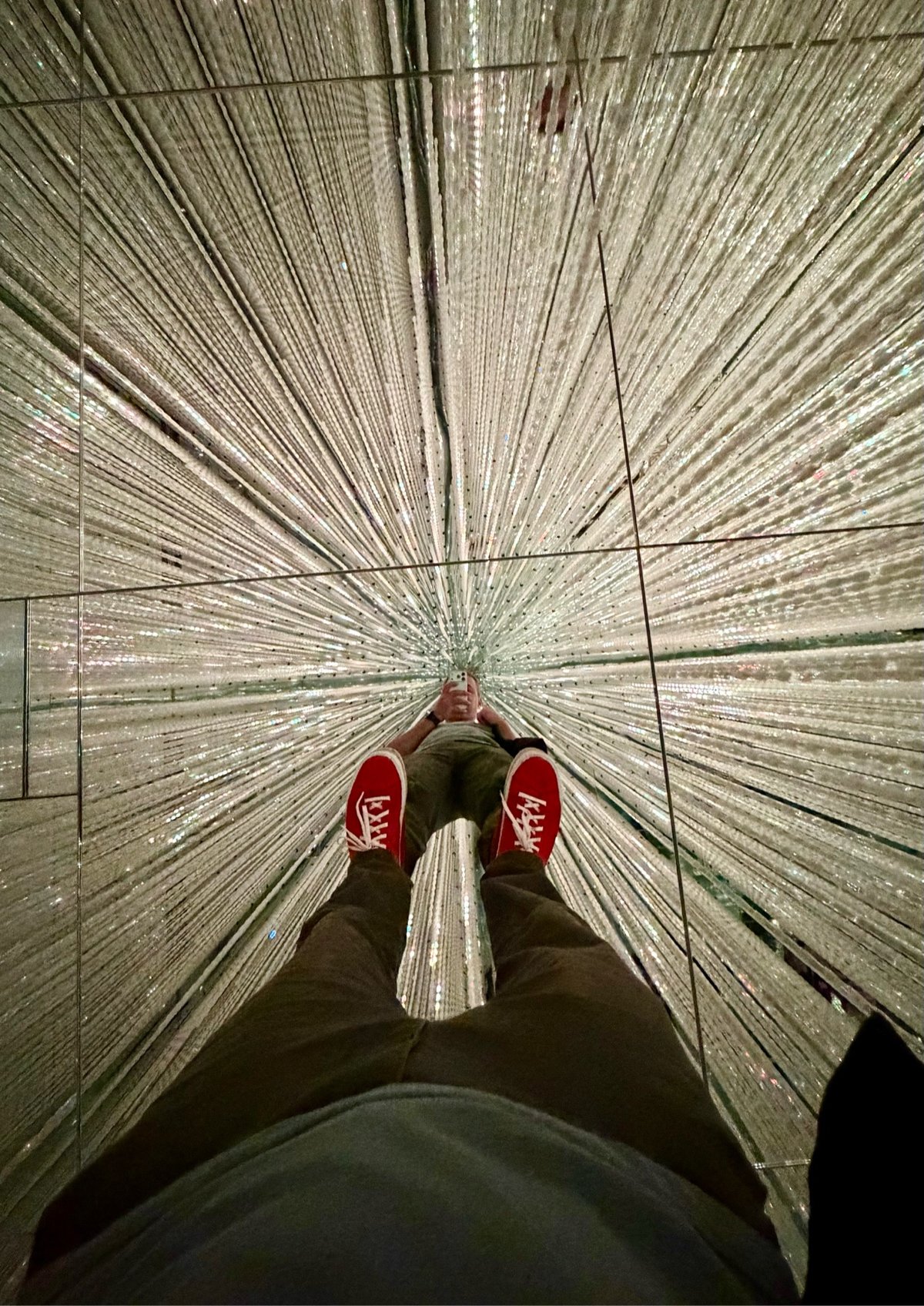
teamLab Borderless. Some of this was too “built for Instagram” but a couple of the rooms (the one where it felt like the whole room was moving & the cathedralish one with the light strings) were great. (A-)
In Praise of Shadows by Jun’ichirō Tanizaki. Read this book about Japanese aesthetics while visiting Japan — it provided an interesting context. (B+)
Hokusai at Creative Museum Tokyo. Fantastic show…there were hundreds and hundreds of prints and drawings that showed his evolution and influence. (A+)
Okunoin Cemetery. Had one of the strongest senses of place I have ever experienced. (A)
Konbini. The Japanese convenience stores really are as appealing as you’ve heard. (A-)
Awakening Your Ikigai by Ken Mogi. Perhaps a little over-simplifying when it comes to Japanese culture, but I appreciated the message of having a purpose. (B)
Sho-Chan Okonomiyaki. When I got to Hiroshima, I knew I had to try their version of okonomiyaki, so I went to Okonomimura, a multi-story building crammed with okonomiyaki restaurants. I picked one and had one of the most surprising meals of my trip. So good. (A)
Blue Planet Sky. I spent a lot of time sitting in this room by James Turrell. (A)
Kanazawa Phonograph Museum. Lovely little museum, and a good opportunity to observe how successful inventions move from technology to culture/fashion/commerce. (A)
Princess Mononoke. I saw this in the theater on my last full day in Tokyo; they recently released a 4K remaster. Absolutely breathtaking. (A+)
Butch Cassidy and the Sundance Kid. Redford and Newman are both total smokeshows in this. And I’d forgotten how goofy this movie is. (B+)
A House of Dynamite. A very tough watch, but I thought this was fantastic as a tour of some of the different kinds of people who hold the fate of every single person on the planet in their hands every damn day. They’re tired, stressed, distracted, at cross-purposes with themselves, set in their ways, more celebs than leaders, and mediocre. And none of them have ever seen Dr. Strangelove? (A)
Past installments of my media diet are available here. What good things have you watched, read, or listened to lately?
Well, it’s been awhile since I’ve done one of these but I’m gonna skip the apologies and get right into it. Here’s a list of what I’ve been reading, watching, listening to, and experiencing over the past several months. Let us know what movies, books, art, TV, music, etc. you’ve been enjoying in the comments below!
Dinosaur. It’s a huge pigeon on the High Line — what else do you need to know? (A-)
Bill and Ted’s Excellent Adventure. I hadn’t seen this in several years but I still knew all the words. (A-)
My Brilliant Friend (season four). If there’s one thing I’ve watched in the past several years that I wish had gotten more attention from viewers, critics, and awards panels, it’s this wonderful show. (A+)
Pirates of the Caribbean: The Curse of the Black Pearl. Johnny Depp’s Jack Sparrow might be the most perfectly cast role in the history of cinema. Great story too. This movie surprised me when I saw it in the theater in 2003 and it’s still in the top tier of action/adventure movies. (A)
Andor (season one). A rewatch to prep for season two. I didn’t understand what the fuss was about this show the first time around, but this second viewing was a revelation. Andor is easily the best Star Wars thing since Empire. (A+)
Mickey 17. It was fine? I was distracted while watching it in the theater, which is never a good sign. My favorite Bong Joon Ho film is still Snowpiercer. (B)
The French Dispatch. This has quietly become a favorite of mine among Anderson’s films. (A)
The Royal Tenenbaums. However, this is still my favorite. (A+)
Paris Is Burning. Classic documentary of a bygone NYC era & a subculture that is now both flourishing and threatened. (A-)
Star Trek: Strange New Worlds (season two). I love these characters, always the sign of a good Trek. The crossover episode with Lower Decks was delightful even though I’ve not watched any of the animated series yet. The musical episode I liked less (not a showtunes guy) but I appreciated the experimentation. Bring on the Muppet episode. (A)
Severance (season two). Perhaps not as good as the first season — there was a lot in the mid-season episodes that didn’t land for me. Still, I always watched when a new episode dropped. (A-)
Army of Shadows. Part of the unplanned resistance film festival I’ve been screening for myself recently. Not quite as good as I remembered it, but it’s nice to watch something that doesn’t just lay everything out on a platter for you so you can emote properly. (A-)
Best in Show. So many lines from this that I use in my daily life. (A-)
Johnny English. I didn’t find this quite as delightful as my family does. I prefer Mr. Bean. (B+)
Paddington in Peru. Not quite the magic of the first two, but entertaining. (B)
Indiana Jones and the Last Crusade. I have likely said this before, but while Raiders is likely the best Indy movie, Last Crusade is my favorite (probably due to Tom Stoppard’s heavy rewrite of the script). (A+)
Star Wars: The Return of the Jedi. It’s interesting to watch the original trilogy having seen so many subsequent movies & TV series.
Ocean’s Twelve. The dancing lasers scene is completely ridiculous. (A)
Wallace & Gromit: Vengeance Most Fowl. Well, I wasn’t expecting a critique of AI and the role of technology in society from this animated feature, but maybe I should have? (B+)
A Complete Unknown. Liked this more than I thought I would. (A-)
Pride and Prejudice by Jane Austen. Just a wonderful book — witty and fun. (A)
A Quiet Place: Day One. I only watched this because I was on a plane. (B)
Severance (season one). After watching the second season, I rewatched season one. There was apparently much I missed the first time around. (A-)
Black Bag. Soderbergh is always worth watching, especially when he dips into Ocean’s Eleven territory — although this was more serious. (A-)
A Minecraft Movie. The first half was tolerable, enjoyable even. And then not so much. (C+)
Star Wars: Revenge of the Sith. Watched this in the theater for the 20th anniversary. There are some good bits in here, but some of the acting really stinks. Folks in the theater cheered when Anakin slaughtered the younglings, which is probably some sort of meme that I don’t want to know about. (B+)
Thunderbolts*. Thought I would like this more than I did. (B)
Mission: Impossible – The Final Reckoning. The last scene is a masterclass in not having the faintest idea how to end a movie. (B+)
Andor (season two). Only a slight dip from season one. Overall, the series was a brilliant look at radicalization, the messiness of rebellion, and the oppressive flatness of authoritarianism. (A+)
Andor: The Rogue One Arc. This fan edit of Rogue One in the style of a three-episode Andor arc is as Gilroy-esque a cut as you’re ever going to get. (A-)
Mission: Impossible – Rogue Nation. I had been kinda ambivalent about the M:I movies, but Fallout converted me, so now I’m slowly making my way back through the back catalog. (B+)
Via Carota. Best meal I’ve had in a long time. The tagliatelle was better than any pasta dish I had during my trip to Rome — it’s true, don’t @ me! And the roast chicken was perfect. (A+)
V for Vendetta. Underrated. (A-)
The Last Samurai by Helen DeWitt. I’m going to tell you the embarrassing truth: I thought this was about actual samurai and perhaps related to the Tom Cruise movie. It is very much not. I gave it a real shot but ended up abandoning it about halfway through. (C)
Spider-Man: Into the Spider-Verse. Still a marvel of animated creativity. (A)
Wallace & Gromit: A Matter of Loaf and Death. Not my favorite W&G but still. (B+)
F1. Like Top Gun: Maverick crossed with Ford v Ferarri but Cruise and Bale played the aging outsider role much better than Pitt. Is Pitt even a good actor or is he just extremely charismatic? (B+)
Superman. I thought it was fine but didn’t like it as much as others seemed to. Better than anything Zach Snyder did for DC though. (B)
Shōgun. Rewatch with my son. Just an incredible show all the way around. (A+)
The Last of Us (season two). This show was always fighting an uphill battle with me — I don’t like zombie media and I dislike characters (Ellie!) who wouldn’t survive/thrive in the situations that they’re in with their personalities & characteristics. And I finally won. (C+)
The Handmaid’s Tale (season six). *sigh* No idea why I started watching (and then finished) this season; I’m a sucker for closure I guess. (C)
Nintendo Switch 2. I bought this to play Kart with my kids and also for a better Fortnite experience. So far, so good. (B+)
Mario Kart World. I haven’t played a ton of this, but it’s good so far. Free roam mode is pretty fun. I’ve gotta write up my Kart wishlist sometime…Nintendo only checked off one or two items in World. (B+)
Sargent and Paris. Caught this on the very last day of the show and hoo boy was it crowded. (A- for the show, C+ for the crowds)
Let God Sort Em Out. Need to listen to this one a few more times but I’m liking it so far. (B+)
Right now, I’m watching Star Trek: Strange New Worlds season three, listening to Deacon King Kong on audiobook (fantastic, a lock for an A+), rewatching Wandavision, and picking at Is a River Alive? by Robert Macfarlane.
Past installments of my media diet are available here. What good things have you watched, read, or listened to lately?
On Friday, Heather Cox Richardson spoke at an event marking the 250th anniversary of the lighting of the lanterns at Boston’s Old North Church. The lantern lighting — “one if by land, two if by seas” — was part of years-long effort by some American colonists to resist what they thought of as unjust behavior by a tyrant king, and led to the start of the Revolutionary War. Richardson’s speech is well worth reading.
It was hard for people to fathom that the country had come to such division. Only a dozen years before, at the end of the French and Indian War, Bostonians looked forward to a happy future in the British empire. British authorities had spent time and money protecting the colonies, and colonists saw themselves as valued members of the empire. They expected to prosper as they moved to the rich lands on the other side of the Appalachian Mountains and their ships plied the oceans to expand the colonies’ trade with other countries.
That euphoria faded fast.
Almost as soon as the French and Indian War was over, to prevent colonists from stirring up another expensive struggle with Indigenous Americans, King George III prohibited the colonists from crossing the Appalachian Mountains. Then, to pay for the war just past, the king’s ministers pushed through Parliament a number of revenue laws.
In 1765, Parliament passed the Stamp Act, requiring the payment of a tax on all printed material—from newspapers and legal documents to playing cards. It would hit virtually everyone in the North American colonies. Knowing that local juries would acquit their fellow colonists who violated the revenue acts, Parliament took away the right to civil trials and declared that suspects would be tried before admiralty courts overseen by British military officers. Then Parliament required colonials to pay the expenses for the room and board of British troops who would be stationed in the colonies, a law known as the Quartering Act.
But what Parliament saw as a way to raise money to pay for an expensive war—one that had benefited the colonists, after all—colonial leaders saw as an abuse of power. The British government had regulated trade in the empire for more than a century. But now, for the first time, the British government had placed a direct tax on the colonists without their consent. Then it had taken away the right to a trial by jury, and now it was forcing colonists to pay for a military to police them.
You can also watch Richardson give her speech at the Old North Church (she begins at the ~1:18:30 mark):
You can also listen to her read it on Apple Podcasts, Spotify, or wherever you get your podcasts. (thx, meg)
NPR’s Embedded podcast has a three-episode series from reporter Zach Mack about a year-long effort to convince his dad that all the conspiracy theories he (his dad) believes are bogus, in an attempt to save his family.
Reporter Zach Mack thinks his dad has gone all in on conspiracy theories, while his father thinks that Zach is the one being brainwashed.
In 2024, after the latest round of circular arguments, they decided to try something new, an attempt to pull each other out of the spell each of them thinks the other is under.
When I asked my dad whether he feels like the odd man out, he answered somberly, “It’s painful at times. It’s very sad for me.”
So what happens when your family and your friends don’t respect your beliefs? Perhaps you reach for a higher purpose — something existential.
This came up in a conversation with Charlie Safford, a researcher who designs therapeutic techniques for people who believe in far-right conspiracy theories. He believes that conspiracy theories are fundamentally emotional coping mechanisms.
“Even if your father doesn’t put the pieces together, there is some awakening of his own mortality that might be contributing to all of this,” he told me. “One of the ways that you come to terms is to look back and say, ‘Did my life have meaning?’”
See also:
QAmom (“Sean Donnelly’s mother got sucked into the world of QAnon conspiracy theories, so he made a little video about it”)
The appeal of QAnon & conspiracy theories is simple: they turn politics & public health (boring things that happen *to* you) into something active and engaging: your own personal Da Vinci Code hunt for a secret truth.
I finished the last half of Shōgun, James Clavell’s 1200-page 1975 historical novel, on my recent vacation, riveted the entire time. I loved reading it and possibly enjoyed it more than Hulu’s TV series (which is saying something). The TV version hews pretty closely to the text but the major difference is in the amount of detail and explanation available to the book’s readers. There’s just so much more intrigue & plotting in the book and the reader is much more aware of what’s going on than in the show (the reader has access to the inner dialogue of multiple characters), but without sacrificing any of the suspense or drama. And the end of the book is devastating — I was completely gutted by it.
Anyway, I’ve been poking around to see what else I can read/watch/listen to about Shōgun and the historical period in which it’s set. Here’s what I’ve found so far:
Just before the 1980 miniseries was broadcast, a group of scholars published a book called Learning from Shōgun: Japanese History and Western Fantasy. “This book is intended for those who have read James Clavell’s Shōgun and who are curious about its educational significance as ‘A Novel of Japan.’” The book is out of print but I found this PDF copy on Columbia’s website and have been reading it with interest. I wonder though how contemporary scholars would react to Shōgun.
Naturally, there are podcasts. The Hulu series has an official podcast (also available on YouTube). The Prestige TV Podcast did 60-minute+ recaps on all the episodes (first episode on Apple & Spotify). A Short History of Japan podcast runs 35 episodes…it looks like the last few cover the period in question. (I haven’t listened to any of these yet, so ymmv.)
If anyone has any advice on what to watch/read/listen to about this period of Japanese history, please share it in the comments. The resources I found are mostly Western, so I’d be especially interested in English translations of Japanese resources.
Well, I really don’t know what happened here. One minute it was the second week of January 2024 and the next minute we’re a scant 12 hours away from 2025 — a ludicrously futuristic date, a sci-fi date. And I didn’t do a media diet post all year! I have no excuse; it just…didn’t happen. Over and over and over and over again — it just kept not happening!
As penance, and for my last post of the year, here’s a giant media diet recap of (almost) everything I read, watched, listened to, and experienced in the year of our lord 2024. (I’ll try to break it up into smaller chunks next year… 🤞)
Intermezzo by Sally Rooney. I am just totally in the tank for how Rooney writes about power dynamics & interpersonal interactions. I think maybe this is my second-favorite of hers after Normal People? (A)
Shōgun. My favorite show of the year by a mile — so good all around. (A+)
Developing AI Like Raising Kids. Engaging and wide-ranging podcast conversation between Alison Gopnik and Ted Chiang about what caregiving and designing AI systems might have in common. (A)
GNX. The latest album from Kendrick Lamar has been on heavy rotation in my car since it came out. (A)
Dune: Part Two. I loved this, particularly in IMAX. It’s a better film than the first part and very rewatchable (I’ve seen it ~5 times?). I hope Villeneuve does another one. (A+)
Dune. I went back and rewatched this after seeing Dune: Part Two and it all made so much more sense. I can’t remember ever seeing a sequel that improved the first film in retrospect. Empire Strikes Back maybe? (A)
XOXO 2024. It was so good to see so many old friends and meet some new ones. (A)
The 2024 total solar eclipse. Not quiiiite as mind-blowing as my first time, but it was great to bust out the telescope and share the experience with friends and eclipse newbies. (A+)
May December. Natalie Portman & Julianne Moore were both fantastic in this. (A-)
The Incredibles. A perfect movie. No flab. Hits all the right notes. (A+)
The Incredibles 2. When this came out, I preferred it to the first movie. Now having seen them back-to-back, the sequel is not quite the equal to the original. But still great. (A)
Anatomy of a Fall. A gripping legal & family drama from director Justine Triet. (A-)
The Big Dig. A nine-part, in-depth podcast on how the massive Boston highway project got done. Would recommend for governance and infrastructure nerds but also for anyone who is curious about how things get done (or not) in America. (A)
Princess Mononoke. My favorite Ghibli movie — so great to be able to see it at the theater. Just gorgeous. (A)
Mad Max: Fury Road. My umpteenth rewatch confirms: a perfect movie. (A+)
Godzilla Minus One. Not a Godzilla scholar, but this is certainly the best Godzilla movie I’ve ever seen. A real gem of a movie. (A)
Funspot. Billed as “the world’s largest arcade”, the real attraction of Funspot for me is the 250+ classic games and pinball machines (Star Wars, Frogger, Donkey Kong, Burgertime, Gorgar, Dig Dug, Mr Do!, etc.) I took my teenaged kids here last summer and they loved it. Plus, $20 in tokens kept the three of us entertained for almost two hours. (A)
Furiosa: A Mad Max Saga. I watched this twice — the first time I thought it was alright (was Anya Taylor-Joy the right choice for the lead?) but I loved it the second time around (Anya Taylor-Joy was the right choice for the lead). (A)
Star Trek: Strange New Worlds. It’s been awhile since I’ve fallen in love with a Star Trek series, but this one got me hooked right away. (The commenters in this thread were spot on with their recommendations.) I absolutely love the cast and the episodic format. I blazed through season one, am still stinge watching season two, and am delighted that the show has been renewed for two more seasons. (A)
All Fours by Miranda July. A truly weird book that I loved. Listen to the audiobook version if you can…July’s voice acting (I can’t really call it mere narration) really adds to the experience. (A)
Lawrence of Arabia. I’d never seen this before but I got a chance to see it on a big screen this summer and was blown away by it. A truly gorgeous film. (A)
The Zone of Interest. I’m not a particular fan of Jonathan Glazer, but this film was brutal and chilling and boring. The sound design was absolutely brilliant. (A-)
Long Island Compromise by Taffy Brodesser-Akner. Brodesser-Akner is a hell of a writer. (A)
Capitalism. Another banger from Scene on Radio, which you may remember from their excellent podcast series on whiteness, American history, and the climate crisis. Their series on capitalism is typically thought-provoking and informative. (A)
The Great British Bake Off (2023 season). When each new season of Bake Off starts, I’m always like “who are these chuck-a-lucks?” and by about the fourth episode I’d run through a wall for any of the bakers. Such a great format & vibe to this show. (A)
Poor Things. Really enjoyed this. Emma Stone was fantastic. (A-)
The Diplomat (season two). I can’t tell if this show is actually good or if I just really, really like it. But I’ll tell you who’s actually good though: Allison Janney — she swooped in for the final two episodes and upstaged the rest of the really talented cast. (A-)
Gladiator. Rewatched in anticipation of the sequel. A neeeearly perfect movie. I can’t really even put my finger on why it isn’t quite flawless — there’s like 3-5 minutes that could be reworked or cut or something. But still, a great film that I love to watch. (A)
Things Become Other Things. I regret to inform you that the irritatingly nice & talented Craig Mod is also good at writing memoirs. The bastard. (A)
Chernobyl. I rewatched this with my son this fall and I’d forgotten just how good it is. One of the best TV things of the past decade. The courtroom scene with Legasov and his blue & red cards is one of the best & simplest explanations of the reactor’s explosion you’ll find anywhere. (A)
James by Percival Everett. It’s a close call, but I think this retelling of Adventures of Huckleberry Finn was my favorite book of 2024. The audiobook version, narrated by Dominic Hoffman, is fantastic. (A)
Dookie Demastered. Green Day “demastered” their 1994 album Dookie into 15 “obscure, obsolete, and inconvenient” formats, like wax cylinder, Fisher Price record, Teddy Ruxpin, and player piano roll. Brilliant. (A)
Shōgun by James Clavell. I’m nearly halfway through this 1300-page behemoth, but I wanted to include it here because I’m blazing through it and enjoying it so much. (A-)
How Playwright Annie Baker Made the Movie of the Summer. This podcast conversation between Sam Fragoso and Annie Baker is fascinating because of Baker’s polite but insistent refusal to adhere to the social conventions of a media interview. (A)
Conclave. I can’t decide if this film is overwrought or just the right amount of wrought. Well-acted though and compelling. (B+)
Cléo from 5 to 7. I appreciated this film more than I enjoyed it. (B)
Fallout. A promising first season; I’m glad they’re doing another. (B+)
Past Lives. Greta Lee is great in this. And that last scene, ooof. (B+)
Moonbound by Robin Sloan. Was pretty charmed by this, in part because it was fun trying to connect the narrative & themes of the book to Sloan’s preoccupations on his mailing list over the past 2-3 years. (B+)
For All Mankind (season four). My pre-season musing about this show being “a prequel/origin story for The Expanse” hold up pretty well, I think. (B+)
The Holdovers. A mostly wholesome Christmas-time Breakfast Club. (A-)
The Great (season three). This didn’t have the zing of the first season, but it was better than the second. (B+)
Reservation Dogs. I am going to get yelled at for this but I enjoyed the first season more than the subsequent two. I appreciate what they did with the second and third seasons on an intellectual level (it’s brilliant, multi-generational storytelling) but I found my attention drifting as I tried to keep up with all of the connections. (A-)
Civil War. I’d like to see this again — I’m still not sure if I liked it or if it was any good. (B)
Constellation. Was disappointed with this show. Would have been an interesting three-episode series — instead we got eight ponderous episodes. (C)
3 Body Problem. Netflix did pretty well with this adaptation and the changes made sense. Looking forward to see where they go with the next season. (B+)
The Three-Body Problem trilogy by Cixin Liu. Well, after watching the TV series, I went back to read the three-book series for the third time. Was a little let down this time for whatever reason. (B)
Alien. Saw this in the theater over the summer and didn’t like it quite as much as I have in the past. (B+)
The Gilded Age. A gorgeously filmed and costumed guilty pleasure. Who is going to keep making this kind of series after Julian Fellowes retires? (A-)
Rebel Moon. Aka Zach Snyder’s Star Wars. Couldn’t finish this it was so bad. What a hack. (D)
Leave the World Behind. I watched this way back in January and had to paste the title into Google to see what it even was. I remember it being pretty uneven. But it also introduced me to Myha’la. (B-)
The Marvels. I honestly don’t remember much of this, just that it didn’t have the, uh, goodness of the first one. (B)
Star Wars: The Phantom Menace. Saw this on the big screen this summer, which was worth it for the pod race and the “duel of the fates” lightsaber battle at the end. (B-)
Petite Maman. A film of quiet impact by Céline Sciamma. I didn’t know anything about this going in and was delighted by where it went. (A-)
Frankenstein.Hot Frank Summer! I really tried to get into this but just couldn’t…I got bored and gave up a third of the way in. (C+)
Devs. Rewatched this with my son and didn’t like as much as I did the first time. I found it a little too self-serious. (B+)
Star Wars: The Acolyte. Uneven but with some good moments. Glad I watched it, even though the show got cancelled. (B)
Avatar: The Last Airbender. I thought they did a good job casting the characters for this live-action series. But there’s a magic to the animated series that they didn’t capture. (B)
Fall Guy. Ryan Gosling and Emily Blunt were charming and the rest of it was fine. I enjoyed the dragging of Tom Cruise. (B)
Deadpool & Wolverine. Rotten Tomatoes has this at 78% and that seems right…I liked it about 78%. (B+ (I grade on a scale apparently))
Ponyo. Another Ghibli movie I got to enjoy on the big screen. (B+)
North Woods by Daniel Mason. I would have liked this more without the magical realism. Some great parts though. (B+)
Rebel Ridge. I really enjoyed this one. This movie felt like a throwback of sorts: a solid thriller with no bells and whistles. Reminded me a bit of The Fugitive. (A-)
A Shaun the Sheep Movie: Farmageddon. I enjoy the Shaun shorts more than the films, but this one had an impressive number of sci-fi references in it…the kids got annoyed at me pointing them out. (B+)
The Wild Robot. Hilarious at times, but a bit too pat when it came to the main plot/emotional core. (B)
The Good Place. Third time through on this one…a comedy classic that stuck the landing. (A)
Gladiator II. I wanted this to be better. Denzel Washington was fantastic, as was his sleeve-work. Love that the co-emperors were basically crypto YouTube bros. (B)
Alien: Romulus. Very good Alien installment. I was on the edge of my seat for the last third of the movie as the heroes raced against the inevitability of gravity — one of the best action/thriller sequences of the year, I’d reckon. (B+)
Moana 2. Watched this with an audience filled with little kids and when Maui appeared on the screen for the first time, a little boy said “Maui” in a quietly awed voice, instantly charming the entire theater. (B)
Mr Salary by Sally Rooney. I had no idea this short story existed until a few months ago. It was written before she published her debut novel. (B+)
Elf. It was nice to see Bob Newhart — I’d forgotten he was in this. (B)
Inside Out 2. Pixar is still the best studio for making kids’ movies that appeal to all ages. My kids were like, yep, pretty much what it’s like being a teenager. And I identified both with Riley and her parents. (A)
Radical Optimism. Underwhelming compared to Future Nostalgia, but I do like Houdini a lot. (B)
This week, the Bureau of Labor Statistics released its latest estimate for the share labor receives of national income for the first quarter of 2024. The statistics shows the income workers receive compared with the productivity their labor generates.
According to BLS, this income share has declined for non-farm workers from about two-thirds, 64.1% in the first quarter of 2001, to 55.8% in the first quarter of 2024.
Roughly speaking, in the first quarter of 2024, workers received ~56% of the income generated by their labor and 44% went to capital (ownership & shareholders).
Here’s a graph that shows the labor share of national income from 1947 to 2016 so you can get some idea of the decline that’s happened:
Scene on Radio hosts John Biewen and Ellen McGirt described labor share of national income like so:
Ellen McGirt: The labor share of national income. So, of all the income that businesses bring in, from sales of their goods and services, how much of that goes to workers. As opposed to, how much winds up as profits in the pockets of stockholders.
John Biewen: That number, according to the Federal Reserve, also went up significantly during the “thirty glorious years” in the United States. In the before times, in 1930, workers took home about 57% of the money that was generated by their labor. 57%. That labor share went up in the 1940s, to about 65% — almost two-thirds of corporate income was going to workers. It stayed over 60% for the next few decades, well into the 1970s.
Ellen McGirt: That doesn’t sound like a huge increase — from fifty-some percent to sixty-some percent. But the result, over those decades, was trillions of dollars in the pockets of people in the bottom 90-percent of the income scale — that’s money that would have gone to the wealthiest folks without those more progressive policies that reduced inequality. And then, guess what, starting in about 1975, the labor share of national income went down, and down. Until now, things are more like they were back in the days of Herbert Hoover.
This observation by McGirt is important but kind of hard to follow in text so I’ll restate it: when you’re talking about something as massive as the US economy, even a difference of a few percentage points in the labor share of national income over several years is trillions and trillions of dollars. And increasingly, those trillions are going to the wealthiest and not to the bottom 90%.
According to a groundbreaking new working paper by Carter C. Price and Kathryn Edwards of the RAND Corporation, had the more equitable income distributions of the three decades following World War II (1945 through 1974) merely held steady, the aggregate annual income of Americans earning below the 90th percentile would have been $2.5 trillion higher in the year 2018 alone. That is an amount equal to nearly 12 percent of GDP — enough to more than double median income — enough to pay every single working American in the bottom nine deciles an additional $1,144 a month. Every month. Every single year.
Price and Edwards calculate that the cumulative tab for our four-decade-long experiment in radical inequality had grown to over $47 trillion from 1975 through 2018. At a recent pace of about $2.5 trillion a year, that number we estimate crossed the $50 trillion mark by early 2020. That’s $50 trillion that would have gone into the paychecks of working Americans had inequality held constant — $50 trillion that would have built a far larger and more prosperous economy — $50 trillion that would have enabled the vast majority of Americans to enter this pandemic far more healthy, resilient, and financially secure.
Anyway, here’s Patel on the limitations of AI and where humans shine:
But these models in their most reductive essence are just statistical representations of the past. They are not great at new ideas.
And I think that the power of human beings sort of having new ideas all the time, that’s the thing that the platforms won’t be able to find. That’s why the platforms feel old. Social platforms like enter a decay state where everyone’s making the same thing all the time. It’s because we’ve optimized for the distribution, and people get bored and that boredom actually drives much more of the culture than anyone will give that credit to, especially an A.I. developer who can only look backwards.
Later he talks more specifically about why curation will grow more important in a world inundated with aggressively mid AI content:
And the idea is, in my mind at least, that those people who curate the internet, who have a point of view, who have a beginning and middle, and an end to the story they’re trying to tell all the time about the culture we’re in or the politics we’re in or whatever. They will actually become the centers of attention and you cannot replace that with A.I. You cannot replace that curatorial function or that guiding function that we’ve always looked to other individuals to do.
And those are real relationships. I think those people can stand in for institutions and brands. I think the New York Times, you’re Ezra Klein, a New York Times journalist means something. It appends some value to your name, but the institution has to protect that value. I think that stuff is still really powerful, and I think as the flood of A.I. comes to our distribution networks, the value of having a powerful individual who curates things for people, combined with a powerful institution who protects their integrity actually will go up. I don’t think that’s going to go down.
Yeah, exactly. Individuals and groups of like-minded people making things for other people — that stuff is only going to grow more valuable as time goes on. The breadth and volume offered by contemporary AI cannot provide this necessary function right now (and IMO, for the foreseeable future).
And finally, I wanted to share this exchange:
EZRA KLEIN: You said something on your show that I thought was one of the wisest, single things I’ve heard on the whole last decade and a half of media, which is that places were building traffic thinking they were building an audience. And the traffic, at least in that era, was easy, but an audience is really hard. Talk a bit about that.
NILAY PATEL: Yeah first of all, I need to give credit to Casey Newton for that line. That is something — at The Verge, we used to say that to ourselves all the time just to keep ourselves from the temptations of getting cheap traffic. I think most media companies built relationships with the platforms, not with the people that were consuming their content.
I never focused on traffic all that much, mainly because for a small site like kottke.org, there wasn’t a whole lot I could do, vis-à-vis Google or Facebook, to move the needle that much. But as I’ve written many times, switching to a reader-supported model in 2016 with the membership program has just worked so well for the site because it allows me to focus on making something for those readers — that’s you! — and not for platforms or algorithms or advertisers. I don’t have to “pivot to video”; instead I can do stuff like comments and [new thing coming “soon”] that directly benefit and engage readers, which has been really rewarding.
Perhaps the platform era caused us to lose track of what a Web site was for. The good ones are places you might turn to several times per day or per week for a select batch of content that pointedly is not everything. Going there regularly is a signal of intention and loyalty: instead of passively waiting for social feeds to serve you what to read, you can seek out reading materials-or videos or audio-from sources you trust. If Twitter was once a sprawling Home Depot of content, going to specific sites is more like shopping from a series of specialized boutiques.
I’m going to get slightly petty here for a sec and say that these “back to the blog / back to the web” pieces almost always ignore the sites that never gave up the faith in favor of “media” folks inspired by the former. It’s nice to see the piece end with a mention of Arts & Letters Daily, still bloggily chugging along since 1998. /salty
explain how to respond to emotional outbursts, rudeness, [and] entitlement, and how to repair fractured relationships, build self-confidence, and improve interpersonal connections with empathy, while also maintaining healthy boundaries.
Pairs well with a new Atlantic article investigating whether Montessori teaching is as much of a “prescription for idyllic family life” as social media can make it out to be. (Short answer: Not necessarily, but it offers a pretty good set of tools.) I also learned that the reason so many kids’ toys on Amazon are labeled as “Montessori” is in part because the name was never trademarked.
Meanwhile, The Marginalian resurfaced an old post featuring some of Mr. Rogers’ parenting advice, and while it’s not exactly actionable, it’s still comforting (“we always cared and always tried to do our best”). Can you tell I have a toddler at home?
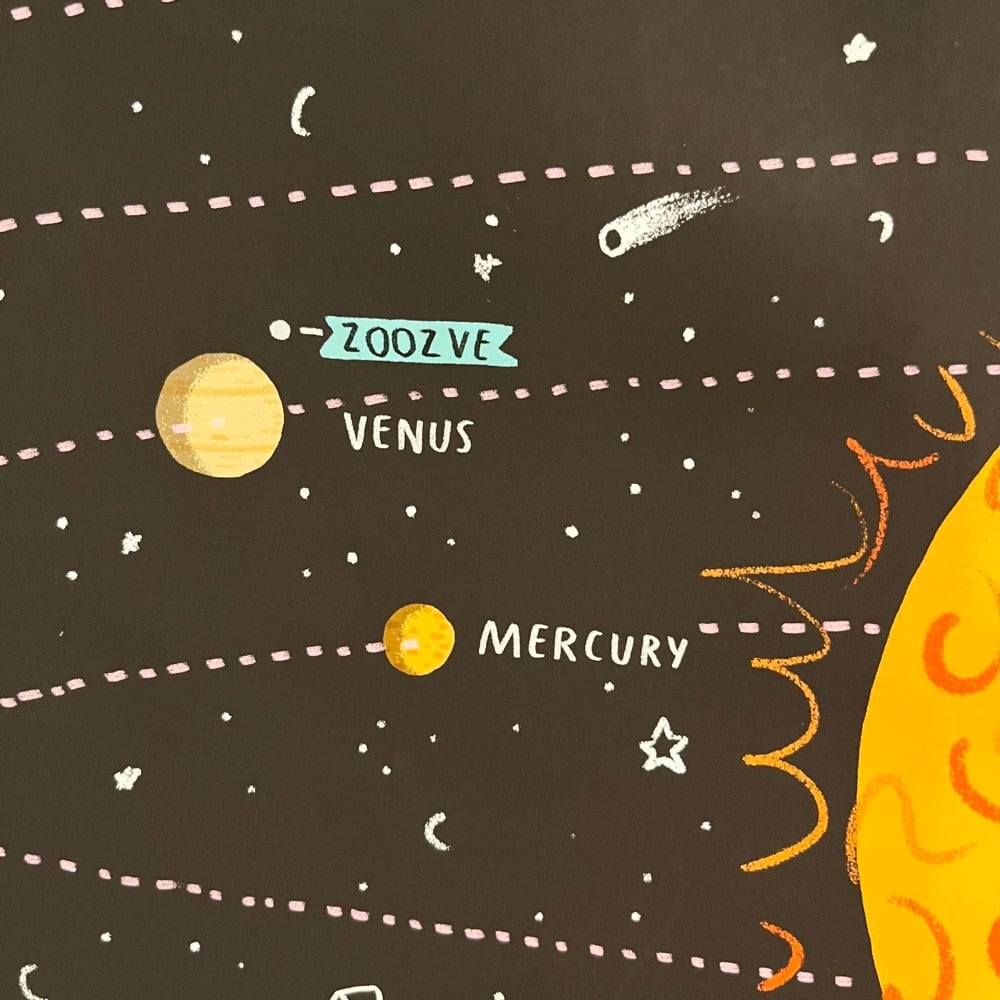
A couple of weeks ago, Radiolab aired an episode about a puzzling object on a children’s poster of the solar system: a Venusian moon called Zoozve. Venus doesn’t have any moons and “Zoozve” didn’t show up on Google at all, so co-host Latif Nasser went on a bit of a mission to find out what the heck this object was. He talked to someone at NASA, the poster’s designer, and various astronomers and physicists, including the person who had discovered Zoozve (aka 2002 VE68).
So begins a tiny mystery that leads to a newly discovered kind of object in our solar system, one that is simultaneously a moon, but also not a moon, and one that waltzes its way into asking one of the most profound questions about our universe: How predictable is it, really? And what does that mean for our place in it?
I listened to the latest episode of the Ezra Klein Show while driving last night then spent the second half of the drive thinking about it. So I guess I’d better tell you to go and listen to it. Klein interviews Rhaina Cohen, who is the author of the forthcoming book The Other Significant Others: Reimagining Life with Friendship at the Center (out Feb 13). They talked about loneliness, the changing definition of friendship (and family) throughout history, polyamory, co-parenting, and lots more.
How do we imagine many other possibilities for parenting, for aging, for intimacy, for friendship, for romance than what we have right now? Because the idea that what we have right now is a working norm and everything else should be understood as some deviation is wrong. It is factually untrue.
It is not a norm. It is a wild experiment in the history of human existence. We have never done this before for any period of time. It’s not how we raised children. It is not how we have met each other. It is not how we have lived together.
And it’s not working for a lot of people. So this is an experiment, and we should be trying more. And what Cohen’s book is about is these experiments, is looking at things people are already doing, and, in a sense, making clear that there are more relationships happening right now in the world around you, more forms of relationship, than you could possibly imagine.
Note: If you are a member and tried to log in, it didn't work, and now you're stuck in a neverending login loop of death, try disabling any ad blockers or extensions. Or try logging out and then back in. Still having trouble? Email me!








Socials & More