kottke.org posts about photography
Belgian photographer Kurt Stallaert’s “Bodybuilders’ World” is a project showing a world where children are more ripped than you. It’s creepy as hell imagining these kids lifting weights every day since they were born.
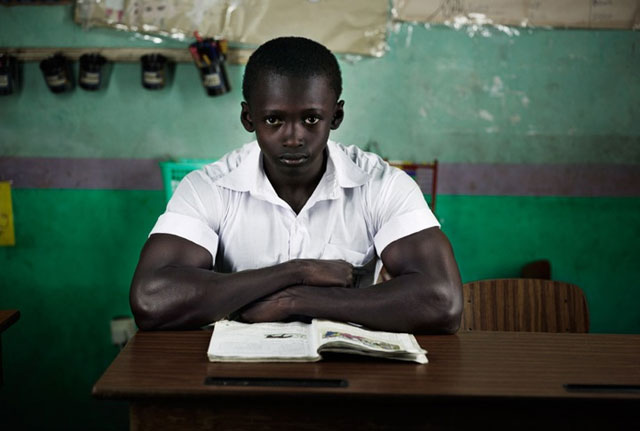
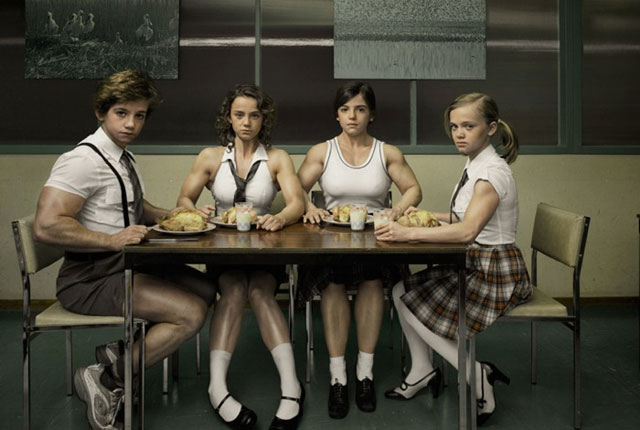
More examples here and here. (via ★scottwilliams)
Yesterday In Focus featured new work from photographer Camille Seaman: storm clouds in the skies of the Midwest.
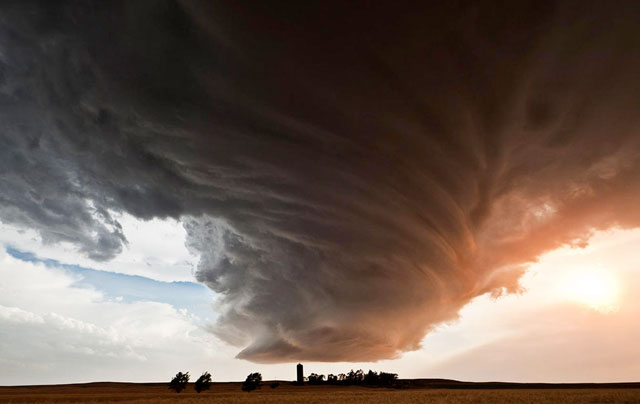
Nice cumulonimbus mammatus in #s 4, 14, and 16. And by coincidence, the NY Times Lens blog also featured Seaman’s work yesterday, an earlier project that entailed shooting portraits of icebergs.
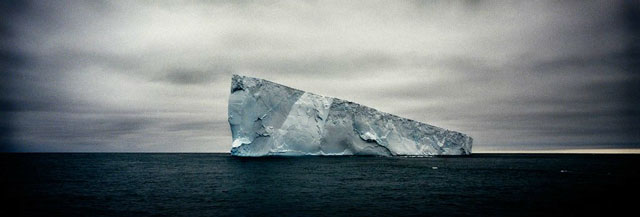
I like Seaman’s portraiture approach to things like clouds and icebergs:
“They are like humans in that each one reacts to its environment and its circumstances in its own way,” Camille Seaman, 42, said. “I’ve come across icebergs that were very stalwart and just refused to dissolve or break up. And there were others — massive, massive icebergs — that were like ‘I can’t take it anymore’ and in front of my eyes would just dissolve into the sea. There’s so many unique personalities. There’s a sadness to them.”
I love McLean Fahnestock’s series of modified photos of rocket launches without the rockets:
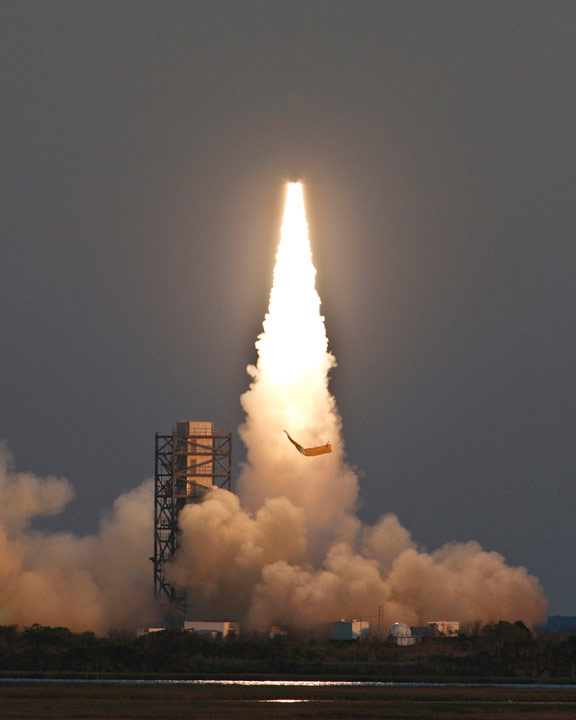
Fahnestock also did the video of all 135 Space Shuttle launches at once.
Artist Angelica Dass pairs photographs of people with the Pantone colors of their skin colors.

More of the project can be found on her Tumblr. (via designboom)
In an interview with Nicola Twilley and Geoff Manaugh, photographer Edward Burtynsky talks about his use of film and drones, his current big project photographing water, and the challenges of finding ways to photograph the ubiquitous.
I’d say, actually, that I’ve been careful not to frame the work in an activist or political kind of way. That would be too restrictive in terms of how the work can be used in society and how it can be interpreted. I see the work as being a bit like a Rorschach test. If you see an oil field and you see industrial heroism, then perhaps you’re some kind of entrepreneur in the oil business and you’re thinking, “That’s great! That’s money being made there!” But, if you’re somebody from Greenpeace or whatever, you’re going to see it very differently. Humans can really reveal themselves through what they choose to see as the most important or meaningful detail in an image.
Burtynsky is a favorite around these parts.
Zhao Huasen takes photos of people on bicycles and erases the bicycles.

Photographer John Clang is using projected Skype video to make portraits of Singaporean families whose members are scattered around the globe.

In Singapore, it is a common practice for entire families to gather on special occasions for a formal picture, often at a studio, with the resulting image framed and prominently displayed at home. The growing tendency of younger family members to take jobs abroad, however, has left many modern portraits missing a relation or two. So the Singaporean photographer John Clang devised a solution, piggybacking on the video-calling technology that already helps ease the dislocation of separated family members: Skype.
(via @bdeskin)
If you make a series of horrifying photos of little girls dressed like Vegas cocktail waitresses, I will apparently always click through. First it was Susan Anderson’s High Glitz, a series of child beauty pageant contestants.

And then the last issue of the NY Times Magazine had a series of photos by Kenneth O Halloran of contestants at the World Irish Dancing Championships.

All I can think of when I see those spray tans is Homer’s makeup gun.
Why does McDonald’s food look so much better in the ads than at the restaurant? Watch as the director of marketing for McDonald’s Canada buys a Quarter Pounder at McDonald’s and compares that to a burger prepared by a food stylist and retouched in post by an image editor.
Short answer: the burger at the restaurant is optimized for eating and the photo burger is optimized for looking delicious. (via ★interesting)
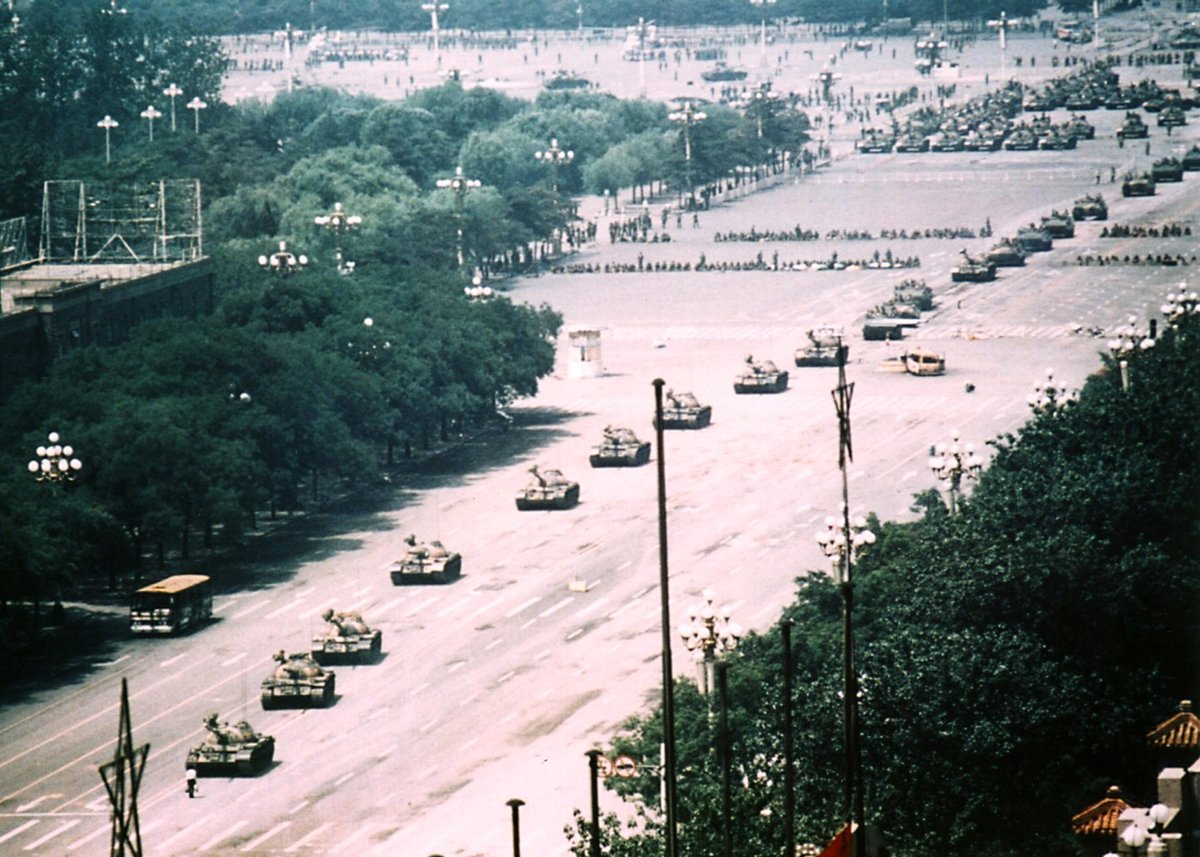
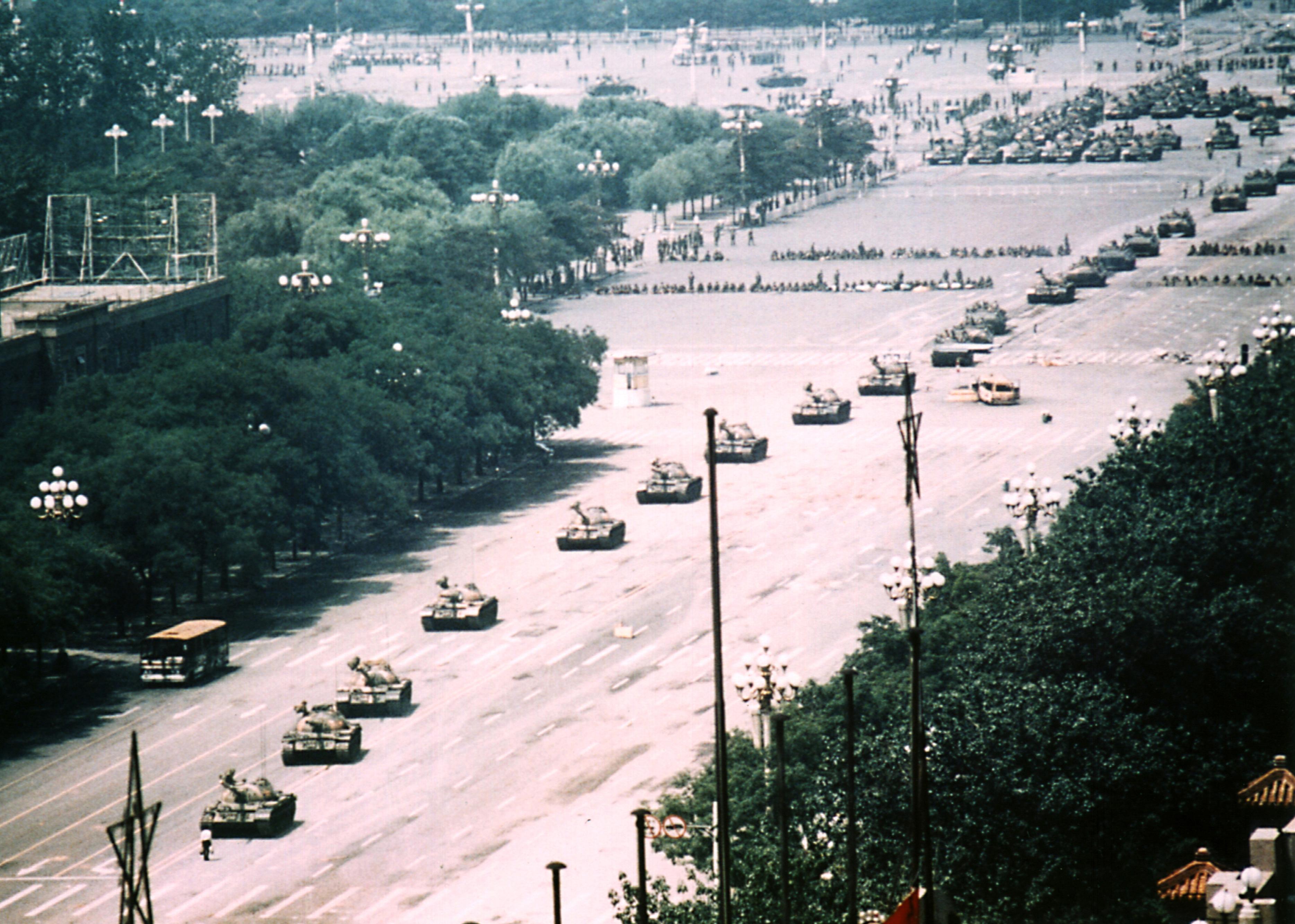
I’ve seen several versions of the iconic Tank Man photo but here’s a little-known wider view that shows just how many tanks the guy was holding up. Larger version here. There is also, amazingly, video of the incident:
You’ll note at the end that the man is hustled off by a group of people. See also the Tank Man of Tiananmen (via @polarben)
Update: There is also this view of Tank Man, taken from the ground level:
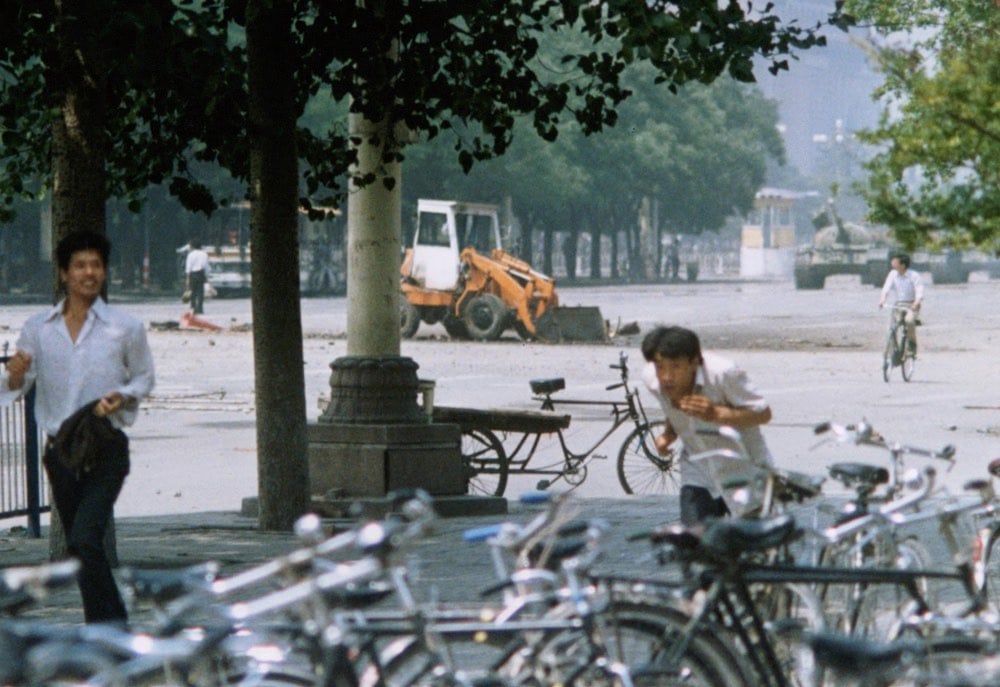
You can see how long he was standing there waiting for the arrival of the tanks.
One of the most memorable images of the Vietnam War is Nick Ut’s photo of a naked Kim Phuc running from her just-napalmed village.
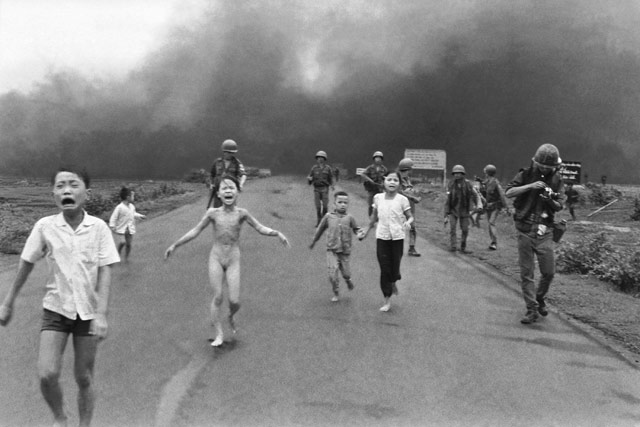
I’ve seen that photo hundreds of times but I had no idea that video footage of the event also exists. In this clip shot by Alan Downes and Le Phuc Dinh, you see the napalm dropped on the village and then a bunch of people, Phuc among them, come running down the road. [Warning, this footage is graphic…severe burns and burnt skin hanging off of young children.]
Wow. Ut won the Pulitzer for the photo but Phuc took much longer to make her peace with the image.
The photo was famous, but Phuc largely remained unknown except to those living in her tiny village near the Cambodian border. Ut and a few other journalists sometimes visited her, but that stopped after northern communist forces seized control of South Vietnam on April 30, 1975, ending the war.
Life under the new regime became tough. Medical treatment and painkillers were expensive and hard to find for the teenager, who still suffered extreme headaches and pain.
She worked hard and was accepted into medical school to pursue her dream of becoming a doctor. But all that ended once the new communist leaders realized the propaganda value of the “napalm girl” in the photo.
She was forced to quit college and return to her home province, where she was trotted out to meet foreign journalists. The visits were monitored and controlled, her words scripted. She smiled and played her role, but the rage inside began to build and consume her.
“I wanted to escape that picture,” she said. “I got burned by napalm, and I became a victim of war … but growing up then, I became another kind of victim.”
Phuc now lives in Ontario with her husband and has two children.
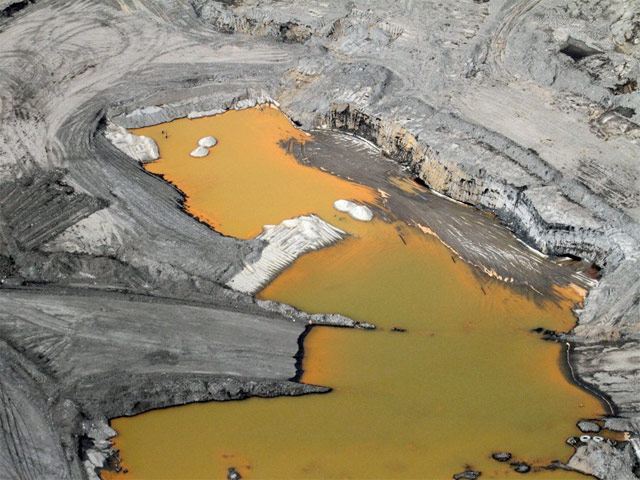
Since the companies mining the oil from the sands of Alberta wouldn’t provide access to their operations to a reporter, he rented a plane and took a bunch of photos.
As Stewart said, “Better than I thought”.
Cory Poole made this video of the annular solar ecplise yesterday using 700 photographs from a telescope with “a very narrow bandpass allowing you to see the chromosphere and not the much brighter photosphere below it.”
Cory says: “The filter only allows light that is created when hydrogen atoms go from the 2nd excited state to the 1st excited state.” Very cool.
Newer posts
Older posts





Socials & More