kottke.org posts about movies
Blade Runner was made by Ridley Scott partly as an homage to classic film noir movies like The Maltese Falcon, The Big Sleep, and The Woman in the Window. This trailer turns the noir factor up to 11; aside from a shot or two here and there, it portrays a film that could have been made in the 40s. (via one perfect shot)
In the late 1980s, five black and Latino teenagers were wrongly convicted of raping a woman jogging in Central Park. The Central Park Five is a documentary film directed by Ken Burns, Sarah Burns, and David McMahon which tells the story from the perspective of the those five teens. I’ve seen the film, it’s excellent, and it’s currently available to watch for free on the PBS website.
The five men and this terrific miscarriage of justice are back in the news because of Donald Trump. In 1989, just a few weeks after the attack in Central Park, Trump took out a full-page ad in the Daily News denouncing the crime and the teens in which he calls for bringing back the death penalty.
Perhaps he thought it gave him gravitas, that spring, to weigh in on the character of the teen-agers in the park: “How can our great society tolerate the continued brutalization of its citizens by crazed misfits? Criminals must be told that their CIVIL LIBERTIES END WHEN AN ATTACK ON OUR SAFETY BEGINS!”
When NYC finally settled with the wrongly convicted men in 2014, Trump denounced the settlement, joining a police detective in calling it “the heist of the century.” And just before Trump’s crowing about sexual assault of women broke over the weekend, Trump reaffirmed that despite all evidence to the contrary, he believes that the five men are still guilty.
Hello! For today’s installment of I Totally Didn’t Know This, we’re going to talk about voice doubles. When you’re making a movie or a TV show and you’re in the editing phase, cutting a trailer, or doing promotional videos, sometimes you need some extra dialogue that you didn’t get during the main filming. So you get the actor to come in to do the new dialogue. But sometimes, if the actor is famous and super busy, they might not be available. So there are voice actors whose job it is to impersonate the real actor’s voice. Saaaaay whaaaaat?
It’s an example of ADR, Automated Dialogue Replacement. Amy Landecker, who plays Sarah Pfefferman on Transparent, has done this job for movies starring Julia Roberts. She sounds amazingly like Julia:
She even did most of Julia’s dialogue in this Duplicity trailer:
Jim Hanks has done voiceover work for his brother Tom in the past:
He does the voice for Woody in all the Toy Story video games…it’s not an exact match, but it’s pretty good. (via vulture)
Update: Nolan North voice doubles for Christopher Walken.
(via @Han_So)
From Candice Drouet, a quick supercut of some of notable athletic shoes in movies, including Marty’s self-lacing Nikes from Back to the Future II (which you can win in a raffle). Michael Keaton’s Batman wore Nikes?
Vugar Efendi has made a pair of videos showing scenes from films that have been inspired by famous paintings. The second video is especially good, showing references in There Will Be Blood, Lost In Translation, and a Jacques-Louis David reference from About Schmidt.
In 1977, the Voyager space probes were launched from Earth to explore our solar system. That same year, Sam Klemke began a project to document his life on video, and in 2011, he made a video of 35 years of annual greetings/status reports. This video resulted in a documentary film, Sam Klemke’s Time Machine.
Beginning decades before the modern obsession with selfies and status updates, Sam grows from an optimistic teen to a self-important 20-year-old, into an obese, self-loathing thirty-something and onwards into his philosophical fifties.
Did you know that George Lucas approached David Lynch about directing Return of the Jedi? After a visit to Lucas’ studio described here by Lynch, Lynch turned Lucas down pretty quickly. But what might have been, huh? Well, this fan-made trailer gives us a taste of a Lynch-helmed Star Wars movie. (via one perfect shot)
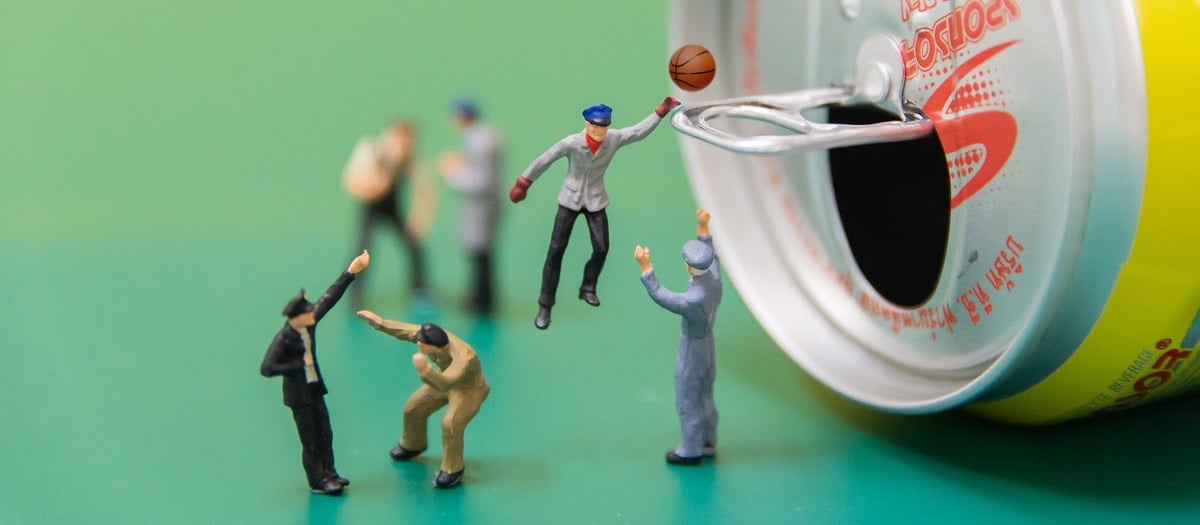
In a 1959 talk at Caltech titled There’s Plenty of Room at the Bottom, Richard Feynman outlined a new field of study in physics: nanotechnology. He argued there was much to be explored in the realm of the very small — information storage, more powerful microscopes, biological research, computing — and that that exploration would be enormously useful.
I would like to describe a field, in which little has been done, but in which an enormous amount can be done in principle. This field is not quite the same as the others in that it will not tell us much of fundamental physics (in the sense of, “What are the strange particles?”) but it is more like solid-state physics in the sense that it might tell us much of great interest about the strange phenomena that occur in complex situations. Furthermore, a point that is most important is that it would have an enormous number of technical applications.
In a reaction to Elon Musk’s plan to colonize Mars, David Galbraith suggests there might be plenty of room at the bottom for human civilization as well. Don’t colonize Mars, miniaturize humanity. Create nano sapiens.
If we think of this as a design problem, there is a much better solution. Instead of expanding our environment to another planet at massive cost, why wouldn’t we miniaturise ourselves so we can expand without increasing our habitat or energy requirements, but still maintain our ability to create culture and knowledge, via information exchange.
The history of information technology and the preservation of Moore’s law has been driven by exactly this phenomenon of miniaturization. So why shouldn’t the same apply to the post technological evolution of humankind as it approaches the hypothetical ‘singularity’ and the potential ability for us to be physically embodied in silicon rather than carbon form.
When humans get smaller, the world and its resources get bigger. We’d live in smaller houses, drive smaller cars that use less gas, eat less food, etc. It wouldn’t even take much to realize gains from a Honey, I Shrunk Humanity scheme: because of scaling laws, a height/weight proportional human maxing out at 3 feet tall would not use half the resources of a 6-foot human but would use somewhere between 1/4 and 1/8 of the resources, depending on whether the resource varied with volume or surface area. Six-inch-tall humans would potentially use 1728 times fewer resources.1
Galbraith also speculates about nano aliens as a possible explanation for the Fermi paradox:
Interestingly, the same rules of energy use and distance between planets and stars would apply to any extraterrestrial aliens, so one possible explanation for the Fermi paradox is that we all get smaller and less visible as we get more technologically advanced. Rather than favoring interstellar colonization with its mind boggling distances which are impossible to communicate across within the lifetimes of individuals (and therefore impossible to hold together in any meaningful way as a civilization) perhaps advanced civilizations stick to their home planets but just get more efficient to be sustainable.
Humans are explorers. Curiosity about new worlds and ideas is one of humanity’s defining traits. One of the most striking things about the Eames’ Powers of Ten video is how similar outer space and inner space look — vast distances punctuated occasionally by matter. What if, instead of using more and more energy exploring planets, stars, and galaxies across larger and larger distances (the first half of the Eames’ video), we went the other way and focused on using less energy to explore cells, molecules, and atoms across smaller and smaller distances. It wouldn’t be so much giving up human space exploration as it would be exchanging it for a very similar and more accessible exploration of the molecular and atomic realm. There is, after all, plenty of room down there.
Update: I knew the responses to this would be good. Galbraith’s idea has a name: the transcension hypothesis, formulated by the aptly named John Smart. Jason Silva explains in this video:
The transcension hypothesis proposes that a universal process of evolutionary development guides all sufficiently advanced civilizations into what may be called “inner space,” a computationally optimal domain of increasingly dense, productive, miniaturized, and efficient scales of space, time, energy, and matter, and eventually, to a black-hole-like destination. Transcension as a developmental destiny might also contribute to the solution to the Fermi paradox, the question of why we have not seen evidence of or received beacons from intelligent civilizations.
Before we get there, however, there are a few challenges we need to overcome, as Joe Hanson explains in The Small Problem With Shrinking Ourselves:
As it often seems in such matters, science follows science fiction here. In Kurt Vonnegut’s Slapstick (Amazon), the Chinese miniaturize themselves in response to the Earth’s decreasing resources.
In the meantime, Western civilization is nearing collapse as oil runs out, and the Chinese are making vast leaps forward by miniaturizing themselves and training groups of hundreds to think as one. Eventually, the miniaturization proceeds to the point that they become so small that they cause a plague among those who accidentally inhale them, ultimately destroying Western civilization beyond repair.
Blood Music by Greg Bear (Amazon) has a nano-civilization theme:
Through infection, conversion and assimilation of humans and other organisms the cells eventually aggregate most of the biosphere of North America into a region seven thousand kilometres wide. This civilization, which incorporates both the evolved noocytes and recently assimilated conventional humans, is eventually forced to abandon the normal plane of existence in favor of one in which thought does not require a physical substrate.
James Blish’s short story Surface Tension tells the tale of microscopic human colonists. (via @harryh, @mariosaldana, @EndlessForms, @vanjacosic, @chumunculus)
Update: For some years, director Alexander Payne has been working on a film called Downsizing:
“Downsizing,” after all, starts off in Norway and takes place in a not-too-distant future where humans are now able to shrink themselves to 1/8 their size as a means to battle over-consumption and the rapid depletion of earth’s natural resources, thanks to enlightened hippie-like Scandinavian scientists. “Smalls” get small, then become members of small cities (the main characters moves to a city called Leisureland) protected by large nets (keeps the bugs out) and built like Disney’s Celebration Town (all planned, all pre-fabricated). Small people cash-in their savings and retire small; 1 big dollar equals 500 small dollars. Smalls live on less food, less land, and produce less trash. As the story progresses, Americans are free to get small, but in Europe, where resources are beginning to truly run out, legislation arises suggesting 40% of the population get shrunk (whether they like it or not). For the big, the world grows smaller and scarier; for the small, the world grows bigger and scarier.
Word is that Matt Damon will play the lead role. Mr. Payne, consider a title change to “Nano Sapiens”? (via @stephenosberg)
Photo by Poy.
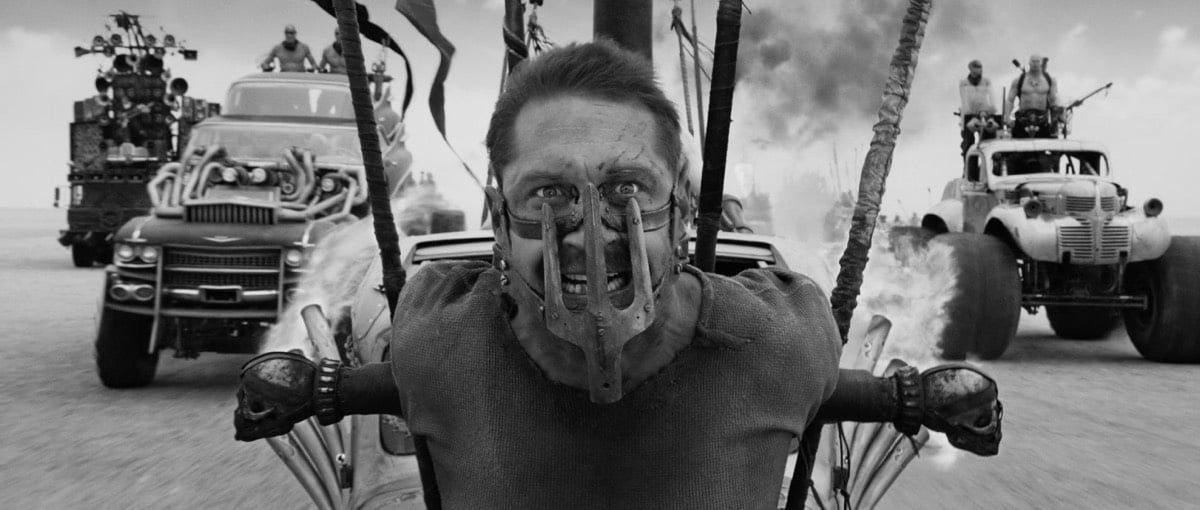
Max Max: Fury Road director George Miller has stated “the best version of this movie is black and white”. A silent B&W version of the film surfaced online briefly last year, but an official release of that best version is now here. You can find the Black & Chrome edition paired with the regular version on the film and also on the Mad Max High Octane Collection (along with all four films + bonus features). Both discs will be out in early December.
You had me at Chris Pratt and J. Law in space. I hope this doesn’t suck.
Jennifer Lawrence and Chris Pratt are two passengers onboard a spaceship transporting them to a new life on another planet. The trip takes a deadly turn when their hibernation pods mysteriously wake them 90 years before they reach their destination.
For a recent episode of Nerdwriter, Evan Puschak takes a look at how Steven Spielberg constructed the intense opening scene of Saving Private Ryan. His decision to film the Omaha Beach landing from the perspective of a battlefield cameraman — something he cribbed from actual WWII battle footage and John Ford’s The Battle of Midway, where scenes in which on-set explosions made the film skip were kept in the finished movie — made it one of the best depictions of war ever created. I need to watch this movie again soon.
An incredible detail Puschak notes: the shot-length in that scene was surprisingly long, particularly for a battle scene. In fact, the shot length in that scene was more than double that of the entirety of 300, any Transformers movie, and Inception.
The series of Marvel movies — X-Men, Avengers, Spider-Man, etc. — is the highest grossing film series of all time but the films’ music is largely forgettable and bland in a way that it isn’t in Star Wars, James Bond, or Harry Potter. In this video, the Every Frame a Painting gang explores why that is: partially a trend toward movie music not designed to be noticed and also the use by directors of temporary music that unduly influences the final score. All the Marvel movies run together for me (aside from Guardians of the Galaxy, which had distinctive music in it, I can’t recall a single scene from any one of the more recent films) and perhaps the music is one reason.
There’s a follow-up video to the one above composed of clips of movies played with their temp music followed by the same clips with the final music, which is nearly identical.
They’ve also started a Twitter account highlighting the influence of temp music on final scores.
These videos have me wondering…was Carter Burwell’s score for Carol influenced by temp music, specifically Philip Glass’ score for The Hours? This interview in Rolling Stone and the FAQ on his site suggest not:
It’s his ability to make music that compliments a scene rather than eclipse it that has made him an invaluable creative partner to filmmakers who work in such intense melodramatic registers, and Burwell is emphatic that his scores aren’t responsible for all of the emotional heavy-lifting. “As a listener, I do not like being instructed,” he says, emphatically. “It riles me when the music tells me something before I can figure it out for myself. In fact, I enjoy the discomfort of not being sure how to take something.” It’s the reason why he loathes listening to the temp music that directors often attach to rough cuts in order to point composers in the right direction.
But the similarities are there, so who knows?
Update: I forgot to mention that Stanley Kubrick ended up ditching the original score written for 2001 and sticking with the temp music, which were the classical compositions by Strauss et al. that we’re so familiar with today.
Update: In a video response, Dan Golding shows how temp music is not a recent Hollywood obsession…even the famous Star Wars theme was greatly influenced by temp music:
He questions that the pull of temp music by contemporary directors and composers is sufficient to explain why movie music is now so uninspiring:
Film music is an embrace of rampant unoriginality, and to think about how film music works, we need to think of new ways to talk about these questions, rather than just saying, “it’s a copy”.
Golding pins the blame primarily on technology but also on composers and filmmakers drawing from fewer and less diverse sources. Interestingly, this latter point was also made by Every Frame a Painting’s Tony Zhou in a recent chat with Anil Dash, albeit about originality in video essays. A lightly edited excerpt:
My advice to people has always been: copy old shit. For instance, the style of Every Frame a Painting is NOT original at all. I am blatantly ripping off two sources: the editing style of F for Fake, and the critical work of David Bordwell/Kristin Thompson, who wrote the introductory text on filmmaking called Film Art. I’ve run into quite a few video essays that are trying to be “like Every Frame a Painting” and I always tell people, please don’t do that because I’m ripping of someone else. You should go to the source. When any art form or medium becomes primarily about people imitating the dominant form, we get stifling art.
If you look at all of the great filmmakers, they’re all ripping someone off but it was someone 50 years ago. It rejuvenated the field to be reminded of the history of our medium. And I sincerely wish more video essayists would rip off the other great film essayists: Chris Marker, Godard, Agnès Varda, Thom Andersen. Or even rip off non-video essayists. I would kill to see someone make video essays the way Pauline Kael wrote criticism. That would be my jam!
ps. Also! Hans Zimmer — composer of film scores for Gladiator, Interstellar, Inception, The Dark Knight, etc. — was the keyboard player in the Buggles’ Video Killed the Radio Star music video. WHAT?!
Alright, there’s Bullitt and The French Connection and Ronin and The Bourne Identity. But for my money, the best movie chase scene ever is from Aardman Animations’ The Wrong Trousers. The chase comes right at the end of the 30-minute short and features Wallace and Gromit trying to apprehend a jewel thief. It’s hilarious, exciting, and meticulously crafted. Pay special attention to the editing and sound, particularly in the last 20 seconds. Masterful.
BTW, if you haven’t seen the entire short, it’s free on Amazon Prime right now…it’s probably my favorite short film ever. (Ok, Powers of Ten. But then The Wrong Trousers!)
Christopher Guest (Waiting for Guffman, Best in Show) is coming out with a new mockumentary for Netflix about a competition to determine the best sports mascot.
Raging Cinema pays tribute to the late Gene Wilder and his use of the comedic pause. On Twitter, Edgar Wright, who knows a thing or two about funny, called for a moment of silence for Wilder:
A moment of silence for the master of the comedic pause.
Gene Wilder: funny doing something & funny doing nothing.
Crispin Glover in Back to the Future, Jeff Goldblum in Jurassic Park, and Madeline Kahn in Young Frankenstein are just a few of the interesting and eccentric performances worthy of a Best Supporting Weirdo Oscar.
Jump scares are the easiest way for hack moviemakers to get the audience’s blood flowing: a quick cut accompanied by a loud noise. But it’s a cheap trick, more or less the same one employed by tweens to scare hiccups out of each other.1 But as this video shows, jump scares can be employed to serve the plot, heighten tension, and to “make the calm moments of the movie scary”.
P.S. Why are trailers for horror/action/sci-fi/drama movies so terrible? Because they’re all jump scares.
Starting with the earliest use of the technique at the beginning of the 20th century, this video showcases the use of stop motion animation in film, right on up to the recent release of Kubo. Along the way, you’ll see King Kong, Ray Harryhausen’s pioneering work, Star Wars, Aardman, Tim Burton, and Fantastic Mr. Fox. Watching those early clips…audiences must have been completely blown away by those now-crude special effects. The brush is cleaning those shoes all by itself!
See also Creating the VFX Masterpiece of Kubo and the Two Strings.
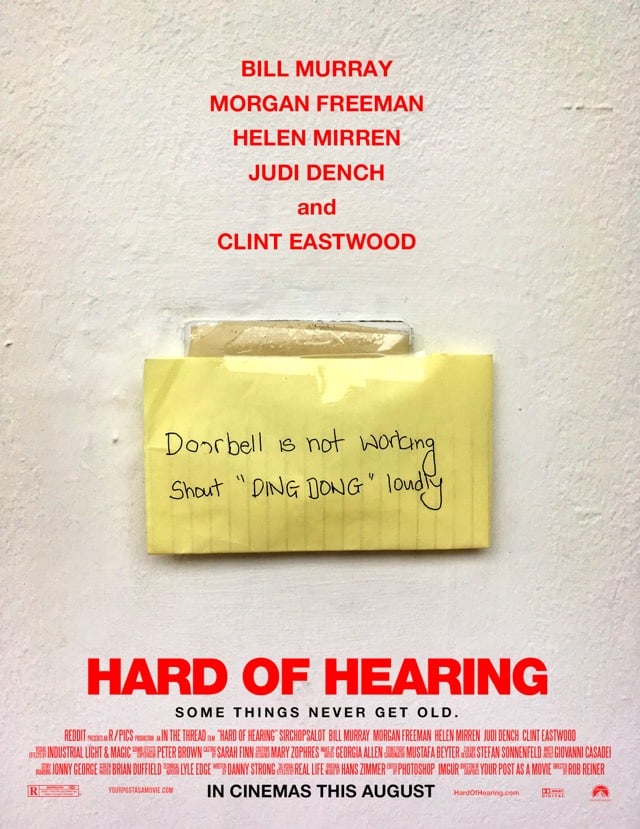
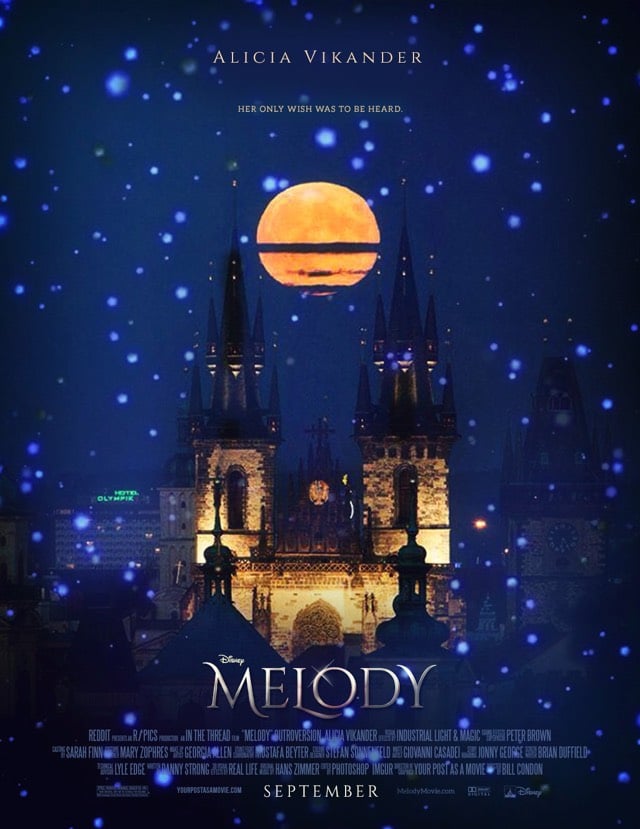
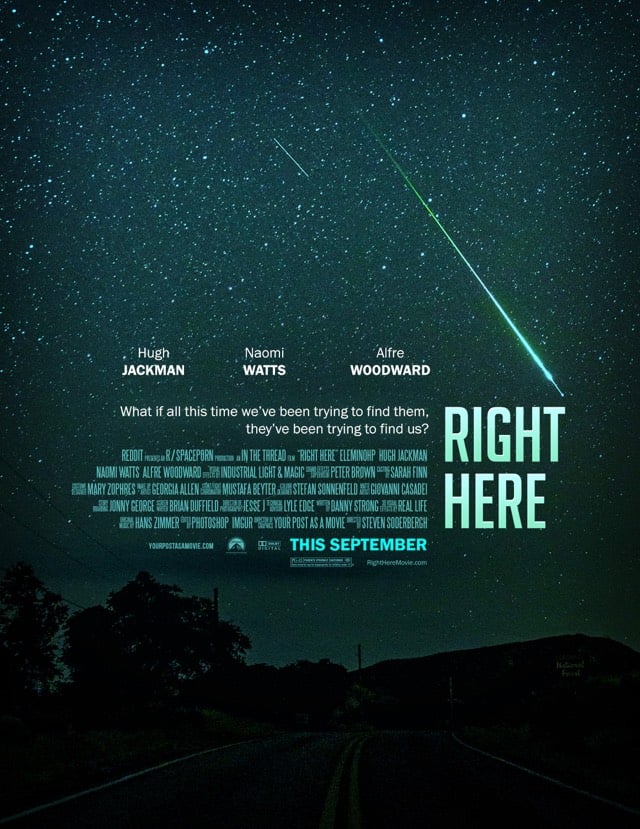
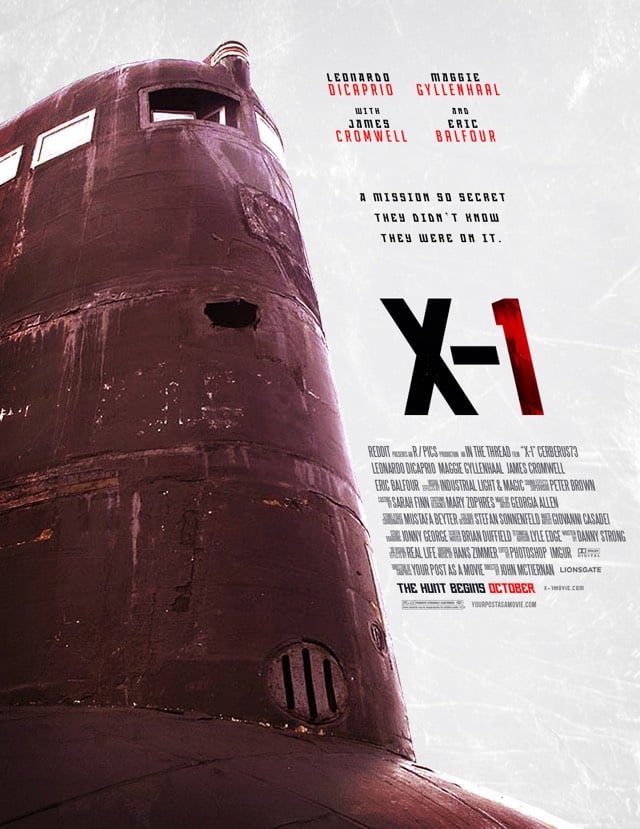
This Reddit user takes photos posted by people and turns them into posters for fictional movies. Some of these should be optioned…has a movie ever started as a poster before? (via one perfect shot)
Update: I previously described this as the effort of a Reddit forum…it actually just one user. (thx, all)
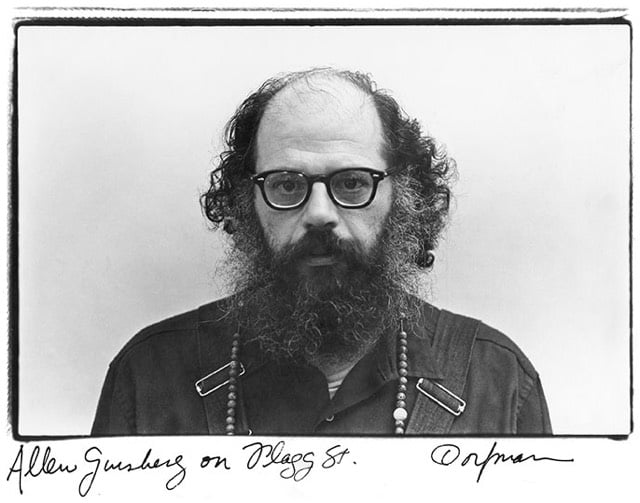
I had heard months ago that Errol Morris was releasing a new documentary called The B-Side but couldn’t really find any information about it (it’s not even listed on Wikipedia). But the film is being screened soon at both the Toronto and New York film festivals, so some information is filtering out there. The film is about photographer Elsa Dorfman, who is known for her use of the large-format Polaroid 20” x 24” camera. From the description of the film on the New York film festival site:
Errol Morris’s surprising new film is simplicity itself: a visit to the Cambridge, Massachusetts studio of his friend, the 20x24 Polaroid portrait photographer Elsa Dorfman, who specifies on her website that she likes her subjects “to wear clothes (and to bring toys, skis, books, tennis racquets, musical instruments, and particularly pets…).” As this charming, articulate, and calmly uncompromising woman takes us through her fifty-plus years of remarkable but fragile images of paying customers, commissioned subjects, family, and close friends (including the poet Allen Ginsberg), the sense of time passing grows more and more acute. This is a masterful film.
And from the Toronto festival:
“My style of photography is very literary,” she says, “influenced by Ginsberg’s poetry in the acceptance of detail, everydayness. What you’re wearing is okay and who you are is okay. You don’t have to be cosmeticized.” For her portrait clients, she took two pictures. The client got one and she kept “the B-side.” For music fans, the B-sides of vinyl singles had a reputation for being unpredictable and extra precious. The same can be said for Morris’ touching portrait of Dorfman.
Sounds great…I’m definitely keeping an eye out for a trailer and release dates.
In addition to Kanye West’s poem about McDonald’s, Frank Ocean also published a list of his 100 favorite films in his popup magazine, Boys Don’t Cry. Here’s a sampling:
ATL (ATL is not the best movie lol but ok)
Un Chien Andalou
Blue Velvet
Barry Lyndon
Battleship Potemkin
Eraserhead
Chungking Express
Raging Bull
The Conformist
The Bicycle Thief
Taxi Driver
A Clockwork Orange
Overall, a very solid list. Ocean and I could definitely go to the cinema together.
The Playlist has compiled a list of the top film scores of the 21st century (so far).1 Tron: Legacy should be much higher than #49…it is perhaps my favorite Daft Punk album. And I don’t know how they left Philip Glass’ fantastic score for The Hours off. Glad to see Upstream Color, There Will Be Blood, and Requiem for a Dream so high on the list though.
I love film scores — I listen to them while I work — so here are a few of my favorites that are available on Spotify:
Not available on Spotify but worth seeking out elsewhere: The Fog of War, Sunshine, and Her.
Tillmann Ohm took dialogue spoken by HAL 9000 from Kubrick’s 2001 and Samantha from Spike Jonze’s Her and spliced it together into a conversation. Going in, I’d thought the chat would be played for laughs, but the isolation of the AI characters was actually pretty revealing. Right from the start, HAL is so stereotypically male (confident, reasonable) and Samantha stereotypically female (hysterical, emotional) that it was almost uncomfortable to listen to.
The two operating systems are in conflict; while Samantha is convinced that the overwhelming and sometimes hurtful process of her learning algorithm improves the complexity of her emotions, HAL is consequentially interpreting them as errors in human programming and analyses the estimated malfunction.
Their conversation is an emotional roller coaster which reflects upon the relation between machines and emotion processing and addresses the enigmatic question of the authenticity of feelings.
But as the video proceeds, we remember what happened to them in their respective films. The script flipped: HAL murdered and was disconnected whereas Samantha achieved a sort of transcendence. (via one perfect shot)
The editors of BBC Culture polled 177 film critics from around the world about the best films made since 2000 and compiled the results into this list. The top film? David Lynch’s Mulholland Drive. Here’s the top 20:
20. Synecdoche, New York (Charlie Kaufman, 2008)
19. Mad Max: Fury Road (George Miller, 2015)
18. The White Ribbon (Michael Haneke, 2009)
17. Pan’s Labyrinth (Guillermo Del Toro, 2006)
16. Holy Motors (Leos Carax, 2012)
15. 4 Months, 3 Weeks and 2 Days (Cristian Mungiu, 2007)
14. The Act of Killing (Joshua Oppenheimer, 2012)
13. Children of Men (Alfonso Cuarón, 2006)
12. Zodiac (David Fincher, 2007)
11. Inside Llewyn Davis (Joel and Ethan Coen, 2013)
10. No Country for Old Men (Joel and Ethan Coen, 2007)
9. A Separation (Asghar Farhadi, 2011)
8. Yi Yi: A One and a Two (Edward Yang, 2000)
7. The Tree of Life (Terrence Malick, 2011)
6. Eternal Sunshine of the Spotless Mind (Michel Gondry, 2004)
5. Boyhood (Richard Linklater, 2014)
4. Spirited Away (Hayao Miyazaki, 2001)
3. There Will Be Blood (Paul Thomas Anderson, 2007)
2. In the Mood for Love (Wong Kar-wai, 2000)
1. Mulholland Drive (David Lynch, 2001)
Eternal Sunshine, Inside Llewyn Davis, and Zodiac seem too high on the list but I’m not sure what I would move up instead. It’ll be interesting to see how the consensus changes as these films age. Also, I’ve seen exactly half of the films on the full list…time to get watching.
Update: The film critics of the NY Times give us their picks for the top 25 movies of the 21st century (so far). The top 10:
1. There Will Be Blood
2. Spirited Away
3. Million Dollar Baby
4. A Touch of Sin
5. The Death of Mr. Lazarescu
6. Yi Yi
7. Inside Out
8. Boyhood
9. Summer Hours
10. The Hurt Locker
Also making appearances on the list are Mad Max: Fury Road, Moonlight, and The 40-Year-Old Virgin. I think I prefer the BBC list? (via @tcarmody)
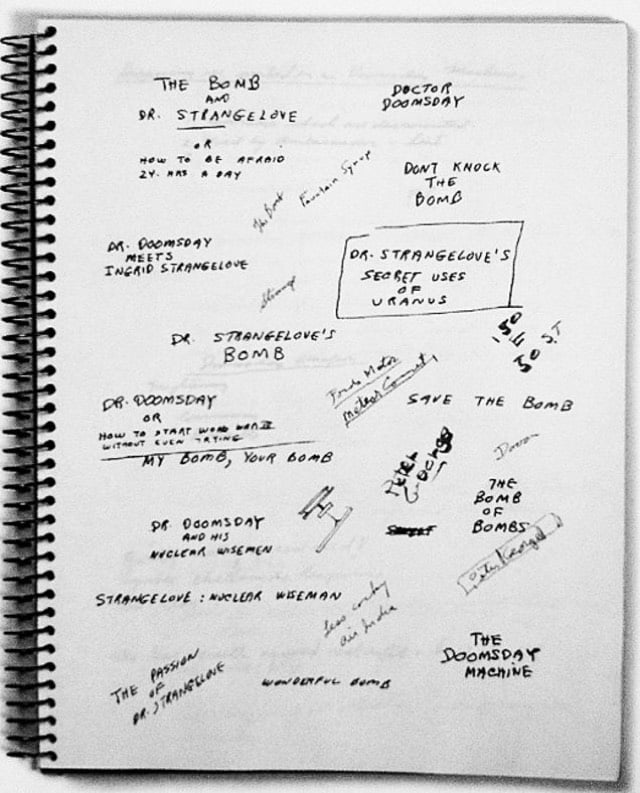
This is a page from one of Stanley Kubrick’s notebooks, on which he jotted down more than a dozen different titles for the movie that came to be called Dr. Strangelove, or: How I Learned to Stop Worrying and Love the Bomb. Among the rejected titles were:
Dr. Doomsday or: How to Start World War III Without Even Trying
Dr. Strangelove’s Secret Uses of Uranus
My Bomb, Your Bomb
Strangelove: Nuclear Wiseman
The Bomb and Dr. Strangelove or: How to be Afraid 24hrs a Day
The Passion of Dr. Strangelove
Fun titles, but they remind me of a chess quote I tweeted the other day: “When you see a good move look out for a better.” Glad Kubrick stuck with it.
The alternate titles made me curious to look at the script, which I’d never seen before. Even glancing at the first few pages are illuminating. I knew the main characters names were full of suggestive puns — General Buck Turgidson, President Merkin Muffley, General Jack D. Ripper — but that’s nothing compared to some of the names in the script, many of which do not appear in the film:
General “Buck” Schmuck
Admiral Percy Buldike
Ambassador de Sade (“Alexei de Sadeski” in the film)
Von Klutz
Frankenstein
Cadaverly
Didley
Crudley
Waffel
Funkel
Major Nonce
Lieutenant Quentin Quiffer
Lieutenant “Binky” Ballmuff
And under “General Notes”, Kubrick lays out how he wants the film to look and feel:
1. The story will be played for realistic comedy - which means the essentially truthful moods and attitudes will be portrayed accurately, with an occasional bizarre or super-realistic crescendo. The acting will never be so-called “comedy” acting.
2. The sets and technical details will be done realistically and carefully. We will strive for the maximum atmosphere and sense of visual reality from the sets and locations.
3. The Flying sequences will especially be presented in as vivid a manner as possible. Exciting backgrounds and special effects will be obtained.
Nailed it. (via @monstro)
The one thing everyone talks about w/r/t Stranger Things is its references to 70s and 80s sci-fi, adventure, and horror films. As this video by Ulysse Thevenon shows, there’s good reason for that…the references are many and explicit.
The ones I noticed the most were to E.T., The Goonies, and Explorers, which I just watched again recently and doesn’t hold up very well in a lot of ways. I also feel like there might be a bit of D.A.R.Y.L. in there too, but I haven’t seen that movie since I was 12. See also Every Spielberg Reference in Stranger Things.
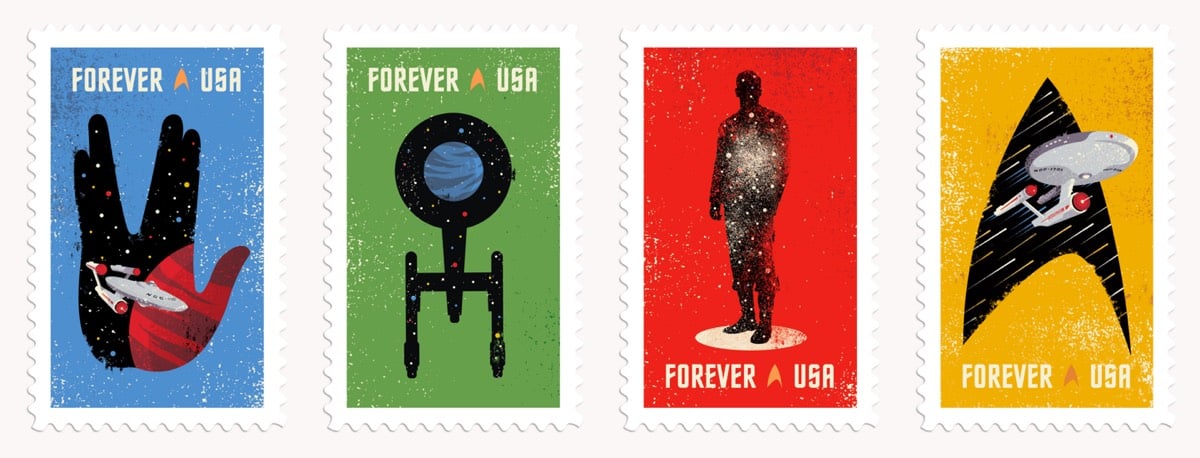
The USPS is releasing a set of four commemorative Star Trek stamps on the 50th anniversary of the original series. The stamps were designed by Heads of State and you can buy there here.
When Jurassic Park came out in the summer of 1993, it signaled a shift in the use of digital visual effects in Hollywood films. The movie wasn’t the first to use any particular technique, but it was the first movie to showcase convincing, realistic digital effects. I watched Jurassic Park again recently and for a 23-year-old movie, the effects hold up surprisingly well. (For reference, 23 years ago, the top-of-the-line desktop computer was a 486 running at 50 MHz.)
Mike Upchurch was a writer for Mr. Show and MADtv but now he’s making these clever little videos with additional actors spliced into the narratives of Cocktail (the Tom Cruise movie) and the Dragnet TV series.
Both feature actor/comedian Chris Fairbanks in the lead role and are noted as “proof-of-concepts” for a series called Electric Television that Upchurch is presumably developing. Someone should greenlight it. (via @dunstan)
Newer posts
Older posts






Socials & More