kottke.org posts about movies
This is the trailer for I Am Not Your Negro, a film that “finishes” a book that writer James Baldwin was working on when he died.
In 1979, James Baldwin wrote a letter to his literary agent describing his next project, Remember This House. The book was to be a revolutionary, personal account of the lives and successive assassinations of three of his close friends — Medgar Evers, Malcolm X and Martin Luther King, Jr.
At the time of Baldwin’s death in 1987, he left behind only thirty completed pages of his manuscript.
Now, in his incendiary new documentary, master filmmaker Raoul Peck envisions the book James Baldwin never finished. The result is a radical, up-to-the-minute examination of race in America, using Baldwin’s original words and flood of rich archival material. I Am Not Your Negro is a journey into black history that connects the past of the Civil Rights movement to the present of #BlackLivesMatter. It is a film that questions black representation in Hollywood and beyond. And, ultimately, by confronting the deeper connections between the lives and assassination of these three leaders, Baldwin and Peck have produced a work that challenges the very definition of what America stands for.
The reviews so far are uniformly positive.
I don’t know about you, but those clips of Baldwin speaking in the trailer piqued my interest, so I’m going to make some time tonight to watch some Baldwin talks, speeches, and debates on YouTube: a 1969 talk in London, a 1963 debate with Malcolm X (audio only), a 1963 panel on civil rights w/ Sidney Poitier, Harry Belafonte, Marlon Brando, and Charlton Heston, and his 1965 debate with William F. Buckley on the question “Is the American Dream at the expense of the American Negro?”
In a short film shot in 1957, Walt Disney described the multiplane camera, one of the many inventions and innovations his company had developed in order to produce more realistic and affecting animations. Instead of shooting single cels of animation on a single movable background, the multiplane camera could shoot several independently moving backgrounds, creating a sense of depth and perspective. A 1938 article in Popular Mechanics explained how the camera works.
Disney wanted to increase the eye value of the many paintings making up a picture by achieving a soft-focus effect on the backgrounds, illuminating the various levels of each scene individually, and separating” background from foreground, thus keeping background objects to their proper relative size.
His production crew labored for three years to perfect the novel picture-taking device to achieve these results. It consists of four vertical steel posts, each carrying a rack along which as many as eight carriages may be shifted both horizontally and vertically. On each carriage rides a frame containing a sheet of celluloid, on which is painted part of the action or background.
Resembling a printing press, the camera stands eleven feet tall and is six feet square. Made with almost micrometer precision, it permits the photographing of foreground and background cels accurately, even when the first is held firmly in place two feet from the lens and the lowest rests in its frame nine feet away. Where the script calls for the camera to “truck up” for a close-up, the lens actually remains stationary, while the various cels are moved upward. By this means, houses, trees, the moon, and any other background features, retain their relative sizes.
After being deployed on a short film as a test, the multiplane camera was used to film Snow White and the Seven Dwarfs, the first feature-length animated film. In the chapter on “Illusion” in his newest book Wonderland: How Play Made the Modern World, Steven Johnson writes that the use of the multiplane camera (along with other innovations in animation developed since the days of Steamboat Willie) had a profound effect on audiences.
All of these technical and procedural breakthroughs summed up to an artistic one: Snow White was the first animated film to feature both visual and emotional depth. It pulled at the heartstrings in a way that even live-action films had failed to do. This, more than anything, is why Snow White marks a milestone in the history of illusion. “No animated cartoon had ever looked like Snow White,” Disney’s biographer Neil Gabler writes, “and certainly none had packed its emotional wallop.” Before the film was shown to an audience, Disney and his team debated whether it might just be powerful enough to provoke tears — an implausible proposition given the shallow physical comedy that had governed every animated film to date. But when Snow White debuted at the Carthay Circle Theatre, near L.A.’s Hancock Park, on December 21, 1937, the celebrity audience was heard audibly sobbing during the final sequences where the dwarfs discover their poisoned princess and lay garlands of flowers on her. It was an experience that would be repeated a billion times over the decades to follow, but it happened there at the Carthay Circle first: a group of human beings gathered in a room and were moved to tears by hand-drawn static images flickering in the light.
In just nine years, Disney and his team had transformed a quaint illusion — the dancing mouse is whistling! — into an expressive form so vivid and realistic that it could bring people to tears. Disney and his team had created the ultimate illusion: fictional characters created by hand, etched onto celluloid, and projected at twenty-four frames per second, that were somehow so believably human that it was almost impossible not to feel empathy for them.
Interestingly, the multiplane camera also seems to be an instance of simultaneous invention (a concept also covered by Johnson in an earlier book, Where Good Ideas Come From). In addition to Disney’s multiplane camera, there were a few earlier earlier efforts and it’s unclear whether they were invented independently or how one inventor influenced another. But one thing is for certain: only Disney’s camera was deployed so skillfully and artfully that it changed cinema and our culture forever.1
For what it’s worth: it’s never too late or, in my case, too early to be whoever you want to be. There’s no time limit, stop whenever you want. You can change or stay the same, there are no rules to this thing. We can make the best or the worst of it. I hope you make the best of it. And I hope you see things that startle you. I hope you feel things you never felt before. I hope you meet people with a different point of view. I hope you live a life you’re proud of. If you find that you’re not, I hope you have the courage to start all over again.
Attributed to F. Scott Fitzgerald, but was actually written by screenwriter Eric Roth for the film adaptation of The Curious Case of Benjamin Button.
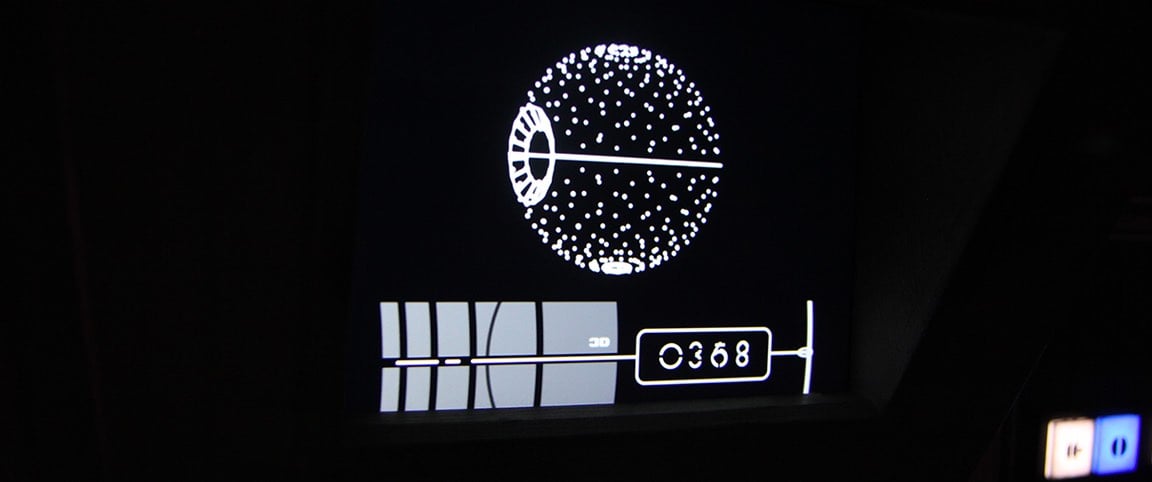

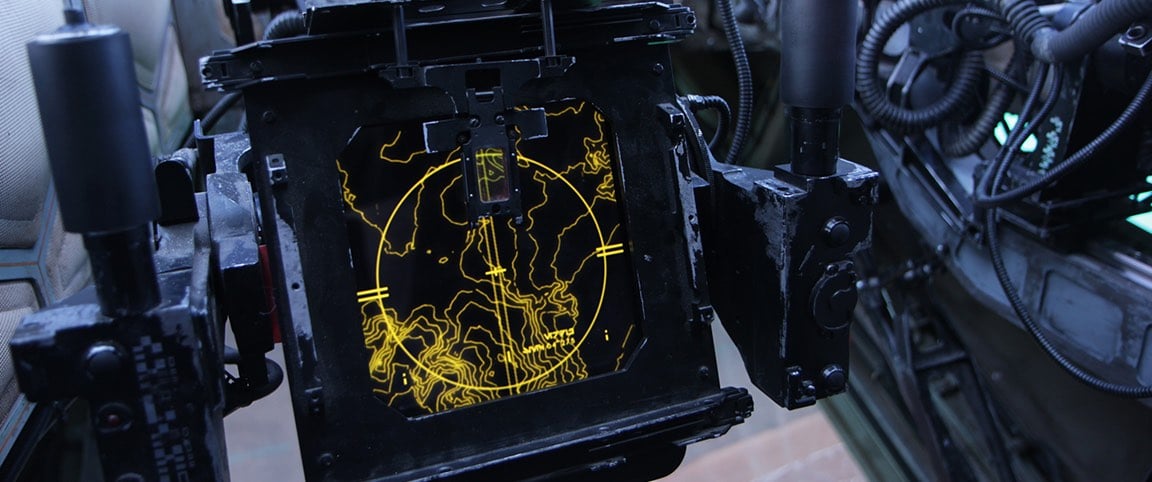
From design firm Blind Ltd, the user interface graphics they did for Rogue One. They had some graphics from the original Star Wars to play off of, but this is still really nice work. Blind also did onscreen interfaces for The Force Awakens, the Batman films, and some recent Bond films. (via @pieratt)
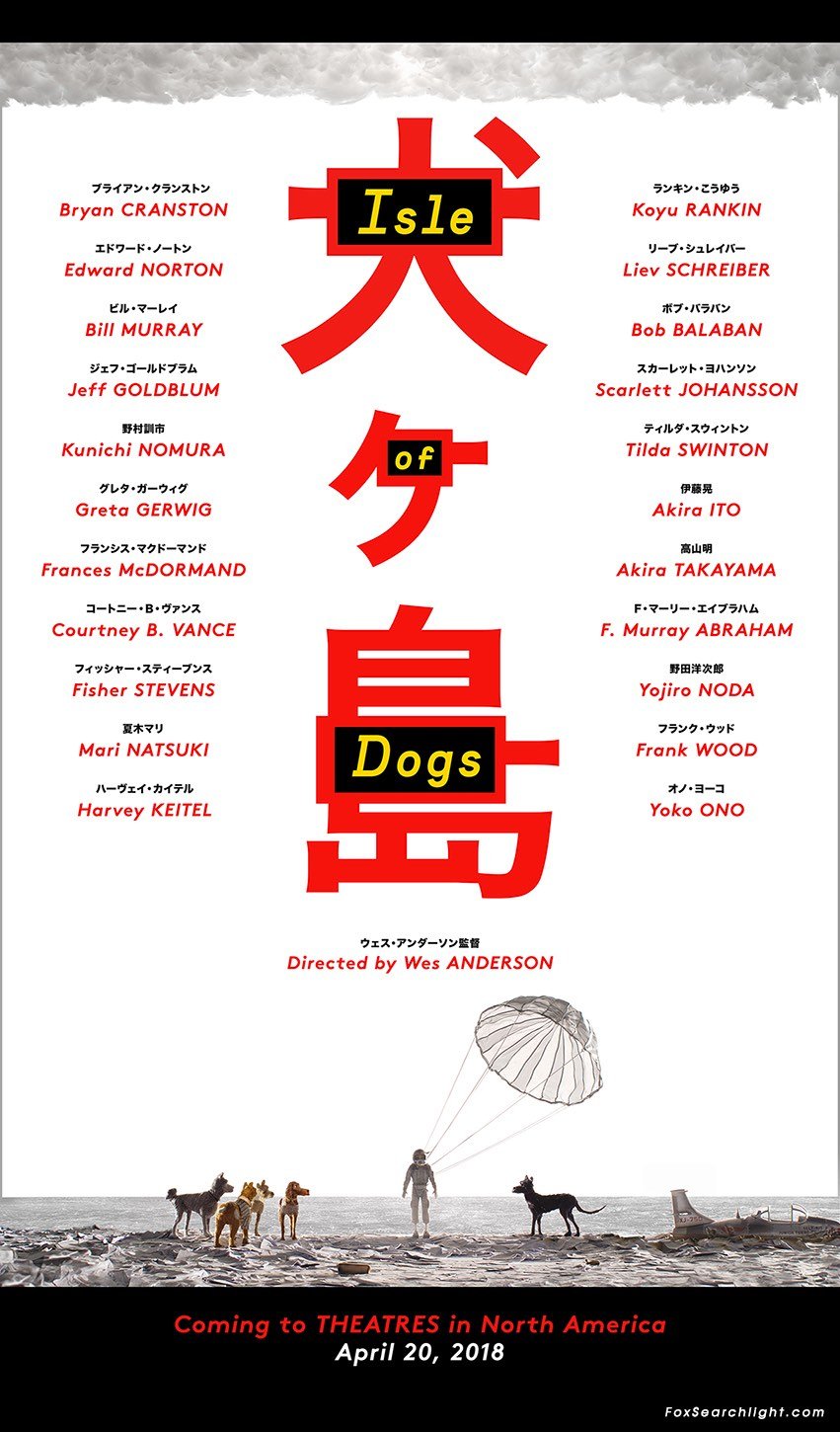
We’ve known for awhile that Wes Anderson is doing another stop-motion animated movie, but in this video, Anderson himself shares the name of the film — Isle of Dogs — and shows a very tiny clip of the character played by Edward Norton.
Also appearing in the film are Bill Murray, Tilda Swinton, Yoko Ono, Scarlett Johansson, and possibly you. Anderson is doing a fundraiser for a favorite charity and if you donate, you’re entered to win a trip to London to meet Wes, get a tour of the production, and record the voice of a character for the movie (“barking, howling & whimpering may be required”).
Update: The poster for the movie is out. WWII?
Scifi Policy reviews Rogue One as an engineering ethics case study (spoilers!).
The film also makes its engineering ethics explicit. Before the opening scene, Galen Erso had escaped the Death Star project because of his moral objections, likely against the Empire as well as the concept of making such a terrifying weapon at all. After Krennic captures him, Galen later tells his daughter Jyn that he had a choice: he could have continued abstaining, and let someone else build the Death Star, or he could dive deep into the project, become indispensable to it, and find a way to stop it. He chooses to dive deep, and succeeds in building a subtle flaw in the Death Star design. Then 15 years later, he sends a messenger to the Rebellion informing them of the weapon’s existence, power and most importantly, its fatal flaw.
Part of the point of the review is that resistance can take many forms. Erso resists by working within the system to help bring about a better outcome. The problem, for the outside observer, is that for such resistance to be effective, it needs to be indistinguishable from collaboration. Something to think about in relation to the incoming Trump administration and how best to work against it, particularly in the area of technology. (via mr)
The words “Blade Runner sequel” have inspired equal parts excitement and dread in my heart. Some things, you just shouldn’t mess with, particularly if you’re Ridley Scott (see the Alien5 franchise). But with Ryan Gosling and Harrison Ford headlining, Denis Villeneuve directing (he did the pitch-perfect Arrival), and this teaser trailer, the scale has tipped towards excitement.
Thirty years after the events of the first film, a new blade runner, LAPD Officer K (Gosling), unearths a long-buried secret that has the potential to plunge what’s left of society into chaos. K’s discovery leads him on a quest to find Rick Deckard (Ford), a former LAPD blade runner who has been missing for 30 years.
Director Steven Soderbergh is constantly looking for new ways to give his audience information about the story and the characters. It’s what makes his work seem fresher than that of some other directors, but sometimes the risk doesn’t pay off.
FWIW, I love the Julia Roberts playing Julia Roberts bit in Ocean’s 12. It’s a lookie loo with a bundle of joy, what more do you need?! (via film school rejects)
808 is a feature-length documentary film on perhaps the most important musical instrument of the past 30 years, the Roland TR-808 Rhythm Composer. The soundtrack includes songs by Afrika Bambaataa, Public Enemy, and Jamie xx. The film will be available exclusively on Apple Music sometime in the next week but will likely be available elsewhere at some point after that.
See also a browser-based emulation of the 808.
The World of Tomorrow is Bora Barroso’s tribute to some of the best post-apocalyptic movies, including Children of Men, 12 Monkeys, Mad Max: Fury Road, and The Road. Wall-E wasn’t dark enough I guess?
I look forward to David Ehrlich’s video countdown of his favorite films of the year and 2016’s installment does not disappoint. Nice to see Beyonce’s Lemonade, the weirdo Swiss Army Man (which I loved, Daniel Radcliffe 4eva!), and the excellent OJ: Made in America on there. Still puzzled by Hail Caesar…I love the Coen brothers but was bored by this one. No Arrival though…this was the only movie I saw in the theater twice this year. For those looking for upcoming or recently released films to watch, Ehrlich includes Jackie, La La Land, and Scorsese’s Silence on his list.
The film adaptation of Dave Eggers’ novel The Circle is moving right along. The movie stars Tom Hanks and Emma Watson (as well as John Boyega from The Force Awakens) and the first trailer was released yesterday. Looks Black Mirror-ish…I think we’ll be getting a lot of that over the next four years.
This video quickly sums up almost 80 years of Disney animated movies, from Snow White and Pinocchio to Big Hero 6 and Zootopia. It’s astonishing how good the animation was in the early days and then got less so until fairly recently.
A few years ago, Dan Harmon broke the structure of stories down into eight basic parts:
- A character is in a zone of comfort,
- But they want something.
- They enter an unfamiliar situation,
- Adapt to it,
- Get what they wanted,
- Pay a heavy price for it,
- Then return to their familiar situation,
- Having changed.
Calling himself a “corny screenwriting guru”, this is Harmon’s attempt to simplify Joseph Campbell’s concept of the monomyth, or hero’s journey.
A hero ventures forth from the world of common day into a region of supernatural wonder: fabulous forces are there encountered and a decisive victory is won: the hero comes back from this mysterious adventure with the power to bestow boons on his fellow man.
In the video above, Will Schoder explains Harmon’s theory using a number of different stories (movies, books, TV shows, etc.) as examples, most notably the original Star Wars, which George Lucas created using Campbell’s ideas.
It’s been three years since The Wolf of Wall Street and Martin Scorsese is finally coming out with a new film. Based on the novel by Shusaku Endo, Silence is the story of a pair of Jesuit priests who travel to Japan in the 17th century to find a third priest and to convert the Japanese to Christianity. Adam Driver, Liam Neeson, and Andrew Garfield star.
Two years ago, Tony Zhou made an episode of Every Frame a Painting called Martin Scorsese - The Art of Silence.
Since Scorsese has been working on making Silence for over 20 years, Zhou’s video must have been a little wink to the director’s true fans.
Erik Singer is a dialect coach who works with actors to perfect different accents and dialects. In this video, he quickly analyzes the performances of 32 actors based on their use of accents. Pretty fascinating to watch. He singles out Philip Seymour Hoffman’s portrayal of Truman Capote as an exemplary use of the proper accent. High marks also go to Kate Winslet doing a Polish accent, Idris Elba’s South African accent while portraying Nelson Mandela (and his Bal’more accent in The Wire), and Cate Blanchett playing Katherine Hepburn in The Aviator.
Nicolas Cage in Con Air and Tom Cruise in Far and Away? Well, let’s just say they couldn’t pahk the cah in Hahvahd Yahd.
Update: Actress Sarah Jones takes a slightly different approach to speaking in different accents. Instead of aiming for a particular generalized dialect, she picks out a particular person to impersonate.
Let’s say you want to sound like a Trinidadian woman, as Ms. Jones does in her show. She recommends you watch YouTube clips of speakers at council meetings in Trinidad until you find the person you most want to sound like. If you can meet your subject in person, it will help make your goal much easier to reach.
“I ask them to speak something very slowly three times in a row and then I have them say it at normal speed the way they’d say it three times in a row,” she said. “I have them say it the way they’d say it in school as compared to how they’d say it to a friend.”
Be sure to play the embedded audio clips of Jones speaking as her different characters. And you can watch her in action in this TED Talk:
This is the trailer for the animated film Bee Movie, except that the action and audio is slowed down every time someone says “bee”. That is a little bit clever.
Update: Monkeying with bits of video based on simple rules is a full-blown thing on YouTube right now. The Bee Movie seems to have started it off and there are now many variations on the theme: every “bee” is repeated by how many were said before it, every time they say bee it gets faster, the Seinfeld theme plays every time they say bee, and every time they say bee it does the whole trailer really fast. It’s spread to other media: here’s the video for All Star by Smash Mouth but it gets 15% faster every time he says “the” (which is a great illustration of exponential growth, like compound interest), the first Harry Potter movie but every time they say his name it gets faster, and so on. (via @waxpancake)
Music is an essential aspect of Wes Anderson’s films. Michael Park has created a 9-hour playlist of music from Anderson’s movies, from Bottle Rocket (Artie Shaw & Chet Baker) to The Royal Tenenbaums (Elliott Smith & Nico) to Fantastic Mr. Fox (Burl Ives & The Rolling Stones) to The Grand Budapest Hotel (mostly by Alexandre Desplat).
With The Iron Giant, Ratatouille, and The Incredibles under his belt, Brad Bird is one of the most respected and accomplished animated filmmakers out there. For this video, Kees van Dijkhuizen Jr. pieced together a number of interviews and commentary tracks of Bird talking about how he approaches animation. Among the topics he discusses are the pleasures of sneaking around, the advantages of slowing down, and an appreciation of keeping the lights low.
At one point, Bird talks about how some makers of animated movies create scenarios that are too fantastic and then are, later on in their films, unable to interject a true sense of danger into the plot.
The mistake that people often make with animated films is that they love the gravity-defying aspect of it. But, if you defy gravity and then later on need to feel danger, you have a really hard time convincing the audience.
Contemporary superhero movies, even the good ones, often have this problem, and I wonder if it’s because they are essentially made like animated films with too much of the gravity-defying aspect. With CG and flawless green screens, you can essentially make anything happen on the screen, which somewhat counterintuitively lowers the stakes of what you’re watching.
I thought Westworld was going to have the same problem. The first few episodes were boring because they were set in a world where no one could get injured or killed. Park visitors could roll up to a Western town with a few guns and kill all of the inhabitants without much effort and at no personal risk. There were no stakes and it totally broke the fourth wall. But from the way the last few episodes have gone, it’s apparent the danger will come (from elsewhere) and that having the audience (both of the HBO show and the park’s paying patrons) consider the fourth wall is part of the point.
Stanley Kubrick’s Boxes is a documentary film by Jon Ronson about Kubrick’s personal archive of more than 1000 boxes filled with material (photos, news clippings, letters, research materials, etc.) related to his films. Ronson wrote about how he got access to the archive in a 2004 Guardian piece.
The journey to the Kubrick house starts normally. You drive through rural Hertfordshire, passing ordinary-sized postwar houses and opticians and vets. Then you turn right at an electric gate with a “Do Not Trespass” sign. Drive through that, and through some woods, and past a long, white fence with the paint peeling off, and then another electric gate, and then another electric gate, and then another electric gate, and you’re in the middle of an estate full of boxes.
There are boxes everywhere — shelves of boxes in the stable block, rooms full of boxes in the main house. In the fields, where racehorses once stood and grazed, are half a dozen portable cabins, each packed with boxes. These are the boxes that contain the legendary Kubrick archive.
Was the Times right? Would the stuff inside the boxes offer an understanding of his “tangled brain”? I notice that many of the boxes are sealed. Some have, in fact, remained unopened for decades.
Ronson did not upload his film to Vimeo, but he is “delighted” that it’s available online, so hopefully it won’t disappear soon.
The editors of GQ have selected their picks for The 21 Documentaries from the 21st Century Everyone Should See. Ones I’ve seen and recommend: The Fog of War, No Direction Home, The Two Escobars, Grizzly Man, Going Clear, Capturing the Friedmans, The Jinx, Citizenfour, and O.J.: Made in America. I would consider adding Zero Days and Making a Murderer to the list.
The year’s best action sequence isn’t in a Marvel movie or prestige TV drama, it’s from the first episode of Planet Earth II, which aired in the UK over the weekend. In it, a group of snakes chase a small iguana, which seems at the outset to have a tiny chance of escape.
Good god, that was thrilling. We might have a new champion.
Update: I love Tony Zhou’s cut with the soundtrack from Mad Max: Fury Road (with temp music, he says). Be sure to watch to the end.
(via @philnicklin)
Update: Snoop Dogg narrates the snake/iguana chase as only he can.
From Jack’s Movie Reviews, an examination of the first Back to the Future movie, its stellar screenplay, and the high level of storytelling achieved by the filmmakers. As H. Perry Horton says:
Too often the BTTF trilogy is dismissed as mere popcorn escapism, but in reality it’s one of the smartest franchises of the last half-century and deserves to be regarded with a more analytical eye.
Totally planning on watching it this weekend with the kids…I don’t think they’ve seen it yet.
A visual tribute to the gorgeous cinematography of Roger Deakins, one of the all-time great cinematographers. Deakins has worked on a number of films with the Coen brothers (Fargo, The Big Lebowski, True Grit, No Country for Old Men) and a bunch of other films as well (Skyfall, Kundun, and the upcoming Blade Runner sequel).
In an interview with Alexander Olch, founder of the cool new Metrograph theater in NYC, Wes Anderson just casually reveals that he’s doing another stop-motion animated movie that’s currently in production.
I’ve got an animated movie I’m doing that’s happening across the room from me right now. So I can see a long list of e-mails from people on the set whom I now need to address.
We know from about a year ago that dogs are involved, as are Bryan Cranston, Bob Balaban, Edward Norton, and Jeff Goldblum. Looking forward to this one…Fantastic Mr. Fox is Anderson’s most underrated film.
P.S. In the same interview, Anderson and Olch briefly discuss Powers of Ten. :)
Last year, back when he was only one of more than a dozen GOP candidates, I discovered Citizen Kane was one of Donald Trump’s favorite movies via a video filmed by Errol Morris.
Trump acquits himself pretty well on Kane and its lessons — although I would not characterize Kane’s fall as “modest” — and his commentary about the film is probably the first actually interesting thing I have ever heard him say. But I watched all the way to the end and he shoots himself in the foot in the most Trumpian & misogynistic way — it’s actually perfect.
Spurred by a recent re-watch of Citizen Kane, Anthony Audi digs deeper into Trump’s misunderstanding of the film and finds that the course of Trump’s life has followed that of Charles Foster Kane.
He understands instinctively that by controlling the press, he can shape opinions on a mass scale — bending the truth as he sees fit. Over time, and through his marketing savvy, he develops a powerful media empire. Because that’s not enough, he then turns his sights to politics, running for New York governor as a stepping-stone to the White House. At campaign rallies, Kane gleefully brags about his poll numbers, and vows to lock up his opponent Jim Gettys, whom he condemns as an establishment tool. “Here’s one promise I’ll make,” he finally thunders. “My first official act as governor of the state will be to appoint a special district attorney to arrange for the indictment, prosecution, and conviction of “Boss” Jim W. Gettys!”
Kane never gets to fulfill that pledge. Instead, he loses the election-his campaign derailed by a last minute sex scandal. His editors know what to do, and the following day their headlines scream: “FRAUD AT POLLS!”
The piece is entitled Donald Trump Modeled His Life on Cinematic Loser Charles Foster Kane. Consciously or not, Trump does seem to be following Kane’s playbook here, right down to the fascism.
Specifically, Citizen Kane was a vision of what fascism might resemble in America. Both men knew better than to expect Hitler or Mussolini on our shores. They knew that our demagogue would be glossier, more entertaining-more American; and the man they conjured, inspired by real-life plutocrats like William Randolph Hearst, happened to look an awful lot like Donald Trump.
Read the whole thing…this is right up there with the best explainers of why Trump is the way he is. And part 2 is coming soon, an interview with Morris about Trump’s love of Kane.
Update: Audi’s interview with Morris was posted a couple of weeks before the election. Morris says Trump suffers from Irony Deficit Disorder.
Somehow he identifies clearly with Kane. Kane is Trump. And it’s not the kind of identification that I would make if I were Trump. Of course that issue — if I were Trump, what would I do, what would I think, what would I say? — it’s one of those counterfactuals I’m probably not equipped to address. But, if I were Donald Trump, I would not want to emphasize that connection with Kane. You know, a megalomaniac in love with power and crushing everything in his path. The inability to have friends, the inability to find love. The moral that Trump takes from Kane — I mean, it’s one of the great lines that I recorded. I ask, “Do you have any advice for Charles Foster Kane, sir?” You know, let’s get down to the psychiatric intervention. How can we help this poor man? He’s obviously troubled. How can we help him? Donald, help me out here!
And Donald says, “My advice to Charles Foster Kane is find another woman!” And you know, I thought, is that really the message that Welles was trying to convey? That Kane had made poor sexual choices, poor marriage choices?
I watched the new Ghostbusters last week and:
1. It was good…better than the trailers indicated it would be.
2. LOL to all the whiny man-babies who boycotted and trashed it because of the all-female main cast. If there was anything wrong with the film, it had nothing to do with the leads.
3. Kate McKinnon was flat-out amazing, a revelation. I could watch 20 more minutes of her outtakes.
4. “Not just Higgs!”
Werner Herzog has directed a documentary film for Netflix on volcanoes.
Werner Herzog’s latest documentary, Into the Inferno, heads just where its title suggests: into the red-hot magma-filled craters of some of the world’s most active and astonishing volcanoes-taking the filmmaker on one of the most extreme tours of his long career. From North Korea to Ethiopia to Iceland to the Vanuatu Archipelago, humans have created narratives to make sense of volcanoes; as stated by Herzog, “volcanoes could not care less what we are doing up here.” Into the Inferno teams Herzog with esteemed volcanologist Clive Oppenheimer to offer not only an in-depth exploration of volcanoes across the globe but also an examination of the belief systems that human beings have created around the fiery phenomena.
Into the Inferno debuts on Netflix on October 28.
A group of hardcore Star Wars fans are restoring the original 1977 theatrical release of the first Star Wars movie in ultra high-def 4K resolution. The video above is a trailer of sorts, but it also shows the restoration of a short scene…the increase in quality and resolution is impressive.
Simply put, we are restoring the original, theatrical version of Star Wars in 4K. Using multiple 35mm prints, scanned at 4K, cleaned at 4K, and rendered at full 4k UHD 4096x1716 resolution. To be clear, this is not simply an upscale of any other source, this is all to be done natively in 4K from 35mm sources. The only exception to this rule is when we don’t have a particular frame available, in that case either an upscale of the Silver Screen Edition, or the official Bluray will be used.
If you watch any of Steven Spielberg’s movies, you’ll notice a distinctive element: the Spielberg Face.
If Spielberg deserves to be called a master of audience manipulation, then this is his signature stroke.
You see the onscreen character watching along with you in wonder, awe, apprehension, fear, sadness. It’s the director’s way of hitting pause, to show the audience this is a critical scene, to reinforce how the audience should be feeling in that moment.
Newer posts
Older posts





Socials & More