I can’t figure out how old anyone is. I can’t figure out how gay anyone is. On silent subway morning commutes there are no tells. The brogues, desert boots and quickstrike high-tops not only have me manic-fantasy-banging every well-dressed dude on the F BECAUSE IT IS ALL SO GODDAMN GOOD but the fact that so many are suddenly well shod plus the prevalence of hard-bottoms straight CRIPPLES my ability to tell how rich anyone is. And that is fucking my game up major. Aaaaaaaaaand everyone’s watch is now the old timey Timex from J.Crew for $150 so yeah, 360 IDK. Plus, also, seriously, there must have been some clandestine colloquium workshop situation where all the dudes in all the land shucked to skivvies and got sized for their perfect pair of Uniqlo jeans and nobody said “no homo,” not even one time, because, Hi, y’all all look fantastic FUCK YOU.
Huh. The word “denim” comes from “serge de Nîmes”, a fabric made in Nîmes, France, and “blue jeans” comes from “Bleu de Genes”, blue pants made in Genoa (aka Genes). Both cities claim to have been manufacturing denim for centuries, but there has never been much proof in the way of artifacts and such. So the recent discovery of several paintings from the mid-1600s depicting people wearing jeans is surprising. Look at this jean jacket:
The New Yorker has a trio of interesting articles in their most recent issue for the discerning web/technology lady or gentlemen. First is a lengthy profile of Mark Zuckerberg, the quite private CEO of Facebook who doesn’t believe in privacy.
Zuckerberg may seem like an over-sharer in the age of over-sharing. But that’s kind of the point. Zuckerberg’s business model depends on our shifting notions of privacy, revelation, and sheer self-display. The more that people are willing to put online, the more money his site can make from advertisers. Happily for him, and the prospects of his eventual fortune, his business interests align perfectly with his personal philosophy. In the bio section of his page, Zuckerberg writes simply, “I’m trying to make the world a more open place.”
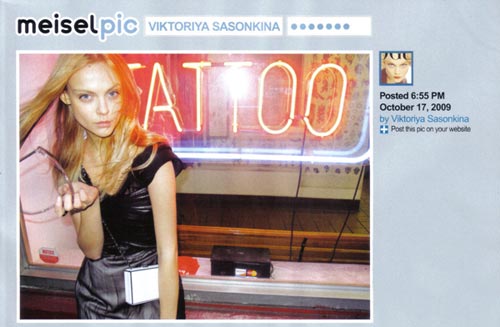
Tavi has an eye for frumpy, “Grey Gardens”-inspired clothes and for arch accessories, and her taste in designers runs toward the cerebral. From the beginning, her blog had an element of mystery: is it for real? And how did a thirteen-year-old suburban kid develop such a singular look? Her readership quickly grew to fifty thousand daily viewers and won the ear of major designers.
And C, John Seabrook has a profile of James Dyson (sub. required), he of the unusual vacuum cleaners, unusual hand dryers, and the unusual air-circulating fan.
In the fall of 2002, the British inventor James Dyson entered the U.S. market with an upright vacuum cleaner, the Dyson DC07. Dyson was the product’s designer, engineer, manufacturer, and pitchman. The price was three hundred and ninety-nine dollars. Not only did the Dyson cost much more than most machines sold at retail but it was made almost entirely out of plastic. In the most perverse design decision of all, Dyson let you see the dirt as you collected it, in a clear plastic bin in the machine’s midsection.
However, the temple for waisted male self-esteem is Old Navy, where I easily slid into a size 34 pair of the brand’s Dress Pant. Where no other 34s had been hospitable, Old Navy’s fit snugly. The final measurement? Five inches larger than the label. You can eat all the slow-churn ice cream and brats you want, and still consider yourself slender in these.
The vanity sizing situation with women’s clothes is even more variable. (via @linklog)
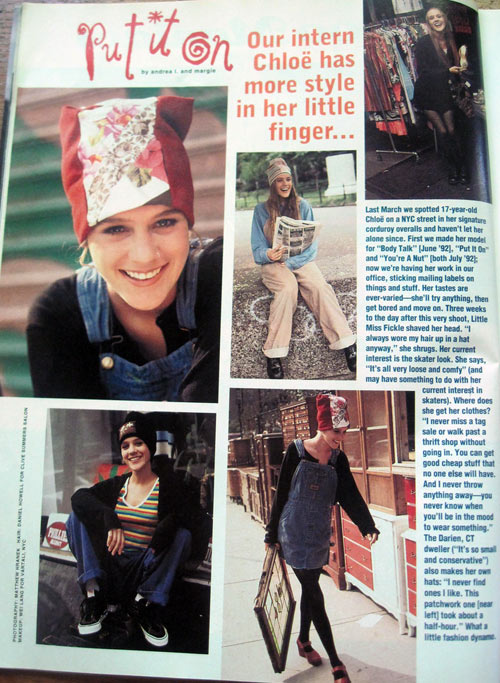
The Style Rookie gets ahold of a bunch of old issues of Sassy and scans in a couple dozen pages, including a fashion layout featuring Sassy intern Chloë Sevigny.
Sassy seems to be one of those rare magazines that is dearly missed but doesn’t really have a modern day analogue. (See also Might and Spy.)
The websites of the top 10 luxury brands don’t work that well on the iPad…most throw up a splash page prompting you to download Flash. This is what Cartier’s site looks like:
If I were Anna Wintour, I would be screaming at these companies to fix these sites. They reflect poorly on an industry that’s all about effortless style, appearance, confidence, and never, ever having a hair out of place (unless that’s the look you’re going for). This? This is like they’ve got no pants on — and not in a good way. That goes double for restaurant sites.
Eddie Feibusch opened his Manhattan zipper store on December 7, 1941 and is still plying his trade there, even after most of his competition has decamped for cheaper overseas locations.
How great are zippers? Don’t even get Mr. Feibusch started. They are watertight for deep-sea divers, airtight for NASA. “Nothing replaces a zipper,” he said. Buttons? He made a face. “A button is unpleasant,” he said.
Feibusch will even sell you a 30-foot-long zipper for $100…to wrap your hot-air balloon up. (via girlhacker)
The beauty of this photo by The Sartorialist is not in the clothes or the model but in the way that everything in shot leans down and to the right: the sidewalk sloping away toward the curb, the higher cuff on her right leg, her left foot slightly in front of her right, hips slouched so that her belt is parallel to the sidewalk, the neckline on her shirt. And then that big wave of hair thrown over the other way, balancing everything else out.
That “exalted dignity, that certain solemnity of mien,” lent by an imposing beard, “regardless of passing vogues and sartorial vagaries,” says Underwood, is invariably attributable to the presence of an obscure principle known as the odylic force, a mysterious product of “the hidden laws of nature.” The odylic, or od, force is conveyed through the human organism by means of “nervous fluid” which invests the beard of a noble poet with noetic emanations and ensheathes it in an ectoplasmic aura.
Wikipedia gets into the 2000s roundup game with a main article and a number of topic-based summaries, including fashion, film, and sports. From the fashion page:
In hip hop, the throwback jersey and baggy pants (popular in the ’90s to 2004) look was replaced with the more “grown man” look which was highly popularized by Kanye West around the year 2005.
If you say so. More interesting is the chart of the 20 highest grossing movies from the film page (the top 3 each grossed $1 billion+ worldwide):
1. The Lord of the Rings: The Return of the King
2. Pirates of the Caribbean: Dead Man’s Chest
3. The Dark Knight
4. Harry Potter and the Philosopher’s Stone
5. Pirates of the Caribbean: At World’s End
6. Harry Potter and the Order of the Phoenix
7. Harry Potter and the Half-Blood Prince
8. The Lord of the Rings: The Two Towers
9. Shrek 2
10. Harry Potter and the Goblet of Fire
11. Spider-Man 3
12. Harry Potter and the Chamber of Secrets
13. Ice Age: Dawn of the Dinosaurs
14. The Lord of the Rings: The Fellowship of the Ring
15. Finding Nemo
16. Star Wars Episode III: Revenge of the Sith
17. Transformers: Revenge of the Fallen
18. Spider-Man
19. Shrek the Third
20. Harry Potter and the Prisoner of Azkaban
Only one movie on the list was made from an original screenplay: Finding Nemo…the rest are all sequels or adapted from books, TV shows, amusement park rides, etc. Out of the top 50, only nine are not franchise films.
The first episode of a new web series “about dressing like a grownup” called Put This On is about denim. Denim like a jean. Put This On is hosted by Jesse Thorn of The Sound of Young America and Adam Lisagor, the web’s loneliest sandwich.
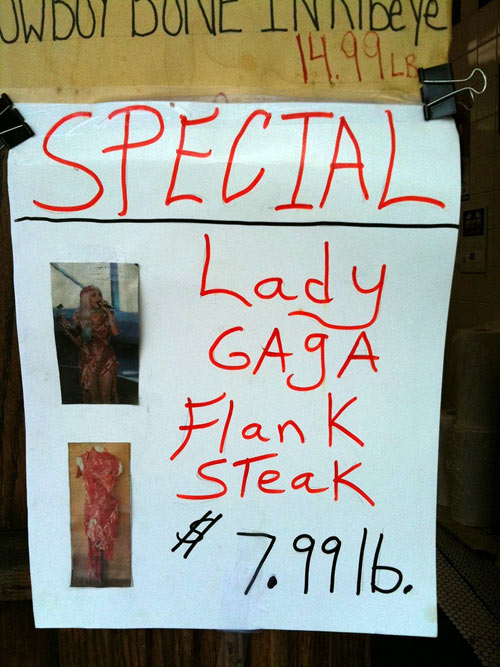
A video clip of what fashion designers in the 1930s predicted that people would be wearing in the year 2000. While the predictions for the women only accurately depict Lady GaGa’s wardrobe, the designers of the past were slightly closer to the mark when it came to men’s fashion:
“He’ll be fitted with a radio, telephone, and containers for coins, keys, and candy for cuties.”
By which they must have meant credit cards.
Update: FASHION magazine responded to this video. It turns out that it was eerily accurate, with designs like Alexander Wang and Marc Jacobs parading futuristic wares that are perfectly current.
Well, [Levi’s] started just as a regional thing, we had the lock on the West and other brands had their own consumer segments. I believe Lee had the South sort of sewn up, and there were some other brands, I think Lee included, that were known in New York. It’s funny, you could always tell where someone was from; if they said “jeans,” then they were from the west, if they were from the East they called them “dungarees,” you could immediately tell where someone was from.
The September Issue is the much-anticipated documentary that follows Anna Wintour and her staff at Vogue through the process of creating the magazine’s September issue, AKA the world’s thickest magazine issue.
An apt demonstration that an editor/curator’s main job is saying no to almost everything.
Note: If you are a member and tried to log in, it didn't work, and now you're stuck in a neverending login loop of death, try disabling any ad blockers or extensions. Or try logging out and then back in. Still having trouble? Email me!










Socials & More