kottke.org posts about conferences
My favorite presentation at XOXO this year was Ed Yong’s talk about the pandemic, journalism, his work over the past four years, and the personal toll that all those things took on him. I just watched the entire thing again, riveted the whole time.
Hearing how thoughtfully & compassionately he approached his work during the pandemic was really inspirational: “My pillars are empathy, curiosity, and kindness — and much else flows from that.” And his defense of journalism, especially journalism as “a caretaking profession”:
For people who feel lost and alone, we get to say through our work: you are not. For people who feel like society has abandoned them and their lives do not matter, we get to say: actually, they fucking do. We are one of the only professions that can do that through our work and that can do that at scale — a scale commensurate with many of the crises that we face.
Then, it was hard to hear about how his work “completely broke” him. To say that Yong’s experience mirrored my own is, according to the mild PTSD I’m experiencing as I consider everything he related in that video, an understatement. We covered the pandemic in different ways, but like Yong, I was completely consumed by it. I read hundreds(/thousands?) of stories, papers, and posts a week for more than a year, wrote hundreds of posts, and posted hundreds of links, trying to make sense of what was happening so that, hopefully, I could help others do the same. The sense of purpose and duty I felt to my readers — and to reality — was intense, to the point of overwhelm.
Like Yong, I eventually had to step back, taking a seven-month sabbatical in 2022. I didn’t talk about the pandemic at all in that post, but in retrospect, it was the catalyst for my break. Unlike Yong, I am back at it: hopefully more aware of my limits, running like it’s an ultramarathon rather than a sprint, trying to keep my empathy for others in the right frame so I can share their stories effectively without losing myself.1
I didn’t get a chance to meet Yong in person at XOXO, so: Ed, thank you so much for all of your marvelous work and amazing talk and for setting an example of how to do compassionate, important work without compromising your values. (And I love seeing your bird photos pop up on Bluesky.)
I attended the XOXO Festival back in August, and video of some of the talks are starting to trickle online. I’m going to highlight a couple of my favorites here on the site; the first one I’d like to share is Erin Kissane’s talk about fixing the social internet.
From her notes:
The talk was about why I left the internet, how the Covid Tracking Project got me back online, and most of all how the work we did at CTP led to me to believe that we — the weirdos of internet-making and online life — have to not merely retreat from the big-world social internet, but fix it.
Kissane talked about the work she’s been doing recently: the COVID Tracking Project, the Fediverse Governance project, and the Meta in Myanmar series. It’s a great talk…I recommend setting aside some time to watch it.

I just got back from attending the XOXO Festival in Portland, OR. What a whirlwind few days — I talked to more people than I have in literally years. I feel grateful for the opportunity to attend and participate this year, so I wrote some thank yous.
Thanks to Craig Mod for coming all the way from Japan to share the stage with me for a too-brief chat about membership programs. In the run-up to this, Craig and I had three extensive conversations about memberships, the open web, the value of writing your own software, Walt Disney’s corporate strategy chart, and many more things. I wish you could have heard those chats as well. Maybe we’ll have to do another podcast.
Thanks to Matt & Greg for making my dreams come true by taking me to Dos Hermanos Bakery for chopped sandwiches! They were delicious, of course! (A little messy though.)
Thanks to my pal Tim Shey, who shared with me the Japanese word komorebi, which is scattered sunlight that is filtered through tree leaves. Komorebi was the visual theme for this year’s XOXO, as seen in the XOXO Field Notes notebooks.
Thanks to Powell’s City of Books for the reminder that bookstores can be more than just places of commerce. Curated by people who love reading & books & people who read, great bookstores make your brain fizz with ideas just by browsing the shelves. Your algorithm could never.
Thanks to Portland for being so cool + weird. This was my fourth or fifth visit and I gotta say, I was pretty charmed. The food in particular blew me away — I can’t remember eating so well. Luce was a delicious local Italian place — I’d eat here once a week if I lived in Portland. Eem was so good, my favorite meal of the weekend. Solid pies at Apizza Scholls with great company. Ramen at Kinboshi, katsu sandwiches at Tanaka, a gin & tonic at Pacific Standard, and a banh mi at Lardo.
Thanks to Taylor Ramos and Tony Zhou for showing their new short film The Second and (and!) their first new Every Frame A Painting video essay in eight years!! EFAP is hands-down one of my absolute favorite things on the web; I’m thrilled it’s back.
Thanks to the folks I saw wearing kottke.org t-shirts, including the guy wearing a design squiggle shirt who I said “nice shirt!” to without any further explanation.
Thanks to Annie Rauwerda of Depths of Wikipedia for the heartiest laugh I’ve had in many weeks. Seriously, she had the entire hall rolling in the aisles.
Thanks to Erin Kissane, not only for her great talk but for her work, alongside Robinson Meyer and Alexis Madrigal, on The COVID Tracking Project. Truly one of the heroic efforts of the pandemic that saved lives and helped millions make safe choices — talk about making a dent in the universe. (An extra thanks to Erin for not laughing too much when I introduced myself as “Erin” when I ran into her at Powell’s. Never meet your heroes…you’ll only make an awkward ass of yourself.)
Thanks to Ed Yong, whose talk was just incredible and the one I most needed to hear this year. Like Ed, I spent a couple of years fully immersed in all things pandemic so that I could keep my readers (hopefully) well informed about what Covid was doing to us and how to stay safe. Even though I didn’t go nearly as deep as he did with his essential reporting, there were many parts of his talk that resonated strongly with me, particularly the burnout part (which led to a sabbatical in both cases). I’m definitely going to link to his talk when it gets posted.
Thanks to…the universe? (This one doesn’t necessarily lend itself well to the thank you note format.) The day after the conference, I walked around Portland for a few hours and thought of Heather, with whom I spent a few lovely days here in 2015. I hope you’ve found your peace, my friend.
Thanks to all the kottke.org readers who came up to say hi during the conference (and at the airport!); I appreciate you all and hope I wasn’t too awkward in response. 😬
Thanks to Neal Agarwal for showing off some of his many web experiments.
Thanks to Nolen Royalty, creator of One Million Checkboxes, for telling one of the wackiest internet nerd stories I’ve ever heard. I hope a recording of his talk or a writeup of it makes its way online…it’s an amazing story and I’ll link to it on kottke.org when it becomes available.
Thanks to my fellow indie media travellers — Platformer, 404 Media, Garbage Day, and Aftermath. I’ve enjoyed watching you folks strike out on your own, supported and trusted by your readers to punch above your weight without corporate heavy-handedness. 👏
Thanks to all my friends who, when I ghosted from a conversation or begged off sharing a meal, understood I needed some time to myself to recharge the ol’ social battery. 🪫
And most of all, thanks to the Andys (Baio, McMillan) for putting on XOXO for all these years. It is a singularly impactful gathering that’s touched/changed/bettered too many lives to even count. XOXO is perhaps the most thoughtful thing I’ve ever experienced — I can’t imagine how difficult it’s been for them to sustain that level of kindness and attention to detail across this many festivals and years. As life’s works go, this one is pretty good. The Andys said this was the last XOXO and I’m inclined to believe them this time — buuuuut if that changes, I will totally come to the next one.
The XOXO Dream is dead. Long live the XOXO Dream.
I was fortunate enough to make it out to Portland, OR for the 2019 XOXO festival back in September. It was my third time attending — I went the first year and in 2015 — and, goodness, the conference has changed a lot. XOXO used to be comfortably in my wheelhouse and now it’s more on the outskirts, so instead of hearing a bunch of stuff I want to hear, I trust the conference organizers to present some things that I need to hear, to keep me curiously exploring new ideas, viewpoints, and experiences unlike my own.
XOXO has started posting videos of all their talks online (one new video each weekday), and I’m going to share some of my favorites here. The first video is of Tracy Clayton’s barnburner of a talk: Log Off, Fam — Self Care in the Timeline Era.
Clayton and I overlapped at Buzzfeed (she was an employee and I had a desk there working on kottke.org) but have never met, so it was interesting to hear about her success and ultimately bad experience there.
I’ll updating this post with the rest of my favorites as they’re posted on YouTube.
Update: I enjoyed Soleil Ho’s talk about how the drive by her and others to shift the food world’s conversation on representation and cultural appropriation is starting to bear some fruit.
Update: My favorite talk, the one that hit me most squarely in the feels, was by Emily & Amelia Nagoski. It was about burnout, which I have been, I think, struggling with lately w/r/t to this here website. There were several points during this talk when I felt absolutely naked, exposed — like they were talking just to me.
Harry Brewis told us about the time when a goofy project he started spun out of his control in the most wonderful way:
To close the conference, Rhea Butcher talked about the importance of seeking without necessarily worrying about the finding:
You can find all of the 2019 talks right here.
From the Art of the Title, the picks for the best opening credits sequences of the year. Their #1 is Babylon Berlin, which would have been my pick as well.
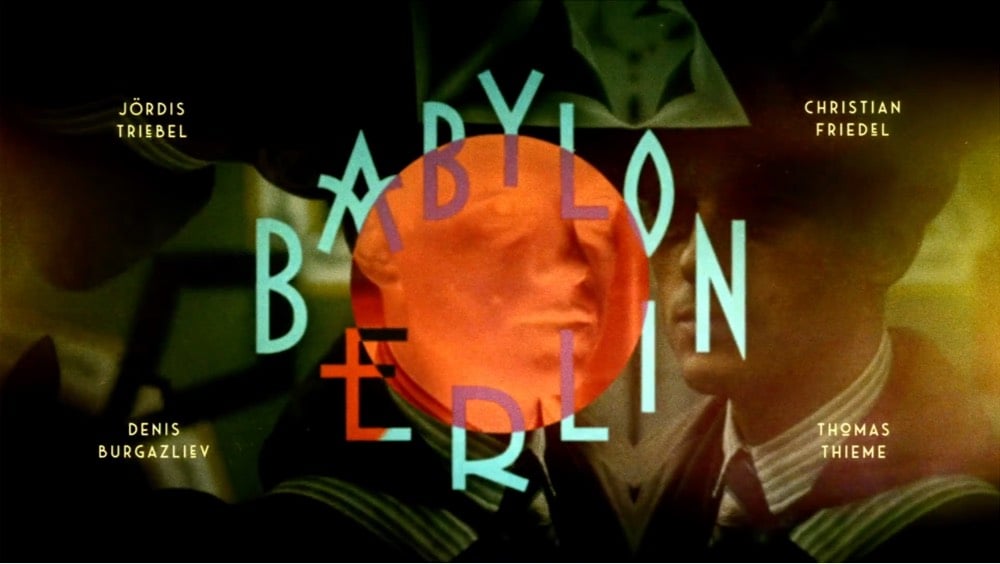
The list also includes the titles for Spider-Man: Into the Spider-Verse, which might be the most visually inventive box office #1 in recent memory.
Interestingly, two of the sequences on the list aren’t from film or TV but from conferences: Semi Permanent 2018 and Made In The Middle 2018. Only three out of the ten were from movies.
On Twitter this morning, Craig Mod asked:
What’s the best conference talk/public speech you’ve seen? Topic can be anything. Just the most engaging talk you’ve been present for?
And bonus points: Is there any one particular speaker who’s so good you make an effort to see?
I’ve been to a lot of conferences and seen some very engaging speakers, but the one that sticks out most in my mind is Eloma Simpson Barnes’ performance of a Martin Luther King Jr. speech at PopTech in 2004 (audio-only here).
Her oration is actually a combination of excerpts from two King speeches: his address at the Great Walk to Freedom in Detroit in June 1963 and his Drum Major Instinct sermon given at Atlanta’s Ebenezer Baptist Church in February 1968. King’s Detroit address is notable for being a test run of sorts for his I Have a Dream speech in Washington D.C. two months later. If you look at the Detroit transcript, you’ll notice some familiar words:
And so this afternoon, I have a dream. (Go ahead) It is a dream deeply rooted in the American dream.
I have a dream that one day, right down in Georgia and Mississippi and Alabama, the sons of former slaves and the sons of former slave owners will be able to live together as brothers.
I have a dream this afternoon (I have a dream) that one day, [Applause] one day little white children and little Negro children will be able to join hands as brothers and sisters.
In the Drum Major Instinct sermon given two months to the day before his assassination, King told the congregation what he wanted to be said about him at his funeral:
I’d like somebody to mention that day that Martin Luther King, Jr., tried to give his life serving others.
I’d like for somebody to say that day that Martin Luther King, Jr., tried to love somebody.
I want you to say that day that I tried to be right on the war question.
I want you to be able to say that day that I did try to feed the hungry.
And I want you to be able to say that day that I did try in my life to clothe those who were naked.
I want you to say on that day that I did try in my life to visit those who were in prison.
I want you to say that I tried to love and serve humanity.
Some of the power of Barnes’ performance is lost in the video, particularly when audio from King’s actual speeches are available online, but sitting in the audience listening to her thundering away in that familiar cadence was thrilling. I can’t imagine how it must have felt to experience the real thing.
Jason Fried wrote a preview of what’s coming in Basecamp 3. Jim Ray noted on Twitter that “Basecamp vs. Slack will be interesting”. And suddenly I remembered that back in 2002, Jason, Slack CEO Stewart Butterfield, and I hosted a “peer meeting” on Simplicity in Web Design at SXSW.1 The meeting’s description:
As the Web continues to increase in complexity, many designers are looking to simplicity as a tool in designing Web sites that are at once powerful and easy for people to use. Join your peers and colleagues in a discussion facilitated by three working designers who are committed to producing work which is simple: obvious, elegant, economical, efficient, powerful and attractive. We’ll be discussing what simplicity in Web design really means, the difference between Minimalism as an aesthetic and simplicity as a design goal, who is and who isn’t simple, how you can use simplicity to your advantage, and plenty more.
It’s fun to see those two going at it more than 13 years later, still focused on harnessing the power of simplicity to help people get their best work done. (I don’t know what the other guy’s deal is. He’s doing…. something, I guess.)
In celebration of its 20th anniversary, Fast Company presents an oral history of the SXSW Interactive Festival.
Within SXSW Interactive’s march from obscurity to prominence is the story of digital culture itself. SXSW was a hive of activity for early web denizens and hackers around the turn of the century, and a birthing ground for the social media revolution that reshaped modern life in the second half of the ’00s. Its emergence from the shadow of the music festival it grew out of mirrors the transformation of geeks into modern society’s newest rock stars.
I went to SXSW a handful of times (maybe five?), met my wife there, and even keynoted (w/ Dooce) in the big room (which was, in my memory, a disaster of Zuckerpudlian proportions). Paul Ford noted on Twitter:
Wow this is just a tiny bit The Oral History of Talking About Yourself.
Totes get that, but South By1 distinguished itself in the early days by being a conference where anyone could participate. Attendees took ownership of this conference as they could not at the other big web conferences of the era. Everyone was someone, everyone was nobody. (I mean, not literally — the Jeffreys (Zeldman and Veen) couldn’t walk three feet without someone engaging them in conversation. But you get my drift.) As on the personal web of the late 1900s and early 2000s, you were the focal point of SXSW, for better or worse.
Aaron Cohen, a frequent contributor to kottke.org famous for his late-night (and, I would assume, drunken) extreme sports posts, is putting on a pair of events in Boston in February. The first is Up Up Down Down, a mini-conference on side projects. Which is such a great idea for a conference.
The second event is Whiskey Rebellion, “a showcase of American brown spirits”. The tasting list includes more than 75 whiskies and bourbons. This one is sold out (unsurprisingly) but there appears to be a waiting list. My schedule for that weekend is up in the air, but I hope I can make it to one or both of these.
PopTech is a TED-like conference that takes place in Camden, Maine each October. I’ve been three or four times…it’s a good conference. This year, they’re streaming the whole thing live…not bad for a $2000/ticket conference. There are a few names on the schedule that you may recognize (Kevin Slavin, Rodney Mullen, Charlie Todd) but it looks like they’ve done a good job gathering folks other than the usual suspects.
I attended the XOXO Festival in Portland, OR this past weekend. I don’t have a great deal to say about it because — and I’m not trying to be a dick here — you had to be there. As in, physically in the room with the speakers and the attendees. But I did want to mention a few things.
- XOXO was put on by Andy Baio and Andy McMillan. They killed it. And they killed it because they really really (really!) cared about what they were doing, so much so that they were (at times unsuccessfully) holding back tears as they did their outro. Do Chris Anderson or Walt Mossberg cry at the end of TED and D? I don’t think so.
- At no point during the weekend did anyone on the stage make a cynical or ironic remark. Everyone was so positive. It would be easy to mistake it for wide-eyed and naive idealism but that optimism is hard-won and tempered by experience. You can do it — we can do it — because we’ve done it before.
- XOXO attendees were generally not on their computers or phones. They listened to the talks and chatted with their nearby seatmates. It was amazingly refreshing. More conferences like this please.
- Though not specifically referenced, one of the themes of the weekend was what David Brooks referred to as “the power of the particular”. From his piece in the NY Times a few months ago:
It makes you appreciate the tremendous power of particularity. If your identity is formed by hard boundaries, if you come from a specific place, if you embody a distinct musical tradition, if your concerns are expressed through a specific paracosm, you are going to have more depth and definition than you are if you grew up in the far-flung networks of pluralism and eclecticism, surfing from one spot to the next, sampling one style then the next, your identity formed by soft boundaries, or none at all.
The whole experience makes me want to pull aside politicians and business leaders and maybe everyone else and offer some pious advice: Don’t try to be everyman. Don’t pretend you’re a member of every community you visit. Don’t try to be citizens of some artificial globalized community. Go deeper into your own tradition. Call more upon the geography of your own past. Be distinct and credible. People will come.
Examples of this power abounded at XOXO. The indie gaming scene is insanely niche but, as documented in Indie Game: The Movie, some of the best and more unique games make millions of dollars. Emily Winfield Martin felt like a misfit in art school but gained a huge following for her illustrations on Etsy and is now living her dream of creating children’s books. Julia Nunes started out playing cover songs on her ukelele in YouTube videos and now has albums and has played with Weezer and Ben Folds and appeared on Conan. Adam Savage told the story of The Adventurebilt Hat Company, which started making replicas of Indiana Jones’ hat from Raiders of the Lost Ark because they were fans of the film and ended up supplying the actual hats for the fourth Indy movie. The PDX671 food cart that took home the judges’ award in the 2012 Eat Mobile awards was parked outside of the festival both days serving cuisine from Guam. Another cart from the XOXO pod, Nong’s Khao Man Gai, serves only a single Thai dish and boasts long lunch lines. Even the numerous craft beers available all over Portland are valued by aficionados for each beer’s particular characteristics.
My pal Andy Baio is throwing a conference in Portland in September and funding the whole thing on Kickstarter.
XOXO is a celebration of disruptive creativity. We want to take all the independent artists using the Internet to make a living doing what they love — the makers, craftspeople, musicians, filmmakers, comic book artists, game designers, hardware hackers — and bring them together with the technologists building the platforms that make it possible. If you have an audience and a good idea, nothing’s standing in your way.
It reminds me a bit of what SXSW used to be. I bought a ticket and am hoping to be there. Only 68 tickets remaining so if you want to go, you’d better pull the trigger on the ticket gun.
A marketing company is using some of Austin’s homeless population as roving pay-as-you-go wireless hotspots during SXSW. The project is called Homeless Hotspots.
Homeless people have been enlisted to roam the streets wearing T-shirts that say “I am a 4G hotspot.” Passersby can pay what they wish to get online via the 4G-to-Wi-Fi device that the person is carrying. It is a neat idea on a practical level, but also a little dystopian. When the infrastructure fails us… we turn human beings into infrastructure?
Matt Haughey’s SXSW talk, Real World Moderation: Lessons from 11 Years of Community, was quite well received so he posted a version he recorded at home to Vimeo.
After 11 years of running MetaFilter.com, I (and the other moderators) have been through just about everything, and we’ve built dozens of custom tools to weed out garbage, spammers, and scammers from the site.
I’ll cover how to identify and solve problems including identity, trolling, sockpuppets, and other nefarious community issues, show off custom tools we’ve developed for MetaFilter, and show you how to incorporate them into your own community sites.
(via @pb)
Meant to post about this when it was announced: the Brand New Conference, Nov 5 in NYC.
The Brand New Conference is a one-day event organized by UnderConsideration, focusing on the practice of corporate and brand identity — a direct extension of the popular blog, Brand New. The conference consists of eight sessions offering a broad range of points of view with speakers from around the world practicing in different environments, from global consultancies, to in-house groups, to small firms.
Speakers include boldface names Michael Bierut, Paula Scher, and Erik Spiekermann. Surprisingly, tickets are still available.
Older posts





Socials & More