kottke.org posts about books
Using a 5000-word dictionary of words rated on their happiness, the Hedonometer measures the average happiness on Twitter.
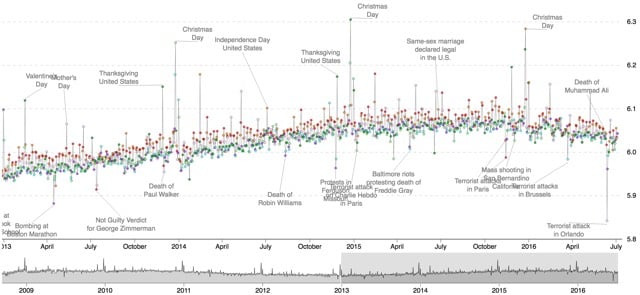
Christmas is always the happiest day of the year (“merry”, “happy”, and “joy” are all pretty positive) while shootings and terrorist attacks are Twitter’s saddest events. The recent mass shooting in Orlando seems to be the least happy Twitter has been over the past 7+ years.
The Hedonometer also analyzes the overall happiness of movies based on their scripts. The happiest movie is Sex in the City while the saddest is Omega Man (followed by The Bourne Ultimatum). Somehow, the fourth happiest movie is Lost in Translation, which might be reason for some overall skepticism about the project’s sensitivity to context.
The happiness over time of individual movie scripts has been analyzed by the Hedonometer too. Pulp Fiction’s happiest moment is when Vincent and Mia go to Jackrabbit Slim’s and the low point is “Bring out the Gimp”.
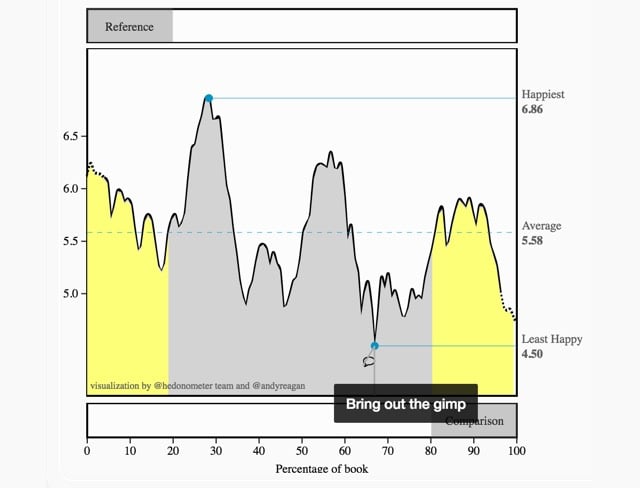
The system has analyzed books as well…the low point of the entire Harry Potter series seems to be the event at the end of The Half-Blood Prince.
Update: Grain of salt and all that, but the shootings of Alton Sterling, Philando Castile, and the Dallas police officers have pushed the happiness quotient on Twitter lower again so that the two least happy days have both occurred in the past month. There’s been a general feeling that 2016 has been a bad year, like George RR Martin is writing it. I wish the data were available for a closer analysis, but if you look at the chart, you can see that Twitter’s overall happiness starts to rise around the end of 2012 but starts to fall again right around the beginning of 2016…the effect is quite clear, even just from eyeballing it.
The AIGA and Design Observer have announced the results of the 50 Books/50 Covers competition for books published in 2015. The competition recognizes excellence in design of books and, separately, book covers. Here are a couple of my favorite covers:
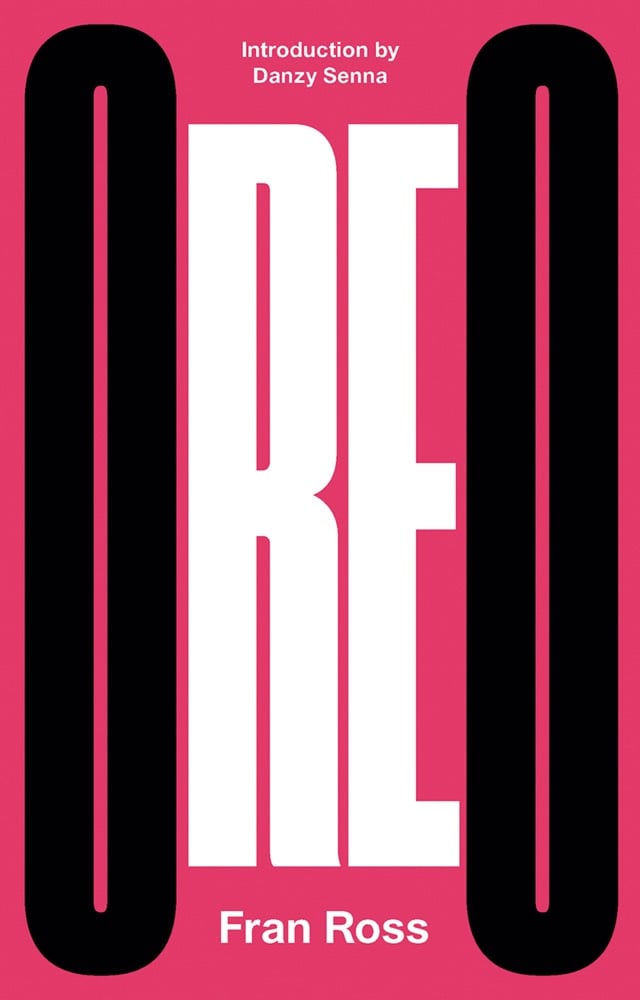

Oreo by Fran Ross was designed by Erik Carter and Moon-Kie Jung’s Beneath the Surface of White Supremacy was designed by Anne Jordan and Mitch Goldstein.
Kurzgesagt gives us a short tour of human history, from the six different species of human that existed 100,000 years ago to the present. If you found that interesting and want more detail, you should read Sapiens…Kurzgesagt used it as a major reference here.
Most books about the history of humanity pursue either a historical or a biological approach, but Dr. Yuval Noah Harari breaks the mold with this highly original book that begins about 70,000 years ago with the appearance of modern cognition. From examining the role evolving humans have played in the global ecosystem to charting the rise of empires, Sapiens integrates history and science to reconsider accepted narratives, connect past developments with contemporary concerns, and examine specific events within the context of larger ideas.
I awoke at 3am last night, perhaps having sensed a disturbance in the Force, read a late-night text from a friend that said, “BREXIT!!” and spent the next two hours reading, shocked and alarmed, about Britain’s voting public’s decision to leave the European Union. Although according to a piece by David Allen Green in the FT, the decision is not legally binding and nothing will immediately change with regard to Britain’s laws or EU member status, the outcome is nevertheless distressing for the reasons outlined succinctly by an FT commenter.
A quick note on the first three tragedies. Firstly it was the working classes who voted for us to leave because they were economically disregarded and it is they who will suffer the most in the short term from the dearth of jobs and investment. They have merely swapped one distant and unreachable elite for another one. Secondly, the younger generation has lost the right to live and work in 27 other countries. We will never know the full extent of the lost opportunities, friendships, marriages, and experiences we will be denied. Freedom of movement was taken away by our parents, uncles, and grandparents in a parting blow to a generation that was already drowning in the debts of our predecessors. Thirdly and perhaps most significantly, we now live in a post-factual democracy. When the facts met the myths they were as useless as bullets bouncing off the bodies of aliens in a HG Well novel. When Michael Gove said ‘the British people are sick of experts’ he was right. But can anybody tell me the last time a prevailing culture of anti-intellectualism has lead to anything other than bigotry?
Reading this and casting your mind to Trump and the upcoming US election is not that difficult.
I’ve been thinking a lot about a book I read several years ago by Robert Wright called Nonzero: The Logic of Human Destiny. In it, Wright argues that cooperation among individuals and ever-larger groups has been essential in pushing biological and cultural evolution forward. From the first chapter of the book:
The survey of organic history is brief, and the survey of human history not so brief. Human history, after all, is notoriously messy. But I don’t think it’s nearly as messy as it’s often made out to be. Indeed, even if you start the survey back when the most complex society on earth was a hunter-gatherer village, and follow it up to the present, you can capture history’s basic trajectory by reference to a core pattern: New technologies arise that permit or encourage new, richer forms of non-zero-sum interaction; then (for intelligible reasons grounded ultimately in human nature) social structures evolve that realize this rich potential — that convert non-zero-sum situations into positive sums. Thus does social complexity grow in scope and depth.
This isn’t to say that non-zero-sum games always have win-win outcomes rather than lose-lose outcomes. Nor is it to say that the powerful and the treacherous never exploit the weak and the naive; parasitic behavior is often possible in non-zero-sum games, and history offers no shortage of examples. Still, on balance, over the long run, non-zero-sum situations produce more positive sums than negative sums, more mutual benefit than parasitism. As a result, people become embedded in larger and richer webs of interdependence.
The atmosphere of xenophobia on display in the US, Britain, and elsewhere in Europe is affecting our ability to work together for a better future together. World War II ended more than 70 years ago, long enough in the past that relatively few are still alive who remember the factors that led to war and the sort of people who pushed for it. Putin, Brexit, Trump, the Front National in France…has the West really forgotten WWII? If so, God help us all.
P.S. I also have a couple of contemporary songs running through my head about all this. The first is What Comes Next? from the Hamilton soundtrack:
What comes next?
You’ve been freed
Do you know how hard it is to lead?
You’re on your own
Awesome. Wow
Do you have a clue what happens now?
And the second is a track from Beyonce’s Lemonade, Don’t Hurt Yourself:
When you hurt me, you hurt yourself
Try not to hurt yourself
When you play me, you play yourself
Don’t play yourself
When you lie to me, you lie to yourself
You only lying to yourself
When you love me, you love yourself
Britain just played itself.
Update: Excellent op-ed in the LA Times by Brian Klaas and Marcel Dirsus.
This is the glaring contradiction in the muscular nationalism of right-wing populism, blended with isolationism, that seeks to withdraw from international unions: It cannot shape a better world by shutting the world out. The same people who cheer when Trump laments the decline of American leadership want to ignore key global issues and put “America First.” The people who voted for Brexit, attempting to create a border between Britain and challenges such as the refugee crisis, seem to think Britain can solve such problems without consulting Germany or France or, worst of all to them, Brussels.
The world doesn’t work that way, and it hasn’t for decades. Ever-increasing globalization has created an unprecedented surge in prosperity, but it has also ushered in jarring changes. The rough edges of those changes can only be overcome with more aggressive cooperation and engagement, not less. Whether it’s the risks of terrorism, the tragic flow of refugees, or economic shocks, Britain cannot solve problems alone and neither can the United States.
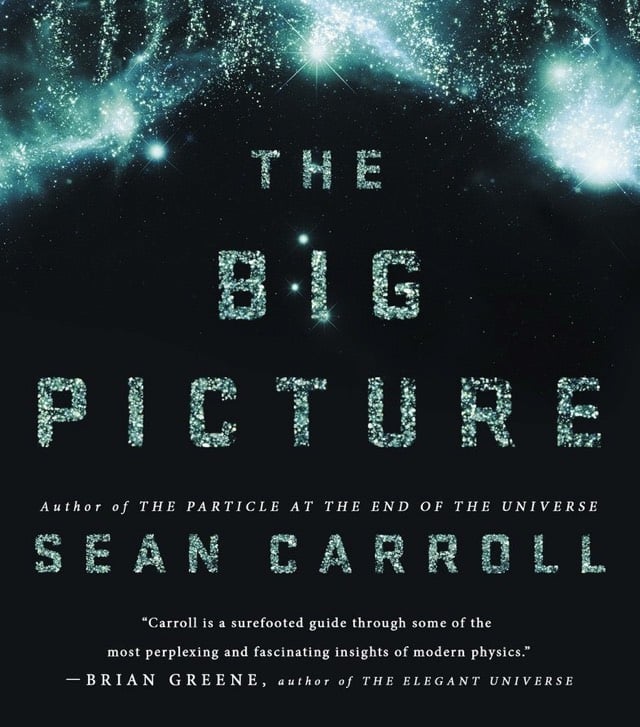
After an unbelievably stressful and busy winter/spring, I am hoping to find some time to read this summer. One of the books on my short list is Sean Carroll’s The Big Picture, one of those “everything is connected” things I love. From a post by Carroll on what the book’s about:
This book is a culmination of things I’ve been thinking about for a long time. I’ve loved physics from a young age, but I’ve also been interested in all sorts of “big” questions, from philosophy to evolution and neuroscience. And what these separate fields have in common is that they all aim to capture certain aspects of the same underlying universe. Therefore, while they are indisputably separate fields of endeavor — you don’t need to understand particle physics to be a world-class biologist — they must nevertheless be compatible with each other — if your theory of biology relies on forces that are not part of the Standard Model, it’s probably a non-starter. That’s more of a constraint than you might imagine. For example, it implies that there is no such thing as life after death. Your memories and other pieces of mental information are encoded in the arrangement of atoms in your brain, and there’s no way for that information to escape your body when you die.
Yeah, that sounds right up my alley.
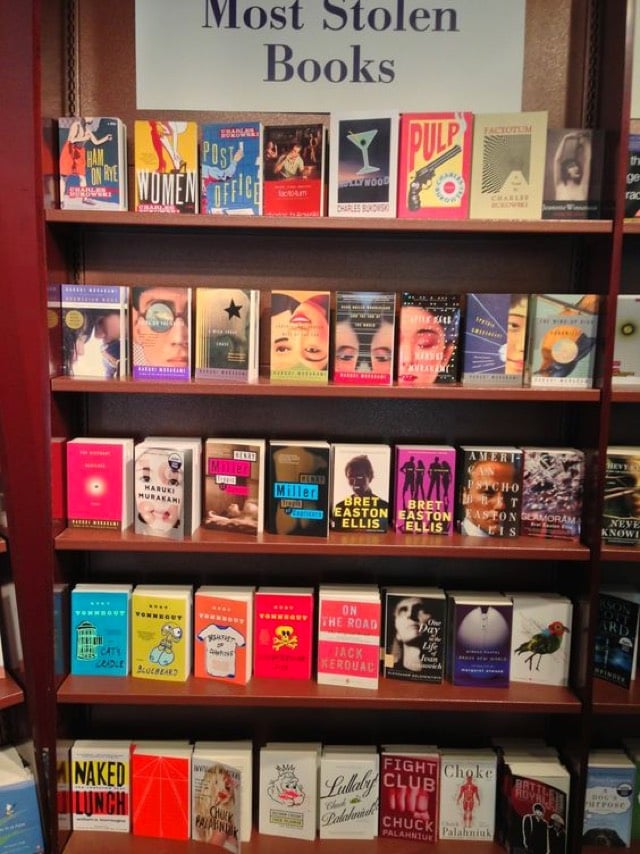
Vintage/Anchor Books recently tweeted out a photo of a Most Stolen Books shelf at a bookstore. Some of the books on the shelf include The Wind-Up Bird Chronicle (one of many Murakamis), Charles Bukowski’s Hollywood, and On the Road by Jack Kerouac.
According to research by Candice Huber, books by Bukowski and Kerouac are indeed popular targets for theft from bookstores, along with those by Hemingway, David Sedaris, and The Great Gatsby. All of the books listed are by men, and most by “manly” men. This 2009 list from the UK is slightly different: J.K. Rowling’s Harry Potter books and Abbie Hoffman’s Steal This Book both rank high.
Libraries are a different story. According to Huber, the most frequently stolen library books are the Guinness Book of World Records, which is a favorite around our house,1 and The Bible. Thieves could use the Good Book’s wisdom more than many, I guess. Art books, the Sports Illustrated swimsuit issue, and test prep books are also popular with the light-fingered. Judging from my personal experience hanging around garages and auto mechanics when I was a kid, Chilton’s Auto Repair manuals were also lifted quite often.
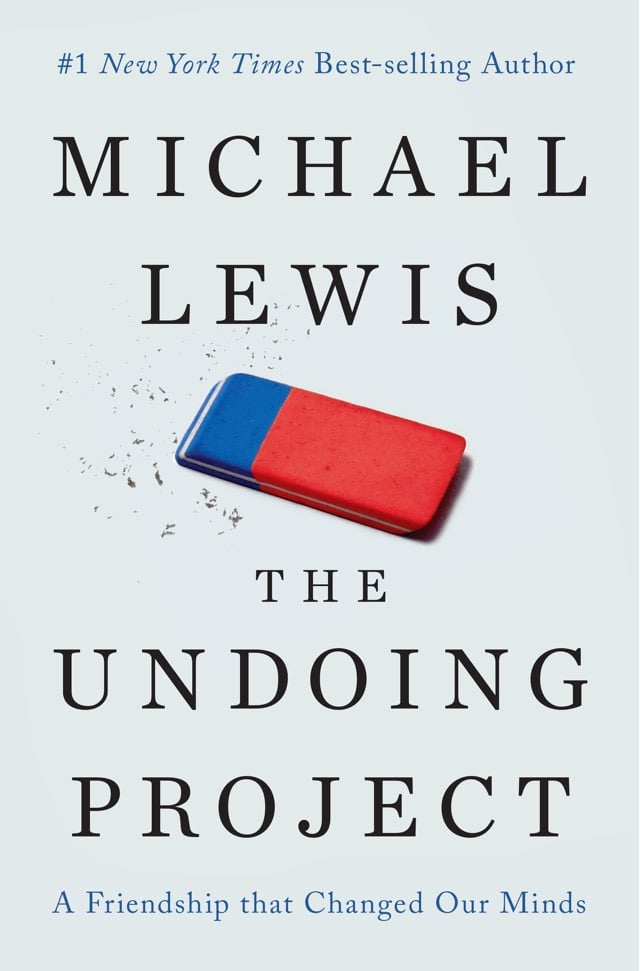
Michael Lewis (c’mon, you know, Moneyball, The Big Short) is coming out with a new book in December called The Undoing Project: A Friendship that Changed Our Minds about the flaws that crop up in human decision-making.
Forty years ago, Israeli psychologists Daniel Kahneman and Amos Tversky wrote a series of breathtakingly original studies undoing our assumptions about the decision-making process. Their papers showed the ways in which the human mind erred, systematically, when forced to make judgments about uncertain situations. Their work created the field of behavioral economics, revolutionized Big Data studies, advanced evidence-based medicine, led to a new approach to government regulation, and made much of Michael Lewis’s own work possible. Kahneman and Tversky are more responsible than anybody for the powerful trend to mistrust human intuition and defer to algorithms.
Kahneman won the Nobel Prize in economics in 2002 and is the author of the well-regarded Thinking, Fast and Slow. (via nytimes)
Siddhartha Mukherjee, who wrote The Emperor of All Maladies, a biography of cancer and one of my favorite recent reads, is out with a new book called The Gene: An Intimate History.
Siddhartha Mukherjee has a written a biography of the gene as deft, brilliant, and illuminating as his extraordinarily successful biography of cancer. Weaving science, social history, and personal narrative to tell us the story of one of the most important conceptual breakthroughs of modern times, Mukherjee animates the quest to understand human heredity and its surprising influence on our lives, personalities, identities, fates, and choices.
The book comes recommended by Tyler Cowen, who IIRC also recommended Emperor of All Maladies to me.
This book filled in a number of gaps in my knowledge, plus it is engaging to read. Overall it confirmed my impression of major advances in the science, but not matched by many medical products for general use.
This is on the must-read list this summer. Somehow. When I get a second.
In this video, Harry Frankfurt, author of On Bullshit, talks about what bullshit is and how dangerous it is to society.
The reason why there’s so much bullshit I think is that people just talk. If they don’t talk, they don’t get paid. The advertiser wants to gain sales. The politician wants to gain votes. Now, that’s ok but they have to talk about things that they don’t really know much about. So, since they don’t have anything really valid to say, they just say whatever they think will interest the audience, make it appear they know what they’re talking about. And what comes out is bullshit.
The bullshitter is more creative. He’s not submissive. It’s not important to him what the world really is like. What’s important to him is how he’d like to represent himself. He takes a more adventurous and inventive attitude towards reality, which may be sometimes very colorful, sometimes amusing, sometimes it might produce results that are enjoyable. But it’s also very dangerous.
It’s at this point that the video cuts to Donald Trump, who is the Lionel Messi of bullshitting; it is his singular dazzling gift. He cultivates convenient facts and deliberately remains ignorant of inconvenient ones so as to be most effective. As Frankfurt notes, bullshit is a serious threat to the truth because it’s not the opposite of truth…it cannot be refuted like a lie can:
Liars attempt to conceal the truth by substituting something for the truth that isn’t true. Bullshit is not a matter of trying to conceal the truth, it is a matter of trying to manipulate the listener, and if the truth will do, then that’s fine and if the truth won’t do, that’s also fine. The bullshitter is indifferent to the truth in a way in which the liar is not. He’s playing a different game.
It is Trump’s indifference to the truth that makes him so effective and so powerful. Much of what I read from people who oppose Trump attempts to counter his rhetoric with facts. That hasn’t worked and is not going to work. The truth is not the antidote for bullshit. So how do you defeat the bullshitter? This has been a genuine problem for his political opponents thus far. Frankfurt doesn’t offer any advice in the video (perhaps his book does?), and I’m at a loss as well, but I do know that factual refutation will not make any difference. I hope someone figures it out soon though.
Cass Sunstein, author of the recently published The World According to Star Wars, says that while most people might dislike the three Star Wars prequels, they function well as “a quick guide to current political struggles”.
A long time ago, in a galaxy far, far away, paralyzing political divisions threatened democratic governments. Disputes over free trade, and the free movement of people and goods, were a big reason. Stymied by polarization and endless debates, the Senate proved unable to resolve those disputes.
As a result, nationalist sentiments intensified, leading to movements for separation from centralized institutions. People craved a strong leader who would introduce order — and simultaneously combat growing terrorist threats.
A prominent voice, Anakin Skywalker, insisted, “We need a system where the politicians sit down and discuss the problem, agree what’s in the interest of all the people, and then do it.” And if they didn’t, “they should be made to.”
Eventually, something far worse happened. The legislature voted to give “emergency powers” — essentially unlimited authority — to the chief executive. An astute observer, Padme Amidala, noted, “So this is how liberty dies… with thunderous applause.”
Well, that was kind of terrifying to read. My ill-feeling peaked at “a democratic body, a senate, not being able to function properly because everybody’s squabbling” as a cause of Hitler’s rise in Germany. As Sunstein notes, the parallels between that situation and our do-nothing Congress & the authoritarian gentleman currently running for President are obvious and possibly significant.
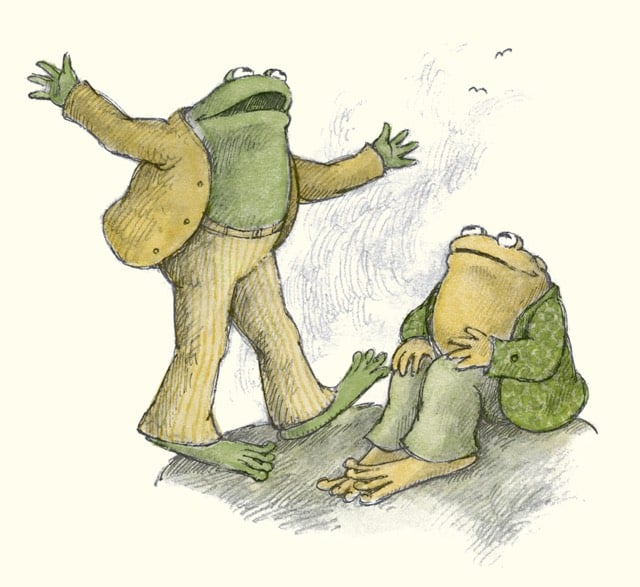
Bert Clere wrote a nice appreciation for the children’s books of Arnold Lobel, among them the Frog and Toad series and Owl at Home. Clere says Lobel’s stories offered insights for children about, yes, friendship but also about the importance of individuality.
Lobel’s Frog and Toad series, published in four volumes containing five stories each during the 1970s, remains his most popular and enduring work. Frog and Toad, two very different characters, make something of an odd couple. Their friendship demonstrates the many ups and downs of human attachment, touching on deep truths about life, philosophy, and human nature in the process. But it isn’t all about relationships with others: In the series, and in his lesser-known 1975 book Owl at Home, Lobel offers a conception of the self that still resonates decades later. Throughout his books, he reminds readers that they are individuals, and that they shouldn’t be afraid of being themselves.
Frog and Toad are favorites at our house. I’m going to read them to the kids this weekend with a new appreciation. Wanting to fit into the group is a powerful impulse for children, reinforced these days by the increased focus on group work in schools, so it’s nice to have a counterpoint to share with them.
Update: From the New Yorker’s Colin Stokes, another appreciation of Arnold Lobel. Lobel’s daughter Adrianne suspects the Frog & Toad books were “the beginning of him coming out” of the closet.
Adrianne suspects that there’s another dimension to the series’s sustained popularity. Frog and Toad are “of the same sex, and they love each other,” she told me. “It was quite ahead of its time in that respect.” In 1974, four years after the first book in the series was published, Lobel came out to his family as gay. “I think ‘Frog and Toad’ really was the beginning of him coming out,” Adrianne told me.
The article also sadly notes that Lobel died at age 54, “an early victim of the AIDS crisis”. (via @bdeskin)

David Grann has been relatively quiet lately on Twitter and at the New Yorker, where he is a staff writer; he hasn’t written anything for them in more than four years. I figured he was busy writing a book and so he was. Killers of the Flower Moon: The Osage Murders and the Birth of the FBI is about the murders of the members of the Osage Indian Nation in the 1920s.
In the 1920s, the richest people per capita in the world were members of the Osage Indian Nation in Oklahoma. After oil was discovered beneath their land, the Osage rode in chauffeured automobiles, built mansions, and sent their children to study in Europe.
Then, one by one, they began to be killed off. One Osage woman, Mollie Burkhart, watched as her family was murdered. Her older sister was shot. Her mother was then slowly poisoned. And it was just the beginning, as more Osage began to die under mysterious circumstances.
Sounds fantastic. Grann’s previous books are The Devil and Sherlock Holmes and The Lost City of Z, which should be out in movie form sometime soon.
In a conversation last year with Nikole Hannah-Jones, Ta-Nehisi Coates recommended that readers of his acclaimed Between the World and Me check out a baker’s dozen other books, including his mentor David Carr’s The Night of the Gun, The Half Has Never Been Told (previously mentioned here), and James Baldwin’s The Fire Next Time.
I could have imagined Isabel Wilkerson’s excellent The Warmth of Other Suns on this list too; it’s the most eye-opening American history book I’ve read in years. (Paging Lin-Manuel Miranda to make a play out of this.)
Microsoft founder Bill Gates, in addition to attempting to save the world, is also a voracious reader. He recently recommended five books that you should read this summer. On the list is Seveneves by Neal Stephenson, which I might finally try, having absolutely loved Snow Crash and Cryptonomicon when I read them a few years ago. Gates also recommends Yuval Noah Harari’s Sapiens, which I read earlier this year and think about every few days. I wrote a bit about Sapiens and the invention of farming, which is a topic about which Gates disagreed with Harari.
Robert Langdon is back. The Da Vinci Code’s Dan Brown wrote a book about a secret riddle related to Dante’s Inferno and Tom Hanks is back to star in the movie version. Oh yes.
Confession: The Da Vinci Code and Angels & Demons are two of my favorite guilty pleasure movies. Further even more embarrassing confession: my pleasure in The Da Vinci Code is not even guilty…I think it’s just a straight-up good action adventure movie. In summary: are you sure you want to trust my movie advice in the future? (via trailer town)

Jane Jacobs, journalist, activist, and author of The Death and Life of Great American Cities (one of my favorite books of all time), was born 100 years ago today. Curbed has a big collection of stories in celebration and Vox also has an appreciation of her career.
When Jane Jacobs published The Death and Life of Great American Cities in 1961, she was a lone voice with no credentials speaking up against the most powerful ideas in urban planning. Fifty-five years later, on Jacobs’ 100th birthday (honored in today’s Google Doodle), urban dwellers are all living in her vision of the great American city.
The Death and Life of Great American Cities was a reaction to urban planning movements that wanted to clear entire city blocks and rebuild them. Jacobs argued this ignored everything that made cities great: the mixture of shops, offices, and housing that brought people together to live their lives. And her vision triumphed.
Fun and sorta weird fact: neither The Death and Life of Great American Cities or Robert Caro’s The Power Broker (about Jacobs’ foe Robert Moses) is available in ebook format.
Update: From an interview with Jacobs included in Jane Jacobs: The Last Interview and Other Conversations:
If I were running a school, I’d have one standing assignment that would begin in the first grade and go on all through school, every week: that each child should bring in something said by an authority — it could be by the teacher, or something they see in print, but something that they don’t agree with — and refute it.
BTW, I started the audiobook version of The Power Broker today and it is already so good. (via brainpickings)
Mark Vanhoenacker is a pilot for British Airways and also the author of the well-reviewed Skyfaring, a book about the human experience of flight. Vanhoenacker recently shared six things he’s learned from being a pilot for the past 15 years.
I came up with the term “place lag” to refer to the way that airliners can essentially teleport us into a moment in a far-off city; getting us there much faster, perhaps, than our own deep sense of place can travel. I could be in a park in London one afternoon, running, or drinking a coffee and chatting to the dog-walkers. Later I’ll go to an airport, meet my colleagues, walk into a cockpit, and take off for Cape Town. I’ll fly over the Pyrenees and Palma and see the lights of Algiers come on at sunset, then sail over the Sahara and the Sahel. I’ll cross the equator, and dawn will come to me as I parallel the Skeleton Coast of Namibia, and finally I’ll see Table Mountain in the distance as I descend to the Mother City.
Then, less than an hour after the long-stilled wheels of the 747 were spun back to life by the sun-beaten surface of an African runway, I’ll be on a bus heading into Cape Town, sitting in rush hour traffic, on an ordinary morning in which, glancing down through the windshield of a nearby car, I’ll see a hand lift a cup of coffee or reach forward to tune the radio. And I’ll think: All this would still be going on if I hadn’t flown here. And that’s equally true of London, and of all the other cities I passed in the long night, that I saw only the lights of. For everyone, and every place, it’s the present.
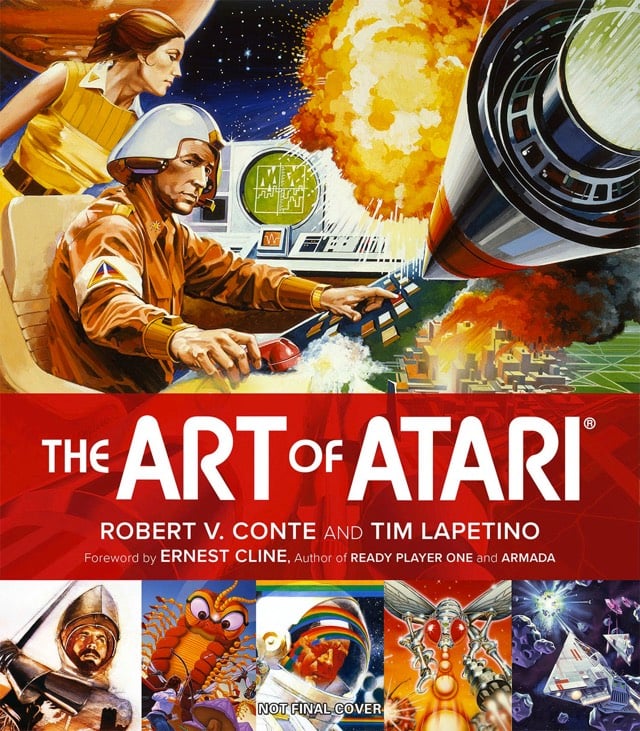
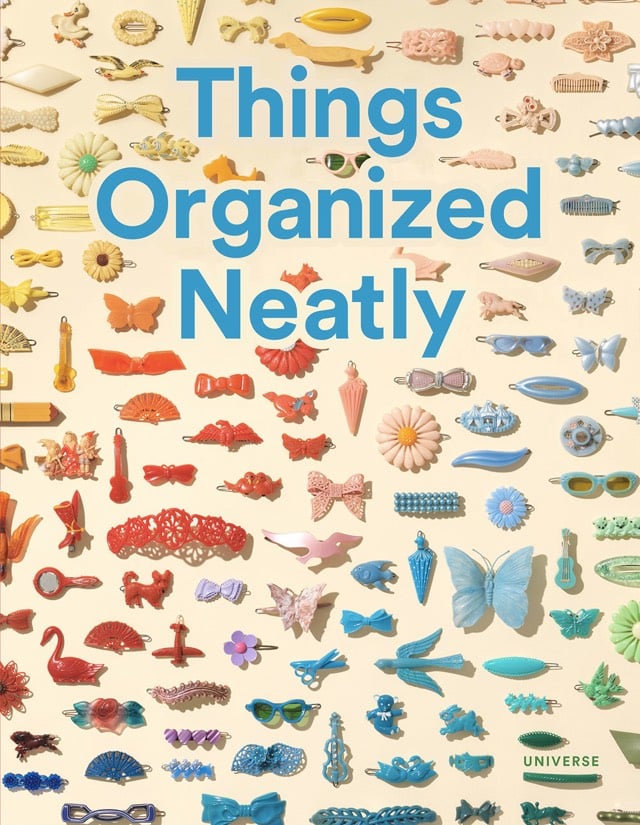
The Art of Atari showcases the design of the iconic company’s video game packaging, advertisements, catalogs, and other stuff. Judging from my reaction to just the cover, I might die of nostalgia if I were to see the inside. Might be worth the risk though.
See also season 3 of Boss Fight Books featuring books on SMB3, Mega Man 3, Katamari Damacy, and more. (via df & @robinsloan)
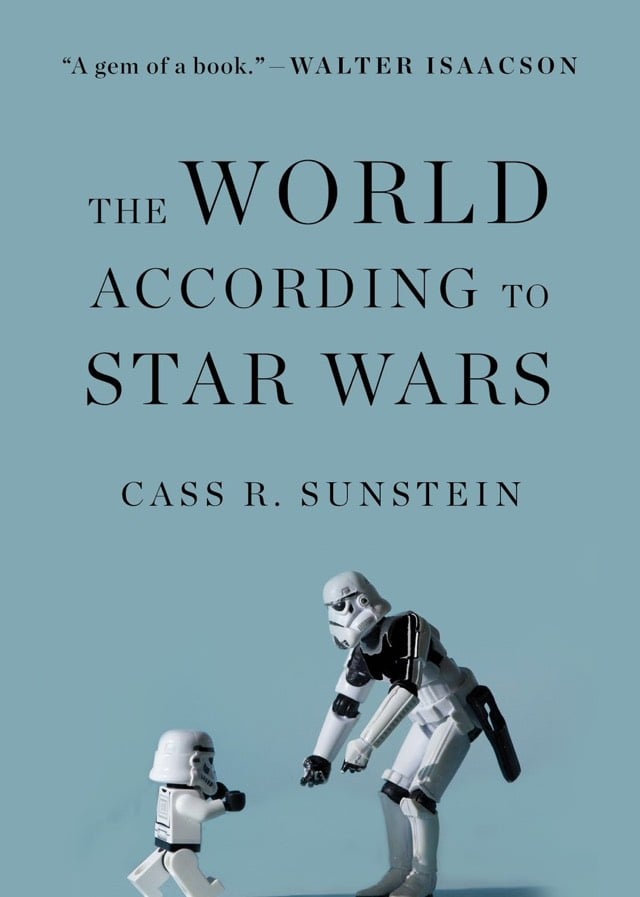
In The World According to Star Wars, Cass Sunstein explores the philosophy and life lessons of Star Wars.
In this fun, erudite and often moving book, Cass R. Sunstein explores the lessons of Star Wars as they relate to childhood, fathers, the Dark Side, rebellion, and redemption. As it turns out, Star Wars also has a lot to teach us about constitutional law, economics, and political uprisings.
Update: Sunstein, who is a professor at Harvard Law School, gave the commencement address last year at Penn Law. He starts off, dryly: “Graduates, faculty, family, friends, our topic today is Star Wars.”
(via @EmilyBrenn)

String Theory, a collection of David Foster Wallace’s writings on tennis will be out next month.1 The five pieces in the book include his NY Times’ essay on Federer and a 1991 piece from Harper’s. John Jeremiah Sullivan wrote an introduction, which was published recently in the New Yorker.
The collection is also available on the Kindle, without the Sullivan intro.
In a new video, Even Puschak talks about the rise of the serialization genre, from Dickens to Flash Gordon to General Hospital to Star Wars. Now that our entertainment is increasingly serialized, he argues that audiences have a unique opportunity to shape what we watch. (Case in point: the increased importance of non-white and non-male characters in The Force Awakens and Rogue One.)
Further reading: Wired’s You Won’t Live to See the Final Star Wars Movie, which I’ve thought about almost every week since I read it.
Everywhere, studio suits are recruiting creatives who can weave characters and story lines into decades-spanning tapestries of prequels, side-quels, TV shows, games, toys, and so on. Brand awareness goes through the roof; audiences get a steady, soothing mainline drip of familiar characters.
Forget the business implications for a moment, though. The shared universe represents something rare in Hollywood: a new idea. It evolved from the narrative techniques not of auteur or blockbuster films but of comic books and TV, and porting that model over isn’t easy. It needs different kinds of writers and directors and a different way of looking at the structure of storytelling itself. Marvel prototyped the process; Lucasfilm is trying to industrialize it.
And Puschak recommends Consuming Pleasures by Jennifer Hayward.
Ranging from installment novels, mysteries, and detective fiction of the 1800s to the television and movie series, comics, and advertisements of the twentieth century, serials are loosely linked by what may be called “family resemblances.” These traits include intertwined subplots, diverse casts of characters, dramatic plot reversals, suspense, an such narrative devices as long-lost family members and evil twins. Hayward chooses four texts to represent the evolution of serial fiction as a genre and to analyze the peculiar draw that serials have upon their audiences: Dickens’s novel Our Mutual Friend, Milton Canif’s comic strip Terry and the Pirates, and the soap operas All My Children and One Life to Live. Hayward argues that serial audiences have developed active strategies of consumption, such as collaborative reading and attempts to shape the production process. In this way fans have forced serial producers to acknowledge the power of the audience.
All this makes me realize that I’ve often thought of kottke.org as a serial. The “family resemblances” amongst all my posts might be difficult to see sometimes, but it’s there most of the time. In my mind, at least.
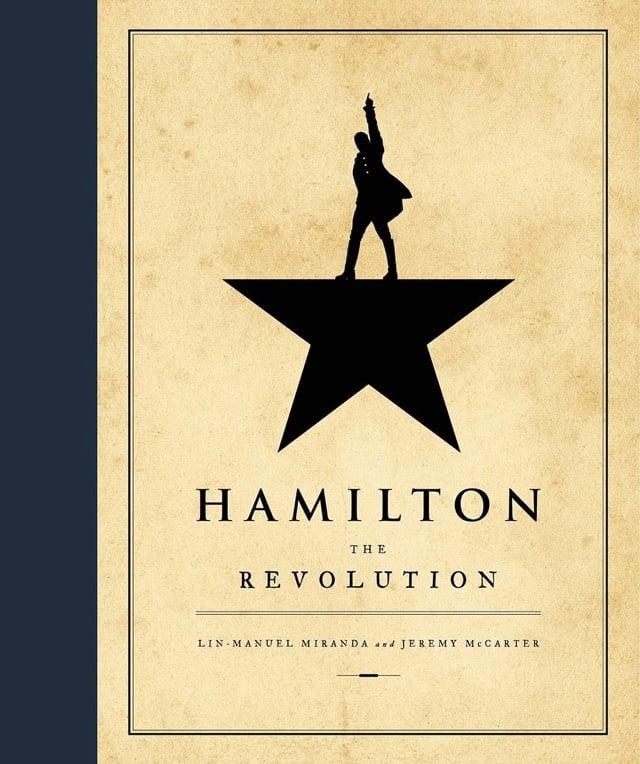
The Broadway musical Hamilton is having a bit of a moment right now. Ok, not really. Lin-Manuel Miranda’s smash hit has seemingly had one loooong moment since he performed “Alexander Hamilton” in front of the President and Mrs. Obama at the White House in 2009.
The show is sold out1 until who knows when, the original cast album went gold and won a Grammy, and they’re doing spin-off productions in Chicago, LA, and SF — all this scarcely more than a year since Rebecca Mead wrote up Miranda and Hamilton in the New Yorker.2 Bernie Sanders took in the show last week. And this week, a book about the production of the play came out.
Hamilton: The Revolution gives readers an unprecedented view of both revolutions, from the only two writers able to provide it. Miranda, along with Jeremy McCarter, a cultural critic and theater artist who was involved in the project from its earliest stages — “since before this was even a show,” according to Miranda — traces its development from an improbable performance at the White House to its landmark opening night on Broadway six years later. In addition, Miranda has written more than 200 funny, revealing footnotes for his award-winning libretto, the full text of which is published here.
Add to that a flurry of articles (several from the NY Times, which has a dedicated staff of 162 reporters on the beat) that came out in the past week or so: Why Hamilton Matters, Lin-Manuel Miranda: By the Book (he’s never finished Infinite Jest), ‘Hamilton’ and History: Are They in Sync?, A Hamilton Skeptic on Why the Show Isn’t As Revolutionary As It Seems, and The C.E.O. of ‘Hamilton’ Inc. How much bigger can this thing get?
Update: And now Miranda has won a Pulitzer.
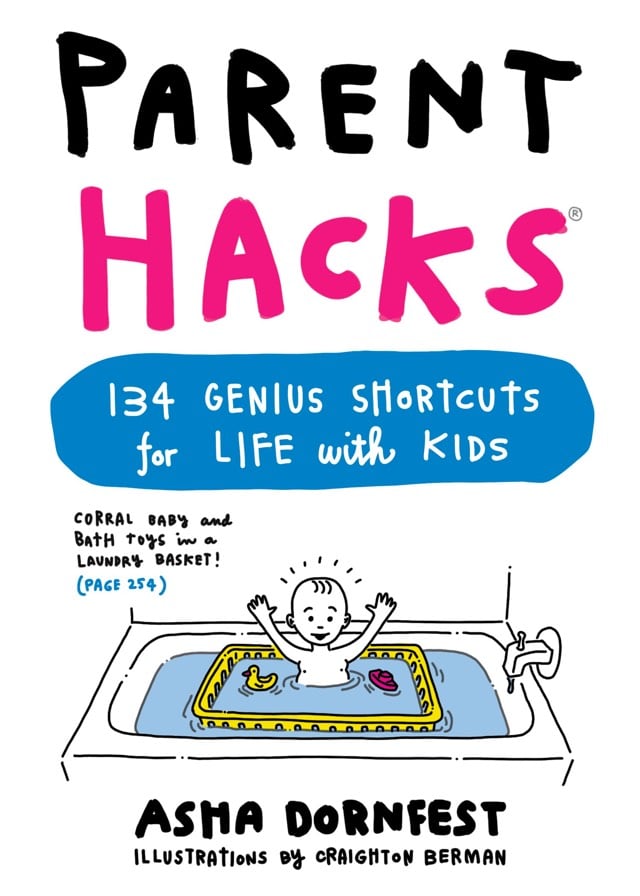
Asha Dornfest runs the Parent Hacks blog and she’s collected some of her best tips into a new book, Parent Hacks: 134 Genius Shortcuts for Life with Kids.
A parent hack can be as simple as putting the ketchup under the hot dog, minimizing the mess. Or strapping baby into a forward-facing carrier when you need to trim his fingernails-it frees your hands while controlling the squirming. Or stashing a wallet in a disposable diaper at the beach-who would ever poke through what looks like a used Pamper?
Dave Pell from Nextdraft tipped me off to the book, writing:
My friend Asha Dornfest has turned her excellent parenting blog into an even more excellent parenting book with 134 ingenious ideas for simplifying life with kids. Parent Hacks is so good that I may even have a few more kids.
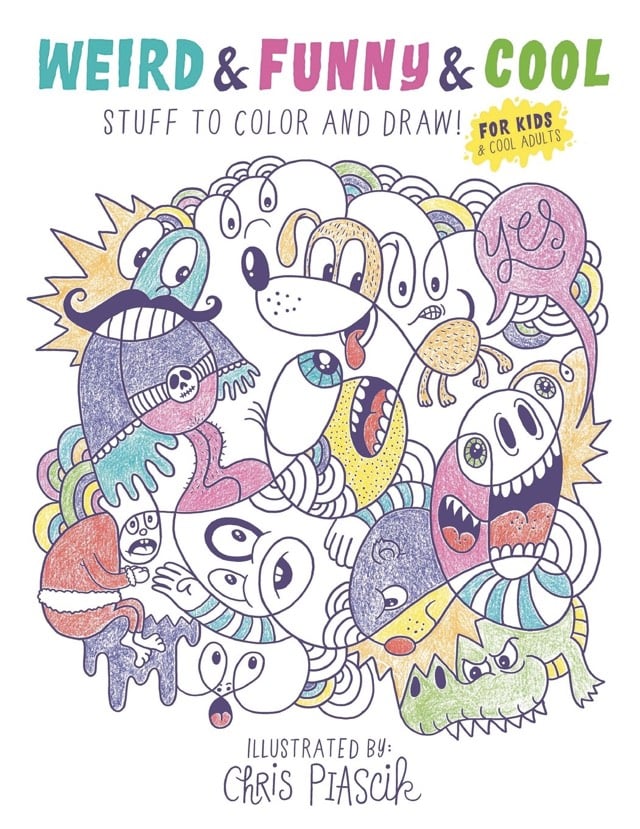
I’d missed that Chris Piascik, who sometimes illustrates posts on this site (this one is my favorite), came out with an adult coloring book last month called Weird & Funny & Cool Stuff to Color and Draw!: For Kids & Cool Adults.
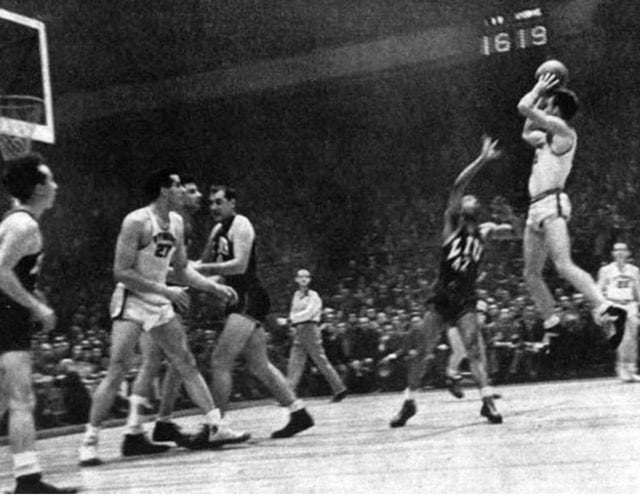
It is perhaps difficult to believe, but the jump shot was not always a part of basketball. It had to be invented. Rise and Fire by Shawn Fury is the story of that invention, which is still — *cough* Steph Curry — being tinkered with in the lab.
In his short post about the book (he calls it “new and fun”), Tyler Cowen shares this excerpt:
But in March 1963, a month before his final game for the Celtics, [Bob] Cousy complained to the Associated Press, “I think the jump shot is the worst thing that has happened to basketball in ten years.” Cousy’s objections? “Any time you can do something on the ground, it’s better,” he said, sounding very much like a coach who would have enjoyed benching Kenny Sailors or Bud Palmer. “Once you leave the ground, you’ve committed yourself.” Jump shot critics discouraged players from flying into the air because they feared the indecision that came when someone left their feet. They feared the bad passes from players who jumped with no clear plan of what they’d do in the air. Staying grounded meant fewer mistakes. It was simply a safer way to play the game, if not as exciting.
1963 was more than 50 years ago, but well into the modern era in the NBA. (I know, pre-merger, but still. We’re not talking George Mikan here.) Wilt Chamberlain, Bill Russell, Oscar Robertson, and Jerry West were all playing, as was a rookie named John Havlicek, who played for the Celtics until the late 70s.
Elena Ferrante, the mysterious Italian novelist of the critically acclaimed Neapolitan Novels, is coming out with a children’s book called The Beach at Night.
Elena Ferrante returns to a story that animated the novel she considers to be a turning point in her development as a a writer: The Lost Daughter. But this time the tale takes the form of a children’s fable told from the point of view of the lost (stolen!) doll, Celina.
The book has been out in Italy since 2007, but with so much interest in Ferrante (and her true identity), the English language version is now on its way.
BTW, I started reading the Neapolitan Novels last week and have barely put them down since…I should finish the second book tonight. So good.
Randall Munroe’s best-selling Thing Explainer, in which he explains scientific concepts using only the 1000 most common words, will be incorporated into the upcoming editions of some of Houghton Mifflin Harcourt’s high school science textbooks.
Mr. Munroe, 31, said the project appealed to him. He recalled as a child a foldout diagram showing different animals at the starting line of a race and then sprinting/flying/crawling to show the different speeds of different species. “For some reason, I fixated on that illustration,” he said. “It stuck with me my entire life.”
Mr. Munroe said he hoped his drawings would break up the monotony and pace of a typical textbook. “I’m hoping it will be, ‘Oh, here’s a kind of fun and unexpected component,’” he said.
I think Bill Gates would approve.
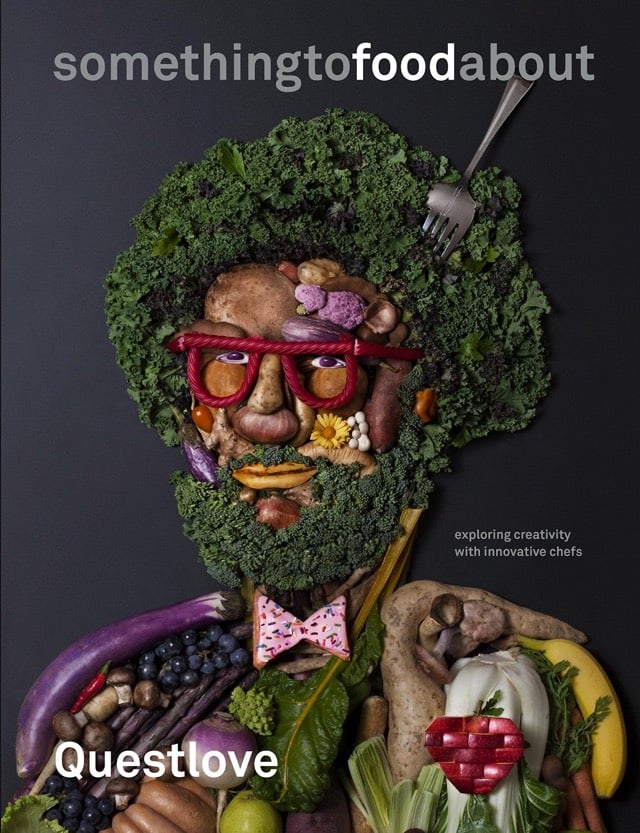
Questlove is coming out with a book about food and creativity next month called something to food about.
In conversations with ten innovative chefs in America, he explores what makes their creativity tick, how they see the world through their cooking and how their cooking teaches them to see the world. The conversations begin with food but they end wherever food takes them. Food is fuel. Food is culture. Food is history. And food is food for thought.
Love that cover.
As part of the Moby Dick Big Read project, dozens of people collaborated on an unabridged audiobook of Moby Dick. Each chapter has a different reader and the readers included Stephen Fry, David Attenborough, and Benedict Cumberbatch. Tilda Swinton started things off with chapter one:
(via @sampotts)
Newer posts
Older posts



Socials & More