kottke.org posts about art
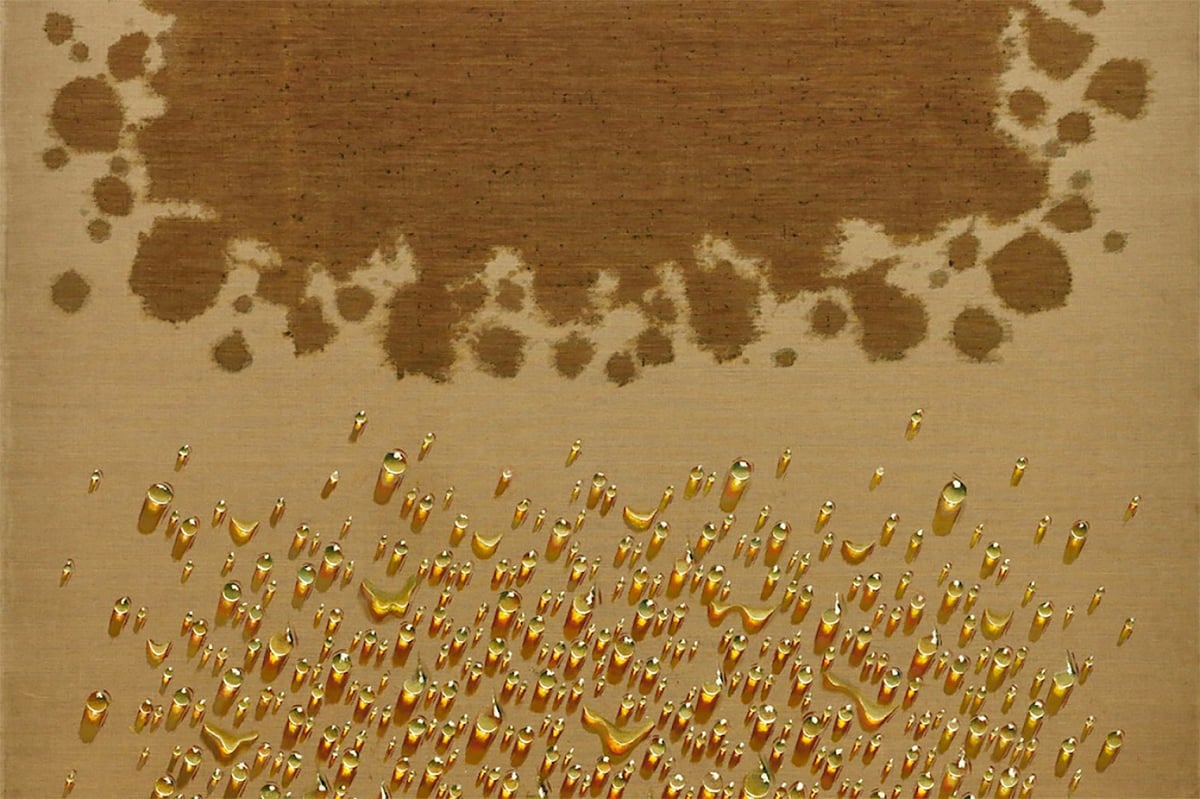
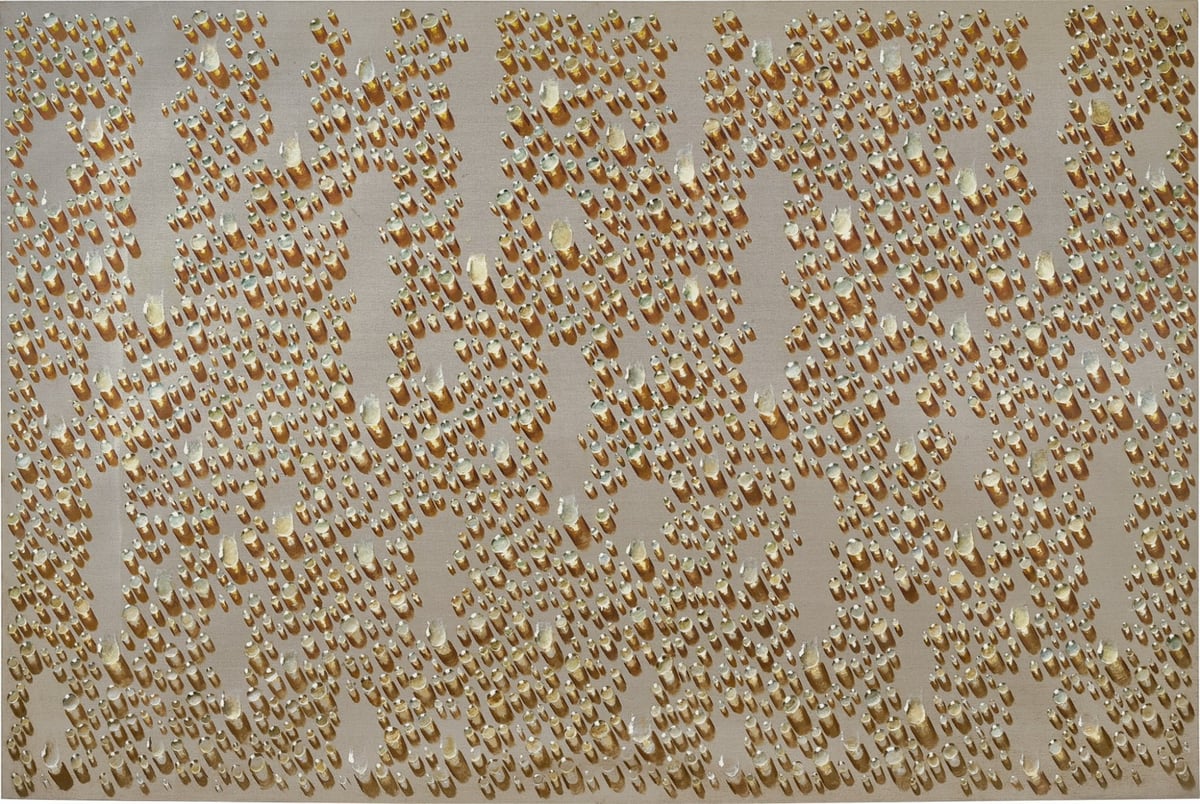
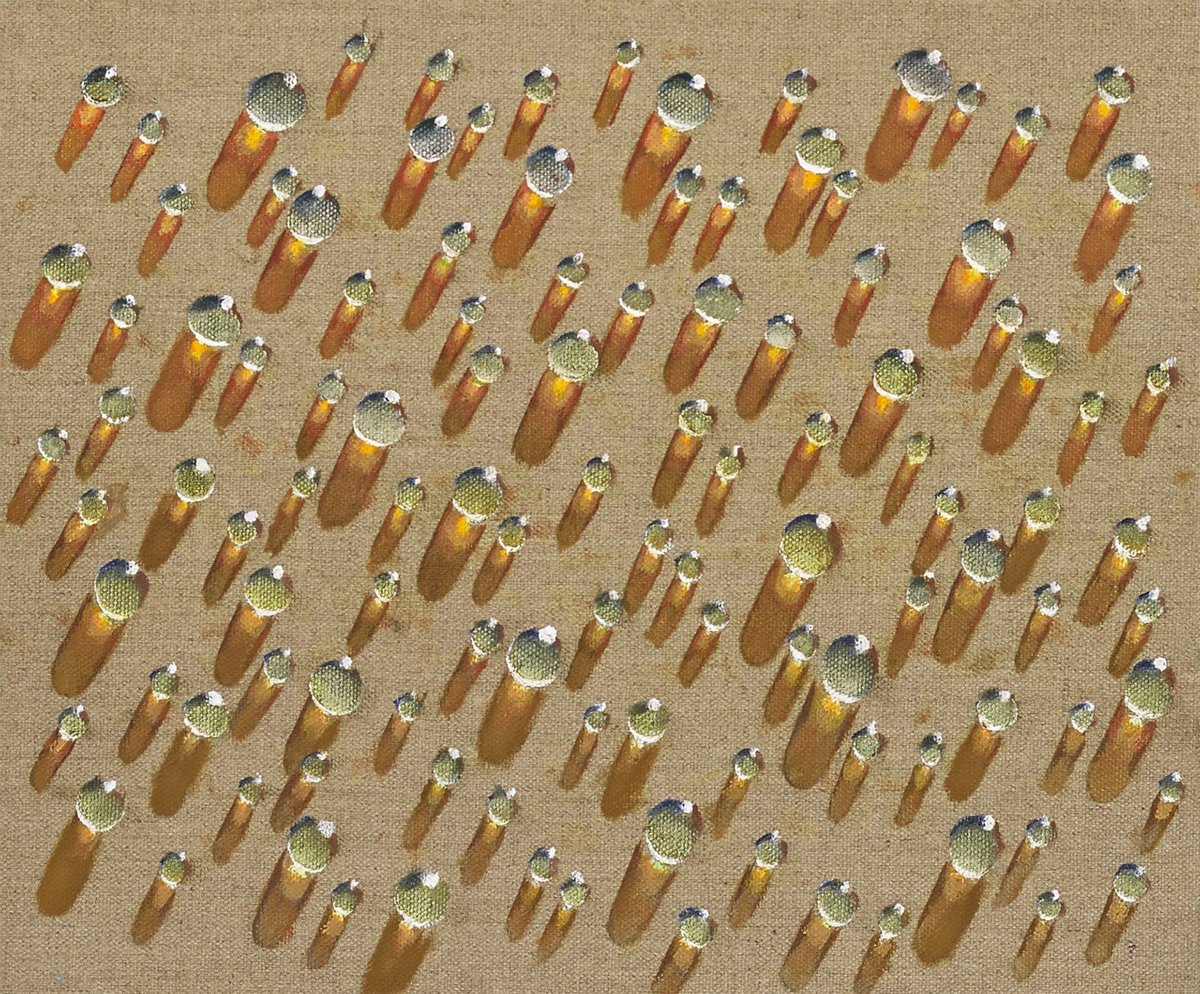
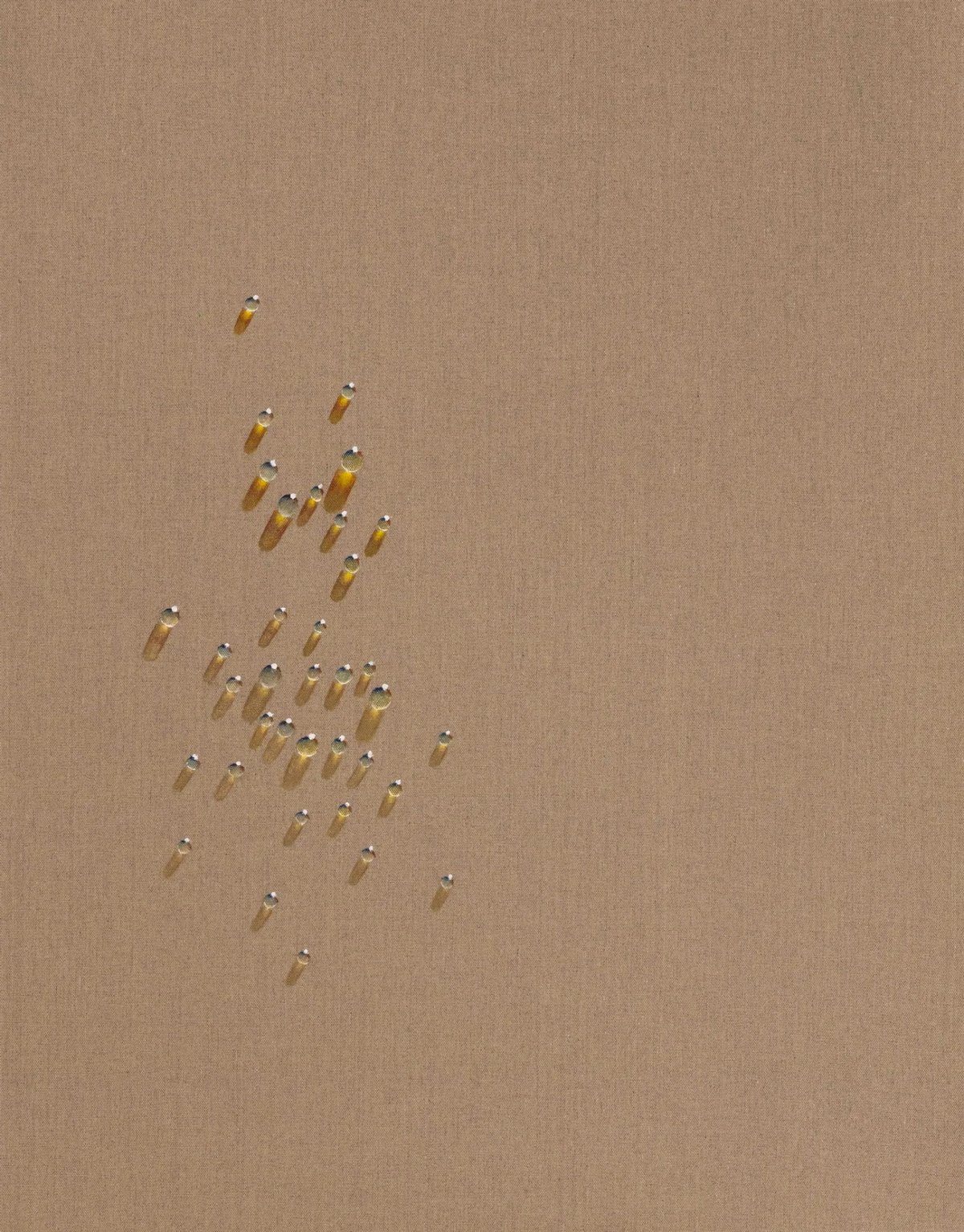
From the early 1970s until his death in 2021, Korean artist Kim Tschang-Yeul painted water droplets. From one of the galleries representing his work:
The waterdrop was the starting point for a singular and iconic body of work, which stands at the confluence of lyrical abstraction, Pop art and Chinese calligraphy. This simple and limpid œuvre subtly fuses Taoist wisdom, modern conceptual irony and the tragedy of war.
You can view more of Kim’s work at Colossal and InspirationGrid.
I always learn so much from Evan Puschak’s videos about art. In this one, he takes a look at the work of Mary Cassatt, who, unlike many of her male peers, used the flattened perspective of Impressionism to reveal the thoughts and feelings of her subjects.
Like Manet, she’s dispensing with traditional modeling and perspective. In fact, her choice of a mirror as background is a brilliant way to literally and figuratively foreground the deceptive nature of perspective. Like Degas, she’s exploring the changing effects of artificial light on flesh and fabric. And she’s experimenting with off-kilter viewing angles.
But Cassat isn’t just adopting these techniques for the sake of it. She’s putting them to work in service of her deeper interest in psychology. She realizes that by not allowing the viewer to get drawn into the narrative space opened up by perspective, this new style of painting actually makes it possible to depict the subtle psychology of everyday life, a psychology uncontaminated by allegory or sentimentality. The trick was to combine the immediacy of Manet’s methods with a meticulous observation of posture, gesture, expression, and activity.
Oh my goodness, I love the look of these cups.
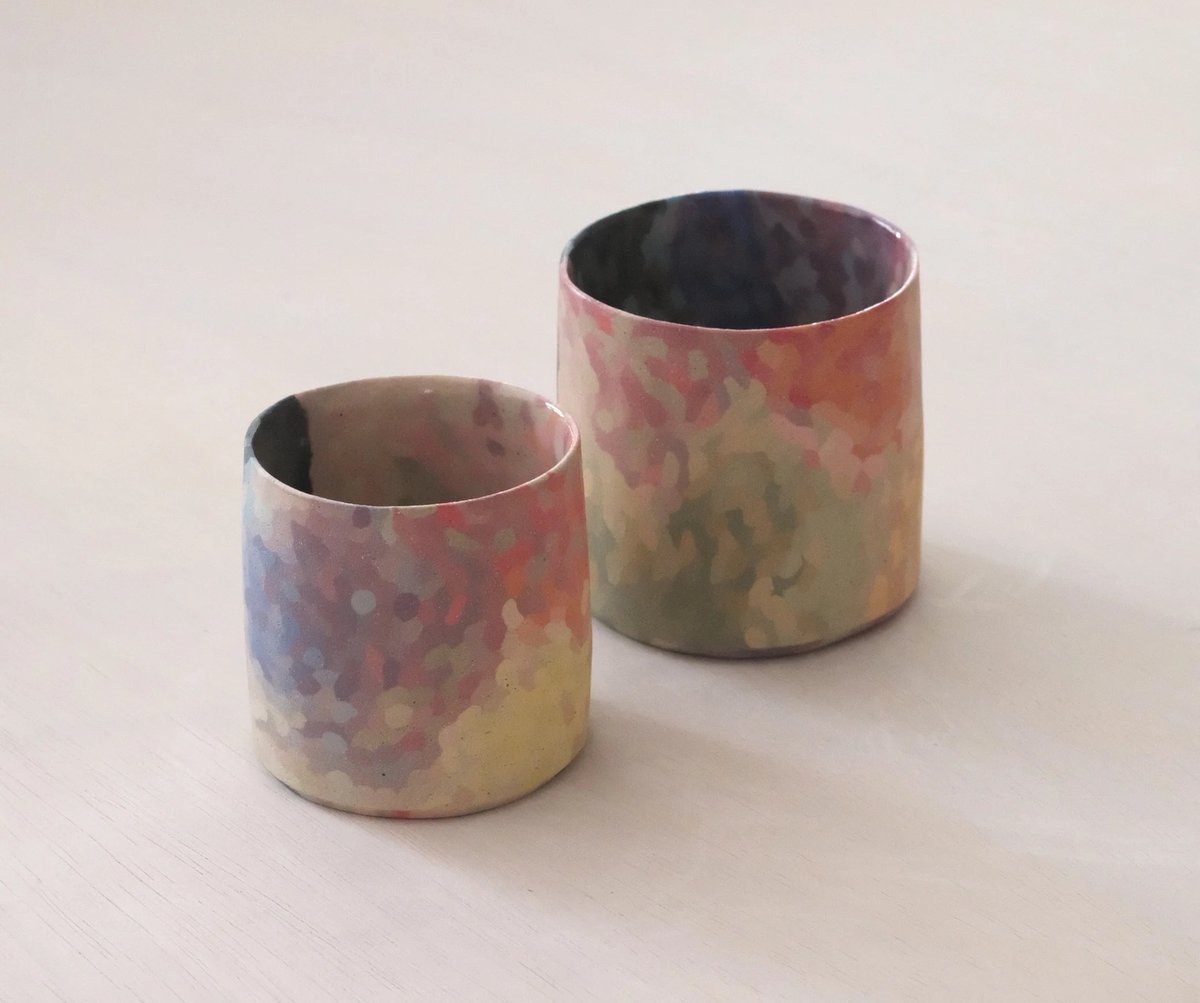
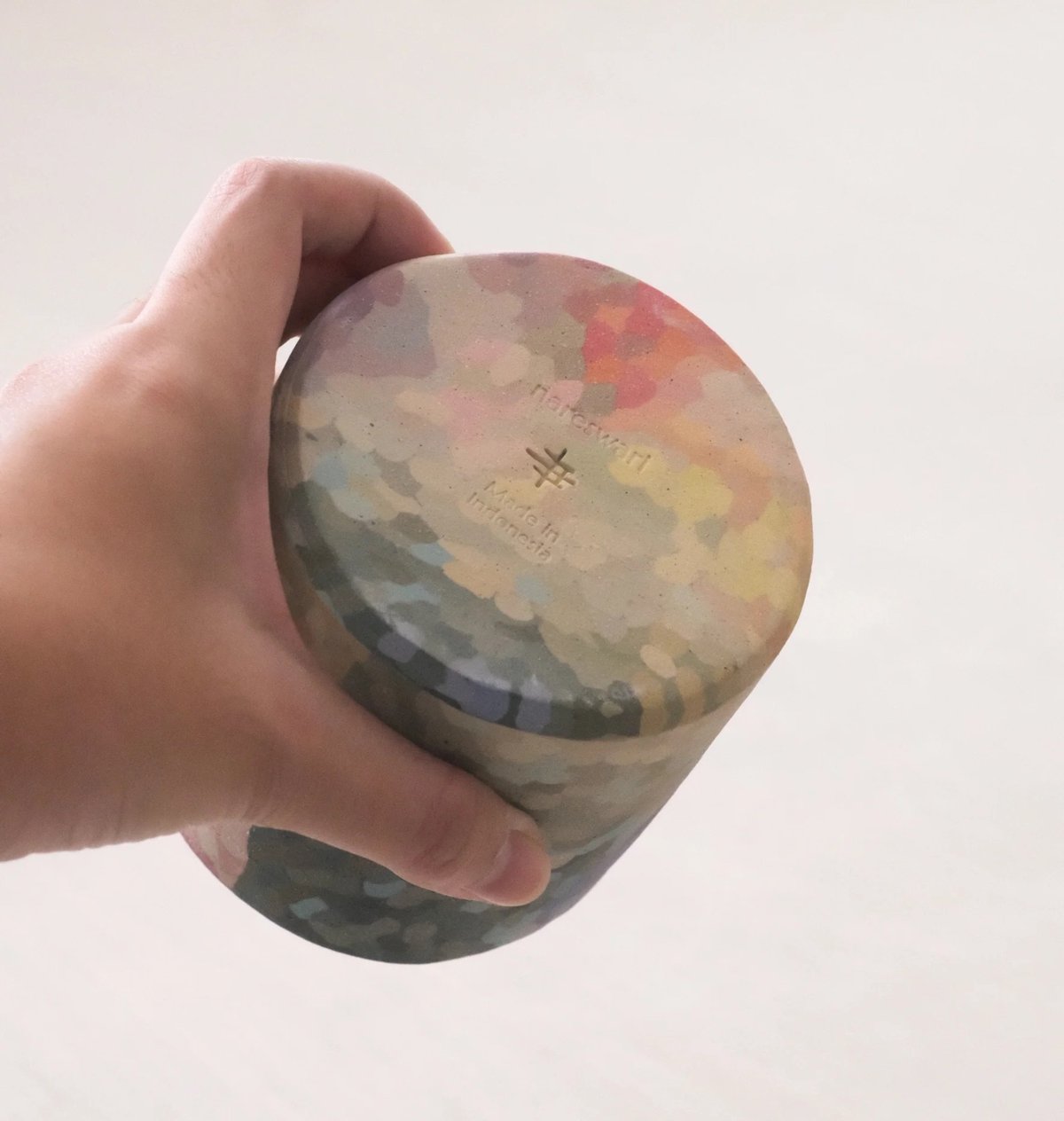
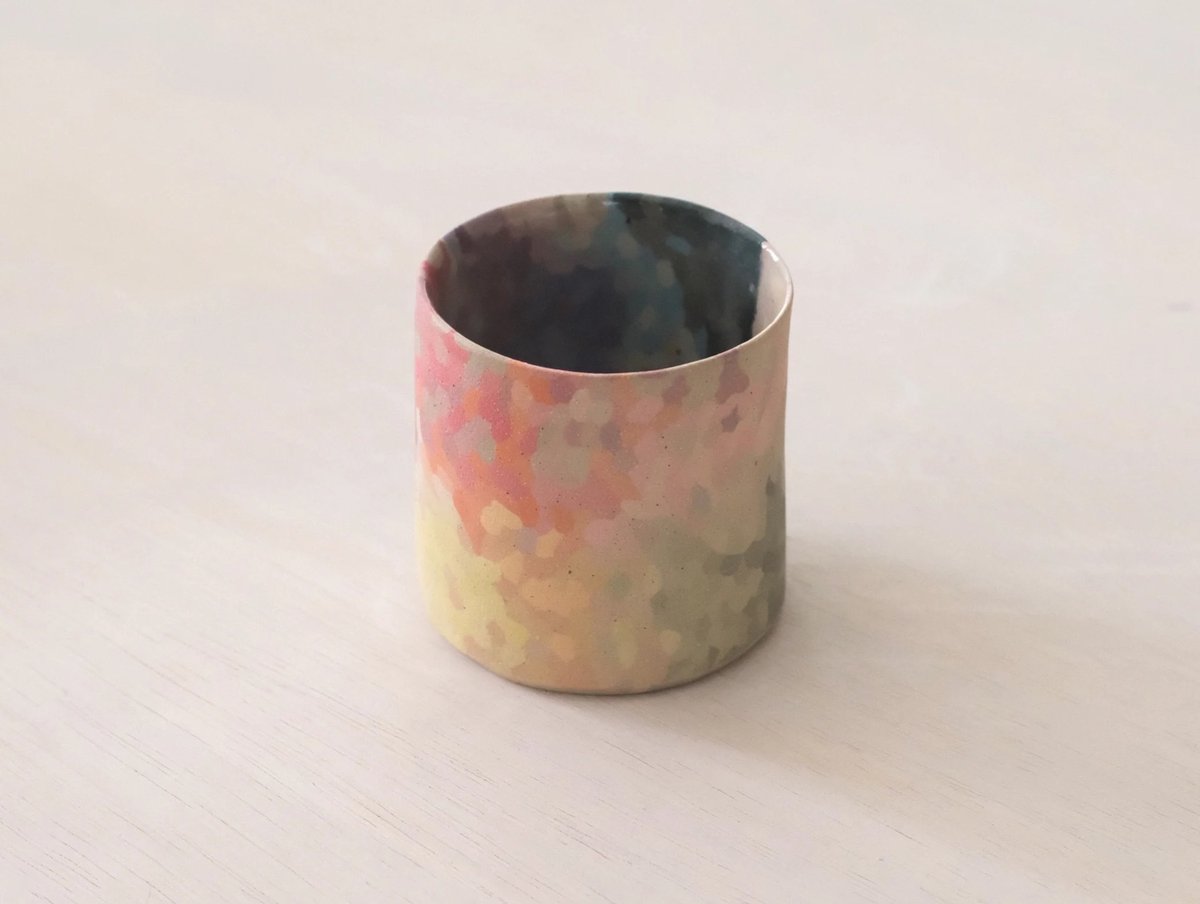
They were made by Indonesian potter Nabila Nareswari using the nerikomi technique. From her about page:
Nerikomi is a technique in pottery that creates decorative patterns by stacking, rolling, and slicing colored clay. Patterns produced by it are structural rather than painted on, which allows the potter to make detailed images or complex repetitive patterns on both sides of the clay slabs.
Nareswari posts videos of her process on Instagram; it is painstaking.
Nerikomi takes a lot of patience and heart 🤍
I think Iris is the epitome of trusting a process. No other work of mine takes as much patience as these lovely mugs and cups do. There isn’t really a shortcut to having them done quicker, you just have to do one thing after another, after another, and before you know it, it’s there in your hands! Albeit two months later😜
She has a shop but all of her Iris collection is currently sold out.
Artist Maya Barkai assembled a collection of pedestrian traffic signals from around the world: Walking Men Worldwide.
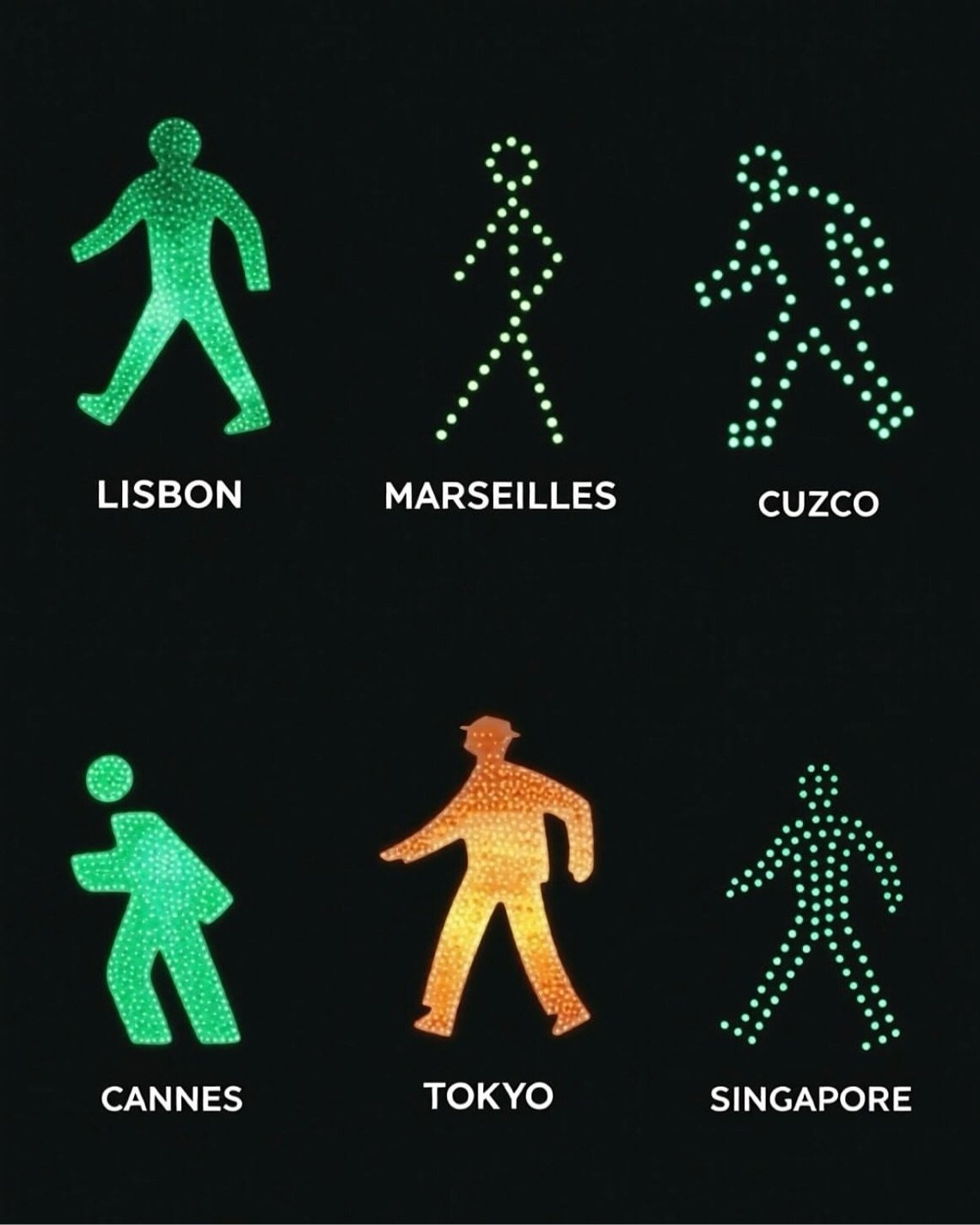
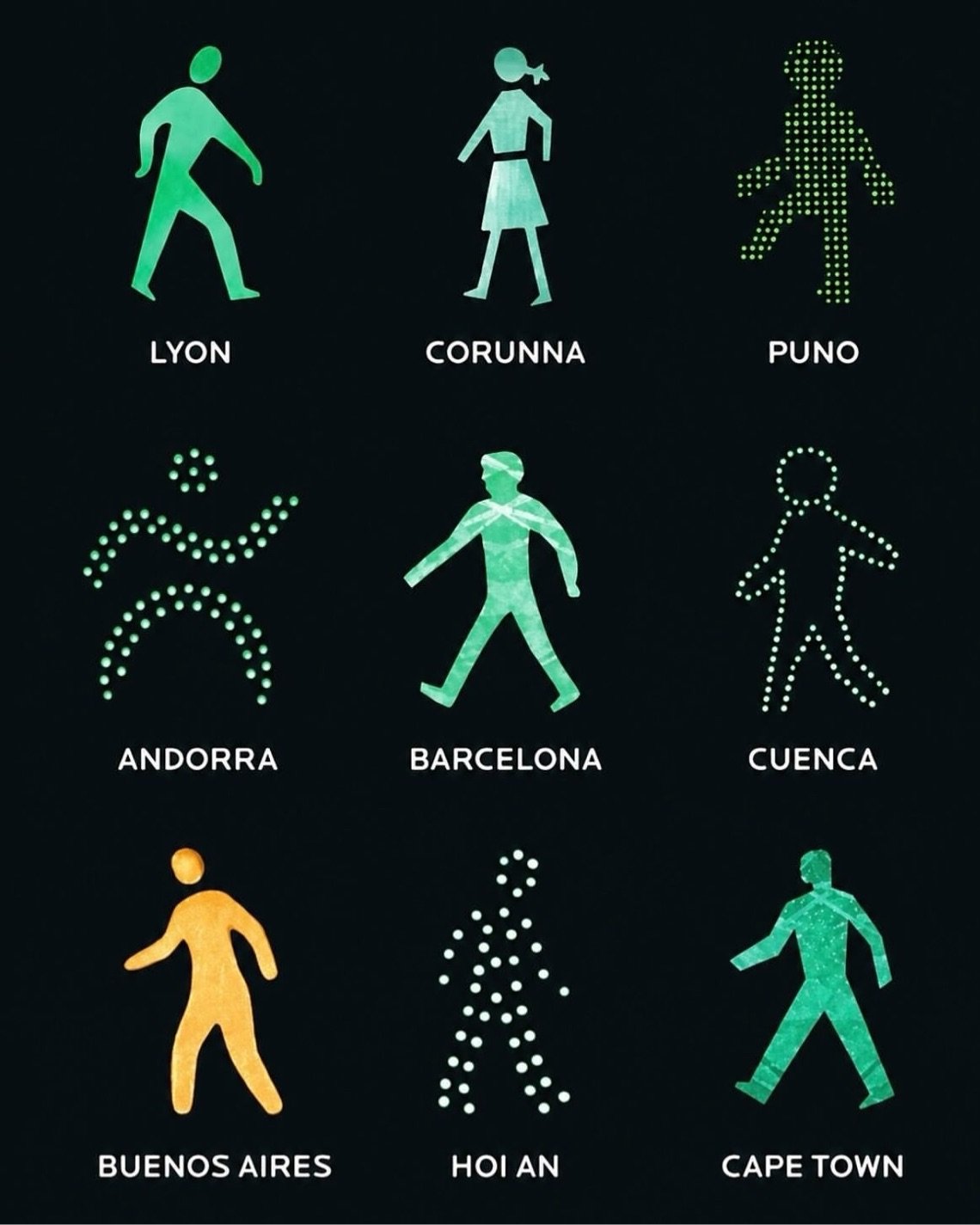
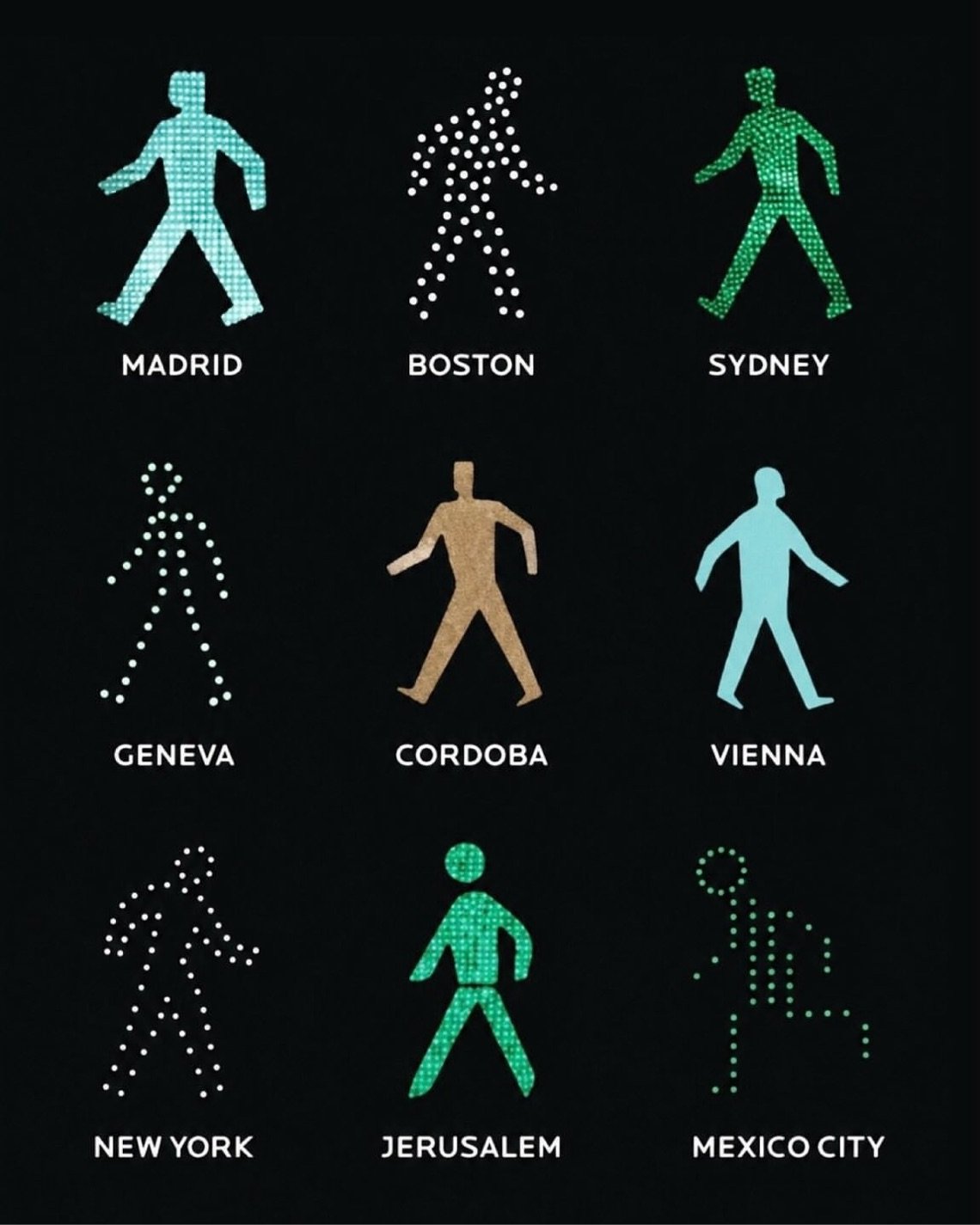
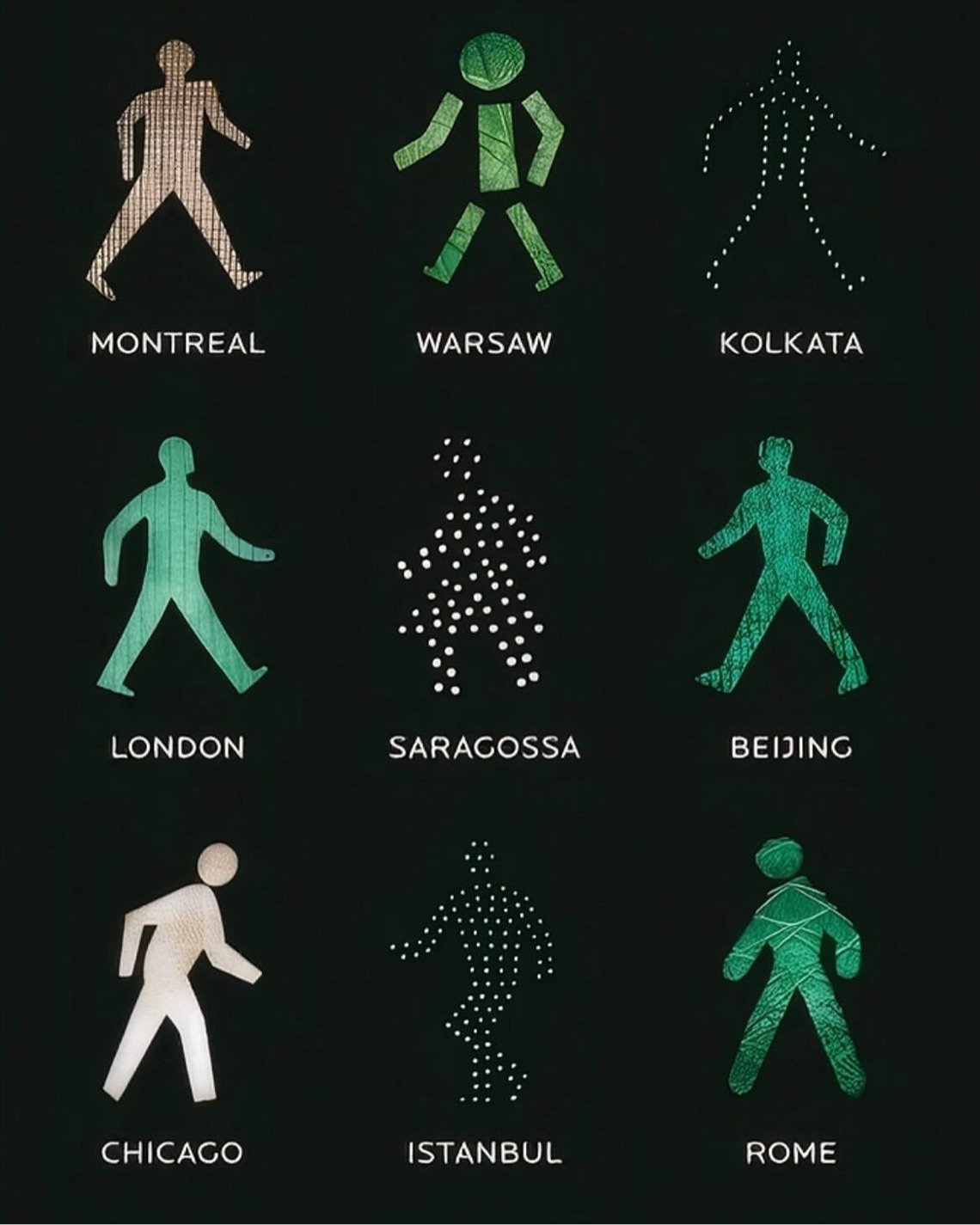
I love all of these little people. The Warsaw one reminds me somewhat of Rocky from Project Hail Mary. Some of the ones from smaller places have more personality, but I feel like the New York and Boston ones are my favorites aesthetically. Weirdly, the iconic German Ampelmännchen isn’t among the crowd here.
A screenprint of the collected pedestrian people is available on the Walking Men Worldwide website. (via @jessicabrillhart)
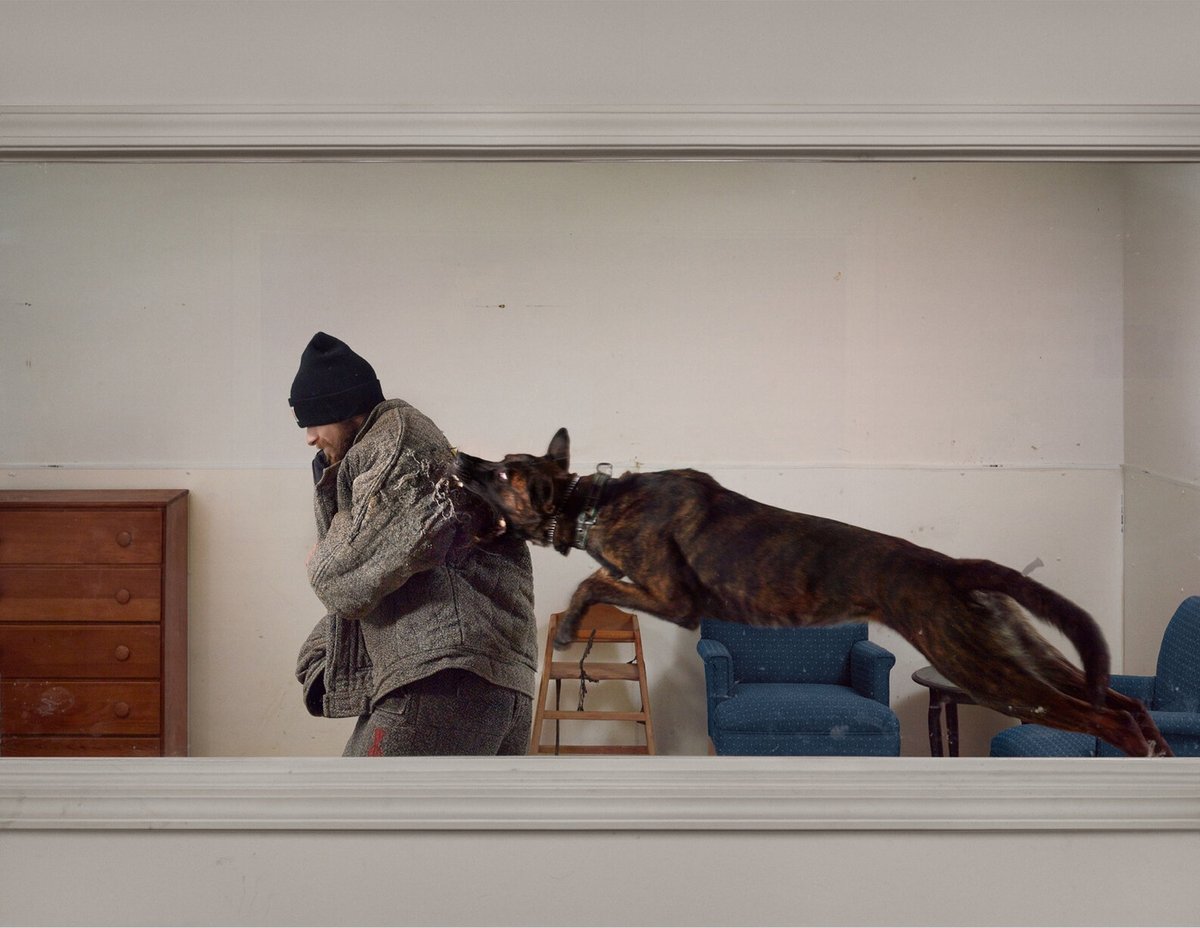
Father Country I Do Love You sounds like a doozy of a new exhibition from photographer Taryn Simon. The project focuses on the life and work of an unnamed, retired FBI agent. From the NY Times: She Spent Years on a Giant Project About One Man. The Result Is Monumental.
As it turned out, his work had touched many catastrophes of American life — the 1996 crash of TWA Flight 800, for example, which the agent helped to inspect, or the attack on the Pentagon on 9/11, when the agent was in charge of sifting debris in the immediate aftermath — and also lesser-known events, historical footnotes that were nonetheless telling. What interested Simon were not just the events themselves, but also their reverberations, far beyond any immediate blast radius. What happened, for instance, to the physical ruins from the TWA crash? What became of the woman who tried to take a photograph of the smoldering Pentagon, whose film the F.B.I. agent had confiscated? Or to the Iraqi diplomat who ran the country’s U.S. embassy during the Persian Gulf war, whom the agent had monitored? Or to the child of a couple accused of being Russian spies, whose house the agent had raided?
The piece describes the project, which includes over 1000 photographs and other material, as “a Great American Novel in visual form” and “huge and fractal: biography as butterfly effect”, which sounds fascinating.
Even Jodie Foster makes an appearance; this particular agent had trained Foster at the FBI Academy in Quantico as preparation for her role as Clarice Starling in The Silence of the Lambs.
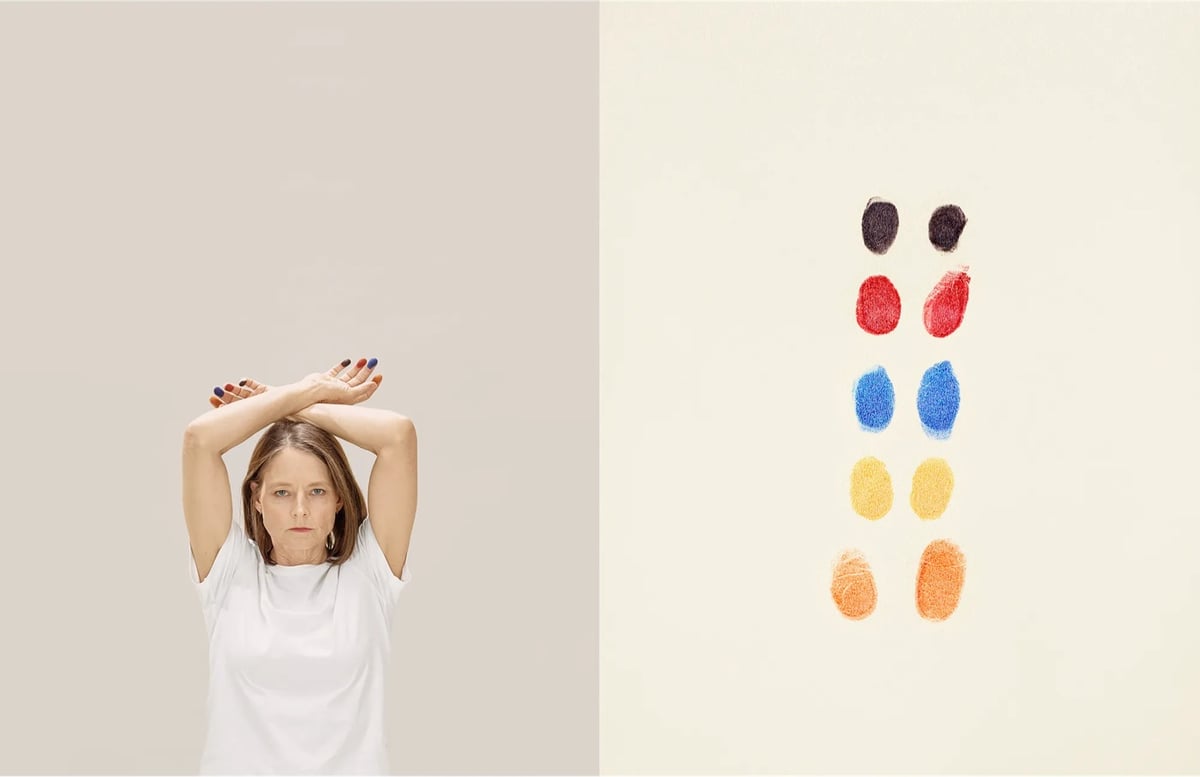
Father Country I Do Love You debuts at the Guggenheim in NYC on September 18 and runs through March 14, 2027.
Over on Flickr, Jane McDevitt maintains a huge collection of 20th century matchbox label art from Eastern Europe, over 4000 photos in all. Some of the labels are available as prints. They did a book too, but it’s sold out. It was really difficult to narrow these down to some of my favorites, but I managed.

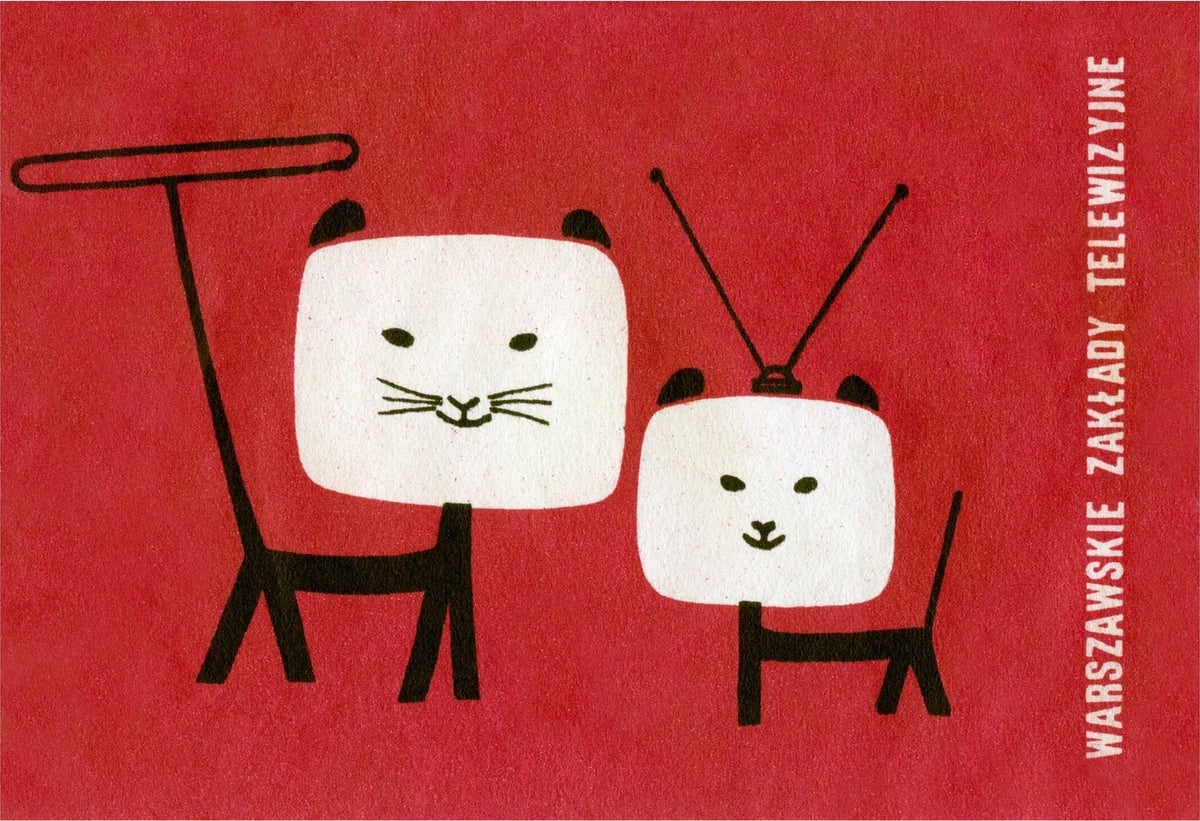
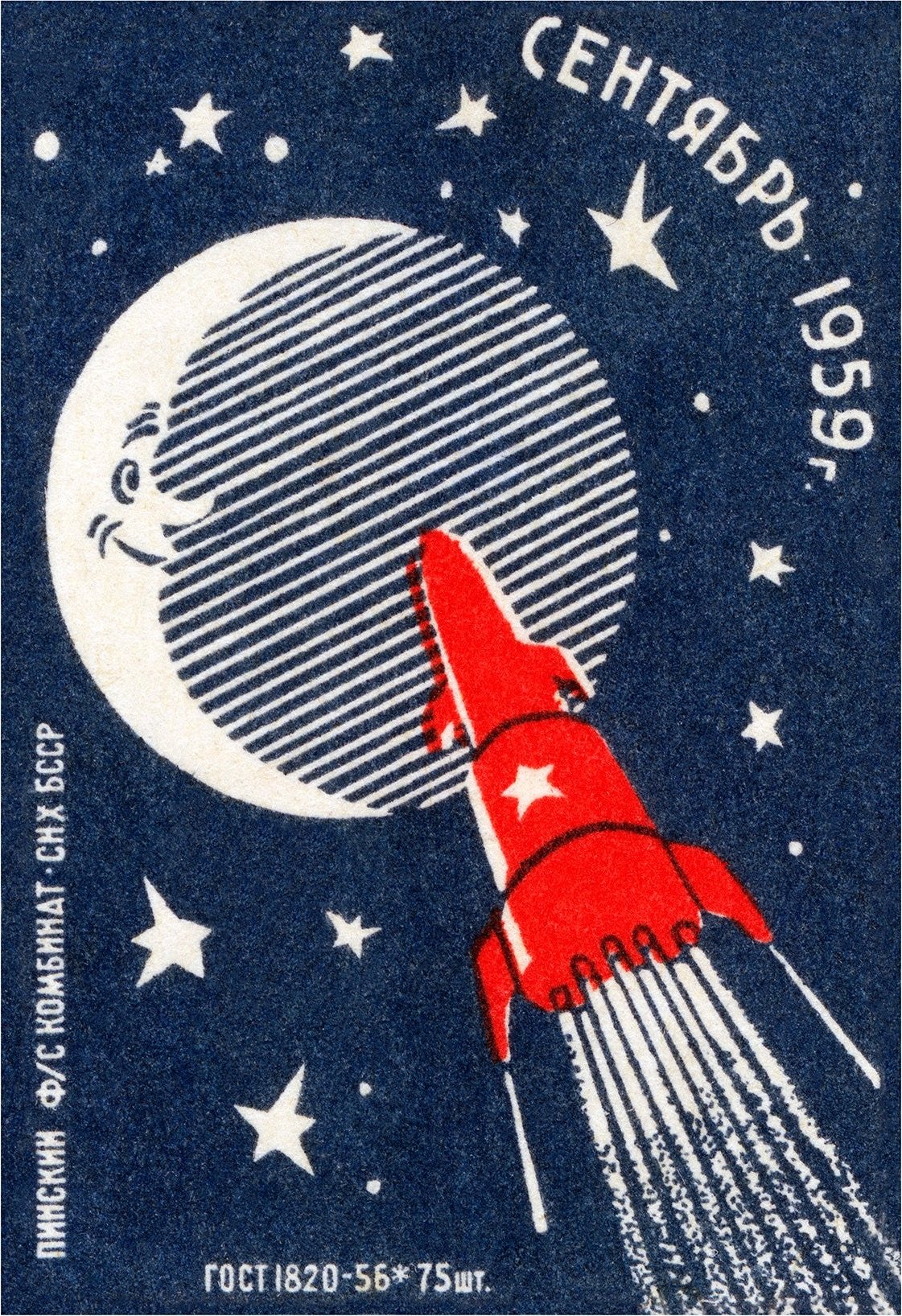
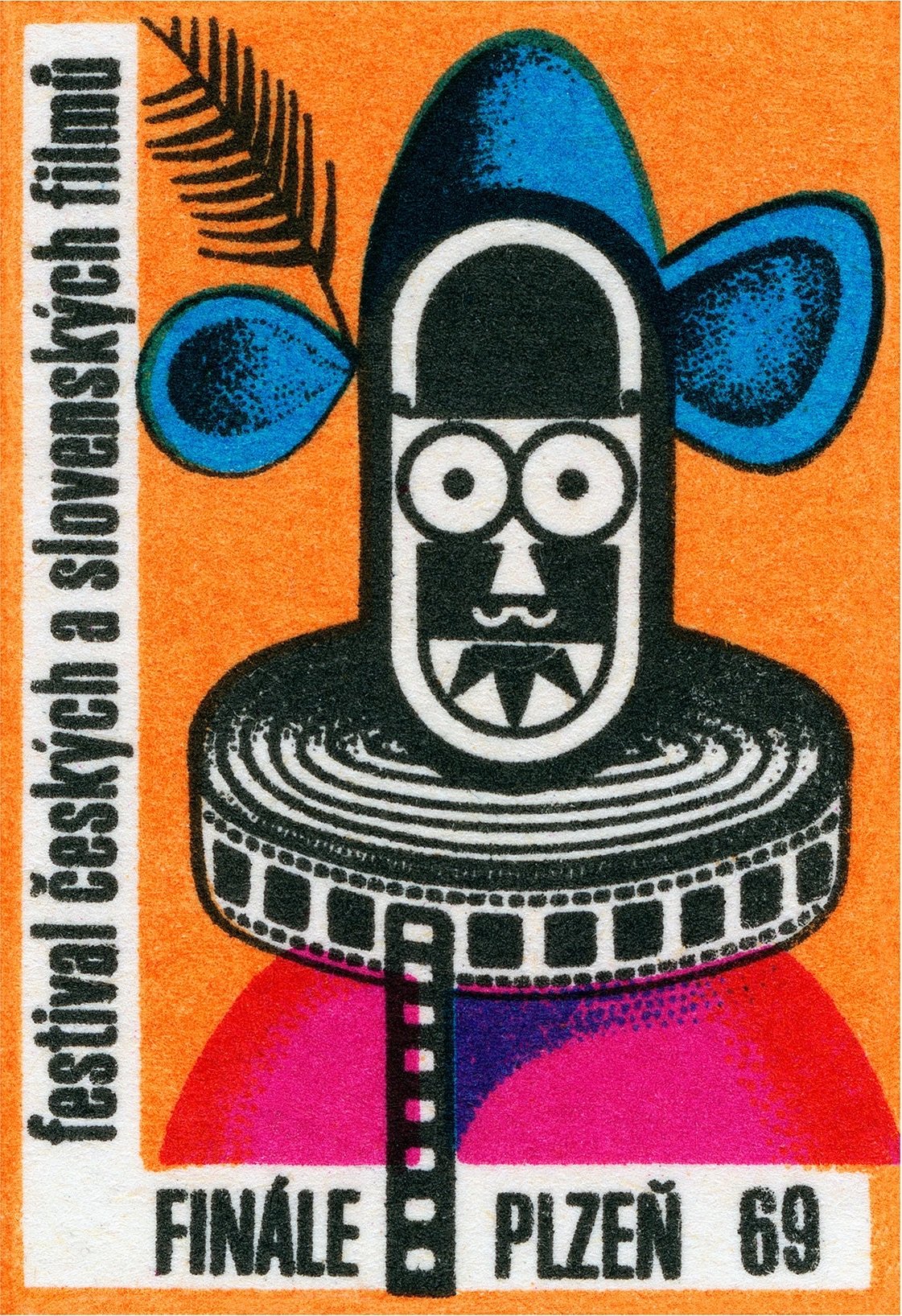
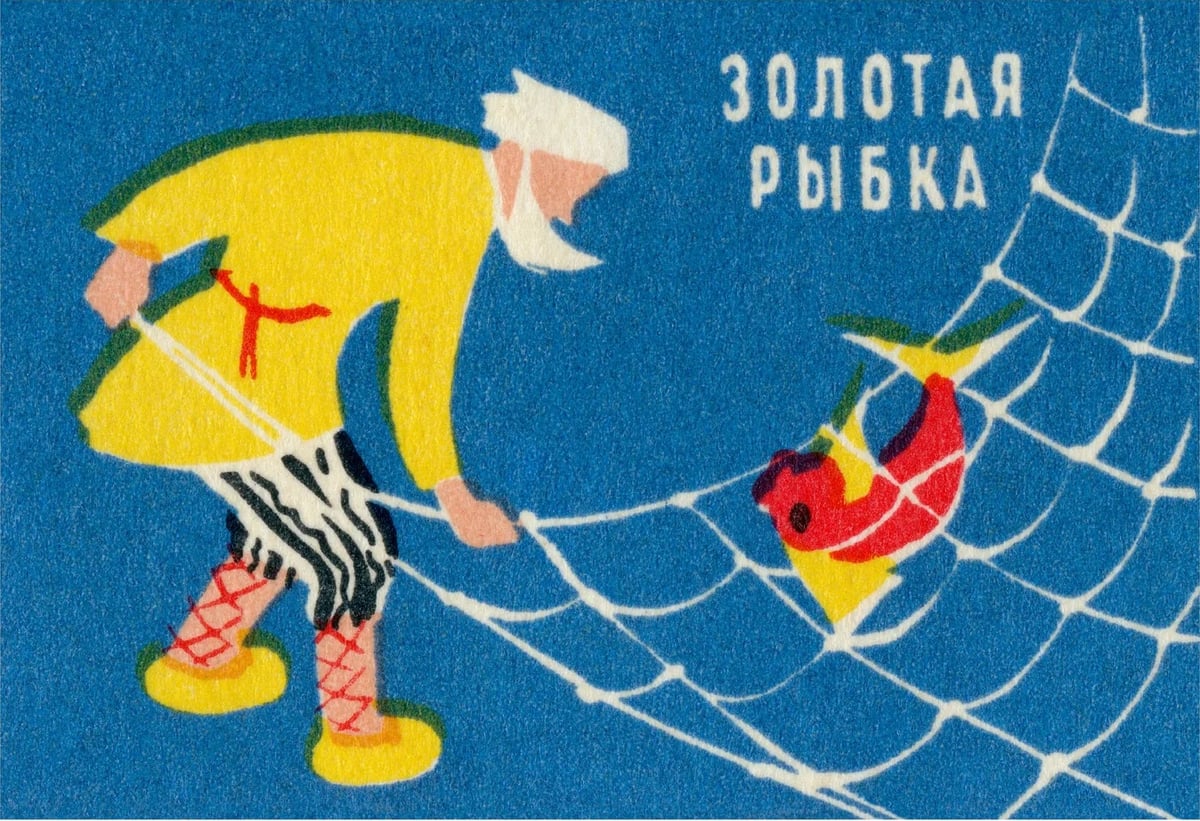
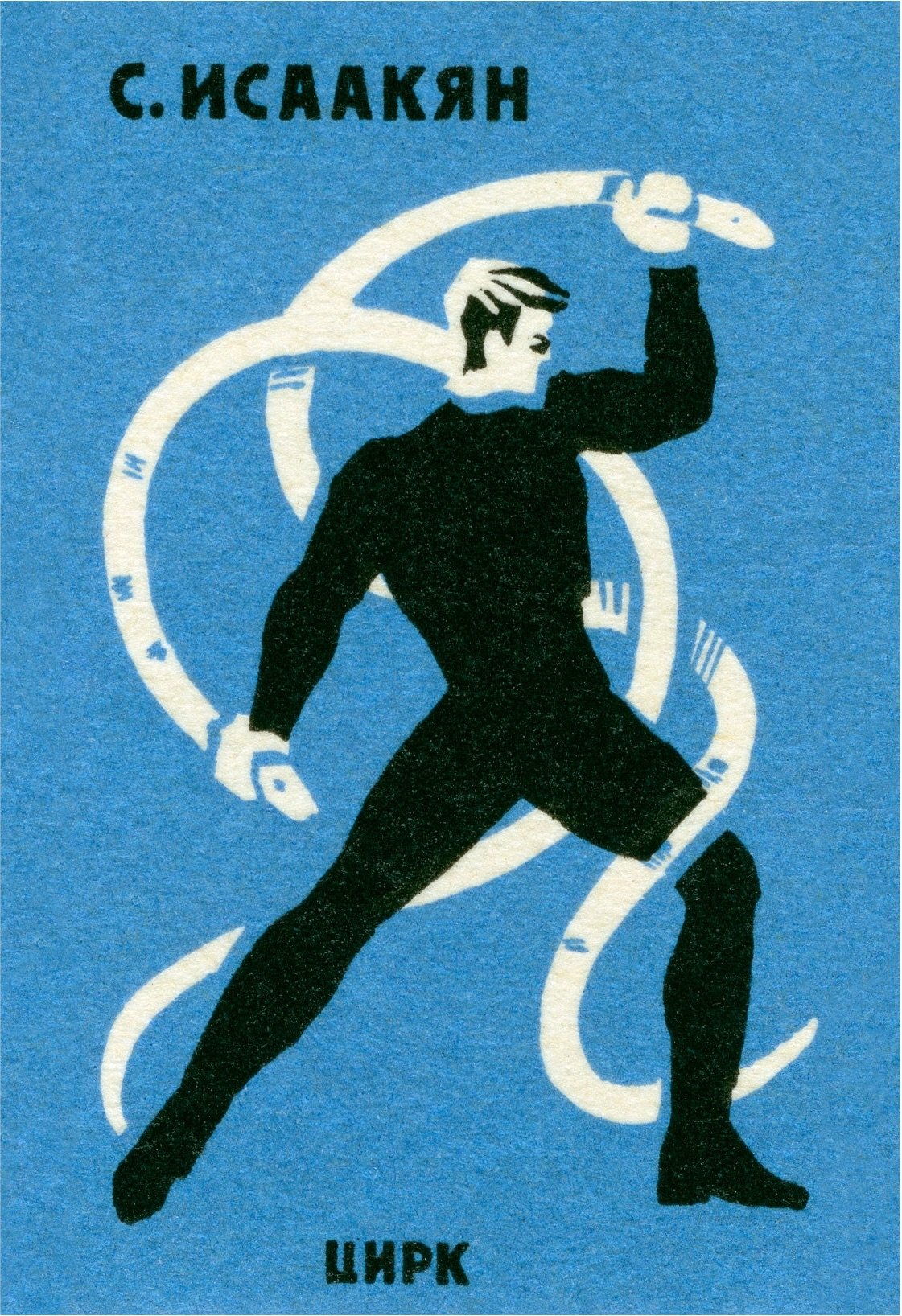

P.S. I wrote this whole post and then discovered that I’d written about this collection before. But I picked different labels so it’s all good.
Lovely short video about artist Jas Knight, who is a participant in the Met Museum’s Copyist Program:
The Copyist Program offers time and space for artists to develop their own interpretation of an artwork through intimate study in the Museum’s galleries. Copyists have created reinterpretations of original artworks in The Met collection since 1872.
Here’s Knight from the video, in which he is copying Diego Velázquez’s Juan de Pareja:
Almost every artist was a copyist up until the 20th century because as a painter you would go through certain exercises to learn how to paint. You haven’t begun to see a painting until you’ve copied it.
And I especially liked this bit:
Velázquez’s brain is on that canvas. So we’re encountering a person’s brain that doesn’t exist anymore when we’re looking at a painting by them. I’m literally interacting with Velázquez.
In a piece about Harold Fisk’s Mississippi meander maps, I wrote about art as a time machine:
It takes some imagination, but standing before a painting by Hilma af Klint, a sculpture by Bernini, or a cave painting in Chauvet, France draws you back in time in a powerful way: you know you’re standing precisely where those artists stood hundreds or even thousands of years ago, laying paint to surface or chisel to stone. Even experiencing art through prints or photographs leads the mind to consider all the cultural, political, technological, and economic things that were happening when the work was produced. Art is a doorway to past worlds.
You can see Knight’s copy of Velázquez’s Juan de Pareja and compare it with the original. (via the kid should see this)
Comedian Mo Welch has a new show on PBS called The Drawing Room, where she interviews people while she draws them (and her guests draw her). What a great idea for a show.
The first three episodes are live already: Brett Goldstein, Sarah Silverman, and violinist Vijay Gupta; here’s the premiere episode with Goldstein:
Each episode is only 10-12 minutes long. The lineup of guests for the rest of the season include Demi Adejuyigbe, Tig Notaro, Adam Conover, and Aparna Nancherla.
Using William Blake (aka “the patron saint of unclassifiable artists”) as an example, Evan Puschak’s latest video explores how society often rejects artists whose work doesn’t fit neatly into established categories and frameworks of criticism and commerce.
What you’re seeing here, these are not paintings. They’re prints of engravings from Blake’s illuminated books, which he designed, wrote, etched, colored, and printed himself using a technique that he invented. These extraordinary books are works of art that mix and synthesize categories. And as a result, the art world of the late 17 and early 1800s didn’t really know what to make of them. And Blake never sold more than a handful.
Artist Lewis Prosser describes himself on Instagram as an “absurdist basket-maker”. His costumes for a project called Making Merrie reflect that self-description.
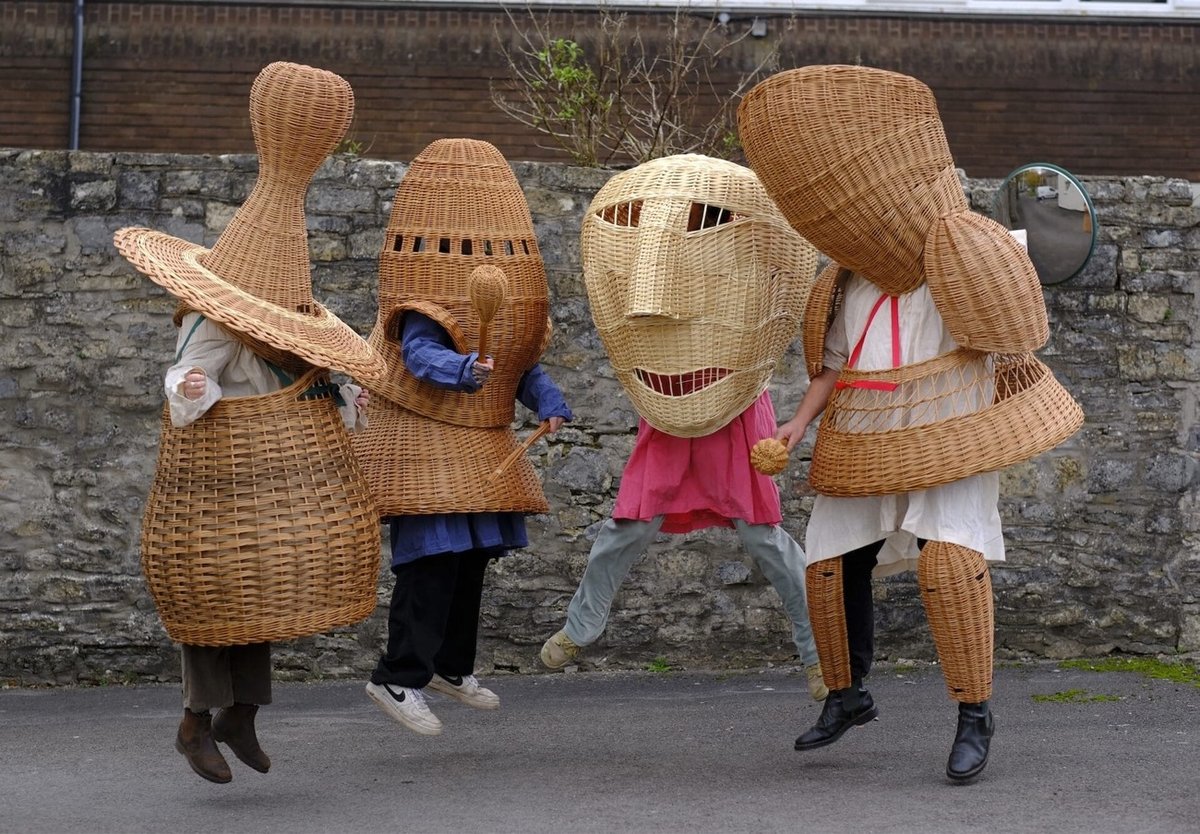
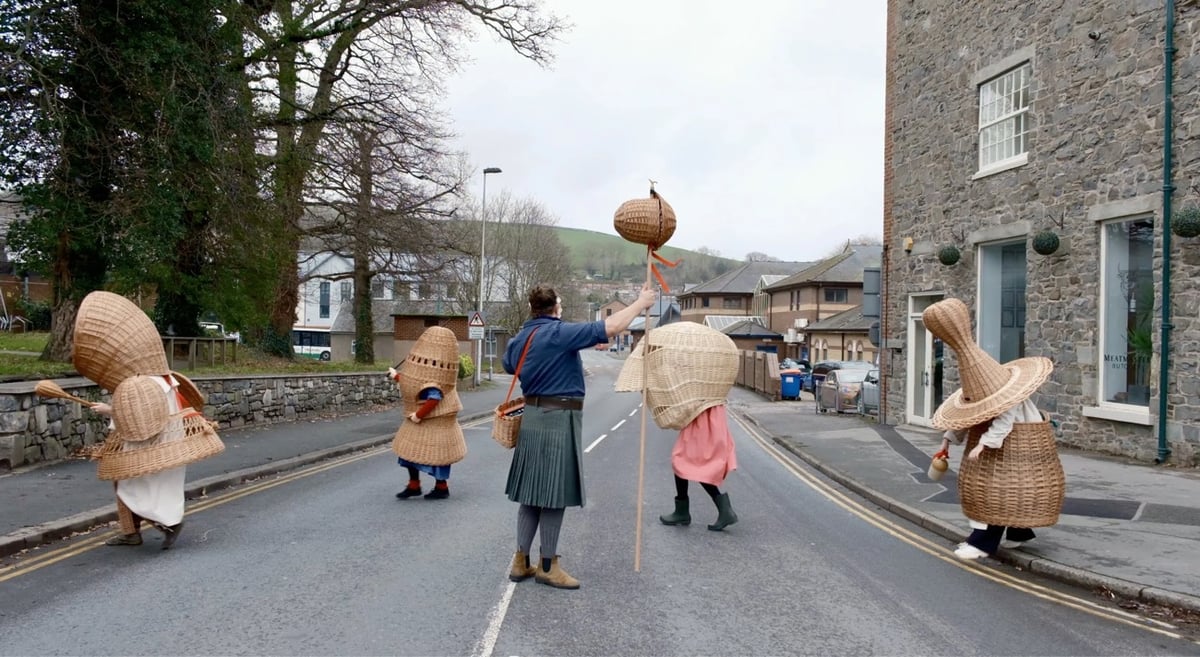
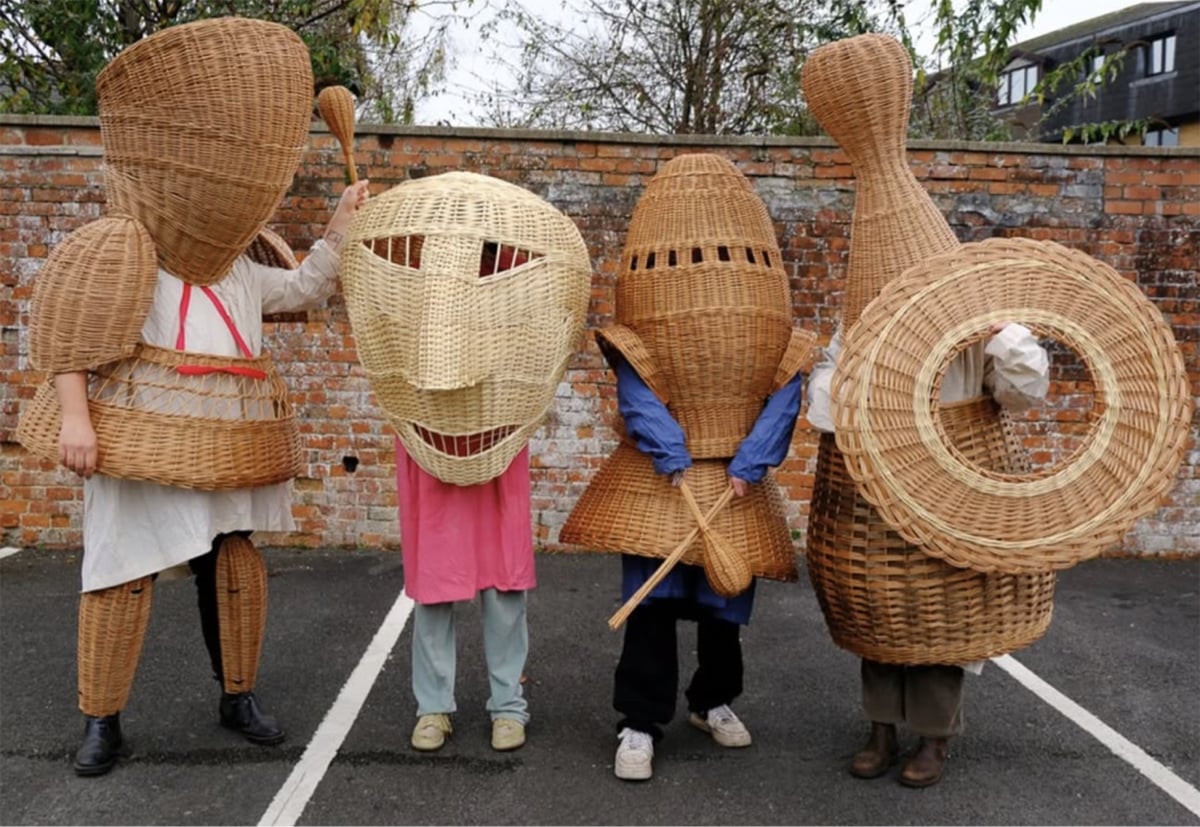
Making Merrie explores the material culture of folk theatre. Inspired by mummers’ plays and masked traditions along the Wales/England border, Making Merrie combines craft, performance, and language to reflect on cultural heritage and exchange.
Mummers’ plays are traditional folk performances with roots over 500 years old, often tied to Christmas and New Year. Full of humour and spontaneous revelry, these plays were staged in streets, homes, or pubs by amateur troupes, telling simple stories of combat, death, and miraculous revival. Unlike the religious Mystery Plays, mummers’ plays are secular, carnivalesque, and performed for community fun.
The project features large-scale wicker costumes, handcrafted using regional willow basketry techniques, highlighting basketry as an essential human skill we’re at risk of forgetting—a skill that, if lost, means losing part of what it is to be human.
(via colossal)
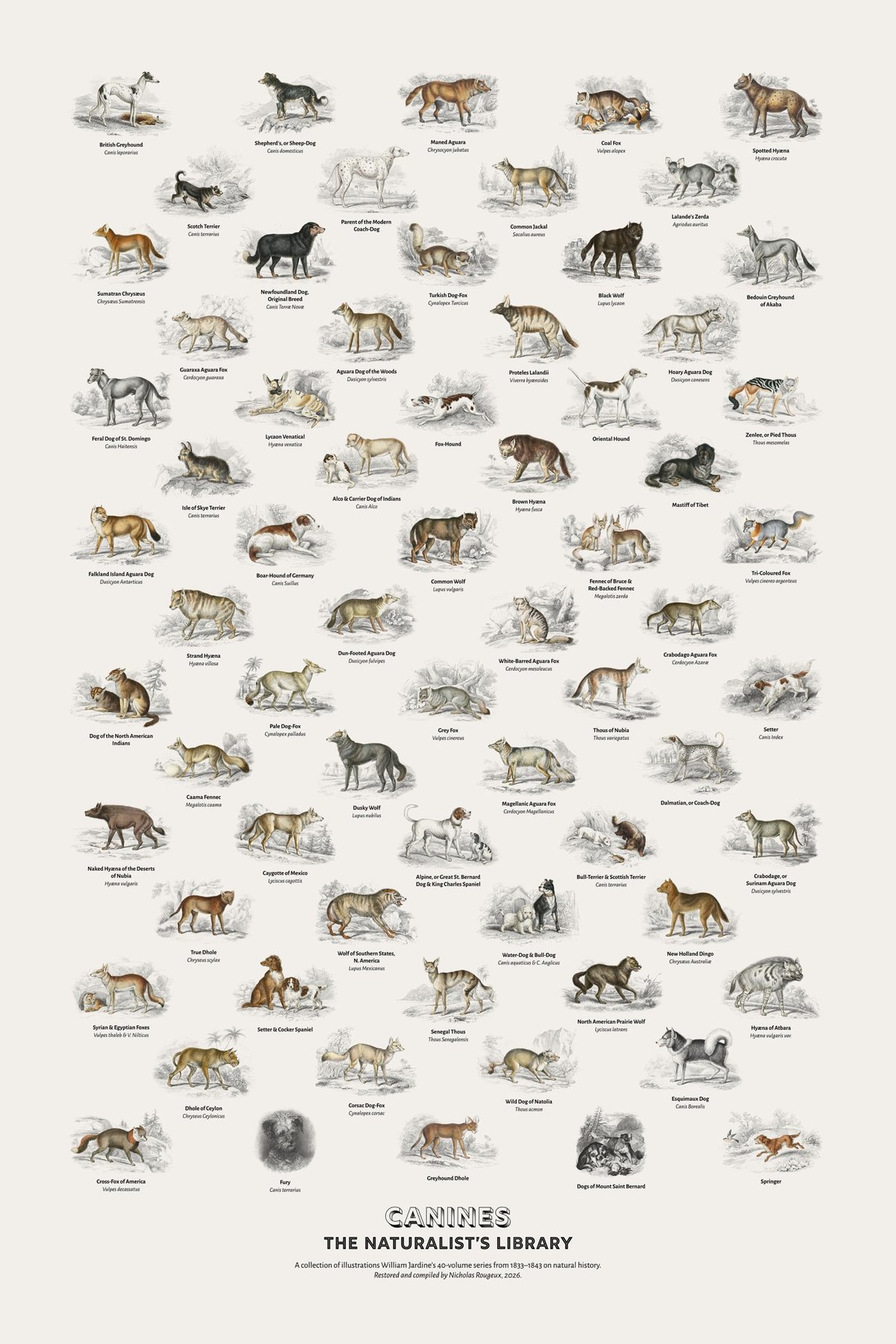
Nicholas Rougeux, whose work I have featured here before, has published a complete digital edition of William Jardine’s 40-volume book series on natural history published in the early-to-mid 19th-century. As part of the project, Rougeux restored each of the more than 1300 illustrations in the library, and the results are fantastic.




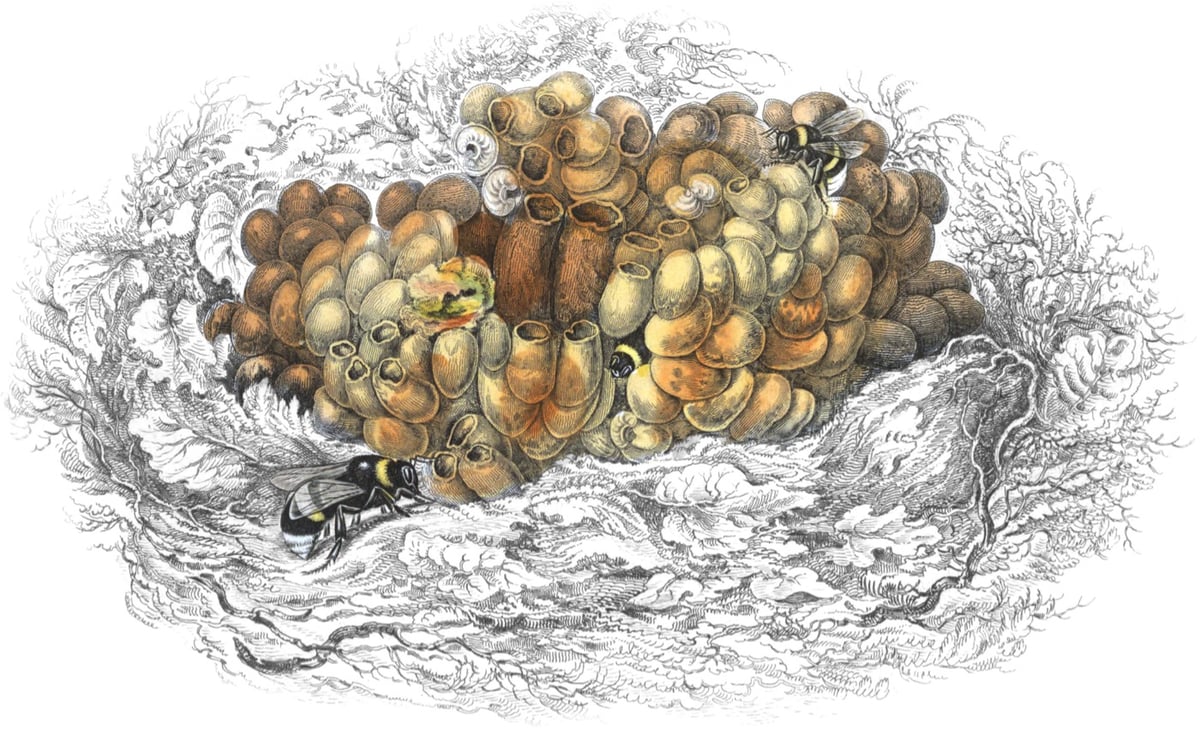

Rougeux wrote a post on the history of The Naturalist’s Library and how the project came about.
The Library is credited with having a significant democratizing effect on the study of natural history because Jardine and Lizars prioritized affordability and portability. Each book was only 4 by 6 inches and priced at six shillings, making them a much more accessible alternative to the “unwieldy folios” from other naturalists. This led to a tremendous demand for each one, resulting in tens of thousands of copies being printed overall. Just two years into publication, a notice appears at the beginning of one volume stating, “we have sold upwards of 60,000 volumes, in which there have been nearly 2,400,000 coloured plates given as Illustration.” Exact sales numbers are difficult to come by but history has shown that the series was very popular with estimates of 10,000 copies sold for each volume, totaling at least 400,000.
In order to help with his research, he borrowed a biography of Jardine from the library and built a custom rig out of K’nex construction toy pieces to scan the whole thing.
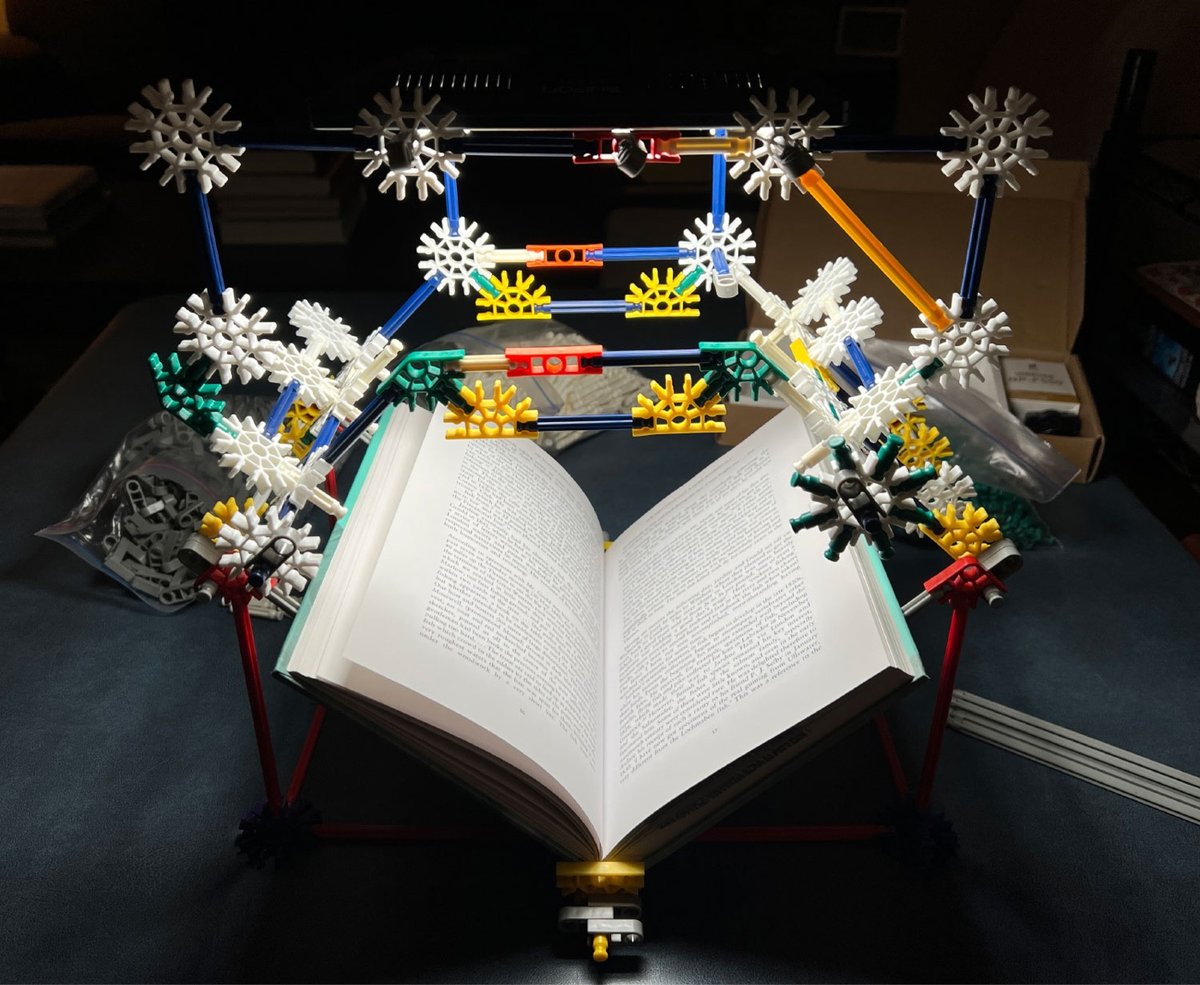
About a month later, I discovered a 2001 biography about Jardine, Sir William Jardine: A Life in Natural History, which only existed as a physical copy. I emailed the publisher to ask for a digital copy but had no luck. So I did what any self-respecting researcher would do and borrowed it on an inter-library loan and made my own digital copy by building a very janky custom rig out of old K’nex parts to take pictures of each page with my phone that I later combined into a searchable PDF. The OCR on it could be improved but having it available digitally allowed me to consult it in my research.
You can check out the shop for posters of the illustrations as well as a complete, bound, 800-page volume of all 1300+ illustrations.
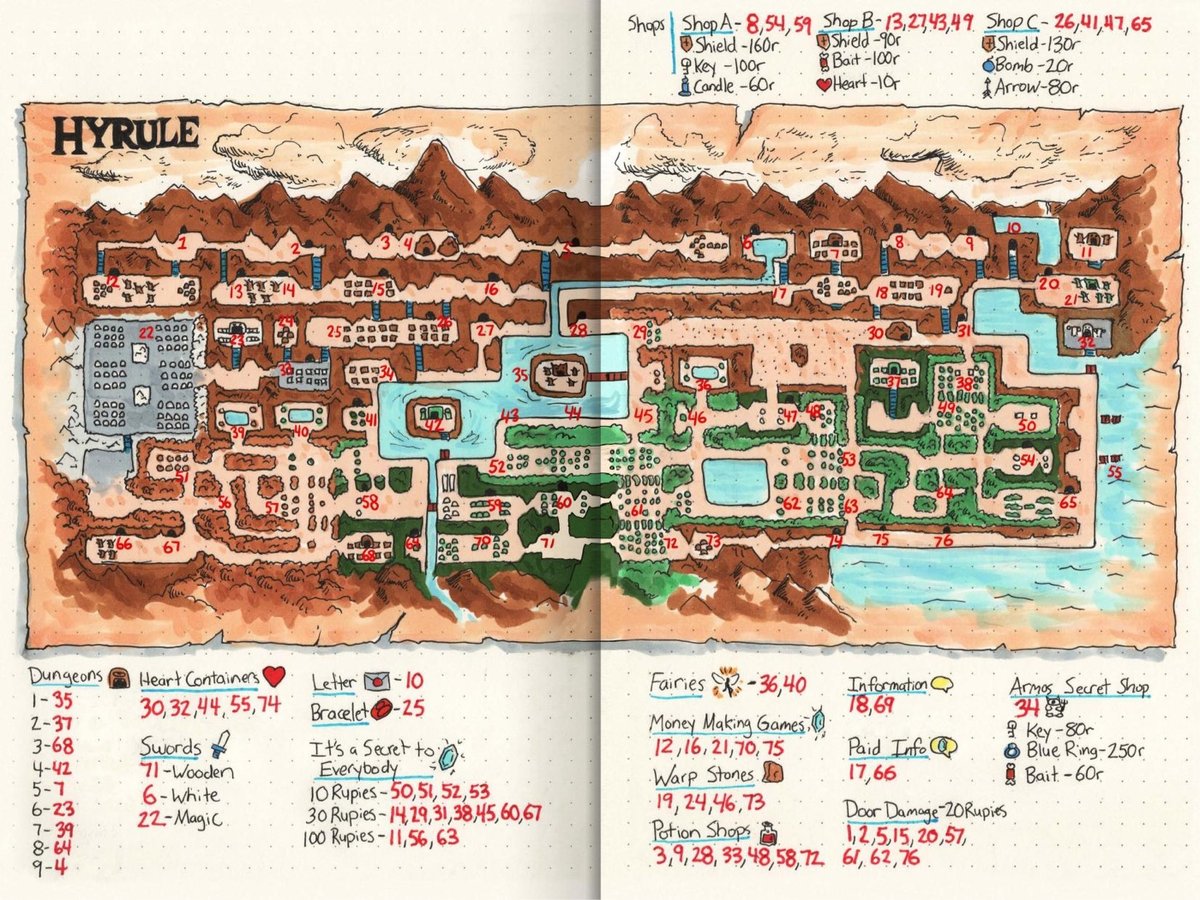
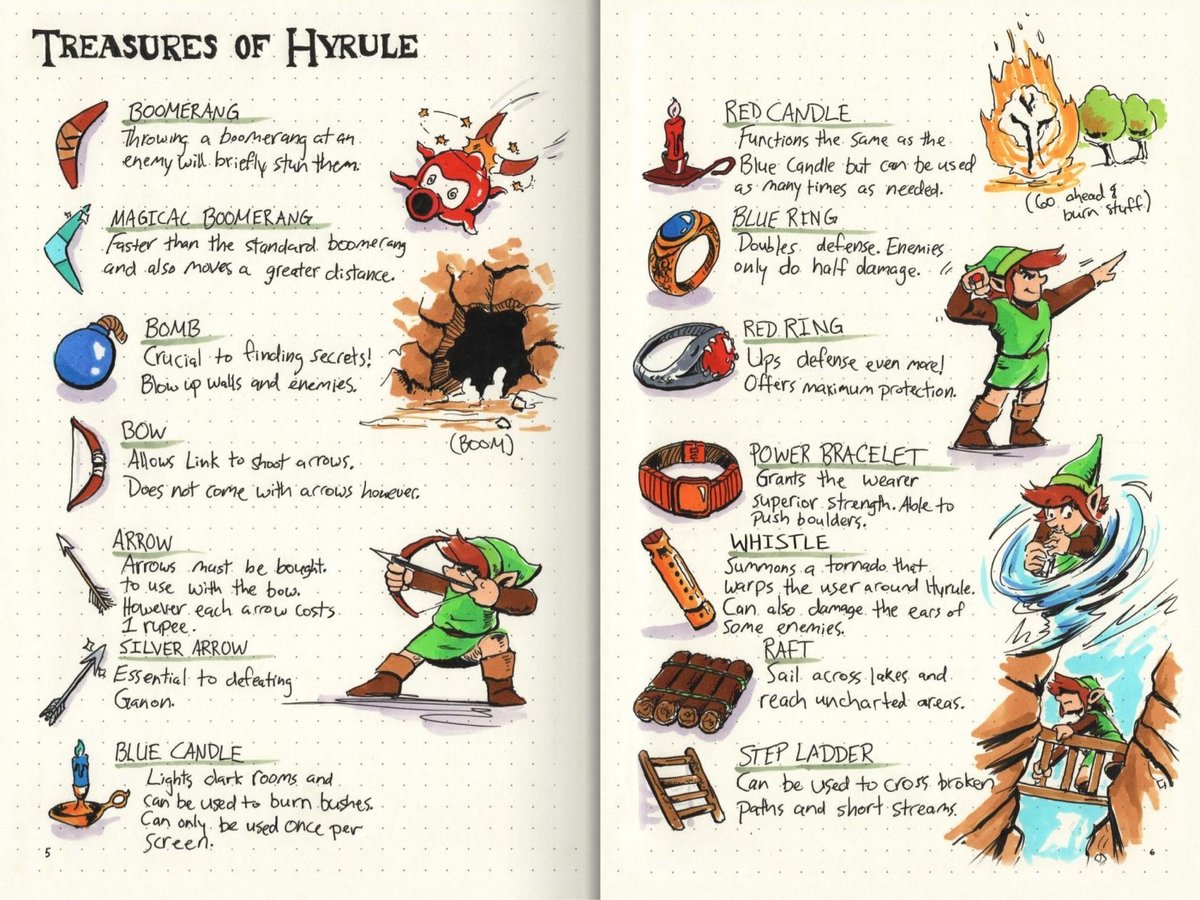
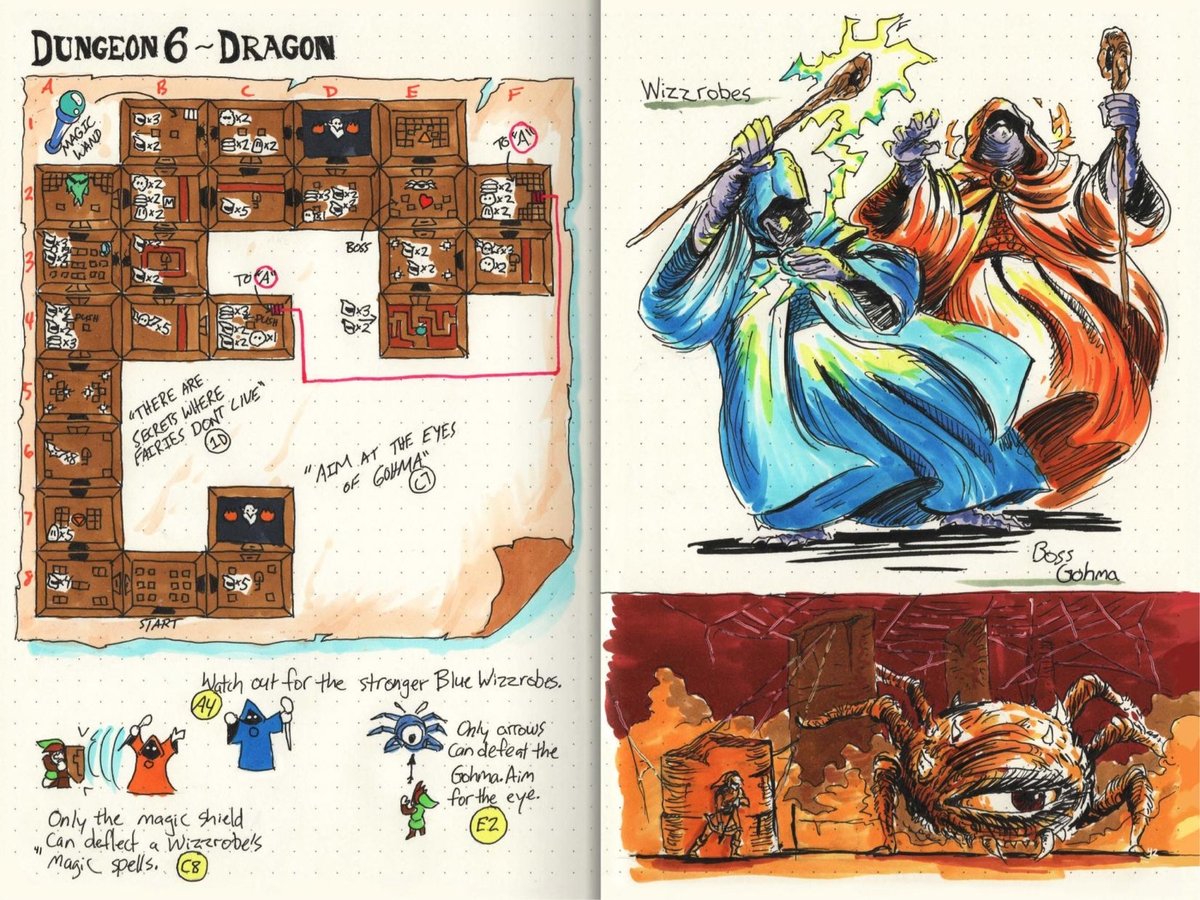
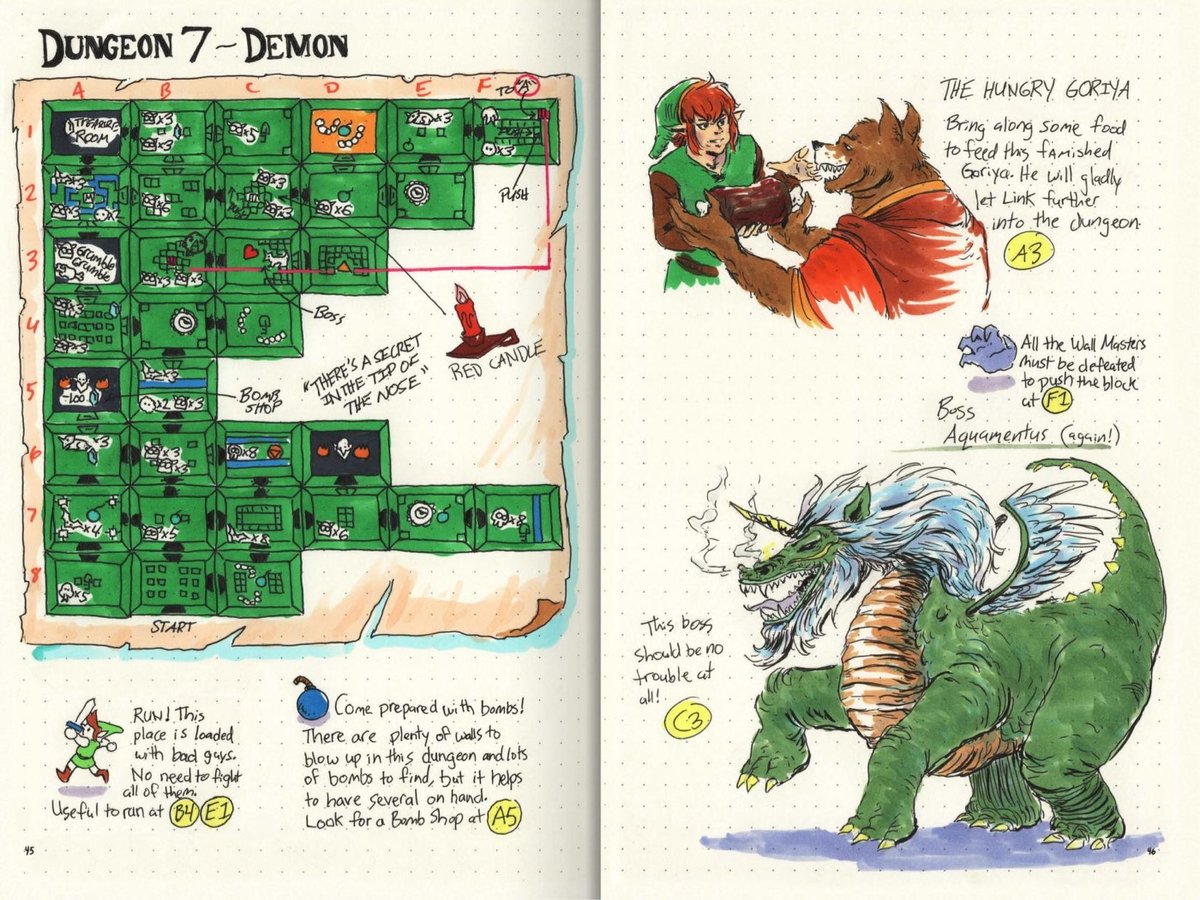
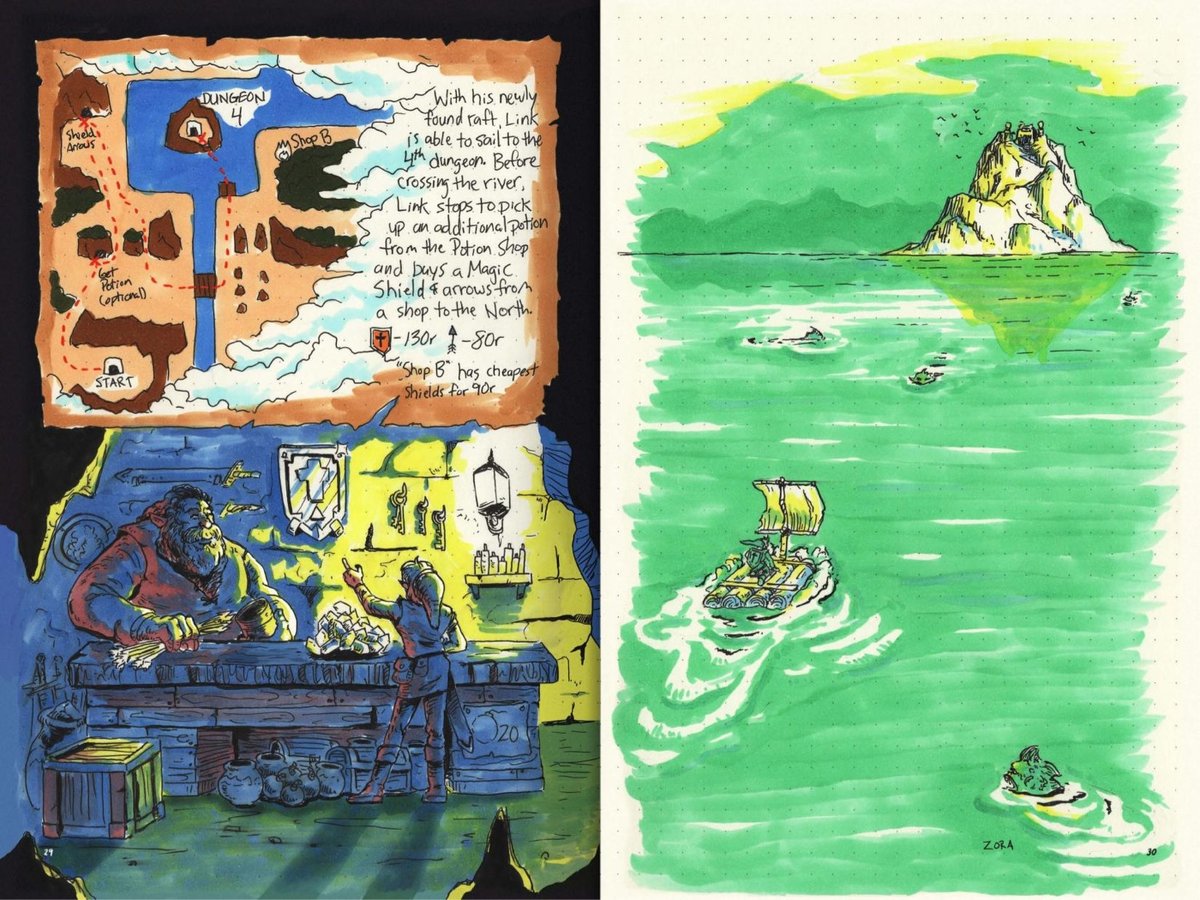
Philip Summers hand-draws game guides for old school video games. He’s done guides for games like Mega Man, Castlevania, Teenage Mutant Ninja Turtles (NES), and Metroid.
But my favorite one is The Legend of Zelda game guide because Zelda was (and still is, tbh) my absolute favorite NES game — and you can get it for free at the Internet Archive. Somewhere in my personal archive is the map I drew for the second quest of Zelda; I also still have my original game cartridge.
A graphic of a floppy disk hamburger was created on an early Amiga computer, photographed, and then deleted (more specifically, it couldn’t be saved). Stuart Brown set out to recreate this image as accurately as possible, including colors, dimensions, etc. This is deliciously nerdy. Here’s the resulting image (with some horizontal padding I added):
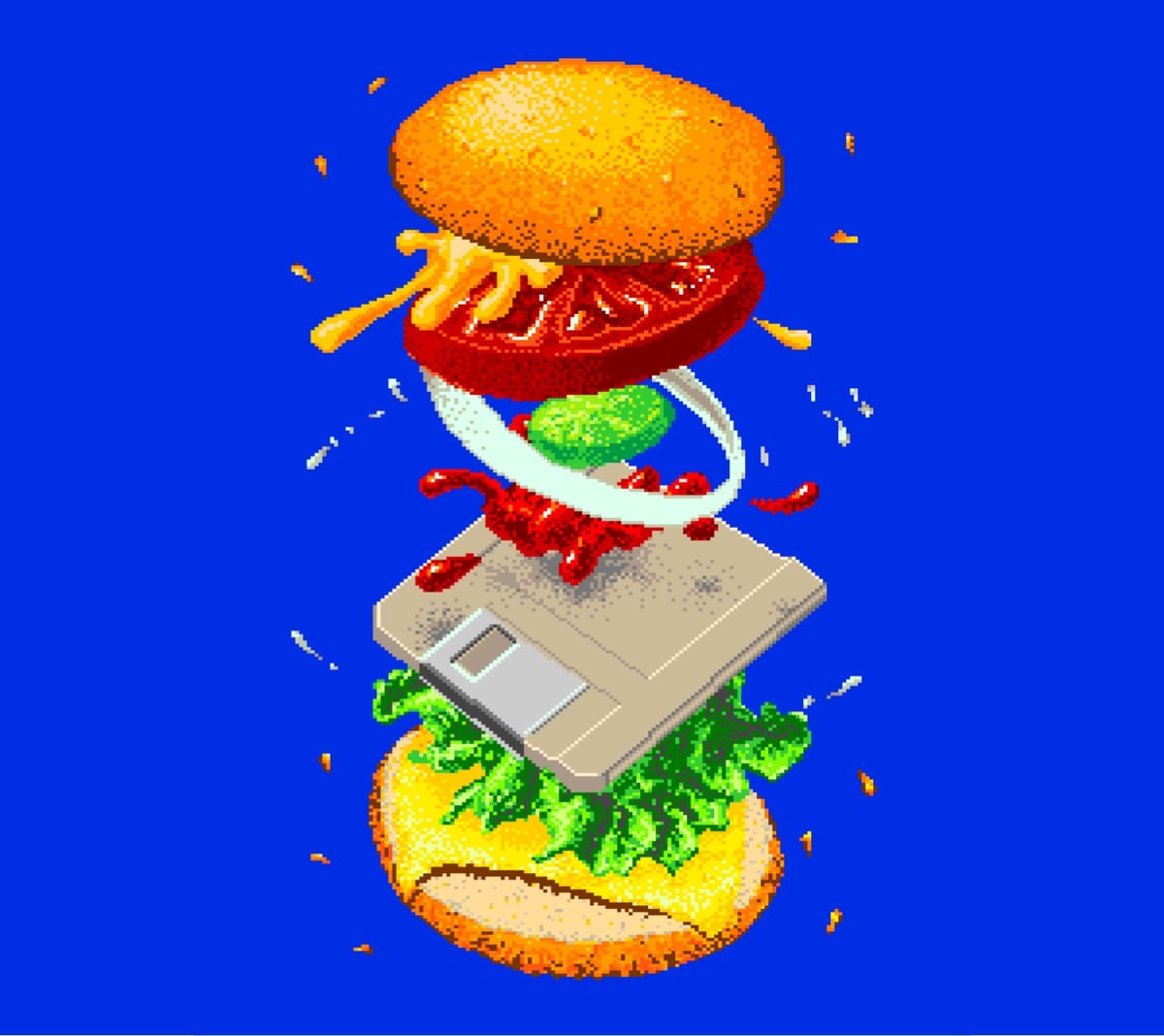
(via unsung)
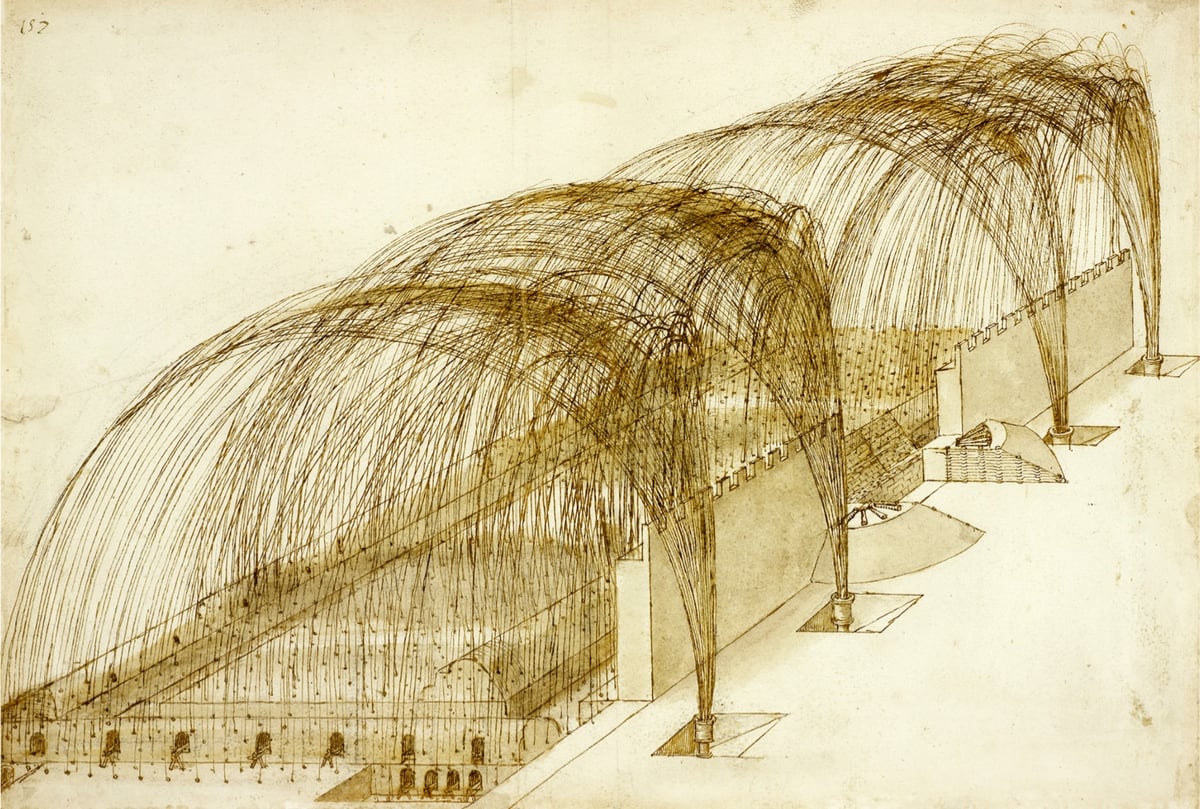
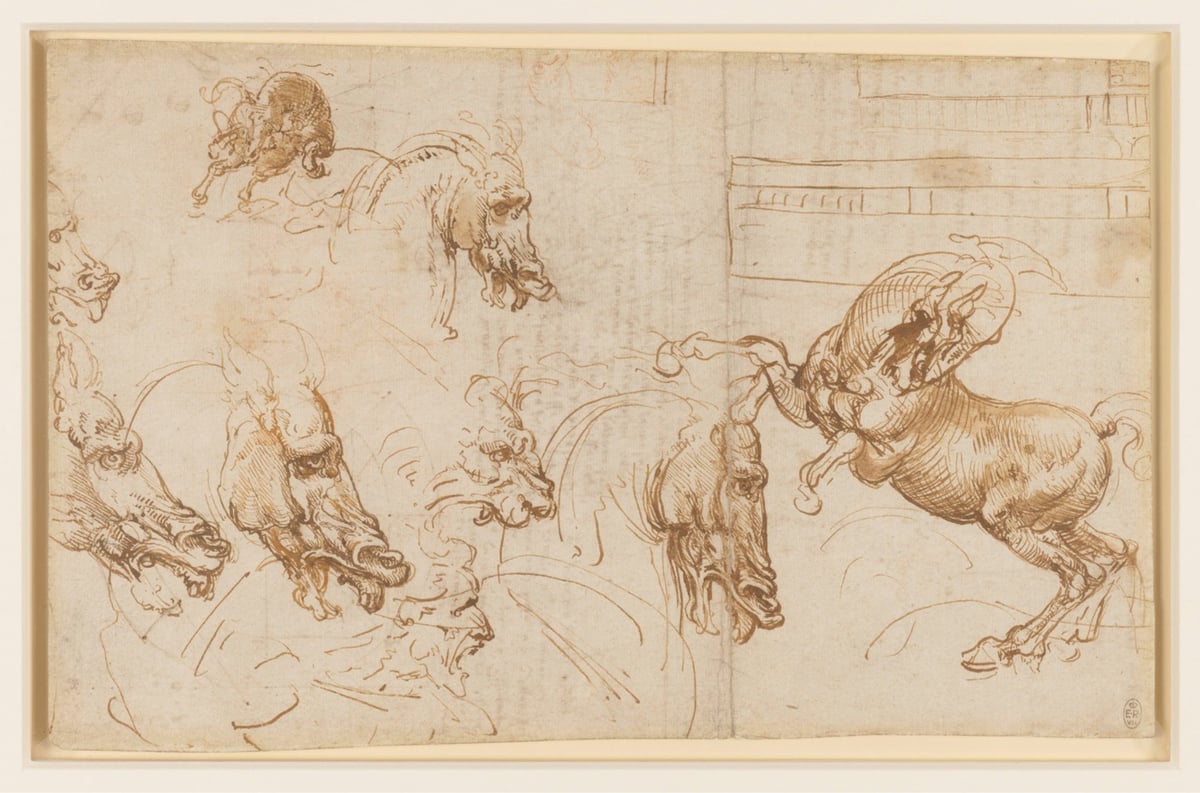
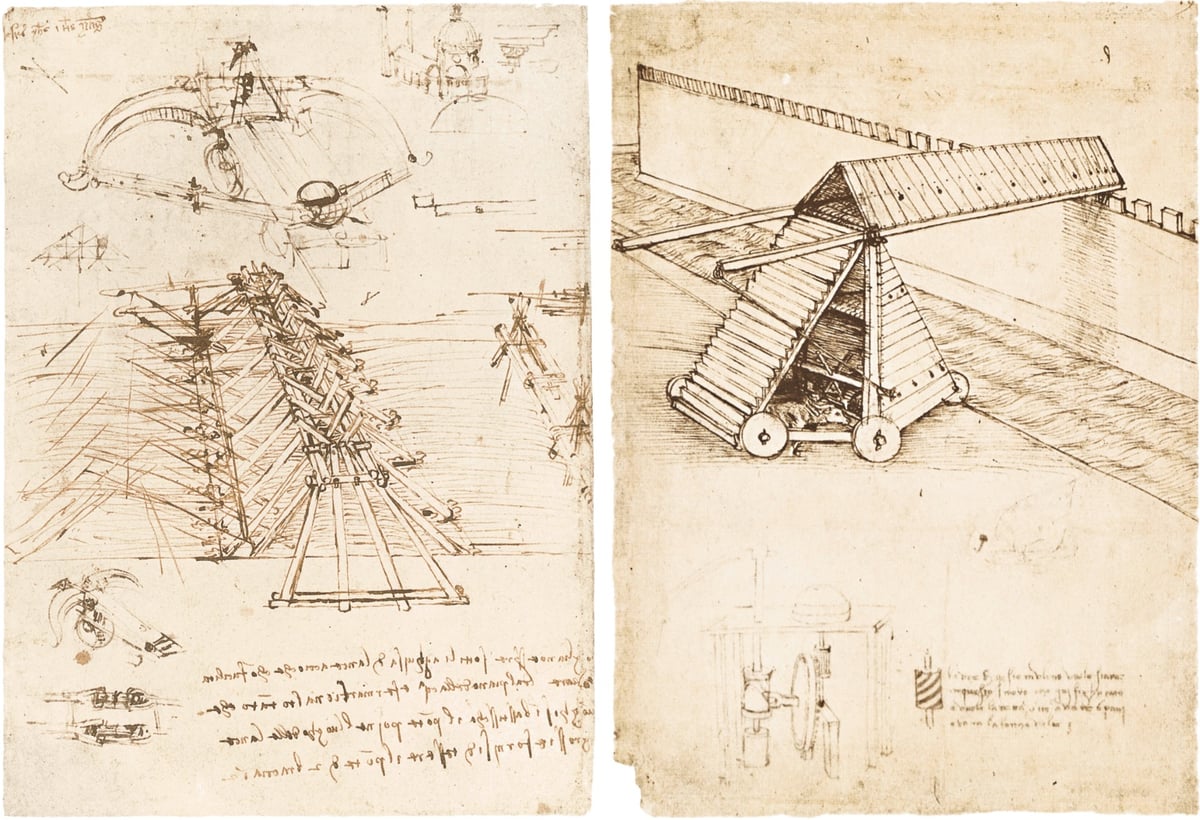
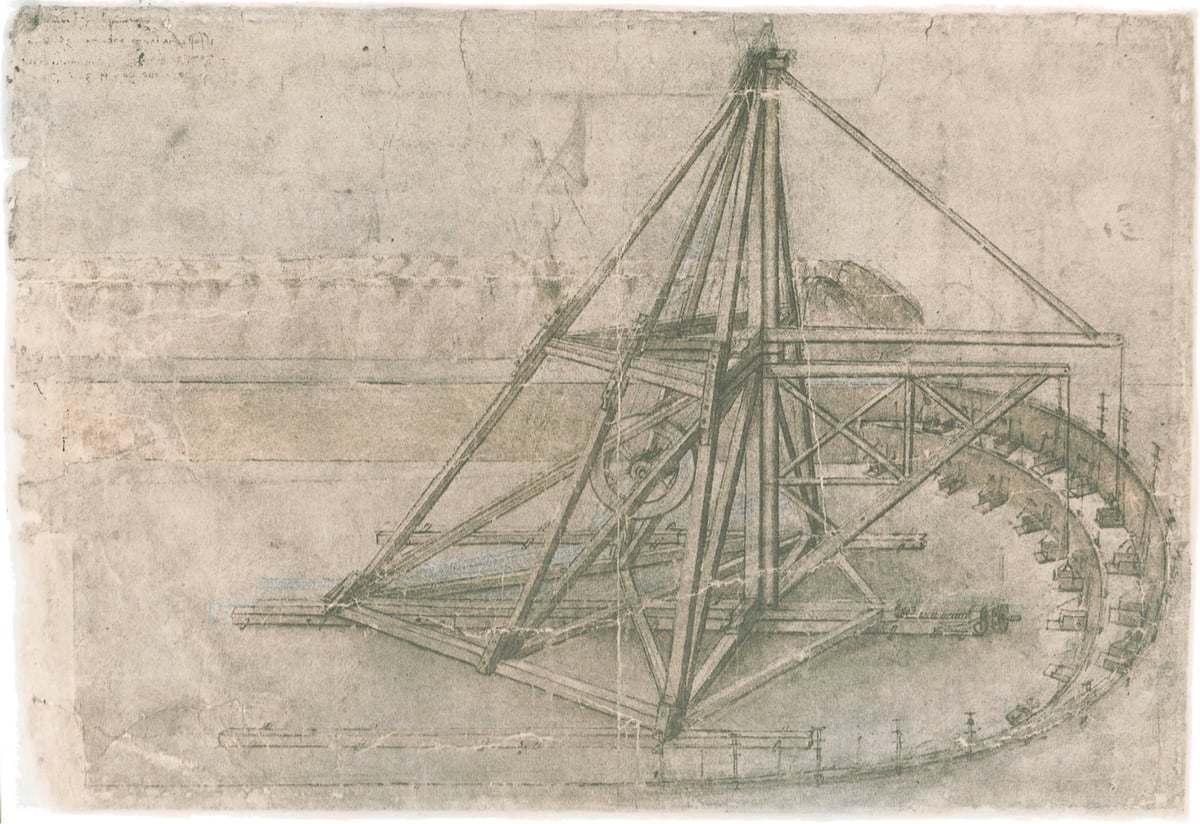
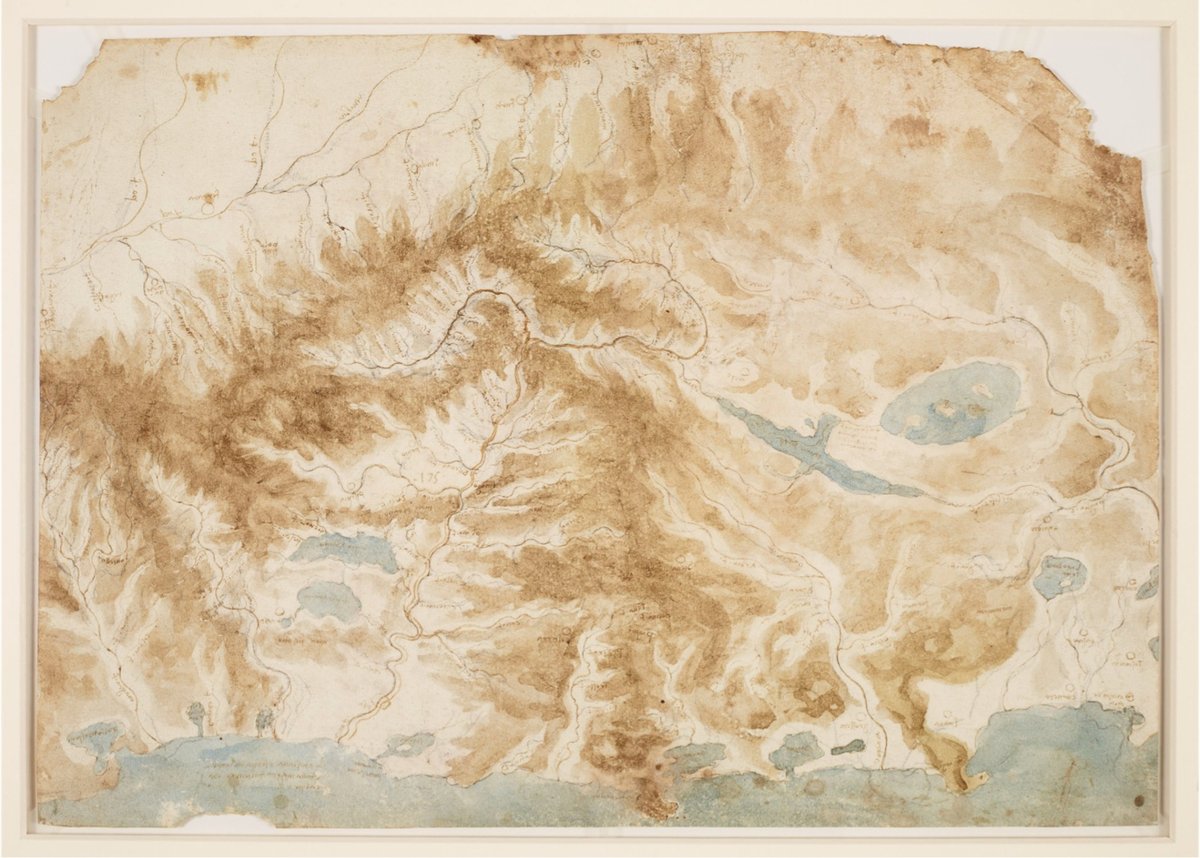
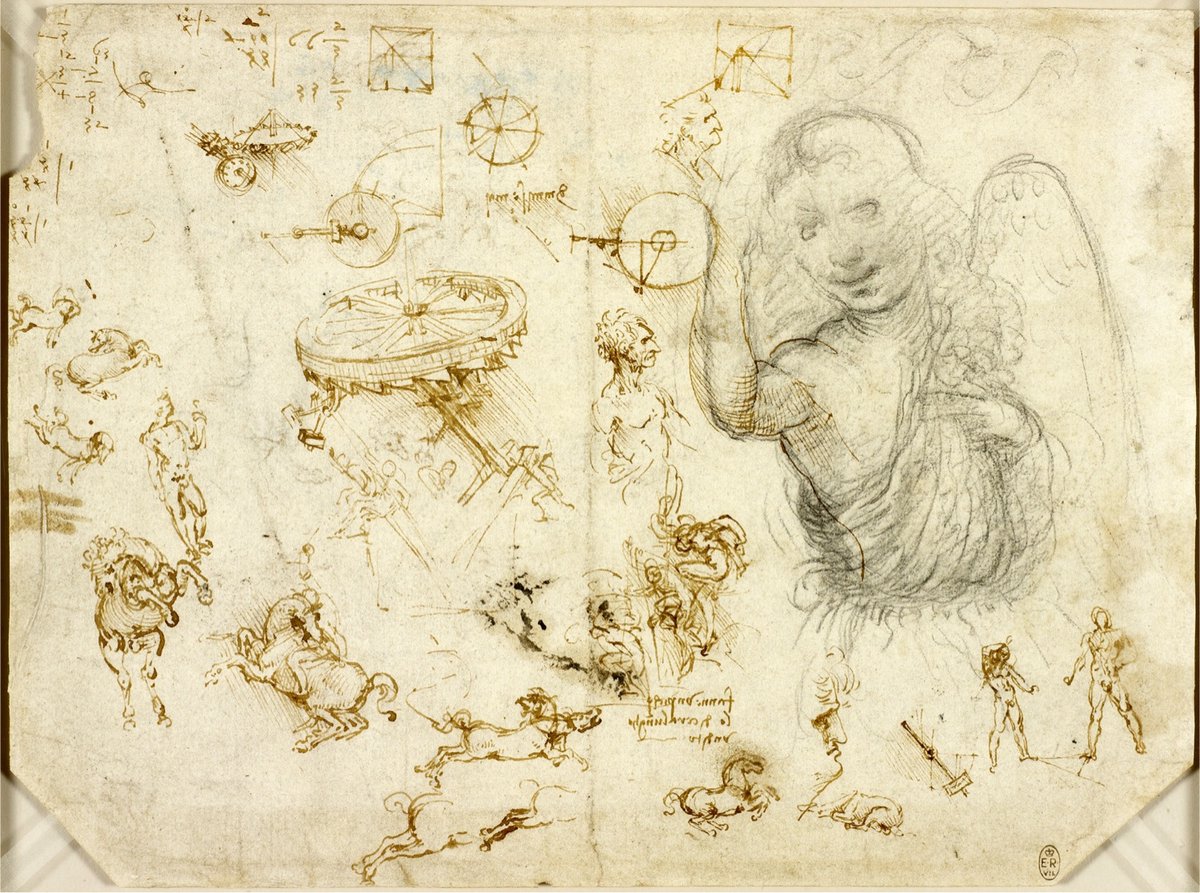
For the first time in hundreds of years, two collections of Leonardo da Vinci’s notebooks have been brought together online at the Leonardotheka. In some cases, pages that were cut apart centuries ago have been digitally joined so we can see the full pages again, as Leonardo drew and wrote them. From the press release:
Marking the culmination of a 10-year project in collaboration with Royal Collection Trust, Windsor, the Veneranda Biblioteca Ambrosiana, Milan, and the Biblioteca Leonardiana in Vinci, a dedicated group of Leonardo scholars and digital experts has worked to bring approximately 3,500 pages of manuscripts back together after they were separated and cut into pieces in the late 16th century. Leonardotheka reveals new insights into Leonardo’s thoughts, vision and working process through the ambitious reconstruction of select pages, digitally restoring their original appearance, to make clear the intended connections between scientific texts and figurative drawings, which had been arbitrarily separated by a later collector.
Museo Galileo initiated this collaboration between partner institutions — convening the world’s leading scholars and knowledge accumulated over centuries of study — with the primary goal of broadening access to Leonardo’s rich legacy via a public platform. Leonardotheka reunifies the 1,119 sheets of the Codex Atlanticus — the largest single set of Leonardo’s writings, held by the Veneranda Biblioteca Ambrosiana — with the most important group of figurative, anatomical, landscape and natural-history drawings by Leonardo in existence — around 550 sheets, part of the Royal Collection at Windsor Castle. These two collections — originally from the same set of manuscripts made by Leonardo from the mid-1470s to just before his death in 1519 — are now brought together in a cross-searchable digital resource.
Here’s a piece in Discover about the collection. Good luck spending less than 30 minutes (or several hours) poking around the archive. (via @jenlucpiquant.bsky.social)
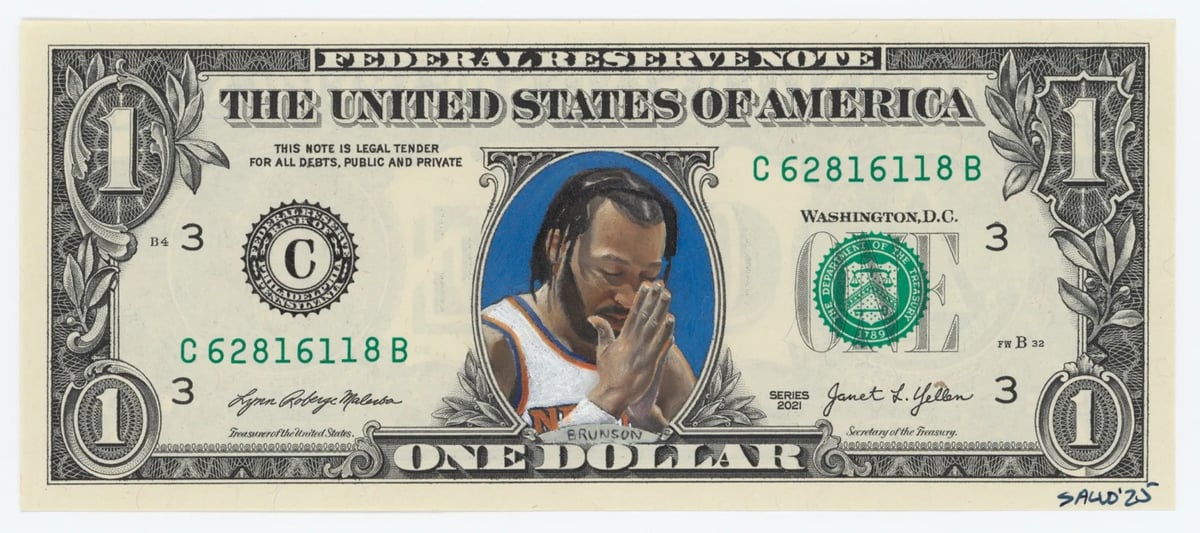
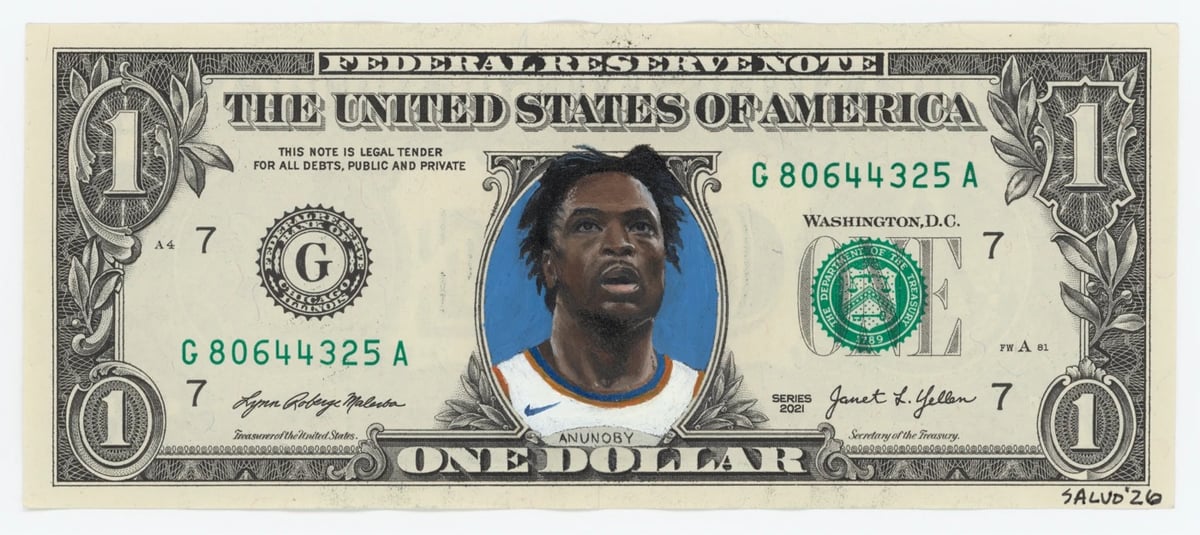
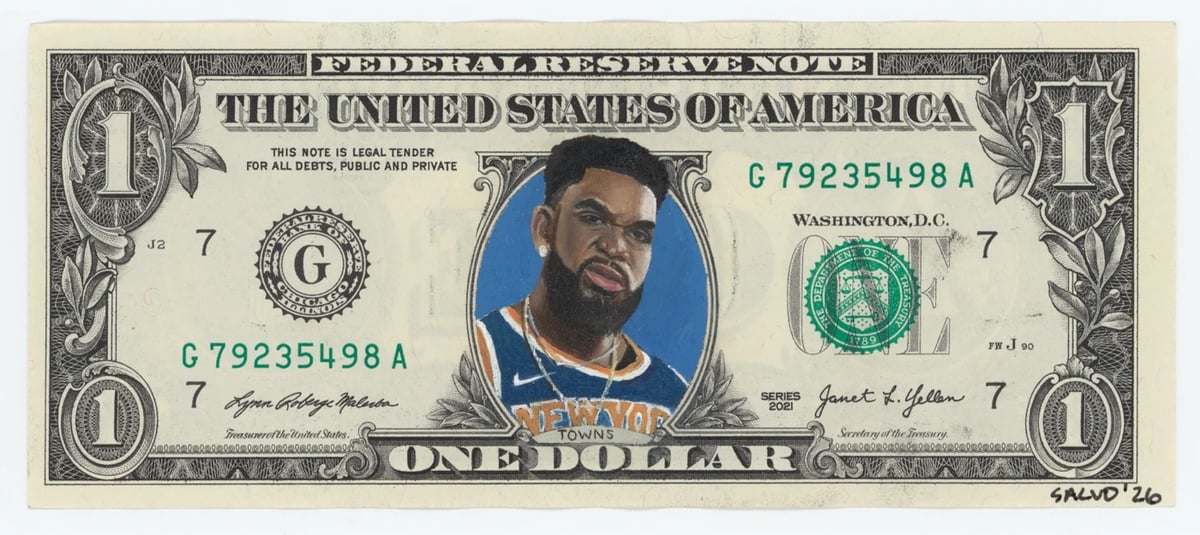
Artist Claire Salvo has painted the starting five of the world champion NY Knicks on a set of US one dollar bills. If you’re in NYC, you may have seen these cheekily pasted up around the city.
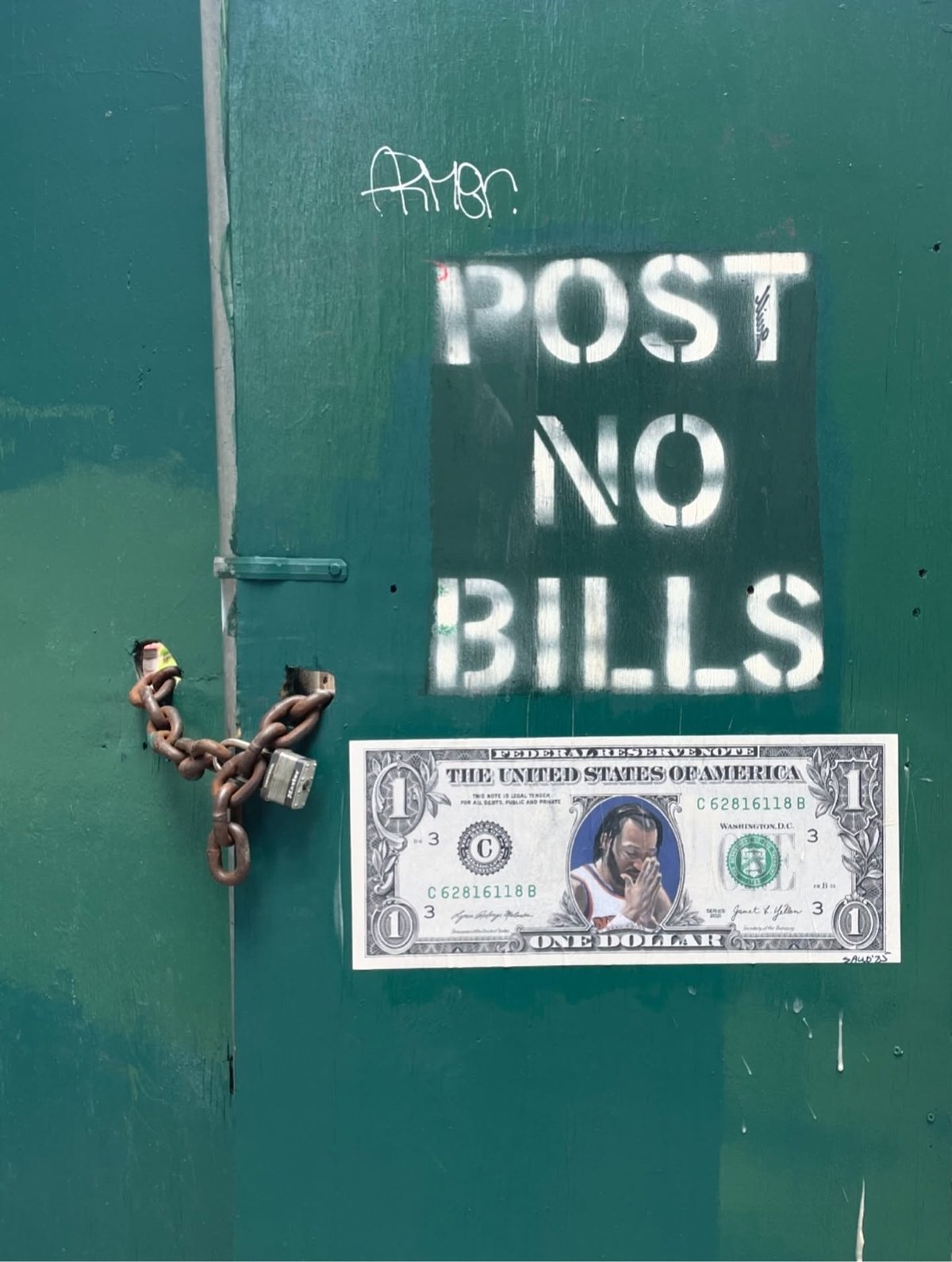
She’s selling a print of all five bills but is also auctioning off the hand-painted originals. The auction ends in a bit more than 4 days and the top bid currently stands at $3200.
See also: The Harriet Tubman $20 Stamp and a discussion of whether such modification of US currency is legal or not.
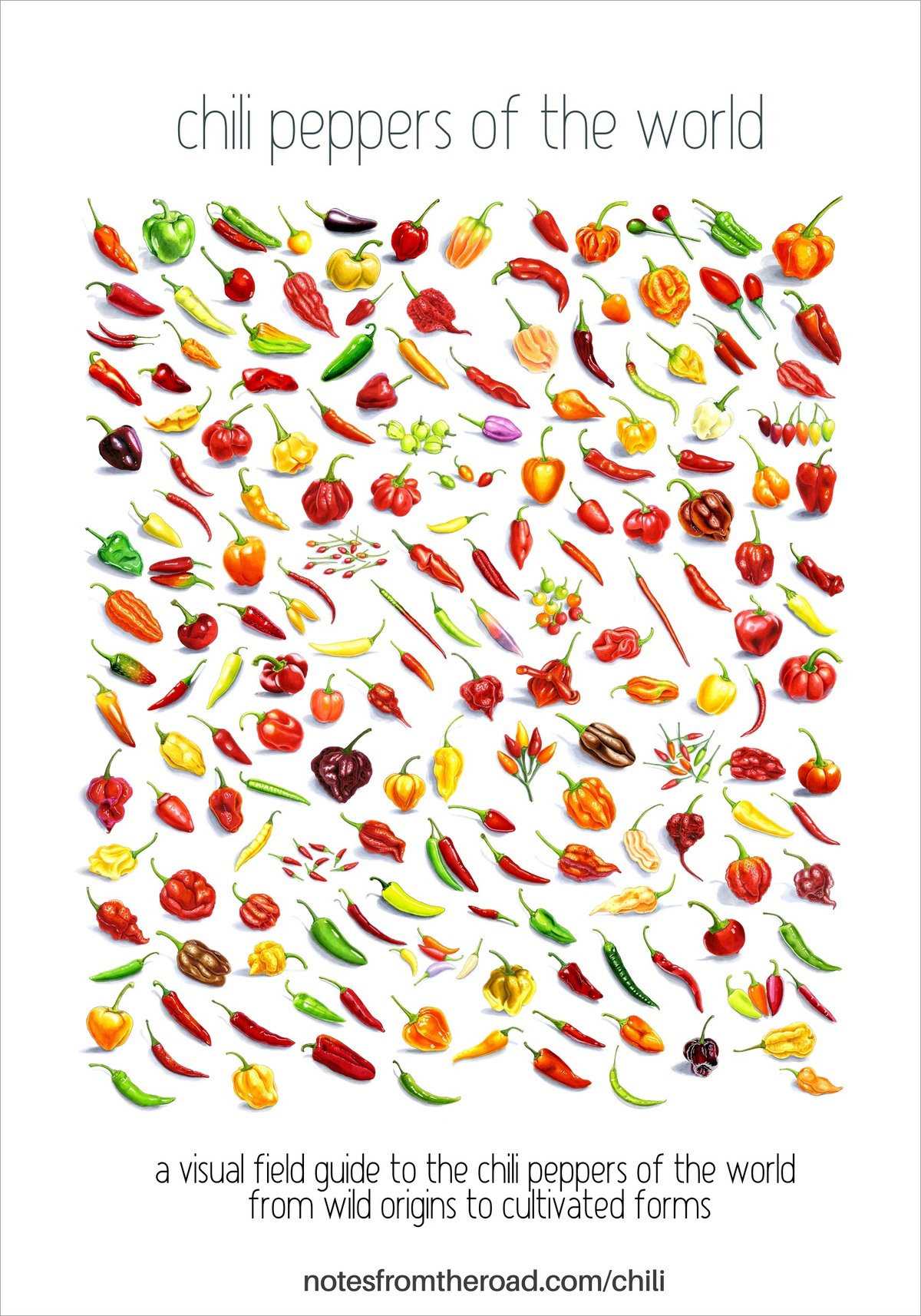
For his great visual field guide to the chili peppers of the world, Erik Gauger hand-drew 176 peppers from India, South America, Korea, Thailand, Africa, and seemingly every other place on the Earth.
Capsaicin, the compound that makes chili peppers hot is an evolutionary filter designed to punish mammals and reward birds. Mammals feel it as pain because mammal digestion destroys seeds. Birds don’t have the receptor that detects it, so they eat the fruit, fly off, and deposit the seeds far from the plant from which they ate. The plant needed birds, and birds didn’t mind the heat, because to them there was no heat to mind.
What we’ve built from that, from the paprika, the Thai bird’s eye, the ancho, the chocolate habanero, began as a dispersal mechanism. Humans entered the picture late and changed almost everything about the pepper’s form, flavor, and range. But the underlying logic is still there in every fruit: a molecule that says no to the animals who won’t deliver their seeds far from the tree.
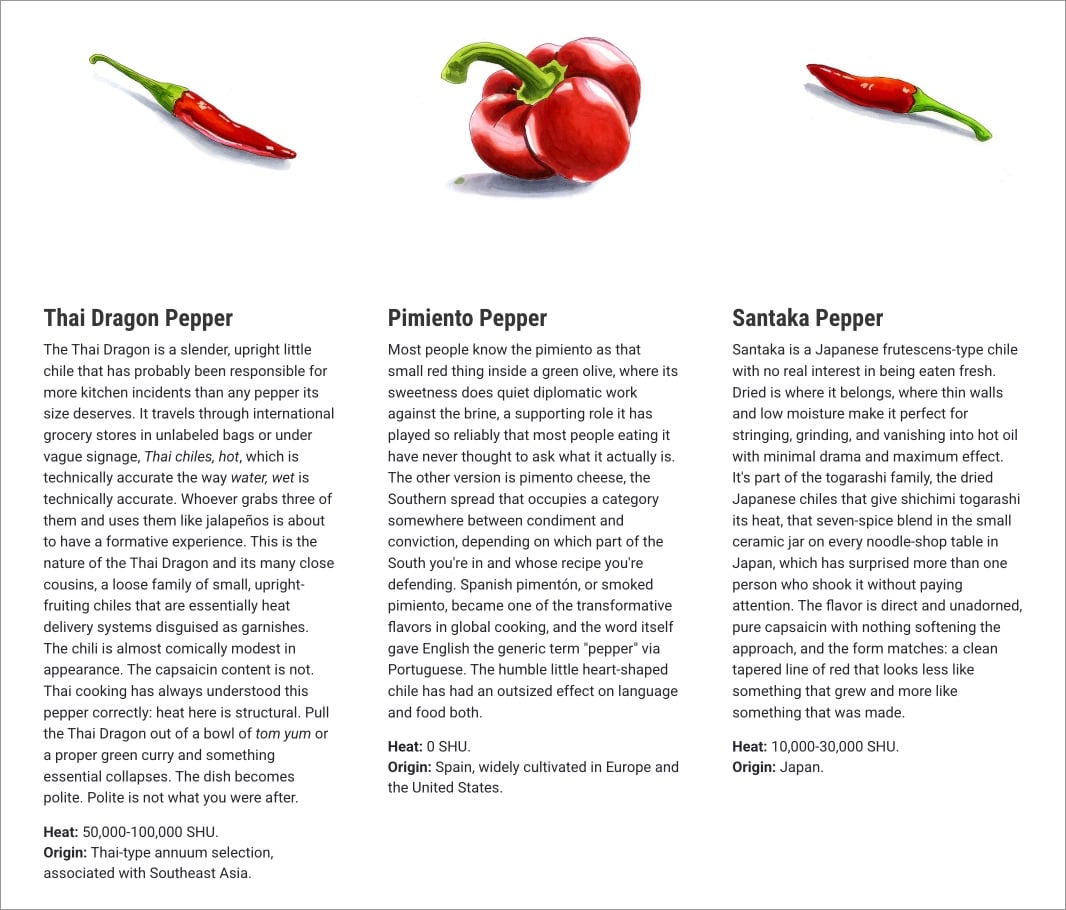
Each drawing is accompanied by a description of the pepper, where it originated, the heat level, and even what hot sauces feature it.
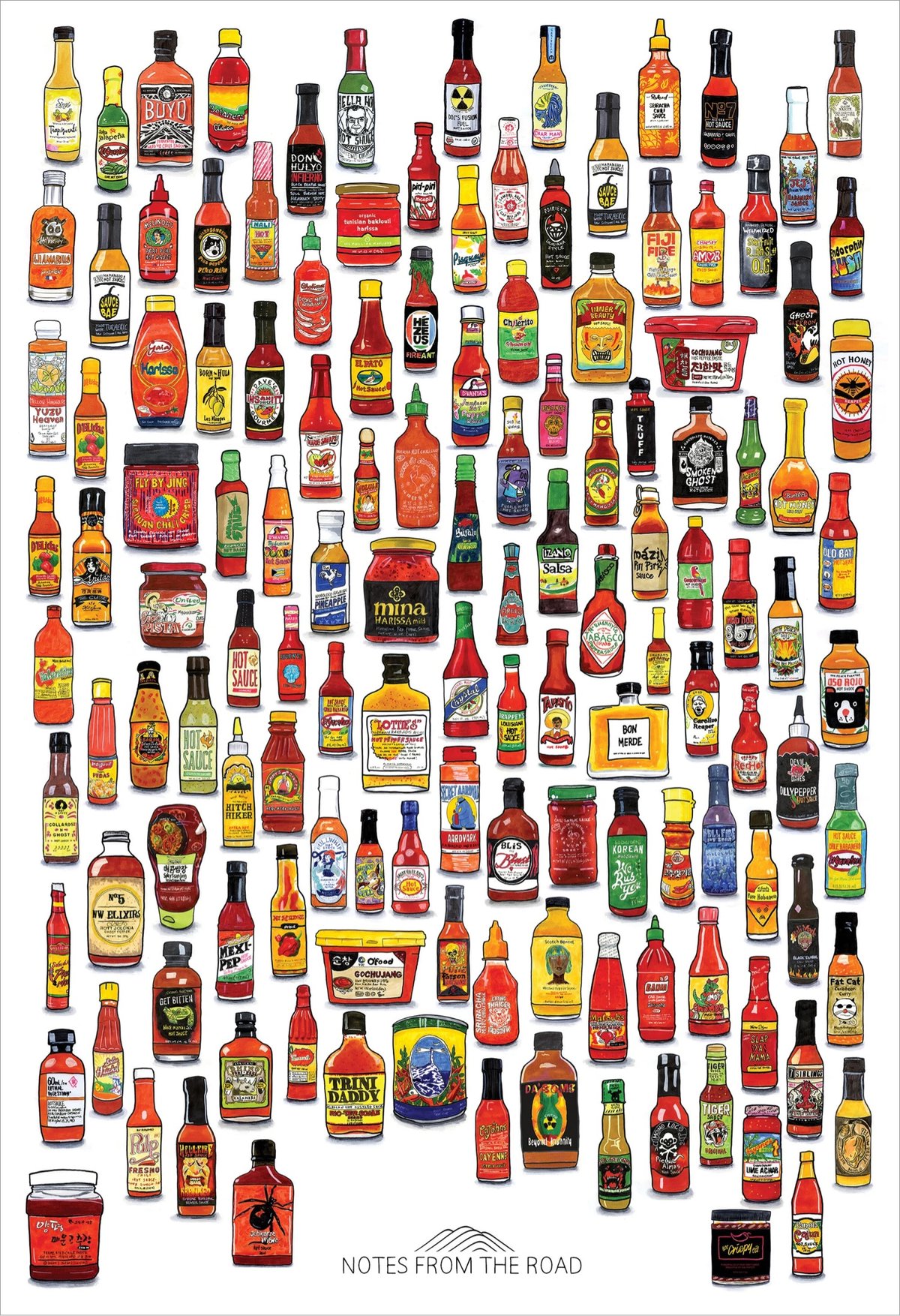
See also Gauger’s Hot Sauces of the World page & poster.
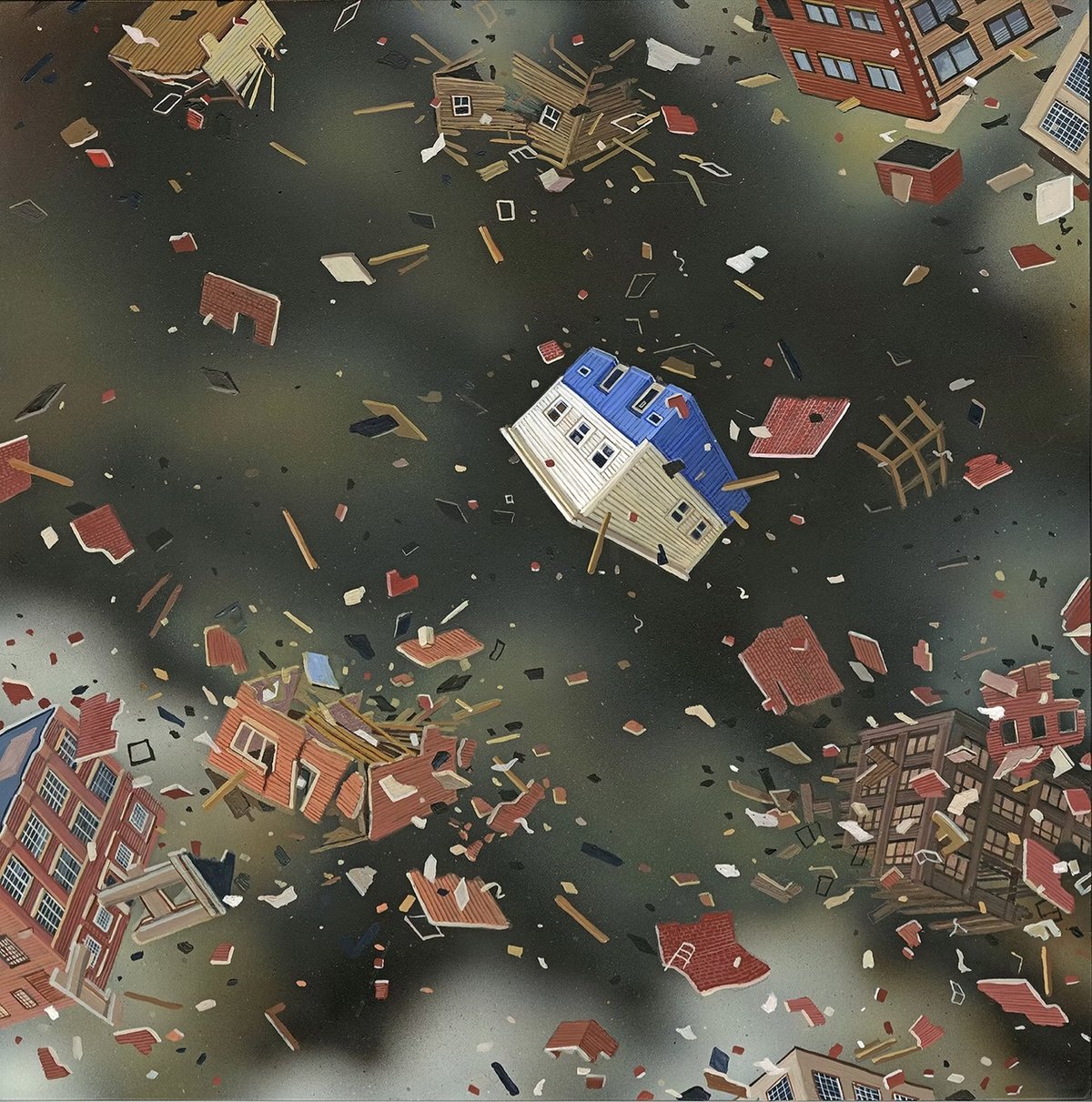
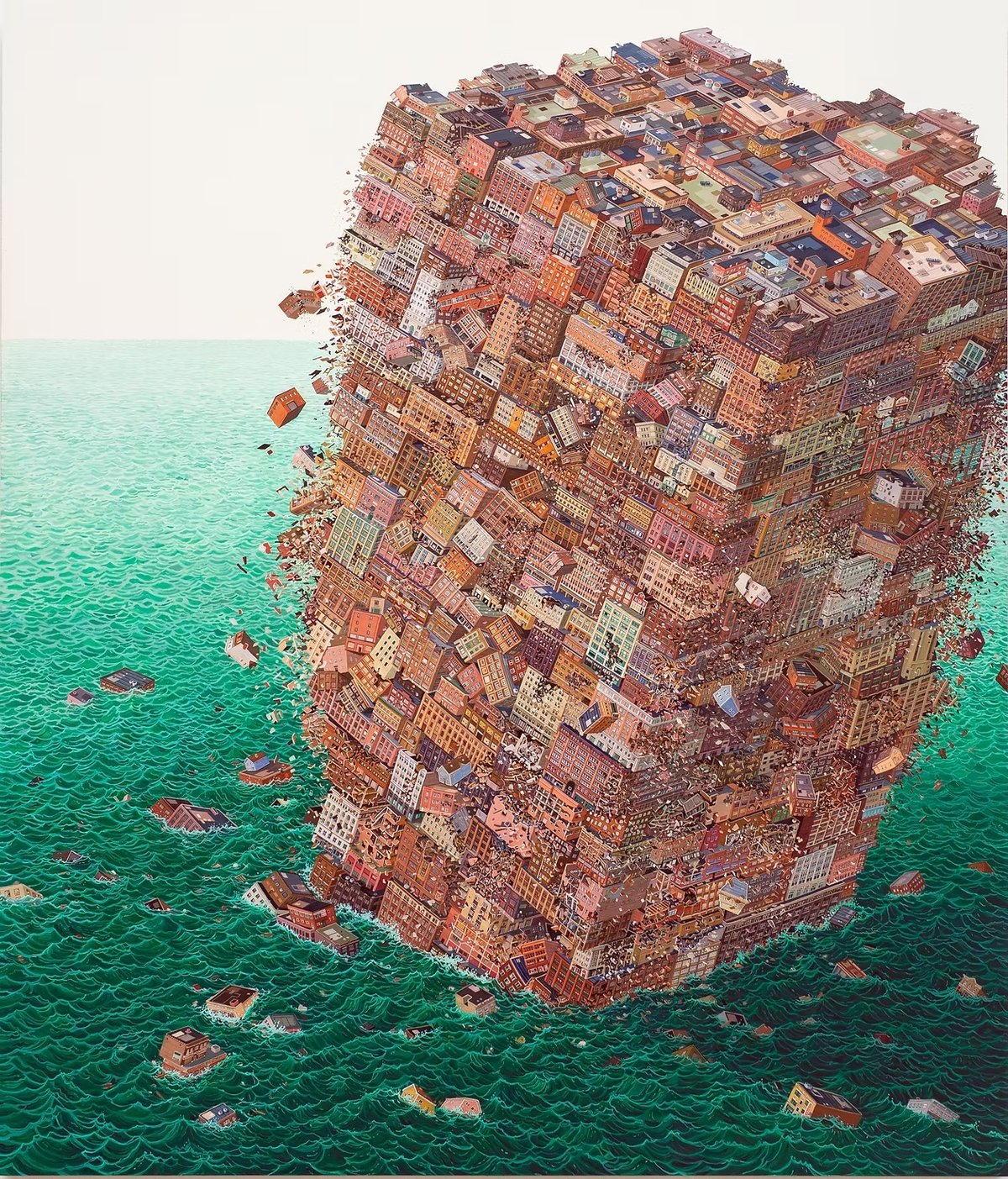
I (weirdly?) love Amy Casey’s paintings of buildings in peril — being swallowed by the sea, being flung into the sky by wind.
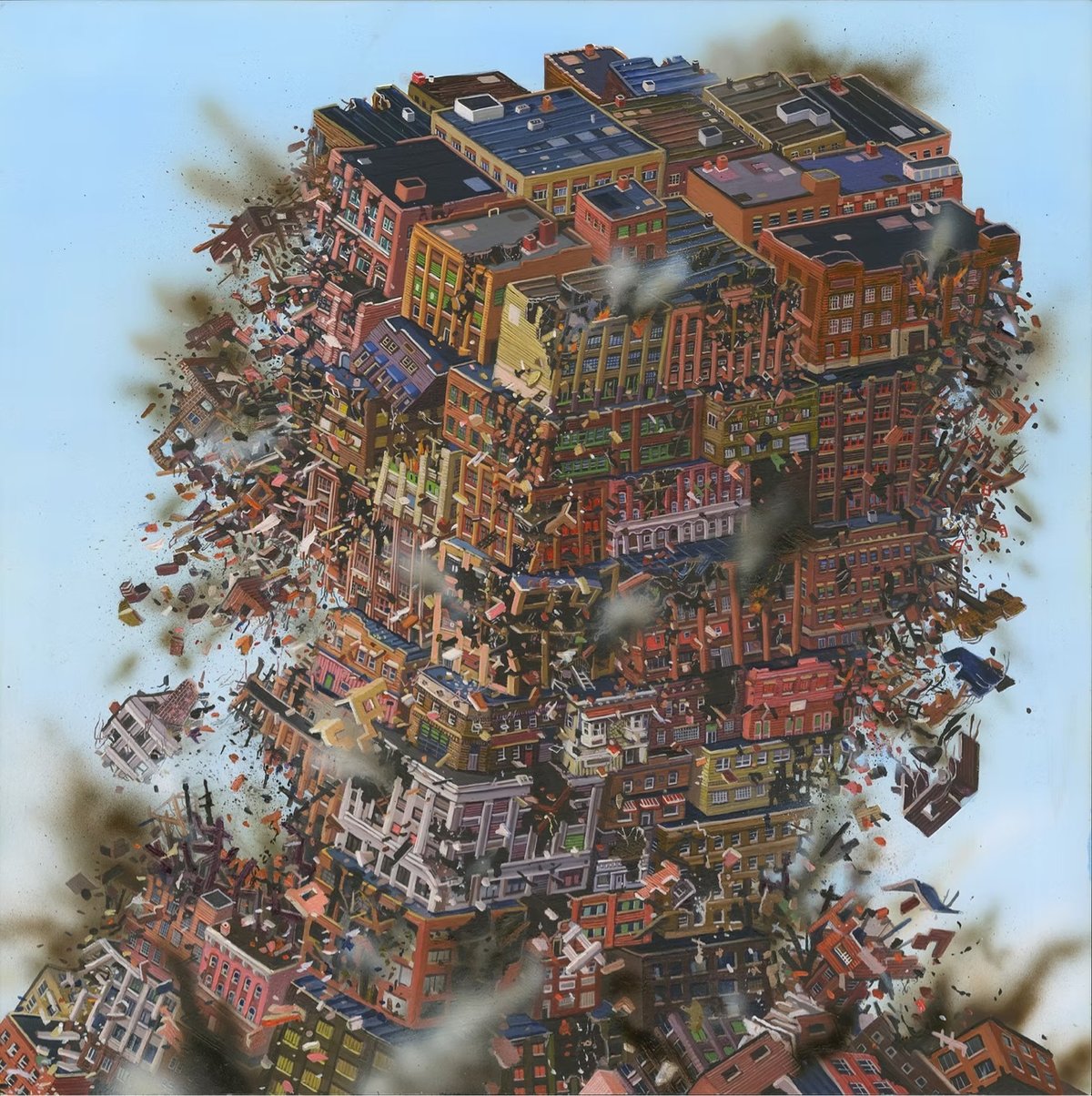
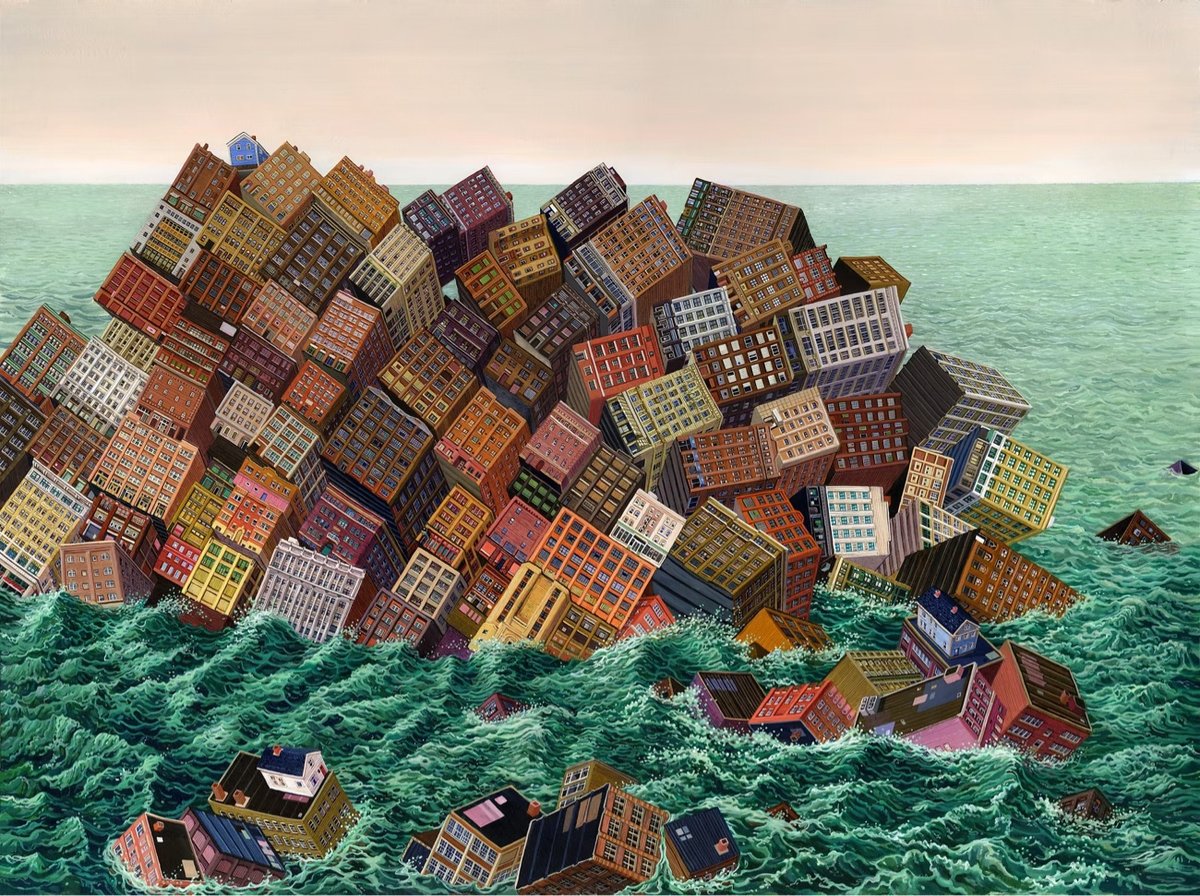
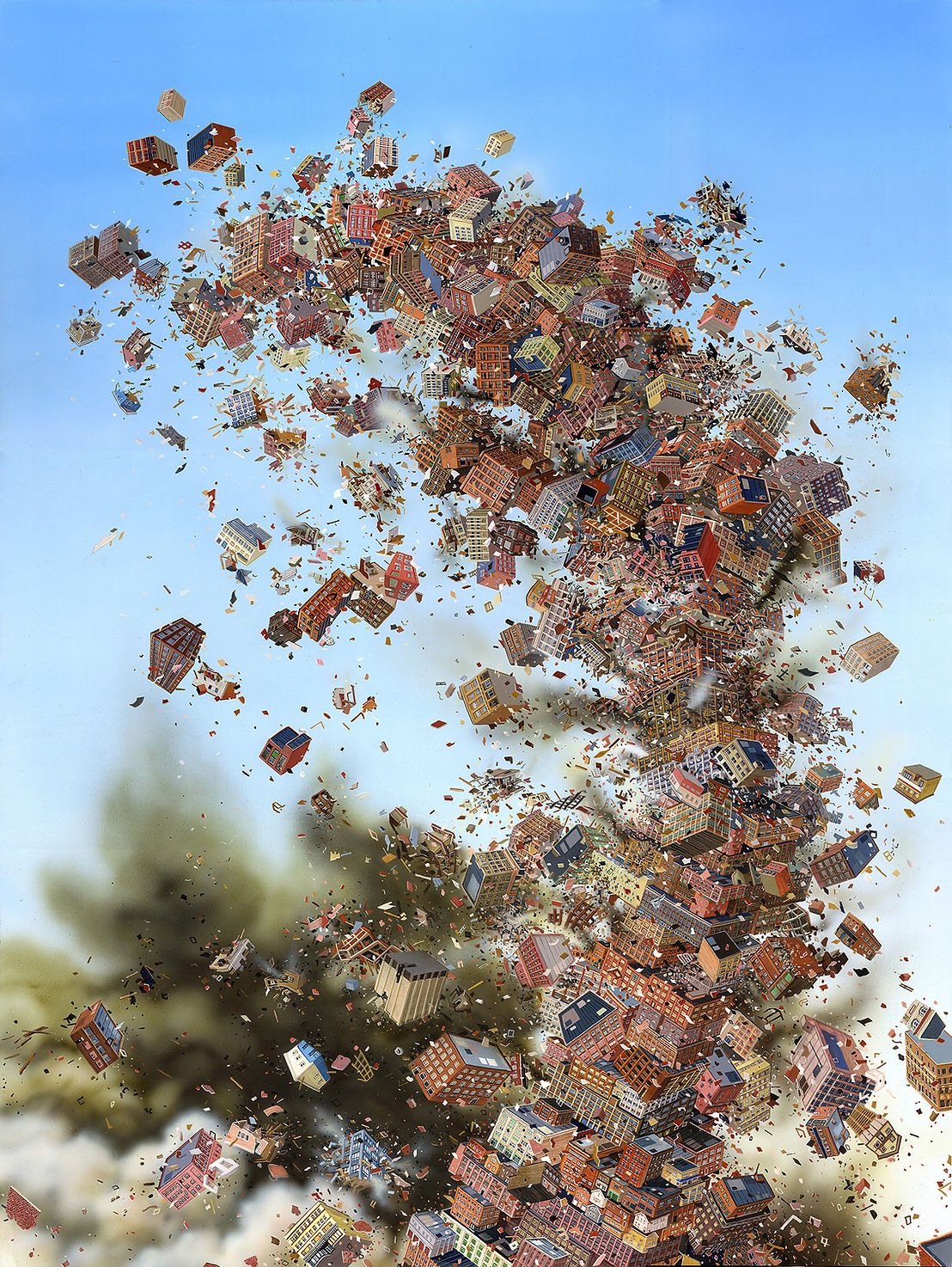
There’s an element of the Kowloon Walled City to Casey’s work, as well as Cloudy With a Chance of Meatballs (specifically the tomato tornado). (via colossal)
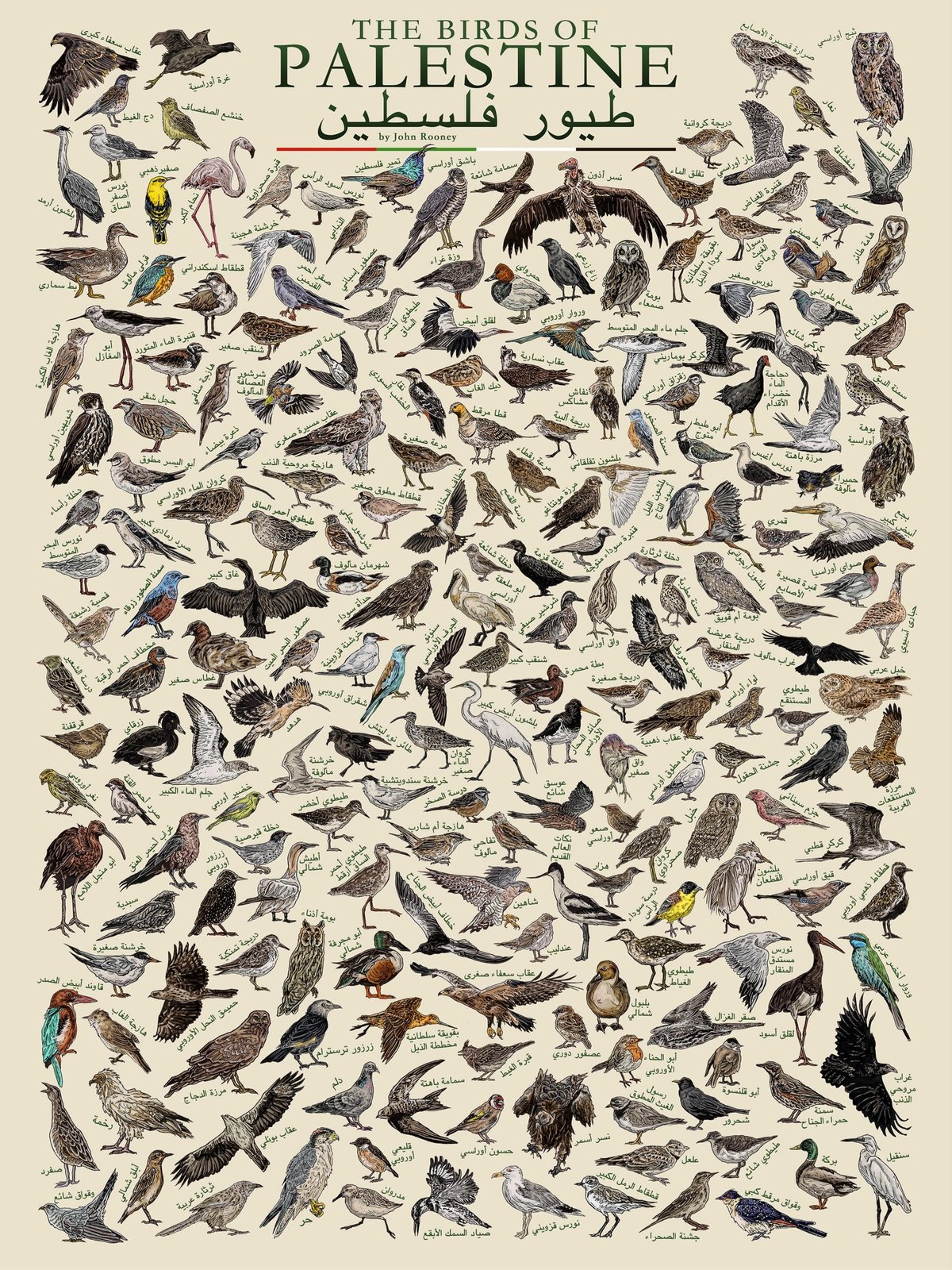
Illustrator John Rooney has teamed up with the Middle East Children’s Alliance to produce and sell this Birds of Palestine print. Rooney on Instagram: “All profits will be going towards providing emergency assistance to children and families in what is still a dire situation in Palestine.”
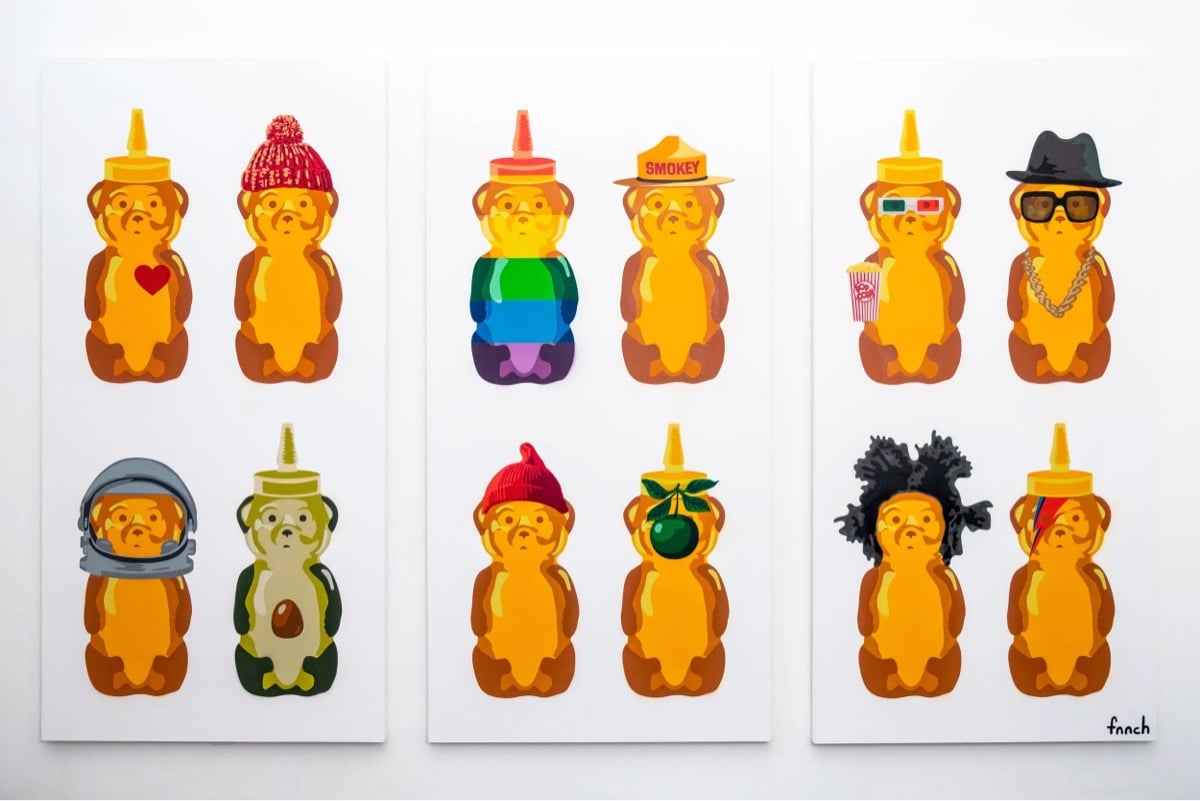
Contemporary pop artist fnnch’s essay on How to Make a Living as an Artist is pretty great. Lots in here that resonates with my experience of turning a creative hobby (KDO) into a business.
Most people who enjoy making art should not try to make it their full time job. When you turn an avocation (hobby) into a vocation (job) you have to do new things you do not enjoy. Emails, events, meetings, accounting, and more. These are not only a drag but can actually strip the joy from the rest of your art practice.
Even the work itself can become a burden because you now have to make it. Amateurs can wait for inspiration; professionals must create every day.
If you enjoy making art, ask yourself why that is not enough? Why do you need to make money from this activity? Why do you need to do it with more of your time? Can it not perhaps give you more joy remaining a hobby?
I have played the drums for many years, and while I was once tempted to go pro, I have always resisted. Drumming is a refuge for me. A joy. An escape. I play when I want. I don’t play when I don’t want. This is no longer true for my painting. Beware. Think hard.
And:
Making your challenge more difficult is that artists are usually not just entrepreneurs but solopreneurs. There is rarely enough money in art to support even a single person, so we do not get to specialize as one might in high tech entrepreneurship, in which it is totally common to have one co-founder focus on product and another on sales. Most people, at least at first, must do it all. Most artists do not want to do it all. They want to just make art. I am sorry. Some people have a gallery or life partner who acts as a business partner. But most of the time, there is no one to help you. You must think about your art practice as a business.
Image: paintings of various honey bears by fnnch.
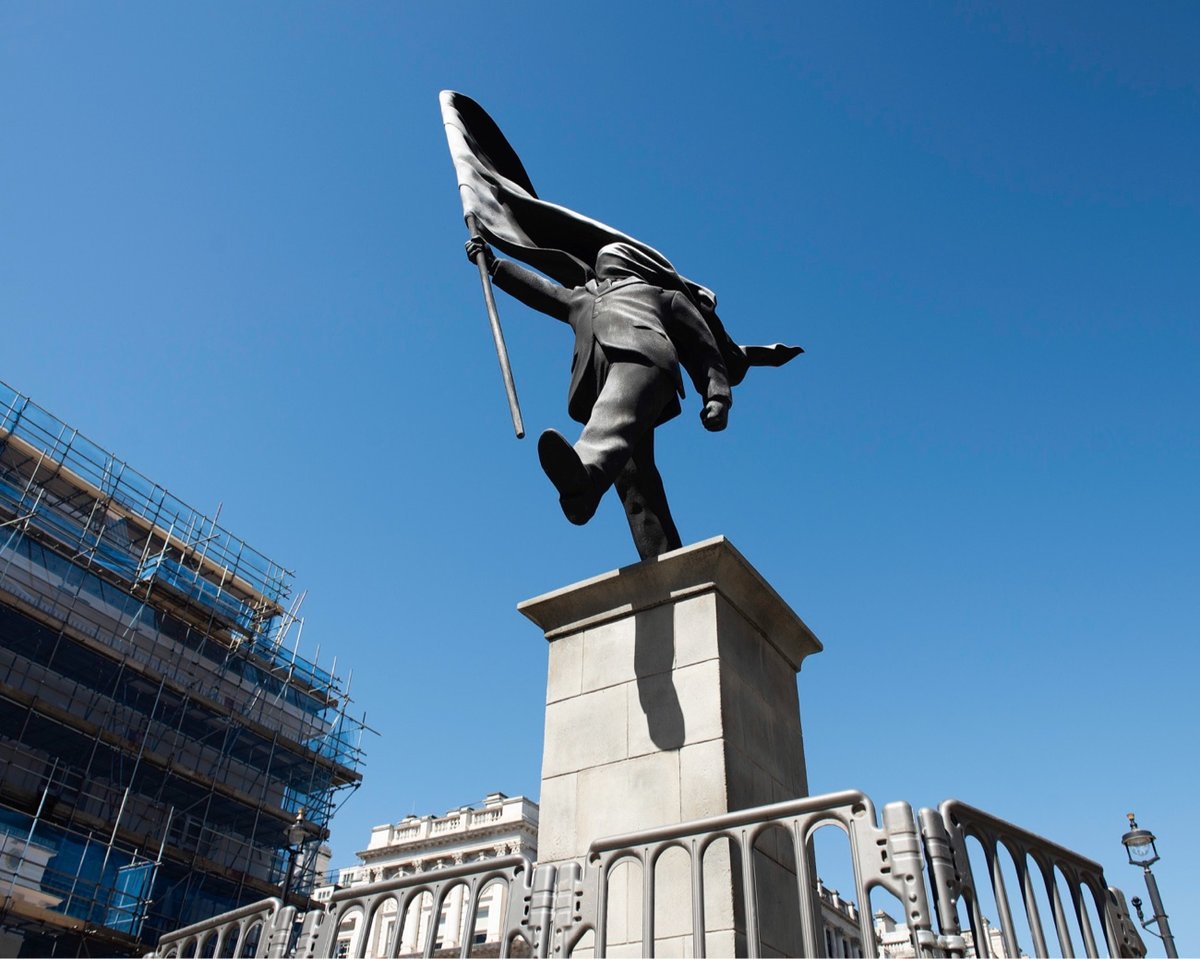
The artist Banksy has installed (without a permit, one assumes) a new statue in London that depicts a man in a suit marching off off a ledge, blinded by a flag.
The artwork has been dubbed Blind Patriotism, although Banksy, enigmatic as always, doesn’t explain the meaning of his latest work. However, many have interpreted it as satirising the rise of nationalistic fervour in the UK, typified by the populist politician Nigel Farage and other forces on the far right.
Another bullseye for Banksy. 🎯
For his latest video essay, Evan Puschak tells us about Un Chien Andalou, the pioneering surrealist short film by Luis Buñuel and Salvador Dalí. The film is particularly notable for a shocking shot in the opening scene, which, if you’ve seen it, you’ve likely never forgotten. Said Buñuel of the film:
This film has no intention of attracting nor pleasing the spectator; indeed, on the contrary, it attacks him, to the degree that he belongs to a society with which surrealism is at war.
You can watch Un Chien Andalou on YouTube:
One wonders what Buñuel and Dalí would have made of YouTube…
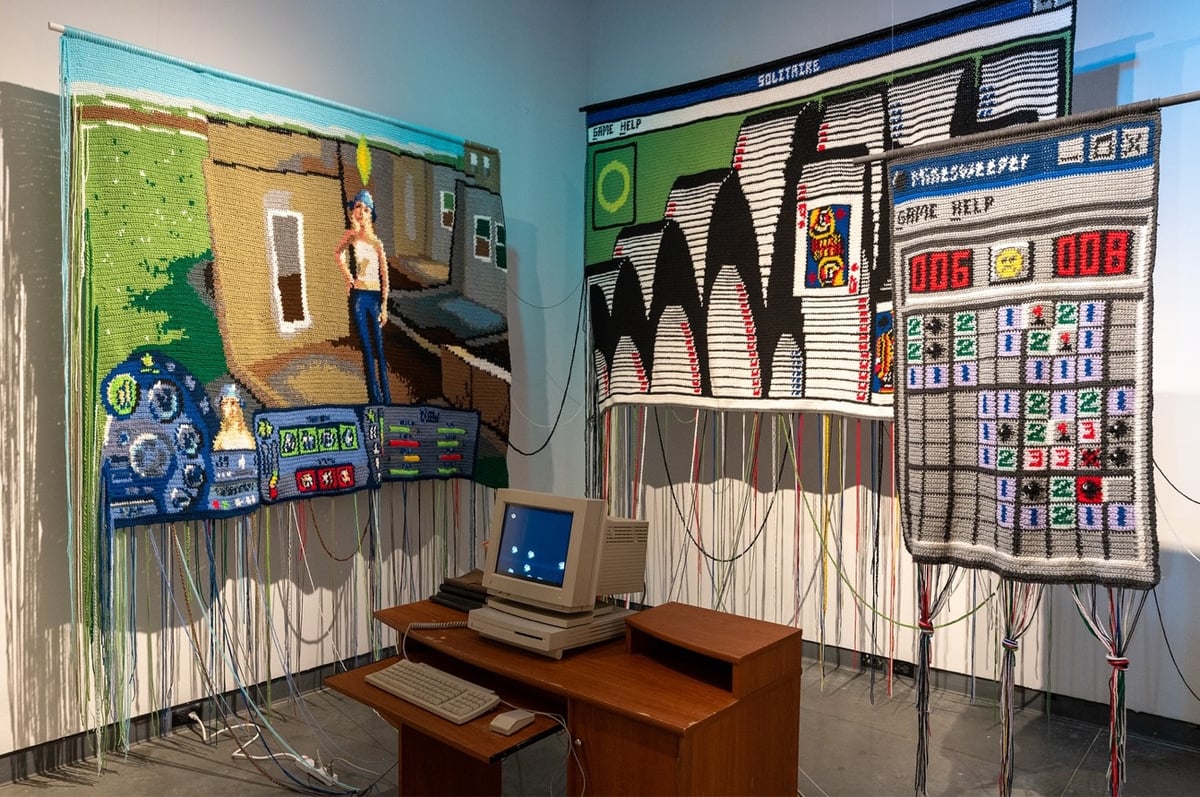
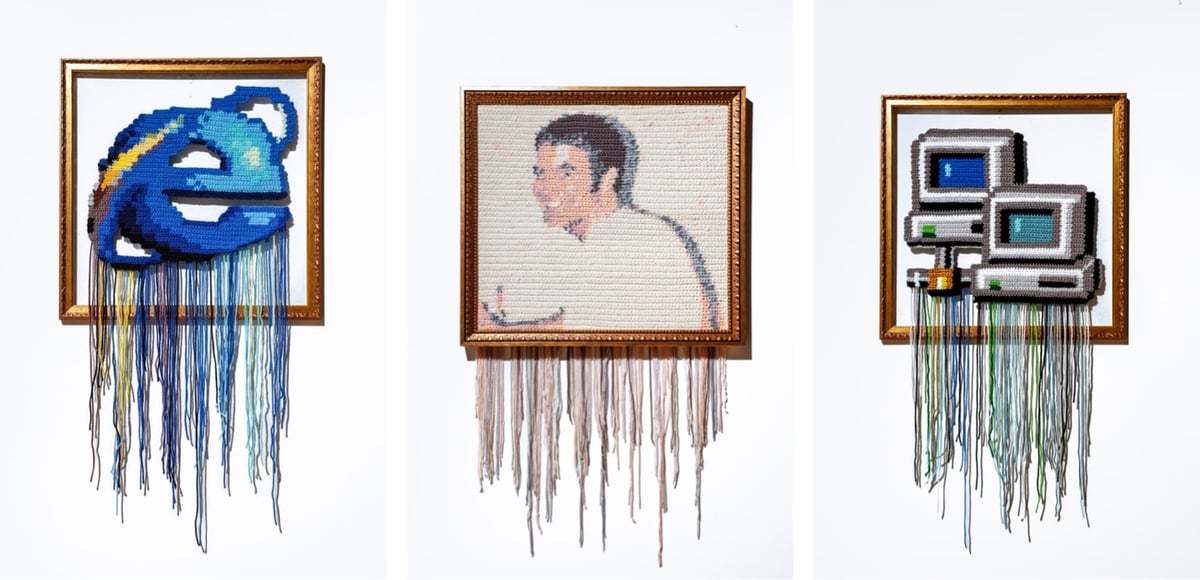
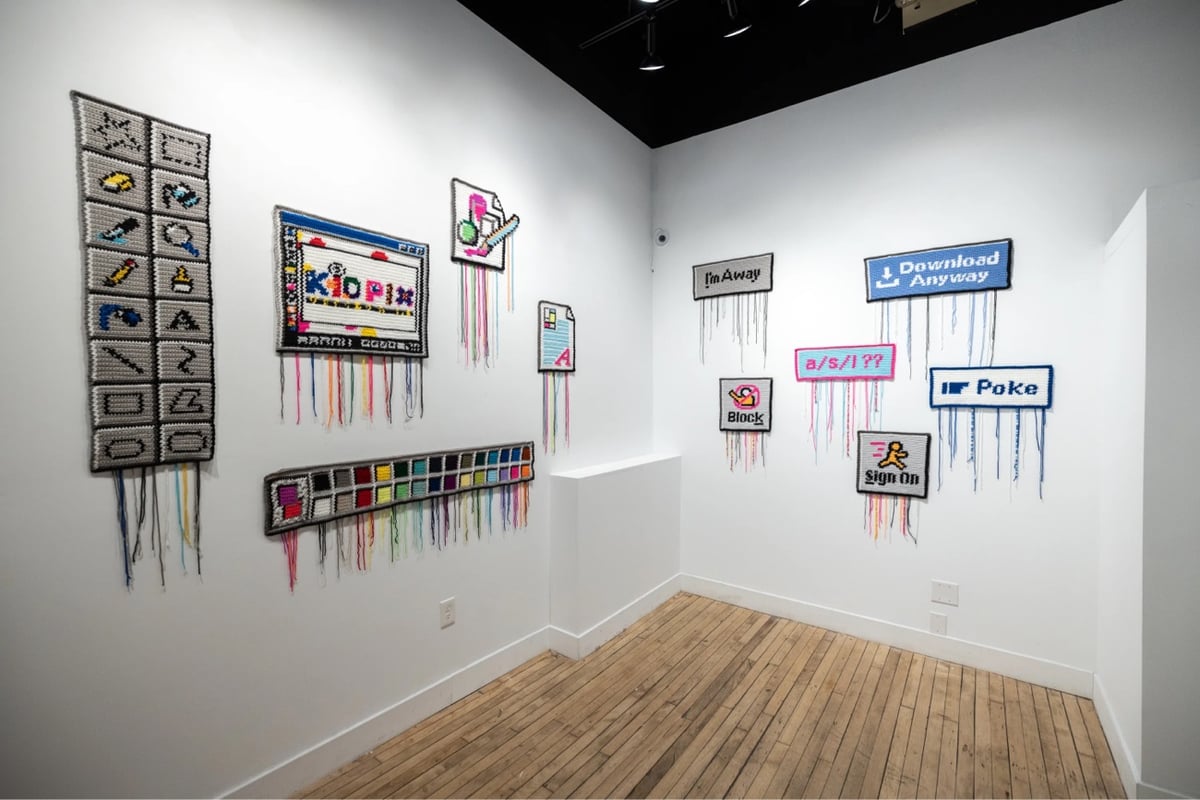
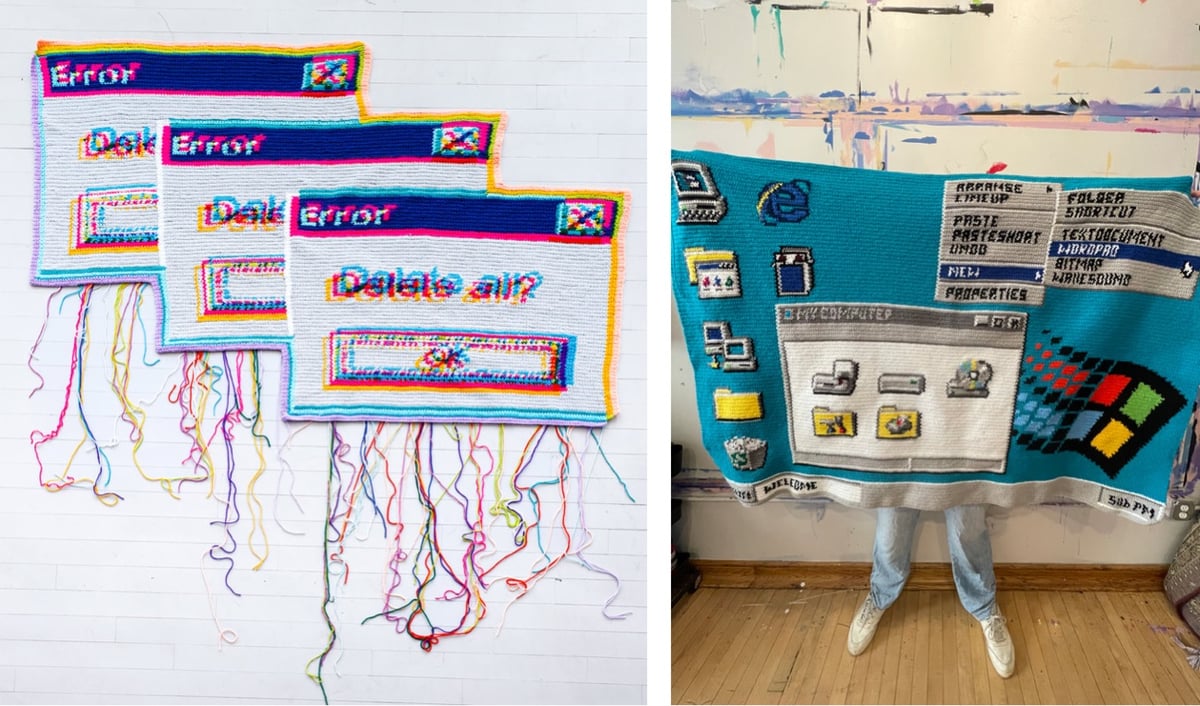
Nicole Nikolich is a textile artist whose current focus is making crochet artworks that reference old school technology. You can explore her work on her website, at Paradigm Gallery and on Instagram. Some of her artworks are available for sale here.
I’m a sucker for these types of projects because innovations in textile production led to the development of the first computers and the work of artists like Nikolich bring that relationship full circle. See also The Embroidered Computer.

As part of his Real Time series, artist Maarten Baas has created The People’s Clock, a timepiece that lives in Amsterdam’s Schiphol airport. To create the clock’s “workings”, Baas recorded more than 1000 volunteers moving as the clock’s hands over a 12-hour period. If you look carefully, you can see a single individual dressed in orange at the edge of the circle acting as the second hand:
Each of the installed clock’s faces is a looped video of that recording, synced to the current time. Here’s a quick behind-the-scenes video of how the clock was made:
See also Baas’s Sweeper’s Clock and Schiphol Clock.


I love these oversized prints of vintage Pan-Am luggage tags from artist Ella Freire. The typography and colors are just perfect. (via daringfireball)

David Altmejd’s 2017 sculpture entitled “God” is one of the most disturbing artworks I’ve seen recently, so naturally I had to show all of you. If you need further wigging out, here you go. Lots more on his website and Instagram.

I’m charmed by this fragment of Artemisia Gentileschi’s painting of Mary Magdalene that’s up for auction later this month.
For many years it was in a private collection in Germany where it lay rolled up in a cellar. The head of the saint had been cut out of the canvas, under circumstances that remain unclear, in an incident most probably linked to the chaos and looting of postwar Berlin.
Like the empty picture frames at the Isabella Stewart Gardner Museum, the rectangular hole in the painting invites the viewer to imagine what became of its former contents. Where is Magdalene’s head & shoulders now? Did it get framed as its own painting? Is it still hanging in someone’s house or tucked away in someone’s attic? Will it be reunited with the rest of the painting someday?
Btw, this painting is a copy of another of Gentileschi’s previous works, which hangs in the Pitti Palace in Florence. There are some differences between the two paintings, but at least we know what the area inside that hole looks like, mostly.


I really love these collages by Anton Elfilter (Instagram, Threads). They are digital-ish? But also not? And does anyone else see the influence of Hilma af Klint in these? (via moss & fog)
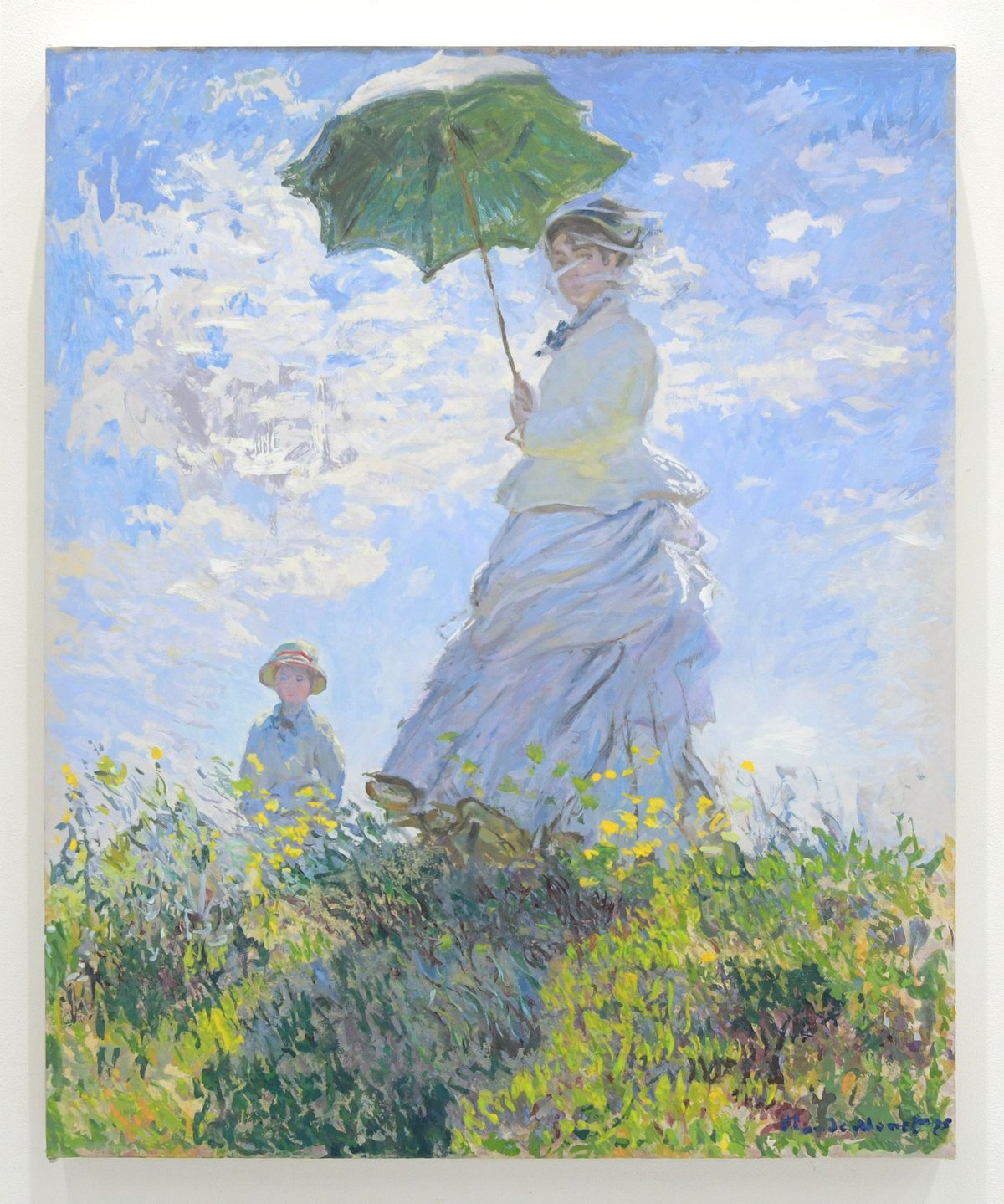
As part of his show called Hark Back to Ukiyo-e: Tracing Superflat to Japonisme’s Genesis, currently on display in LA, Takashi Murakami painted his own version of Claude Monet’s Woman with a Parasol - Madame Monet and Her Son. The painting is paired with Murakami’s copies of woodblock prints (ukiyo-e) that influenced the work of Monet and other abstract & impressionist artists.
Here Murakami pairs a copy of Monet’s portrait with twelve enlarged versions of ukiyo-e prints by Kikukawa Eizan and his teacher, Utamaro. Through these examples Murakami shapes a narrative of Monet’s encounter with bijinga. They suggest the elements that Monet absorbed in his study of prints: statuesque three-quarter figures; sensual outlines; parasols viewed from below; cloud-like masses of cherry blossoms; windswept skirts. Another selection, Utamaro’s Yamauba and Kintarō, is an example of a bijinga sub-genre in which women are shown with young children.
As noted by Greg Allen, Murakami used an unusual process for his reproductions:
Copying the originals, Murakami had his own intimate encounter with these features, recognizing in the process the meticulous care taken in pursuit of delicate effects. He interprets them in his signature style, composed of layer upon layer of silkscreened acrylic paint, applied with a special squeegee work application method and coated in a glossy finish.
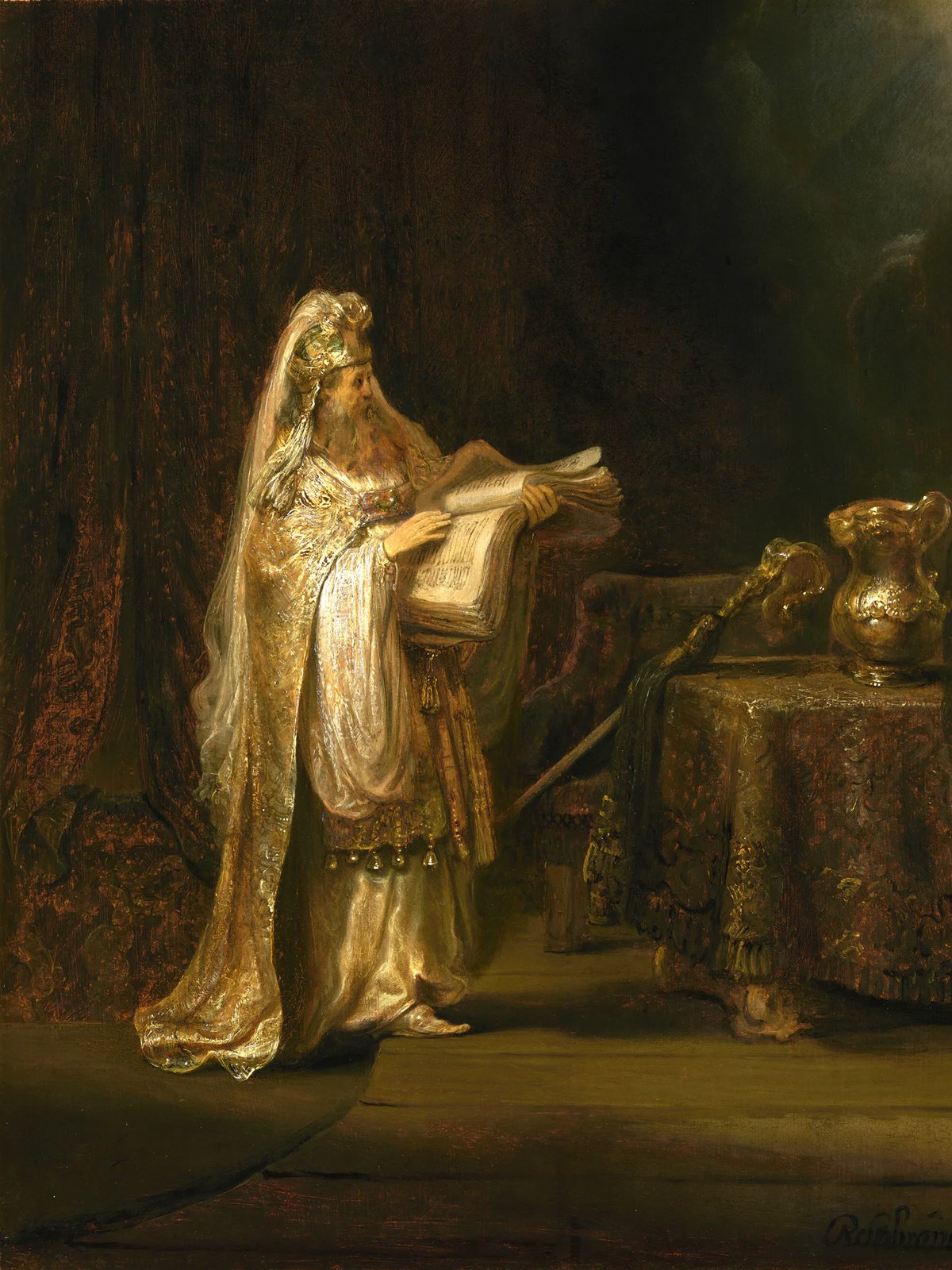
A painting from 1633 called Vision of Zacharias in the Temple has been newly identified by Rijksmuseum researchers as an authentic Rembrandt van Rijn. It had been decades since the painting was examined — art historians have access to all kinds of new techniques and information about Rembrandt’s methods and materials.
Vision of Zacharias in the Temple was shown at the major Rembrandt exhibition at the Stedelijk Museum Amsterdam in 1898. In 1960, however, it was excluded from Rembrandt’s oeuvre. A year later, a private collector purchased the work, after which it disappeared from public view. Only recently did the current owner contact the Rijksmuseum, allowing the painting to be examined again after 65 years.
The two-year investigation shows that all the pigments used also appear in other paintings by Rembrandt from the same period. The build-up of the paint layers and the handling are likewise consistent with his early work.
The painting is executed on two oak panels from trees grown in the south-east of Lithuania, a common wood source in the seventeenth century. The dimensions and construction correspond to panels Rembrandt frequently used. Dendrochronology (tree-ring dating) confirms that the inscribed date “1633” is plausible.
Here’s the back of the painting (the whole analysis is interesting):
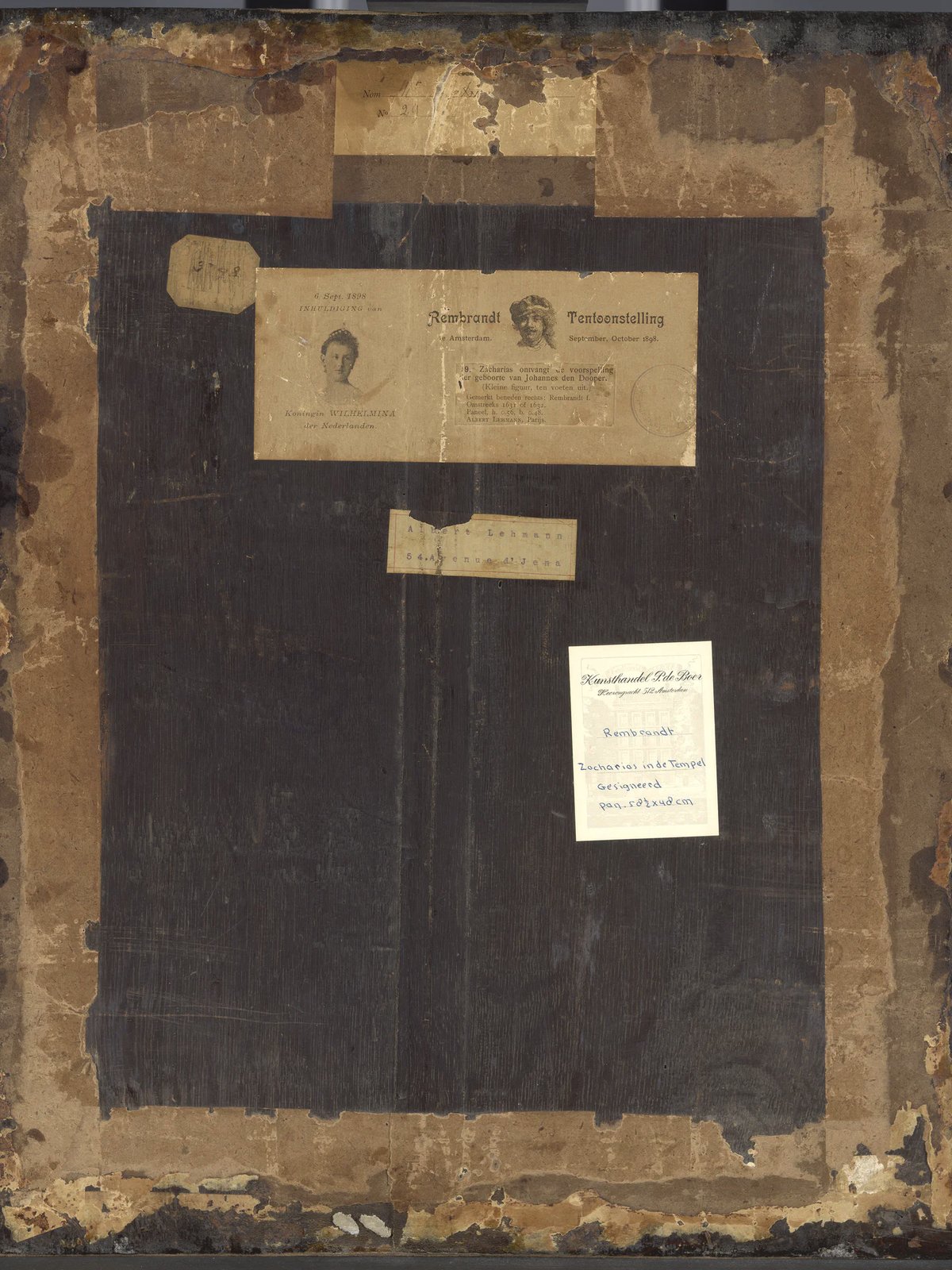
Vision of Zacharias in the Temple goes on display at the Rijksmuseum tomorrow. (via the history blog)
Ann Ballentine bought an old candy factory building in Brooklyn in 1979. She filled it with working artists and became something of a fairy godmother to them all.
It entails someone who’s not as money driven, because you’re not gouging people for huge rents, and it requires being determined to do that over a long stretch of time.
This is a lovely little short film.
Older posts



Socials & More