



A Hand-Drawn Visual Guide to Chili Peppers
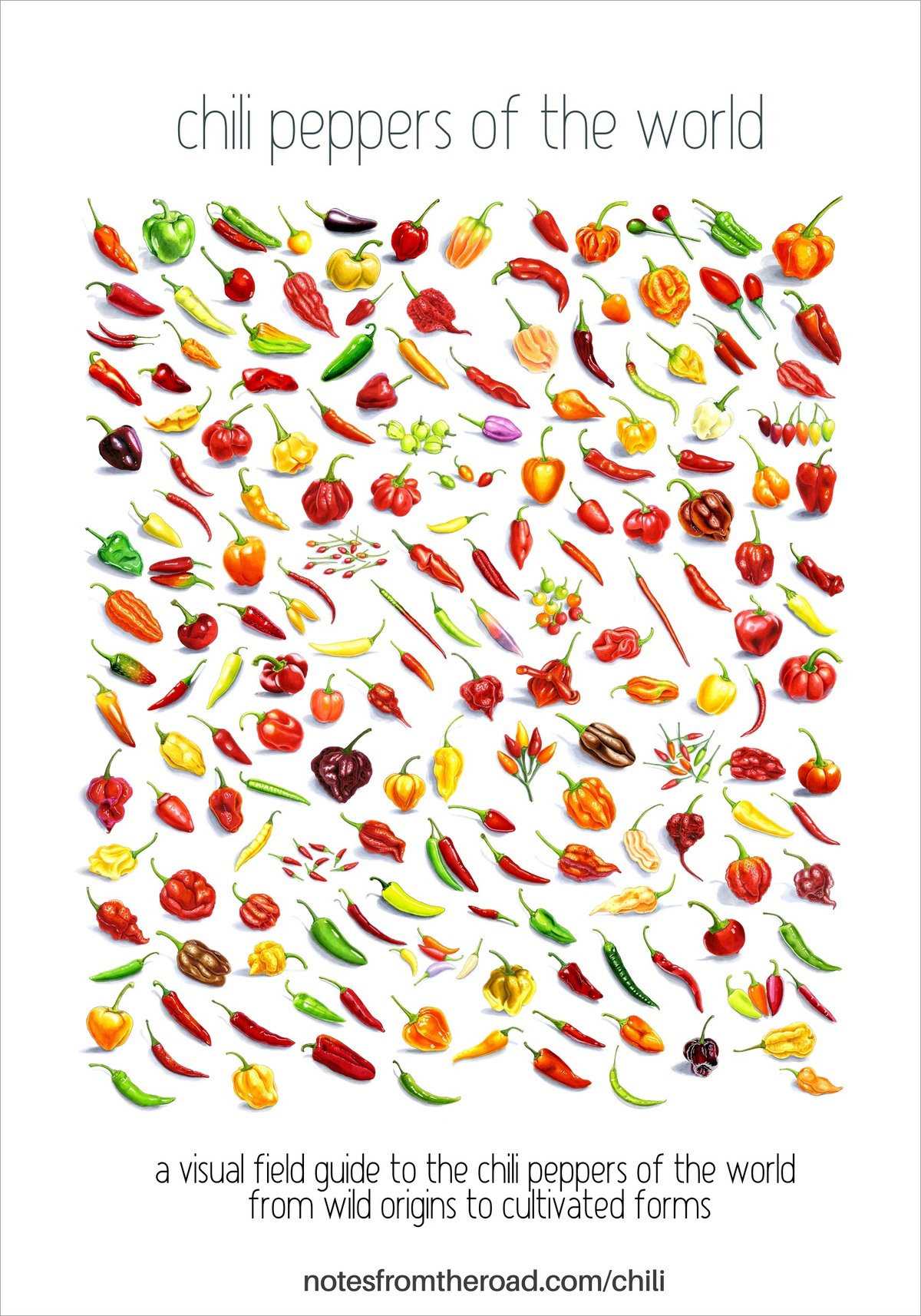
For his great visual field guide to the chili peppers of the world, Erik Gauger hand-drew 176 peppers from India, South America, Korea, Thailand, Africa, and seemingly every other place on the Earth.
Capsaicin, the compound that makes chili peppers hot is an evolutionary filter designed to punish mammals and reward birds. Mammals feel it as pain because mammal digestion destroys seeds. Birds don’t have the receptor that detects it, so they eat the fruit, fly off, and deposit the seeds far from the plant from which they ate. The plant needed birds, and birds didn’t mind the heat, because to them there was no heat to mind.
What we’ve built from that, from the paprika, the Thai bird’s eye, the ancho, the chocolate habanero, began as a dispersal mechanism. Humans entered the picture late and changed almost everything about the pepper’s form, flavor, and range. But the underlying logic is still there in every fruit: a molecule that says no to the animals who won’t deliver their seeds far from the tree.
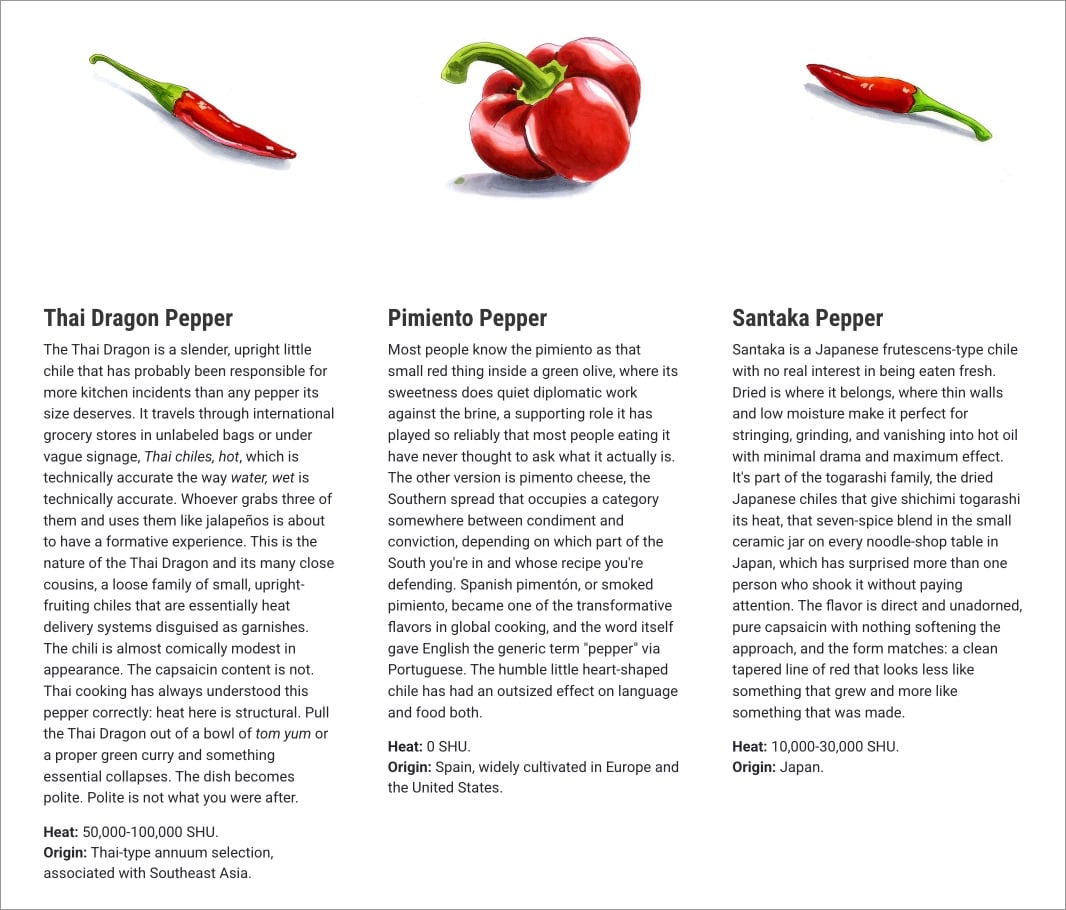
Each drawing is accompanied by a description of the pepper, where it originated, the heat level, and even what hot sauces feature it.
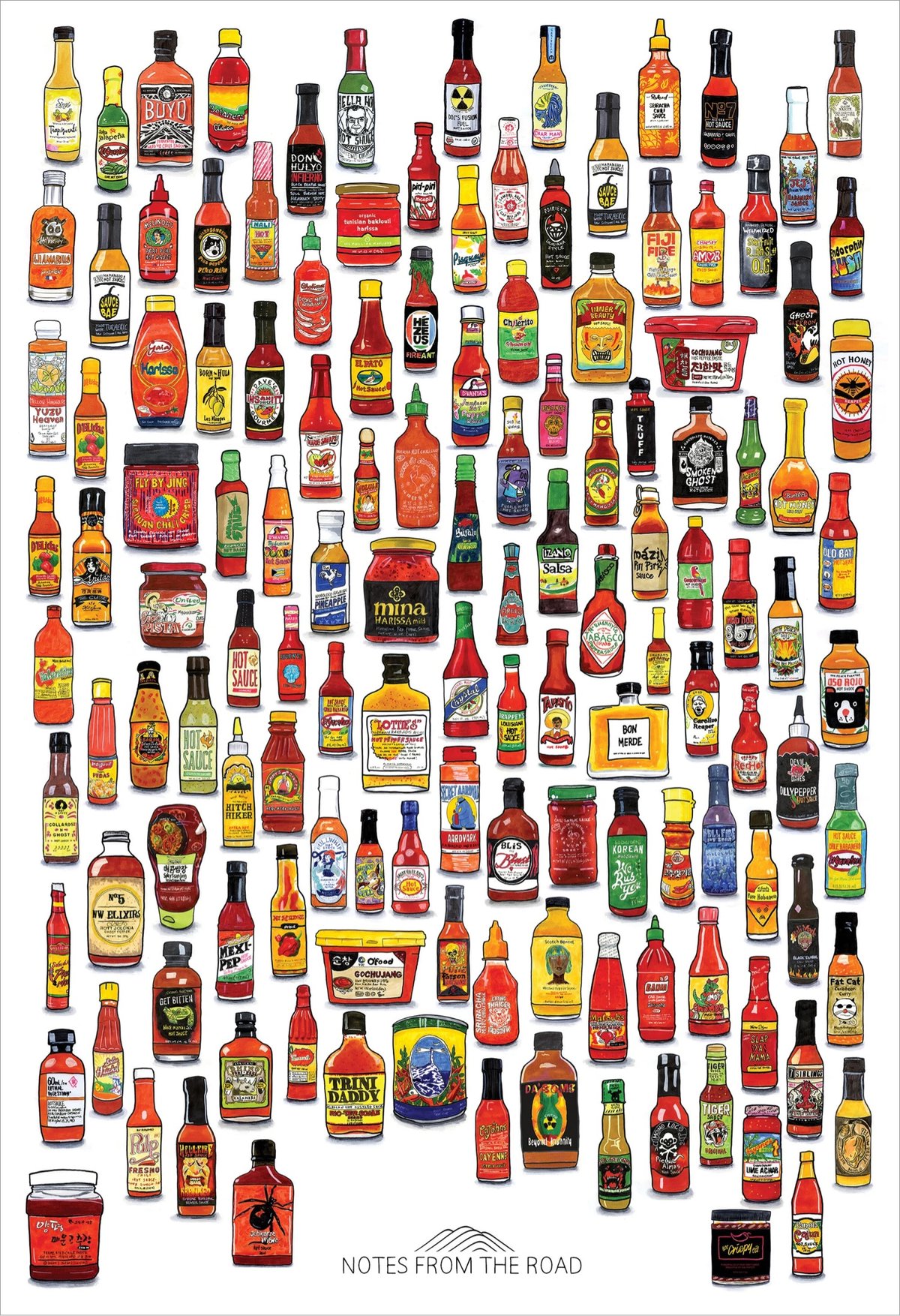
See also Gauger’s Hot Sauces of the World page & poster.
Comments 1
I forgot the link! Fixed and here: https://www.notesfromtheroad.com/desertmexico/chili-peppers.html
If you feel like this comment goes against the grain of the community guidelines or is otherwise inappropriate, please let me know and I will take a look at it.
In order to comment or fave, you need to be a kottke.org member. Check out your membership options.
Note: If you are a member and tried to log in, it didn't work, and now you're stuck in a neverending login loop of death, try disabling any ad blockers or extensions. Or try logging out and then back in. Still having trouble? Email me!