



Advertise here with Carbon Ads

This site is made possible by member support. 💞

Big thanks to Arcustech for hosting the site and offering amazing tech support.

When you buy through links on kottke.org, I may earn an affiliate commission. Thanks for supporting the site!

kottke.org. home of fine hypertext products since 1998.

Beloved by 86.47% of the web.

🍔  💀  📸  😭  🕳️  🤠  🎬  🥔

kottke.org posts about Erik Gauger

Sicily and the Family Tree of Citrus
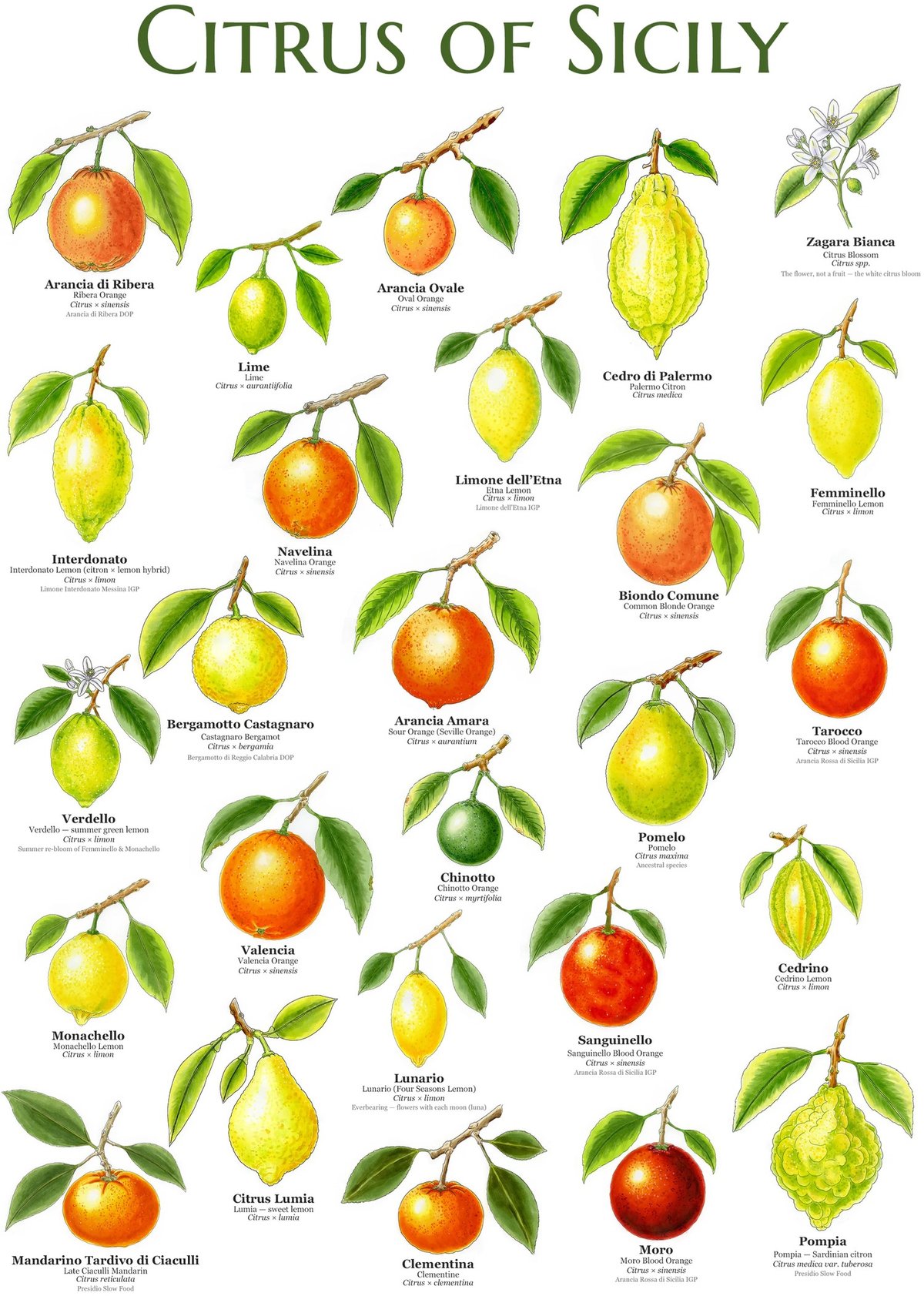
On his site Notes From the Road, Erik Gauger has a wonderful eight-part series on The Citrus Kingdom, a collection of illustrated stories about citrus fruit and Sicily.

The key to the citron’s future—a future that links nearly every aspect of Sicily’s cultural, political and culinary history—lies just outside of urban Palermo. It’s a flat plain that was well watered by three rivers. The Arabs turned it into a fantasyland of fertile agriculture. They dug reservoirs and sank new wells and ran canals out across the valley. They began to see it as paradise—the literal version they knew from Persia. They called it the Conca d’Oro. The Golden Shell.

Today, mention of Sicily’s Conca d’Oro symbolizes endless citrus groves. But before miles of orange and lemon trees, it was the citron that proved an Asian mountain fruit could survive a Sicilian August. The answer? Yes, as long as the water keeps moving.

Somewhere in one of those shaded Palermo courtyards, a gardener planted a skinny sapling from a land Sicilians would never see. He was just keeping a tree alive. He had no way of knowing he was starting a kingdom.

The image of the hand-drawn illustration above is available as a print.

You may remember Gauger from his Hand-Drawn Visual Guide to Chili Peppers.
Fave · 0 Reply · 0

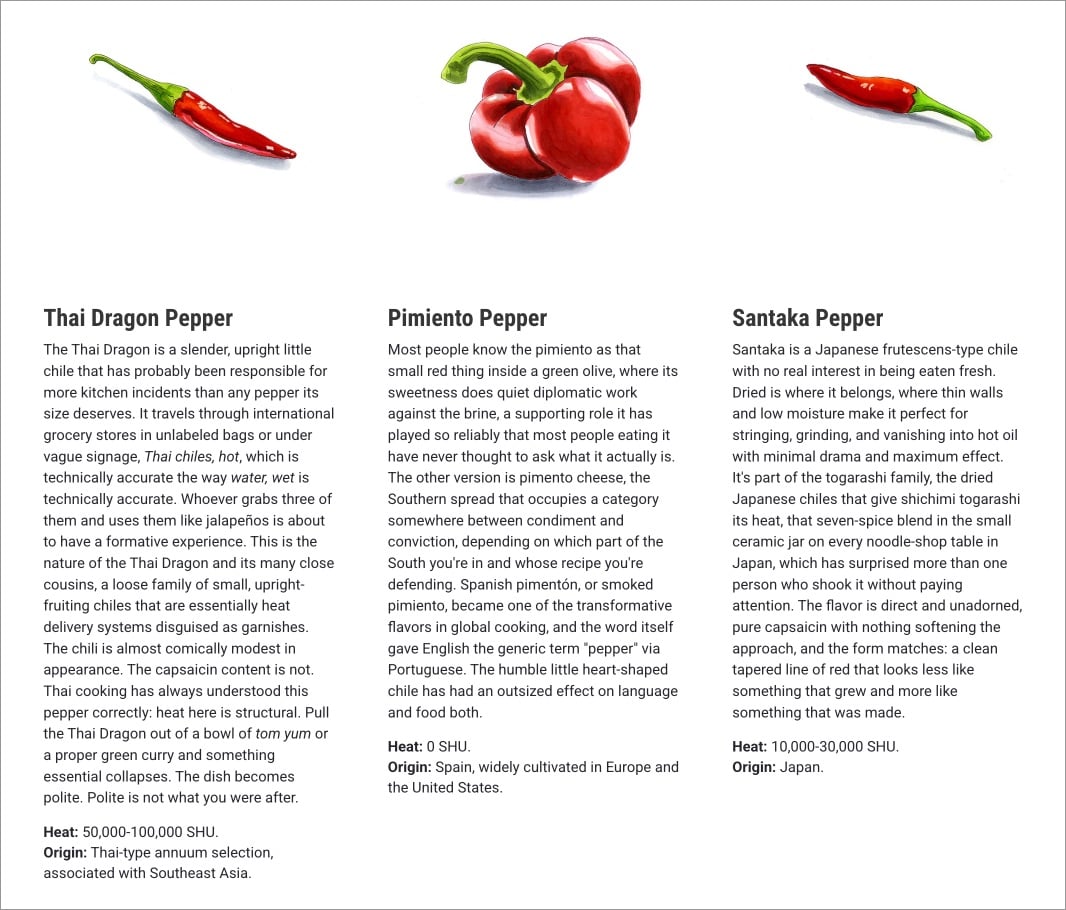
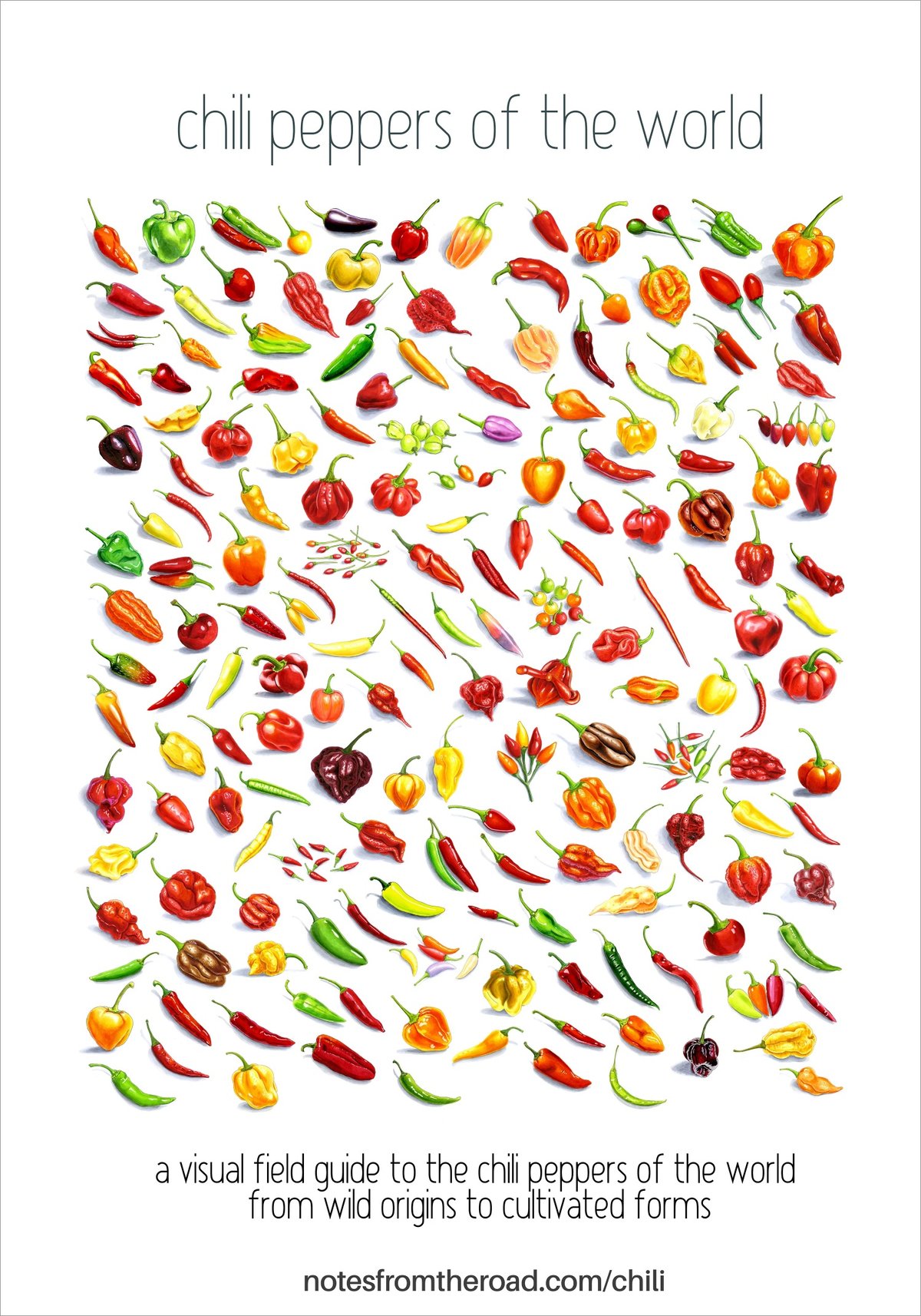
A Hand-Drawn Visual Guide to Chili Peppers

For his great visual field guide to the chili peppers of the world, Erik Gauger hand-drew 176 peppers from India, South America, Korea, Thailand, Africa, and seemingly every other place on the Earth.

Capsaicin, the compound that makes chili peppers hot is an evolutionary filter designed to punish mammals and reward birds. Mammals feel it as pain because mammal digestion destroys seeds. Birds don’t have the receptor that detects it, so they eat the fruit, fly off, and deposit the seeds far from the plant from which they ate. The plant needed birds, and birds didn’t mind the heat, because to them there was no heat to mind.

What we’ve built from that, from the paprika, the Thai bird’s eye, the ancho, the chocolate habanero, began as a dispersal mechanism. Humans entered the picture late and changed almost everything about the pepper’s form, flavor, and range. But the underlying logic is still there in every fruit: a molecule that says no to the animals who won’t deliver their seeds far from the tree.

Each drawing is accompanied by a description of the pepper, where it originated, the heat level, and even what hot sauces feature it.

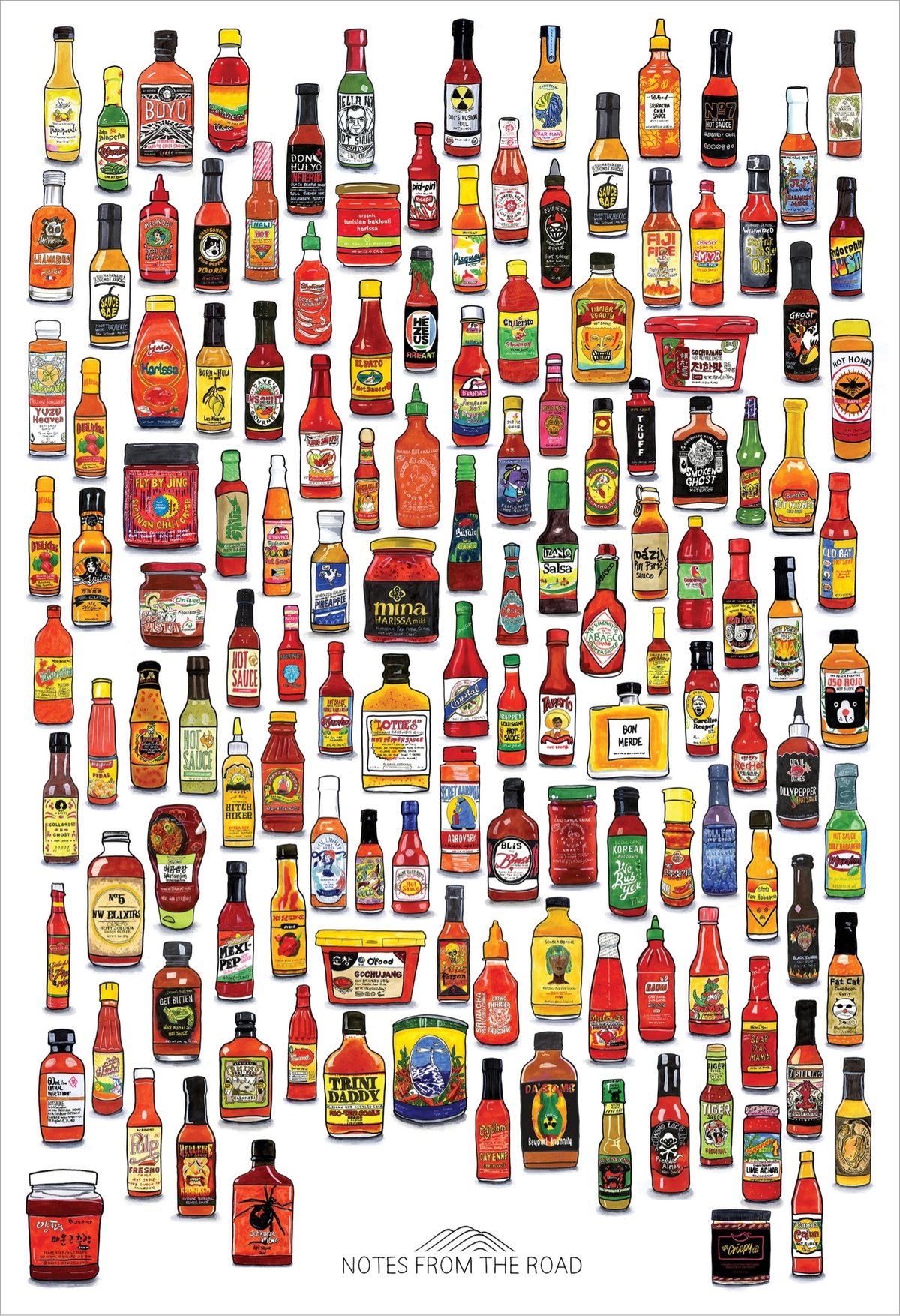
See also Gauger’s Hot Sauces of the World page & poster.

Fave · 4 Reply · 1