kottke.org posts about TV
If you’re going to watch the season 6 premiere of Game of Thrones tonight but you’ve forgotten what happened last season (tl;dr people died), watch this recap of last season’s action. I still can’t believe they made Marnie marry Desi after he missed their perfor oh wait that’s Girls.
Amazon is now offering the ability to subscribe to Prime and Prime Video monthly rather than just yearly. Prime Video is $8.99/mo (Netflix is going up to $9.99/mo soon) and the full Prime offering is $10.99/mo. A year of Prime is still $99.
In Prime Video, Amazon has built a worthy competitor to Netflix. And it actually might be better at this point. The stable of impressive Netflix originals aside (which Amazon is also doing *cough* Transparent *cough* best show in years), Amazon allows you to rent/buy digital movies not available for free streaming1, provides discounts for subscriptions to Showtime and Starz, and (if you opt for the full Prime) offers free shipping on most stuff in the store (as well as other benefits.) I sub to both services, but if I had to make a choice right now, I’d probably stick with Amazon.
Actor and singer François Clemmons, who played Officer Clemmons for 30 years on Mister Rogers’ Neighborhood, talks about how and why Fred Rogers chose a black man to be a police officer on TV.
To say that he didn’t know what he was doing, or that he accidentally stumbled into integration or talking about racism or sexism, that’s not Mister Rogers. It was well planned and well thought-out and I think it was very impactful.
NPR also recently shared Clemmons’ story.
He says he’ll never forget the day Rogers wrapped up the program, as he always did, by hanging up his sweater and saying, “You make every day a special day just by being you, and I like you just the way you are.” This time in particular, Rogers had been looking right at Clemmons, and after they wrapped, he walked over.
Clemmons asked him, “Fred, were you talking to me?”
“Yes, I have been talking to you for years,” Rogers said, as Clemmons recalls. “But you heard me today.”
“It was like telling me I’m OK as a human being,” Clemmons says. “That was one of the most meaningful experiences I’d ever had.”
Mister Rogers always hits me right in the feels.
Using traditional cinematography, characters are not usually confined to the bottom third of the screen, crammed all the way in the corner, or placed right at the edge of the screen, looking offscreen. But rules are meant to be broken and the director of photography for Mr. Robot uses these unconventional shots to tell the audience about what’s happening on the screen.
P.S. Season 2 is coming in July.
P.P.S. I love that episode titles for season 1 are modeled after the filenames of pirated videos on BitTorrent: eps1.0_hellofriend.mov, eps1.4_3xpl0its.wmv, eps1.7_wh1ter0se.m4v, etc.
P.P.P.S. Tony Zhou of Every Frame a Painting doesn’t like the framing in Mr. Robot, called it a gimmick. I’m ashamed to admit that I didn’t even notice the unusual framing when I watched it. I am flunking out of internet film school, aren’t I? :(
Chef’s Table, the excellent Netflix show by filmmaker David Gelb (Jiro Dreams of Sushi), which I like to think of as Other Chefs Dreams of Other Foods, is coming back with three additional seasons.
“The idea was to do a series about chefs with a really cinematic quality.” As Gelb has said before, the BBC’s Planet Earth was his visual inspiration. With one season behind him, Gelb now has a process. “The hardest thing is to choose the chefs… choosing chefs that are at the absolute top of their field, are dynamic story tellers, have interesting stories in their personal lives,” he explains. He asks a lot of questions: “What are the epiphanies that made them want to be a chef? How do their cooking and personal lives intersect?”
And then from a practical perspective, do they have the time and will to commit to this shoot? “We shoot two weeks very intensively, and they have to be willing to give us their time. Finally it’s about how do we balance the chefs, how do we make it so each story is different, so that the different stories complement each other. While each film can stand alone, together they should form a greater whole.”
Among the chefs to be featured are Grant Achatz, Ivan Orkin,1 and Michel Troisgros. If you’re curious about season 1 (trailer), the Francis Mallmann and Massimo Bottura episodes are the ones to watch.
Update: The trailer for the second season is out. May 27th!
I said at the end of last season that I wasn’t going to watch this show anymore but as I am a waffling coward, I of course am going to watch it. Not that I probably won’t regret it! Anyway, looks good I guess? Better than reading any of the books at any rate.
Chris Rock opened his monologue at the Oscars last night with “I’m here at the Academy Awards, otherwise known as the White People’s Choice Awards” and for the next ten minutes, talked about racism in Hollywood.
Update: As much as I enjoyed Rock’s monologue, I also agree with Stacia Brown’s piece, Chris Rock, Justice for Flint and why we still have ‘real things to protest’.
We still have real things to protest. If water contamination in a U.S. city due to alleged negligence doesn’t call for “real” protest, what does? Disinvestment in the Oscars — especially for DuVernay and Coogler — isn’t a frivolous undertaking. And black performers don’t want equal opportunity just to be considered for awards. In this country, celebrity has always afforded people the platform and the capital to push forward the issues that are important to them. There couldn’t have been a Justice for Flint fundraiser on the scale that they were able to mount without star power. Black celebrity — its acknowledgement and its compensation — is significant.
(via @anildash)
In 2009, Curb Your Enthusiasm centered on Larry David doing another season of Seinfeld. The four main Seinfeld stars (plus Newman) were all on the show, in character. From the various clips and bits shown, Topher Grace edited together a nine-minute “missing” Seinfeld episode. It’s actually pretty good. I didn’t know how much I’d missed the show until I watched this. (thx, greg)
As an unapologetic fan of Downton Abbey and Maggie Smith, I quite enjoyed this video compilation of the Dowager Countess’ best burns from all six seasons of Downton Abbey. If you’re having DA withdrawals now that the show is over,1 I encourage you to check out Gosford Park. Robert Altman directed it, Downton creator Julian Fellowes wrote it, and it features Maggie Smith as a snooty Countess — not to mention Clive Owen as a dishy valet. Scrumptious!
Ten years after the debut of the original show, the BBC is doing a six-episode second season of Planet Earth. They’ve been shooting it for the last three years using ultra-HD cameras and David Attenborough will return as host.
“I am very excited to once again be working with the Natural History Unit on its latest landmark series and am especially looking forward to getting out on location in the next month or so,” said Attenborough.
Charlotte Moore, controller of BBC TV channels and the iPlayer, said that the new series has taken three years to shoot taking advantage of significant advances in filming technology since Planet Earth aired a decade ago.
The first season of Planet Earth is on Netflix in the US, but the Blu-ray is only $40 and the picture is so much better…worth it if you somehow haven’t seen it and still have a BR player.1
On the most recent episode of Last Week Tonight, John Oliver argues against many US states’ anti-abortion laws. This was super funny and also made me really angry.
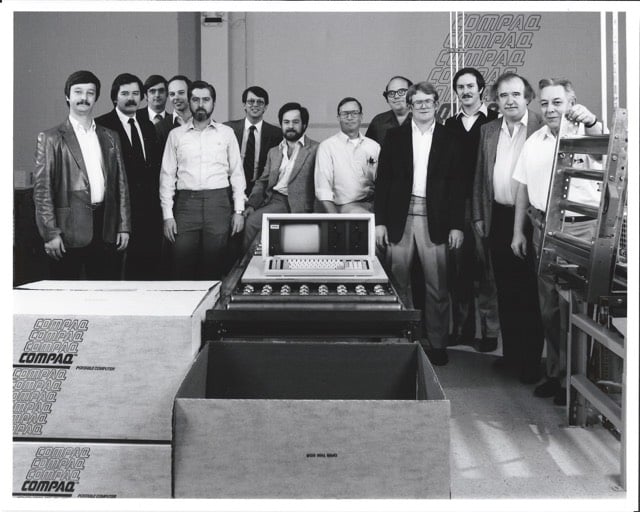
Silicon Cowboys is an upcoming documentary about Compaq Computer, one of the first companies to challenge IBM with a compatible computer.
Launched in 1982 by three friends in a Houston diner, Compaq Computer set out to build a portable PC to take on IBM, the world’s most powerful tech company. Many had tried cloning the industry leader’s code, only to be trounced by IBM and its high-priced lawyers. SILICON COWBOYS explores the remarkable David vs. Goliath story, and eventual demise, of Compaq, an unlikely upstart who altered the future of computing and helped shape the world as we know it today. Directed by Oscar(R)-nominated director Jason Cohen, the film offers a fresh look at the explosive rise of the 1980’s PC industry and is a refreshing alternative to the familiar narratives of Jobs, Gates, and Zuckerberg.
There’s no trailer yet, but the film is set to debut at SXSW in March. The first season of Halt and Catch Fire had a lot of influences, but the bare-bones story was that of Compaq.
Many reviews mention the similarity of the characters to Apple founders Steve Jobs and Steve Wozniak, but the trio of managers from Texas Instruments who left to form Compaq in the early 80s are a much closer fit. The Compaq Portable was the first 100% IBM compatible computer produced.
If you don’t have Netflix but want a taste of what everyone has been talking about for the past two months, the entire first episode of Making a Murderer is up on YouTube.
The New Yorker had launched a TV show called The New Yorker Presents, available on Amazon Prime. The first two episodes feature directors Alex Gibney (Going Clear) and Steve James (Hoop Dreams).
We’re tremendously excited to share “The New Yorker Presents” with you, and we hope that you’ll watch the two new episodes that will be released each Tuesday for the next five weeks. The first of the episodes available today also includes a segment on the “Truman Show” delusion, in which people believe that they are constantly being filmed; a cartoon being drawn by Roz Chast; and a performance by Paul Giamatti as Honoré de Balzac drinking his fabled fifty daily cups of coffee. The second episode includes a documentary on youth bull riding, by Steve James; Edwidge Danticat’s essay “Black Bodies in Motion and in Pain”; and a visit to Atlantic City, with Nick Paumgarten.
This launch is actually a bit of a reboot…they did a pilot of The New Yorker Presents last January.
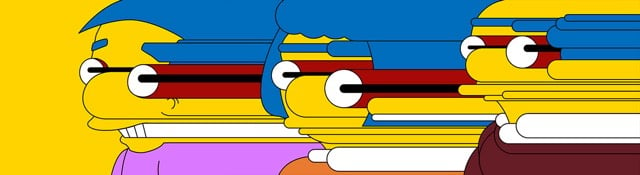
From Celia Gomez, a supercut of some of the most notable movie references from The Simpsons. The Simpsons came out when I was 16 and while I loved it immediately, the show started making a whole lot more sense after I watched The Godfather, Taxi Driver, Citizen Kane, and Dr. Strangelove in my 20s. Lots of Kubrick in the Simpsons.
In How We Got to Now, the TV series based on the book of the same name, Steven Johnson explains how the wine press was used to print books, which resulted in a surge in demand for reading glasses, which had yet more unintended effects.
Johnson calls this cascade of inadvertent invention the Hummingbird Effect.
This is how change happens in the natural world: sometime during the Cretaceous age, flowers began to evolve colors and scents that signaled the presence of pollen to insects, who simultaneously evolved complex equipment to extract the pollen and, inadvertently, fertilize other flowers with pollen.
Over time, the flowers supplemented the pollen with even more energy-rich nectar to lure the insects into the rituals of pollination. Bees and other insects evolved the sensory tools to see and be drawn to flowers, just as the flowers evolved the properties that attract bees. The symbiosis between flowering plants and insects that led to the production of nectar ultimately created an opportunity for much larger organisms — the hummingbirds — to extract nectar from plants, though to do that they evolved a extremely unusual form of flight mechanics that enable them to hover alongside the flower in a way that few birds can even come close to doing. In other words, they had to learn an entirely new way to fly.
In an interview with Popular Mechanics, Johnson shared another example:
At the start of the 20th century, in Brooklyn, a printer was doing full-color magazines. In the summer the ink didn’t set up properly. The printer hired a young engineer, Willis Carrier, to devise a way to bring down the temperature and humidity in the room. He built this contraption that made the printing possible. Then the workers were like, “I’m gonna have my lunch in the room with the contraption, it’s cool in there.” Carrier says, “Hmm, that’s interesting.” He sets up the Carrier Corporation, which air-conditions movie theaters, paving the way for the summer blockbuster. Before air conditioning, a crowded theater was the last place you wanted to go. After a/c, summer movies become part of the cultural landscape.
Here are some clips taken from Life on Air, a 2002 BBC documentary celebrating David Attenborough’s 50 years on television. The entire show is available here. (via @dunstan)
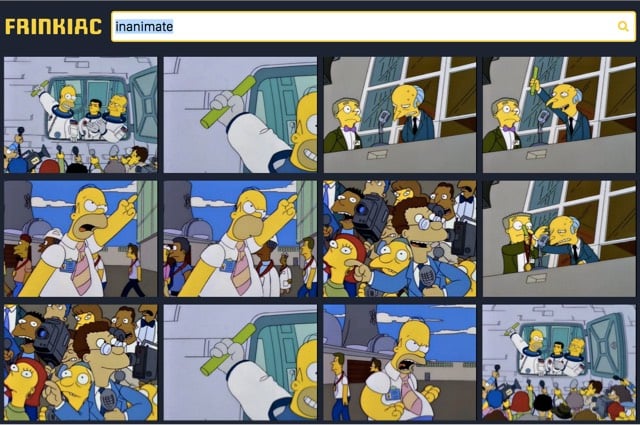
Frinkiac searches through the subtitles from every episode of The Simpsons (in the first 15 seasons) and returns screencaps of all the times when the search term was used. For example, inanimate:
(via @emunn)
Update: Hi diddley ho! The Frinkiac now does animated GIFs. Like this one. (via @buzz)
Oh, this interview with Errol Morris where he talks about Making a Murderer is so so spot on.
To me, it’s a very powerful story, ultimately, not about whether these guys are guilty or innocent — but it’s a very powerful story about a miscarriage of justice.
Yes! If you came out of watching all ten episodes convinced one way or the other whether Avery was innocent, I humbly suggest that you missed the point. And further that you can’t actually know…it’s a TV show! The tip of the iceberg.
Another thing that I was struck by watching Making a Murderer was the feeling of the inexorable grinding of a machine that is producing, potentially, error.
This was my favorite aspect of the show. A lot of people complained about them showing huge chunks of Avery’s and Dassey’s trials, saying that it was too boring, but that’s the whole thing! The crushing boredom of the justice system just grinds those two men and their whole families into the result that the state wanted all along. It was fascinating and horrifying to watch, like a traffic accident in super slow motion.
If you’re asking me, would I sign a petition stating that I believe that Steven Avery is innocent? Well, I don’t know. I really don’t know from watching Making a Murderer, but there’s one thing I do know from watching Making a Murderer — that neither Brendan Dassey nor Steven Avery received a fair trial, and that that trial should be overturned.
My thoughts exactly. If I had to guess, Dassey is entirely innocent and Avery is maybe guilty, but neither of them should have been convicted on the evidence presented or the procedure followed.
Anyway, read the whole thing…his stories about making The Thin Blue Line are great. And he’s making a six-episode true crime show for Netflix? YES!
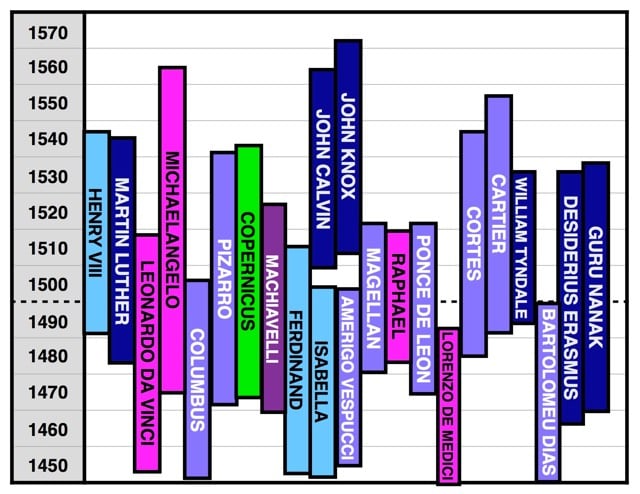
At Wait But Why, Tim Urban turns history on its side by thinking about time-synchronized events around the world, as opposed to events through the progression of time in each part of the world.
Likewise, I might know that Copernicus began writing his seminal work On the Revolutions of the Celestial Spheres in Poland in the early 1510s, but by learning that right around that same time in Italy, Michelangelo painted the ceiling of the Sistine Chapel, I get a better picture of the times. By learning that it was right while both of these things were happening that Henry VIII married Catherine of Aragon in England, the 1510s suddenly begins to take on a distinct personality. These three facts, when put together, allow me to see a more three-dimensional picture of the 1510s — it allows me to see the 1510s horizontally, like cutting out a complete segment of the vine tangle and examining it all together.
He does this mainly by charting and graphing the lifetimes of famous people, revealing hidden contemporaries.
I’ve been slowly making my way through Ken Burns’ remastered The Civil War.1 At a few points in the program, narrator David McCullough reminds the viewer of what was going on around the world at the same time as the war. In the US, 1863 brought the Battle of Gettysburg and The Emancipation Proclamation. But also:
In Paris that year, new paintings by Cezanne, Whistler, and Manet were shown at a special exhibit for outcasts. In Russia, Dostoevsky finished Notes from the Underground. And in London, Karl Marx labored to complete his masterpiece, Das Kapital.
And a year later, while the advantage in the war was turning towards the US:1
In 1864, a rebellion in China that cost 20 million lives finally came to an end. In 1864, the Tsar’s armies conquered Turkistan and Tolstoy finished War and Peace. In 1864, Louis Pasteur pasteurized wine, the Geneva Convention established the neutrality of battlefield hospitals, and Karl Marx founded the International Workingmen’s Association in London and in New York.
Urban explicitly references the war in his post:
People in the US associate the 1860s with Lincoln and the Civil War. But what we overlook is that the 1860s was one of history’s greatest literary decades. In the ten years between 1859 and 1869, Darwin published his world-changing On the Origin of Species (1859), Dickens published A Tale of Two Cities (1859) and Great Expectations (1861), Lewis Carroll published Alice in Wonderland (1865), Dostoyevsky published Crime and Punishment (1866), and Tolstoy capped things off with War and Peace (1869).
The Civil War. The Origin of Species. Alice in Wonderland. The infancy of Impressionism. Pasteurization. Das Kapital. Gregor Mendel’s laws of inheritance. All in an eight-year span. Dang.
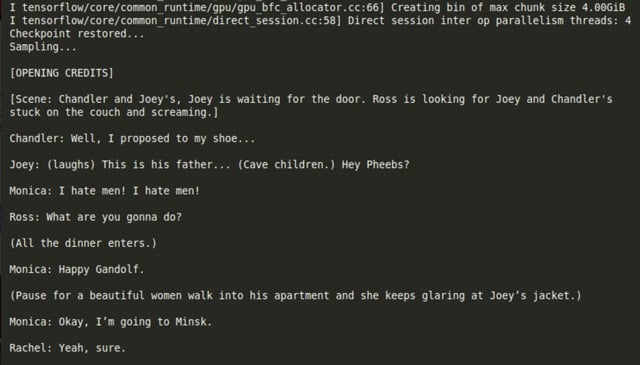
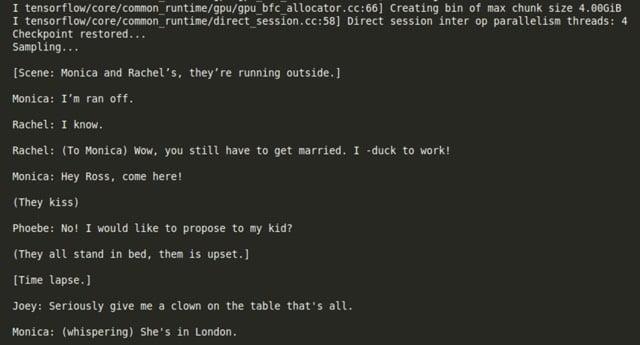
Twitter user Andy Pandy fed the scripts for all the episodes of Friends into a neural network and had it generate new scenes. Here’s what it came up with.
(via @buzz)
Food writer Michael Pollan — author of The Botany of Desire (my fave of his) and originator of the world’s best simple diet: “Eat food. Not too much. Mostly plants.” — is the subject of a four-part Netflix series called Cooked. The series is based on Pollan’s book of the same name and debuts on February 19.
Each episode will focus on a different natural element and its relationship to both ancient and modern cooking methods. In the “Fire” episode, Pollan will delve into the cross-cultural tradition of barbecue by looking at fire-roasts of monitor lizards in Western Australia and visiting with a barbecue pitmaster; in the “Water” episode, he’ll take lessons from kitchens in India and cover the issues surrounding processed foods. An episode titled “Air” explores the science of bread-making and gluten, while the final episode, “Earth,” looks at how fermentation preserves raw foods. Every episode will also feature Pollan in his home kitchen in Berkeley, California, with the intention of underscoring the viewpoint that “surrounded as we are by fast food culture and processed foods, cooking our own meals is the single best thing we can do to take charge of our health and well being.”
Announcing this show only a month out and unaccompanied by a trailer? I have no idea what Netflix is thinking sometimes.
Update: Cooked is now available on Netflix. The NY Times has a review. (via @Ilovetoscore)
In 1980, civil rights hero Rosa Parks appeared on To Tell the Truth, a long-running game show. Parks appeared alongside two other women claiming to be Parks and a celebrity panel tried to guess the identity of the true Parks. See also the appearance of a Lincoln assassination witness on a 50s game show. (via @ptak)
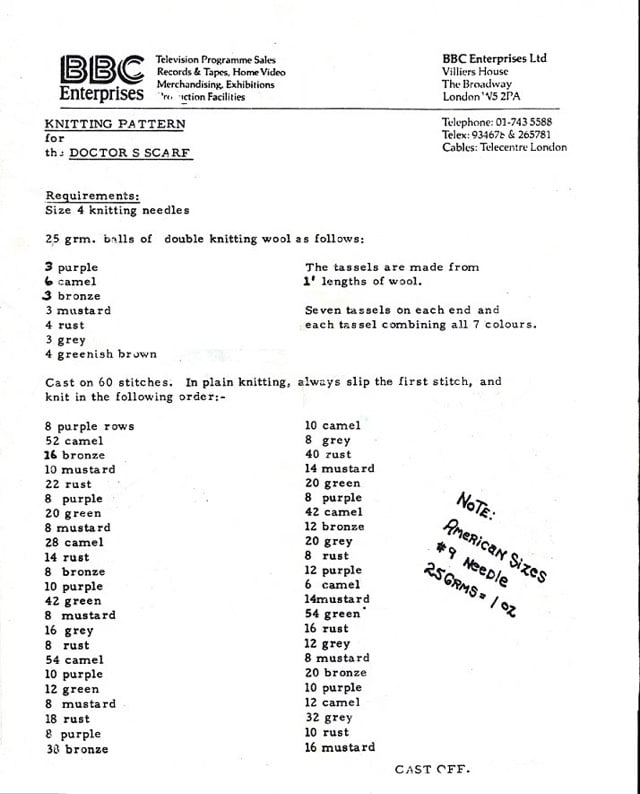
Apparently if you wrote the BBC asking how to make Tom Baker’s Doctor Who scarf, they would send you the knitting instructions on BBC letterhead. According to the Whovians in that forum, the Fourth Doctor wore this particular scarf in a pair of episodes early in season 12. (via laughing squid)
Update: And here’s the Fourth Doctor’s scarf in HTML/CSS/JS by @kosamari.
Jonathan Merritt writes about Fred Rogers, ordained Presbyterian minister and beloved children’s TV show host who used his faith and TV to help millions of children.
Fred Rogers was an ordained minister, but he was no televangelist, and he never tried to impose his beliefs on anyone. Behind the cardigans, though, was a man of deep faith. Using puppets rather than a pulpit, he preached a message of inherent worth and unconditional lovability to young viewers, encouraging them to express their emotions with honesty. The effects were darn near supernatural.
I watched Mr. Rogers religiously growing up, pun intended. Actual church, with its focus on rites, belief in the supernatural, and my pastor’s insistence that the Earth was only 6000 years old, was never appealing to me, but Mr. Rogers’ unconditional, graceful, and humanistic brand of religion was just perfect. I heard him say this line at the end of his show hundreds of times:
You’ve made this day a special day by just your being you. There is no person in the whole world like you, and I like you just the way you are.
It’s easy to roll your eyes, but when you’re six or eight years old, such a simple message from someone who obviously loves you can mean everything.
This week on Last Week Tonight, John Oliver rails against the penny. This seems like such an obvious thing, that we should stop using pennies, but I bet if the government ever moved to ban pennies, it would set off a firestorm of protest.
Transparent was my favorite first season of television since Game of Thrones, or maybe even Mad Men. So I’m delighted to see the trailer for the show’s second season, which starts on Dec 11. If you haven’t seen the first season yet, I would highly recommend doing so…this show does so many things right.
Goodbye anti-heros, hello soap operas. Margaret Lyons writes about the increasing popularity of prime-time soap operas like Scandal, Empire, Game of Thrones, Downton Abbey, and House of Cards.
Game of Thrones’ Outstanding Drama win at the Emmys this year indicates a new era of perceived legitimacy for its genre, and I’m not talking about fantasy: GOT completely operates as a soap. All the scheming and vindictiveness would be perfectly at home on Melrose Place; the disguises, acceptance of the paranormal, and the absence and reemergence of obscure characters can all be found on Passions. (Cersei Lannister and Alexis Carrington would have plenty to talk about.) Soap is not a dirty word, and shows like GOT are helping reposition soapiness as a desirable attribute, not a vice.
I’ve had this theory for awhile that for fans of dramas, all but the very best are indistinguishable from soap operas by season three. As a viewer, you get so caught up in the “what’s gonna happen”, you stop caring so much about how it’s happening, if the show is even any good, or what higher-level themes the producers might be expressing. And the show’s producers feel the need to top themselves with each season, and so the stakes get higher, the plot gets more implausible, the characters get bigger, and themes are increasingly marginalized. This happened, in varying degrees, with Lost, Homeland, Six Feet Under, Boardwalk Empire, Girls, and House of Cards. Even Mad Men and Breaking Bad veered in and out of soap opera territory, but the shows were so good that they never completely went there. And let’s not even talk about season 5 of The Wire.
HLN (which used to be CNN Headline News) needed someone to talk about Edward Snowden, US government whistleblower. They meant to invite a gentleman named John Hendren, a journalist for Al Jazeera, onto the show but instead invited funnyman Jon Hendren, who goes by the username of @fart on Twitter. Hendren, Jon used the opportunity to defend both Edward Snowden, briefly, and then sexy-but-misunderstood barber Edward Scissorhands.
Well, you know, to say he couldn’t harm someone, well, absolutely he could. But I think to cast him out, to make him invalid in society, simply because he has scissors for hands, I mean, that’s strange. People didn’t get scared until he started sculpting shrubs into dinosaur shapes and whatnot.
The best part is that anchor Yasmin Vossoughian just keeps on plowing right through her script like they’re not talking suddenly about a man with scissors for hands, deftly demonstrating what a farce these TV news “conversations” are. (via nymag)
Newer posts
Older posts





Socials & More